Anatomy of Flowering Plants - NEET Previous Year Questions with Complete Solutions


eSaral › NEET › Biology › Anatomy of Flowering Plants Previous Year Questions with Complete Solutions

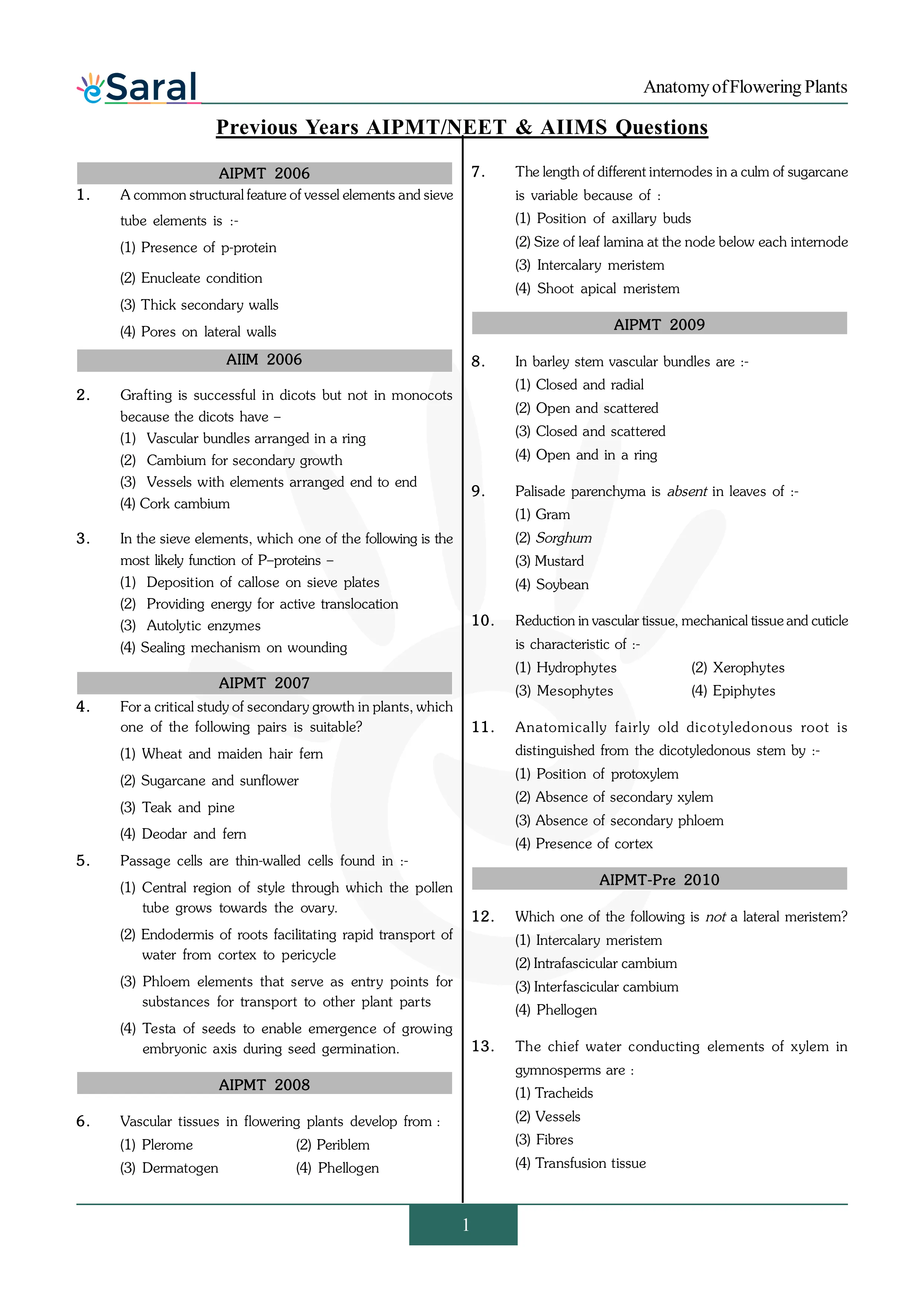
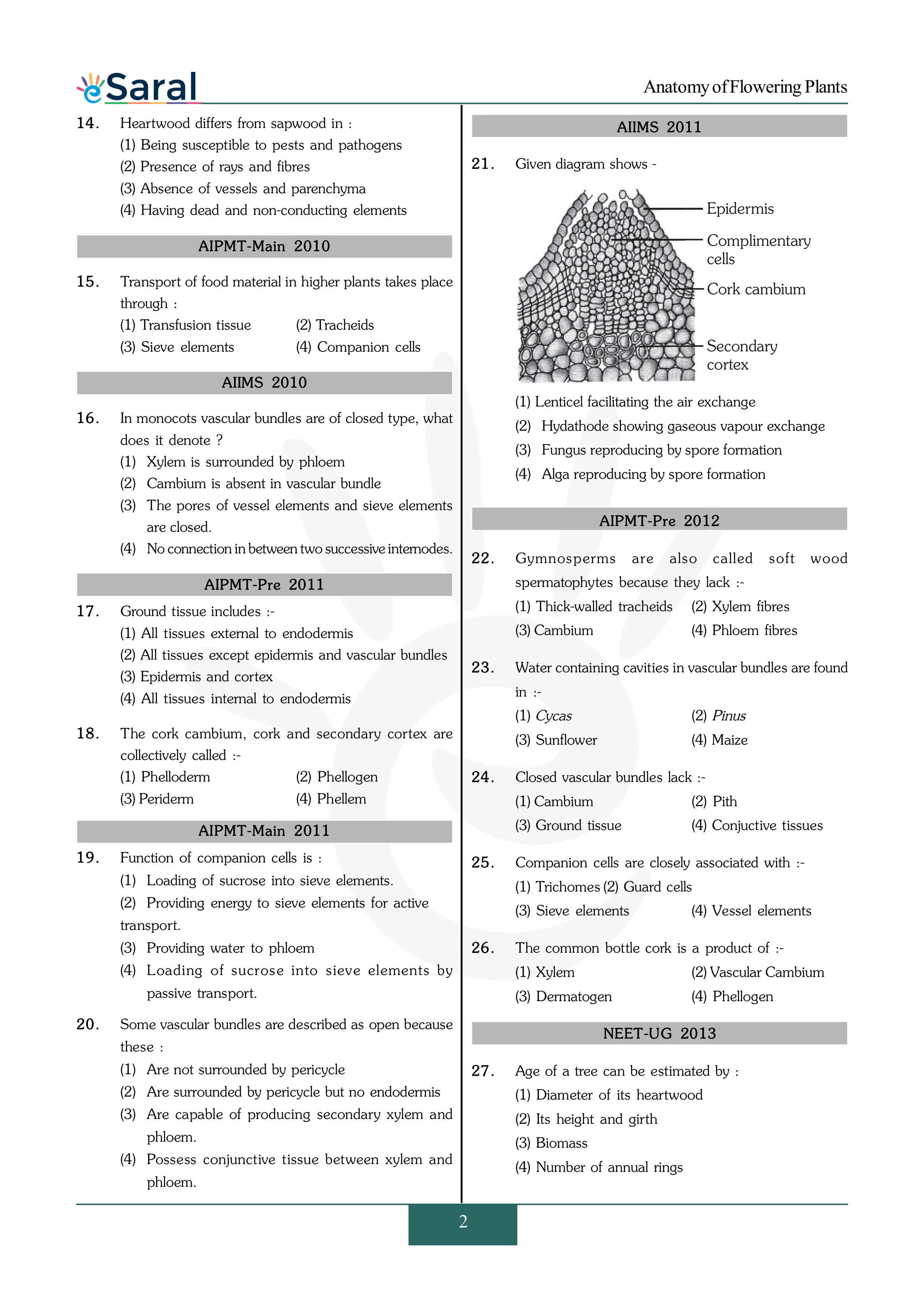
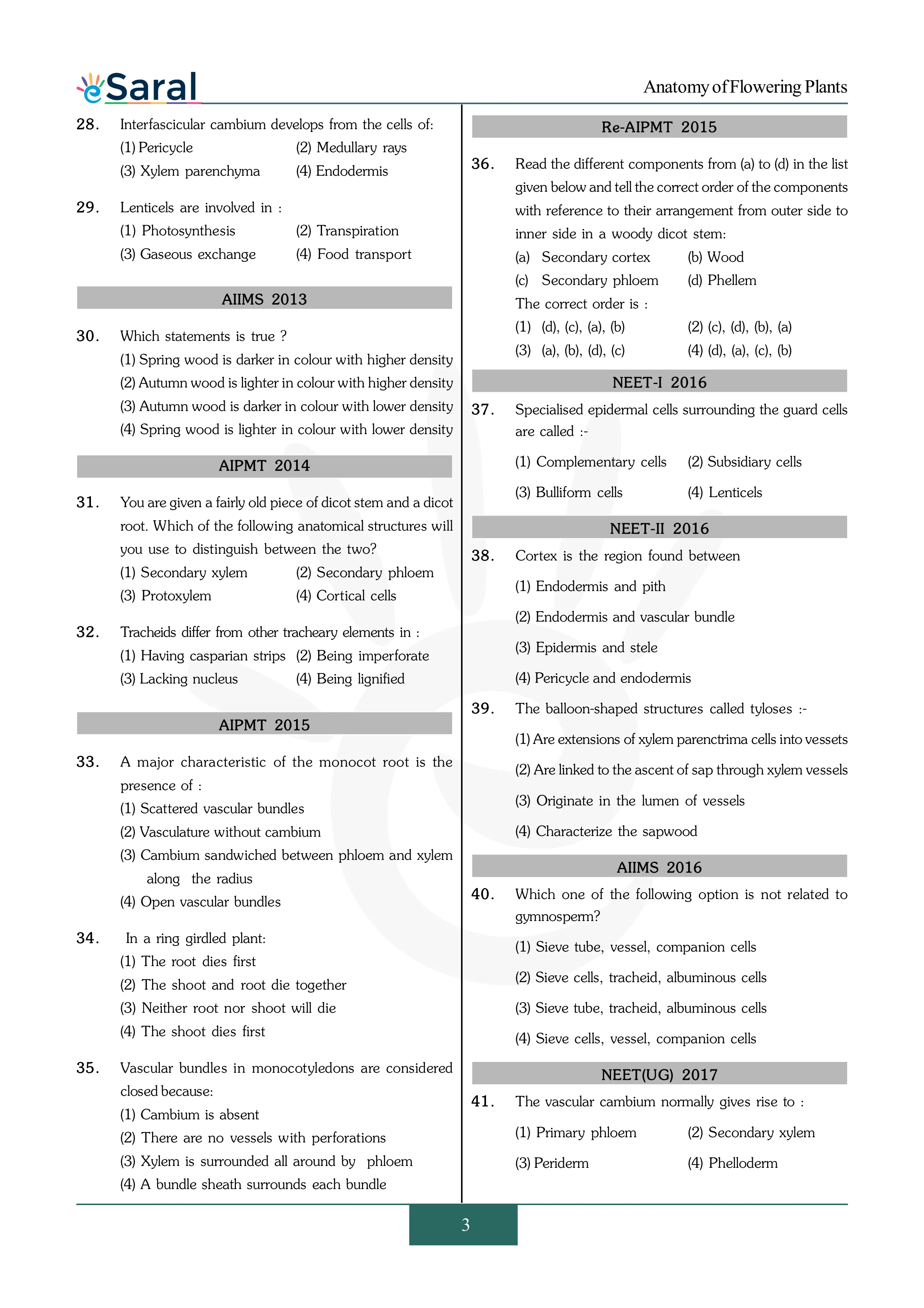
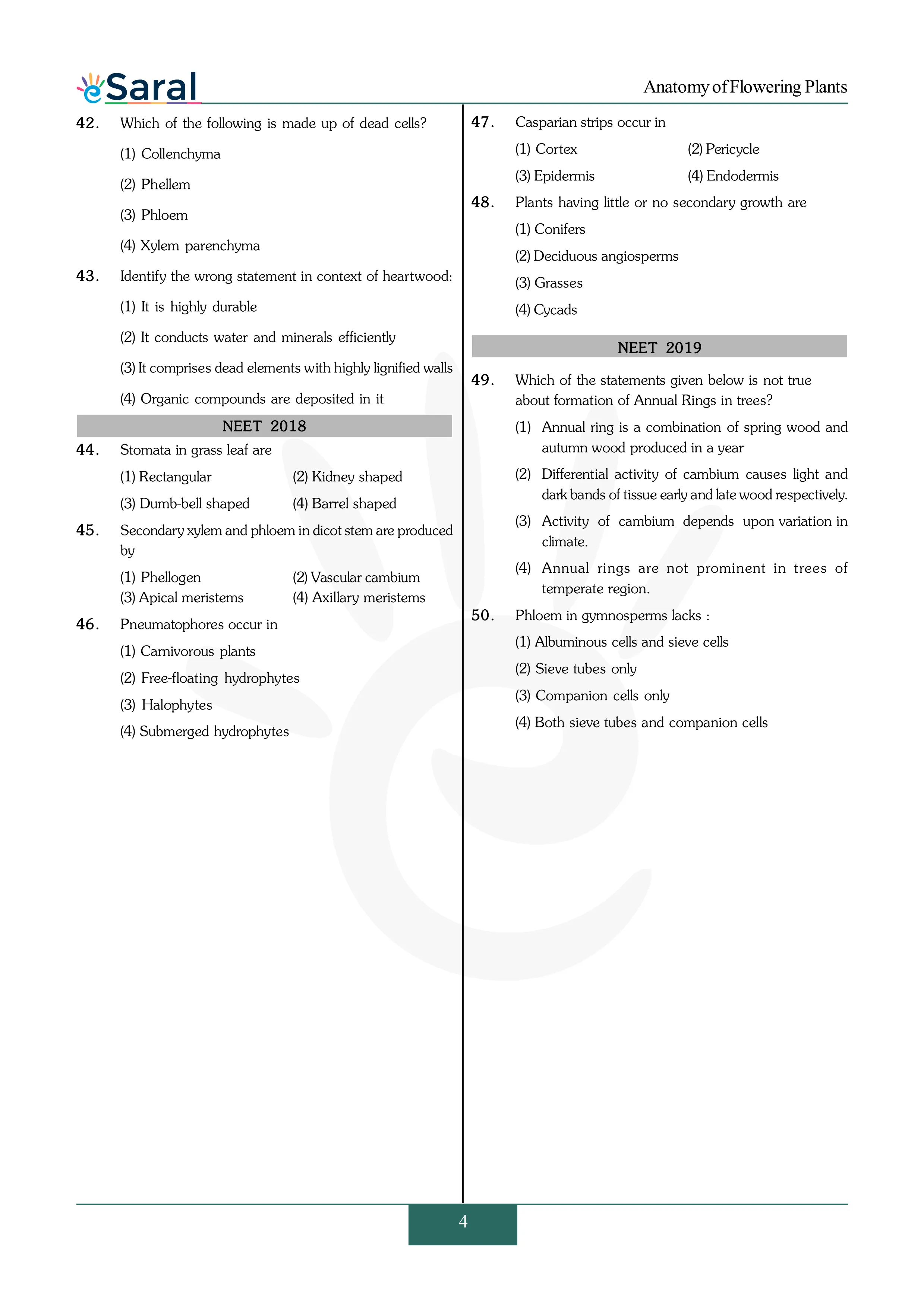
Here you will get Complete Anatomy of Flowering Plants NEET Previous Year Questions with complete and detailed solutions.
Get complete NEET previous year questions for Physics, Chemistry, and Biology.
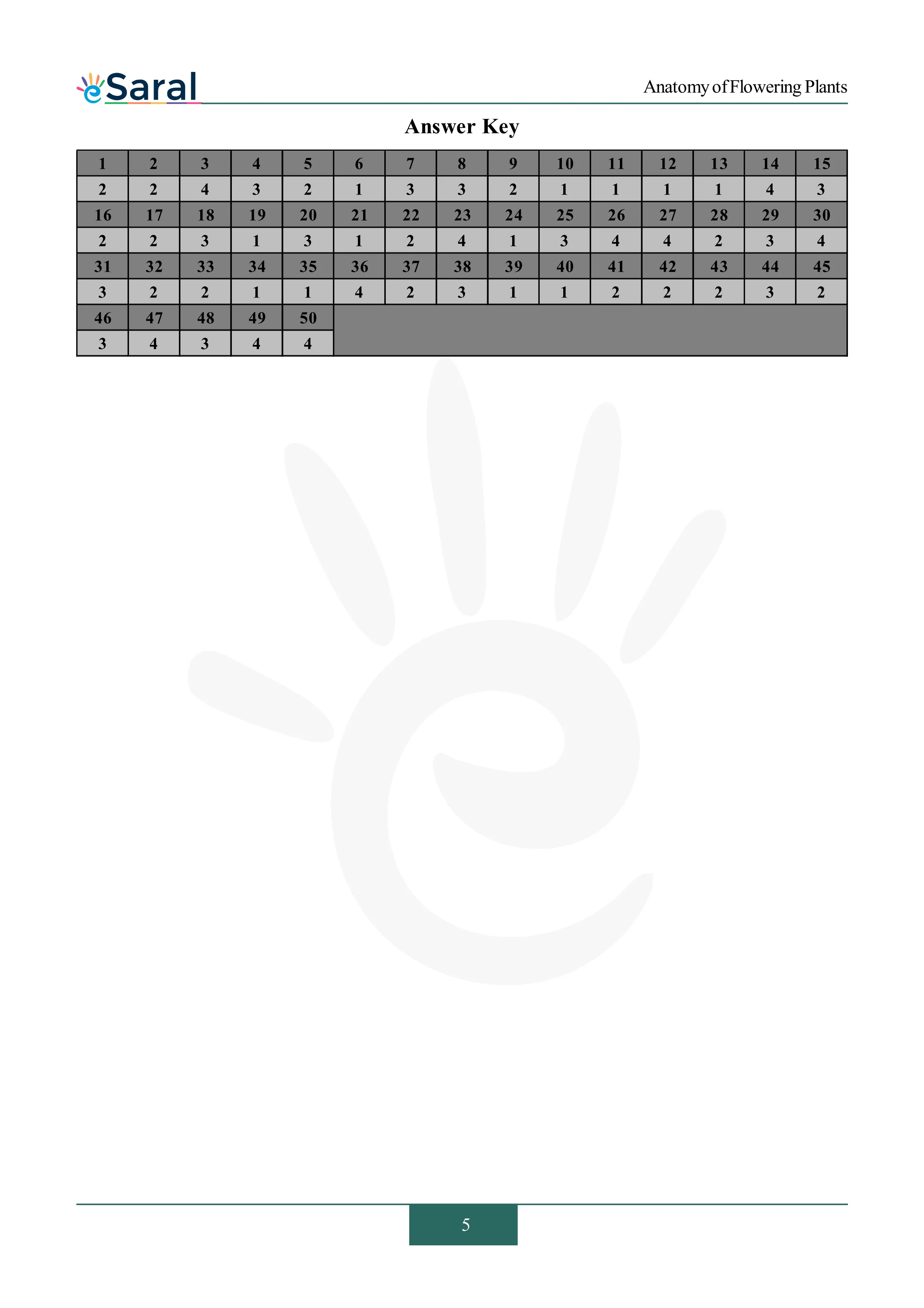
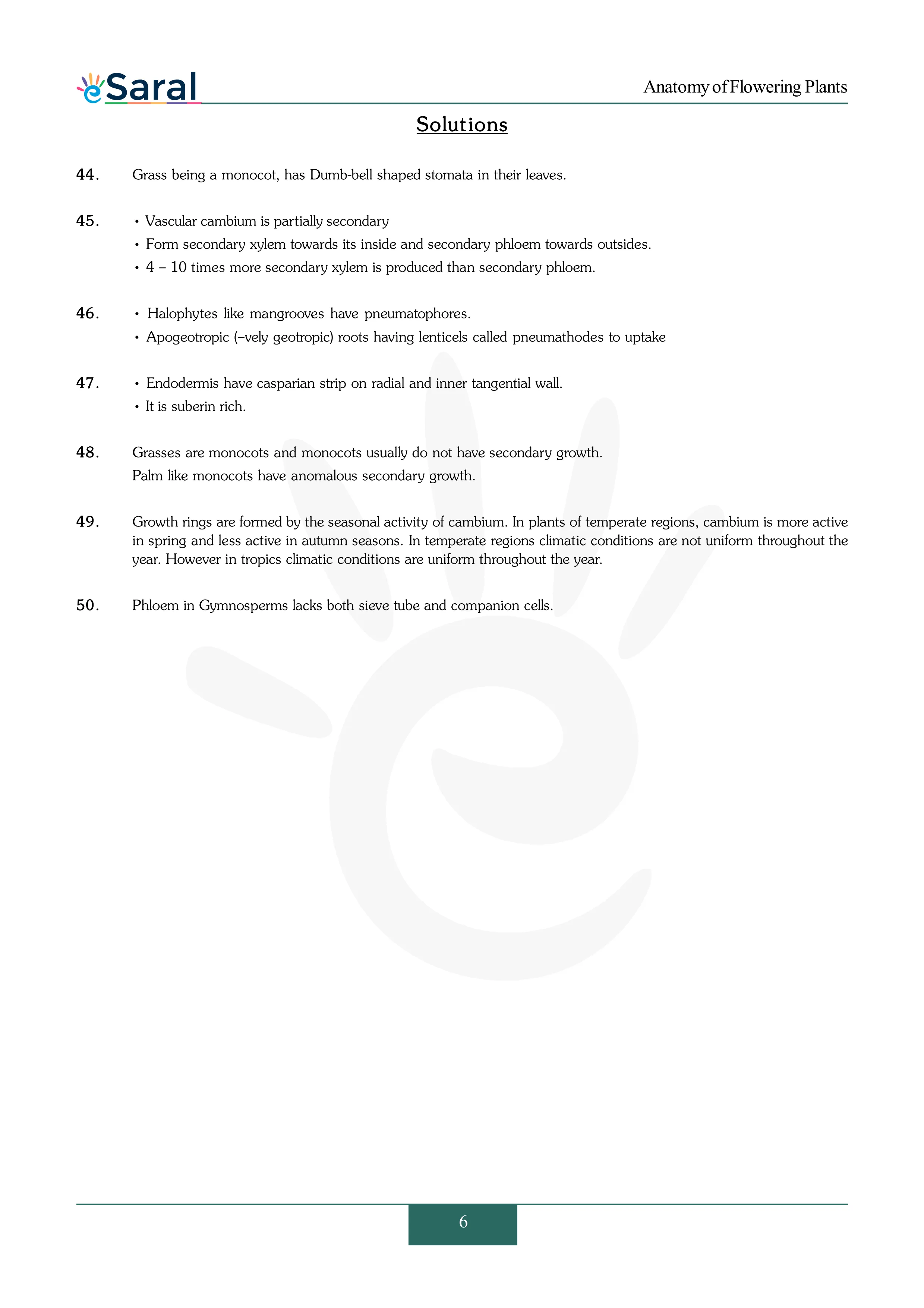
You will find all the solutions at the end of this page:
Frequently Asked Questions
Find answers to common questions.
What is the most important topic in Anatomy of Flowering Plants for NEET?
Secondary growth is the single most important topic, contributing approximately 8–10 questions over the last 14 years of NEET papers. Within secondary growth, focus on the role of vascular cambium, cork cambium, and the formation of annual rings. Vascular bundle types and the Casparian strip are the next highest-priority subtopic
Is Anatomy of Flowering Plants difficult for NEET?
No — it is considered a moderately easy chapter for NEET. Most questions are direct recall of NCERT diagrams and definitions. Students who practice previous year questions consistently and memorise T.S. diagrams of roots, stems, and leaves can score full marks from this chapter without needing extra reference books.
How many questions from Anatomy of Flowering Plants appear in NEET every year?
NEET typically includes 2 to 4 questions from this chapter annually. Based on official NTA papers from 2010 to 2024, the chapter has never been completely absent. Secondary growth, vascular bundles, and the Casparian strip are the most frequently tested subtopics and should be your first priority during revision.
What is the Casparian strip and why is it important for NEET?
The Casparian strip is a suberin-impregnated band on the radial and transverse walls of root endodermal cells. It blocks the apoplastic movement of water and solutes, forcing them through the symplastic pathway. For NEET, remember: suberin + endodermis + blocks apoplast — these three facts cover every past NEET question on this topic.
Can I score full marks in Anatomy of Flowering Plants just by reading NCERT?
Yes — NCERT Class 11 Biology is sufficient for this chapter in NEET. Every question from 2010–2024 has been traceable to a specific NCERT line, diagram, or definition. The key is not just reading, but being able to reproduce diagrams, recall specific structural differences, and apply the information to the question stem quickly. Pair reading with PYQ practice for best results.
What is the difference between open and closed vascular bundles?
Open vascular bundles contain cambium between the xylem and phloem, allowing secondary growth — found in dicot stems. Closed vascular bundles have no cambium and therefore cannot undergo secondary growth — found in monocot stems. This distinction is one of the most frequently tested facts from this chapter in NEET.