Gravitation - NEET Previous Year Questions with Solutions

eSaral › NEET › Physics › Gravitation Previous Year Questions with Solutions

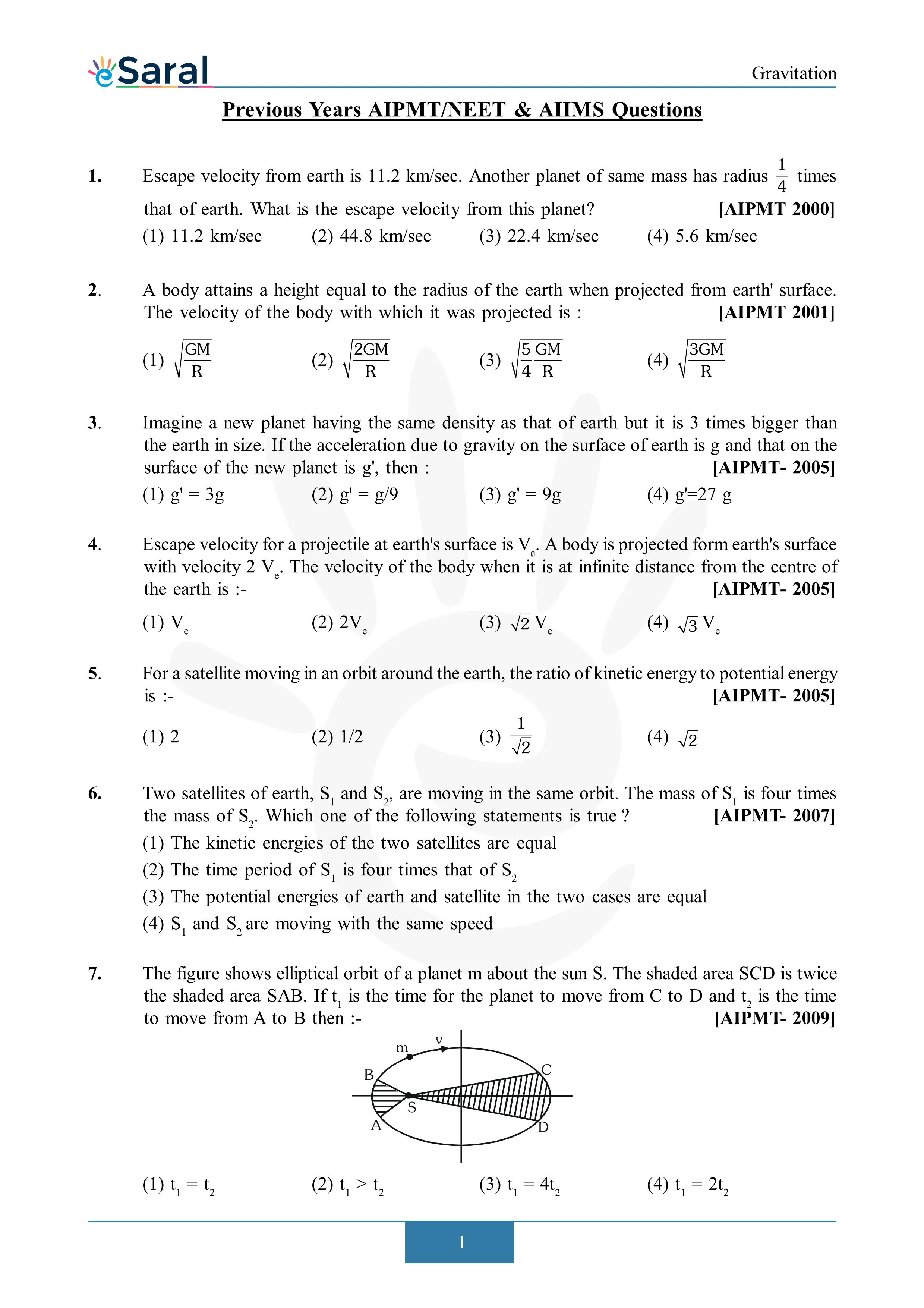
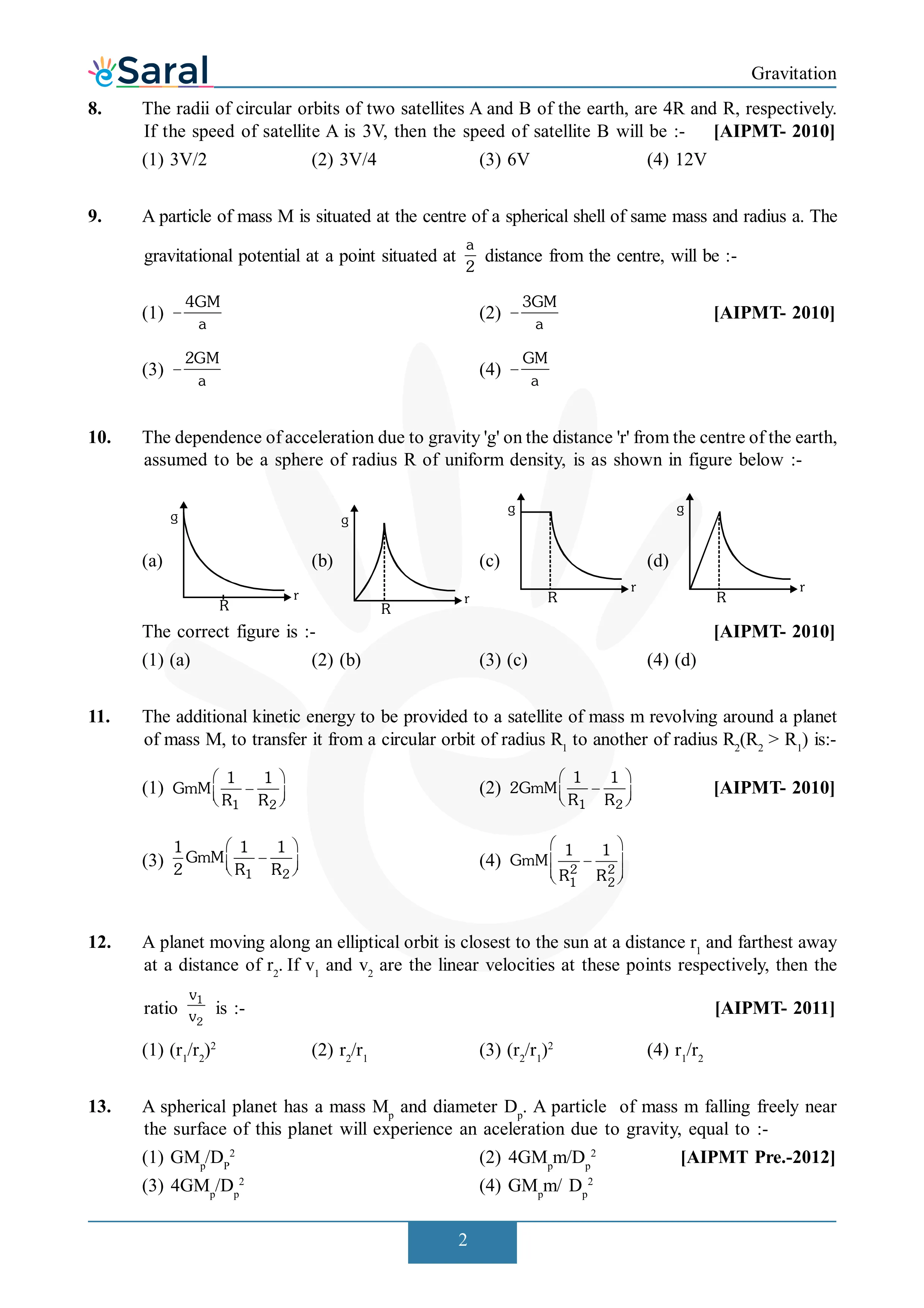
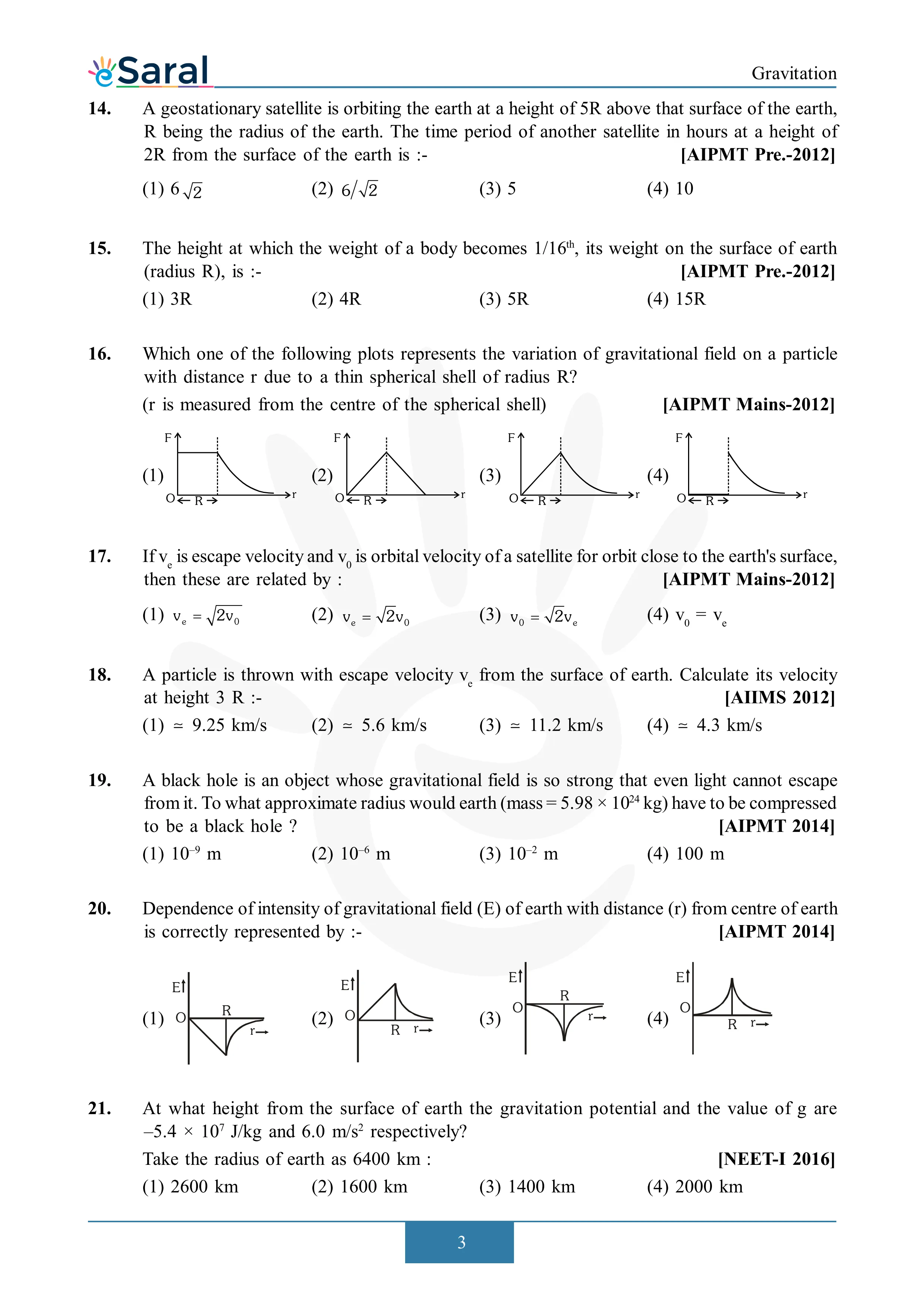
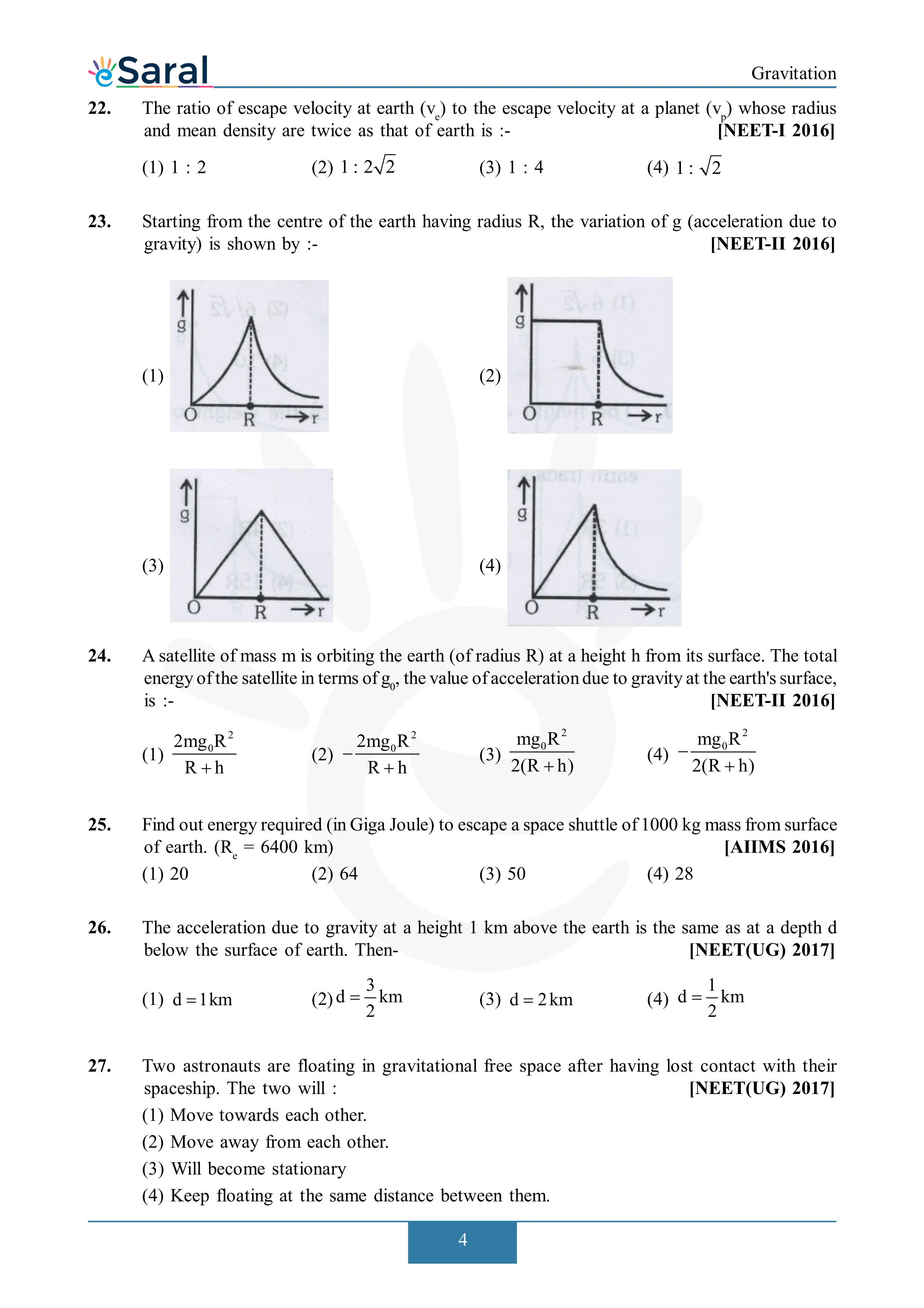
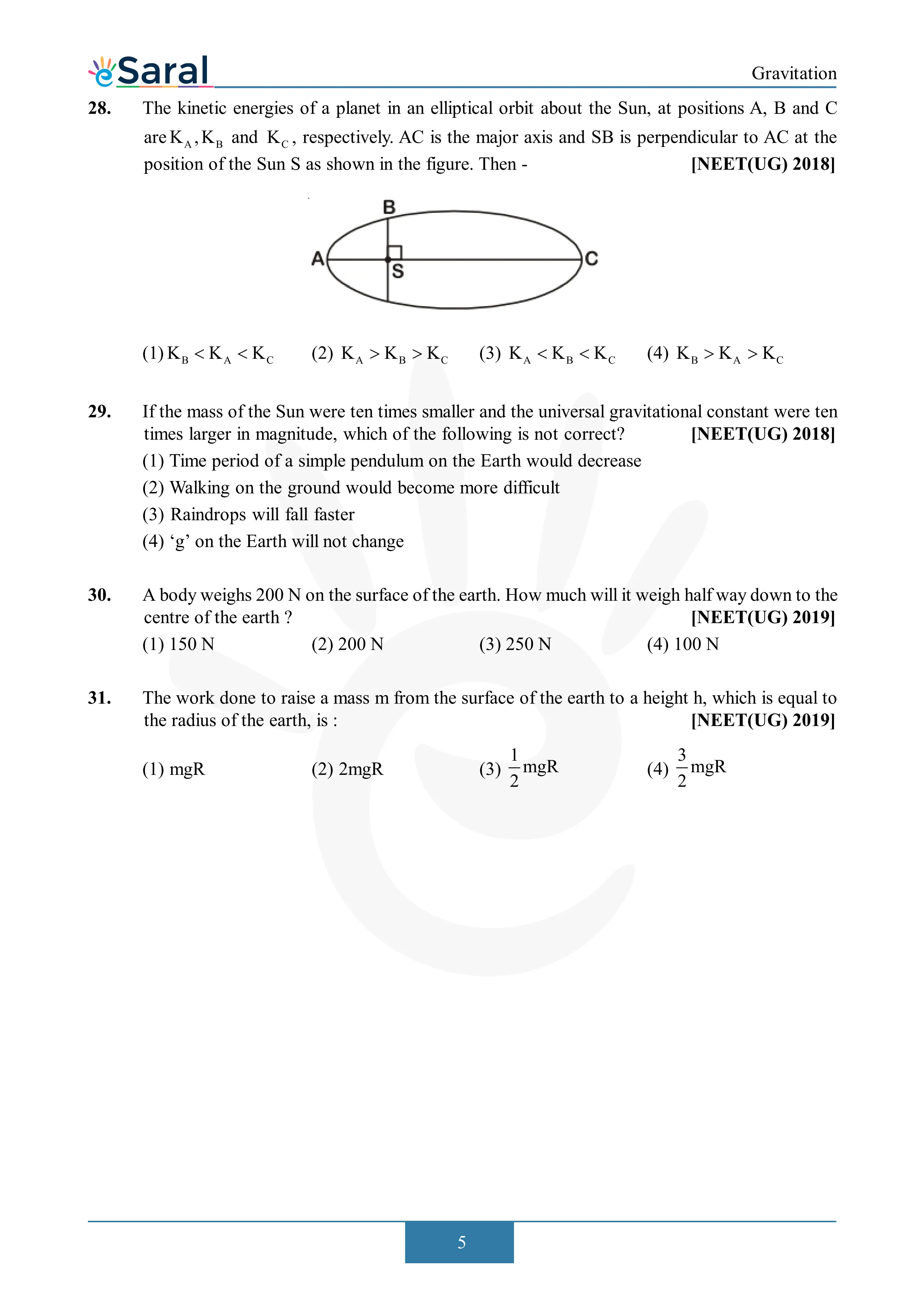
Here you will get Complete Gravitation NEET Previous Year Questions with complete and detailed solutions.
Get complete NEET previous year questions for Physics, Chemistry, and Biology.
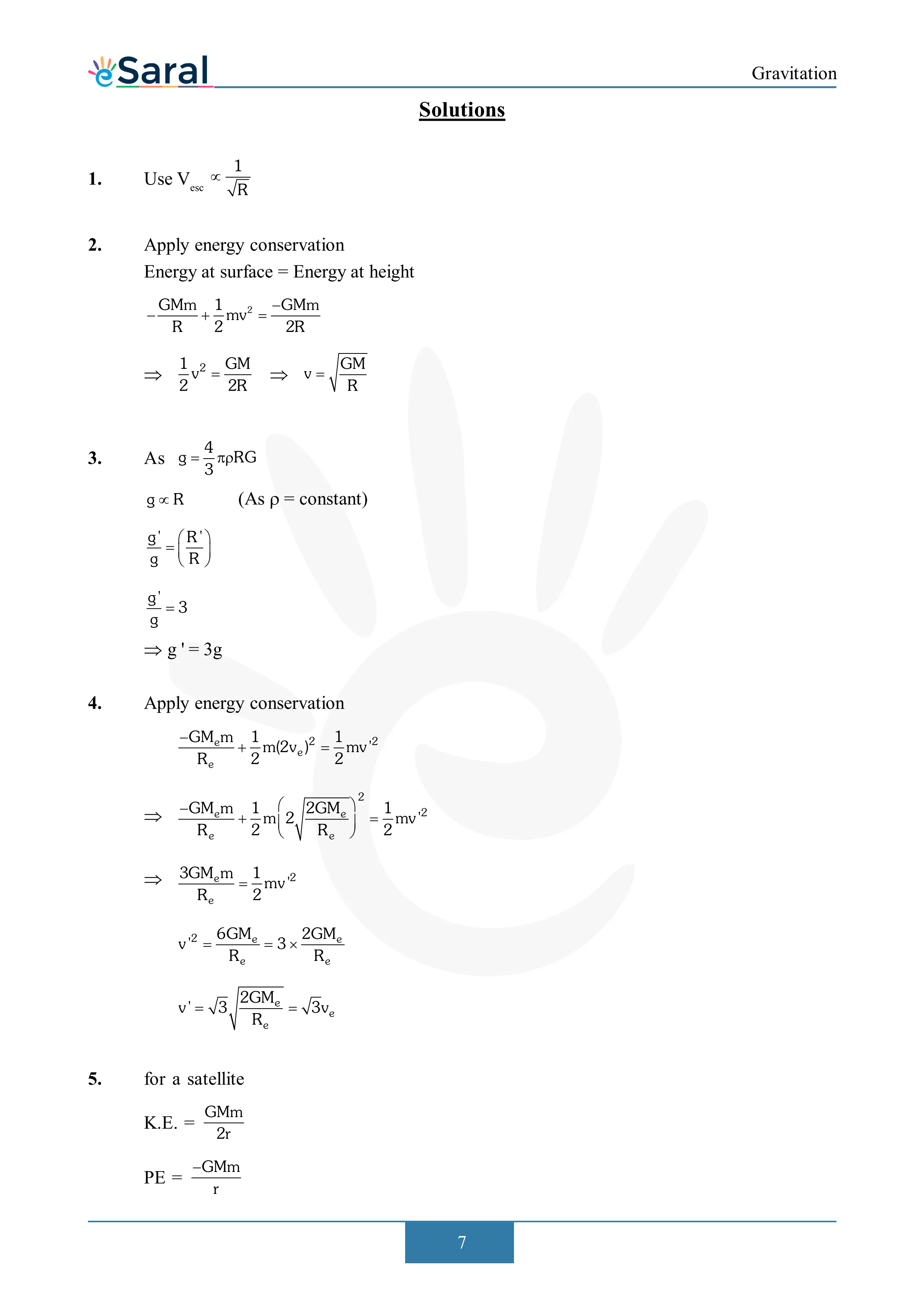
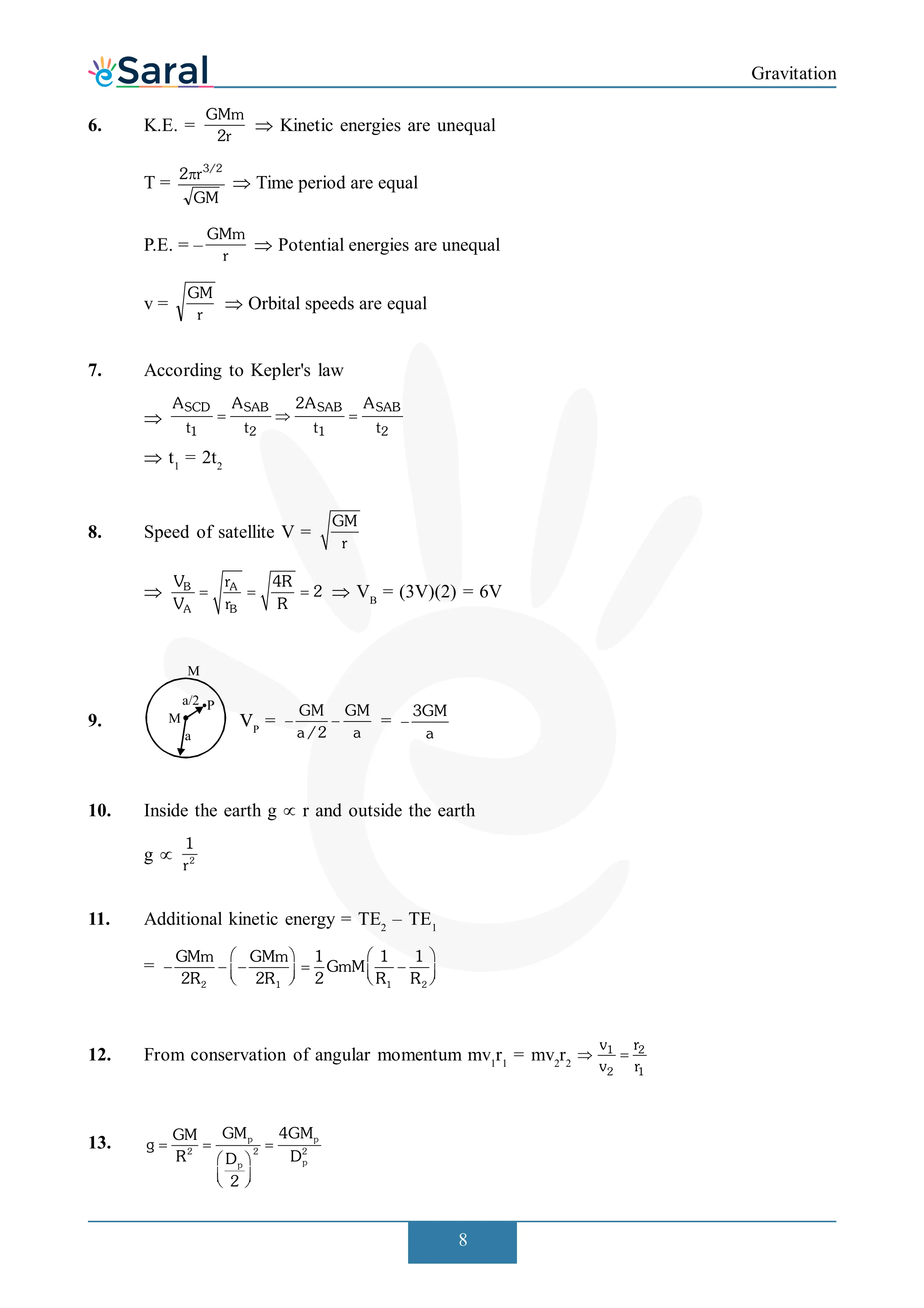
You will find all the solutions at the end of this page:

Frequently Asked Questions
Find answers to common questions.
What is the difference between escape velocity and orbital velocity in NEET context?
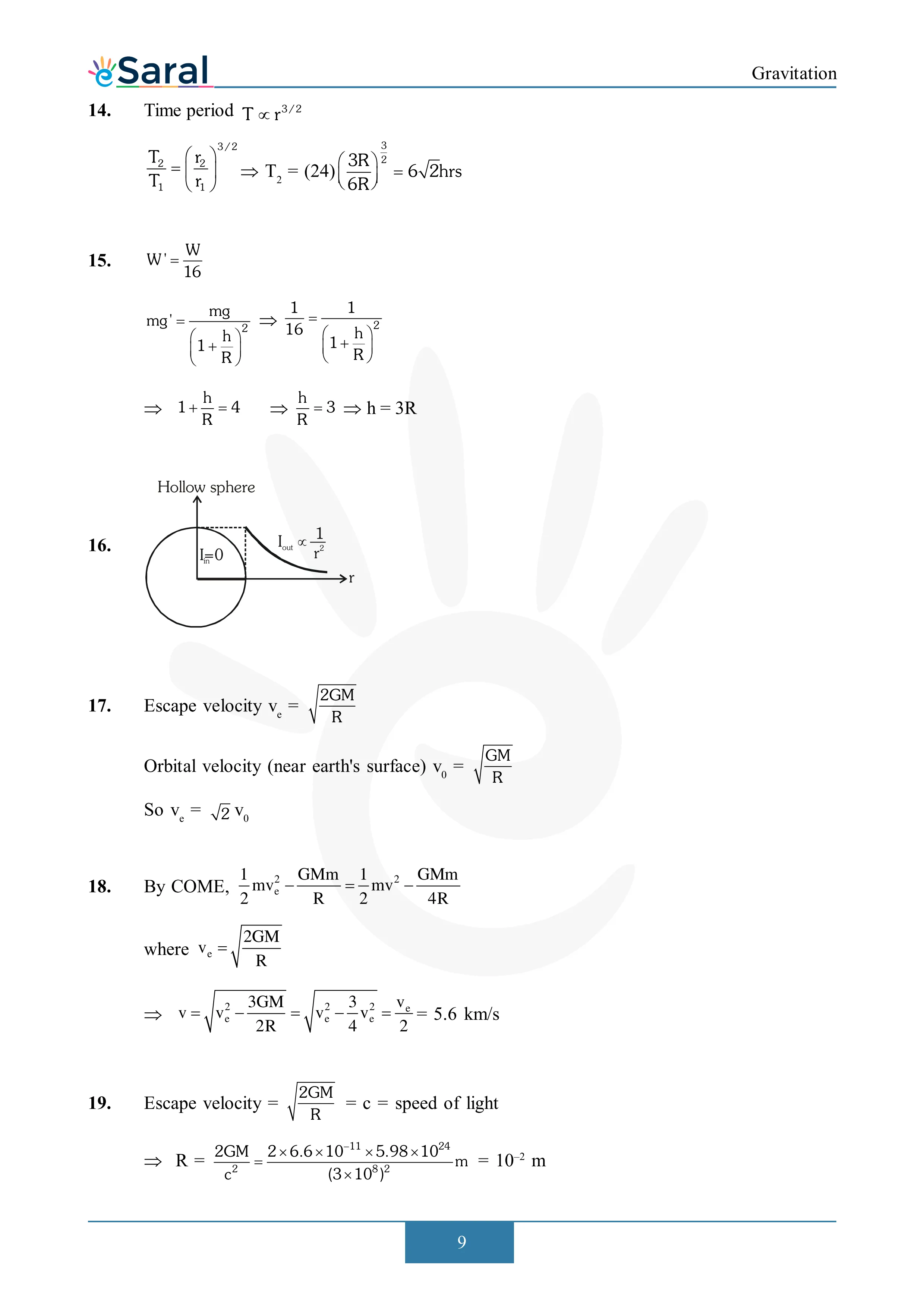
Orbital velocity (v₀) is the speed needed to maintain a circular orbit at a given radius: v₀ = √(GM/r). Escape velocity (vₑ) is the speed needed to break free from gravity entirely: vₑ = √(2GM/r). The key relation is vₑ = √2 × v₀. NEET frequently asks ratio-based questions using this relationship.
Is Gravitation important for NEET 2025?
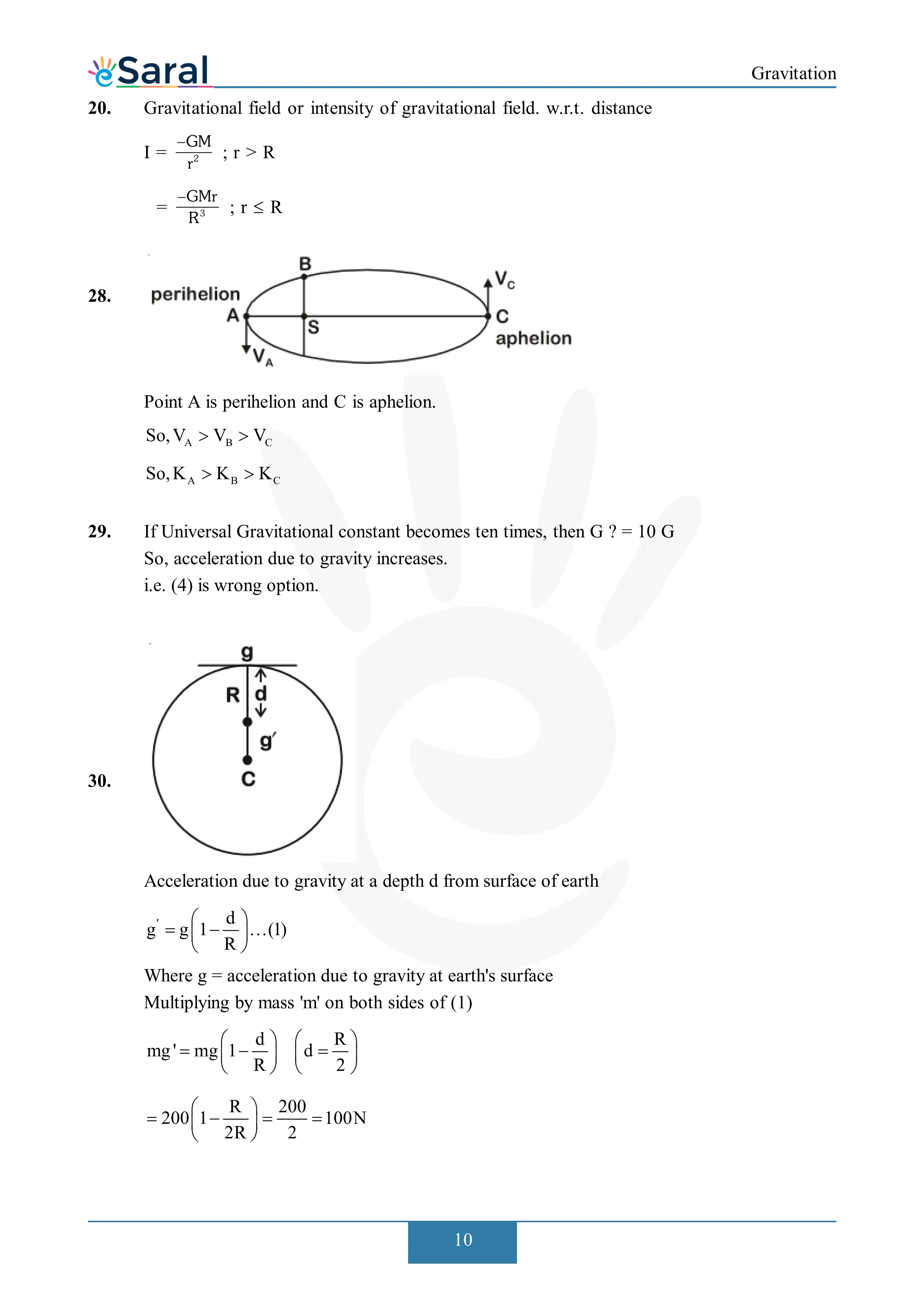
Yes, Gravitation is important for NEET 2025. It is a Class 11 Physics chapter listed explicitly in the NTA syllabus. With 1–3 questions appearing annually and predictable question types, it offers consistent scoring opportunity for prepared students. Focus on variation of g, orbital velocity, escape velocity, and Kepler's Third Law.
How many questions come from Gravitation in NEET every year?
NEET typically asks 1 to 3 questions from Gravitation each year. Over the past decade, the average is approximately 2 questions per paper, worth 8 marks. Years like 2019 and 2022 had 3 questions. This makes Gravitation a reliable scoring chapter that should not be skipped.
Can I skip Gravitation for NEET and still score well?
Skipping Gravitation is not advisable. With 1–3 questions appearing every year at +4 marks each, skipping this chapter risks losing 4–12 marks. Since NEET ranks can shift by hundreds of positions on a 4-mark difference, Gravitation is a chapter where the effort-to-marks ratio strongly favours preparation. It can be covered thoroughly in 5–7 days.
Which topics in Gravitation are most important for NEET?
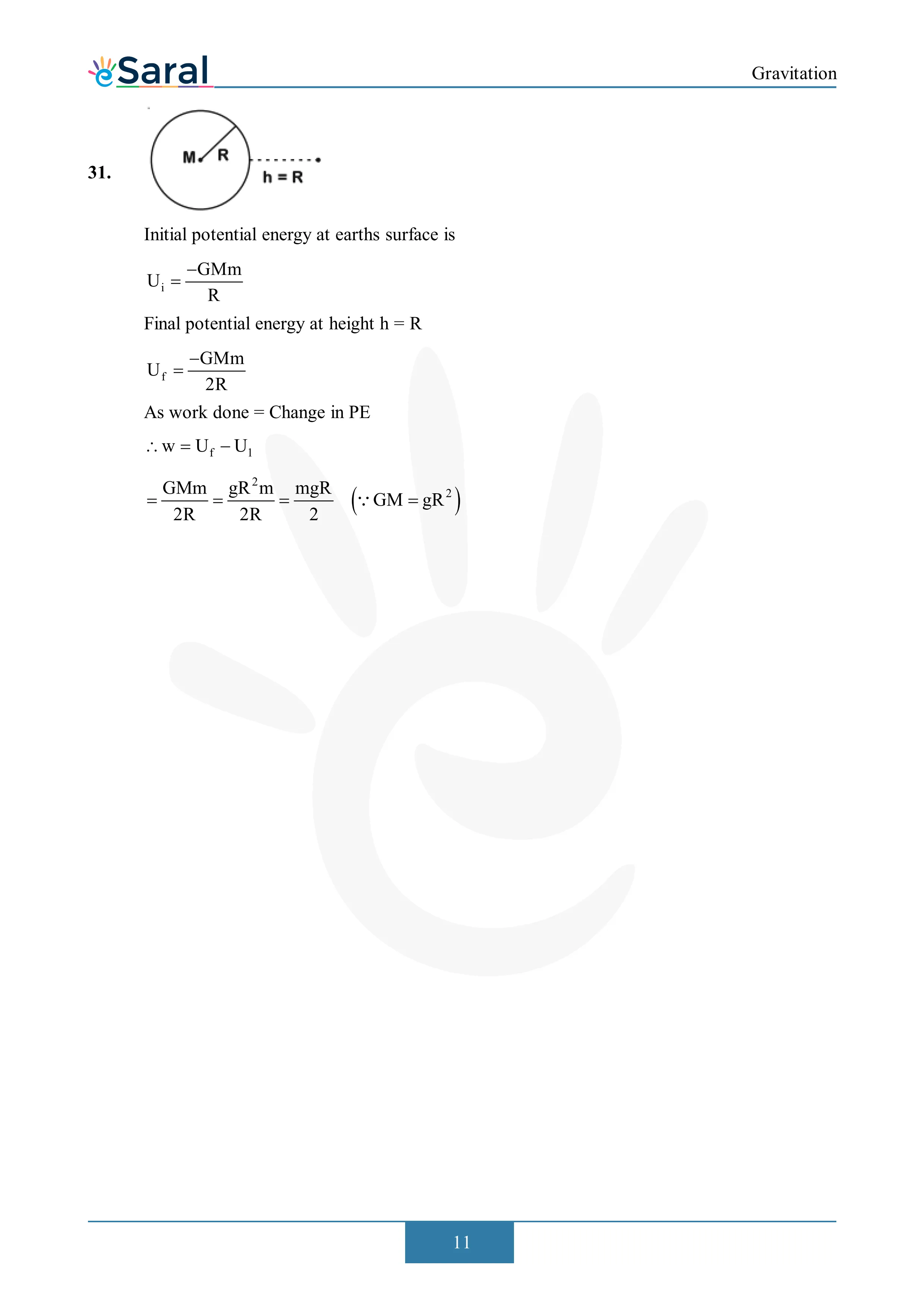
The most important Gravitation topics for NEET are: variation of g with altitude and depth, orbital velocity and satellite time period, escape velocity, Kepler's Third Law (T² ∝ r³), and gravitational potential energy. These five sub-topics together account for approximately 70–80% of all Gravitation questions in NEET papers from 2010 to 2024.
What is Kepler's Third Law and how is it tested in NEET?
epler's Third Law states that the square of the orbital period of a planet is proportional to the cube of the semi-major axis of its orbit: T² ∝ r³. In NEET, it is tested as ratio problems — for example, finding the time period of one planet given the time period and orbital radius of another. It is one of the most reliably repeated concepts in Gravitation PYQs.
Where can I find NEET Gravitation previous year questions with solutions PDF?
All Gravitation NEET previous year questions with detailed solutions are available on this page at eSaral. You can also access them through the eSaral app, where solutions are presented chapter-wise with video explanations by IIT Bombay faculty. NCERT-based solutions are also available at eSaral NCERT Solutions.