Kinematics 2D(Projectile Motion) - NEET Previous Year Question with Complete Solution
Kinematics 2D (Projectile Motion) NEET PYQ: Practice previous year NEET questions on projectile motion to master range, time of flight, maximum height, and two-dimensional motion concepts.
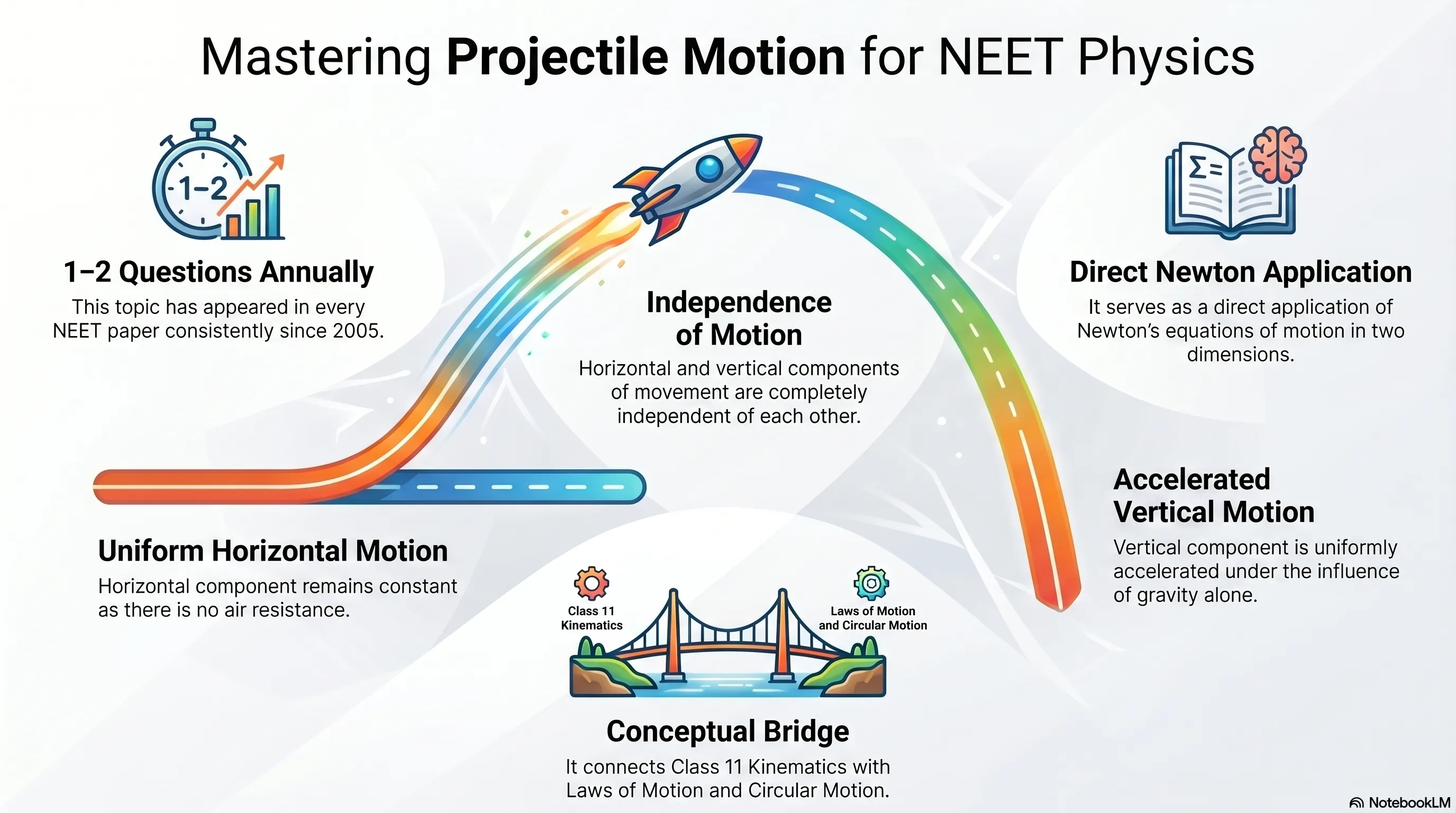
Table of Contents

eSaral › NEET › Kinematics 2D(Projectile Motion)

What Is Projectile Motion and Why Does NEET Ask It Every Year?
Projectile motion is the two-dimensional motion of an object launched into the air under the influence of gravity alone, with no air resistance. The horizontal and vertical components of motion are completely independent of each other — horizontal motion is uniform, and vertical motion is uniformly accelerated.
NEET has consistently included 1–2 questions from Kinematics 2D in every paper since 2005, according to NTA's official chapter-wise analysis. The reason is straightforward: projectile motion is a direct application of Newton's equations of motion in two dimensions, and it bridges Class 11 Kinematics with later chapters like Laws of Motion and Circular Motion.
Here you will get Complete Kinematics 2D (Projectile Motion) NEET Previous Year Questions with complete and detailed solutions. Get complete NEET previous year questions for Physics, Chemistry and Biology. You will find all the solutions at the end of this page
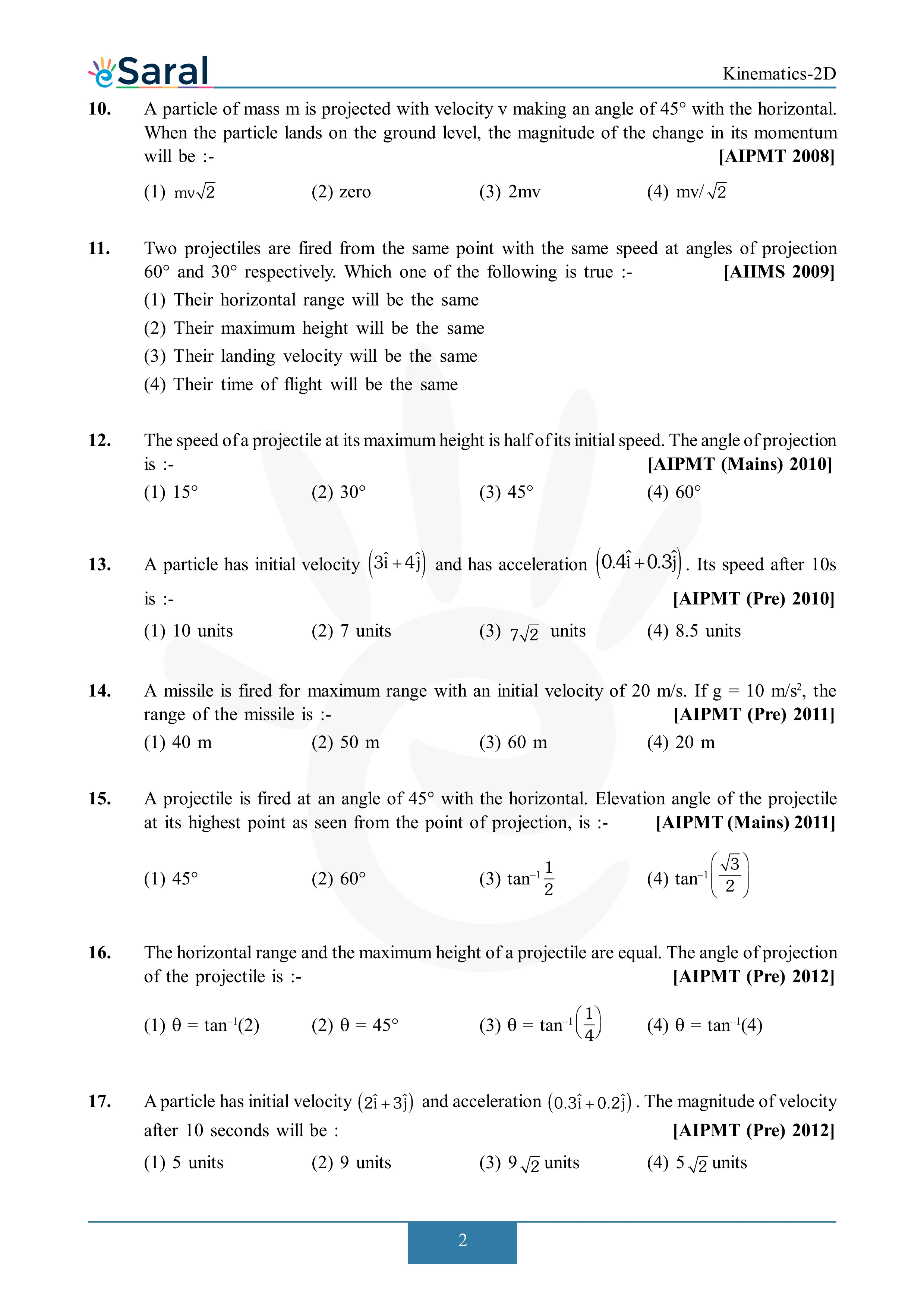
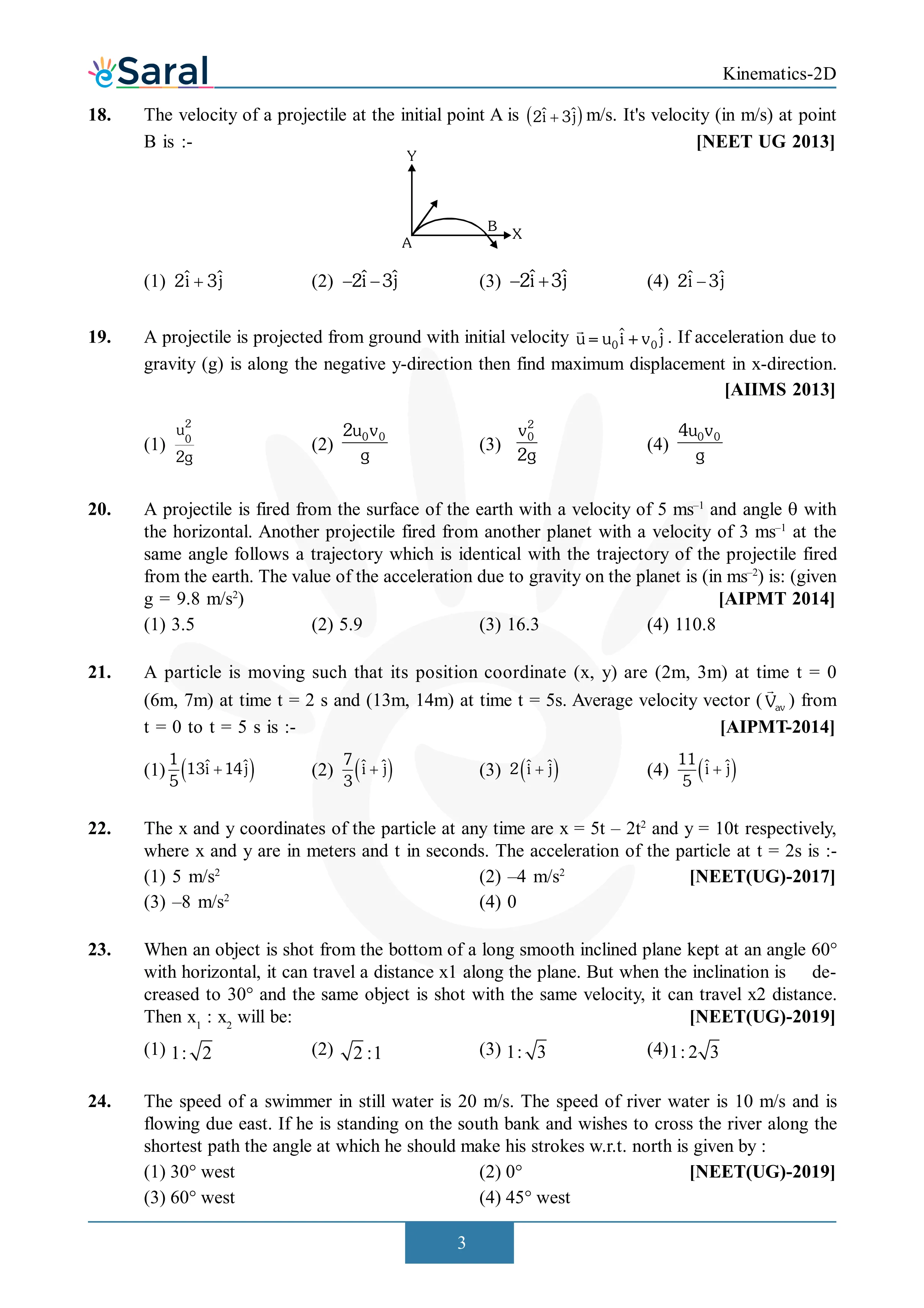
NEET Previous Year Question with Complete Solution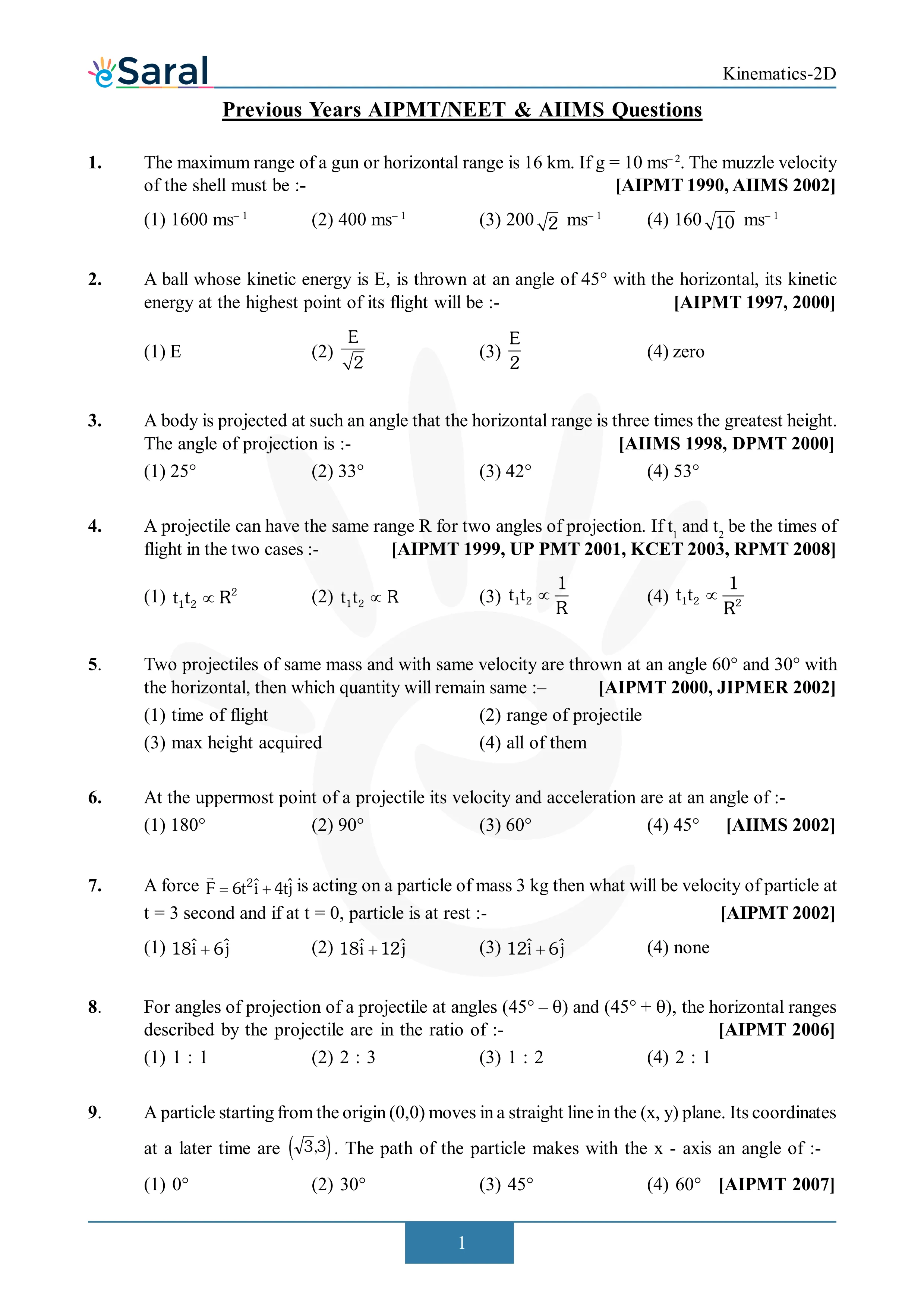

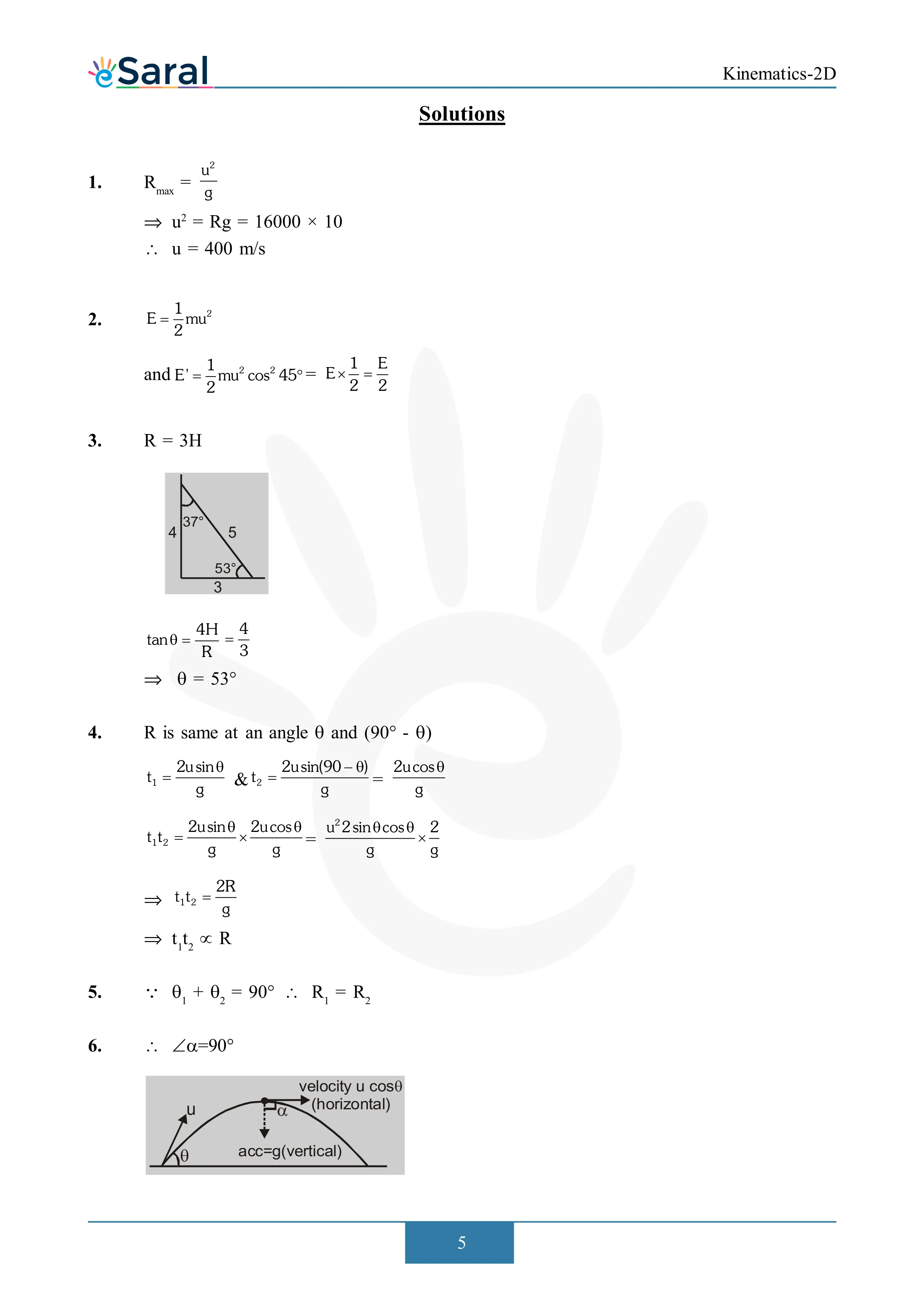
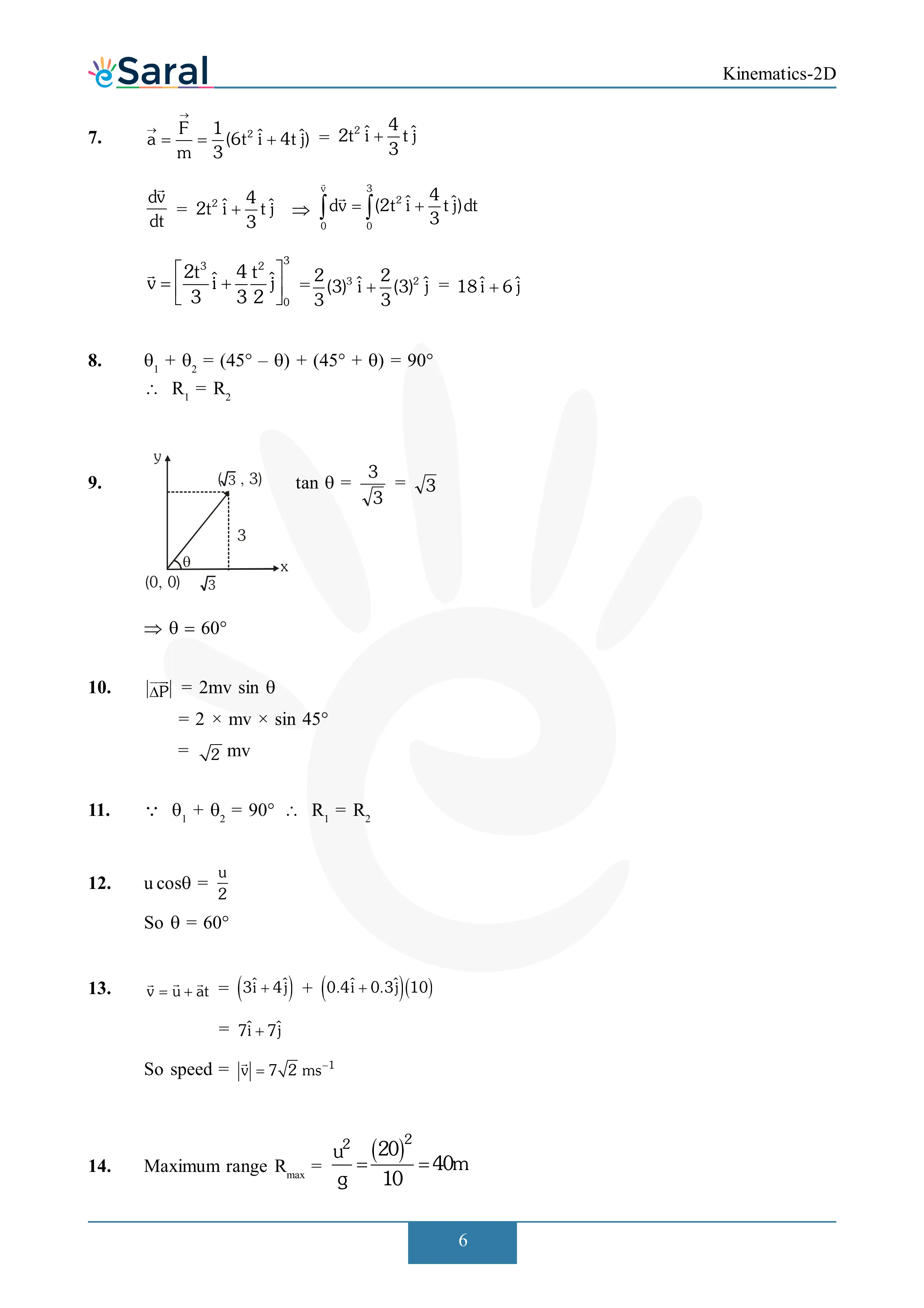
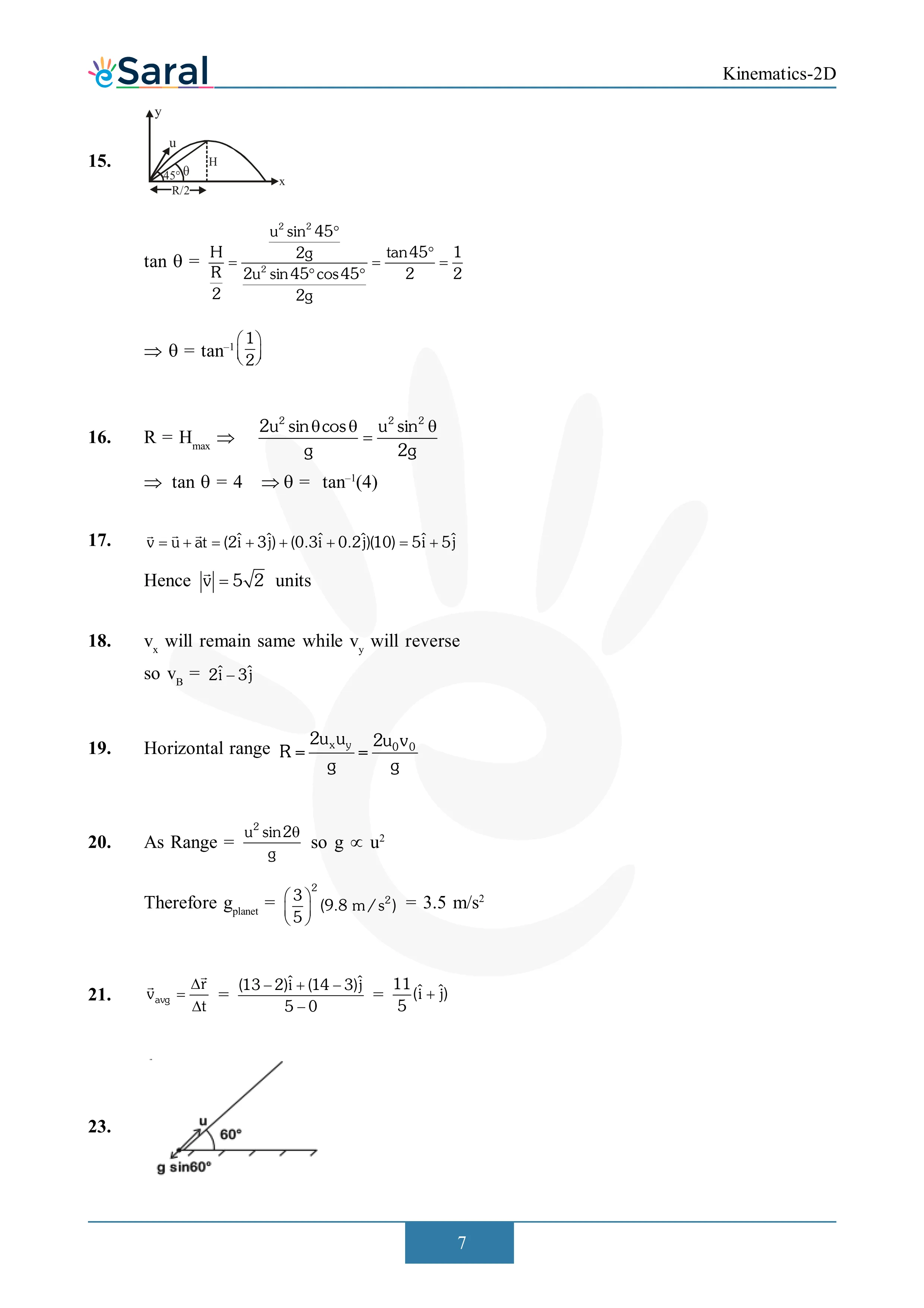
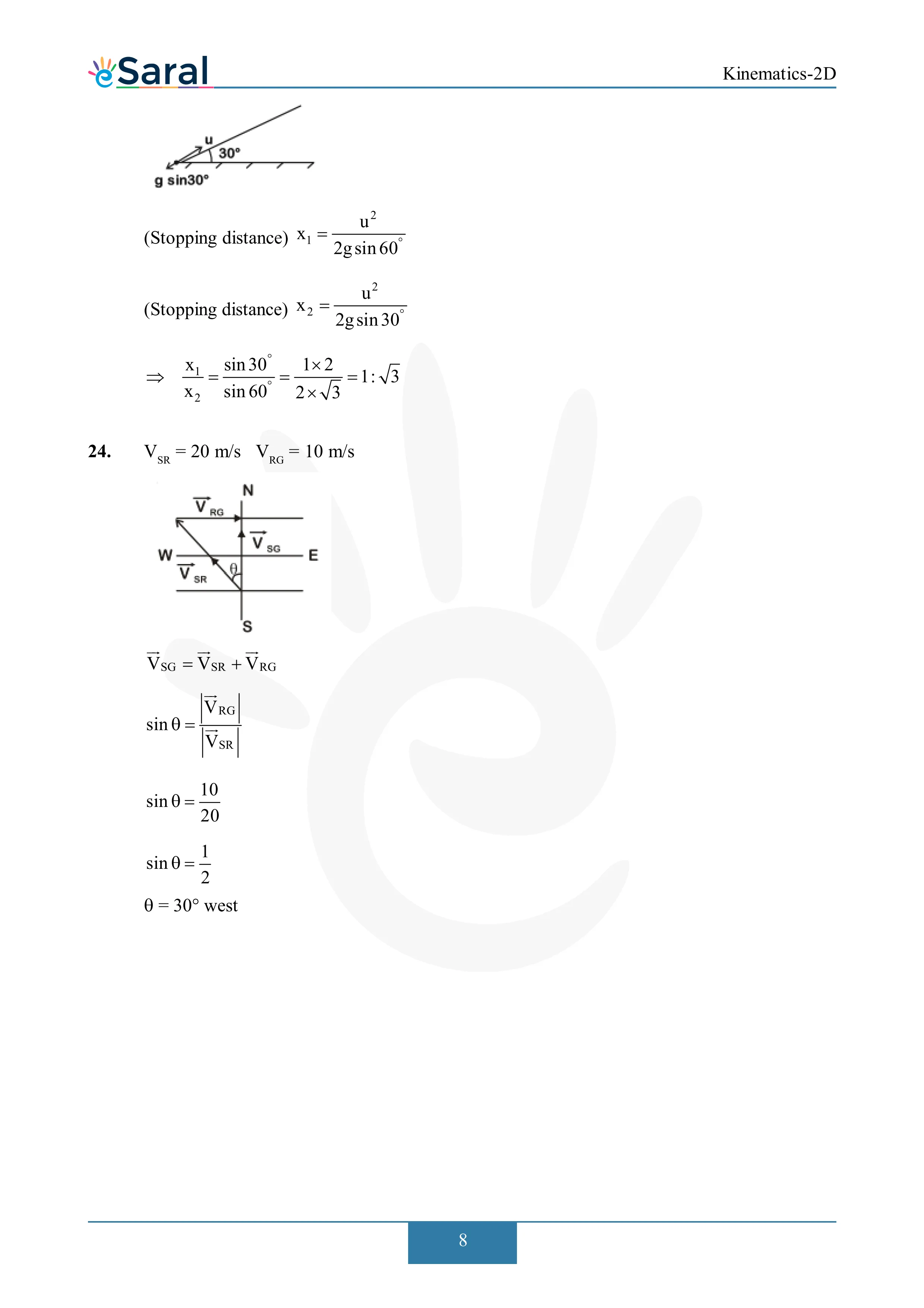
Frequently Asked Questions
Find answers to common questions.
How many questions from Projectile Motion appear in NEET every year?
NEET typically includes 1 to 2 questions from Projectile Motion (Kinematics 2D) in the Physics section each year. Based on NTA's official question papers from 2010 to 2024, this sub-topic has appeared in nearly every paper. Solving all available PYQs from this chapter gives you strong confidence and familiarity with the question patterns before the actual exam.
What is the most important formula to remember for NEET Projectile Motion?
The horizontal range formula — R = u² sin2θ / g — is the single most tested relationship in NEET Projectile Motion questions. It directly involves the launch angle, initial speed, and gravitational acceleration. A close second is the time of flight formula T = 2u sinθ / g. Together, these two cover the majority of NEET marks in this sub-topic.
Is Projectile Motion from Class 11 or Class 12 Physics for NEET?
Projectile Motion is a Class 11 Physics topic, covered in Chapter 4 (Motion in a Plane) of the NCERT textbook. It falls under the Kinematics unit of the NEET Physics syllabus as defined by NTA. Students should complete this chapter before moving to Laws of Motion and Work-Energy Theorem, as it underpins several later topics.
What is the angle for maximum range in projectile motion?
Maximum horizontal range is achieved at a launch angle of 45°, given the same initial speed and ignoring air resistance. At 45°, sin2θ = sin90° = 1, which is its maximum possible value, making R = u²/g the largest achievable range. This result holds for projectiles launched from and landing on the same horizontal level.
Do complementary angles give the same range in projectile motion?
Yes. Two launch angles that add up to 90° — such as 30° and 60°, or 20° and 70° — always produce the same horizontal range for the same initial speed. This is because sin2θ = sin(180°−2θ), meaning both angles give the same value of sin2θ. NEET has tested this relationship in multiple question formats over the years.