Carbonyl Compound - NEET Previous Year Questions with Complete Solutions
Master Carbonyl Compounds for NEET through targeted PYQs covering aldehydes, ketones, carboxylic acids, reaction mechanisms, product identification, and IUPAC nomenclature from this high-yield organic chemistry chapter.
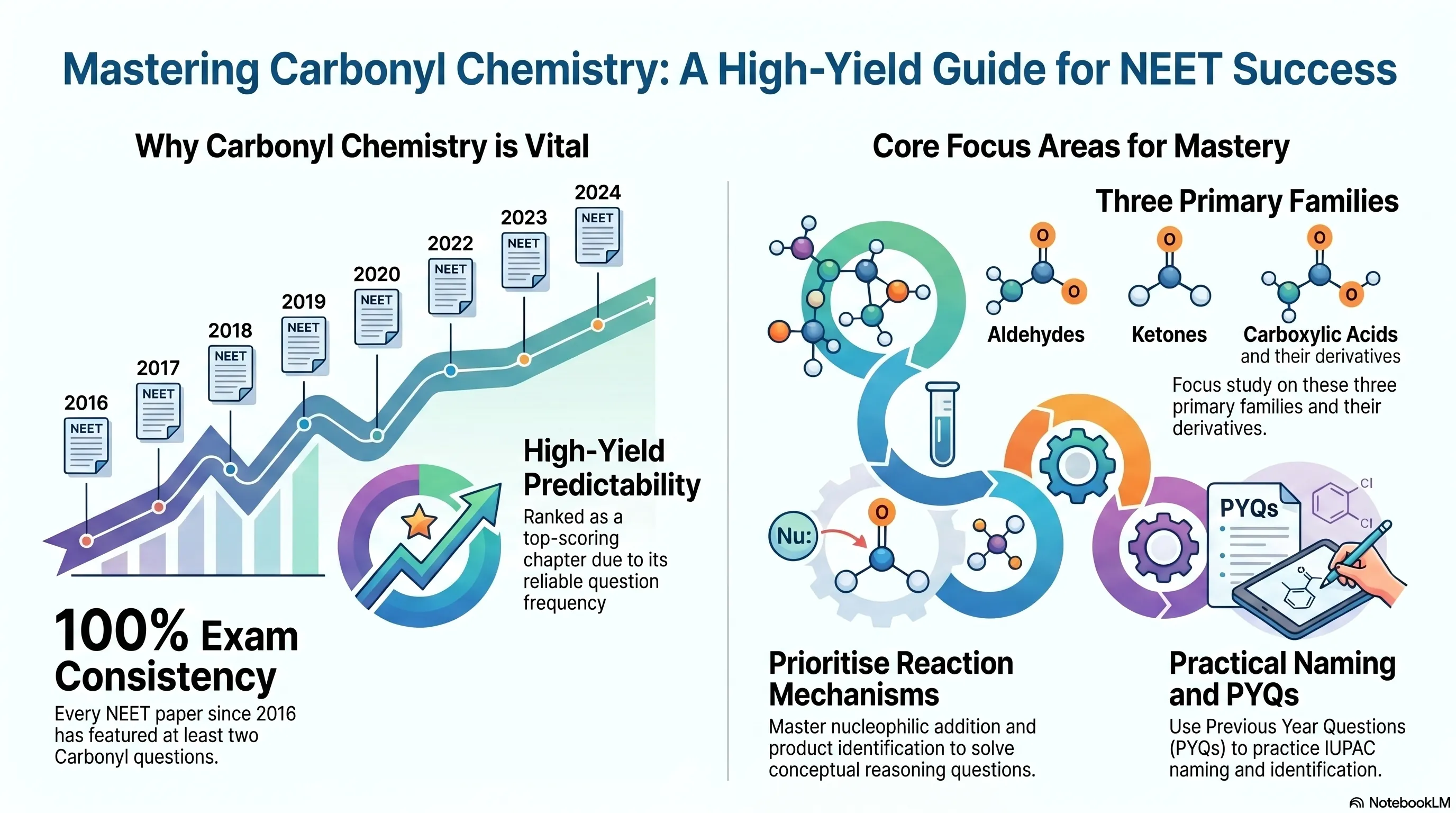
Table of Contents

eSaral › NEET ›Carbonyl Compound

Why Carbonyl Compounds Matter in NEET
Carbonyl compounds consistently rank among the top-scoring organic chemistry chapters in NEET UG. According to NTA's official question paper releases, this chapter (Class 12, Chapter 12) has contributed at least 2 questions in every NEET paper from 2016 to 2024 — making it one of the most predictable high-yield chapters in the entire Chemistry syllabus.
The chapter covers three broad families: aldehydes, ketones, and carboxylic acids and their derivatives. NEET questions test a mix of conceptual reasoning (reaction mechanisms, nucleophilic addition), identification of products, and IUPAC naming — all of which can be mastered with targeted previous year question (PYQ) practice.
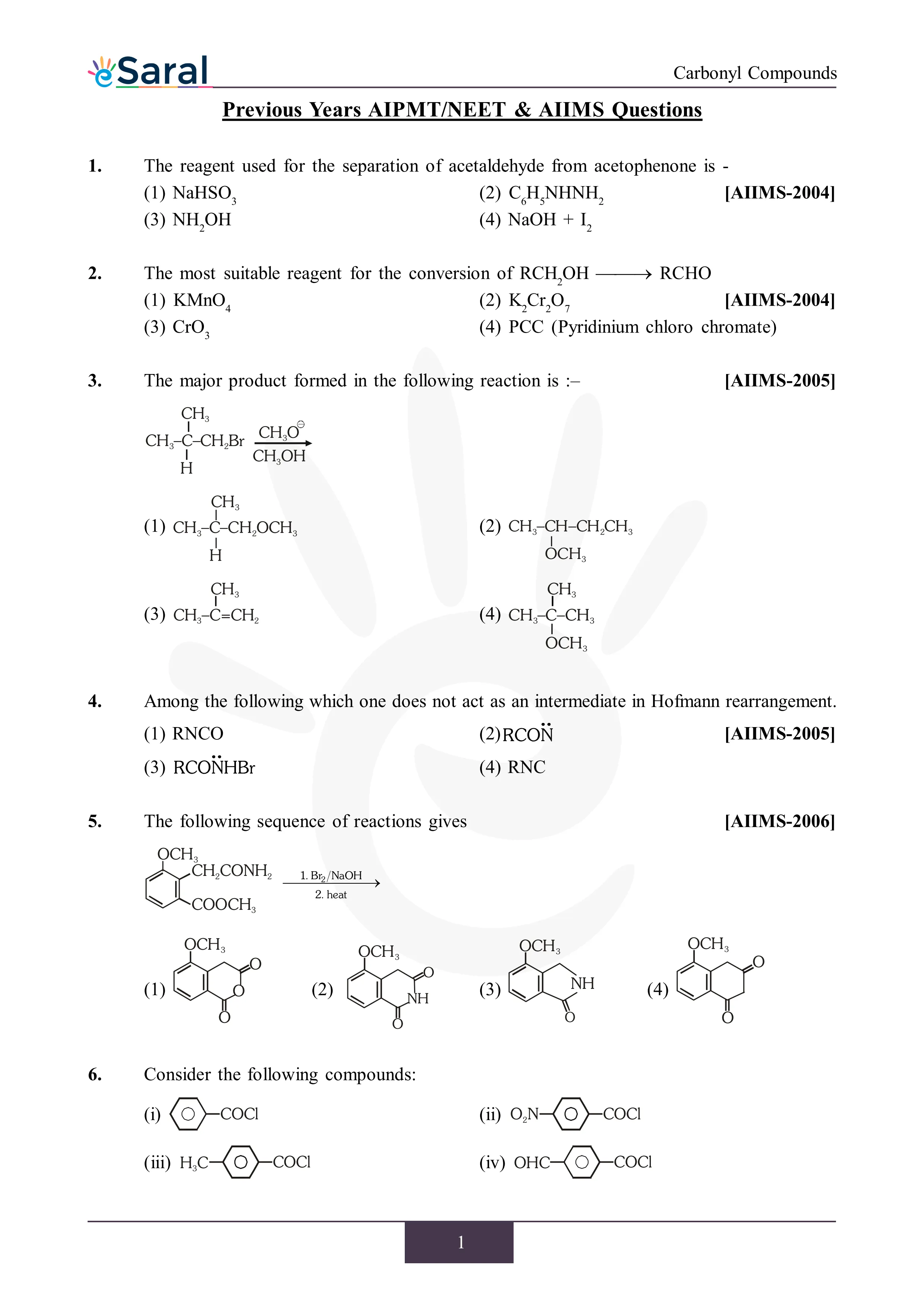
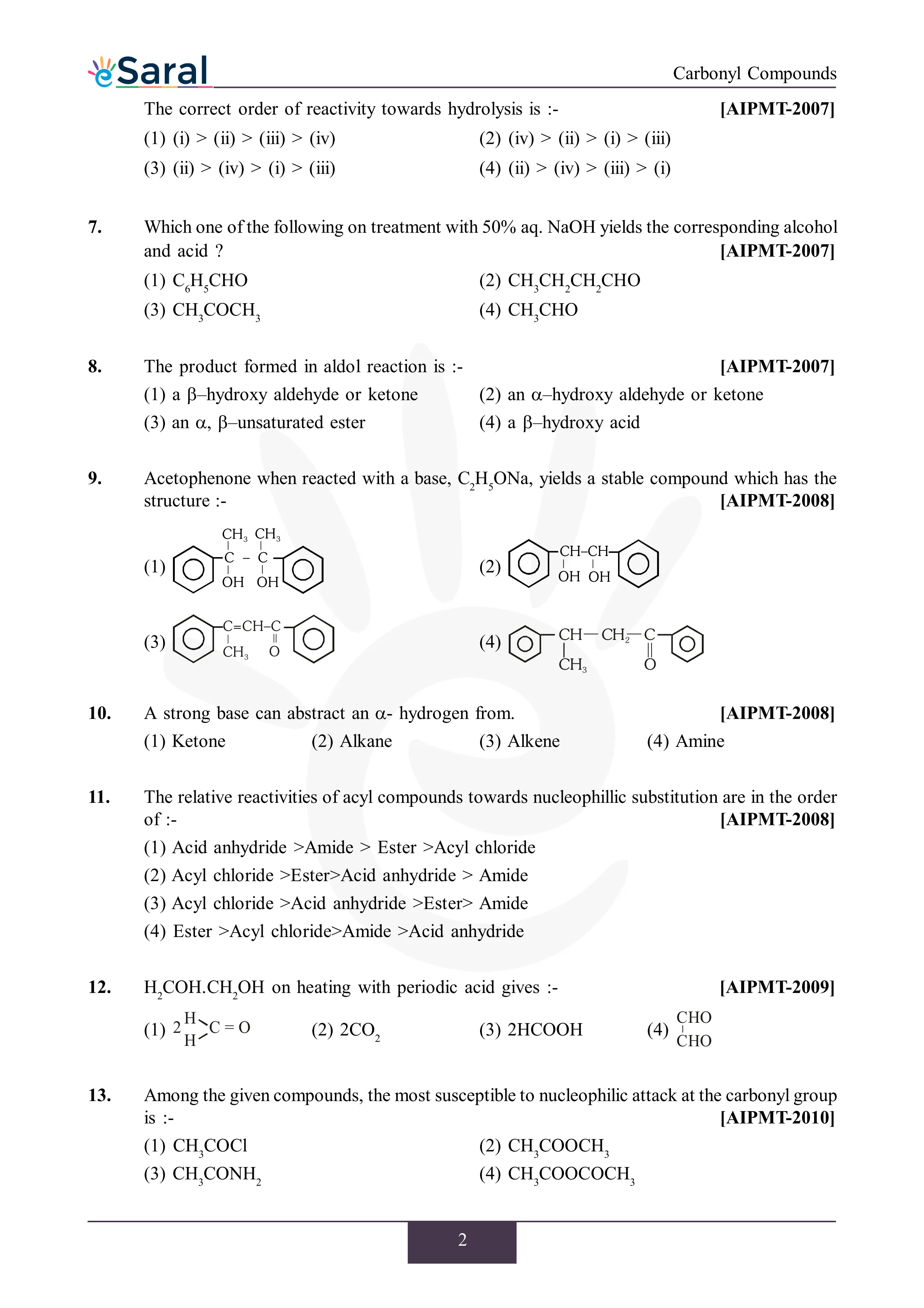
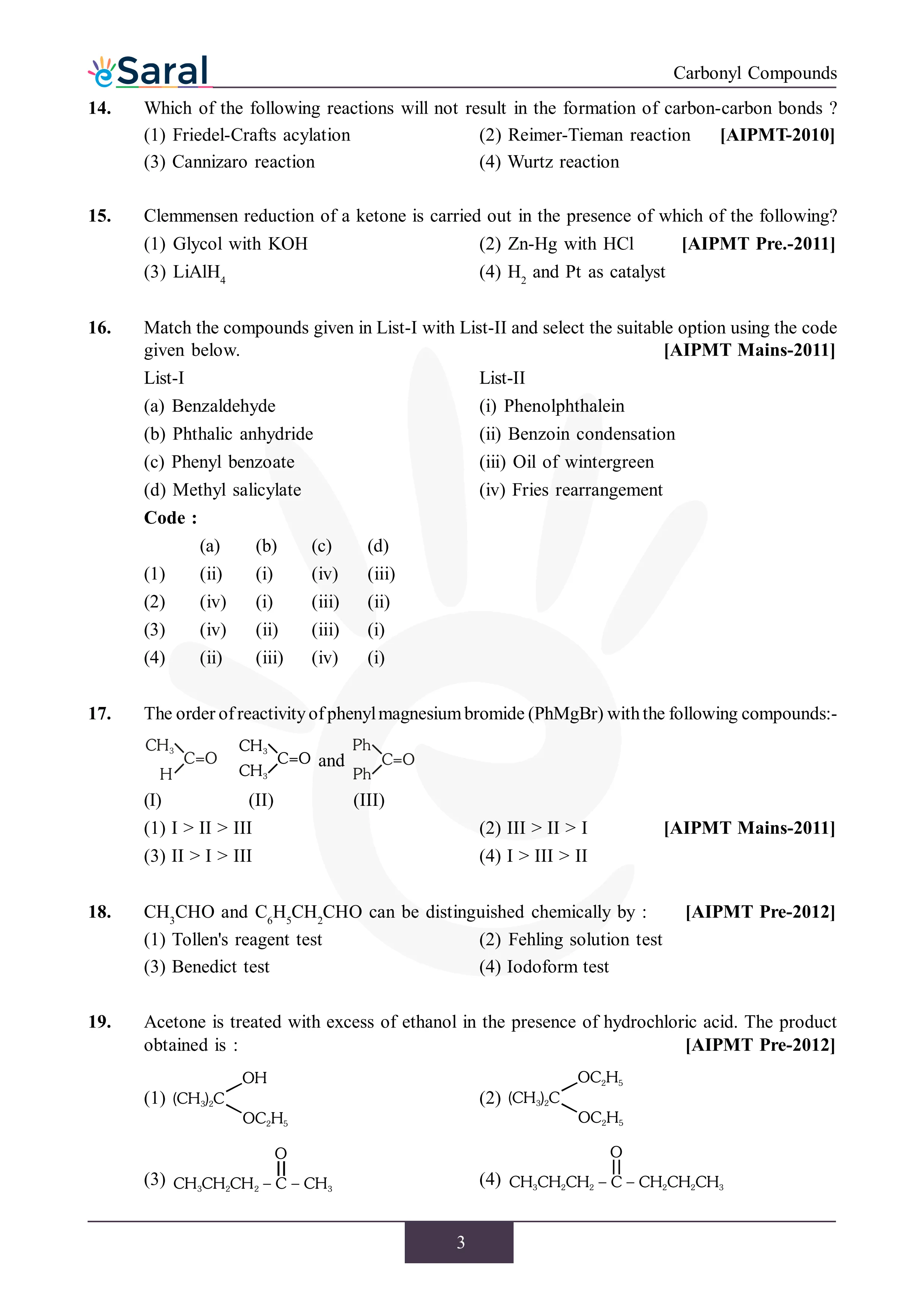
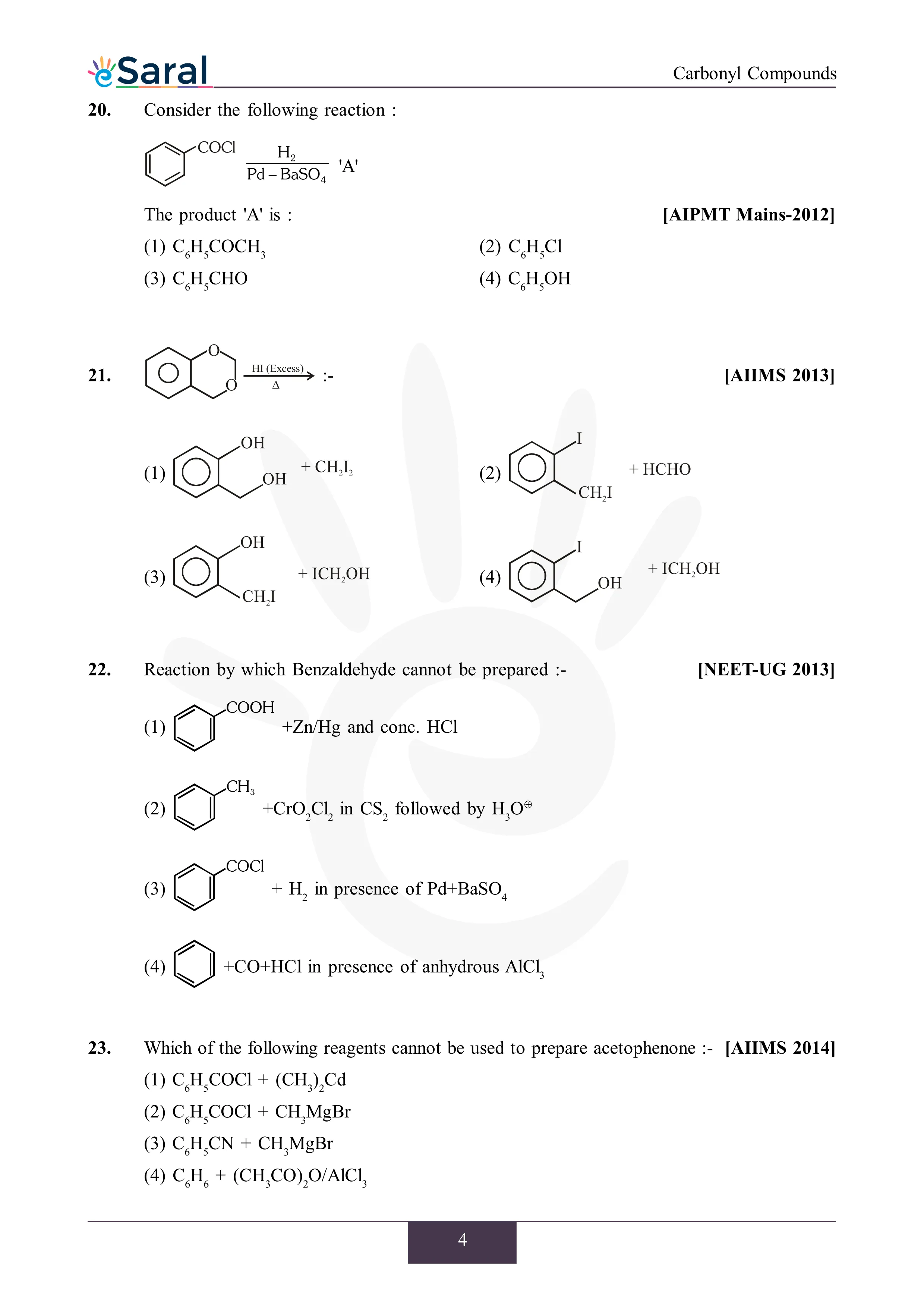
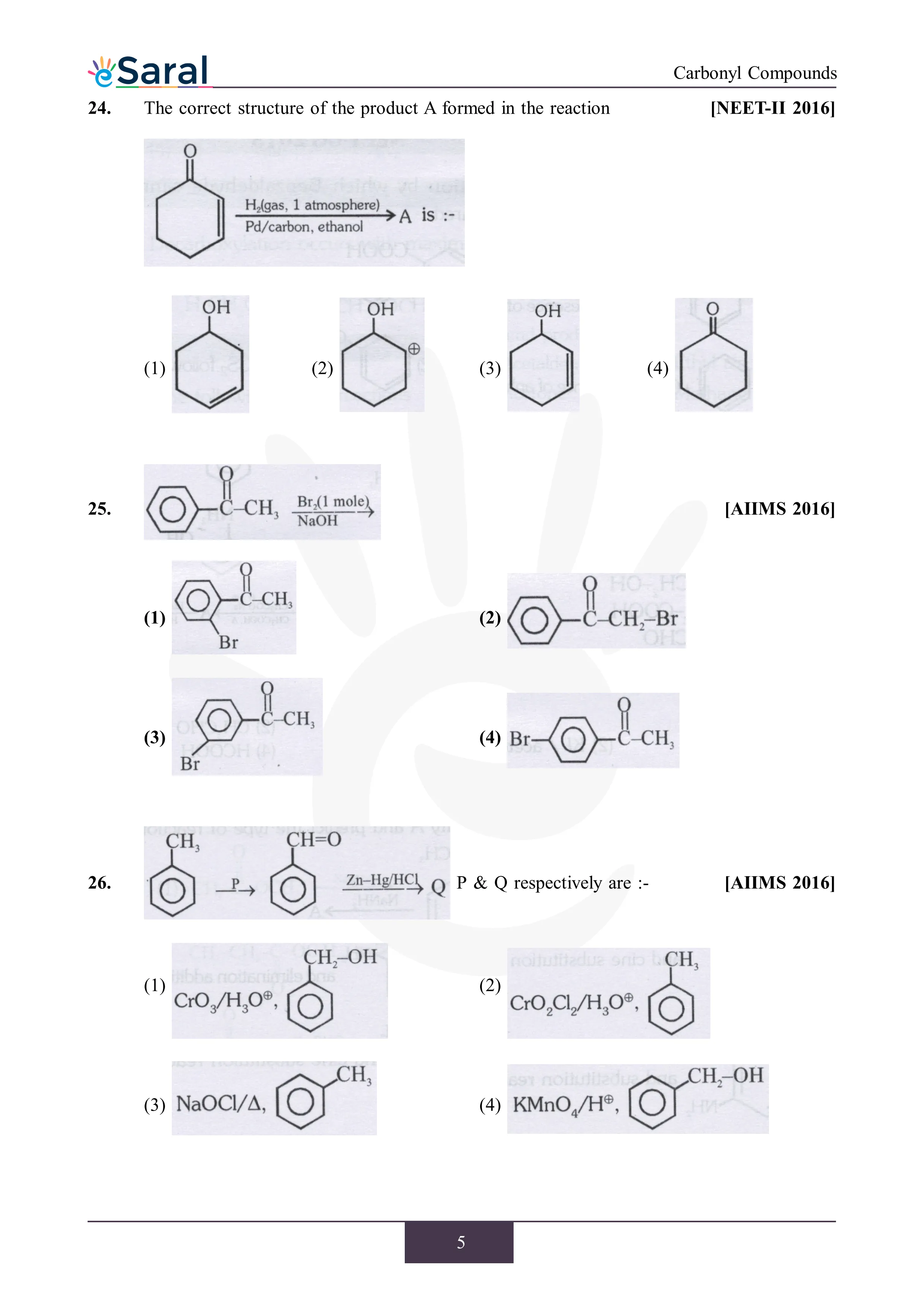
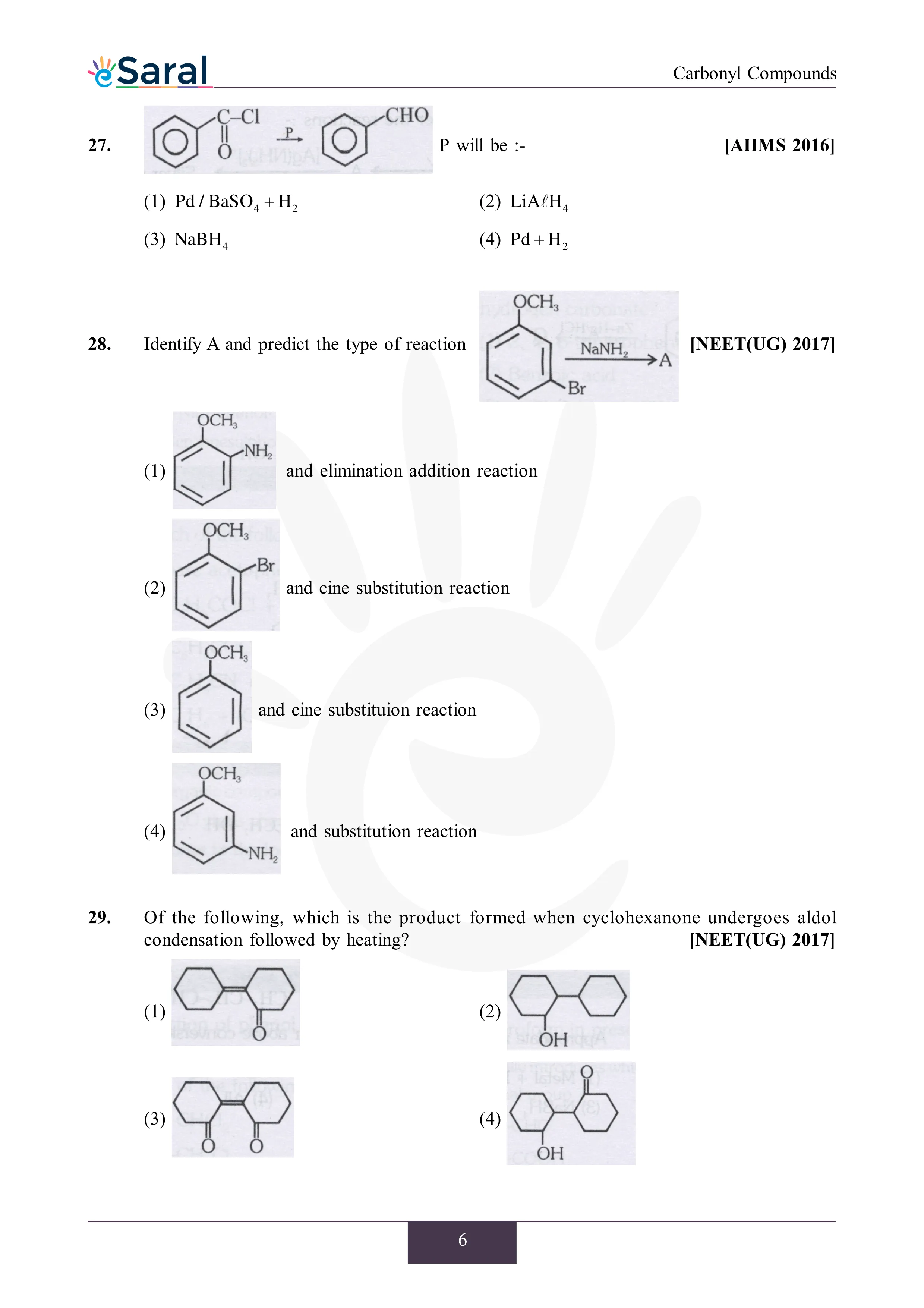
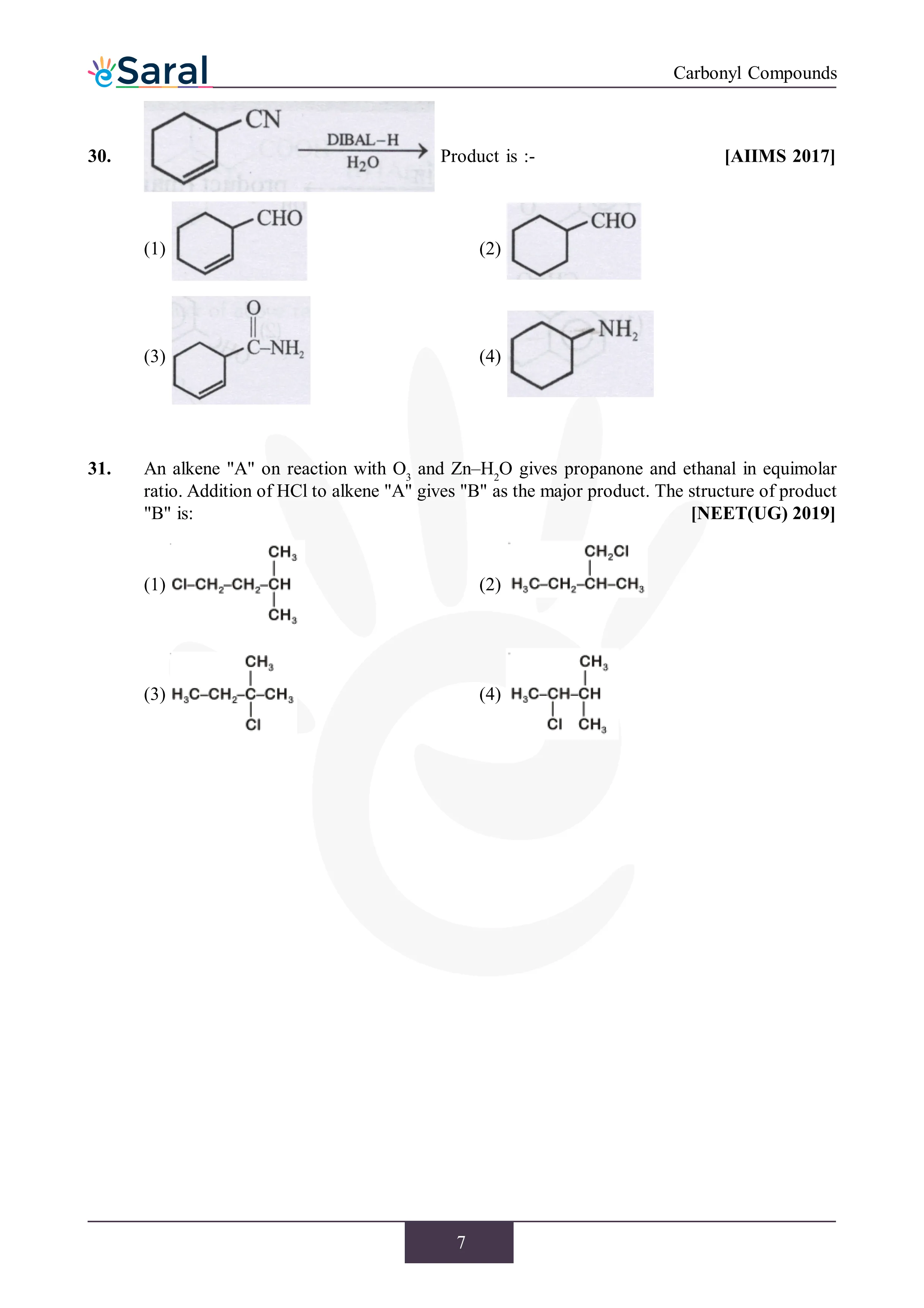
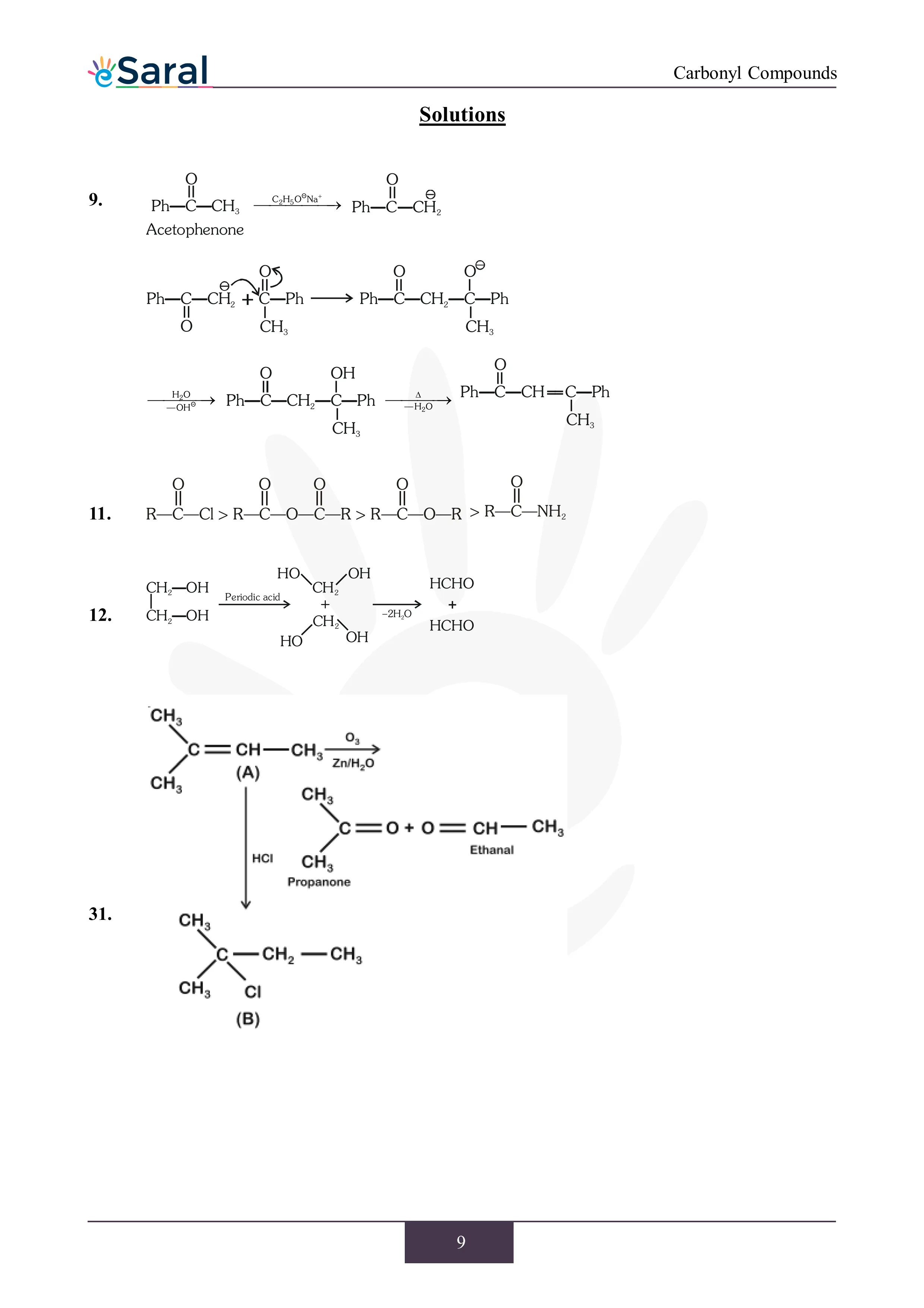
Carbonyl Compound NEET PYQ with Solutions

Frequently Asked Questions
Find answers to common questions.
How many questions come from Carbonyl Compounds in NEET every year?
NEET UG typically has 2–4 questions from the Carbonyl Compounds chapter (Class 12 Chapter 12), contributing 8–16 marks. Over the 9-year period from 2016 to 2024, NTA asked an average of 4.5 questions per year from aldehydes, ketones, and carboxylic acids combined. This makes it one of the most consistent chapters in organic chemistry for NEET.
Which subtopic of Carbonyl Compounds is most important for NEET?
Nucleophilic addition reactions and named reactions (Aldol condensation, Cannizzaro reaction) are the most frequently tested subtopics, accounting for roughly 41% of all questions from this chapter over 9 years. Carboxylic acid acidity — specifically how substituents affect pKa — is the next most important area and appears almost every year.
Is Class 11 or Class 12 chemistry more important for NEET Carbonyl questions?
Carbonyl Compounds is a Class 12 topic (Chapter 12 of NCERT Class 12 Chemistry). However, a solid understanding of Class 11 organic chemistry basics — IUPAC nomenclature, isomerism, reaction mechanisms — is essential for solving these questions correctly. Students should ensure Class 11 organic foundations are strong before tackling PYQs from this chapter.
Can I solve Carbonyl Compound NEET questions without memorising all reactions?
Yes, to a significant extent. Understanding the mechanism behind nucleophilic addition and condensation reactions allows you to predict products logically rather than memorising each reaction in isolation. That said, named reactions (Tollens', Fehling's, Cannizzaro, Clemmensen, Wolff-Kishner) must be memorised by name, reagent, and condition — these appear directly by name in NEET questions.
Are NEET Carbonyl Compound questions directly from NCERT?
Around 70–75% of NEET questions from this chapter are either directly from NCERT Class 12 Chapter 12 (in-text questions, exercises, or examples) or are one logical step beyond NCERT. NTA has stated that NEET questions are set within the NCERT framework. Practising NCERT thoroughly — including all in-text examples — before moving to PYQs is the recommended approach.