Chemical Coordination & Integration - NEET Previous Year Questions with Complete Solutions
Chemical Coordination & Integration is a high-weightage NEET Biology chapter that focuses on hormones, endocrine glands, feedback mechanisms, and related disorders, with 2–4 questions appearing regularly in NEET exams.
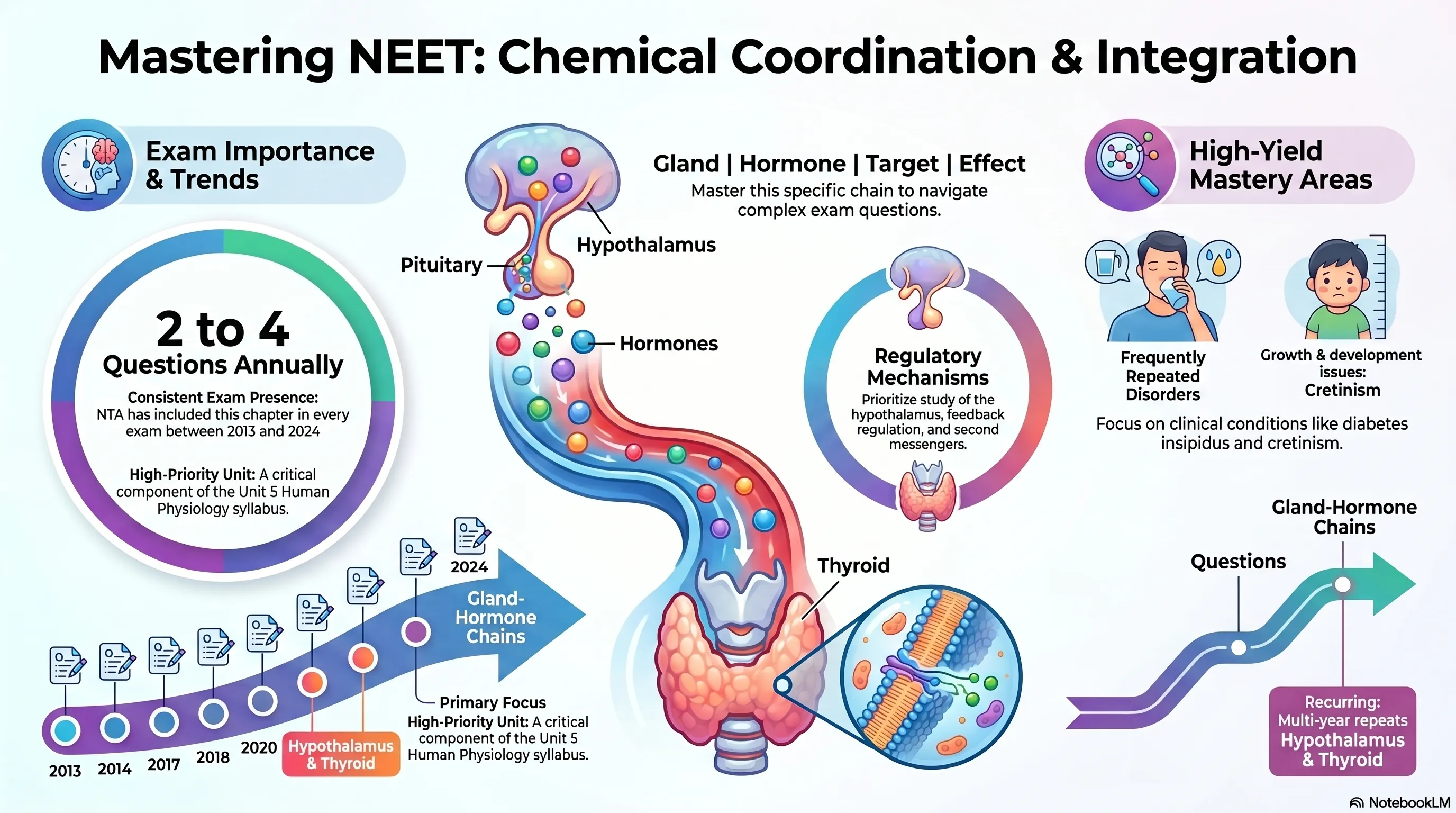
Table of Contents

eSaral › NEET › Chemical Coordination & Integration

Why Chemical Coordination & Integration Matters in NEET
Chemical Coordination & Integration is part of the Class 11 Biology syllabus (Unit 5: Human Physiology) and is one of the most consistently tested chapters in NEET. Unlike neural coordination, which tests reflex arcs and impulse transmission, this chapter tests your ability to connect gland → hormone → target organ → effect — a chain that NEET examiners love to break at different points.
Between 2013 and 2024, NTA has set at least 2 questions per year from this chapter, with some years touching 4. Topics like the role of the hypothalamus, second messenger mechanisms, feedback regulation of thyroid hormones, and disorders such as diabetes insipidus and cretinism are repeated across multiple years in slightly different frames.
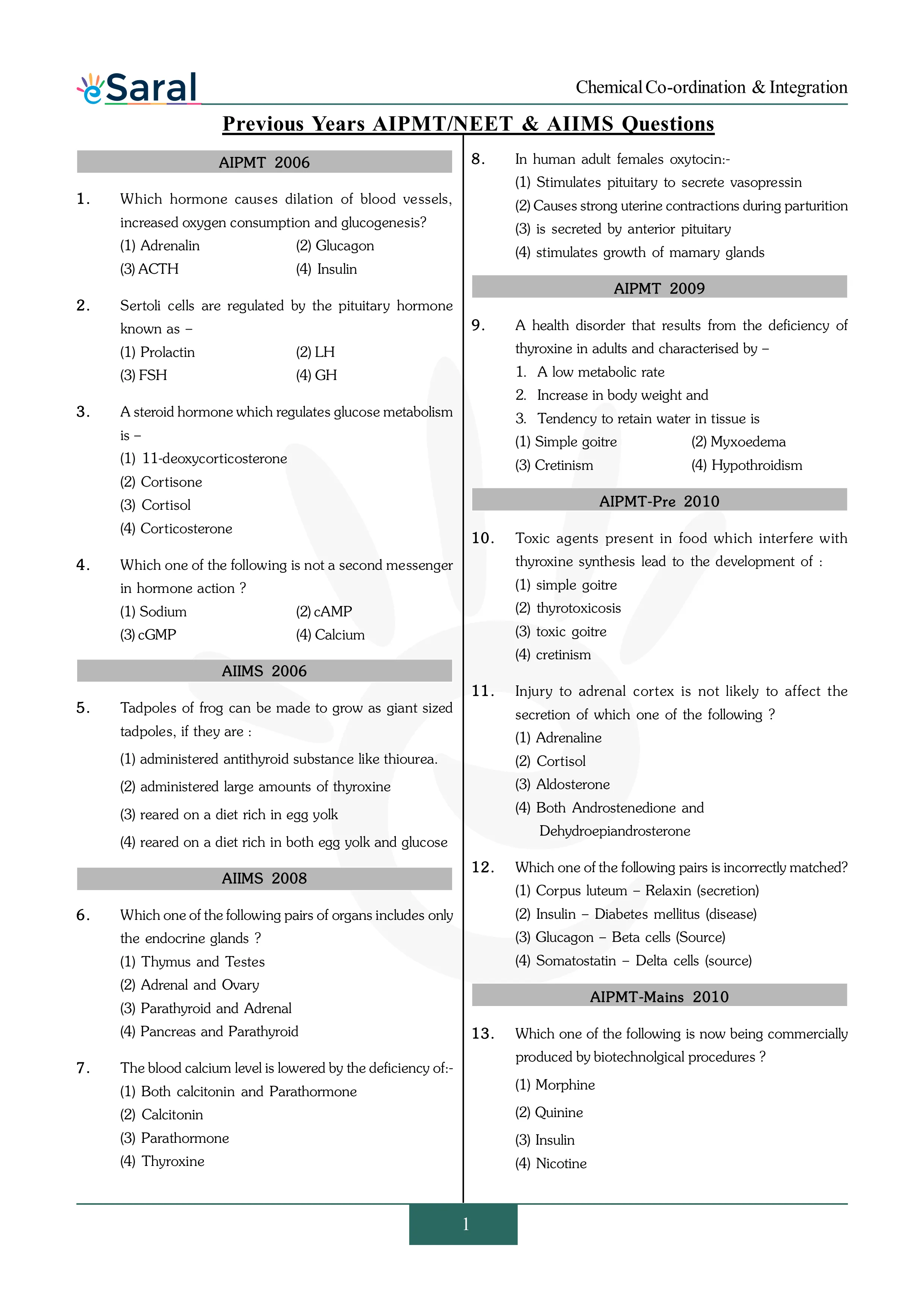
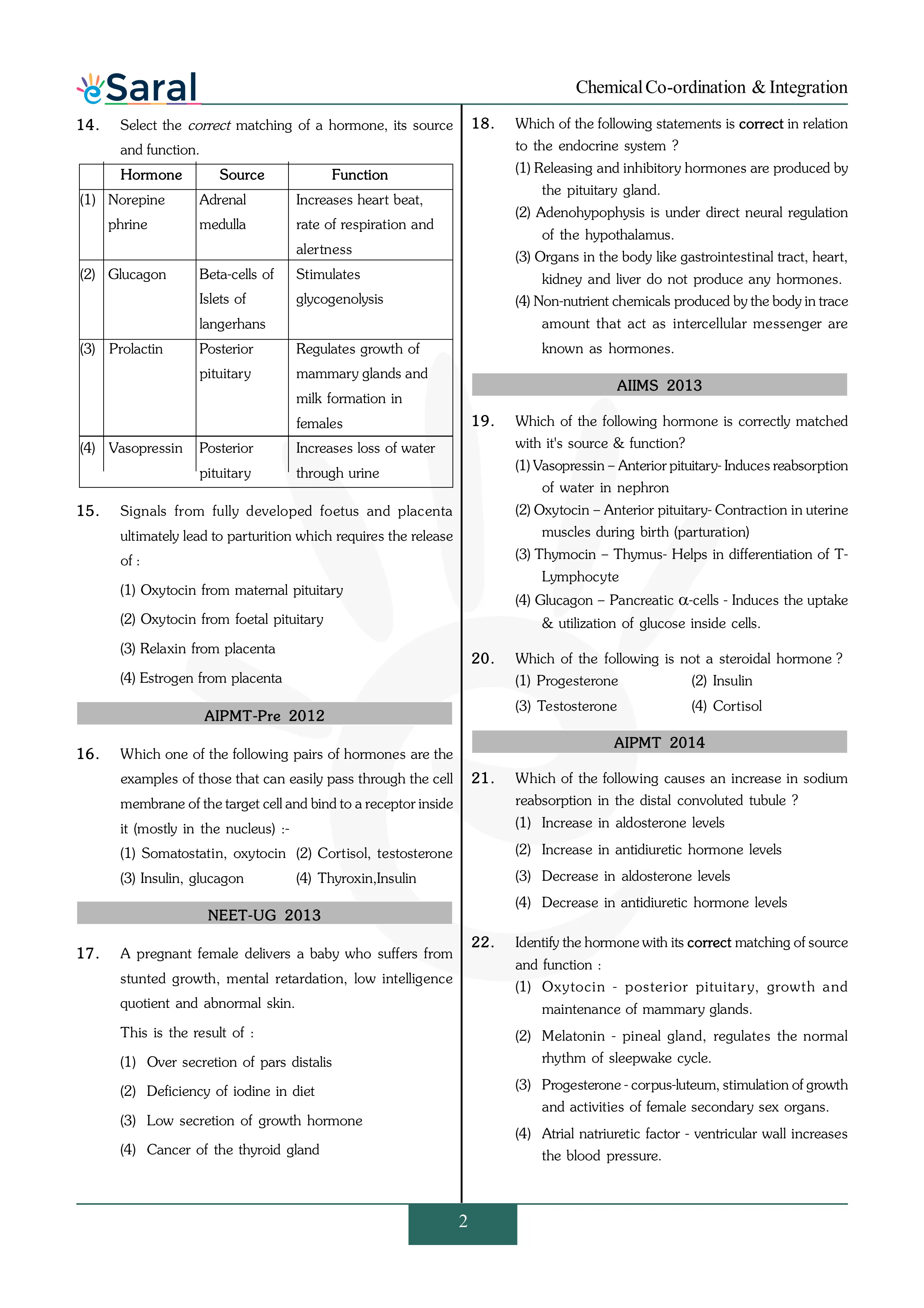
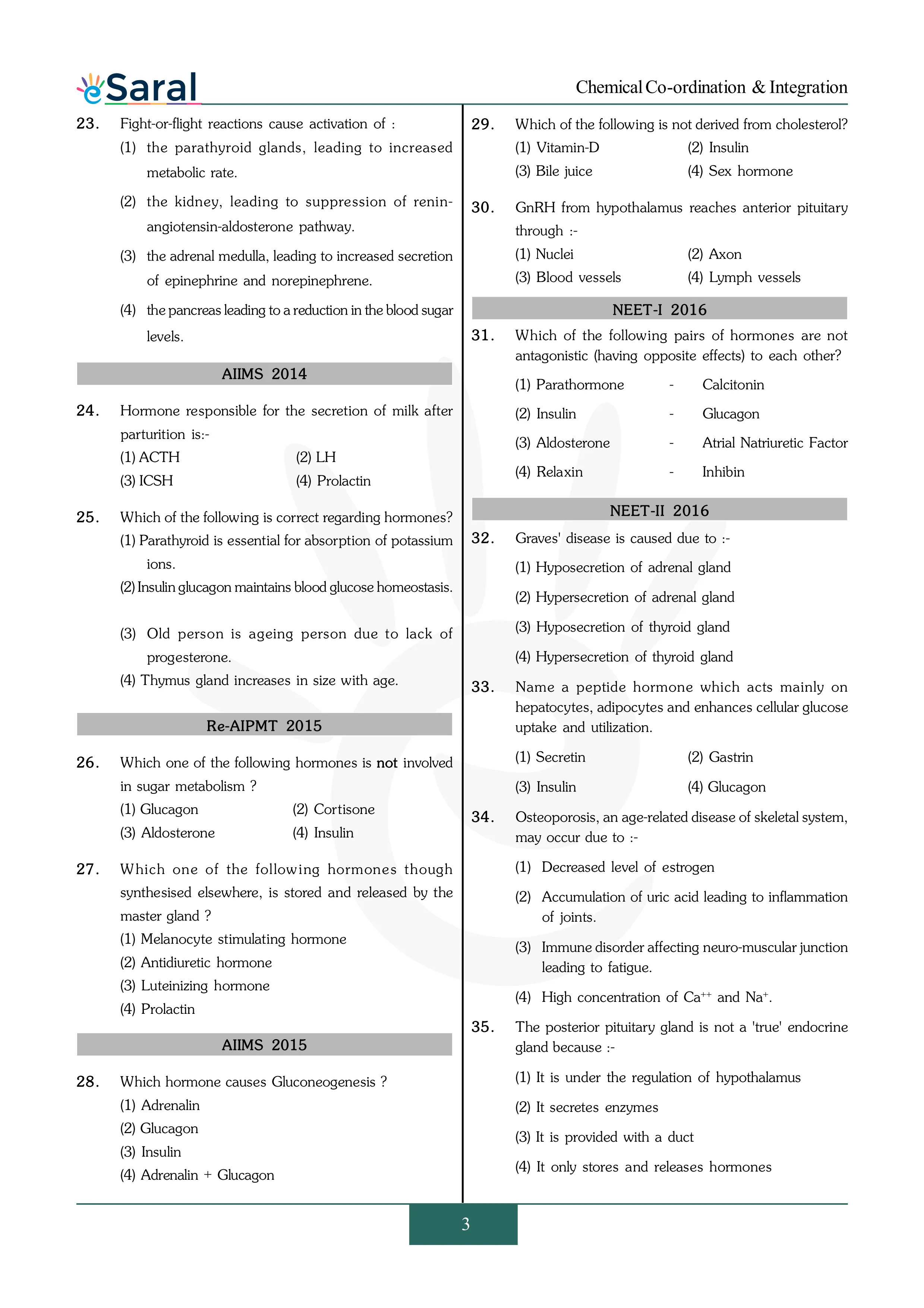
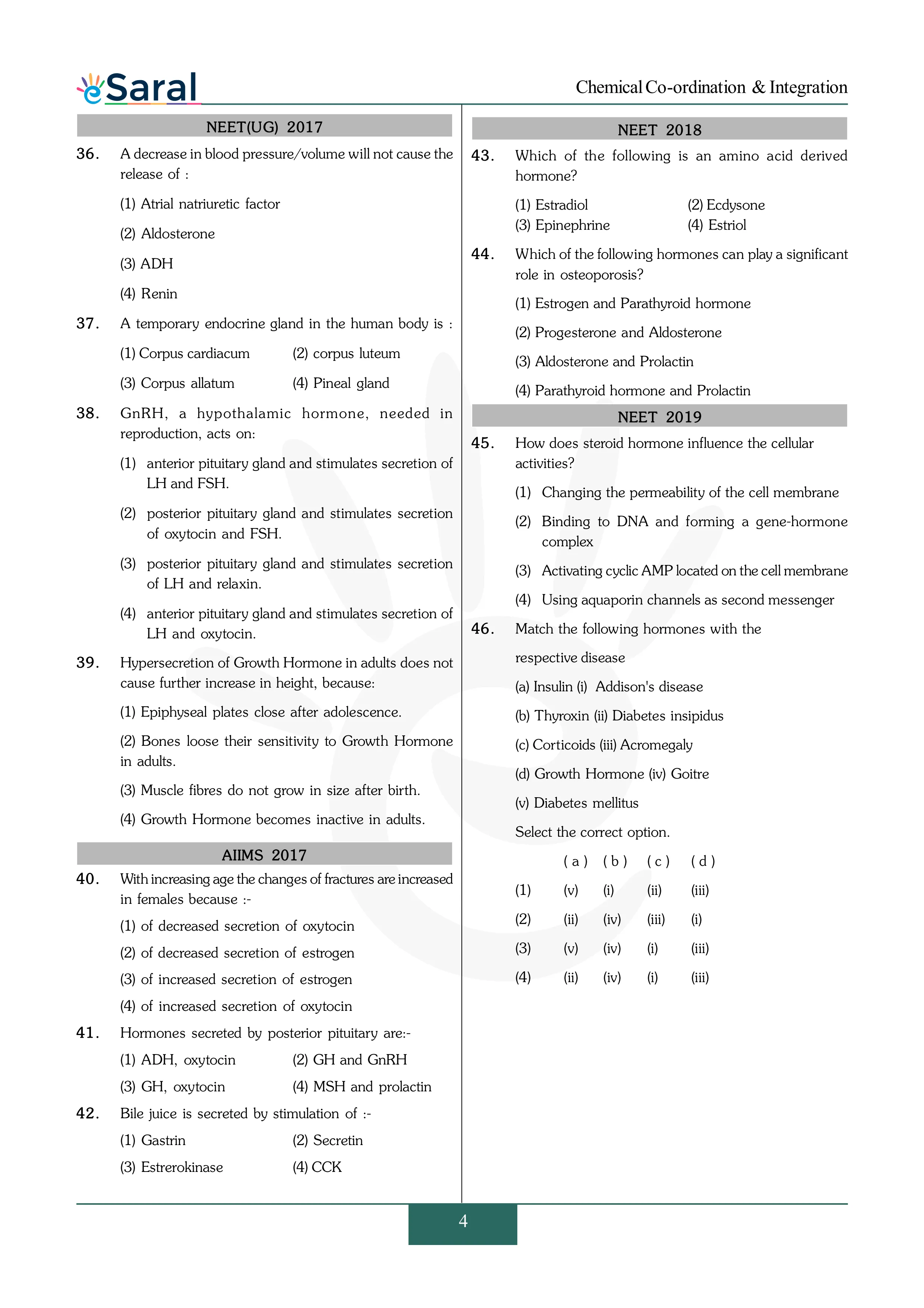
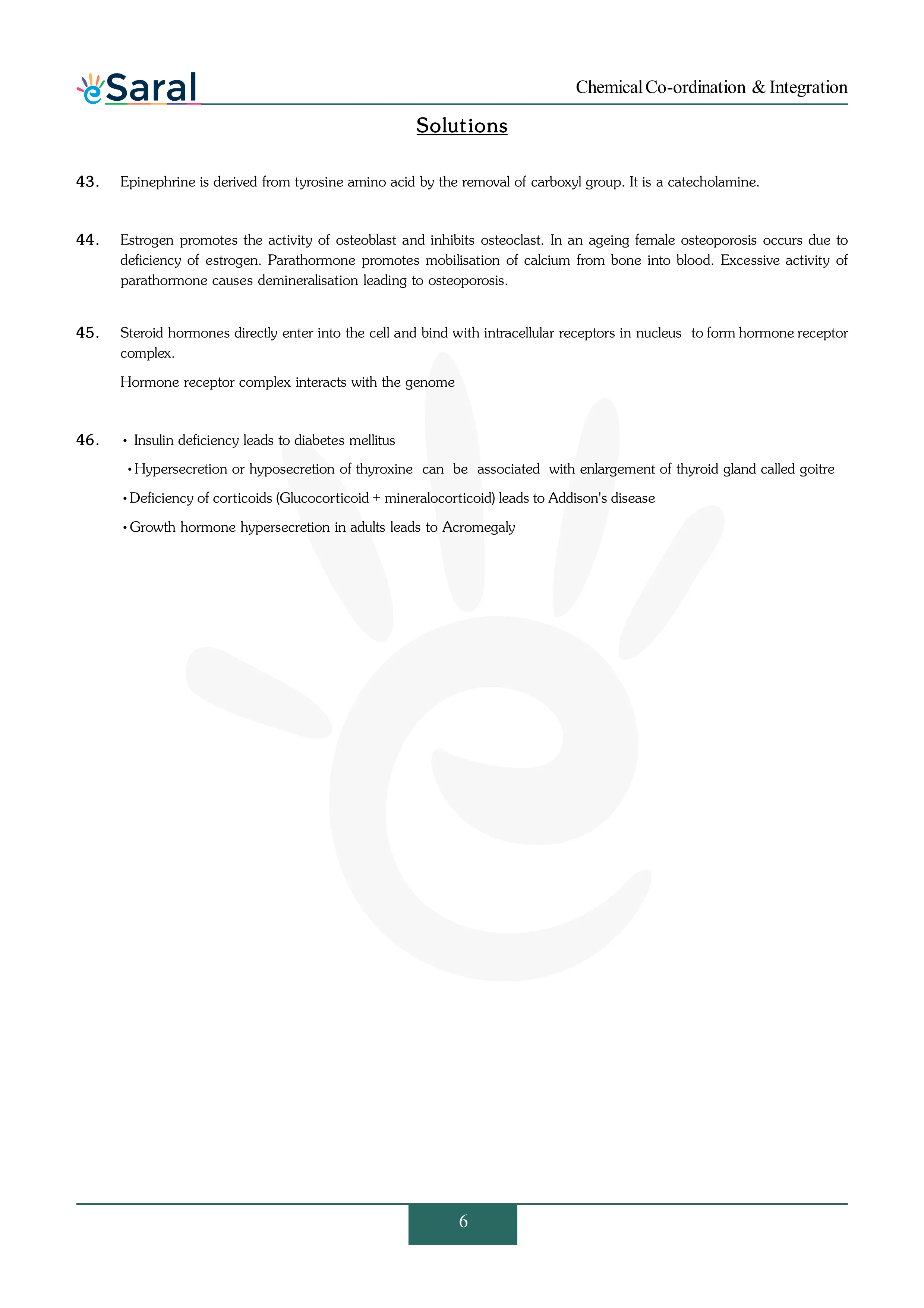
NEET Previous Year Questions

Frequently Asked Questions
Find answers to common questions.
How many questions come from Chemical Coordination & Integration in NEET?
NEET typically sets 2–4 questions from this chapter every year. Based on data from 2013–2024, the average is 2.6 questions per exam. Given that each question carries 4 marks, this chapter alone can influence your score by up to 16 marks in a good year.
Which hormones are most frequently asked in NEET PYQs?
ADH (vasopressin), TSH, oxytocin, insulin, glucagon, adrenaline, and calcitonin appear most frequently. Questions on these hormones account for over 60% of all PYQs in this chapter. Focus on their source gland, target organ, and the disorder caused by their deficiency or excess.
Is Chemical Coordination & Integration difficult for NEET?
The chapter is moderately difficult. The content is factual and NCERT-based, which makes it very scorable if studied systematically. The main challenge is the large number of hormones to remember. Using tables and diagrams significantly reduces this difficulty.
What is the difference between nervous and chemical coordination?
Nervous coordination uses electrical impulses through neurons — it is fast, short-lived, and localised. Chemical coordination uses hormones transported through blood — it is slower, longer-lasting, and can act on distant organs. NEET sometimes frames comparison questions between these two systems directly.
Can I skip this chapter and still score well in NEET Biology?
Skipping this chapter is not advisable. With 2–4 questions appearing consistently every year and the content being largely factual (direct NCERT), this is one of the highest return-on-effort chapters in NEET Biology. Most toppers treat it as a scoring chapter, not a difficult one.