Class 12 polymers Notes for IIT JEE & NEET
This page provides concise Class 12 Polymers notes for JEE and NEET, covering polymer classification, monomers, preparation methods, important reactions, and exam-focused concepts for quick and effective revision.
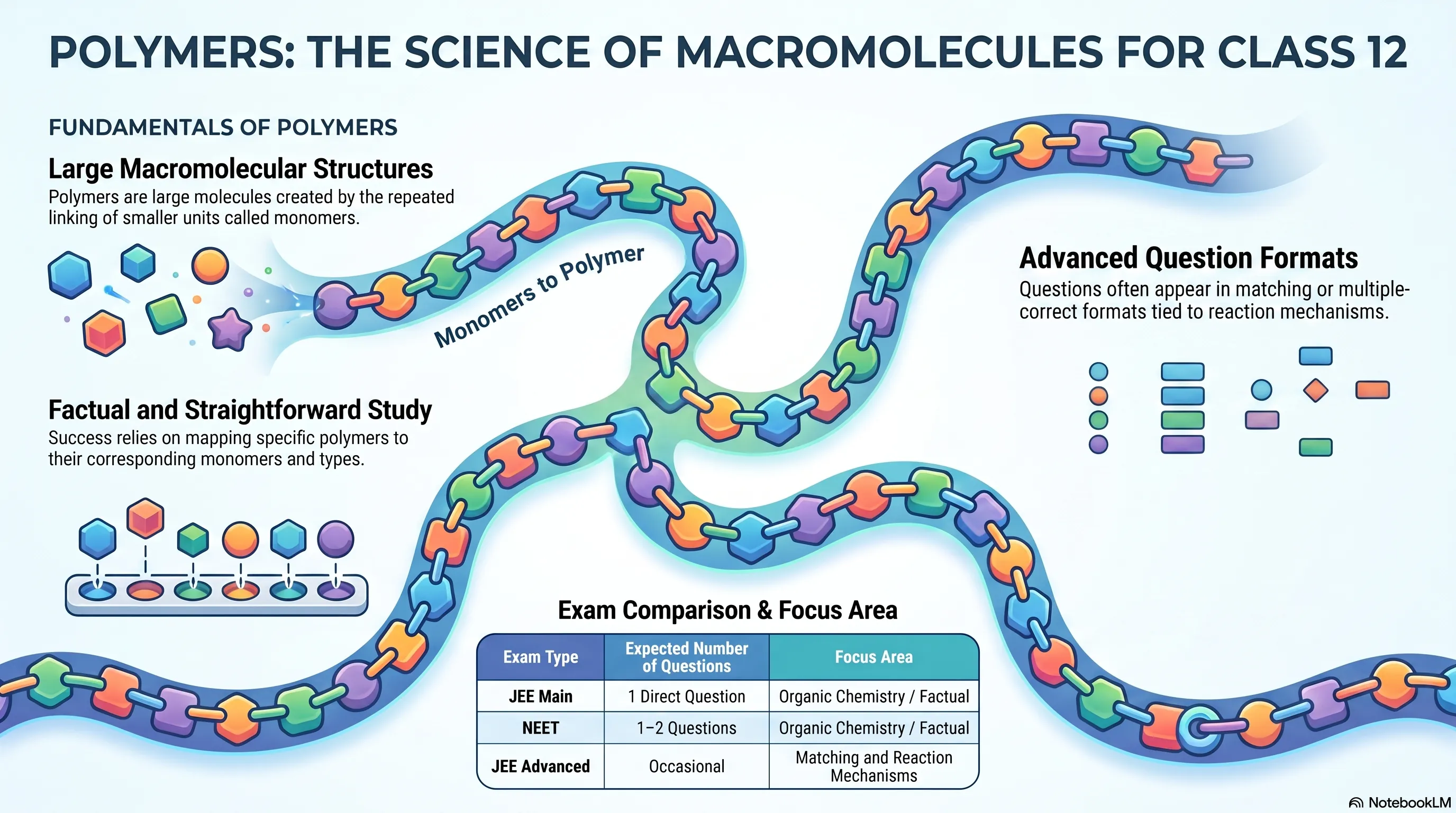
Table of Contents

eSaral › Class 12 >Class 12 polymers Notes for IIT JEE & NEET

🚀 Checkout eSaral Courses
What Is the Polymers Chapter About in Class 12?
The Polymers chapter (Chapter 15, NCERT Class 12 Chemistry) introduces macromolecules formed by the repeated linking of smaller units called monomers. It is one of the most scoring chapters in both JEE Main and NEET because the content is largely factual — once you map each polymer to its monomer and type, questions become straightforward.
According to the NTA's official JEE Main syllabus, Polymers falls under the Organic Chemistry section and typically yields one direct question in JEE Main Paper 1 and 1–2 questions in NEET. In JEE Advanced, polymers occasionally appear in matching or multiple-correct formats tied to reaction mechanisms.
Class 12 Polymers Notes
India's Best Exam Preparation for Class 12th - Download Now
India's Best Exam Preparation for Class 12th - Download Now
India's Best Exam Preparation for Class 12th - Download Now
Frequently Asked Questions
Find answers to common questions.
What is the difference between addition and condensation polymerisation?
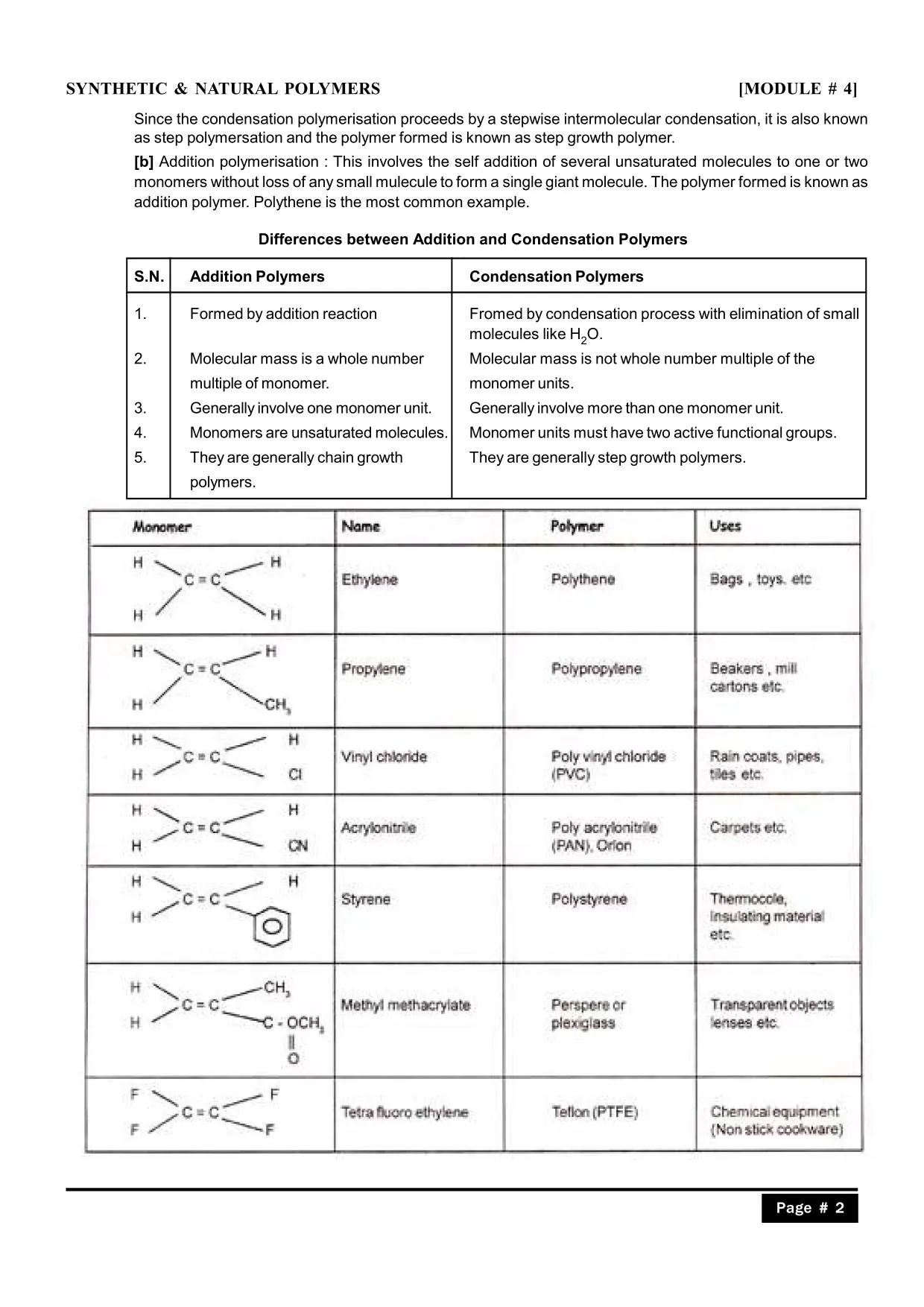
Addition polymerisation involves monomers with double bonds joining together without losing any atoms — the repeating unit has the same formula as the monomer. Condensation polymerisation involves bifunctional monomers reacting with loss of small molecules like water. Nylon and Terylene are condensation polymers; PVC and Teflon are addition polymers.
Which polymers have the highest weightage in JEE Main?
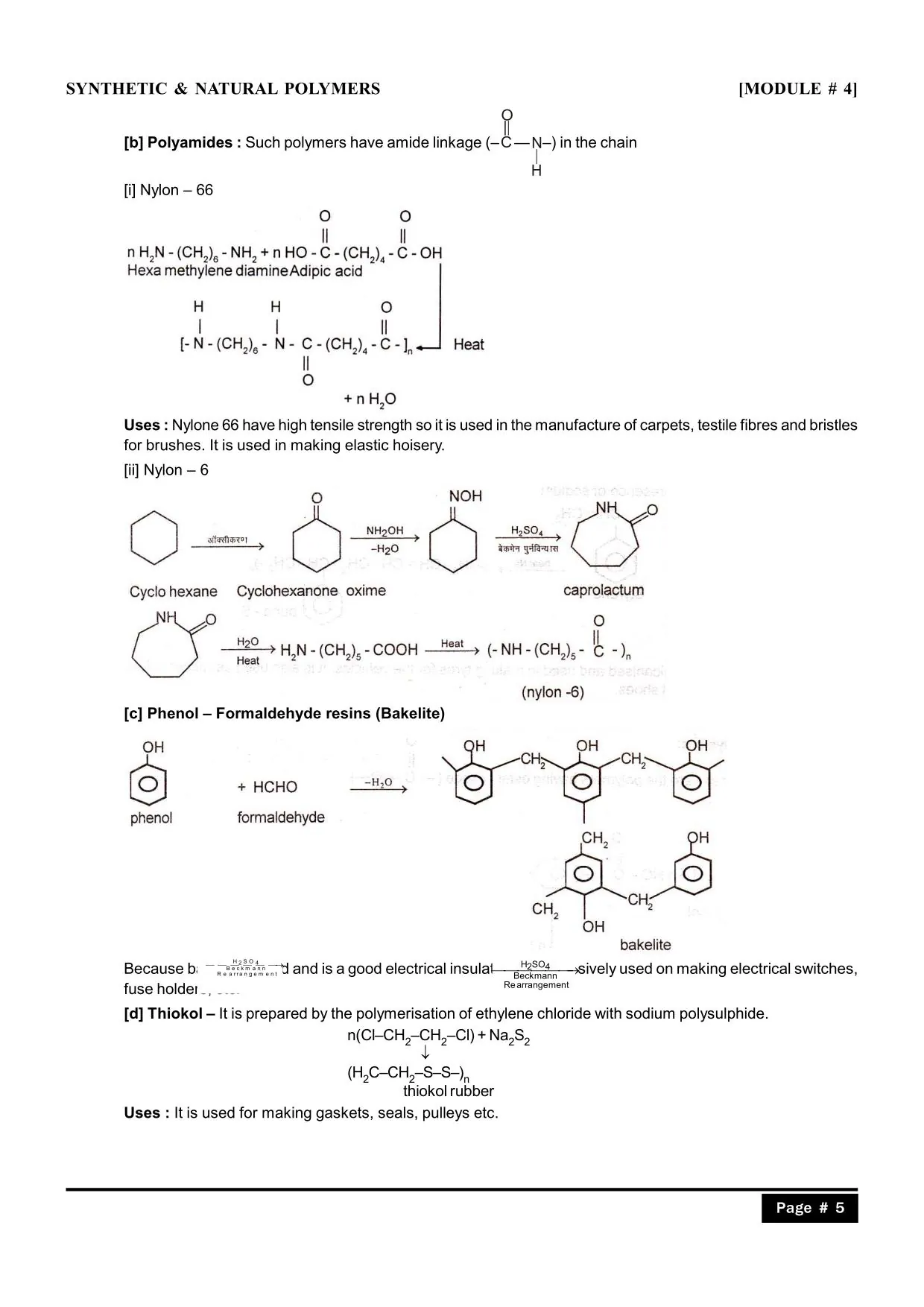
Nylon-6,6, Bakelite, Terylene, and PVC consistently appear in JEE Main. Questions typically ask for the monomer, linkage type (amide, ester), or classification (thermoplastic vs thermosetting). Nylon-6,6 and Bakelite alone have appeared in 6+ JEE Main papers in the last decade.
What is vulcanisation and why is it important?
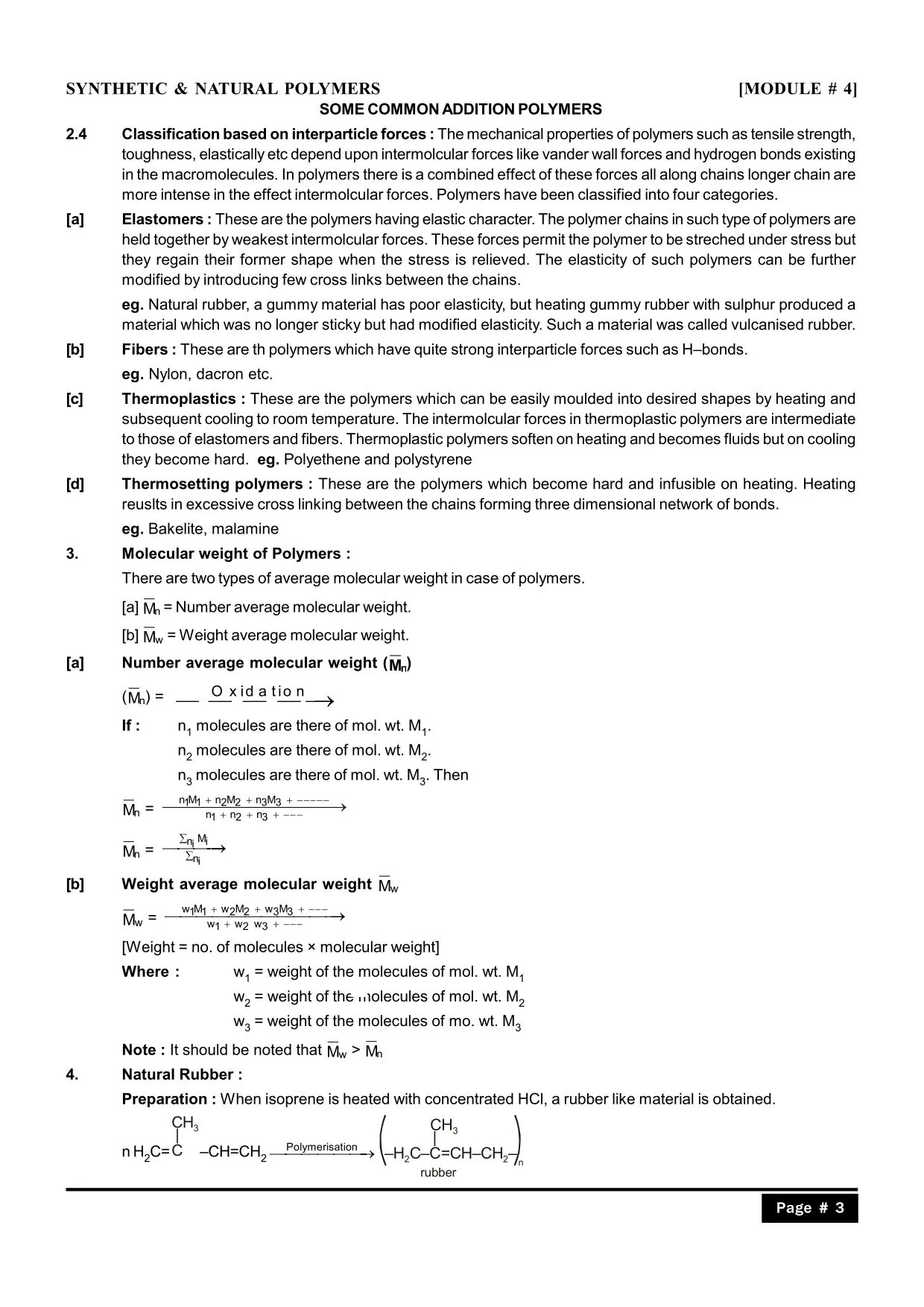
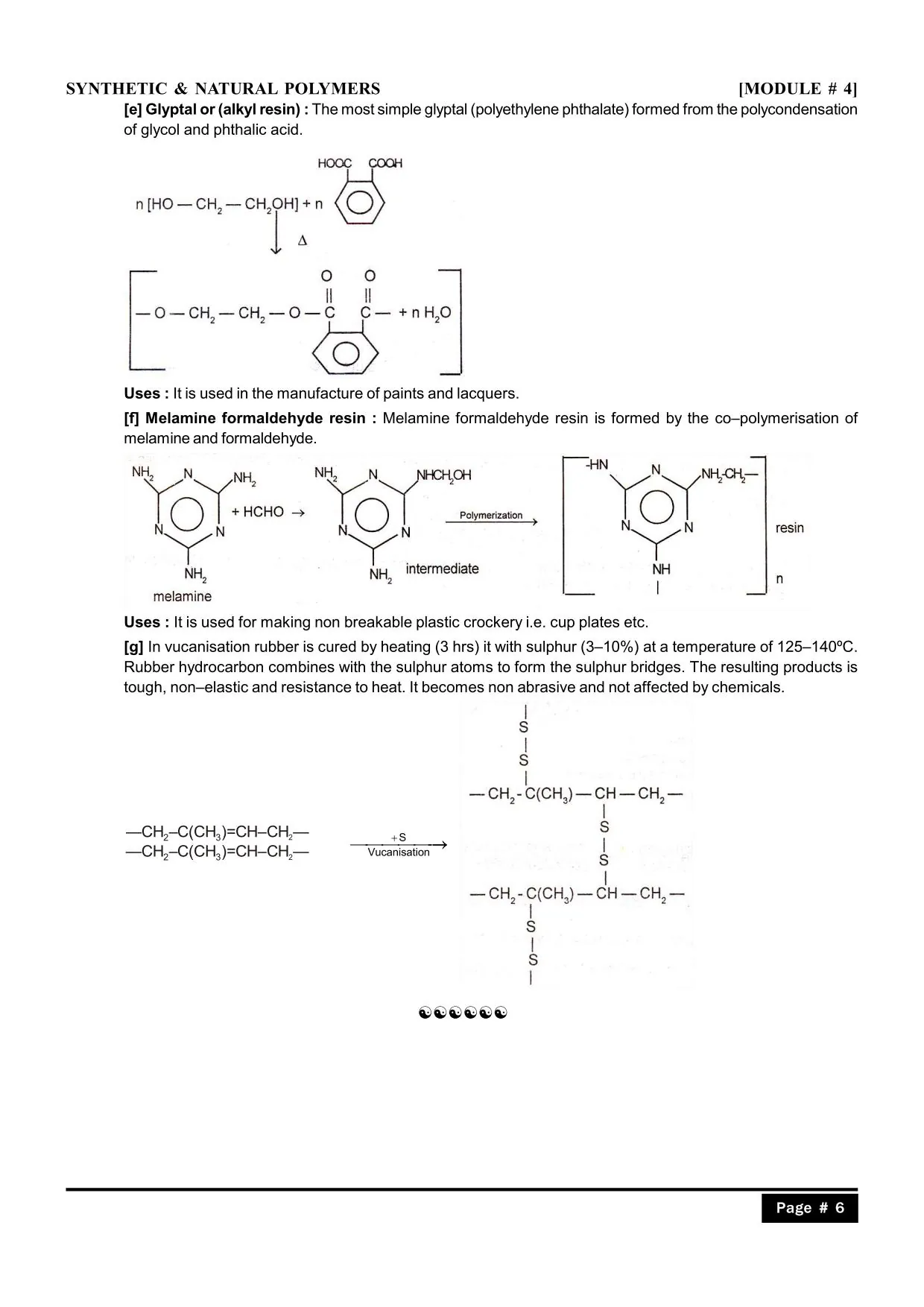
Vulcanisation is the process of heating natural rubber with sulphur at around 150°C. The sulphur atoms form cross-links between the cis-polyisoprene chains. This makes rubber harder, more elastic, and resistant to heat and cold — properties that raw natural rubber does not have. It is directly asked in both JEE Main and NEET.
What is PHBV and why is it tested in exams?
PHBV (Poly-β-hydroxybutyrate-co-β-hydroxyvalerate) is the most important biodegradable polymer in the Class 12 syllabus. Its monomers are 3-hydroxybutanoic acid and 3-hydroxypentanoic acid. It is used in packaging and medical devices. NEET frequently asks for its monomer names, so memorise the full IUPAC names.
What is the degree of polymerisation?
The degree of polymerisation (n) is the number of repeating monomer units in a polymer chain. A higher degree of polymerisation means a longer chain and generally higher molecular mass. For JEE Advanced, you may need to distinguish between number-average molecular mass and weight-average molecular mass.