General Organic Chemistry - NEET Previous Year Questions with Complete Solutions
Practice NEET General Organic Chemistry (GOC) Previous Year Questions with complete solutions to master nomenclature, stereochemistry, electronic effects, reaction mechanisms, and build a strong foundation for scoring high in Organic Chemistry.
Table of Contents

eSaral › NEET › General Organic Chemistry - NEET Previous Year Questions with Complete Solutions

Why GOC Is Critical for NEET Chemistry
General Organic Chemistry is the foundation of every organic chapter in NEET-UG. Without a strong grasp of GOC, students struggle with Alcohols, Amines, Carbonyl Compounds, and Biomolecules — chapters that together account for 15–18 marks in a typical NEET paper.
According to NTA's official NEET-UG syllabus, GOC spans nomenclature, stereochemistry, electronic displacement effects, and reaction mechanisms. These concepts do not disappear after one chapter — they appear as reasoning steps inside questions from every organic topic.
Students who score 340+ in NEET Chemistry consistently report mastering GOC first. eSaral's IIT Bombay faculty — including AIR-2 and AIR-41 holders — teach GOC as a mandatory priority in the first month of NEET preparation, because every shortcut in organic chemistry is rooted in GOC logic.
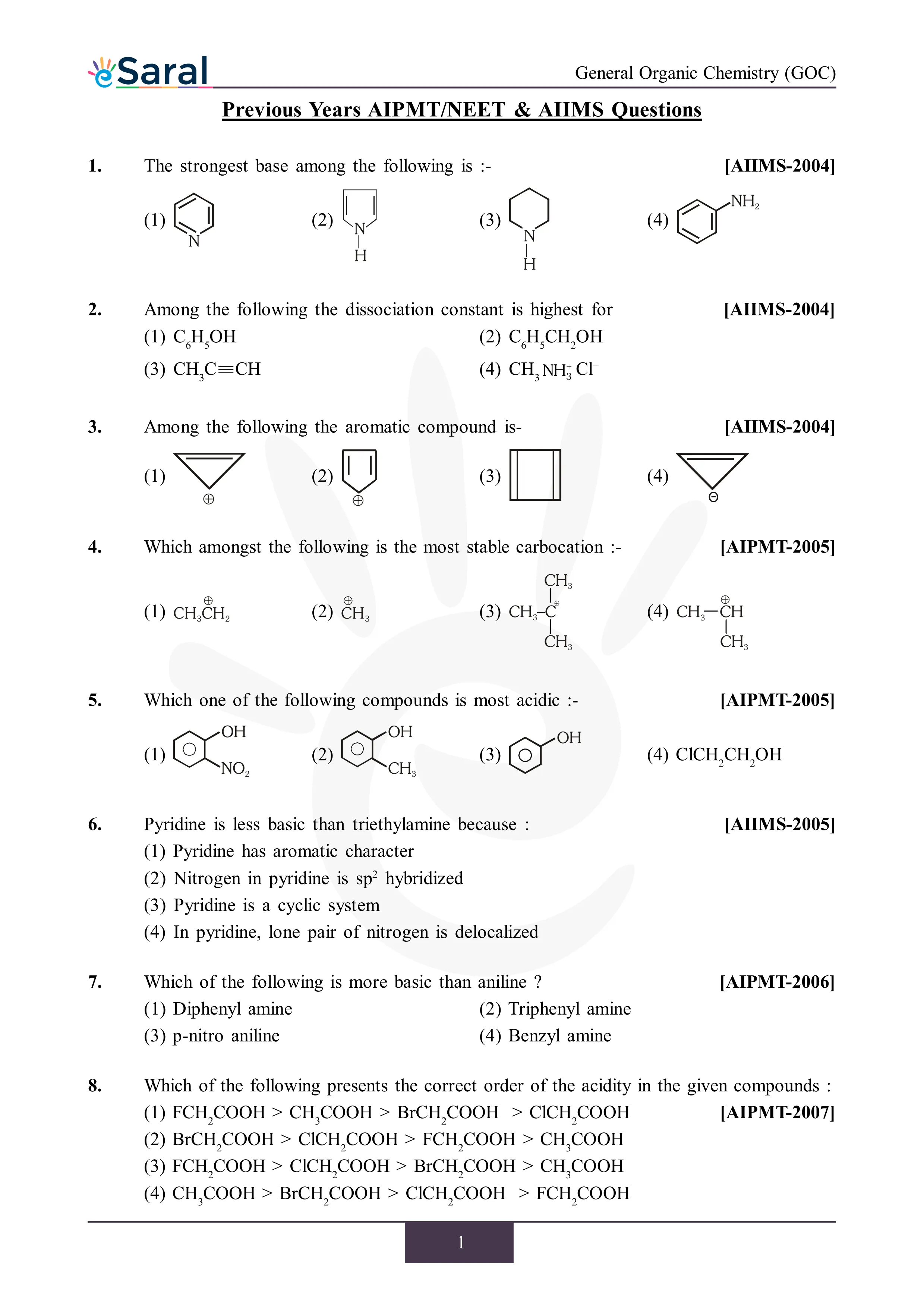
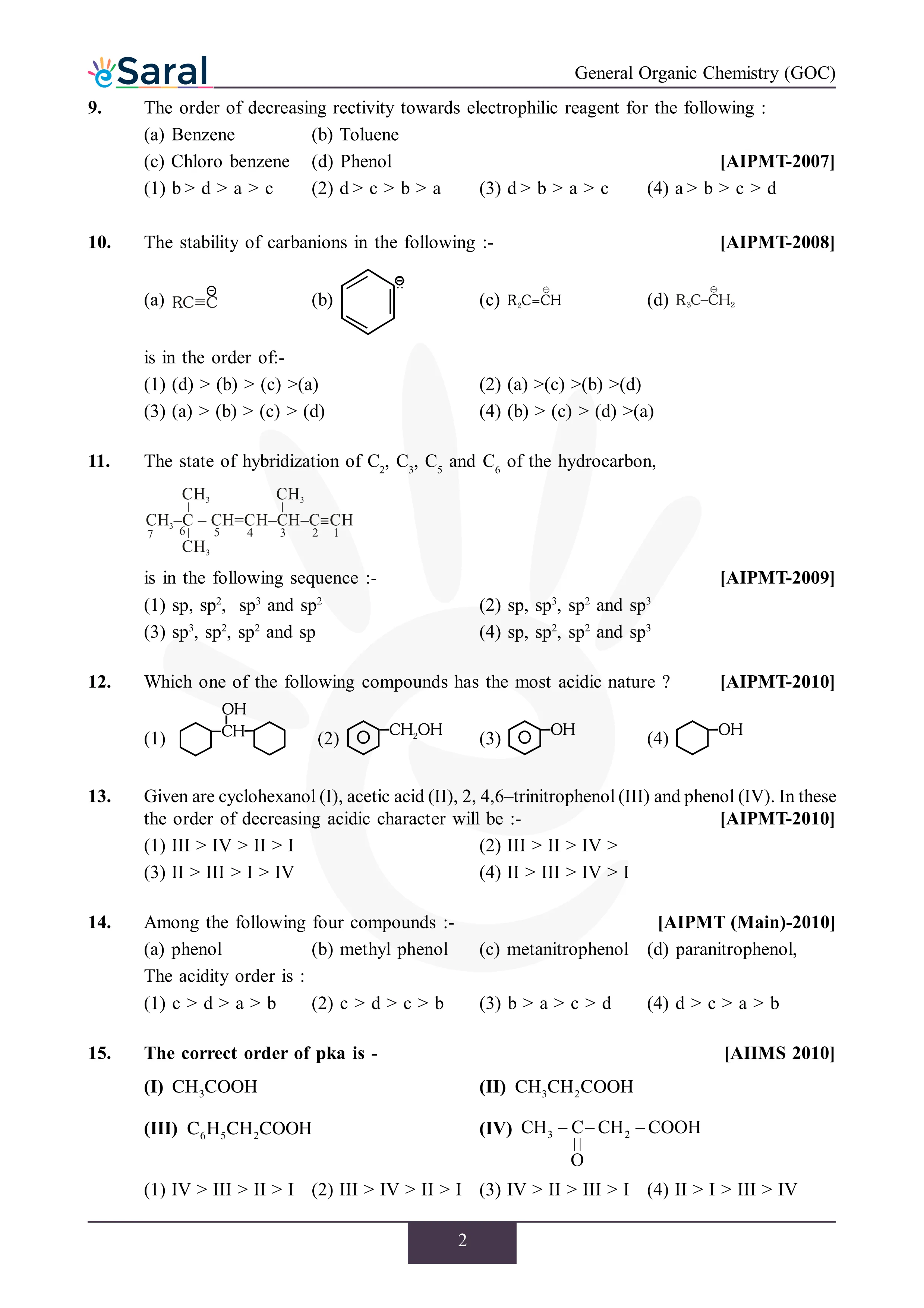
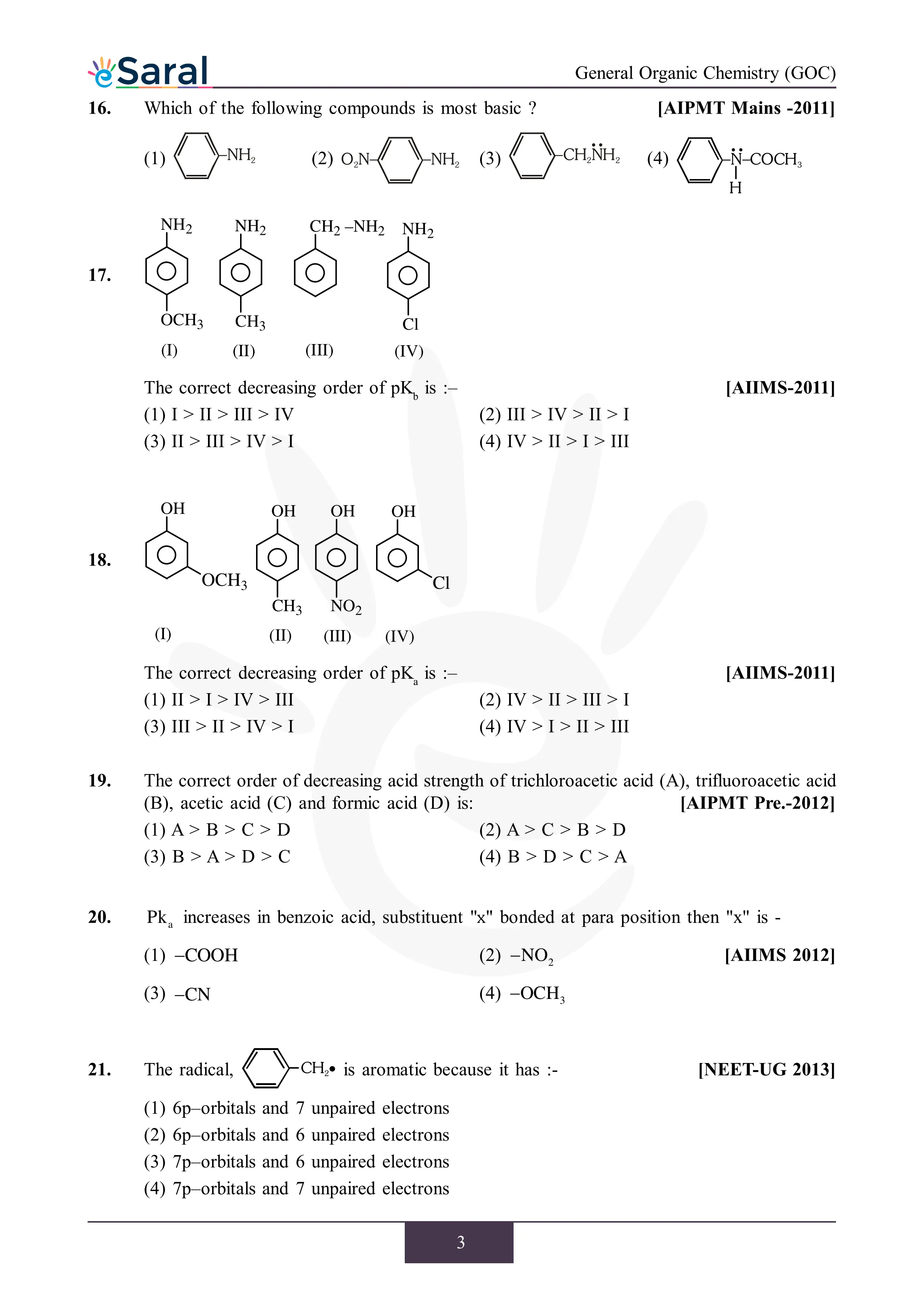
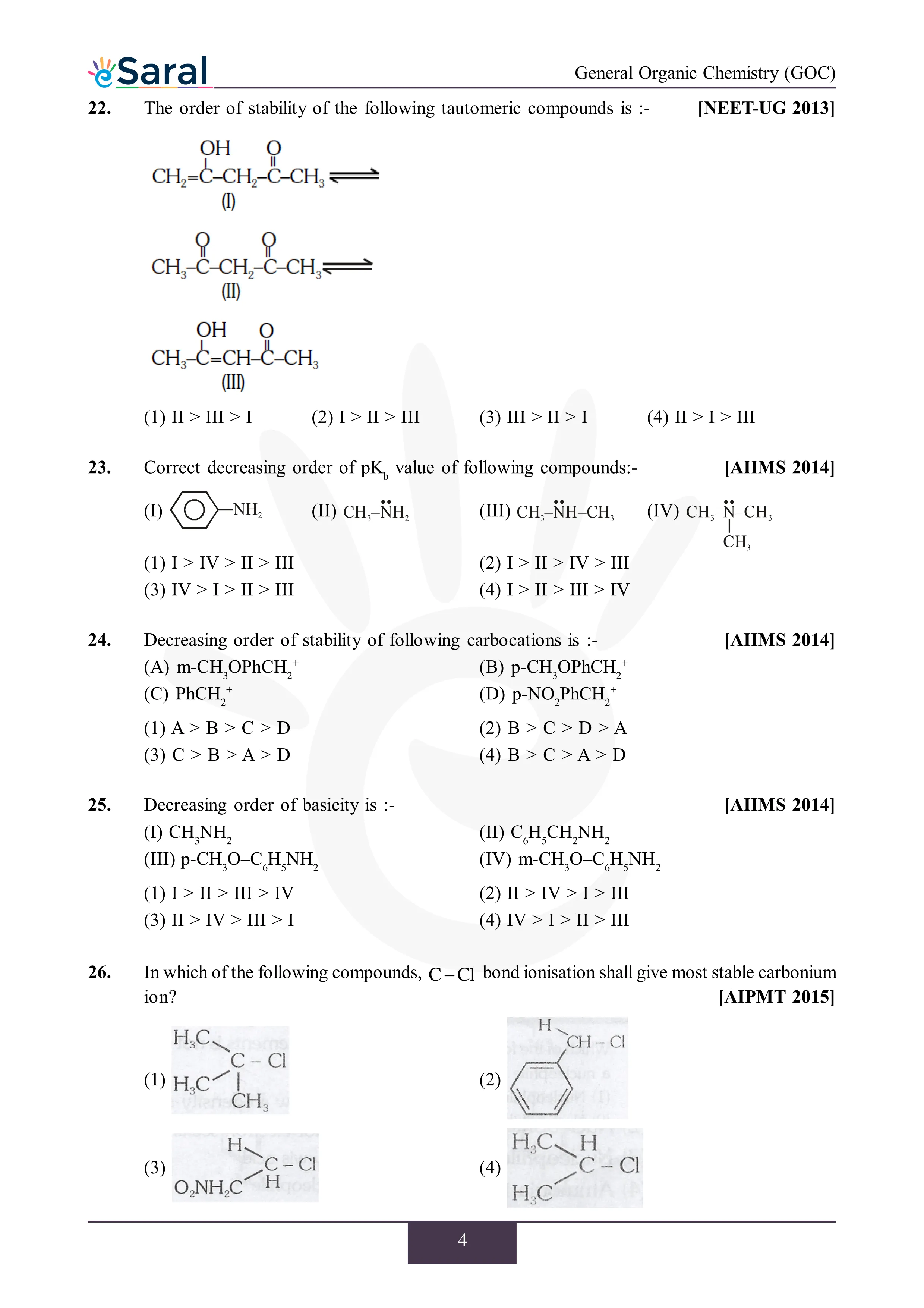
NEET Previous Year Questions
Get complete NEET previous year questions for Physics, Chemistry and Biology.
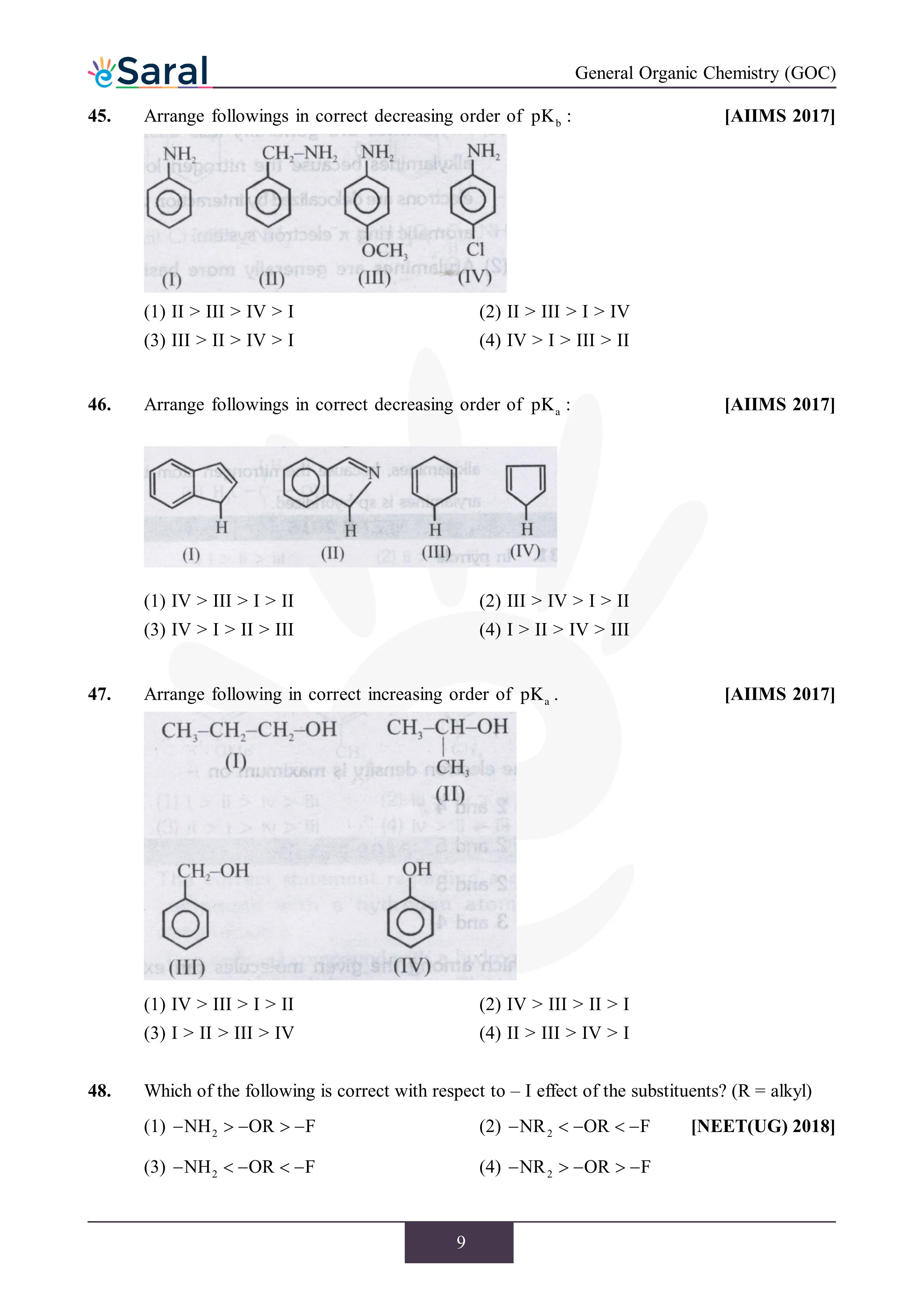
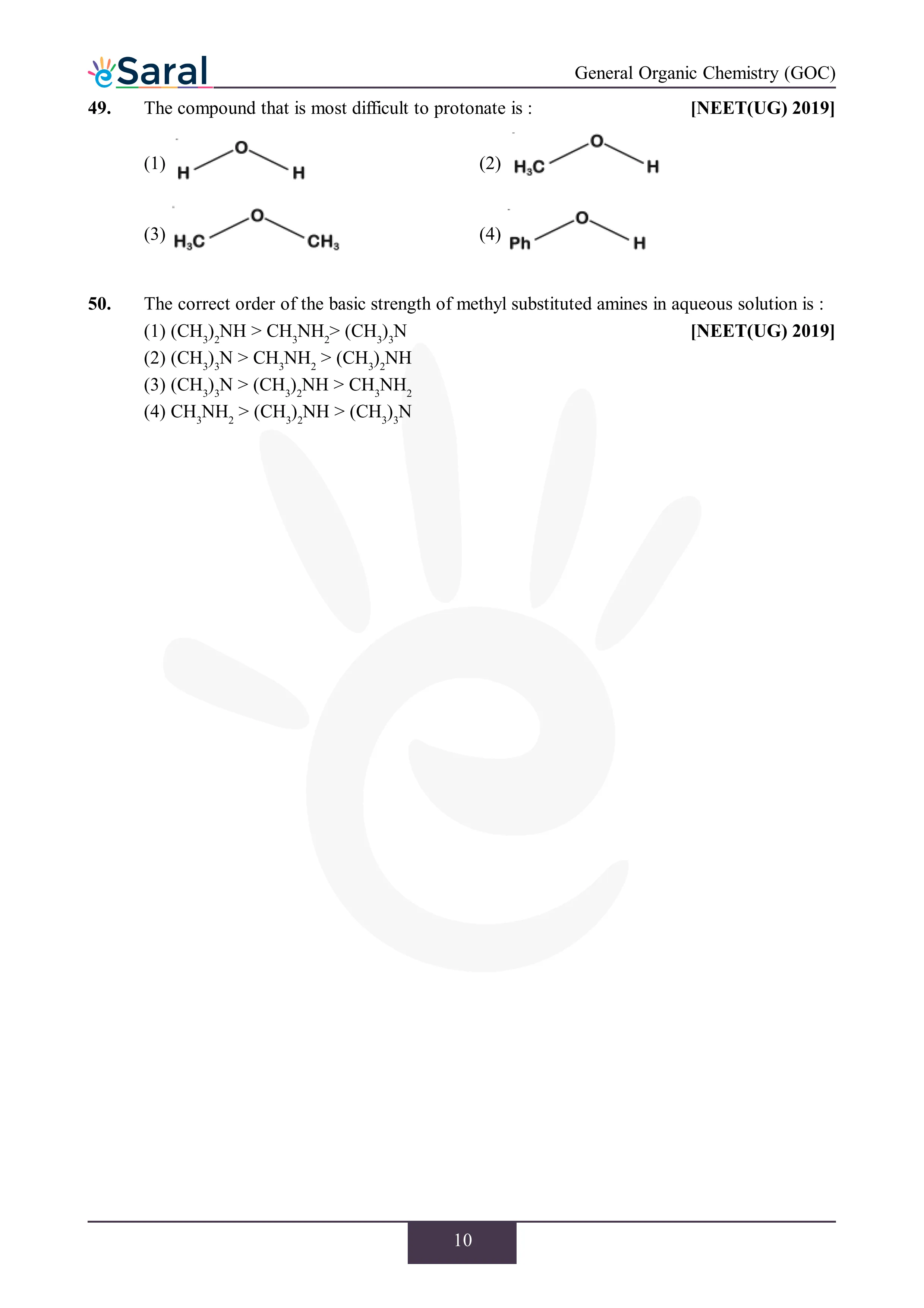

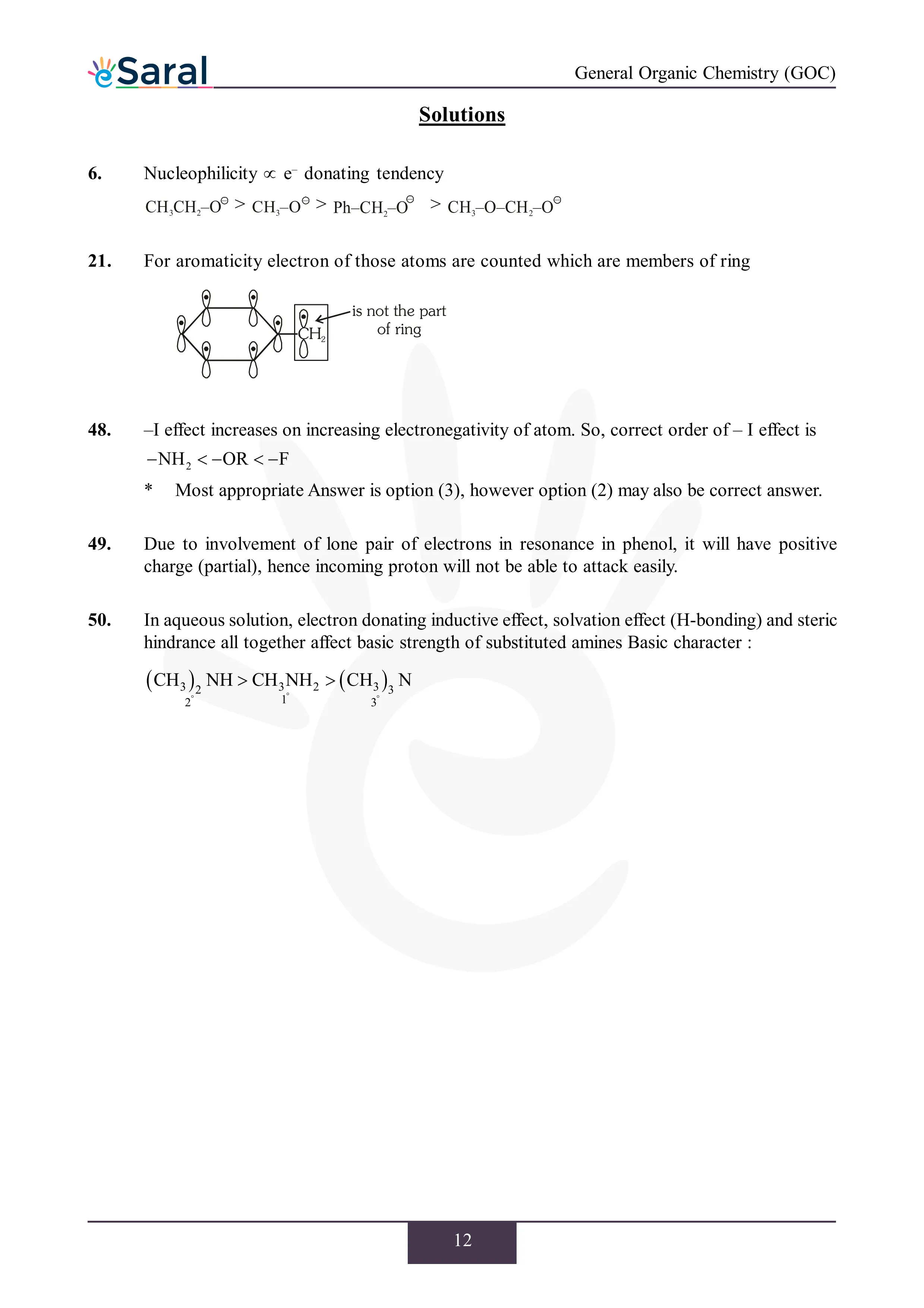
Frequently Asked Questions
Find answers to common questions.
How many questions come from General Organic Chemistry in NEET each year?
NTA typically sets 4 to 5 questions from General Organic Chemistry in NEET-UG, totalling 16–20 marks. The exact number varies by year, but GOC has been consistently present in every NEET paper since 2013. Electronic effects and stability-based questions appear most frequently.
Is GOC difficult for NEET?
GOC is conceptually dense but very scoring once the logic is clear. Most students find it difficult initially because they try to memorise conclusions rather than understand the reasoning. Once you learn to draw structures and apply inductive, resonance, and hyperconjugation effects step by step, GOC questions become predictable and repeatable.
Which GOC topic is most important for NEET?
Electronic effects — specifically inductive effect, resonance, and hyperconjugation — are the most important GOC topics for NEET. They appear directly in GOC questions and also as reasoning steps in questions from Alcohols, Amines, Carbonyl Compounds, and Arenes. Mastering these effects gives you marks across multiple chapters.
Can I solve GOC NEET questions without NCERT?
No. NEET-UG is strictly syllabus-bound, and the NTA official syllabus maps directly to NCERT Class 11 and 12 content. All GOC theory you need — nomenclature rules, types of isomerism, electronic effects — is in NCERT Class 11 Chemistry, Chapter 12 (Organic Chemistry: Some Basic Principles and Techniques). Refer to NCERT Solutions for Class 11 alongside PYQ practice.
How should I use NEET PYQs for GOC preparation?
Start by studying the GOC theory thoroughly from NCERT. Then attempt PYQs year-wise — from 2013 to 2024 — in timed conditions. After each session, analyse your wrong answers by concept (not by year). If you keep missing stability questions, revisit that sub-topic before moving to the next year's paper.