Kinetic Theory - NEET Previous Year Questions with Solutions


eSaral › NEET Physics › Kinetic Theory Previous Year Questions with Solutions

Here you will get Complete Kinetic Theory NEET Previous Year Questions with complete and detailed solutions.
Get complete NEET previous year questions for Physics, Chemistry and Biology.
You will find all the solutions at the end of this page:
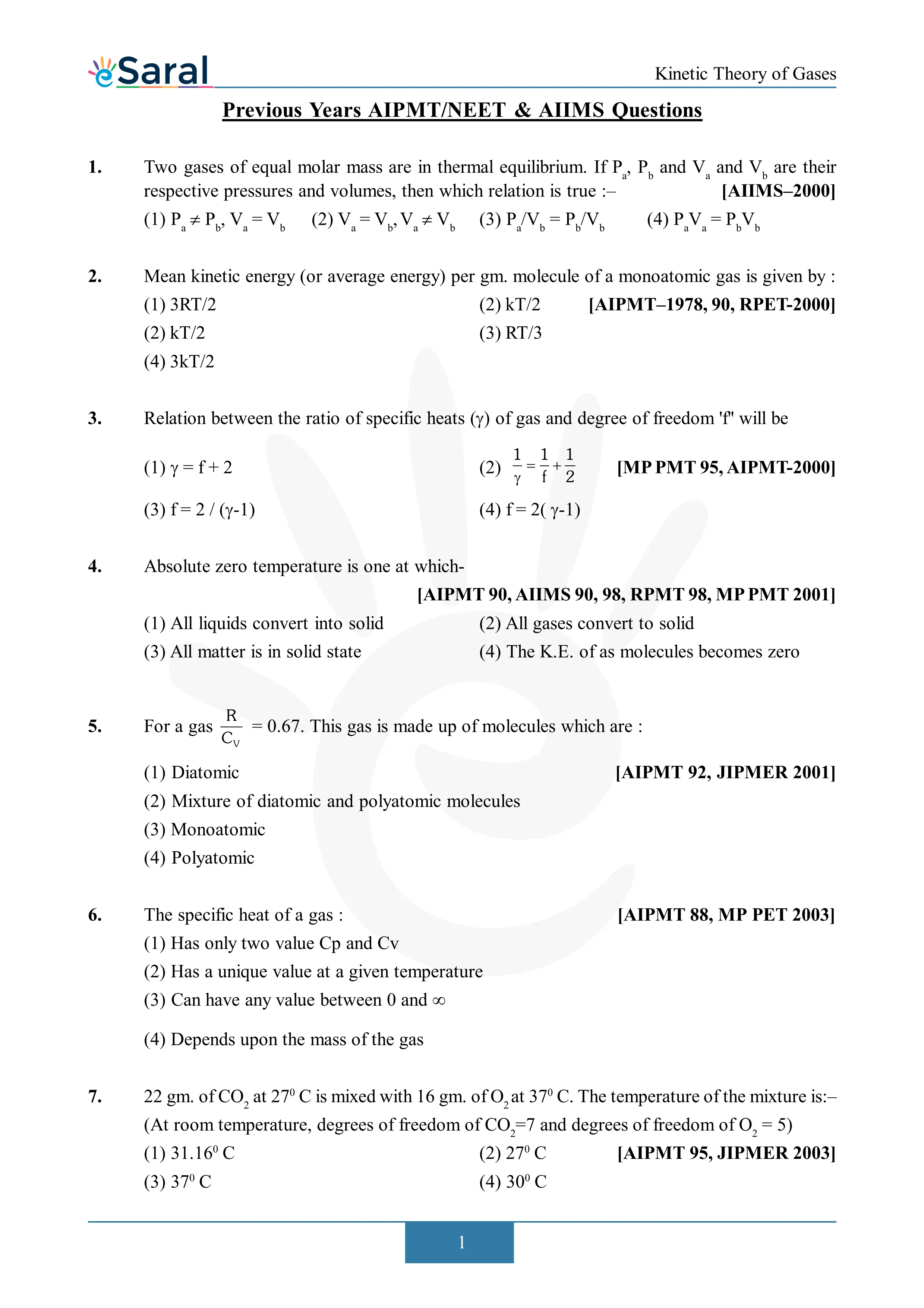
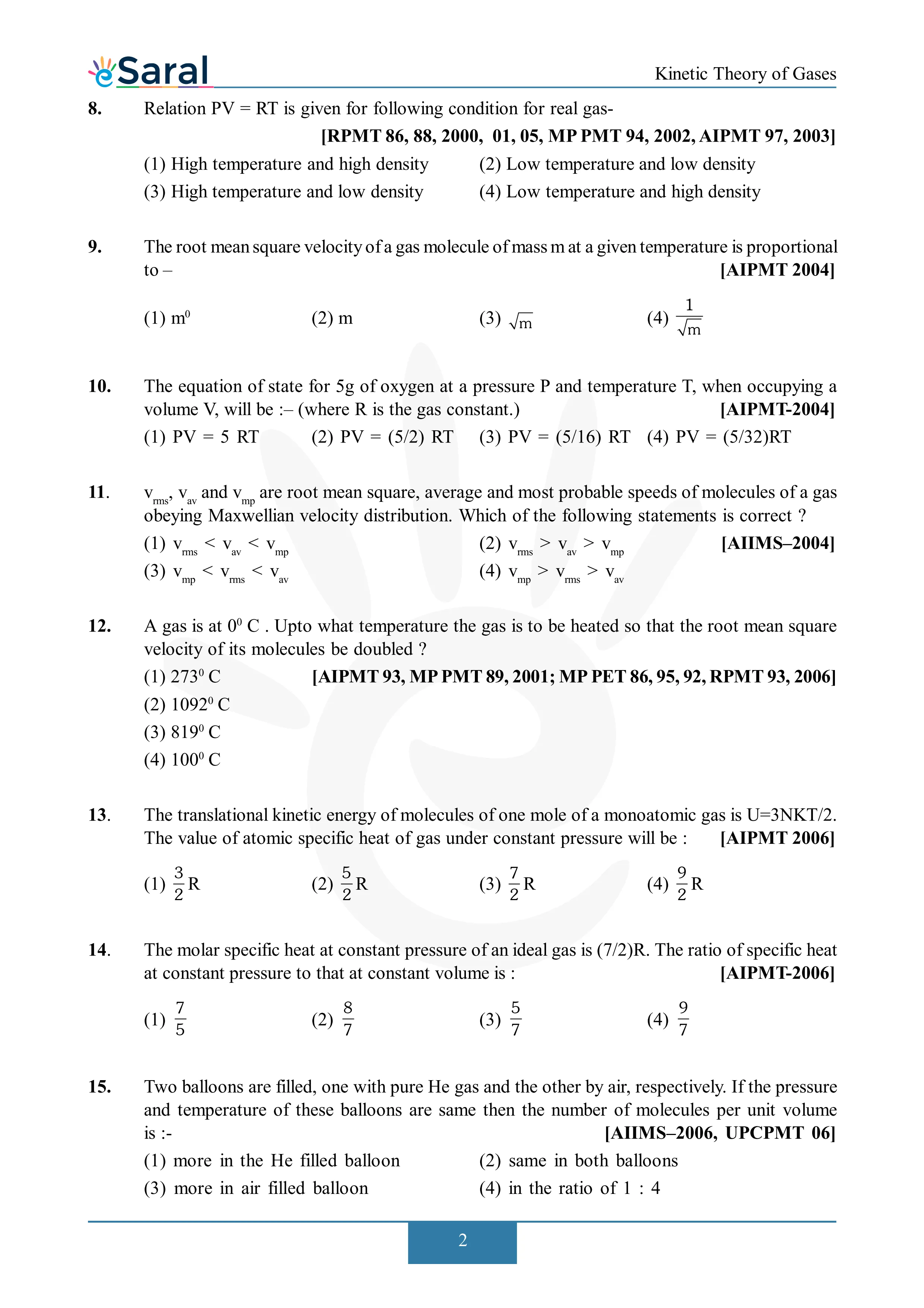
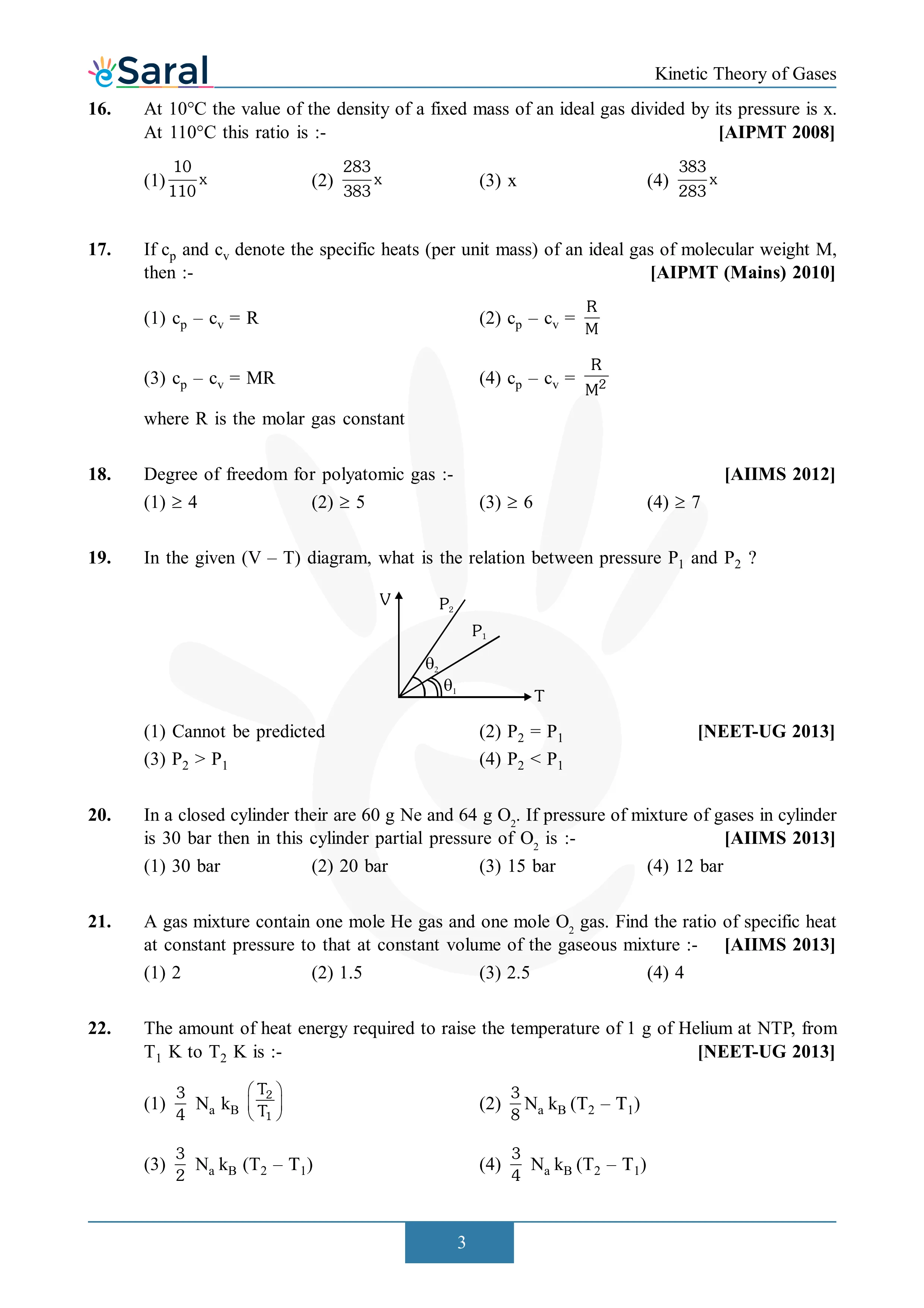
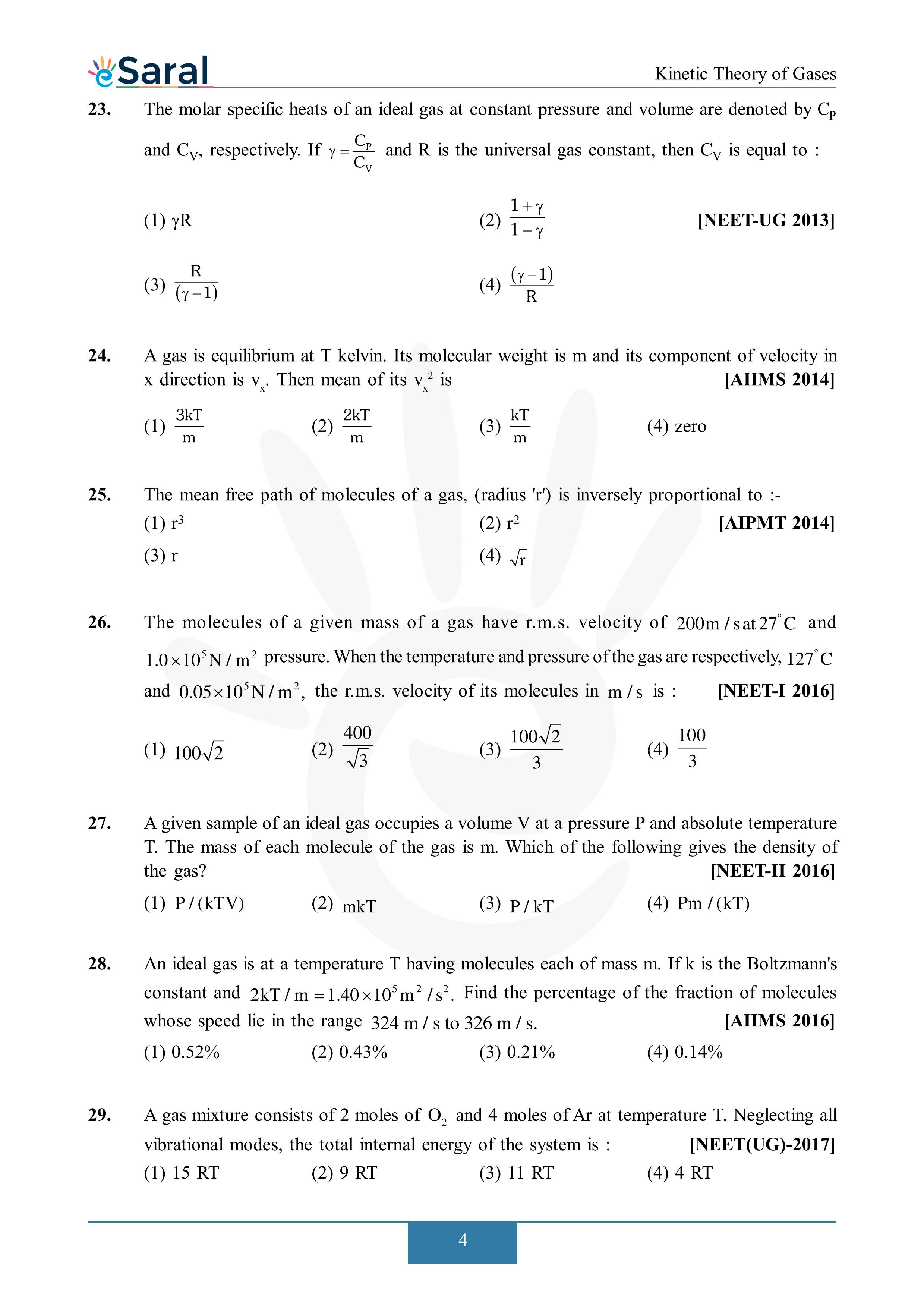


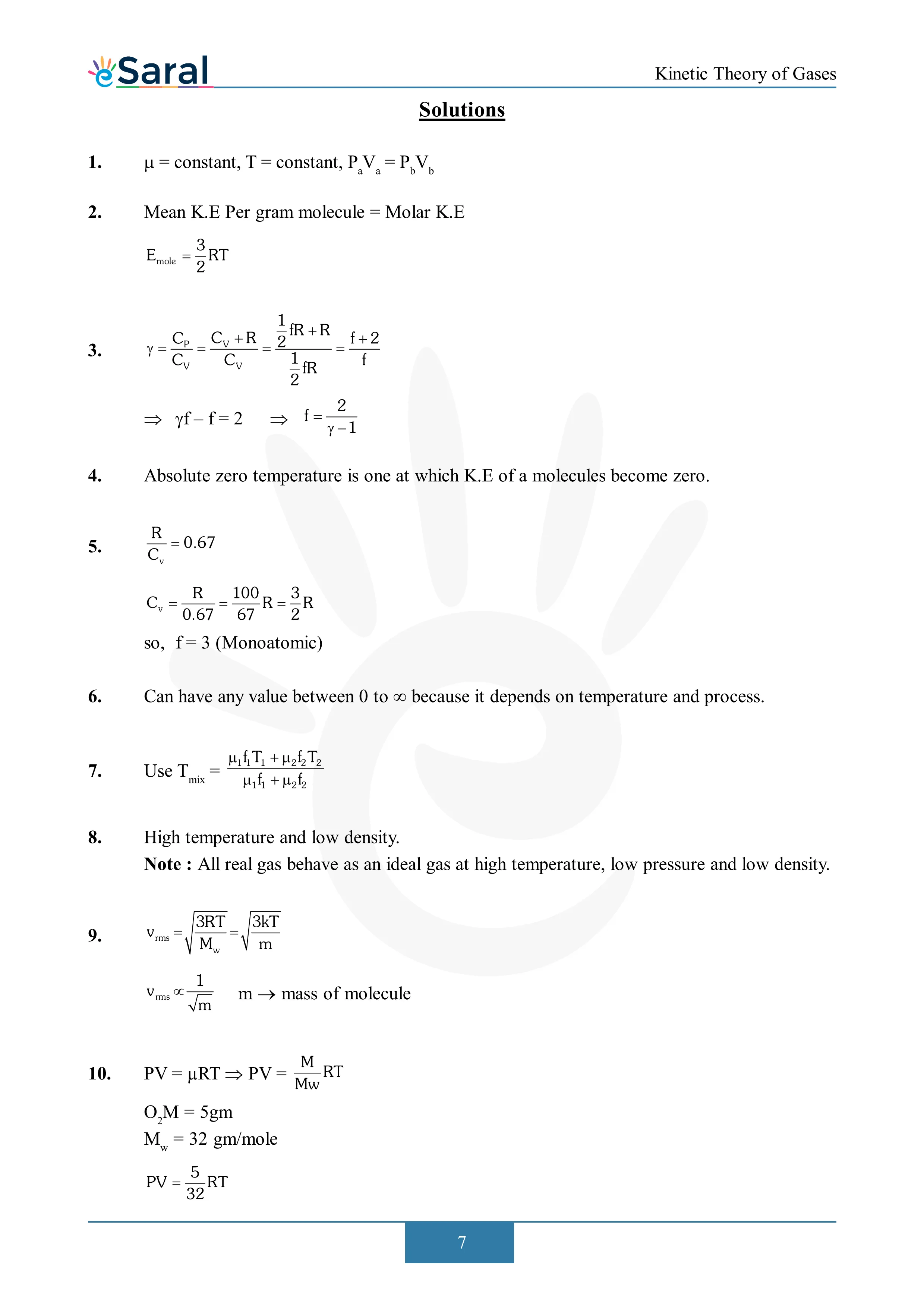
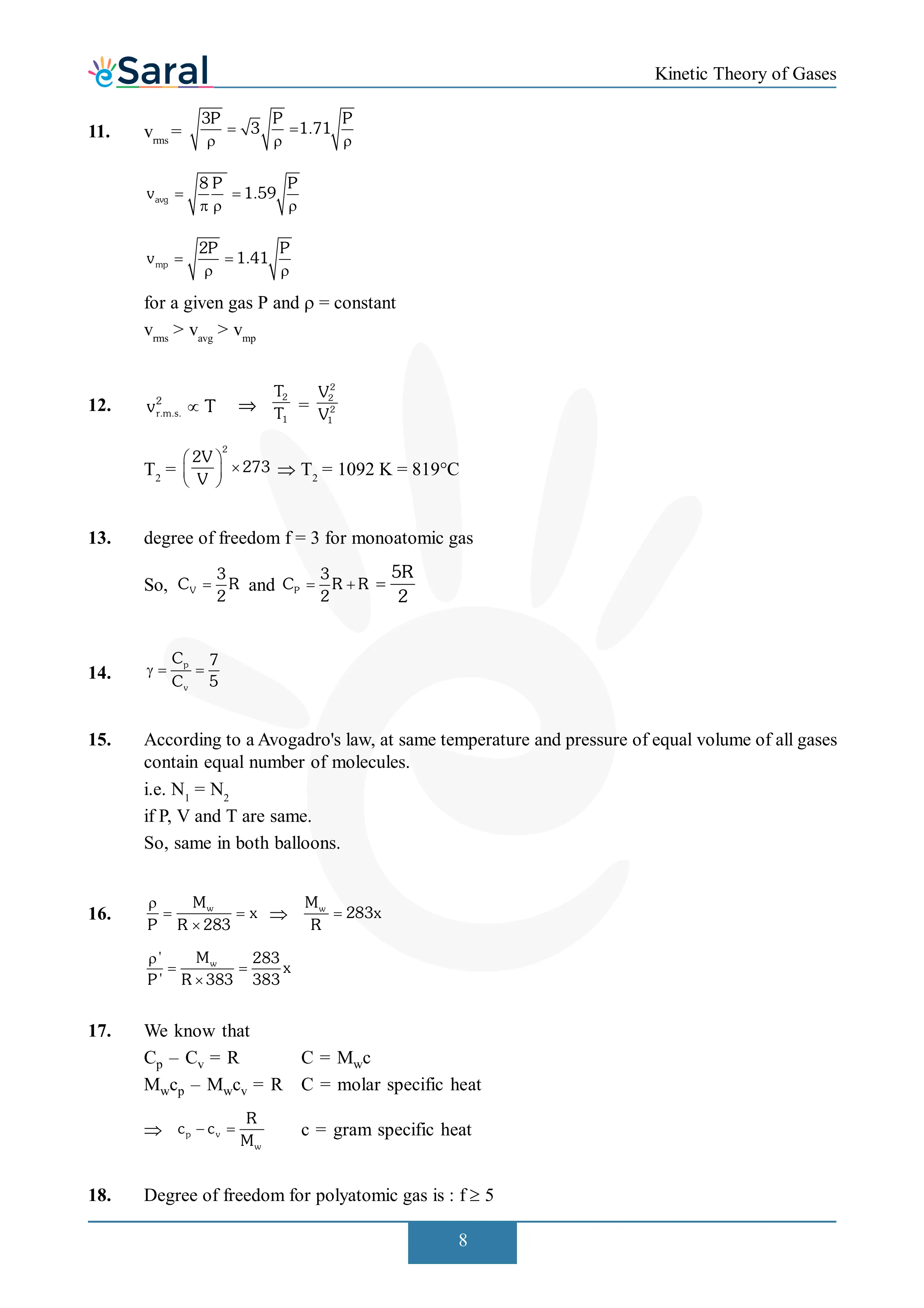
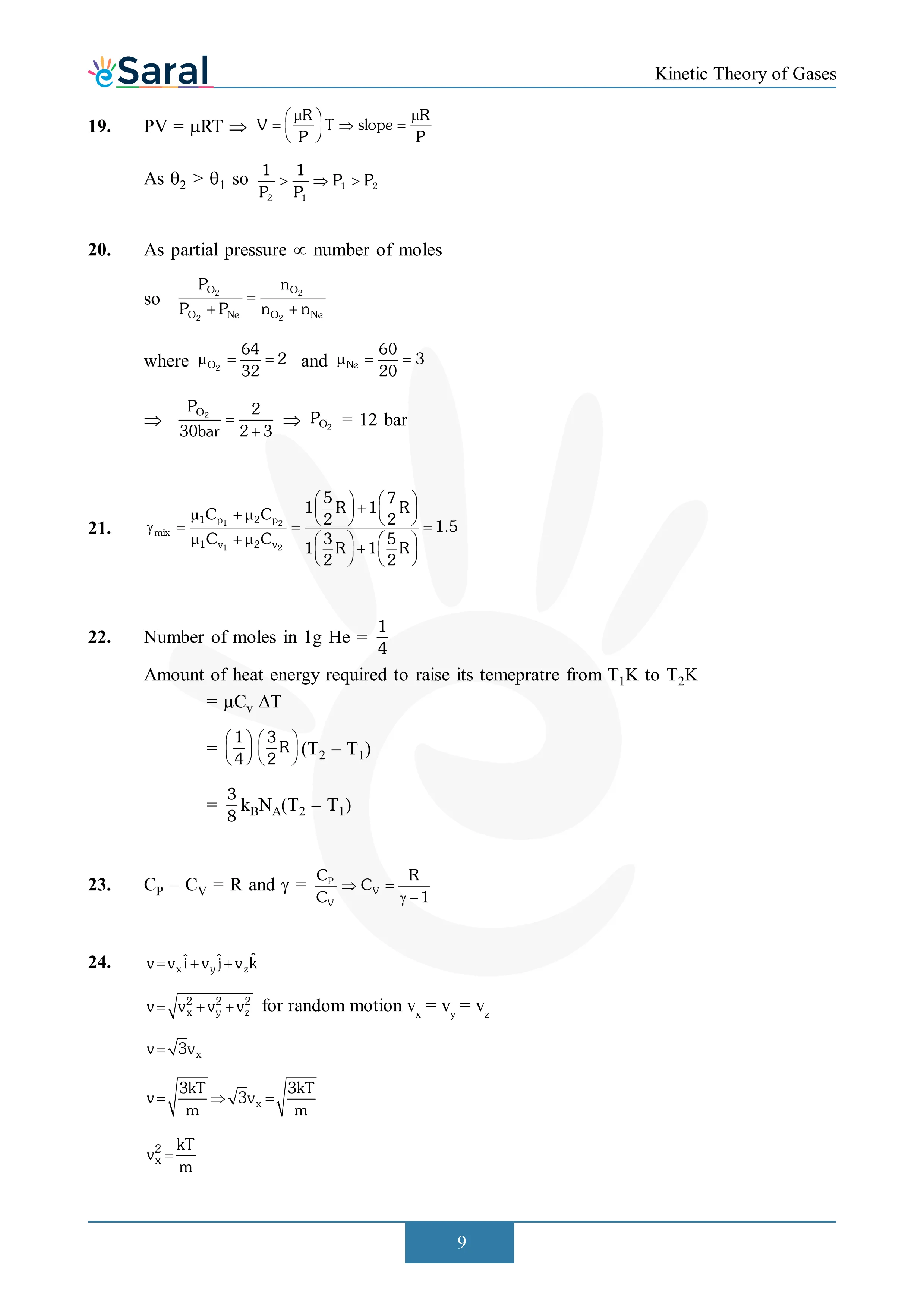
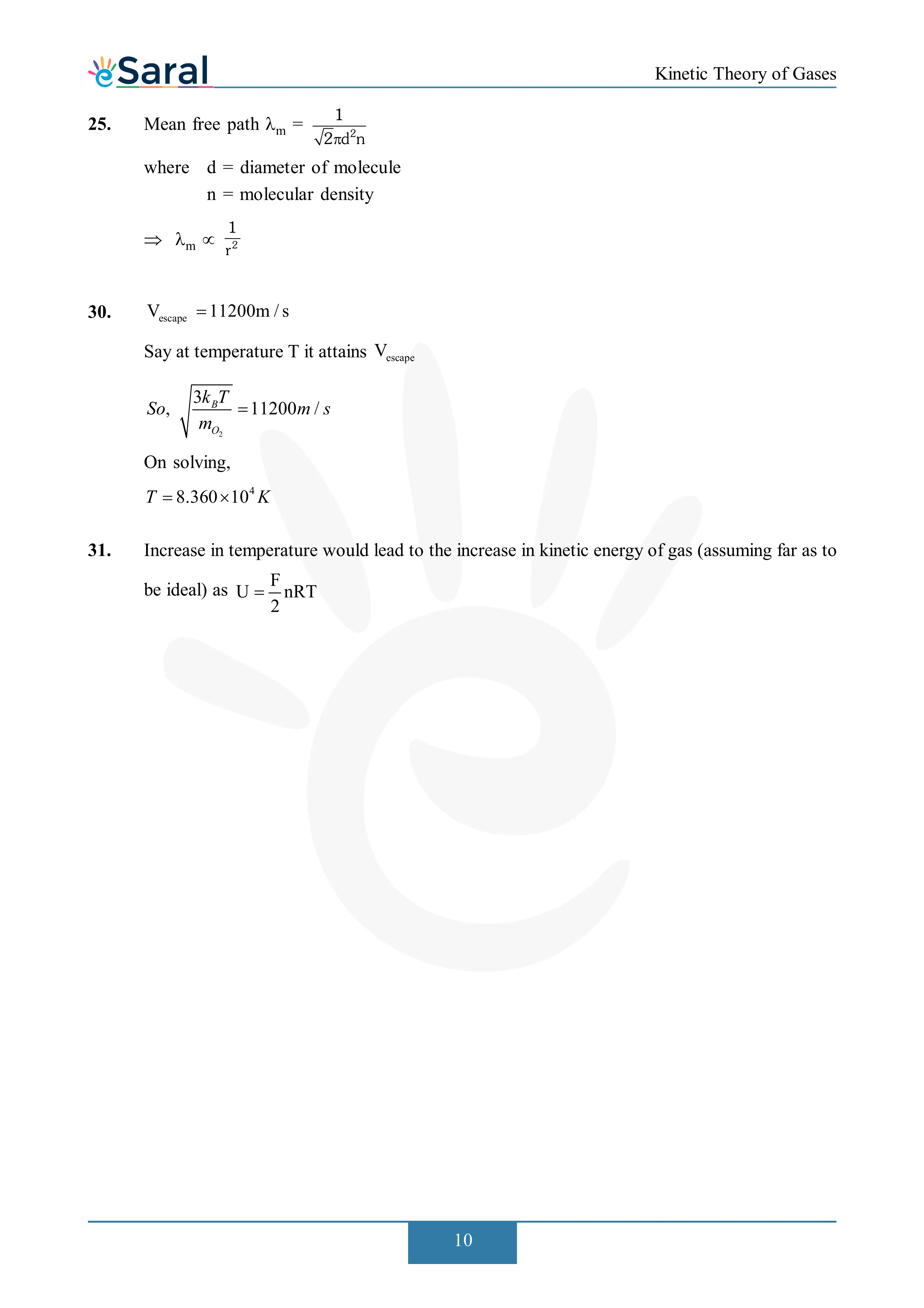
Frequently Asked Questions
Find answers to common questions.
What are the most important topics in Kinetic Theory for NEET?
The most important topics are degrees of freedom, the law of equipartition of energy, specific heat capacities of gases (Cv, Cp, and γ), and RMS/mean/most probable speeds. Together, these account for roughly 65–70% of all Kinetic Theory questions that have appeared in NEET.
Is Kinetic Theory difficult for NEET Physics?
Kinetic Theory is considered one of the easier chapters in NEET Physics. The concepts are well-defined, the formulas are limited, and question patterns repeat reliably across years. A student who spends 8–10 hours on NCERT theory and PYQs can confidently score full marks from this chapter.
Kinetic Theory NEET PYQs with Solutions | eSaral
NTA typically asks 1 to 3 questions from Kinetic Theory in NEET every year. Over the last 14 years (2010–2024), this chapter has contributed approximately 28–35 questions in total across all papers. It is a medium-weightage chapter with high predictability, making it worth thorough preparation.
How is mean free path related to pressure and temperature in NEET questions?
Mean free path (λ) is inversely proportional to pressure (λ ∝ 1/P) and directly proportional to temperature (λ ∝ T) at constant pressure. The formula λ = 1/(√2 · n · π · d²) is the standard relation. NEET questions on this topic typically ask you to predict how λ changes when P or T is doubled — a concept-check question that takes under 30 seconds once the formula is known.
What is the law of equipartition of energy and how is it tested in NEET?
The law of equipartition of energy states that each degree of freedom of a molecule contributes (1/2)k_BT of energy on average, where k_B is Boltzmann's constant and T is absolute temperature. In NEET, this is tested through questions that ask you to calculate the total internal energy of a gas, specific heat ratios, or compare energies of monoatomic and diatomic gases at the same temperature.
Do I need to study Kinetic Theory from NCERT for NEET?
Yes — NCERT Class 11 Physics Chapter 13 is the primary source for NEET Kinetic Theory questions. Almost every question asked by NTA can be traced directly to an NCERT concept, example, or exercise. Refer to NCERT Solutions for Class 11 Physics for fully worked NCERT solutions aligned with the NEET syllabus.