Mind Map for Sequence and Series Class 11
Revise Class 11 Sequence and Series quickly with comprehensive mind maps covering key formulas, concepts, and shortcuts for effective exam preparation.

eSaral › Class 11› Mind Map for Sequence and Series Class 11

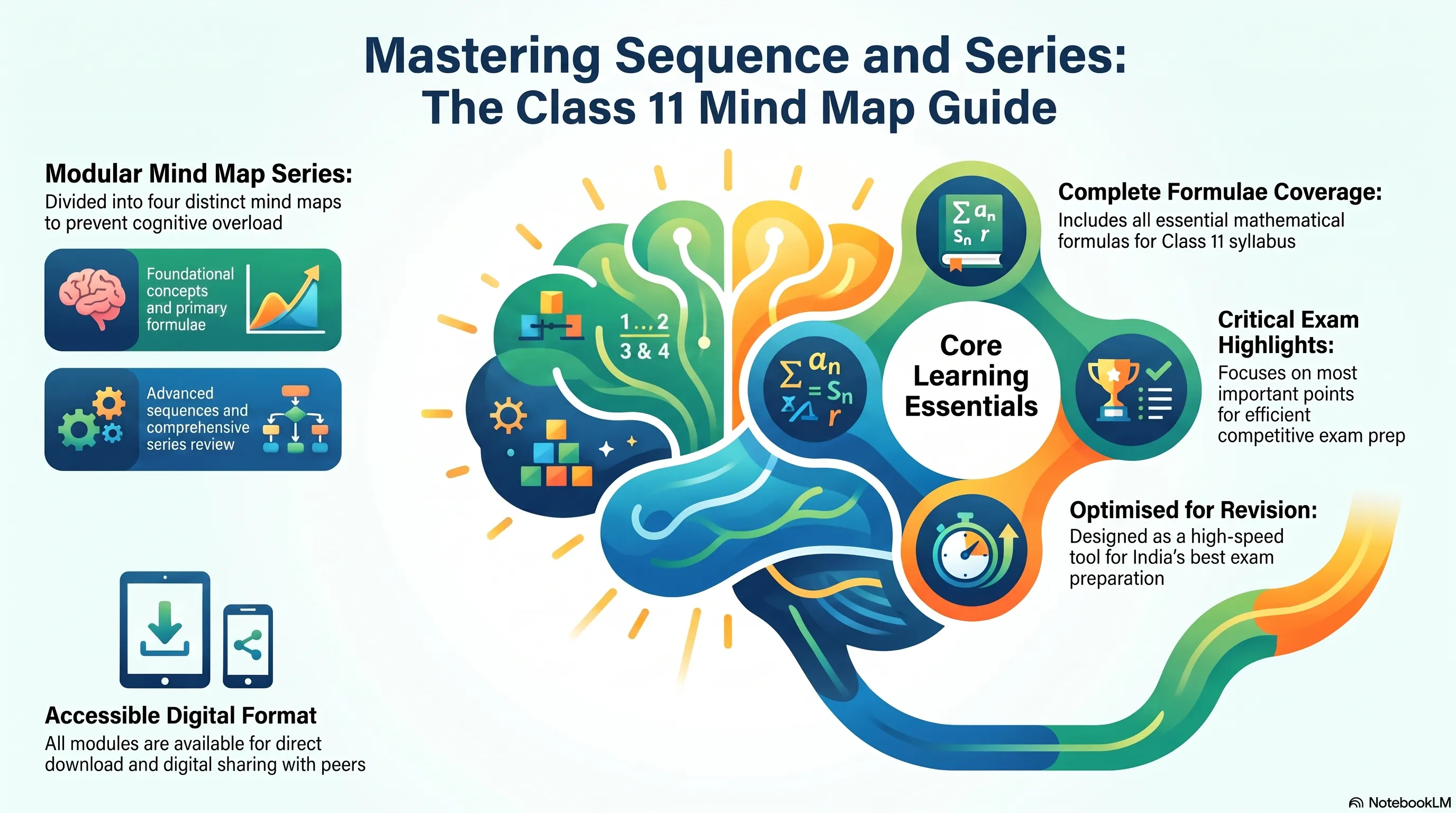
Get to learn all the formulae and important points of Class 11th Chapter Sequence and Series through these Mind Maps. Download and share with your friends also.
India's Best Exam Preparation for Class 11th - Download Now
Mind Map - 1
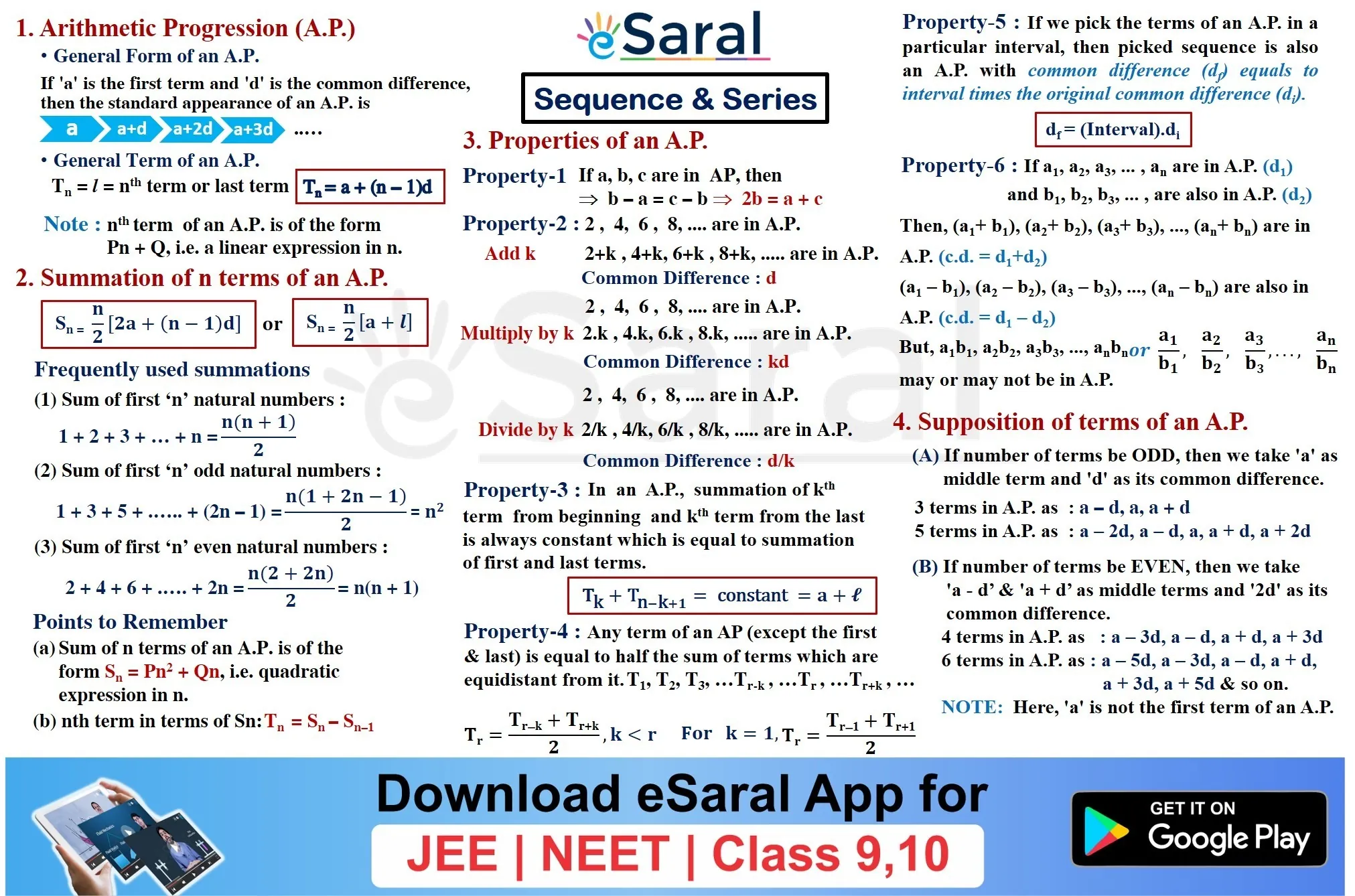
Mind Map - 2
India's Best Exam Preparation for Class 11th - Download Now
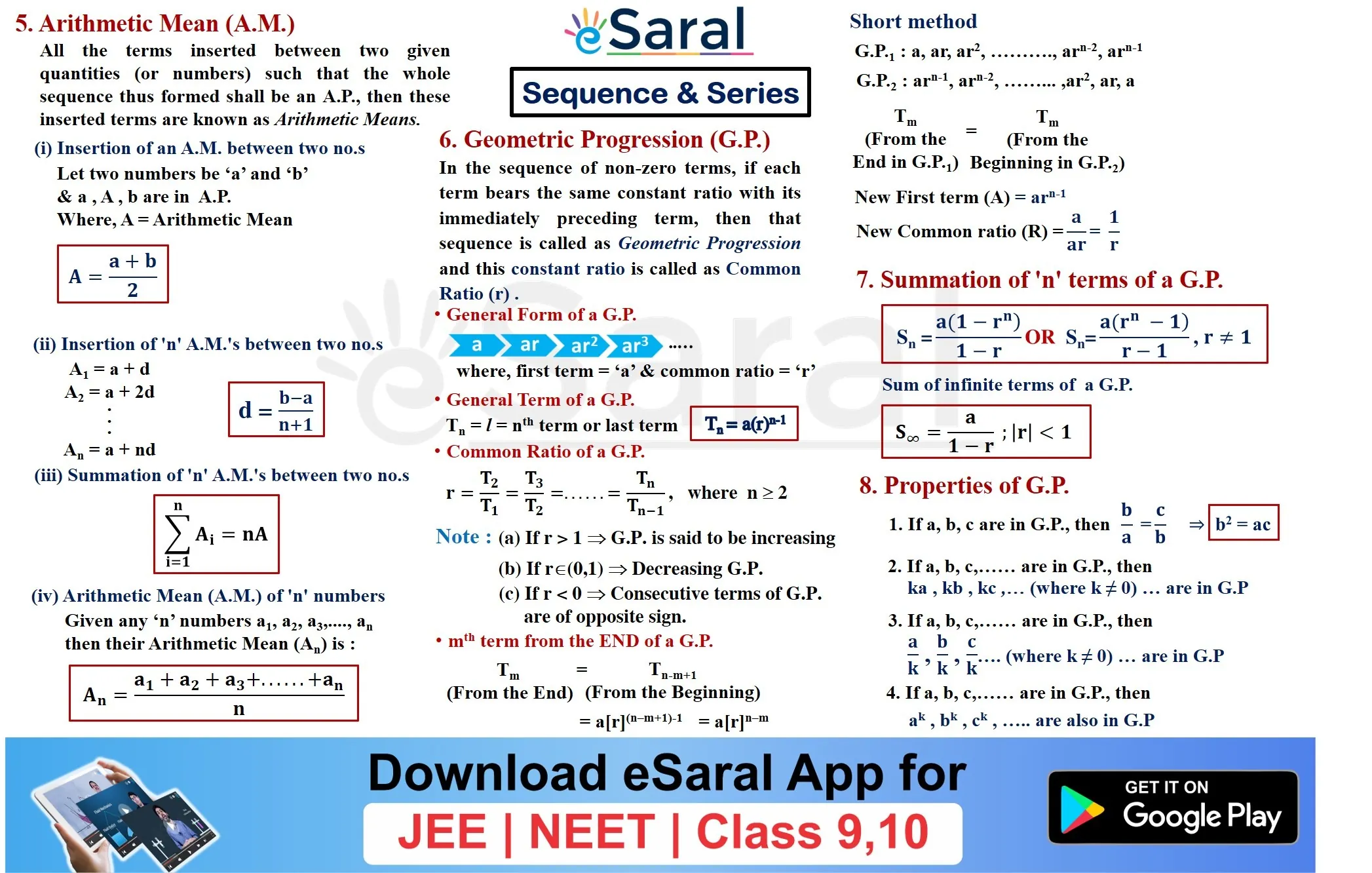
Mind Map - 3
India's Best Exam Preparation for Class 11th - Download Now
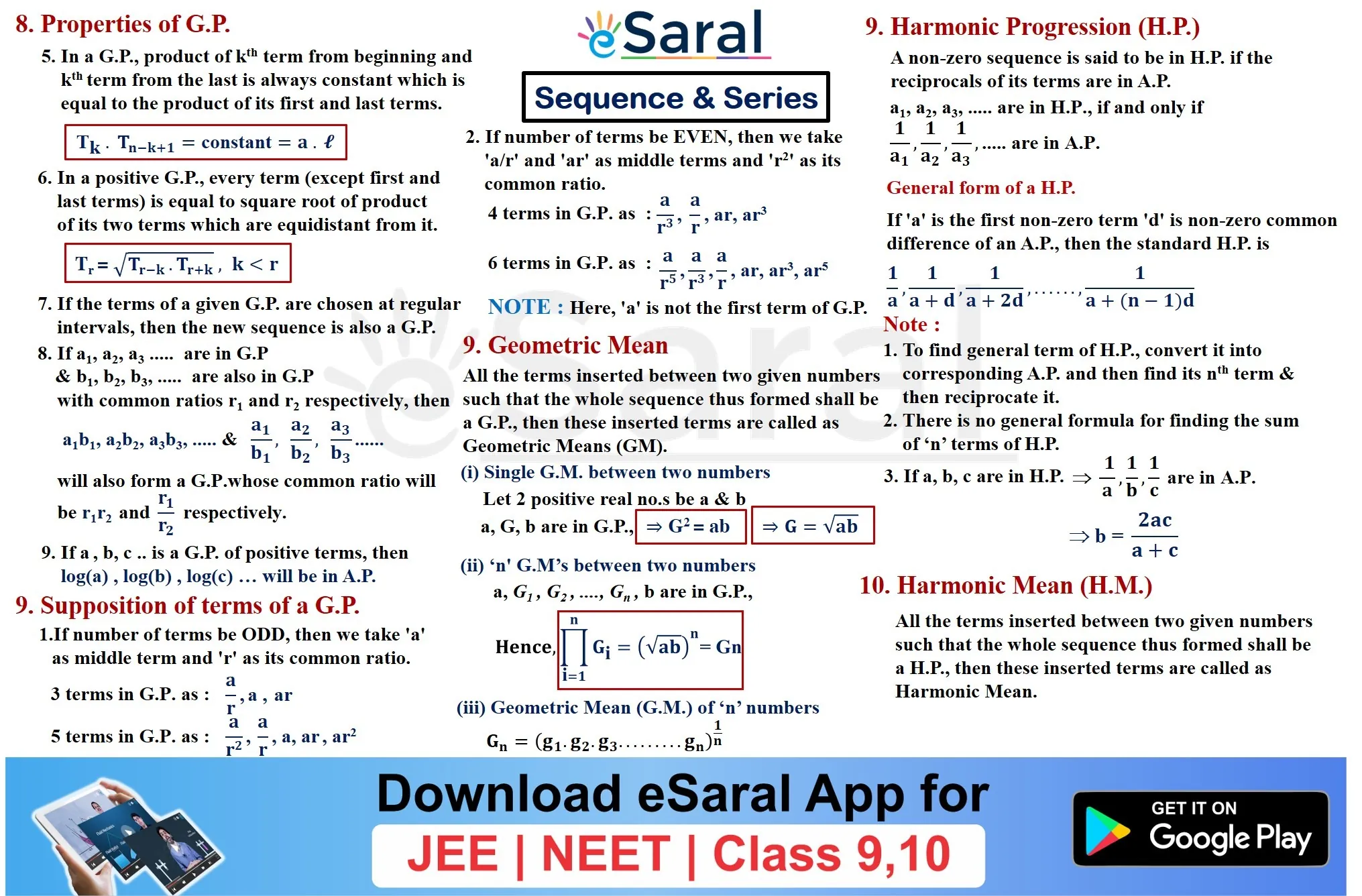
Mind Map - 4
India's Best Exam Preparation for Class 11th - Download Now
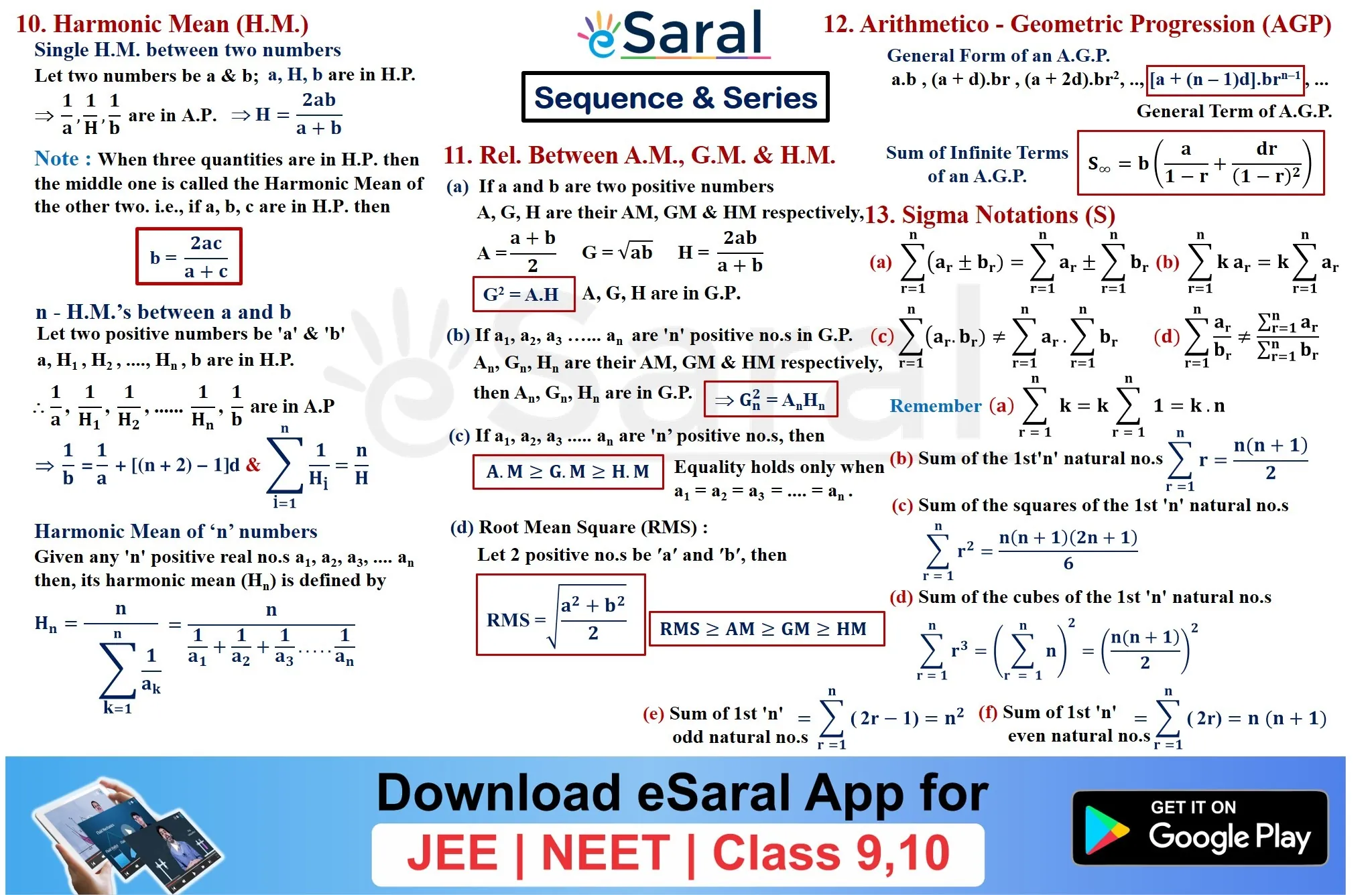
India's Best Exam Preparation for Class 11th - Download Now
Frequently Asked Questions
Find answers to common questions.
What is the best way to revise Sequence and Series for JEE Main?
The best way is a three-step process: first, clear all concepts from video lectures or NCERT; second, practise at least 50 mixed problems covering AP, GP, HP, and special series; third, use mind maps for formula revision in the 48 hours before the exam. Focus especially on AM–GM inequality problems, which appear frequently in JEE Main.
How many questions come from Sequence and Series in JEE Main?
According to NTA's official paper analysis, Sequence and Series typically contributes 1–2 questions per JEE Main session. Given that there are multiple sessions each year, mastering this chapter can add 8–16 marks to your total score — a significant margin in a competitive exam.
Are sequences and Series important for JEE Advanced as well?
Yes. JEE Advanced tests Sequence and Series at a deeper level, often combining it with inequalities, functions, or logarithms. The AM–GM–HM inequality and infinite GP sum appear regularly. Students targeting IITs should solve past JEE Advanced papers from 2015 onwards to understand the difficulty level.
What is the difference between AP, GP, and HP?
In an Arithmetic Progression (AP), each term differs from the previous by a constant difference (d). In a Geometric Progression (GP), each term is a constant multiple (r) of the previous. In a Harmonic Progression (HP), the reciprocals of the terms form an AP. All three progressions are covered in CBSE Class 11 Chapter 9.
Can I score full marks in Sequence and Series by only studying mind maps?
No. Mind maps are revision tools, not first-learning resources. You should first study the chapter from the NCERT textbook or through structured video lectures, solve all NCERT exercises (solutions available at eSaral's Class 11 Maths NCERT Solutions), and then use mind maps for quick formula recall before tests.