Hyperbola: Parametric Equation of Hyperbola || Class 11 & IIT JEE
Life Processes are the essential activities that maintain life in organisms, including nutrition, respiration, transportation, excretion, and reproduction, carried out through specialized systems in multicellular organisms.
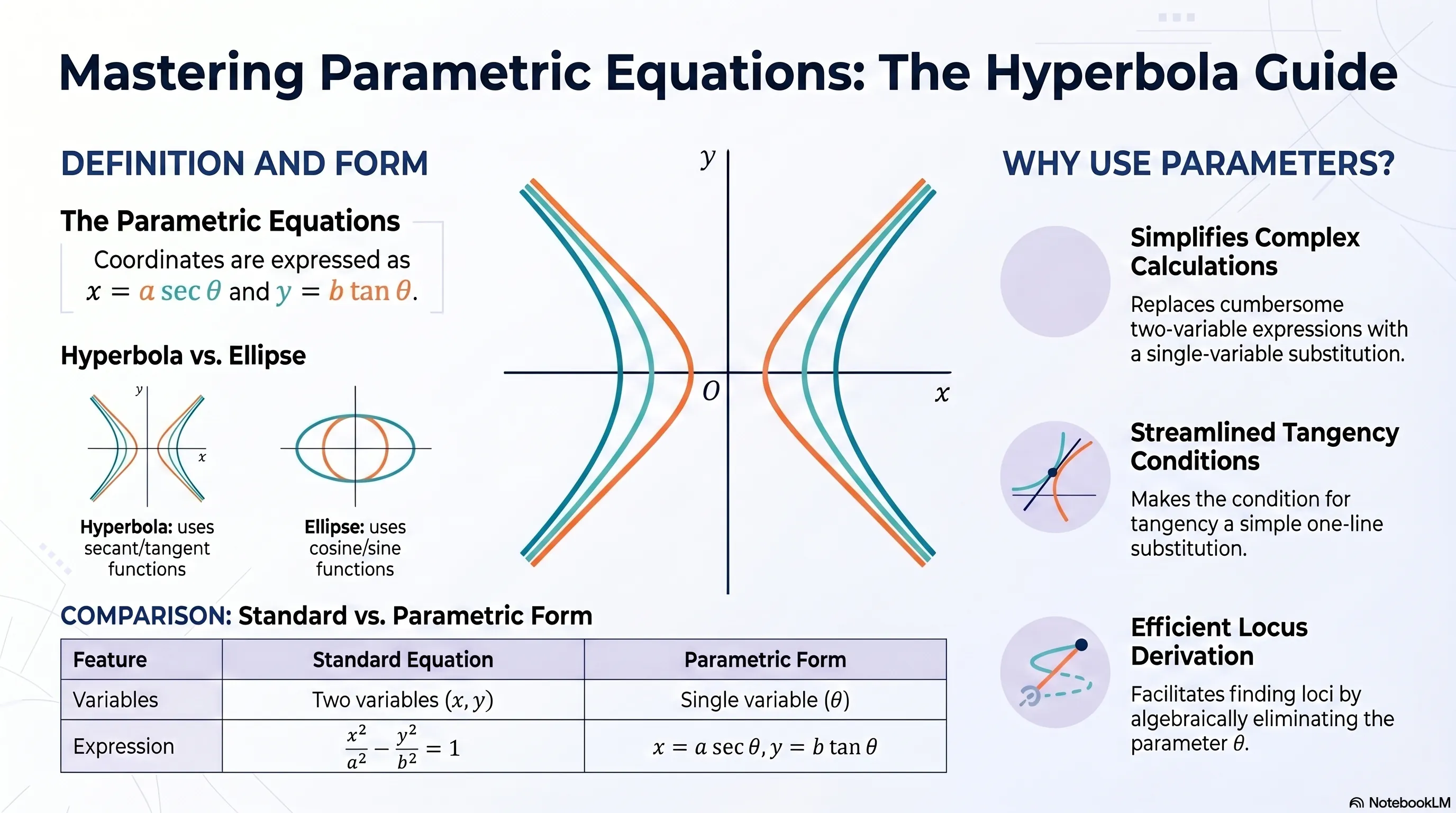
Table of Contents

eSaral › Class 11› Hyperbola: Parametric Equation of Hyperbola || Class 11 & IIT JEE

🚀 Checkout eSaral Courses
What Is the Parametric Form of a Hyperbola?
The parametric form of a curve expresses both coordinates (x and y) as functions of a single variable called the parameter. For a hyperbola, this parameter is the angle θ, and the parametric equations use secant and tangent functions — unlike an ellipse, which uses cosine and sine.
Why Use a Parameter Instead of the Standard Equation?
When you work directly with x²/a² − y²/b² = 1, every calculation involving a variable point on the curve requires you to carry a two-variable expression. The parametric form replaces this with a single variable θ, which:
- Simplifies the equation of a chord joining two points on the hyperbola
- Makes the condition for tangency a one-line substitution
- Reduces locus derivations to algebraic elimination of θ
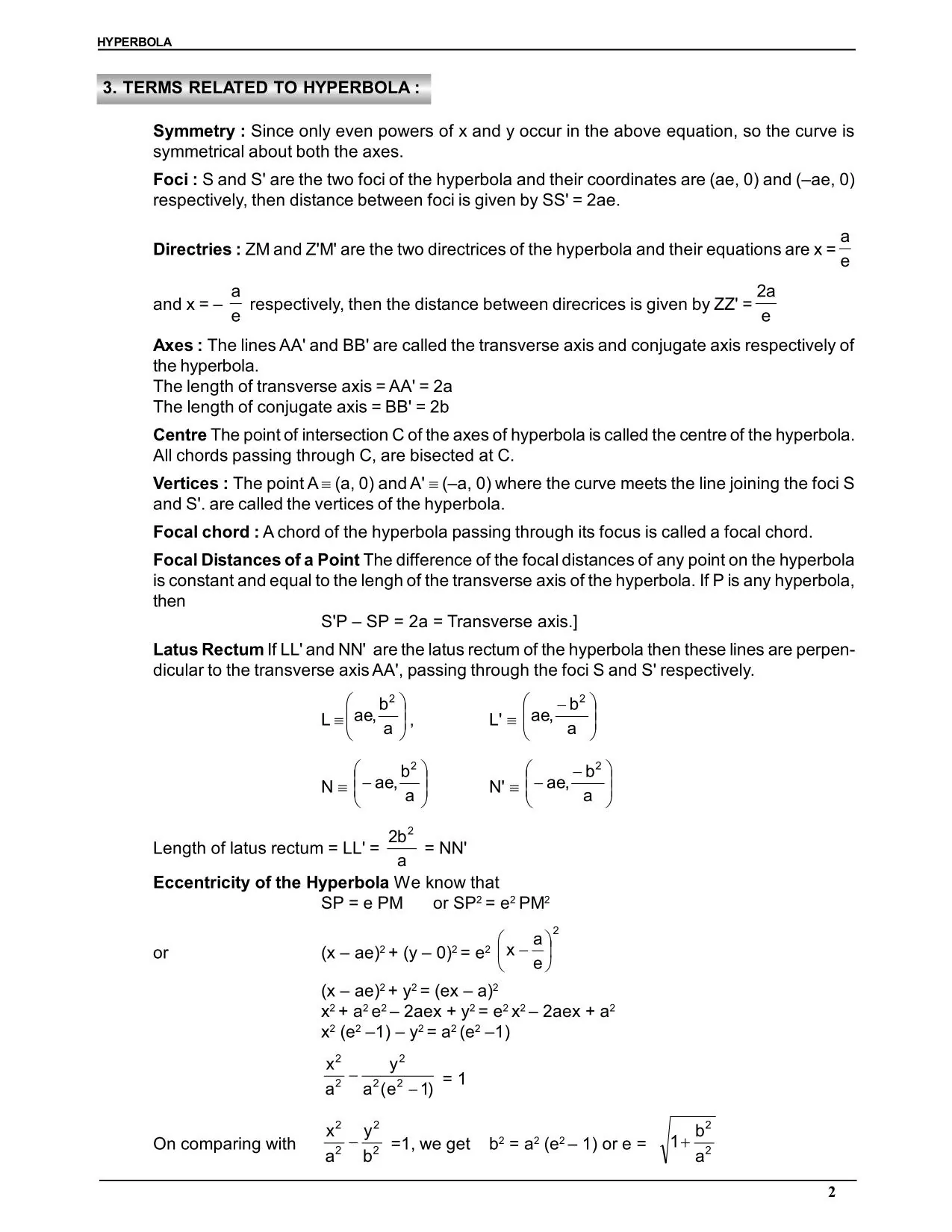
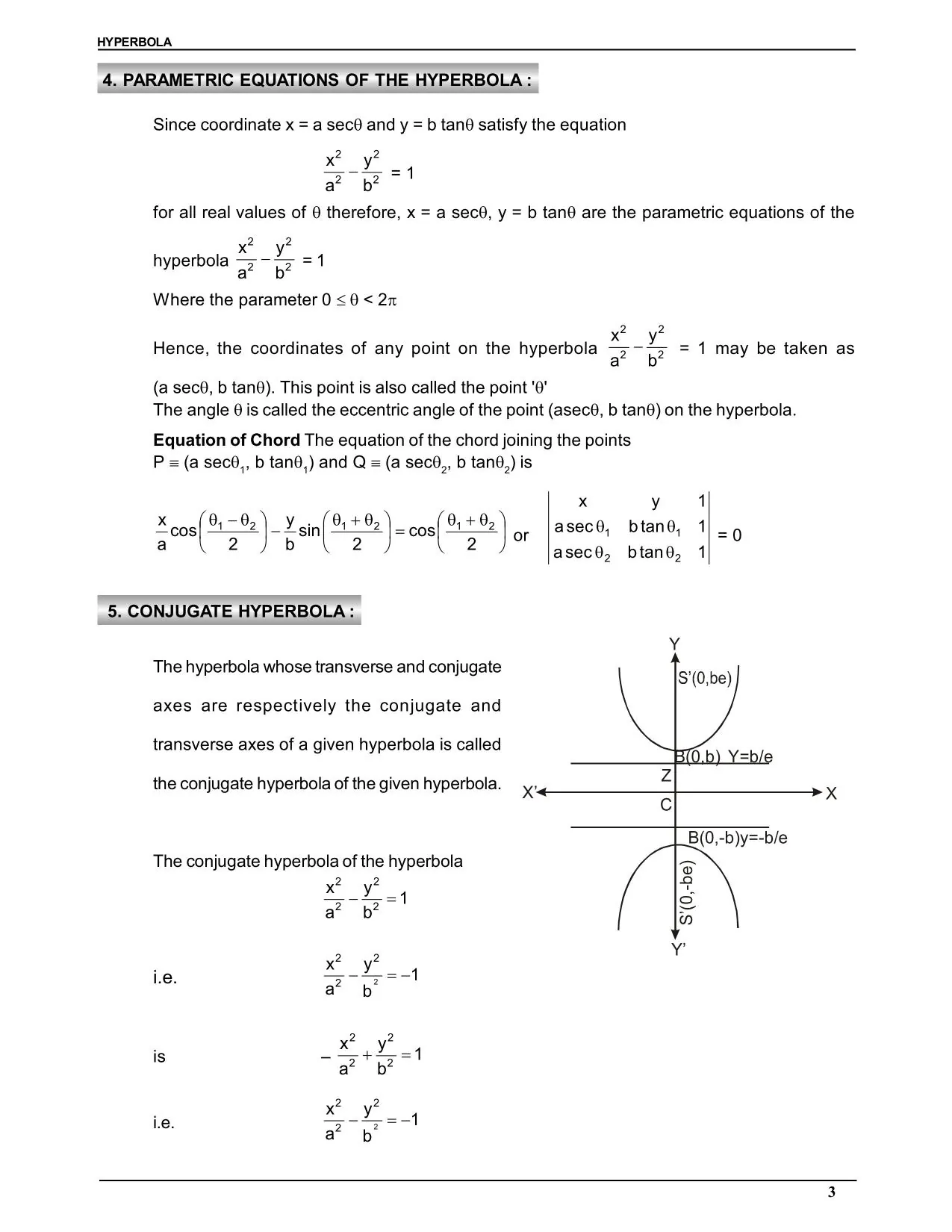
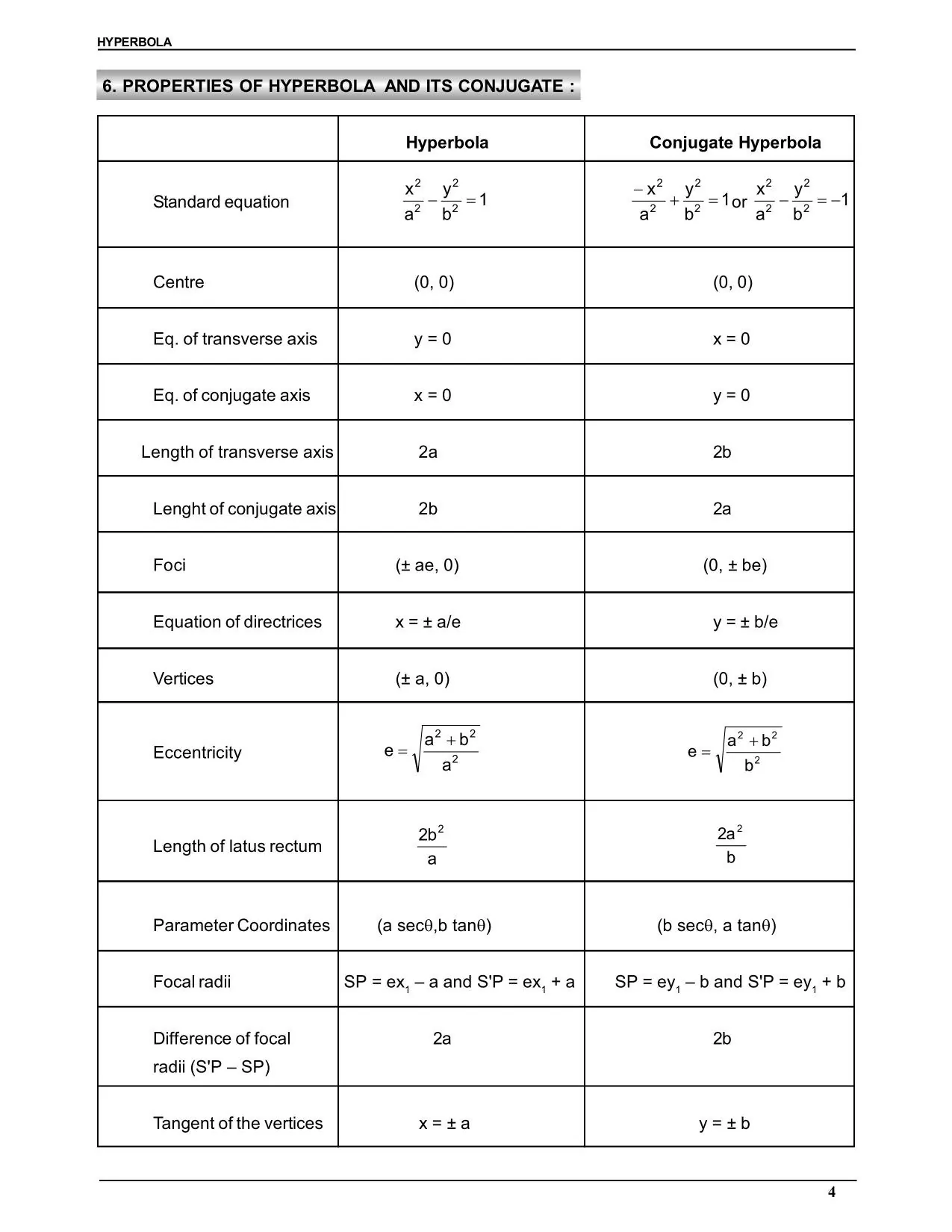
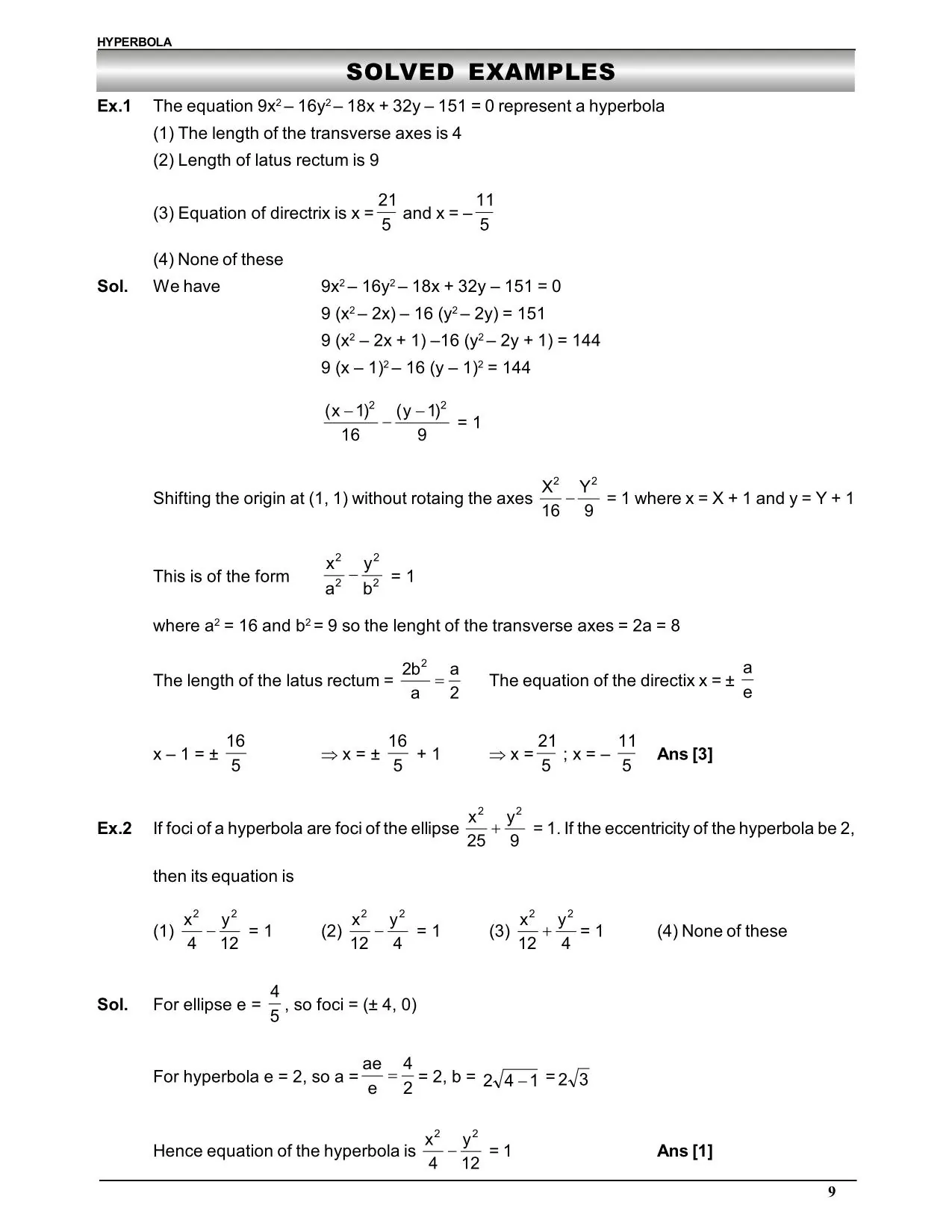
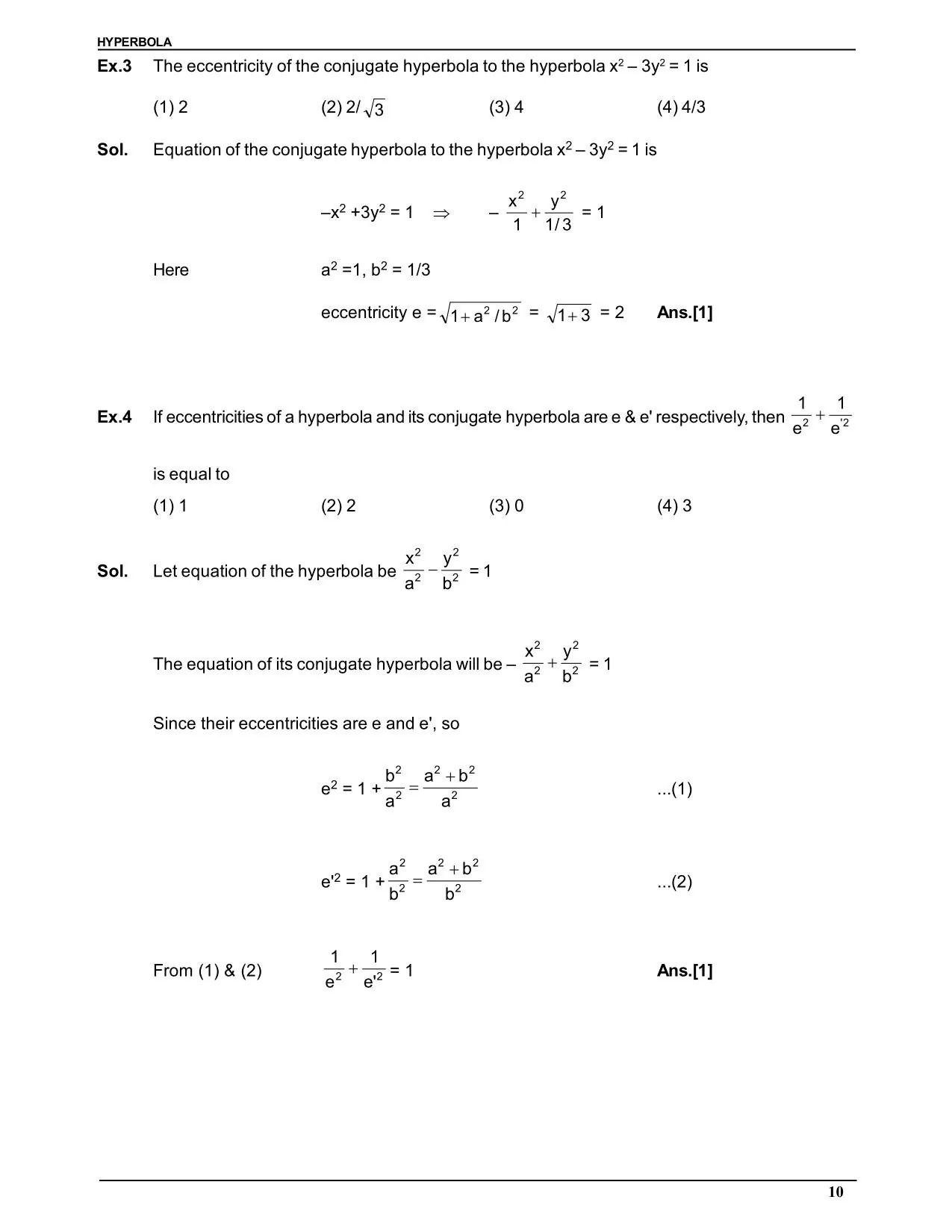
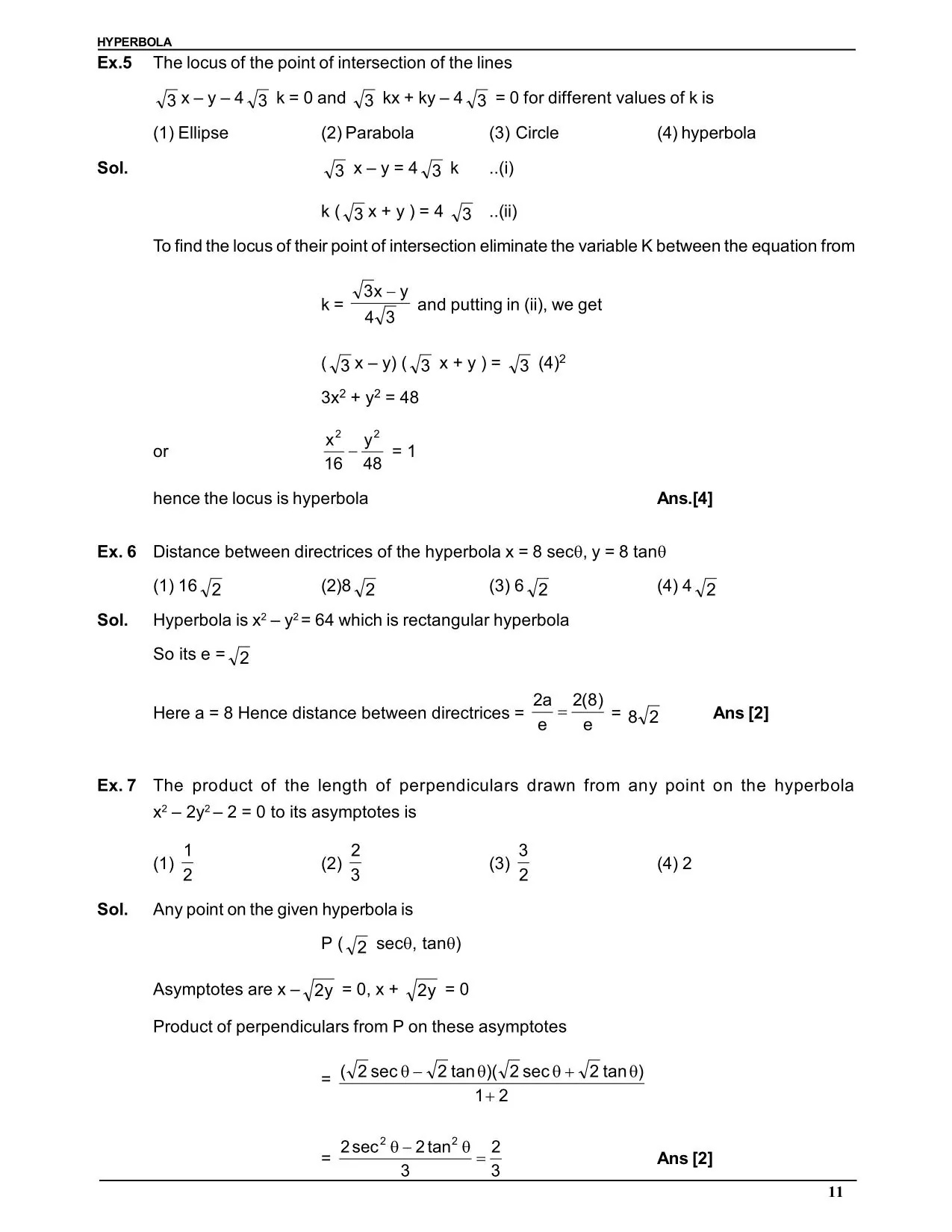
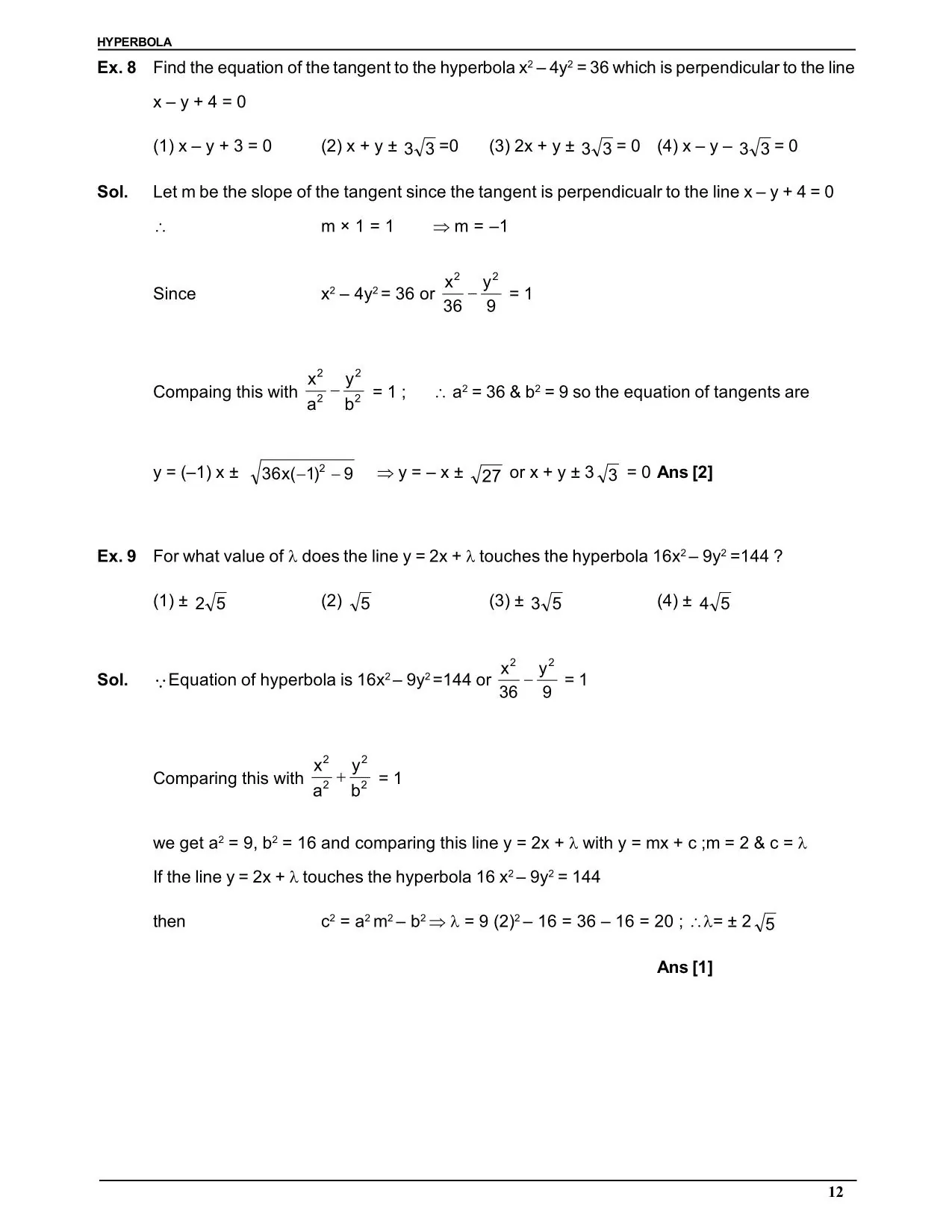
Hyperbola Notes for Class 11 & JEE
Frequently Asked Questions
Find answers to common questions.
What is the parametric equation of a hyperbola?
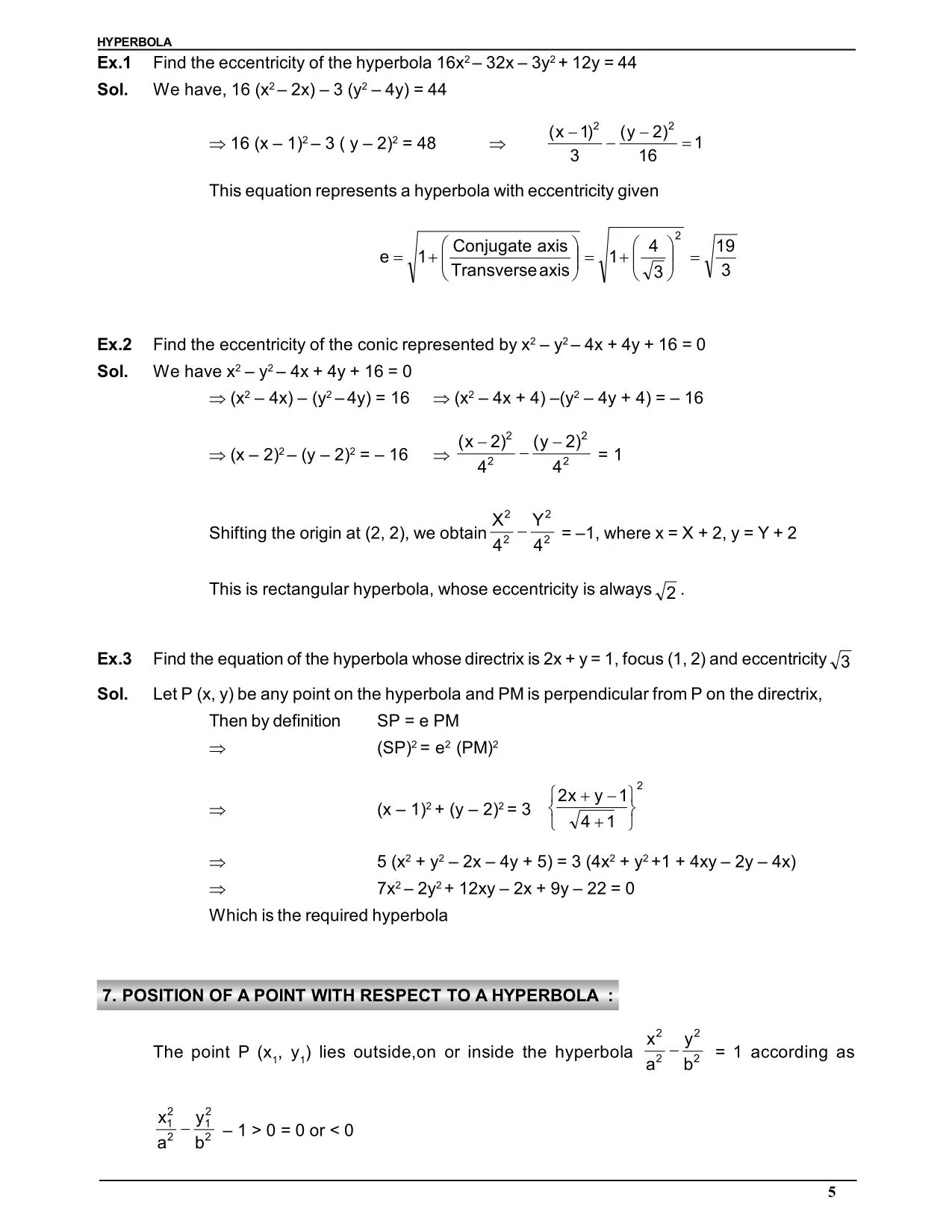
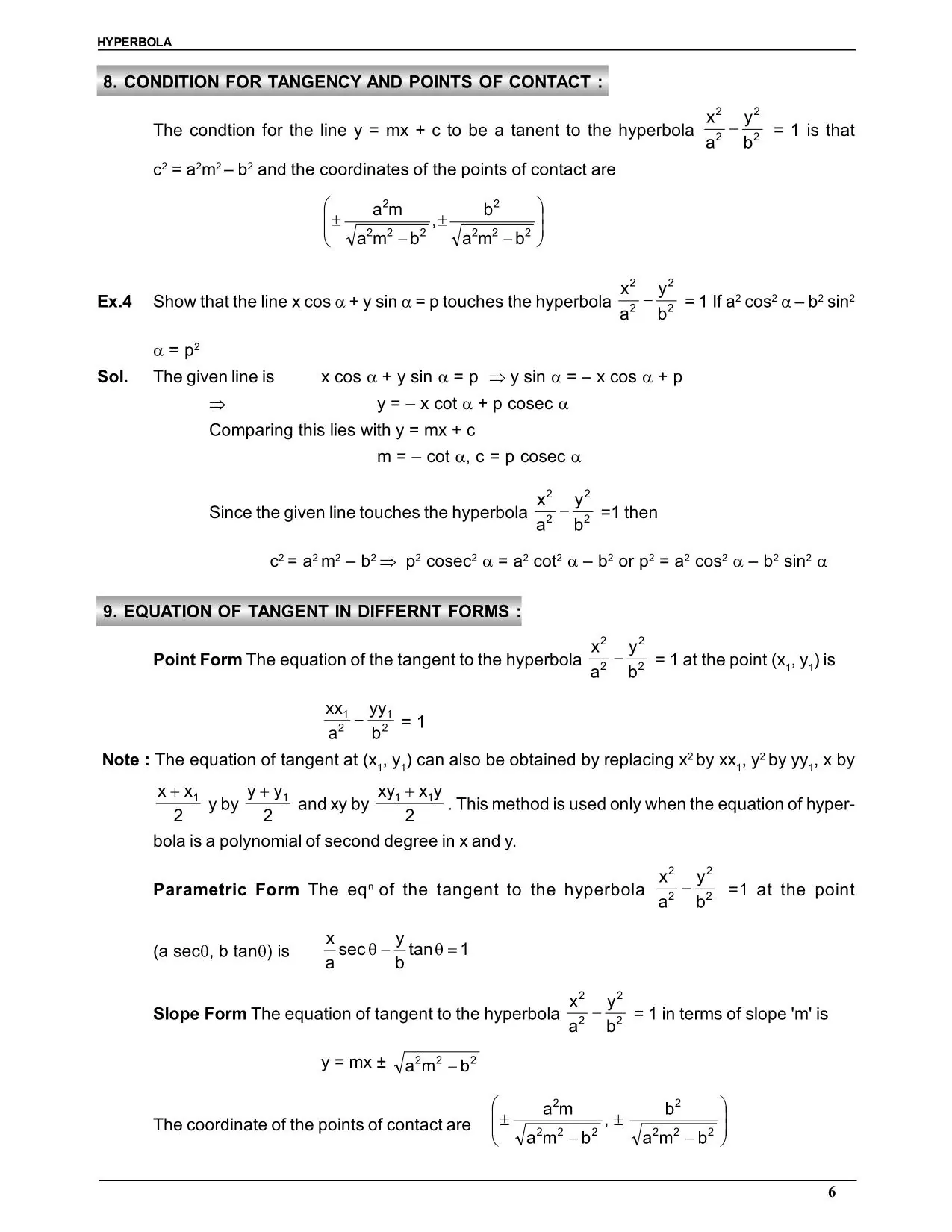
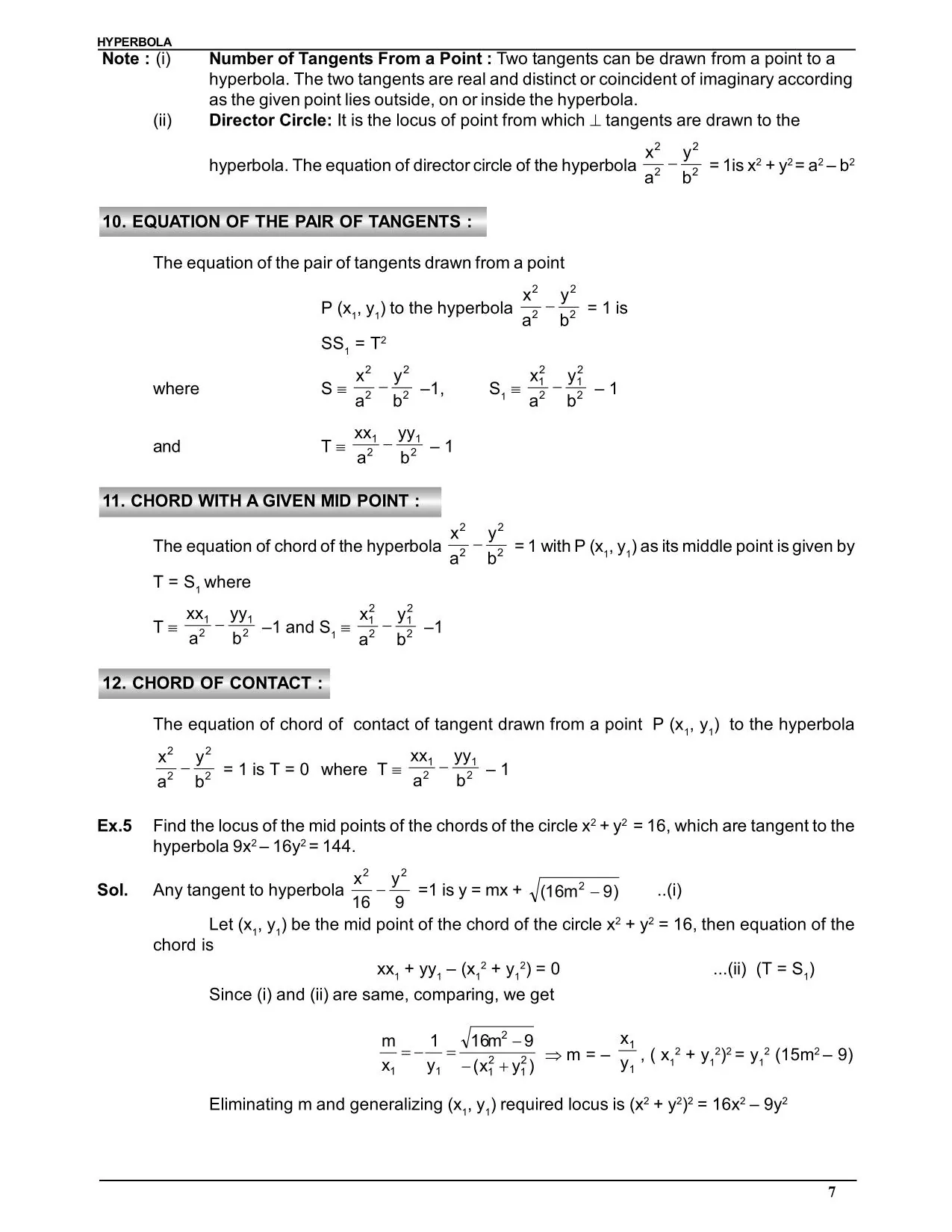
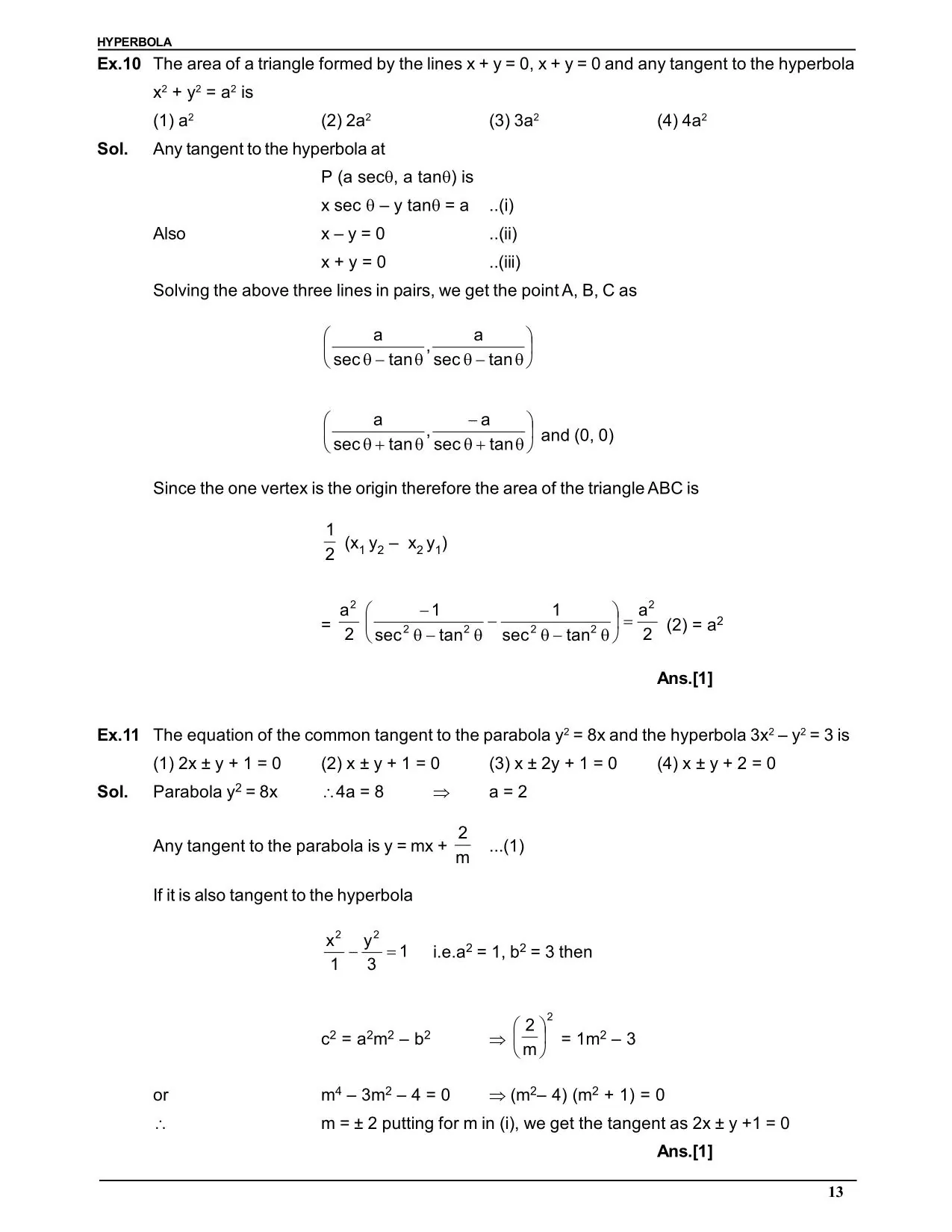
The parametric equation of the hyperbola x²/a² − y²/b² = 1 is x = a sec θ and y = b tan θ, where θ is the parameter. Every value of θ (except θ = π/2 + nπ) gives a valid point on the hyperbola. The identity sec²θ − tan²θ = 1 confirms that these coordinates always satisfy the hyperbola equation
Why does the hyperbola use sec θ and tan θ instead of cos θ and sin θ?
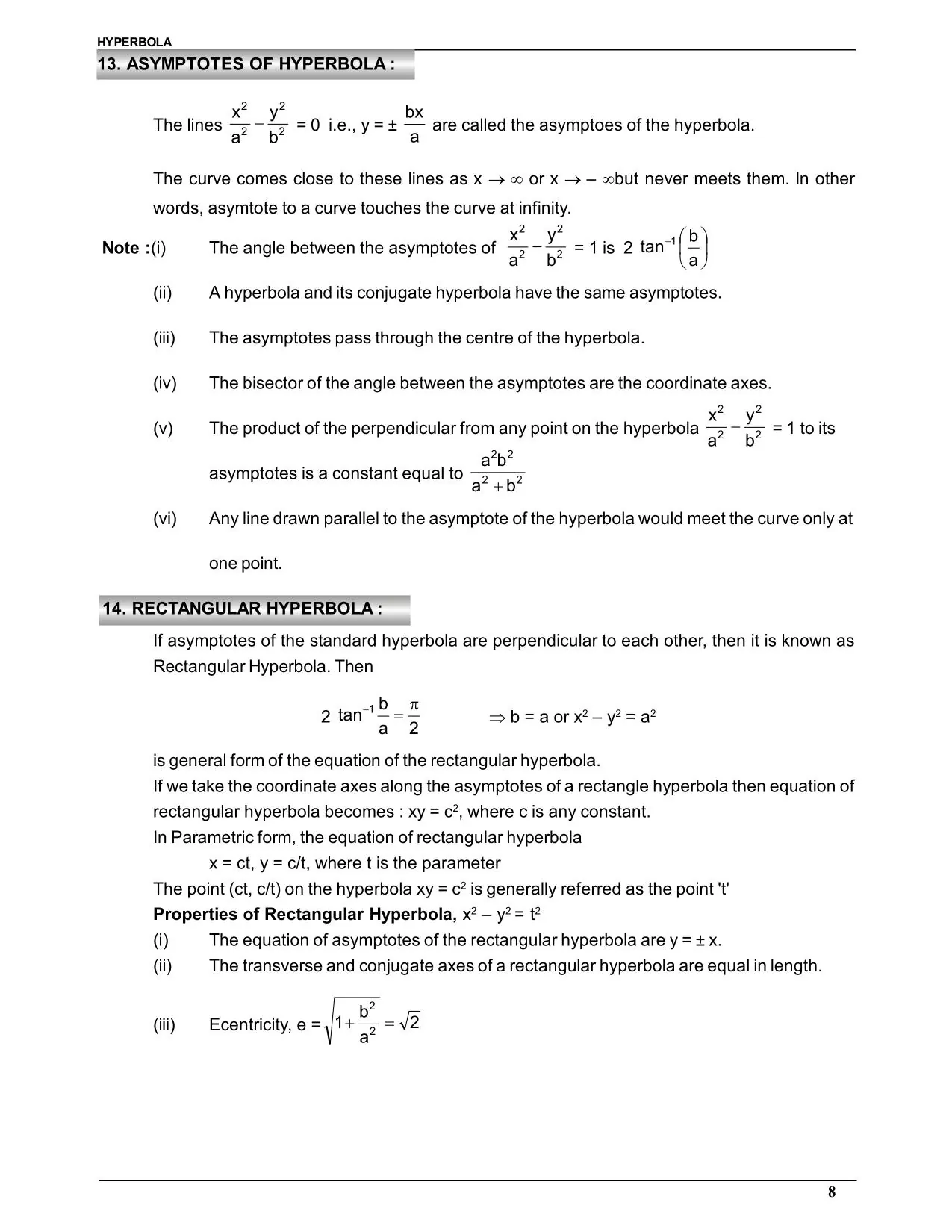
The hyperbola equation involves a subtraction (x²/a² − y²/b² = 1), which matches the identity sec²θ − tan²θ = 1. The ellipse uses addition (x²/a² + y²/b² = 1), matching cos²θ + sin²θ = 1. This structural difference forces the switch from trigonometric to reciprocal trigonometric functions.
What is the parametric form of a rectangular hyperbola?
For the rectangular hyperbola xy = c², the parametric form is x = ct and y = c/t, where t ≠ 0 is the parameter. This is an algebraic parameter, not an angle. Substituting confirms ct × (c/t) = c². This form is especially useful in JEE Advanced locus and chord-of-contact problems.
How do you write the tangent to a hyperbola using the parametric form?
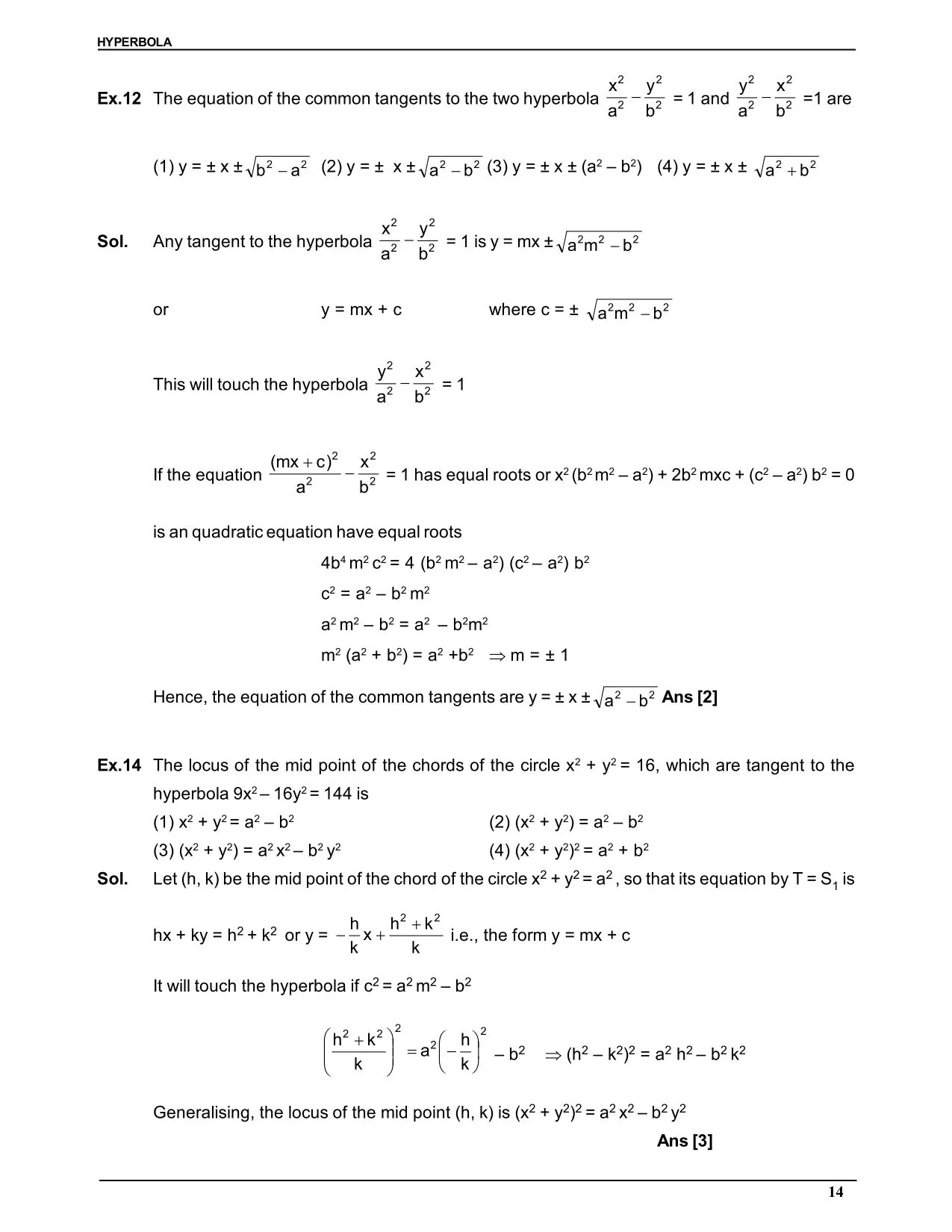
At the parametric point (a sec θ, b tan θ) on x²/a² − y²/b² = 1, the tangent equation is (x sec θ)/a − (y tan θ)/b = 1. This is derived by differentiating the hyperbola implicitly and substituting the parametric coordinates. It is one of the most frequently tested results in JEE Main conic section questions.
Is the parametric equation of a hyperbola in the Class 11 NCERT syllabus?
The standard equation of a hyperbola and its properties are covered in NCERT Class 11 Maths Chapter 11 (Conic Sections). The parametric form itself is introduced as an extension in most coaching syllabi and appears explicitly in JEE Main and JEE Advanced. For full NCERT coverage, refer to the NCERT Solutions for Class 11 Maths.