Relative Velocity Class 11 - IIT JEE | NEET
Relative velocity is the velocity of one object as observed from another moving object, helping analyze motion from different frames of reference using the difference between their velocities.
.webp)
Table of Contents

eSaral › Class 11› Relative Velocity Class 11 - IIT JEE | NEET

What Is Relative Velocity?
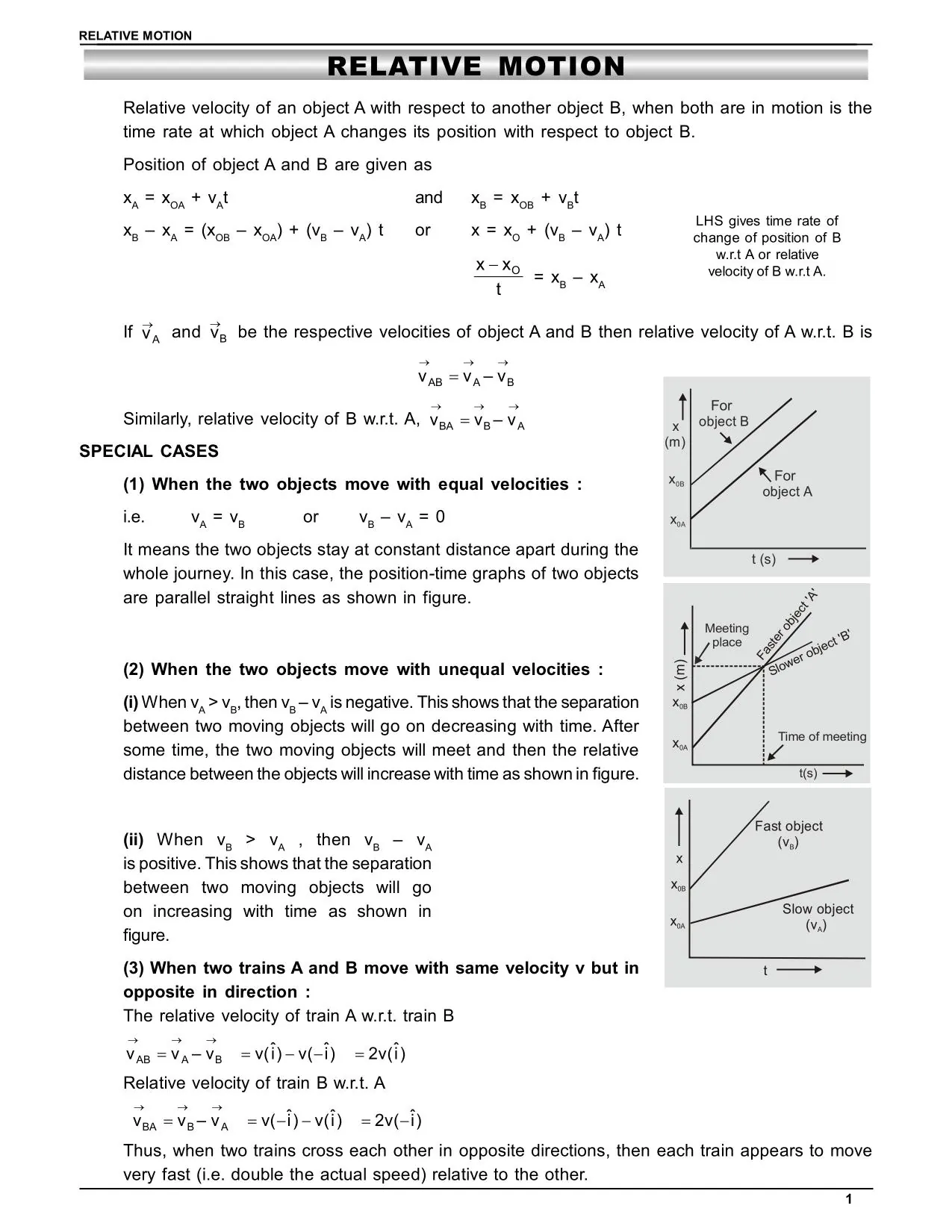
Relative velocity is the velocity of object A as measured by an observer sitting on object B (or vice versa). In everyday language: when you sit in a train moving at 60 km/h and another train passes at 80 km/h in the same direction, the second train appears to move at only 20 km/h relative to you — not 80 km/h.
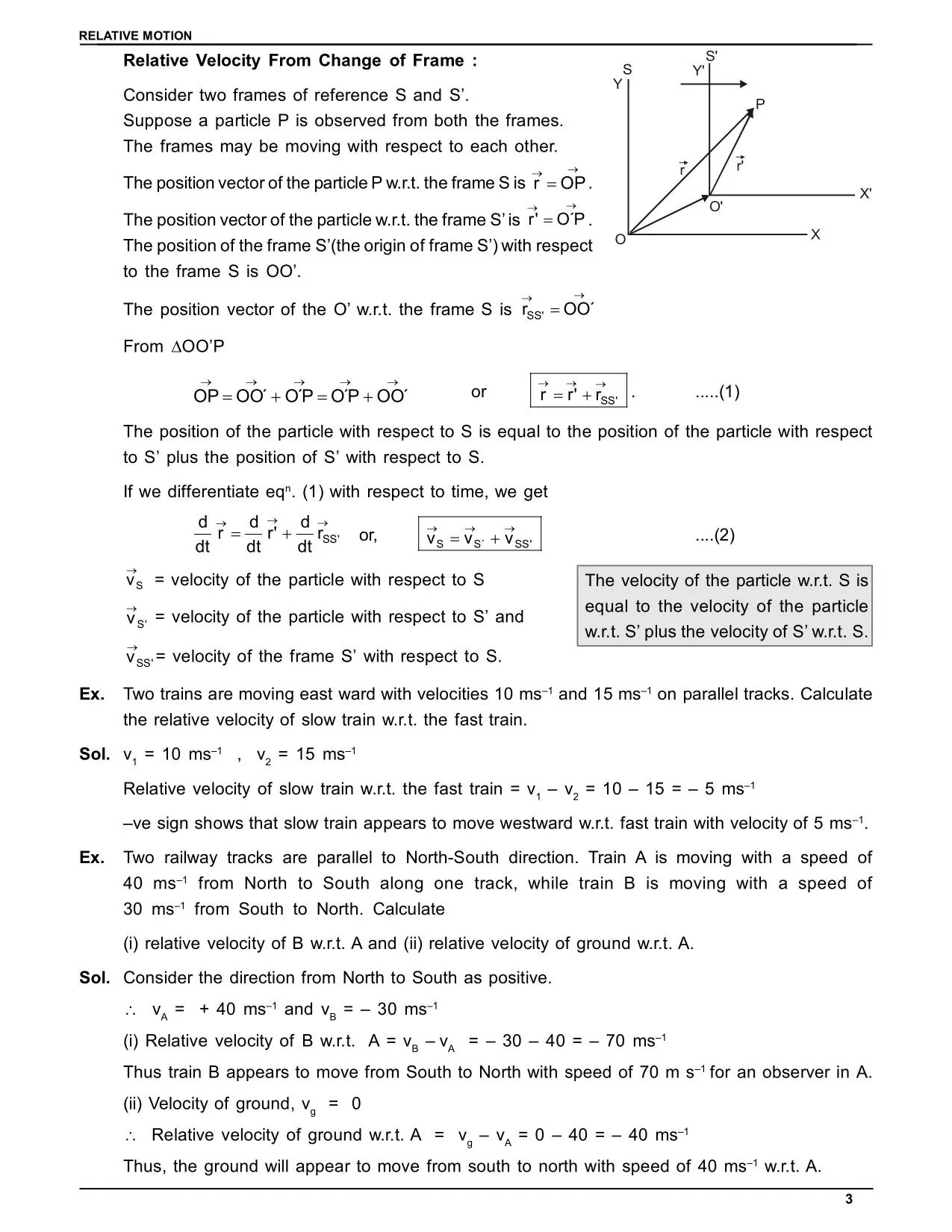
All velocity measurements are relative to a frame of reference. When that frame is itself moving, we use relative velocity to account for it.
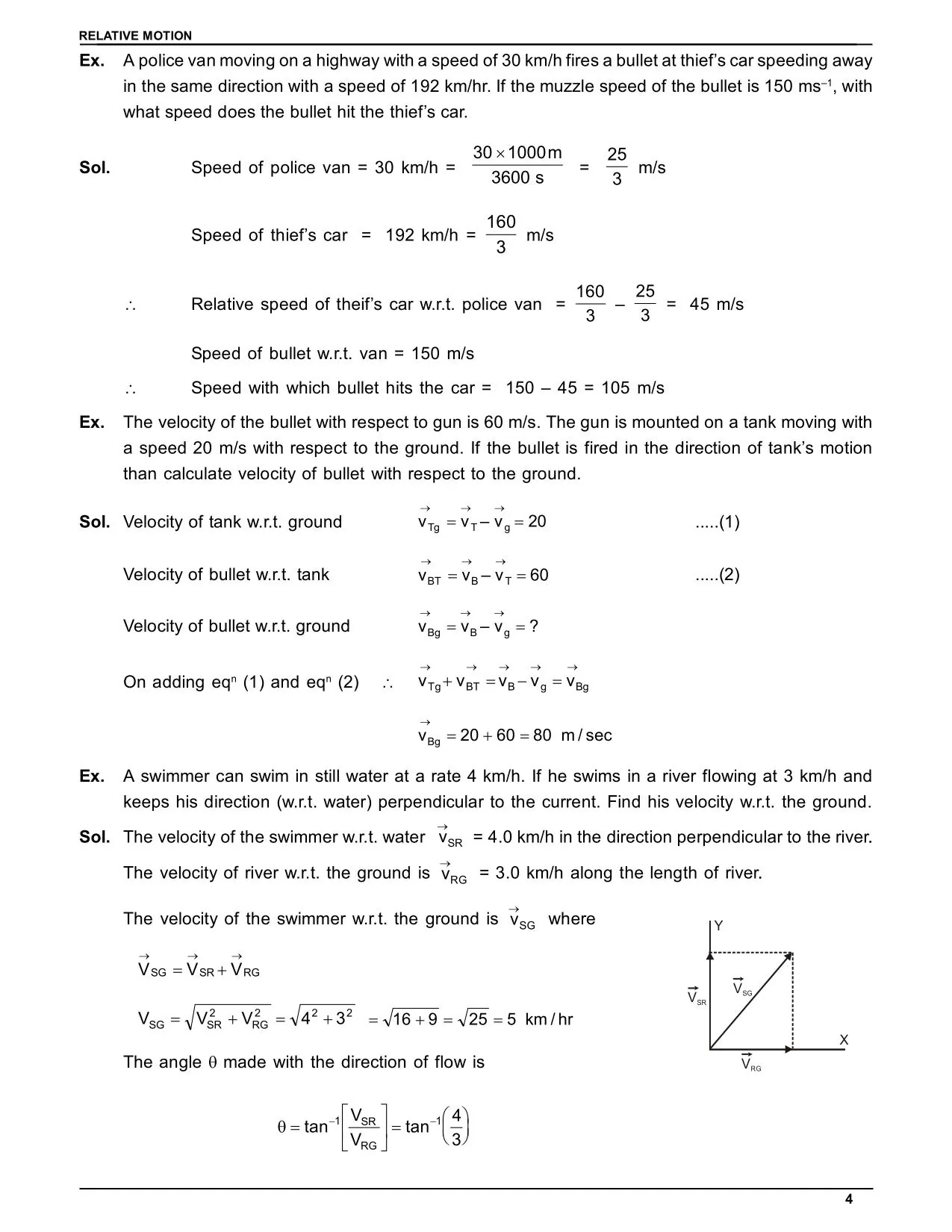
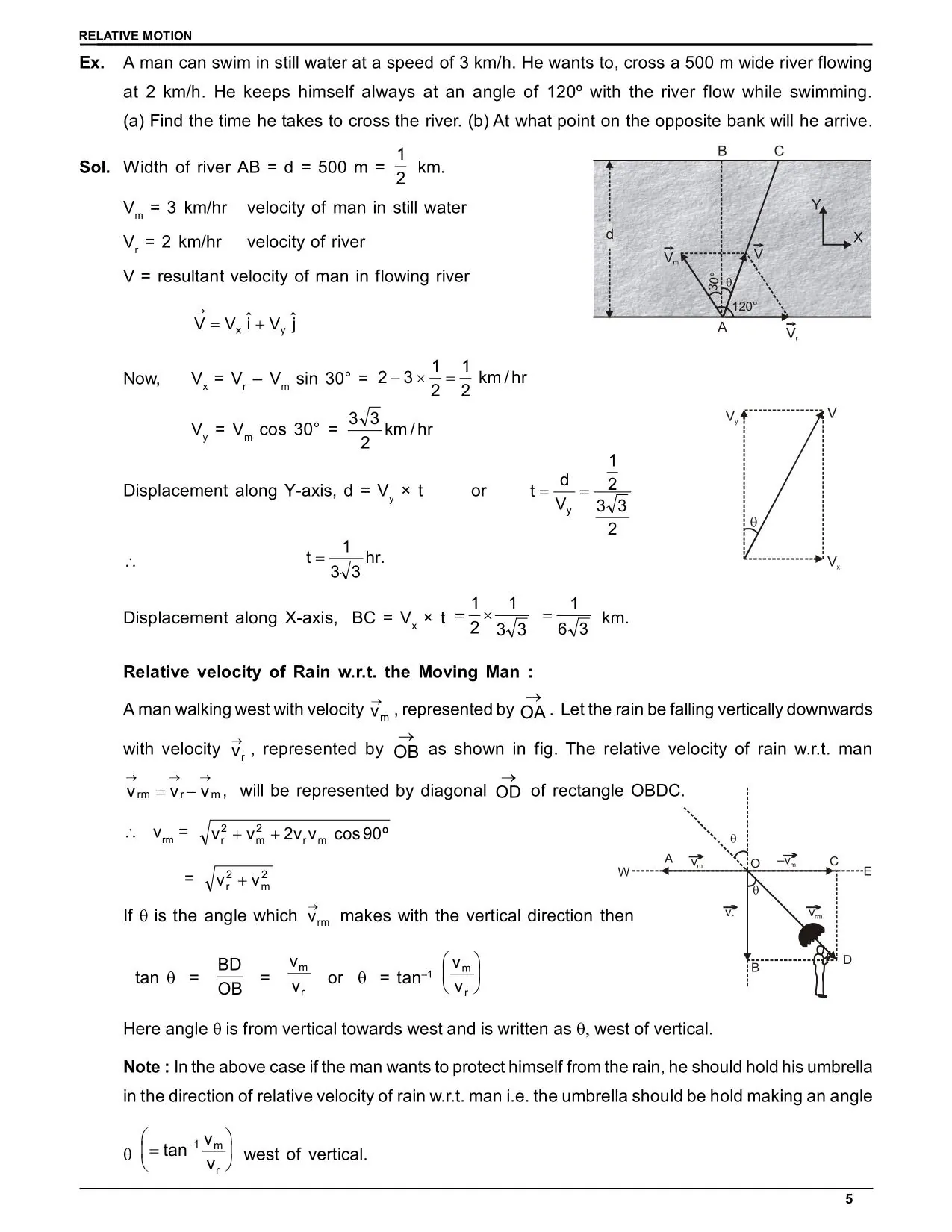
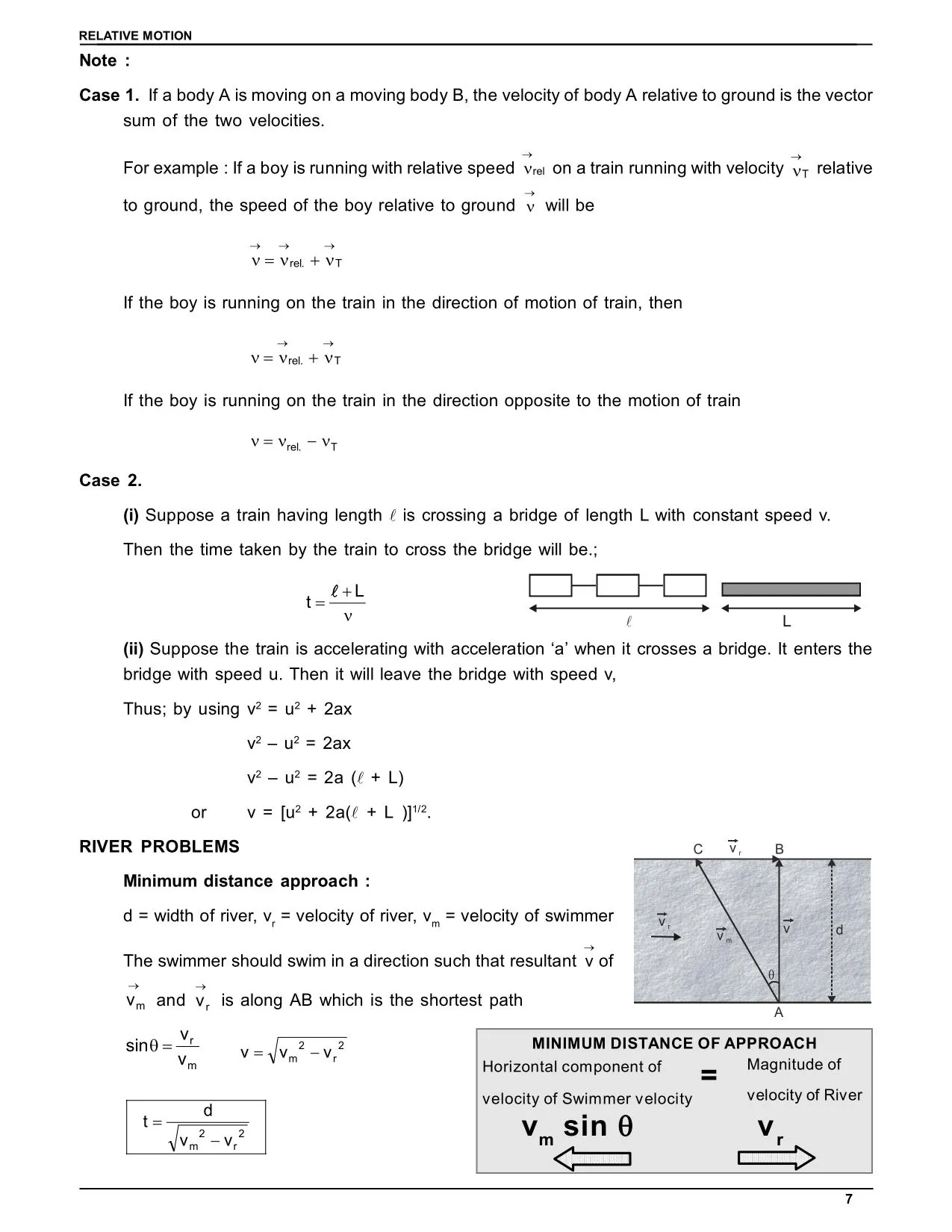
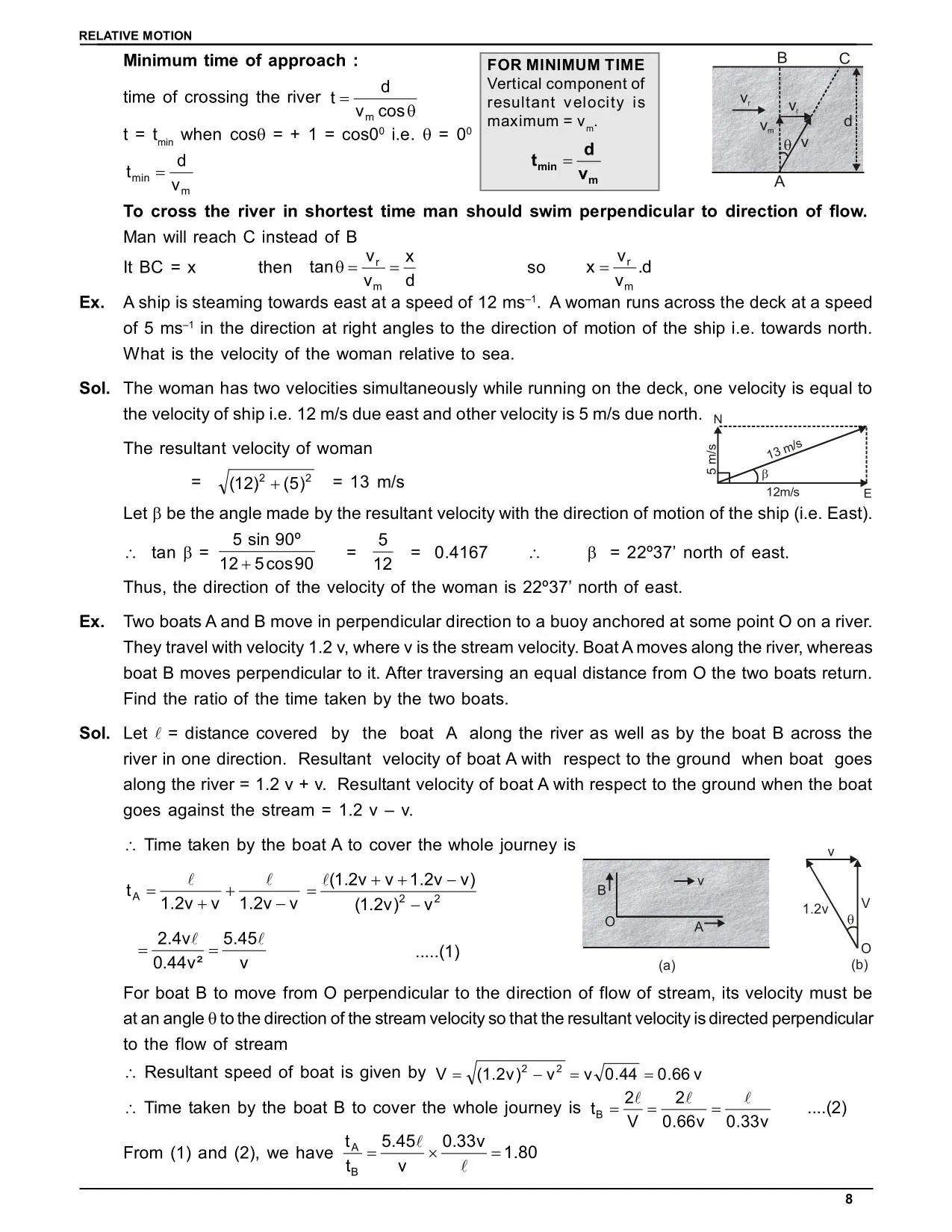
For river-boat, rain-man and other plane-motion problems, first revise vectors and relative motion in two dimensions so subtraction by components becomes straightforward.
Relative Velocity Class 11 – Formula, Examples
Frequently Asked Questions
Find answers to common questions.
What is relative velocity in simple words?
Relative velocity is the speed and direction of one object as seen by another moving object. For example, if two cars both travel at 60 km/h in the same direction, each car appears stationary to the other — their relative velocity is zero.
What is the formula for relative velocity?
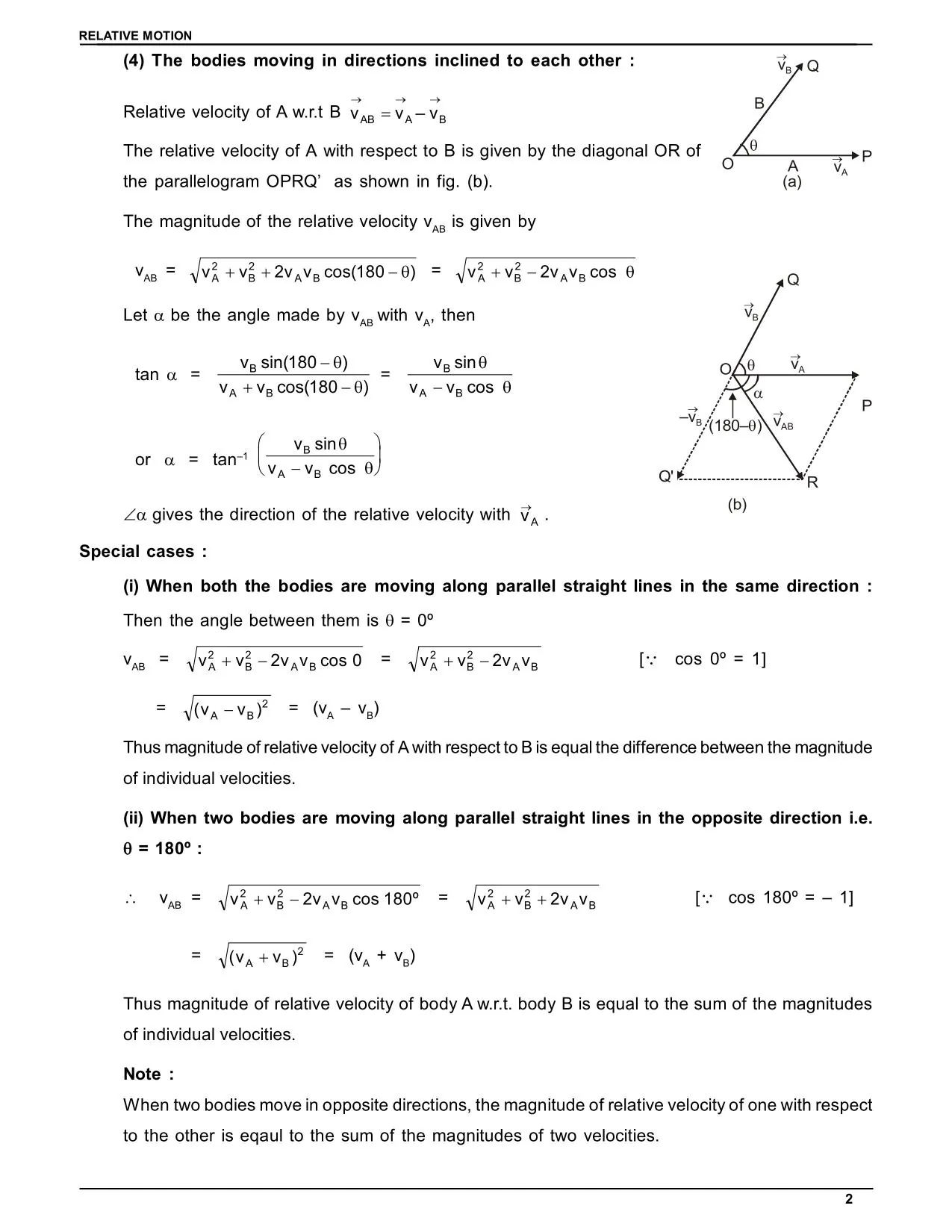
The formula is v_AB = v_A − v_B, where v_A is the velocity of object A and v_B is the velocity of object B, both measured from the same ground frame. In 2D, subtract the vectors component-wise and find the resultant magnitude and direction.
When is relative velocity equal to the sum of speeds?
Relative velocity equals the sum of speeds when the two objects move in exactly opposite directions. If A moves at 30 m/s east and B moves at 20 m/s west, the relative velocity of A with respect to B is 30 + 20 = 50 m/s (eastward).
How is relative velocity different from actual velocity?
Actual (or absolute) velocity is measured with respect to a fixed, stationary ground frame. Relative velocity is measured with respect to another moving object. Actual velocity does not depend on the observer's motion; relative velocity does.
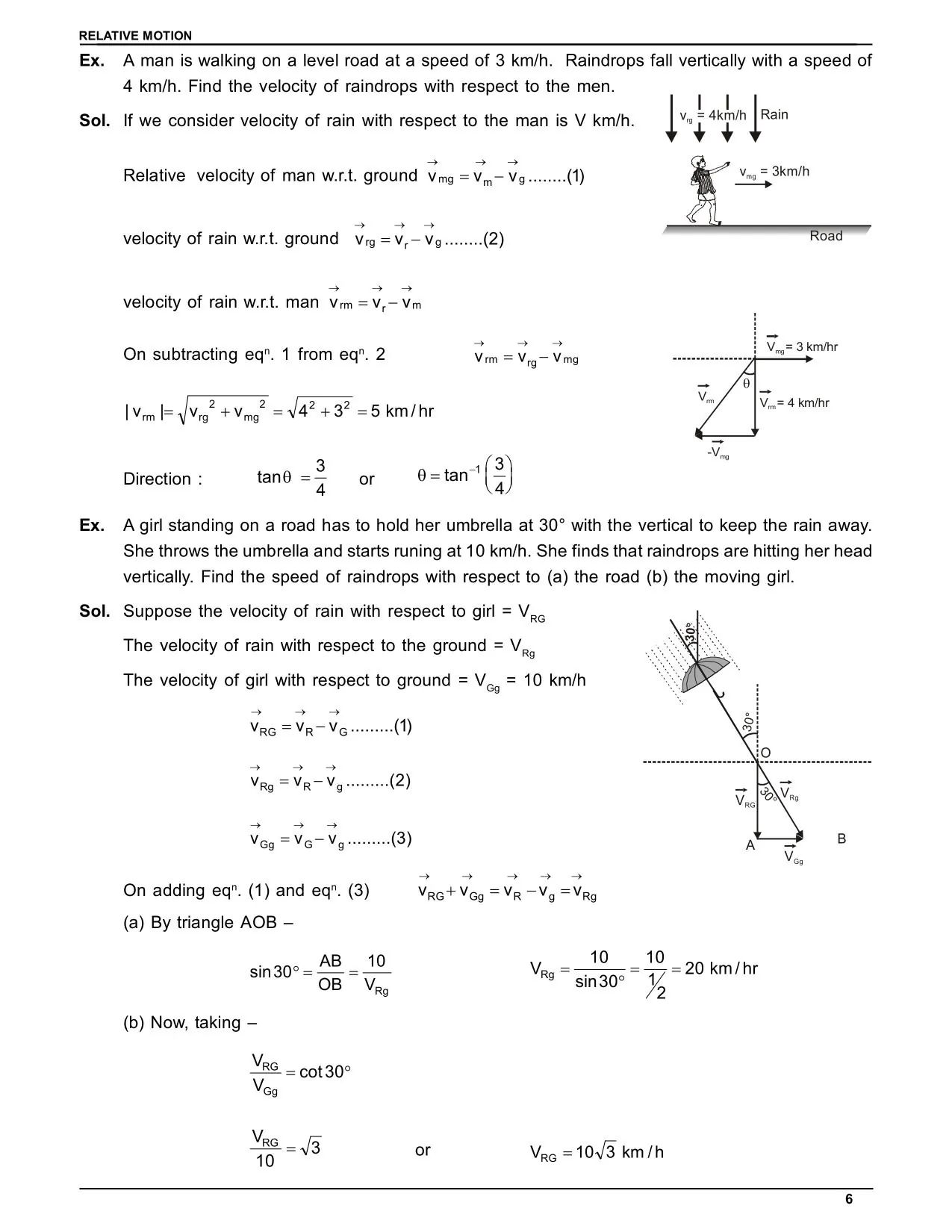
How do you solve rain-man problems in relative velocity?
In rain-man problems, find the velocity of rain relative to the man using v_rain,man = v_rain − v_man. The man must tilt his umbrella in the direction of his own motion. The tilt angle with the vertical = tan⁻¹(v_man / v_rain). Draw a vector diagram to avoid sign errors.