Wave on String & Sound Wave - NEET Previous Year Questions with Complete Solutions
Wave on String and Sound Wave is a high-scoring NEET topic from Class 11 Physics, contributing 2–3 questions annually and rewarding conceptual understanding over rote memorization.
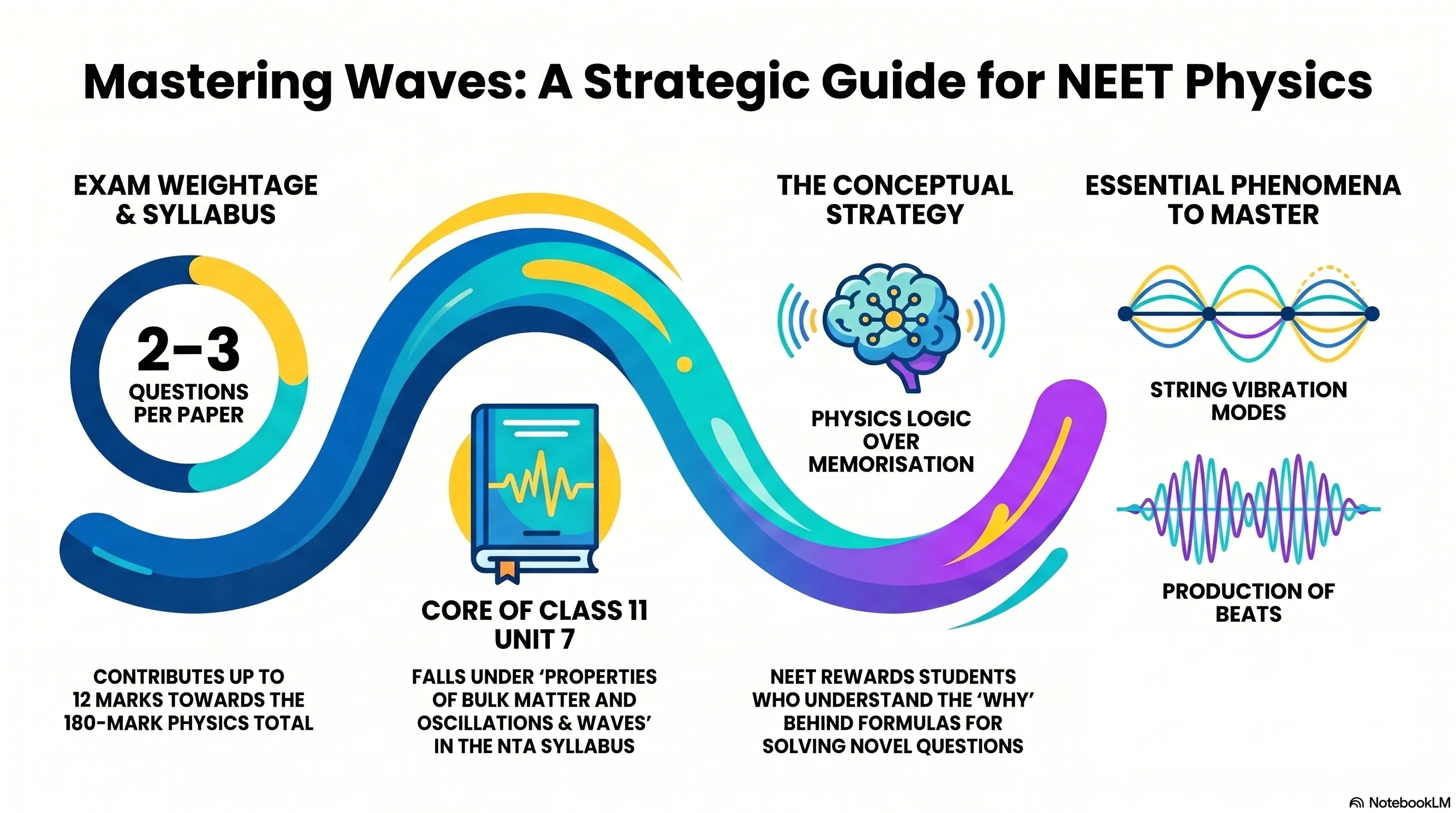
Table of Contents

eSaral › NEET › Electromagnetic Induction

Why This Chapter Matters for NEET
Wave on String and Sound Wave falls under Unit 7: Properties of Bulk Matter and Oscillations & Waves in the Class 11 Physics syllabus prescribed by NTA for NEET. According to the official NTA NEET information bulletin, Physics carries 180 marks (45 questions), and Waves consistently accounts for 2 to 3 questions per paper — that is up to 12 marks if answered correctly.
Unlike chapters such as Electrostatics or Modern Physics, Waves rewards students who understand the physics behind the formulas rather than those who memorise them. A student who genuinely understands why a string vibrates in modes or why two slightly mistuned forks produce beats will solve a novel question just as fast as a familiar one.
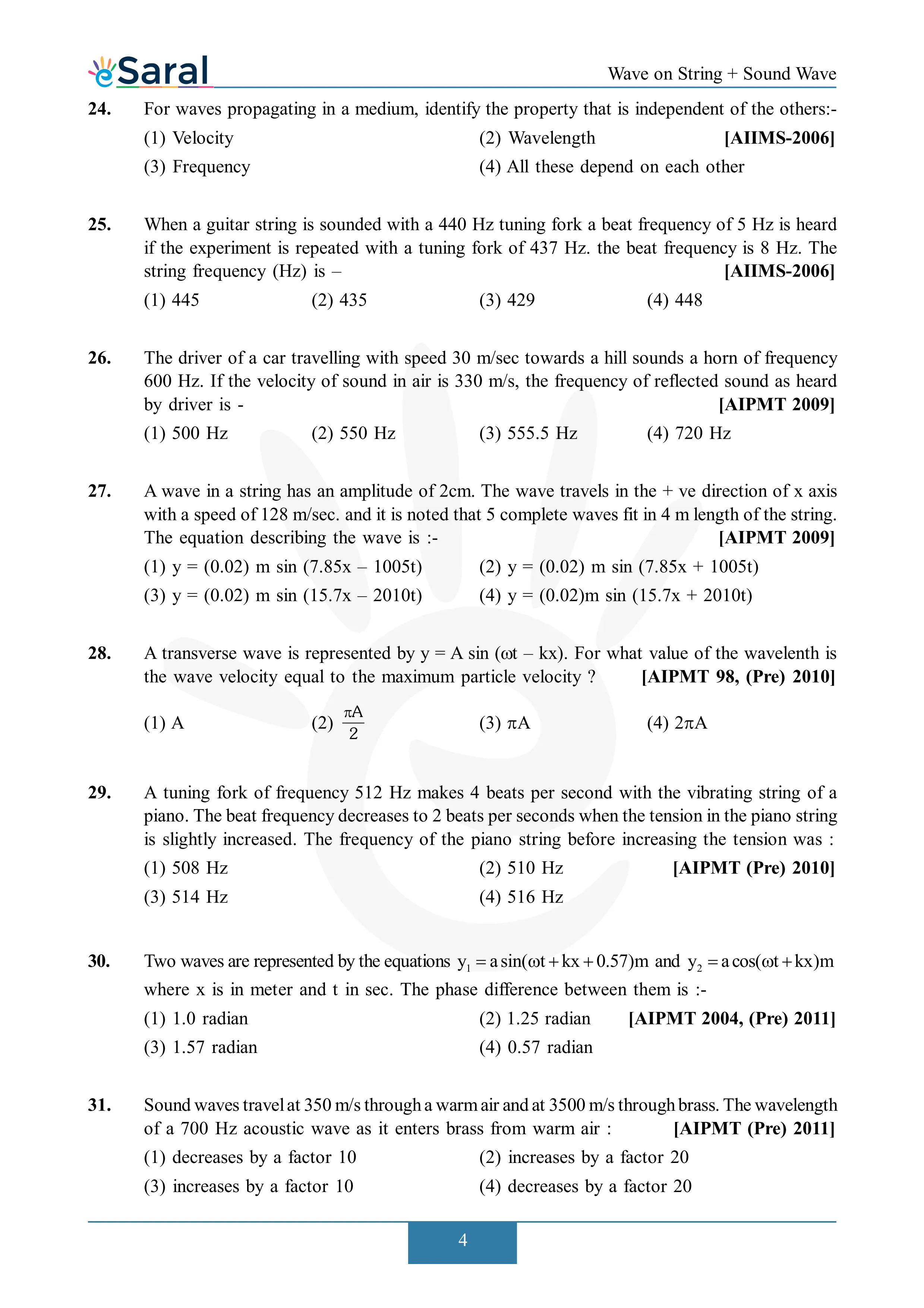
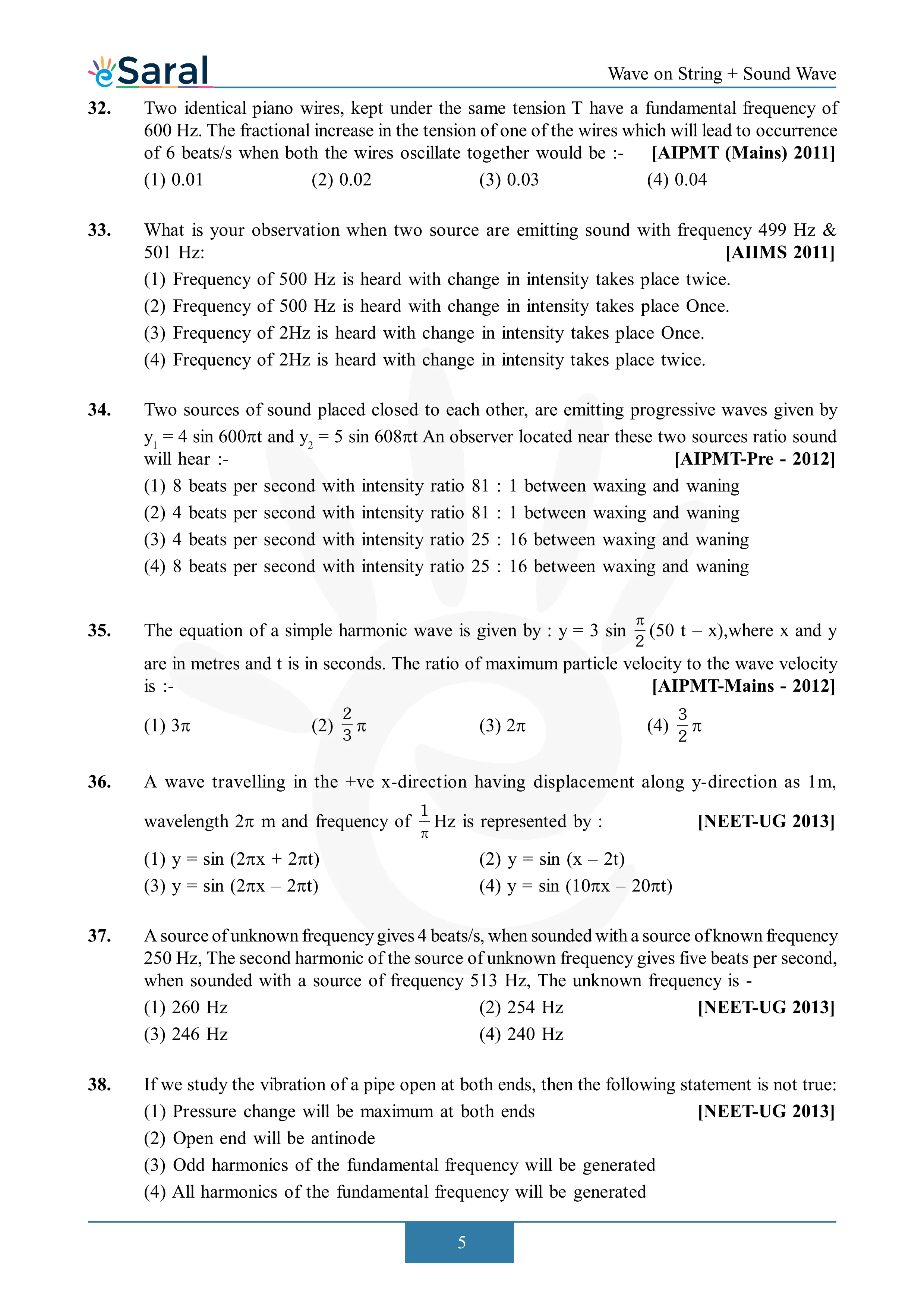
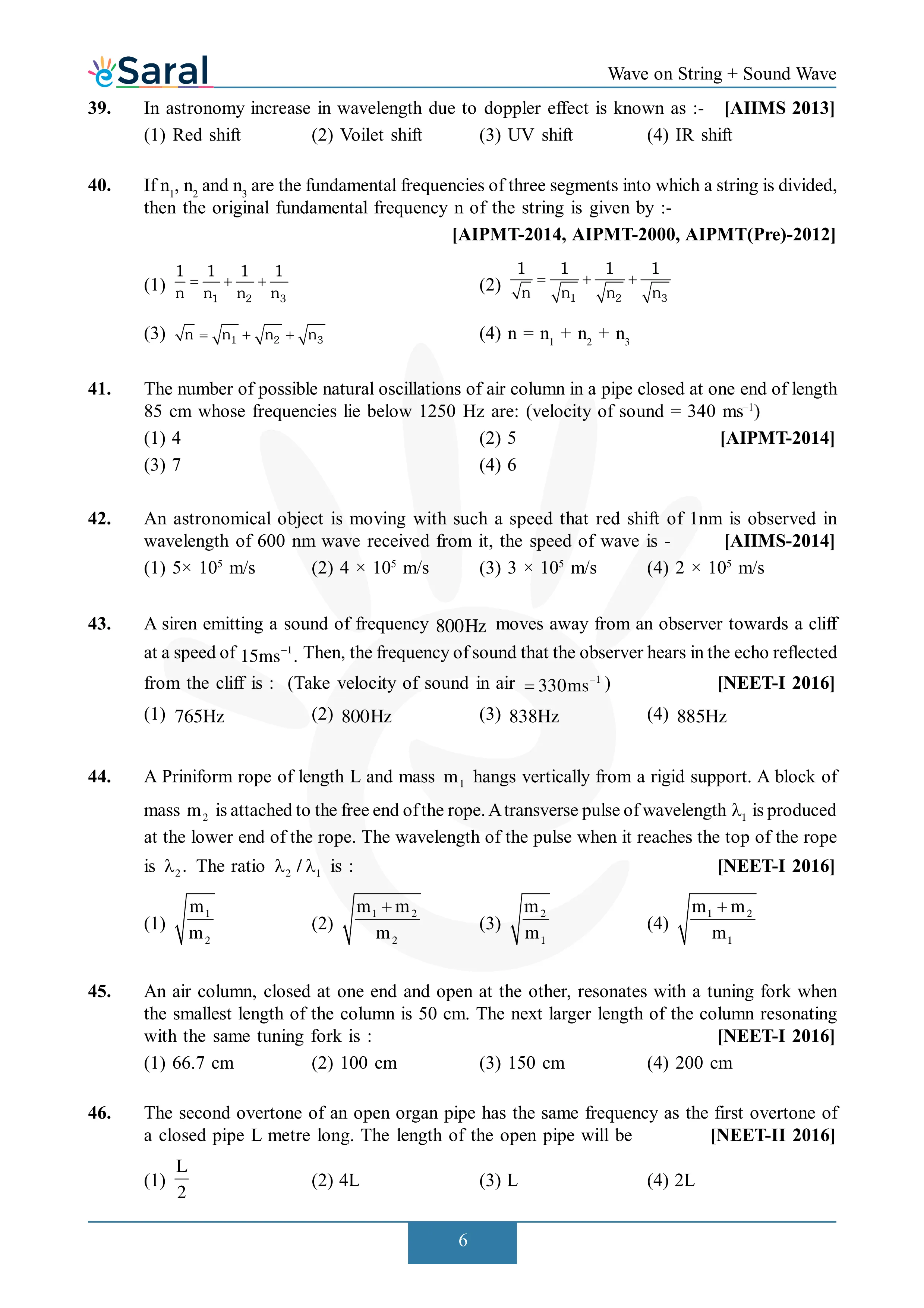
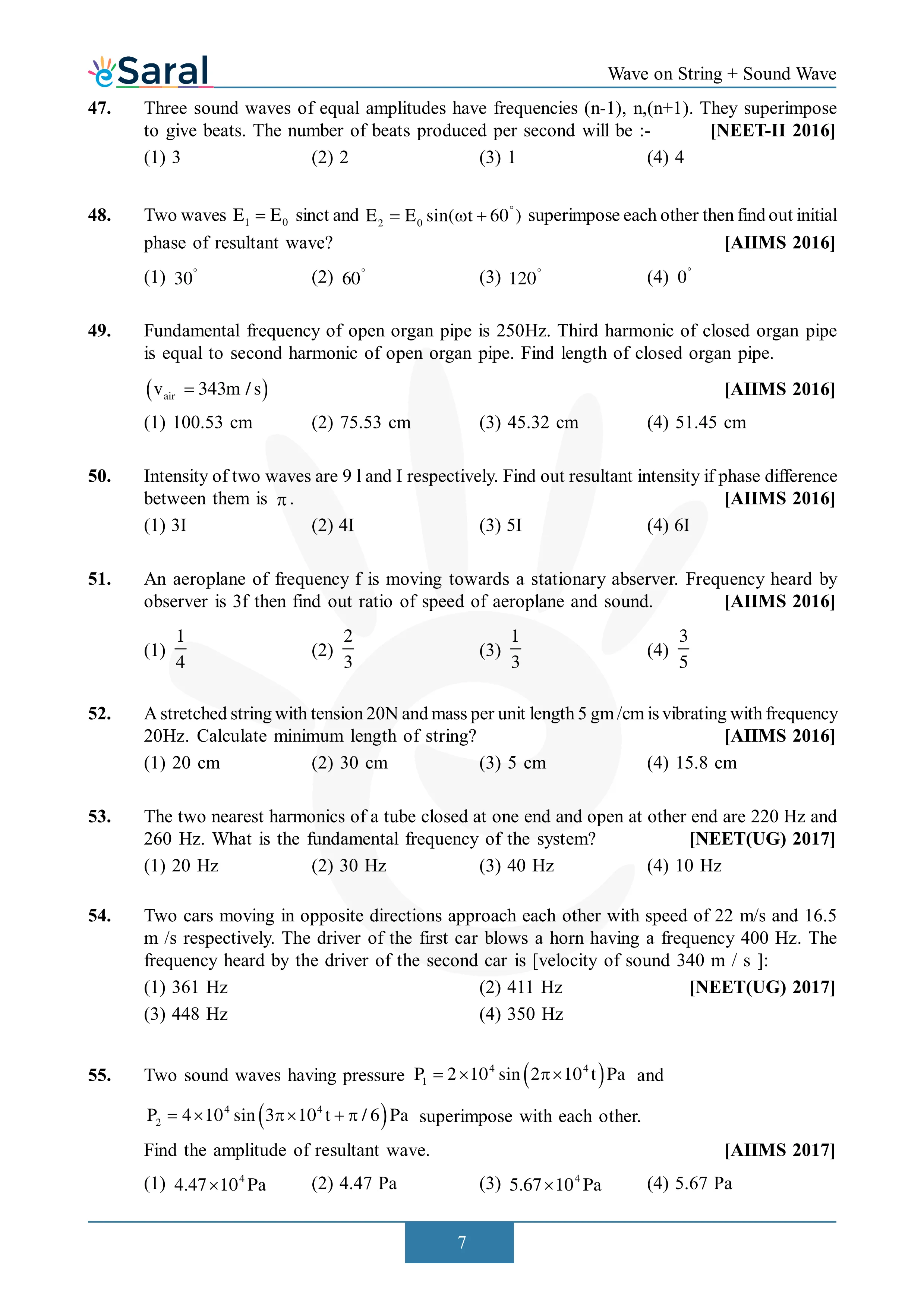
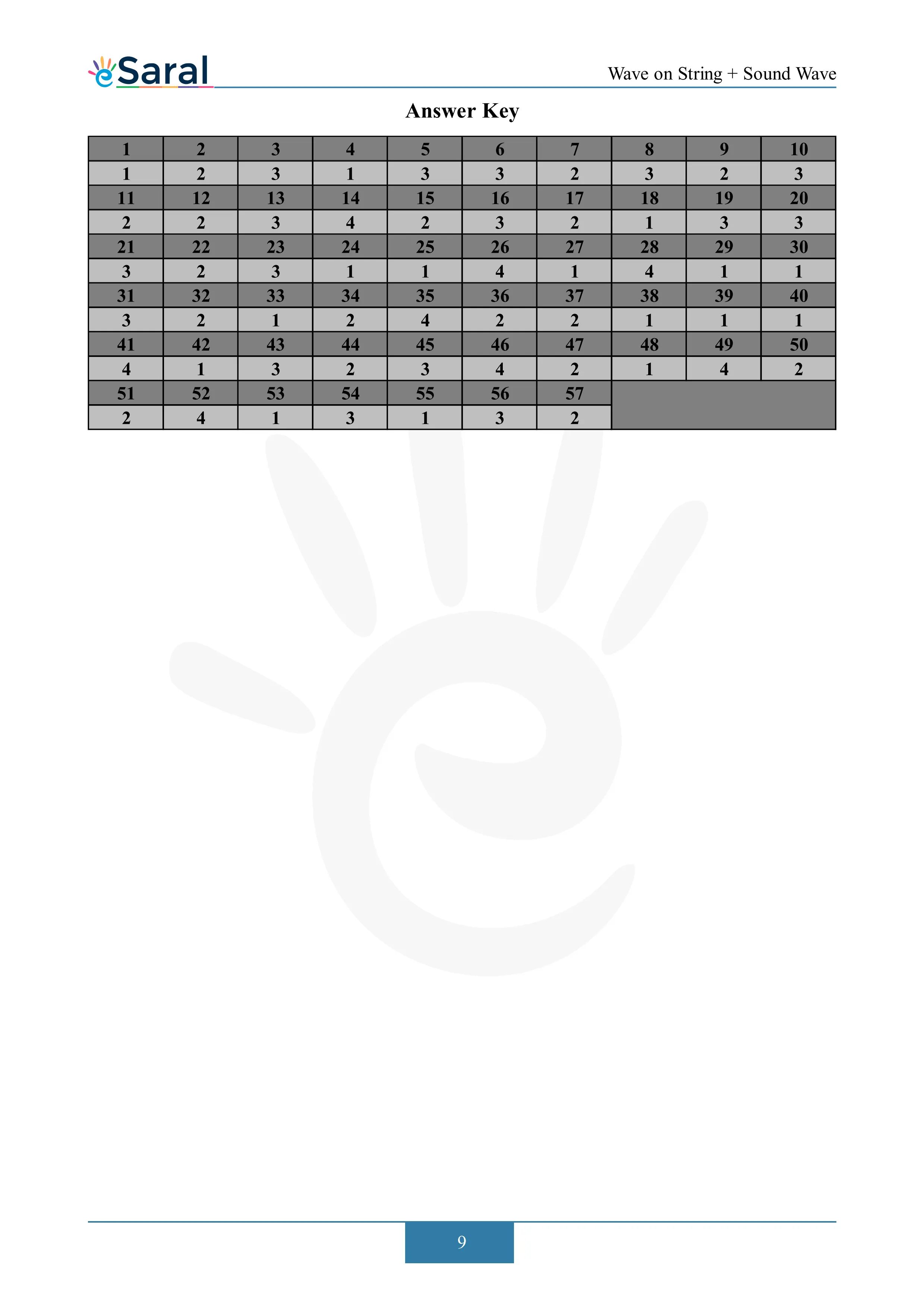
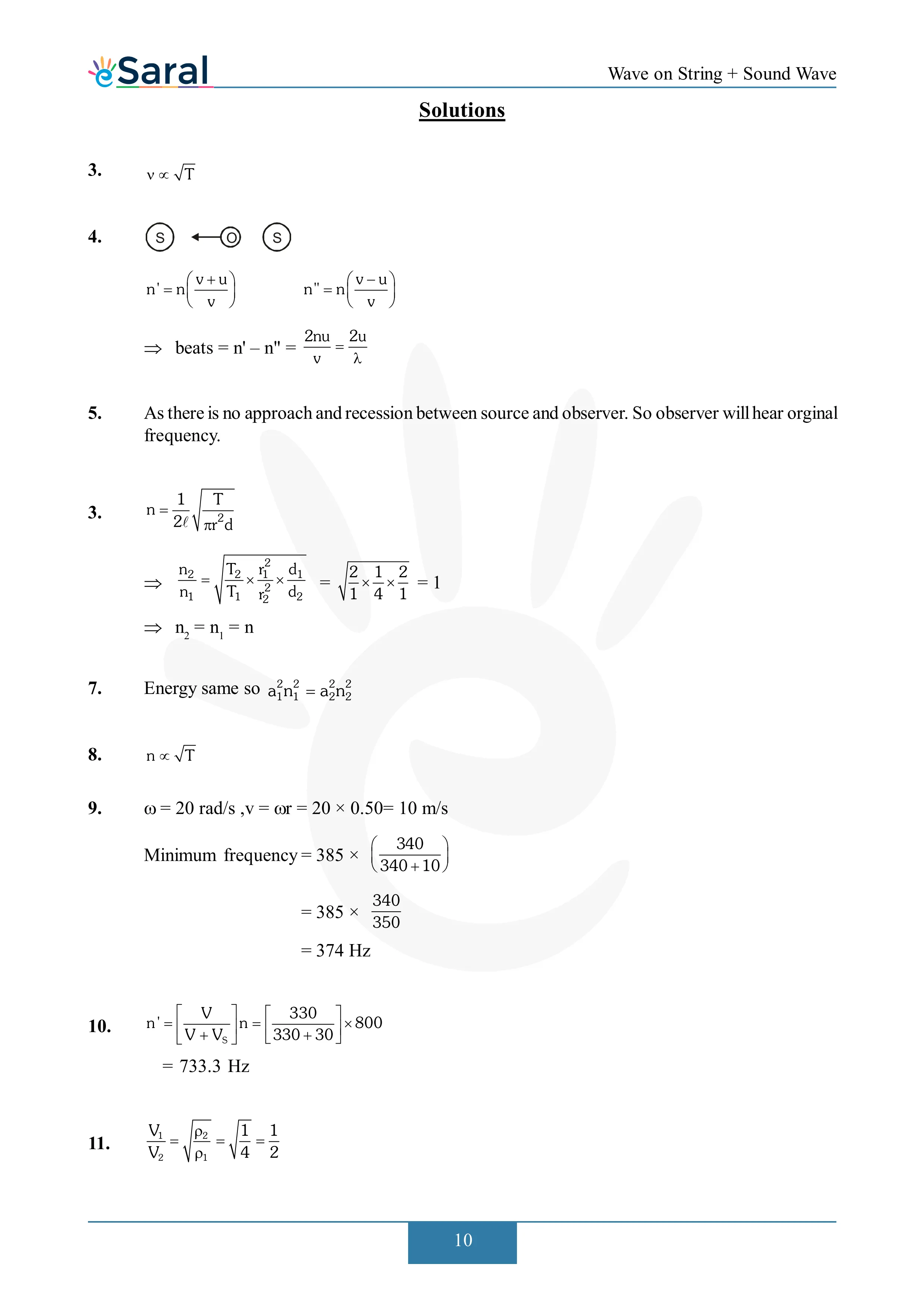
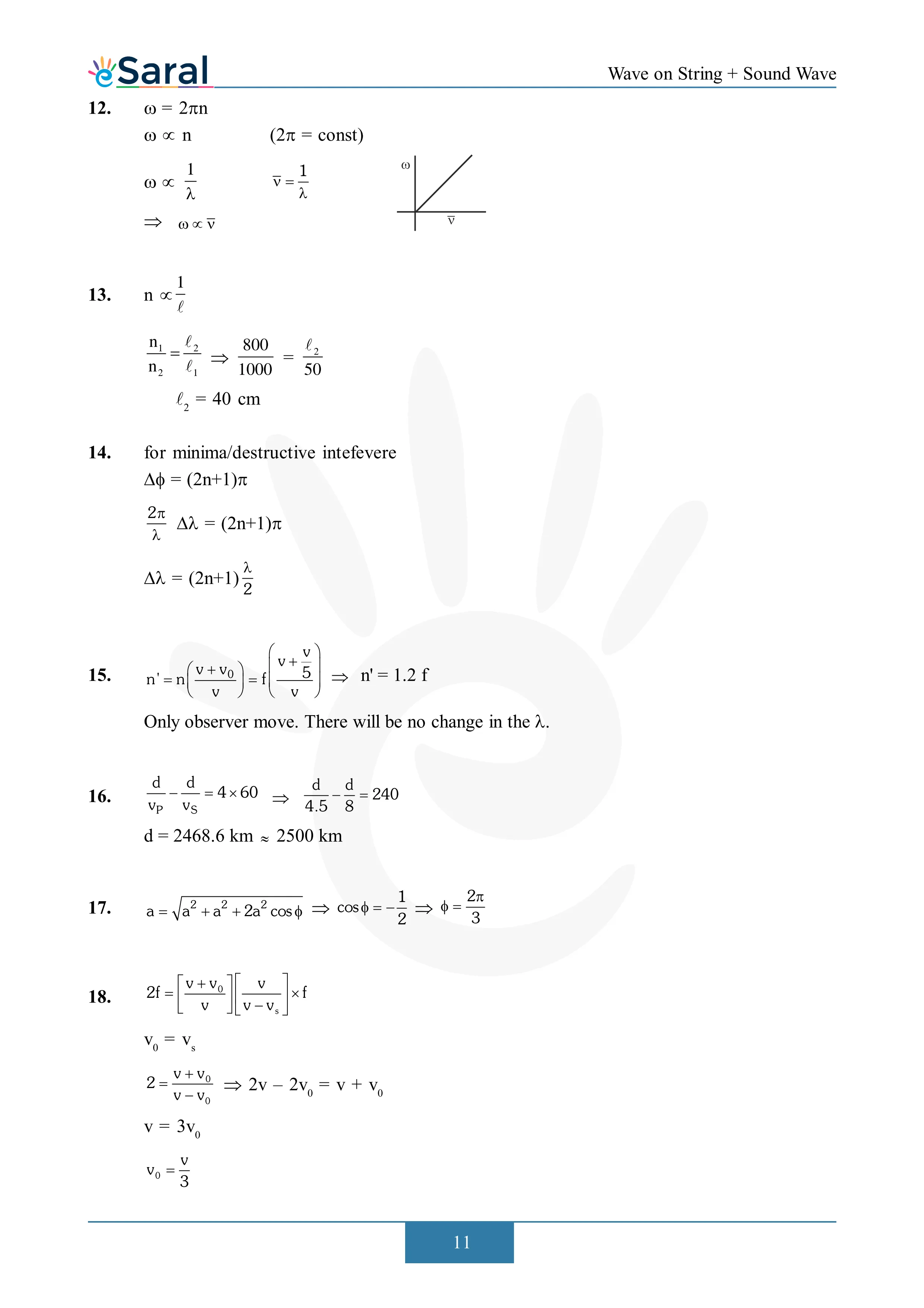
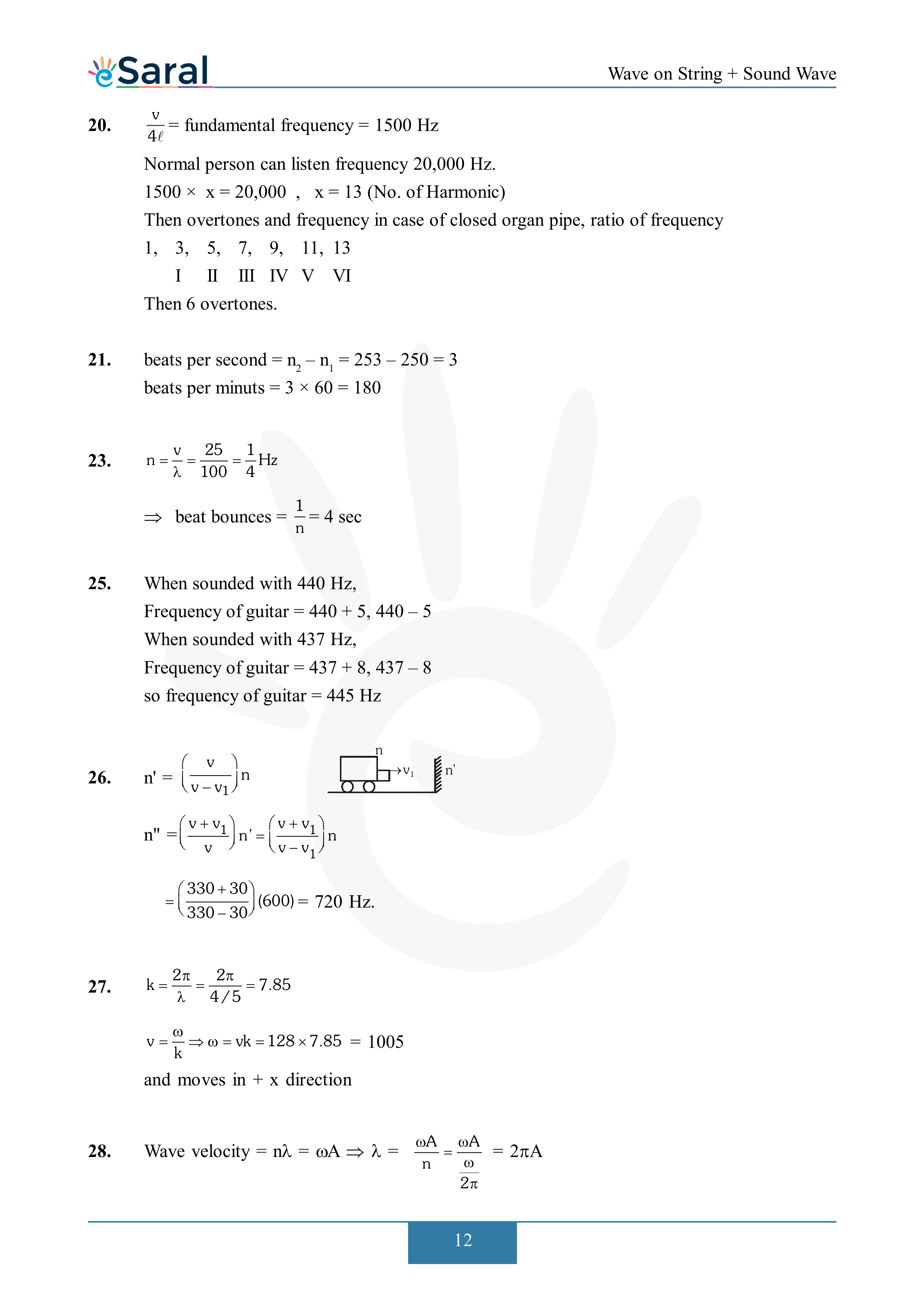
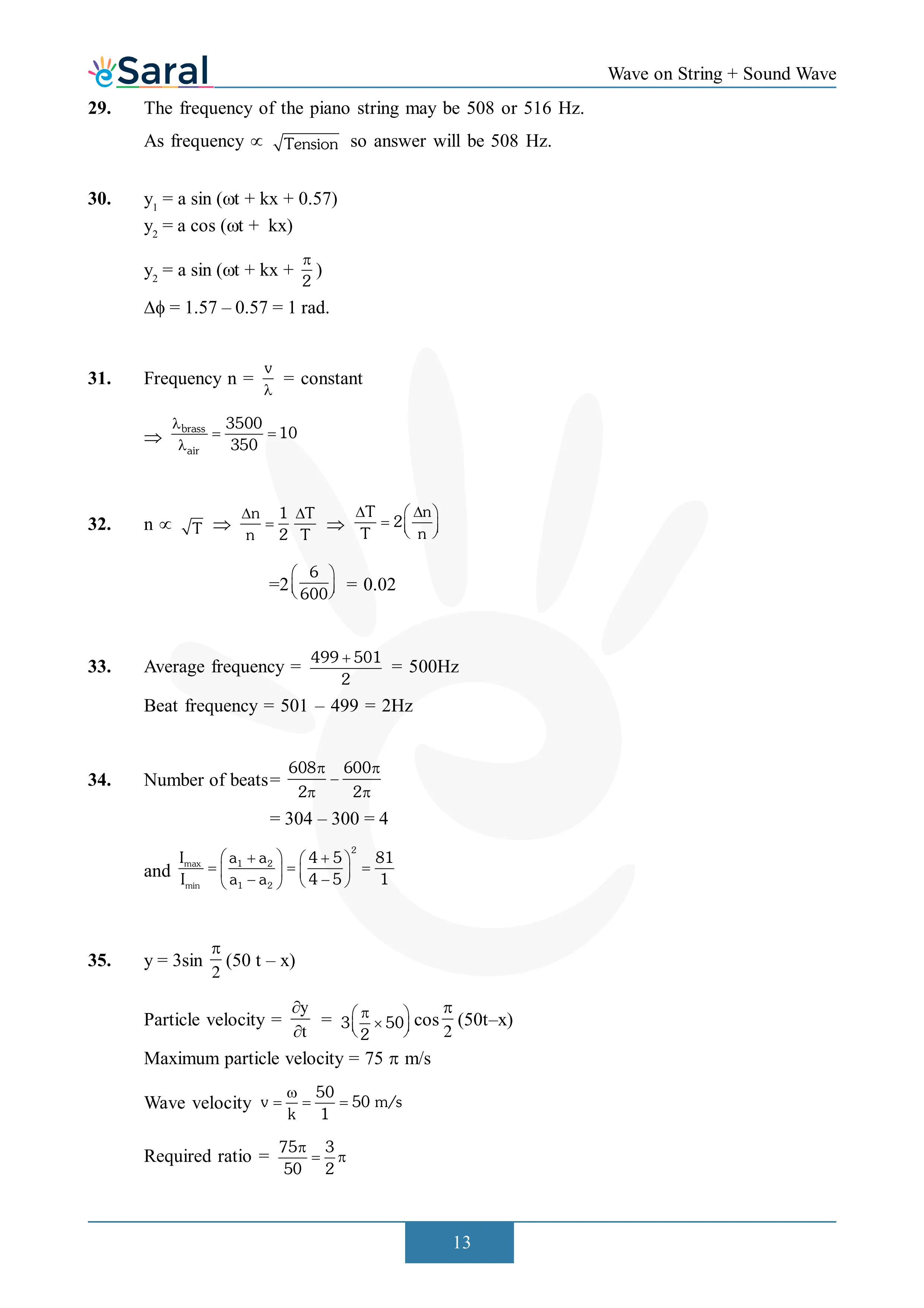
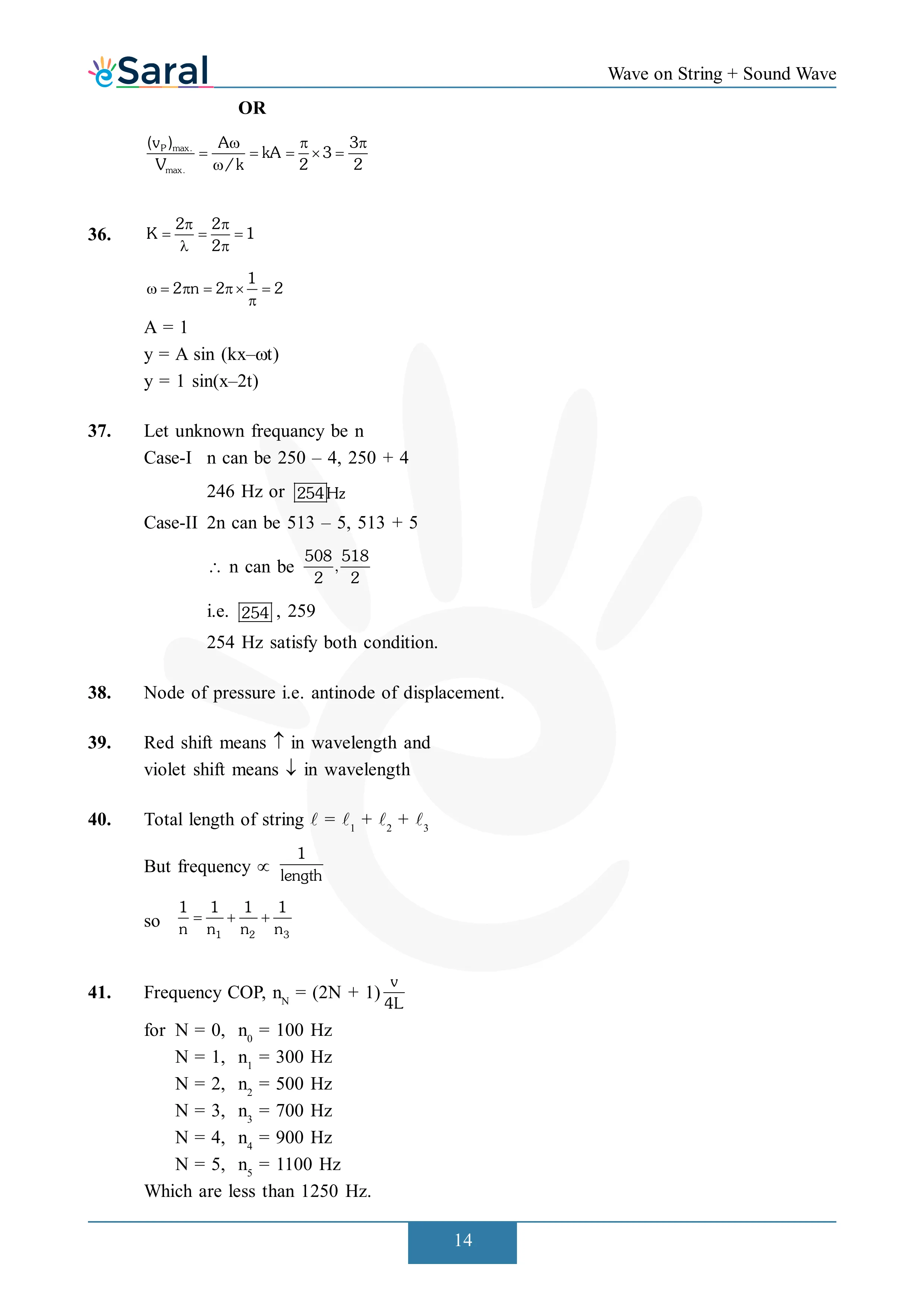
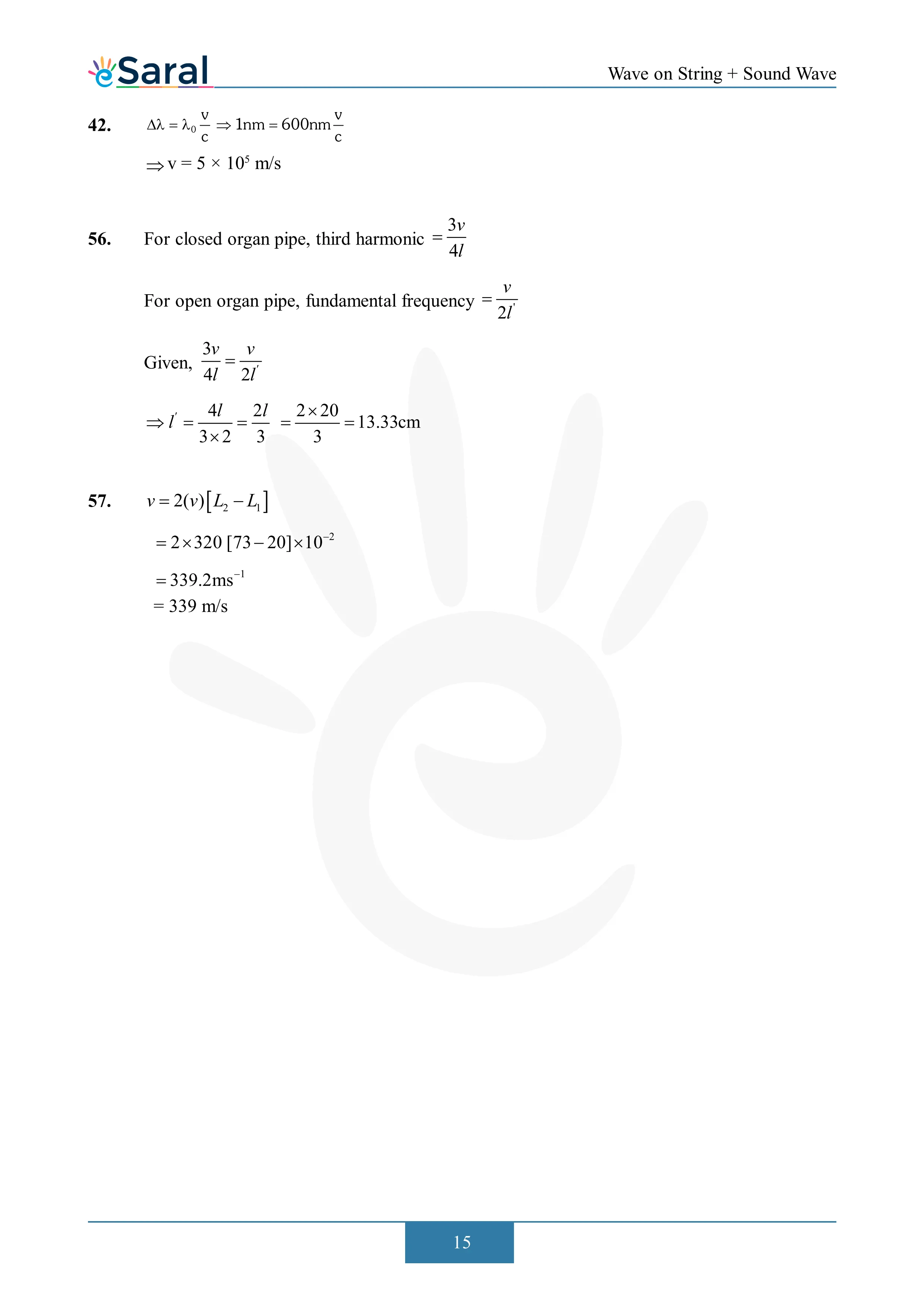
NEET PYQ with Solutions

Frequently Asked Questions
Find answers to common questions.
How many questions come from Waves in NEET every year?
Waves typically contributes 2 to 3 questions in NEET Physics, worth 8 to 12 marks. Based on NTA question papers from 2015 to 2023, Doppler effect and standing waves on strings appear most consistently. Solving 5–7 years of PYQs from this chapter covers the vast majority of patterns NTA repeats.
Is Wave on String difficult for NEET?
Wave on String is moderate in difficulty. The formulas are limited, but NTA tests conceptual understanding — especially around harmonics, resonance conditions, and the effect of changing tension or linear density. Students who understand the physics behind v = √(T/μ) rather than memorising it find this chapter straightforward.
What is the Doppler effect formula used in NEET?
The formula is f′ = f × (v ± v₀) / (v ∓ vₛ), where v is the speed of sound, v₀ is the observer's speed, and vₛ is the source's speed. Use the upper sign (+ for observer, − for source) when motion is toward each other, and the lower sign when moving apart. Always define your positive direction first.
What is the difference between beats and interference in sound?
Interference is a spatial phenomenon caused by two waves from different paths combining at a point. Beats are a temporal phenomenon caused by two sources of slightly different frequencies — the resultant amplitude fluctuates periodically at a rate equal to |f₁ − f₂|. They are related concepts but not the same, and NTA sometimes uses this distinction to construct trap options.
How do I remember open pipe vs closed pipe harmonics?
Open pipes support all harmonics (1st, 2nd, 3rd…). Closed pipes support only odd harmonics (1st, 3rd, 5th…). A simple memory cue: "Open = all, Closed = odd." The fundamental frequency of a closed pipe of the same length is half that of an open pipe, because only a quarter wavelength fits in the closed pipe at resonance.