NCERT Exemplar Class 12 Chemistry Chapter 9 - Coordination Compounds - Free PDF Download

Home > NCERT Exemplar > Chapter 9 – Coordination Compounds

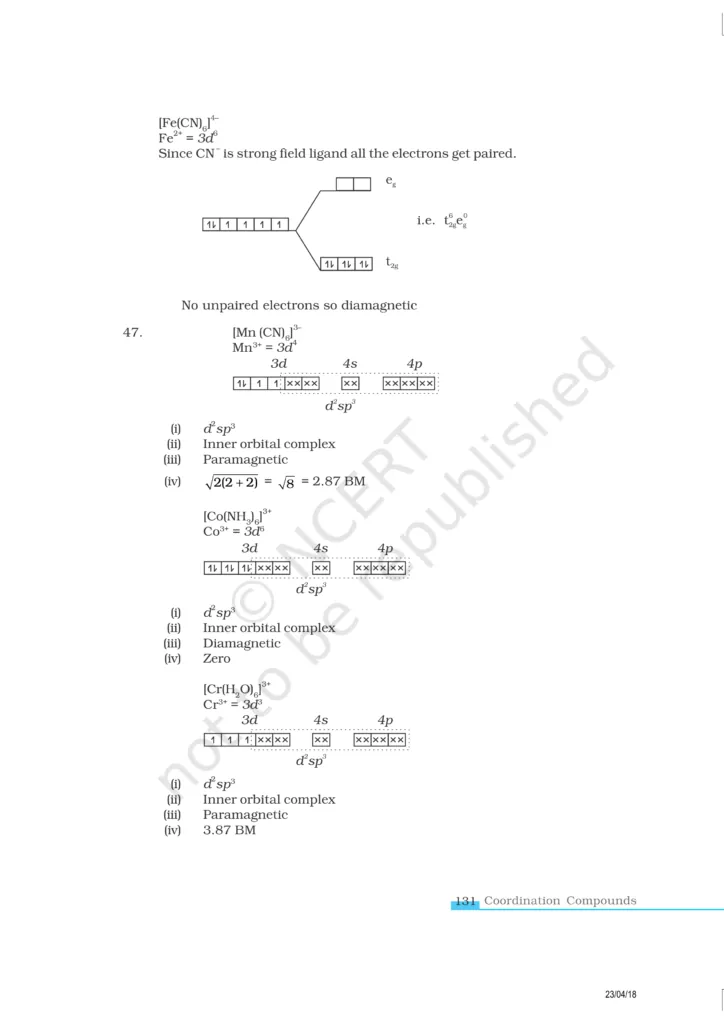
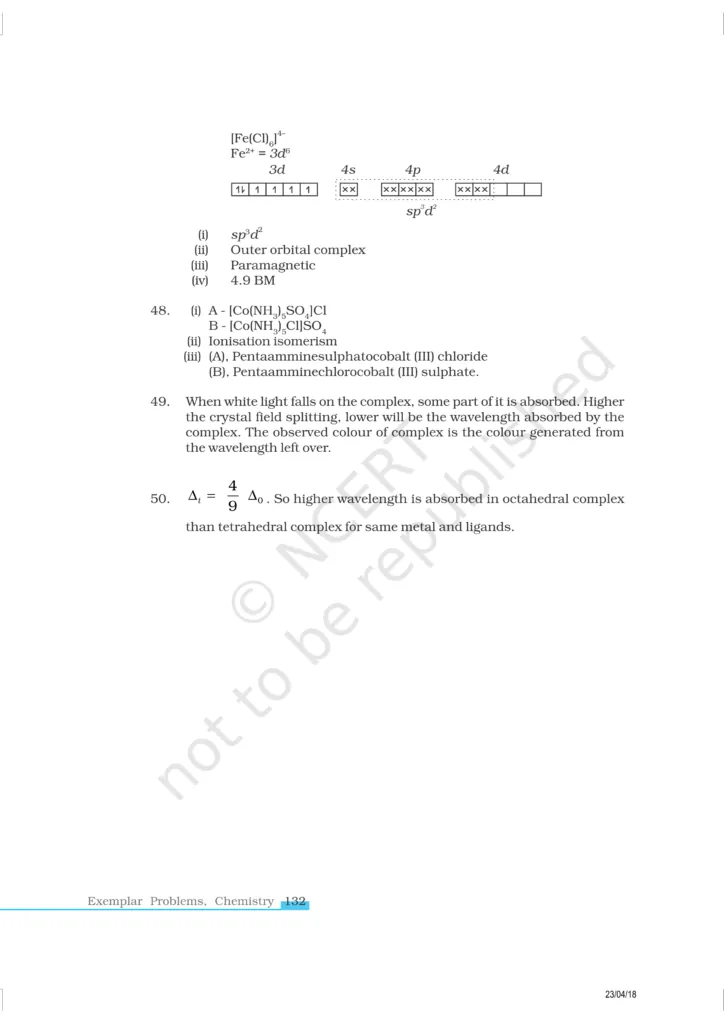
Download the PDF of NCERT Exemplars Class 12 Chemistry Chapter 9 “Coordination Compounds
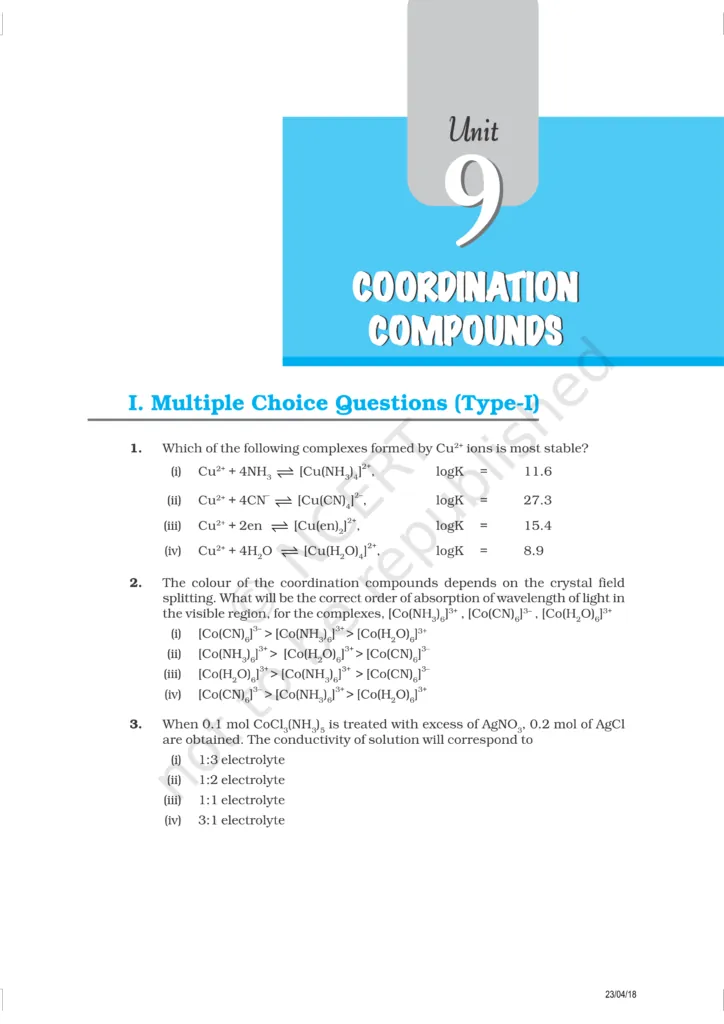
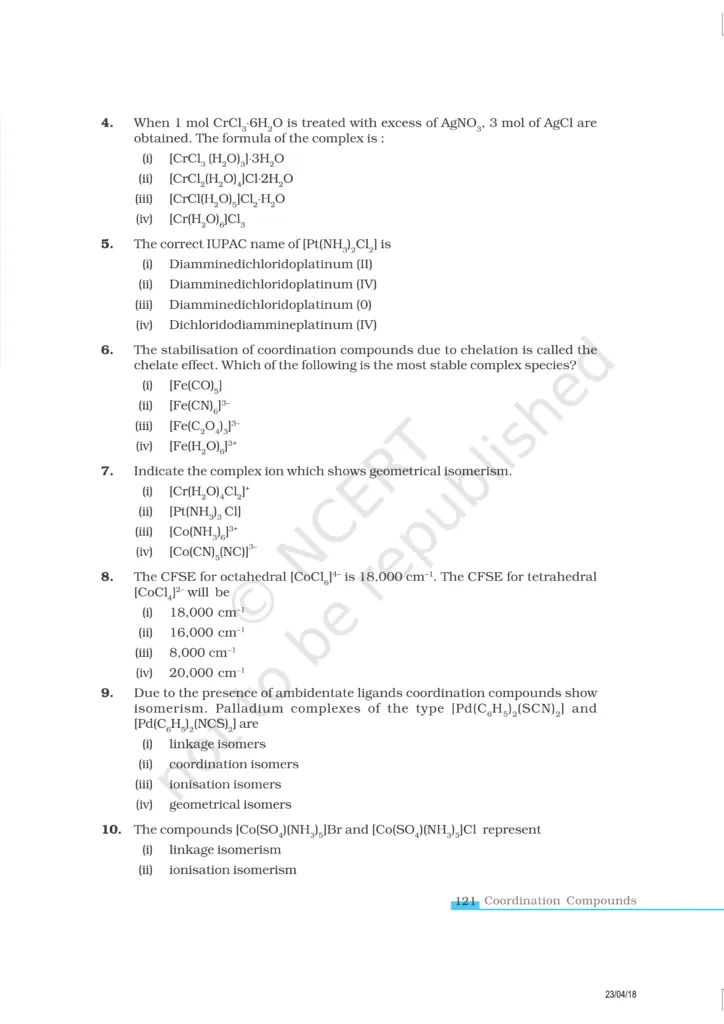
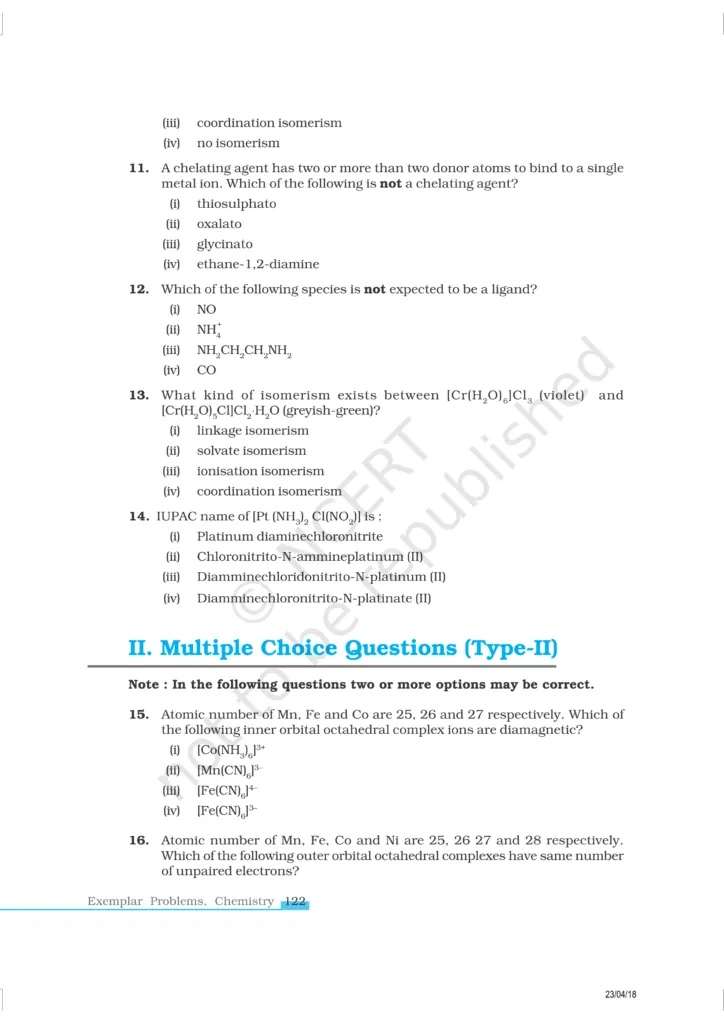
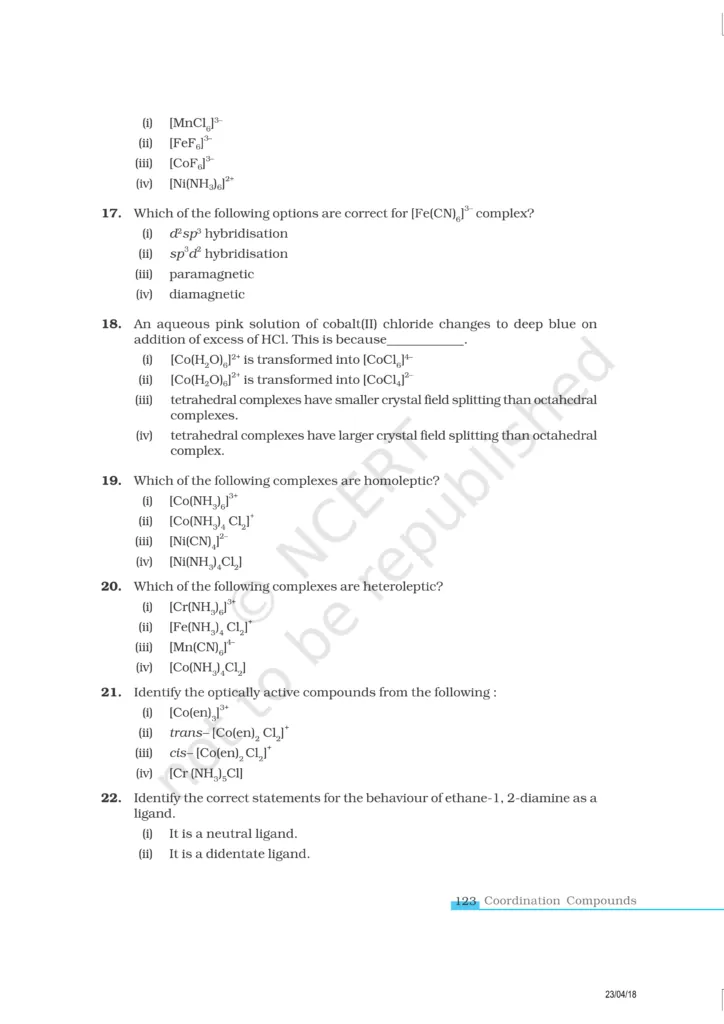
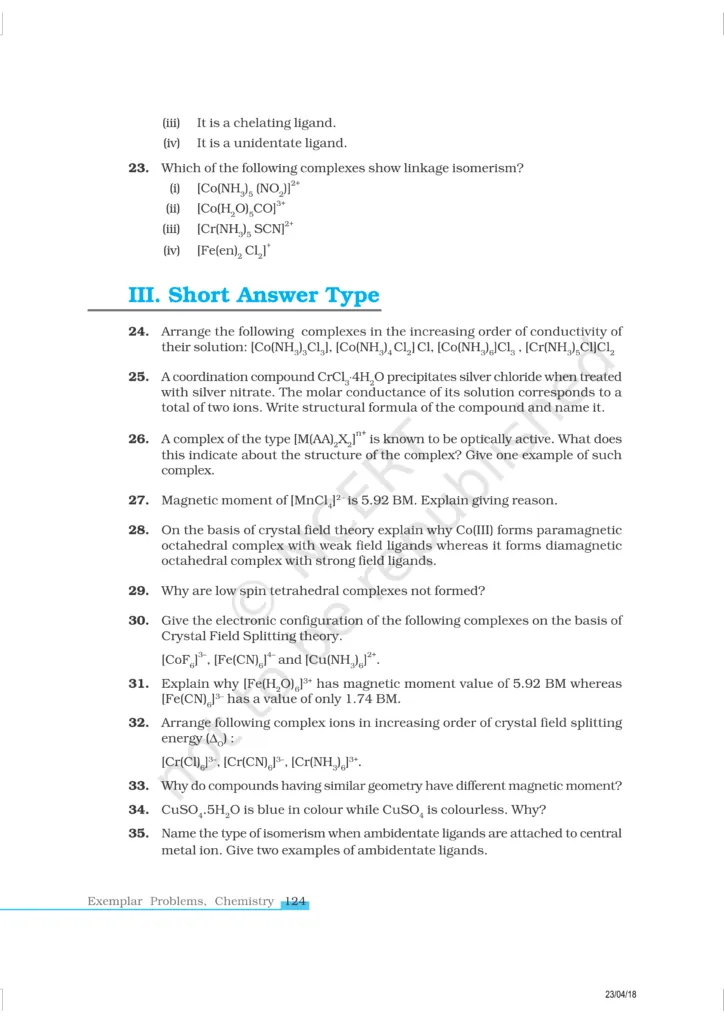
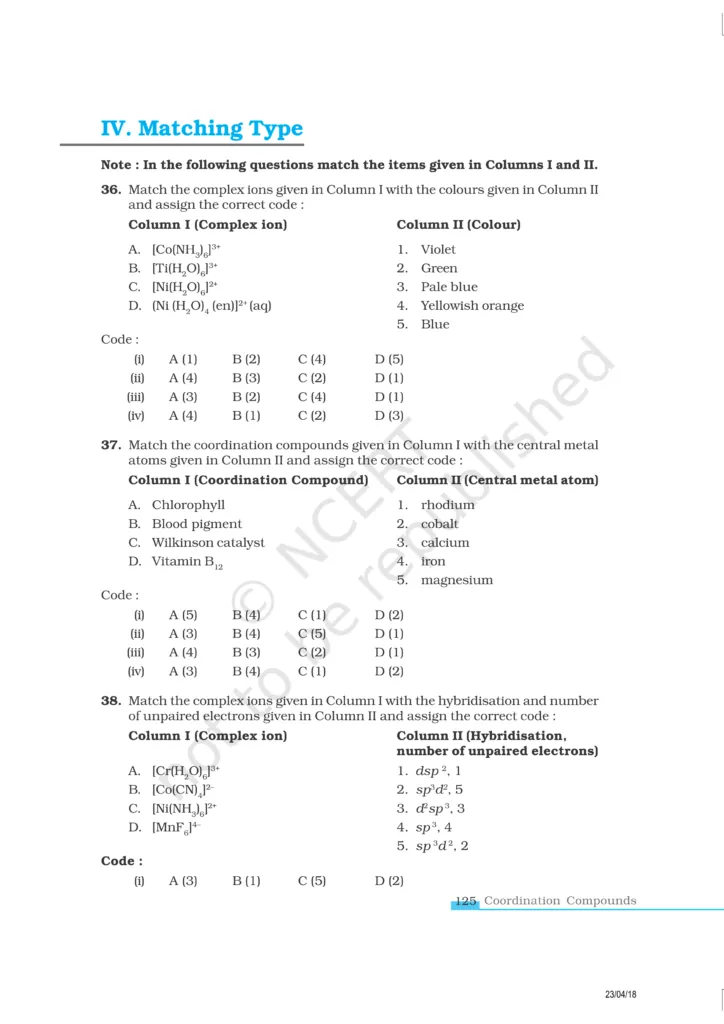
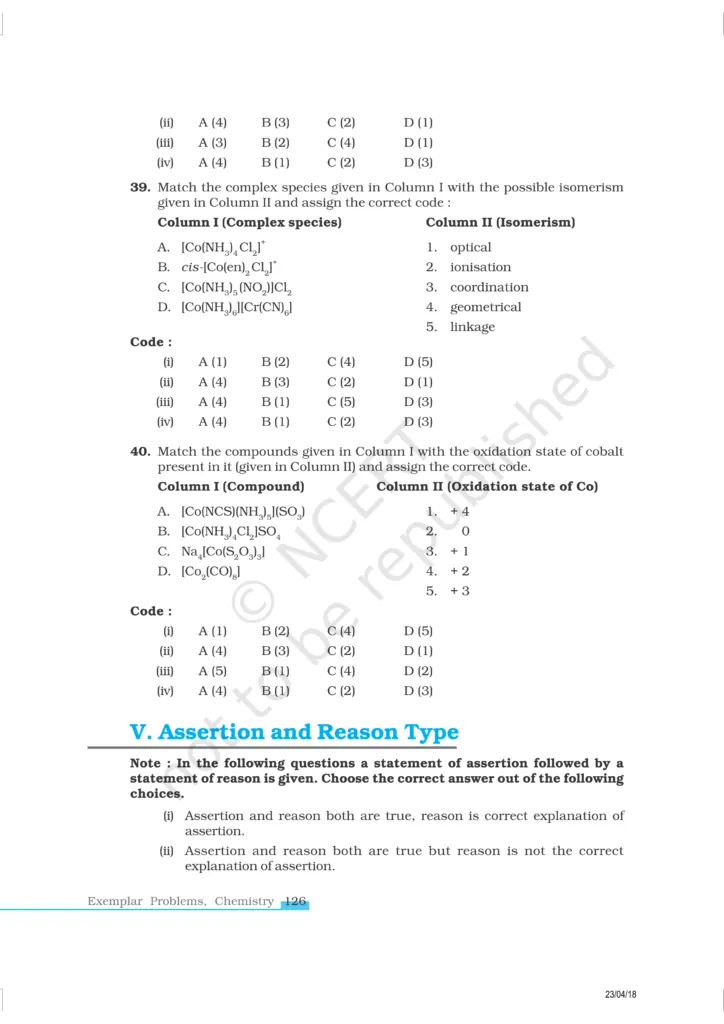
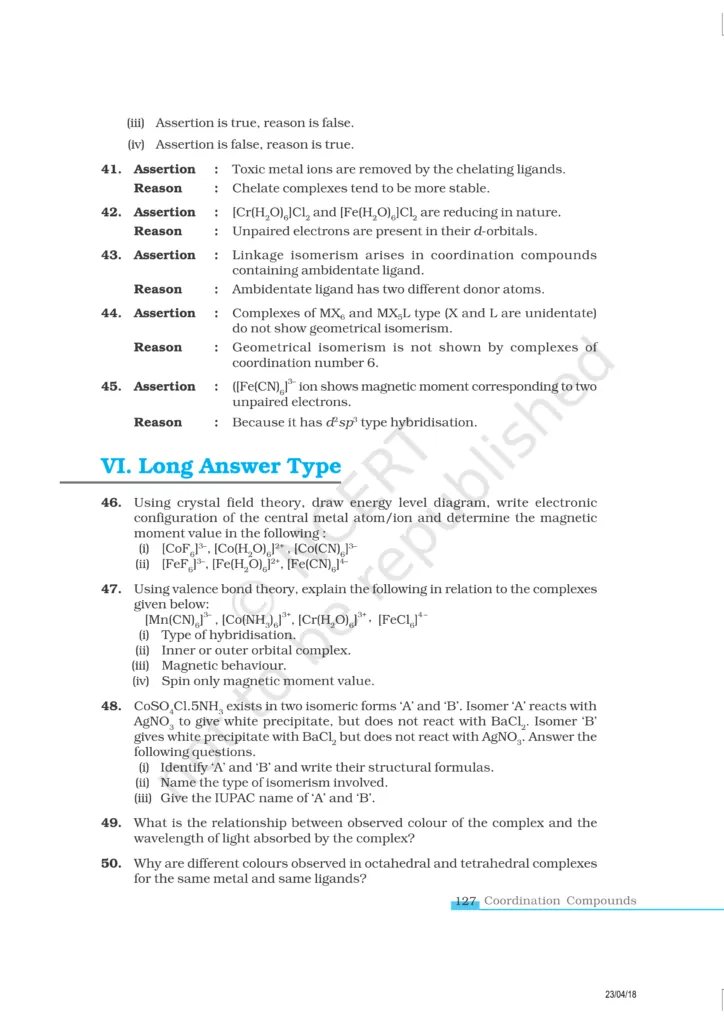
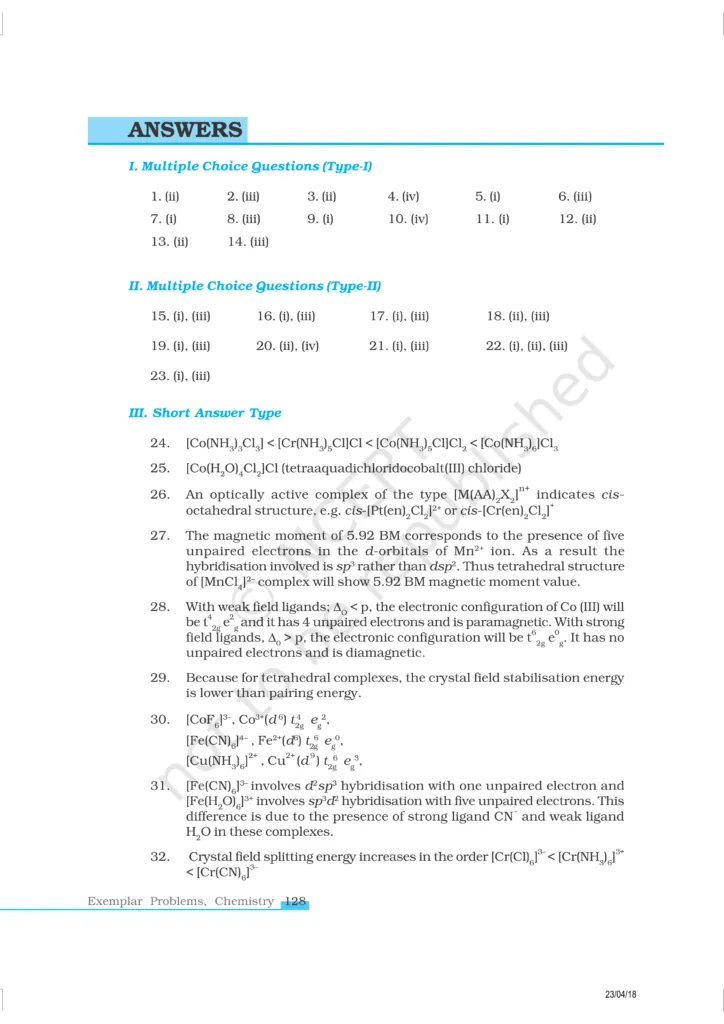
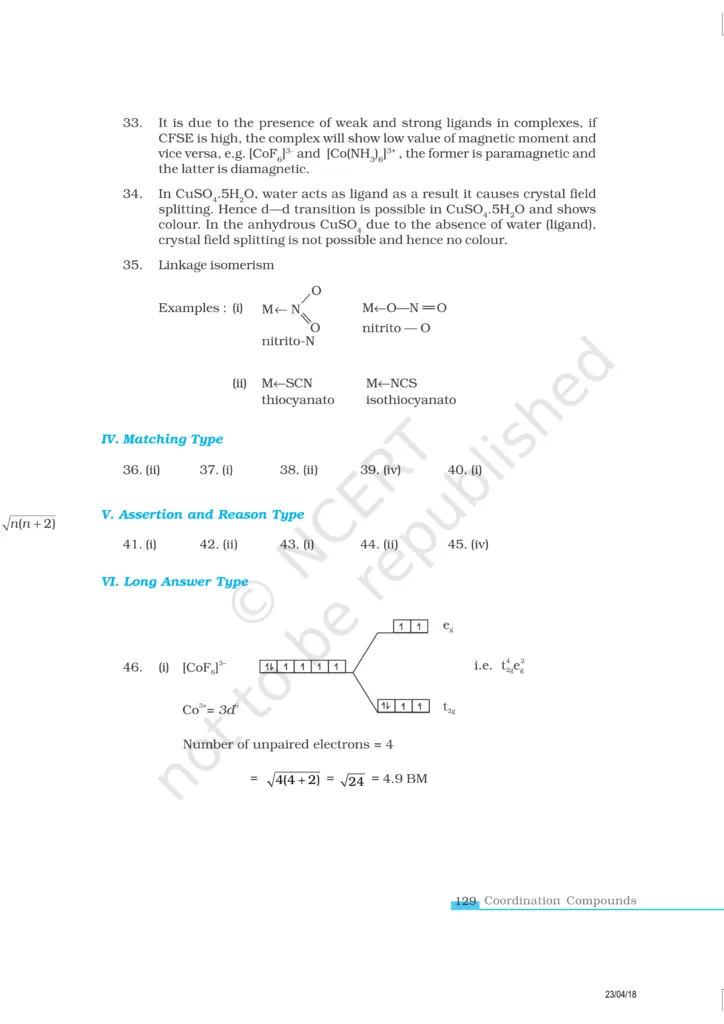
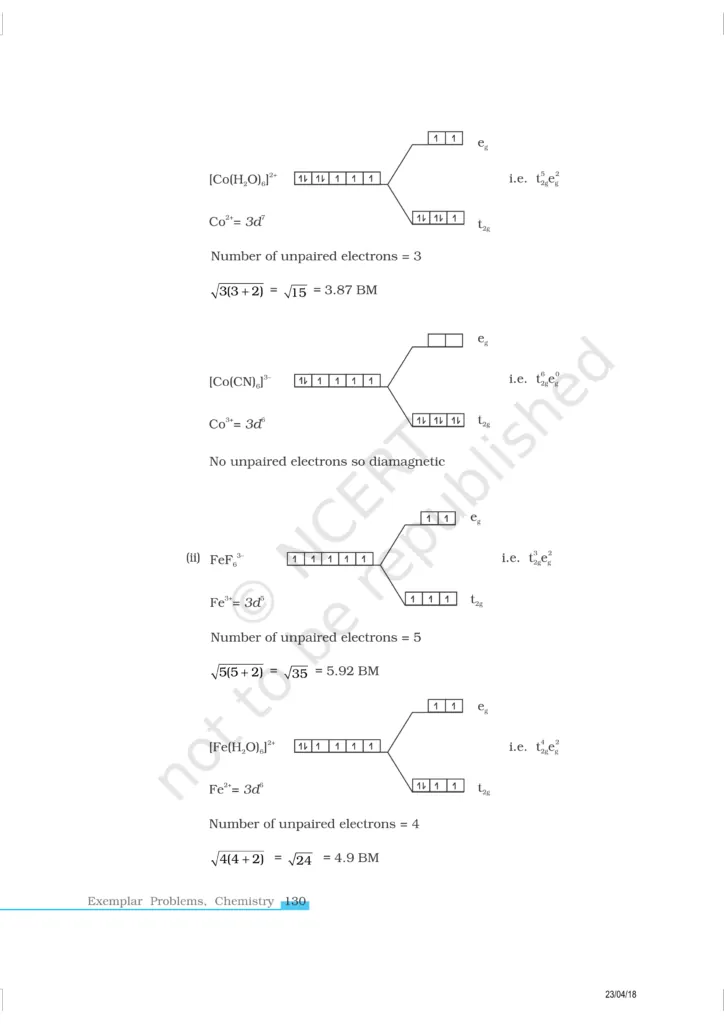
So, that’s all from this article. I hope you enjoyed this post. If you found this article helpful then please share it with other students.
Also Read,
Class 12 Chemistry Revision Notes
NCERT Class 12 Chemistry Book
CBSE Class 12 Chemistry Syllabus
NCERT Exemplar Class 12 Chemistry all chapters
NCERT Exemplar Class 12 Physics all chapters
NCERT Exemplar Class 12 Biology all chapters
NCERT Exemplar Class 12 Maths all chapters
If you have any Confusion related to the NCERT Exemplar Class 12 Chemistry Chapter 9 then feel free to ask in the comments section down below.
To watch Free Learning Videos on Class 12 Chemistry by Kota’s top Faculties, install the eSaral App
Frequently Asked Questions
Find answers to common questions.
How many questions are in NCERT Exemplar Class 12 Chemistry Chapter 9?
The chapter contains questions across five categories: single-correct MCQs, multiple-correct MCQs, short answer questions, matching-type questions, and assertion-reasoning questions. The total question count across all categories is approximately 60–70 questions, making it one of the more practice-heavy chapters in the Exemplar book.
Is NCERT Exemplar Class 12 Chemistry Chapter 9 enough for JEE Main?
NCERT Exemplar is necessary but not fully sufficient for JEE Main. It covers the conceptual foundation and mid-level application questions well. For JEE Main, students should also solve past JEE Main papers on Coordination Compounds after completing the Exemplar. The Exemplar builds the analytical skills needed to handle JEE-level questions within the time limits.
What is covered in NCERT Exemplar Class 12 Chemistry Chapter 9?
NCERT Exemplar Class 12 Chemistry Chapter 9 covers Coordination Compounds, including Werner's theory, types of ligands, IUPAC nomenclature, isomerism (structural and stereoisomerism), Valence Bond Theory, Crystal Field Theory, the spectrochemical series, stability of complexes, and biological applications such as haemoglobin and cisplatin. All major CBSE board and JEE Main topics in this chapter are covered.
What is the difference between NCERT textbook exercises and NCERT Exemplar for Chapter 9?
NCERT textbook exercises are designed to test recall and basic application of concepts taught in the chapter. NCERT Exemplar questions are harder — they require multi-step reasoning, comparison across concepts, and analysis of unfamiliar complexes using known principles. The Exemplar is the recommended next step after finishing standard NCERT exercises.
Can I download the NCERT Exemplar Class 12 Chemistry Chapter 9 PDF for free?
Yes. The NCERT Exemplar PDF for Class 12 Chemistry Chapter 9 is available for free download on this page. NCERT publishes all Exemplar books as freely accessible resources. The PDF linked here contains the complete, unedited chapter as published by NCERT, including all question types and instructions.
Which topics from Coordination Compounds are most important for CBSE boards?
For CBSE Class 12 boards, the highest-priority topics in Coordination Compounds are IUPAC nomenclature, Werner's theory, types of isomerism, Valence Bond Theory (hybridisation and magnetic properties), and Crystal Field Theory (colour and stability). Together these topics account for the majority of the 5–6 marks typically allocated to this chapter in board exams.