NCERT Exemplar Class 11 Chemistry Chapter 7 - Equilibrium - Free PDF Download
NCERT Exemplar Class 11 Chemistry Chapter 7 (Equilibrium) offers higher-order conceptual and application-based questions that strengthen understanding of chemical and ionic equilibrium for CBSE boards, JEE Main, JEE Advanced, and NEET preparation.
Table of Contents

eSaral › Class 11› Equilibrium

What Is NCERT Exemplar Class 11 Chemistry Chapter 7?
NCERT Exemplar Problems for Class 11 Chemistry are published by the National Council of Educational Research and Training (NCERT) specifically to provide higher-order thinking questions for students aiming beyond rote learning. Chapter 7 deals with Equilibrium — a chapter that bridges physical chemistry and conceptual reasoning.
Unlike the standard NCERT textbook exercises, the Exemplar pushes students to apply concepts rather than simply recall them. This makes it an essential resource for anyone targeting:
- CBSE Class 11 and Class 12 board exams (Equilibrium concepts extend into Class 12 Electrochemistry and Ionic Equilibrium)
- JEE Main (NTA consistently draws 1–2 questions from chemical equilibrium every year)
- NEET (Equilibrium appears in both Physical Chemistry and related Biology topics like enzyme kinetics)
If you are working through NCERT Solutions for Class 11 in other subjects simultaneously, pairing them with Exemplar practice in Chemistry creates a high-retention study loop.
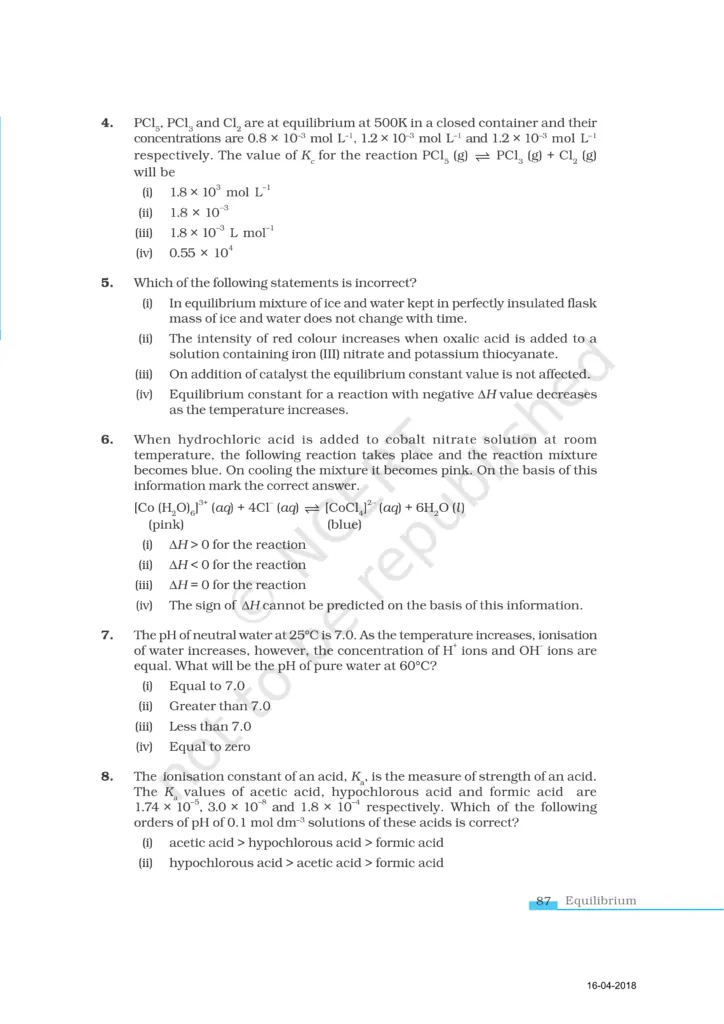
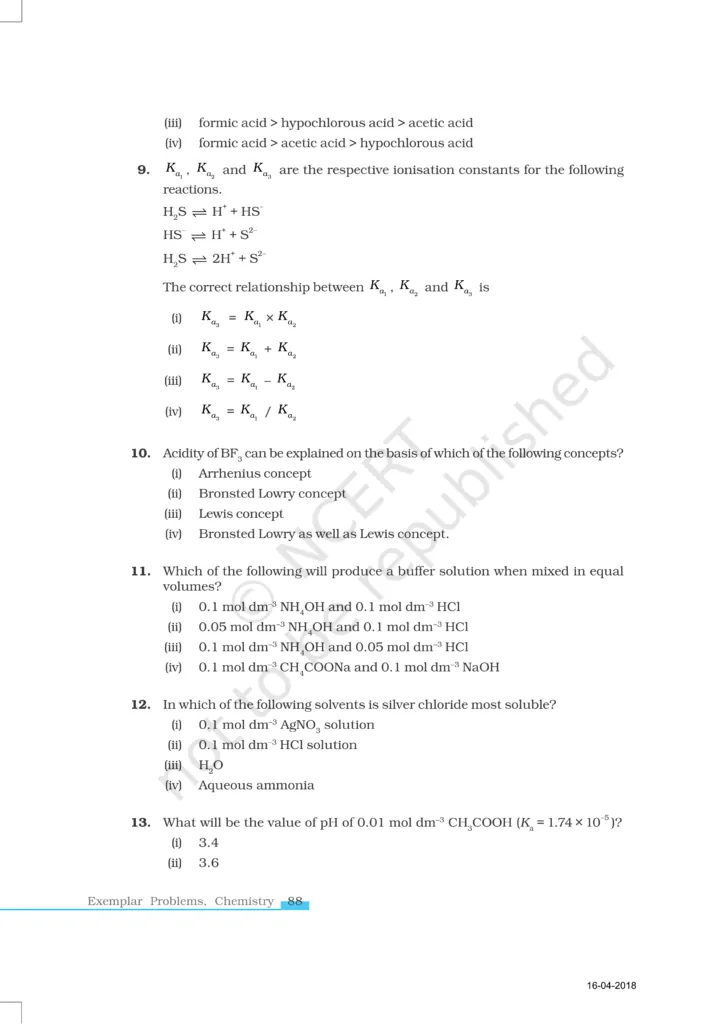
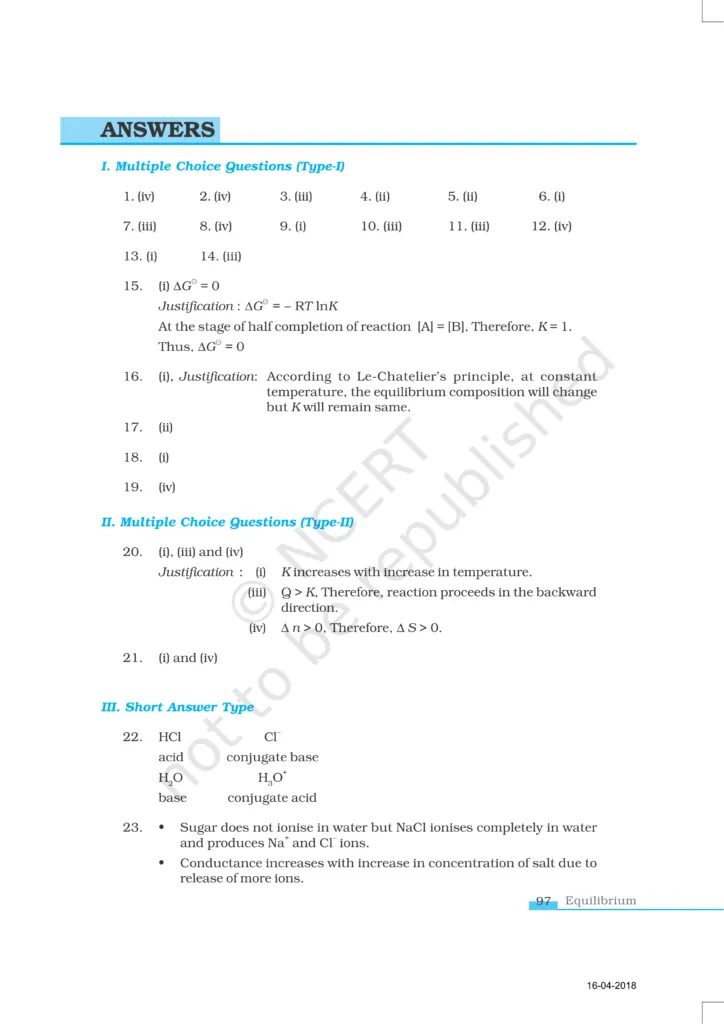
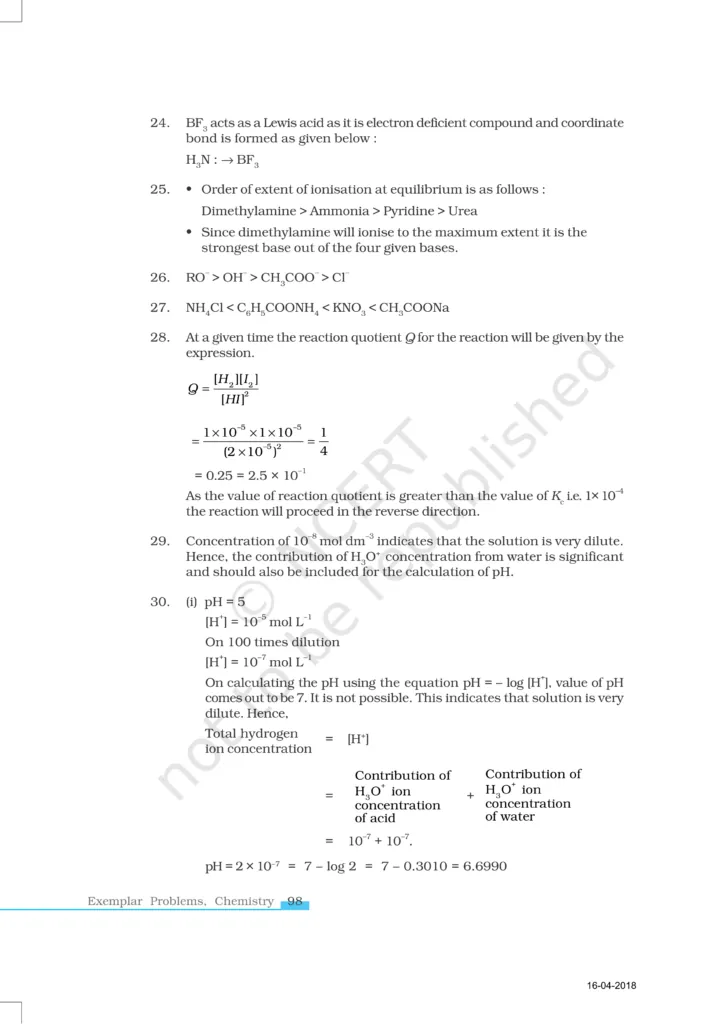
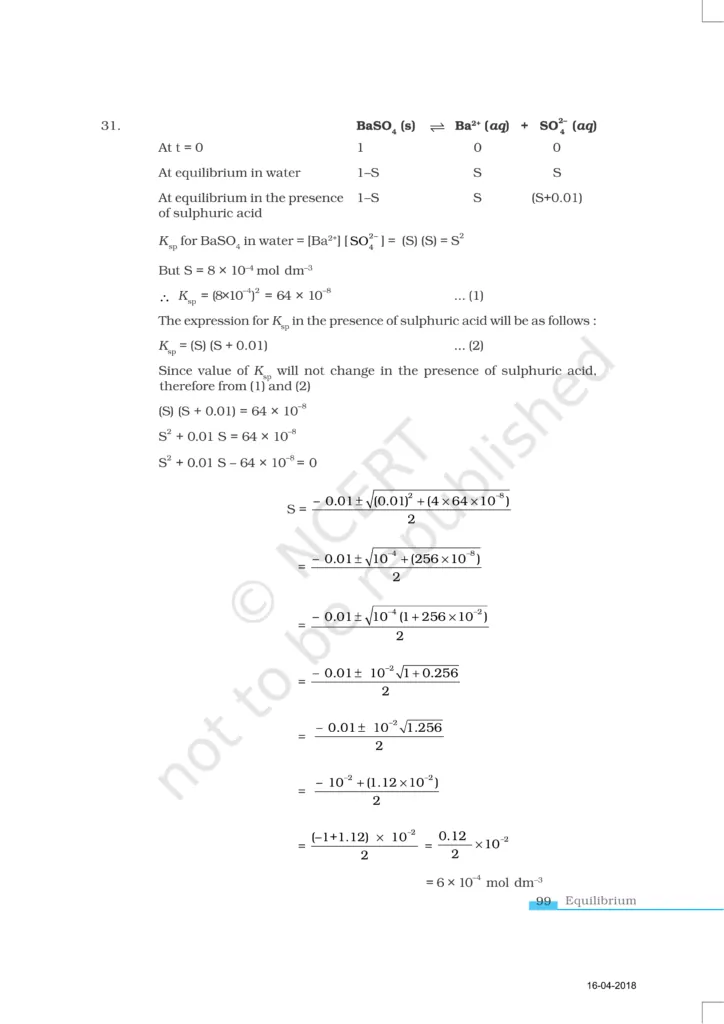
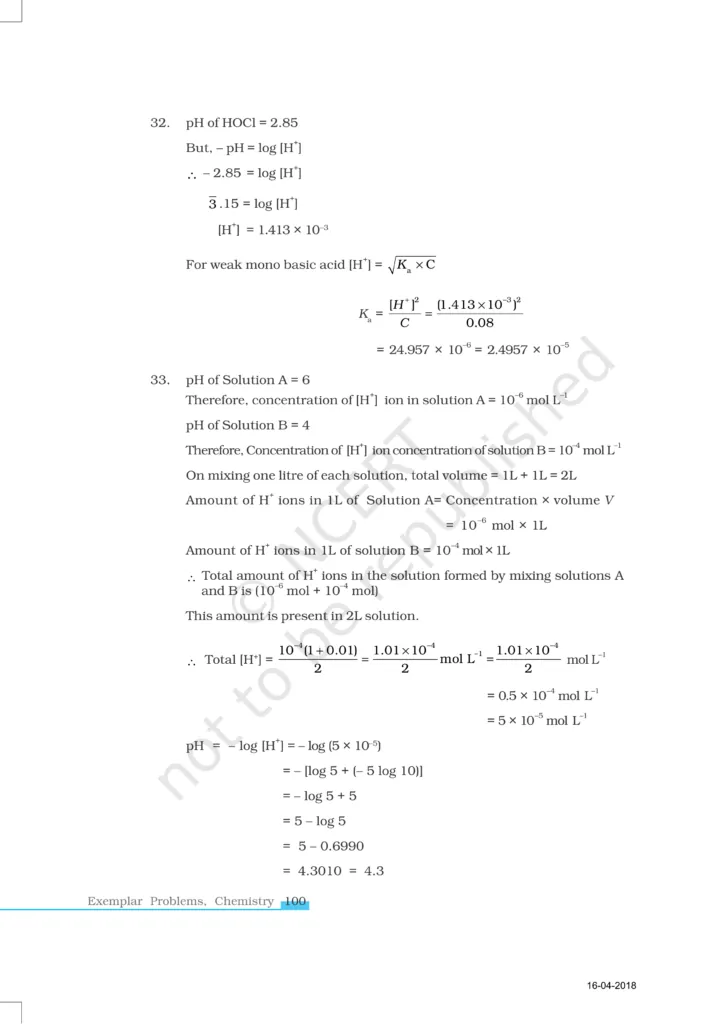
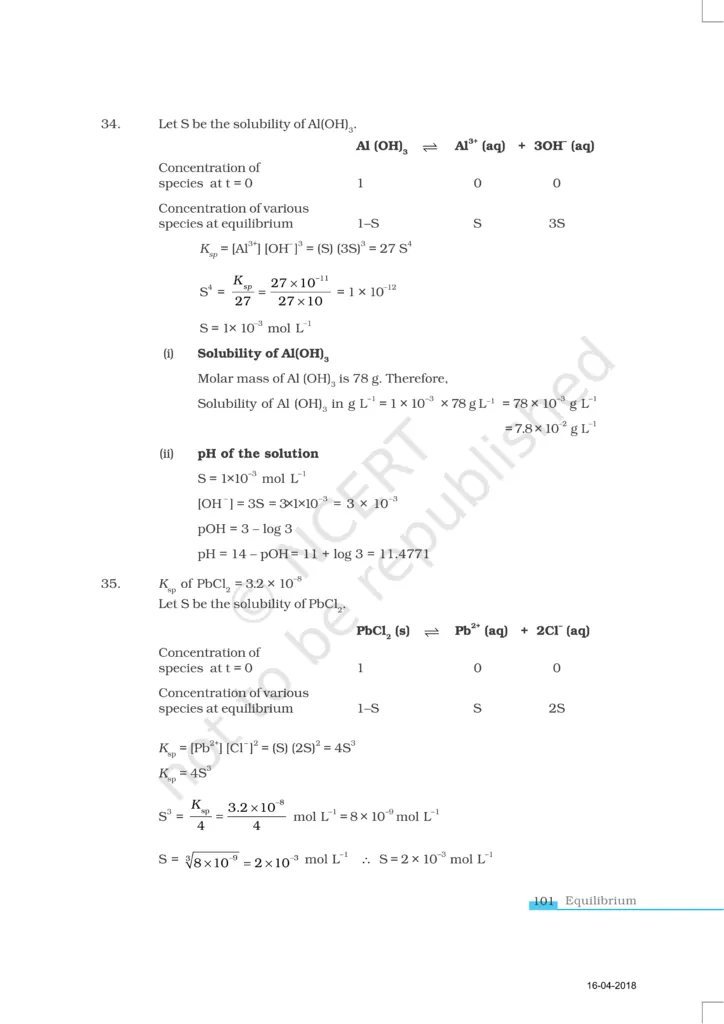
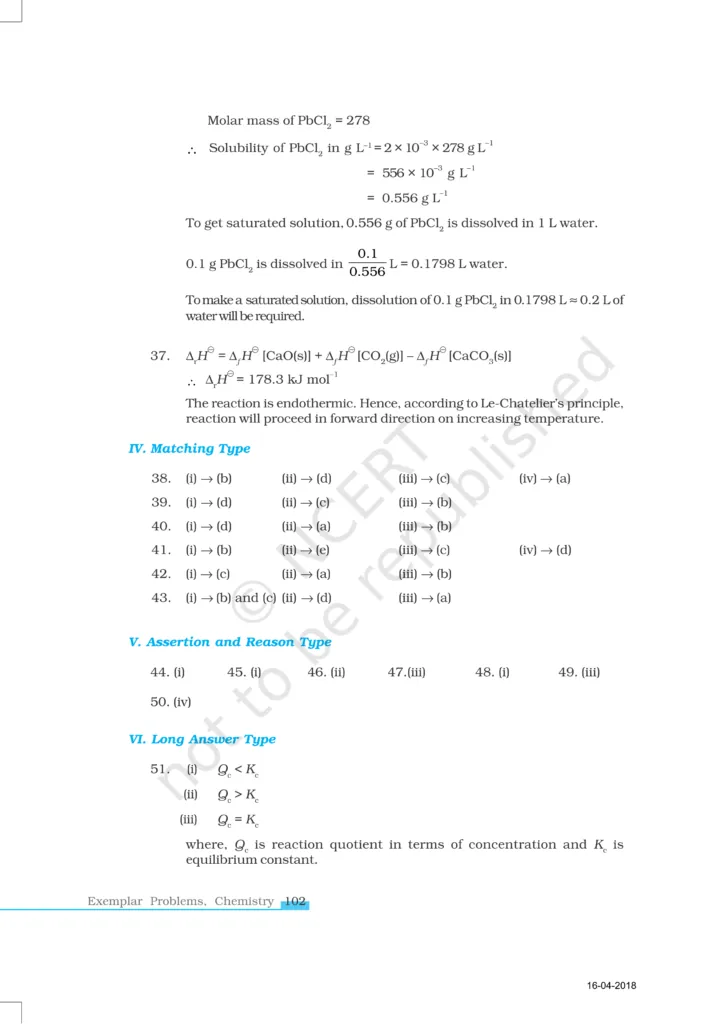
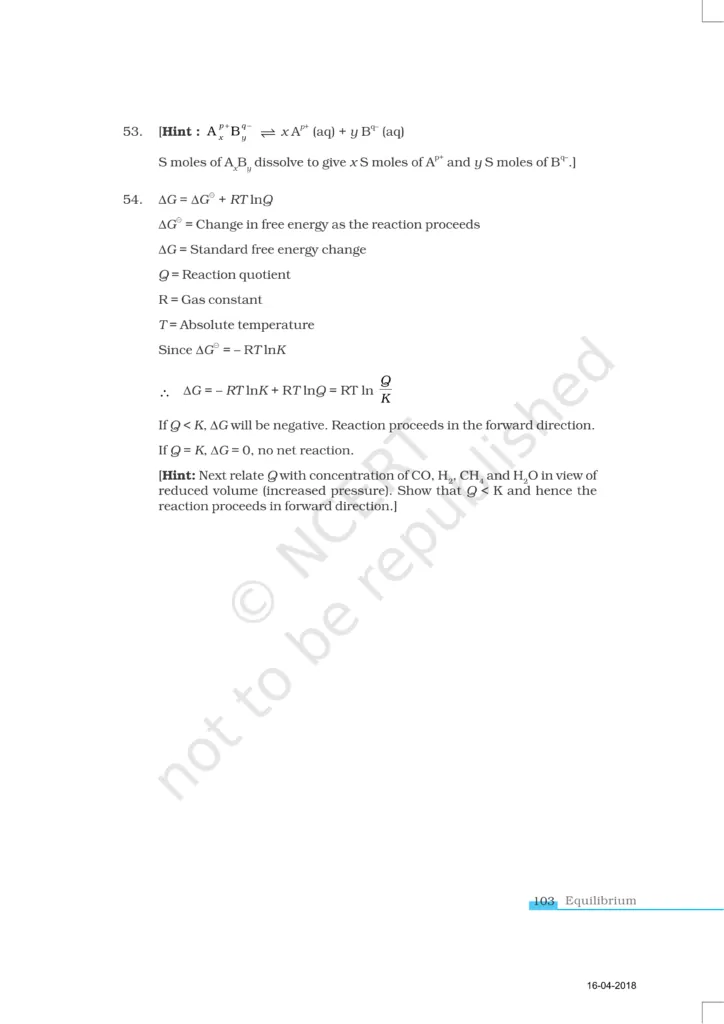
Download the PDF of NCERT Exemplars Class 11 Chemistry Chapter 7 "Equilibrium"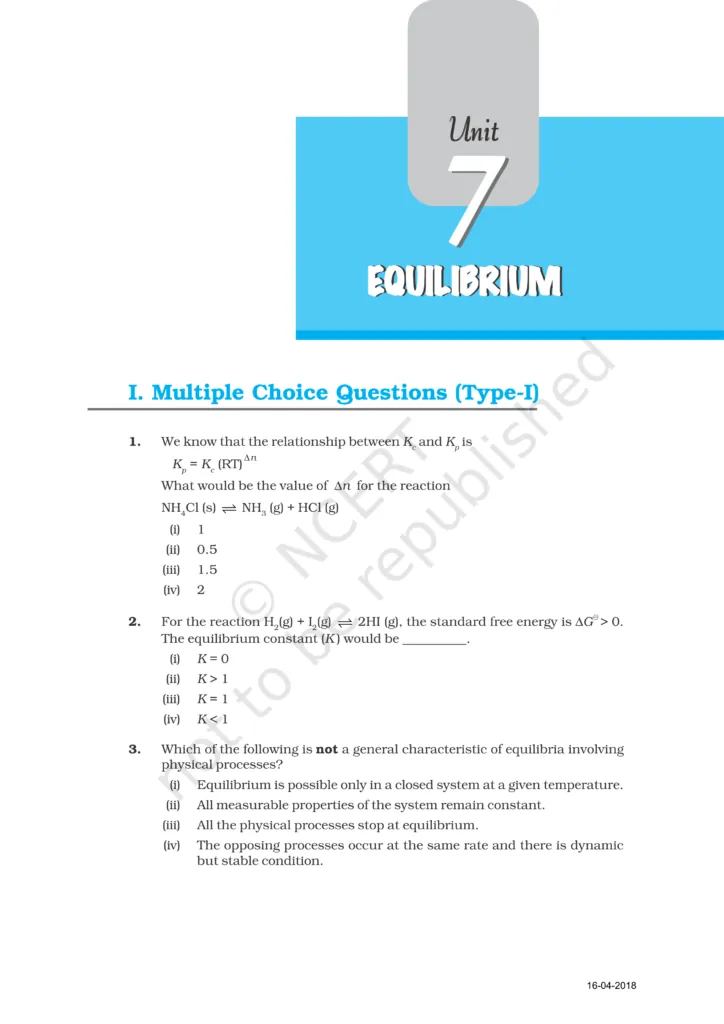
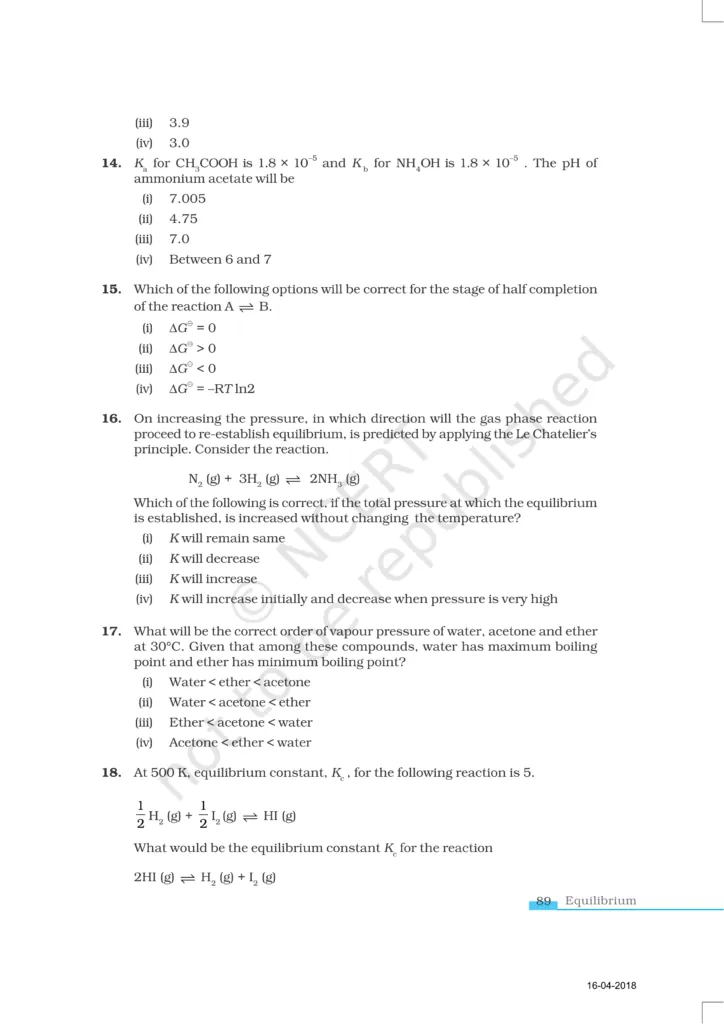
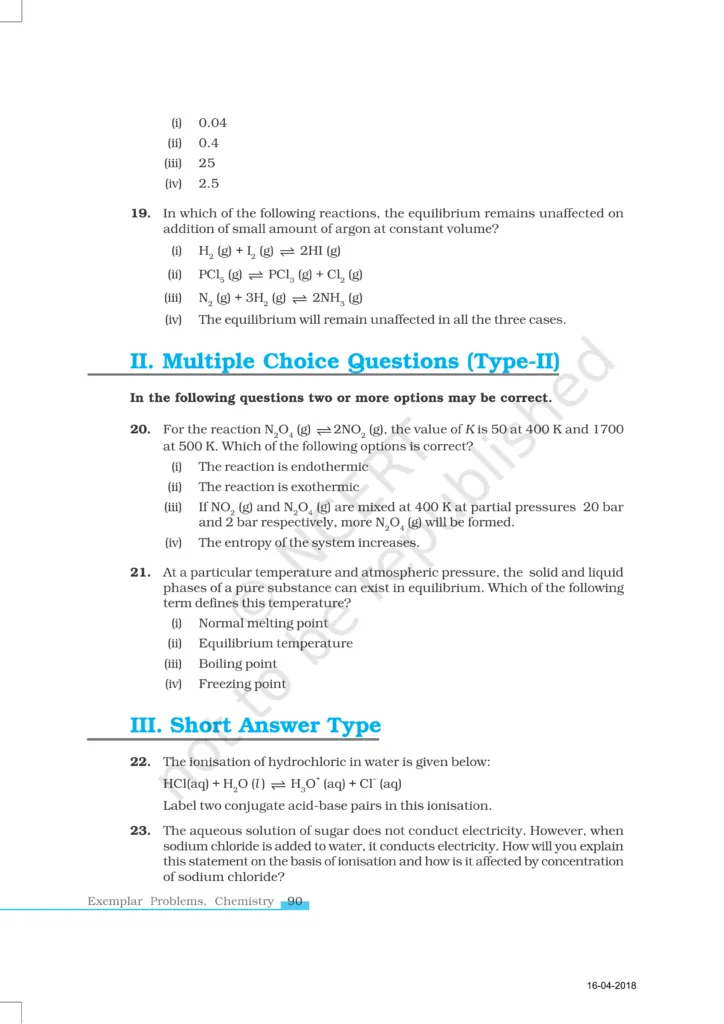
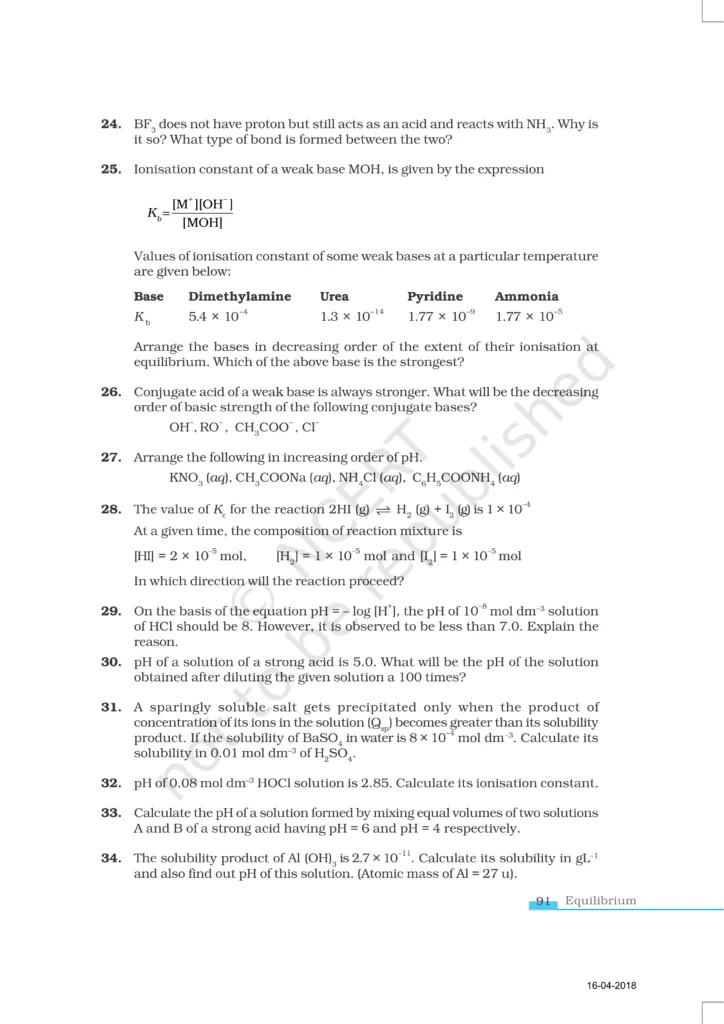
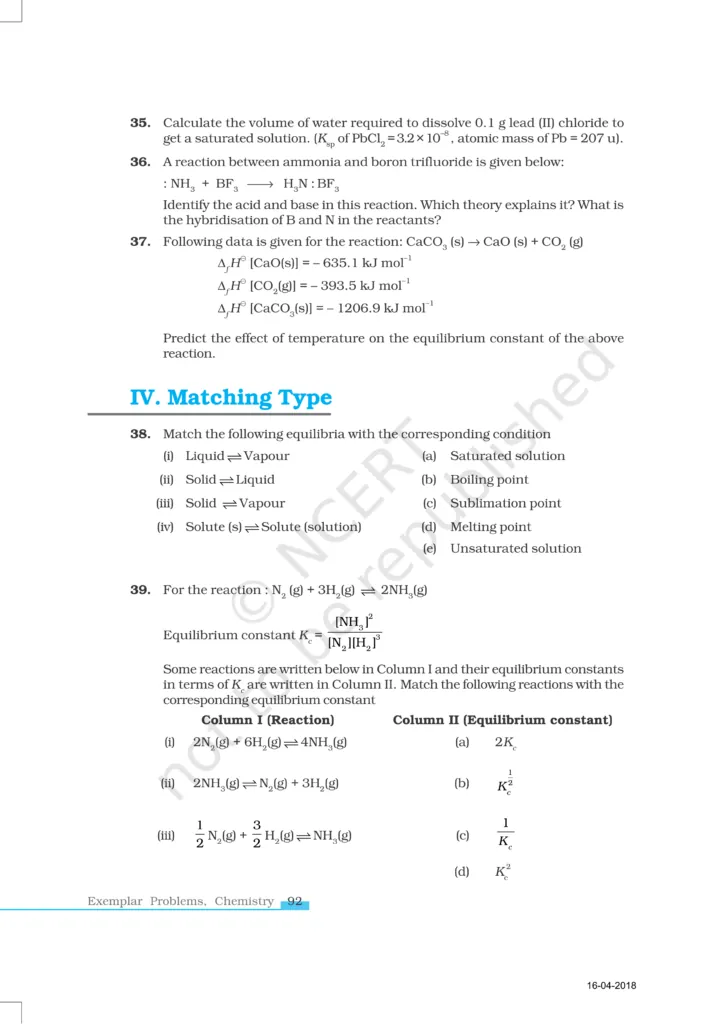
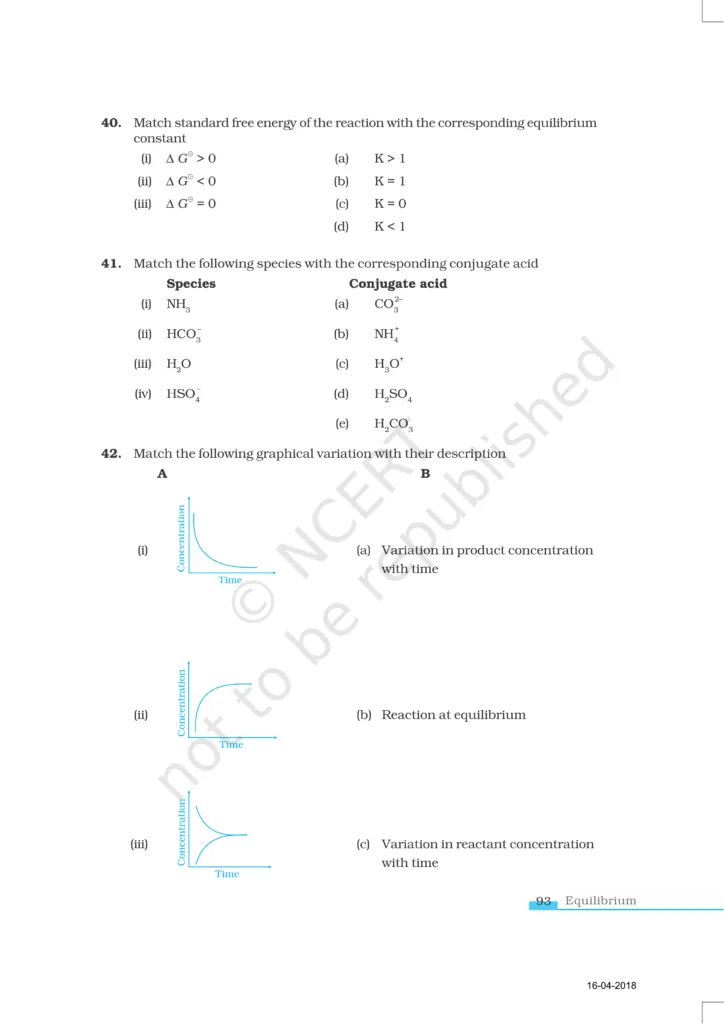
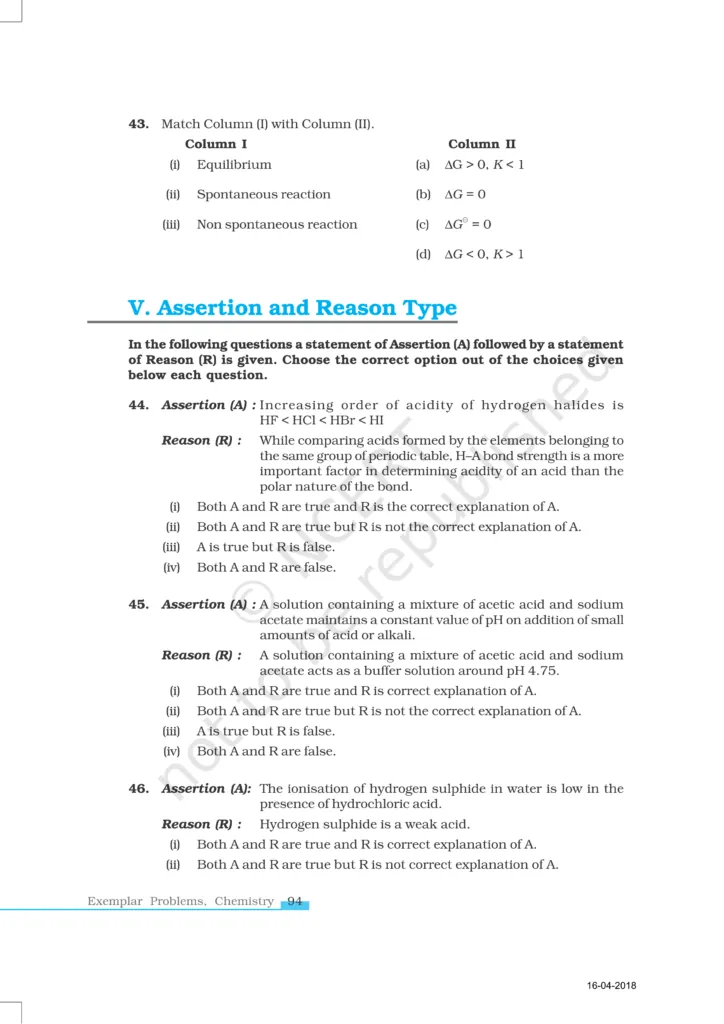
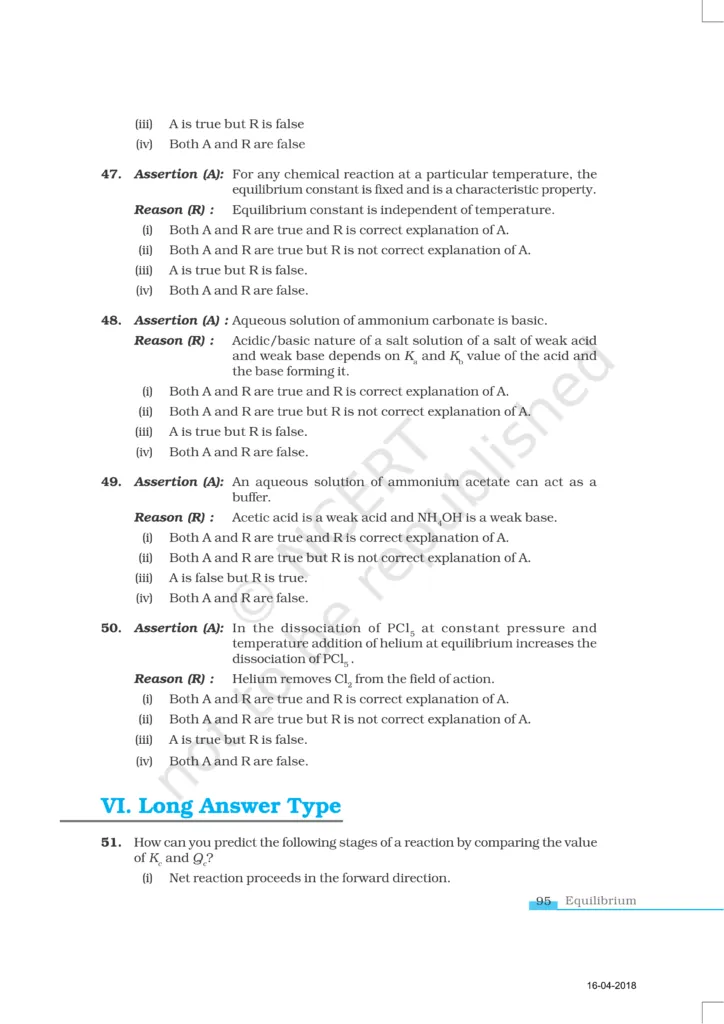
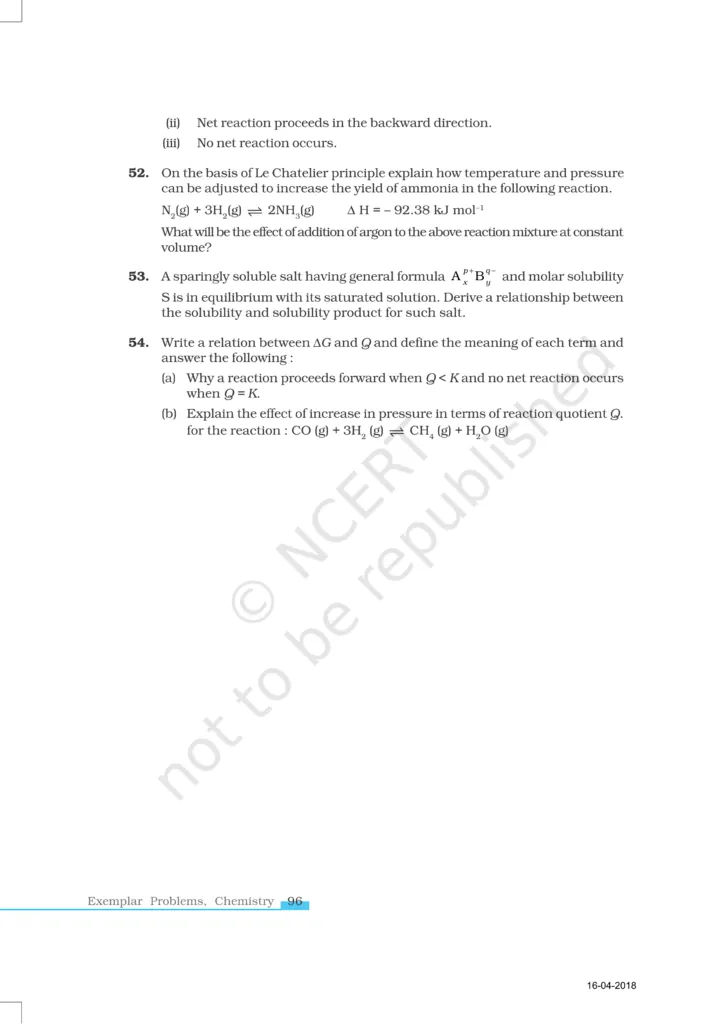
So, that’s all from this article. I hope you enjoyed this post. If you found this article helpful then please share it with other students.
Also Read,
Class 11 Chemistry Revision Notes free pdf
NCERT Class 11 Chemistry Book free pdf
CBSE Class 11 Chemistry Syllabus free pdf
NCERT Exemplar Class 11 Physics all chapters free pdf
NCERT Exemplar Class 11 Chemistry all chapters free pdf
NCERT Exemplar Class 11 Biology all chapters free pdf
NCERT Exemplar Class 11 Maths all chapter free pdf
If you have any Confusion related to NCERT Exemplar Class 11 Chemistry Chapter 7 then feel free to ask in the comments section down below.
To watch Free Learning Videos on Class 11 Chemistry by Kota’s top Faculties Install the eSaral App
Frequently Asked Questions
Find answers to common questions.
How many questions are in NCERT Exemplar Class 11 Chemistry Chapter 7?
NCERT Exemplar Chapter 7 – Equilibrium contains approximately 76 questions across six sections: single-correct MCQs, multiple-correct MCQs, two levels of short answers, long answers, and matching/assertion-reason type questions. Each section targets a different level of conceptual depth, from recall to application to analysis.
Is NCERT Exemplar Class 11 Chemistry Chapter 7 enough for JEE Main?
NCERT Exemplar Chapter 7 is a strong foundation but not sufficient on its own for JEE Main. It covers all core concepts thoroughly, but JEE Main Equilibrium questions — especially numerical answer type (NAT) — require additional problem sets. Pair Exemplar with previous year JEE Main questions from 2019 to 2025 for complete preparation.
What is the most important topic in Chapter 7 Equilibrium for NEET?
Le Chatelier's Principle, pH calculations of weak acids and bases, and the common ion effect are the most frequently tested Equilibrium topics in NEET. Buffer solutions and Ksp-based problems also appear regularly. Students should prioritise these areas while practising from the Exemplar.
Can I download the NCERT Exemplar Class 11 Chemistry Chapter 7 PDF for free?
Yes. eSaral provides the NCERT Exemplar Class 11 Chemistry Chapter 7 PDF as a free download on this page. No sign-up is required to access the PDF. You can also install the eSaral app to access it offline along with video solutions by Kota-trained IIT faculty.
What is the difference between Kp and Kc in Chapter 7 Equilibrium?
Kc is the equilibrium constant expressed in terms of molar concentrations, while Kp is expressed in terms of partial pressures of gaseous species. The relationship between them is Kp = Kc × (RT)^Δn, where Δn is the change in moles of gas (moles of gaseous products minus moles of gaseous reactants), R is the gas constant, and T is temperature in Kelvin.