NCERT Exemplar Class 12 Chemistry Chapter 11 - Alcohols, Phenols and Ethers - Free PDF Download
Table of Contents

Home > NCERT Exemplar Class 12 Chemistry > Chapter 11 – Alcohols, Phenols and Ethers

What Is NCERT Exemplar Class 12 Chemistry Chapter 11?
NCERT Exemplar problems are a set of higher-order thinking questions published by NCERT alongside the standard textbook. For Class 12 Chemistry Chapter 11 — Alcohols, Phenols and Ethers — the Exemplar PDF contains questions that test conceptual understanding, application of mechanisms, and analytical reasoning, all of which are essential for scoring 90+ in CBSE board exams and for clearing JEE Main.
This resource is developed in line with the official CBSE syllabus and is particularly valuable because many CBSE board questions in recent years have been directly adapted from NCERT Exemplar problems. According to NTA's official JEE Main information bulletin, organic chemistry questions frequently test reaction mechanisms that are best practised through Exemplar-level problems.
Students who have used eSaral's structured study material alongside the Exemplar PDF — guided by faculty who have themselves cracked JEE with All India Rank 41 from IIT Bombay — consistently report stronger performance in organic chemistry sections. You can also pair this with NCERT Solutions for Class 12 Chemistry for step-by-step answer explanations.
Topics Covered in Chapter 11 – Alcohols, Phenols, and Ethers
Core Syllabus Units in Chapter 11
Chapter 11 is one of the most scoring chapters in Class 12 Organic Chemistry. It is divided into three broad sections:
| Unit | Key Topics |
|---|---|
| Alcohols | Classification, IUPAC nomenclature, preparation methods, physical properties, chemical reactions (substitution, oxidation, dehydration), uses |
| Phenols | Structure, preparation from cumene and diazonium salts, acidity, electrophilic aromatic substitution, Kolbe reaction, Reimer–Tiemann reaction |
| Ethers | IUPAC nomenclature, preparation by Williamson synthesis, physical and chemical properties, and uses |
Reaction Mechanisms You Must Know
The NCERT Exemplar specifically tests the following mechanisms — questions on these appear in almost every CBSE paper:
- Lucas test (distinction between primary, secondary and tertiary alcohols)
- Kolbe's reaction and Reimer–Tiemann reaction for phenols
- Williamson ether synthesis (SN2 mechanism)
- Acid-catalysed dehydration of alcohols
- Oxidation of primary and secondary alcohols using PCC, KMnO₄, K₂Cr₂O₇
In CBSE board papers, at least one 5-mark question from Chapter 11 will involve writing reaction mechanisms or explaining the products of a named reaction. Practise writing Kolbe's reaction and the Williamson synthesis with curly arrow mechanisms — the Exemplar questions are the best source for this type of practice.
What Types of Questions Does the Exemplar Contain?
Question Category Breakdown
The NCERT Exemplar for Chapter 11 is structured into four question types. Understanding this structure helps you allocate revision time correctly.
| Question Type | Number of Questions (Approx.) | Skills Tested |
|---|---|---|
| Multiple Choice Questions (MCQs) – Single Correct | 18–20 | Conceptual recall, quick reasoning |
| Multiple Choice Questions – Multiple Correct | 6–8 | Deeper analysis of reactions and properties |
| Short Answer Questions | 10–12 | Writing reactions, IUPAC naming, and explaining properties |
| Long Answer / Matching Questions | 4–6 | Mechanism writing, multi-step synthesis |
Difficulty Level Distribution
- Easy (NCERT-level): ~25% — direct recall questions on nomenclature and preparation
- Medium (CBSE board-level): ~50% — reaction products, property explanations
- Hard (JEE Main-level): ~25% — mechanism-based, multi-step reasoning
NCERT Exemplar vs NCERT Textbook Exercises – How Are They Different?
Side-by-Side Comparison
A common student question is: "If I've done the NCERT textbook exercises, do I still need the Exemplar?" The answer is yes — here is why.
| Feature | NCERT Textbook Exercises | NCERT Exemplar Problems |
|---|---|---|
| Difficulty | Moderate | Moderate to High |
| Question Types | Mostly short-answer and named reactions | MCQs + multi-correct + analytical questions |
| Board Relevance | High | Very High (questions directly adapted) |
| JEE Main Relevance | Medium | High |
| Mechanism Depth | Surface-level | Step-by-step mechanism reasoning |
| Isomer-based Questions | Few | Multiple dedicated questions |
The NCERT Exemplar effectively bridges the gap between board-level preparation and entrance exam readiness. For complete solution support, refer to NCERT Solutions Class 12 Chemistry alongside the Exemplar PDF.
How to Use This PDF Effectively for CBSE and JEE Main?
A Practical Study Plan for Chapter 11
Follow this sequence to get the most out of the Exemplar PDF:
- Step 1 — Read the NCERT textbook chapter first. Do not open the Exemplar before you have read and understood the textbook theory on Alcohols, Phenols and Ethers. Download the full NCERT Class 12 books if you need the digital version.
- Step 2 — Attempt the NCERT textbook in-text and end-of-chapter questions.
- Step 3 — Solve Exemplar MCQs first. These reveal your conceptual gaps without the time pressure of writing long answers.
- Step 4 — Move to short-answer questions. Write reactions without looking at solutions; then verify.
- Step 5 — Attempt long-answer questions under timed conditions (8–10 minutes each).
- Step 6 — Revisit wrong answers and note the specific concept behind each error.
What to Focus on If You Have Limited Time
If board exams are less than four weeks away, prioritise these question types from the Exemplar:
- All MCQs (can be revised in 90 minutes)
- Short-answer questions on Lucas test, Kolbe reaction and Williamson synthesis
- Questions involving IUPAC naming of branched alcohols and ethers
Students who score 95+ in CBSE Chemistry often share one habit: they solve Exemplar questions without looking at solutions first, then compare their working step-by-step. This forces you to identify exactly where your understanding breaks down. At eSaral, our 5-layer doubt-solving system means that even when you get stuck on a mechanism, you can get your doubt resolved within the same study session — not the next day.
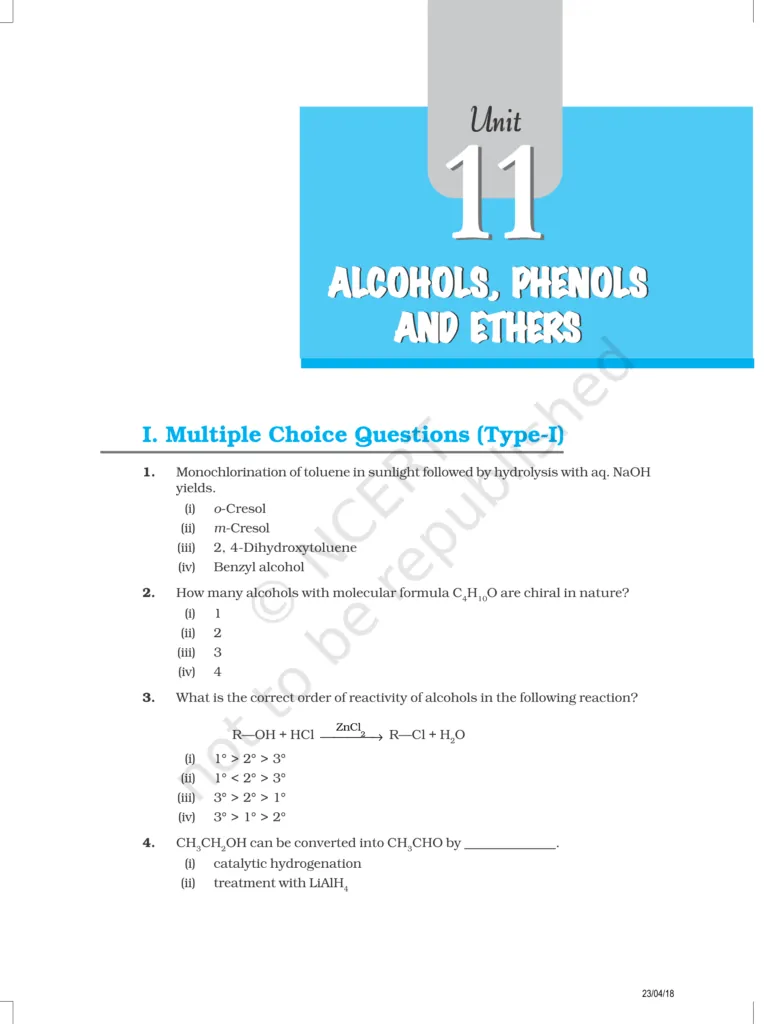
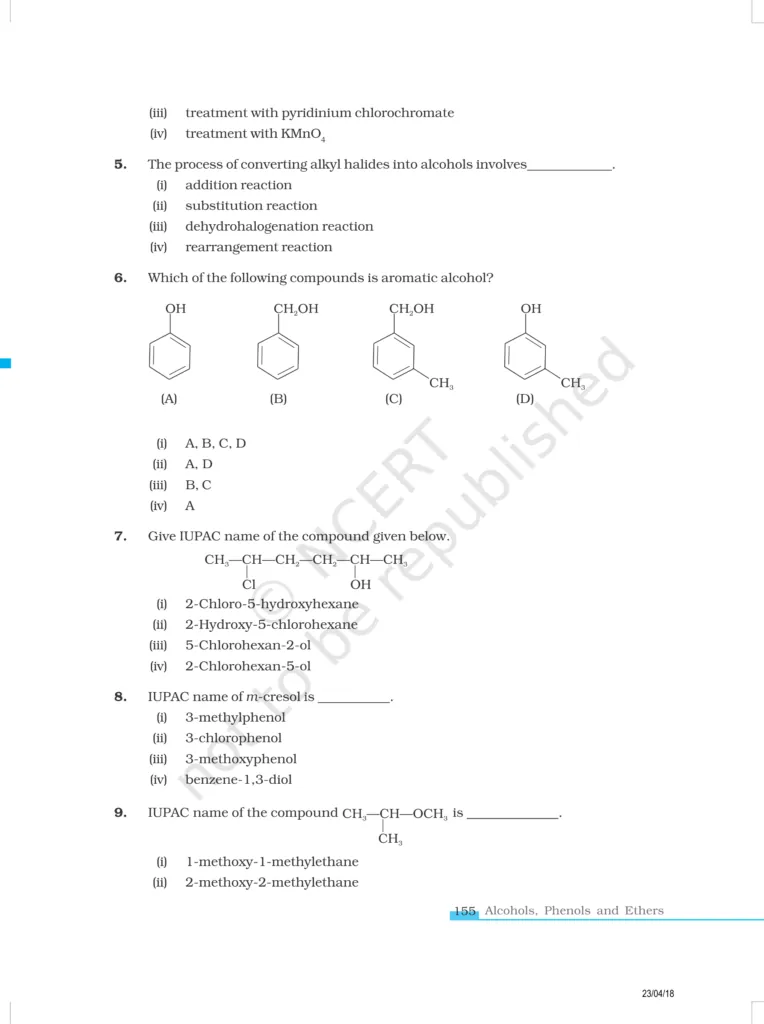
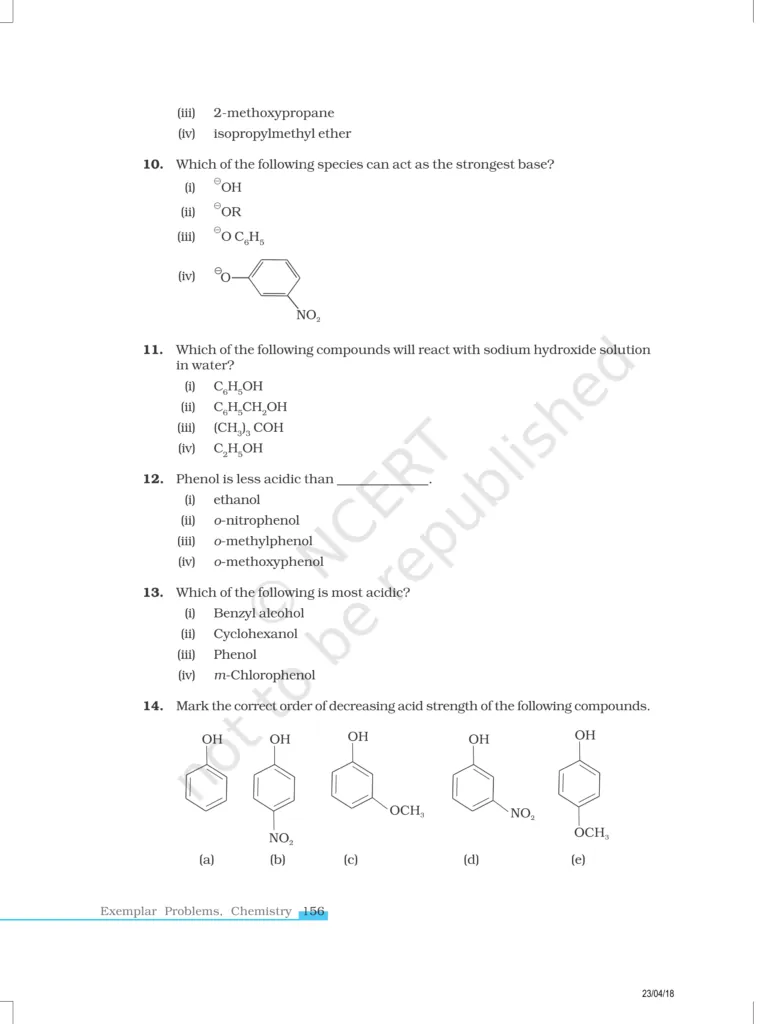
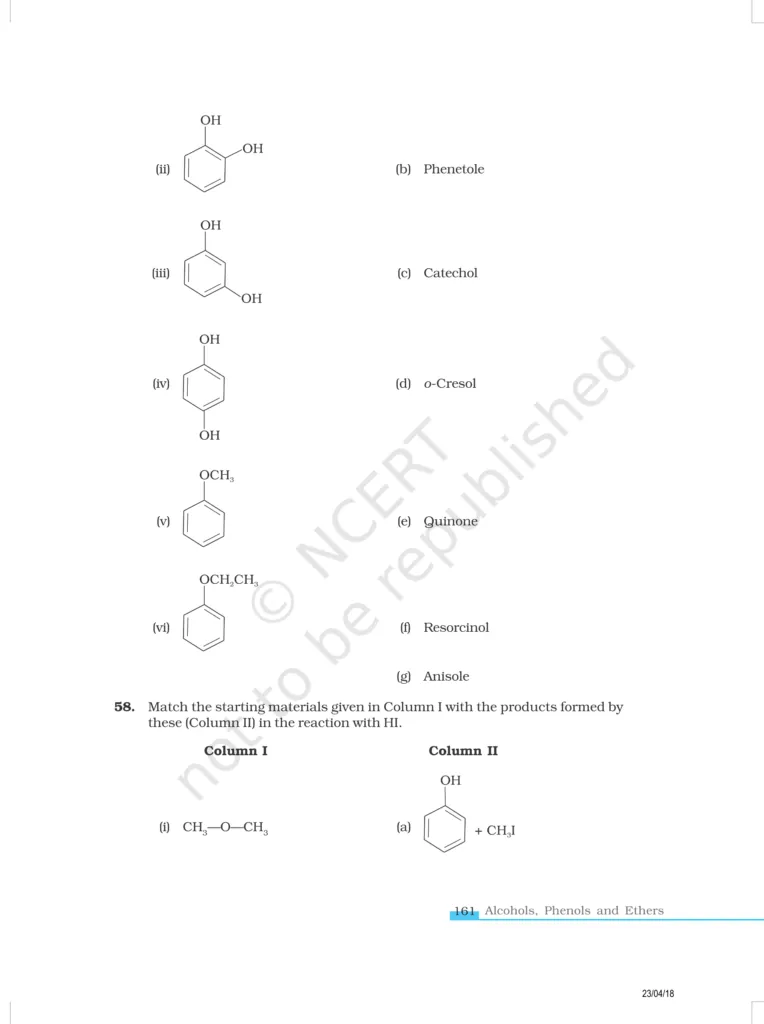
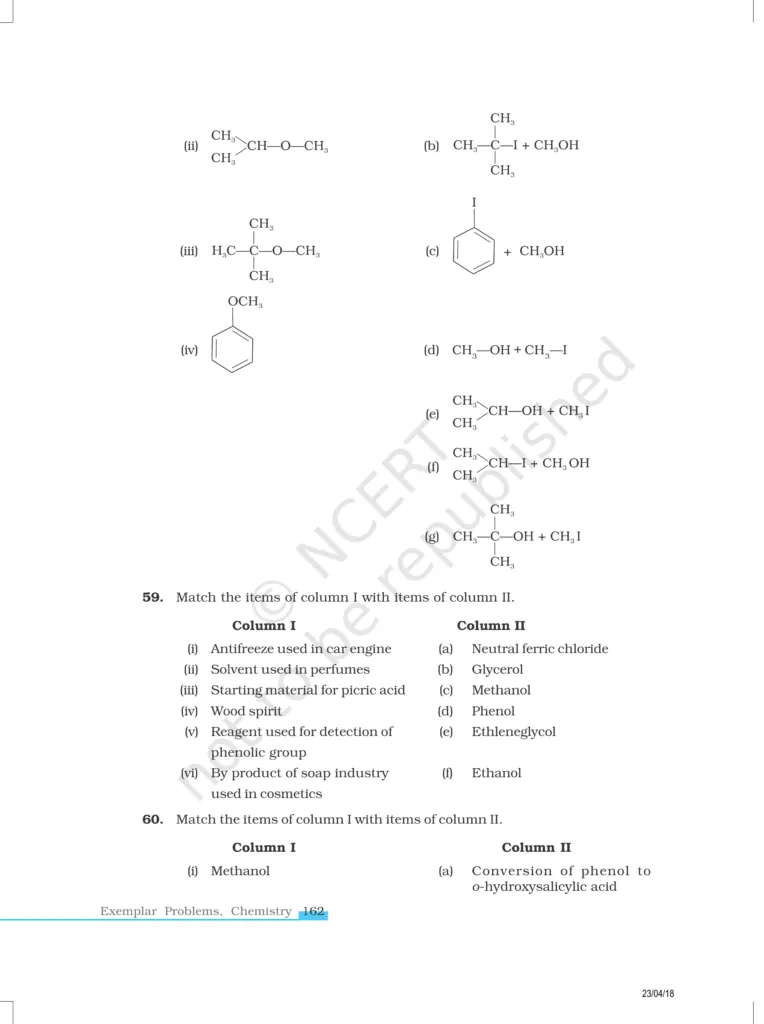
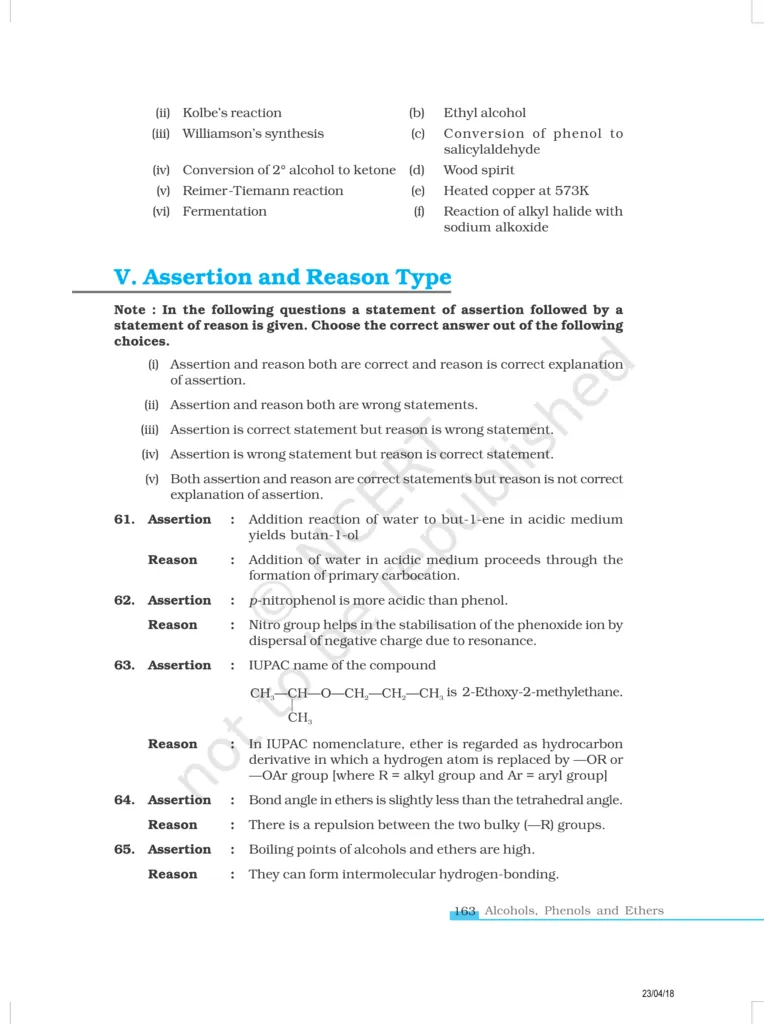
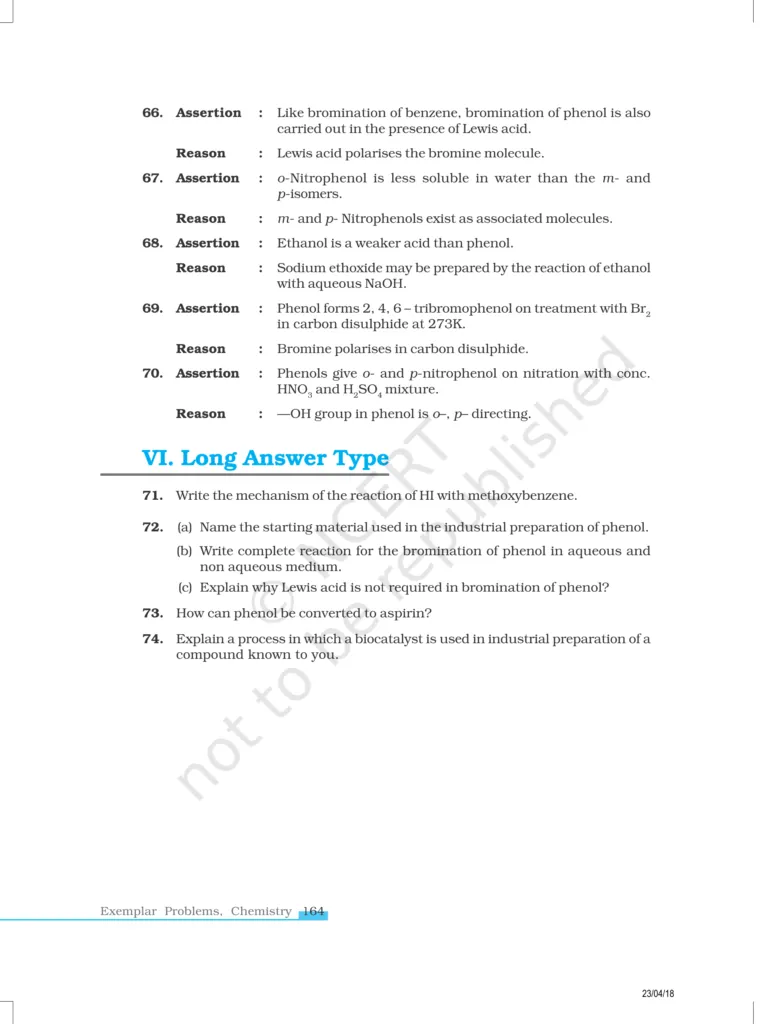
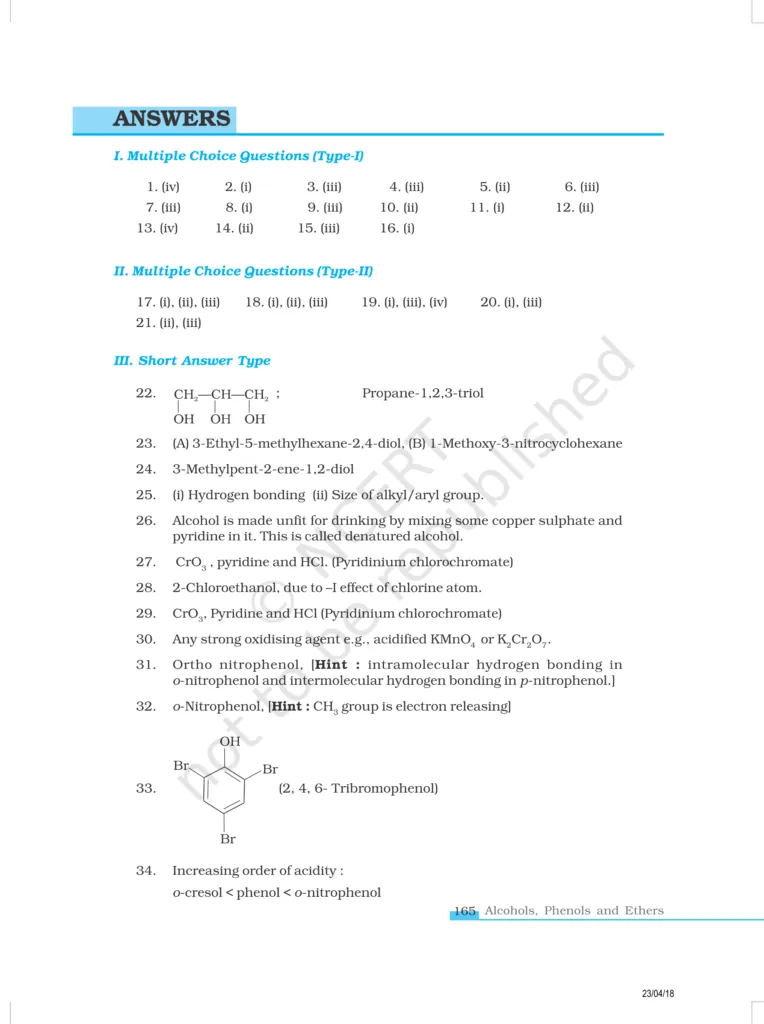
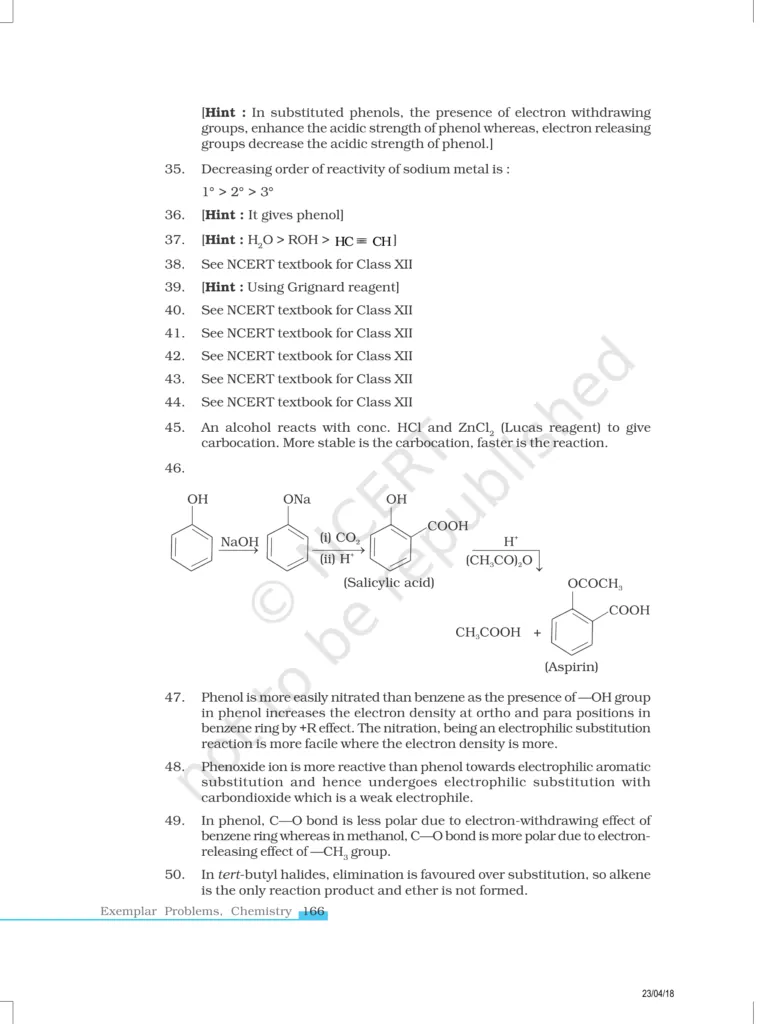
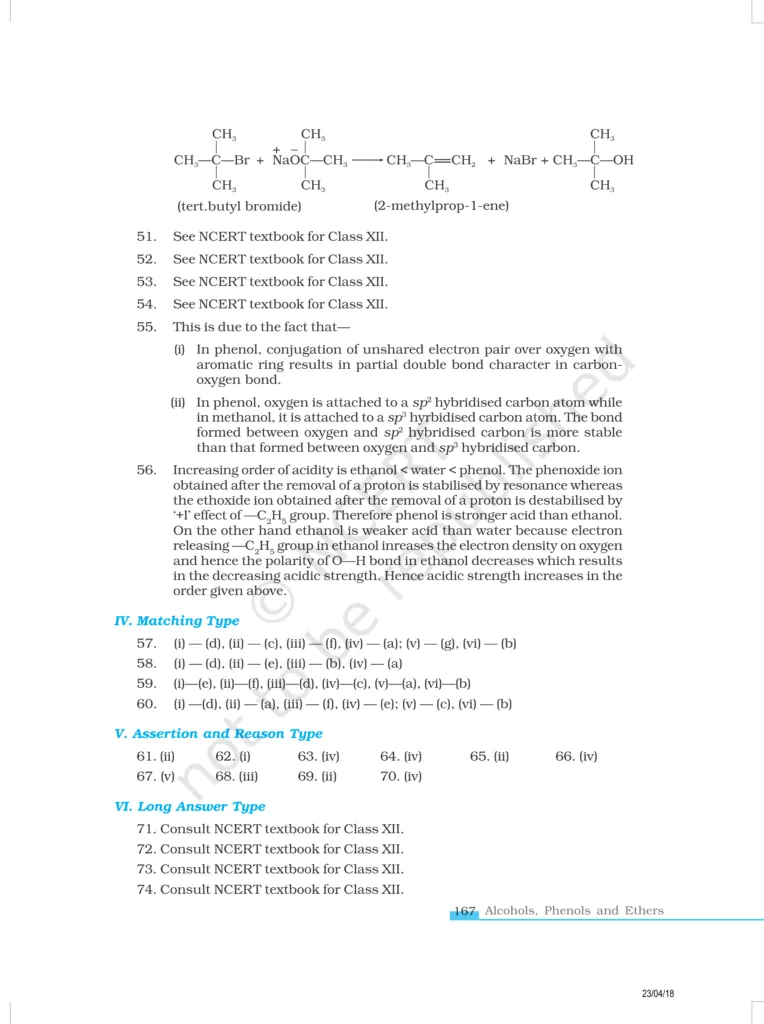
Download the PDF of NCERT Exemplars Class 12 Chemistry Chapter 11 “Alcohols, Phenols and Ethers”
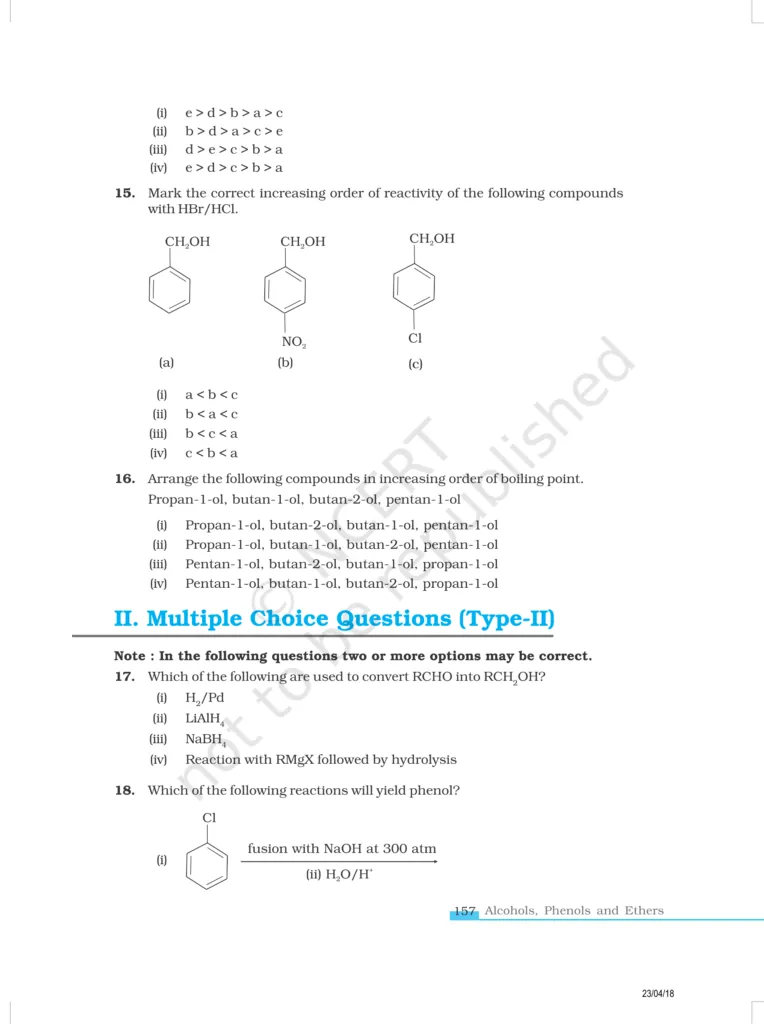
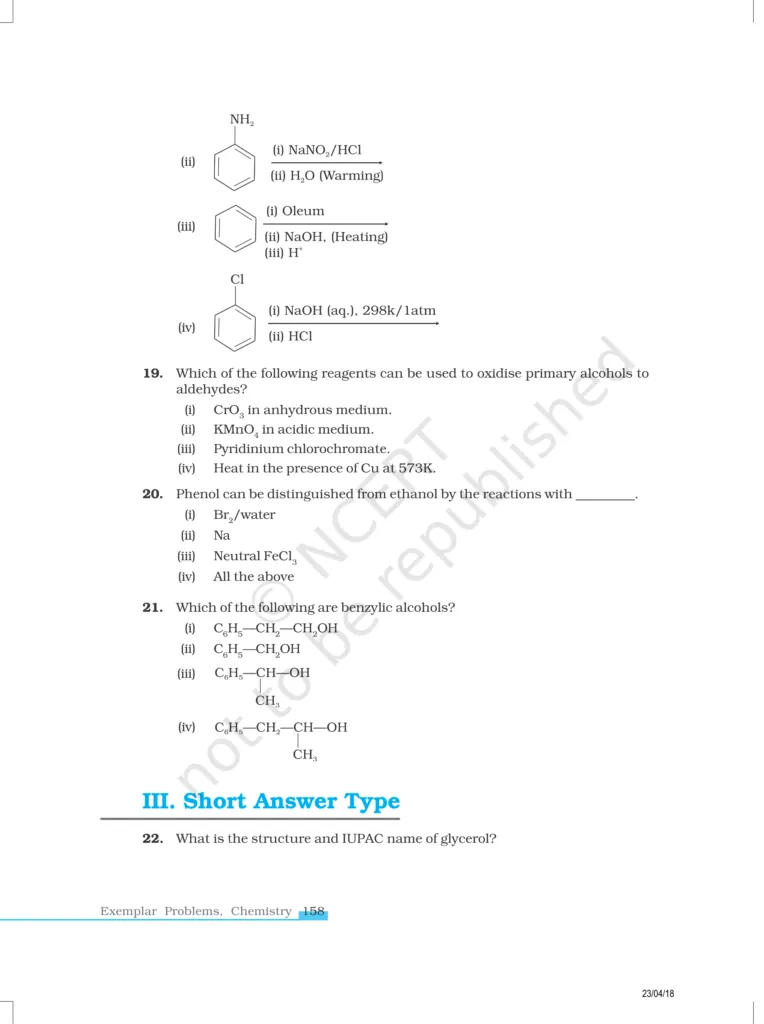
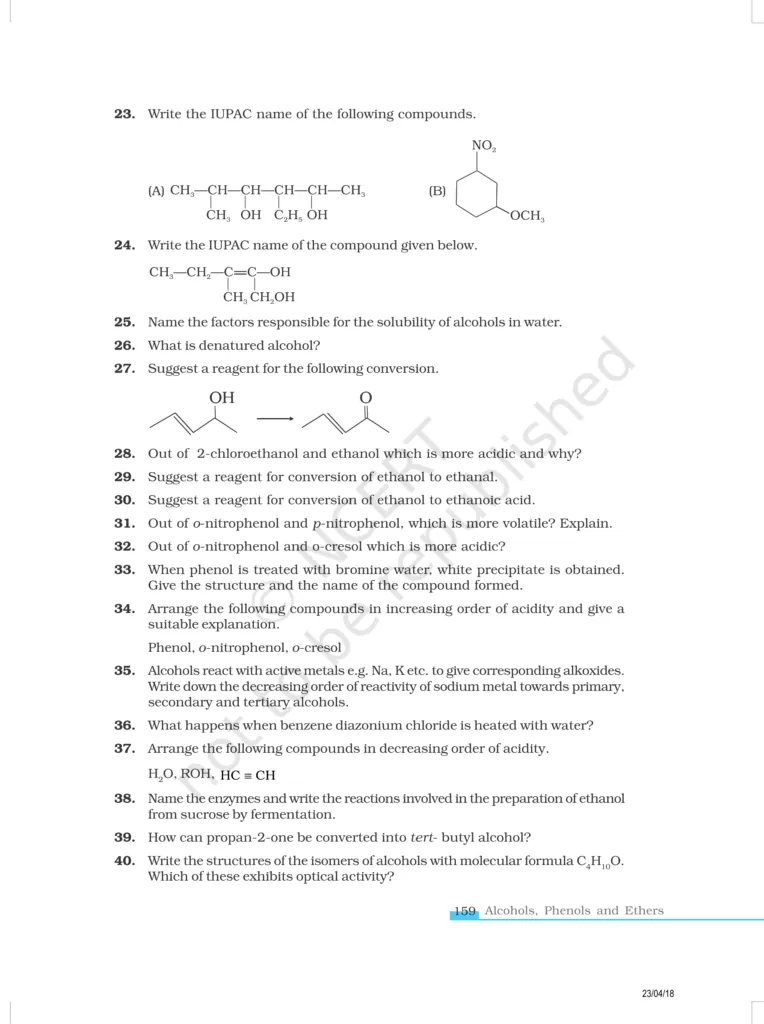
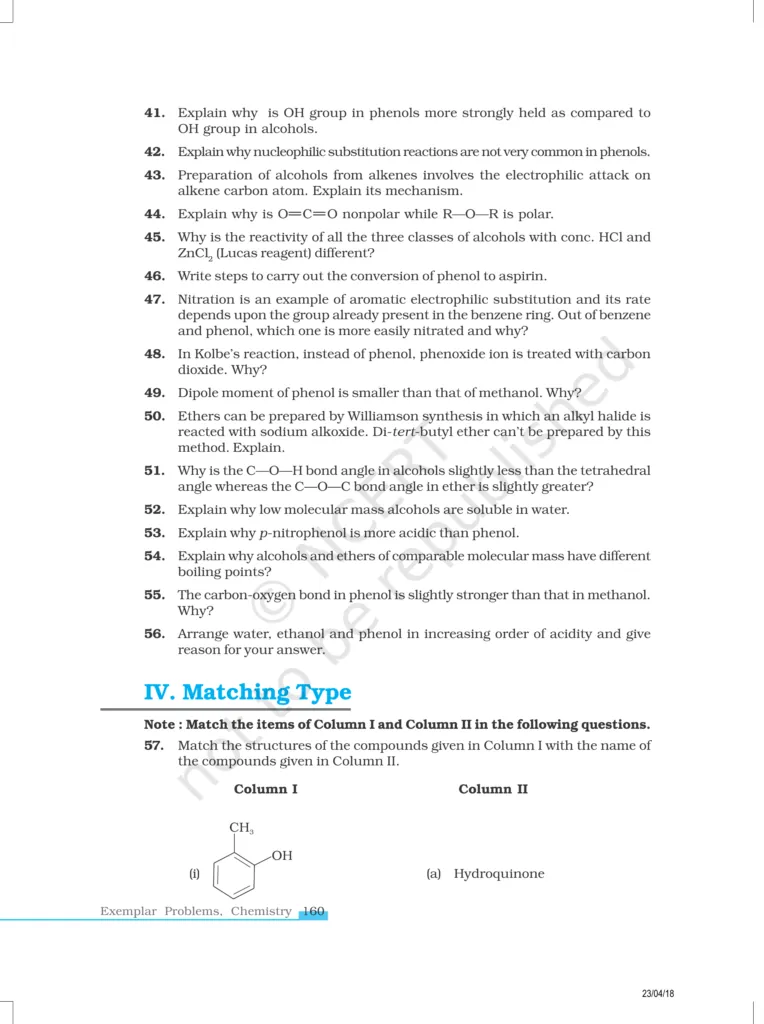
Also Read,
Class 12 Chemistry Revision Notes Free Download
NCERT Class 12 Chemistry Book Free Download
CBSE Class 12 Chemistry Syllabus Free Download
NCERT Exemplar Class 12 Chemistry all chapters Free Download
NCERT Exemplar Class 12 Physics all chapters Free Download
NCERT Exemplar Class 12 Biology all chapters Free Download
NCERT Exemplar Class 12 Maths all chapters Free Download
If you have any Confusion related to NCERT Exemplar Class 12 Chemistry Chapter 11 then feel free to ask in the comments section down below.
To watch Free Learning Videos on Class 12 Chemistry by Kota’s top Faculties Install the eSaral App