NCERT Exemplar Class 12 Chemistry Chapter 8 - The d- and f-Block Elements - Free PDF Download

Home » NCERT Exemplar Class 12 Chemistry » NCERT Exemplar Class 12 Chemistry Chapter 8 – The d- and f-Block Elements

Download the PDF of NCERT Exemplars Class 12 Chemistry Chapter 8 “The d- and f-Block Elements
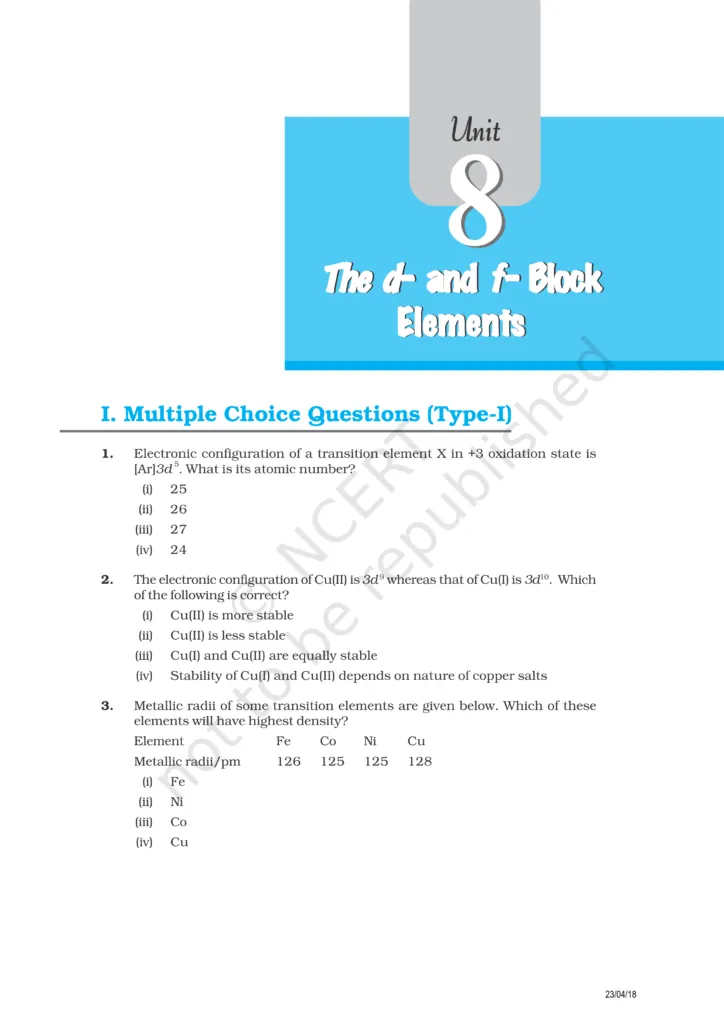
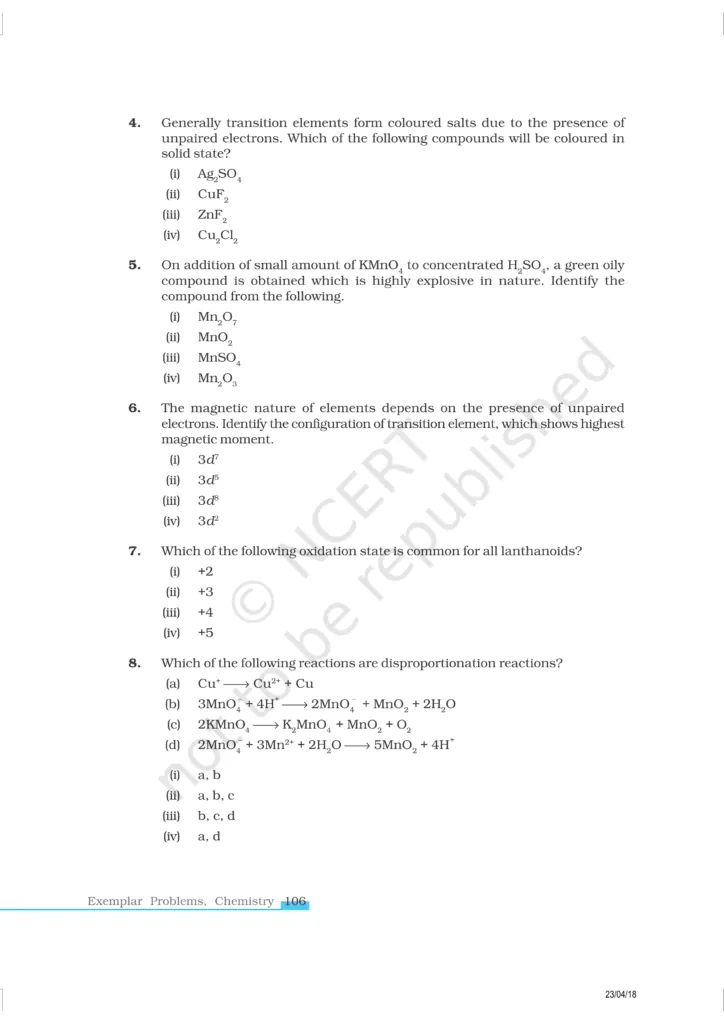
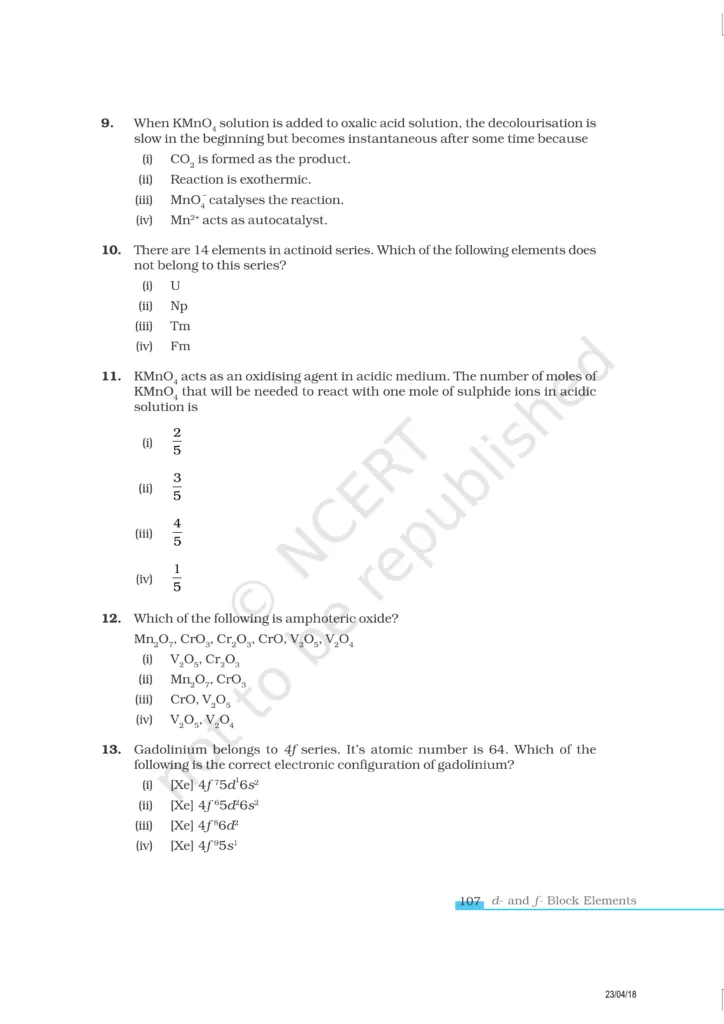
NCERT Exemplar Class 12 Chemistry Chapter 8 is an official NCERT publication containing higher-order thinking questions (HOTS) on The d- and f-Block Elements. Unlike standard NCERT textbook exercises, the Exemplar pushes students to apply concepts rather than recall them — making it indispensable for both CBSE Board preparation and entrance exams like JEE Main and NEET.
The chapter sits in Unit 8 of the Class 12 CBSE Chemistry syllabus and carries direct weightage in the board paper. Questions from this chapter have appeared consistently in previous years' CBSE board exams, and the Exemplar's MCQ section closely mirrors the pattern used in JEE Main.
The PDF available on eSaral contains:
- Multiple Choice Questions (MCQs) — single and multiple correct types
- Very Short Answer Questions
- Short Answer Questions
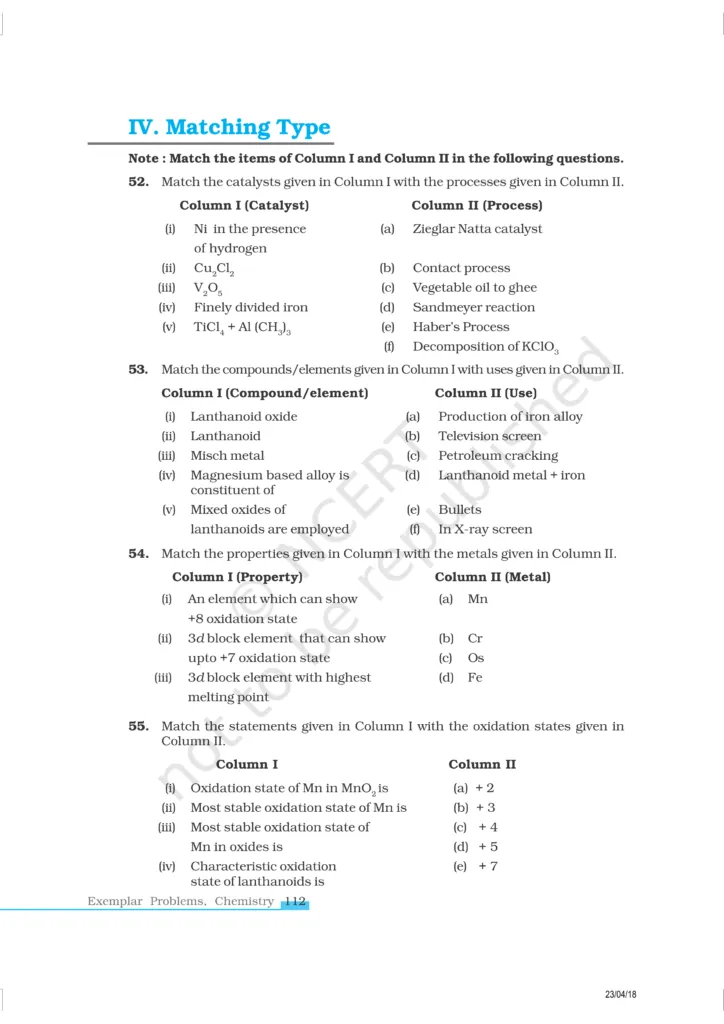
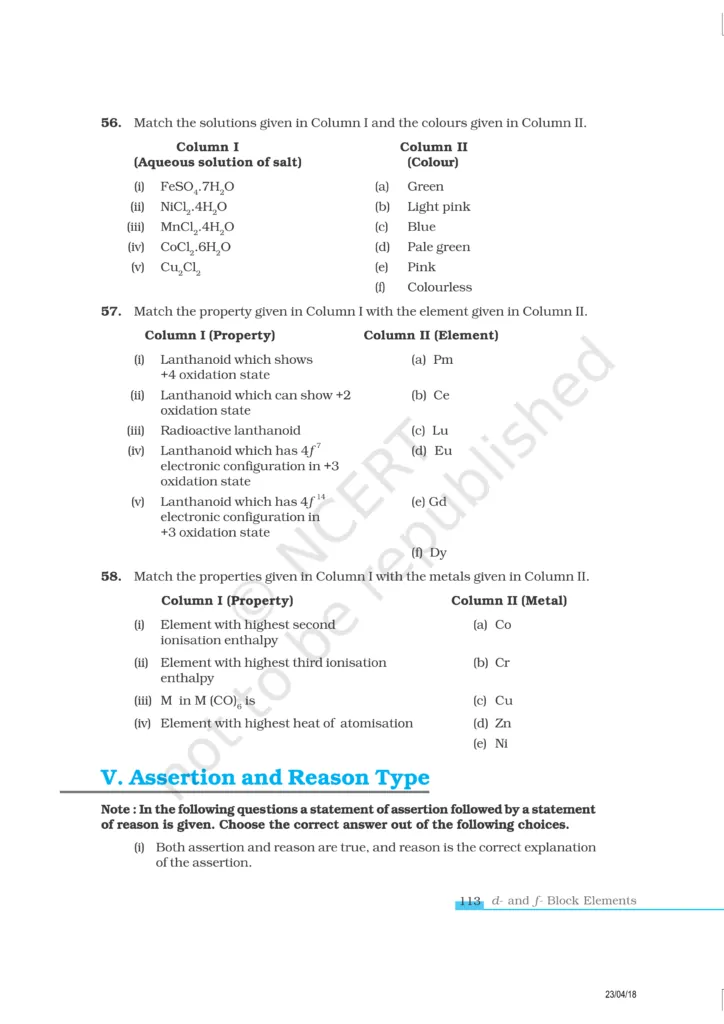
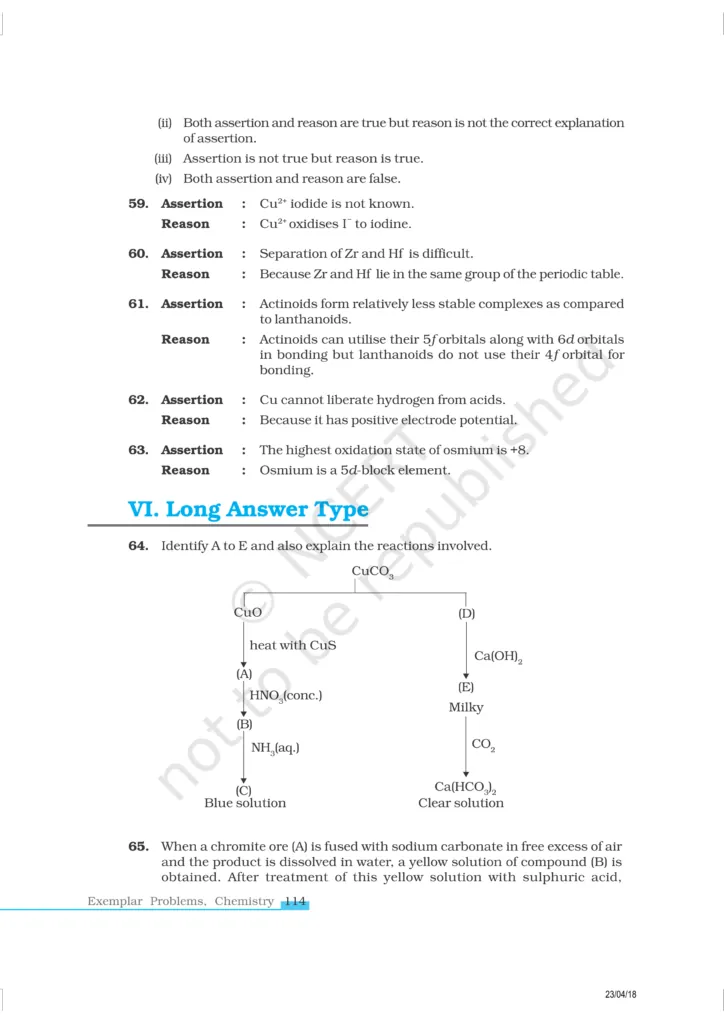
- Matching and assertion-reason questions
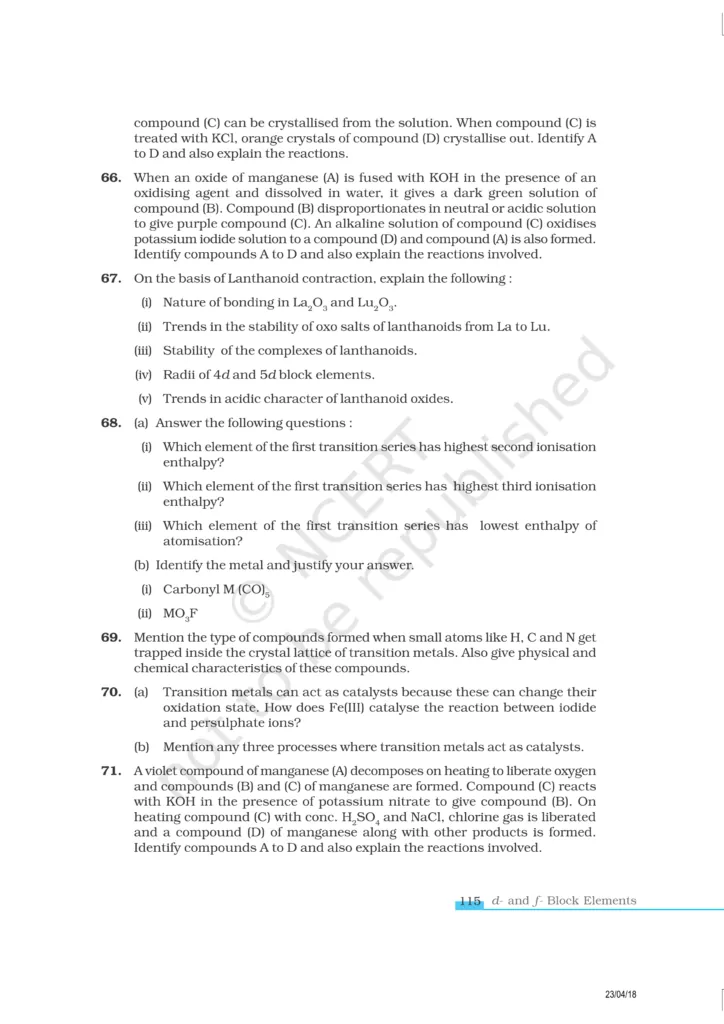
- Long Answer Questions
For students targeting 90+ in Class 12 Chemistry, solving every question in this Exemplar — not just the textbook — is the minimum standard. eSaral's Kota-trained faculty recommend treating the Exemplar as a second pass after completing the NCERT textbook exercises.
You can also explore the full set of NCERT Solutions for Class 12 Chemistry on eSaral for chapter-wise, detailed solutions prepared by experienced faculty.
So, that’s all from this article. I hope you enjoyed this post. If you found this article helpful, then please share it with other students.
Also Read,
Class 12 Chemistry Revision Notes PDF
NCERT Class 12 Chemistry Book PDF
CBSE Class 12 Chemistry Syllabus PDF
NCERT Exemplar Class 12 Chemistry all chapters PDF
NCERT Exemplar Class 12 Physics all chapters PDF
NCERT Exemplar Class 12 Biology all chapters PDF
NCERT Exemplar Class 12 Maths all chapters PDF
If you have any Confusion related to the NCERT Exemplar Class 12 Chemistry Chapter 8, then feel free to ask in the comments section down below.
To watch Free Learning Videos on Class 12 Chemistry by Kota’s top Faculties, install the eSaral App
Frequently Asked Questions
Find answers to common questions.
How many questions are there in NCERT Exemplar Class 12 Chemistry Chapter 8?
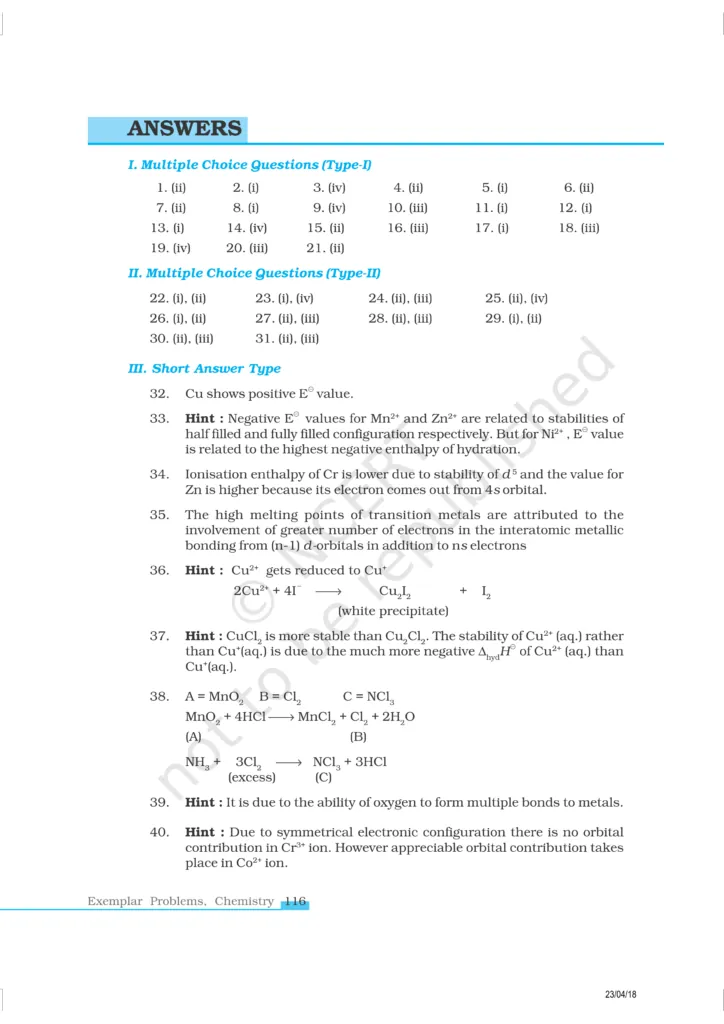
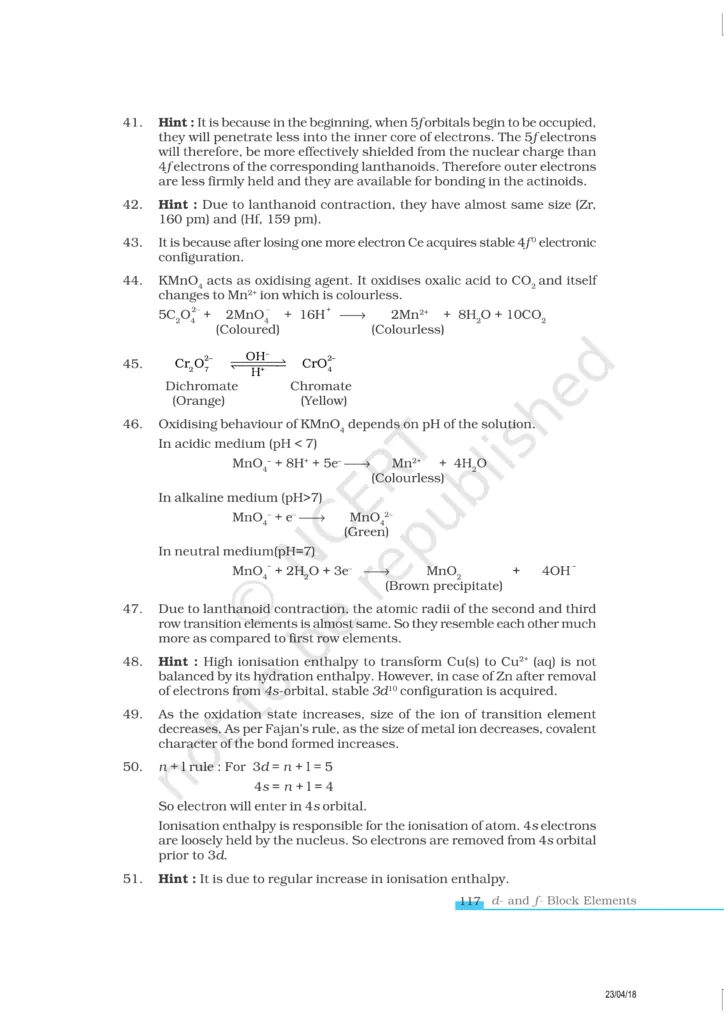
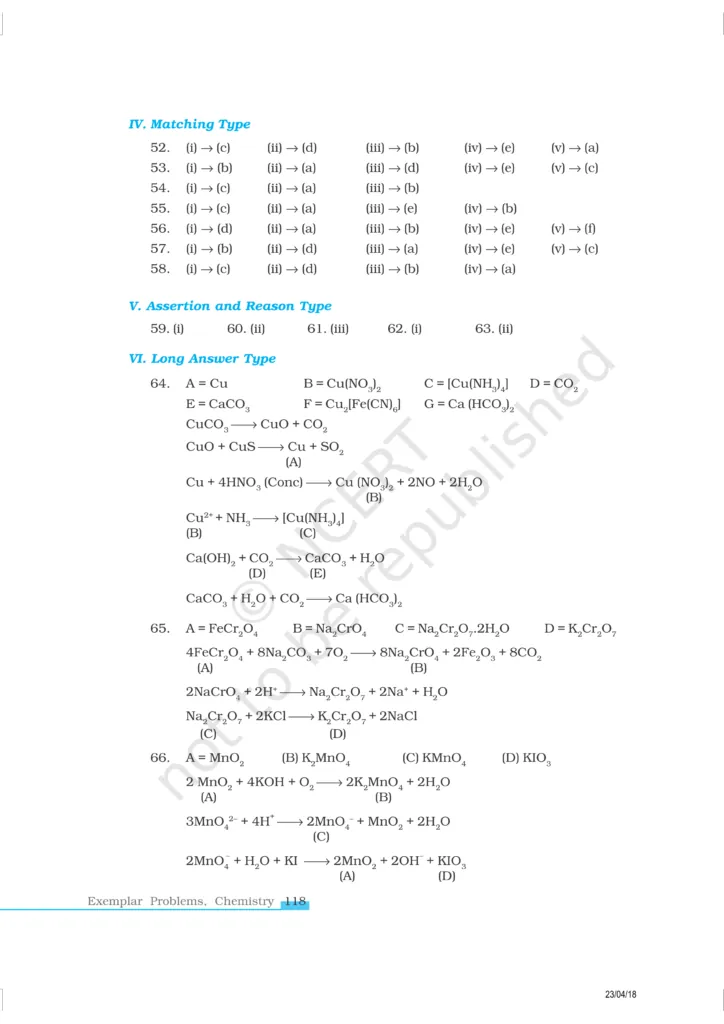
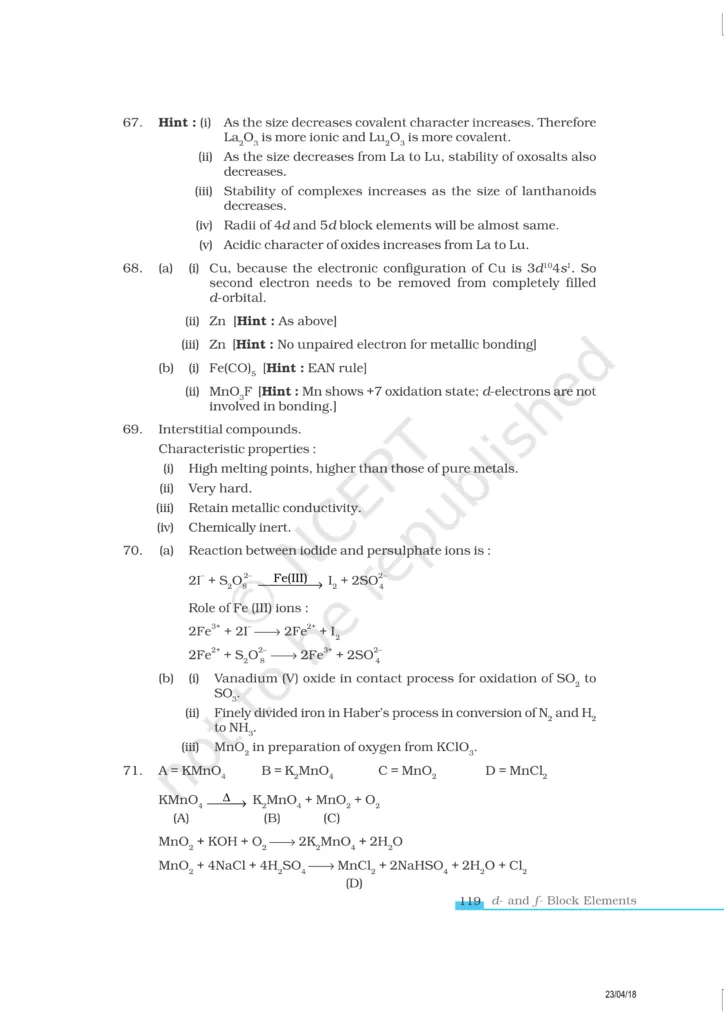
NCERT Exemplar Class 12 Chemistry Chapter 8 contains approximately 60–70 questions across all types — MCQs (single and multiple correct), very short answer, short answer, matching type, and long answer questions. The exact number may vary slightly between editions
Is the NCERT Exemplar Class 12 Chemistry Chapter 8 PDF free to download?
Yes, the NCERT Exemplar Class 12 Chemistry Chapter 8 PDF is available for free download on eSaral. The original Exemplar book is an NCERT publication and is freely accessible. eSaral provides a clean, direct-download version so students can access it without navigating multiple pages.
What is covered in NCERT Exemplar Class 12 Chemistry Chapter 8?
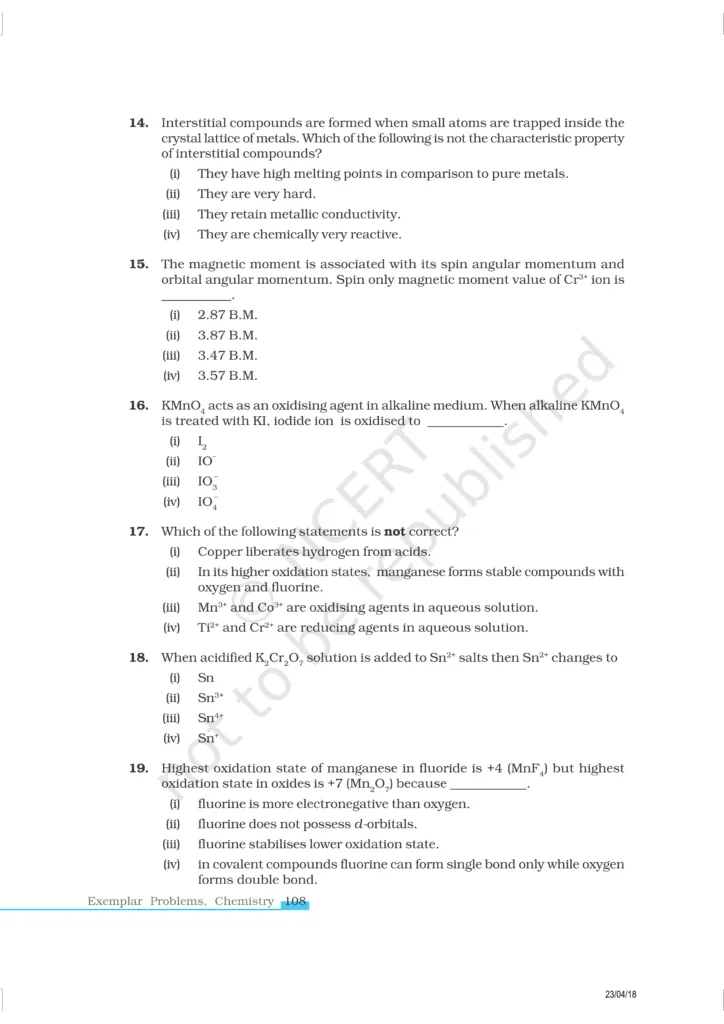
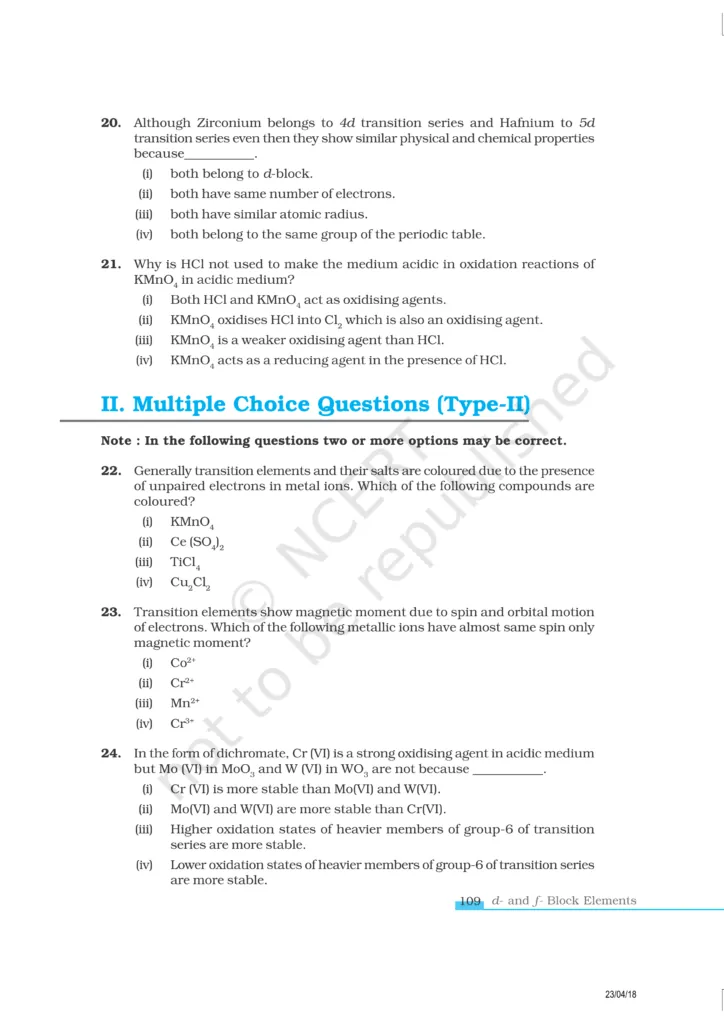
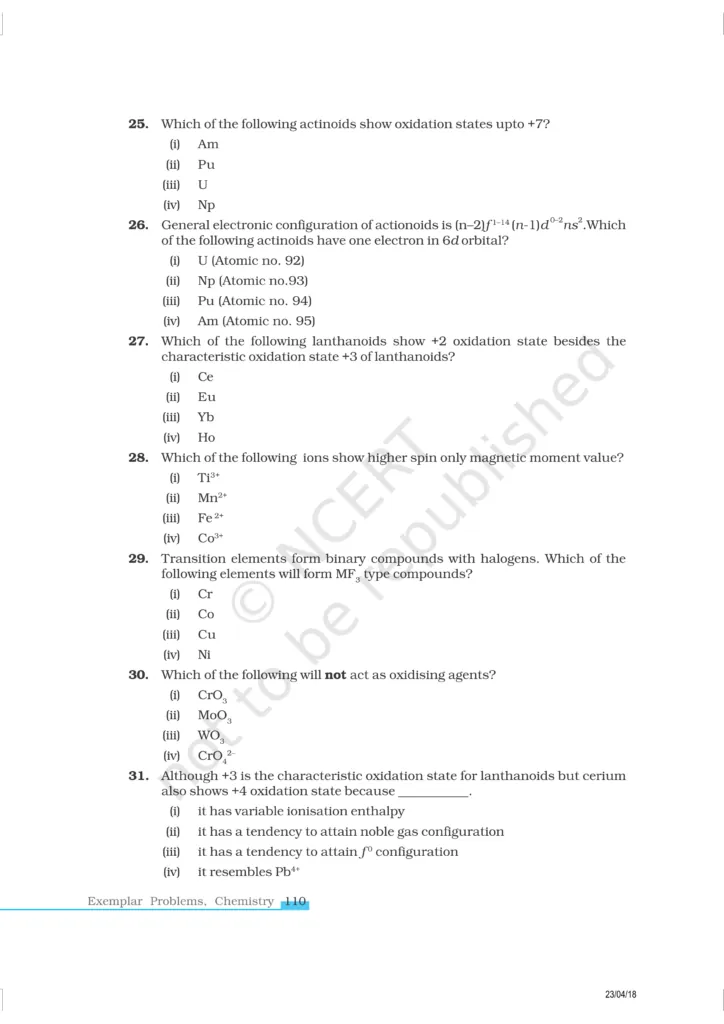
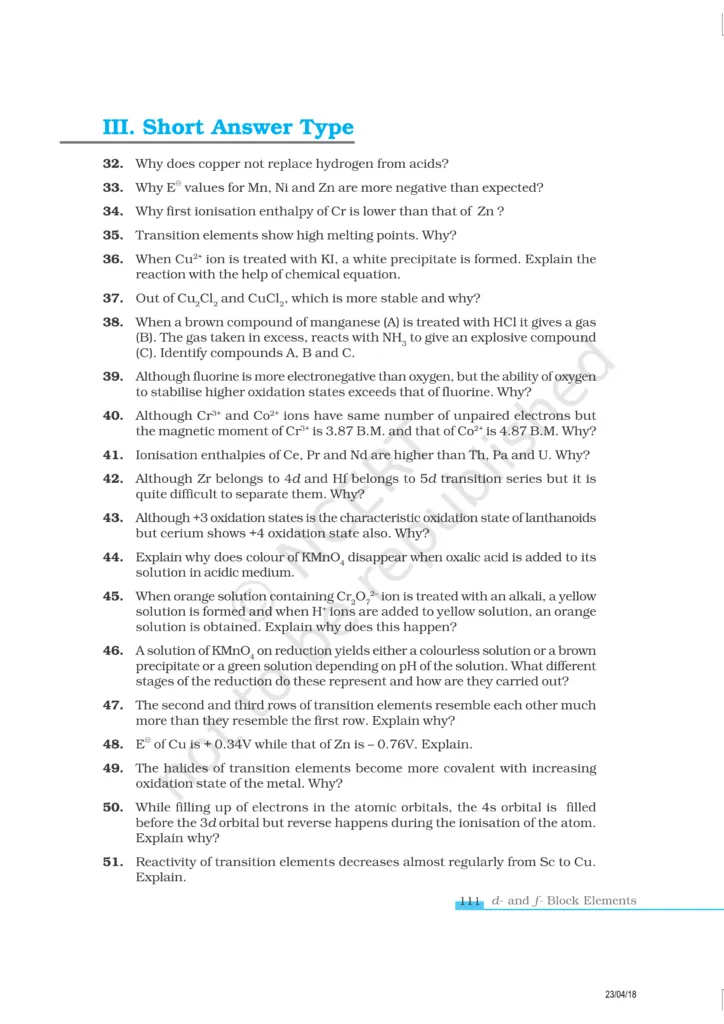
NCERT Exemplar Class 12 Chemistry Chapter 8 covers The d- and f-Block Elements, including electronic configurations of transition metals, their general properties (magnetic behaviour, variable oxidation states, colour), lanthanoids, actinoids, lanthanoid contraction, and important compounds like potassium permanganate and potassium dichromate. The Exemplar extends the NCERT textbook with application-level and HOTS questions.
What is the difference between NCERT textbook exercises and NCERT Exemplar questions?
NCERT textbook exercises test direct recall and basic application of concepts — ideal for building foundational understanding. NCERT Exemplar questions are at a higher difficulty level, testing analysis, multi-step reasoning, and cross-chapter connections. For board exams, the textbook exercises are sufficient for passing; for 90+ scores and competitive exam preparation, the Exemplar is essential.
What is lanthanoid contraction and why is it frequently asked?
Lanthanoid contraction refers to the steady decrease in atomic and ionic radii across the lanthanoid series (Ce to Lu), caused by the poor shielding effect of 4f electrons. It explains why the atomic radii of 4d and 5d transition metals of the same group are nearly equal. This concept is a recurring source of assertion-reason and short-answer questions in both board exams and NEET.
Should I solve NCERT Exemplar Chapter 8 for JEE Main preparation?
Yes. The NTA sets 1–2 questions from d- and f-Block Elements in JEE Main most years. The NCERT Exemplar's MCQ section is particularly useful because it mirrors the application-based single-correct format used in JEE Main. Completing the Exemplar after the NCERT textbook is a standard recommendation from JEE-focused faculty.
How important is Chapter 8 for the CBSE Class 12 board exam?
Chapter 8 directly contributes around 5 marks to the CBSE Class 12 Chemistry theory paper. It also forms the conceptual foundation for Chapter 9 (Coordination Compounds), which carries higher direct marks. Combined, these two chapters account for roughly 10–12 marks in the board exam, making Chapter 8 one of the most important chapters to prepare thoroughly