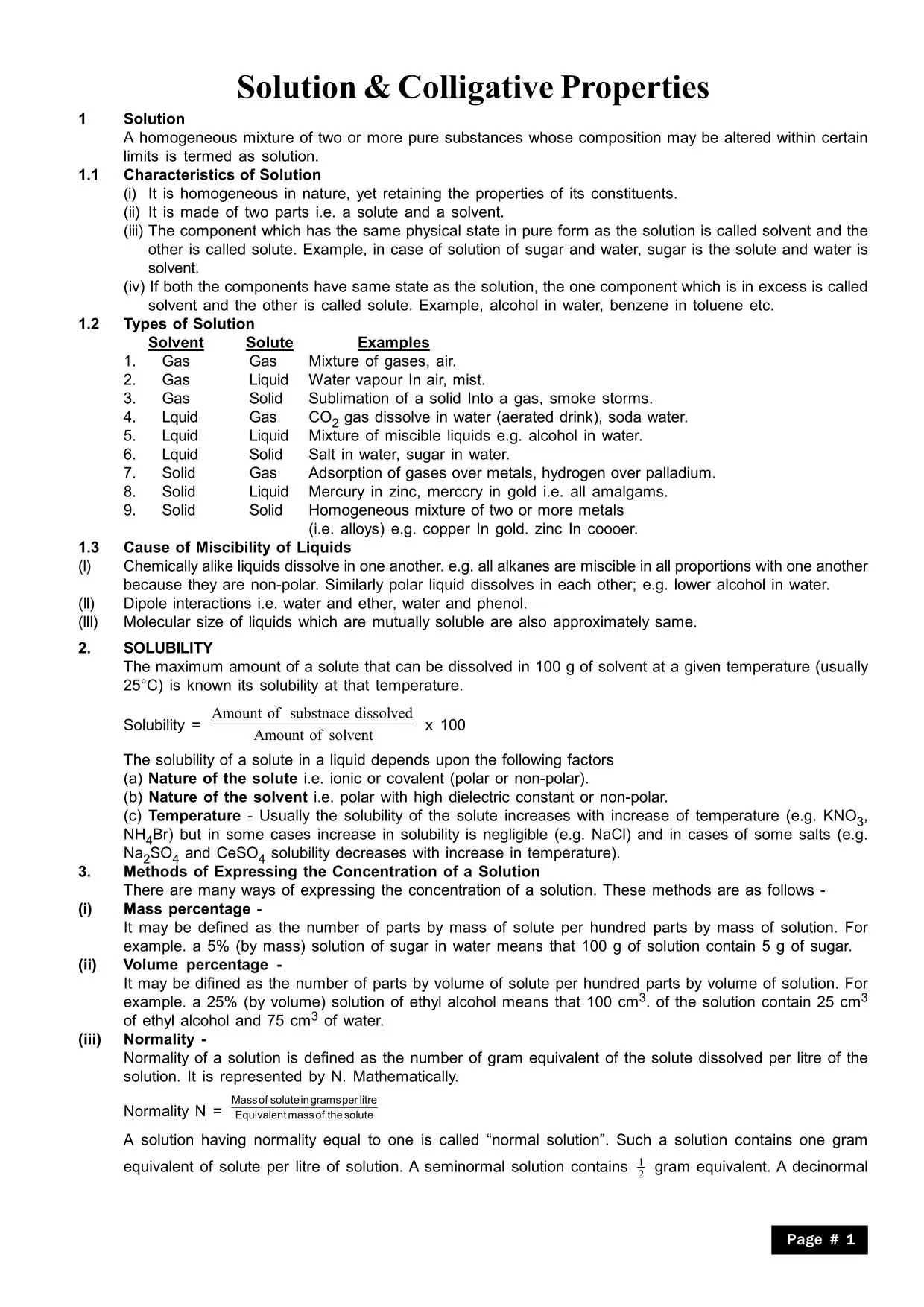
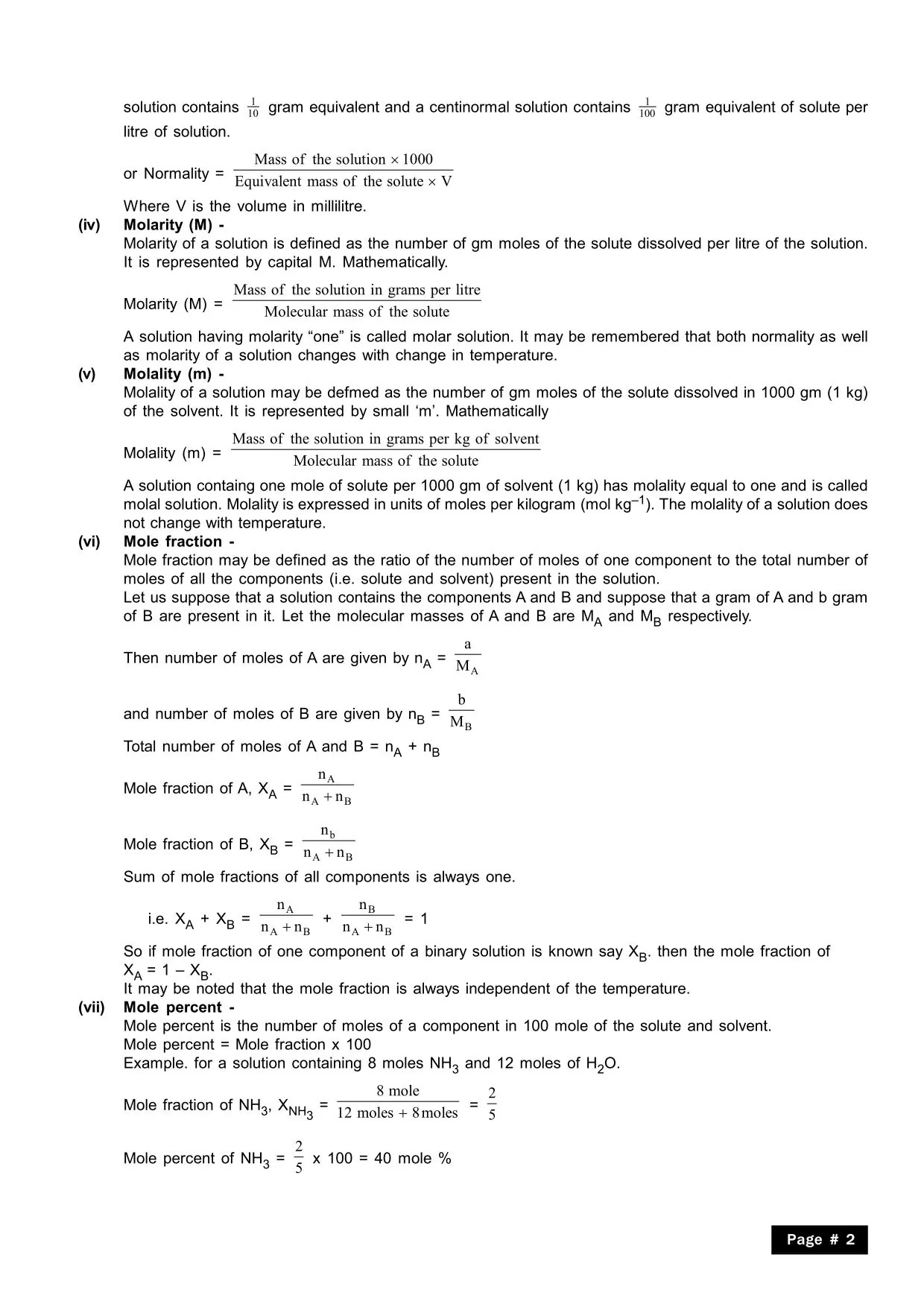
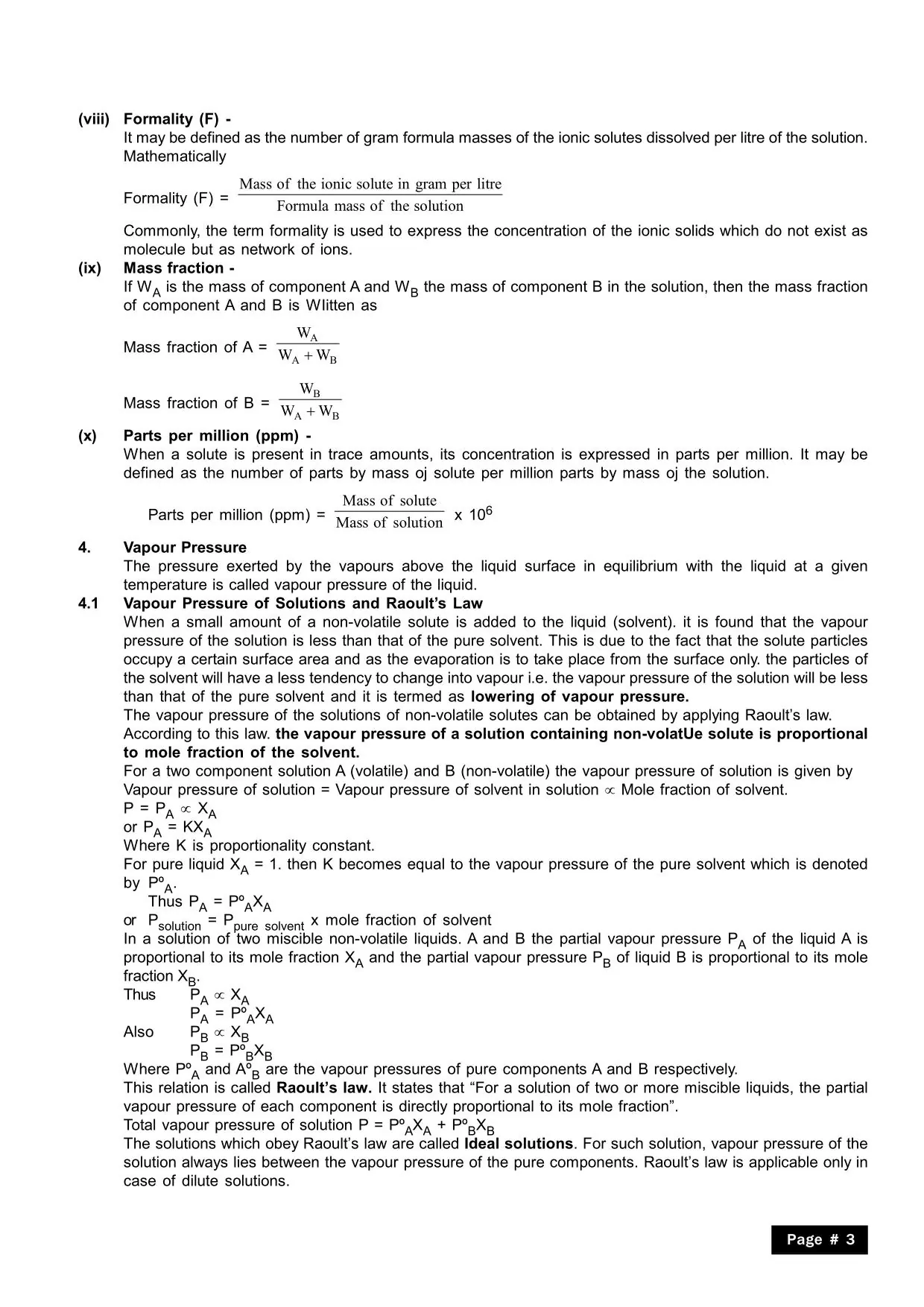
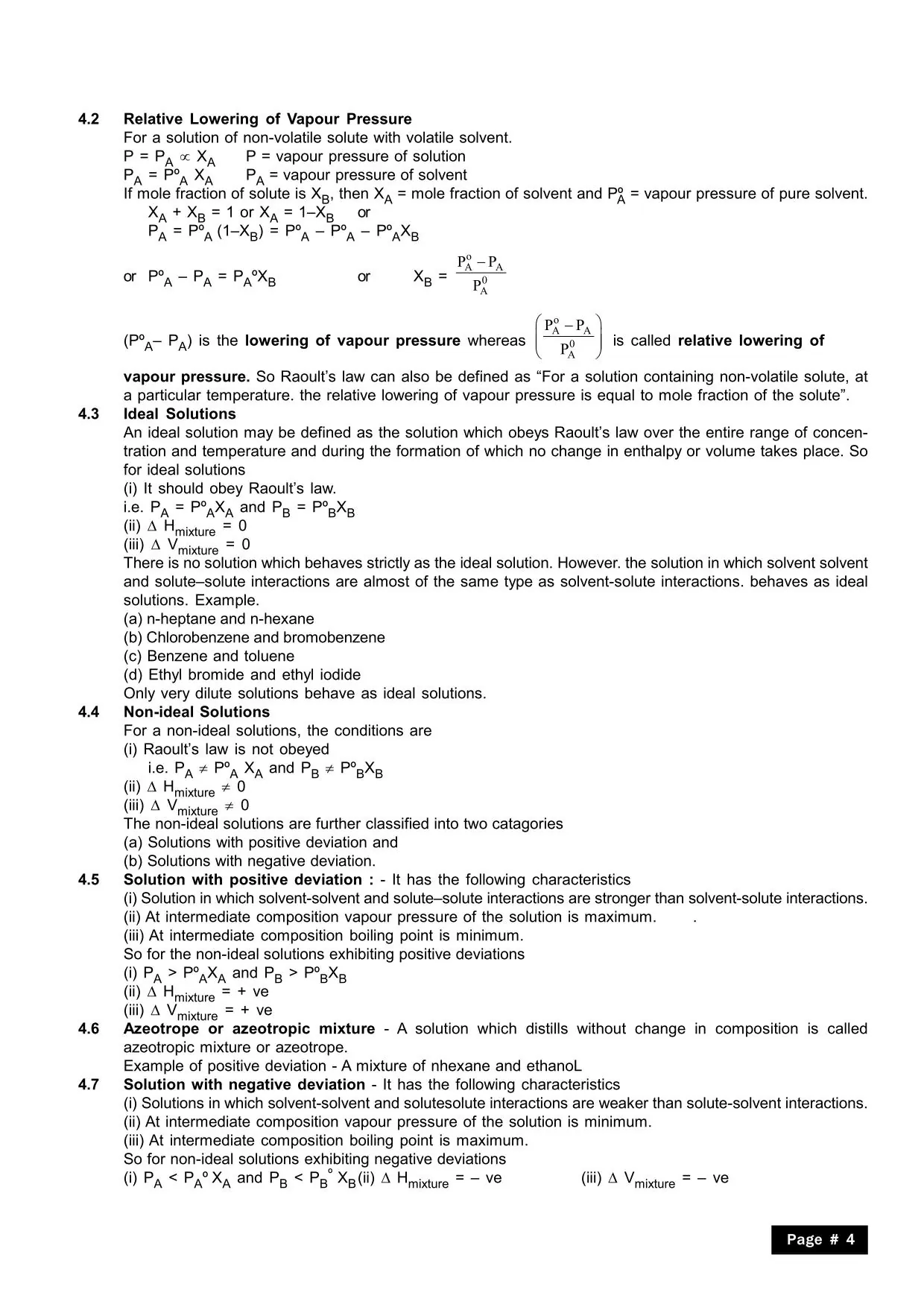
Solution & Colligative properties Notes for Class 12, IIT JEE & NEET
Solutions and Colligative Properties is a high-scoring Class 12 Chemistry chapter for JEE, NEET, and Boards, covering key concepts like osmotic pressure, Van't Hoff factor, boiling point elevation, and freezing point depression with strong real-world applications and frequent exam questions.

Table of Contents

eSaral › Class 12 ›Solution & Colligative properties Notes for Class 12, IIT JEE & NEET

🚀 Checkout eSaral Courses
Why This Chapter Matters for JEE & NEET
Solution and Colligative Properties sits at the intersection of physical chemistry and real-world applications — from how antifreeze works in car radiators to how IV saline solutions are formulated. For JEE Main, NTA has consistently placed one direct and one application-based question from this chapter in every session since 2020 (source: NTA official question paper archive). NEET typically includes 2–3 MCQs, with osmotic pressure and Van't Hoff factor being the most tested concepts.
For Class 12 Board exams, this chapter is part of Unit 2 and carries a weightage of approximately 5 marks in CBSE theory papers.
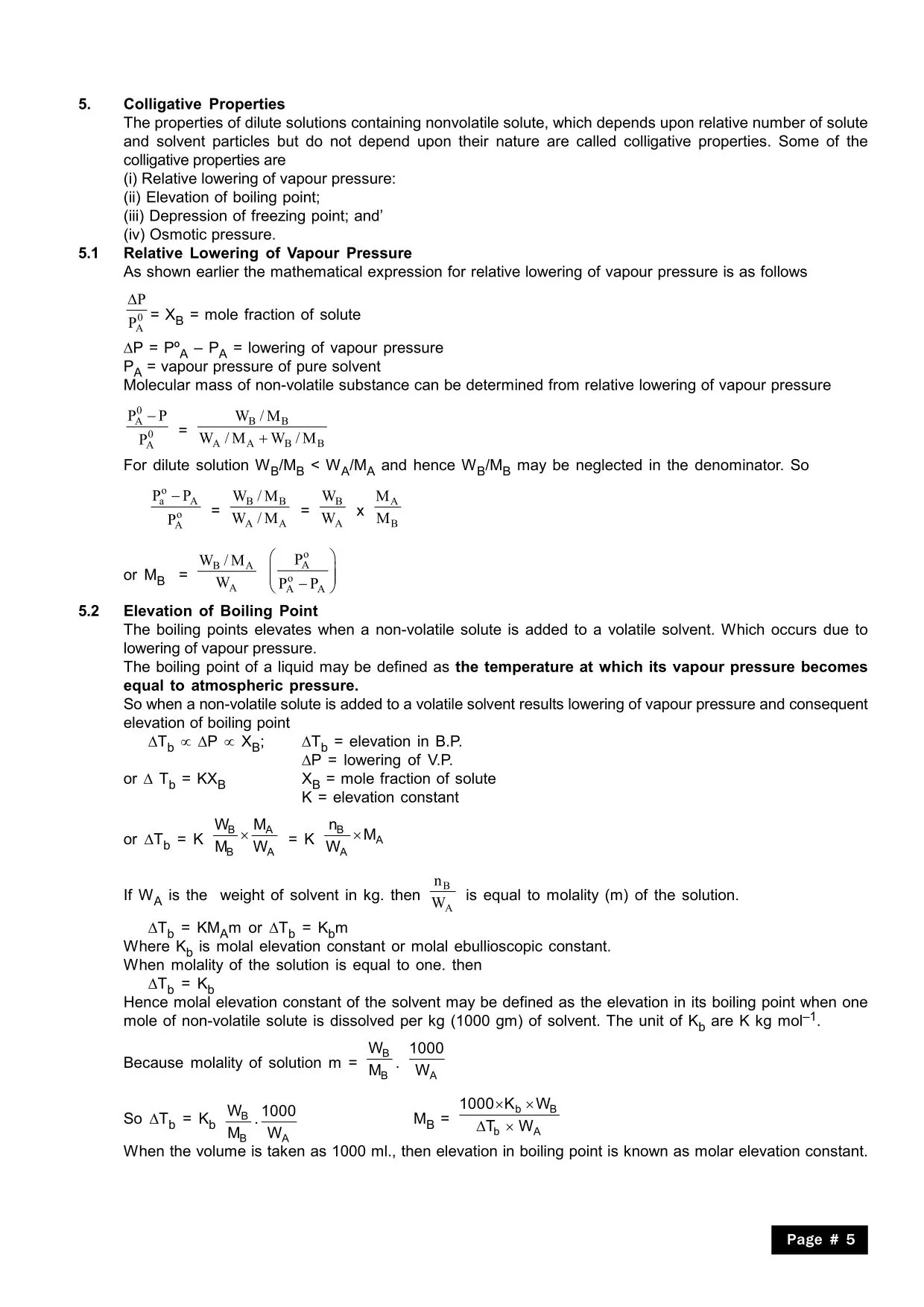
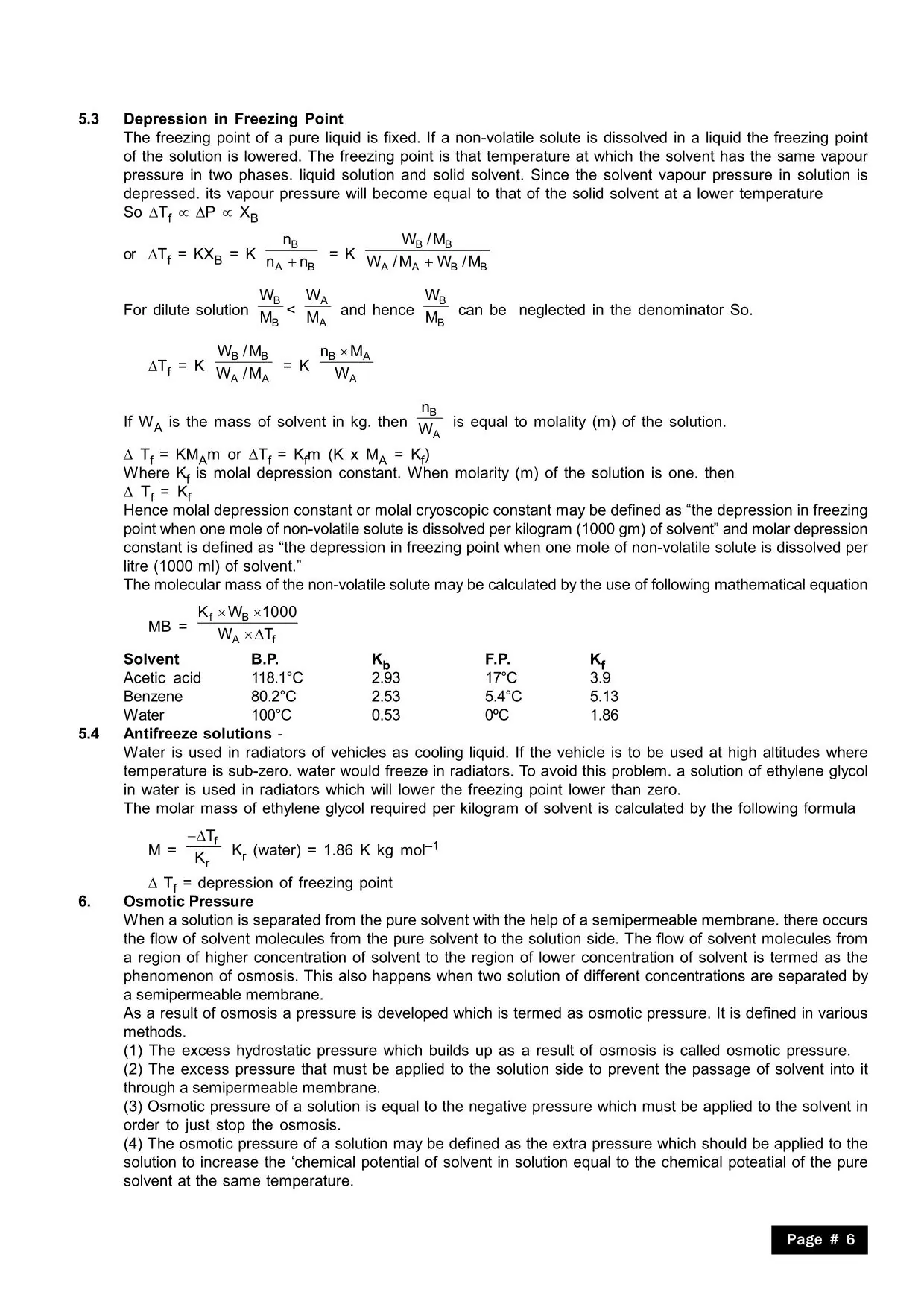
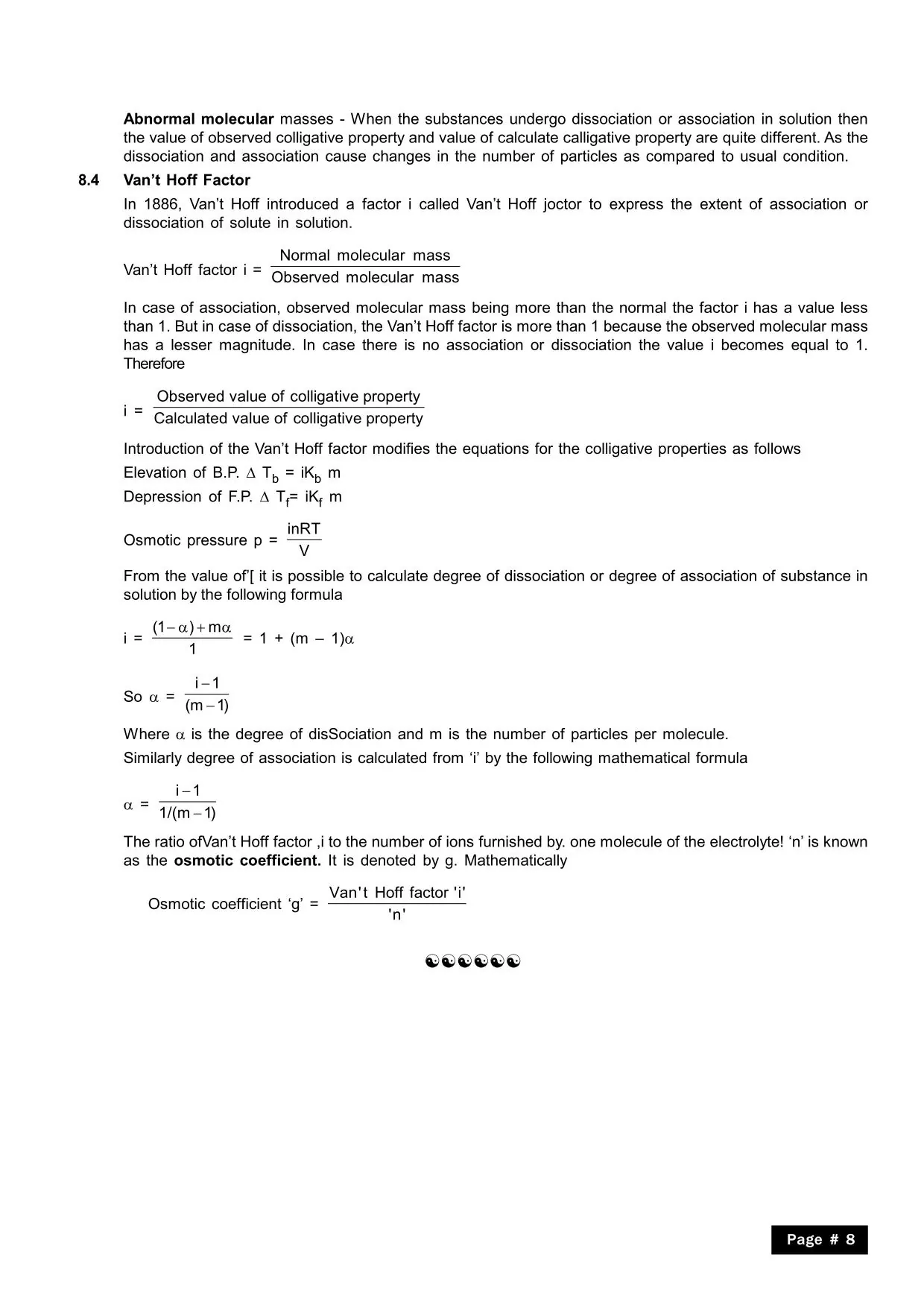
Students who master the derivations of boiling point elevation (ΔTb) and freezing point depression (ΔTf), along with the Van't Hoff factor (i), consistently find this chapter to be one of the highest-return investments of study time in physical chemistry.
Class 12th Chemistry Notes
Frequently Asked Questions
Find answers to common questions.
What are colligative properties in Class 12 chemistry?
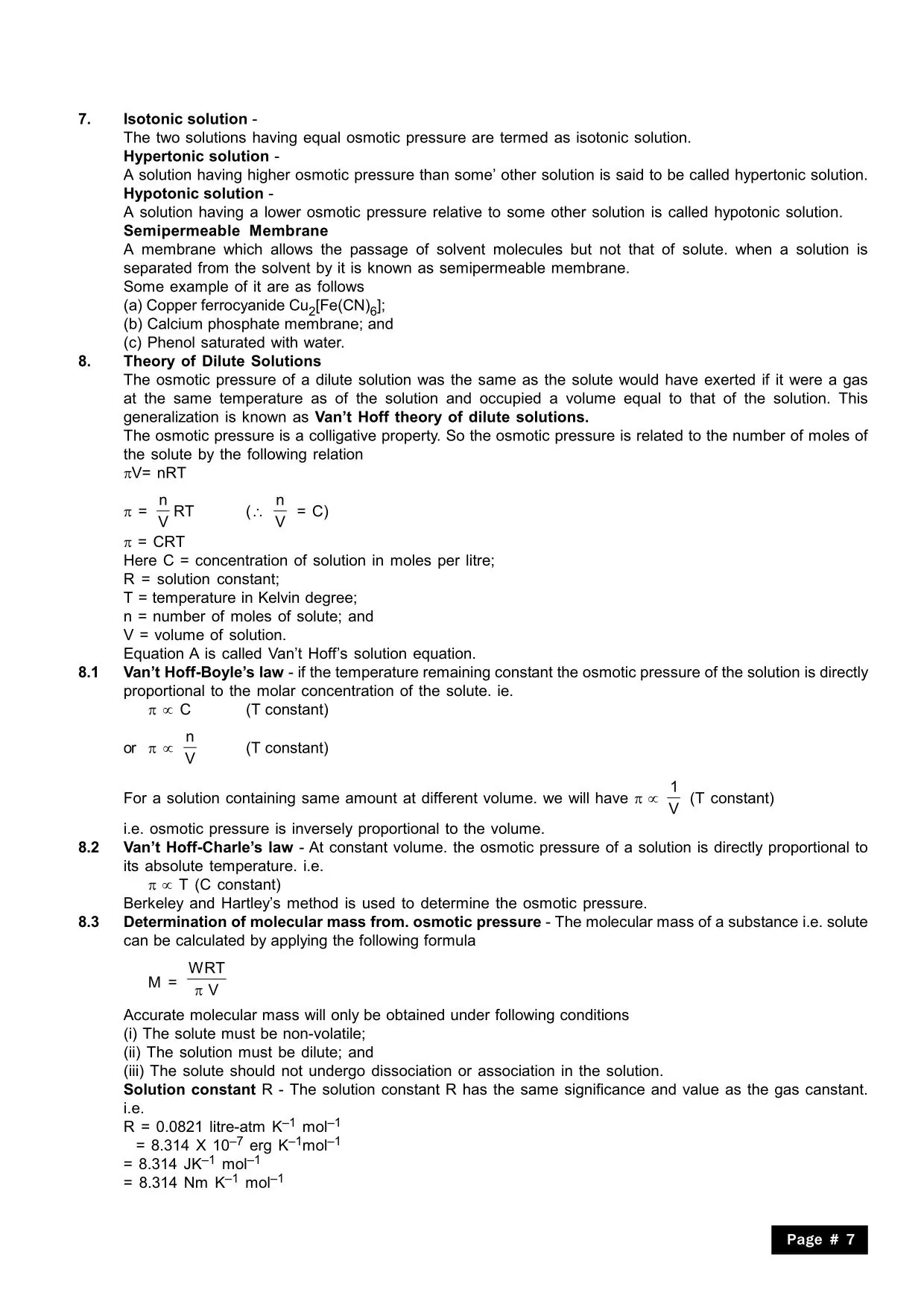
Colligative properties are properties of solutions that depend only on the number of dissolved solute particles, not on their chemical identity. The four colligative properties in the Class 12 NCERT syllabus are: relative lowering of vapour pressure, elevation of boiling point, depression in freezing point, and osmotic pressure. Understanding these helps predict how dissolving a solute changes physical behaviour of a solvent.
Which colligative property is most accurate for finding molar mass?
Osmotic pressure is the most accurate colligative property for determining molar mass, especially of macromolecules like proteins and polymers. This is because even a small concentration produces a measurable osmotic pressure, making it highly sensitive. For smaller molecules, freezing point depression (using Kf) is preferred over boiling point elevation because the Kf value is larger, giving a more measurable temperature change.
What are the values of Kb and Kf for water?
For water: Kb (ebullioscopic constant) = 0.52 K·kg/mol and Kf (cryoscopic constant) = 1.86 K·kg/mol. These values are fixed constants for a given solvent and are independent of the solute used. The significantly larger Kf makes freezing point depression more practically useful for molar mass determination in laboratory settings.
How does the Van't Hoff factor affect colligative properties?
The Van't Hoff factor (i) multiplies the colligative property value to account for dissociation or association of solute particles. For strong electrolytes like NaCl, i ≈ 2 (produces Na⁺ and Cl⁻), so the colligative property observed is nearly double the calculated value. For associating solutes like acetic acid in benzene, i < 1, so the observed property is smaller than expected.
What is an ideal solution and does it obey Raoult's Law?
An ideal solution obeys Raoult's Law at all concentrations and temperatures. It shows zero enthalpy of mixing (ΔH_mix = 0) and zero volume change on mixing (ΔV_mix = 0). Intermolecular forces between solute–solvent molecules (A–B) are equal to those in pure components (A–A and B–B). A classic example is benzene + toluene. Real solutions deviate positively or negatively from Raoult's Law.