Chemical Kinetics Class 12 Notes, IIT-JEE & NEET

eSaral > Class 12 Chemistry > Chemical Kinetics Notes for IIT JEE & NEET

Get detailed Class 12th Chemistry Notes to prepare for Boards as well as competitive exams like IIT JEE, NEET, etc. eSaral offers Chemical Kinetics Class 12 Notes for IIT-JEE & NEET. eSaral helps the students in clearing and understanding each topic in a better way. eSaral is providing complete chapter notes of Class 11th and 12th both of Physics, Chemistry & Mathematics. Besides this, eSaral also offers NCERT Solutions, Previous year questions for JEE Main and Advanced, Practice questions, Test Series for JEE Main, JEE Advanced, and NEET, Important questions of Physics, Chemistry, Math, and Biology, and many more. Download the eSaral app for free study material and video tutorials.
India's Best Exam Preparation for Class 12th - Download Now
Chemical Kinetics Class 12 Notes
India's Best Exam Preparation for Class 12th - Download Now
India's Best Exam Preparation for Class 12th - Download Now
India's Best Exam Preparation for Class 12th - Download Now
India's Best Exam Preparation for Class 12th - Download Now
India's Best Exam Preparation for Class 12th - Download Now
India's Best Exam Preparation for Class 12th - Download Now
 eSaral helps the students by providing them an easy way to understand concepts and attractive study material for IIT JEE, which includes the chemistry video lectures by top expert IITian Faculties of KOTA. We are also providing a quick revision for Chemistry to help the students revise the chapter quickly. eSaral brings complete notes for Class 12 Chemistry. eSaral provides a series of detailed chapter-wise notes for all the Subjects of class 11th and 12th. These notes will also help you in your IIT JEE & NEET preparations. We hope these Chemistry Notes for Class 12 will be helpful for you to understand the important topics and help in remembering the key points from an exam point of view. Get Complete Class 12 Chemistry Notes for easy learning and understanding. For free video lectures and complete study material, download the eSaral APP. About eSaral: At eSaral, we are offering a complete platform for IIT-JEE & NEET preparation. The main mission behind eSaral is to provide education to each and every student in India by eliminating the Geographic and Economic factors, as a nation’s progress and development depend on the availability of quality education to each and every one. With the blend of education & technology, the eSaral team made the learning personalized & adaptive for everyone.
Frequently Asked Questions
Find answers to common questions.
How is the Arrhenius equation used in JEE numericals?
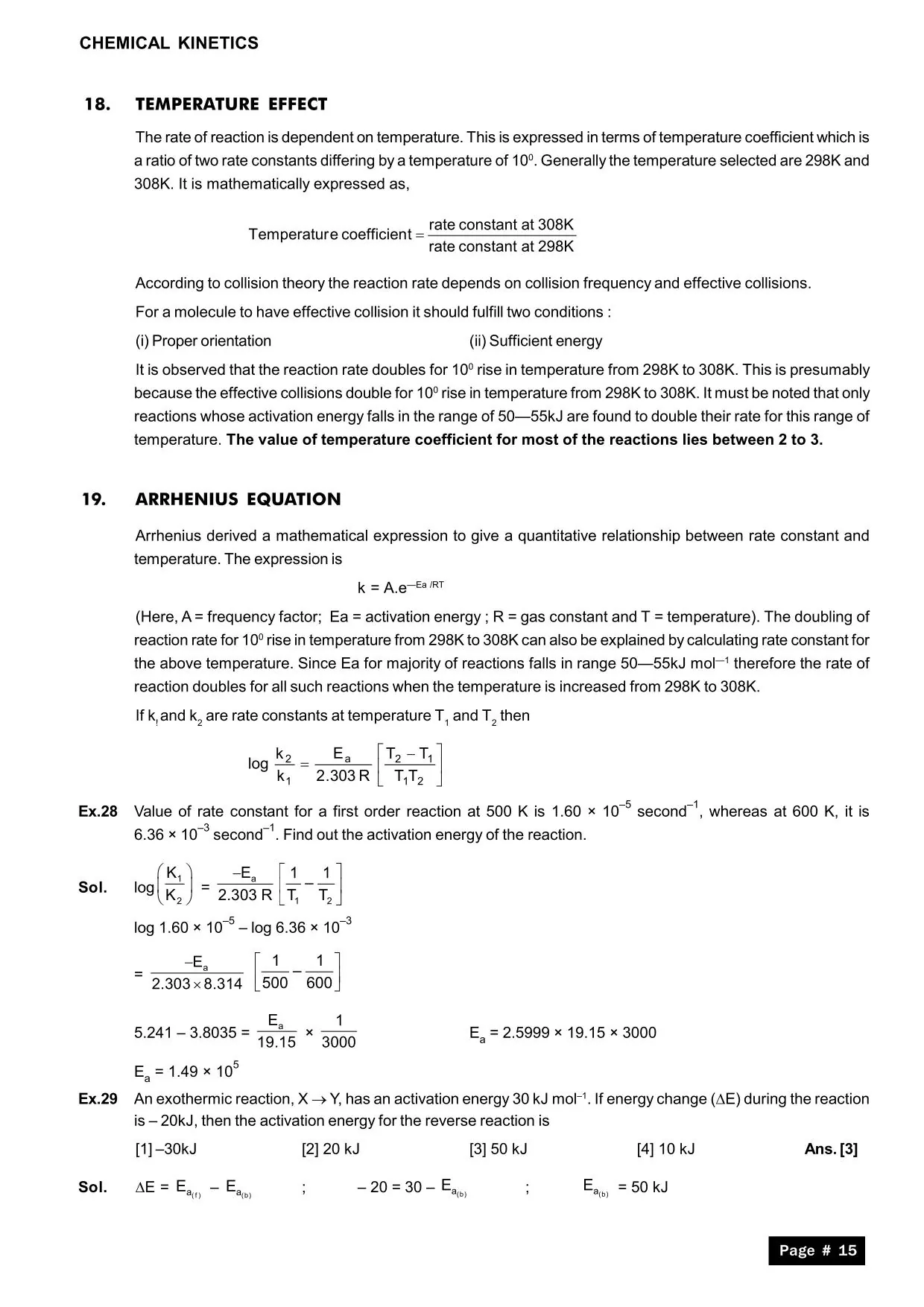
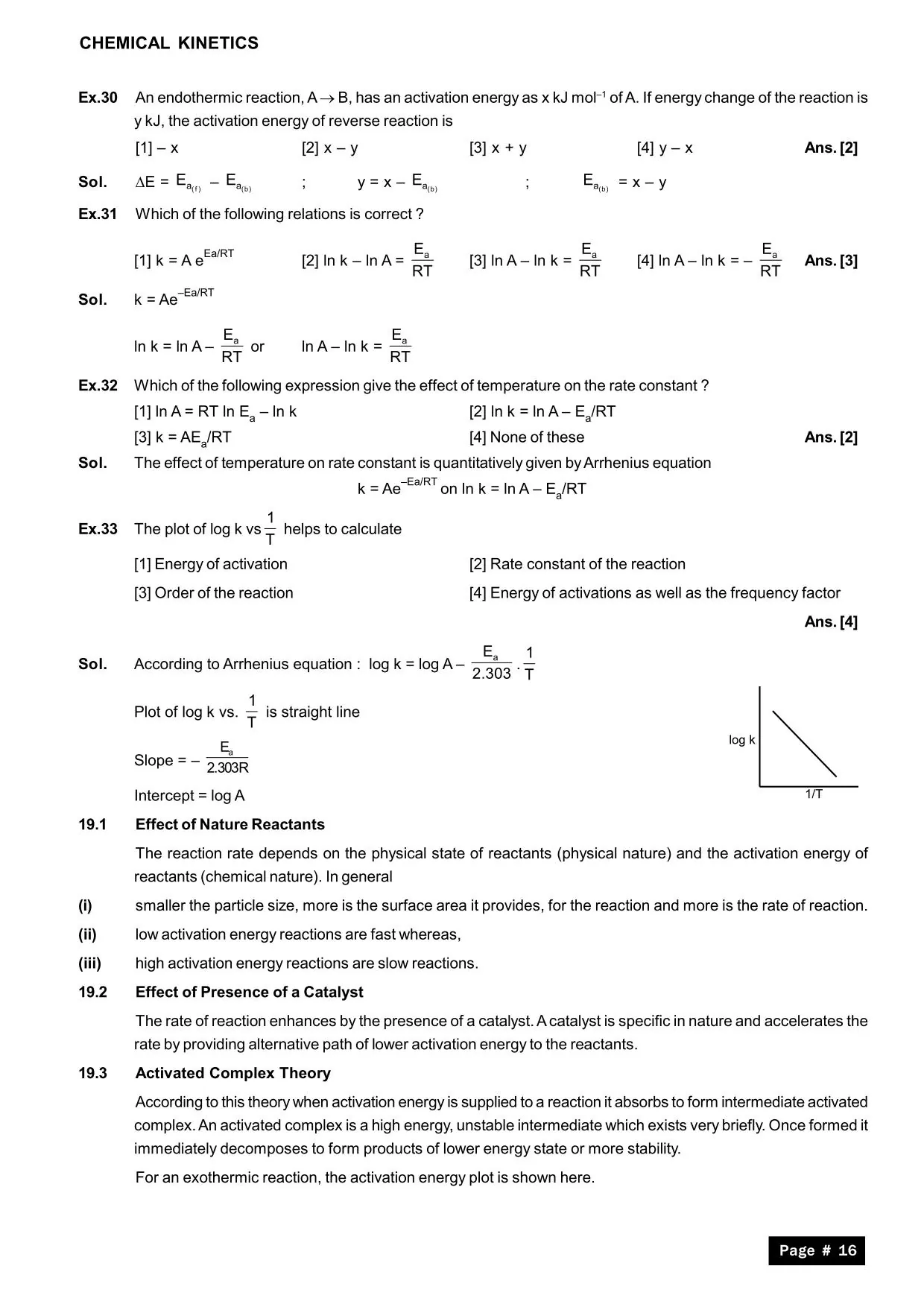
In JEE Main numericals, the two-temperature form of the Arrhenius equation is most commonly used: log(k₂/k₁) = (Ea/2.303R)(1/T₁ − 1/T₂). You are typically given two rate constants at two temperatures and asked to calculate activation energy. Always convert temperature to Kelvin and use R = 8.314 J mol⁻¹ K⁻¹.
What is the order of reaction and how is it determined?
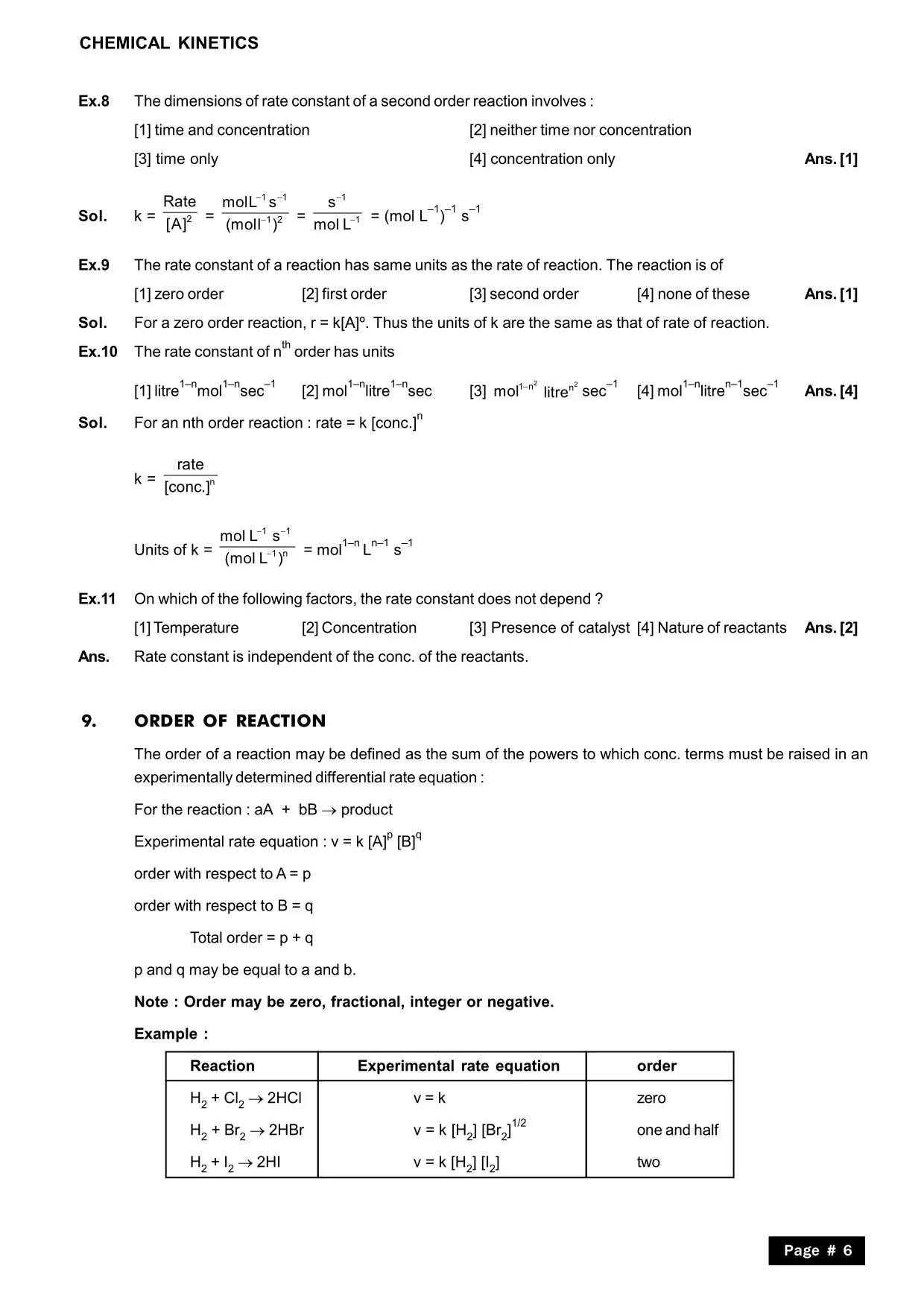
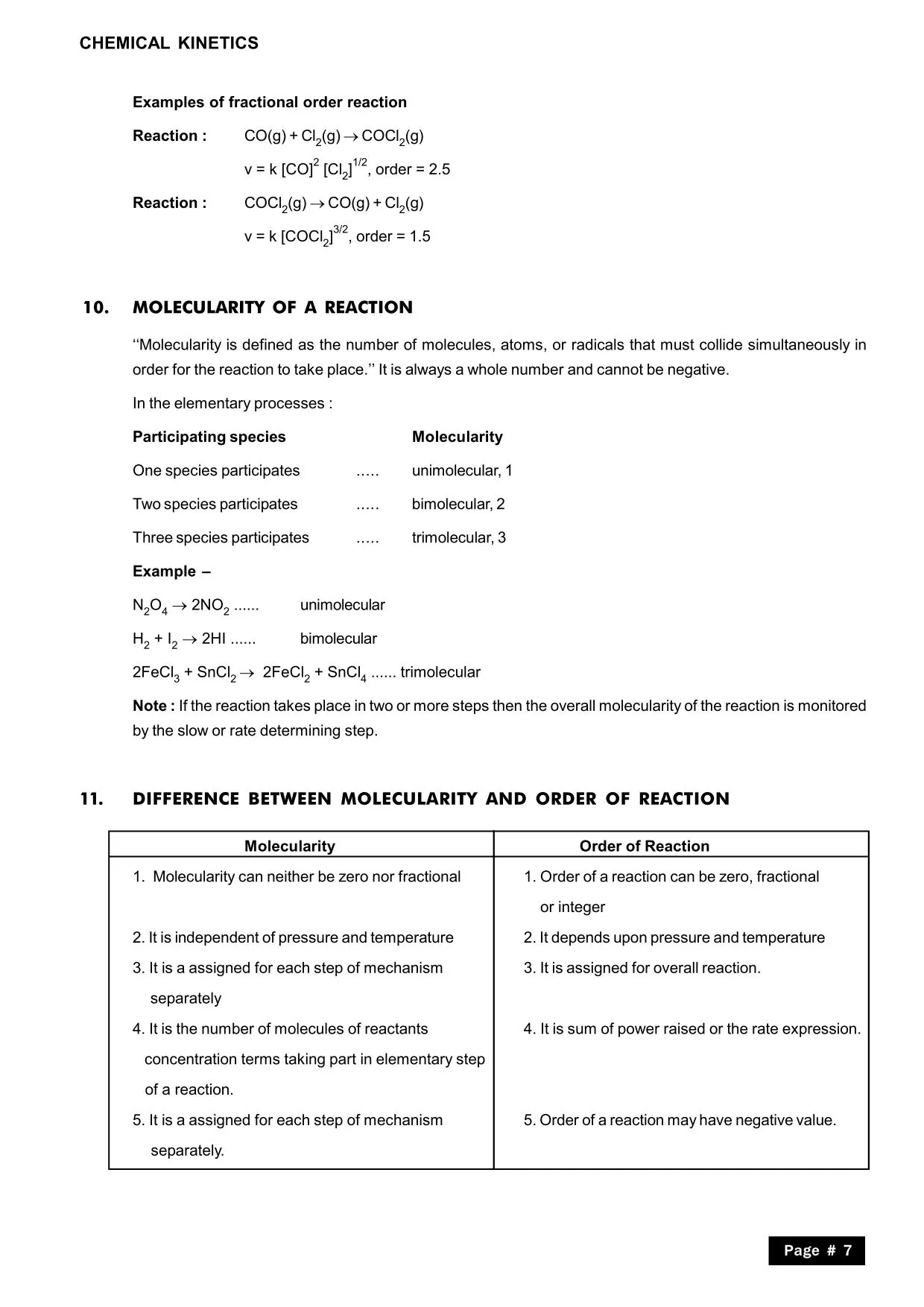
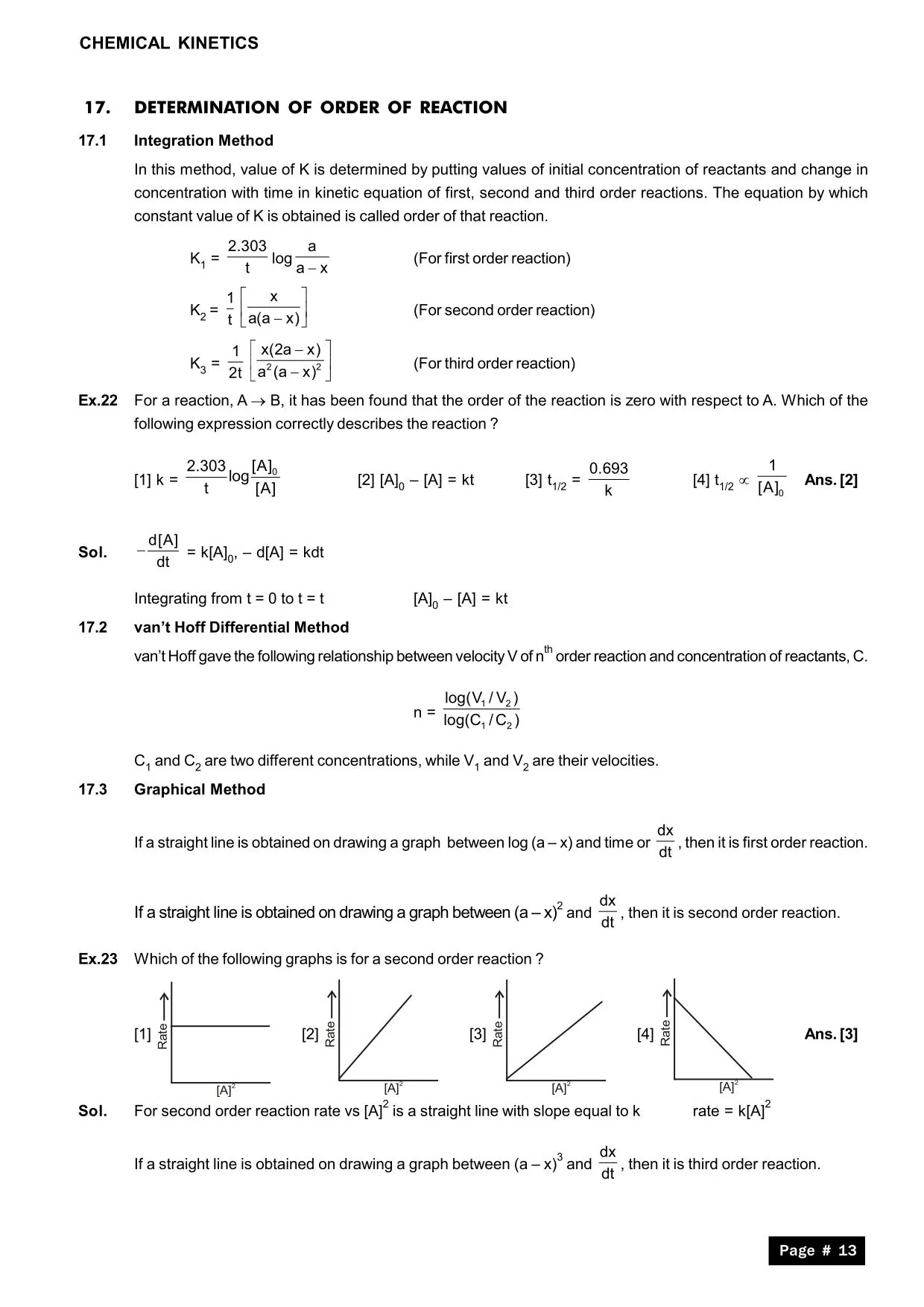
The order of reaction is the sum of the powers to which reactant concentrations are raised in the experimentally determined rate law. It is found by the initial rate method — measuring how the rate changes as each reactant concentration is varied independently, while keeping others constant. Order can be zero, fractional, or a positive integer.
What is chemical kinetics in Class 12 Chemistry?
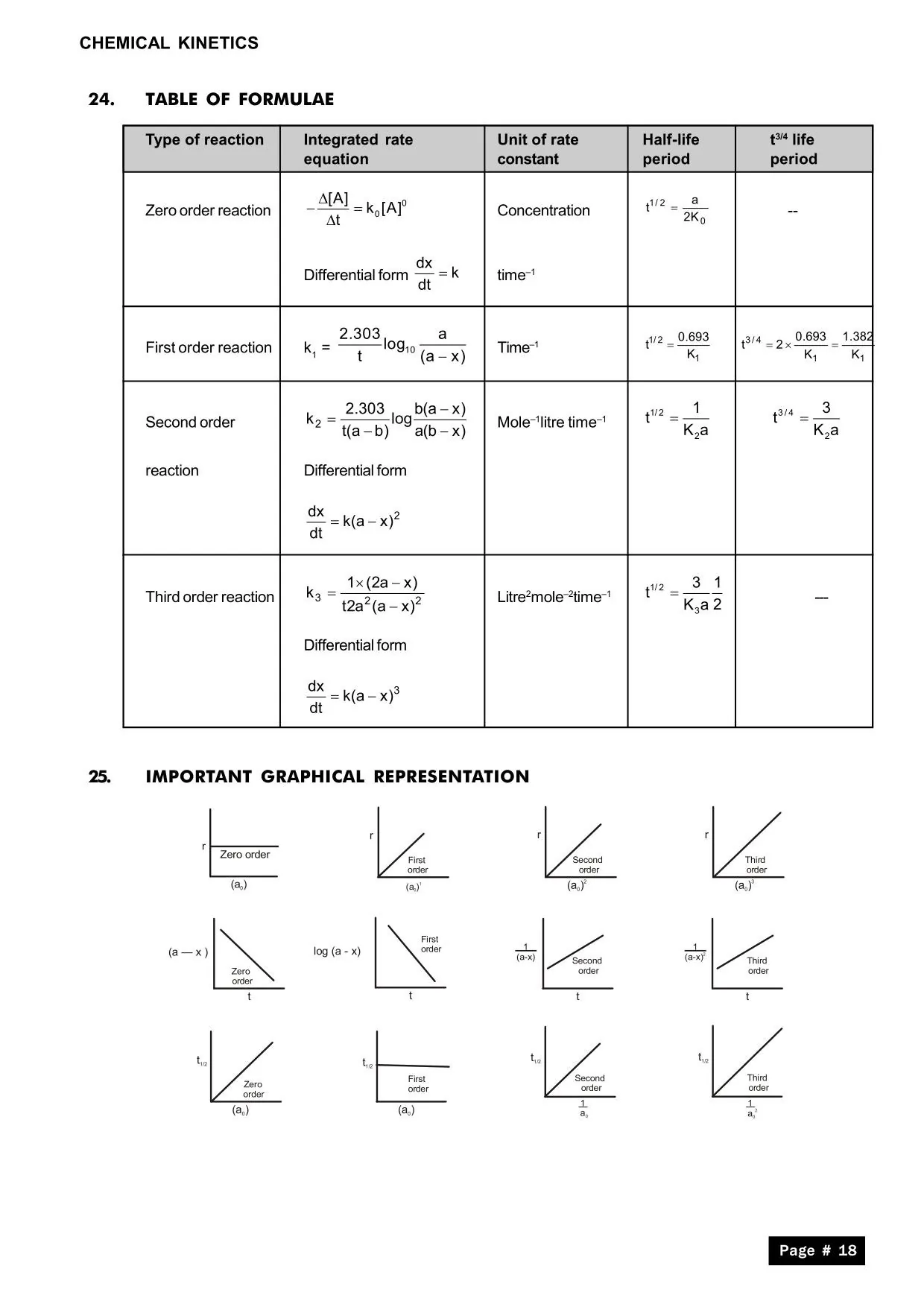
Chemical kinetics is the study of reaction rates and the factors that control them. In Class 12, the chapter covers rate laws, rate constants, order and molecularity, integrated rate equations for zero-order, first-order, and second-order reactions, half-life calculations, and the Arrhenius equation for temperature dependence of reaction rates.
Is Chemical Kinetics important for JEE Advanced?
Yes. JEE Advanced tests Chemical Kinetics through mechanism-based questions, multi-correct MCQs, and integer-type problems. Typical Advanced-level questions ask you to derive the rate law from a proposed mechanism, identify the rate-determining step, or interpret a complex graph. These require deeper conceptual understanding beyond NCERT, which is covered in eSaral's IIT Bombay faculty-led video lectures.
Which topics in Chemical Kinetics carry the most marks in NEET?
NEET most frequently tests: (1) factors affecting rate of reaction, (2) units of rate constant for different orders, (3) half-life of first-order reactions, (4) graphical identification of reaction order, and (5) the effect of a catalyst on activation energy. Together these five topic areas account for approximately 70–80% of NEET questions from this chapter based on 2019–2024 paper analysis.
What is the difference between rate of reaction and rate constant?
The rate of reaction changes as the reaction proceeds (because reactant concentrations change), while the rate constant k is fixed for a given reaction at a given temperature. Rate = k[A]^x[B]^y — the rate depends on concentration, but k does not. Only temperature (and the presence of a catalyst) changes the value of k.
What is the half-life of a first-order reaction?
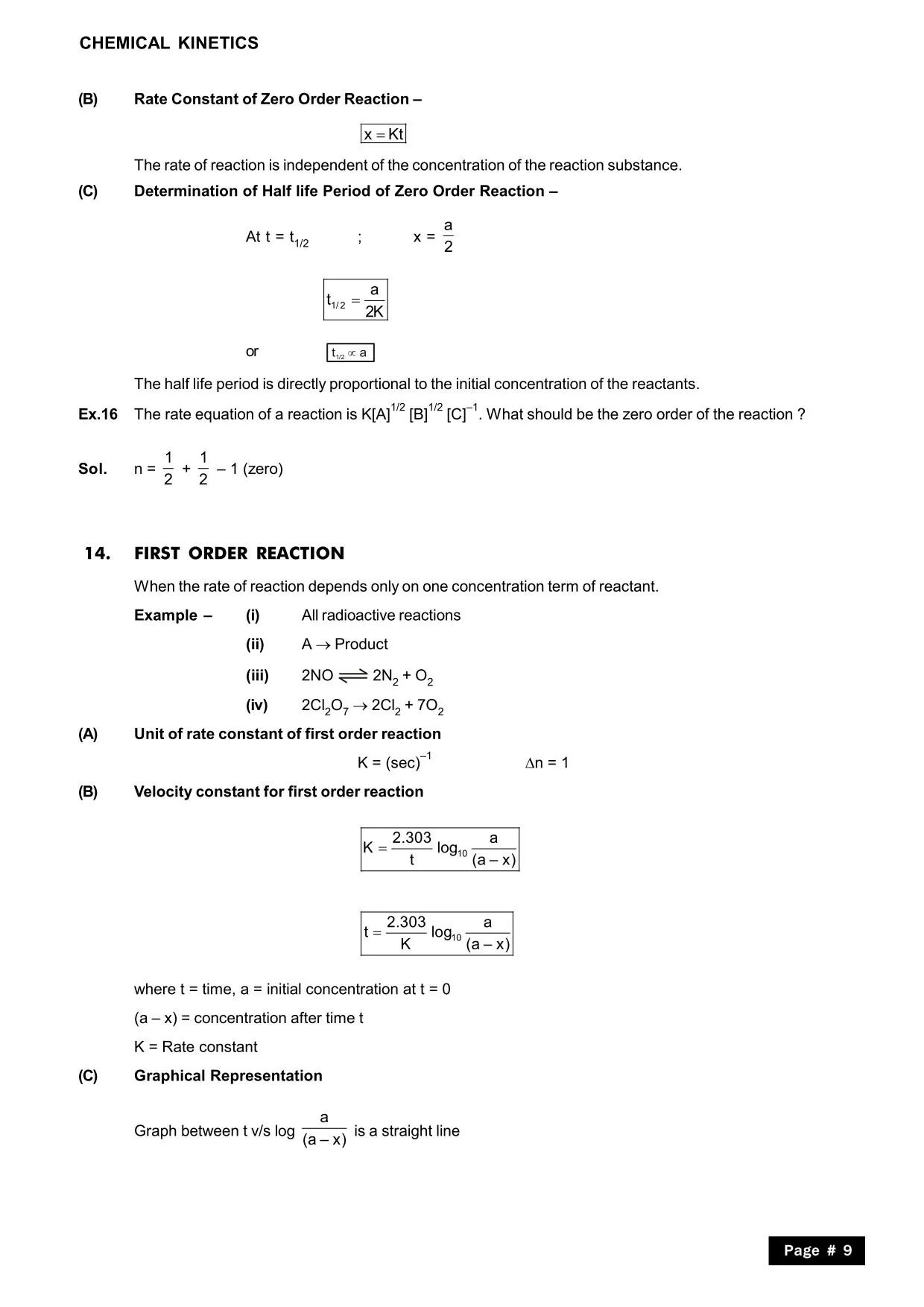
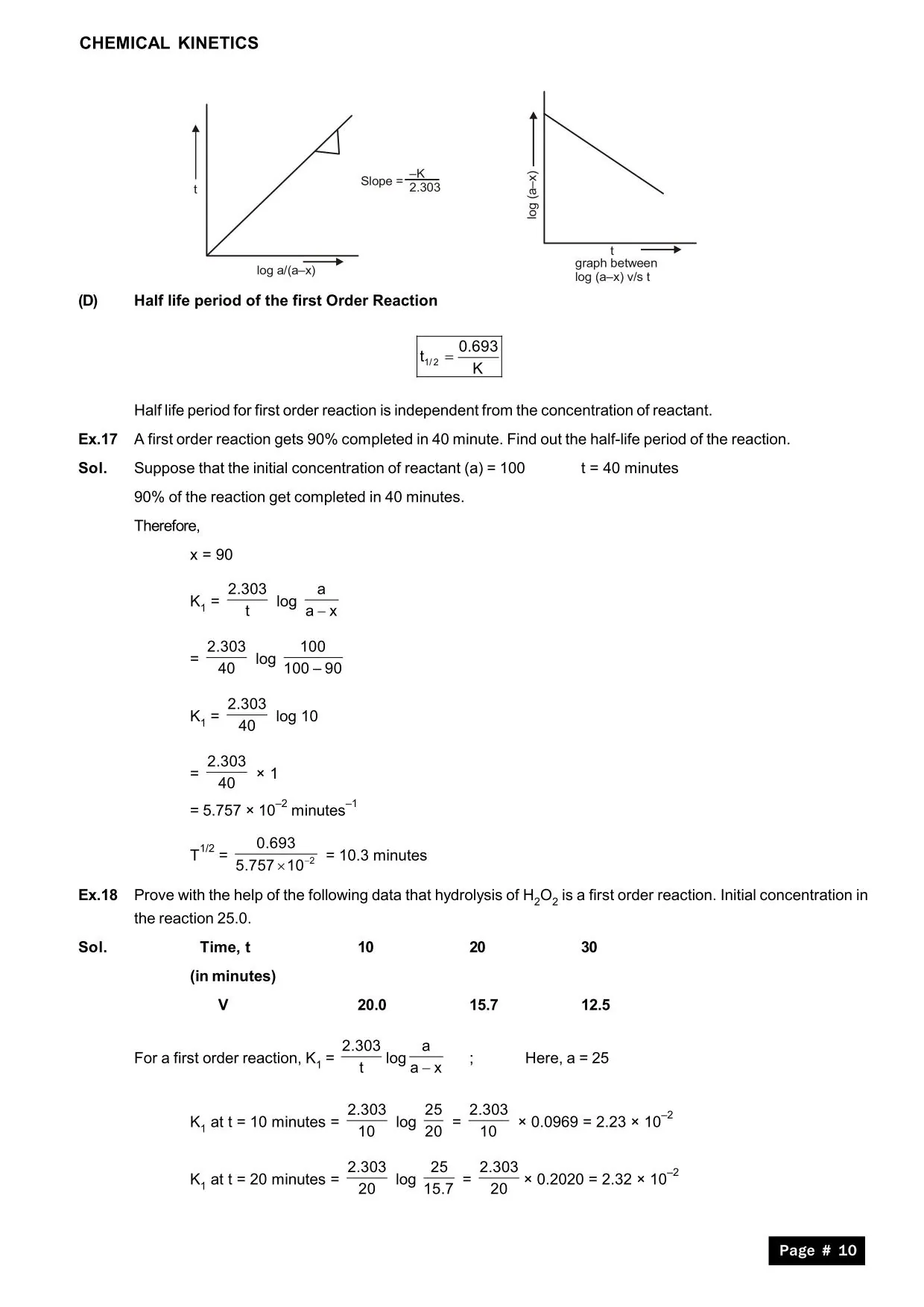
For a first-order reaction, t₁/₂ = 0.693/k, where k is the rate constant. The key feature is that this half-life is completely independent of the initial concentration of the reactant. This means the time taken for 50% of the reaction to complete is the same regardless of how much reactant you start with.