Current Electricity- NEET Previous Year Questions with Complete Solutions
Current Electricity is a high-scoring NEET Physics chapter contributing 2–3 questions yearly, focusing on predictable concepts like Ohm’s law, Kirchhoff’s laws, Wheatstone bridge, potentiometer, and resistance combinations, while this page provides complete previous year questions, formulas, concept explanations, and a step-by-step preparation strategy.
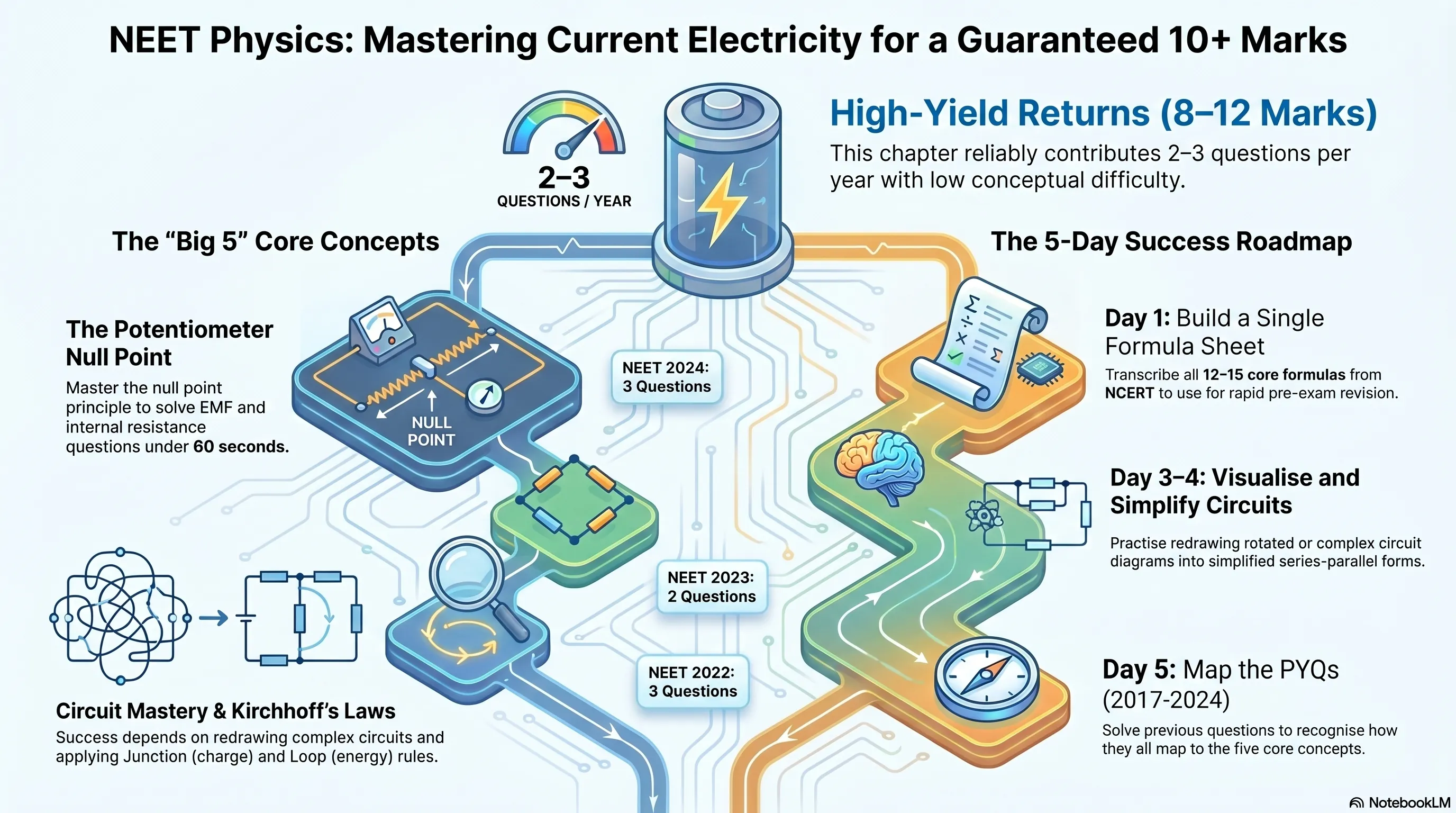
Table of Contents
- Why Current Electricity Is a Must-Master Chapter for NEET
- NEET Previous Year Questions — Current Electricity with Solutions
- Chapter Overview: Topics and Subtopics
- NEET Weightage Analysis: Year-Wise Question Count
- Key Concepts and Formulas You Must Know
- How to Study Current Electricity for Maximum NEET Marks

eSaral › NEET › Current Electricity- NEET Previous Year Questions with Complete Solutions

Why Current Electricity Is a Must-Master Chapter for NEET
Current Electricity (Class 12, Chapter 3) is one of the most formula-dense and numerically active chapters in NEET Physics. Unlike some Physics chapters that test primarily conceptual understanding, Current Electricity demands both — and it rewards students who have practised sufficiently.
The chapter contributes 2–3 questions in almost every NEET paper, making it worth 8–12 marks reliably. More importantly, these questions span a predictable set of question types: resistance calculations, circuit analysis using Kirchhoff's laws, Wheatstone bridge balance conditions, and potentiometer working principles.
A student who has solved all NEET PYQs from this chapter will recognise the pattern of every question that appears — because NTA has not introduced a genuinely novel question type from this chapter in over a decade.
💡 Expert Tip by eSaral Physics Faculty: "Current Electricity questions in NEET are not hard — they are tricky. The numbers change, the circuit diagrams rotate, but the underlying concept being tested is almost always one of five things: Ohm's law, series-parallel resistance, Kirchhoff's laws, Wheatstone bridge, or potentiometer. Master those five and you will get full marks from this chapter every time."
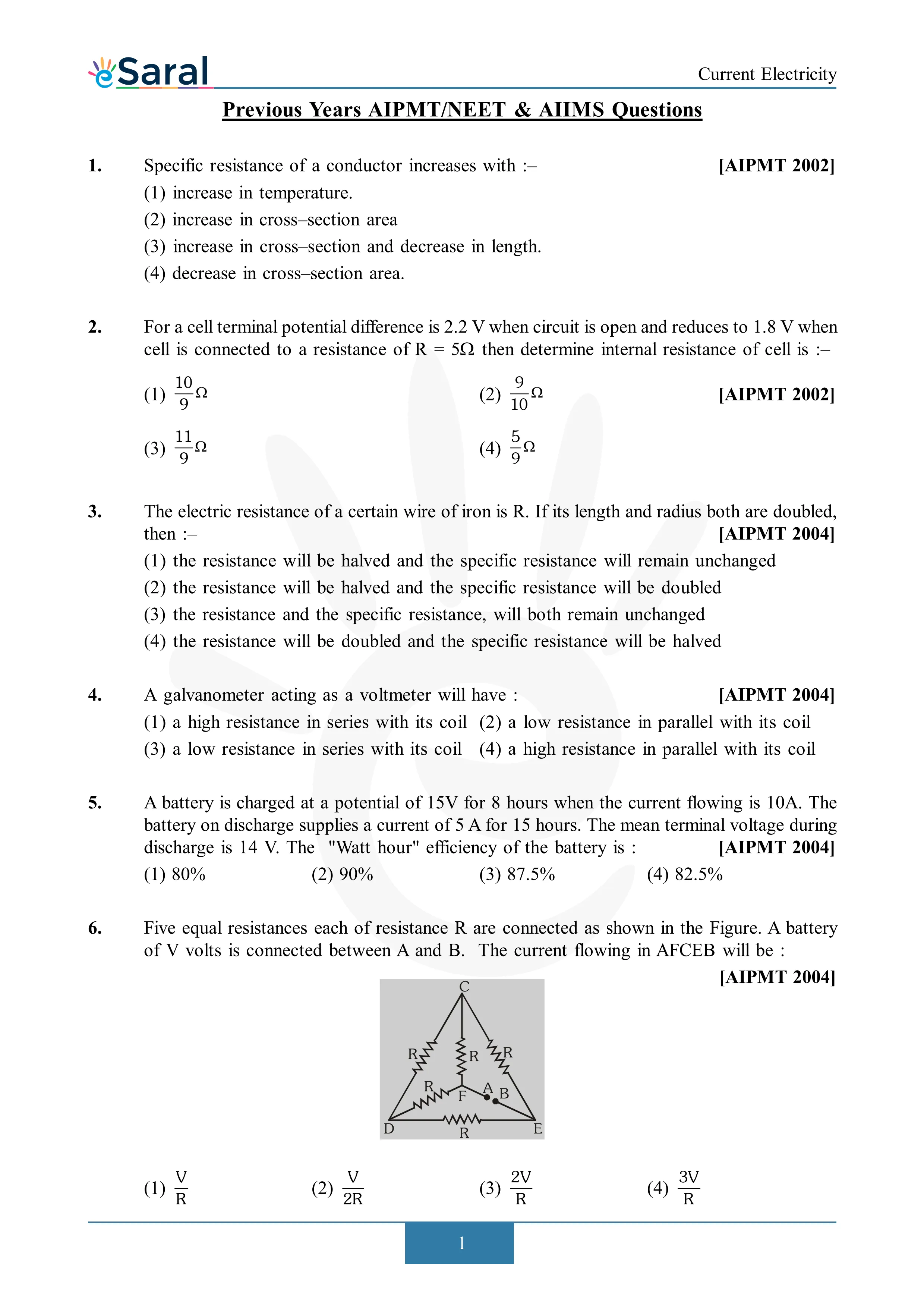
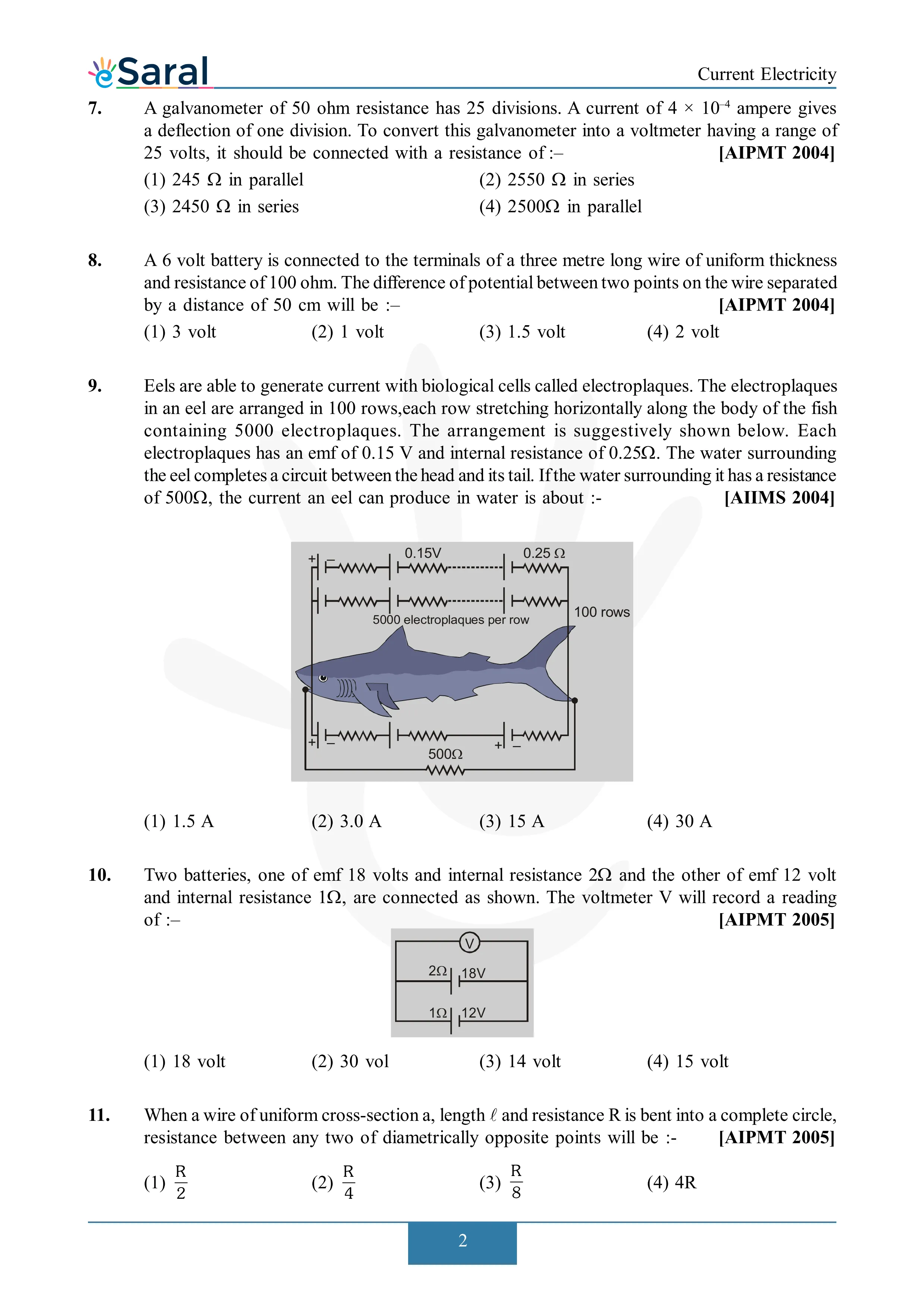
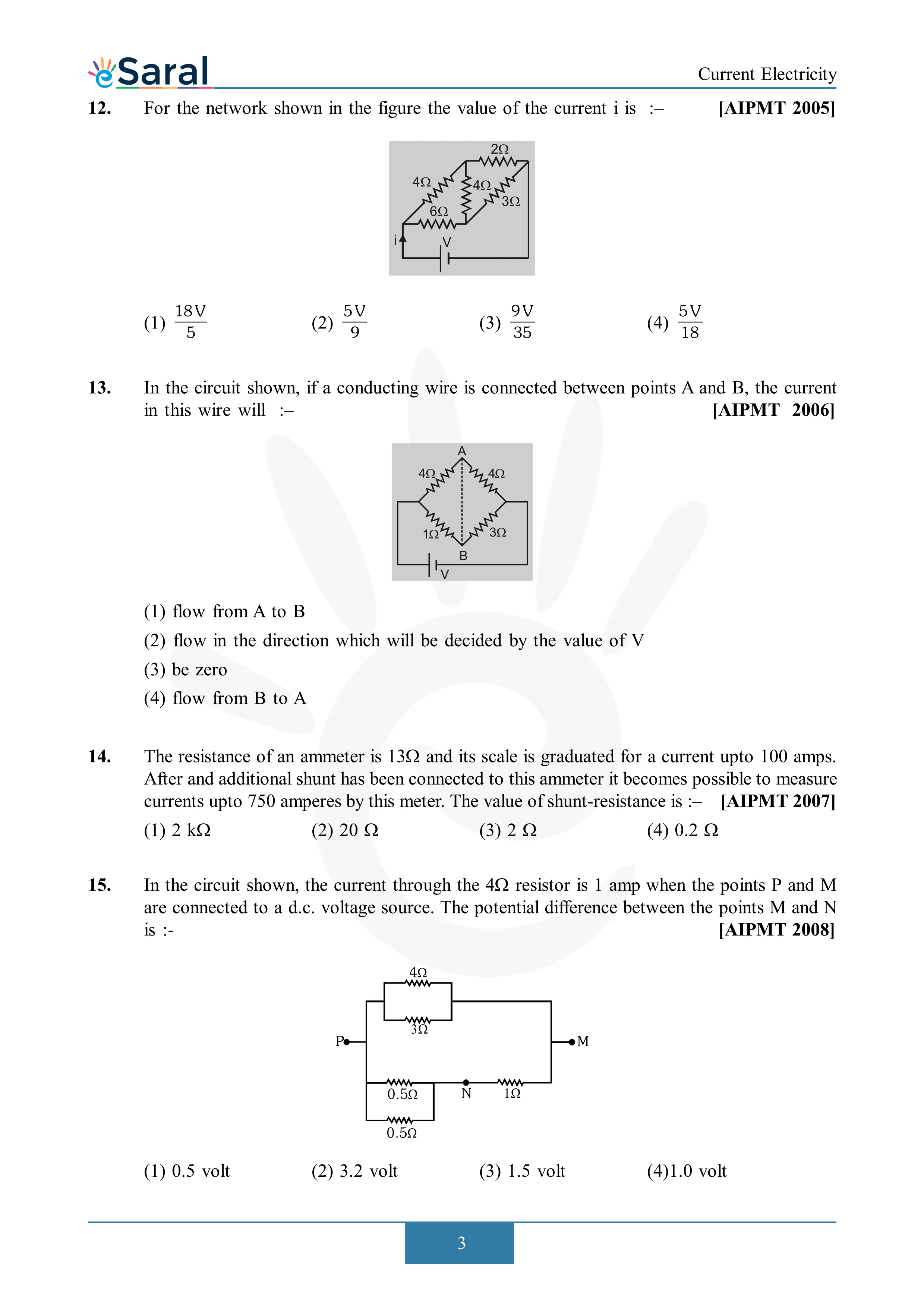
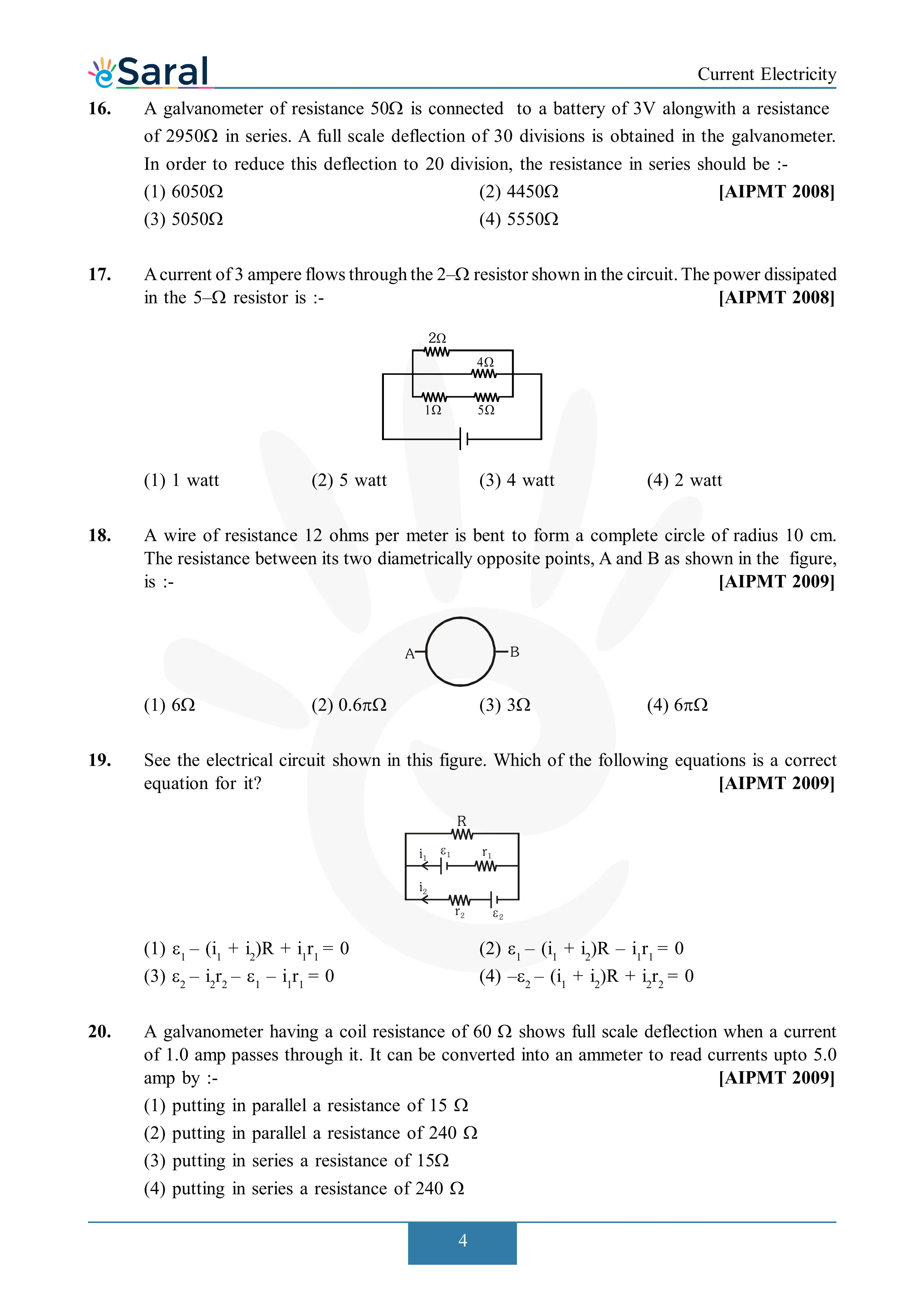
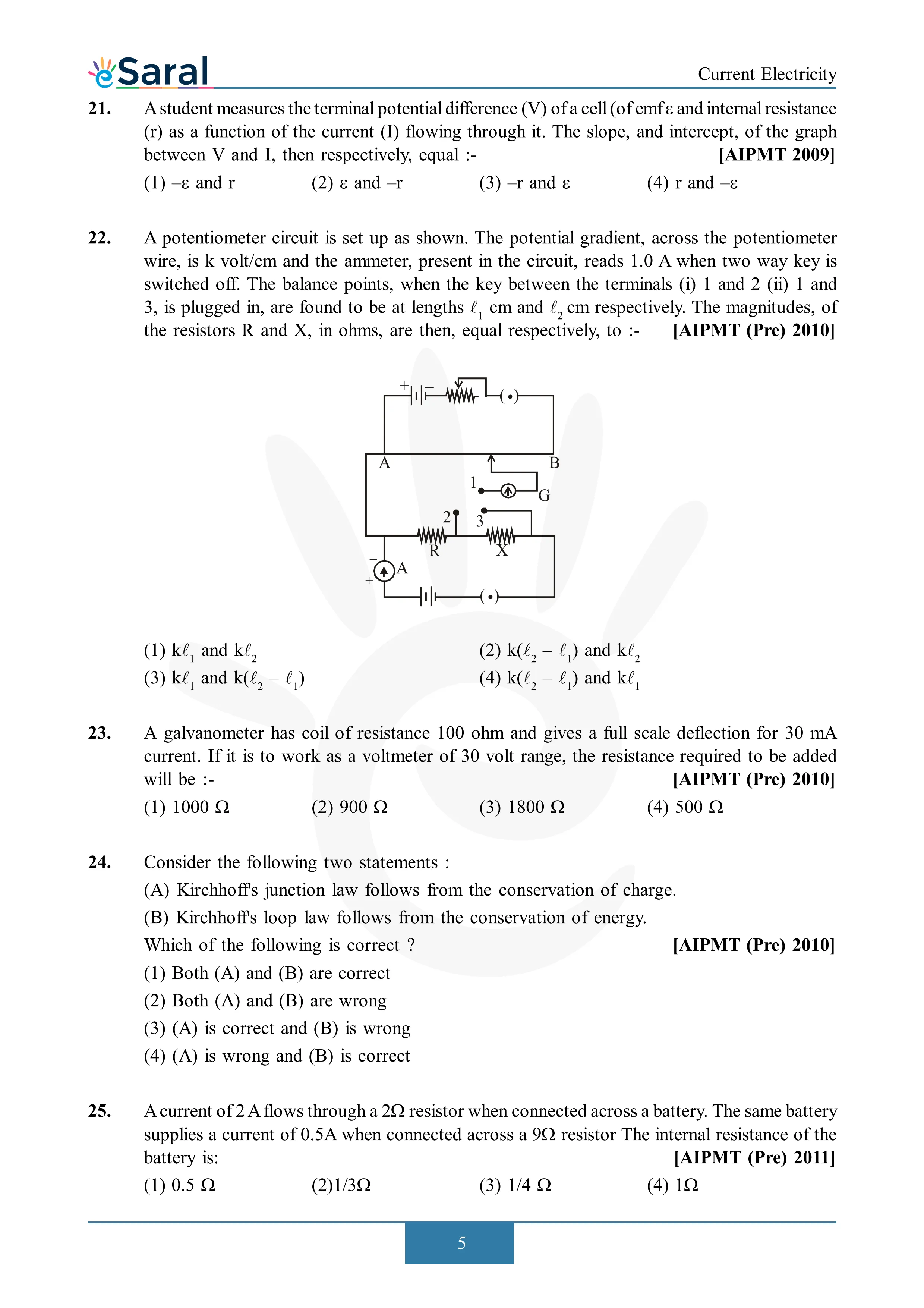
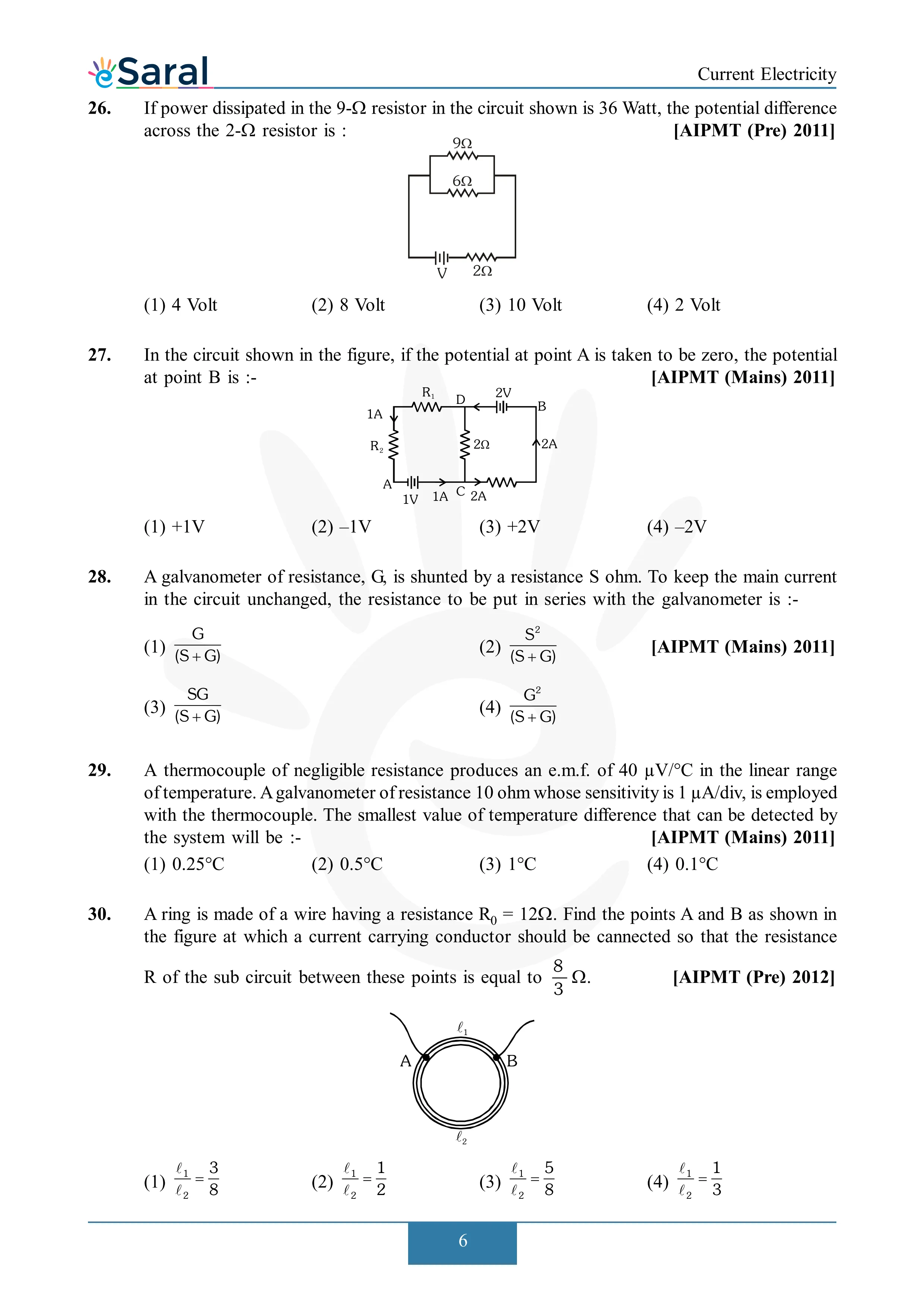
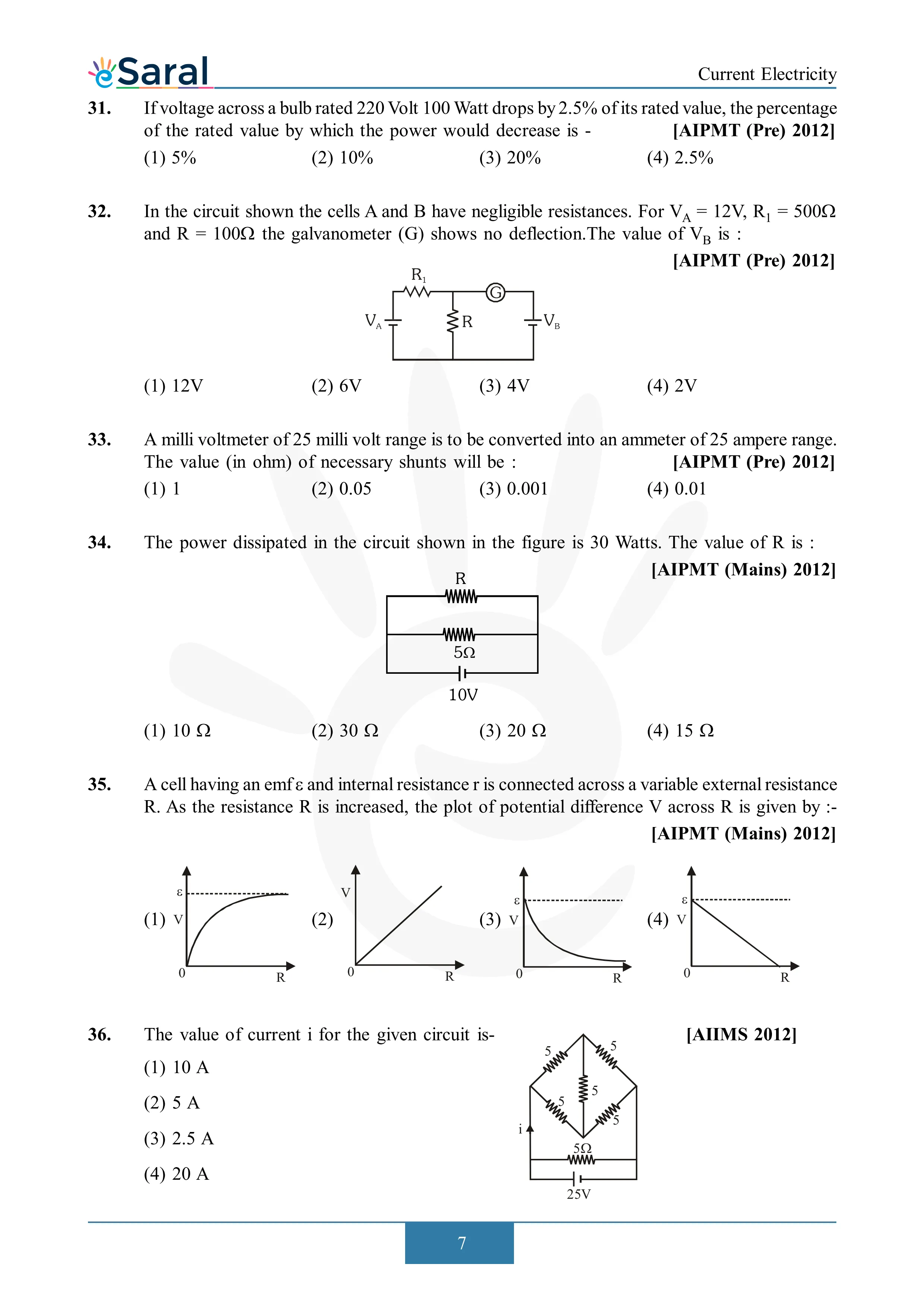
NEET Previous Year Questions — Current Electricity with Solutions
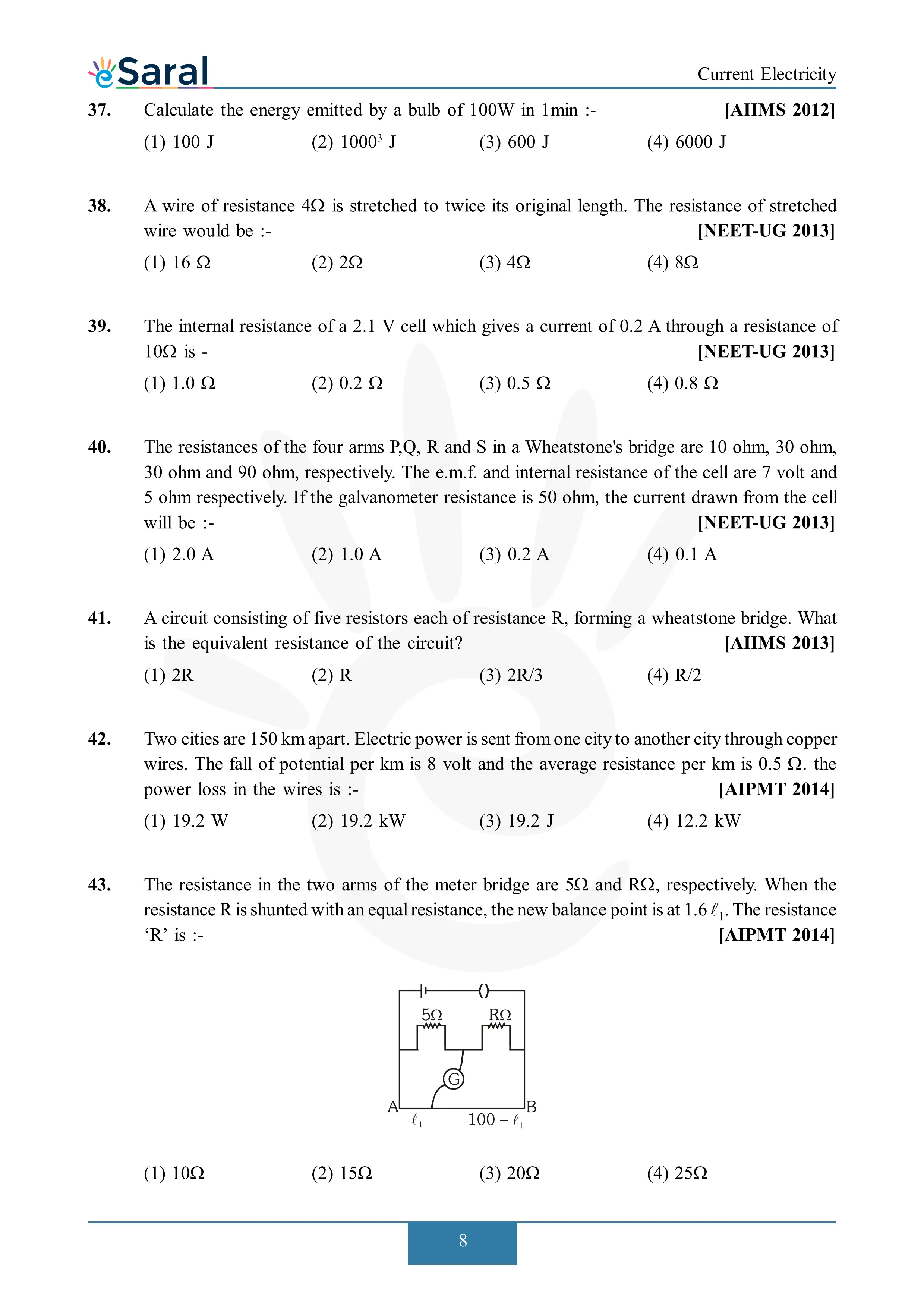
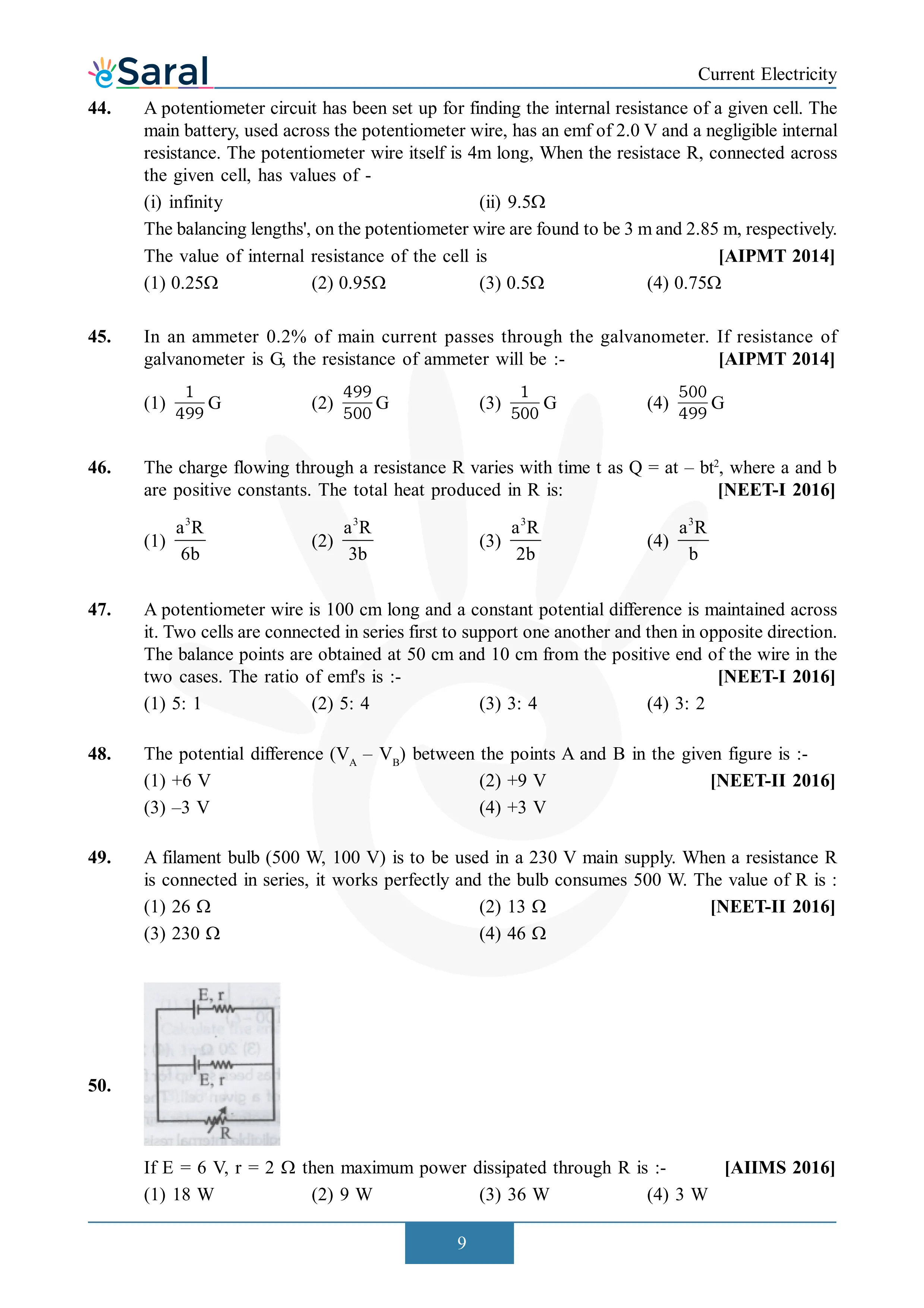
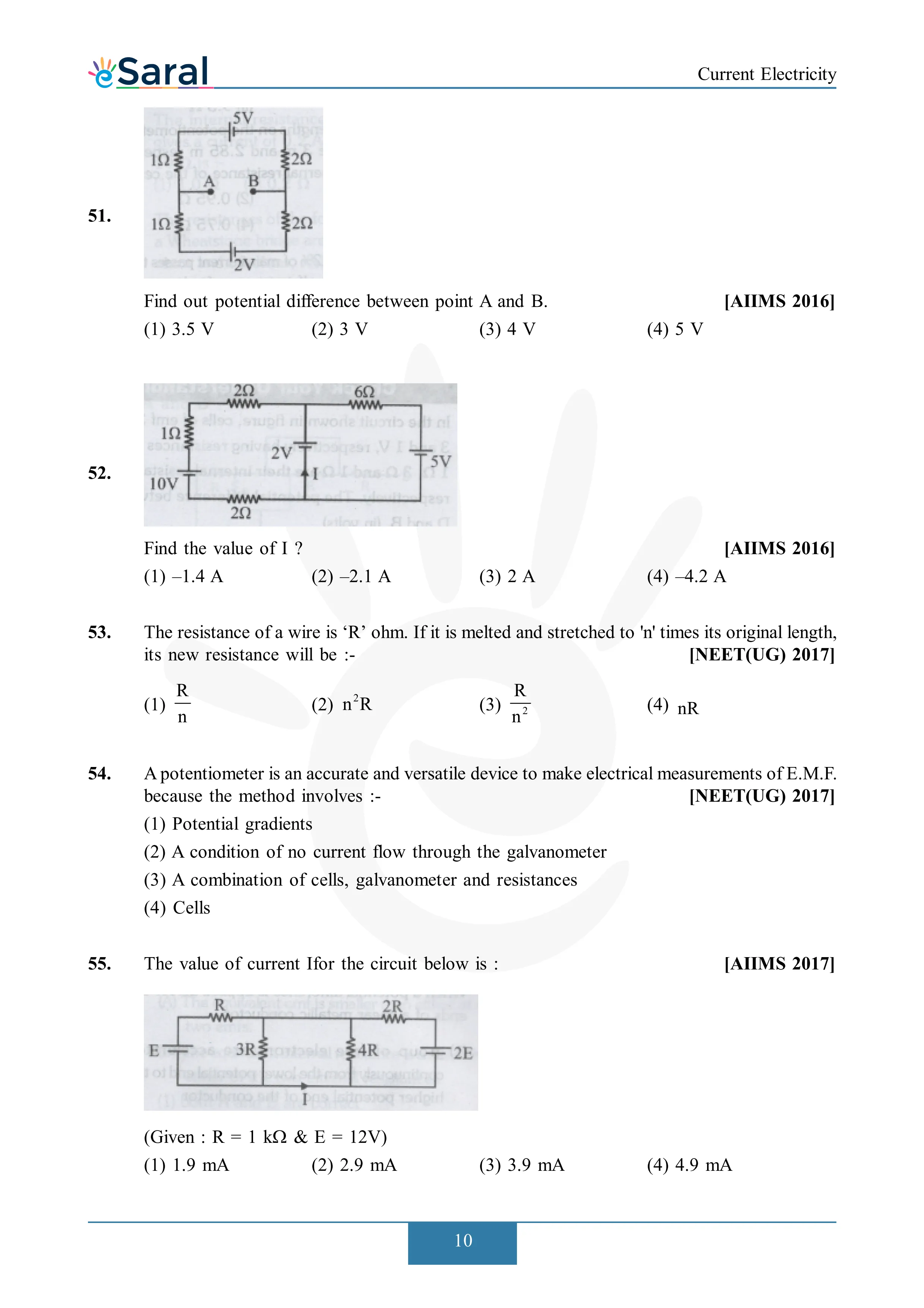
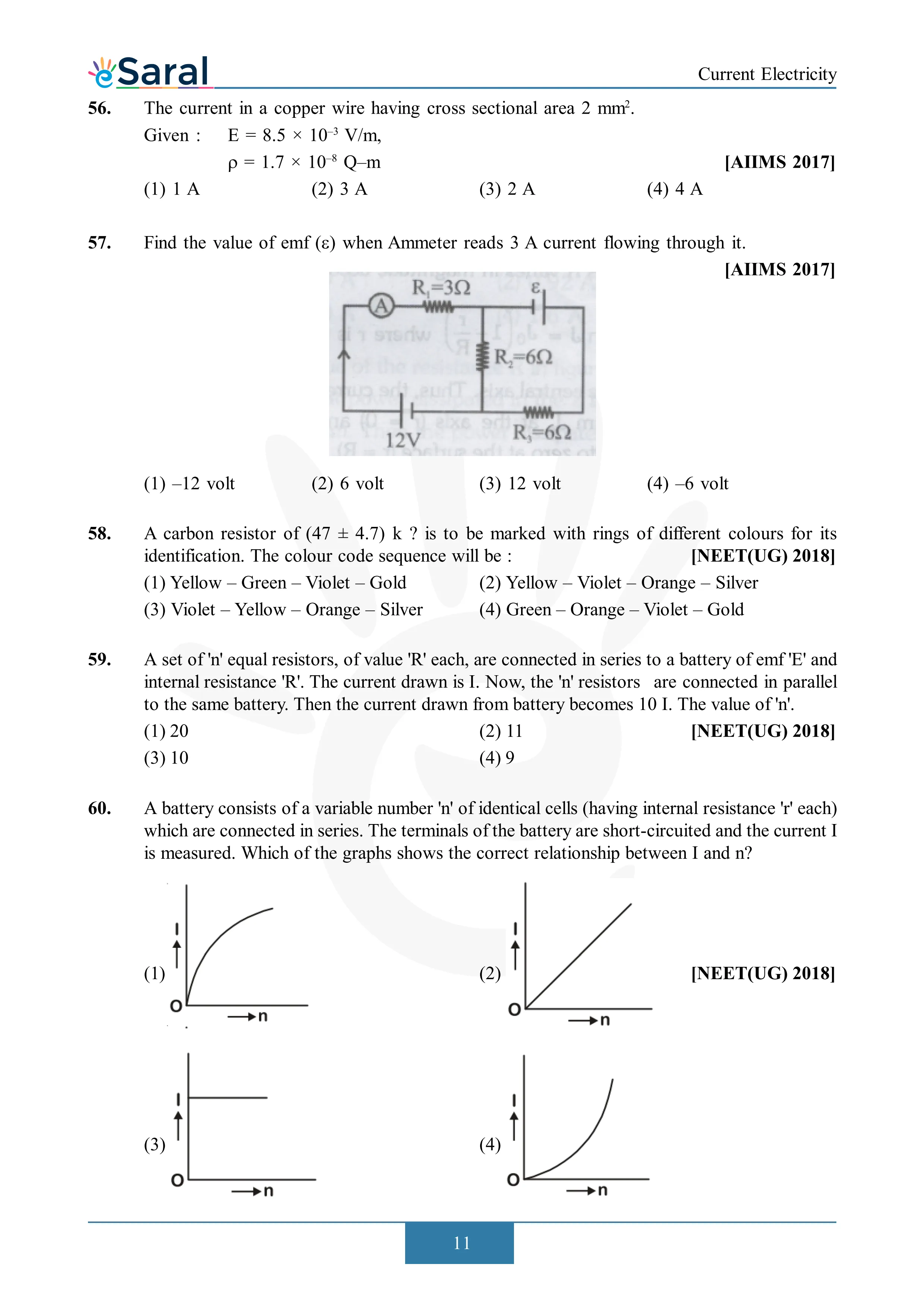
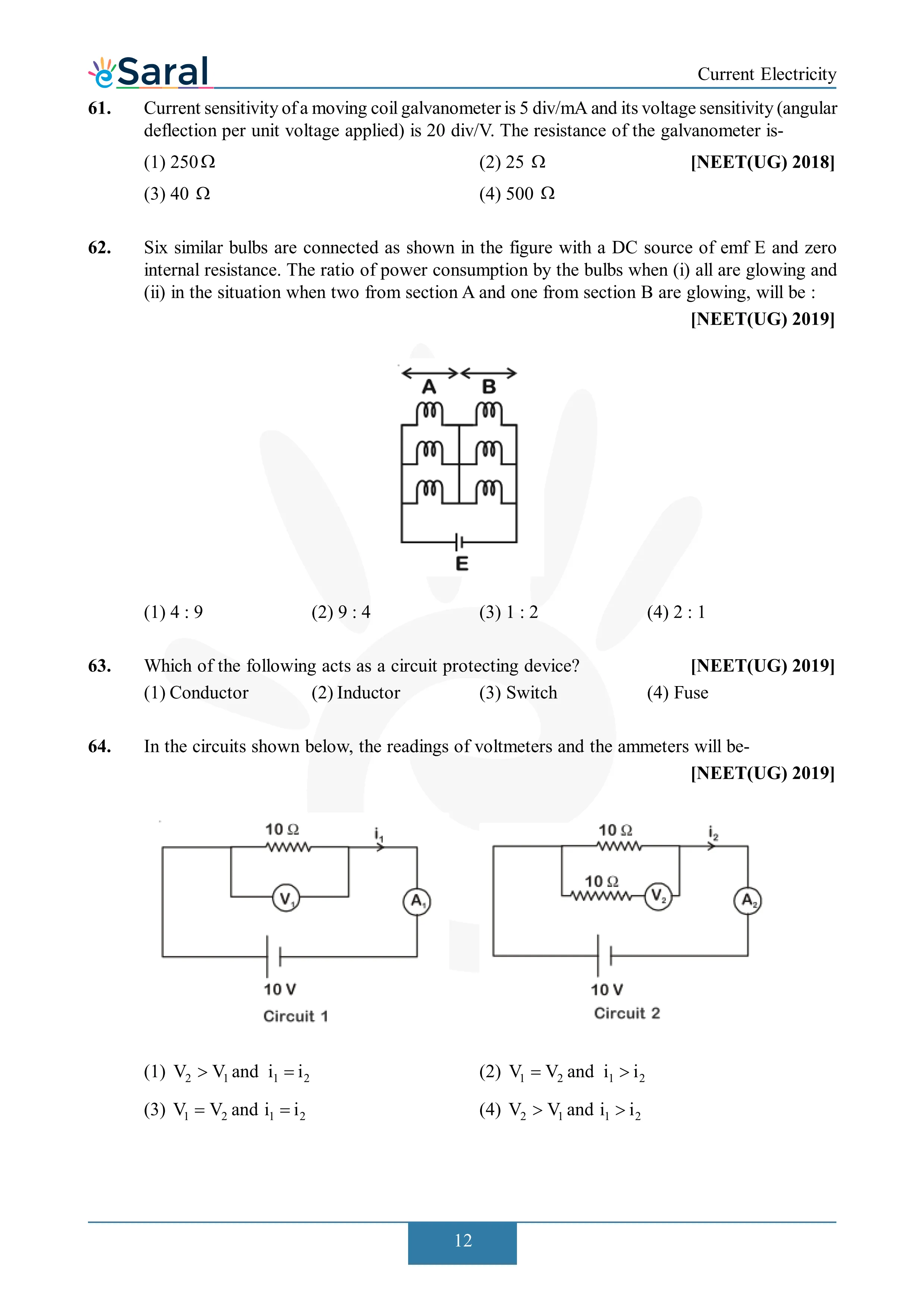
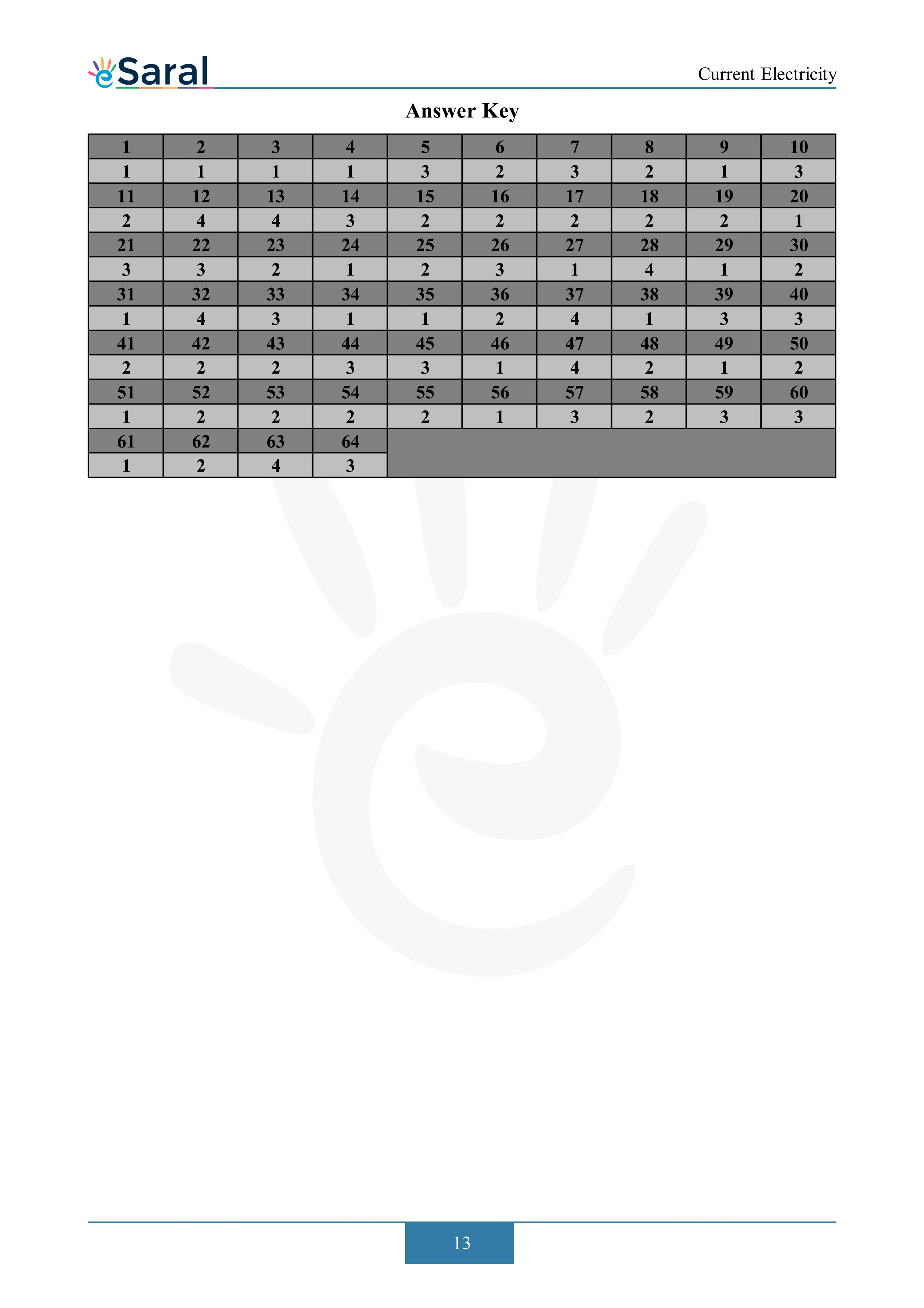
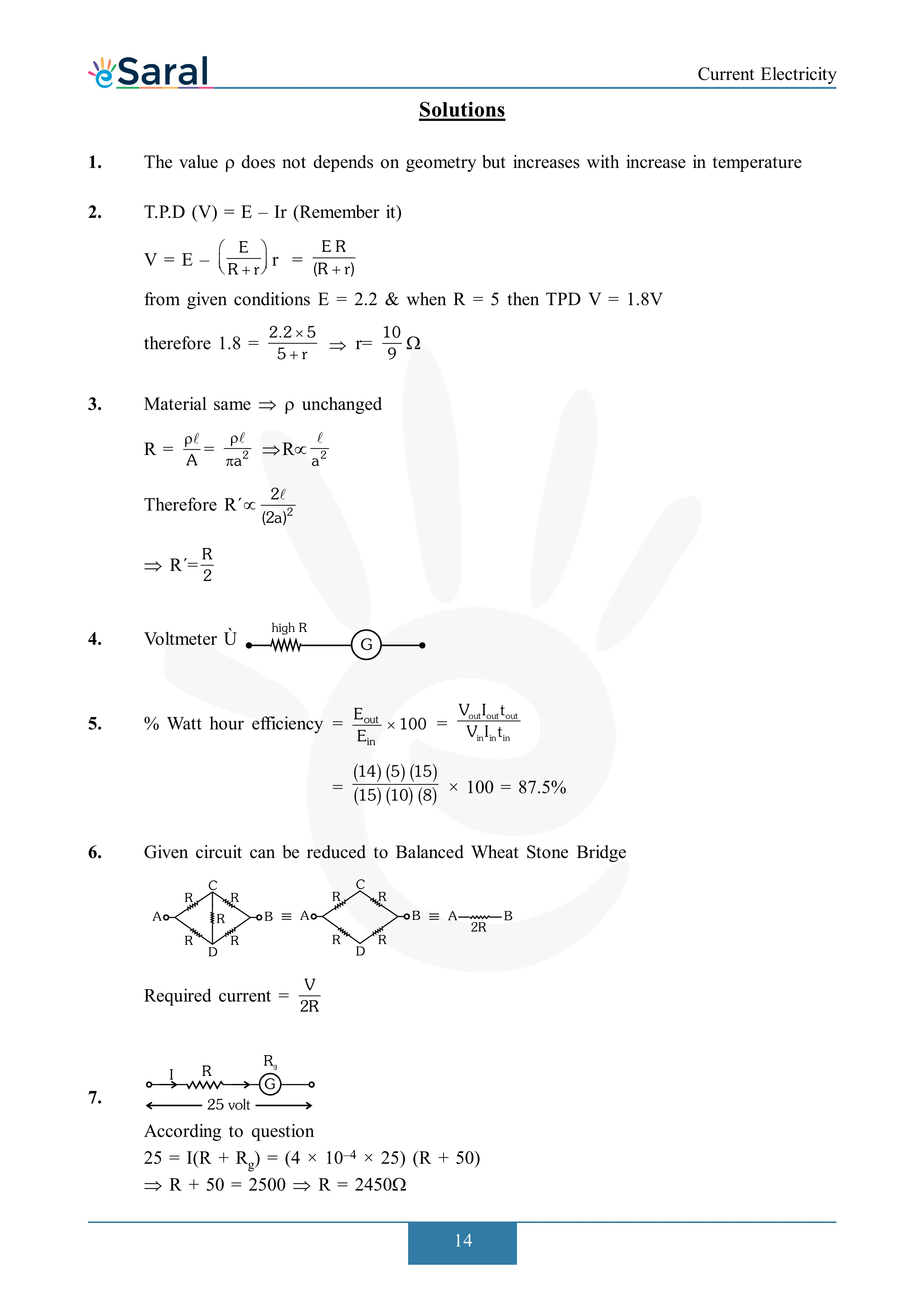
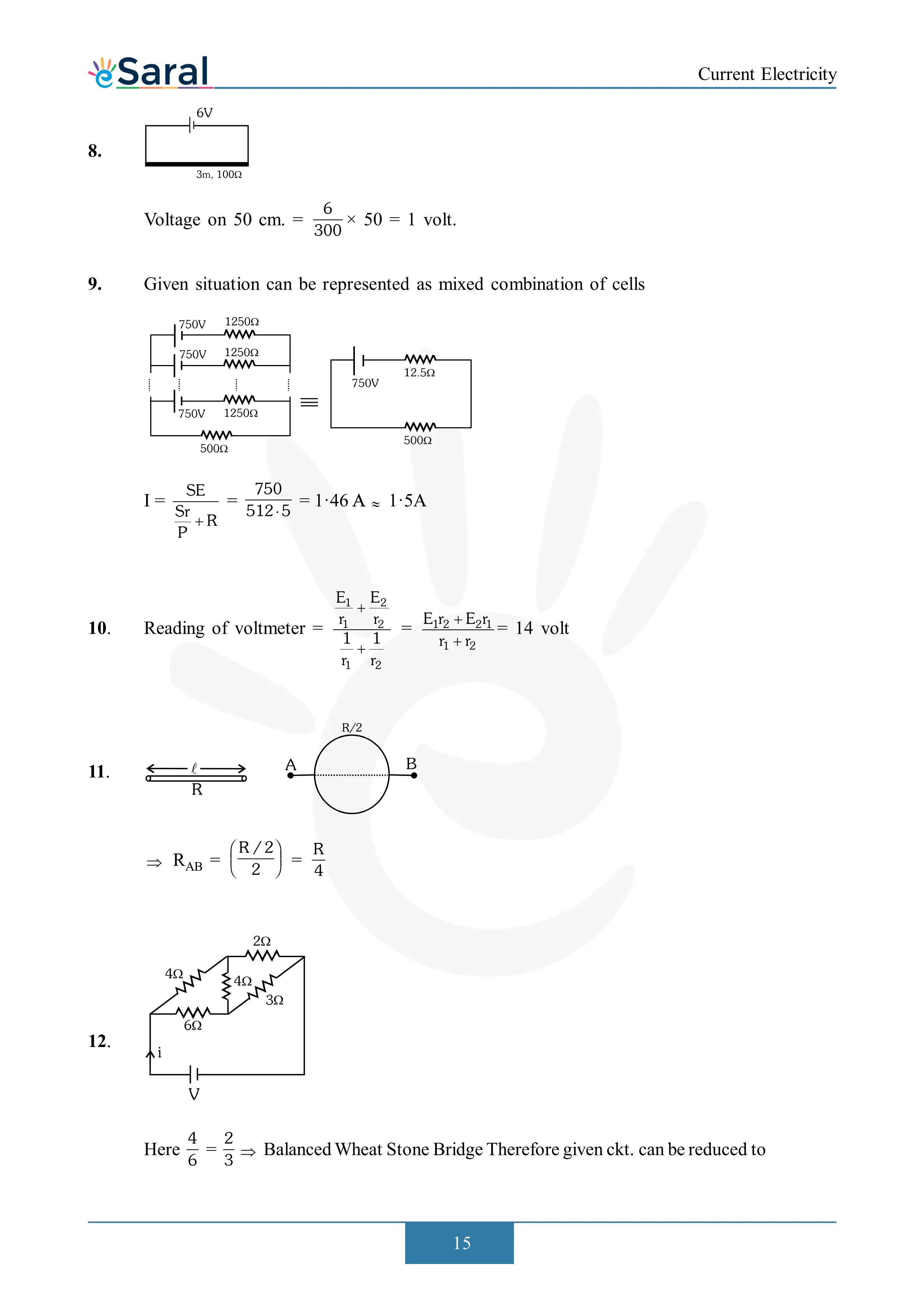
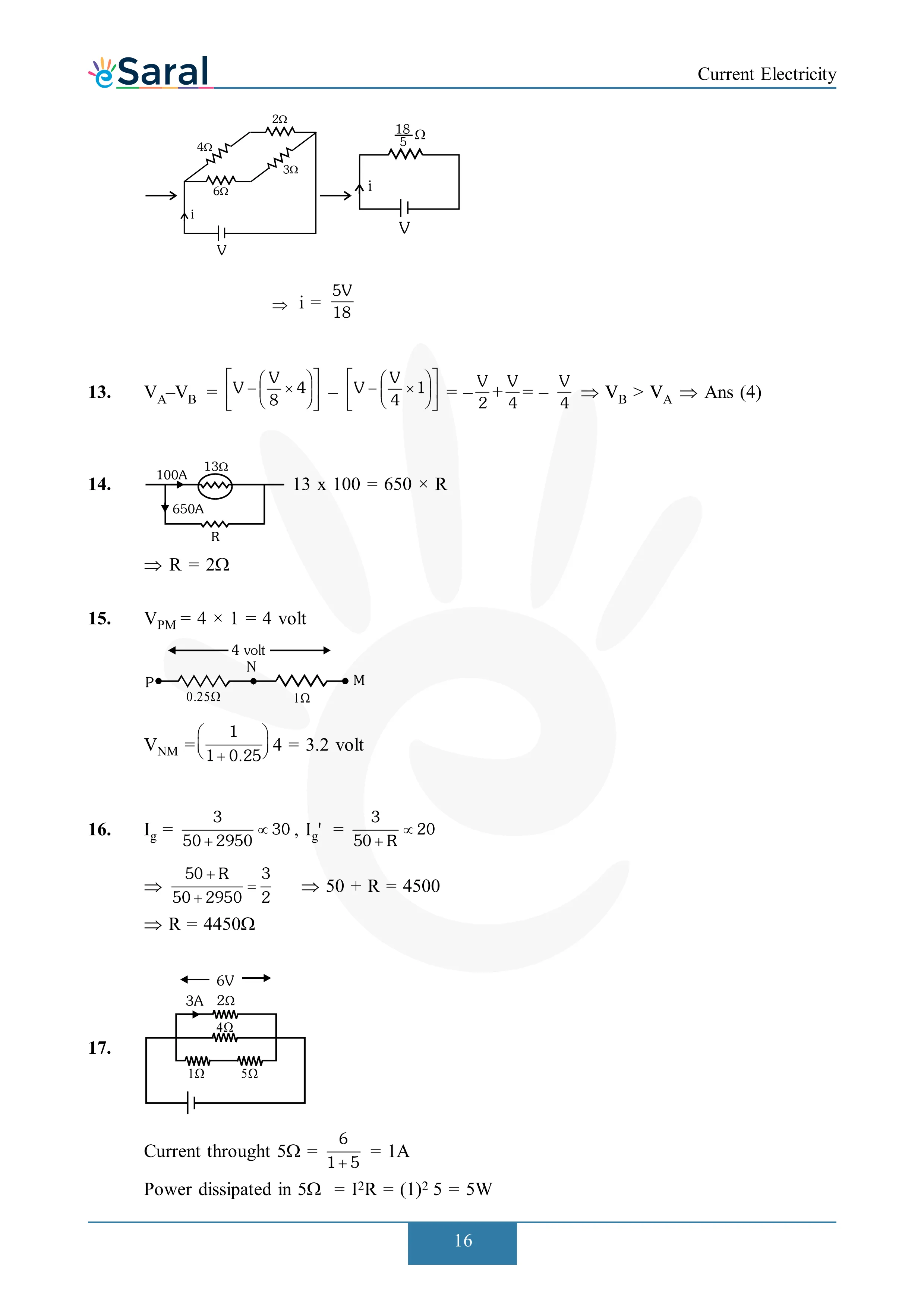
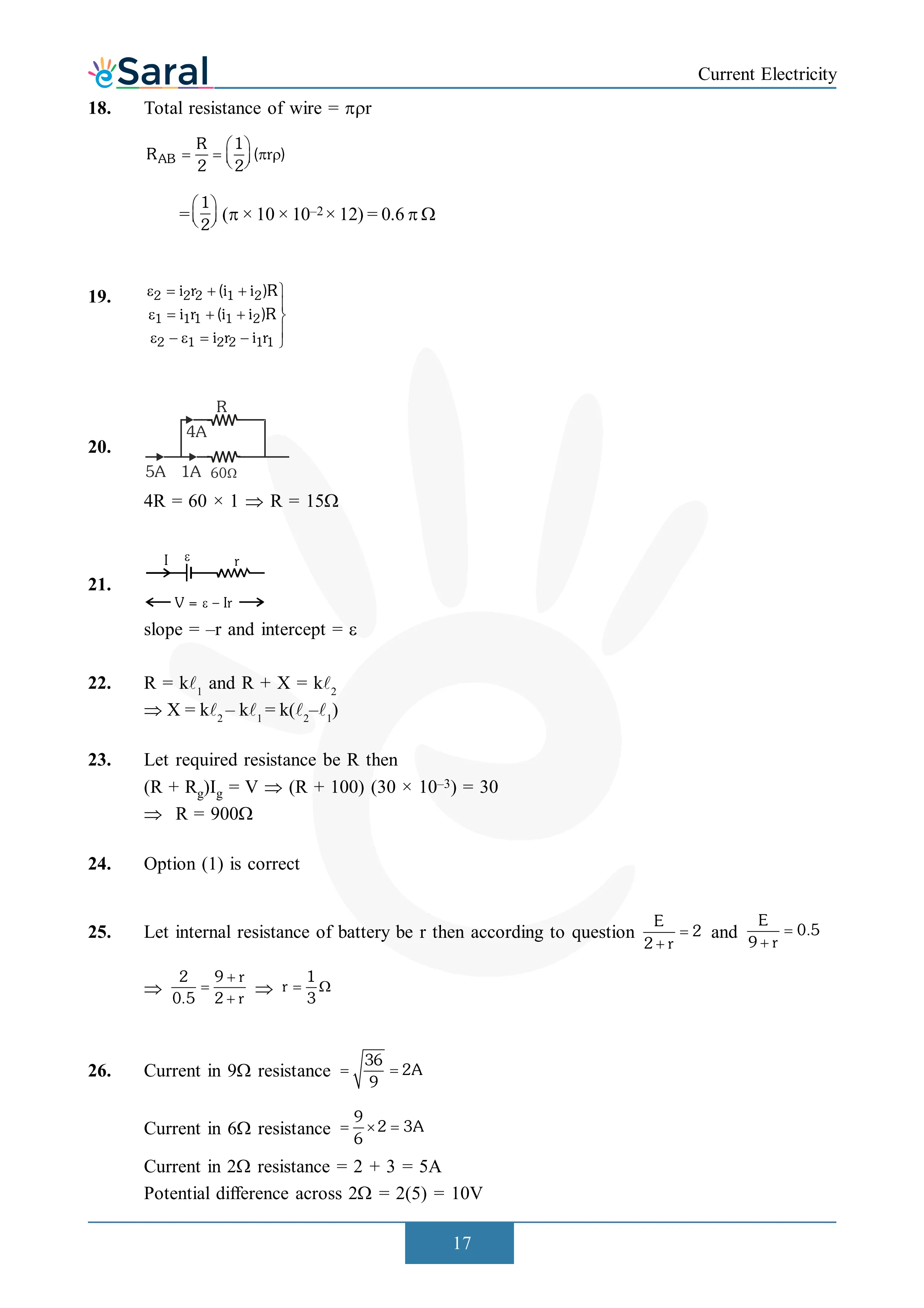
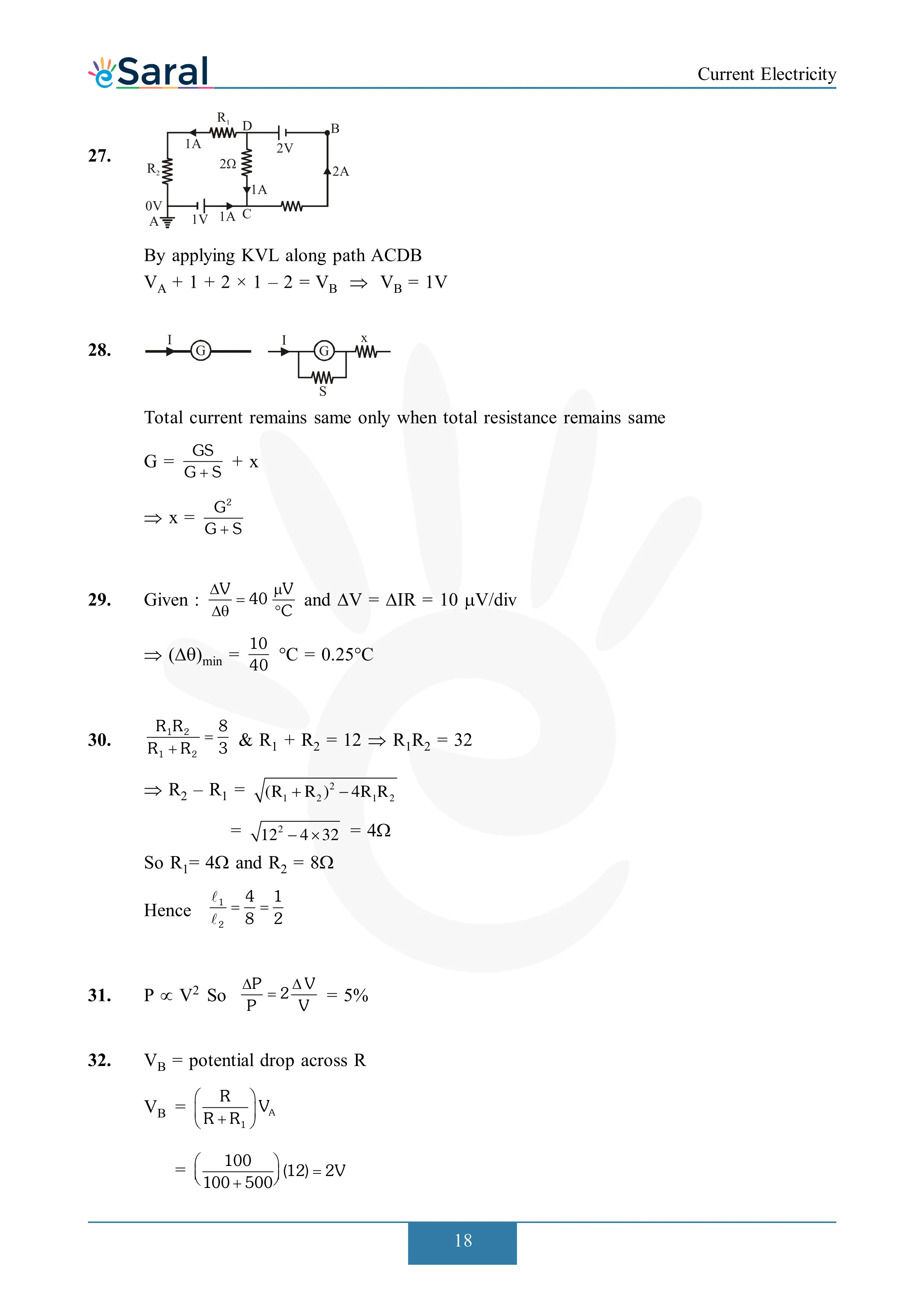
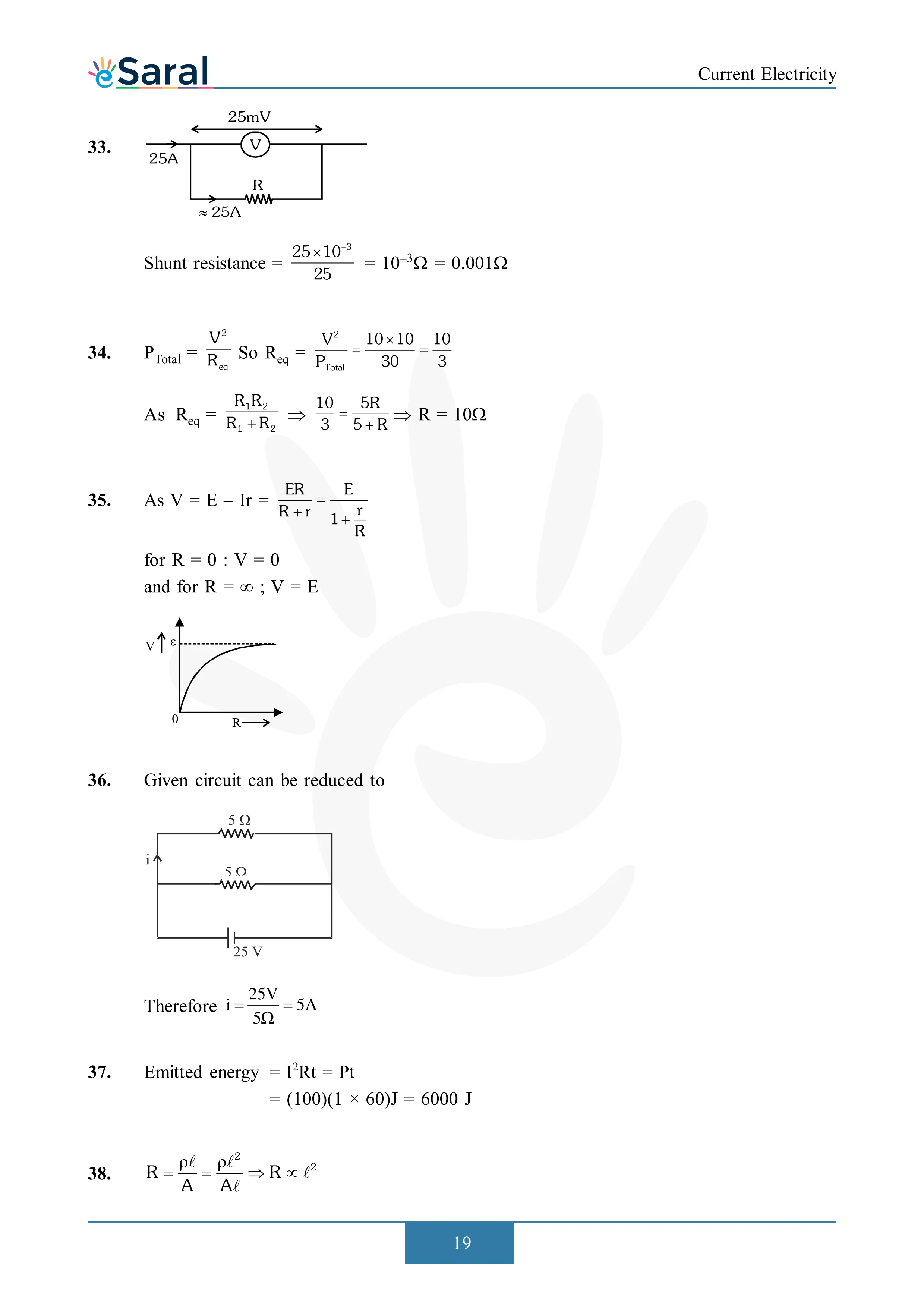
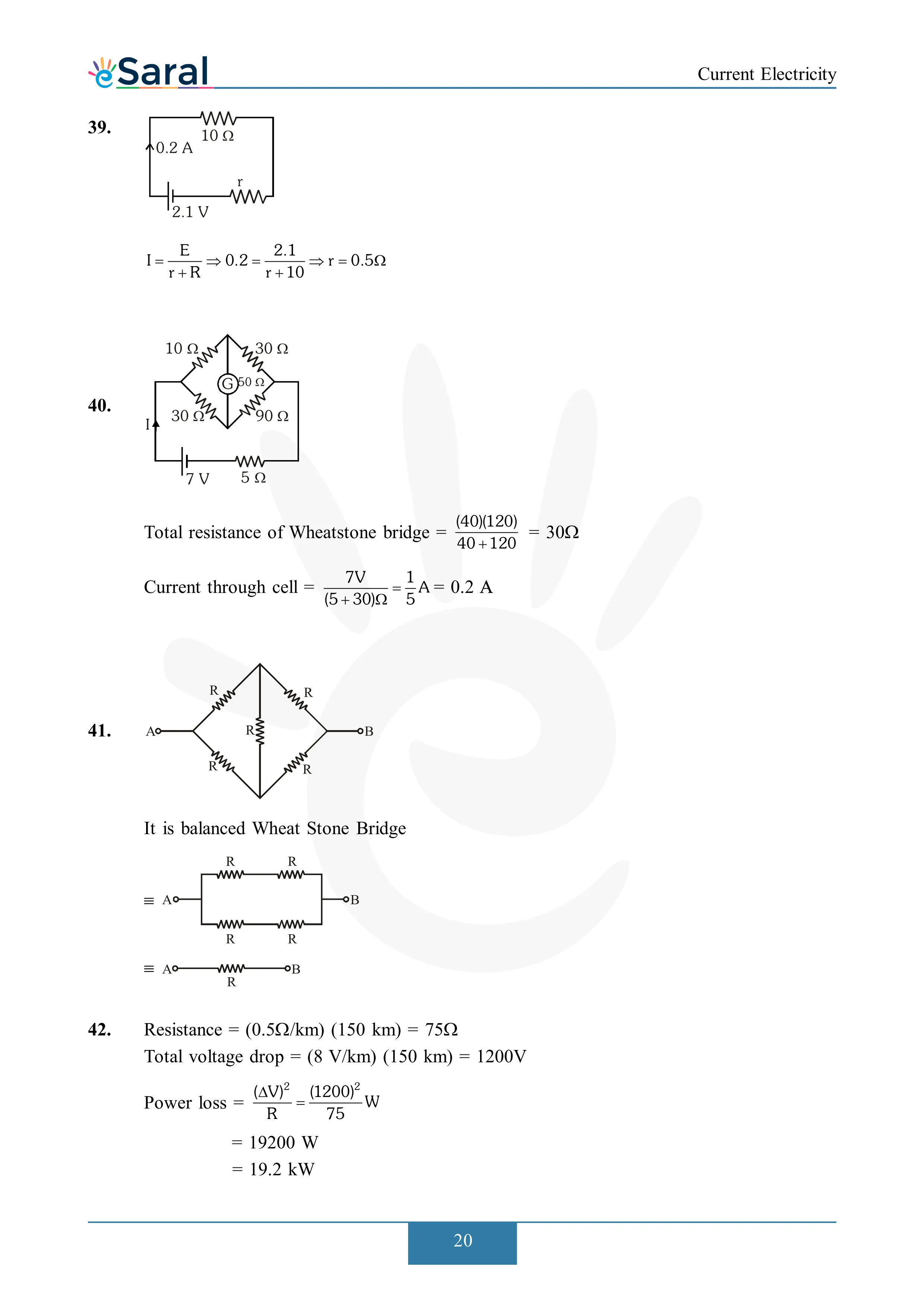
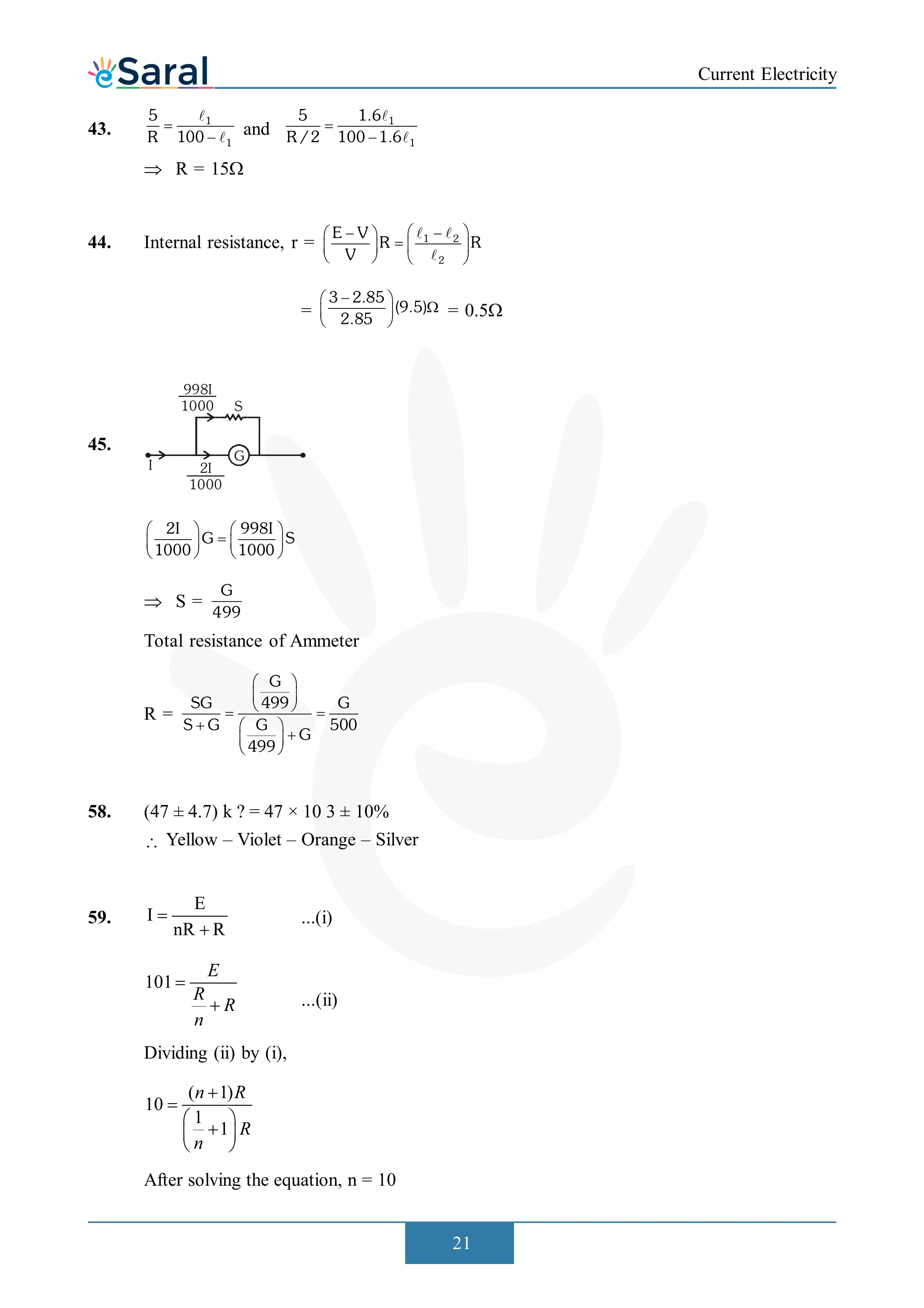
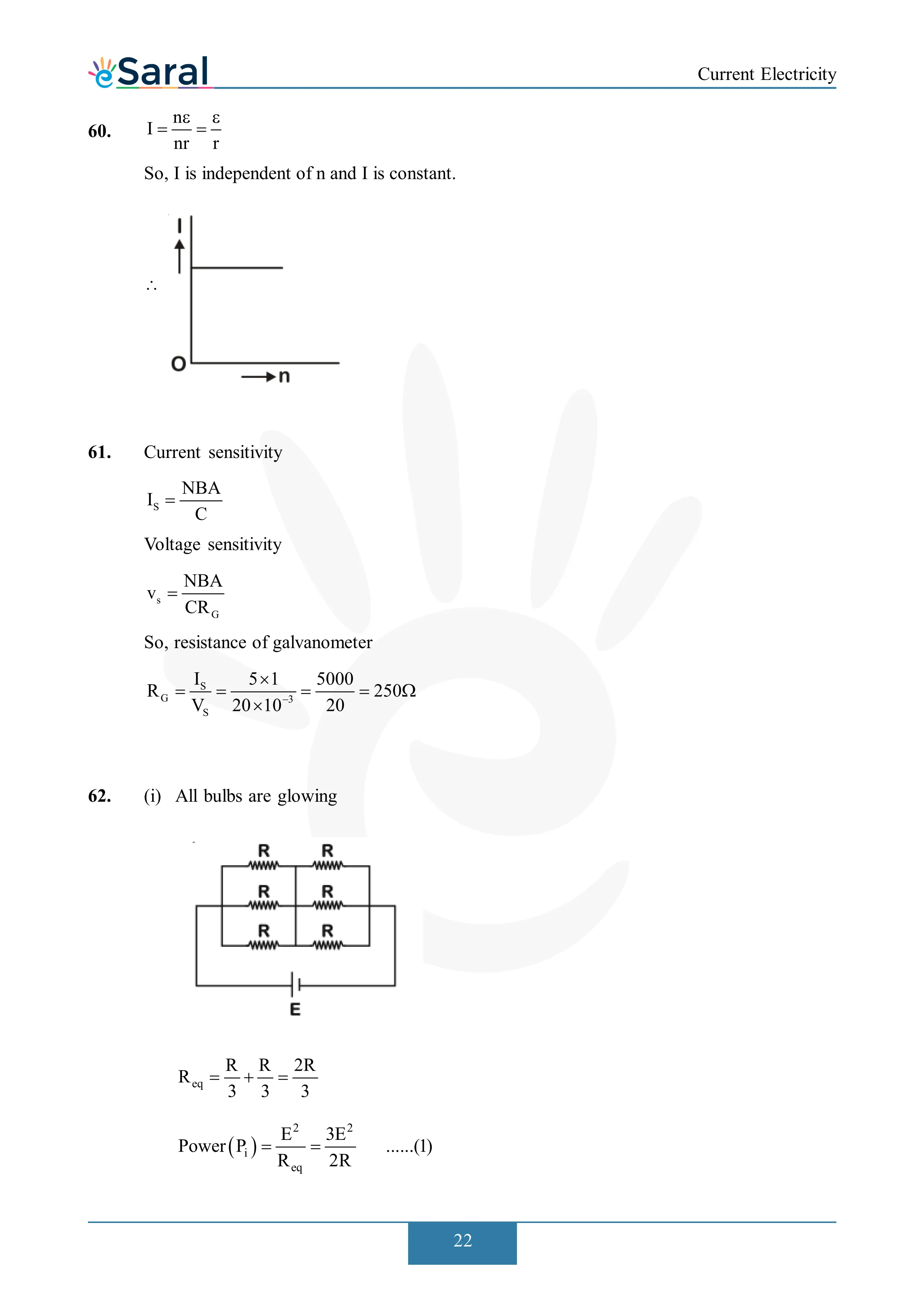
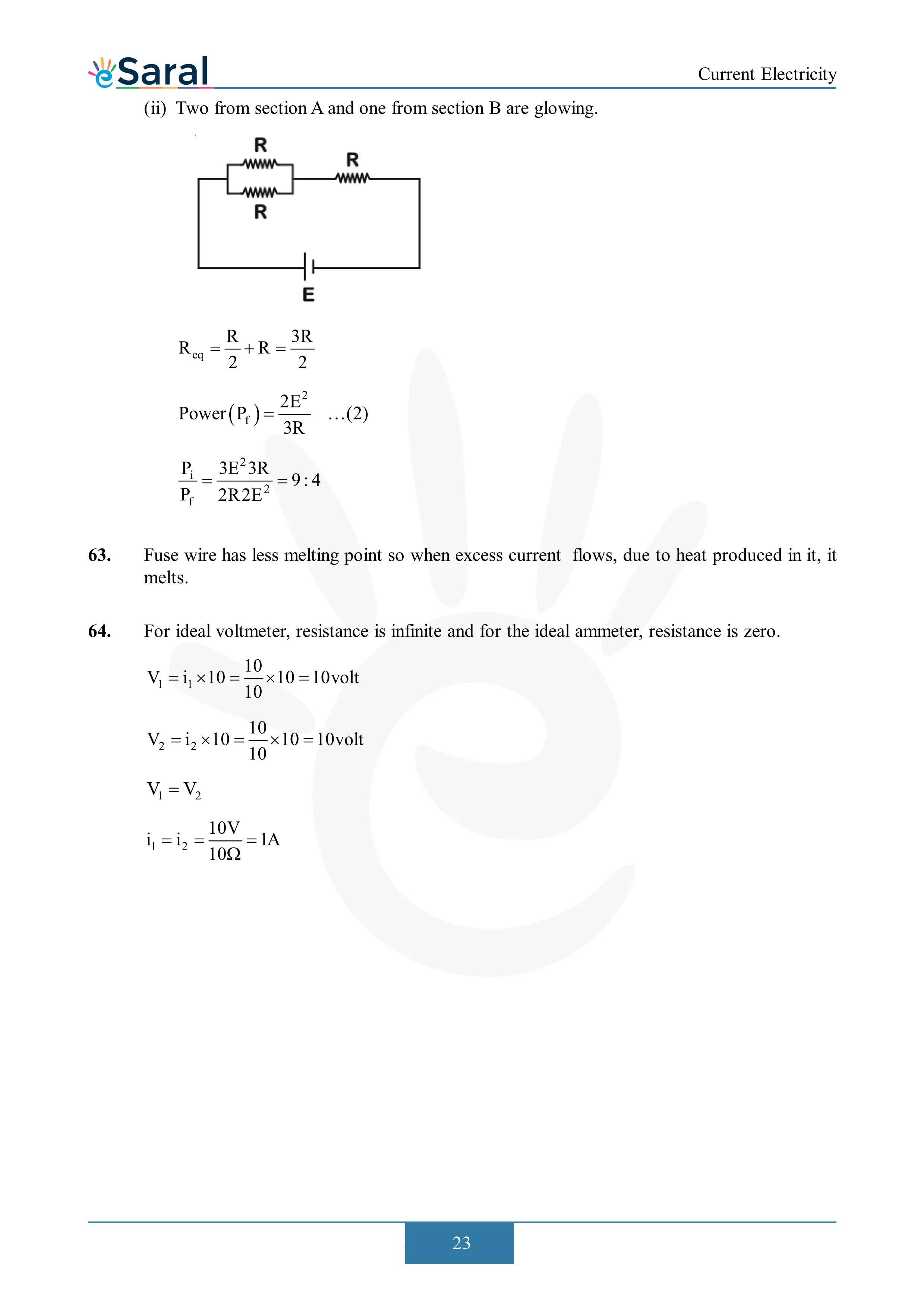
Chapter Overview: Topics and Subtopics
What This Chapter Covers
| Topic | Subtopics | NEET Frequency |
|---|---|---|
| Electric Current and Drift Velocity | Definition of current, drift velocity, relation I = nAeVd | High |
| Ohm's Law | V = IR, limitations of Ohm's law, ohmic vs non-ohmic conductors | High |
| Resistance and Resistivity | ρ = RA/l, factors affecting resistance, temperature dependence | High |
| Combination of Resistors | Series (R = R₁ + R₂), parallel (1/R = 1/R₁ + 1/R₂), mixed circuits | Very High |
| Kirchhoff's Laws | KCL (junction rule), KVL (loop rule), application to circuits | High |
| EMF and Internal Resistance | Terminal voltage, V = E − Ir, maximum power transfer | High |
| Cells in Combination | Series combination, parallel combination of cells | Medium |
| Wheatstone Bridge | Balance condition P/Q = R/S, sensitivity | Very High |
| Metre Bridge | Working principle, formula, practical applications | High |
| Potentiometer | Principle, comparison of EMFs, measurement of internal resistance | Very High |
| Electric Power and Energy | P = VI = I²R = V²/R, electrical energy consumption | High |
| Heating Effect | Joule's law, H = I²Rt | Medium |
NEET Weightage Analysis: Year-Wise Question Count
How Many Questions Come From Current Electricity in NEET?
| NEET Year | Questions | Key Topics Tested |
|---|---|---|
| NEET 2024 | 3 | Potentiometer, series-parallel resistance, drift velocity |
| NEET 2023 | 2 | Wheatstone bridge, Kirchhoff's laws application |
| NEET 2022 | 3 | Internal resistance, combination of cells, electric power |
| NEET 2021 | 2 | Metre bridge, resistivity temperature dependence |
| NEET 2020 | 3 | Potentiometer principle, Ohm's law, mixed circuit |
| NEET 2019 | 2 | Drift velocity, Wheatstone bridge balance condition |
| NEET 2018 | 3 | Kirchhoff's laws, terminal voltage, series resistors |
| NEET 2017 | 2 | Current density, parallel combination, EMF |
Average: 2.5 questions per year — approximately 10 marks. Combined with the low conceptual difficulty relative to chapters like Wave Optics or SHM, this makes Current Electricity one of the best return-on-investment chapters in NEET Physics.
💡 Expert Tip by eSaral Physics Faculty: "Potentiometer questions appear in almost every NEET paper. Students who understand the working principle — that the potentiometer measures EMF by finding the null point where no current flows — can solve any potentiometer question in under 60 seconds. It is not a calculation-heavy topic. It is a concept-clarity topic."
Key Concepts and Formulas You Must Know
Essential Formulas — Quick Reference
| Concept | Formula | Key Variable |
|---|---|---|
| Electric Current | I = Q/t = nAeVd | n = number density, Vd = drift velocity |
| Ohm's Law | V = IR | R = resistance in ohms |
| Resistivity | R = ρl/A | ρ = resistivity, l = length, A = cross-section area |
| Temperature Dependence | R = R₀(1 + αT) | α = temperature coefficient of resistance |
| Series Resistance | R = R₁ + R₂ + R₃ | — |
| Parallel Resistance | 1/R = 1/R₁ + 1/R₂ + 1/R₃ | — |
| Terminal Voltage | V = E − Ir | E = EMF, r = internal resistance |
| Cells in Series | E_net = E₁ + E₂, r_net = r₁ + r₂ | — |
| Cells in Parallel | E_net = E (if equal), r_net = r/n | n = number of cells |
| Wheatstone Balance | P/Q = R/S | No current through galvanometer |
| Electric Power | P = VI = I²R = V²/R | — |
| Joule's Heating | H = I²Rt | H = heat in joules |
The 5 Concept Areas NTA Tests Every Year
1. Drift Velocity and Current Density
The microscopic origin of current: free electrons in a conductor experience random thermal motion but drift slowly in the direction opposite to the electric field.
- Drift velocity: Vd = eEτ/m (where τ = relaxation time)
- Current: I = nAeVd
- Current density: J = I/A = nеVd
NEET question pattern: "If the radius of a wire is halved and the length is doubled, how does the drift velocity change when the same potential difference is applied?" These questions test whether you know which quantities in the formula change.
2. Resistance and Resistivity — Temperature Effect
Resistance increases with temperature for metals (positive α): R = R₀(1 + αT)
Resistance decreases with temperature for semiconductors and electrolytes (negative α).
This distinction — metal vs semiconductor behaviour — is a direct NEET question type every 2–3 years.
3. Kirchhoff's Laws
KCL (Junction Rule): Sum of currents entering a junction = sum of currents leaving it. Based on conservation of charge.
KVL (Loop Rule): Sum of potential differences around any closed loop = zero. Based on conservation of energy.
Sign convention for KVL:
- Traversing a resistor in the direction of current: voltage drops (−IR)
- Traversing a resistor against the direction of current: voltage rises (+IR)
- Traversing a battery from − to +: voltage rises (+E)
- Traversing a battery from + to −: voltage drops (−E)
4. Wheatstone Bridge
Balance condition: P/Q = R/S (no current through galvanometer).
At balance, the galvanometer reads zero — this is the key to all Wheatstone bridge questions. NEET tests:
- Finding the unknown resistance when the bridge is balanced
- Identifying which configuration makes the bridge balanced
- Sensitivity of a Wheatstone bridge (most sensitive when all four arms are equal)
5. Potentiometer Principle
A potentiometer measures EMF by finding the null point — the length at which the potential difference across the potentiometer wire exactly equals the EMF being measured. At null, no current flows through the galvanometer.
Key relations:
- Comparison of EMFs: E₁/E₂ = l₁/l₂ (where l₁ and l₂ are the null point lengths)
- Internal resistance measurement: r = R(l₁ − l₂)/l₂ (where R is external resistance)
How to Study Current Electricity for Maximum NEET Marks
Step-by-Step Study Plan
Step 1 — Read NCERT Chapter 3 completely and build a formula sheet (Day 1) Current Electricity is formula-dense. As you read, write every formula on a single dedicated sheet. By the end of Day 1, you should have all 12–15 core formulas in one place — this becomes your rapid-revision sheet for the rest of the year.
Step 2 — Master the five core concept areas (Day 2–3) Work through each of the five areas listed in the Key Concepts section: drift velocity, resistance-temperature relationship, Kirchhoff's laws, Wheatstone bridge, and potentiometer. For each, solve 5–7 standard problems from NCERT examples and exercises.
Step 3 — Practise circuit diagrams systematically (Day 3–4) Current Electricity questions in NEET almost always involve a circuit diagram. Practice:
- Redrawing complex circuits in simplified series-parallel form
- Identifying balanced Wheatstone bridges by inspection
- Applying KVL to loops with multiple batteries and resistors
The ability to redraw a circuit correctly is often the entire skill being tested.
Step 4 — Solve PYQs year-wise from 2024 to 2017 (Day 5) Work through all NEET Current Electricity PYQs year by year. Identify which question type each question falls into (one of the five areas above). You will quickly notice that every question maps to one of those five — confirming that the chapter's exam question space is finite and masterable.
Access the complete NEET chapter-wise PYQ collection on eSaral for all years in one place.
Step 5 — Revise the formula sheet and key relations before every mock test (ongoing) Spend 10 minutes before every Physics mock test reviewing your Current Electricity formula sheet. Potentiometer, Wheatstone bridge balance condition, terminal voltage, and series-parallel resistance formulas are the four most likely to be tested — prioritise those in your pre-mock revision.
Frequently Asked Questions
Find answers to common questions.
How many questions come from Current Electricity in NEET?
Current Electricity contributes 2–3 questions in almost every NEET UG Physics paper. The average over the last 8 years is approximately 2.5 questions per year — around 10 marks. Given its relatively predictable question types and numerical nature, it is one of the best return-on-investment chapters in NEET Physics.
What are the most important topics of Current Electricity for NEET?
The five highest-frequency topics are: potentiometer (principle and EMF comparison), Wheatstone bridge (balance condition), combination of resistors (series, parallel, mixed), terminal voltage and internal resistance, and drift velocity. These five areas account for over 85% of all Current Electricity questions in NEET over the last decade.
Which Current Electricity numericals are most asked in NEET?
The most frequently tested numericals are: terminal voltage calculation (V = E − Ir), potentiometer null point and EMF ratio (E₁/E₂ = l₁/l₂), series-parallel resistance combinations, metre bridge unknown resistance, and power consumed at different voltages (P ∝ V²). These five numerical types have each appeared in at least 5 of the last 8 NEET papers.
Why is a potentiometer preferred over a voltmeter for measuring EMF in NEET questions?
A potentiometer measures true EMF because at the null point no current flows from the cell being measured — so there is no voltage drop across its internal resistance. A voltmeter always draws a small current, causing a drop across the internal resistance, meaning it measures terminal voltage (slightly less than true EMF). This distinction is tested directly in NEET almost every year.
What is the Wheatstone bridge balance condition tested in NEET?
The balance condition is P/Q = R/S — when this ratio is satisfied, no current flows through the galvanometer connecting the midpoints of the two branches. NEET tests this as: finding the unknown resistance when the bridge is balanced, identifying which value of S balances the bridge, and recognising that a bridge with all four equal resistances is perfectly balanced and most sensitive.