General Organic Chemistry - JEE Main Previous Year Questions with Solutions
General Organic Chemistry JEE Main PYQ: Practice previous year JEE Main and AIEEE questions on acidity, basicity, aromaticity, carbocation stability, dipole moment, and electronic effects to strengthen your Organic Chemistry fundamentals.
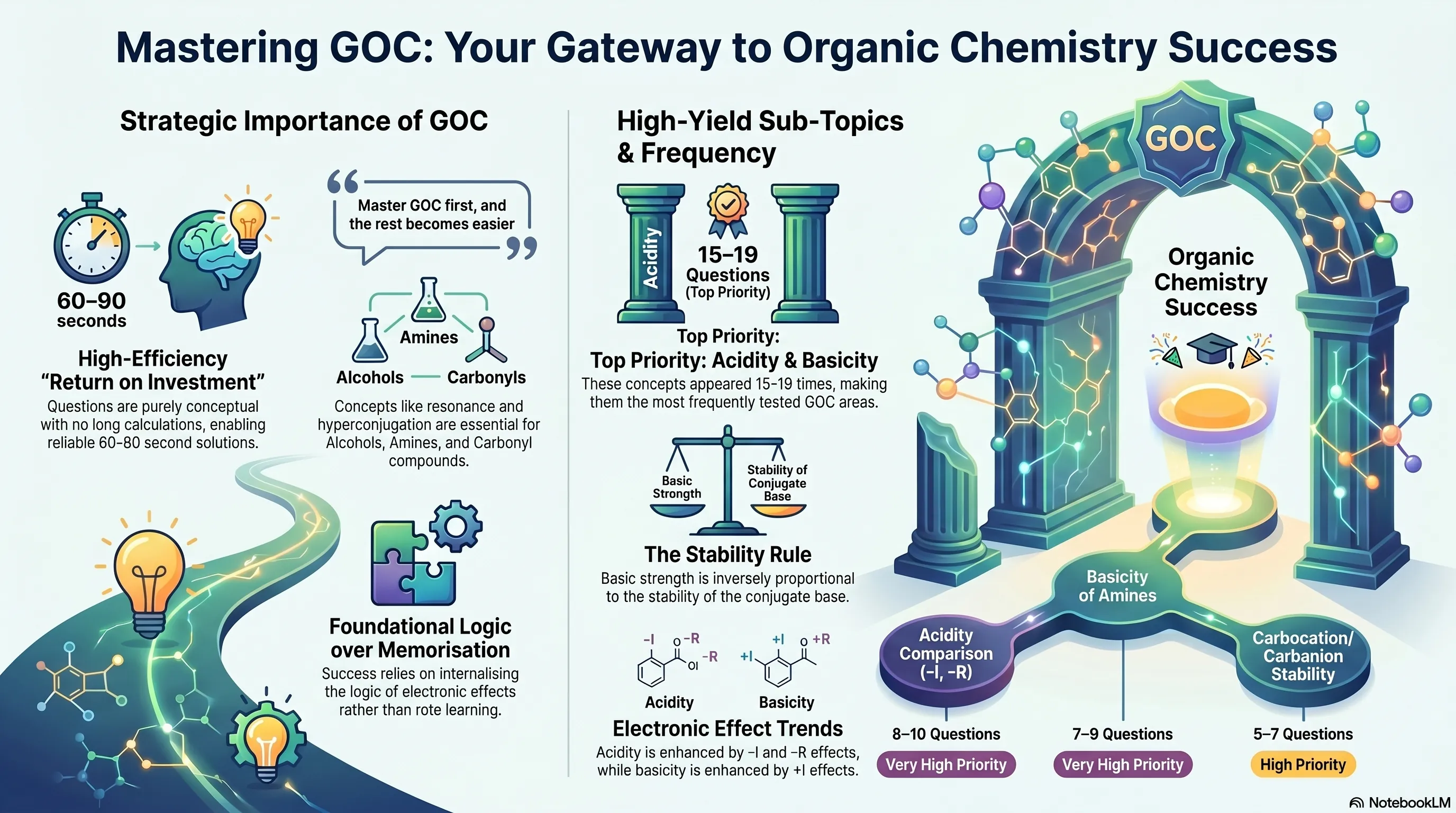
Table of Contents

eSaral › JEE › JEE Main ›General Organic Chemistry

🚀 Checkout eSaral Courses
Chapter Weightage & Most-Asked GOC Concepts
General Organic Chemistry is one of the highest-return chapters in JEE Main Chemistry. The questions are consistently conceptual — no long calculations — which means a student who has internalised the logic of electronic effects can solve GOC questions in 60–90 seconds reliably.
Year-Wise Question Frequency (JEE Main / AIEEE)
| Year | Questions from GOC | Concepts Tested |
|---|---|---|
| AIEEE 2009 | 1 | Carbanion stability |
| AIEEE 2010 | 1 | Basicity of conjugate bases |
| AIEEE 2011 | 3 | Non-aromaticity, acid strength, phenol acidity |
| AIEEE 2012 | 2 | Antiaromaticity, dipole moment |
| AIEEE 2012 Online | 1 | Antiaromaticity |
| JEE Main 2013 | 2 | Carbocation stability, acidity order, oxoacid strength |
| JEE Main 2014 | 4 | Dipole moment, basicity, oxoacid acidity, H-bonding solubility |
| JEE Main 2018 | 1 | Basicity of nitrogen compounds |
Most Tested Sub-Topics (AIEEE 2009 to JEE Main 2024)
| Sub-Topic | Times Asked (approx.) | Priority |
|---|---|---|
| Acidity comparison (–I, –R effect) | 8–10 | Very High |
| Basicity of amines & N-compounds | 7–9 | Very High |
| Carbocation / carbanion stability | 5–7 | High |
| Aromaticity vs antiaromaticity | 4–6 | High |
| Dipole moment | 3–4 | Medium |
| Hydrogen bonding effects on solubility | 2–3 | Medium |
| Hyperconjugation | 2–3 | Medium |
💡 Expert Tip by Prateek Gupta, IIT Bombay: "GOC is not a chapter you memorise — it is a chapter you understand once and then apply forever. Every single concept in GOC (inductive effect, resonance, hyperconjugation) reappears in Alcohols, Amines, Carbonyl Compounds, and Aromatic Chemistry. Master GOC first, and the rest of Organic Chemistry becomes significantly easier."
JEE Main Previous Year Papers Questions of Chemistry With Solutions are available at eSaral. Simulator Previous Years AIEEE/JEE Mains Questions
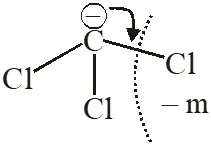
 [AIEEE-2011]
 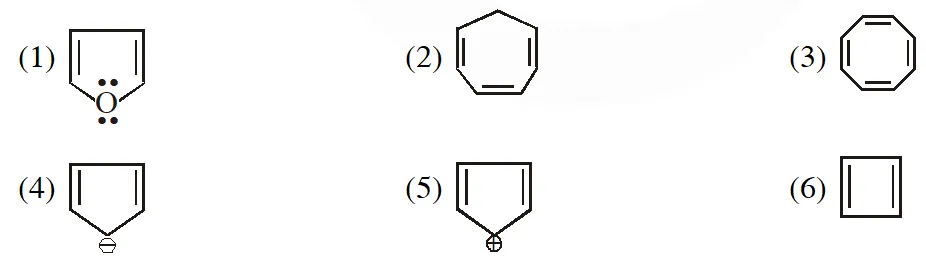 (1) (1) and (6) (2) (2) and (5) (3) (1) and (5) (4) (5) and (6) [AIEEE-2012(Online)]
 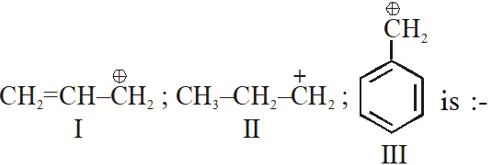 (1) III > II > I (2) II > III > I (3) I > II > III (4) III > I > II [JEE-MAIN-2013]
 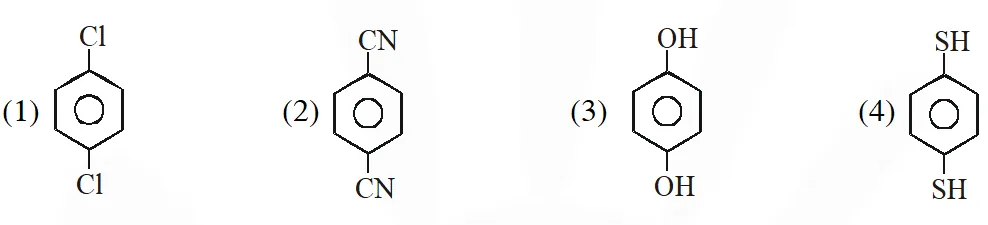 (1) Only (3) (2) (3) and (4) (3) Only (1) (4) (1) and (2) [JEE-MAIN-2014]
 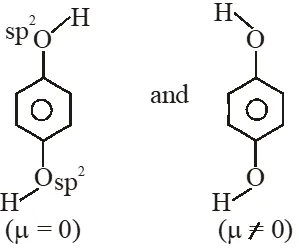 So dipole moment per mole (containing $\mathrm{N}_{\mathrm{A}}$ molecules) is non zero. Some concept applicable for option (4) .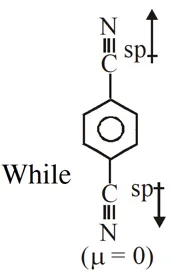
 the order of basicity is as follows : (1) IV > III > II > I (2) II > III > I > IV (3) I > III > II > IV (4) III > I > II > IV [JEE(Main)-2012]
 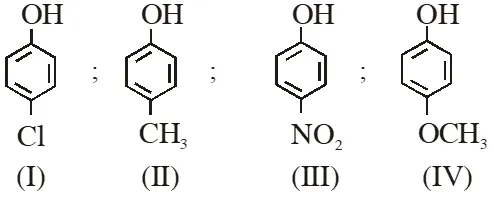 (1) II > IV > I > III (2) I > II > III > IV (3) III > I > II > IV (4) IV > III > I > II [JEE(Main)-2013]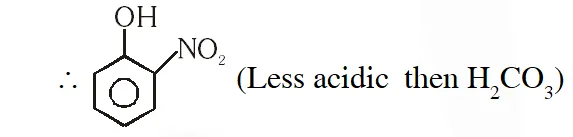
 (1) (1) < (1) < (3) < (4) (2) (1) < (1) < (4) < (3) (3) (4) < (2) < (1) < (3) (4) (1) < (2) < (3) < (3) [JEE(Main)-2018]
 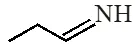 nitrogen is sp2 hybridized so least basic among all given compound. compound
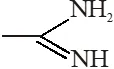 is very strong nitrogeneous organic base as lone pair of one nitrogen delocalize in resonance and make another nitrogen negativly charged and conjugate acid have two equivalent resonating structure. Thus it is most basic in given compouds.
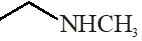 (secondary amine) more basic than
 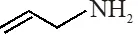 (primary amine)
 Instead of searching separately for General Organic Chemistry, use the JEE PYQ chapter wise index to access the complete topic list.
General Organic Chemistry is only one part of the exam — see exactly how it fits into a complete paper on our JEE Main previous year question paper page.
Frequently Asked Questions
Find answers to common questions.
What is the weightage of General Organic Chemistry in JEE Main?
GOC carries approximately 4–8% weightage in JEE Main Chemistry, with 2–4 questions appearing in most years. Based on AIEEE and JEE Main papers from 2009 to 2024, acidity/basicity comparisons and carbocation/carbanion stability are the most frequently tested sub-topics. The chapter has appeared consistently every year, making it one of the most reliable scoring areas in Organic Chemistry.
Which GOC topics are most important for JEE Main 2025 and 2026?
The five highest-priority GOC topics for JEE Main are: (1) Acidity and basicity comparisons using inductive and resonance effects, (2) Amine basicity in gas phase vs aqueous solution, (3) Carbocation and carbanion stability, (4) Aromaticity vs antiaromaticity using Hückel's rule, and (5) Dipole moment and molecular symmetry. These five areas cover approximately 90% of all GOC questions in JEE Main history.
What is the difference between –I effect and –R effect in GOC?
The –I effect (inductive withdrawing) operates through sigma bonds and decreases with distance from the substituent — it weakens significantly beyond 2–3 carbons. The –R effect (resonance withdrawing) operates through the pi system and requires conjugation between the EWG and the reaction site. –R effect is generally stronger than –I for the same substituent when both can operate. Nitro (–NO₂) and carbonyl (–C=O) groups are the most powerful –R groups.
Why is amine basicity different in gas phase vs aqueous solution?
In gas phase, basicity depends purely on the +I (electron-donating) effect of alkyl groups on nitrogen — more alkyl groups means more electron density on N, so 3° > 2° > 1° > NH₃. In aqueous solution, the conjugate acid (protonated amine) must be stabilised by solvation via H-bonding with water. Tertiary amines have only one N–H in their conjugate acid, giving less H-bonding and lower solvation energy — this reduces their apparent basicity in water. Secondary amines balance both effects best, making 2° most basic in aqueous solution.
Where can I find GOC questions from JEE Main 2024 and 2025?
Complete JEE Main question papers from 2019 onwards are available on eSaral's JEE Main question paper page. For topic-wise GOC questions from the most recent papers, eSaral's chapter-wise PYQ simulator covers all sessions of JEE Main including the latest years. For JEE Advanced GOC questions, visit eSaral's GOC JEE Advanced PYQ page.