Kinetic Theory of Gases Notes | Thermal Expansion | JEE & NEET
Access detailed Kinetic Theory of Gases and Thermal Expansion notes for Class 11 Physics, covering key concepts, formulas, revision material, and exam-focused preparation for JEE, NEET, and Board exams with free study resources from eSaral.


eSaral › JEE › NEET ›Kinetic Theory of Gases Notes | Thermal Expansion |

🚀 Checkout eSaral Courses
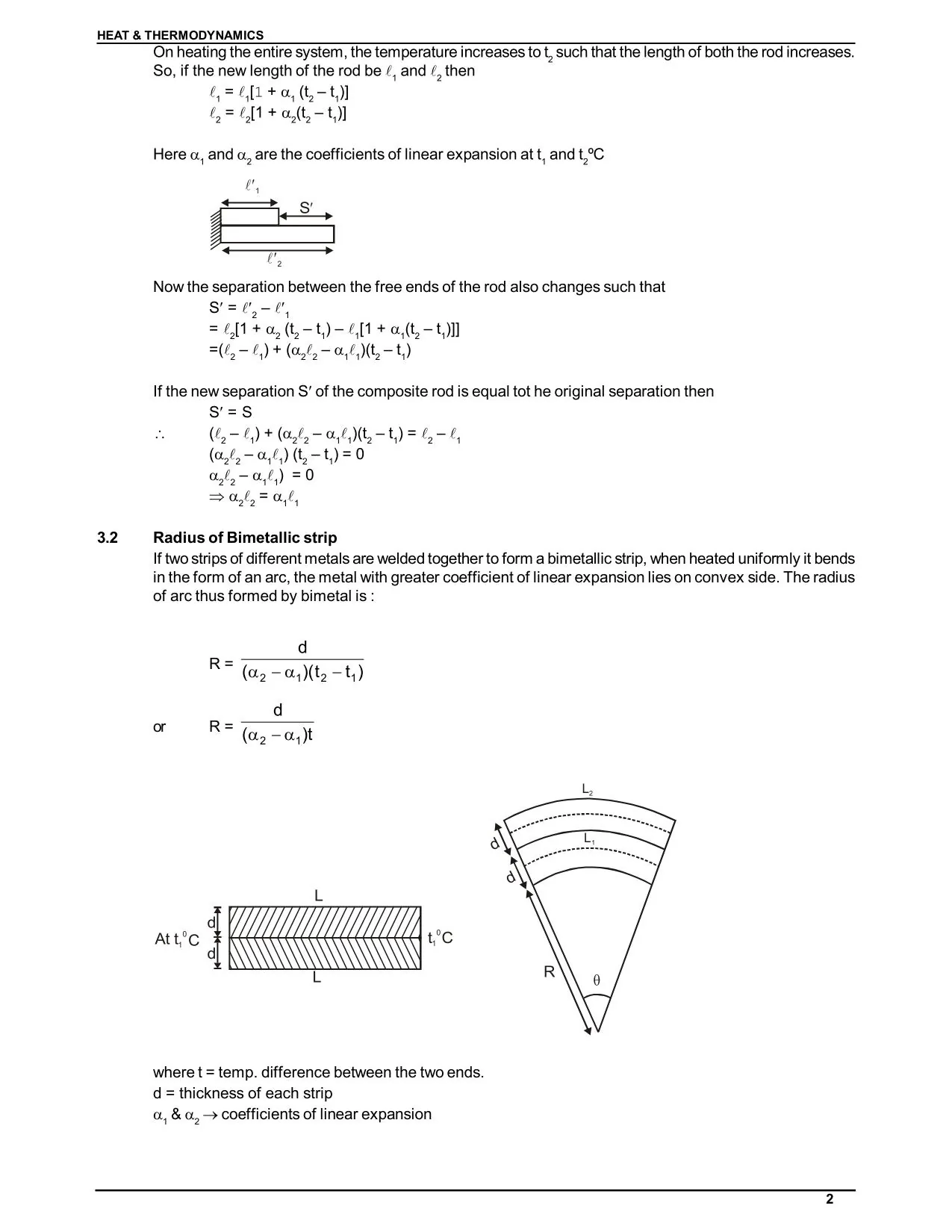
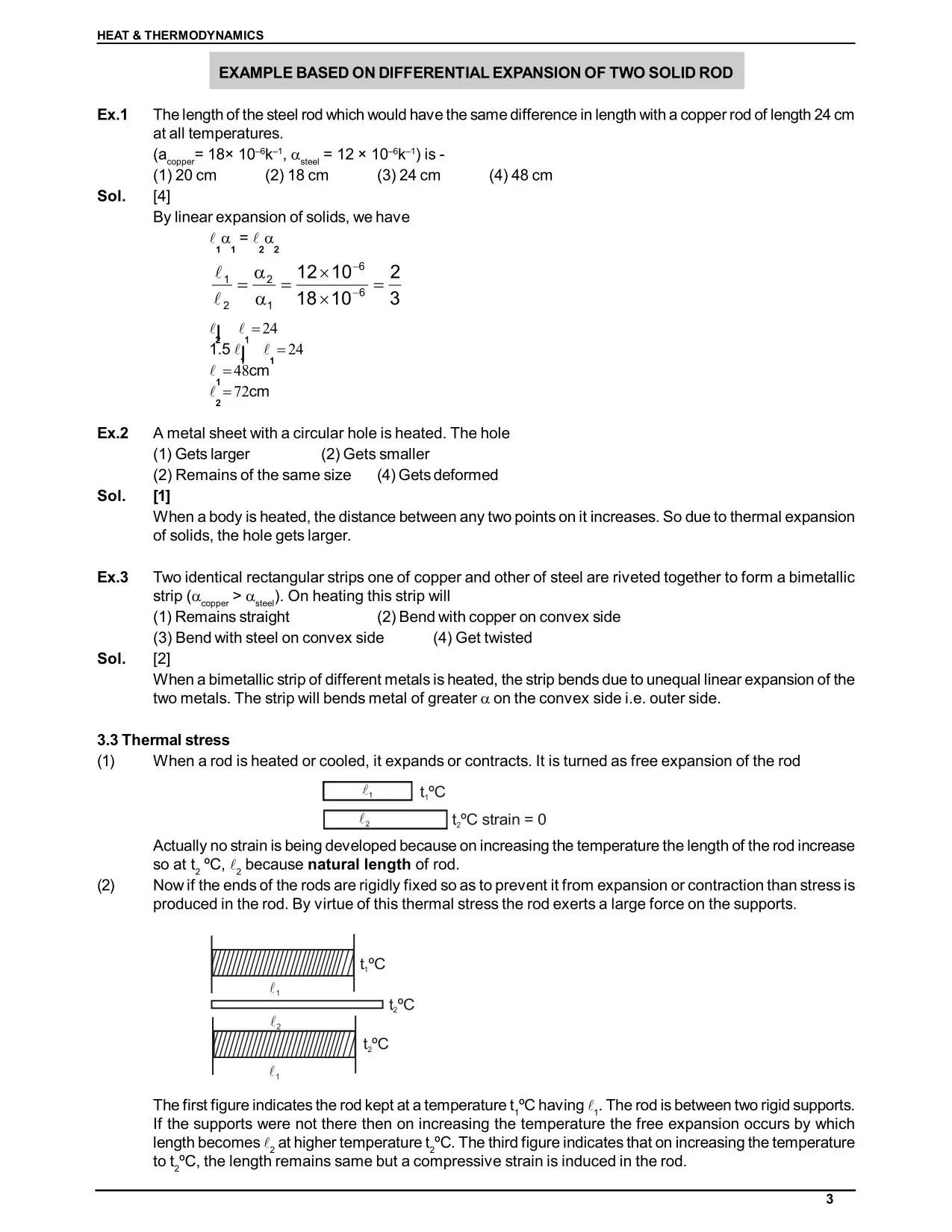
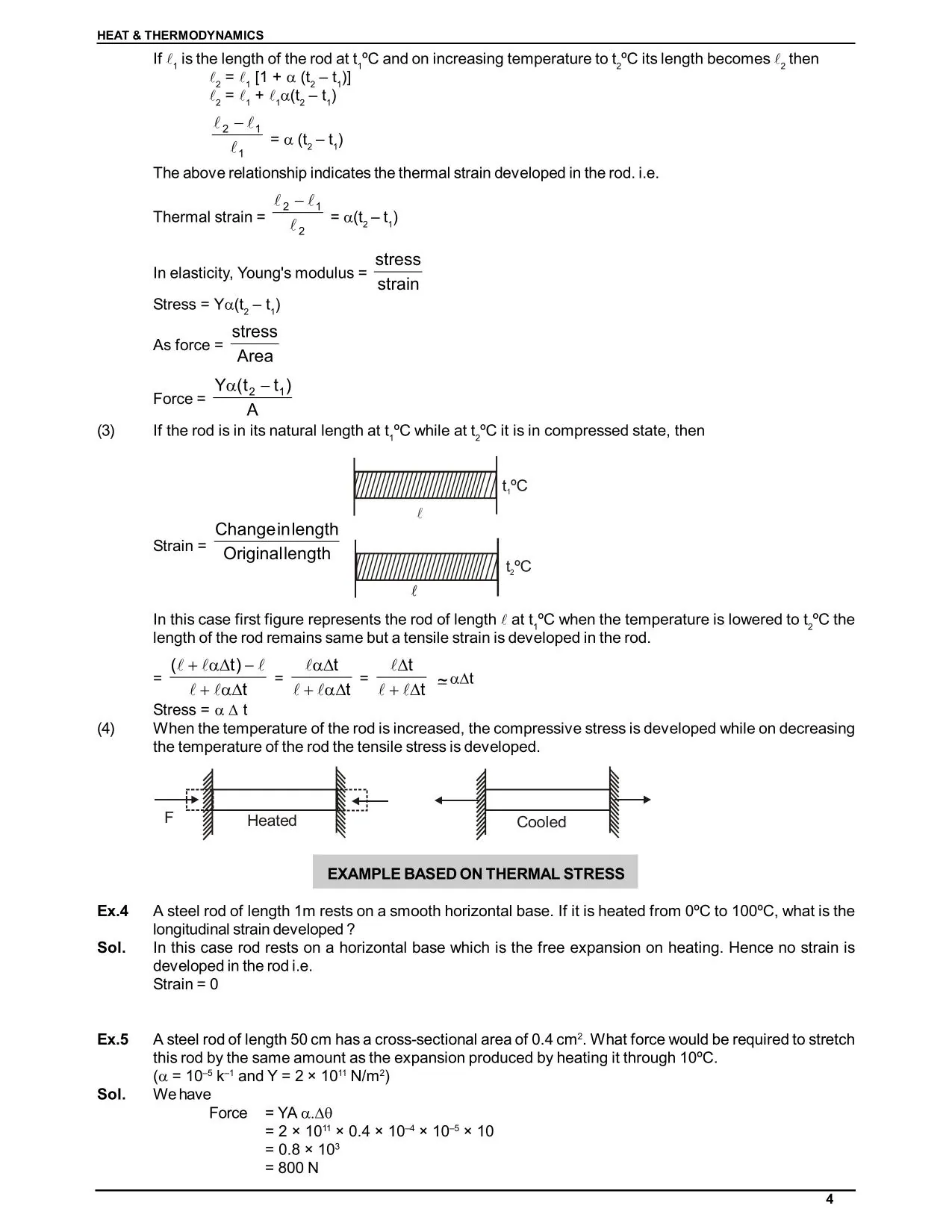
eSaral Provides free detailed notes on kinetic Theory of Gases Notes that will help you in exams like IIT JEE, NEET and Board Preparation. 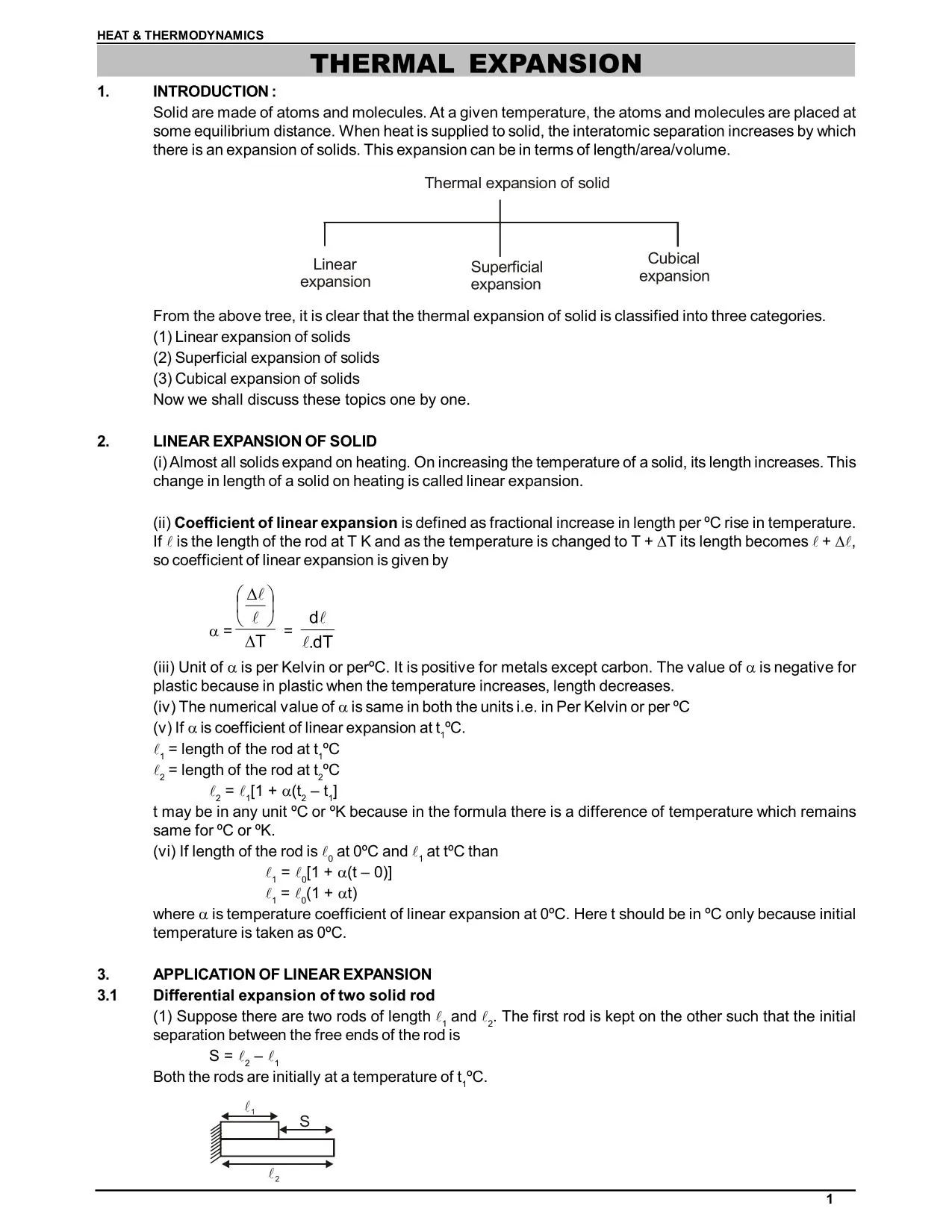


Frequently Asked Questions
Find answers to common questions.
How many questions come from Kinetic Theory of Gases in JEE Main?
JEE Main typically has 2 to 3 questions from Kinetic Theory of Gases per paper, based on NTA's official question distribution patterns from 2019–2024. Topics most often tested include RMS speed, degrees of freedom, and the ideal gas equation. This makes it a high-priority chapter with a relatively small formula set to memorise.
What is the difference between RMS speed, mean speed, and most probable speed?
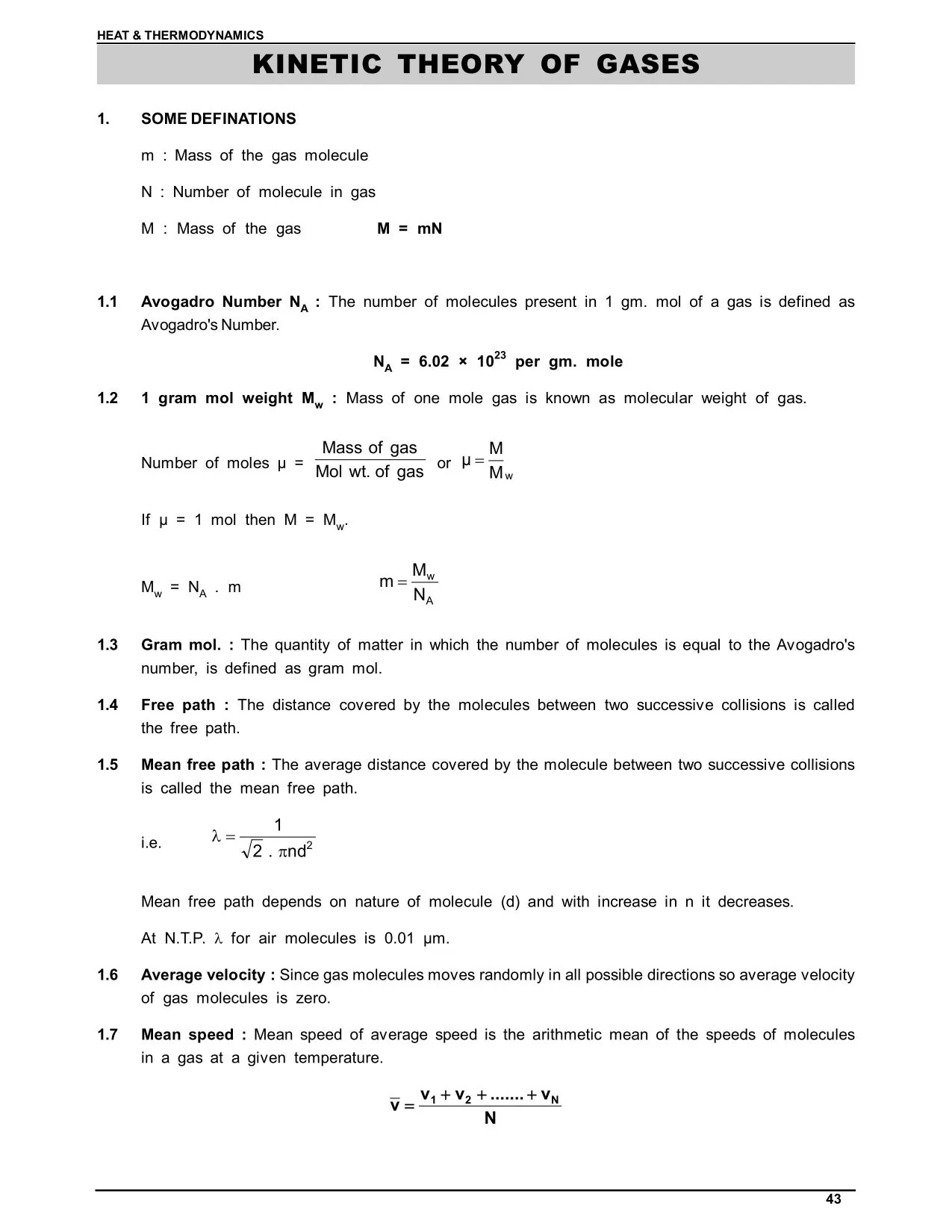
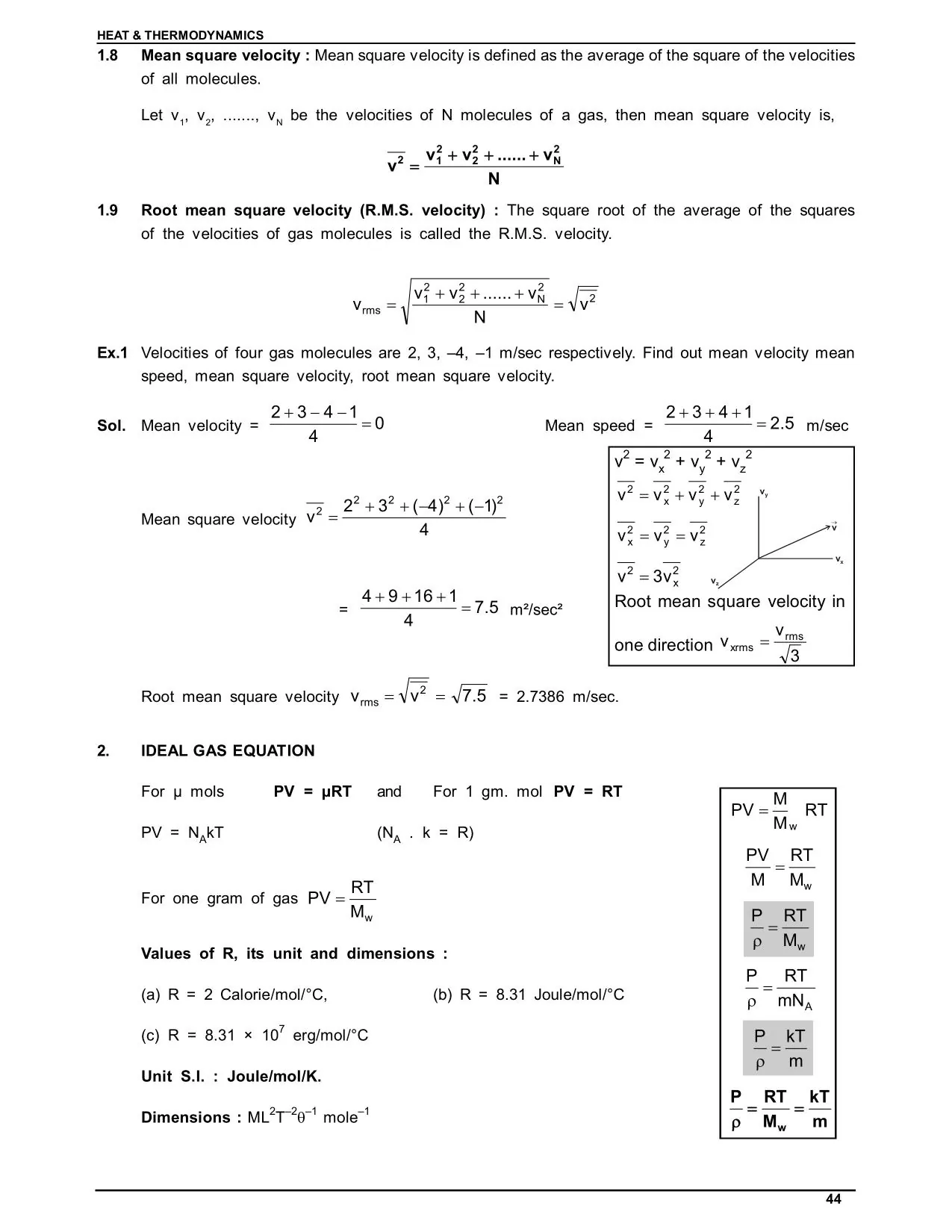
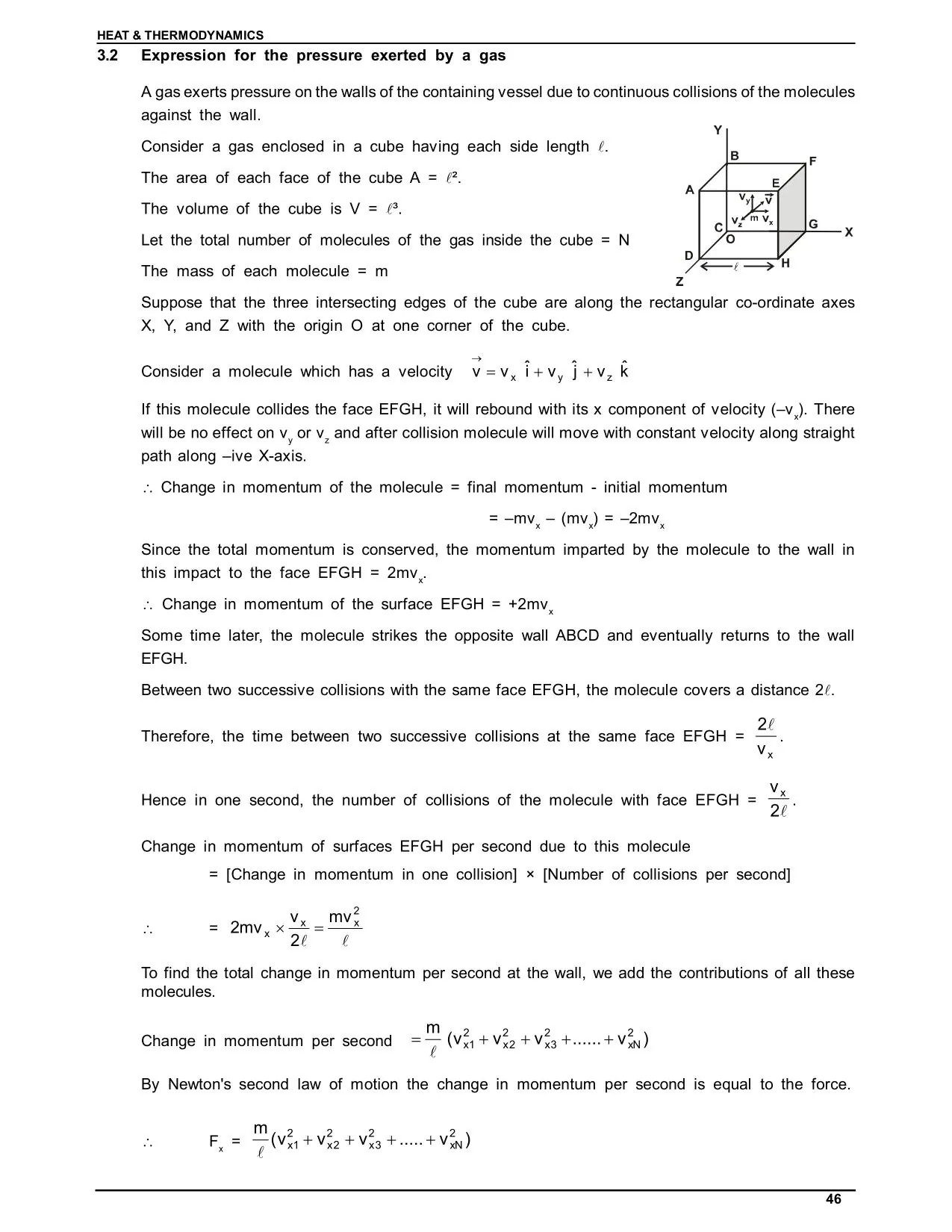
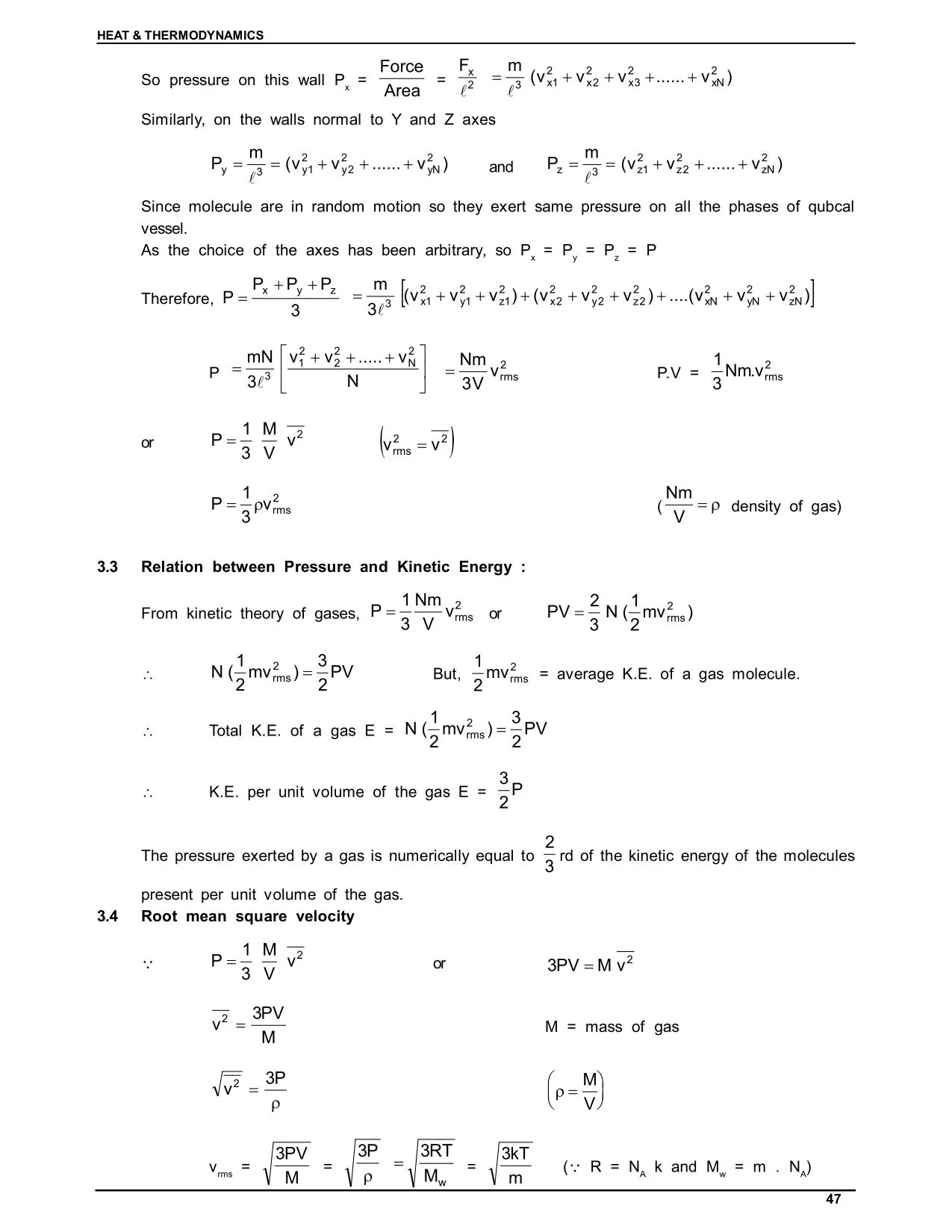
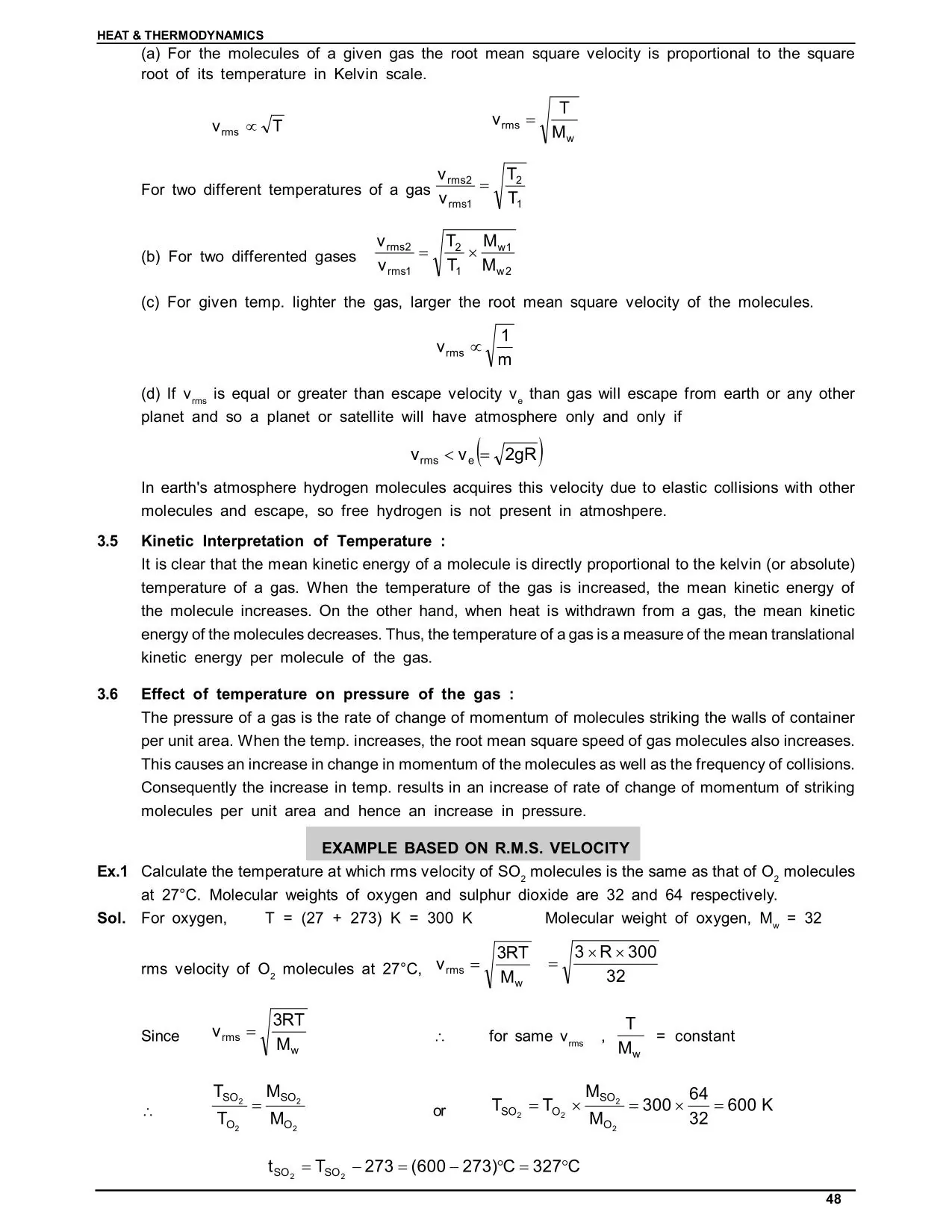
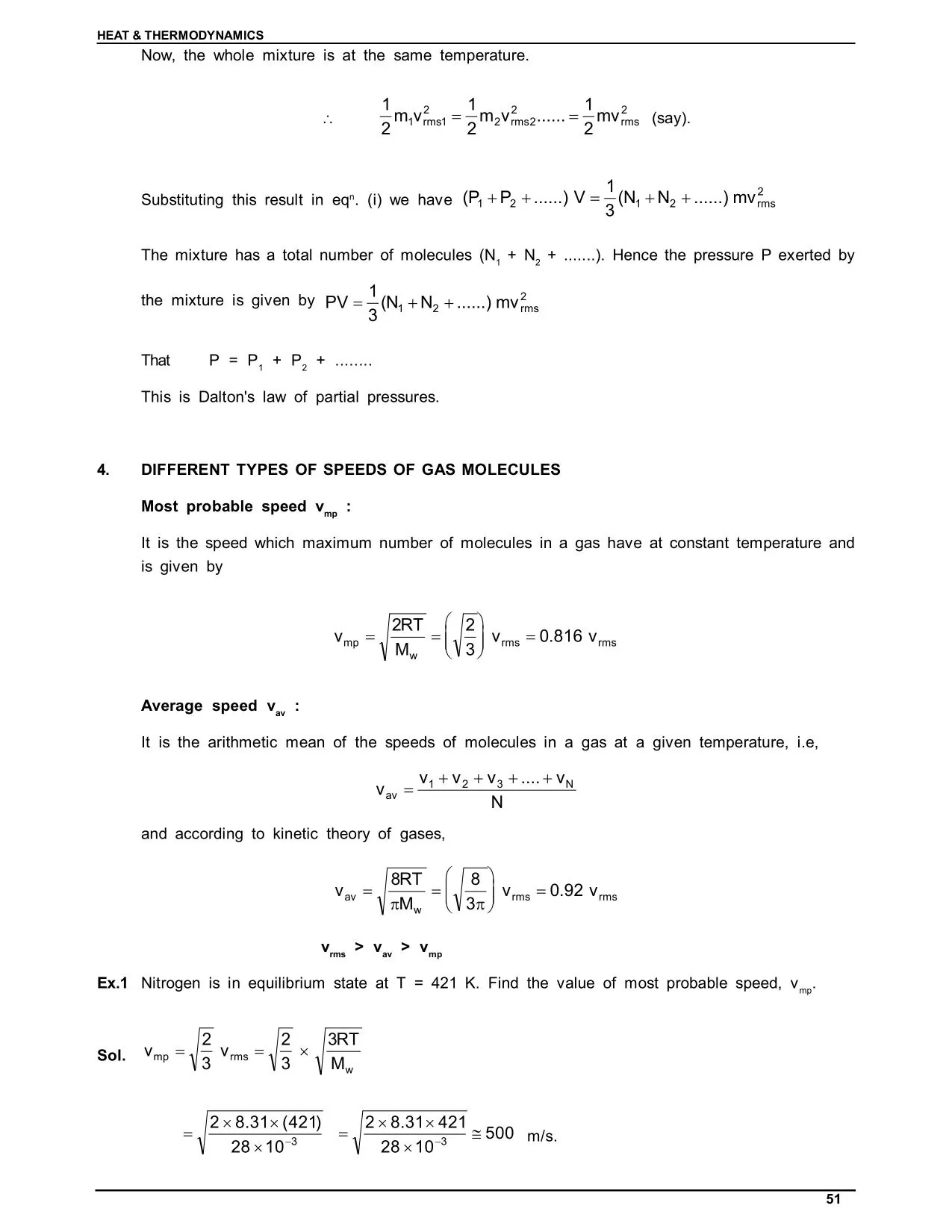
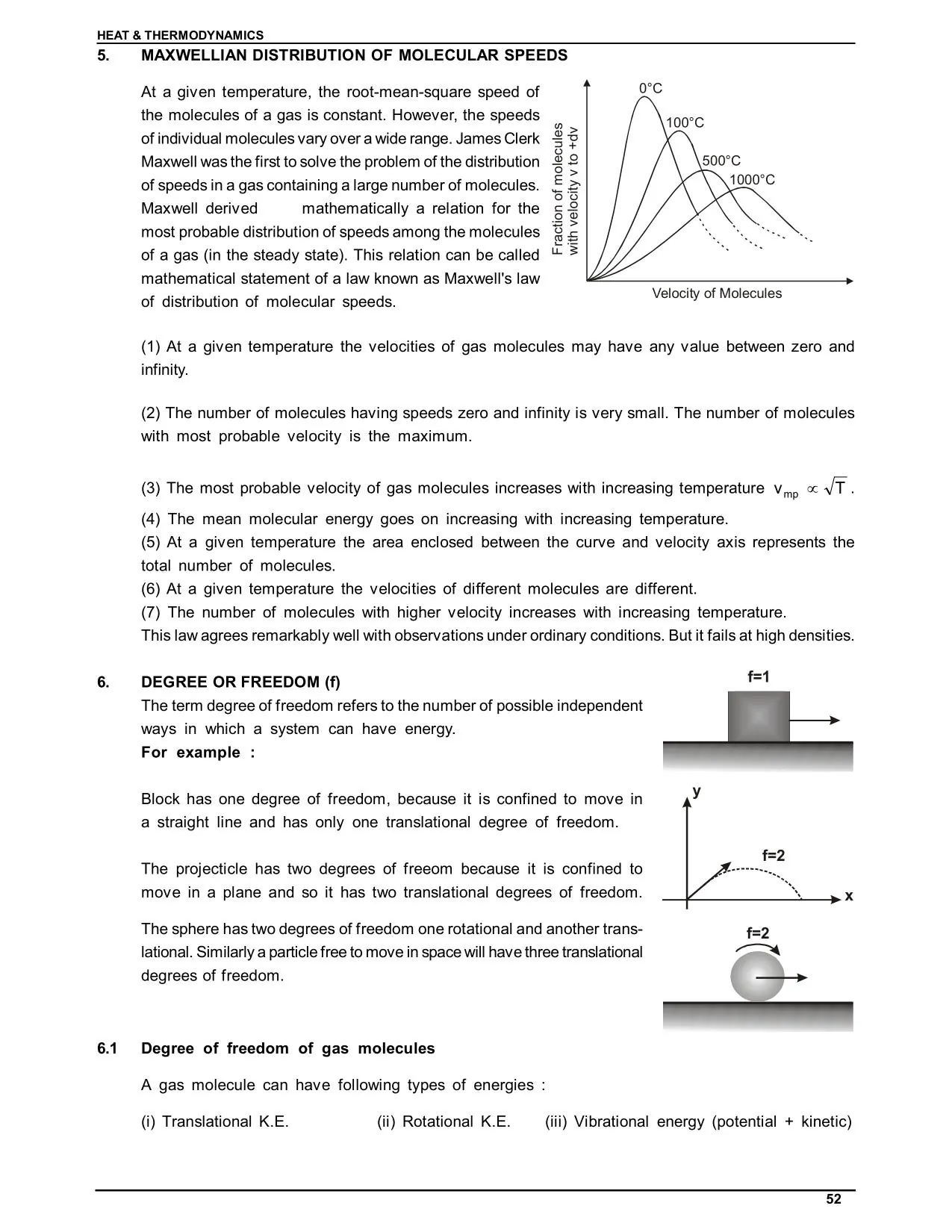
RMS speed (√(3RT/M)) is the square root of the average of squared molecular speeds. Mean speed (√(8RT/πM)) is the simple arithmetic average of all molecular speeds. Most probable speed (√(2RT/M)) is the speed possessed by the largest fraction of molecules. Their ratio is approximately 1.73 : 1.60 : 1.41 for any ideal gas.
Why does water show anomalous expansion?
Water contracts between 0°C and 4°C due to the breaking of hydrogen-bonded ice-like clusters into denser liquid structures. At 4°C, water reaches its maximum density of 1000 kg/m³. Above 4°C, normal thermal expansion resumes. This behaviour is important for NEET Biology too, as it explains why aquatic life survives in frozen lakes.
What is the law of equipartition of energy in simple terms?
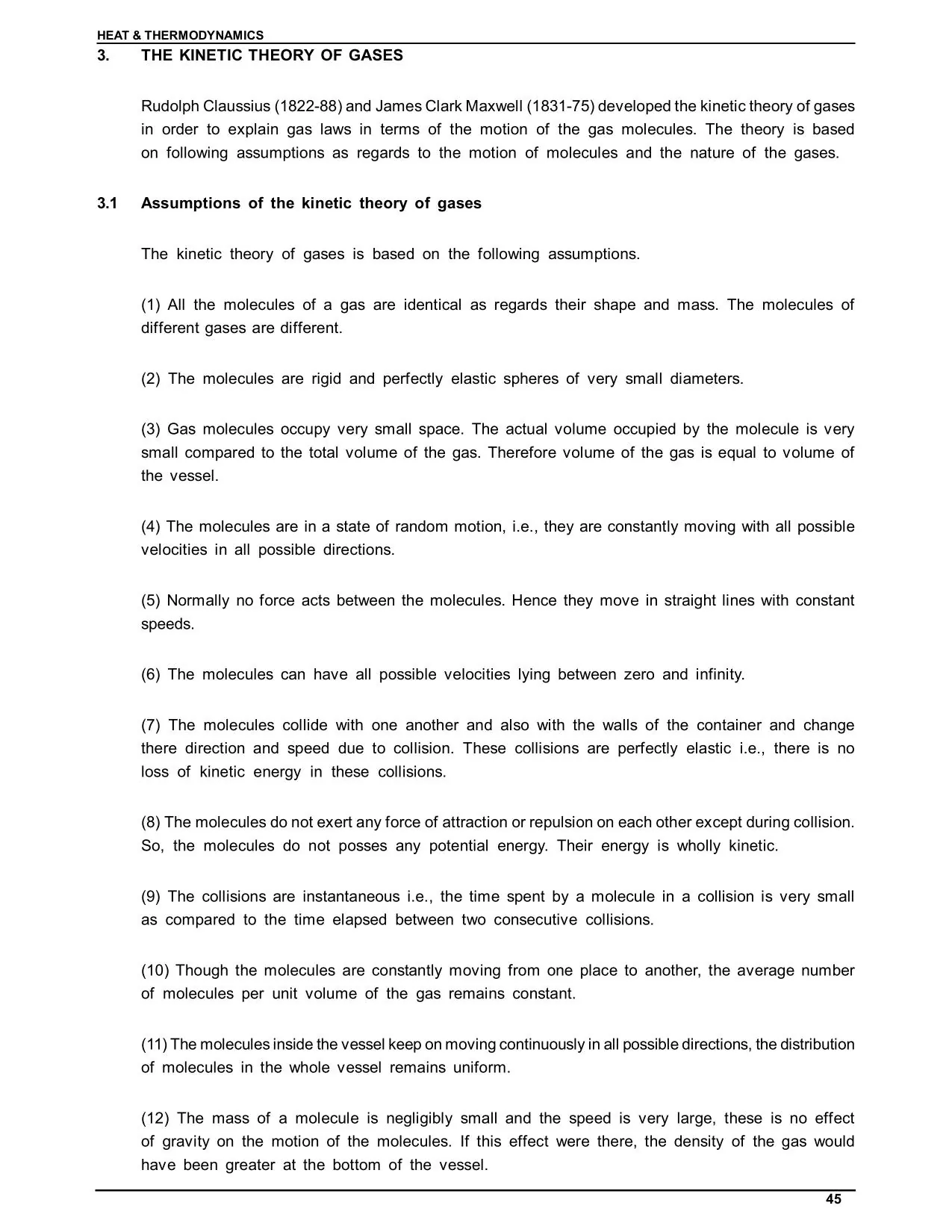
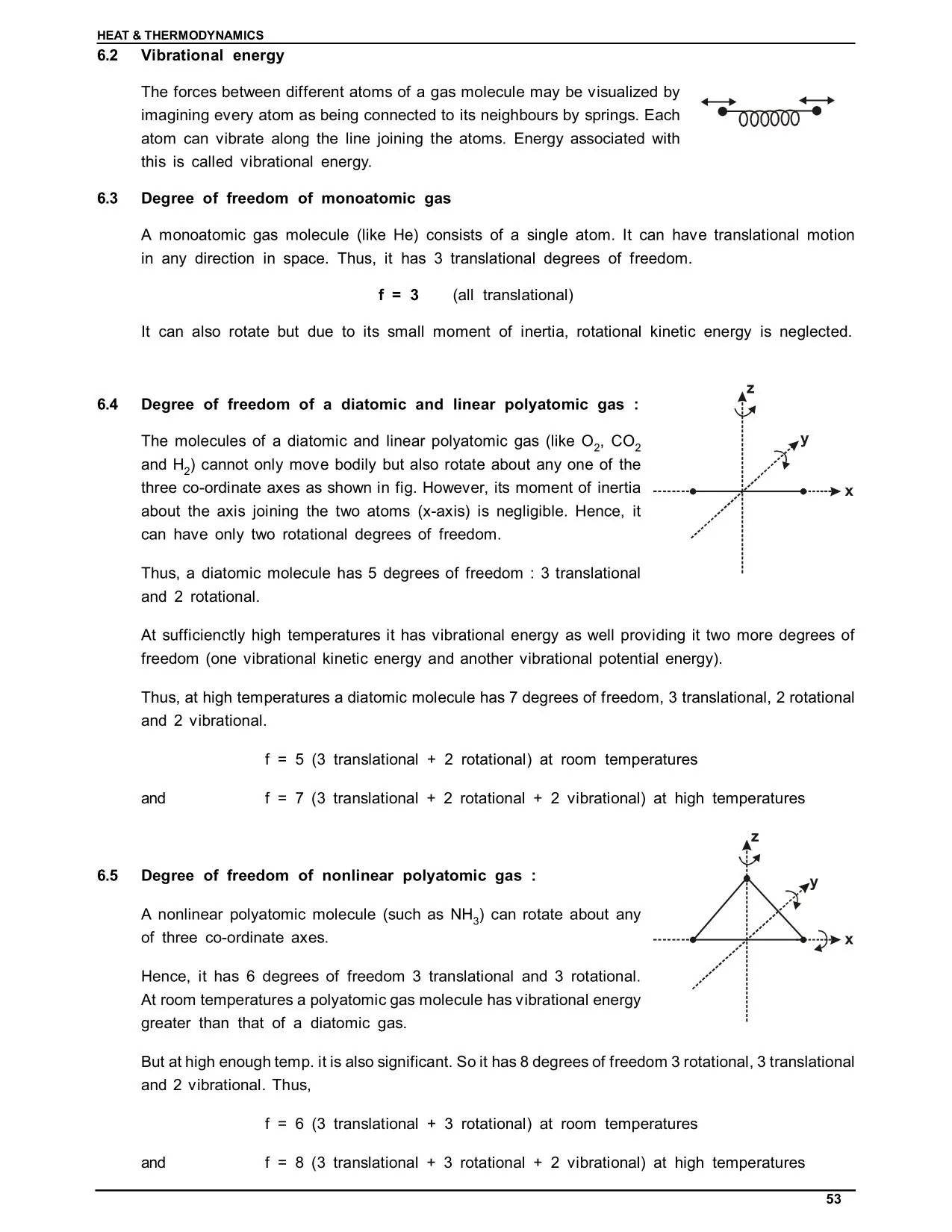
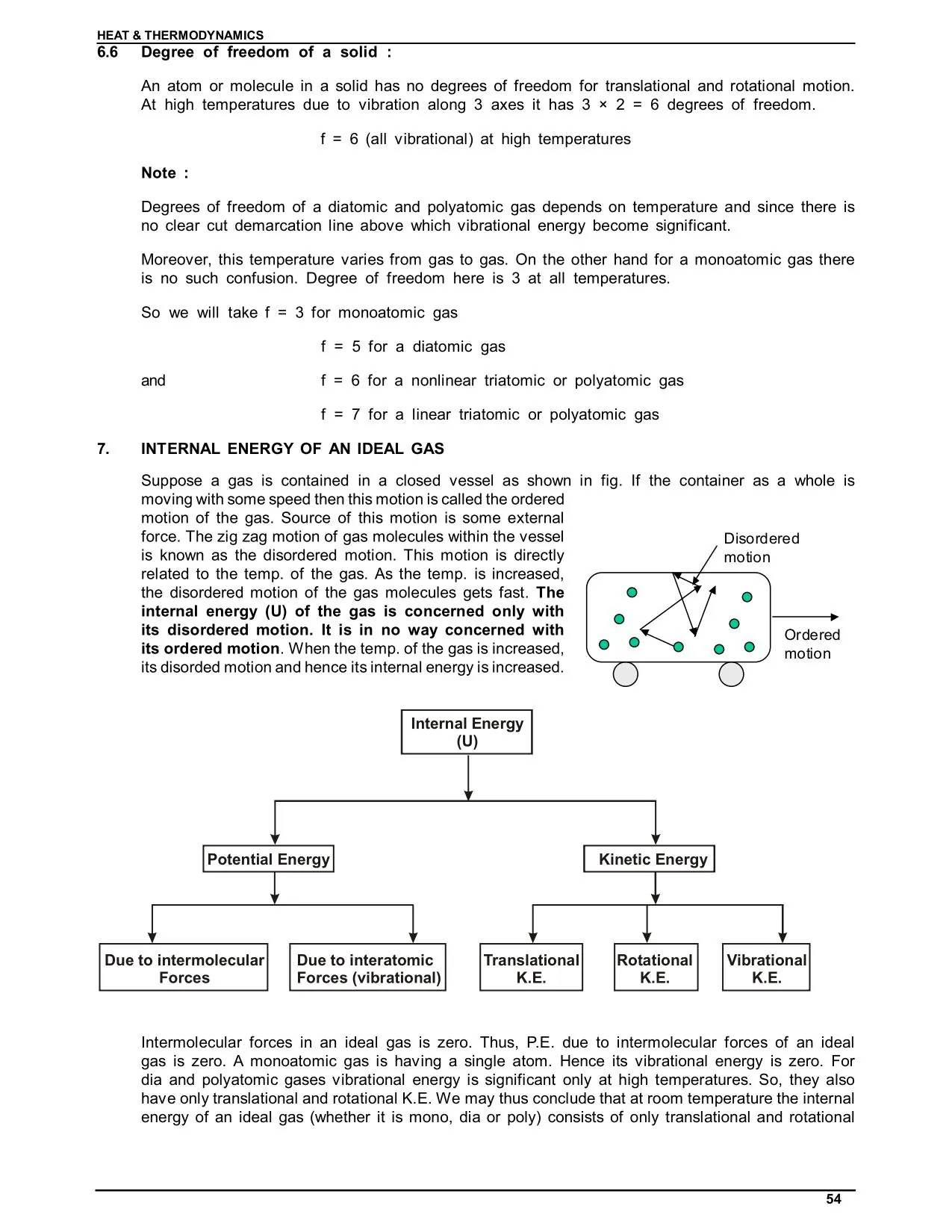
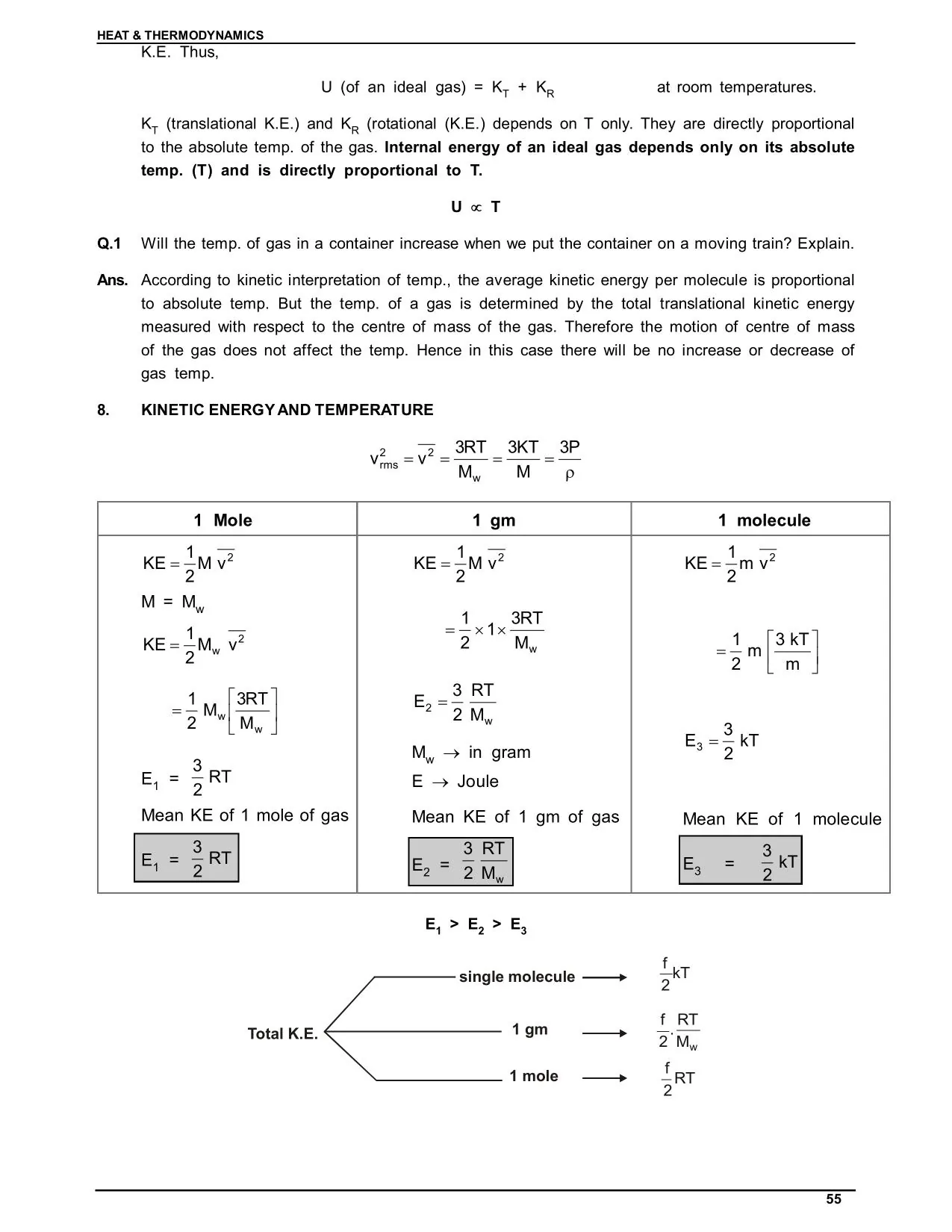
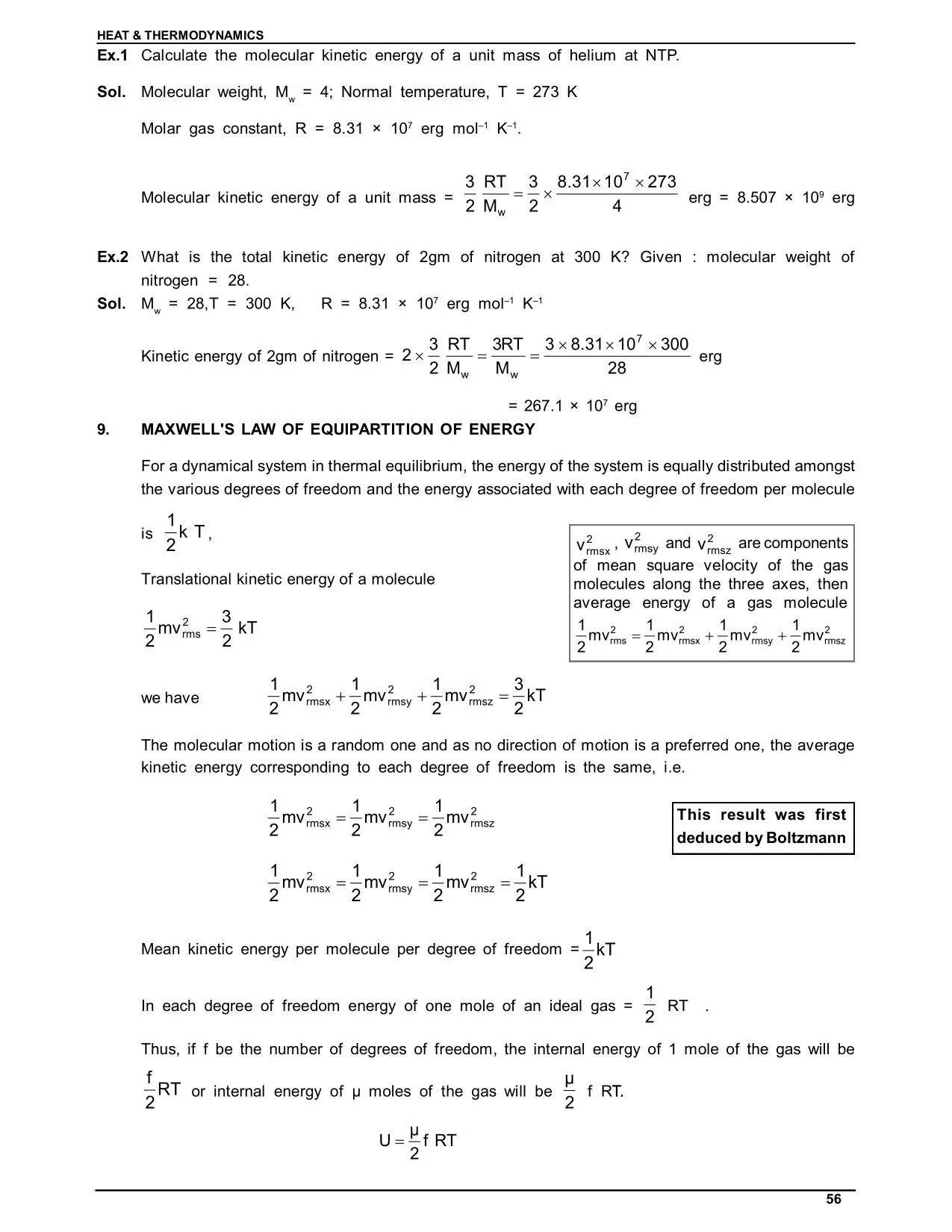
The law of equipartition states that thermal energy is distributed equally among all available degrees of freedom of a molecule. Each degree of freedom gets exactly (1/2)k_BT of energy per molecule at temperature T. So a monatomic gas (3 degrees of freedom) has average energy (3/2)k_BT, while a rigid diatomic gas (5 degrees of freedom) has (5/2)k_BT.
How does mean free path change with temperature and pressure?
Mean free path (λ) increases with temperature and decreases with pressure. Mathematically, λ = k_BT / (√2 π d² P). At constant pressure, doubling the temperature doubles the mean free path. At constant temperature, doubling the pressure halves the mean free path. The molecular size (diameter d) also matters — larger molecules collide more frequently and have shorter mean free paths.