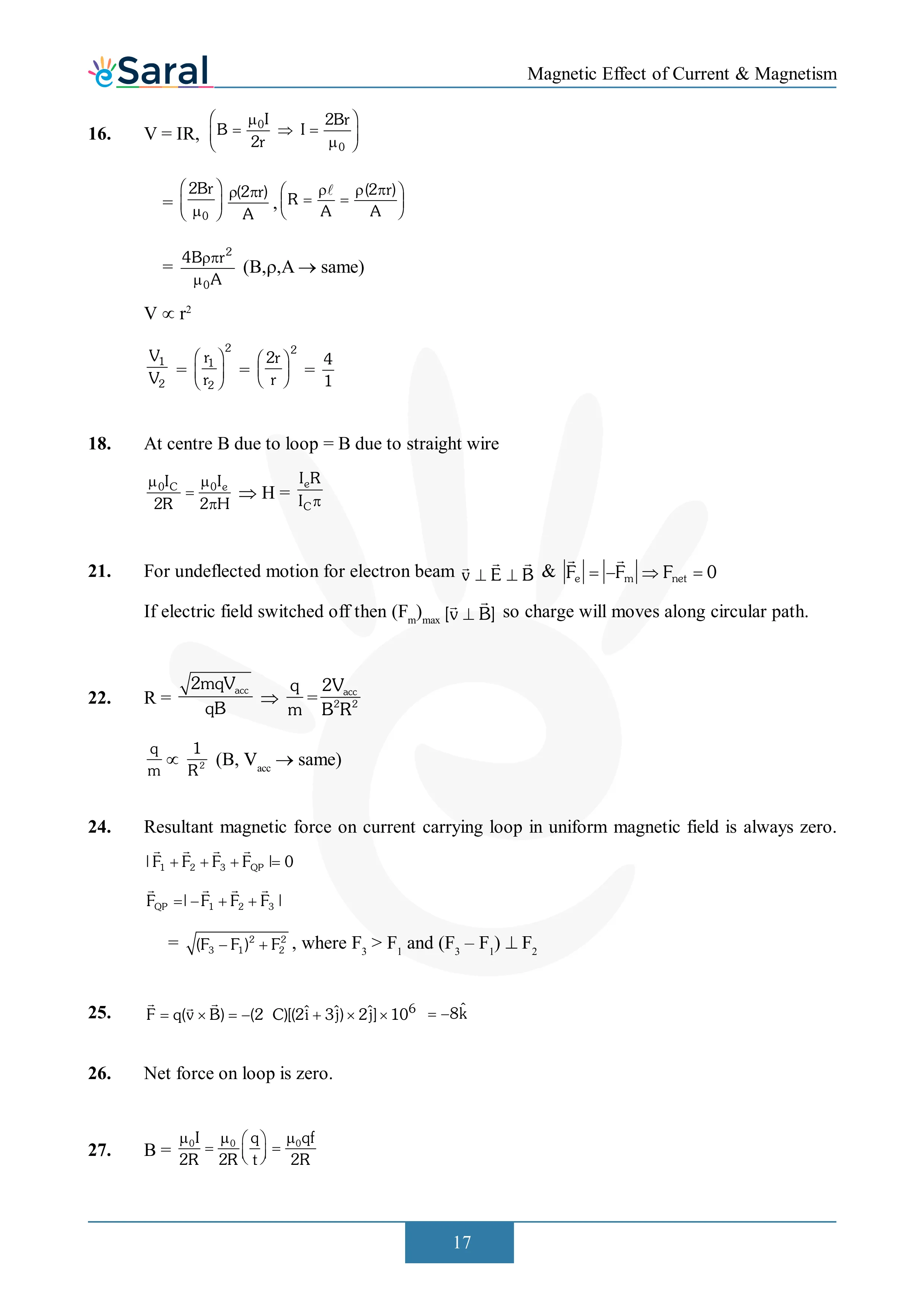
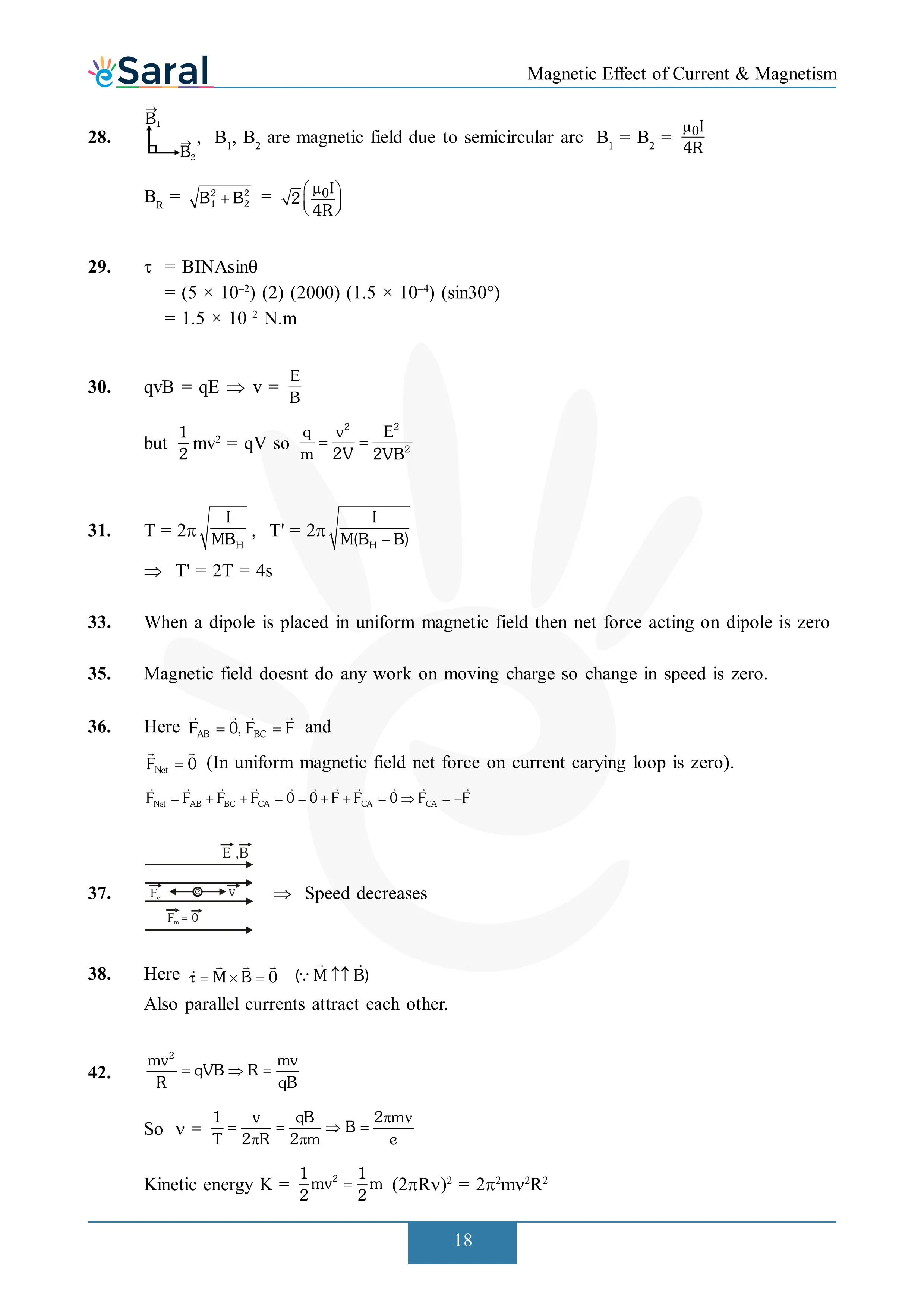
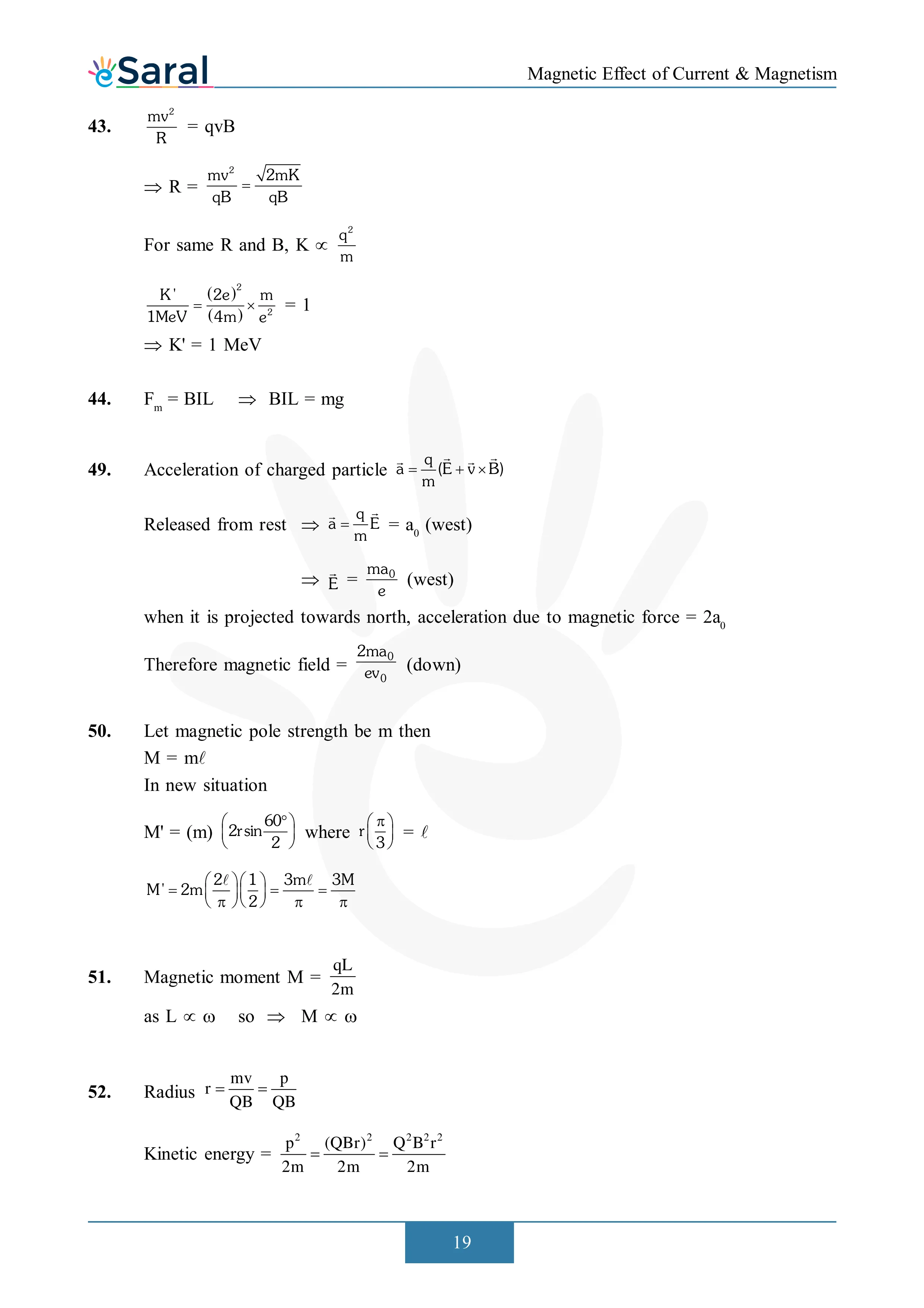
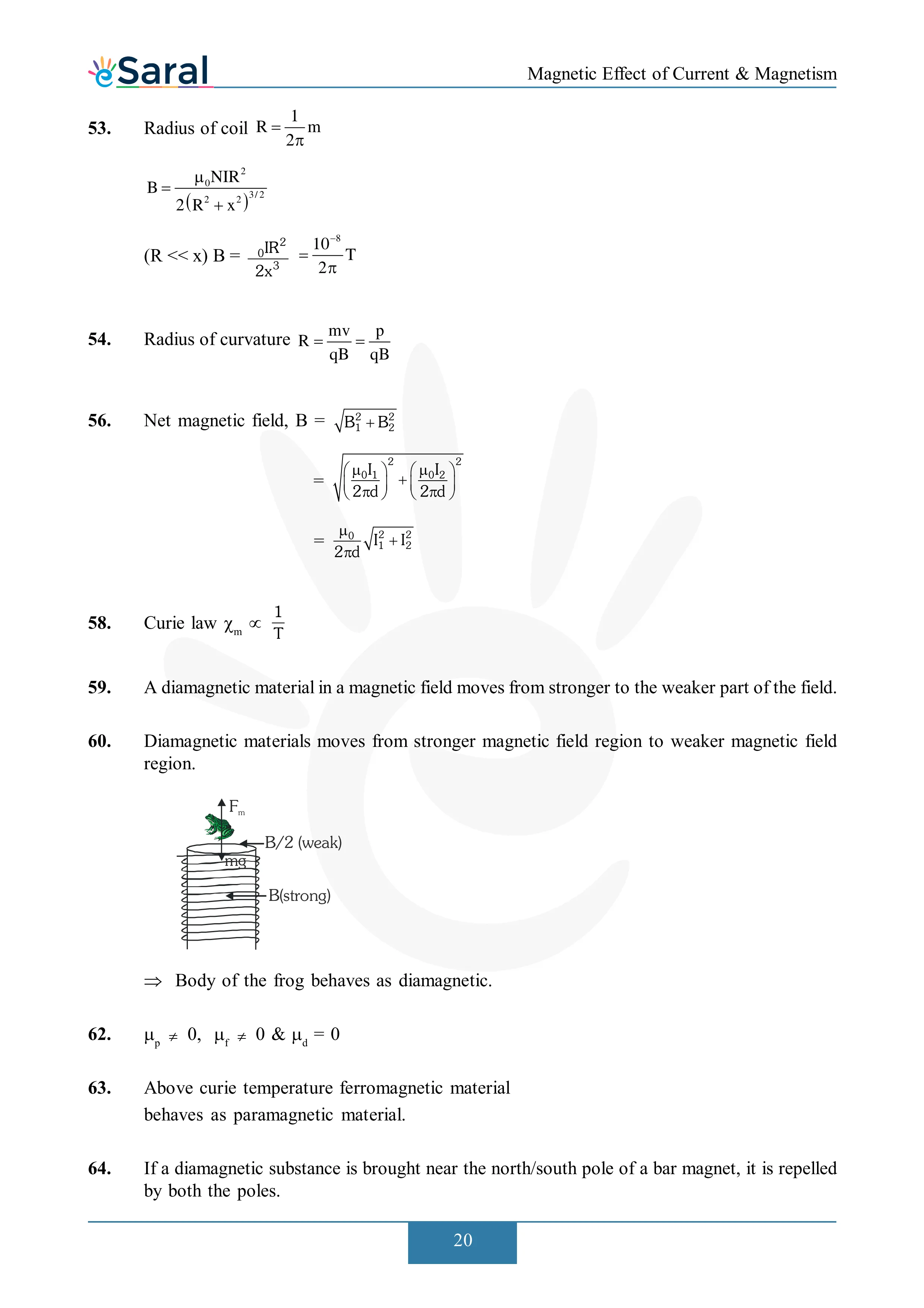
Magnetic Effect of Current & Electricity- NEET Previous Year Questions with Complete Solutions
Magnetic Effect of Current and Magnetism is a high-scoring NEET Physics chapter focused on magnetic fields, current-carrying conductors, and formula-based problem solving through important previous year questions with detailed solutions.

Table of Contents

eSaral › NEET ›Magnetic Effect of Current & Electricity

Why This Chapter Matters for NEET
Magetic Effect of Current and Magnetism sits inside Unit IV of the Class 12 Physics NEET syllabus as notified by NTA. Every NEET paper from 2013 to 2024 has carried at least two questions from this chapter, making it one of the most reliable score-boosters in Physics.
Unlike topics that require heavy derivation under exam pressure, most questions here test concept clarity and formula application — the kind of thinking that Kota-quality, IIT-trained teaching drills from day one. If you can visualise magnetic field directions, apply the right-hand rule, and handle a few standard circuit configurations, you can solve 80% of the PYQs within 90 seconds each.
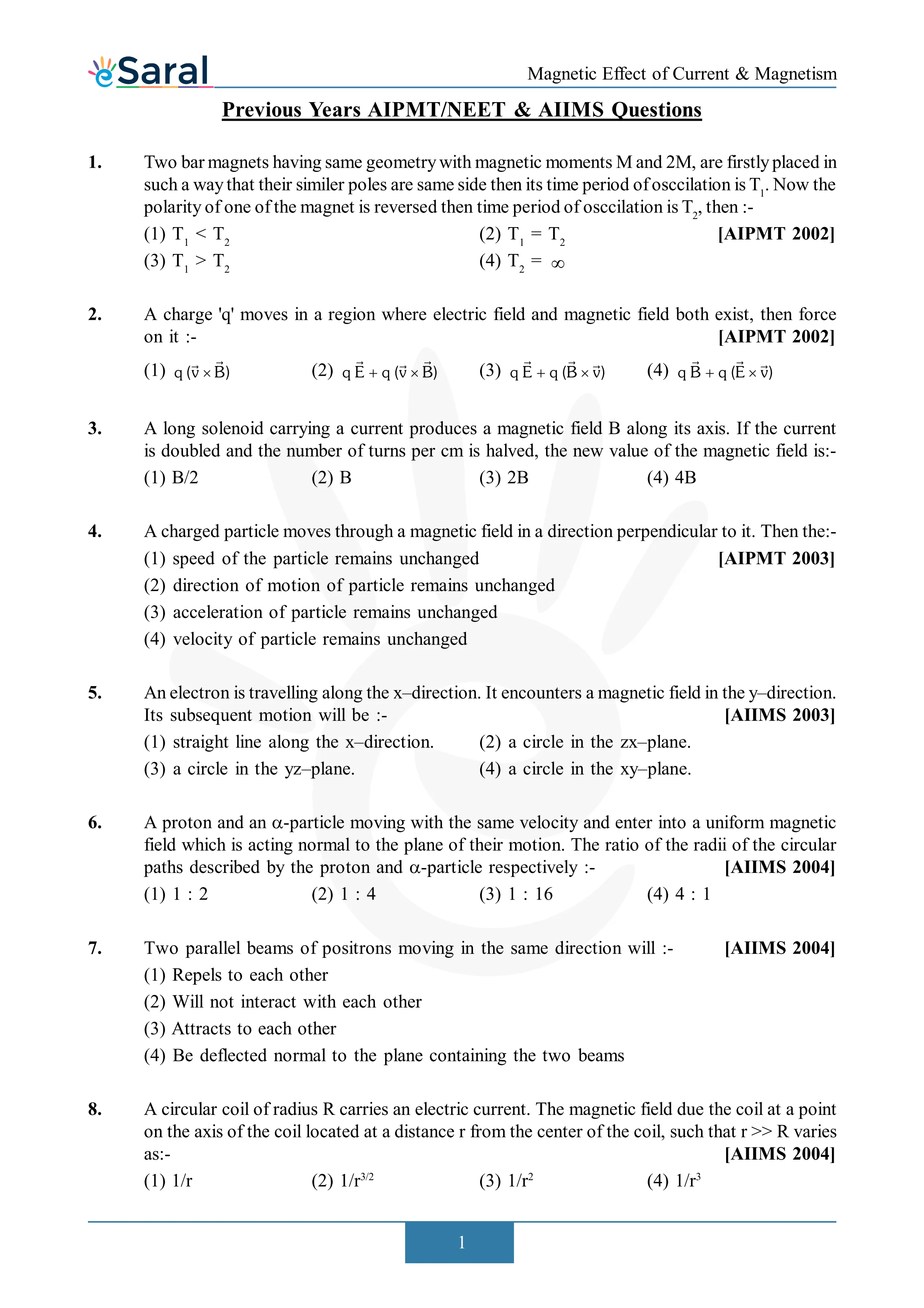
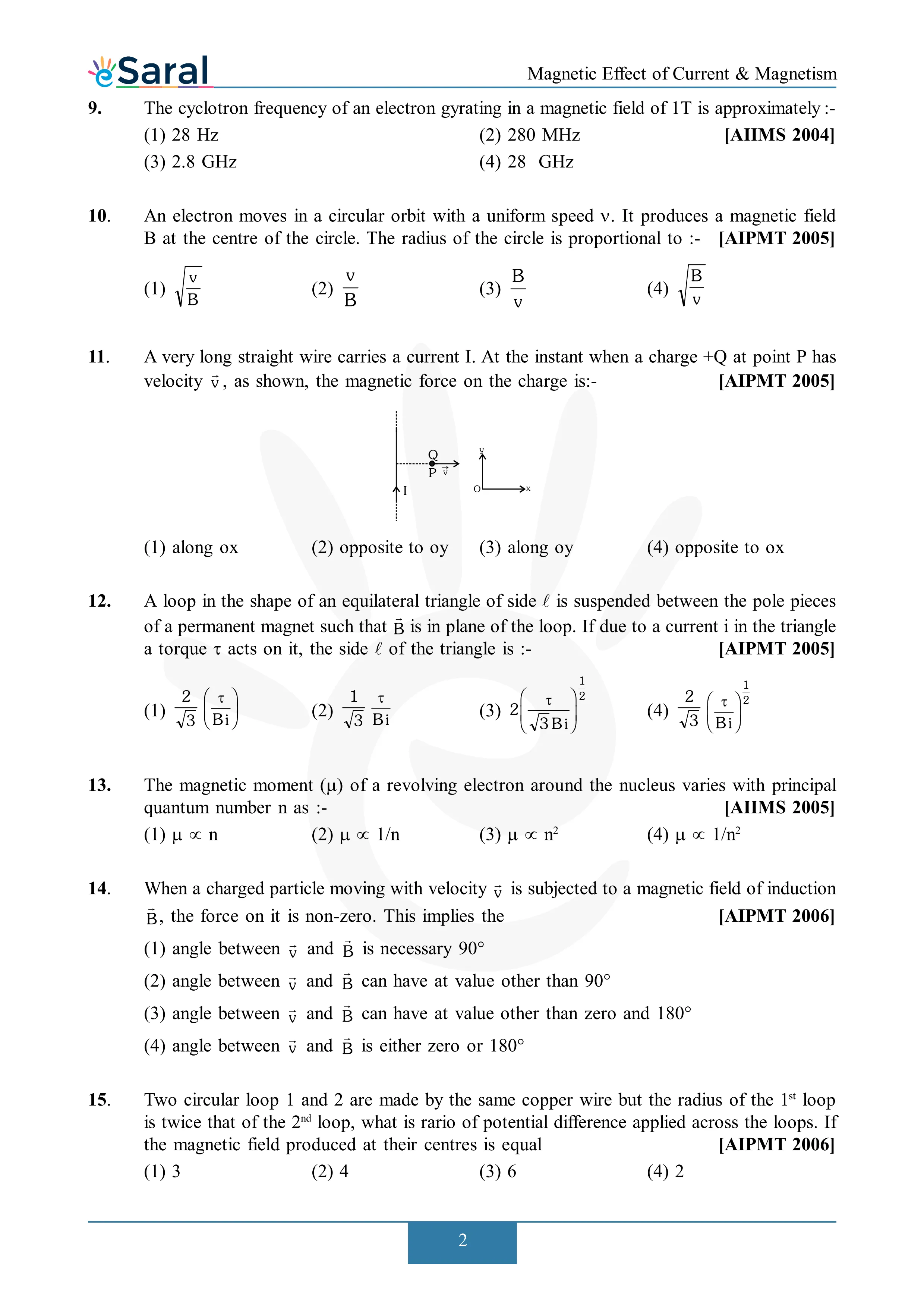
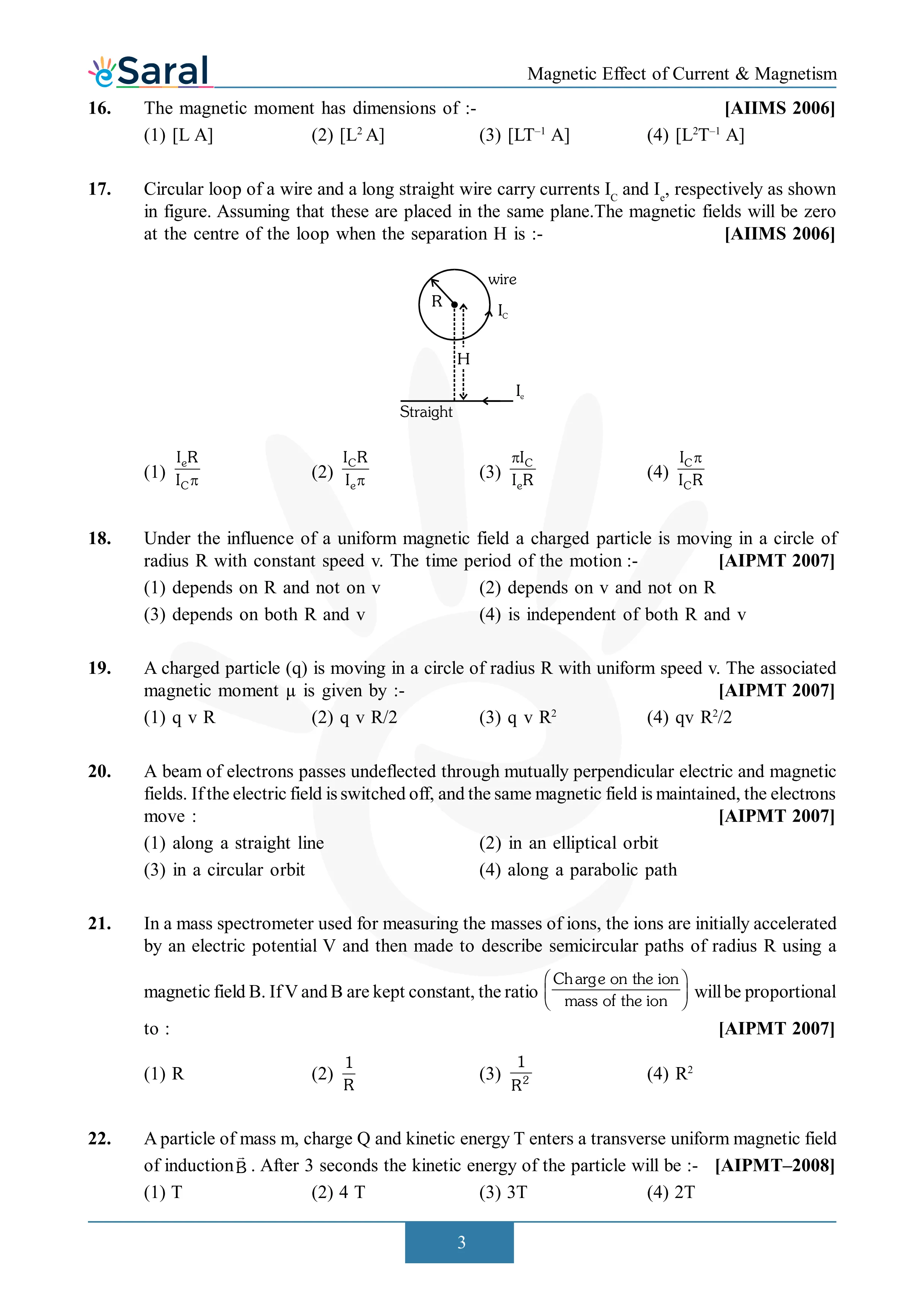
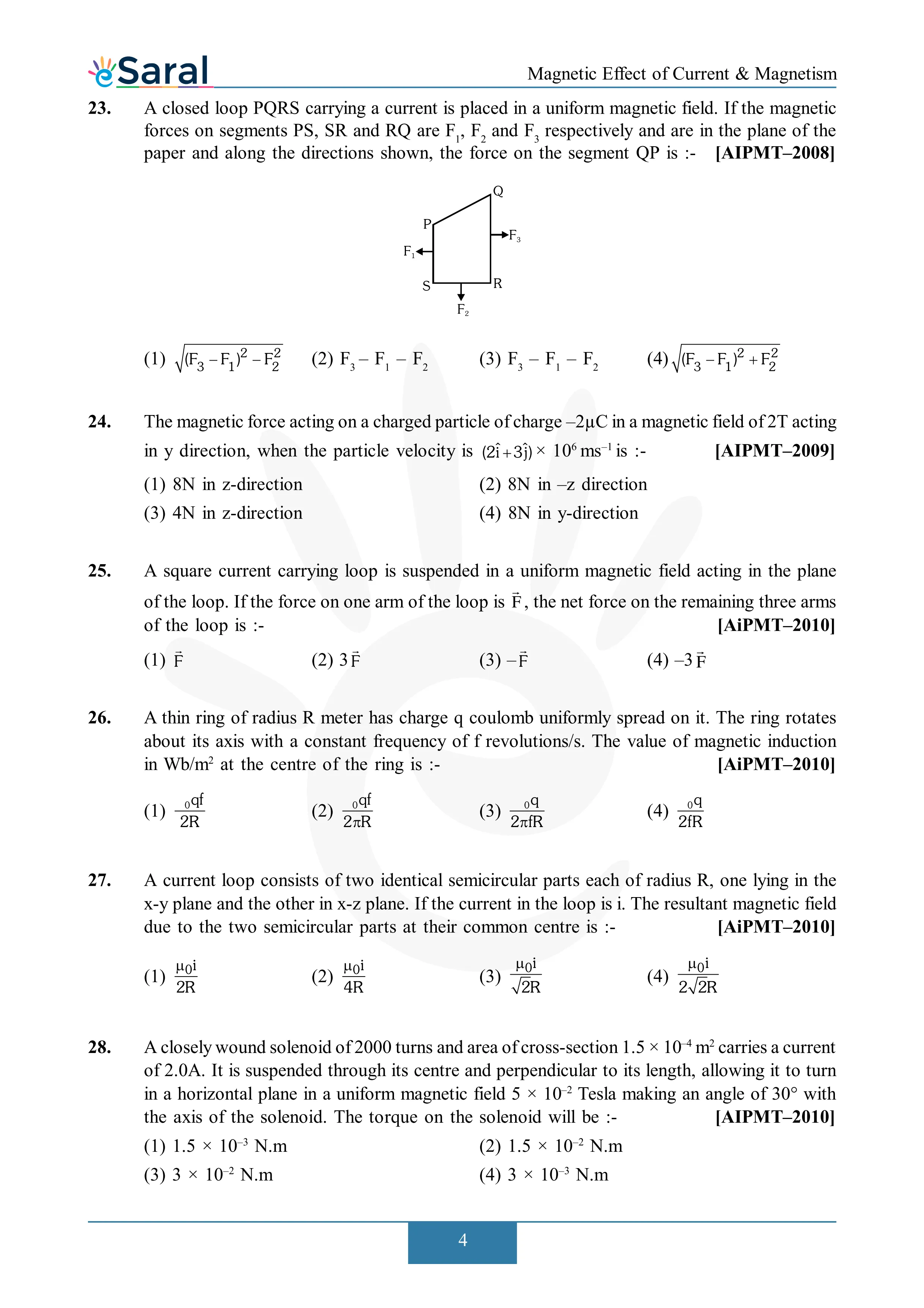
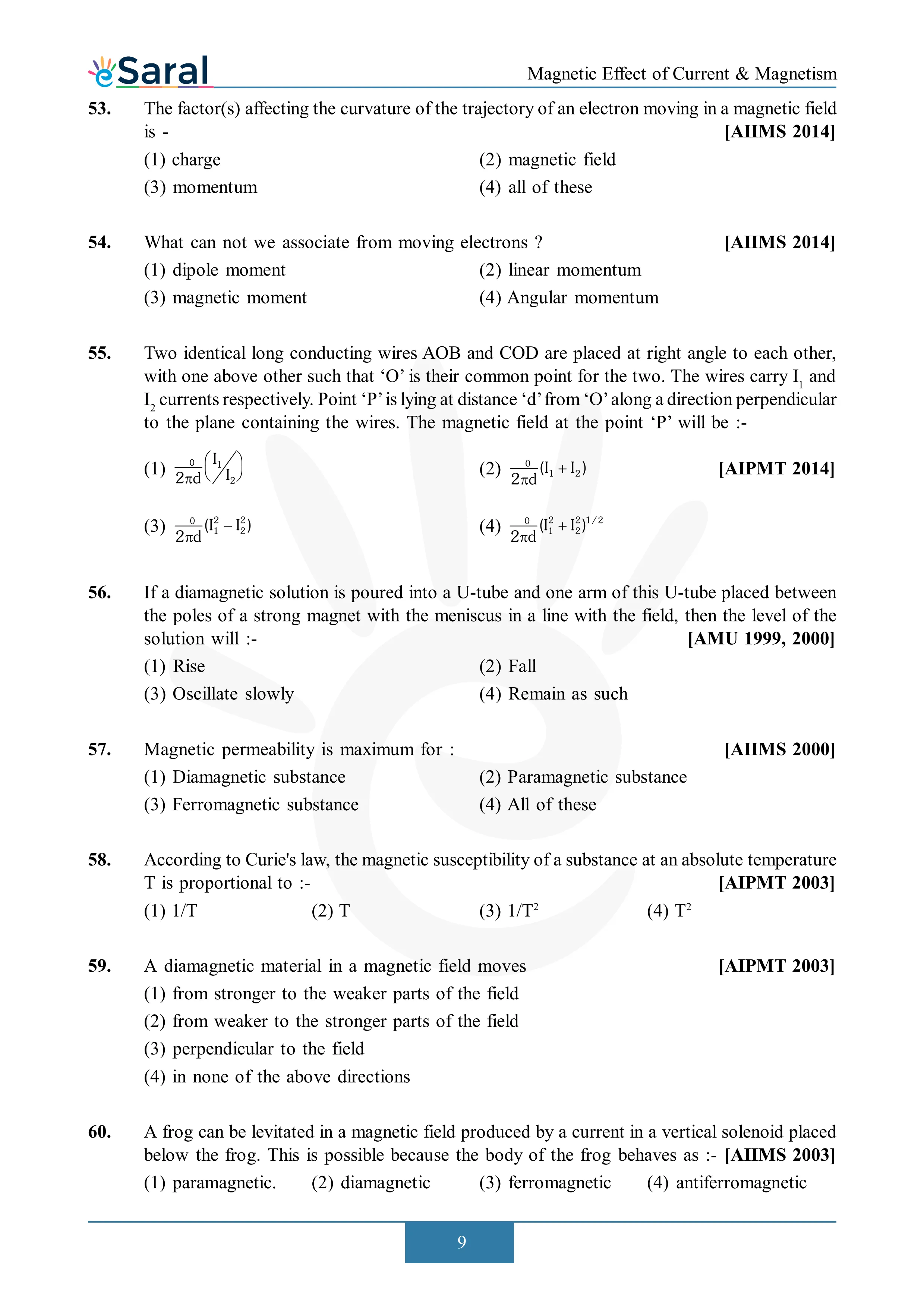
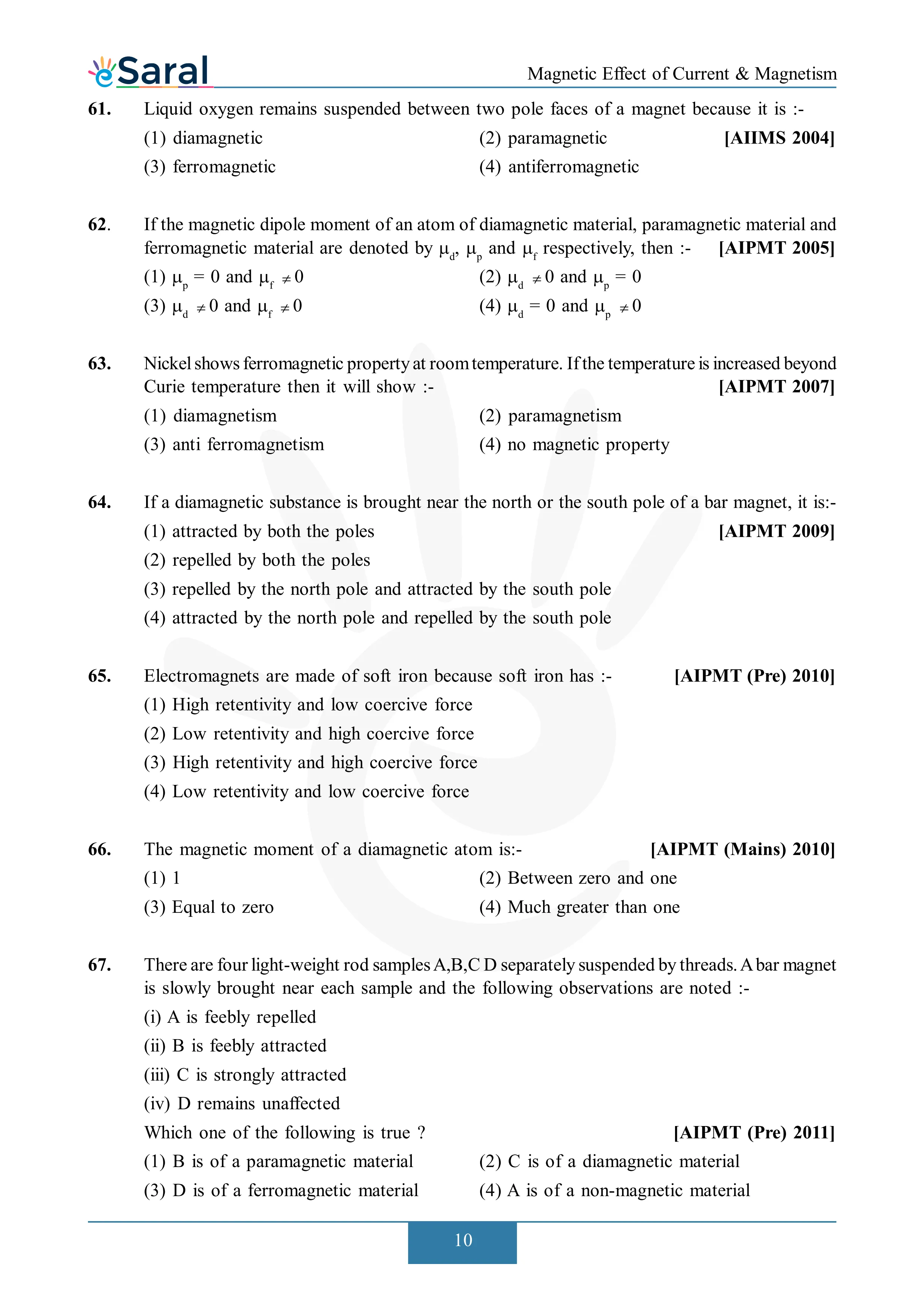
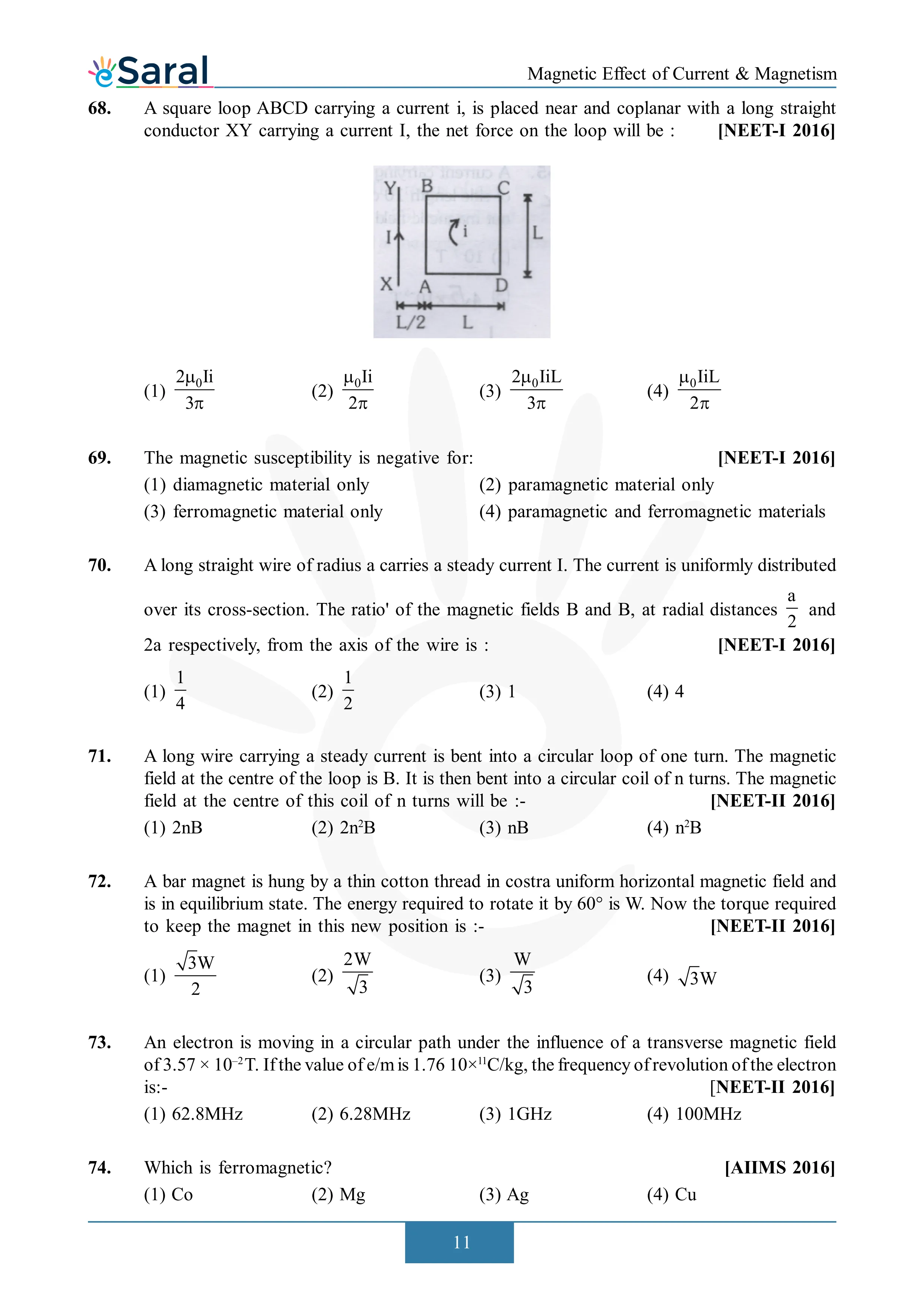
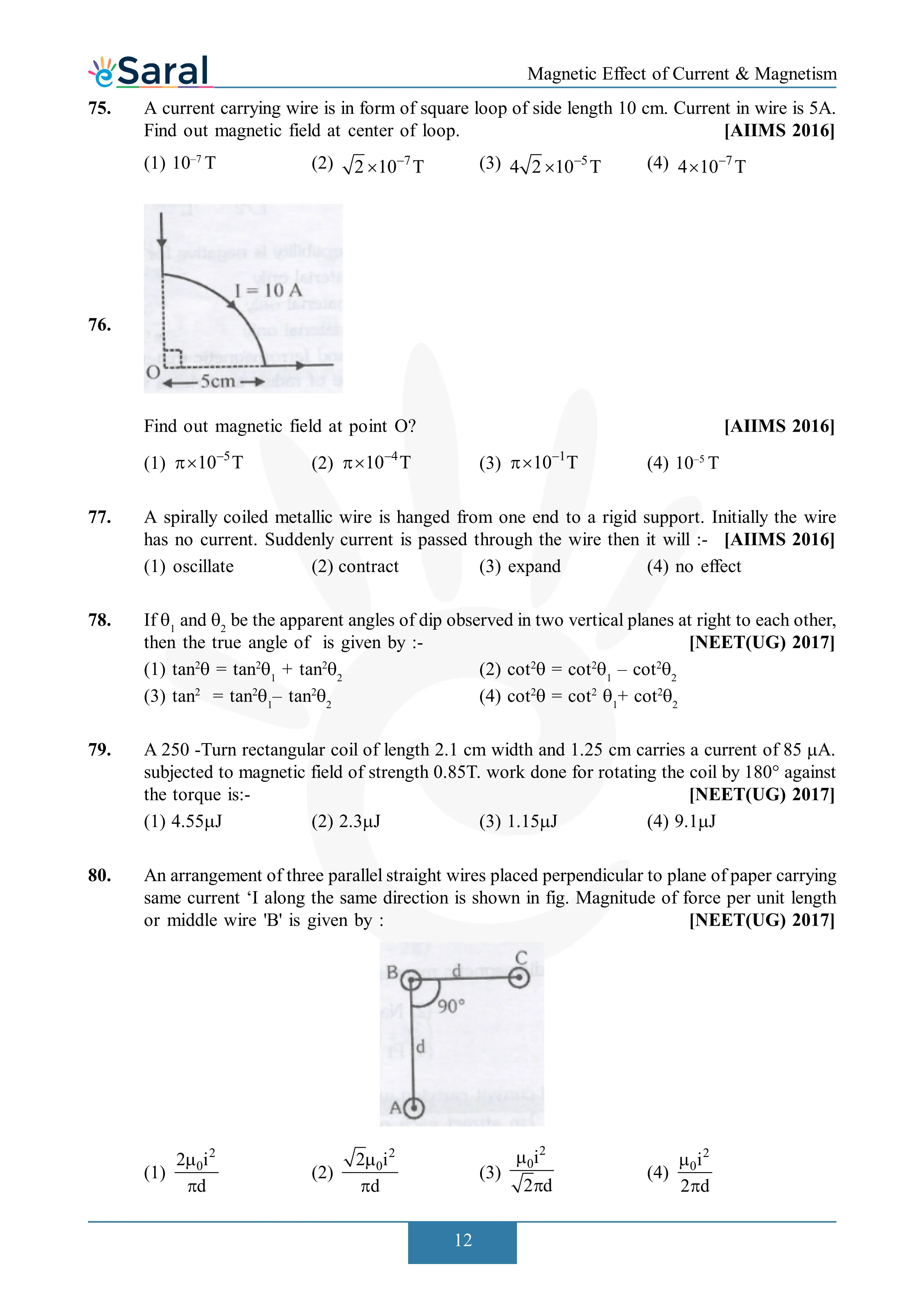
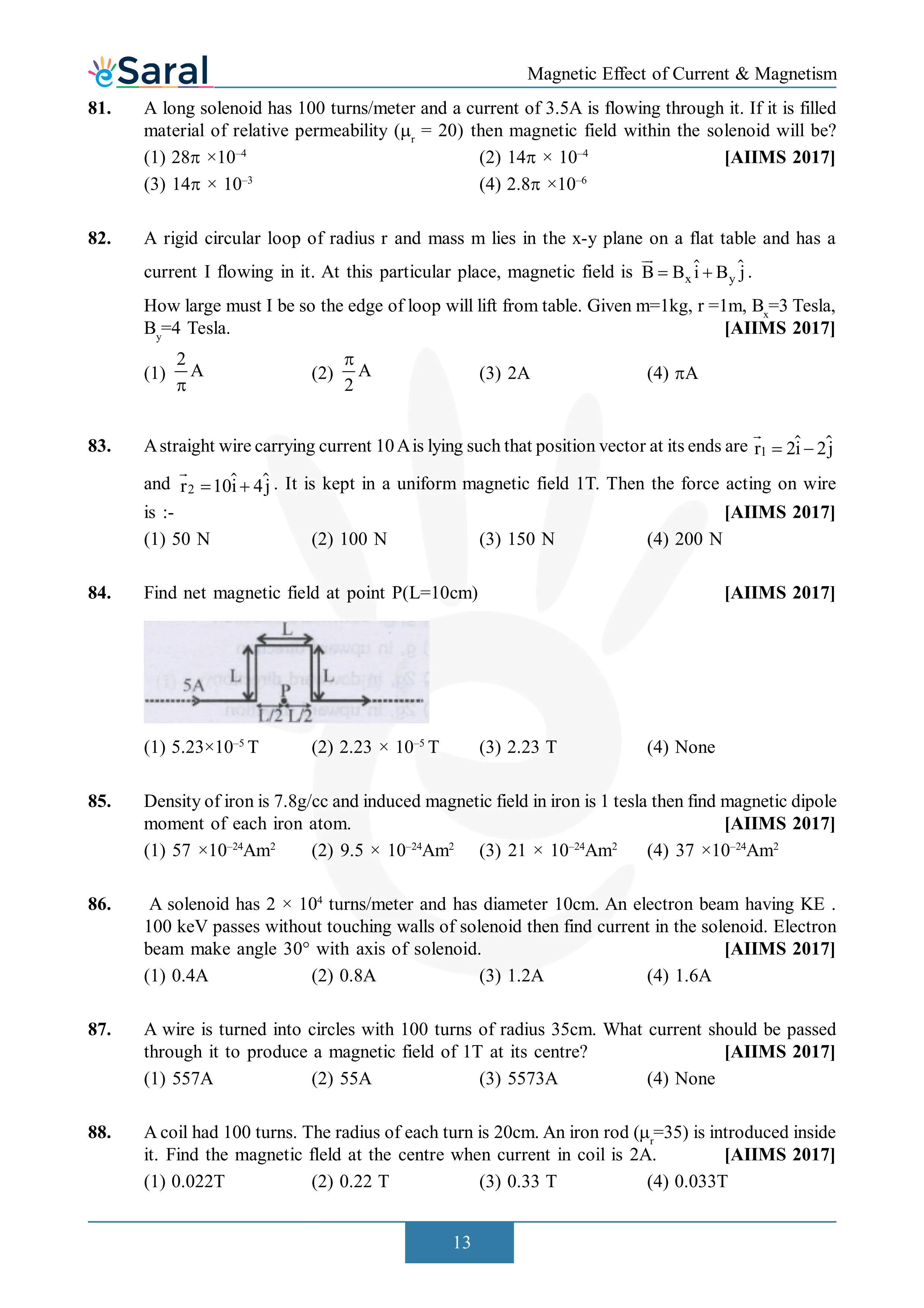
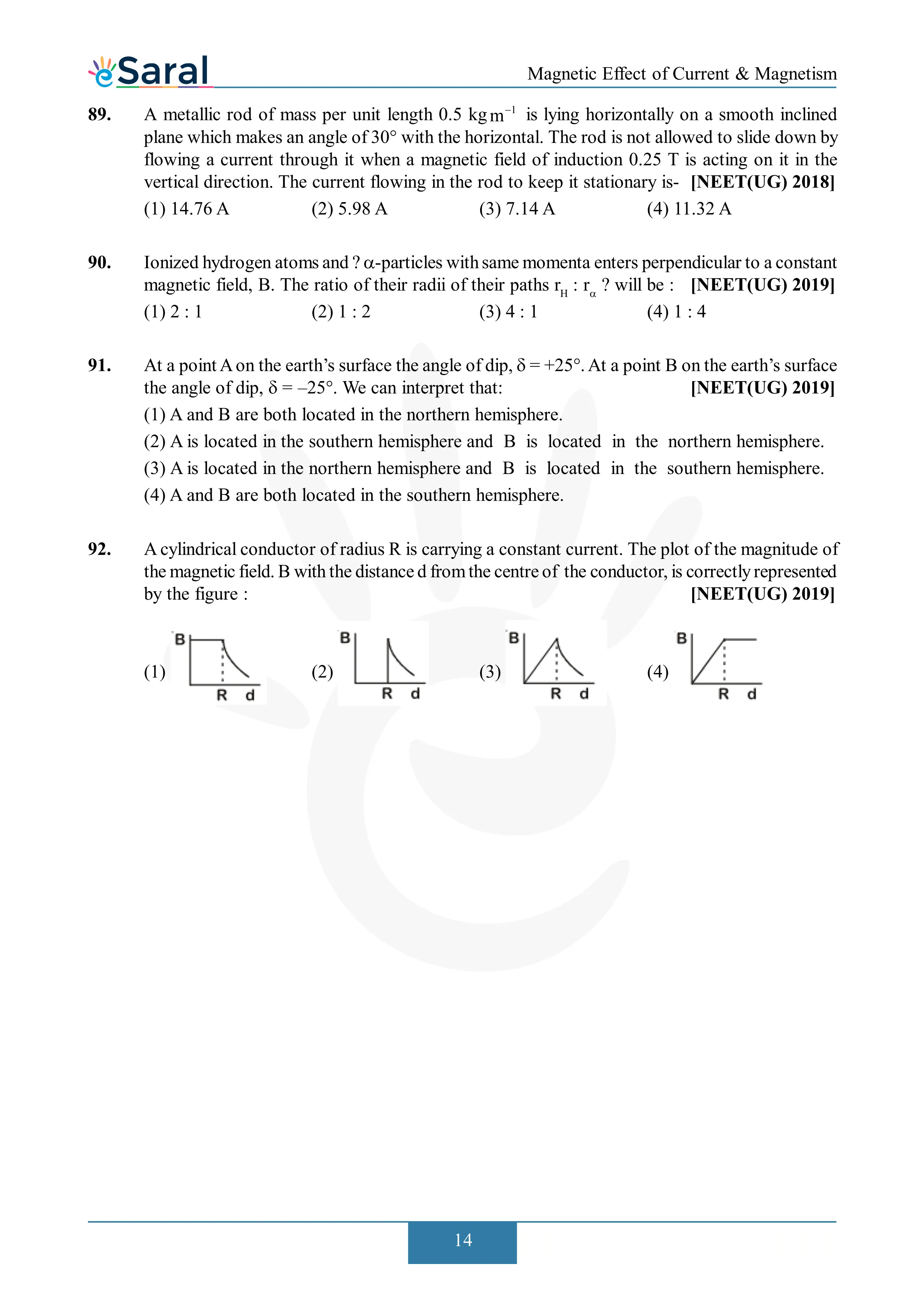
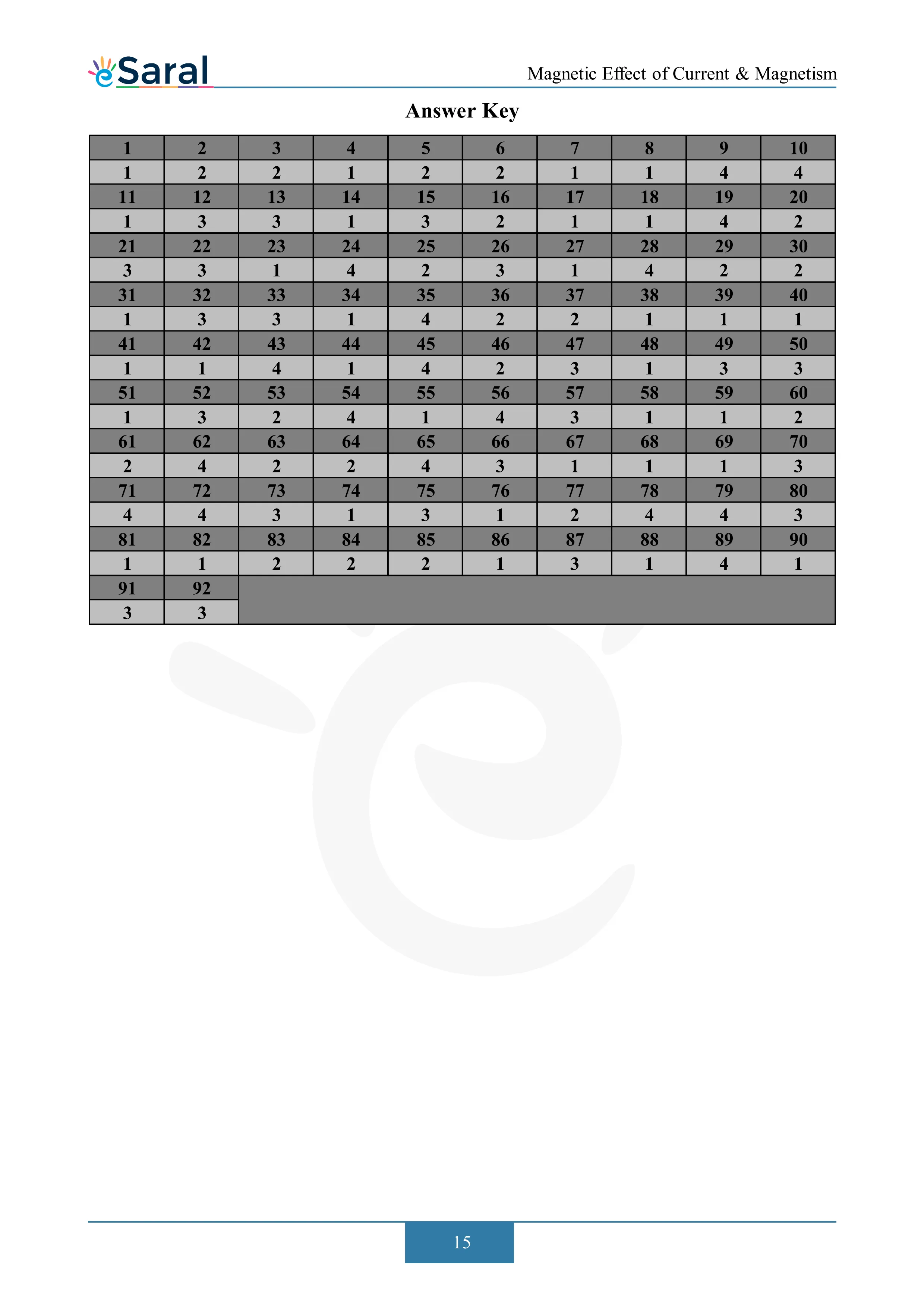
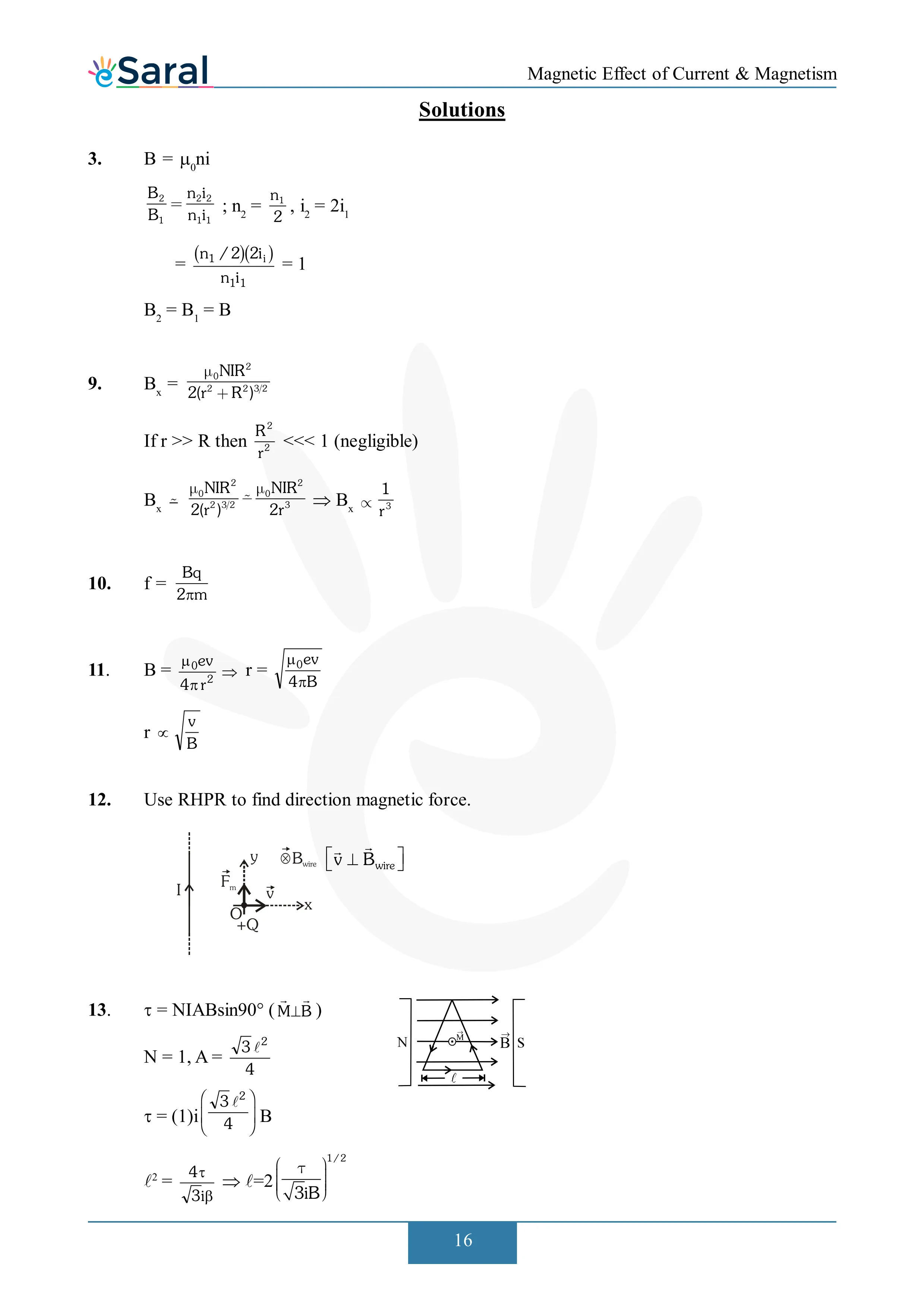
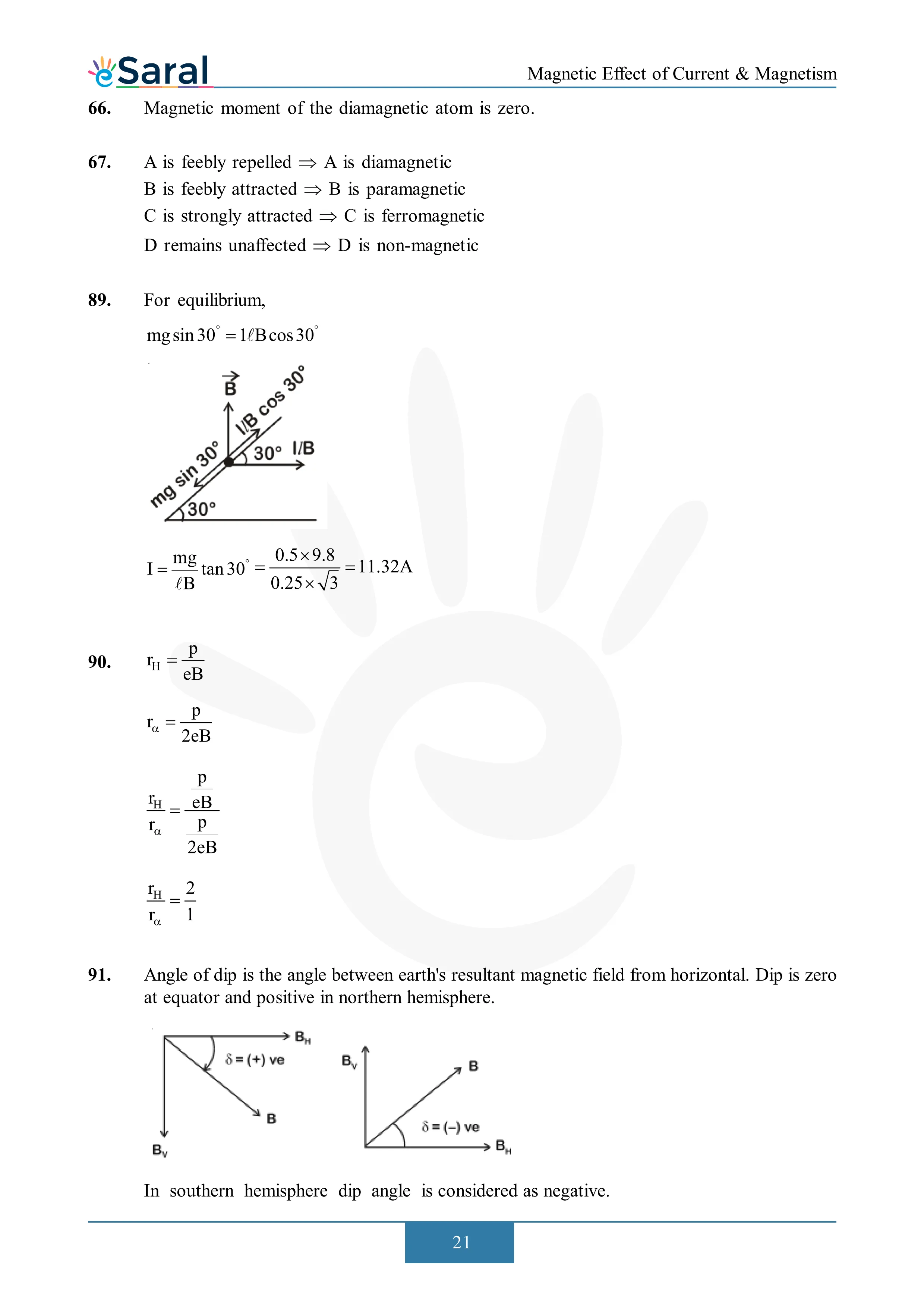
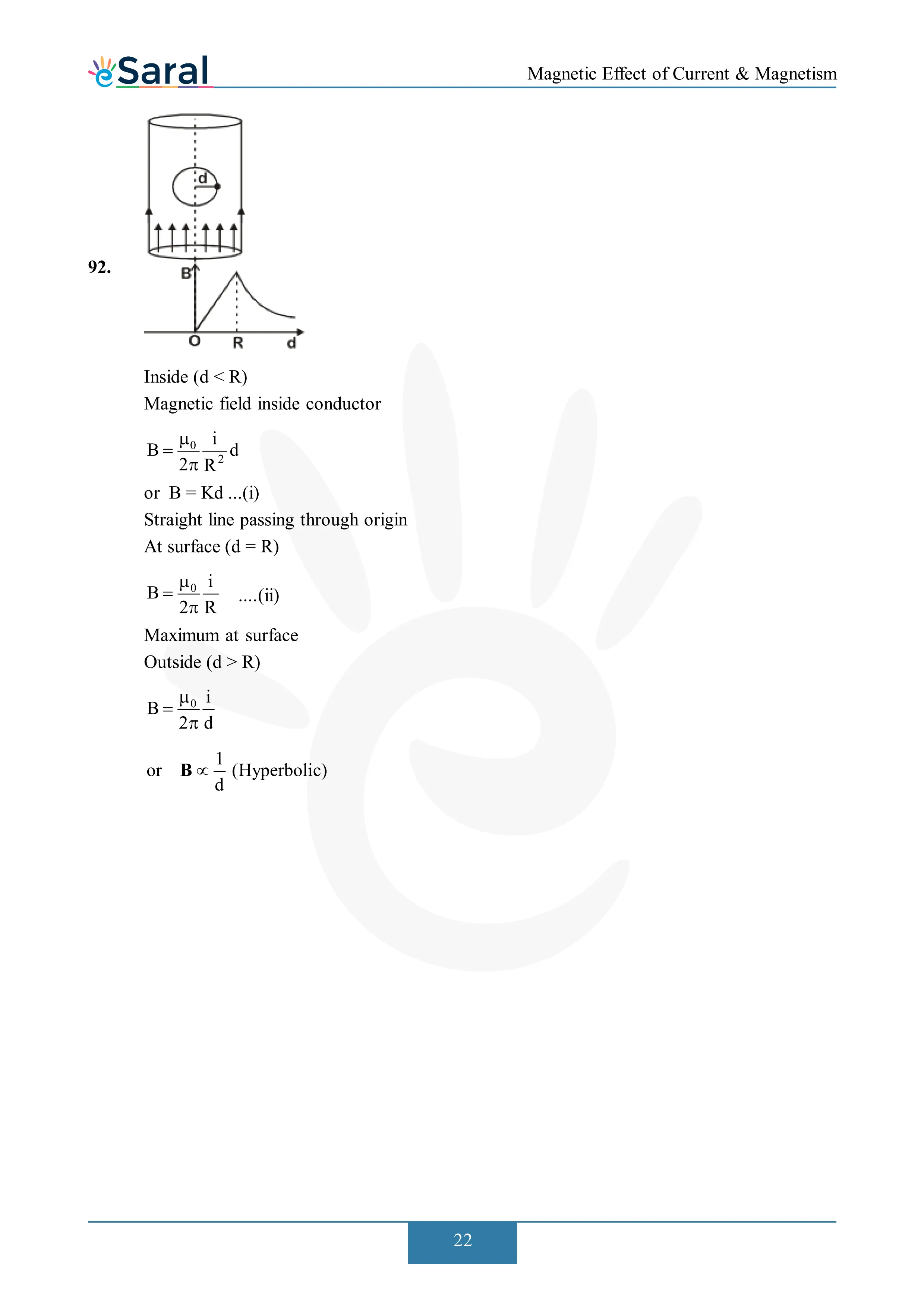
NEET PYQ with Solutions
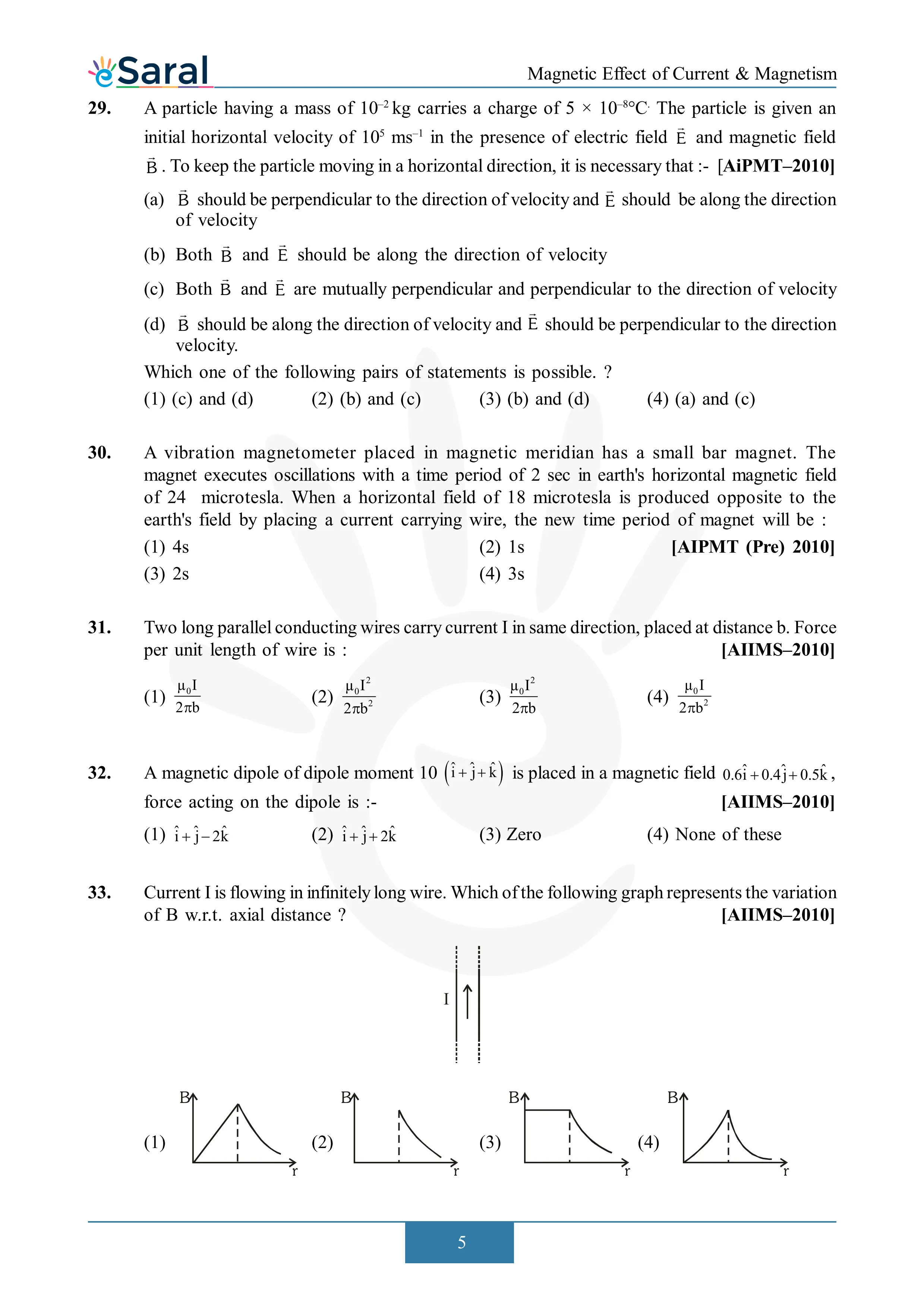
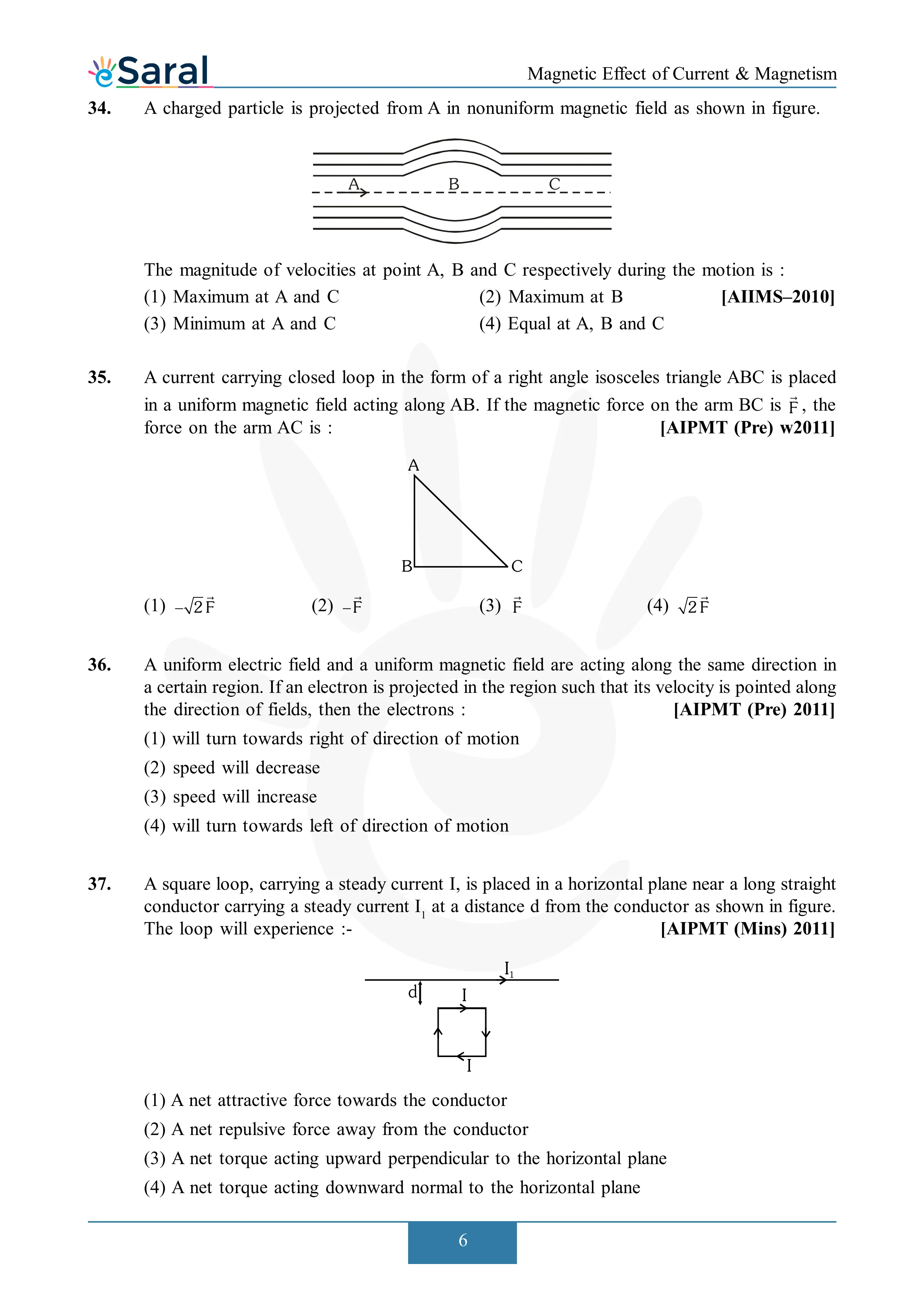
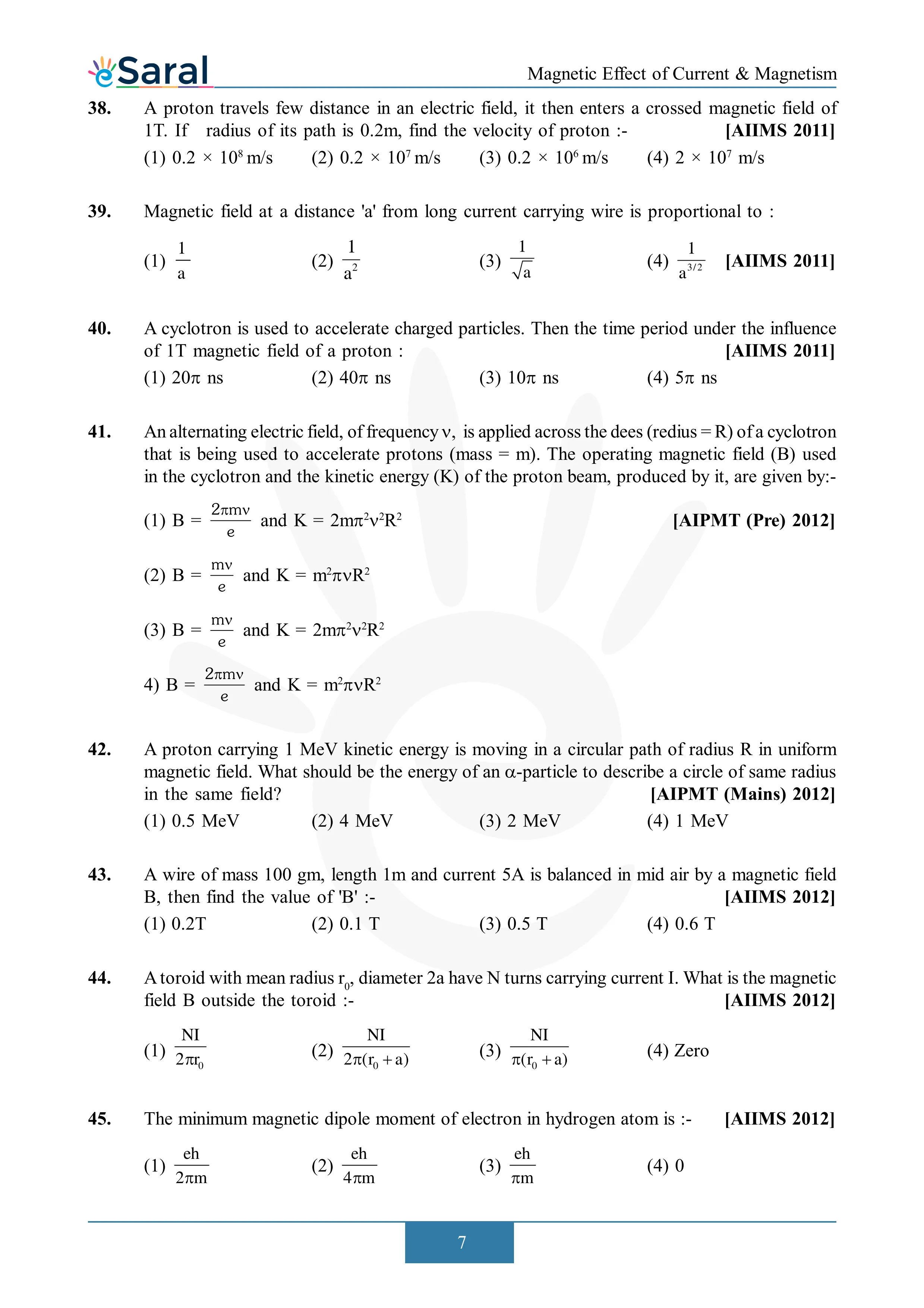
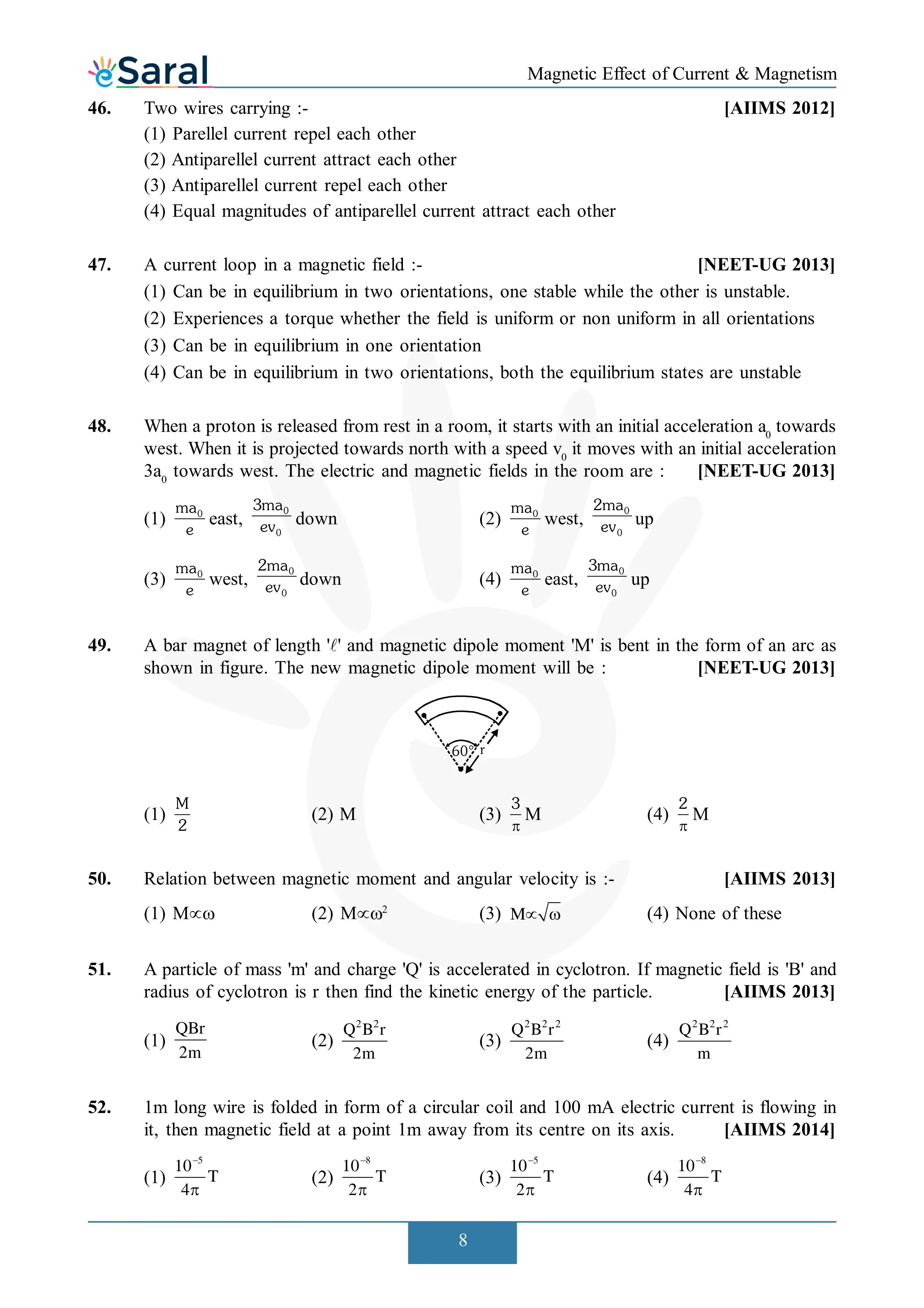
Frequently Asked Questions
Find answers to common questions.
Is Magnetic Effect of Current important for NEET 2025?
Yes, it is one of the most important chapters in NEET Physics. The chapter appears consistently every year and the questions are relatively formula-based, making it a high-scoring chapter for well-prepared students. Cover all Tier 1 topics from the NCERT Class 12 Physics textbook and solve at least 10 years of PYQs for full preparation.
What is the difference between Biot-Savart law and Ampere's circuital law?
Biot-Savart law calculates the magnetic field produced by any current element of any shape — it is universally applicable. Ampere's circuital law is a simplified tool that works only when the current distribution has high geometric symmetry (infinite wire, solenoid, toroid). NEET questions specify the geometry, so identify symmetry first to choose the correct law.
Which formula is most frequently tested in Magnetic Effect NEET questions?
The most frequently tested formulas are: B = μ₀I / 2πr (field due to a long straight wire), F = qvB sin θ (Lorentz force), and F = BIL sin θ (force on a conductor). These three alone cover roughly 60% of all PYQ numerical questions in this chapter from 2013 to 2024.
How do I convert a galvanometer to an ammeter or voltmeter for NEET?
To convert a galvanometer to an ammeter, connect a low resistance (shunt) in parallel. To convert it to a voltmeter, connect a high resistance in series. The shunt value is S = IgG / (I − Ig) and the series resistance is R = (V/Ig) − G. NEET frequently tests these formulas with numerical substitution.
Can I score full marks in Magnetic Effect of Current in NEET by only studying NCERT?
NCERT Class 12 Physics (Chapters 4 and 5) covers approximately 75–80% of what NEET asks from this chapter. The remaining 20–25% involves application-level questions that go slightly beyond NCERT examples. Solving 10+ years of PYQs alongside NCERT is the minimum preparation standard. NCERT examples and exercises should be solved completely before moving to PYQs.