Metallurgy Notes for Class 12, IIT JEE & NEET

eSaral › Class 12 › Chemistry Notes › Metallurgy Notes for IIT JEE & NEET
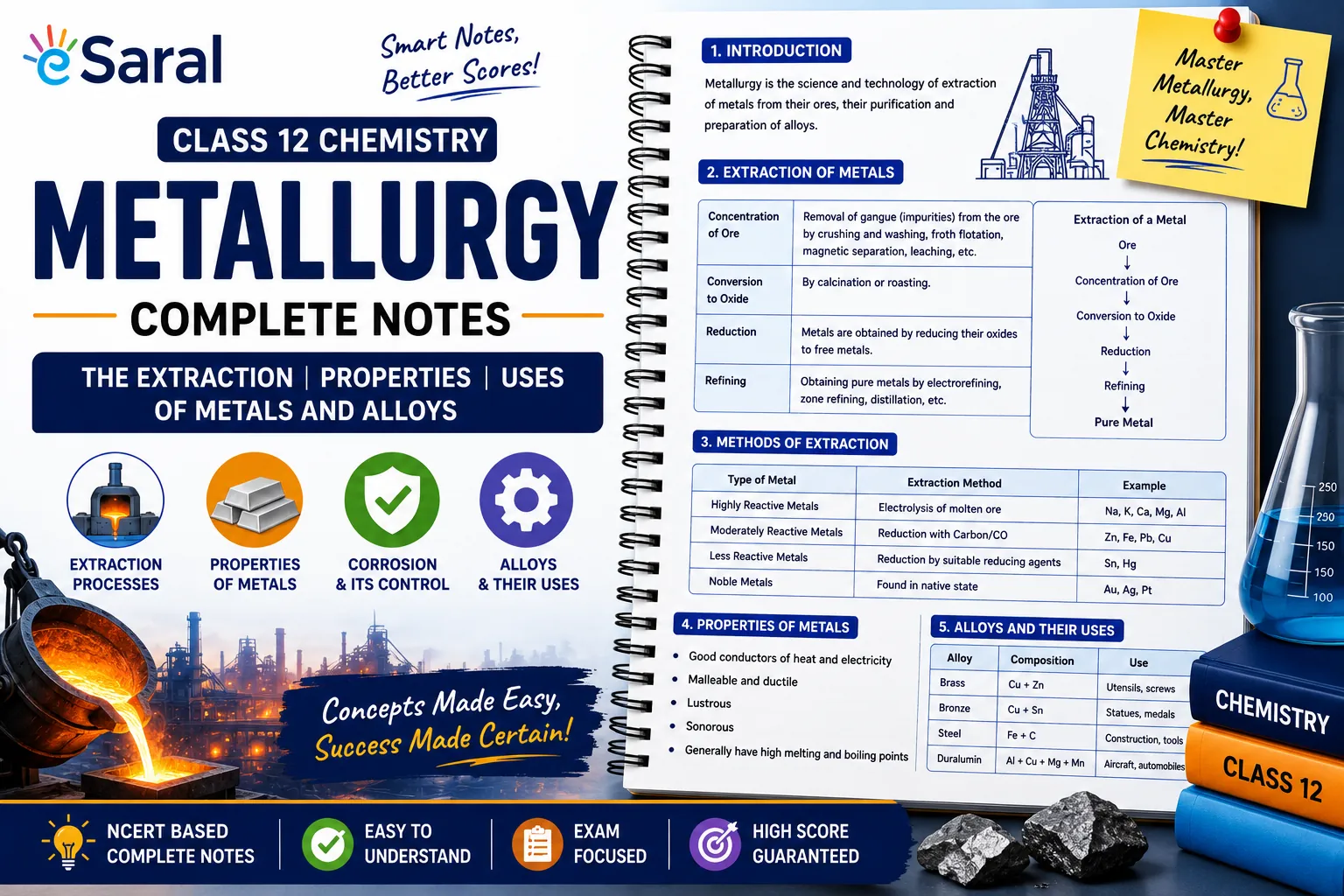
 Get detailed Class 12th Chemistry Notes to prepare for Boards as well as competitive exams like IIT JEE, NEET, etc. eSaral offers you complete notes of Metallurgy Class 12th. eSaral helps the students in clearing and understanding each topic in a better way. eSaral is providing complete chapter notes of Class 11th and 12th both of Physics, Chemistry & Mathematics. Besides this, eSaral also offers NCERT Solutions, Previous year questions for JEE Main and Advanced, Practice questions, Test Series for JEE Main, JEE Advanced, and NEET, Important questions of Physics, Chemistry, Math, and Biology, and many more. Download the eSaral app for free study material and video tutorials.
India's Best Exam Preparation for Class 12th - Download Now 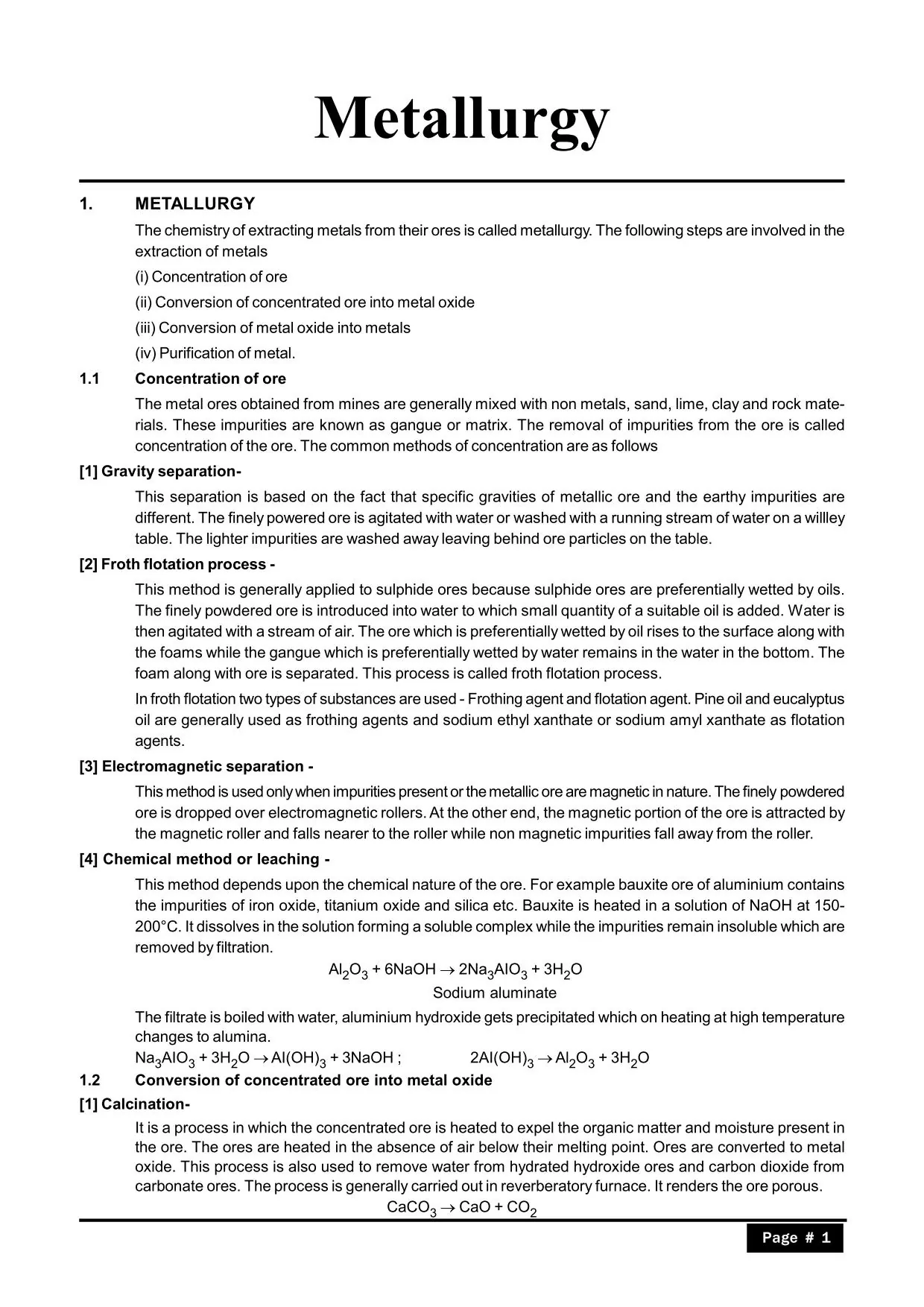
India's Best Exam Preparation for Class 12th - Download Now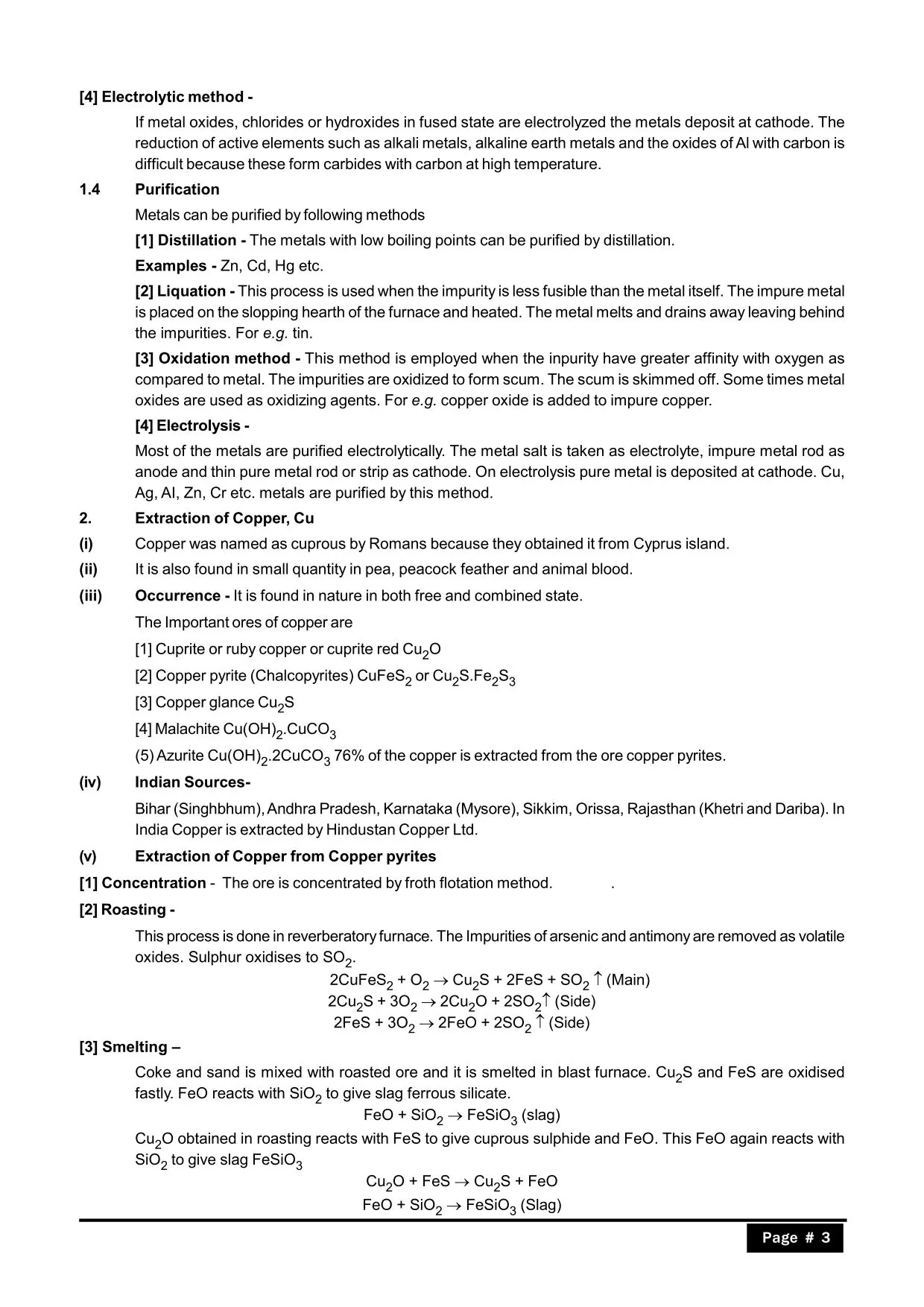
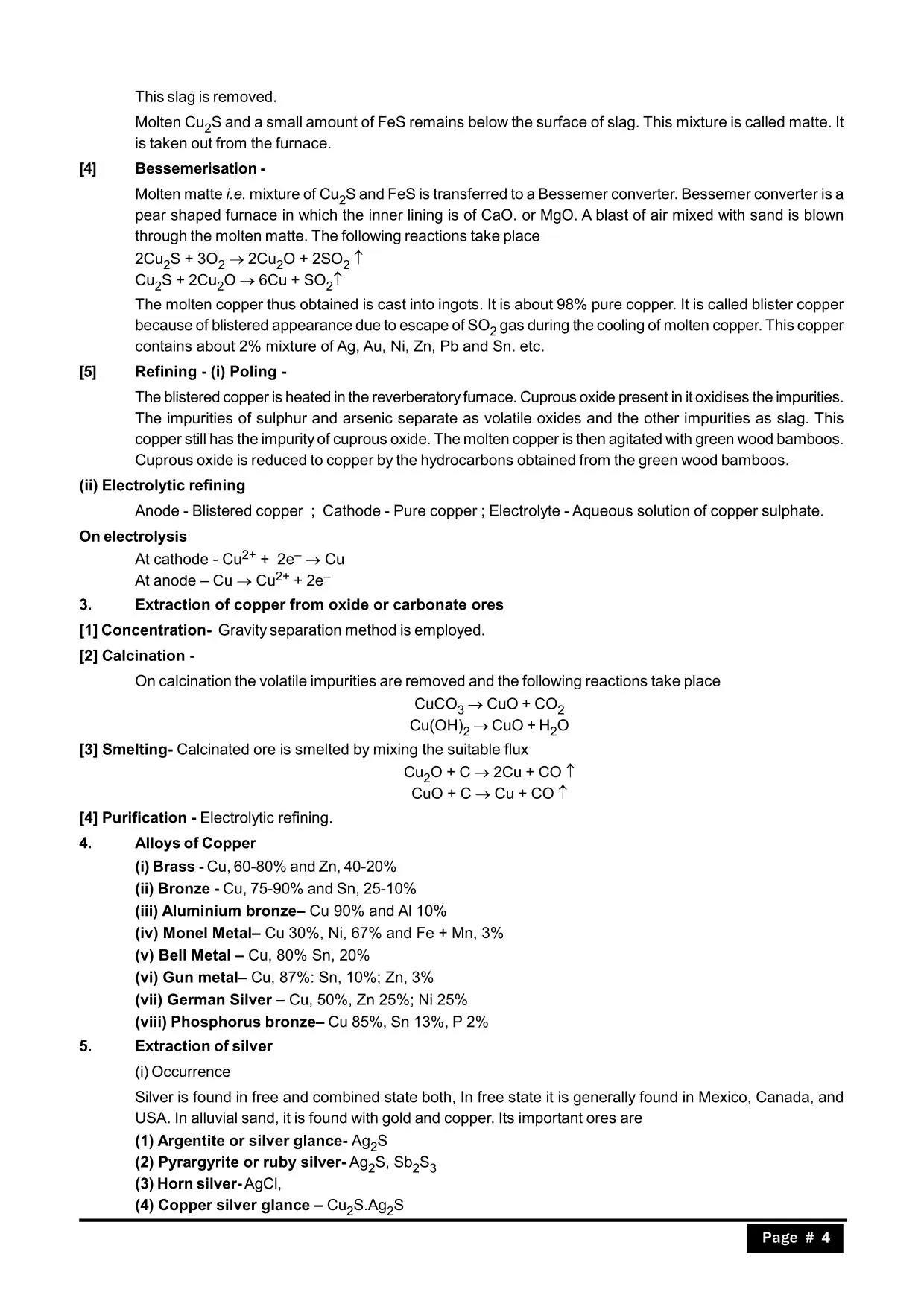
India's Best Exam Preparation for Class 12th - Download Now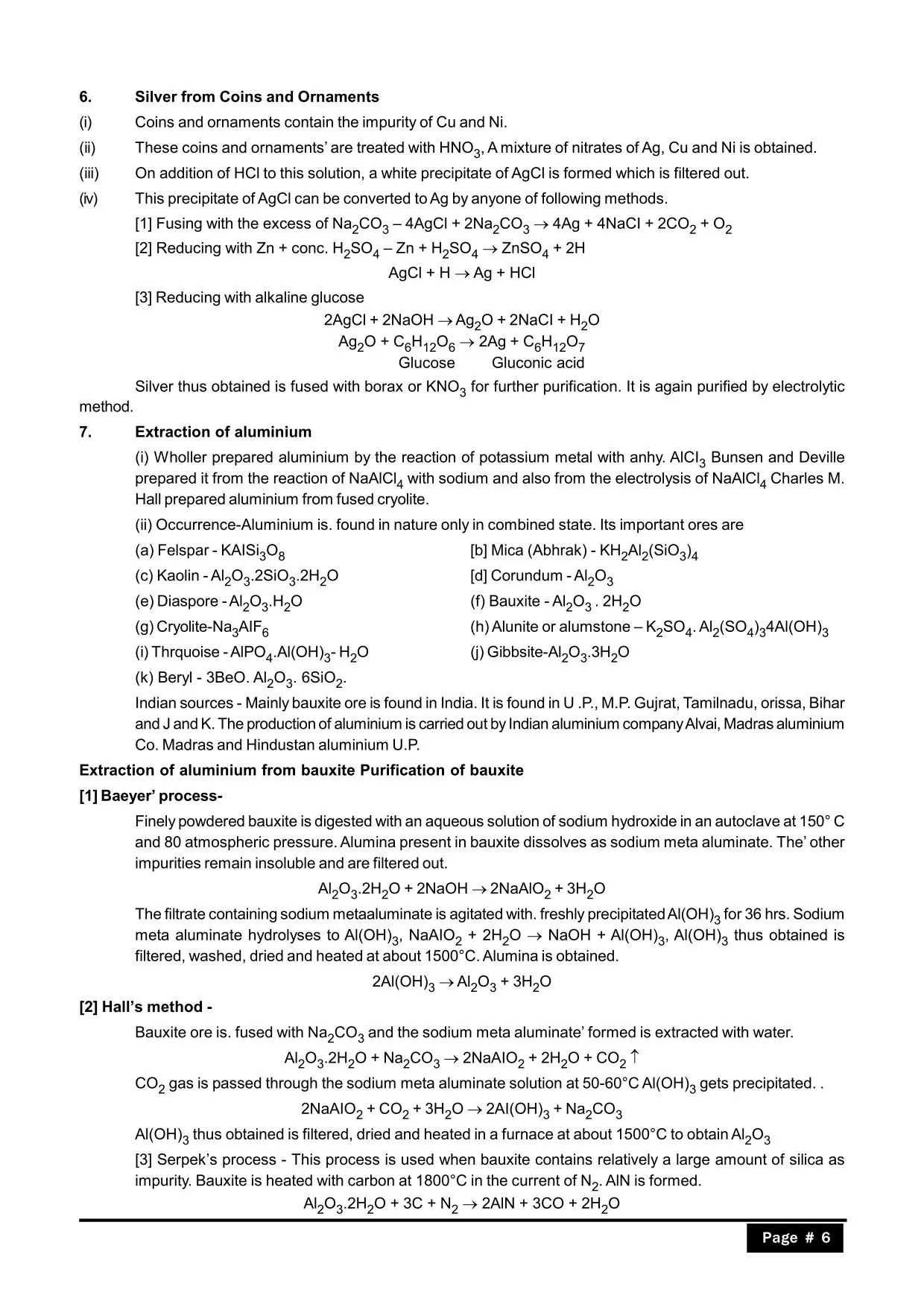
India's Best Exam Preparation for Class 12th - Download Now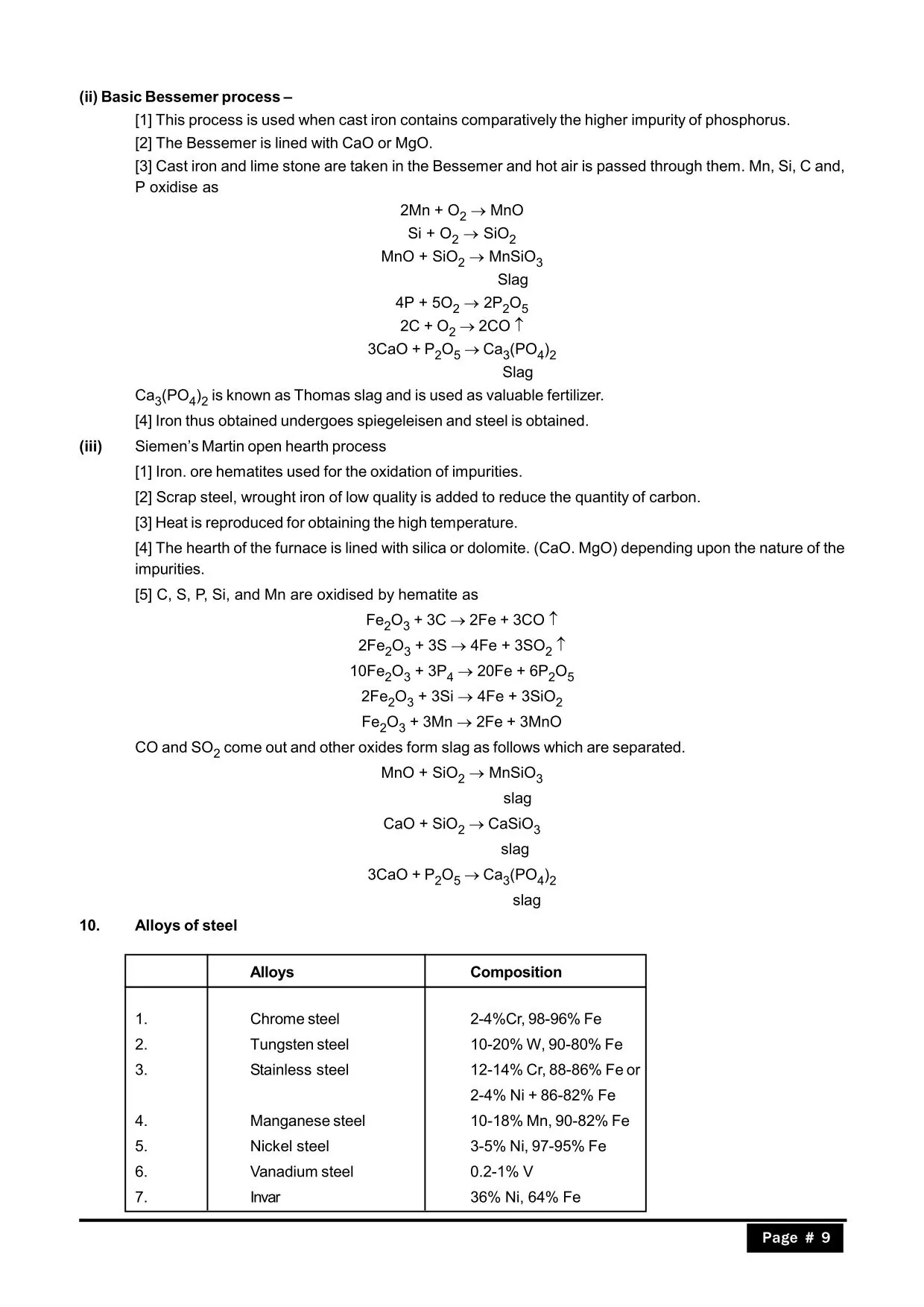
Frequently Asked Questions
Find answers to common questions.
What is the Ellingham diagram and why is it important for JEE?
The Ellingham diagram plots the standard Gibbs free energy change (ΔG°) of metal oxide formation against temperature. It helps predict which reducing agent can reduce a given metal oxide. If the ΔG° line of the reducing agent's oxide lies below that of the metal oxide at a given temperature, reduction is thermodynamically feasible. JEE Main tests this concept through interpretation questions almost every year
Why is cryolite added in the Hall–Héroult process?
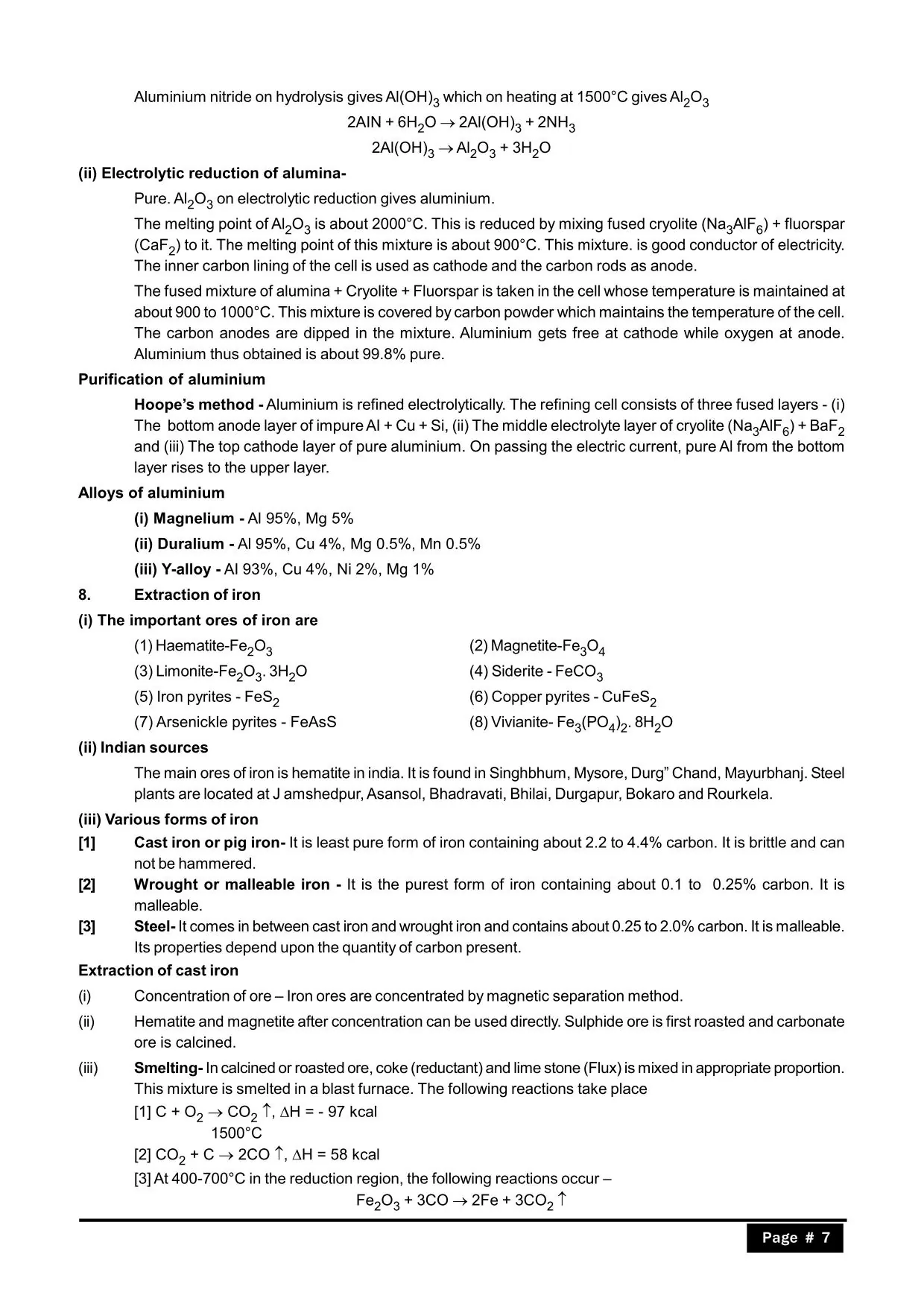
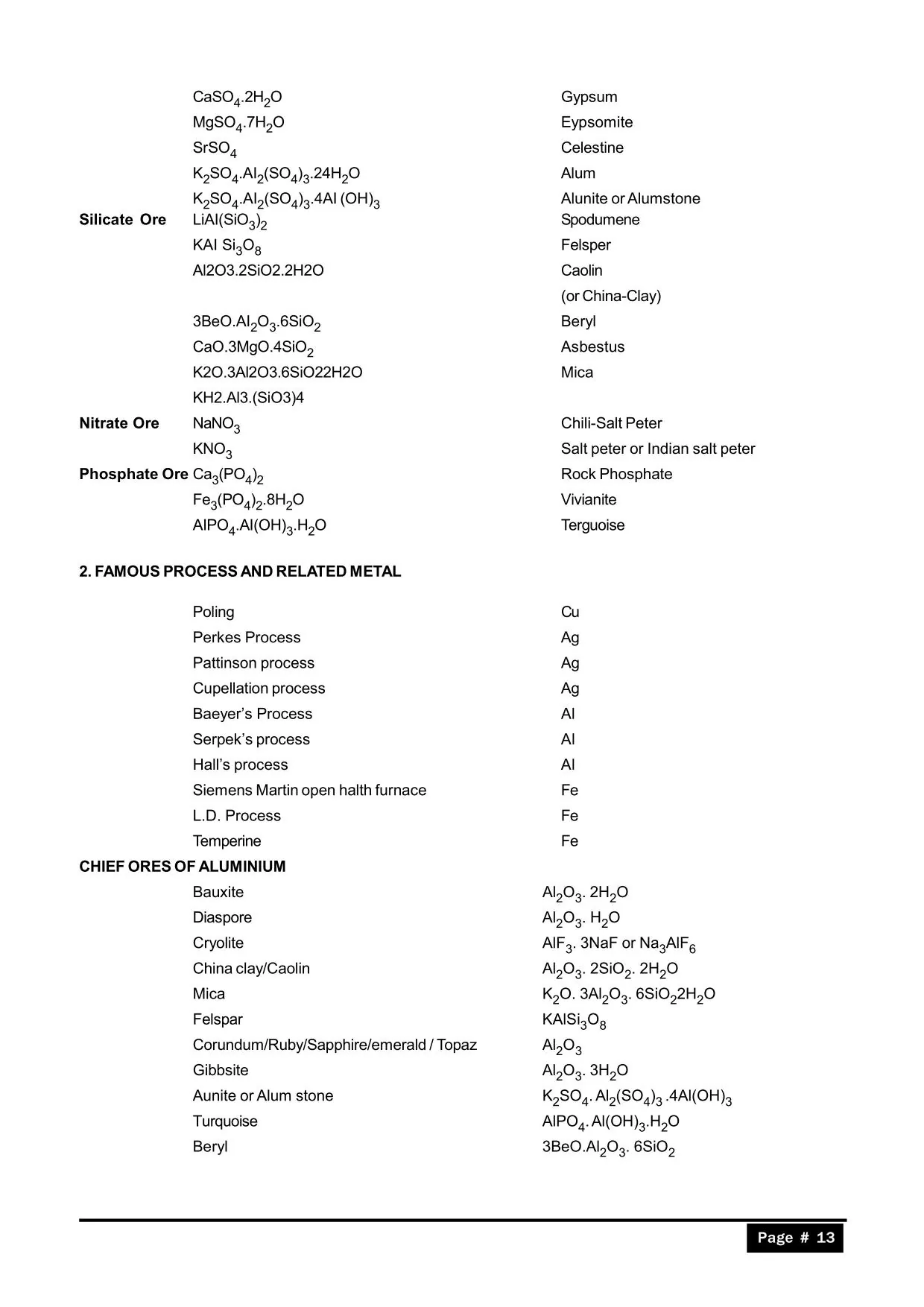
Cryolite (Na₃AlF₆) is added to lower the melting point of aluminium oxide from about 2050°C to approximately 950°C. This makes the electrolytic process commercially viable in terms of energy costs. The molten mixture also has better electrical conductivity than pure Al₂O₃ alone, which speeds up the electrolysis.
What is the difference between a mineral and an ore?
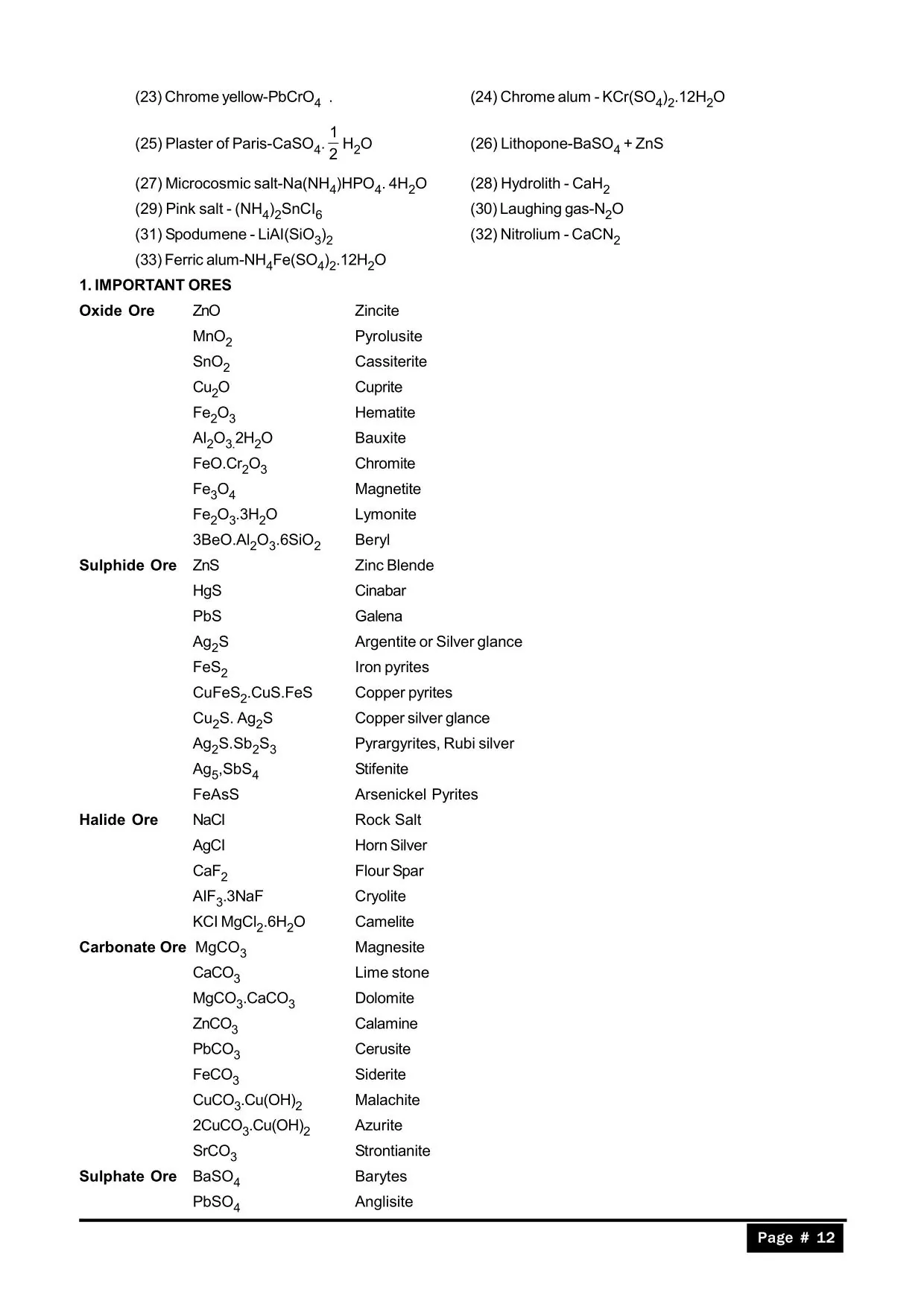
A mineral is any naturally occurring compound of a metal found in the Earth's crust. An ore is a mineral from which a metal can be extracted profitably and conveniently. All ores are minerals, but not all minerals are ores. For example, both clay and bauxite contain aluminium, but only bauxite is an ore because aluminium can be extracted from it economically.
Is Metallurgy important for NEET or only for JEE?
Metallurgy is important for both. NEET typically asks 1 question from this chapter, usually focused on the extraction process of a specific metal (especially aluminium or copper) or the principle behind a refining method. NEET questions tend to be more direct and definition-based, while JEE questions test conceptual application and thermodynamic reasoning.
How many questions from Metallurgy appear in JEE Main?
Based on NTA question paper patterns from 2019–2025, JEE Main typically includes 1–2 questions from Metallurgy per session. Topics with the highest frequency are Hall–Héroult process, froth flotation, zone refining, and Van Arkel method. Solving 5 years of previous papers for this chapter alone is sufficient coverage for most aspirants.
Which metals are refined by the Van Arkel method?
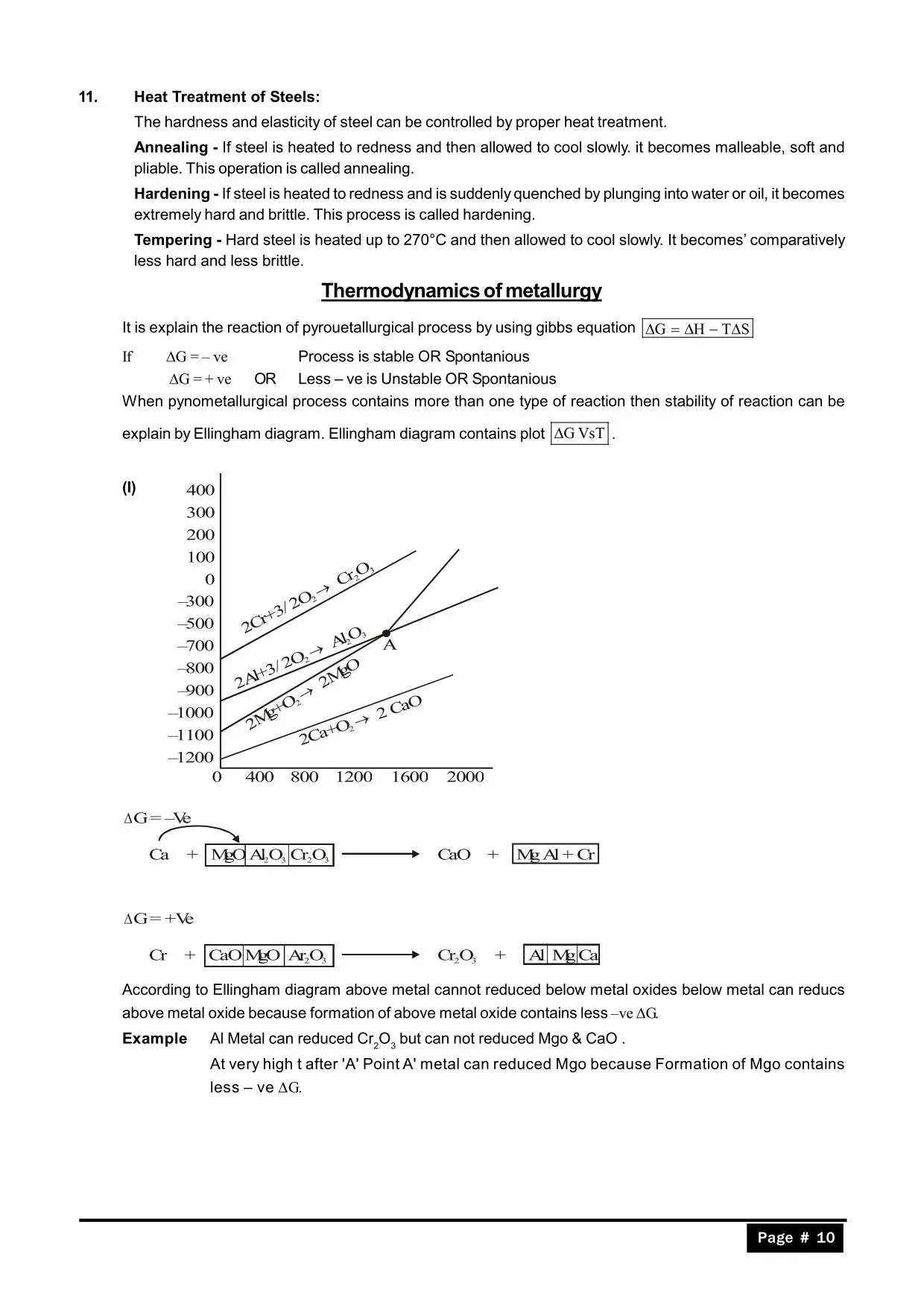
The Van Arkel method (vapour phase refining using volatile iodides) is used specifically for titanium (Ti) and zirconium (Zr). The crude metal reacts with iodine to form a volatile tetraiodide (e.g., TiI₄), which is then thermally decomposed on a hot tungsten filament, depositing pure metal. This method gives extremely high purity.