NEET - Rotational Motion Previous Year Questions with Solutions


eSaral › NEET › Physics › Rotational Motion Previous Year Questions with Solutions

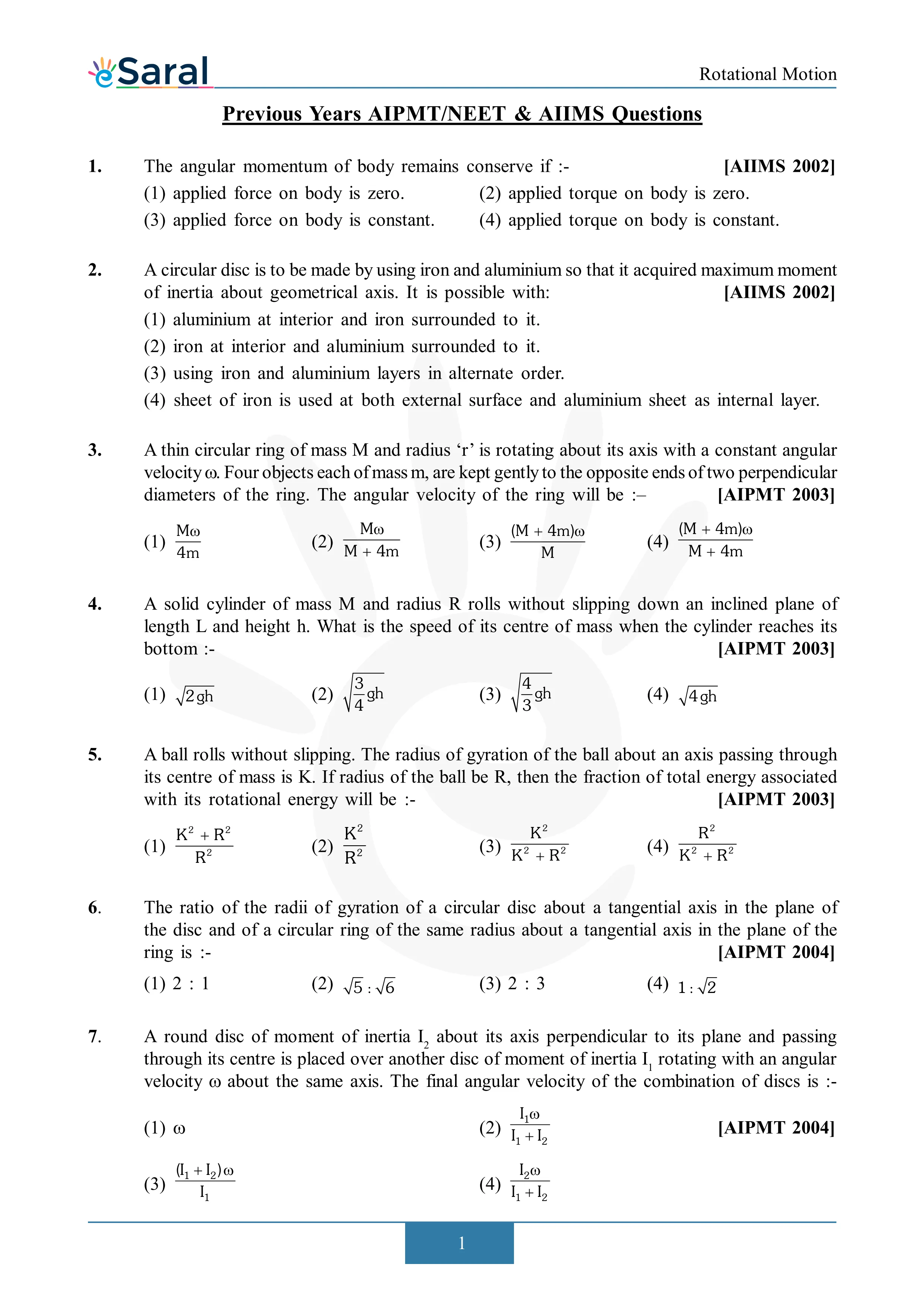
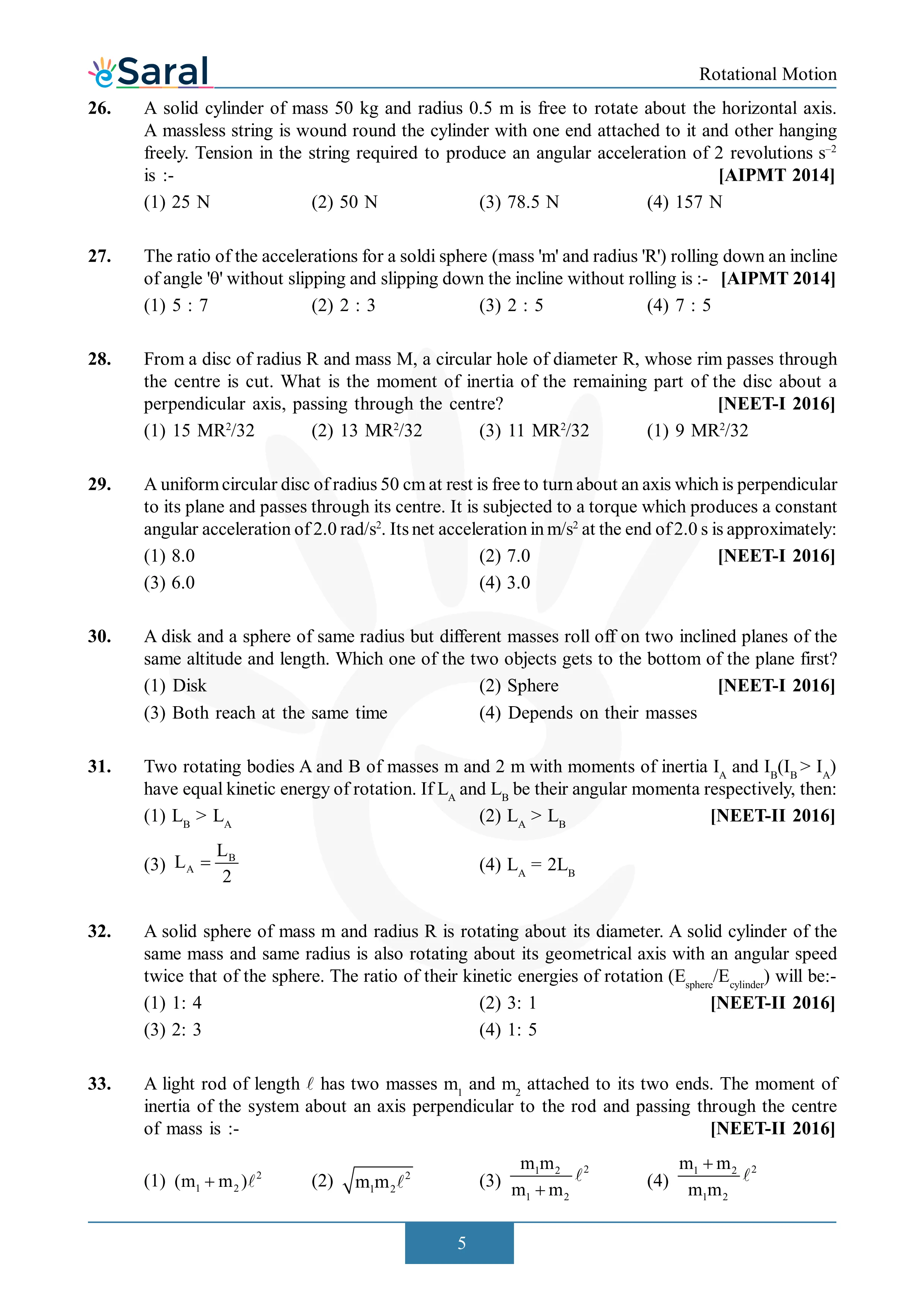
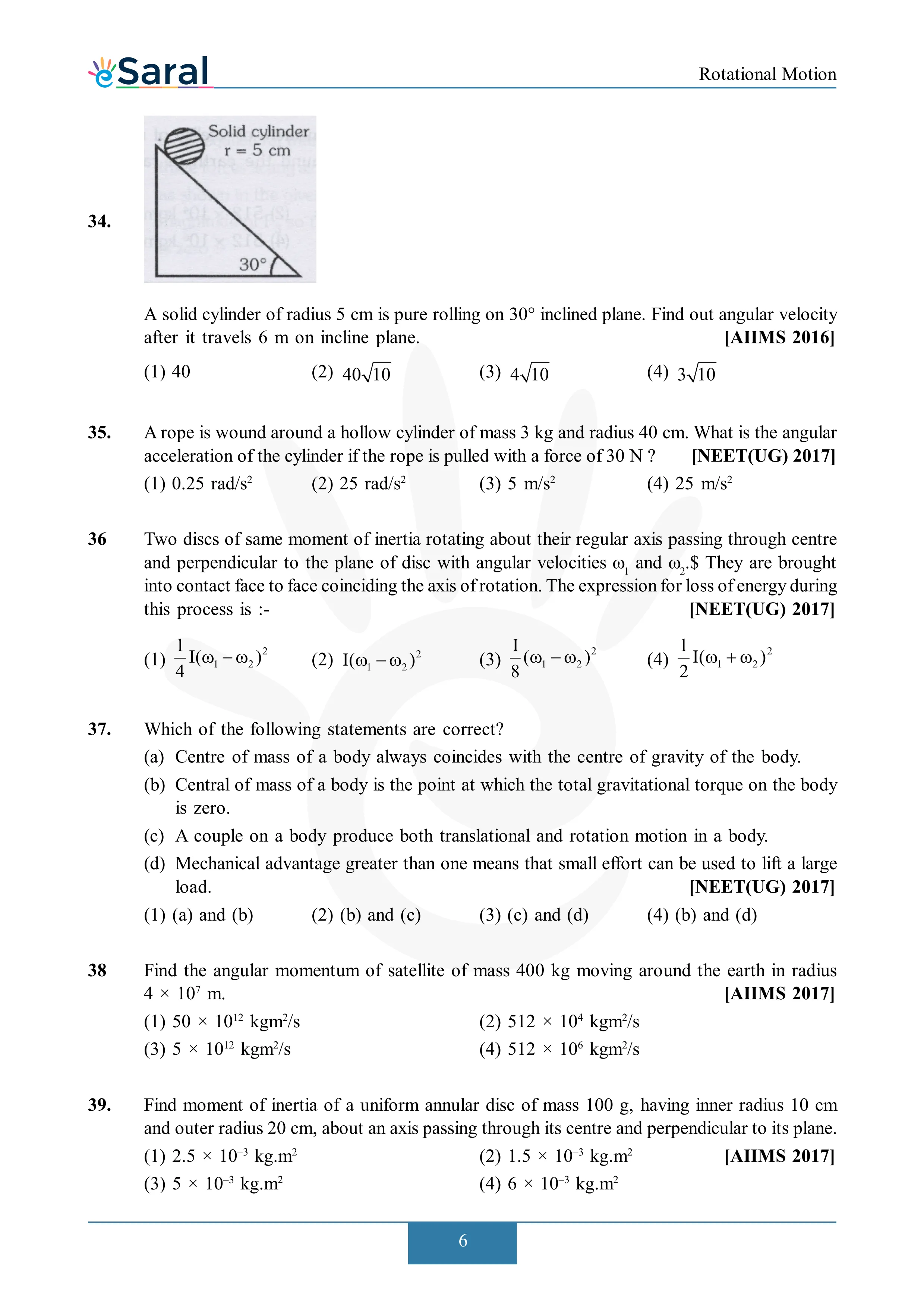
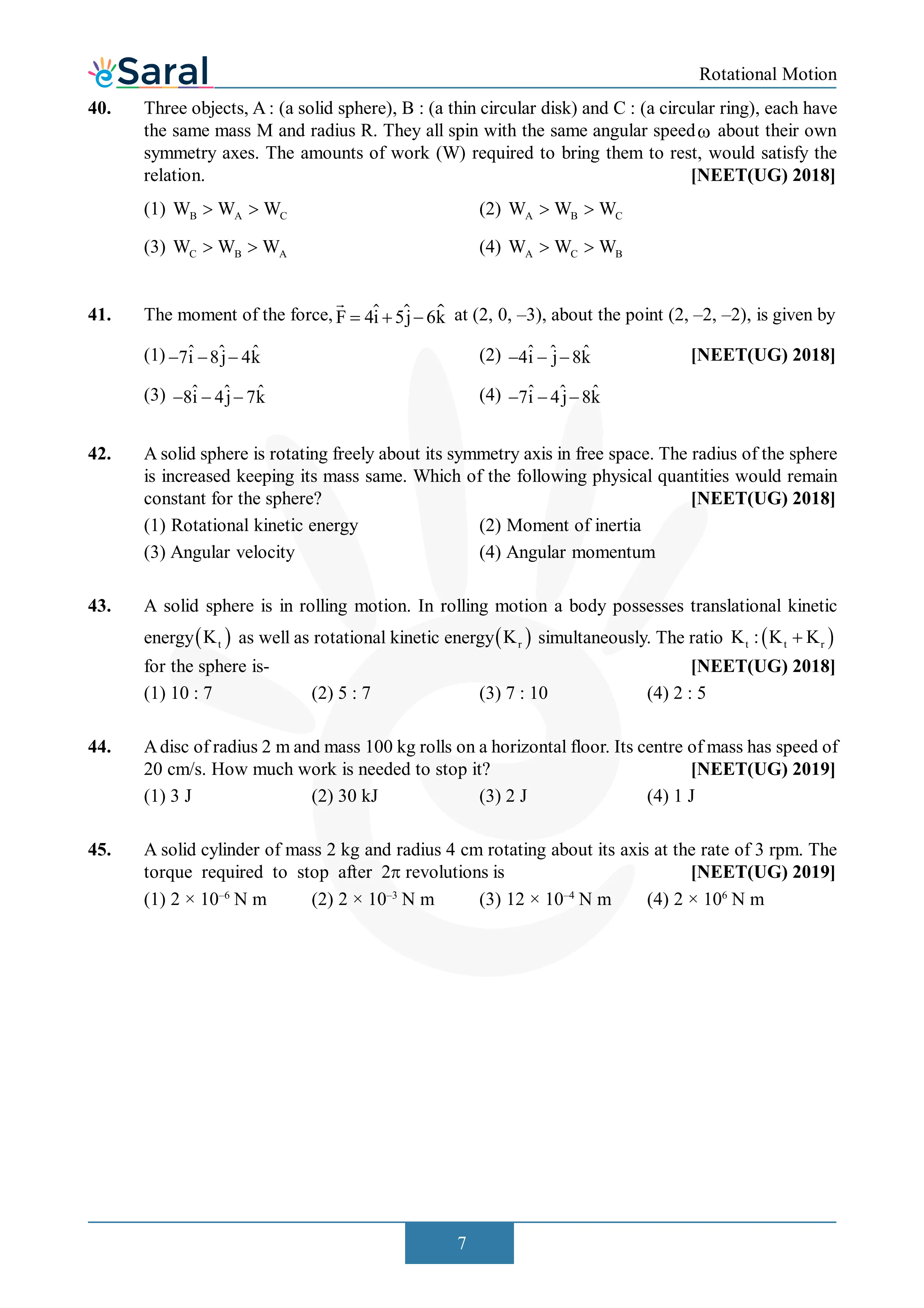
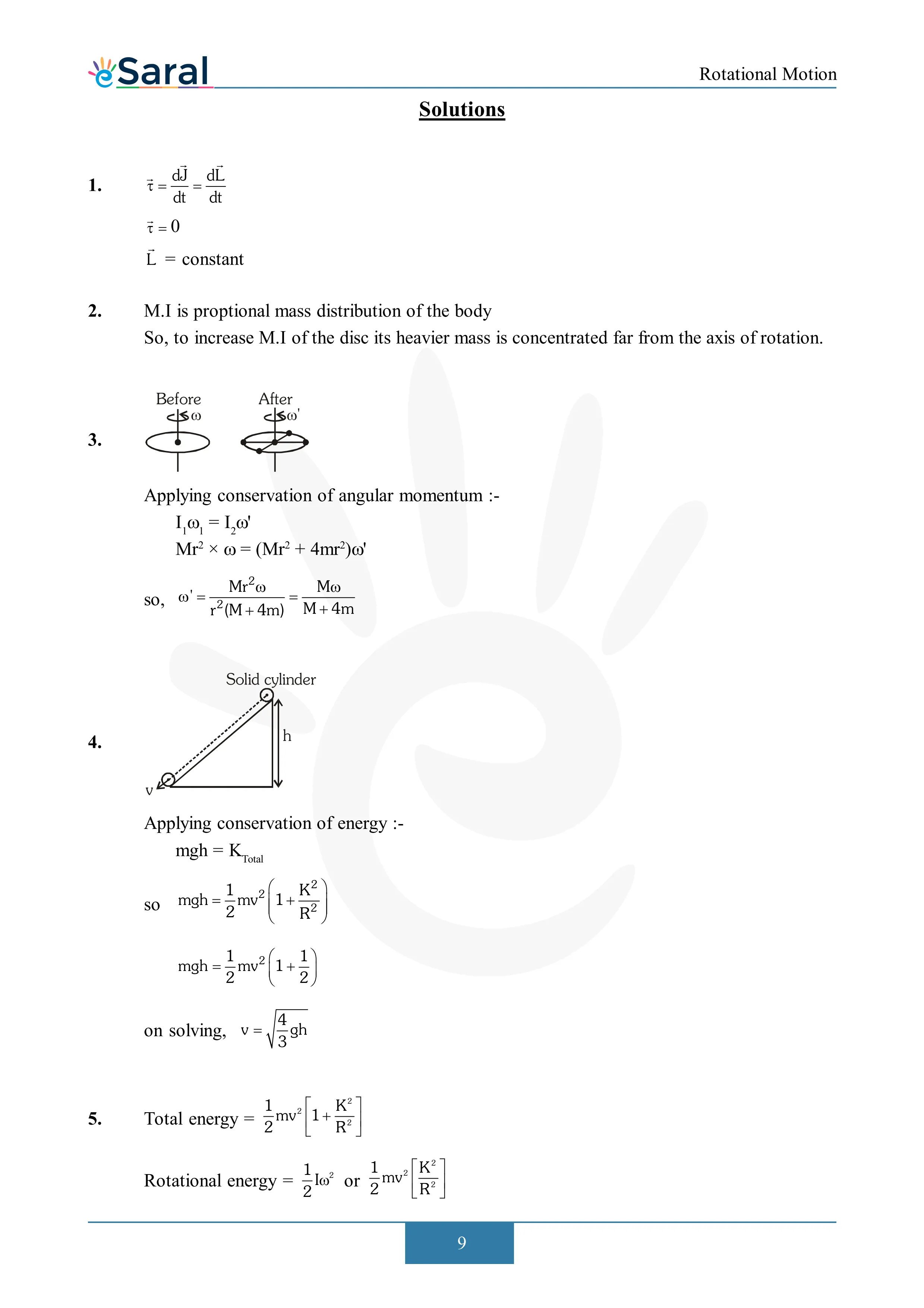
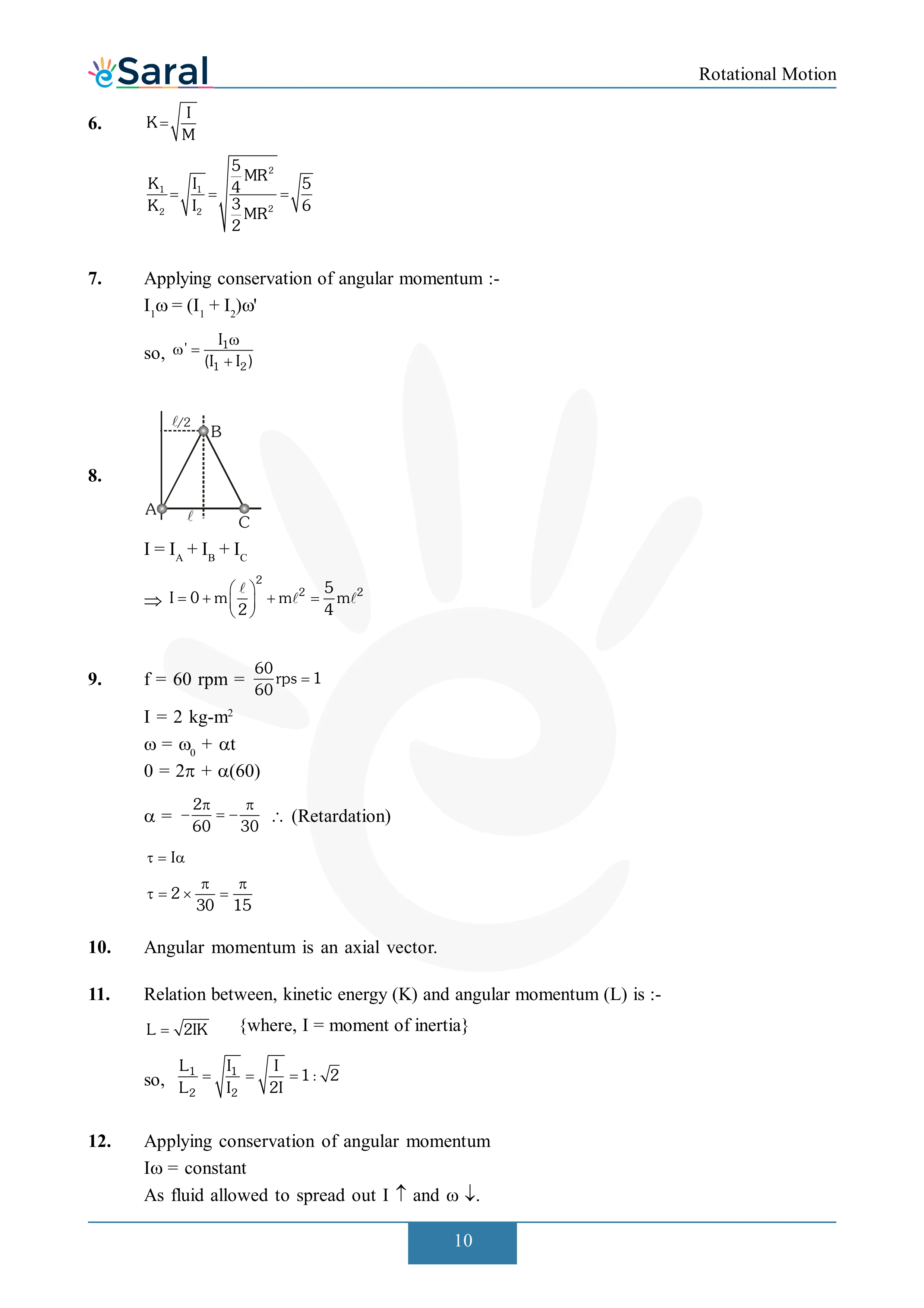
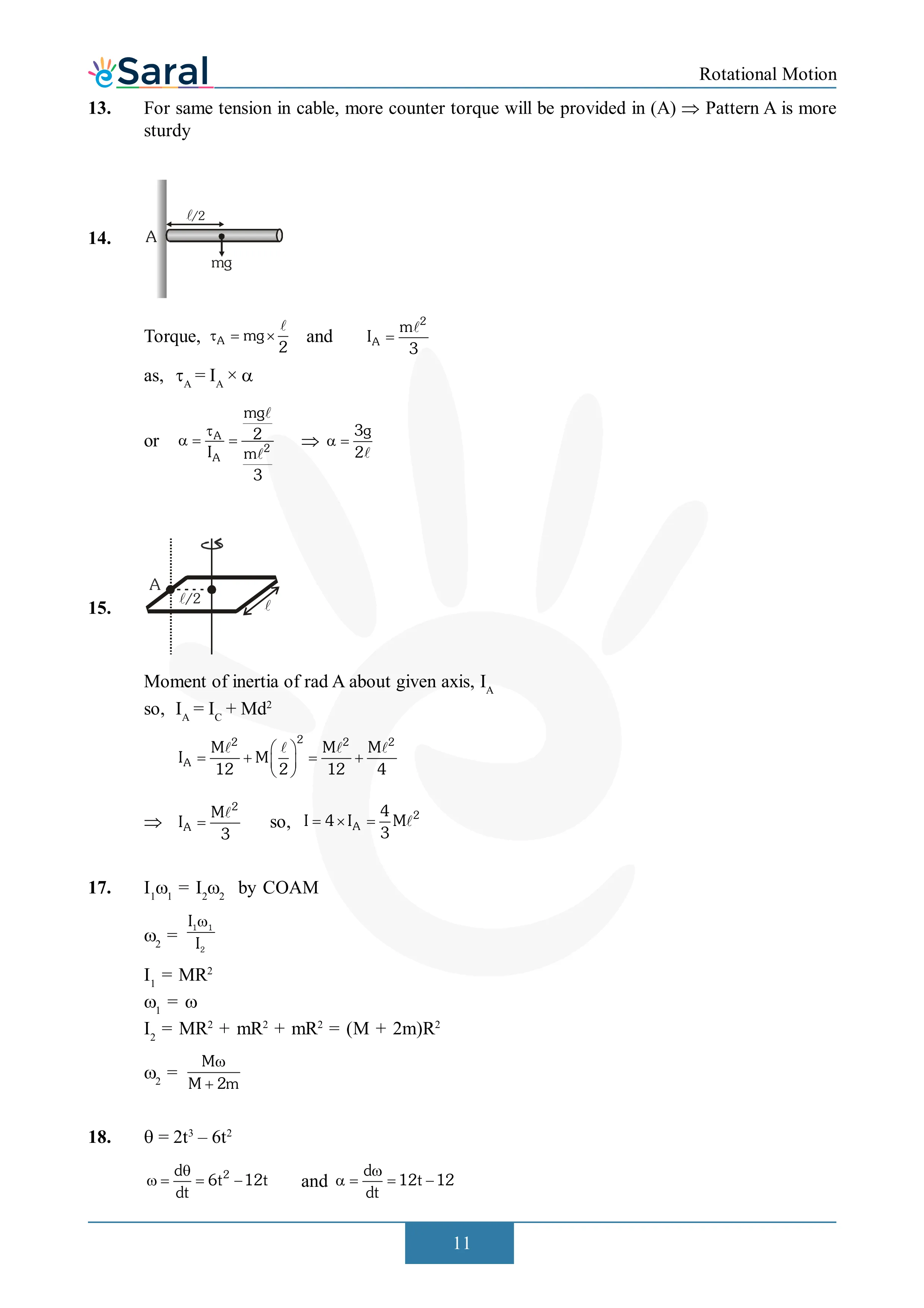
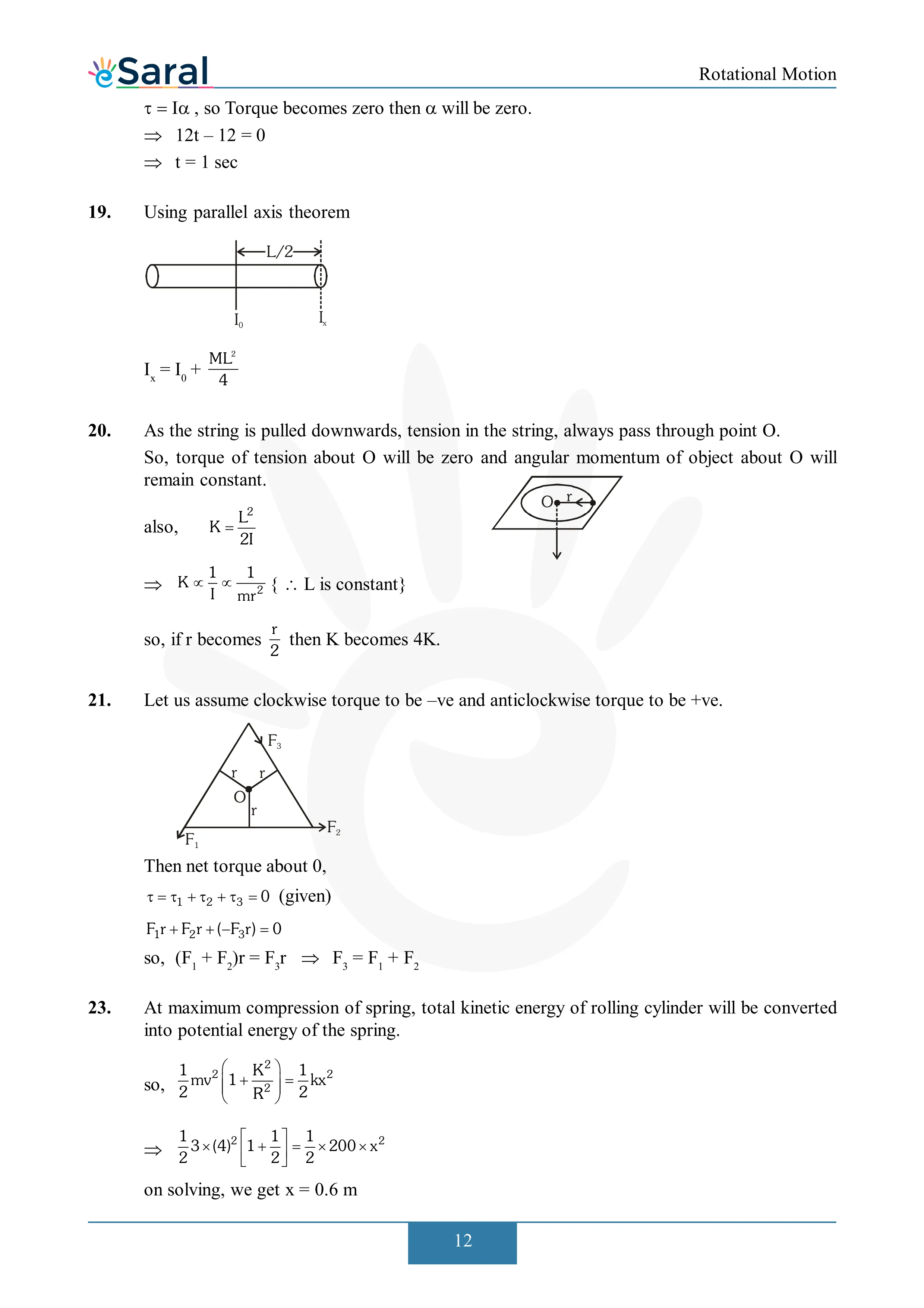
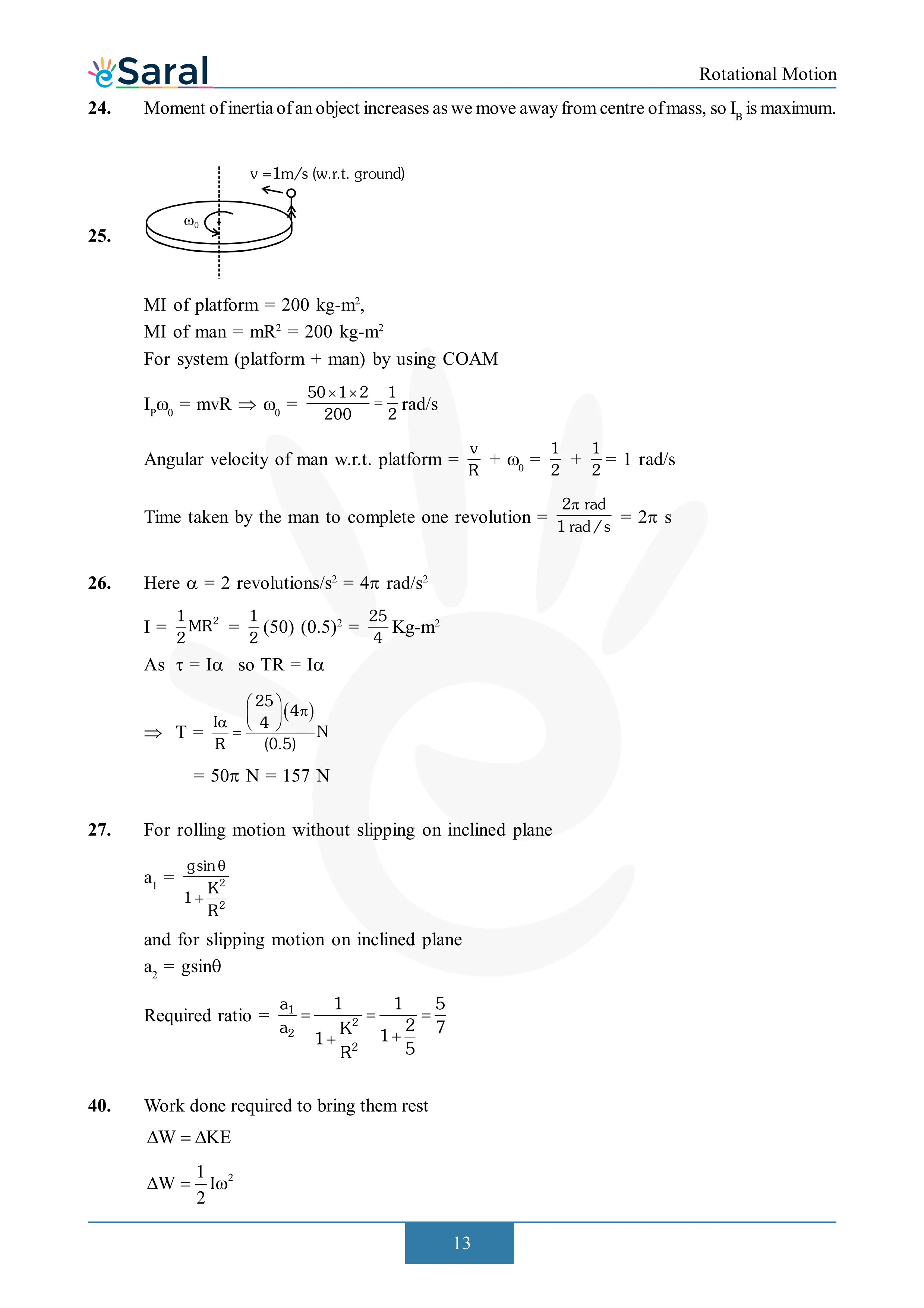
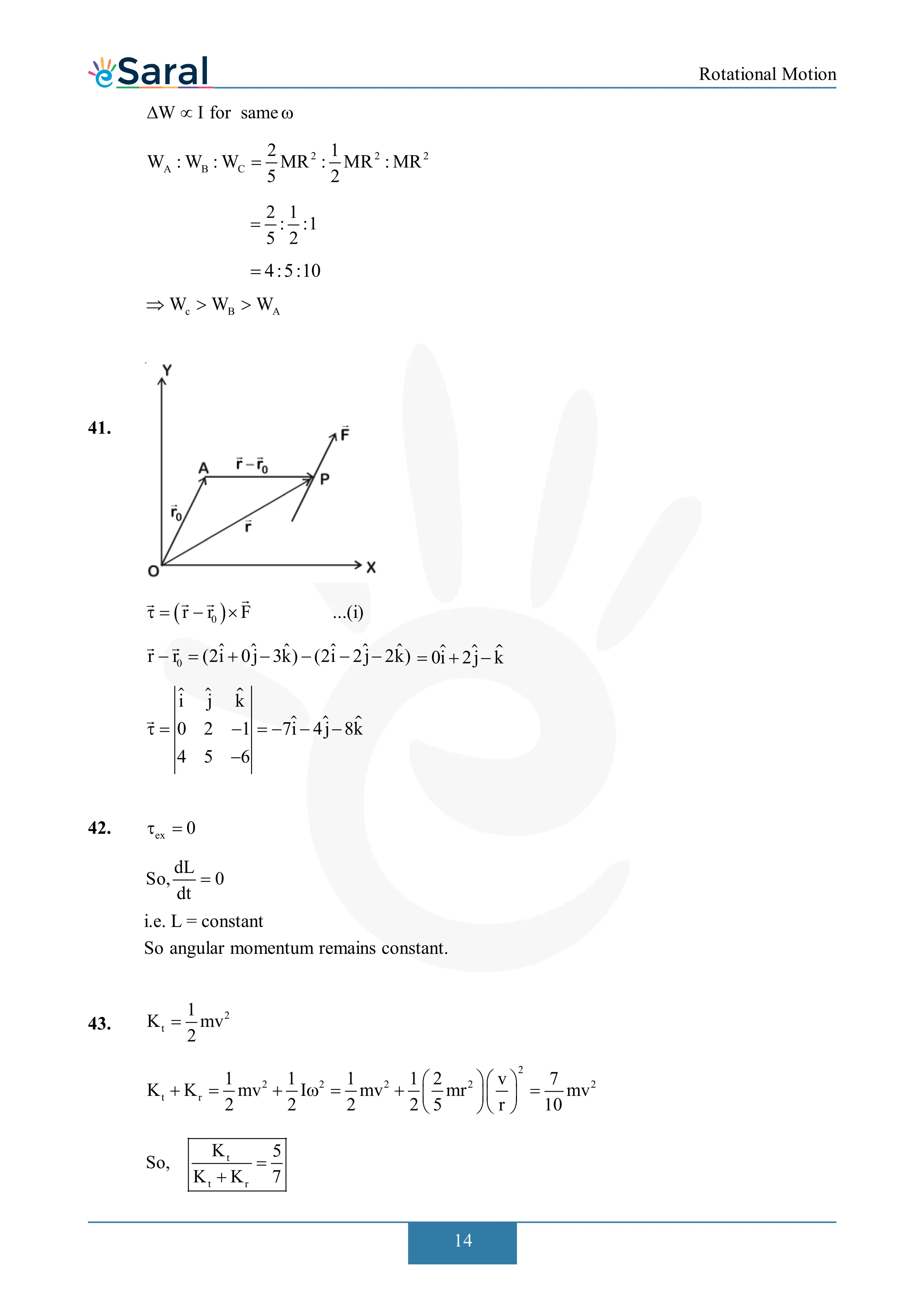
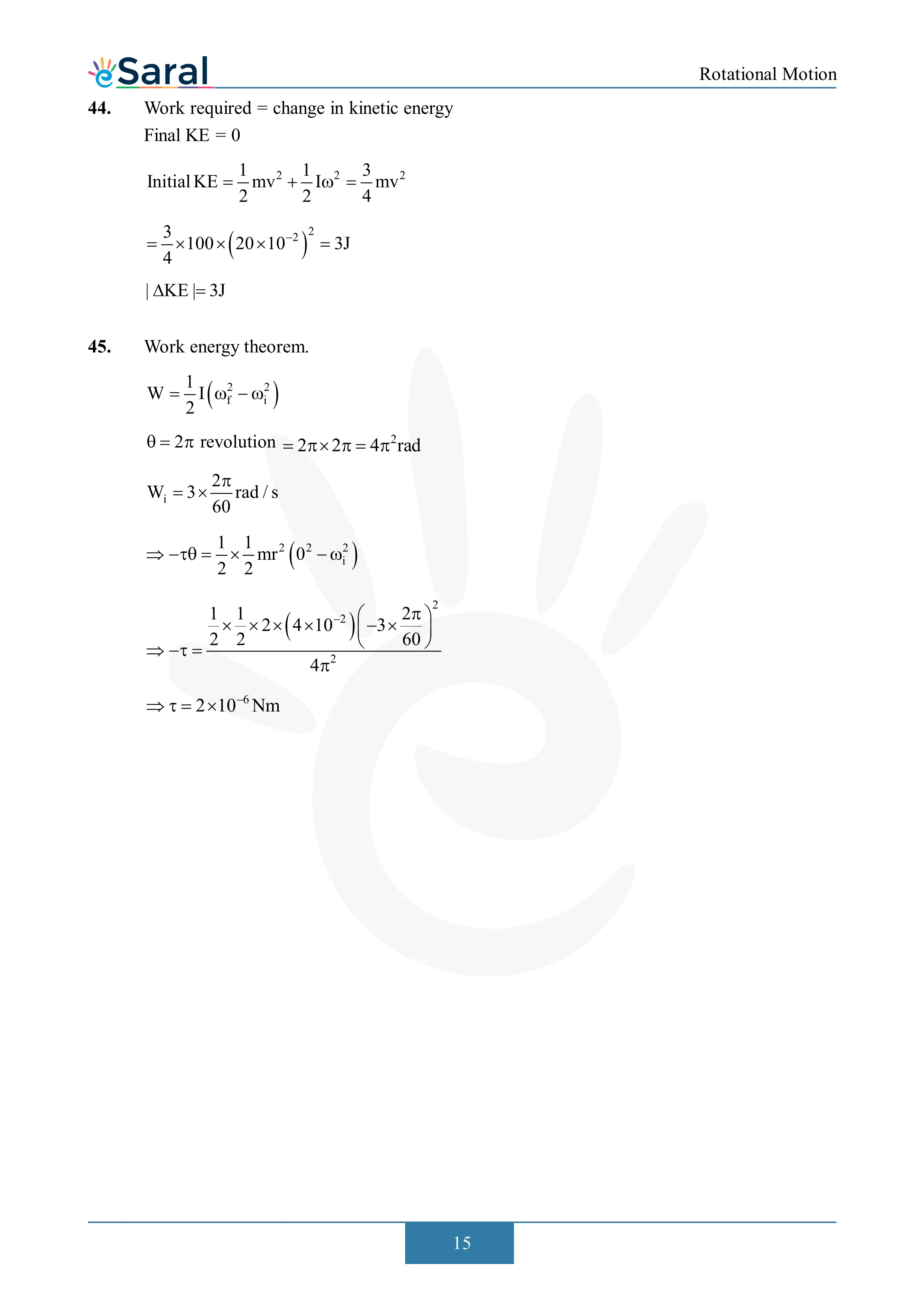
Here you will get Complete Rotational Motion NEET Previous Year Questions with complete and detailed solutions. Get complete NEET previous year questions for Physics, Chemistry and Biology. You will find all the solutions at the end of this page:
] 
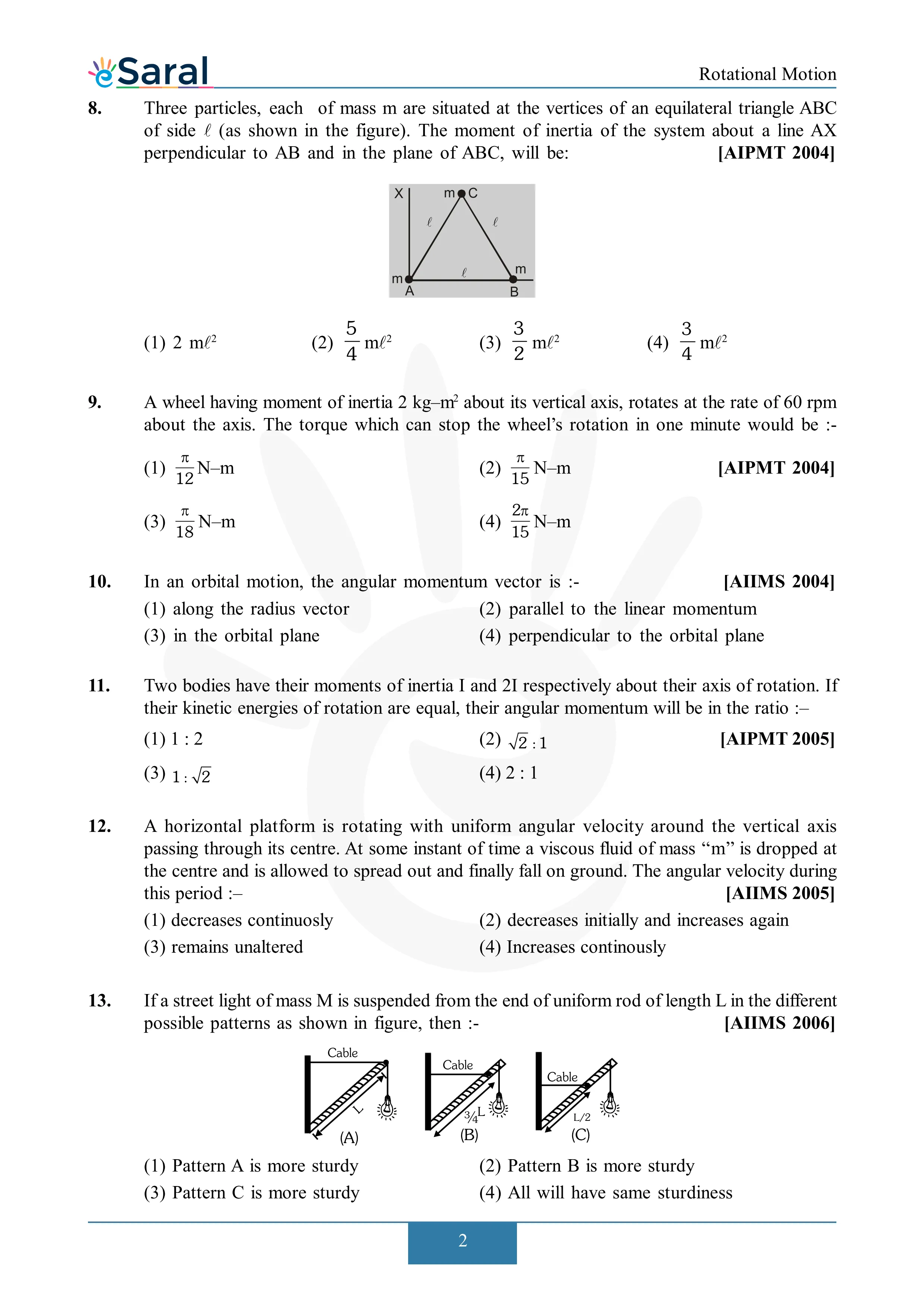
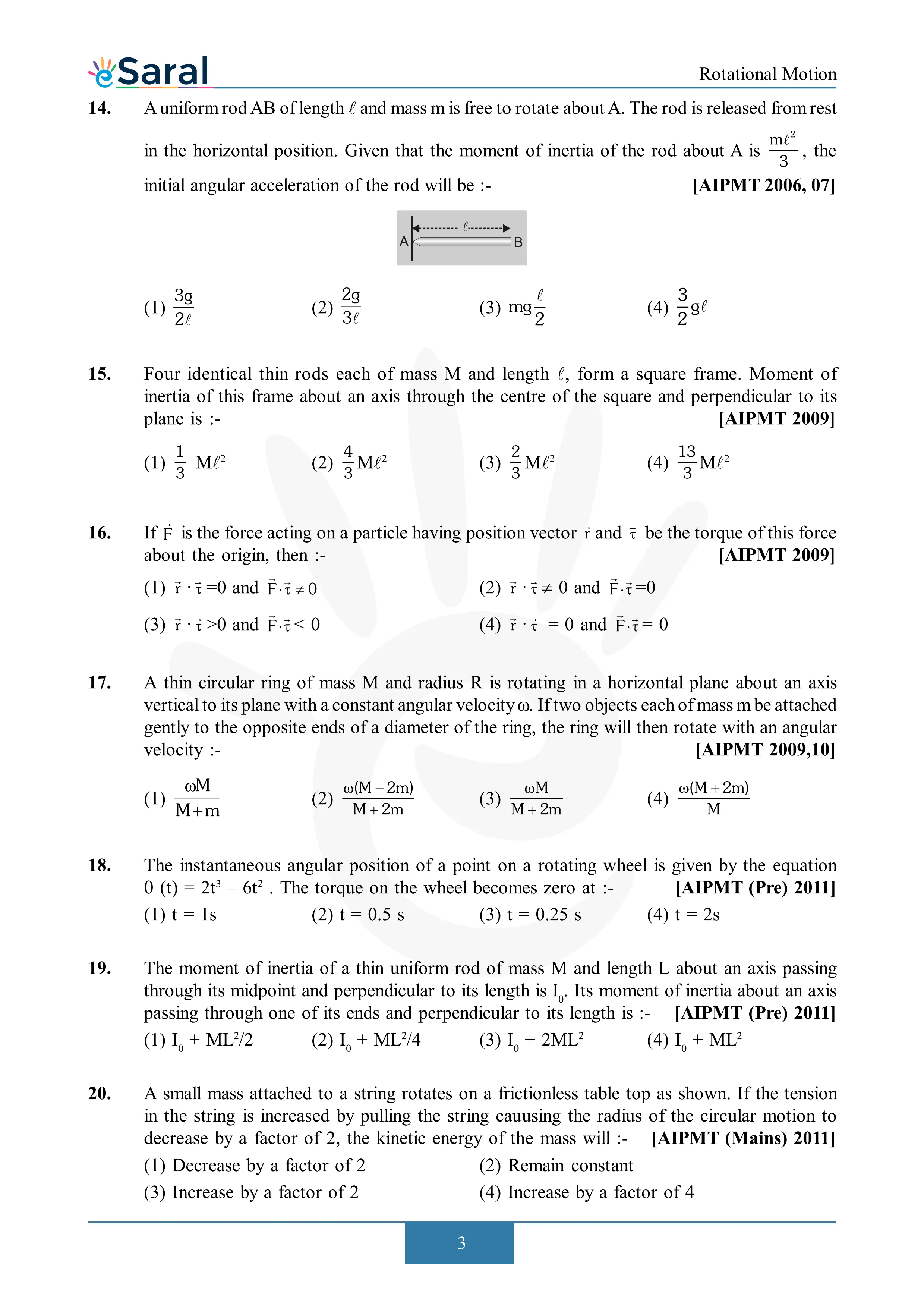
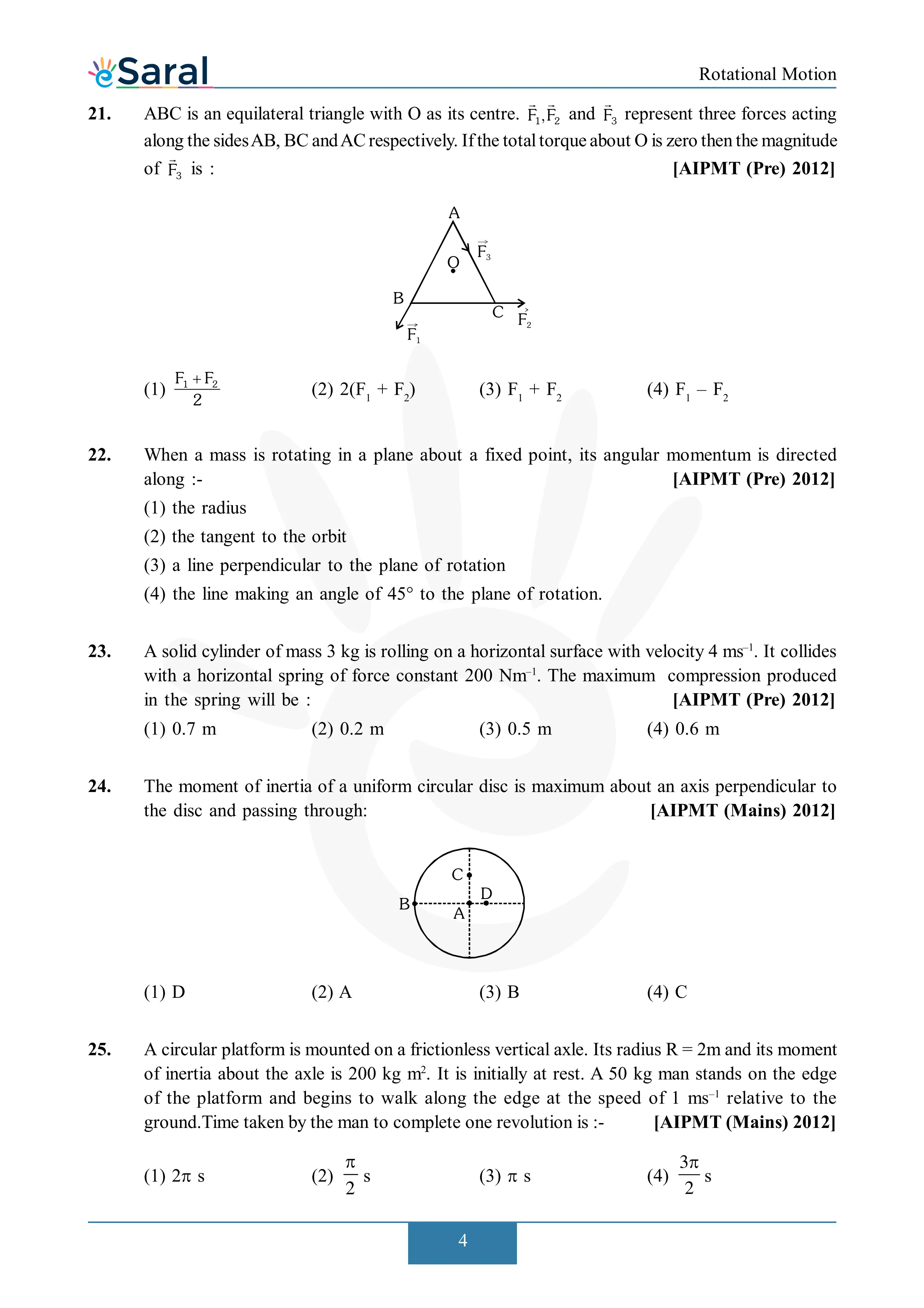

Frequently Asked Questions
Find answers to common questions.
How many questions come from Rotational Motion in NEET every year?
NEET typically has 2–3 questions from Rotational Motion each year. Based on NTA's official question papers from 2013 to 2024, this chapter has never been absent from the paper. Some years (e.g., 2019, 2021) saw 3 questions, making it one of the more reliable chapters to prepare thoroughly.
Which subtopic of Rotational Motion is most important for NEET?
Moment of Inertia is the single most tested subtopic, appearing in roughly 10–12 questions across a 12-year period. Torque and angular momentum are close seconds. Prioritise these three before studying rolling motion or rotational kinematics in depth.
What is the best book for Rotational Motion for NEET?
Start with NCERT Class 11 Physics Chapter 7 (System of Particles and Rotational Motion) — it covers everything the NTA tests at the theory level. Supplement with H.C. Verma's Concepts of Physics for problem variety. Once theory is clear, shift entirely to NEET PYQs and topic-wise mock tests for the final 6–8 weeks of preparation
Are NEET PYQs on Rotational Motion repeated?
Exact repetition is rare, but concept patterns repeat very frequently. For example, the angular momentum conservation question (a person on a rotating stool pulling arms in) has appeared in different forms multiple times. Solving PYQs trains you to recognise these patterns instantly, even when the numbers or context change.
Can I skip Rotational Motion for NEET?
Skipping Rotational Motion is not advisable. It contributes 2–3 questions per paper, and in NEET's competitive environment, those 8–12 marks can determine which medical college you qualify for. The chapter also overlaps with Gravitation and Simple Harmonic Motion, so understanding it improves performance in related chapters too.
Is Rotational Motion difficult for NEET?
Rotational Motion is considered moderately difficult. The core formulae are manageable, but NEET questions often combine two concepts — such as MOI with energy conservation or torque with equilibrium — which demands clear conceptual understanding. Students who practise PYQs topic-wise report a significant improvement in confidence within 2–3 weeks.