Nuclear Physics | Atoms and Nuclei Class 12, JEE and NEET

eSaral › Class 12 › Physics Notes › Nuclear Physics (Atoms and Nuclei) for JEE & NEET

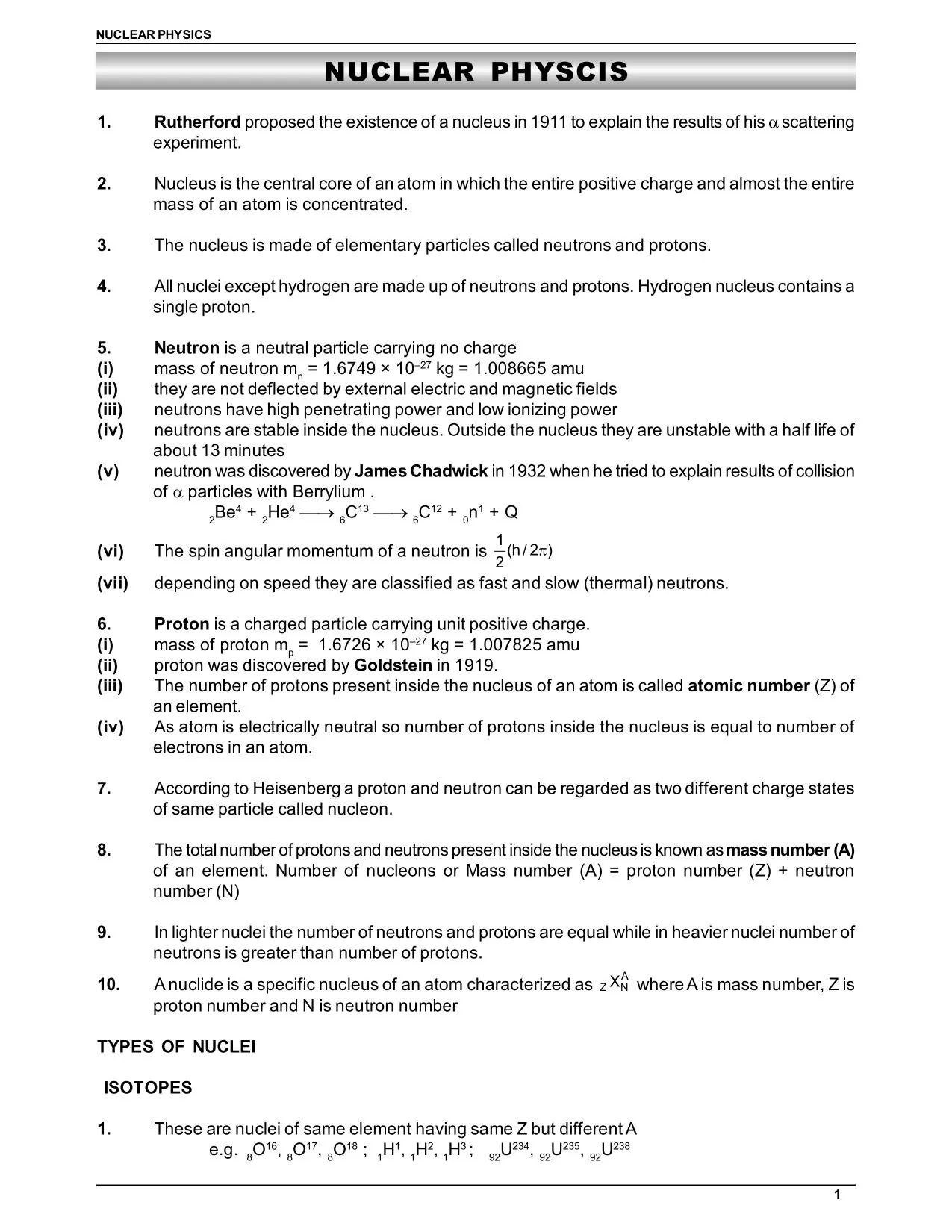
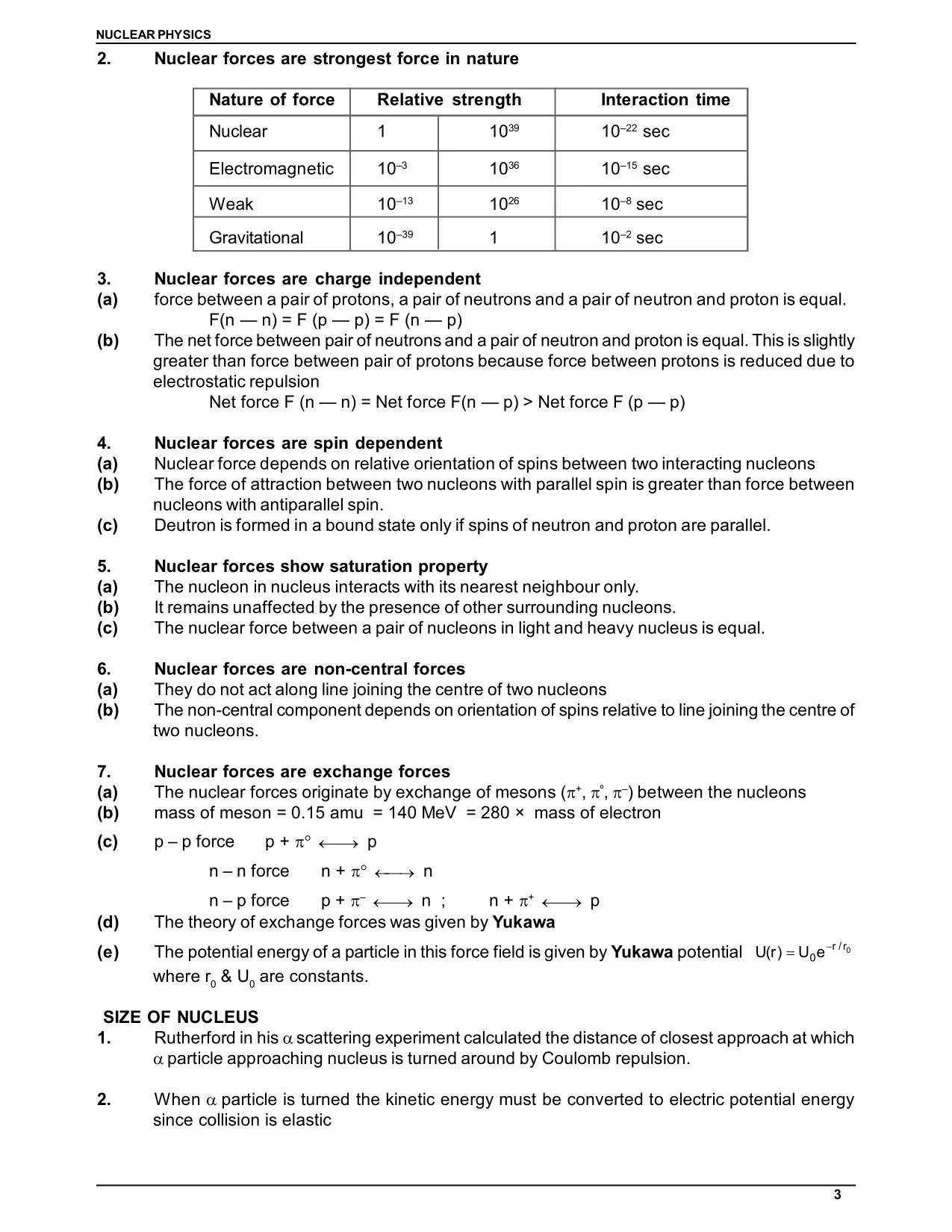
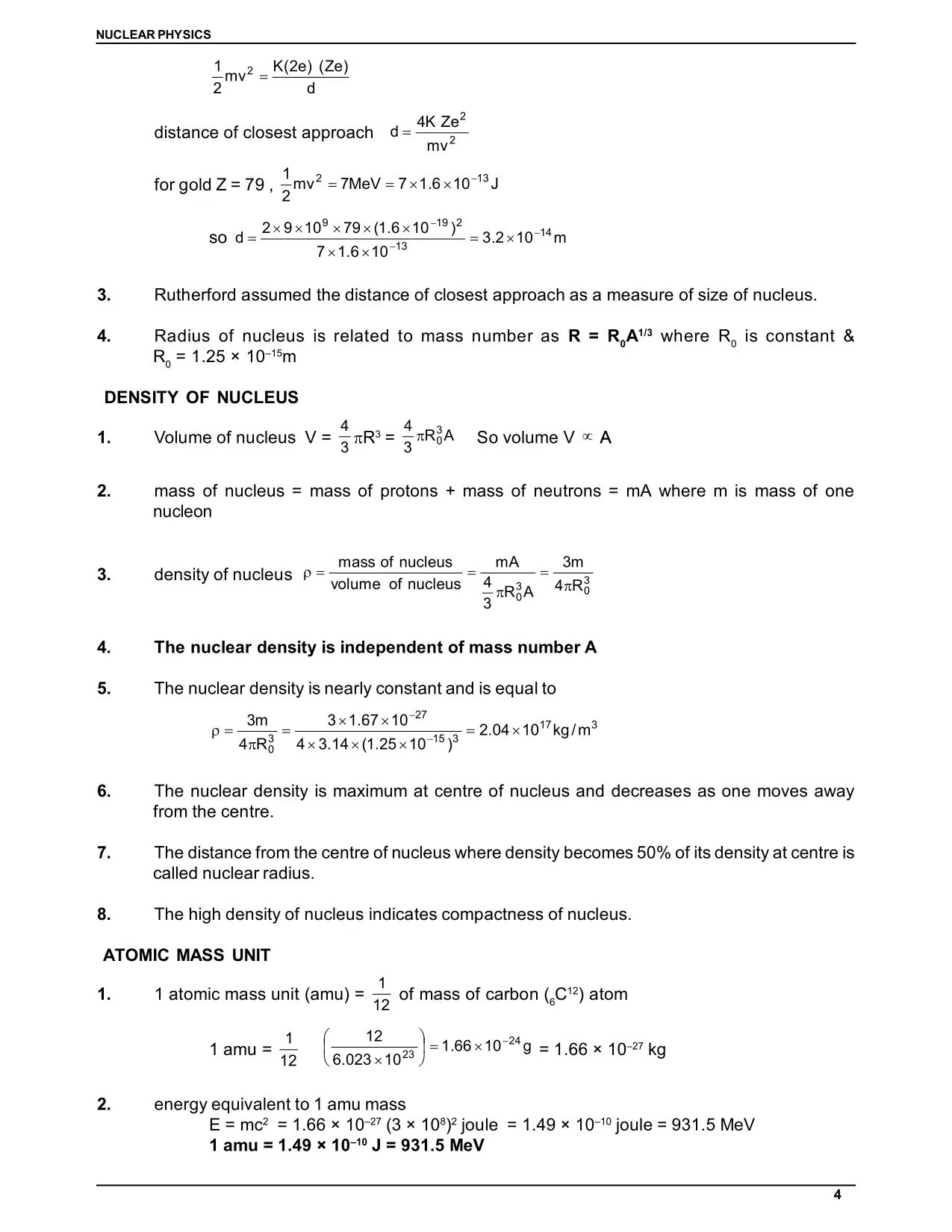
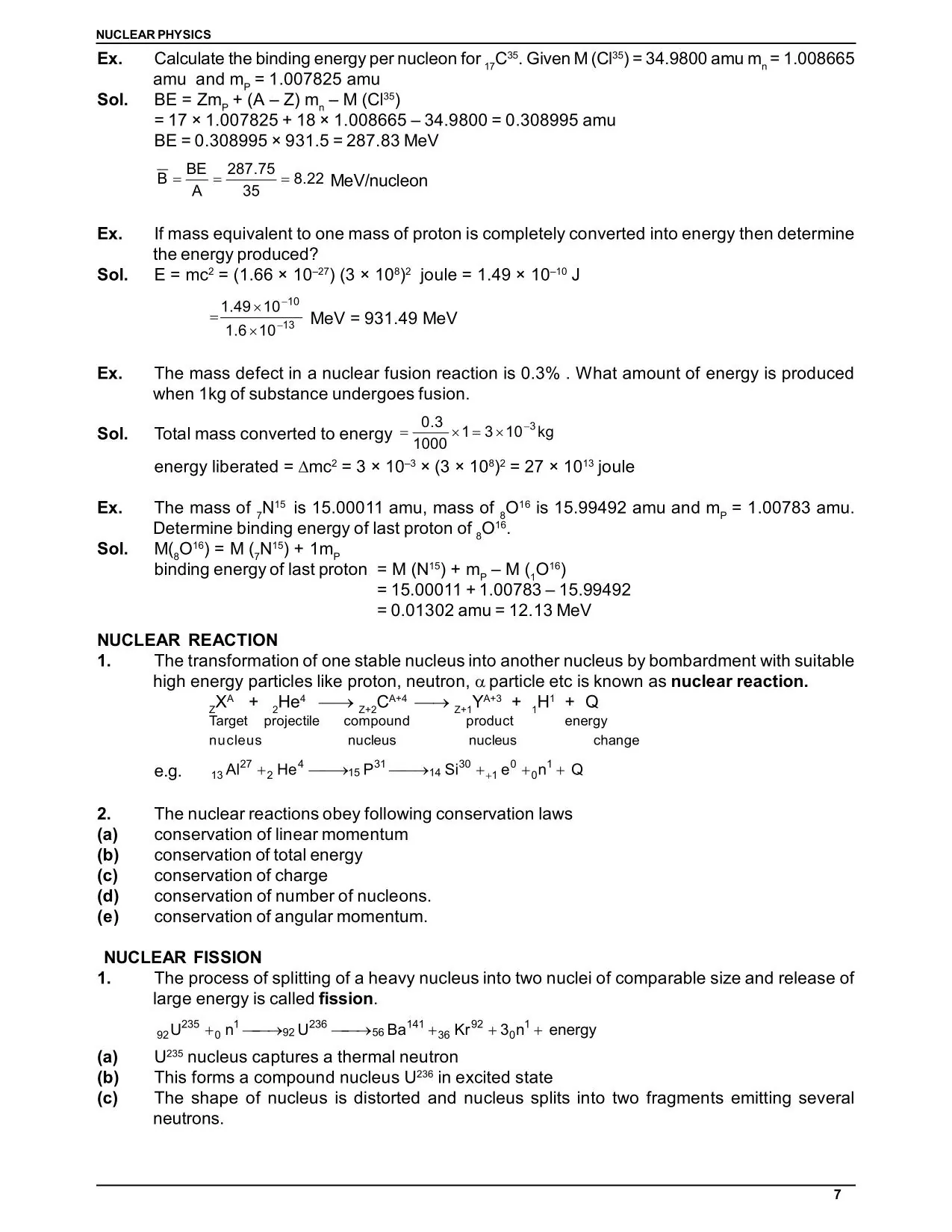
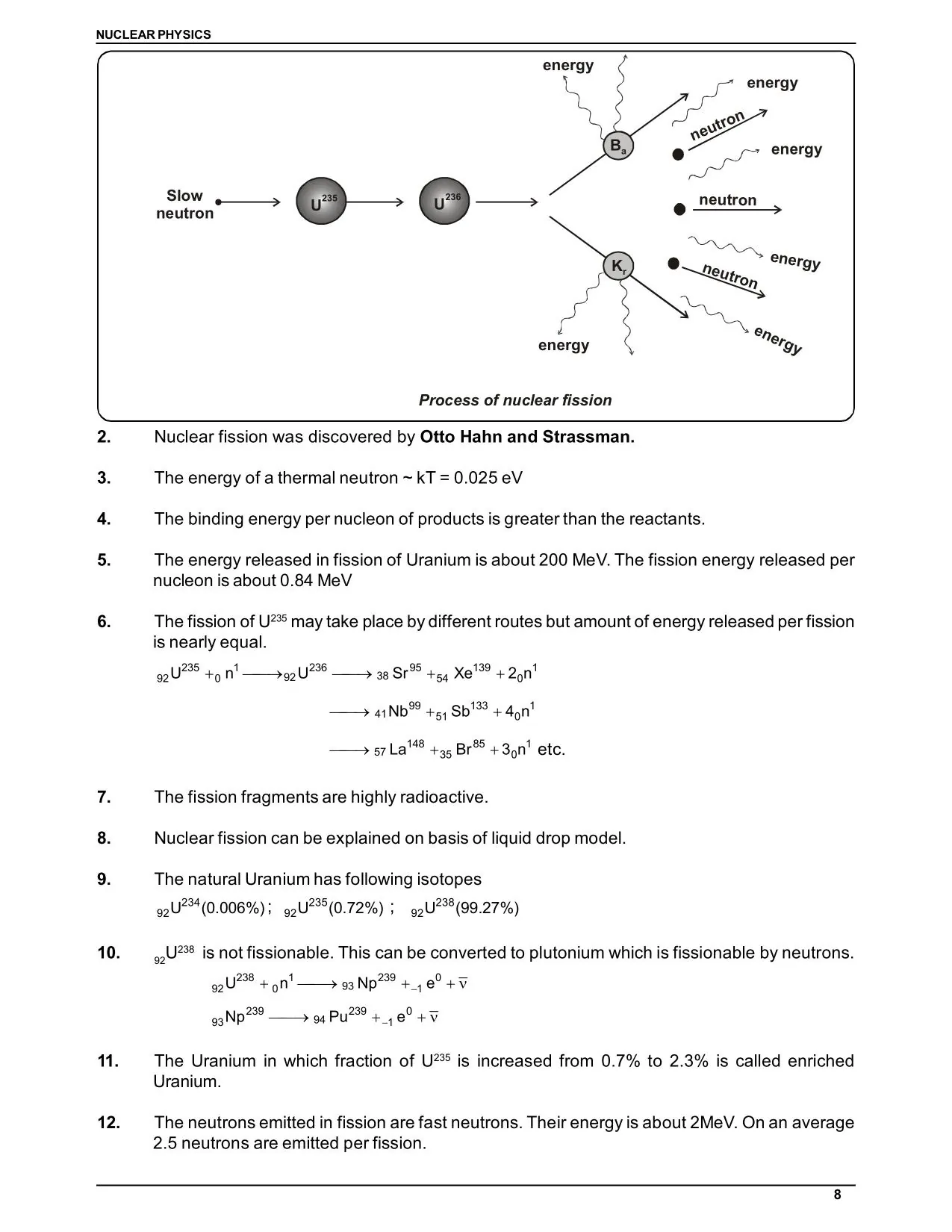
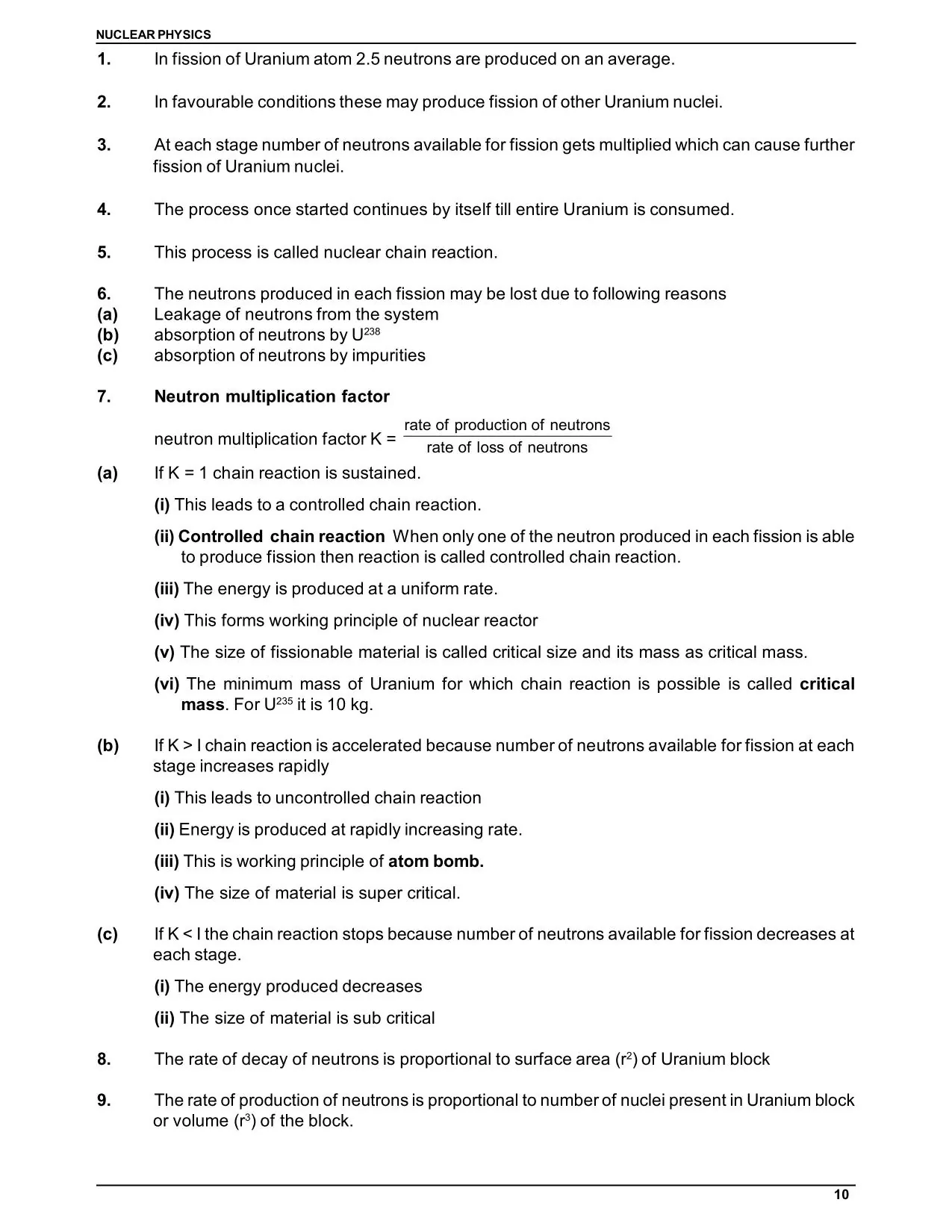
Here are the Atoms and Nuclei Class 12 Complete Notes on Nuclear Physics. This Chapter deals with the core of Atom- the Nucleus, its structure, and constituent features and characteristics of the Nucleus are discussed in great detail. This chapter comprises everything from Nuclear Binding Energy to Nuclear Force, from Radioactive Decay to Nuclear Fusion and fission.
India's Best Exam Preparation for Class 12th - Download Now
India's Best Exam Preparation for Class 12th - Download Now
India's Best Exam Preparation for Class 12th - Download Now
India's Best Exam Preparation for Class 12th - Download Now
India's Best Exam Preparation for Class 12th - Download Now
 eSaral has already come up with an amazing Revision Series of Physics where you can easily revise your chapter within minutes with all the important formulae and key points. This revision series is free for all. Click Here for Complete Physics Revision Series by Saransh Gupta Sir (AIR-41). About Saransh Gupta Sir: Computer Science Graduate from IIT Bombay. Cracked IIT-JEE with AIR-41 and AIEEE (JM) with AIR-71 in 2006. He is the author of the JEE Mentorship Book “StrateJEE”. He taught Physics for 5 years at Allen and was loved immensely by all the students. Many of his students bagged success with flying colours in JEE & NEET Exams.
eSaral brings you detailed Class 11th Physics study material. eSaral provides a series of detailed chapter-wise notes for all the Subjects of class 11th and 12th. These notes will also help you in your IIT JEE & NEET preparations. We hope these Physics Notes for Class 12 will help you understand the important topics and remember the key points from an exam point of view.
Get Complete Physics Notes for Physics Class 12 for easy learning and understanding. For free video lectures and complete study material, download the eSaral APP. About eSaral: At eSaral, we are offering a complete platform for IIT-JEE & NEET preparation. The main mission behind eSaral is to provide education to every student in India by eliminating the Geographic and Economic factors, as a nation’s progress and development depend on the availability of quality education to everyone. With the blend of education & technology, the eSaral team made the learning personalized & adaptive for everyone.
Frequently Asked Questions
Find answers to common questions.
What is nuclear binding energy in simple terms?
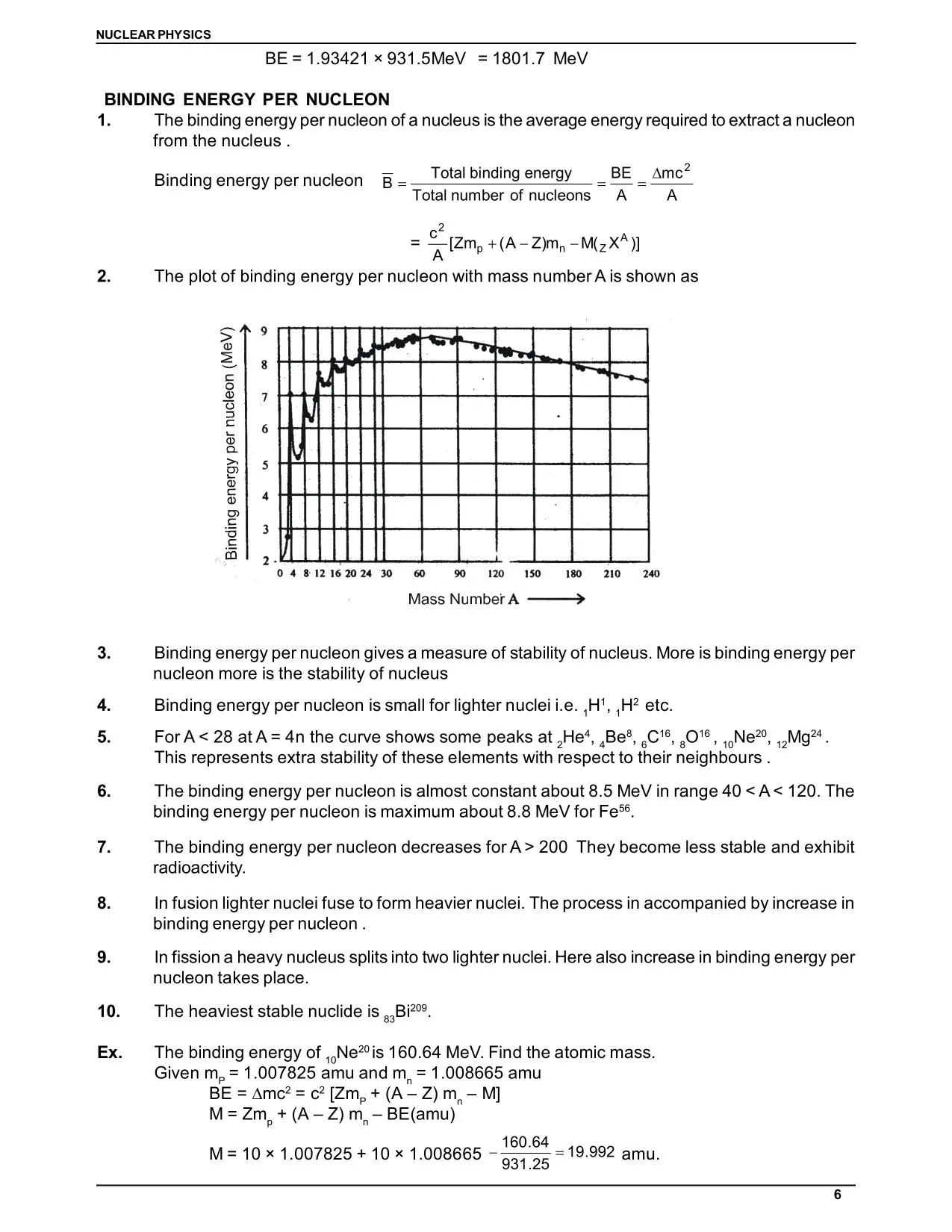
Nuclear binding energy is the energy you would need to supply to completely break a nucleus apart into its individual protons and neutrons. A higher binding energy means a more stable nucleus. Iron-56 has the highest binding energy per nucleon (~8.79 MeV) and is therefore the most stable nucleus in nature
How many questions come from Atoms and Nuclei in JEE Main?
JEE Main typically includes 1–2 questions from Atoms and Nuclei per session, according to NTA's official question paper archive. The questions usually test binding energy calculations, half-life problems, or conceptual understanding of nuclear force and radioactive decay types.
What is the most important topic in Atoms and Nuclei for NEET?
Radioactive decay and nuclear binding energy are the highest-yield topics for NEET. Together they account for roughly 2 out of every 3 questions asked from this chapter in NEET papers between 2018 and 2023. Focus on the decay law, half-life calculations, and interpreting the binding energy per nucleon curve.
Is Atoms and Nuclei in the CBSE Class 12 board exam syllabus for 2026–27?
Yes. Atoms and Nuclei is part of Unit VIII: Atoms and Nuclei in the CBSE Class 12 Physics syllabus, as per the official CBSE curriculum. It carries a weightage of approximately 6 marks in the board exam when combined with the Atoms chapter. Students should not drop this unit as it overlaps significantly with JEE and NEET syllabi.
Why does nuclear fusion require such high temperatures?
Fusion requires temperatures of ~10⁸ K because the reacting nuclei are both positively charged and must overcome the electrostatic (Coulomb) repulsion barrier before getting close enough for the strong nuclear force to take over. Only at extremely high kinetic energies — equivalent to those temperatures — can nuclei collide with enough force to fuse.
What is the difference between half-life and mean life?
Half-life (T½) is the time after which exactly half the nuclei in a sample have decayed. Mean life (τ) is the average time a single nucleus survives before decaying. Mean life is always longer: τ = 1.44 × T½. Both are constant for a given isotope and independent of the sample size.