Semiconductors - JEE Main Previous Year Questions with Solutions
Semiconductors JEE Main PYQ: Practice previous year AIEEE and JEE Main questions on diodes, transistors, logic gates, LEDs, and semiconductor devices to master one of the highest-scoring Physics chapters.
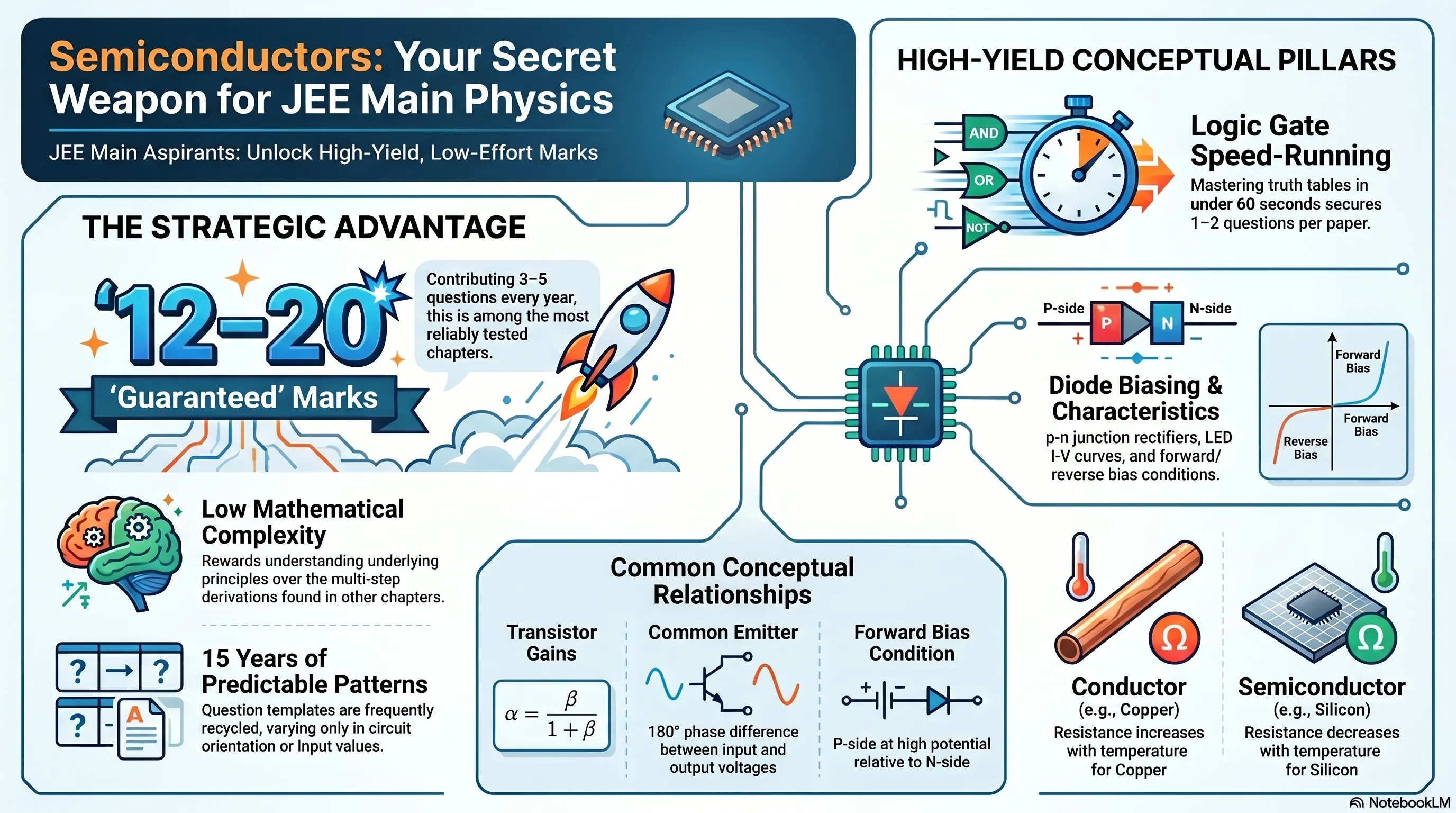
Table of Contents

eSaral › JEE › JEE Main ›Semiconductors

Why Semiconductors Is One of the Highest-Scoring JEE Main Physics Topics
Semiconductor Electronics (Class 12, Chapter 14) is among the most reliably tested chapters in JEE Main Physics, contributing 3–5 questions every year since AIEEE began. The chapter offers a rare combination in competitive exam preparation: high weightage with relatively low mathematical complexity.
Unlike chapters such as Alternating Current or Electromagnetic Induction that demand multi-step numerical derivations, Semiconductors rewards students who understand the underlying principles — diode biasing, logic gate outputs, transistor configuration relationships, and device characteristics. Most questions are either direct conceptual recall or one-step application.
Students who thoroughly solve the AIEEE and JEE Main PYQs from this chapter will encounter no genuinely new question type — because NTA and AIEEE have been recycling the same conceptual templates for over 15 years, varying only the circuit diagram orientation or the specific input values.
💡 Expert Tip by eSaral Physics Faculty, IIT Kota: "Semiconductors is where disciplined students pocket 12–20 marks in JEE Main before the exam has even started. Logic gate questions alone contribute 1–2 questions in most papers. If you can fill any truth table in under 60 seconds, those are essentially guaranteed marks. Two days of focused preparation on this chapter — PYQs included — changes your JEE Main Physics score meaningfully."
Simulator Previous Years AIEEE/JEE Mains Questions 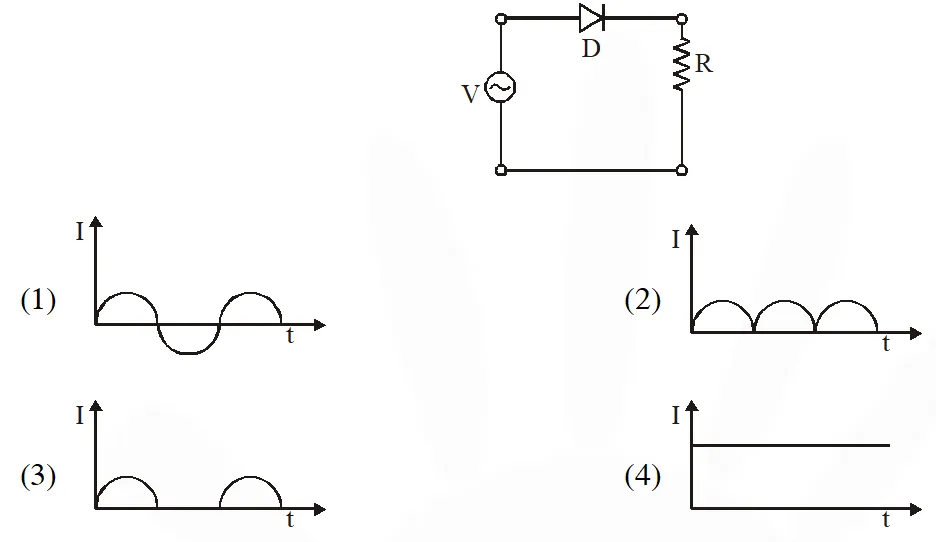 [AIEEE-2009]
 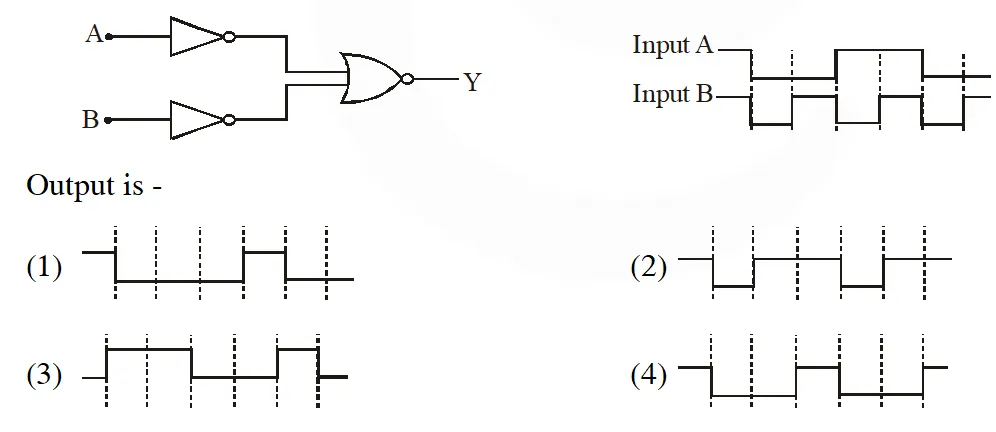 [AIEEE-2009]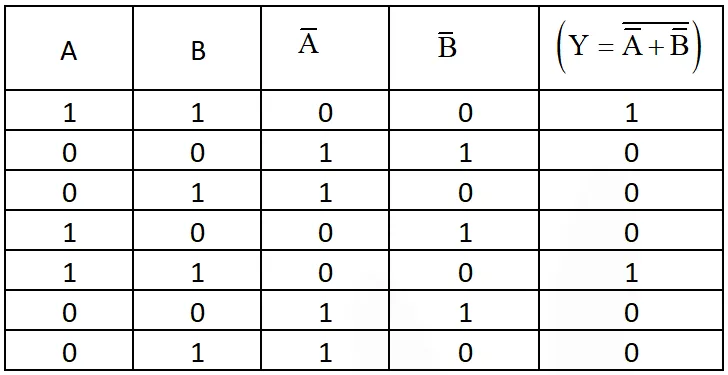
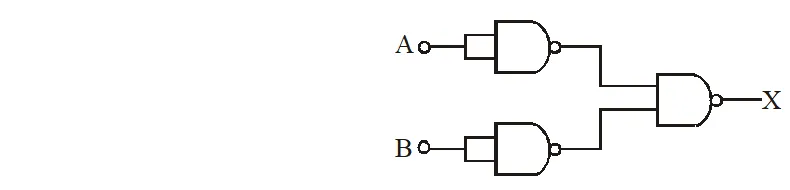 (1) XOR gate (2) NAND gate (3) OR gate (4) NOT gate [AIEEE-2010]
 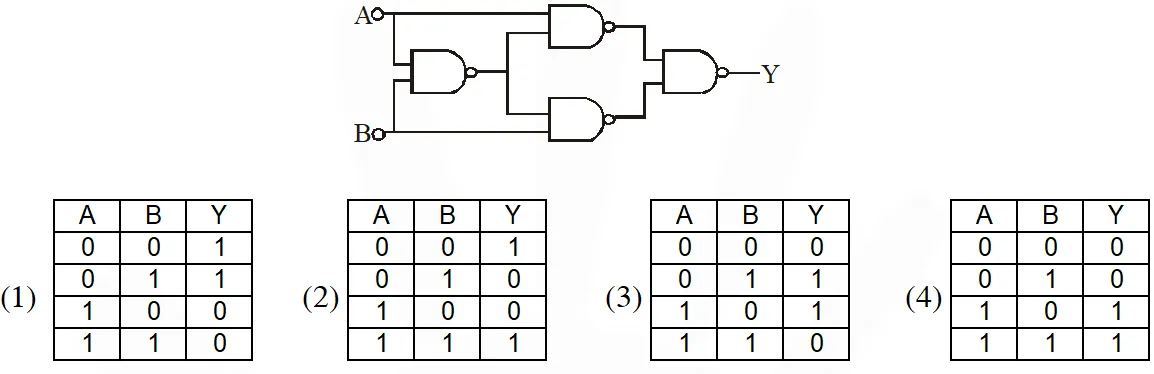 [AIEEE-2012]
  [JEE Main 2013]
  [JEE Main-2014]
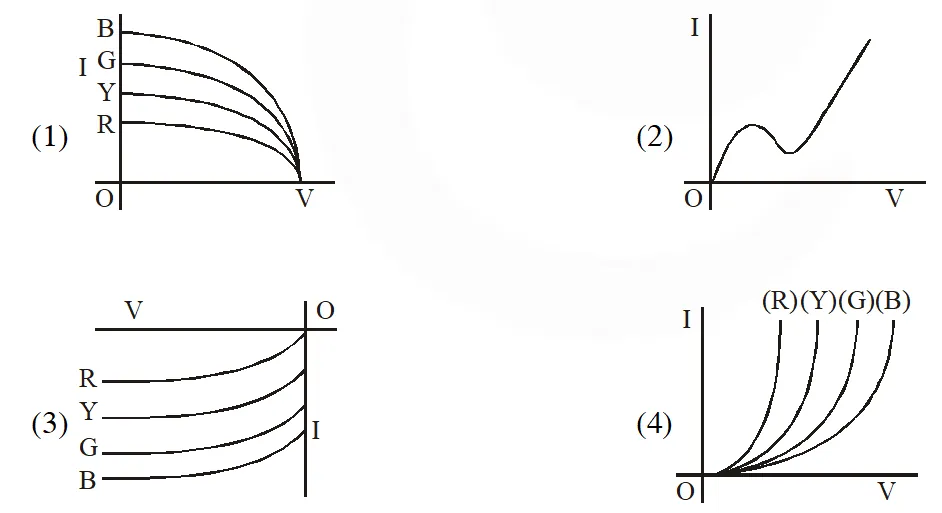
  [JEE Main-2016]
 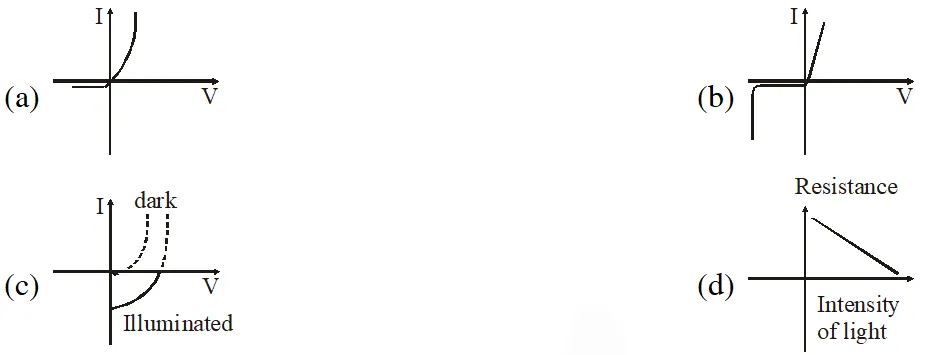 (1) Zener diode, Solar cell, Simple diode, Light dependent resistance (2) Simple diode, Zener diode, Solar cell, Light dependent resistance (3) Zener diode, Simple diode, Light dependent resistance, Solar cell (4) Solar cell, Light dependent resistance, Zener diode, Simple diode [JEE Main-2016]
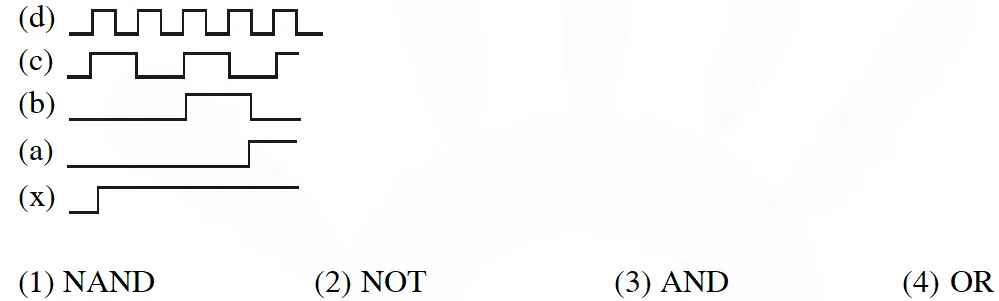
 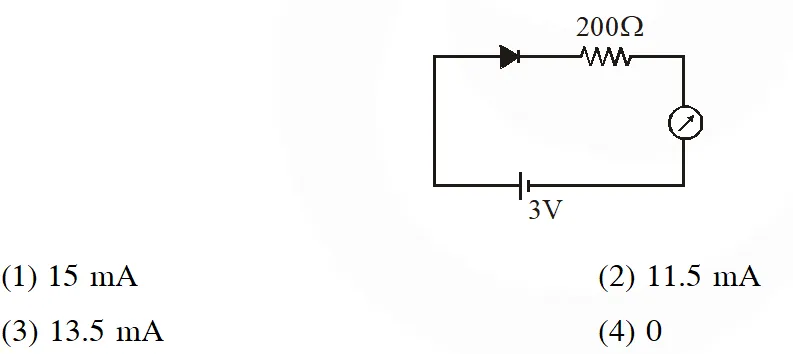 [JEE Main-2018]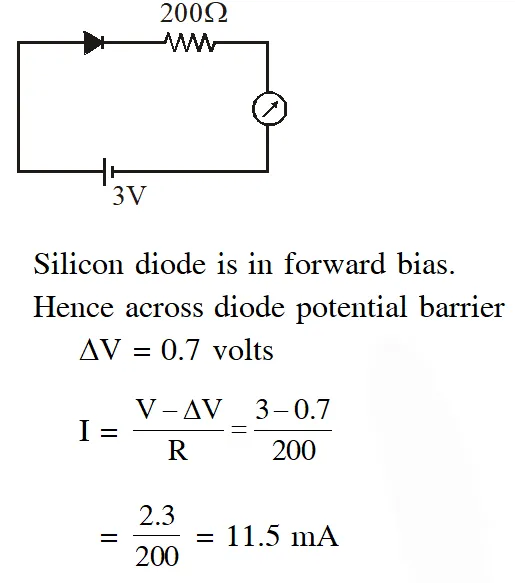
Use the JEE Mains PYQ chapter wise index to track Semiconductors alongside the other Physics chapters during revision.
After Semiconductors, test yourself on a full-length paper. Our JEE Main exam papers covers every recent session, free to attempt.
Frequently Asked Questions
Find answers to common questions.
Which semiconductor topics are most asked in JEE Main?
The four highest-frequency topics are: logic gates (truth table identification, waveform output, and combined gate circuits — appearing in nearly every paper), p-n junction forward and reverse bias (depletion layer and current behaviour), transistor CE configuration (α-β relationship, 180° phase difference), and device identification from I-V characteristics (Zener vs simple diode vs solar cell vs LED vs photodiode). These four areas account for over 85% of all JEE Main Semiconductor questions.
How to solve logic gate questions in JEE Main quickly?
The fastest reliable method is systematic truth table tracing. Step 1: identify all input combinations (for two inputs: 00, 01, 10, 11). Step 2: trace through each gate in the circuit for each input combination. Step 3: compare the resulting output column against known truth tables (AND, OR, NAND, NOR, XOR). The matching gate is your answer. For waveform questions: divide the waveform into constant-input time segments and apply the gate logic to each segment. Time to answer: under 90 seconds with practice.
Why is the phase difference 180° in a CE amplifier?
In CE configuration, increasing base voltage increases base current, which increases collector current, which increases the voltage drop across the collector resistance R_C. Since the collector supply voltage V_CC is fixed, increasing voltage across R_C decreases the collector-to-emitter voltage V_CE. Therefore: input increases → output decreases → exact phase reversal → 180° phase difference. CB configuration gives 0° phase difference; CC (emitter follower) also gives approximately 0°.
Where can I get all JEE Main previous year question papers for Physics?
eSaral provides a free, complete collection of JEE Main previous year question papers across all subjects and years — organized year-wise and subject-wise for efficient preparation. Complete chapter notes for Semiconductor Physics Class 12 are also available free at eSaral's Semiconductor notes page.
How is a Zener diode different from a simple diode in I-V characteristics?
Both devices have similar forward-bias I-V characteristics (exponential rise after threshold voltage). In reverse bias, a simple diode has negligible reverse saturation current until it breaks down destructively at high voltages. A Zener diode is designed to operate at a precise, controlled reverse breakdown voltage (Vz) — after which it maintains a nearly constant voltage across its terminals regardless of current variation. This makes it useful as a voltage regulator. The Zener breakdown is non-destructive for the specified current range.