Solid State - JEE Advanced Previous Year Questions with Solutions
JEE Advanced Previous Year Questions on Solid State cover crystal structures, packing efficiency, unit cells, crystal defects, ionic solids, voids, density calculations, and coordination concepts, helping students strengthen core topics frequently tested in the exam.

eSaral › JEE › JEE Main ›Solid State - JEE Advanced Previous Year Questions with Solutions

🚀 Checkout eSaral Courses
Simulator Previous Years JEE Advance Questions 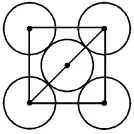 (A) 39.27% (B) 68.02% (C) 74.05% (D) 78.54% [JEE-2010]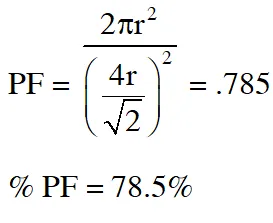
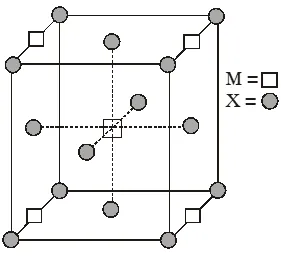 (A) MX (B) $\mathrm{MX}_{2}$ (C) $\mathrm{M}_{2} \mathrm{X}$ (D) $\mathrm{M}_{5} \mathrm{X}_{14}$ [JEE-2012]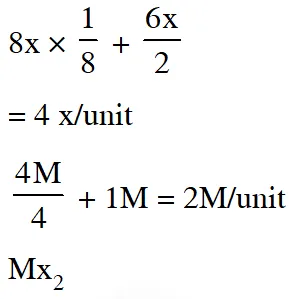
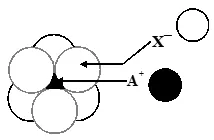 (A) 104 pm (B) 125 pm (C) 183 pm (D) 57 pm [JEE-2013]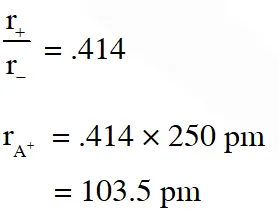
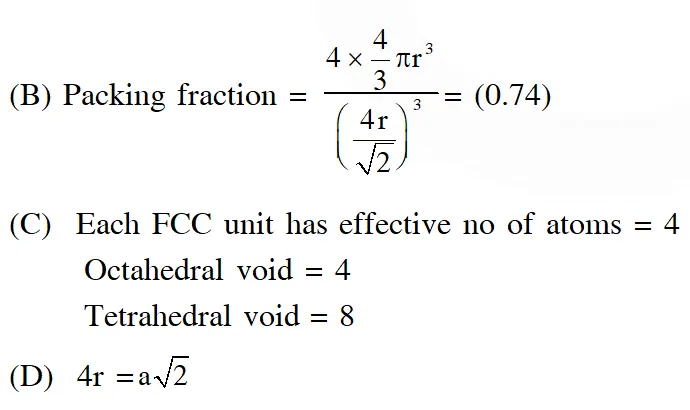
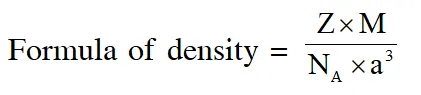
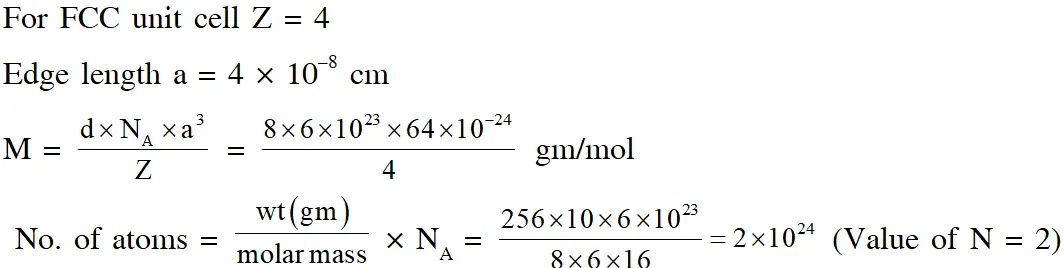
 [JEE - Adv. 2017]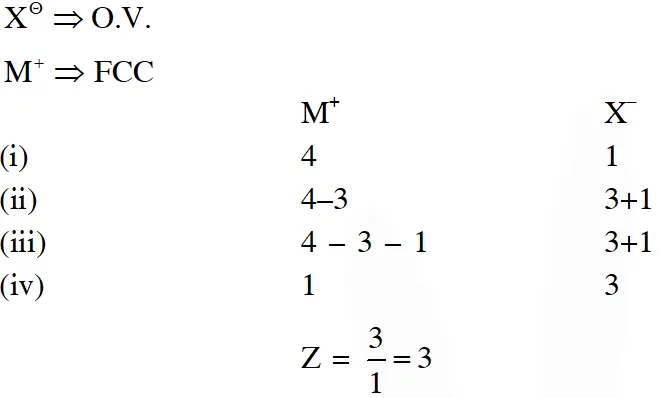
After solving Solid State - JEE Advanced PYQs (Chemistry), explore the complete papers to understand the broader question mix through the JEE Advanced PYQ.
Frequently Asked Questions
Find answers to common questions.
What is the weightage of Solid State in JEE Advanced?
Solid State typically contributes 1–2 questions per year in JEE Advanced, worth 4–8 marks. While that may seem small, these questions are highly predictable in topic (defects, packing, unit cell density) and often appear as high-scoring integer or multi-correct types where thorough preparation almost guarantees full marks.
Which Solid State topics are most repeated in JEE Advanced?
Crystal defects (especially Frenkel vs. Schottky distinctions and F-centres), packing efficiency of 2D and 3D unit cells, CCP structure properties, and density calculations for FCC unit cells are the most frequently tested topics. Together they account for roughly 80% of all Solid State questions asked between 2009 and 2023.
Is NCERT enough for Solid State in JEE Advanced?
NCERT Class 12 Chemistry Chapter 1 is the necessary foundation, but it is not sufficient on its own for JEE Advanced. NCERT covers definitions and basic formulas. JEE Advanced questions require you to apply those concepts in multi-step problems — for example, transforming an NaCl unit cell through four operations and counting atoms at each stage, as seen in the 2017 paper.
How do you calculate packing efficiency for a 2D square unit cell?
For a 2D square unit cell where atoms touch along the edge (edge length a = 2r): calculate the area of atoms inside the cell divided by the total area of the cell. For the arrangement in JEE 2010, this gives 2πr² / 4r² × 100 = 78.54%. Always identify how many atoms belong to the cell before applying the formula.
How many nearest neighbours does an atom have in the topmost layer of a CCP structure?
An atom in the topmost layer of a CCP structure has 9 nearest neighbours: 6 in the same layer and 3 in the layer directly below it. This is different from an atom in an interior (bulk) layer, which has 12 nearest neighbours. JEE Advanced 2016 specifically tested this distinction in its multi-correct question.