Capacitor - NEET Previous Year Questions with Complete Solutions
Capacitor is a high-weightage Electrostatics topic in NEET Physics covering capacitance, dielectric effects, energy storage, and series-parallel combinations, with 1–2 formula-based questions asked almost every year.
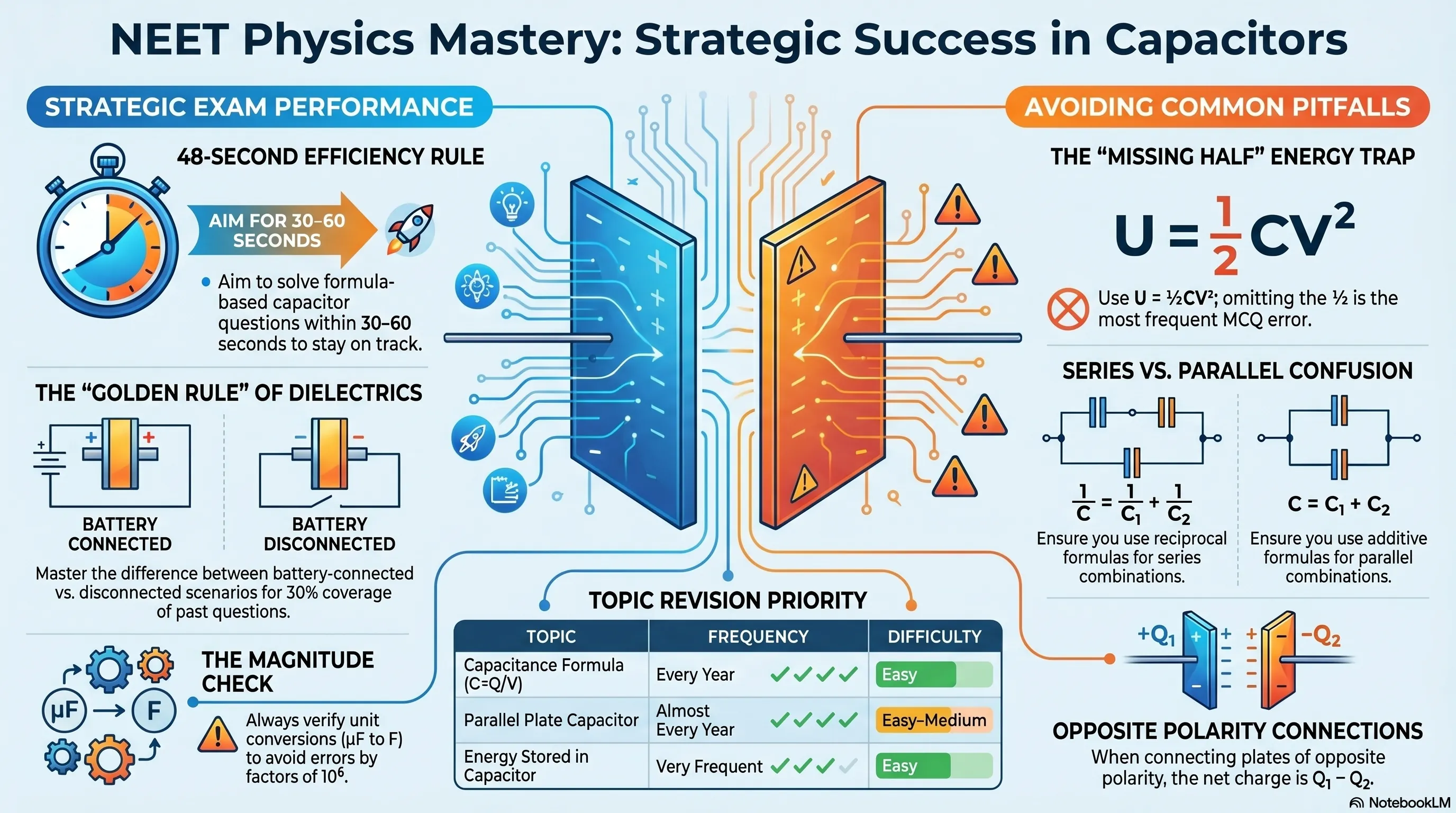
Table of Contents

eSaral › NEET ›Capacitor - NEET Previous Year Questions with Complete Solutions

Capacitor in NEET — Weightage and What Gets Asked
Capacitor is part of Electrostatics in Class 12 Physics — one of the highest-weightage units in NEET Physics.
| Topic | Frequency in NEET (2015–2025) | Difficulty |
|---|---|---|
| Capacitance formula (C = Q/V) | Every year | Easy |
| Parallel plate capacitor | Almost every year | Easy–Medium |
| Energy stored in capacitor | Very frequent | Easy |
| Effect of dielectric on C, V, E, U | Frequent | Medium |
| Series and parallel combination | Frequent | Medium |
| Capacitor with battery connected/disconnected | Frequent | Medium–Hard |
| Spherical and cylindrical capacitor | Occasional | Medium |
| Charging and discharging (RC circuit) | Occasional | Hard |
Total expected questions in NEET 2027: 1–2 questions per paper.
💡 Expert Tip by Prateek Gupta, IIT Bombay: "The single most tested scenario in NEET Capacitor questions is: what happens when a dielectric is inserted while the battery is still connected vs after the battery is disconnected? Master those two cases and you have covered at least 30% of this chapter's NEET history."
Capacitor - NEET Previous Year Questions with Complete Solutions
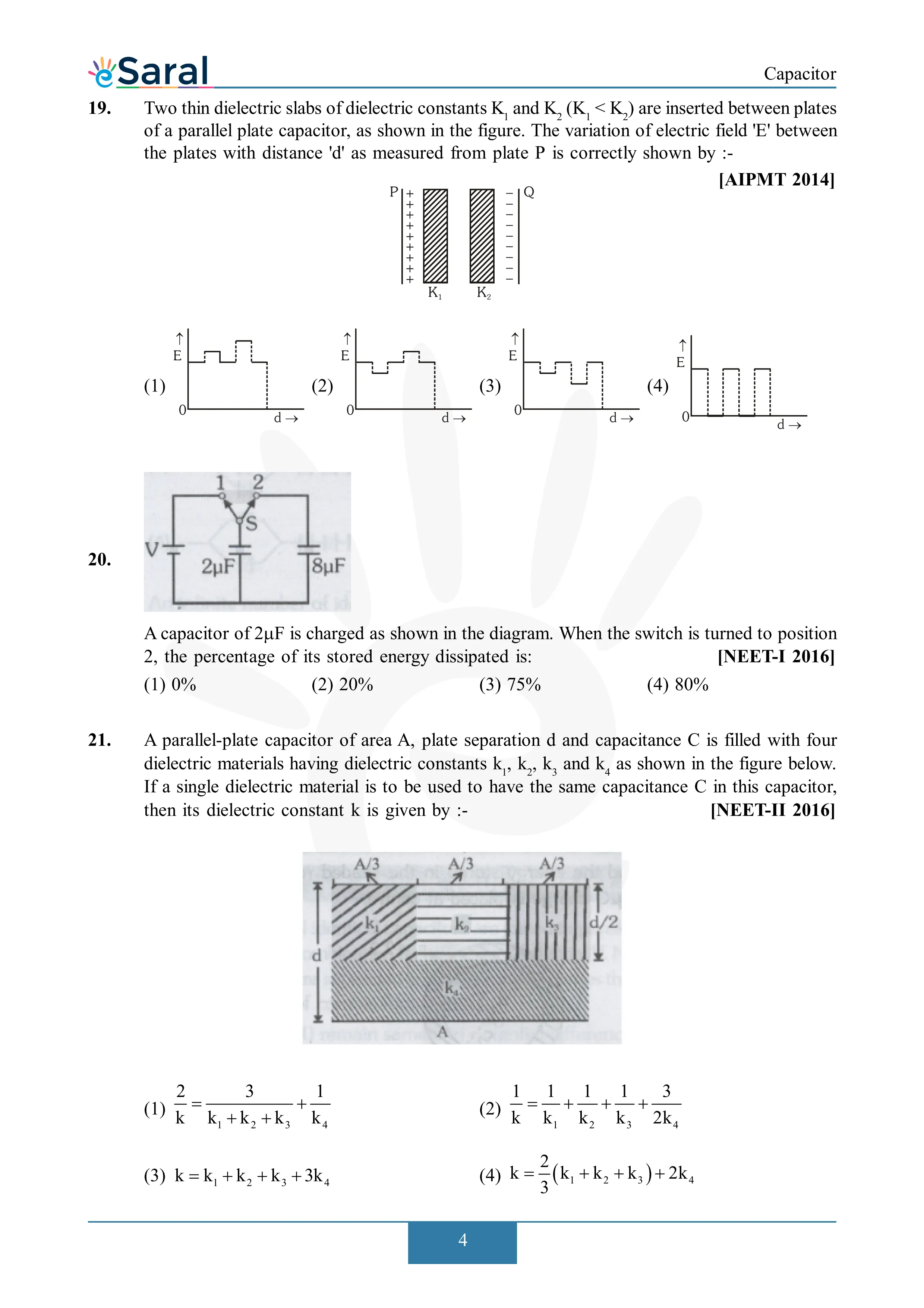
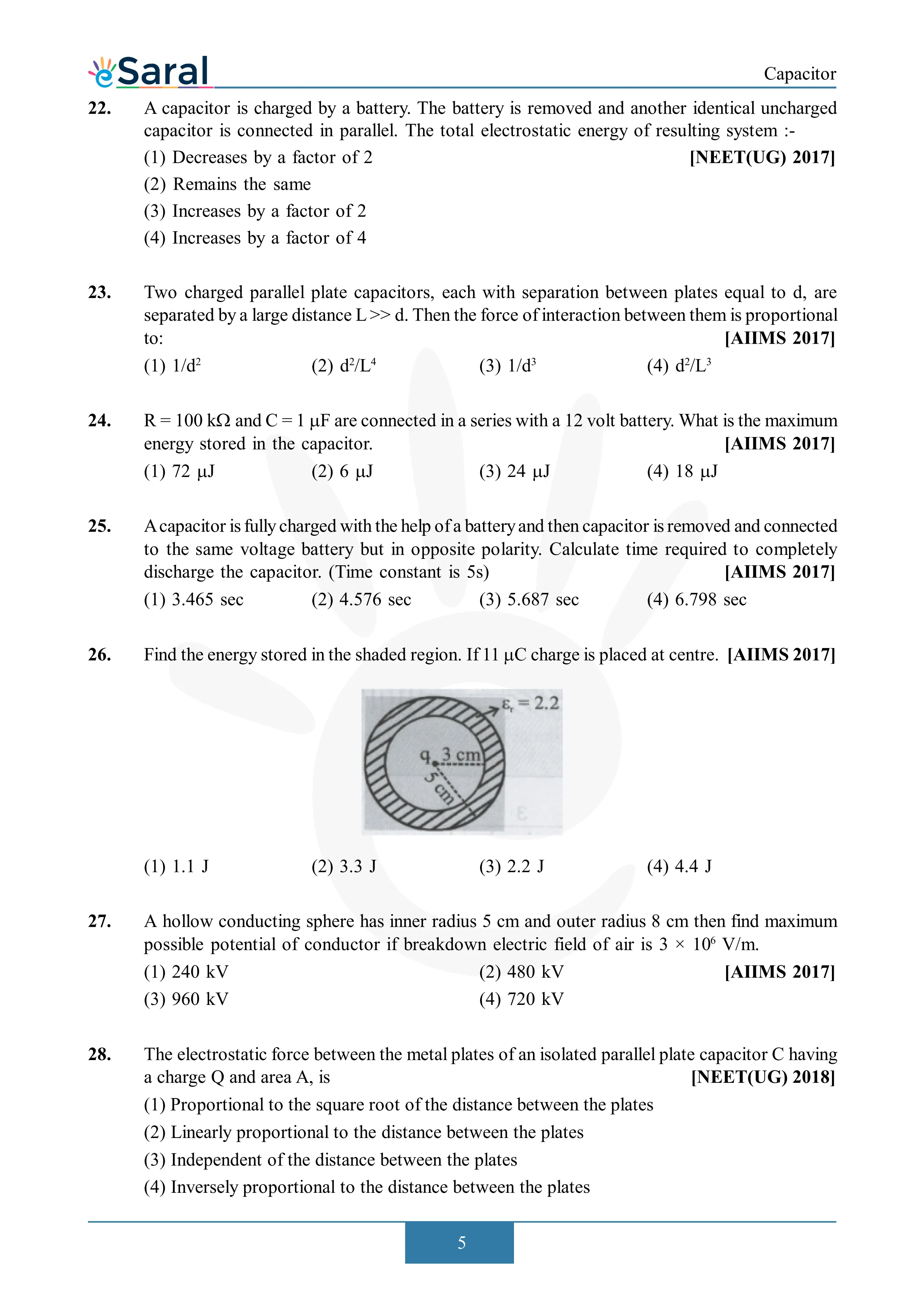

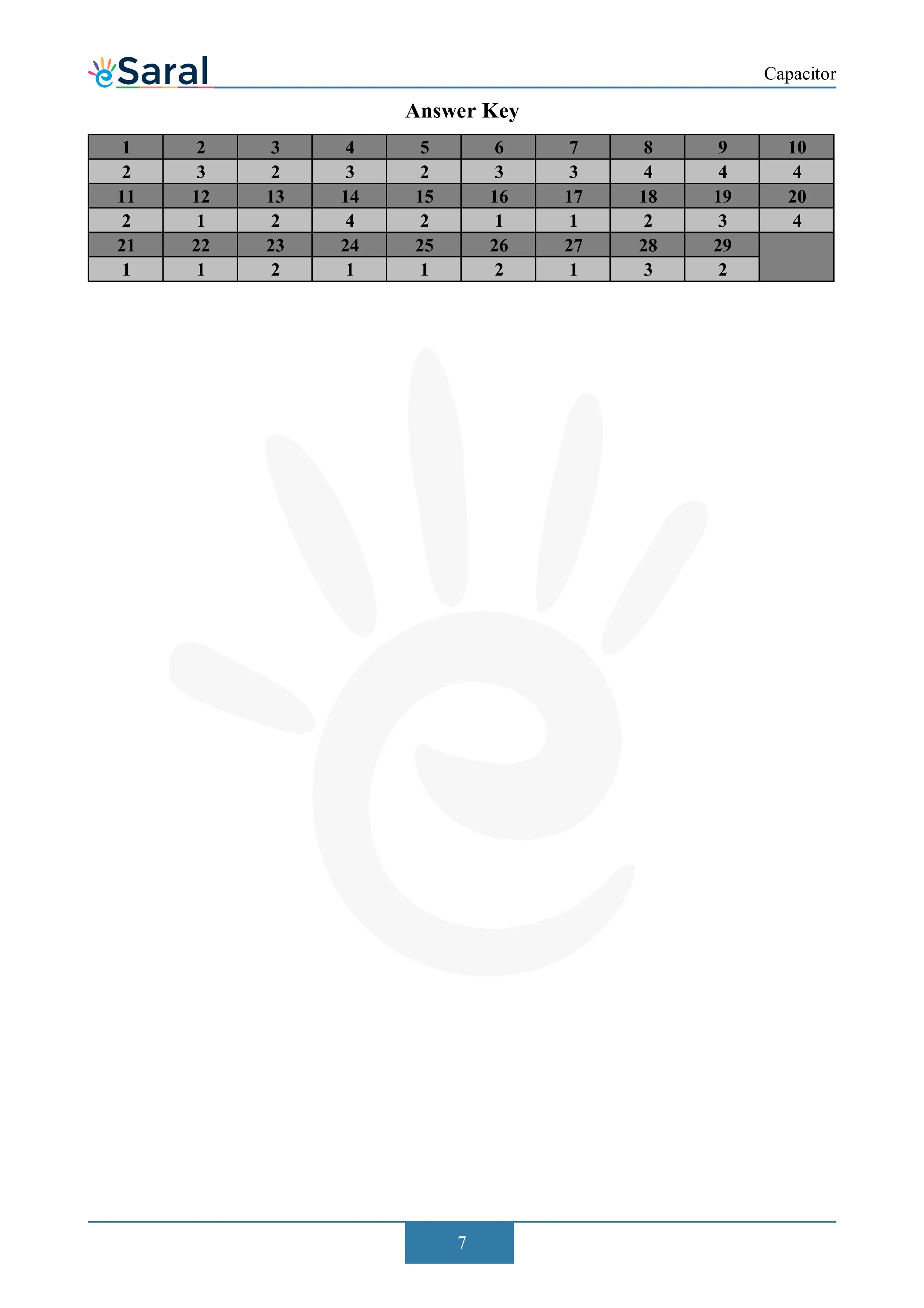
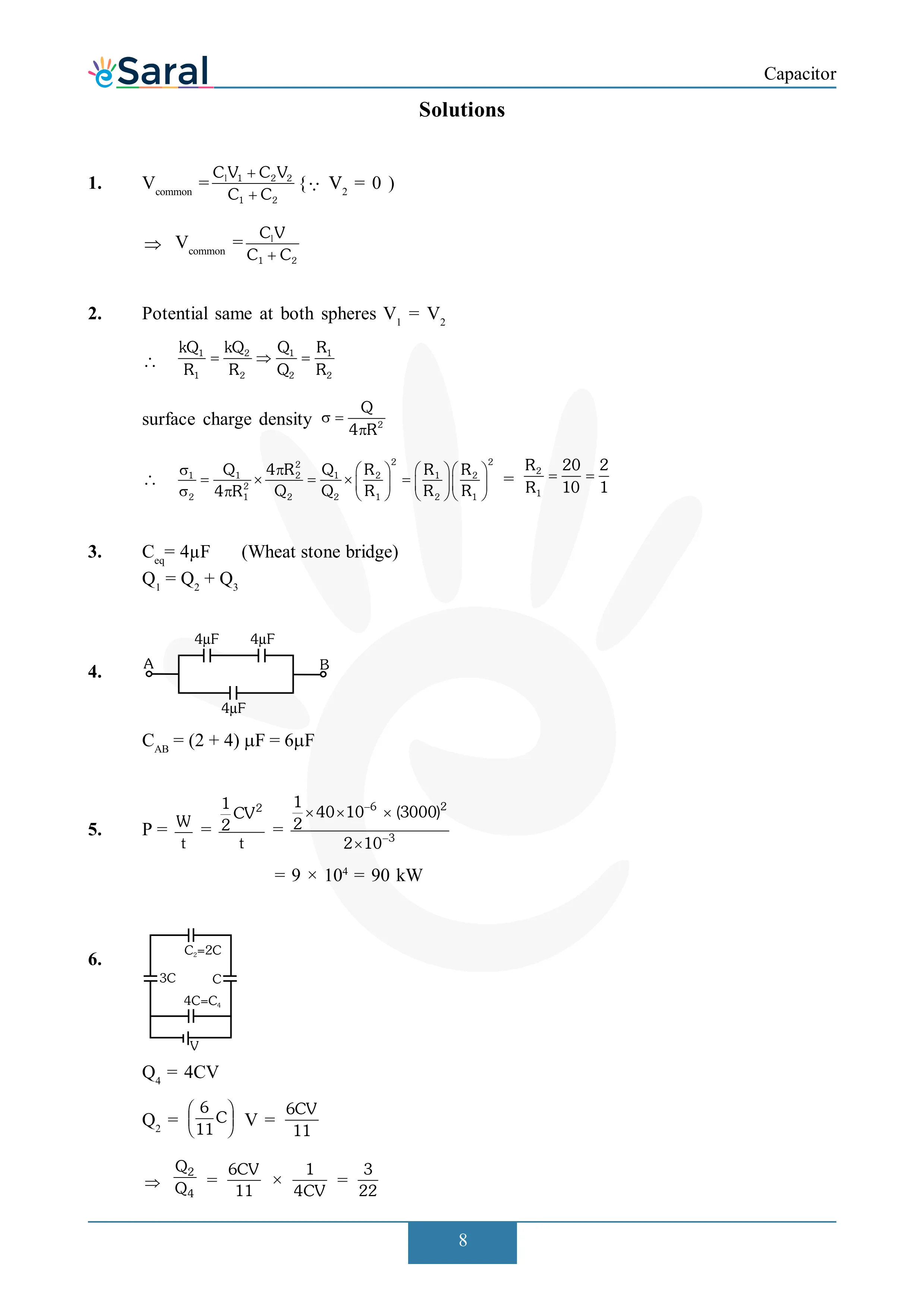
How to Attempt Capacitor Questions in NEET Under Time Pressure
NEET gives you an average of 48 seconds per question. Capacitor questions are formula-based — they should take 30–60 seconds each, not more. Here is how:
- Read the question and immediately identify the scenario — Is the battery connected or disconnected? Series or parallel?
- Write the single formula that applies — Do not try to derive anything in the exam
- Substitute values directly — Keep units consistent (µF, V, µC)
- Check the order of magnitude — If your answer is 10⁶ times the options, you forgot a unit conversion
- Move on immediately — Do not recheck Capacitor questions unless you have spare time at the end
Common Mistakes in Capacitor NEET Questions
These are the errors that cost students marks repeatedly:
- Forgetting to check battery status: The entire set of changes for dielectric problems depends on whether the battery is connected. Read every dielectric question twice.
- Wrong series formula: Students often write C_eff = C₁ + C₂ for series (that is the parallel formula). Series is always the reciprocal formula.
- Unit errors: Mixing µF with F in calculations gives answers off by a factor of 10⁶. Always convert to a single unit before calculating.
- Energy formula confusion: U = ½CV² is correct. U = CV² (without the ½) is the most common wrong answer in NEET MCQs — and it is always one of the options.
- Opposite polarity charge problems: Students add charges instead of subtracting when plates of opposite polarity are connected. Opposite polarity = net charge = Q₁ − Q₂.
How to Use These PYQs for Maximum Revision Impact
Step 1 — Attempt Without Looking at Solutions
Cover the solution with a piece of paper. Attempt the question on rough paper using only your formula sheet.
Step 2 — Check Answer, Not Just the Letter
If you got (A) correct — check whether you used the right formula and method. A right answer with wrong reasoning is a time bomb in NEET.
Step 3 — For Wrong Answers — Root Cause First
Ask: Was it a formula error? A sign error? A unit error? A concept gap? The root cause tells you exactly what to revise.
Step 4 — Re-Attempt Wrong Questions After 24 Hours
Come back the next day and re-attempt every question you got wrong — without looking at the solution. If you get it right now, it is learnt. If not, revise again.
Step 5 — Track Your Accuracy by Topic
Use the topic-wise breakdown at the top of this page. If your accuracy on "Dielectric effect" is below 60%, that is your revision priority — not the whole chapter.
Frequently Asked Questions
Find answers to common questions.
How many questions come from Capacitor in NEET every year?
Capacitor typically produces 1–2 questions in NEET Physics every year. The chapter is part of Electrostatics, which is one of the highest-weightage units in NEET Physics. Over the last 10 years (2015–2025), Capacitor questions have appeared in almost every NEET paper, making it one of the most reliably tested topics in the entire syllabus.
What are the most important Capacitor topics for NEET?
The most important Capacitor topics for NEET are: capacitance formula (C = Q/V), parallel plate capacitor (C = ε₀A/d), energy stored (U = ½CV²), effect of dielectric with battery connected vs disconnected, and series-parallel combinations. These five topic areas cover over 90% of all Capacitor questions asked in NEET from 2015 to 2025.
What is the effect of dielectric on a capacitor in NEET questions?
When a dielectric is inserted with the battery connected, capacitance and charge increase while voltage and electric field stay constant. When inserted after the battery is disconnected, capacitance increases but charge stays constant, causing voltage, electric field, and energy stored to decrease. This battery-connected vs disconnected distinction is the most tested Capacitor scenario in NEET history.
How to solve Capacitor NEET questions quickly?
Solve Capacitor NEET questions quickly by first identifying the scenario (battery connected or not, series or parallel), writing the single applicable formula, substituting values with consistent units, and checking the order of magnitude against the options. Capacitor questions should take 30–45 seconds in NEET if you know the formula set cold.
Is Capacitor hard for NEET Physics?
Capacitor is not hard for NEET Physics — it is formula-driven, not conceptually deep. Students who lose marks here almost always do so because of the dielectric battery-status confusion or the energy formula error (writing CV² instead of ½CV²). Solving 10–12 previous year questions for this chapter eliminates both errors in most students.