Chemical Bonding
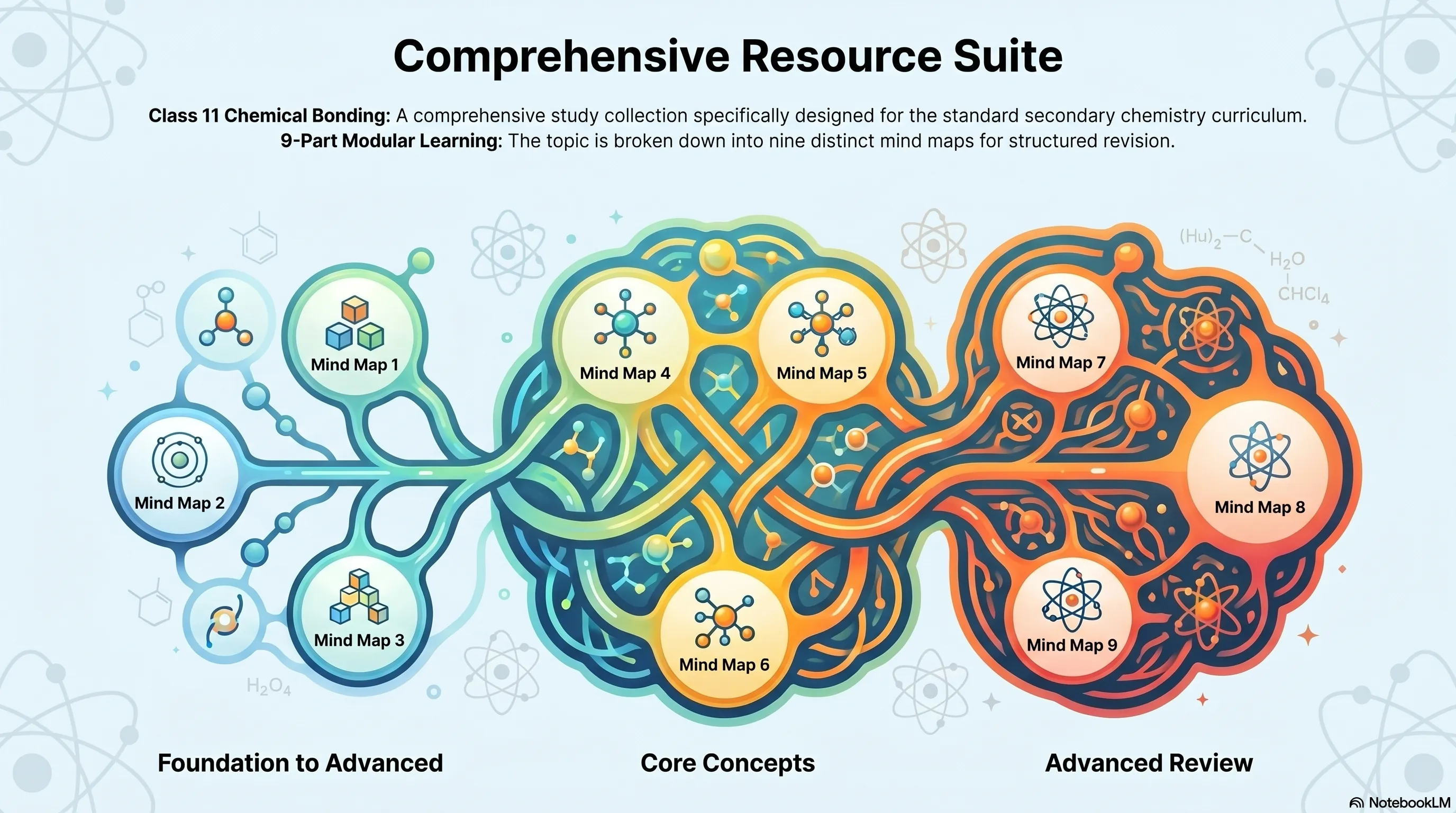
Chemical Bonding Mind Maps offer a concise visual summary of bond formation, molecular geometry, hybridization, VSEPR theory, and bonding concepts, helping Class 11 students revise key topics quickly for school exams, JEE, and NEET.

eSaral › Class 11› Chemical Bonding
This page explains why nitrogen forms exactly three bonds and keeps one lone pair — the compound that example almost always becomes is ammonia, covered here: valency of ammonia.

🚀 Checkout eSaral Courses
Mind Map - 1
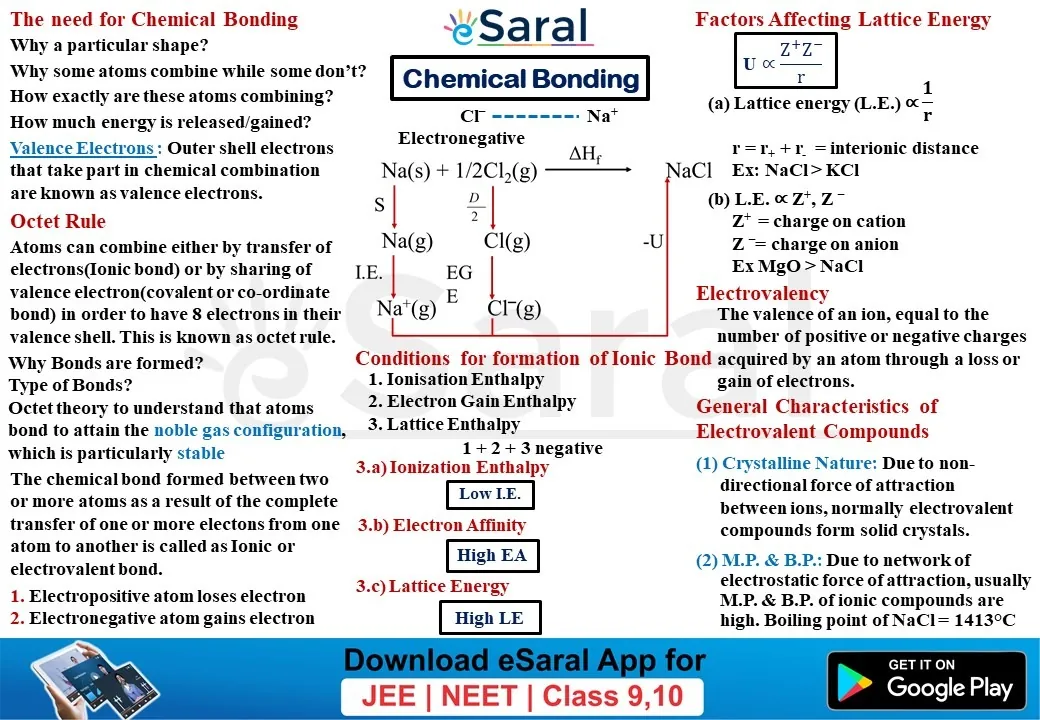
Mind Map - 2
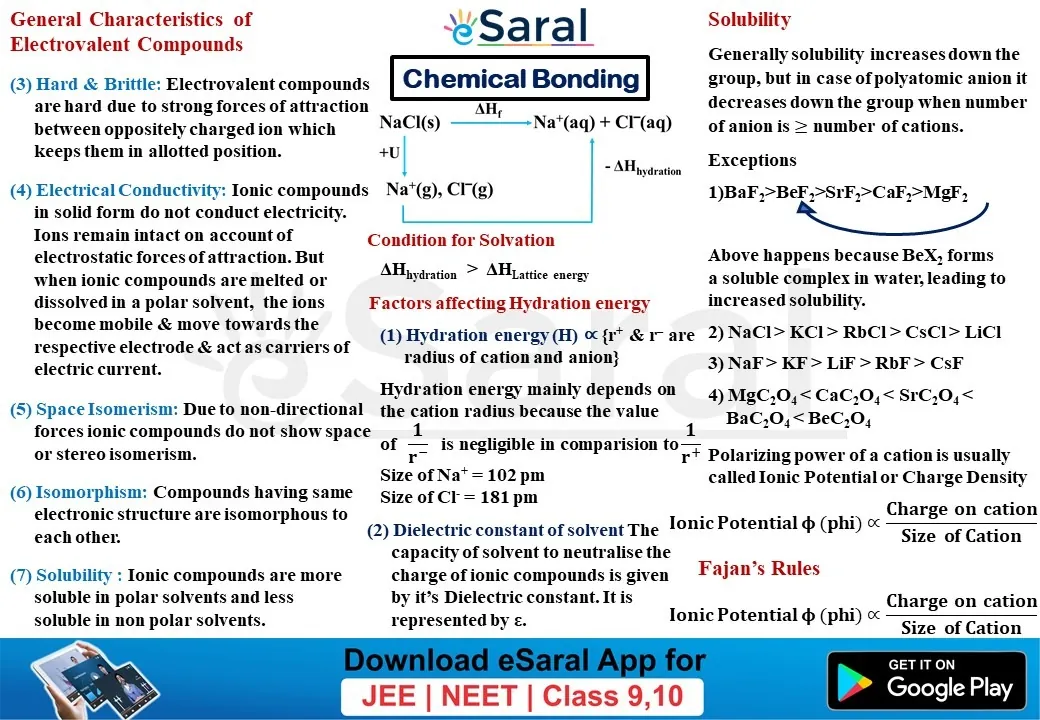
Mind Map - 3
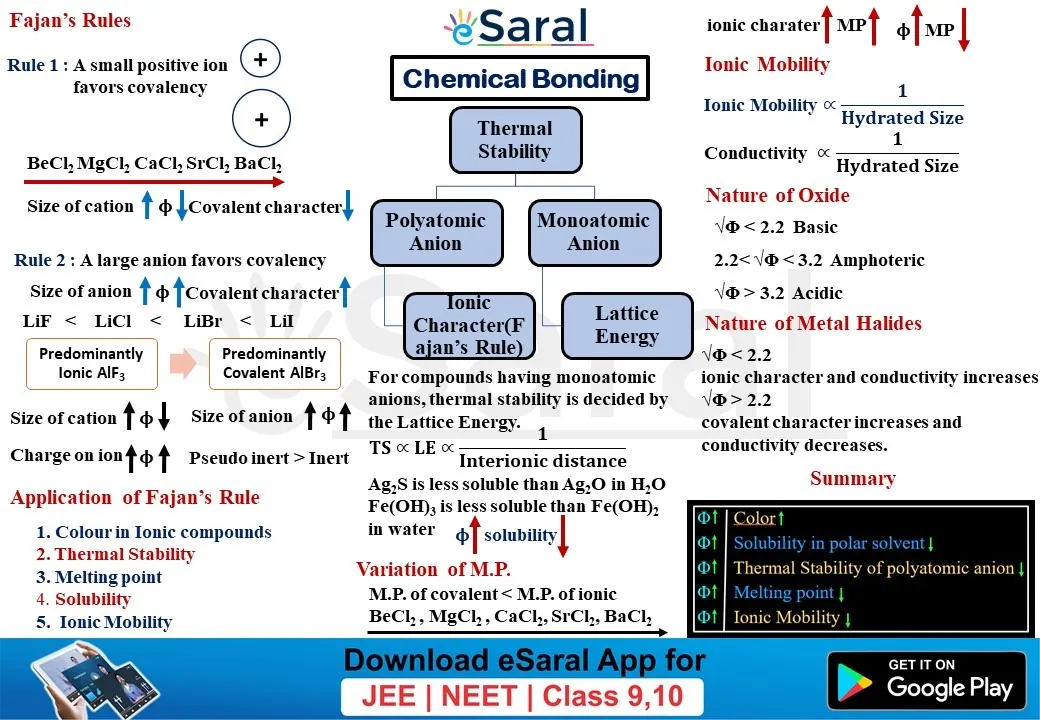
Mind Map - 4
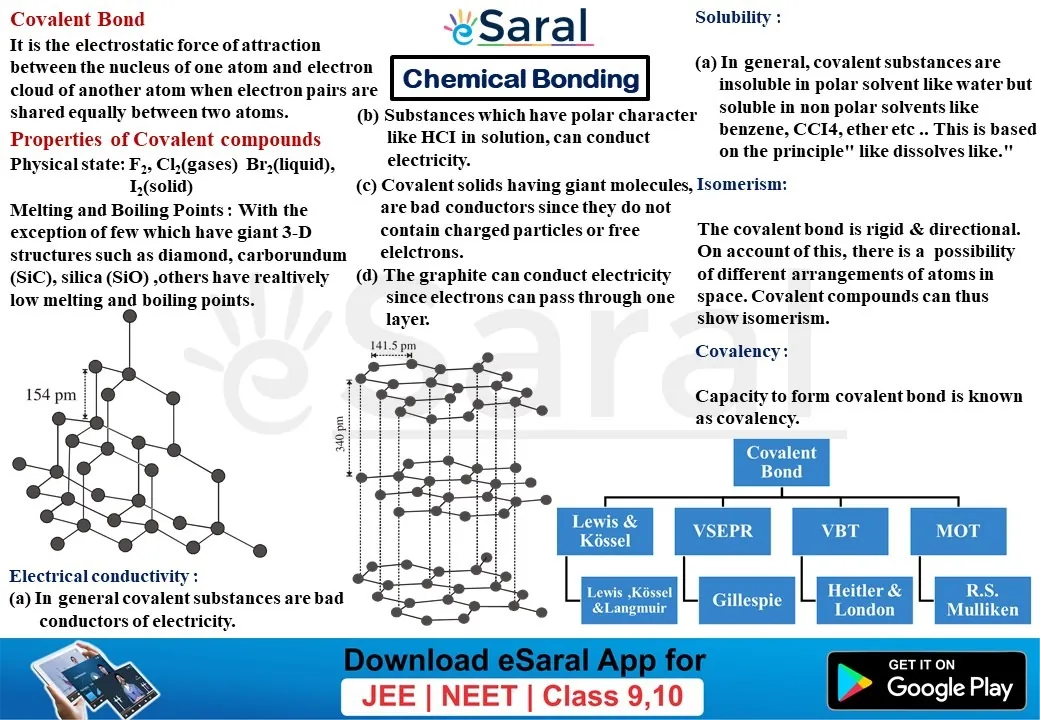
Mind Map - 5
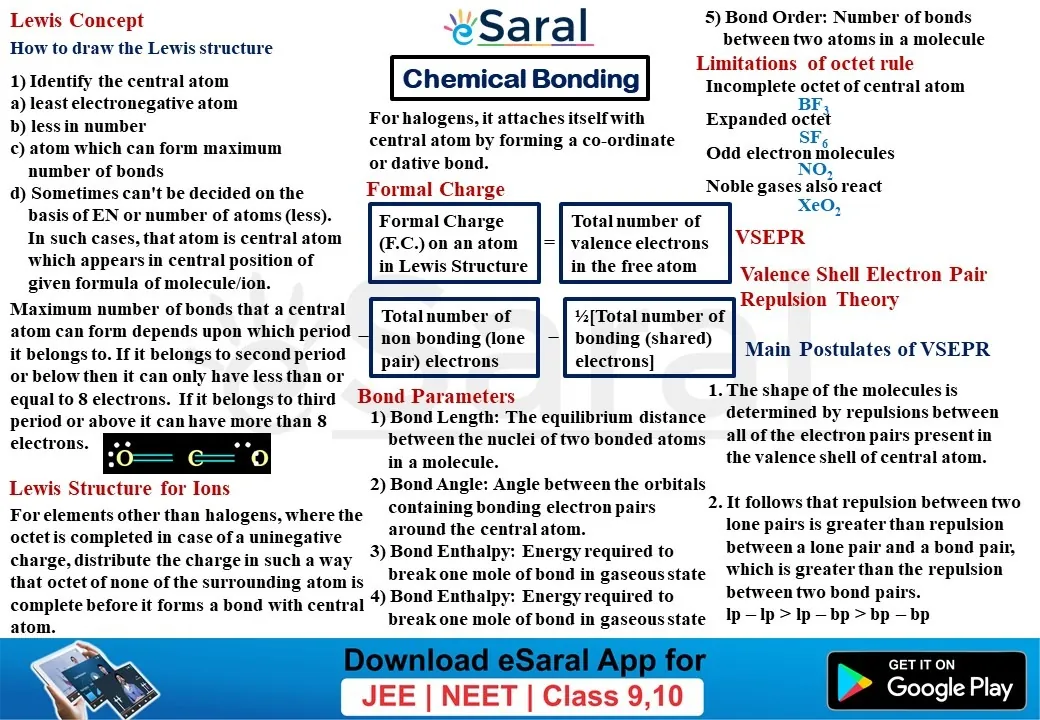
Mind Map - 6
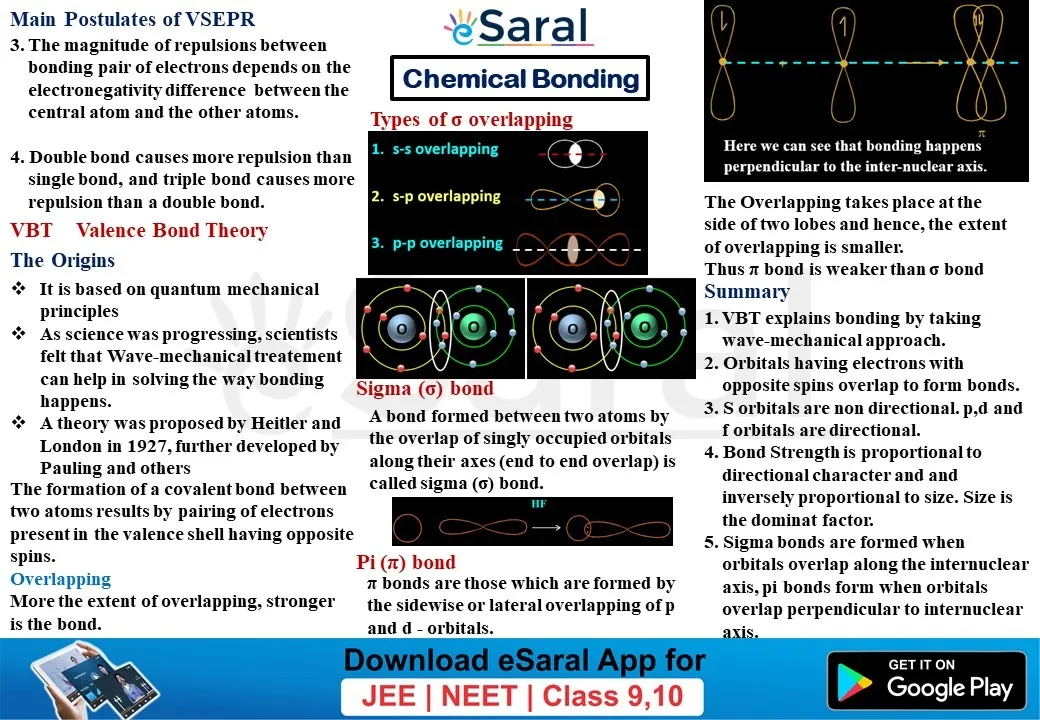
Mind Map - 7
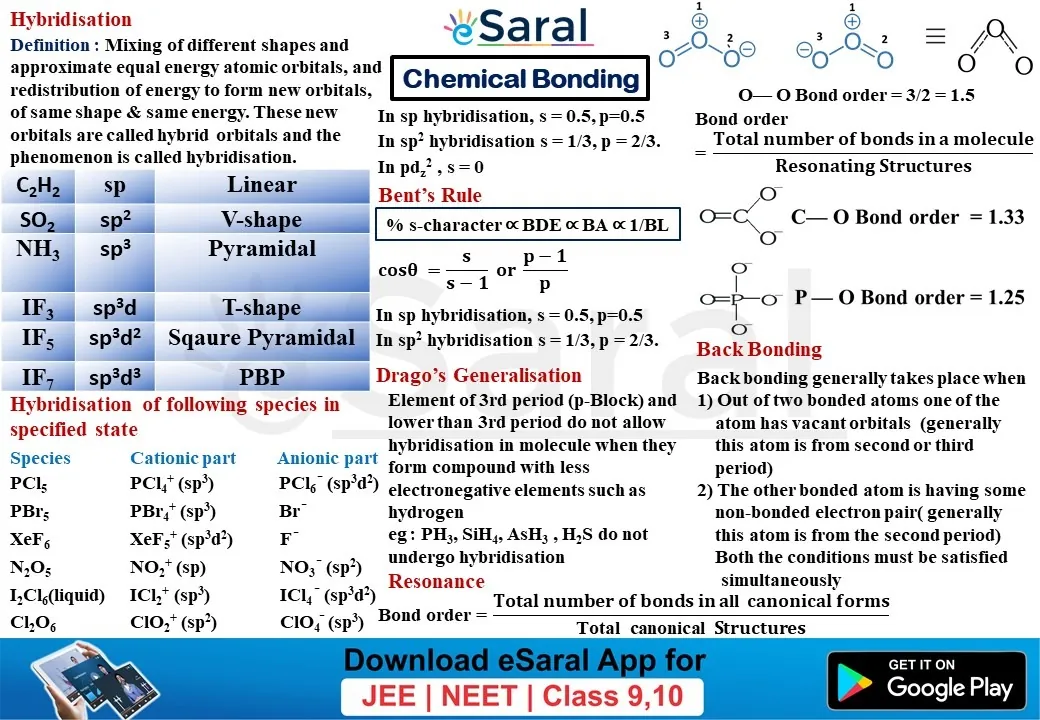
Mind Map - 8
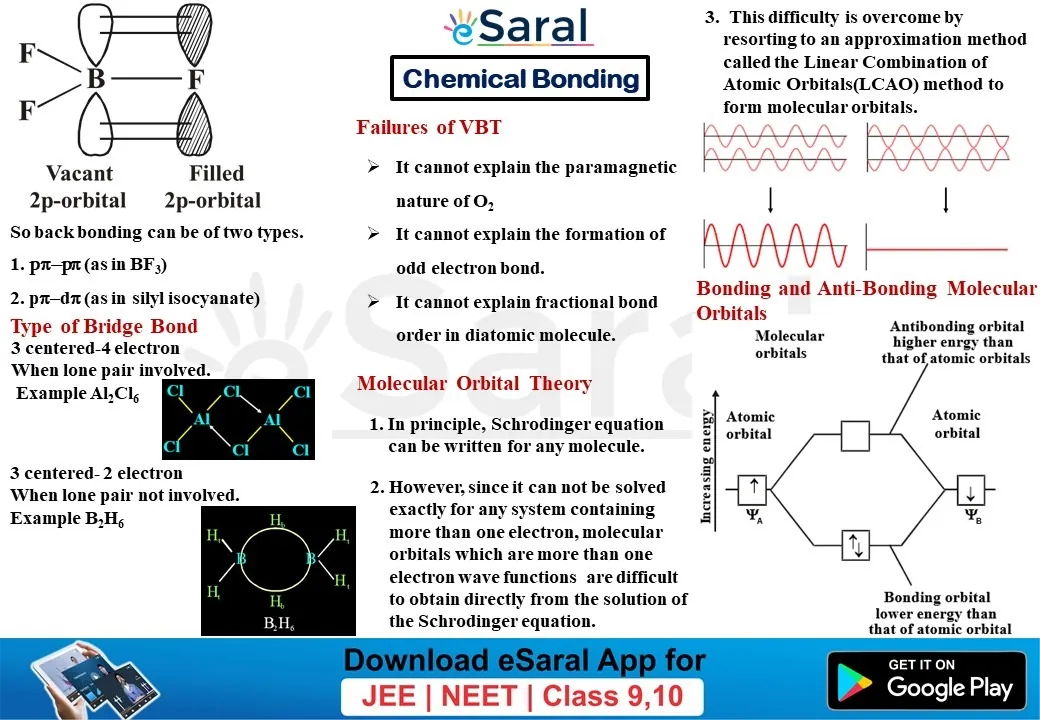
Mind Map - 9
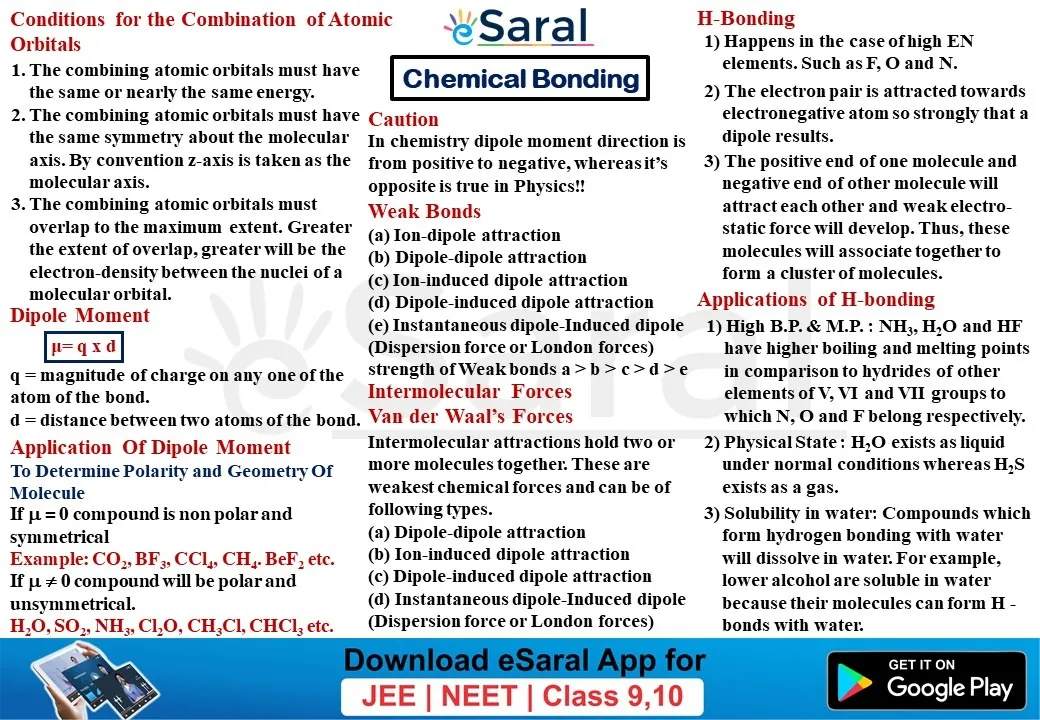
Frequently Asked Questions
Find answers to common questions.
What is chemical bonding in simple words?
Chemical bonding is the force that holds atoms together in a molecule or compound. Atoms form bonds because doing so lowers their total energy and gives them a more stable electron arrangement — usually a filled outer shell. Without chemical bonding, no molecules, no materials, and no living organisms would exist.
What are the 3 main types of chemical bonds?
The three main types are ionic bonds (electron transfer between metal and non-metal), covalent bonds (electron sharing between non-metals), and metallic bonds (delocalised electron sea in metals). Coordinate bonds and hydrogen bonds are additional important types tested in JEE and NEET.
What is the difference between a sigma bond and a pi bond?
A sigma (σ) bond is formed by head-on overlap of orbitals along the internuclear axis. It is the first bond in any covalent bond and is stronger and more stable. A pi (π) bond forms by lateral (side-to-side) overlap of p-orbitals above and below the axis. Double bonds contain one σ + one π; triple bonds contain one σ + two π.
Why is CO₂ non-polar despite having polar bonds?
CO₂ is linear (sp hybridised carbon), so its two C=O bond dipoles point in exactly opposite directions and cancel each other out. Net dipole moment = zero, making the molecule non-polar overall. H₂O, by contrast, is bent (due to lone pairs), so its bond dipoles do not cancel — it has a net dipole moment and is polar.
How do you calculate bond order using MOT?
Bond order = (Number of electrons in bonding MOs − Number of electrons in antibonding MOs) ÷ 2. A bond order of 1 = single bond, 2 = double bond, 3 = triple bond. Zero means the molecule is unstable and does not exist. Fractional bond orders are possible (e.g., O₂⁻ has bond order 1.5).