Class 11 Chemistry Chapter 2 Notes - Structure of Atom
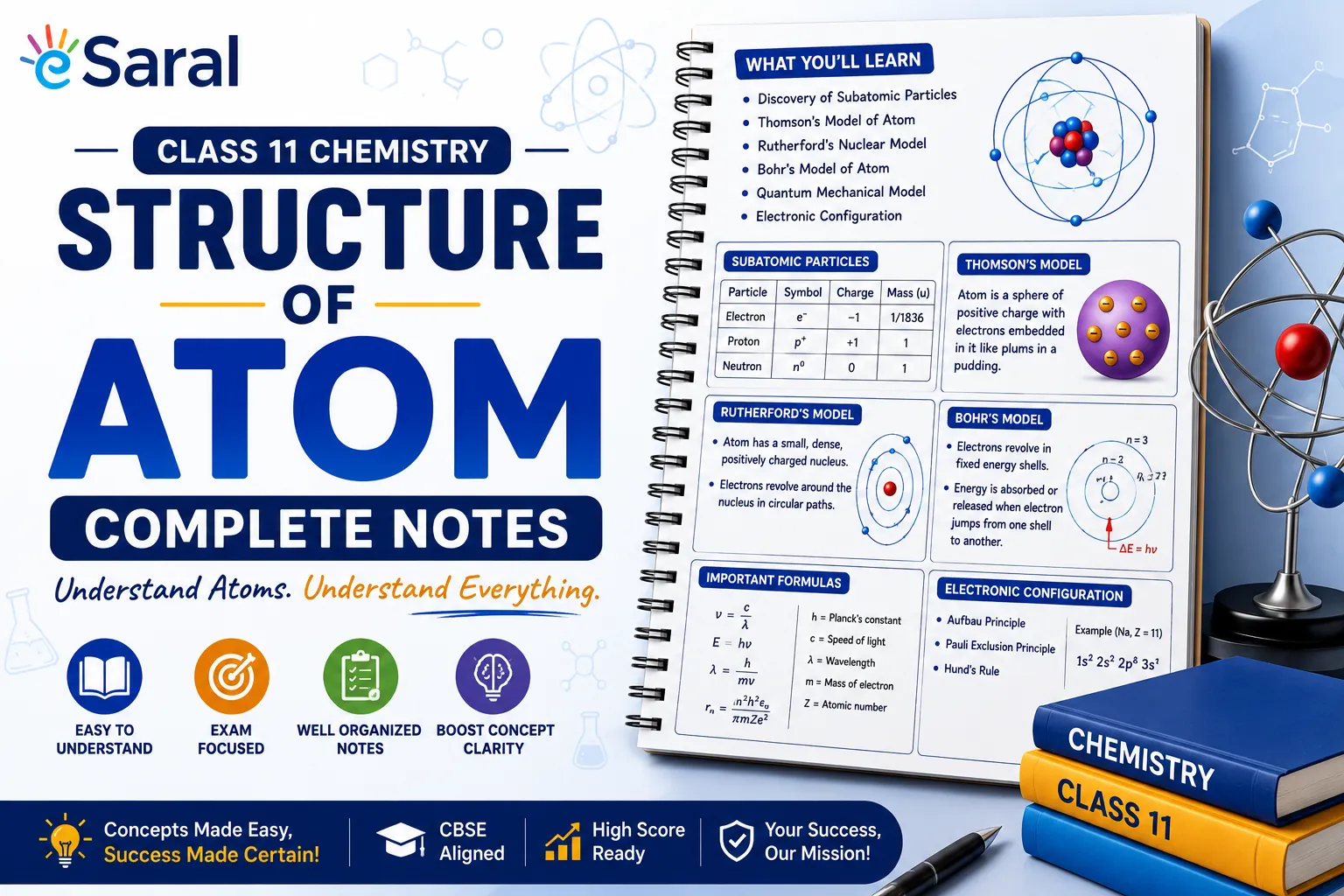
Table of Contents

eSaral › Class 11 › Chemistry Notes › Structure of Atom Notes

Get complete Class 11 Chemistry Chapter 2 Notes - Structure of Atom. These detailed notes for Class 11 Chemistry to prepare for Boards as well as competitive exams like IIT JEE, NEET, etc., eSaral offers you Structure of Atom Class 11 Notes for NEET & IIT JEE Exam Preparation. eSaral helps the students in clearing and understanding each topic in a better way. eSaral is providing complete chapter notes of Class 11th and 12th of Physics, Chemistry & Mathematics. Besides this, eSaral also offers NCERT Solutions, Previous year questions for JEE Main and Advanced, Practice questions, Test Series for JEE Main, JEE Advanced, and NEET, Important questions of Physics, Chemistry, Math, and Biology, and many more. Key Notes for Chemistry Subject for Class 12 Students are given here. Important topics of 11th Chemistry are covered. These notes will provide you with an overview of all the chapters and important points to remember.
India's Best Exam Preparation for Class 11th - Download Now
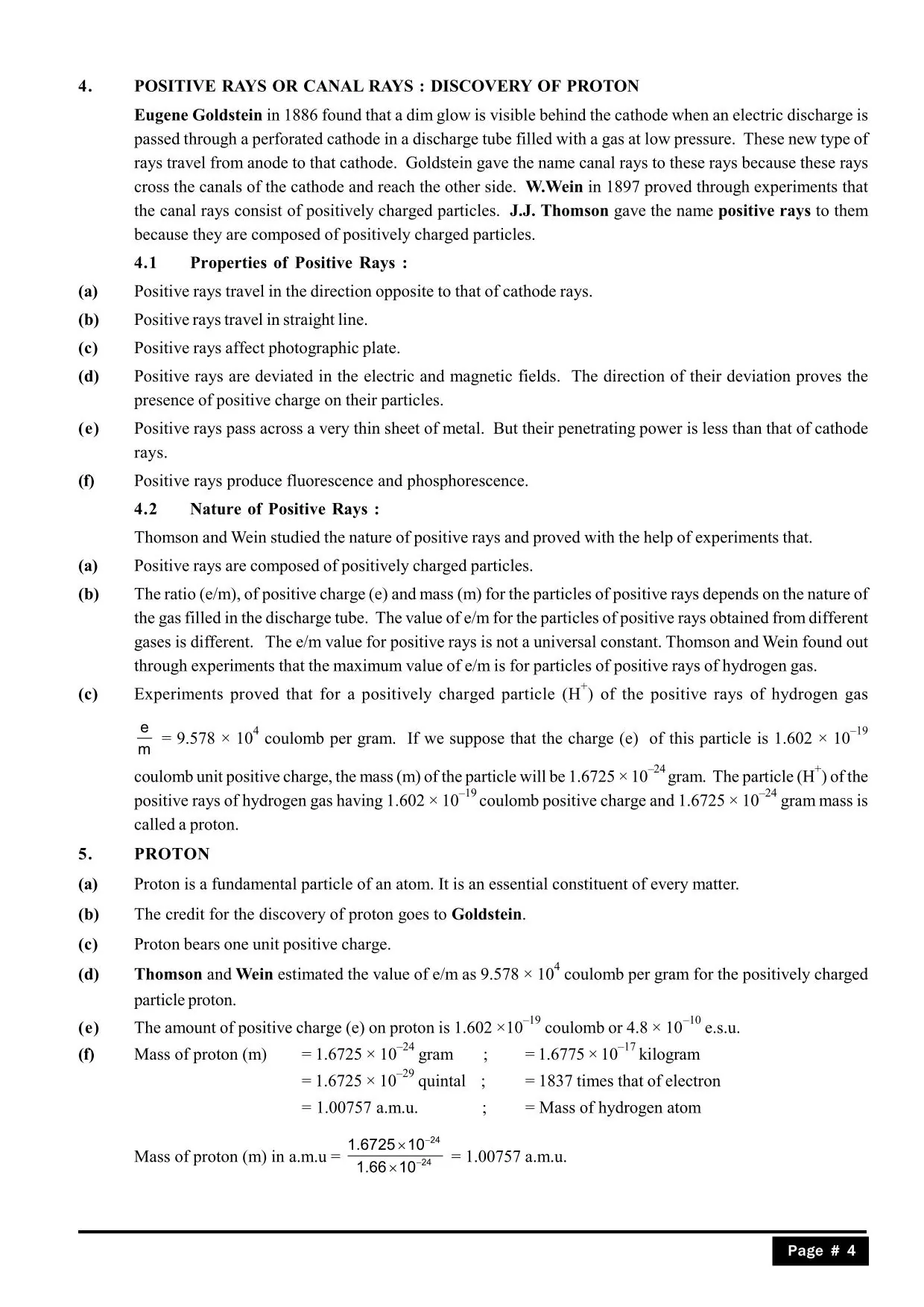
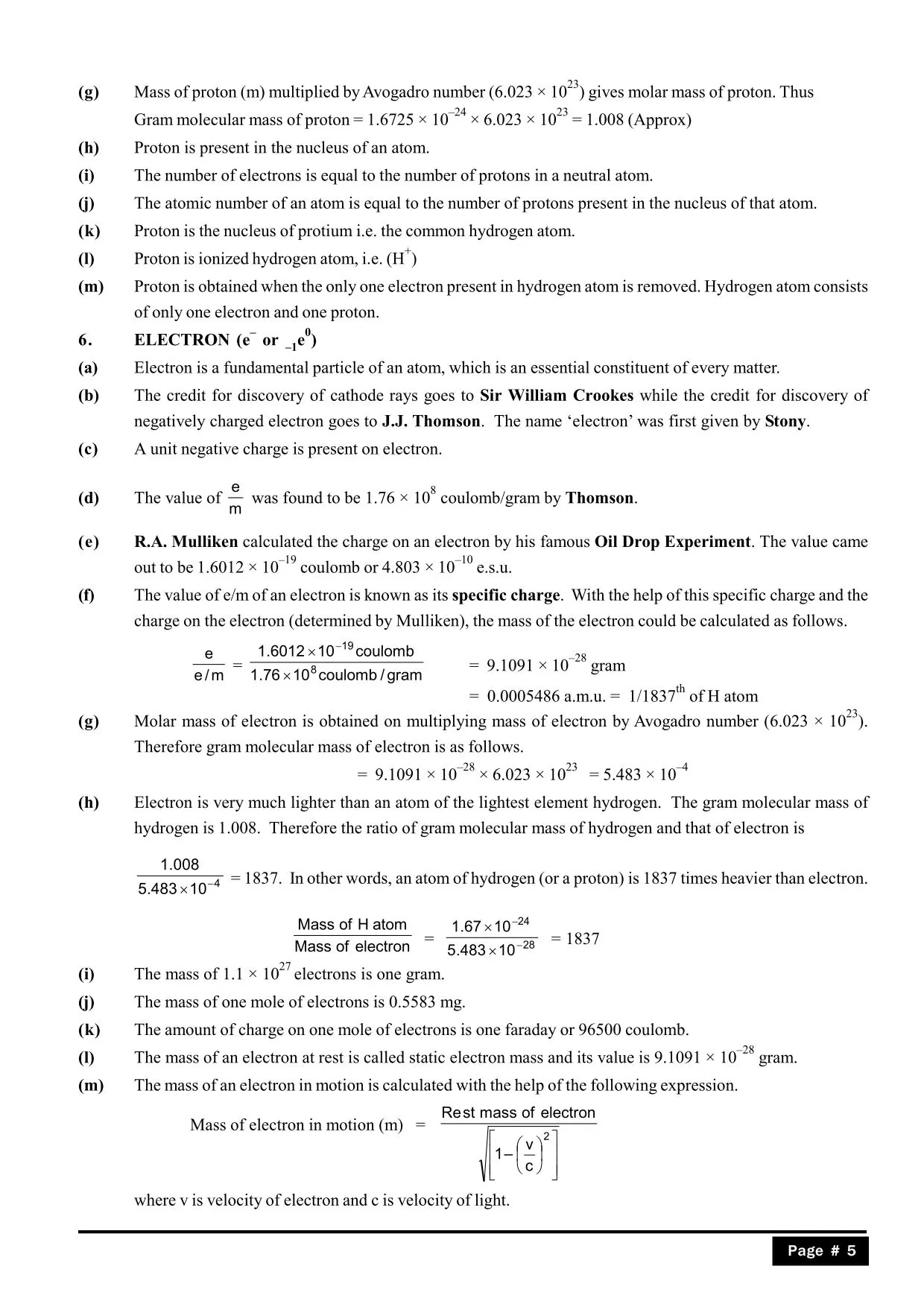
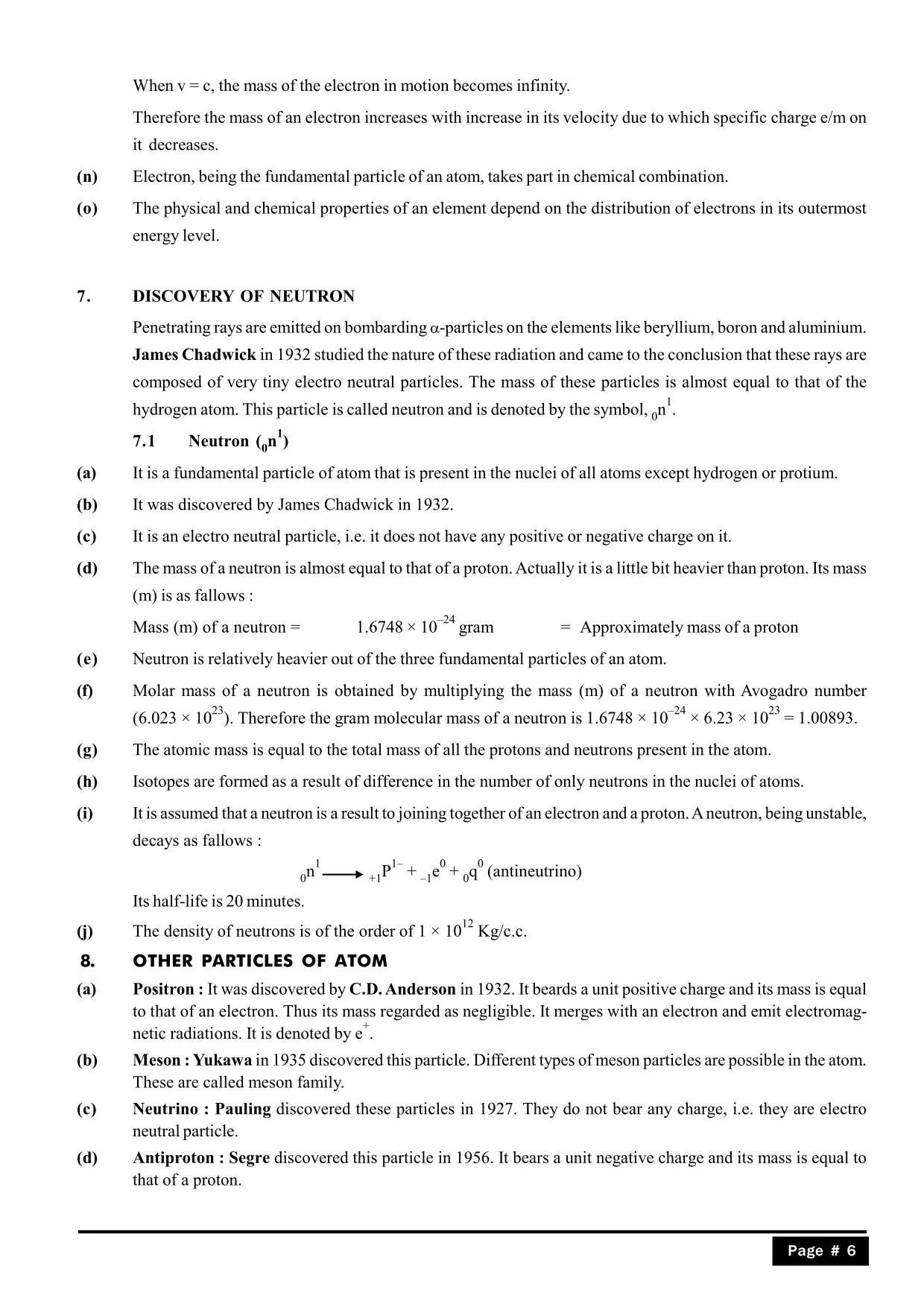
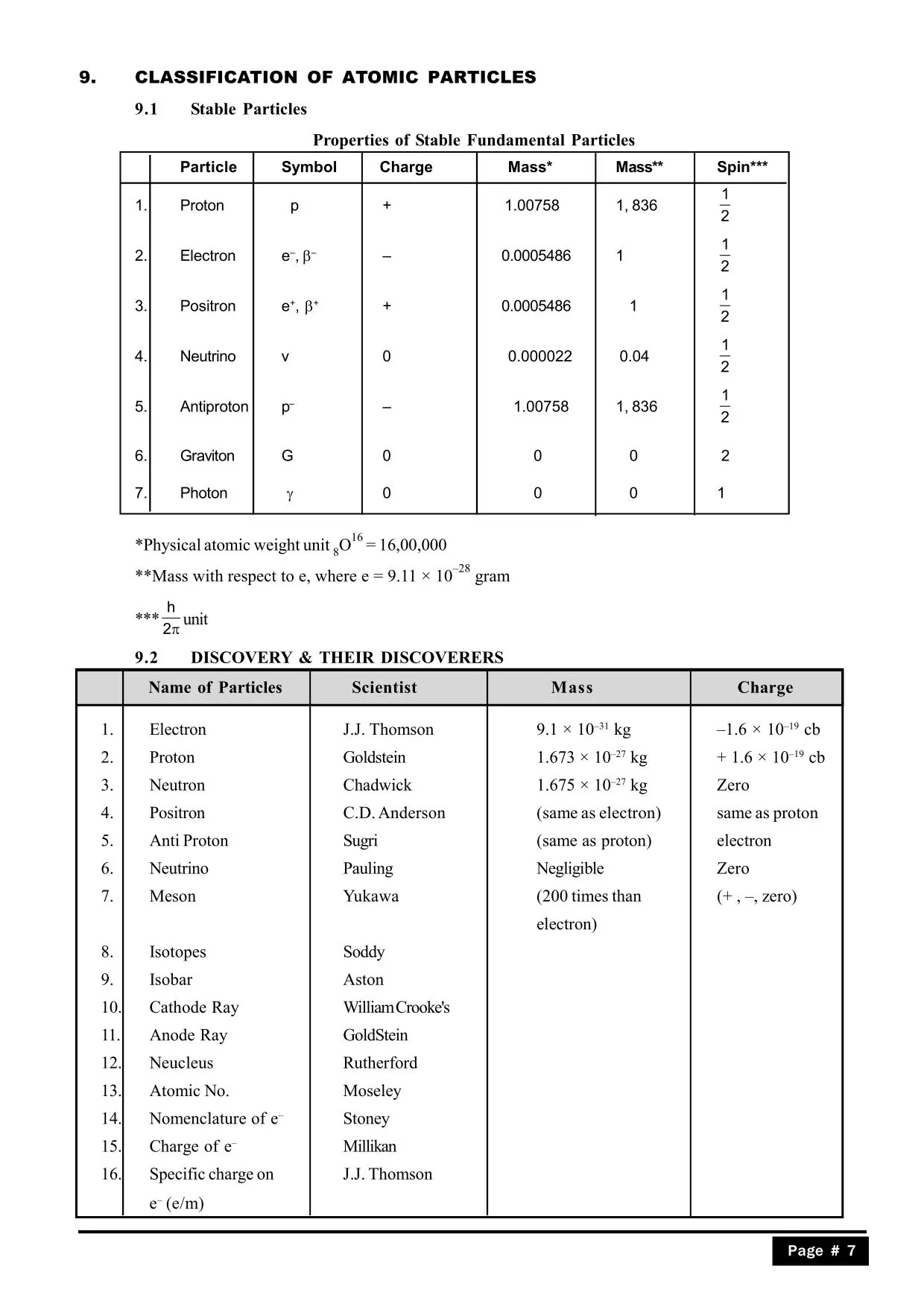
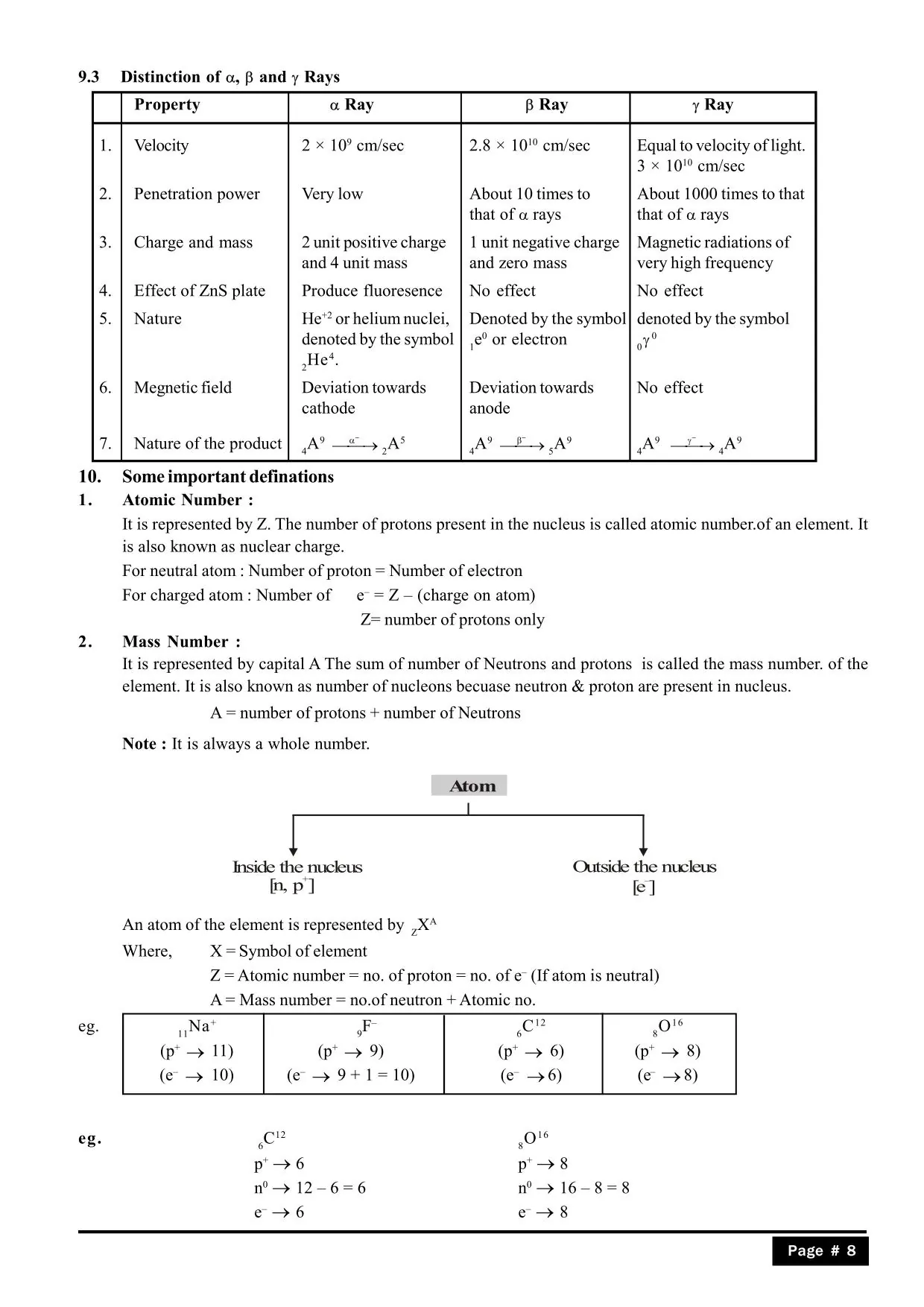
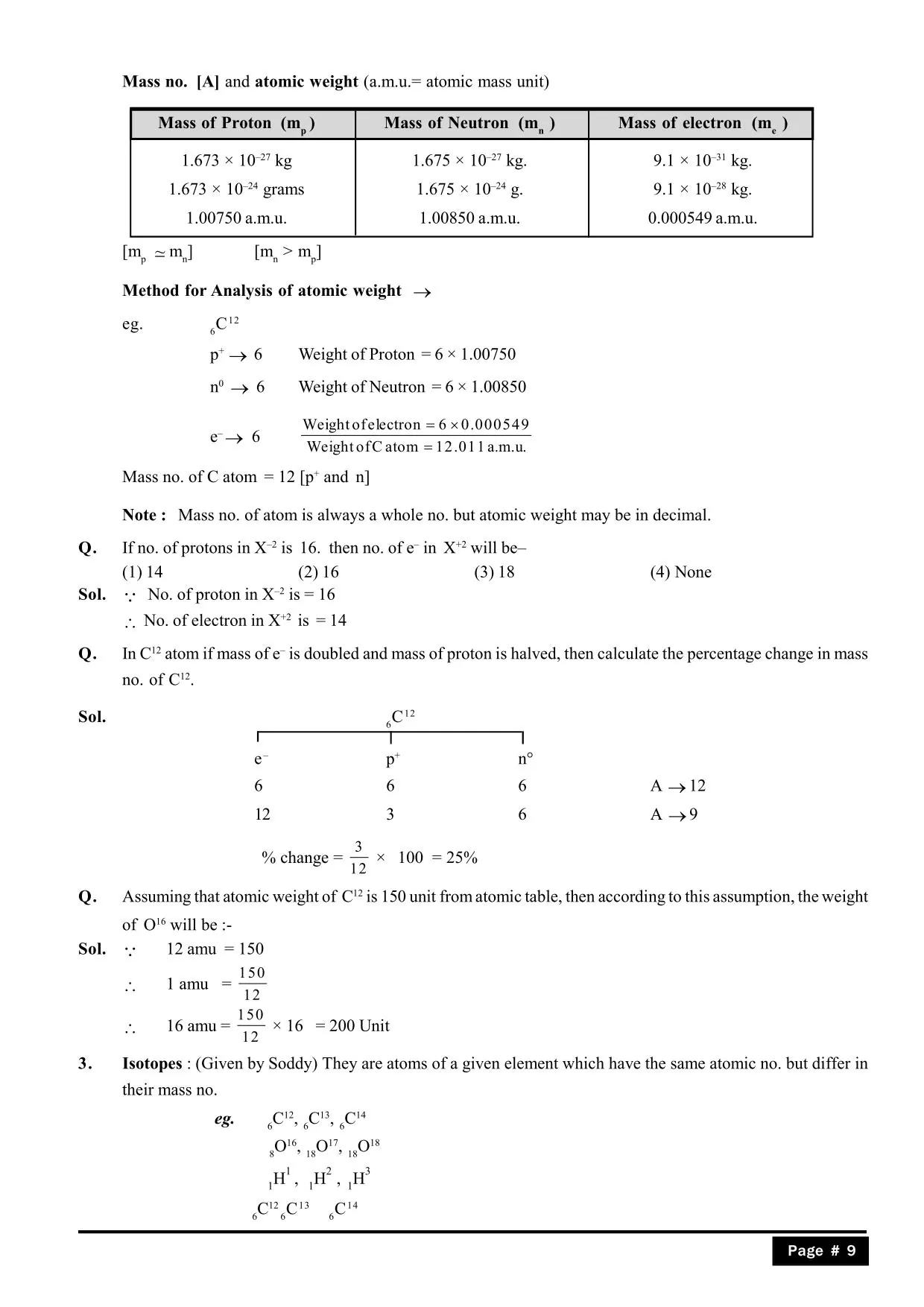
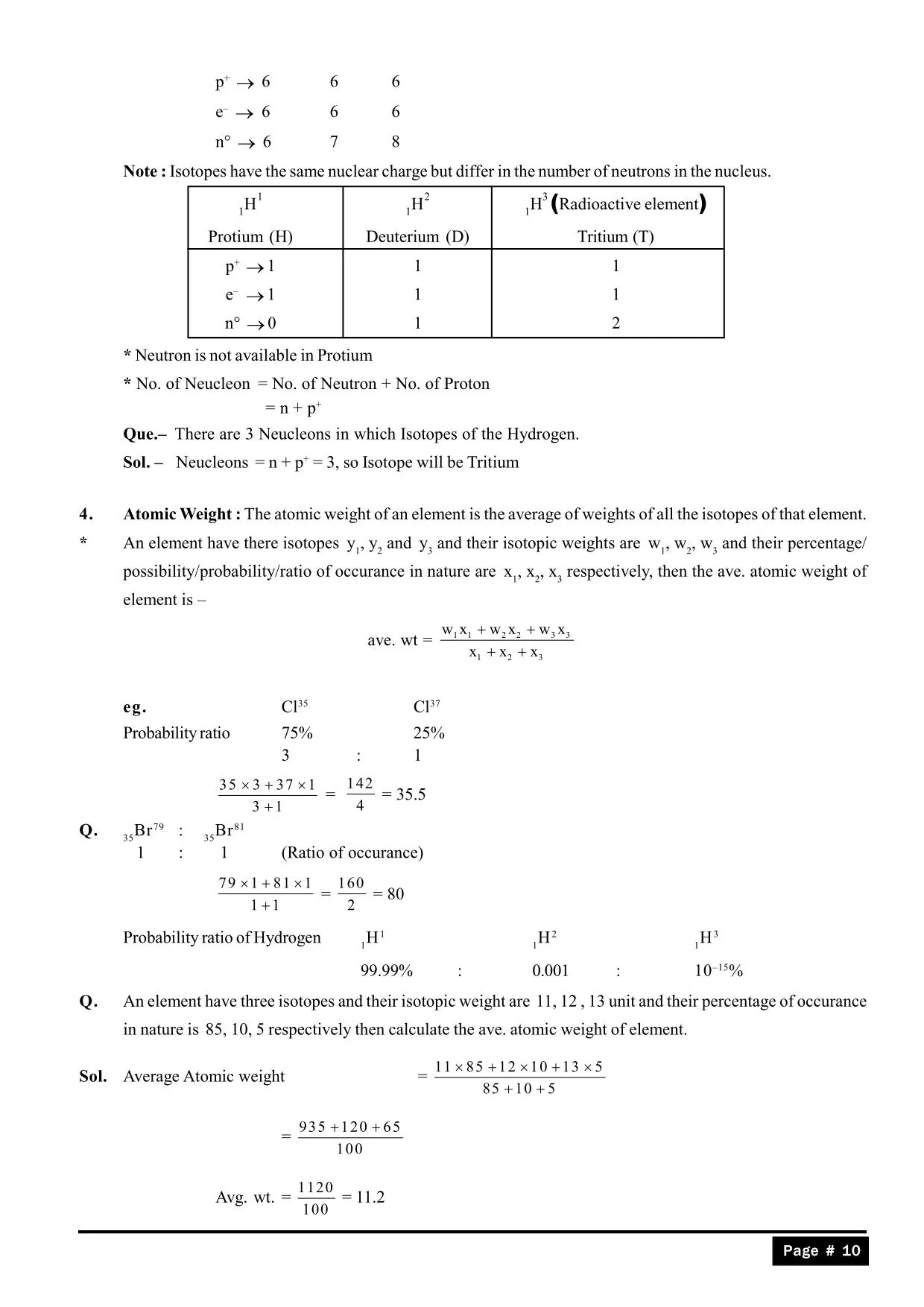
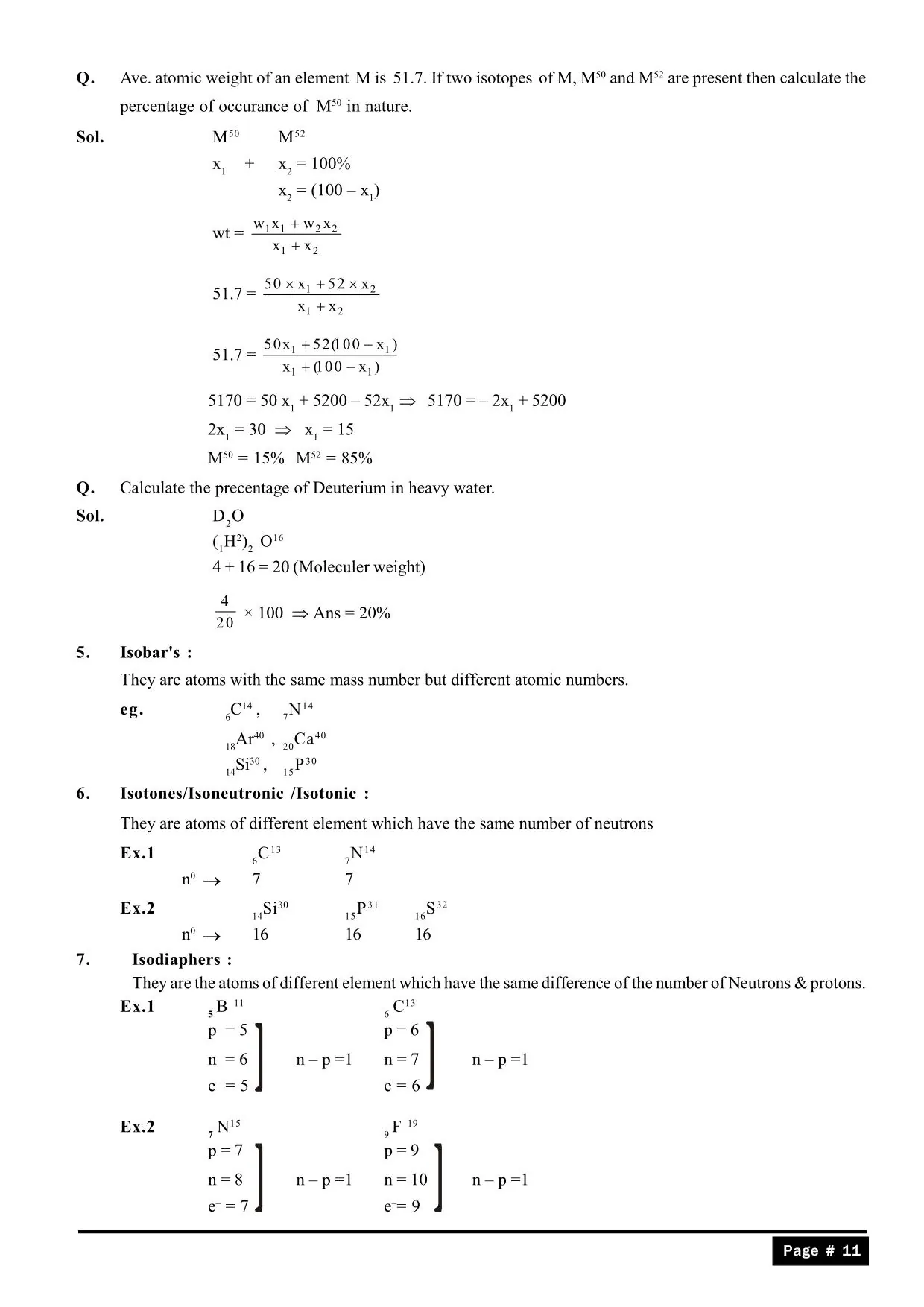
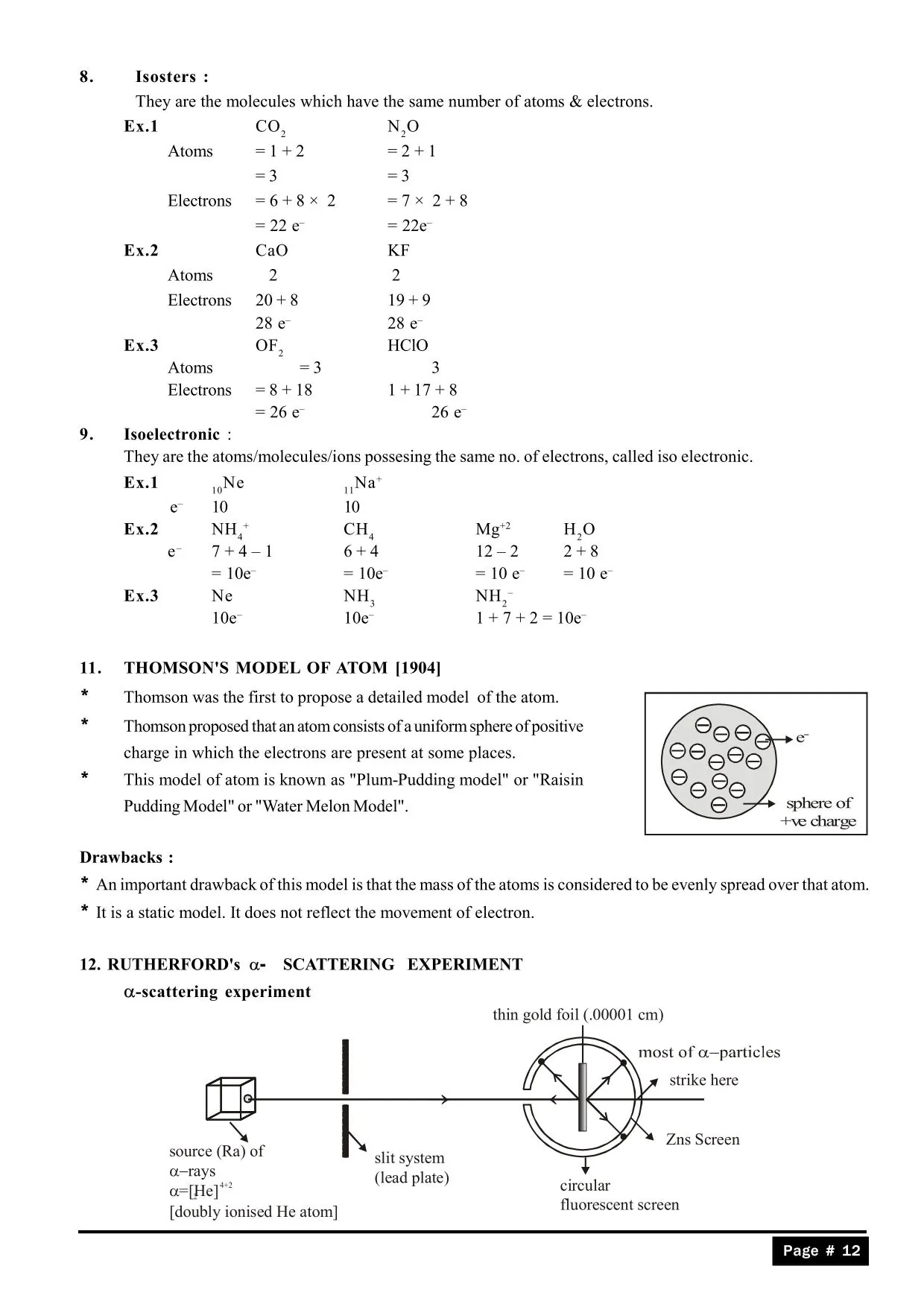
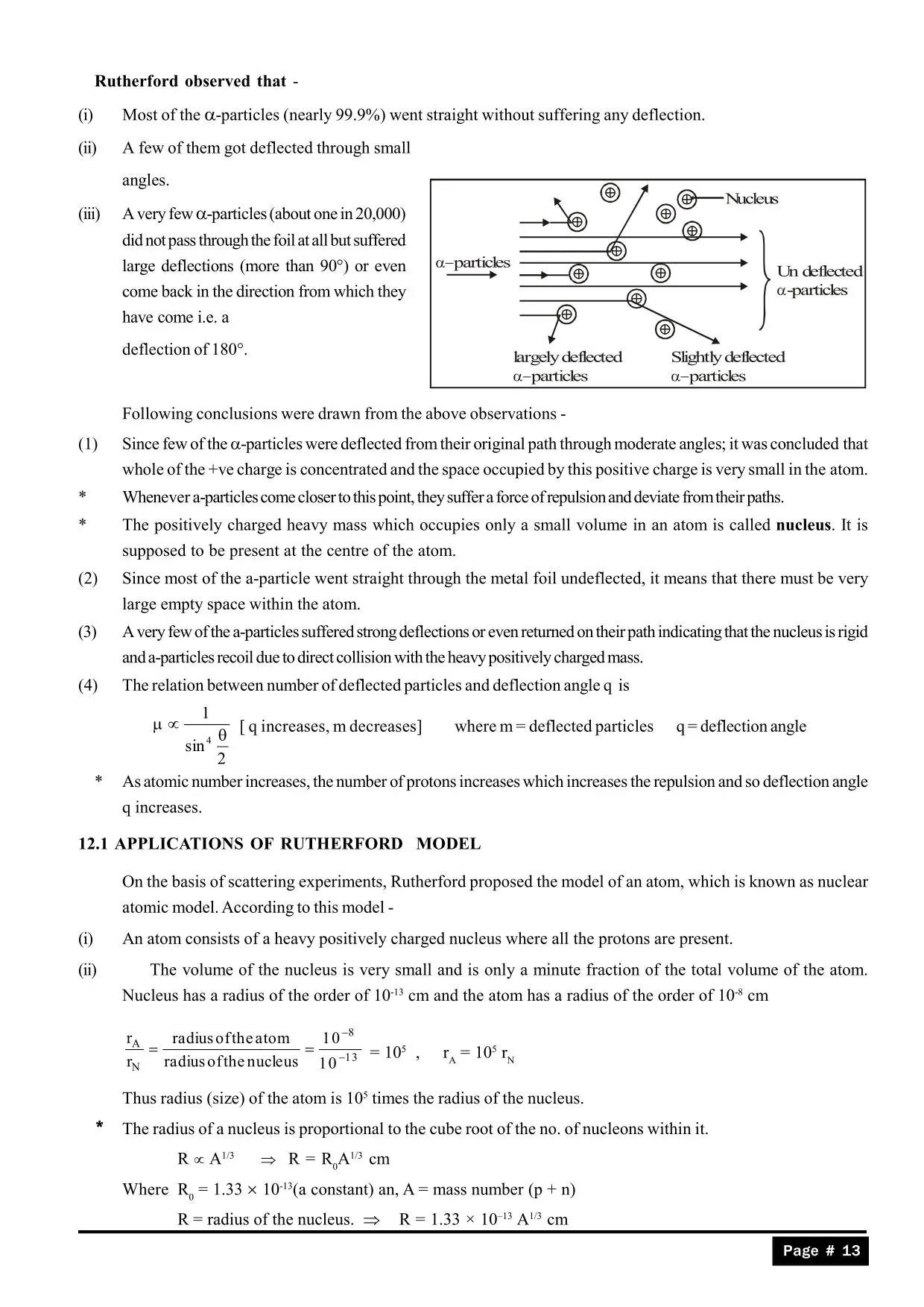
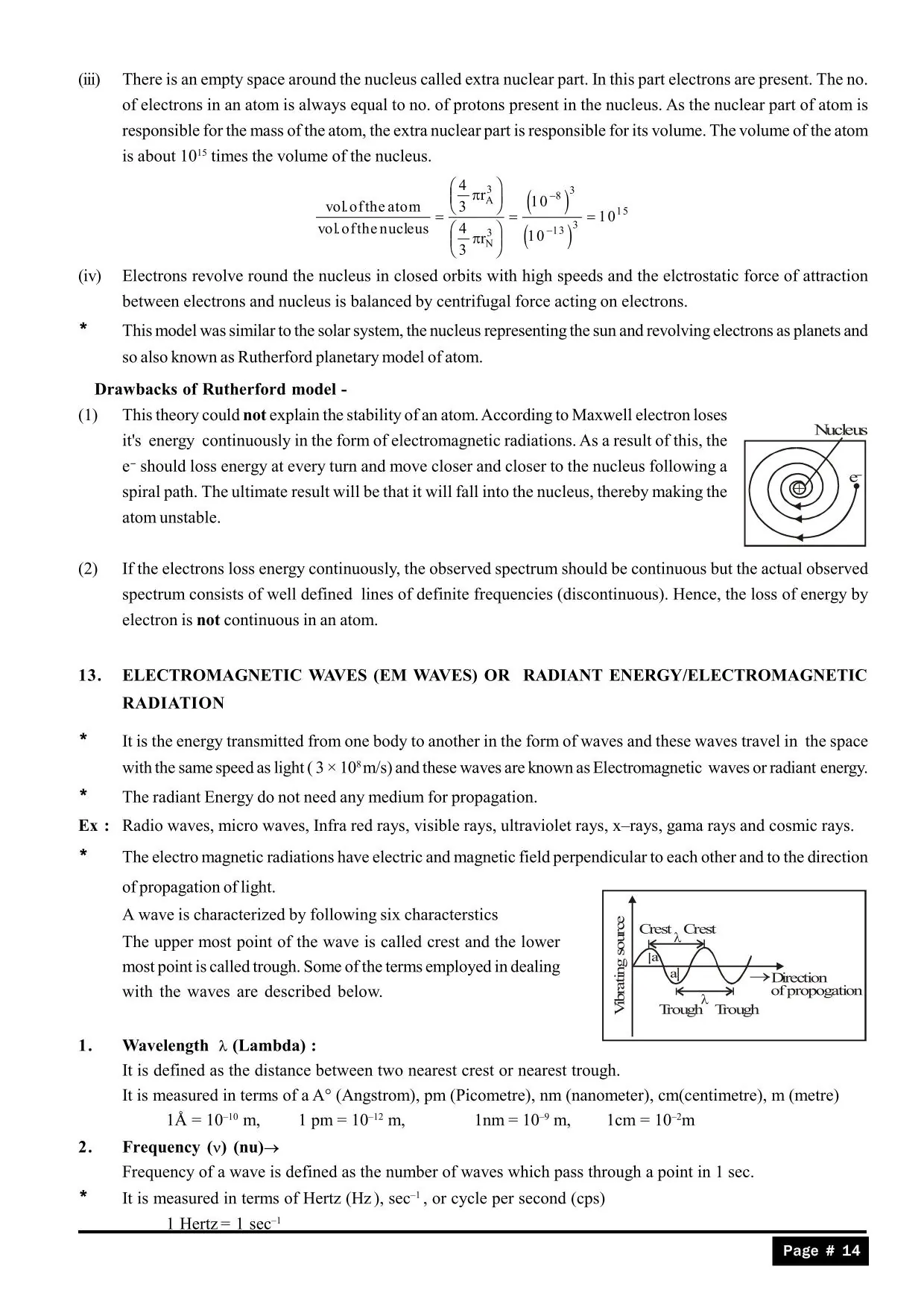
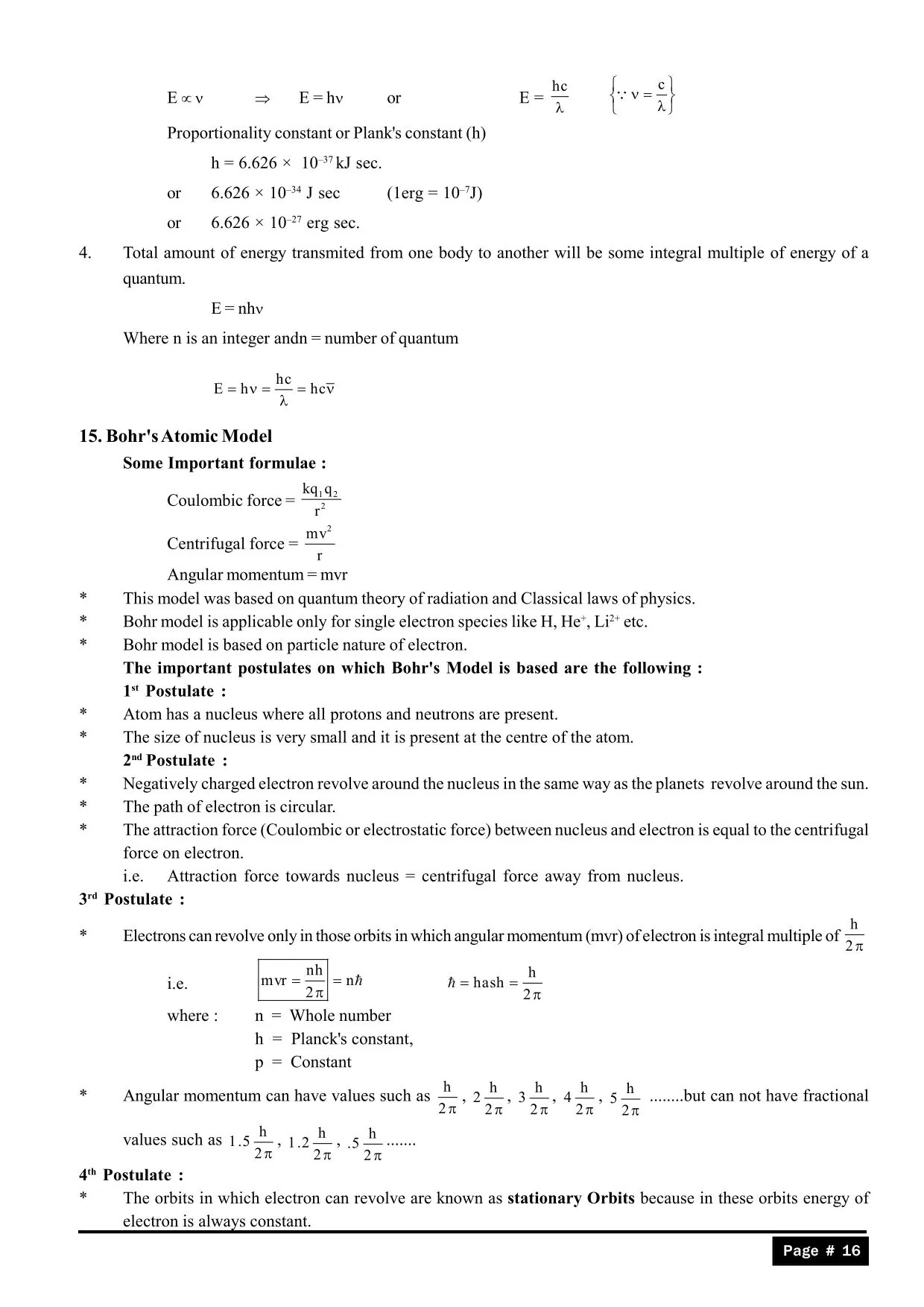
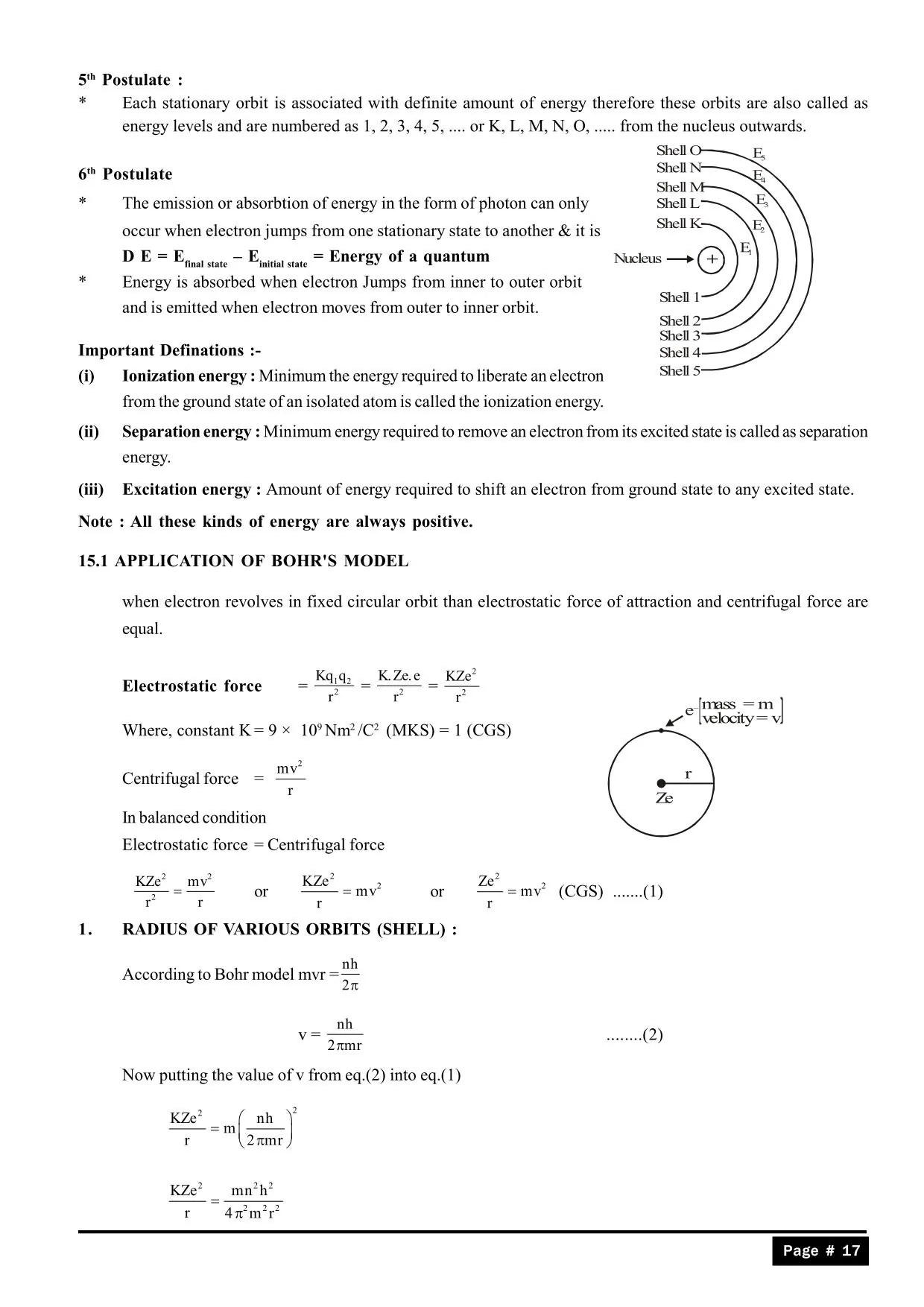
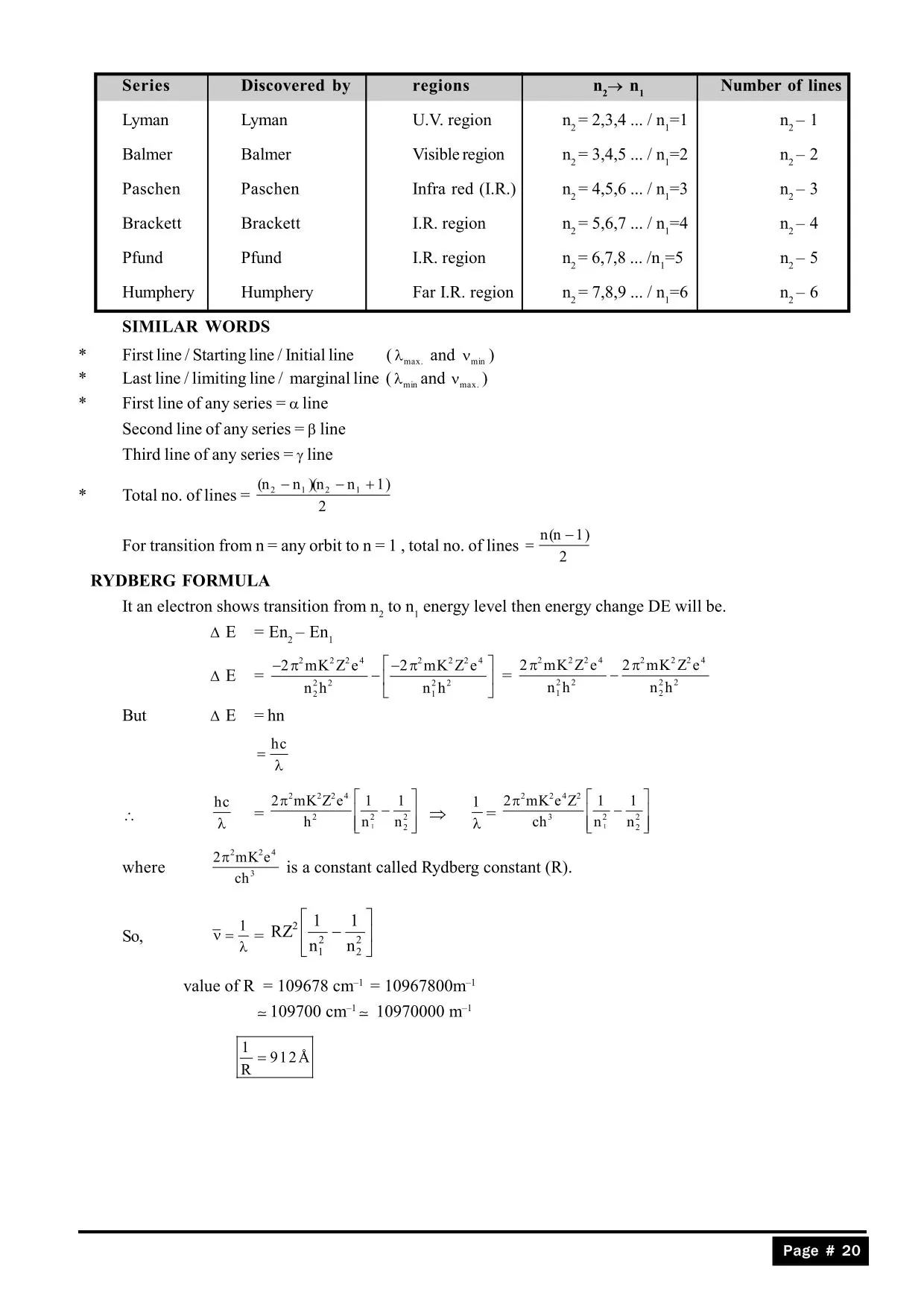
The chapter begins by introducing the concept of the structure of an atom. An atom is the basic unit of matter that consists of a positively charged nucleus and negatively charged electrons that orbit the nucleus. The atomic number of an element is determined by the number of protons in its nucleus. These basic concepts provide a strong foundation for understanding the structure of atoms.
The second part of Class 11 Chemistry Chapter 2 focuses on the structure of molecules. Molecules are formed when two or more atoms combine chemically. The combining atoms can either be of the same element or different elements. For instance, oxygen gas (O2) is a molecule made up of two oxygen atoms, while water (H2O) is a compound made up of two hydrogen atoms and one oxygen atom.
The properties of molecules are determined by their molecular structure. The shape of a molecule is critical as it affects the molecule's properties, such as boiling point and melting point. For example, water has a V-shaped molecular structure, which influences its unique properties such as high boiling point, high specific heat, and high surface tension.
Class 11 Chemistry Chapter 2 is an essential chapter for students pursuing chemistry as a subject. A good understanding of the structure of atoms and molecules will enable students to comprehend the properties of matter better. By targeting the keyword "class 11 chemistry chapter 2 notes," we hope to provide students with well-structured and concise notes that will facilitate their studies. By optimizing the article for SEO, students searching for "class 11 chemistry chapter 2 notes" will find the article easily and benefit from the provided notes.
India's Best Exam Preparation for Class 11th - Download Now
Complete Class 11 Chemistry Chapter 2 Notes
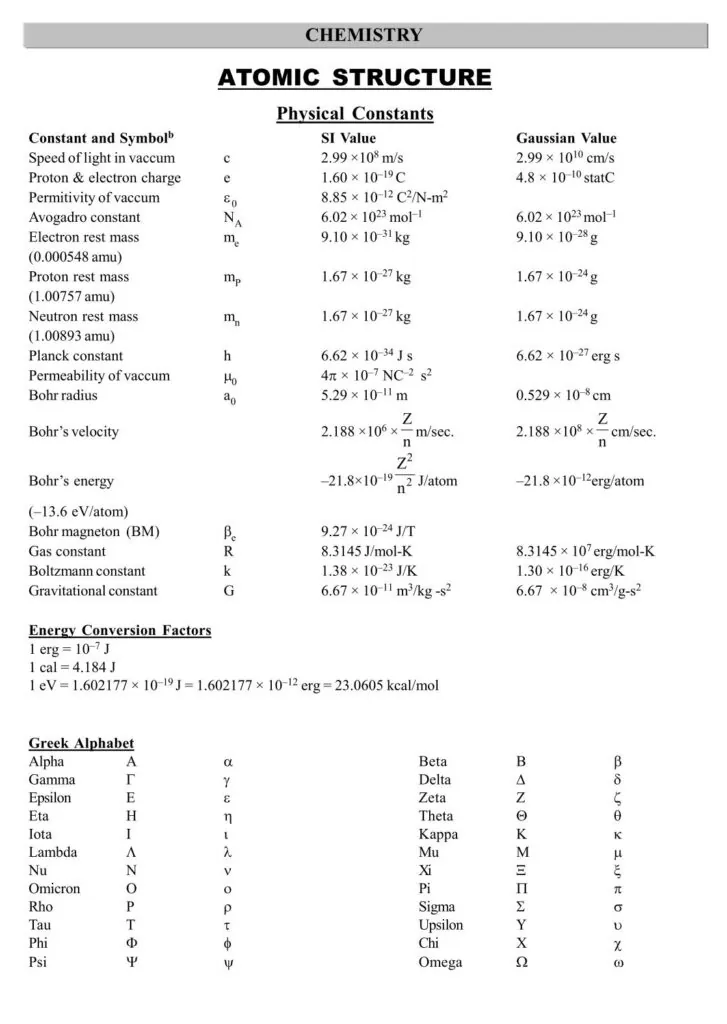
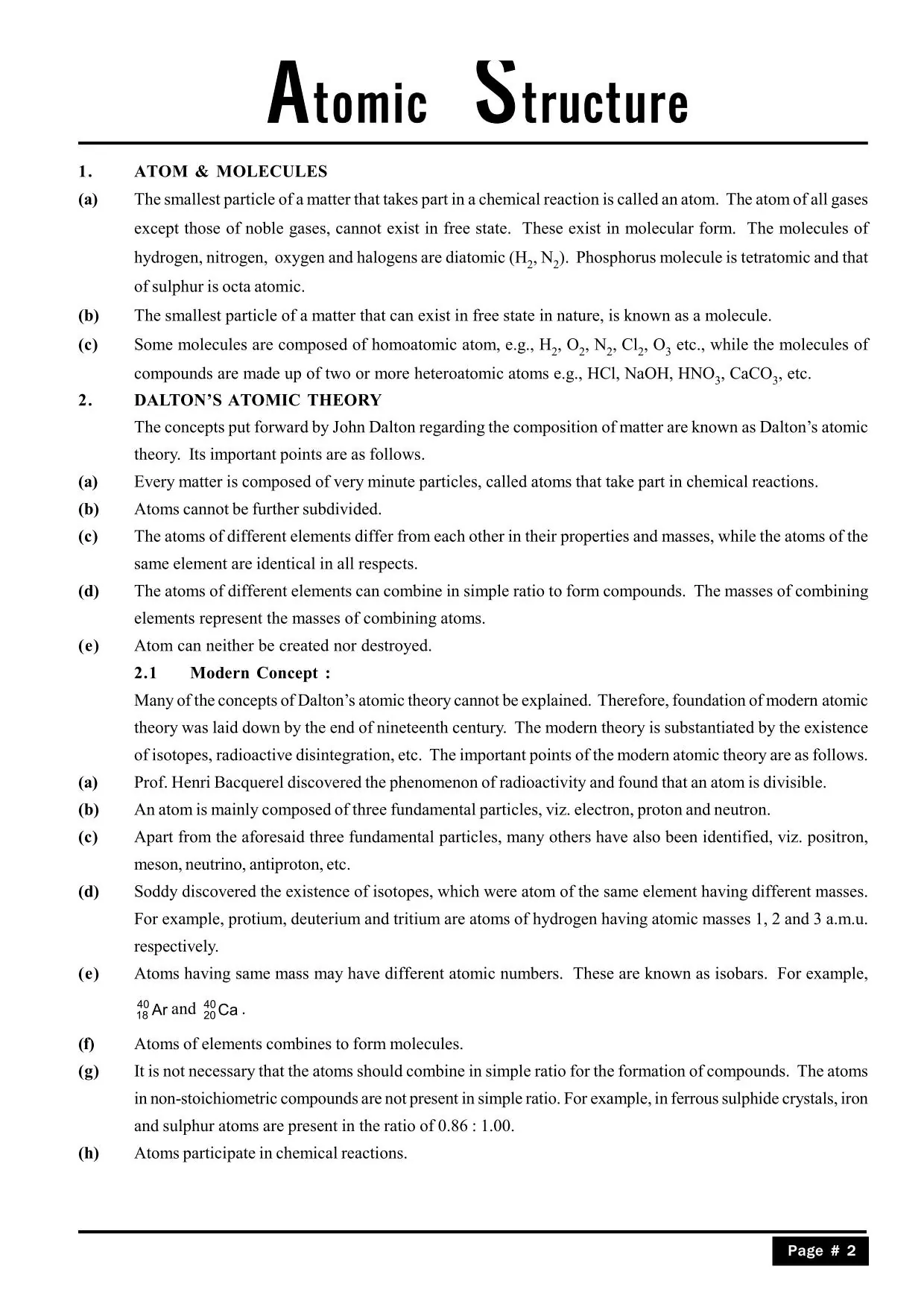
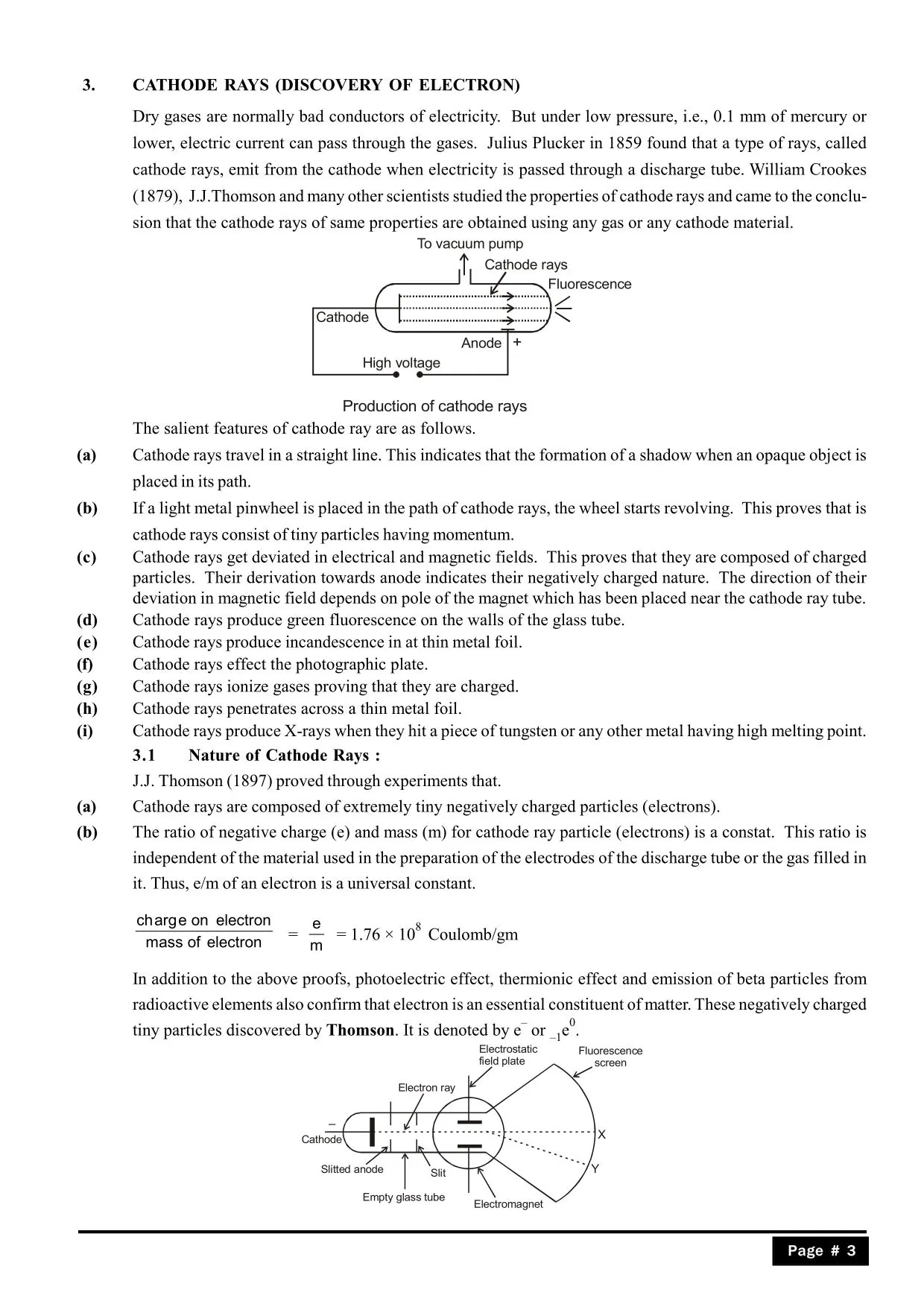
India's Best Exam Preparation for Class 11th - Download Now
eSaral brings complete notes for Class 11 Chemistry. eSaral provides a series of detailed chapter-wise notes for all the Subjects of class 11th and 12th. These notes will also help you in your IIT JEE & NEET preparations. We hope these Chemistry Notes for Class 11 will help you understand the important topics and help in remembering the key points from an exam point of view. Get Complete Class 11 Chemistry Notes for easy learning and understanding. For free video lectures and complete study material, download the eSaral APP. About eSaral: At eSaral, we are offering a complete platform for IIT-JEE & NEET preparation. The main mission behind eSaral is to provide education to every student in India by eliminating the Geographic and Economic factors, as a nation’s progress and development depends on the availability of quality education to every one. With the blend of education & technology, the eSaral team made the learning personalized & adaptive for everyone.
India's Best Exam Preparation for Class 11th - Download Now
Subscribe eSaral on YouTube Channel for latest updates & FREE Revision Series for JEE & NEET.
Frequently Asked Questions
Find answers to common questions.
What is the difference between an orbit and an orbital?
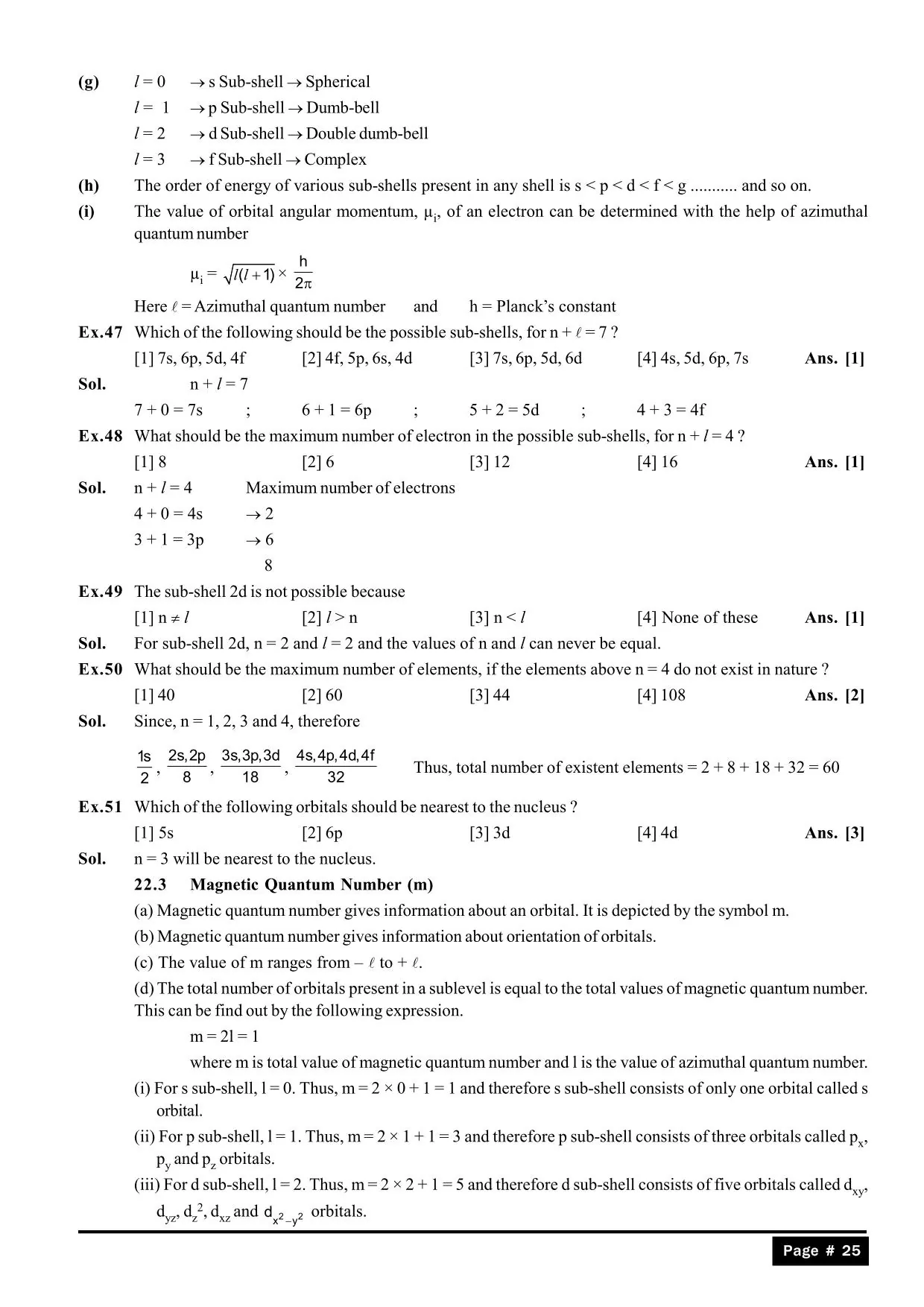
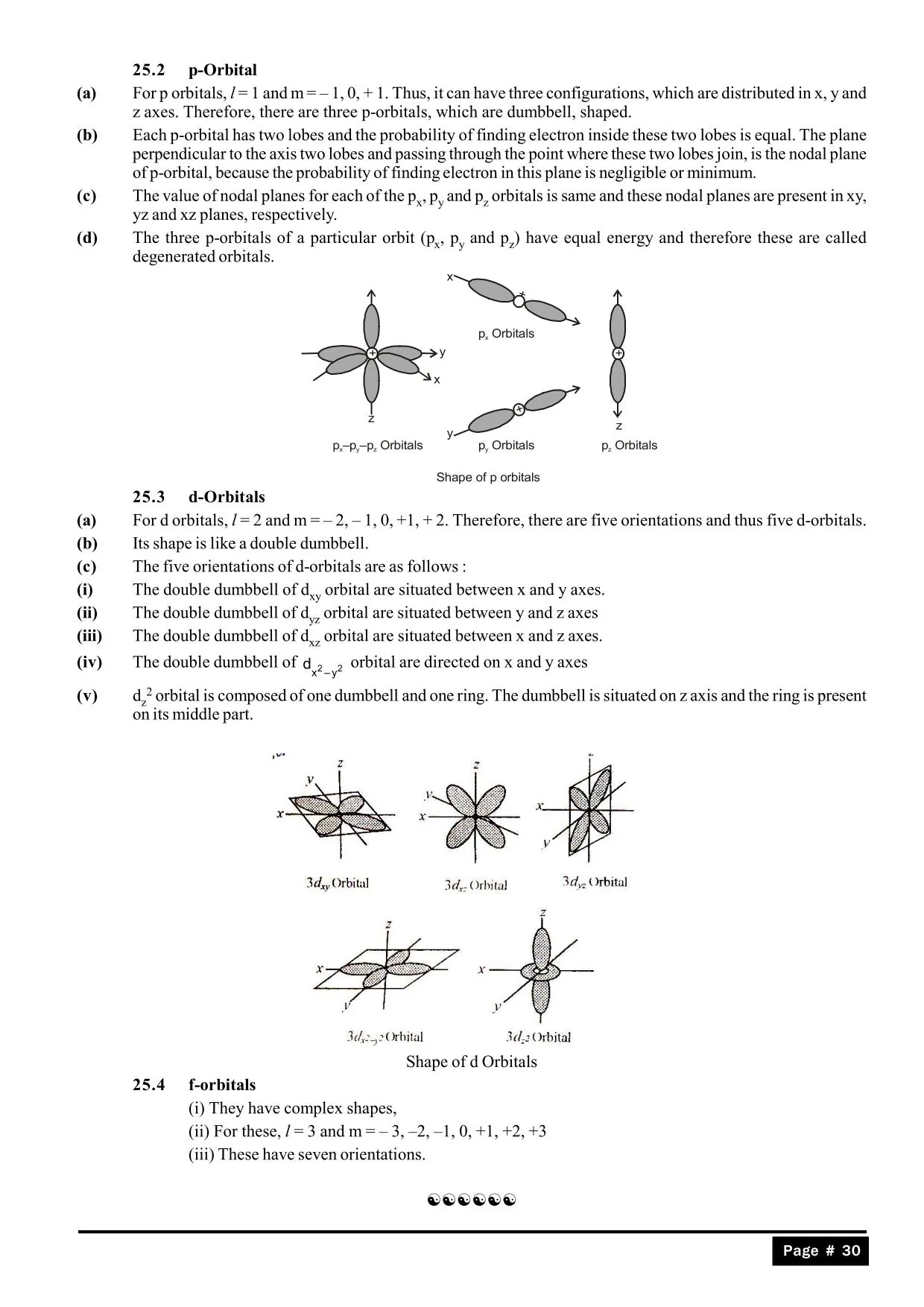
An orbit (Bohr's model) is a fixed, two-dimensional circular path around the nucleus — a concept now considered incorrect. An orbital (quantum mechanical model) is a three-dimensional region of space where the probability of finding an electron is 90% or more. Orbitals have specific shapes: s (spherical), p (dumbbell), d (double dumbbell).
How many questions come from Structure of Atom in JEE Main?
JEE Main typically has 1 to 2 questions from Structure of Atom per session, according to the NTA official syllabus. Questions most often test Bohr's model calculations, quantum numbers, and electronic configuration exceptions (Cr and Cu). The chapter carries moderate weightage but is foundational for other chapters like Chemical Bonding.
What are the main topics in Class 11 Chemistry Chapter 2: Structure of Atom?
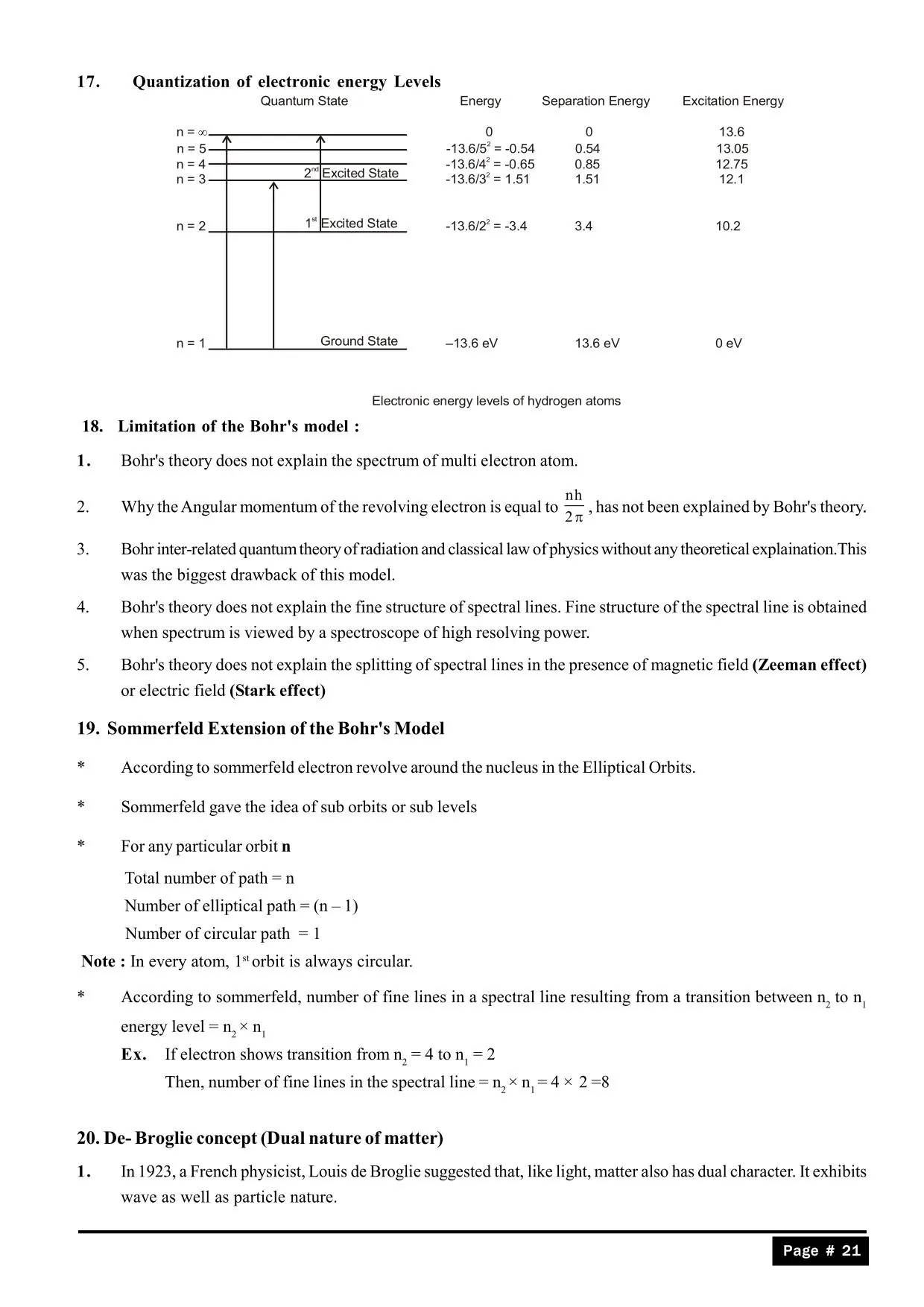
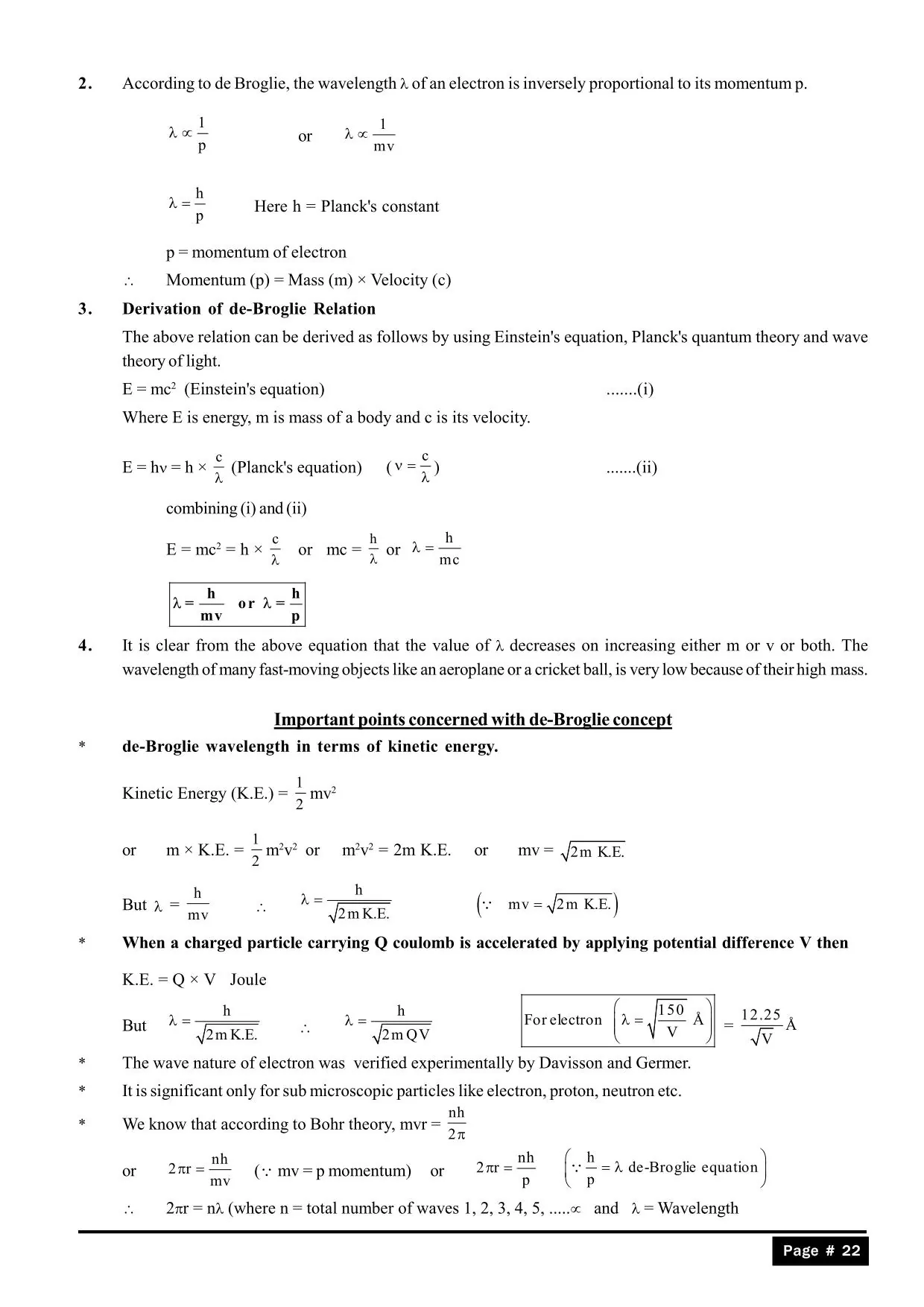
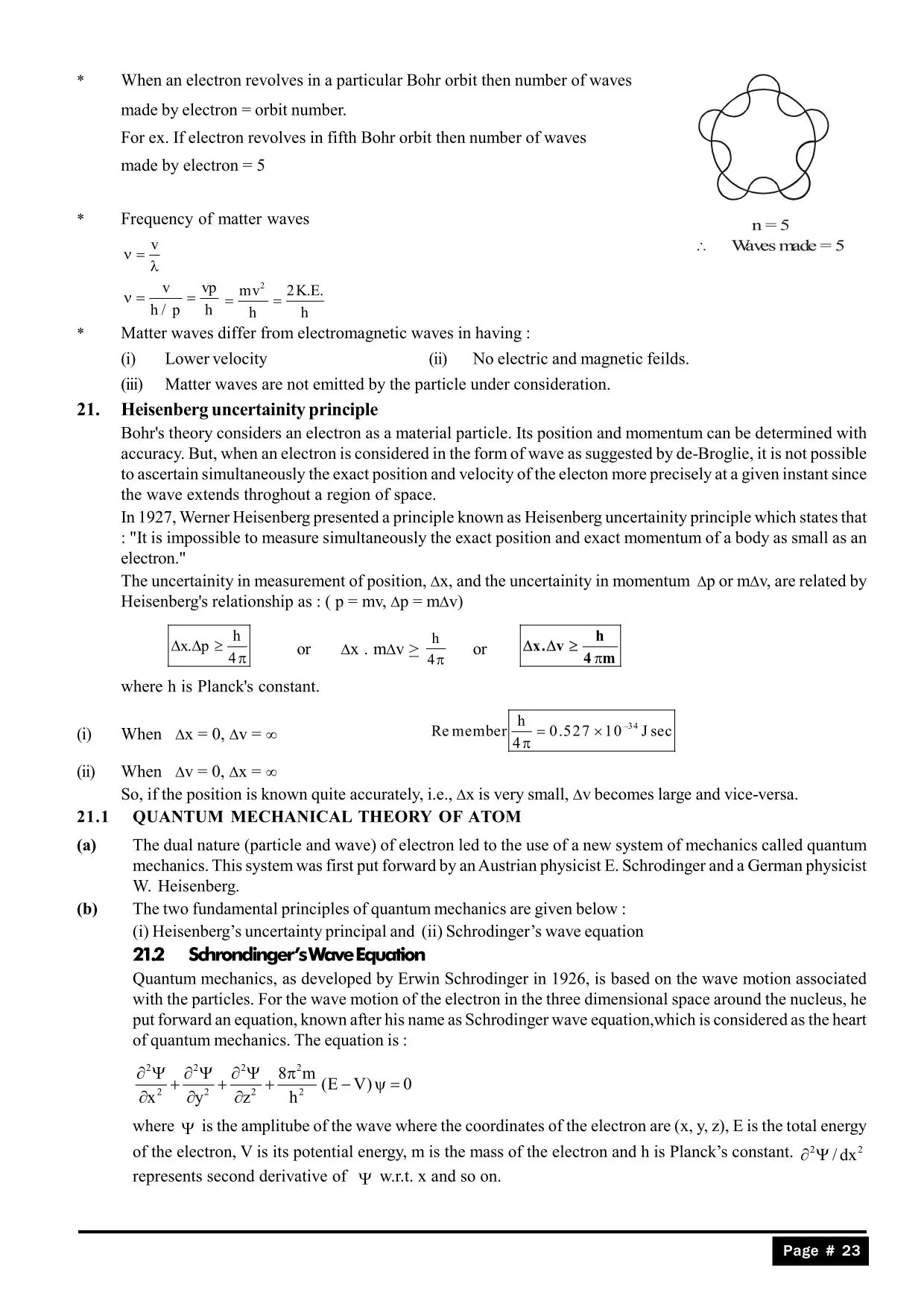
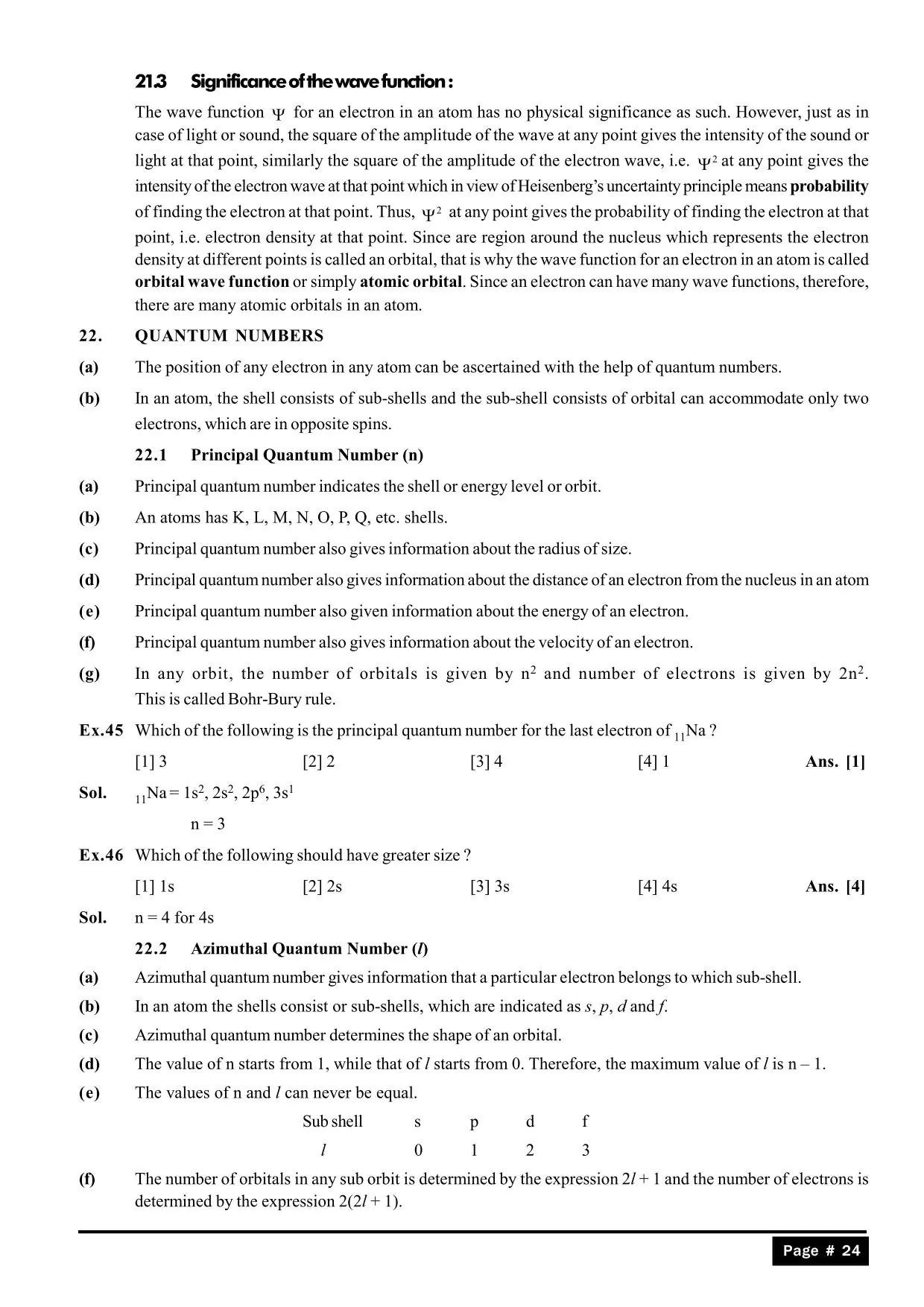
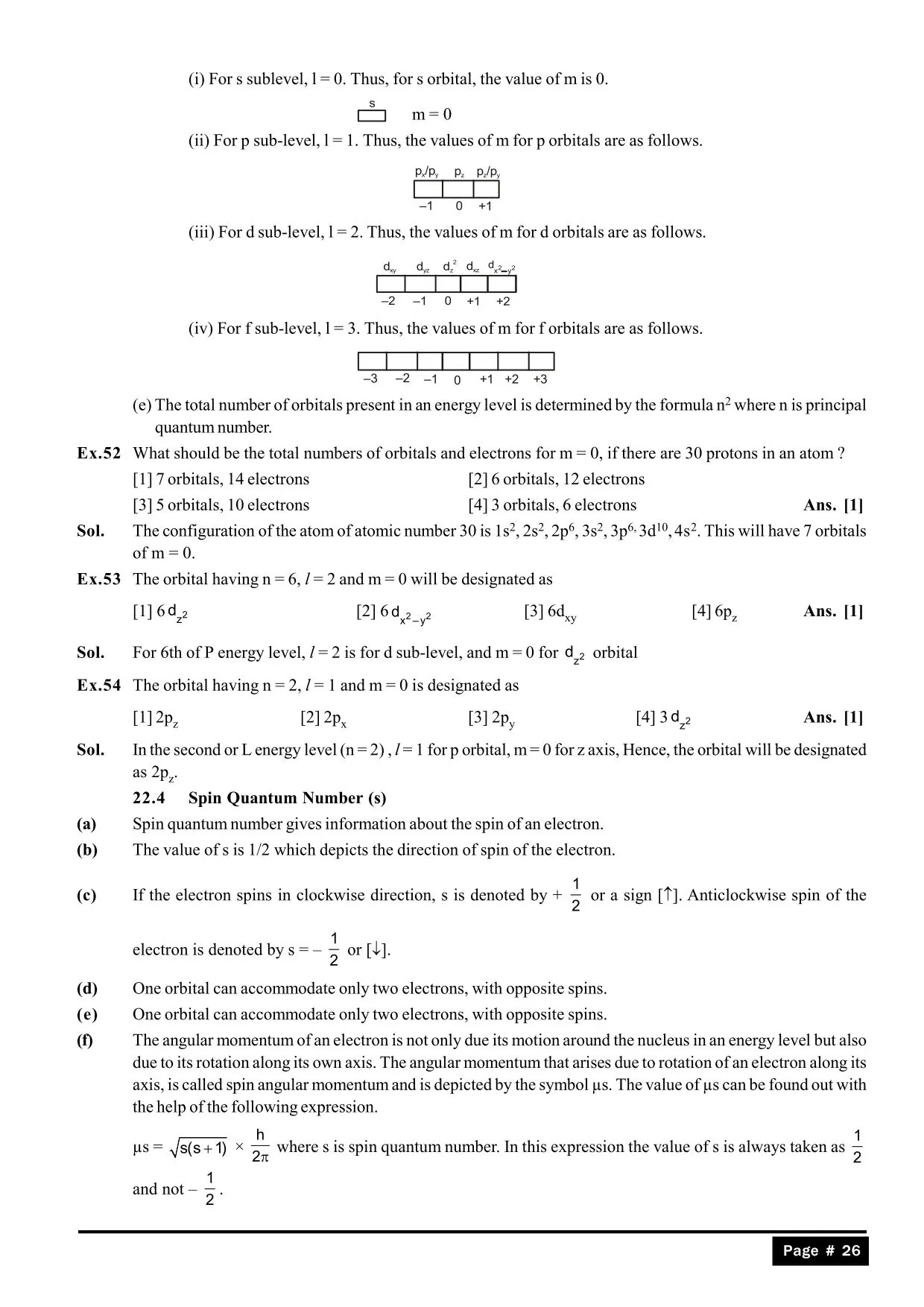
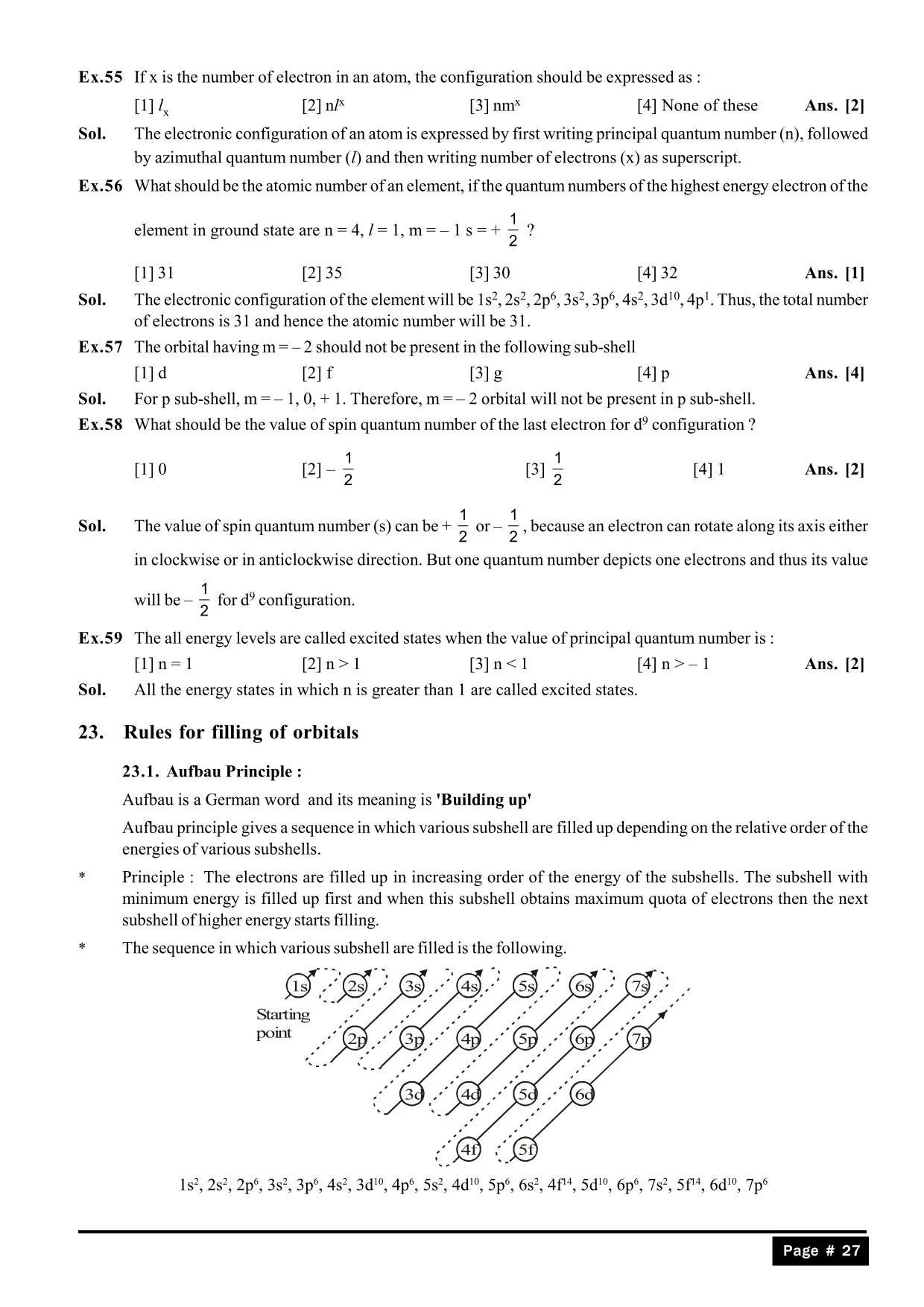
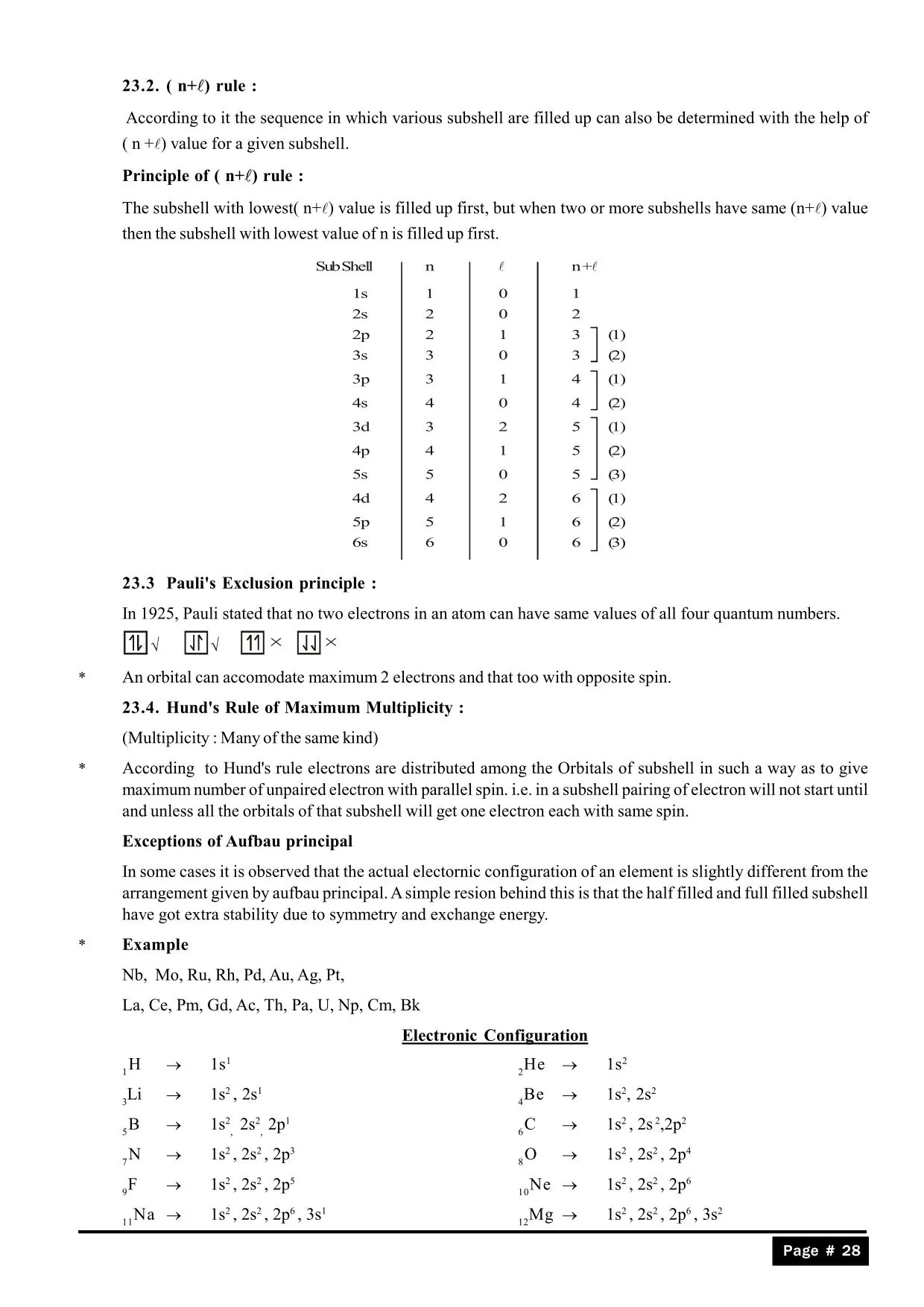
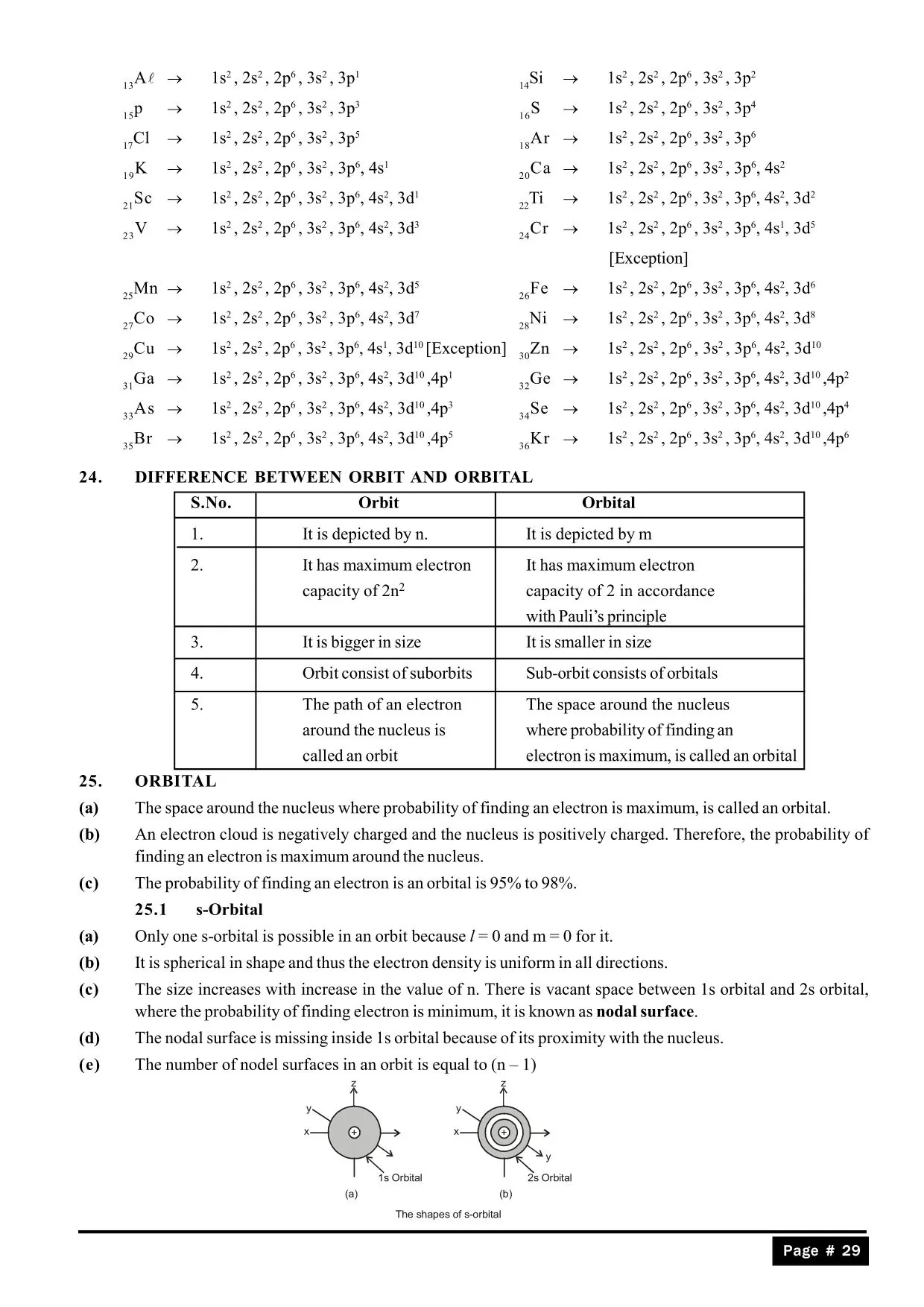
The main topics are: discovery of sub-atomic particles (electron, proton, neutron), Thomson's model, Rutherford's nuclear model, Bohr's atomic model and its calculations, de Broglie's dual nature of matter, Heisenberg's Uncertainty Principle, the quantum mechanical model, four quantum numbers (n, l, mₗ, mₛ), and electronic configuration rules (Aufbau, Pauli, Hund's rule).
Are Class 11 Chemistry Chapter 2 notes enough for NEET preparation?
These notes cover all NCERT topics required for NEET. However, for full NEET preparation, students should also solve all NCERT exercise and exemplar questions, practise previous year NEET questions on atomic structure, and revise quantum numbers and electronic configuration thoroughly. NEET gives high weightage to quantum numbers and electronic configuration, so those sections need extra attention.
Why does Chromium have the configuration [Ar] 3d⁵ 4s¹ instead of [Ar] 3d⁴ 4s²?
Chromium's actual configuration is [Ar] 3d⁵ 4s¹ because a half-filled d subshell (3d⁵) has extra stability due to symmetrical electron distribution and maximum exchange energy. Promoting one electron from 4s to 3d achieves this stable half-filled configuration, making it energetically more favourable than the expected [Ar] 3d⁴ 4s².
What are the four quantum numbers and what do they represent?
The four quantum numbers are: (1) Principal quantum number (n) — defines shell and energy; (2) Azimuthal quantum number (l) — defines subshell and orbital shape; (3) Magnetic quantum number (mₗ) — defines orbital orientation; (4) Spin quantum number (mₛ) — defines electron spin direction (+½ or –½). Together they uniquely identify every electron in an atom.