Hydrocarbons Class 11 Notes for IIT JEE & NEET — Reactions, Mechanisms, and Exam Strategy
.webp)
Table of Contents

eSaral ›JEE ›JEE Advanced ›Hydrocarbons Class 11 Notes for IIT JEE & NEET

🚀 Checkout eSaral Courses
Hydrocarbons is the chapter where Organic Chemistry stops being memorization and starts being mechanism-driven thinking. Every reaction type you encounter here — electrophilic addition, free radical substitution, electrophilic aromatic substitution — reappears in Haloalkanes, Alcohols, Aldehydes, and Amines. Get this chapter right and the entire Organic sequence becomes easier.
According to NTA's official JEE Main syllabus and past paper analysis, Hydrocarbons has contributed at least one question in 9 out of the last 10 JEE Main sessions. For NEET UG, the chapter regularly yields 2–3 questions worth 8–12 marks. Students in eSaral's 2024 JEE batch who scored 90+ percentile in Organic Chemistry cited Hydrocarbons as the chapter where their reaction-mapping skills first clicked.
These notes cover every reaction, mechanism, and exam tip you need — structured for both quick revision and deep understanding.
Hydrocarbons Class 11 – Chapter Overview
Hydrocarbons are organic compounds containing only carbon and hydrogen. They are classified based on the type of C–C bonding:
| Class | Bond Type | General Formula | Example |
|---|---|---|---|
| Alkanes | Single bond (C–C) only | CₙH₂ₙ₊₂ | Methane (CH₄), Ethane (C₂H₆) |
| Alkenes | One C=C double bond | CₙH₂ₙ | Ethene (C₂H₄), Propene (C₃H₆) |
| Alkynes | One C≡C triple bond | CₙH₂ₙ₋₂ | Ethyne (C₂H₂), Propyne (C₃H₄) |
| Aromatic | Delocalised π electrons (benzene ring) | Variable | Benzene (C₆H₆), Toluene |
Why this chapter matters for JEE and NEET: Hydrocarbons is the first chapter where Organic Chemistry reaction mechanisms are tested in depth. Every subsequent Organic chapter — Haloalkanes, Alcohols, Aldehydes, Amines — builds directly on the reaction types introduced here. A weak foundation in Hydrocarbons creates compounding gaps across the entire Organic Chemistry section.
India's Best Exam Preparation for Class 11th - Download Now
Also read, Class 11 Chemistry Chapter 2 Notes
India's Best Exam Preparation for Class 11th - Download Now
India's Best Exam Preparation for Class 11th - Download Now
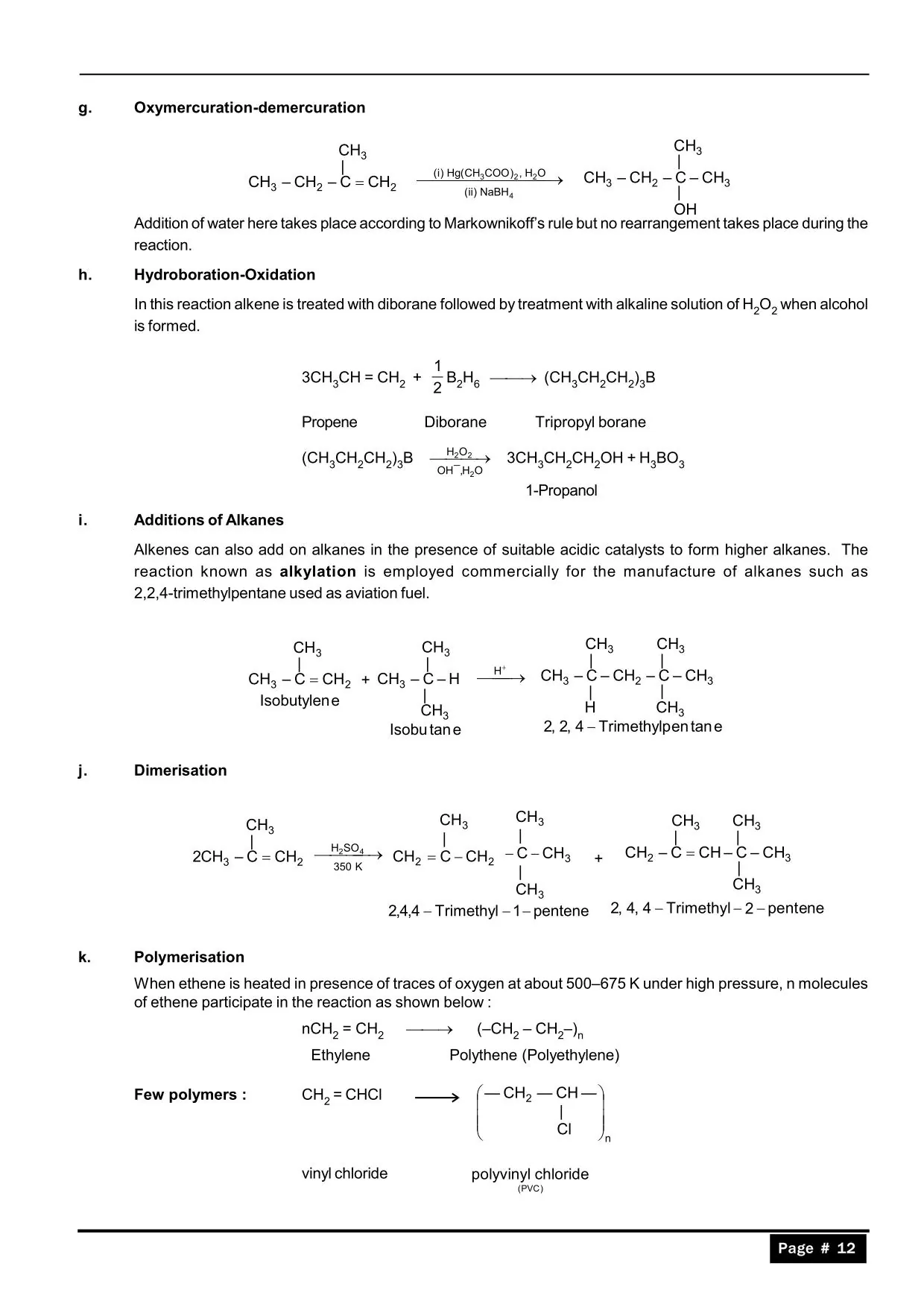
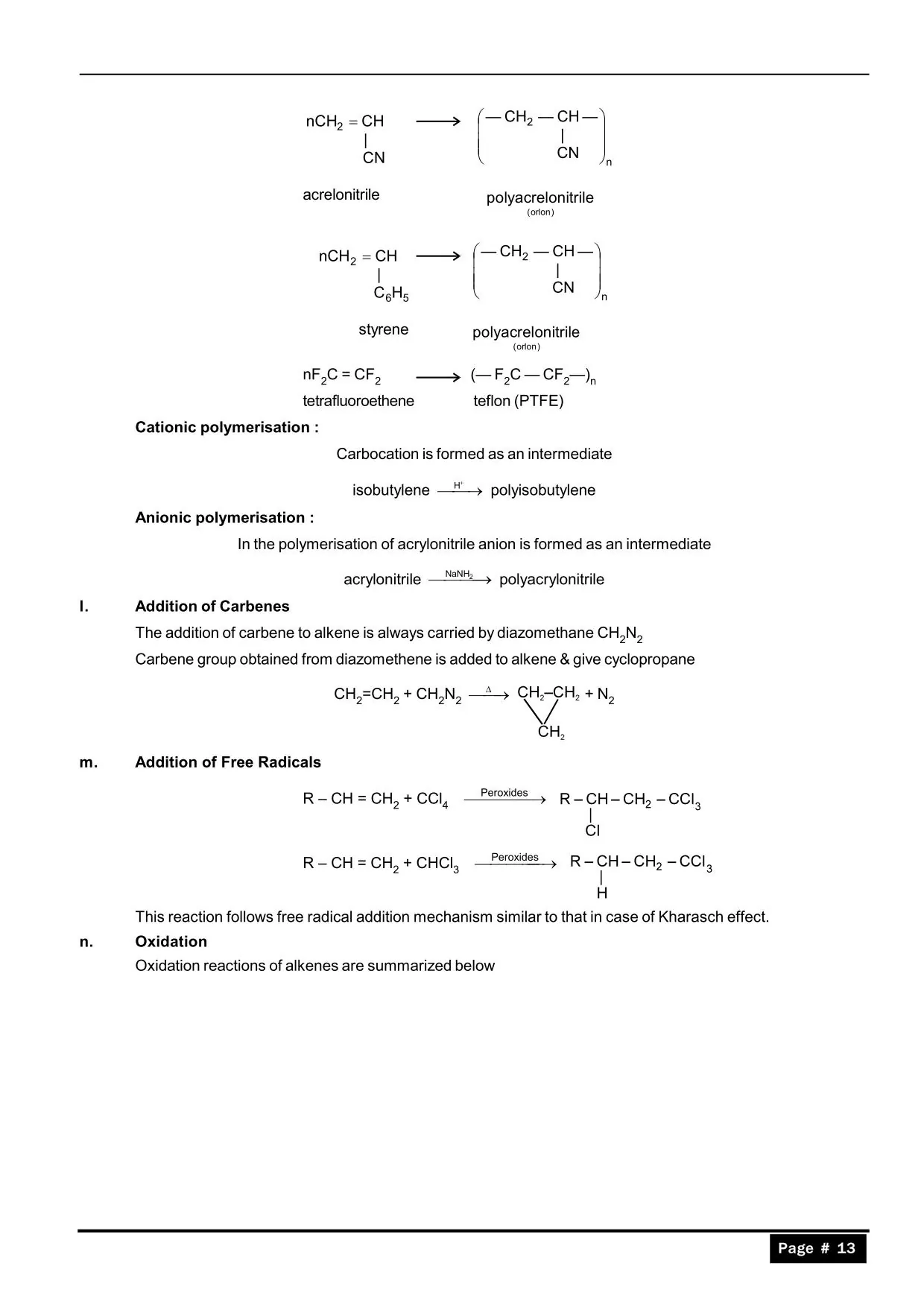
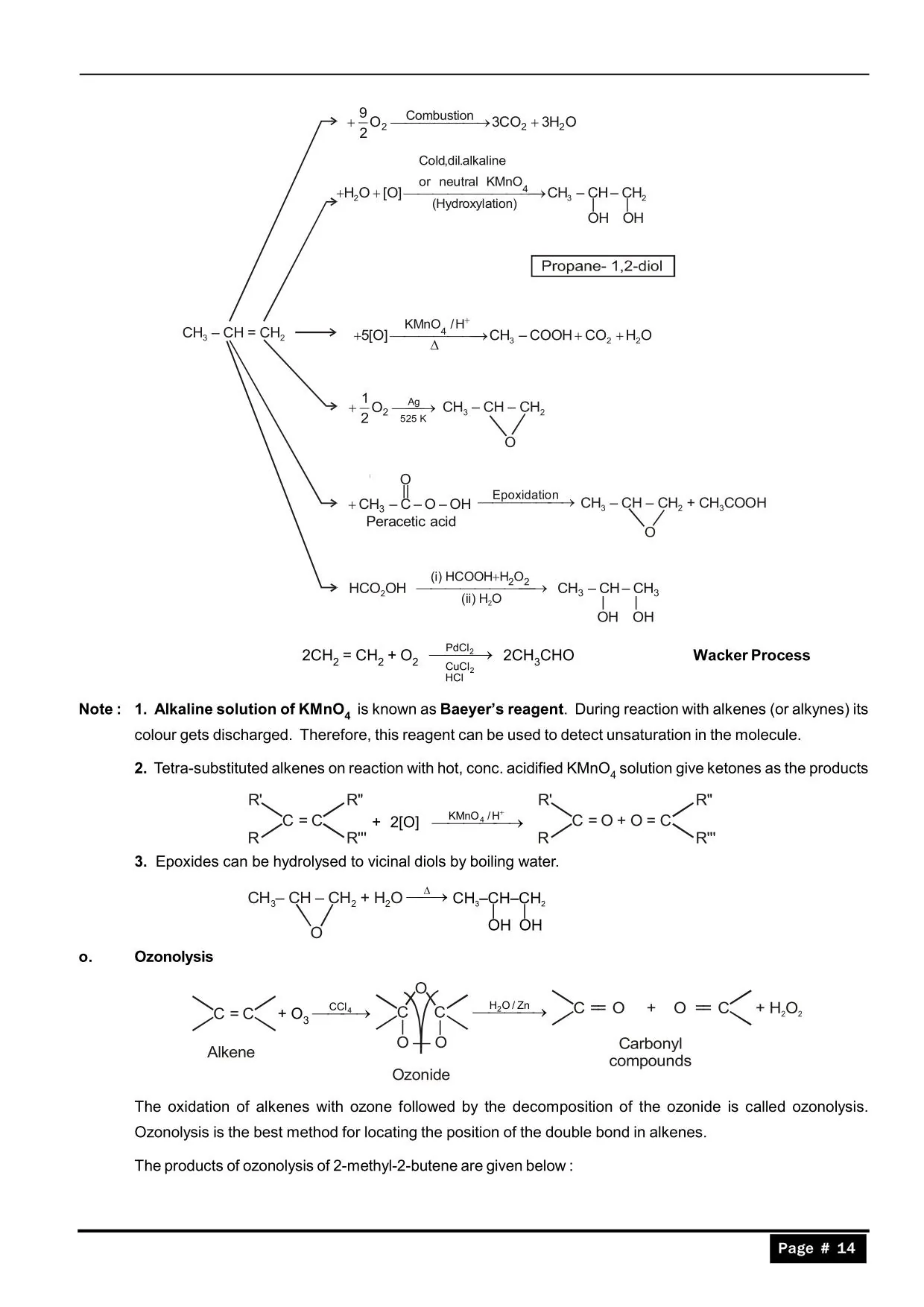
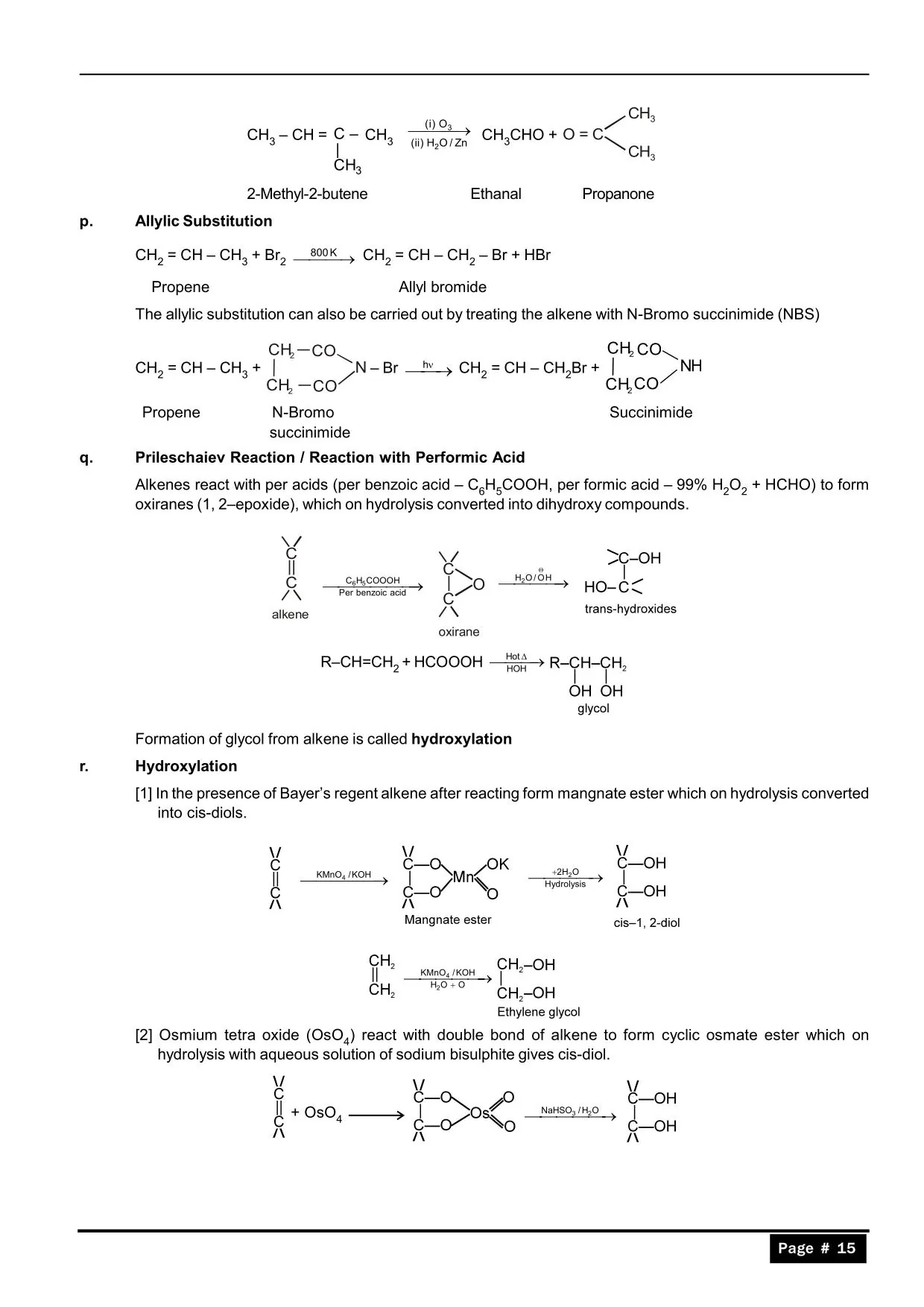
India's Best Exam Preparation for Class 11th - Download Now
India's Best Exam Preparation for Class 11th - Download Now
Alkanes – Key Concepts and Reactions
What Are Alkanes and How Are They Tested in JEE/NEET?
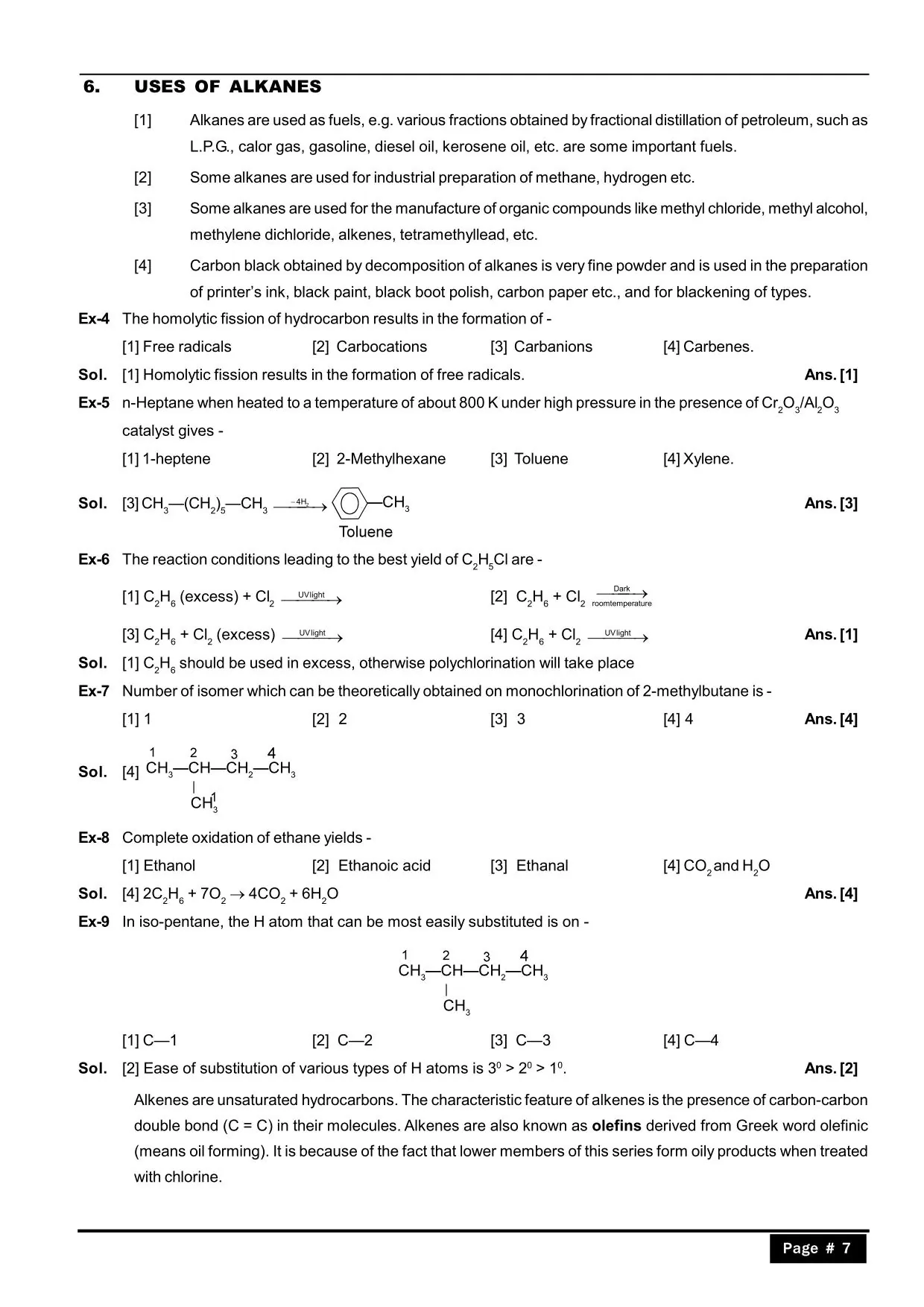
Alkanes are saturated hydrocarbons — all carbon-carbon bonds are single bonds. They follow the general formula CₙH₂ₙ₊₂.
Key properties to remember:
- Alkanes are the least reactive hydrocarbons due to strong C–H and C–C sigma bonds
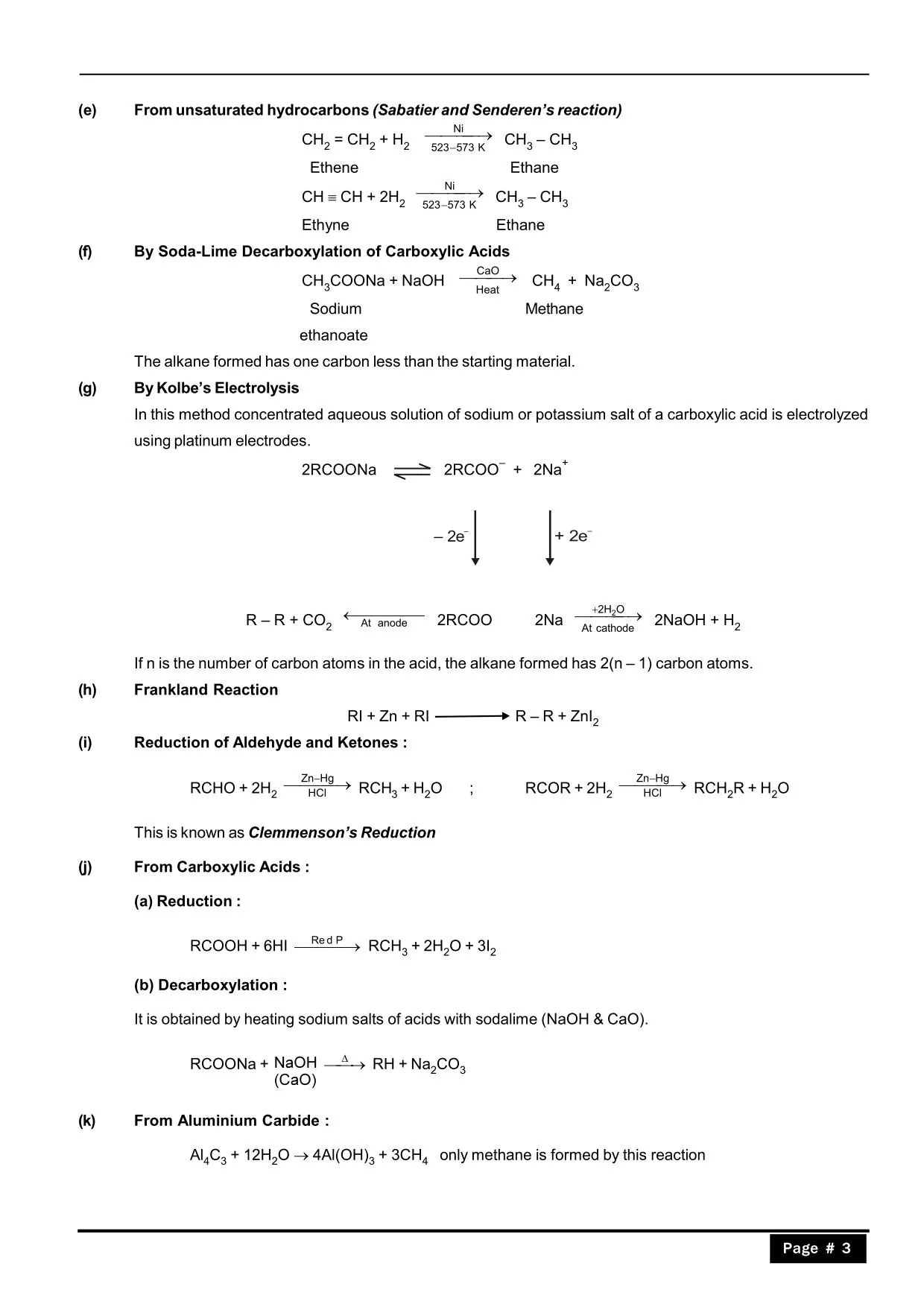
- Physical state: C₁–C₄ are gases, C₅–C₁₇ are liquids, C₁₈+ are solids at room temperature
- Solubility: insoluble in water, soluble in non-polar solvents
Conformations of Alkanes (JEE Important)
For ethane (C₂H₆), two extreme conformations exist:
| Conformation | Dihedral Angle | Stability | Energy |
|---|---|---|---|
| Staggered | 60° | More stable | Lower |
| Eclipsed | 0° | Less stable | Higher |
The staggered conformation is more stable due to minimum torsional strain. JEE Main frequently tests this concept through Newman projection questions.
Important Reactions of Alkanes
1. Free Radical Halogenation (Substitution)
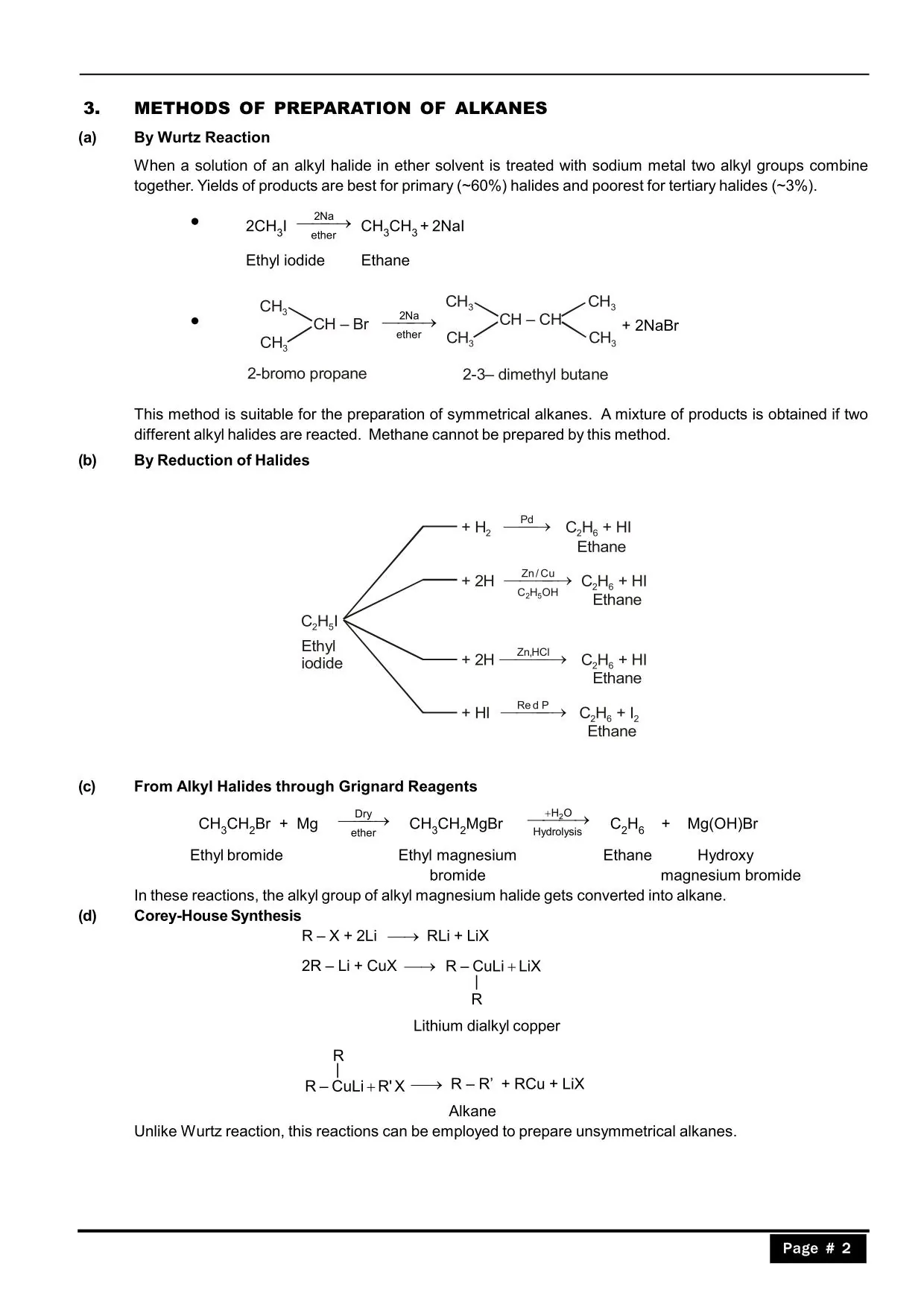
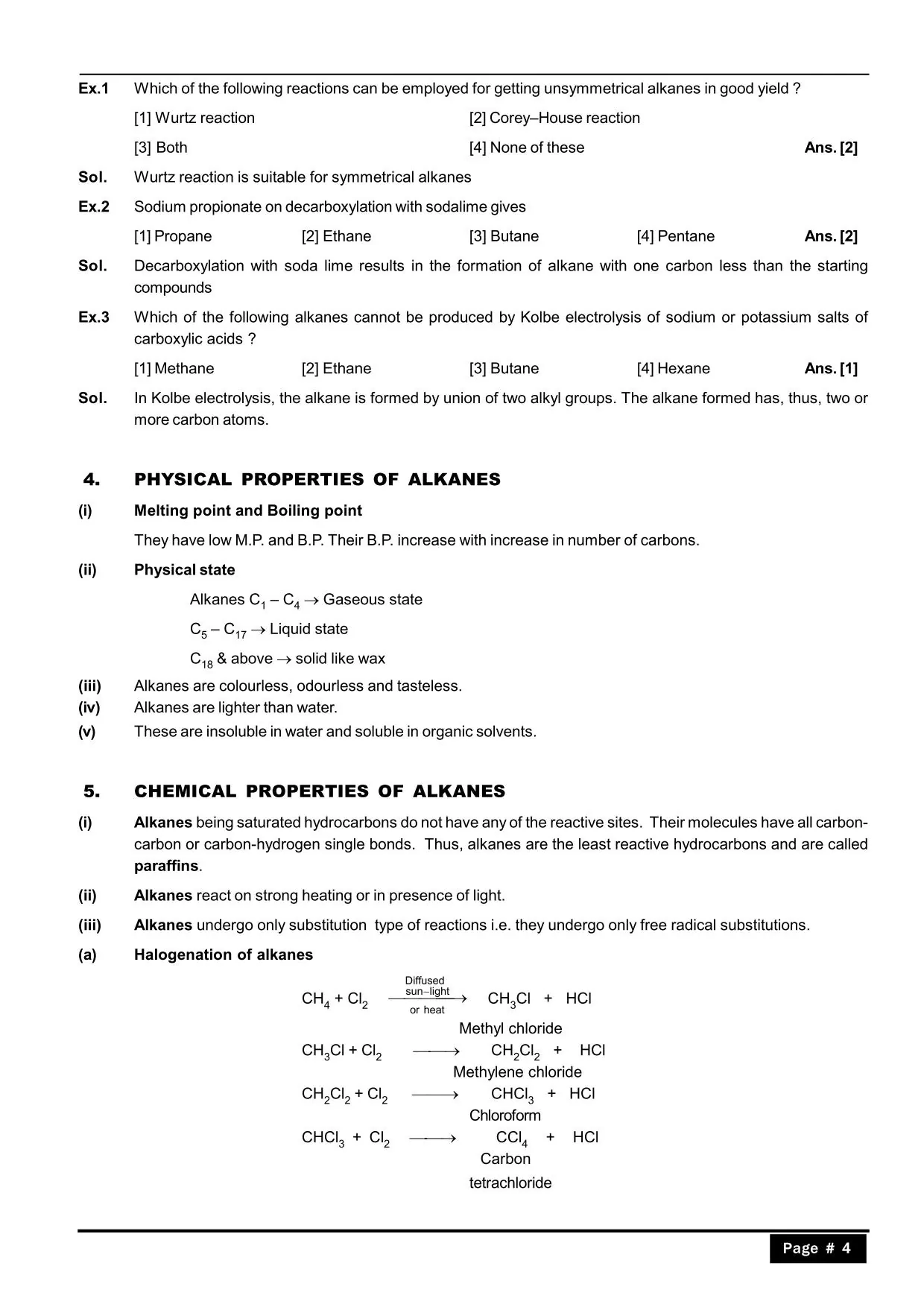
CH₄ + Cl₂ → CH₃Cl + HCl (in presence of UV light or heat)
- Mechanism: Chain reaction — Initiation → Propagation → Termination
- Reactivity order of halogens: F₂ > Cl₂ > Br₂ > I₂
- Selectivity order (for mixed alkanes): 3° H > 2° H > 1° H
2. Combustion
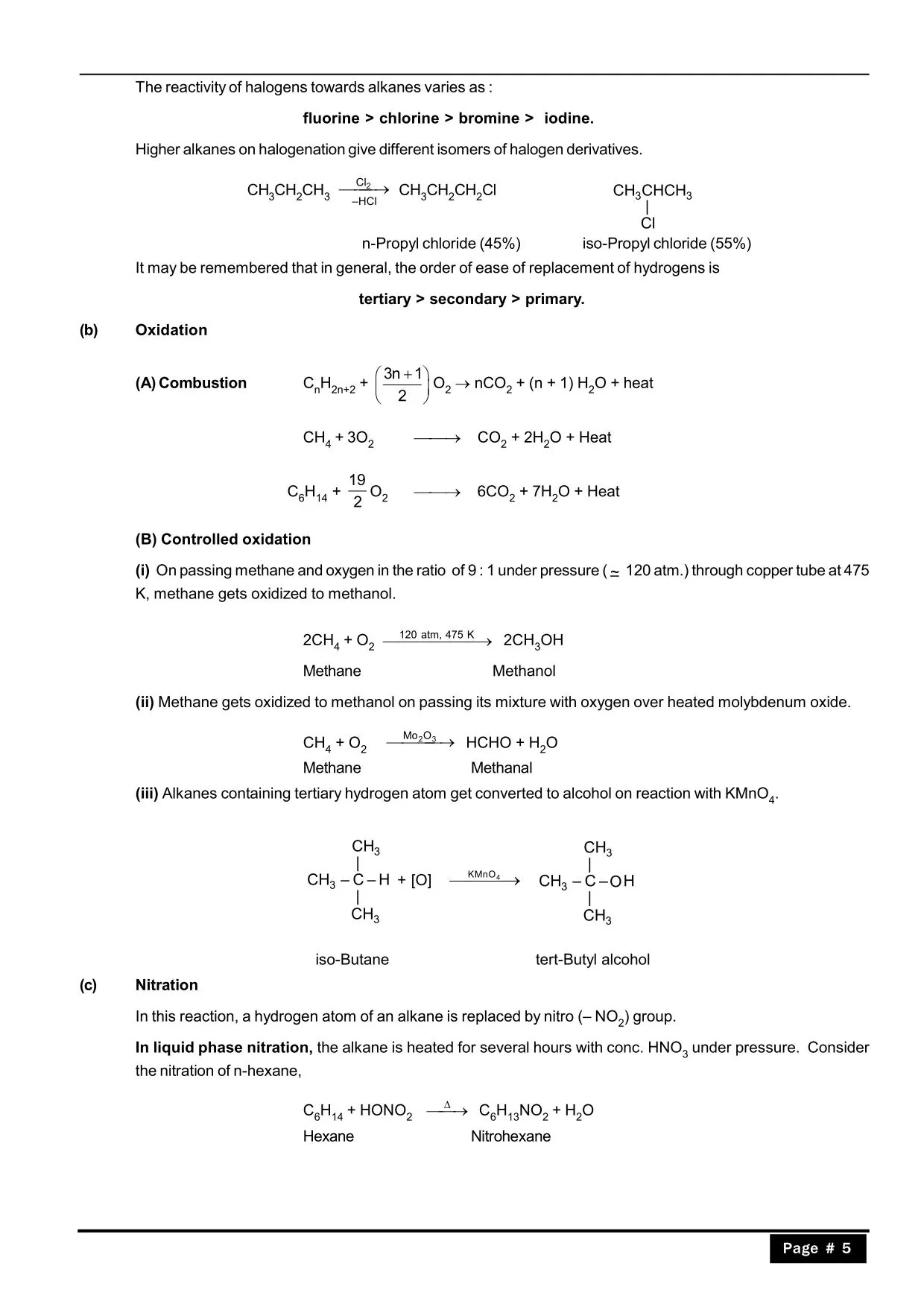
CₙH₂ₙ₊₂ + O₂ → CO₂ + H₂O + Heat
3. Pyrolysis (Cracking)
Higher alkanes → lower alkanes + alkenes (on heating at high temperature)
💡 Expert Tip by eSaral Chemistry Faculty: "In free radical halogenation, NTA frequently asks: 'How many monochlorination products does a given alkane give?' Draw the structure, identify all unique hydrogen environments, and count — each unique H gives one distinct product. This is a 2-minute question if you approach it structurally."
Alkenes – Key Concepts and Reactions
What Makes Alkenes Different and Why NTA Tests Them Heavily?
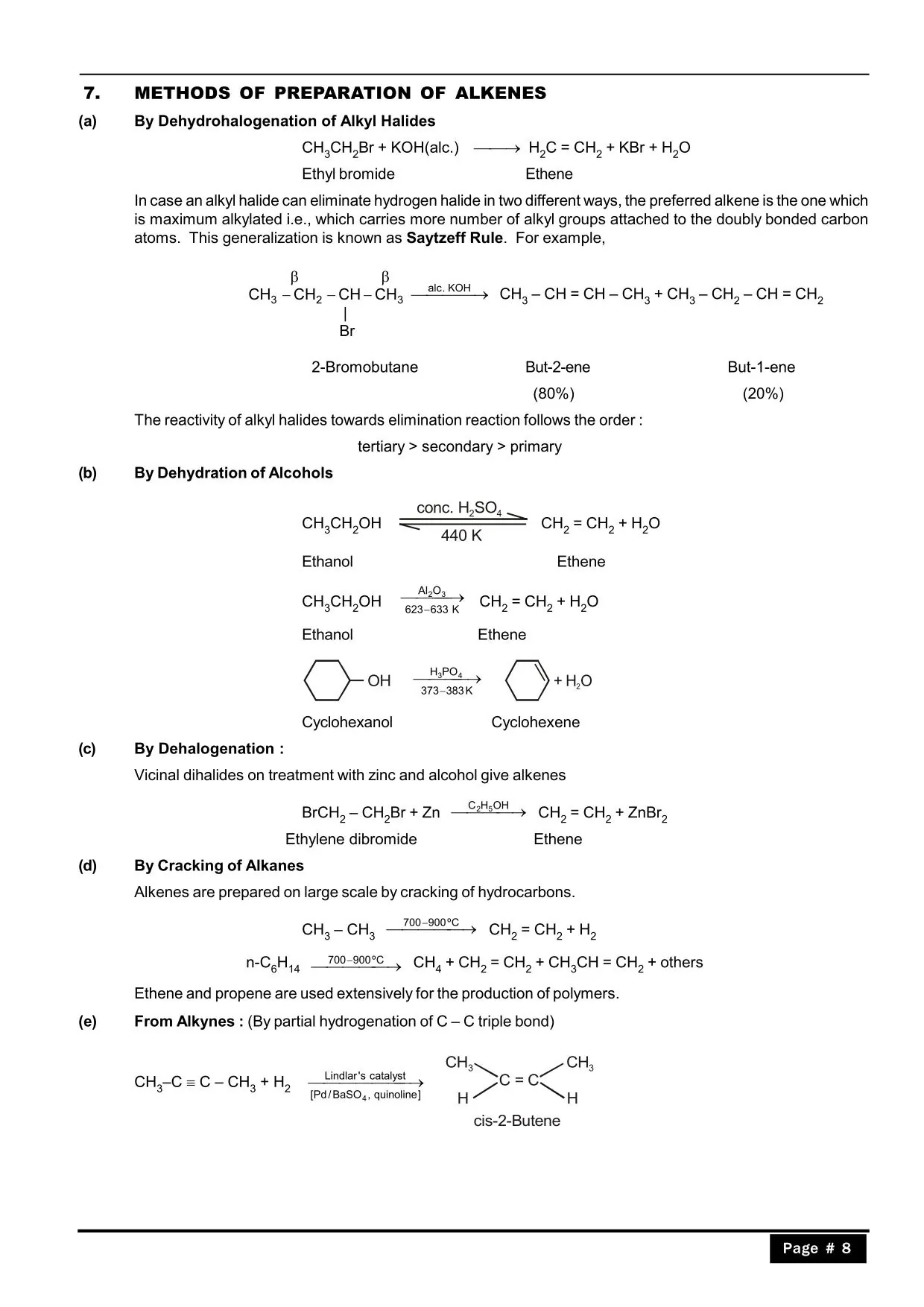
Alkenes contain one C=C double bond (one sigma + one pi bond). The pi bond is weaker and more reactive — making alkenes the most reaction-rich hydrocarbons in the chapter.
Key structural feature: Due to restricted rotation around the double bond, alkenes show geometrical (cis-trans) isomerism. A molecule shows cis-trans isomerism only when each doubly bonded carbon has two different substituents.
Important Reactions of Alkenes
1. Electrophilic Addition – Markovnikov's Rule (Most Tested)
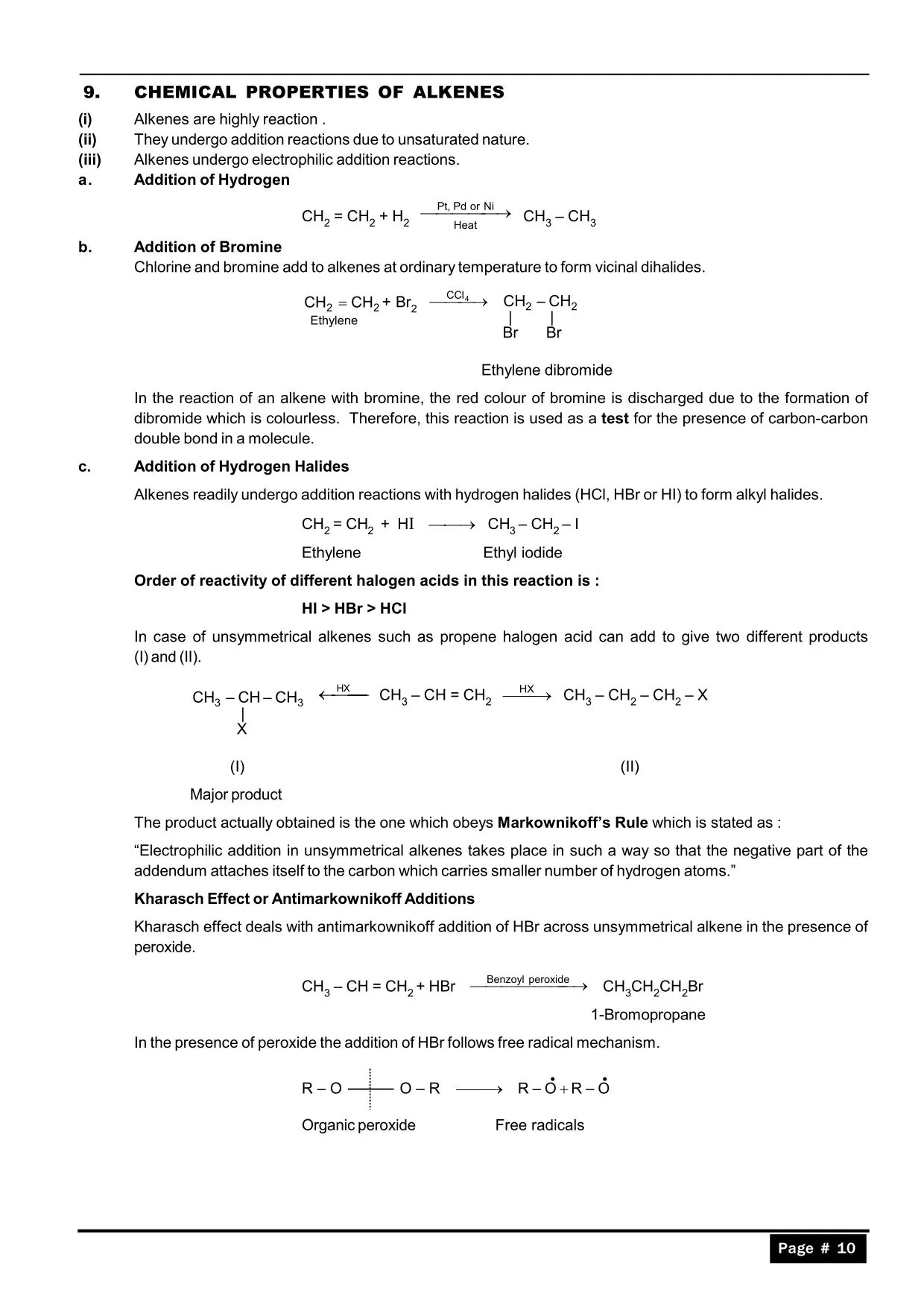
When HX (HBr, HCl, HI) adds to an unsymmetrical alkene, the hydrogen adds to the carbon with more hydrogens (or the negative part adds to the more substituted carbon).
Example: CH₃–CH=CH₂ + HBr → CH₃–CHBr–CH₃ (major product)
Anti-Markovnikov addition occurs in the presence of peroxides (H₂O₂ or ROOR) — called the Kharasch effect or peroxide effect. The halogen adds to the less-substituted carbon.
2. Addition of H₂ (Hydrogenation)
CH₂=CH₂ + H₂ → CH₃–CH₃ (in presence of Ni/Pt/Pd catalyst)
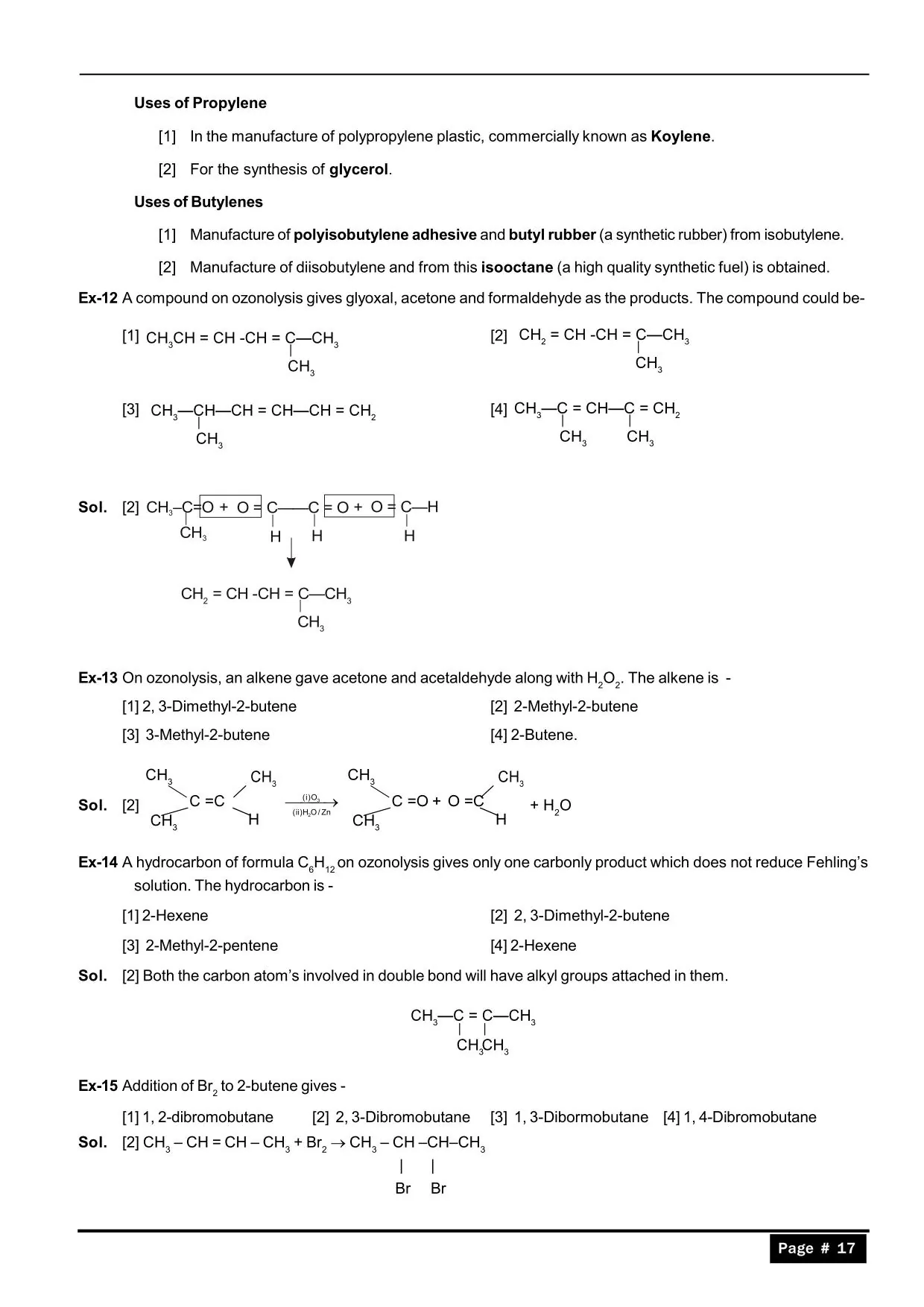
3. Addition of Halogen (X₂)
CH₂=CH₂ + Br₂ → CH₂Br–CH₂Br (decolorises bromine water — standard test for alkenes)
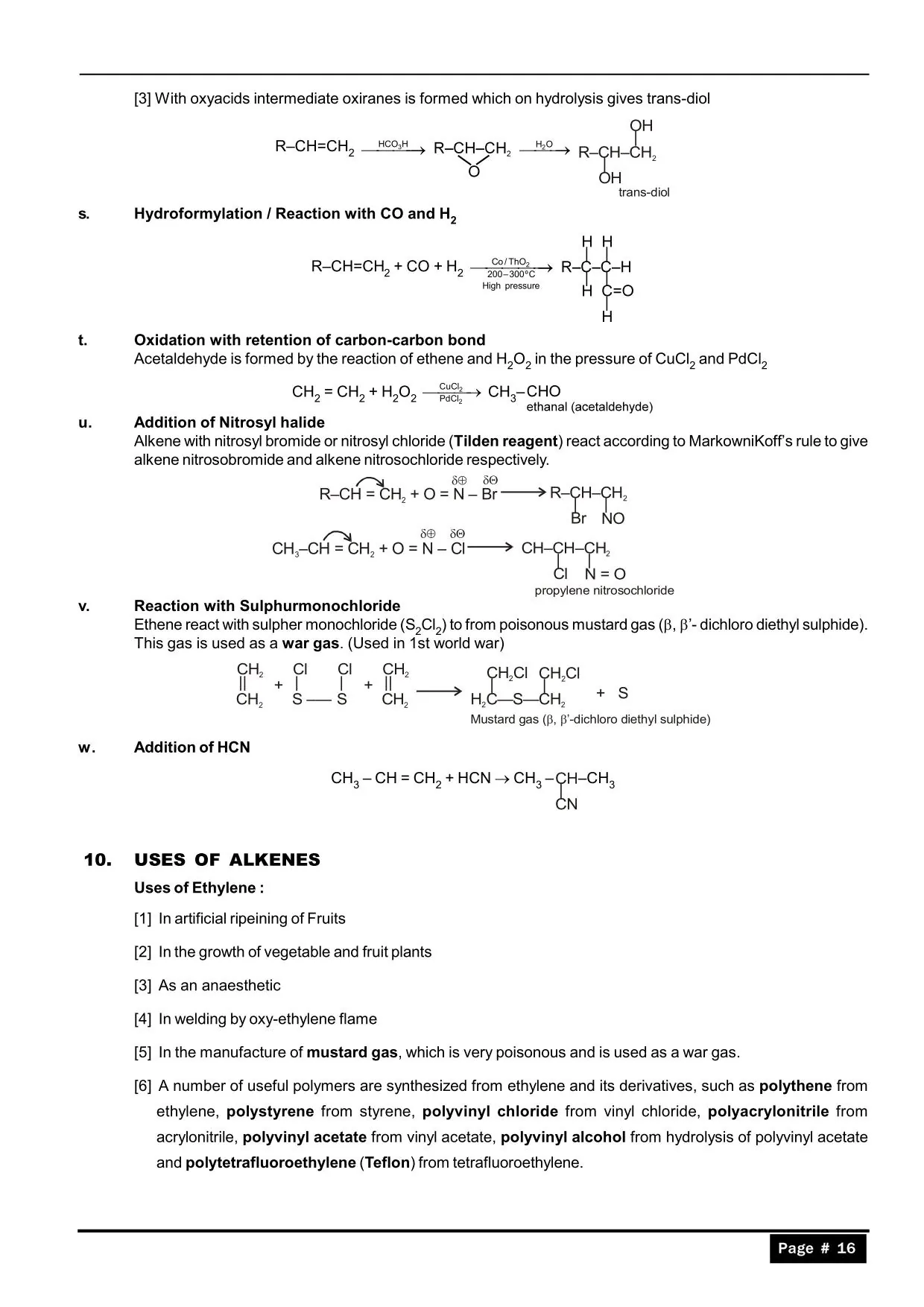
4. Ozonolysis
Alkene + O₃ → Ozonide → Aldehydes/Ketones on reductive workup (Zn/H₂O)
Used to determine the position of a double bond in structure elucidation problems — a frequently tested JEE Advanced concept.
5. Oxidation with KMnO₄
- Cold, dilute KMnO₄ (Baeyer's reagent): forms diol — decolorises purple KMnO₄ (test for unsaturation)
- Hot, conc. KMnO₄: cleaves the double bond — forms carboxylic acids or ketones depending on substitution
| Reaction | Reagent | Product | Test Purpose |
|---|---|---|---|
| Hydrogenation | H₂ / Ni | Alkane | — |
| HBr addition | HBr | Bromoalkane | Markovnikov |
| HBr + peroxide | HBr / ROOR | Anti-Markovnikov product | Kharasch effect |
| Halogenation | Br₂/CCl₄ | Dibromoalkane | Tests unsaturation (decolorisation) |
| Baeyer's test | Cold KMnO₄ | Diol | Tests unsaturation (decolorisation) |
| Ozonolysis | O₃ then Zn/H₂O | Aldehydes/Ketones | Structure elucidation |
Alkynes – Key Concepts and Reactions
What Are Alkynes and What Makes Them Uniquely Acidic?
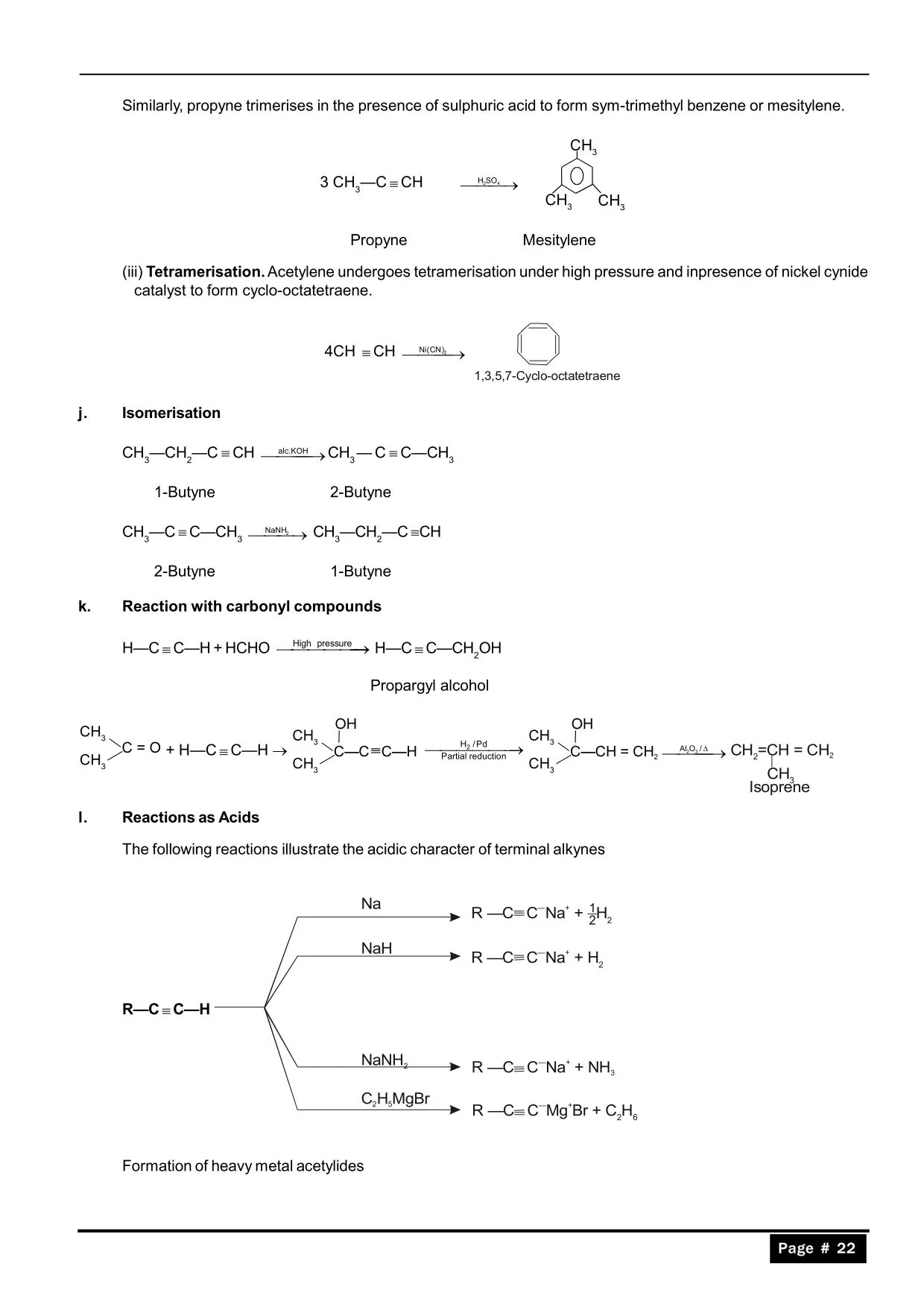
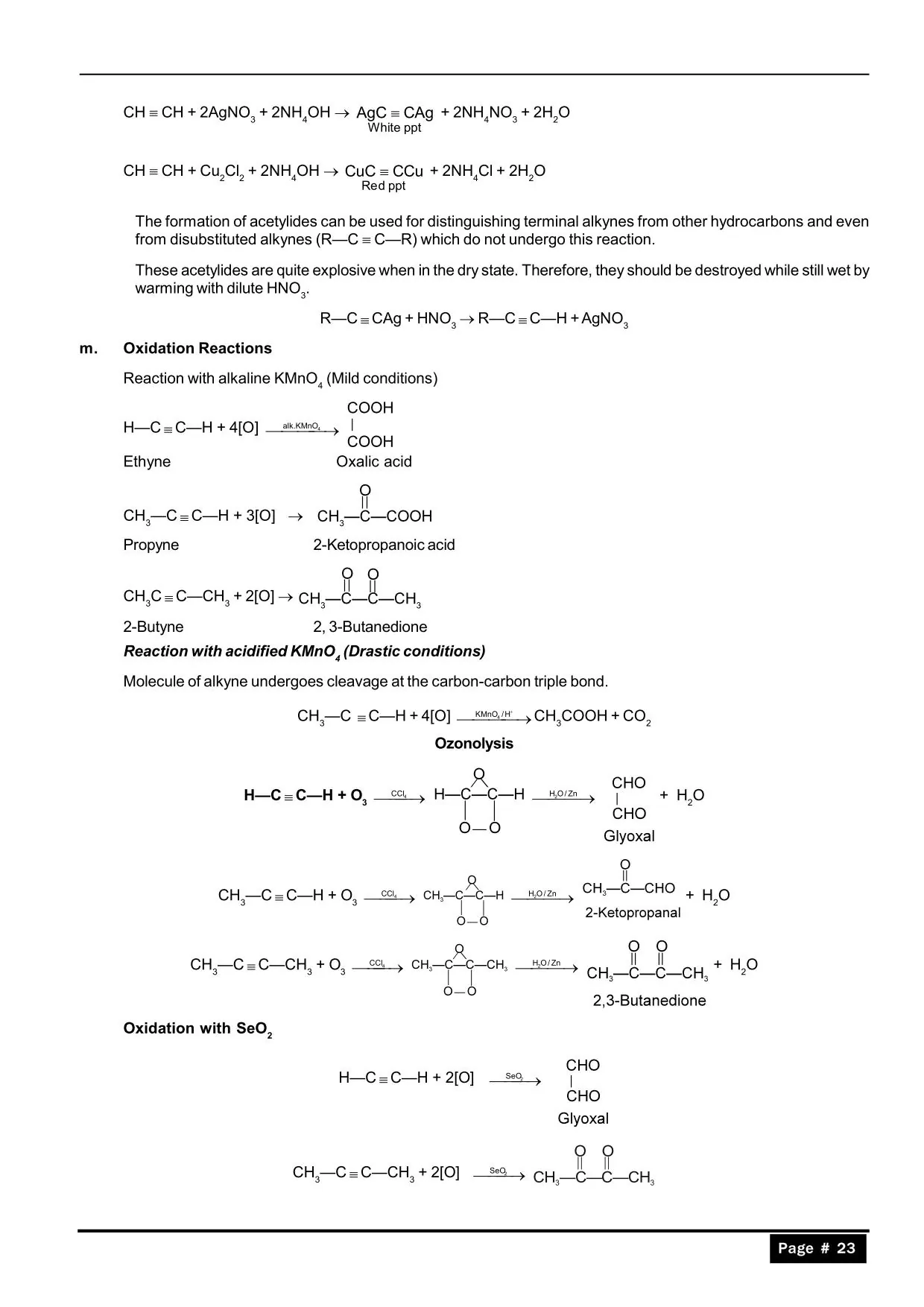
Alkynes contain one C≡C triple bond (one sigma + two pi bonds). The most important distinguishing property of terminal alkynes (RC≡CH) is their acidity — the sp-hybridised carbon holds the H more tightly, making terminal alkynes weakly acidic (pKₐ ≈ 25).
This acidity is tested through:
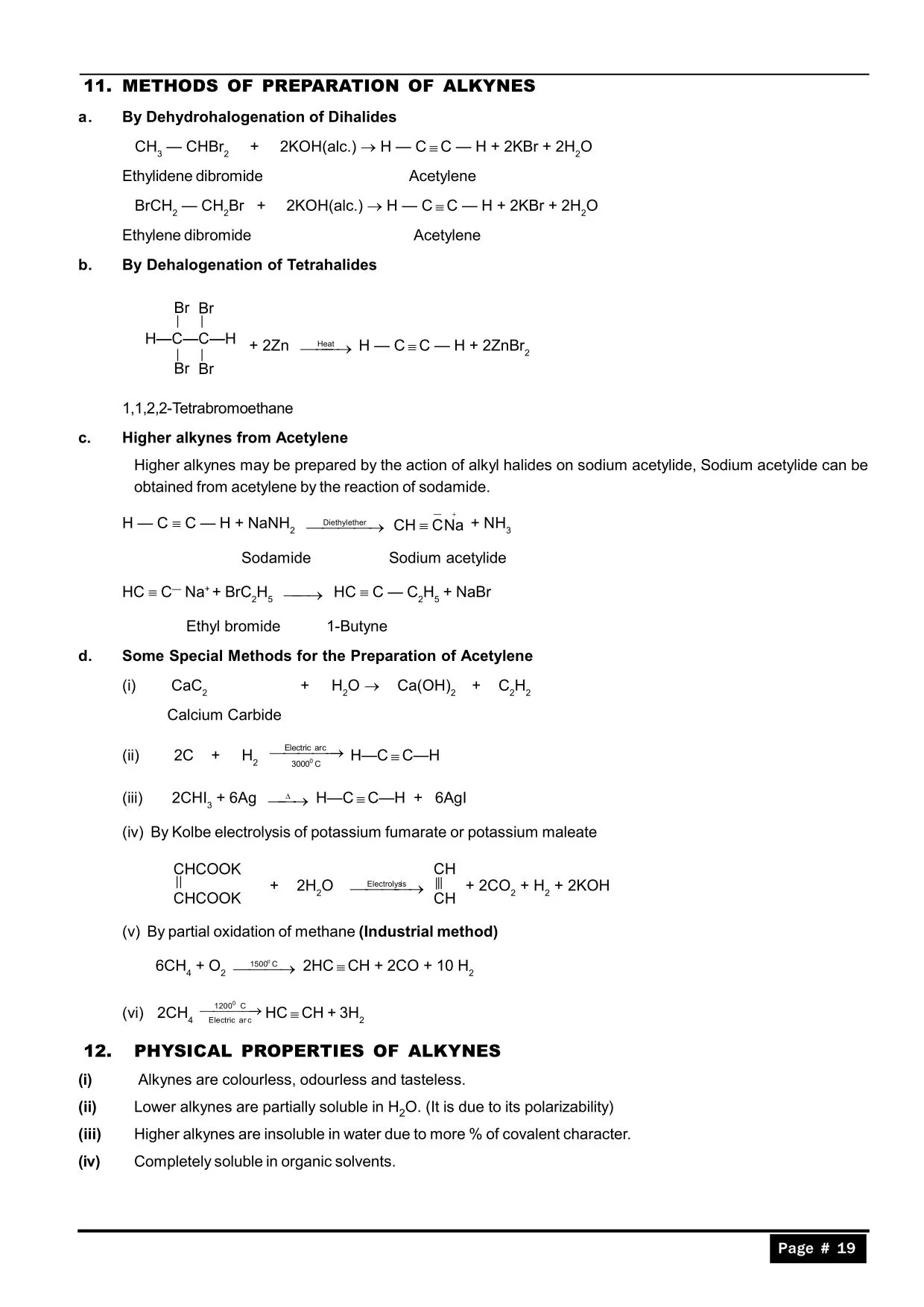
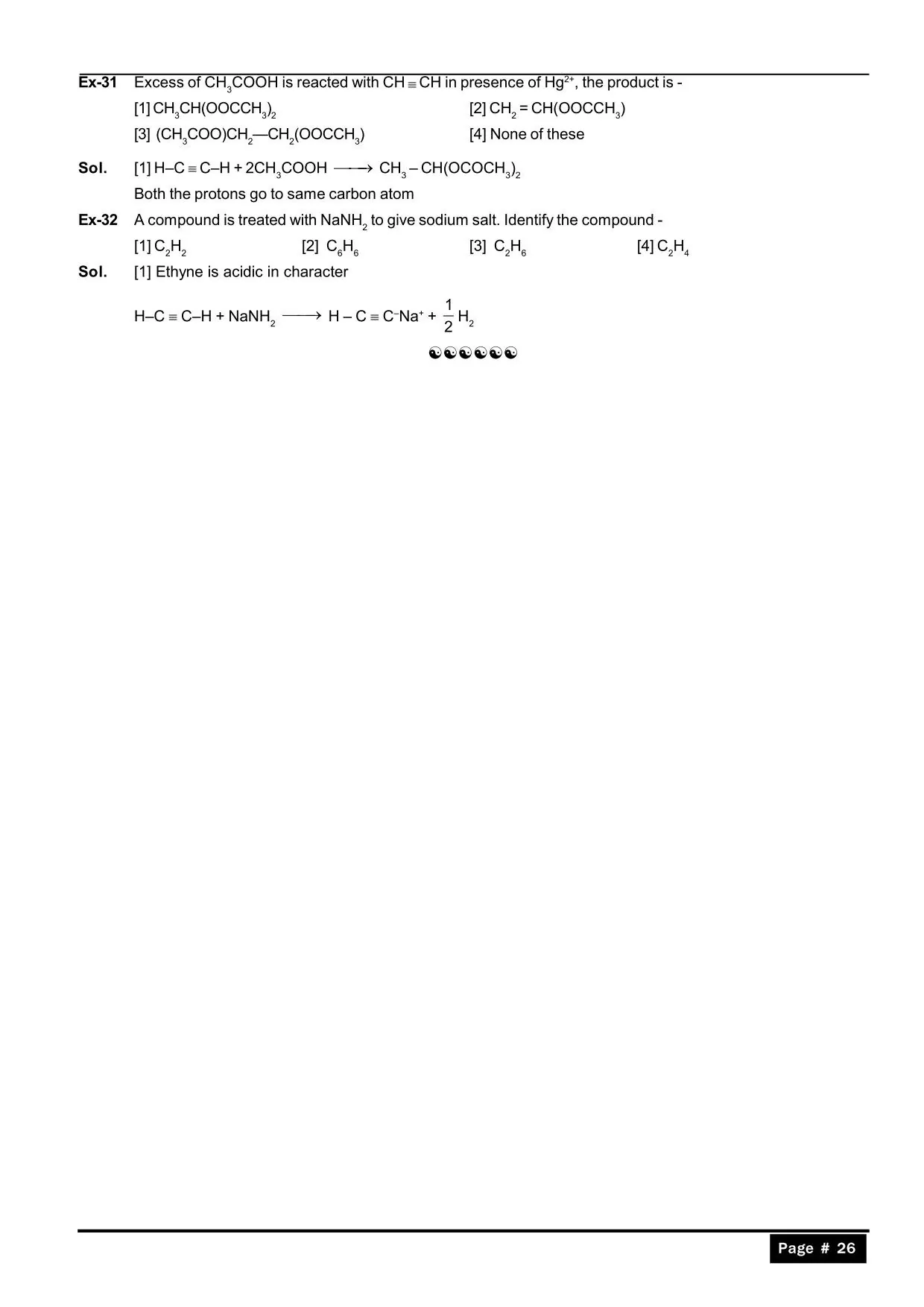
- Reaction with sodamide (NaNH₂): RC≡CH + NaNH₂ → RC≡C⁻Na⁺ + NH₃
- Reaction with AgNO₃/NH₃: forms white precipitate of silver acetylide (confirms terminal alkyne)
- Reaction with Cu₂Cl₂/NH₃: forms red precipitate of copper acetylide
Important Reactions of Alkynes
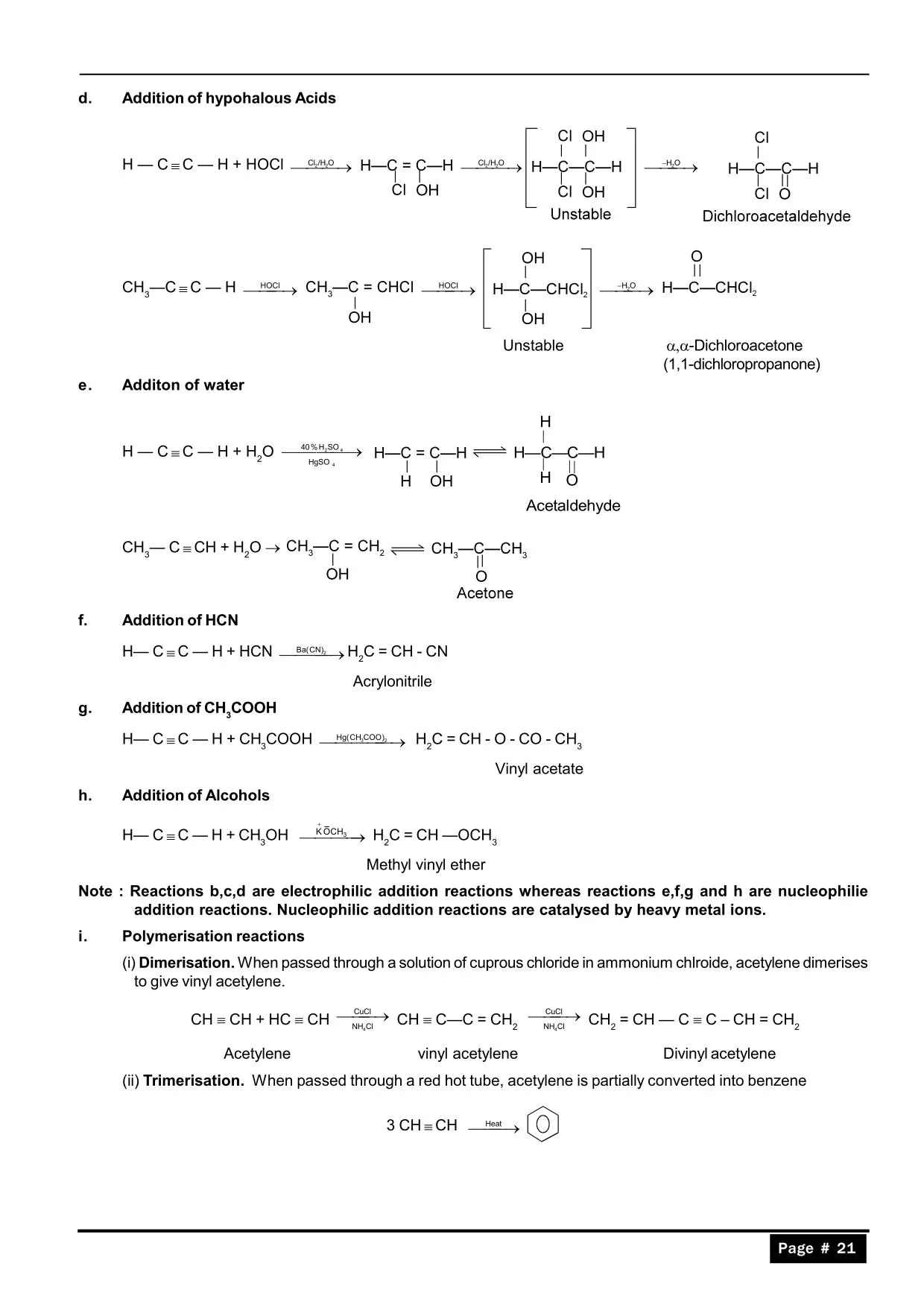
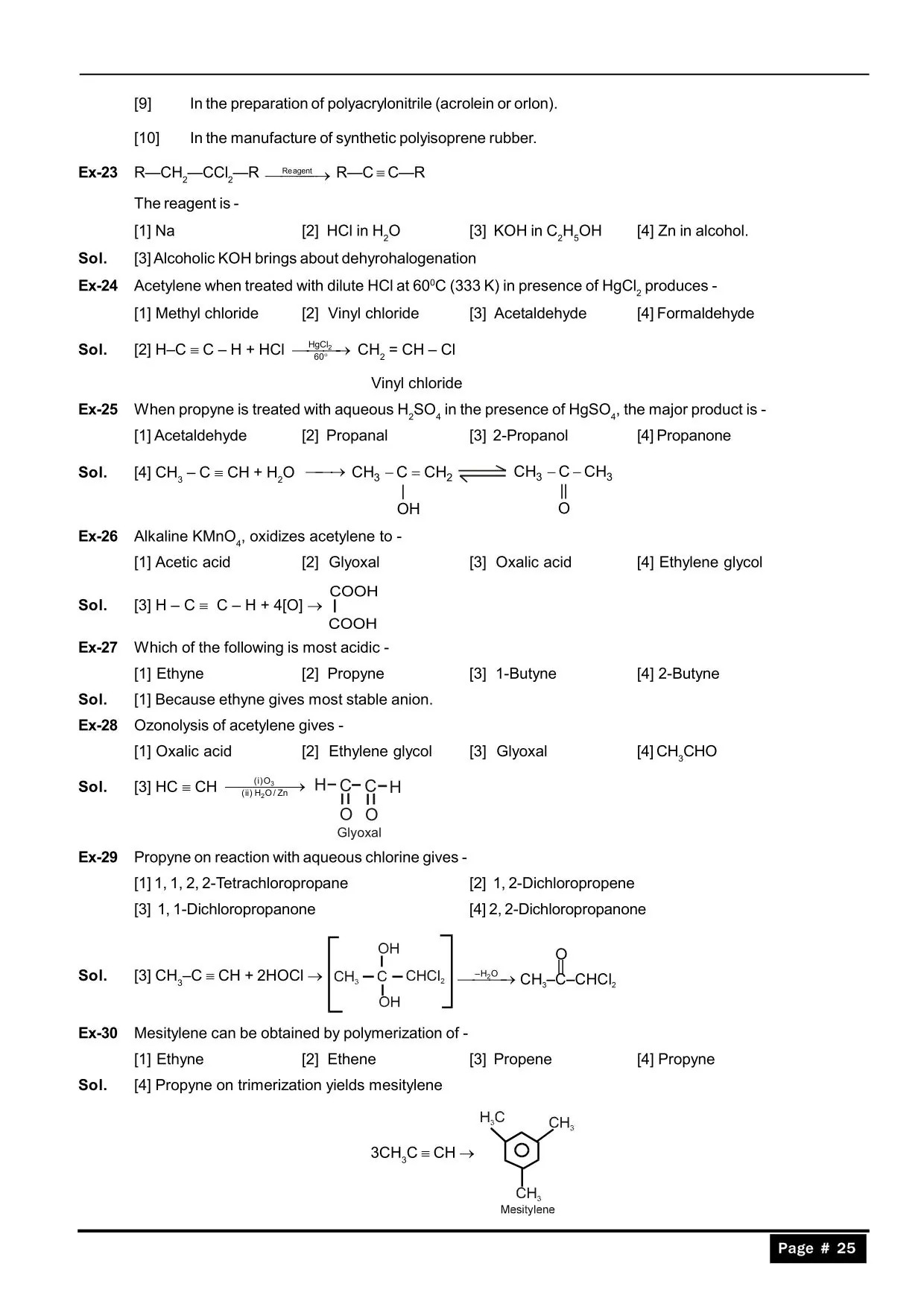
1. Electrophilic Addition (similar to alkenes, but double addition is possible)
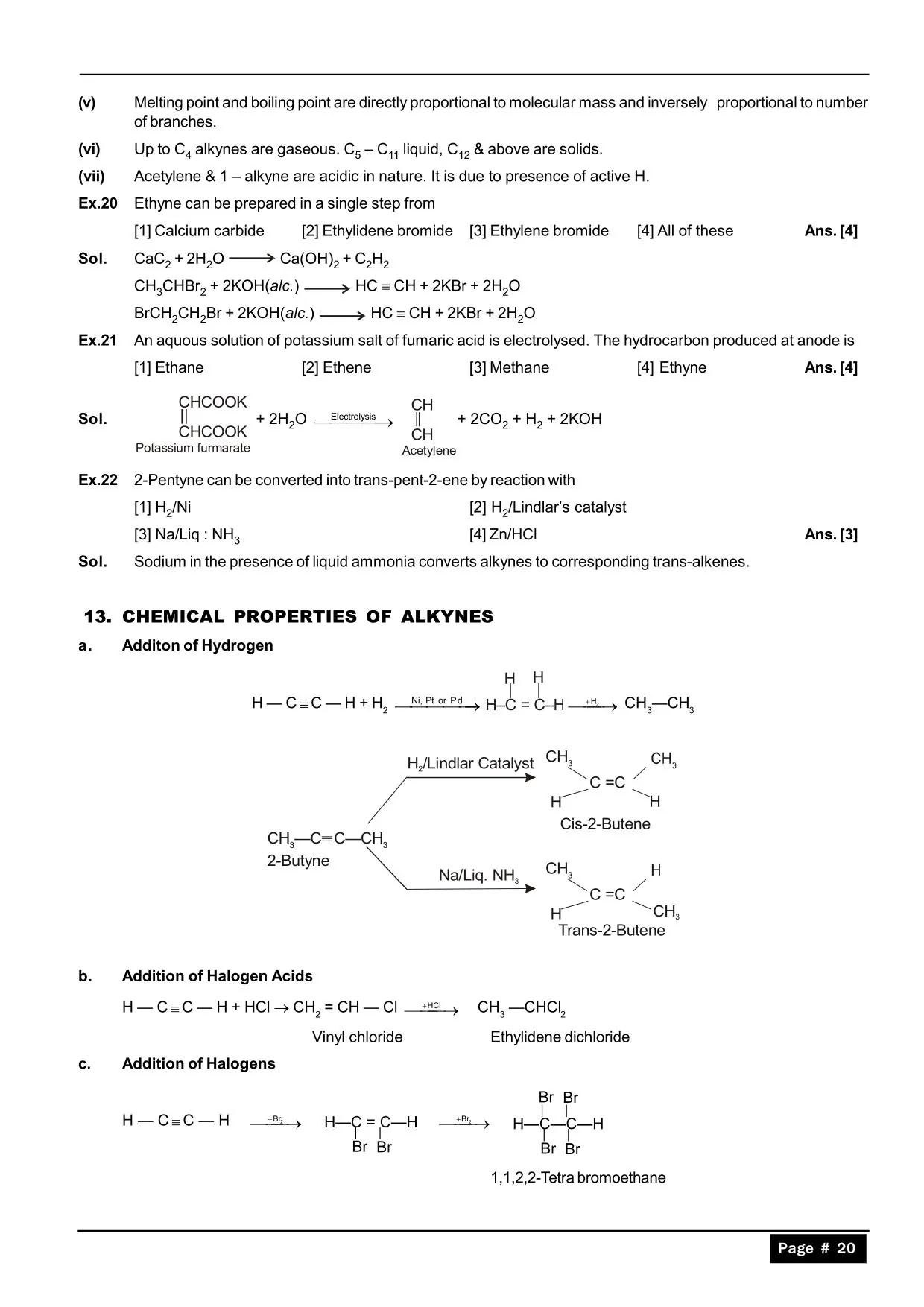
HC≡CH + HBr → CH₂=CHBr (vinyl bromide) → CH₃CHBr₂ (1,1-dibromoethane)
2. Hydrogenation
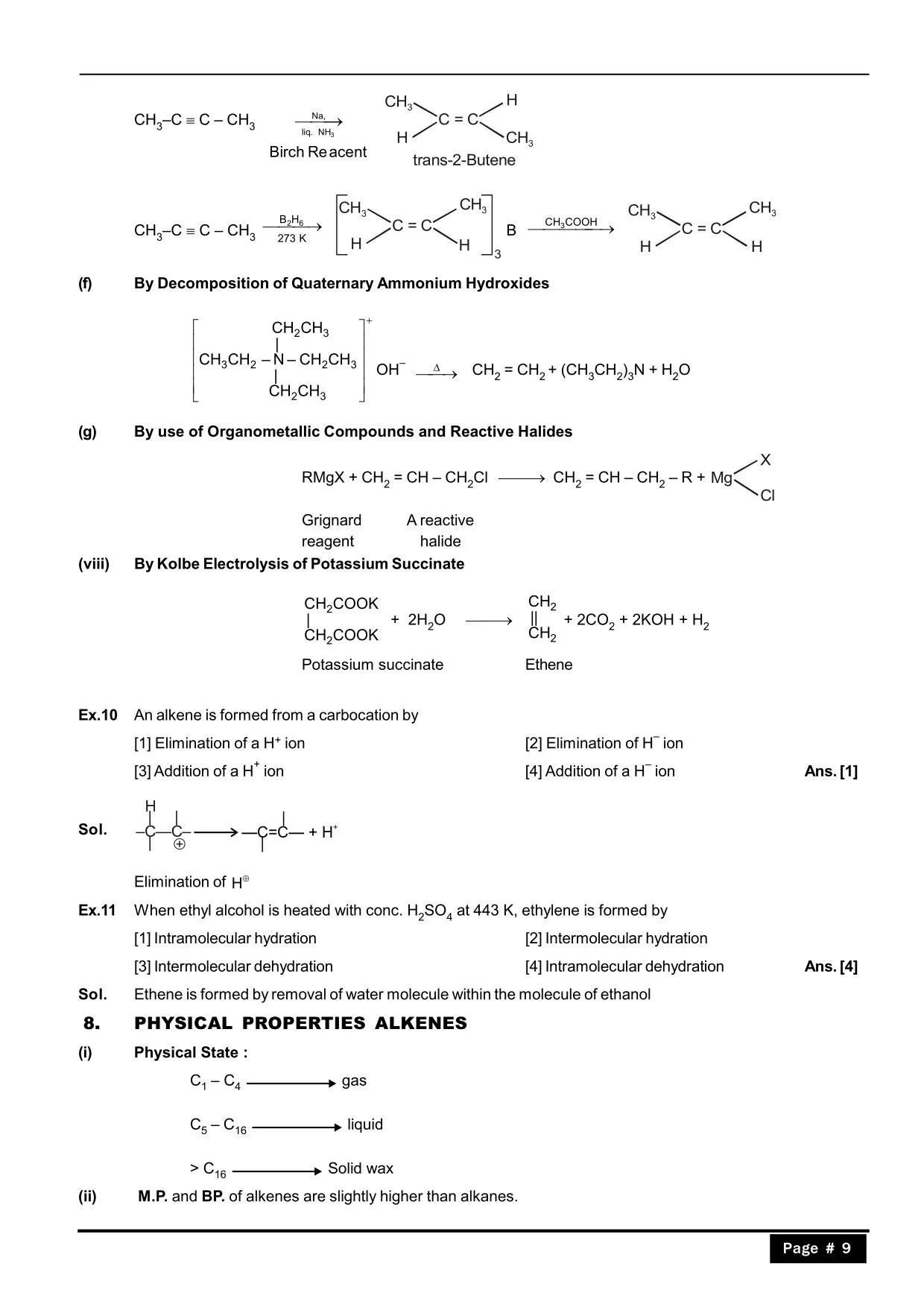
- With H₂/Pd(Lindlar's catalyst): gives cis-alkene (syn addition)
- With Na/liquid NH₃ (Birch reduction): gives trans-alkene (anti addition)
3. Acidic Character of Terminal Alkynes
RC≡CH + NaNH₂ → RC≡CNa + NH₃
This sodium acetylide is used in synthesis to extend carbon chains — a common JEE synthesis problem.
💡 Expert Tip by eSaral Chemistry Faculty: "The Lindlar's catalyst vs. Na/liq. NH₃ distinction is tested almost every year in JEE Main. Lindlar gives cis-alkene; sodium in liquid ammonia gives trans-alkene. A single-line question on this is worth 4 marks — memorise it with a mnemonic: Lindlar = Left side (cis); Na = Not cis (trans)."
Aromatic Hydrocarbons – Benzene and Beyond
What Is Aromaticity and What Are the Hückel Rules?
Benzene (C₆H₆) is the parent aromatic compound. For a compound to be aromatic, it must satisfy Hückel's rule:
- The molecule must be cyclic and planar
- The molecule must have a continuous cloud of π electrons
- The number of π electrons must be (4n + 2), where n = 0, 1, 2, 3...
For benzene: 6 π electrons → n = 1 → (4×1 + 2) = 6 ✅ Aromatic
Important Reactions of Benzene (Electrophilic Aromatic Substitution)
| Reaction | Reagent | Product |
|---|---|---|
| Nitration | conc. HNO₃ + conc. H₂SO₄ | Nitrobenzene |
| Sulphonation | Fuming H₂SO₄ (oleum) | Benzenesulphonic acid |
| Halogenation | Cl₂ or Br₂ / anhydrous FeCl₃ | Chlorobenzene / Bromobenzene |
| Friedel-Crafts Alkylation | R-Cl / anhydrous AlCl₃ | Alkylbenzene |
| Friedel-Crafts Acylation | RCOCl / anhydrous AlCl₃ | Acylbenzene (Ketone) |
Directing effects — critical for JEE and NEET:
- Ortho/para directors (activating): –OH, –NH₂, –OCH₃, –alkyl groups
- Meta directors (deactivating): –NO₂, –COOH, –CHO, –SO₃H, –CN
Important Reactions Summary Table
| Hydrocarbon Type | Reaction Name | Key Reagent | Product/Result |
|---|---|---|---|
| Alkane | Free radical halogenation | X₂ / UV light | Haloalkane |
| Alkane | Combustion | O₂ | CO₂ + H₂O |
| Alkene | Markovnikov addition | HX | Major = H on more-H carbon |
| Alkene | Anti-Markovnikov | HBr / peroxide | H on less-H carbon |
| Alkene | Hydrogenation | H₂ / Ni | Alkane |
| Alkene | Ozonolysis | O₃ then Zn/H₂O | Aldehyde/Ketone |
| Alkene | Baeyer's test | Cold KMnO₄ | Diol (decolorises KMnO₄) |
| Alkyne | Lindlar's hydrogenation | H₂ / Lindlar's catalyst | cis-Alkene |
| Alkyne | Birch reduction | Na / liq. NH₃ | trans-Alkene |
| Alkyne | Acidic character | NaNH₂ | Sodium acetylide |
| Alkyne | AgNO₃/NH₃ test | Silver nitrate/ammonia | White ppt (terminal alkyne) |
| Benzene | Nitration | HNO₃ + H₂SO₄ | Nitrobenzene |
| Benzene | Friedel-Crafts | RCl / AlCl₃ | Alkylbenzene |
Hydrocarbons Chapter Weightage for JEE Main and NEET
| Exam | Avg. Questions from Hydrocarbons | Marks | Key Sub-topics Tested |
|---|---|---|---|
| JEE Main | 1–2 | 4–8 | Markovnikov's rule, ozonolysis, conformations, Hückel's rule |
| NEET UG | 2–3 | 8–12 | Named reactions, Baeyer's test, acidic character of alkynes, EAS directing effects |
| CBSE Boards | 5–7 marks directly | 5–7 | All reactions, IUPAC naming, and isomerism |
Hydrocarbons is consistently one of the highest-scoring Organic chapters for NEET — particularly because Biology students find it manageable relative to Physical Chemistry. For JEE Main, Markovnikov's rule, ozonolysis, and Birch reduction are the most frequently returning question types.
Frequently Asked Questions
Find answers to common questions.
What are the most important topics in Hydrocarbons Class 11 for NEET?
For NEET, the most important topics in Hydrocarbons are Markovnikov's rule (and anti-Markovnikov/peroxide effect), the acidic character of terminal alkynes (tests with AgNO₃ and Cu₂Cl₂), Baeyer's test for unsaturation, Electrophilic Aromatic Substitution reactions of benzene, and directing effects of substituents. These topics appear in NEET almost every year.
What is Markovnikov's rule and how is it tested in JEE Main?
Markovnikov's rule states that in the addition of HX to an unsymmetrical alkene, hydrogen adds to the carbon bearing more hydrogen atoms (the less substituted carbon). JEE Main tests this by asking for the major product of HBr or HCl addition to propene, butene, or similar alkenes — and by contrasting it with anti-Markovnikov addition in the presence of peroxides.
What is the difference between Lindlar's catalyst and Birch reduction in alkynes?
Lindlar's catalyst (Pd/BaSO₄/quinoline) converts an alkyne to a cis-alkene through syn addition of hydrogen. Birch reduction (Na or Li in liquid NH₃) converts an alkyne to a trans-alkene through anti addition. Both are tested directly in JEE Main — the question gives an alkyne and asks which reagent produces the cis or trans product.
How do you test for the presence of an alkene or alkyne in the lab?
Baeyer's test uses cold, dilute KMnO₄ (purple solution) — both alkenes and alkynes decolourise it, forming a colourless diol or diacid. Bromine water test: alkenes and alkynes decolourise orange Br₂/CCl₄. To specifically confirm a terminal alkyne, use AgNO₃/NH₃ — a white precipitate of silver acetylide confirms the terminal alkyne.
Is Hydrocarbons Chapter 13 of Class 11 important for JEE Advanced?
Yes. While JEE Advanced tests Organic Chemistry at greater depth than JEE Main, the foundational concepts from Hydrocarbons — reaction mechanisms, stability of carbocations, Markovnikov/anti-Markovnikov selectivity, and aromatic chemistry — underpin almost every JEE Advanced Organic question. Hydrocarbons Class 11 must be mastered before attempting JEE Advanced-level Organic Chemistry.