Light - Reflection and Refraction - Class 10 - Short Notes (Mind Maps)
Download the Class 10 Light – Reflection and Refraction Mind Maps to quickly revise important formulas, concepts, ray diagrams, and key exam points for effective board exam preparation.
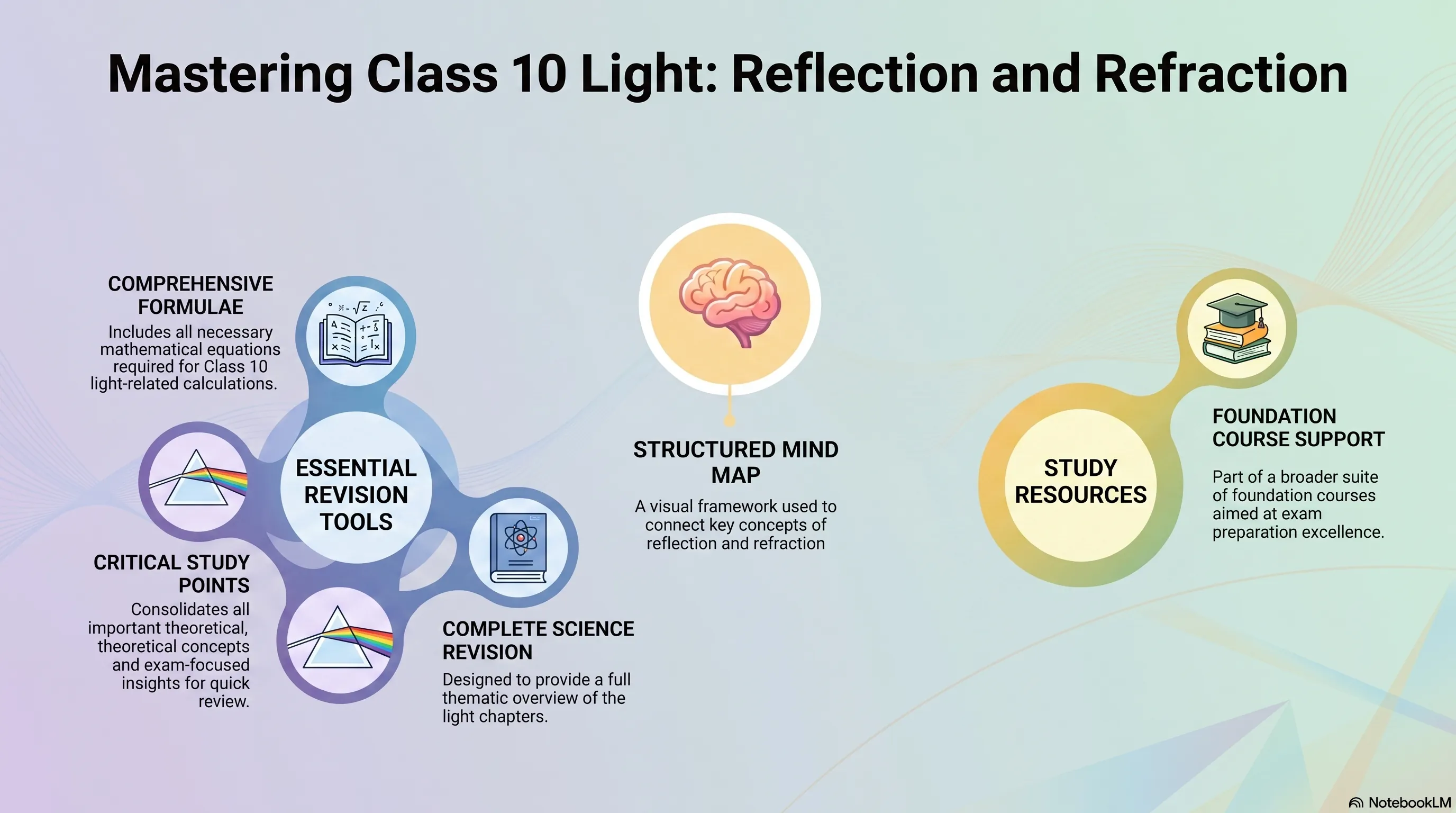

eSaral ›Foundation courses ›Light - Reflection and Refraction

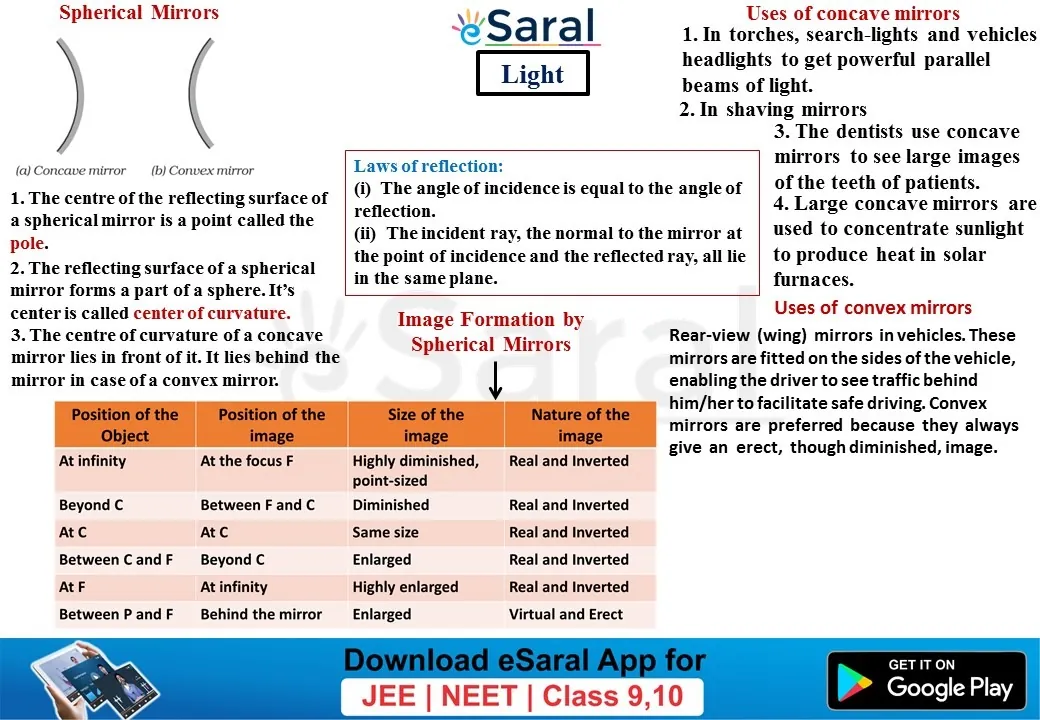
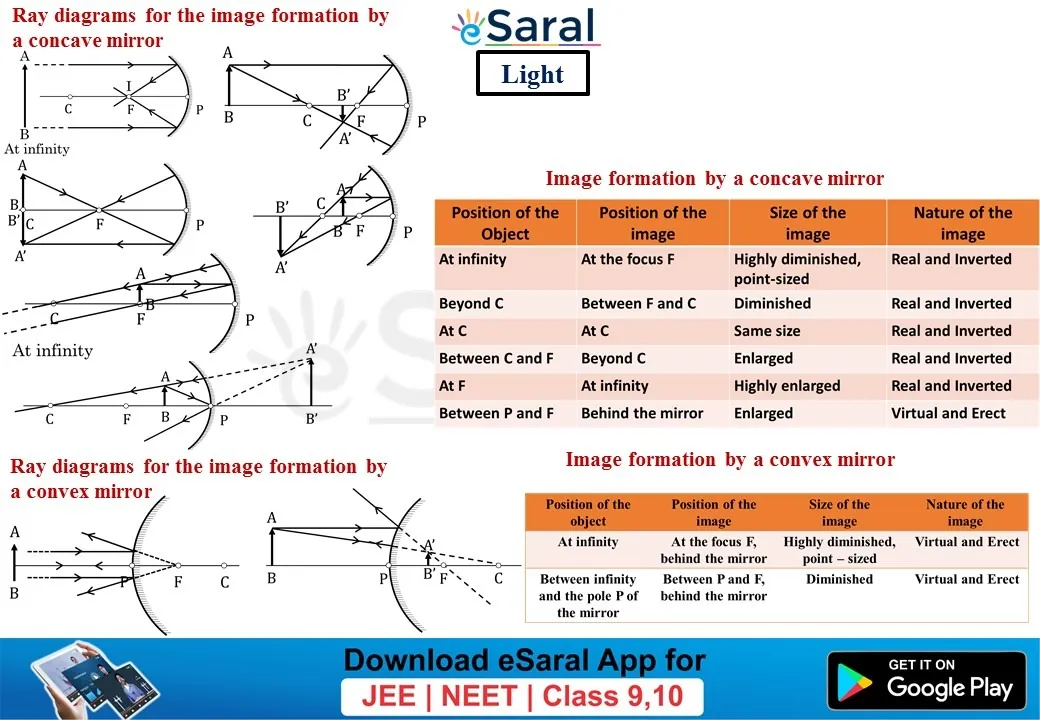
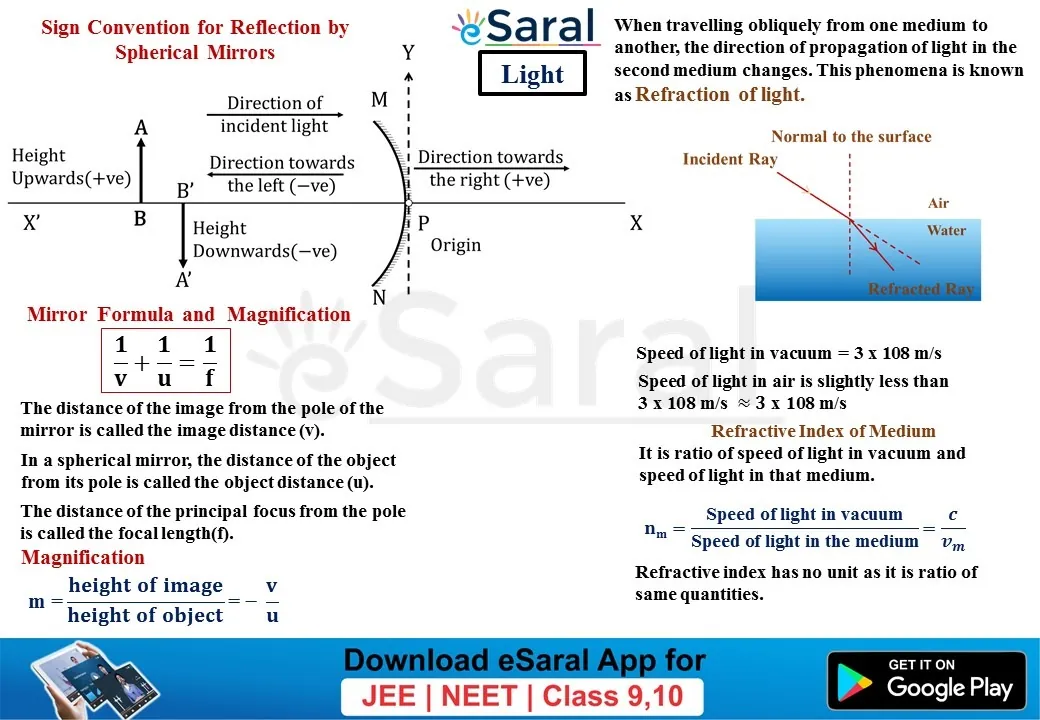
Get to learn all the formulae and important points of Light - Reflection and Refraction through this Mind Map. Download and share with your friends also.
A revision video like this one only makes sense a few weeks out from the exam — which is also exactly when this is worth a look: class X crash course.
India's Best Exam Preparation for Class 10th - Download Now
India's Best Exam Preparation for Class 10th - Download Now
Download 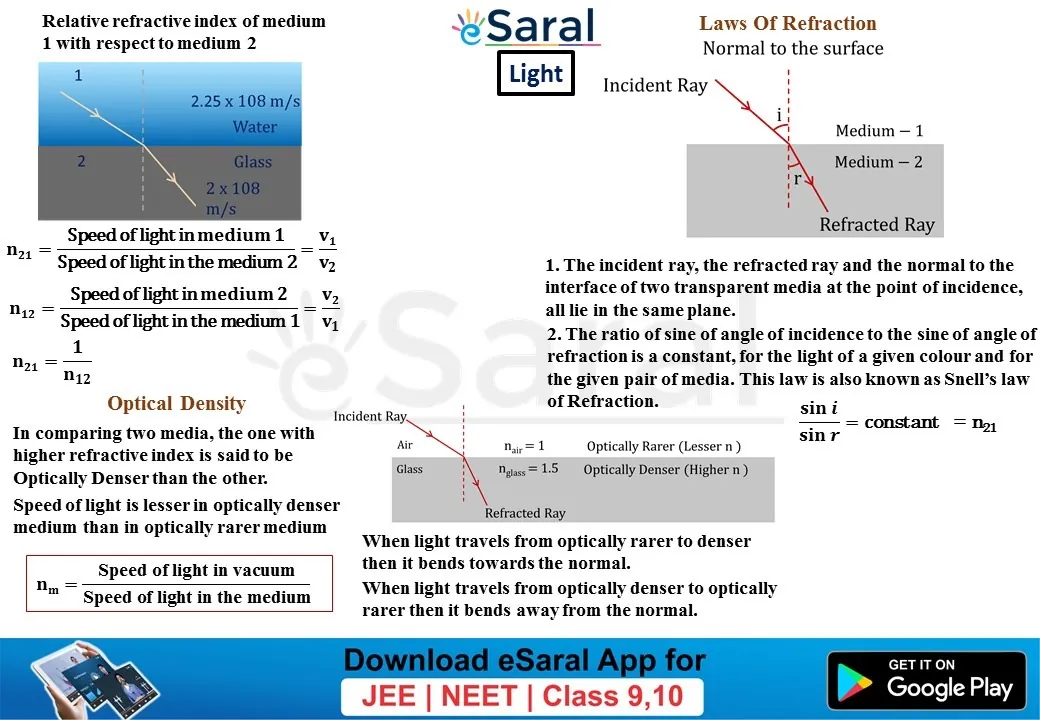
Download 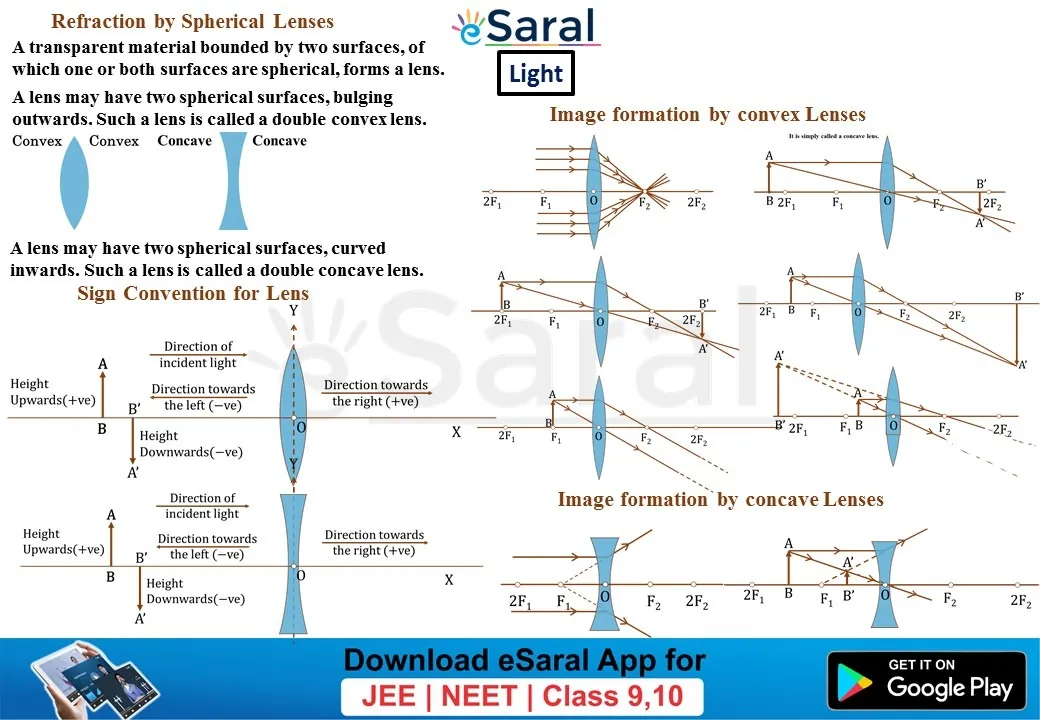
Download 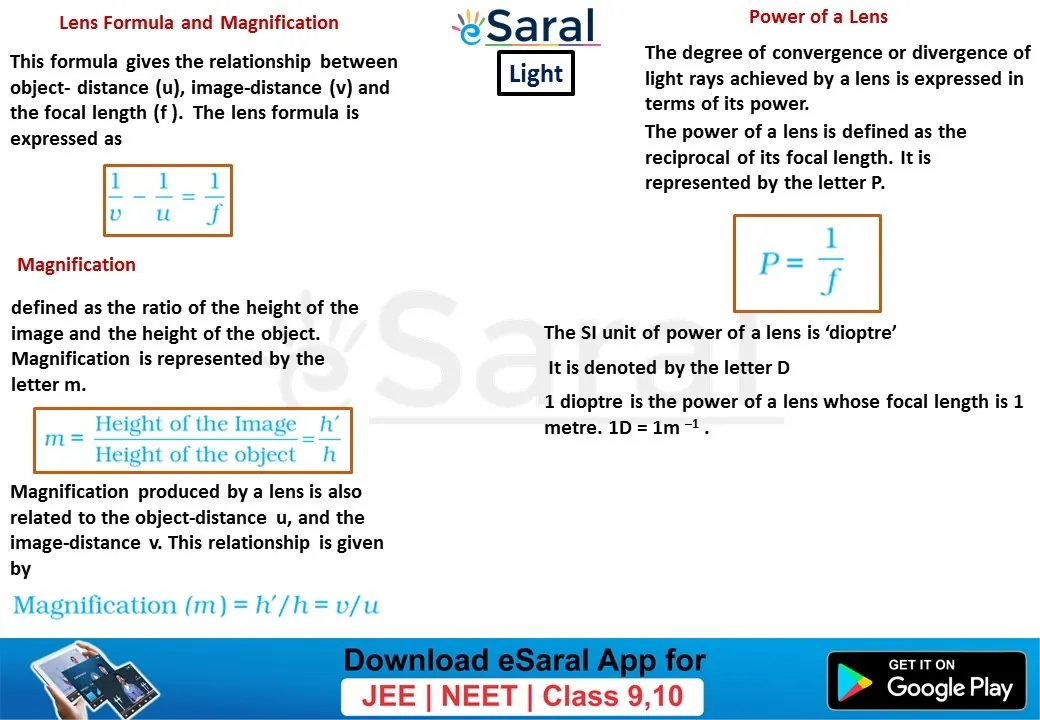
Revise Complete Science for Class 10.
Frequently Asked Questions
Find answers to common questions.
What is the mirror formula in Class 10?
The mirror formula is 1/v + 1/u = 1/f, where v is the image distance, u is the object distance, and f is the focal length — all measured from the pole of the mirror using the New Cartesian Sign Convention. This formula applies to both concave and convex mirrors and is one of the most tested formulas in CBSE Class 10 Physics.
What is Snell's Law of refraction?
Snell's Law states that n₁ sin θ₁ = n₂ sin θ₂, meaning the product of refractive index and sine of the angle of incidence in one medium equals the same product in the second medium. In simpler terms, it gives the relationship between the angles of incidence and refraction when light passes from one medium to another.
What is the difference between a concave lens and a convex lens?
A convex lens is thicker at the centre and converges (brings together) light rays, giving it a positive focal length and positive power. A concave lens is thinner at the centre and diverges (spreads out) light rays, giving it a negative focal length and negative power. Convex lenses correct long-sightedness; concave lenses correct short-sightedness.
What is the power of a lens and what is its SI unit?
The power of a lens is the reciprocal of its focal length measured in metres: P = 1/f. Its SI unit is the Dioptre (D). A lens with a shorter focal length has greater power. When two lenses are kept in contact, their powers add up: P = P₁ + P₂. A convex lens has positive power and a concave lens has negative power.
Why does light bend when it enters a different medium?
Light bends during refraction because its speed changes as it moves from one medium to another. When light enters a denser medium (like glass from air), it slows down and bends toward the normal. When it enters a rarer medium (like air from glass), it speeds up and bends away from the normal. This speed difference is captured by the refractive index.