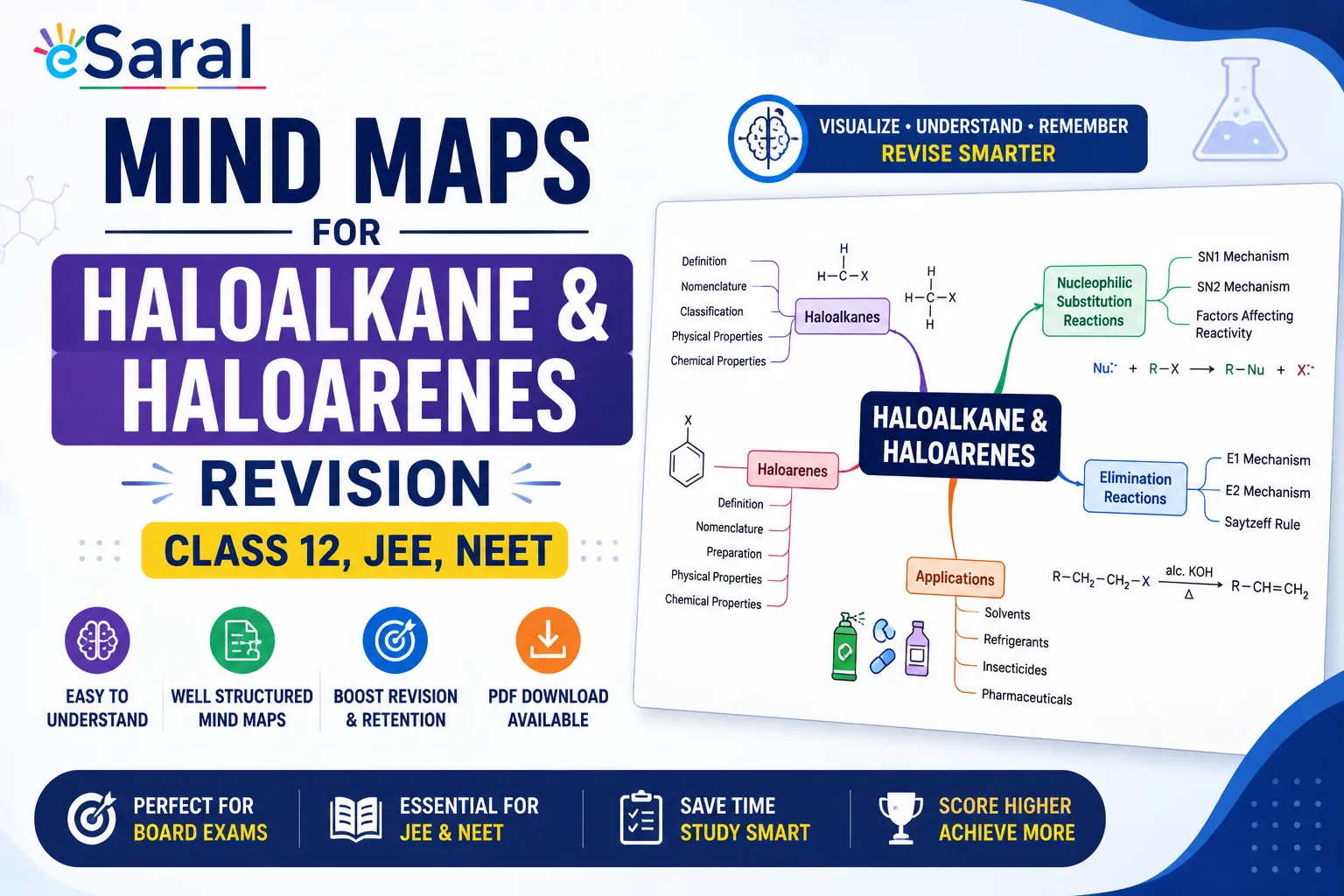
Mind Maps for Haloalkane & Haloarenes Revision - Class 12, JEE, NEET

Home »Mind Maps for Haloalkanes & Haloarenes – Class 12, JEE & NEET

Haloalkanes and haloarenes are hydrocarbons in which one or more hydrogen atoms have been replaced with halogen atoms. The primary difference between haloalkanes and haloarenes is that haloalkanes are derived from open-chain hydrocarbons (alkanes) whereas haloarenes are derived from aromatic Hydrocarbons.
India's Best Exam Preparation for Class 12th - Download Now
- Haloalkane and Haloarenes Reaction Mechanism PART - 1
- Haloalkane and Haloarenes Reaction Mechanism PART - 2
- Alkyl Halide
- Elimination Reaction
- Substitution vs Elimination Reaction
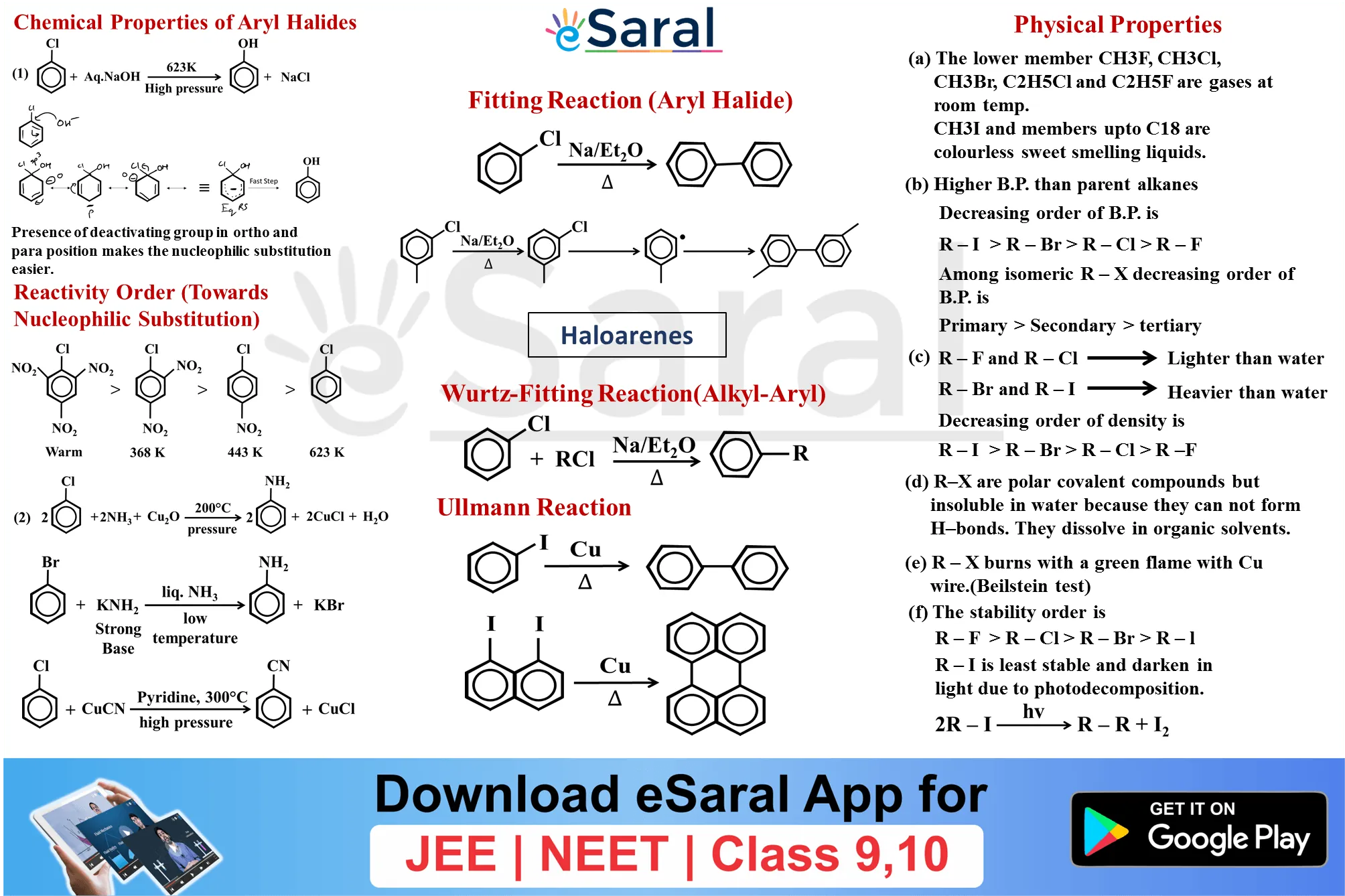
- Haloarenes
India's Best Exam Preparation for Class 12th - Download Now
Haloalkane and Haloarenes Reaction Mechanism PART - 1
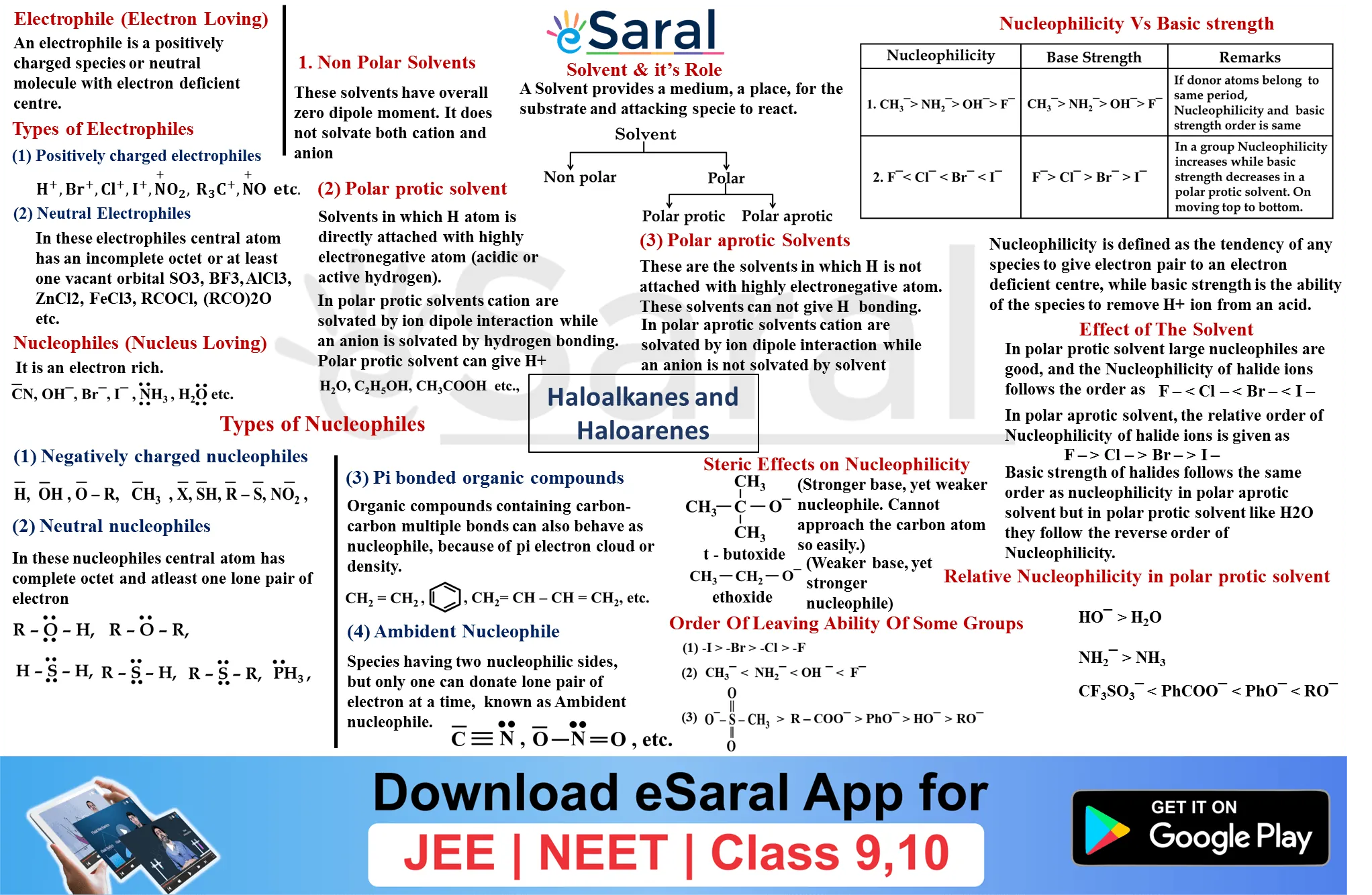
Haloalkane and Haloarenes Reaction Mechanism PART - 2
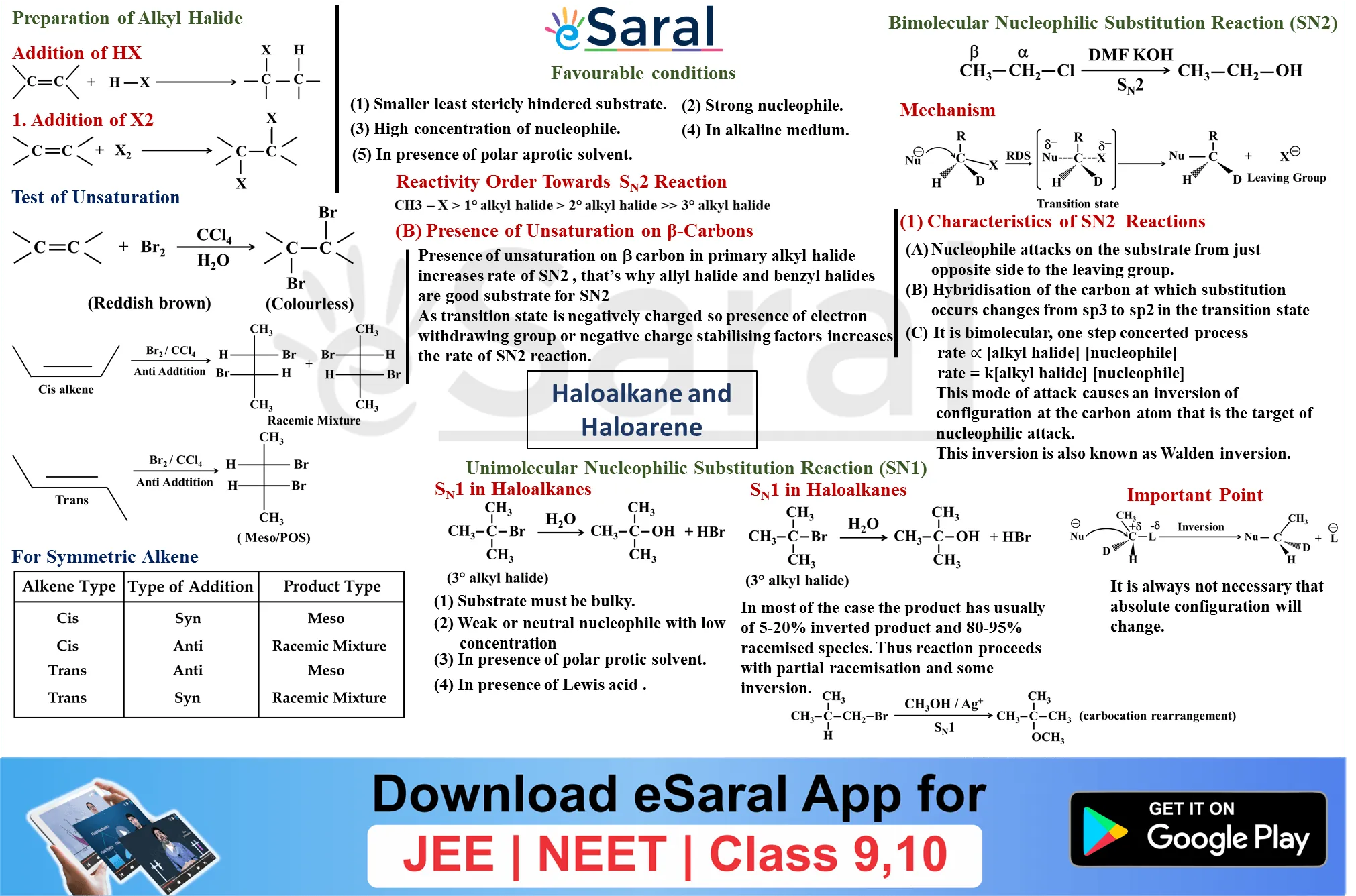
Alkyl Halide
India's Best Exam Preparation for Class 12th - Download Now
Elimination Reaction
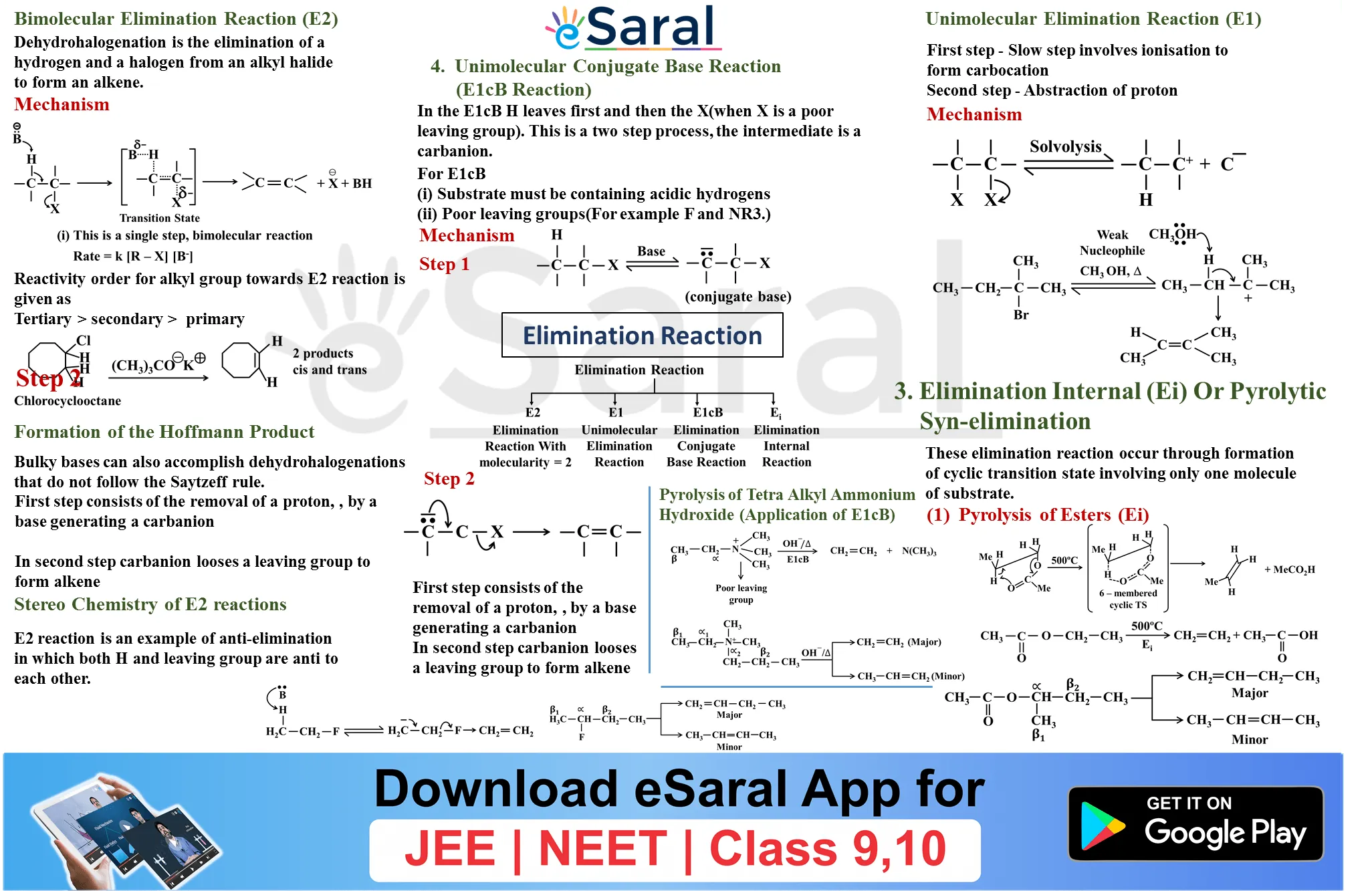
Substitution vs Elimination Reaction
India's Best Exam Preparation for Class 12th - Download Now
Haloarenes
CLICK HERE for Complete Physics Revision | Class 11, 12, JEE, NEET
Frequently Asked Questions
Find answers to common questions.
Are these mind maps enough for JEE Main and NEET preparation?
Mind maps are revision tools, not primary study resources. Use them after you have studied the NCERT chapter and practised problems. For JEE Main and NEET, pair these mind maps with NCERT Solutions, previous year questions, and topic-wise tests to build both conceptual clarity and problem-solving speed.
How many mind maps are available for Haloalkanes and Haloarenes on eSaral?
Six mind maps are available: Reaction Mechanism Part 1, Reaction Mechanism Part 2, Alkyl Halide, Elimination Reaction, Substitution vs Elimination Reaction, and Haloarenes. Each covers a distinct subtopic and can be downloaded as a PDF directly from this page.
What is the difference between haloalkanes and haloarenes?
Haloalkanes are formed when halogen atoms replace hydrogen in open-chain (aliphatic) hydrocarbons. Haloarenes are formed when halogens replace hydrogen on an aromatic ring. The C–X bond in haloarenes has partial double bond character due to resonance, making haloarenes significantly less reactive toward nucleophilic substitution than haloalkanes.
How are these mind maps different from standard NCERT notes?
NCERT notes present information linearly, chapter by chapter. Mind maps present the same information radially — showing relationships between concepts rather than listing them sequentially. This makes it faster to recall connected ideas during an exam. For example, a single mind map can show you simultaneously why SN2 favours 1° substrates, why E2 favours 3° substrates, and what happens at 2° — a comparison that takes multiple paragraphs in a textbook.
What is Saytzeff's rule and where does it appear in the mind maps?
Saytzeff's rule states that in an elimination reaction, the major product is the more substituted (more stable) alkene. It appears in the Elimination Reaction mind map. In JEE and NEET, questions testing Saytzeff's rule typically ask you to identify the major alkene product from a given tertiary or secondary alkyl halide under E2 conditions.
Which reaction from this chapter is most important for JEE Advanced?
SN1 vs SN2 mechanism — including stereochemical outcomes such as Walden inversion and racemisation — is the most frequently tested concept in JEE Advanced from this chapter. Substitution vs Elimination competition (E2 over SN2 with bulky bases) is a close second. Both are covered in depth in Reaction Mechanism Mind Maps 1 and 2.