NCERT Solutions for class 10 Science Chapter 1 - Chemical Reactions and Equations - eSaral
NCERT Solutions for Class 10 Science Chapter 1 provide comprehensive explanations of chemical reactions and equations, covering reaction types, balancing equations, oxidation-reduction processes, and key concepts essential for CBSE exams.
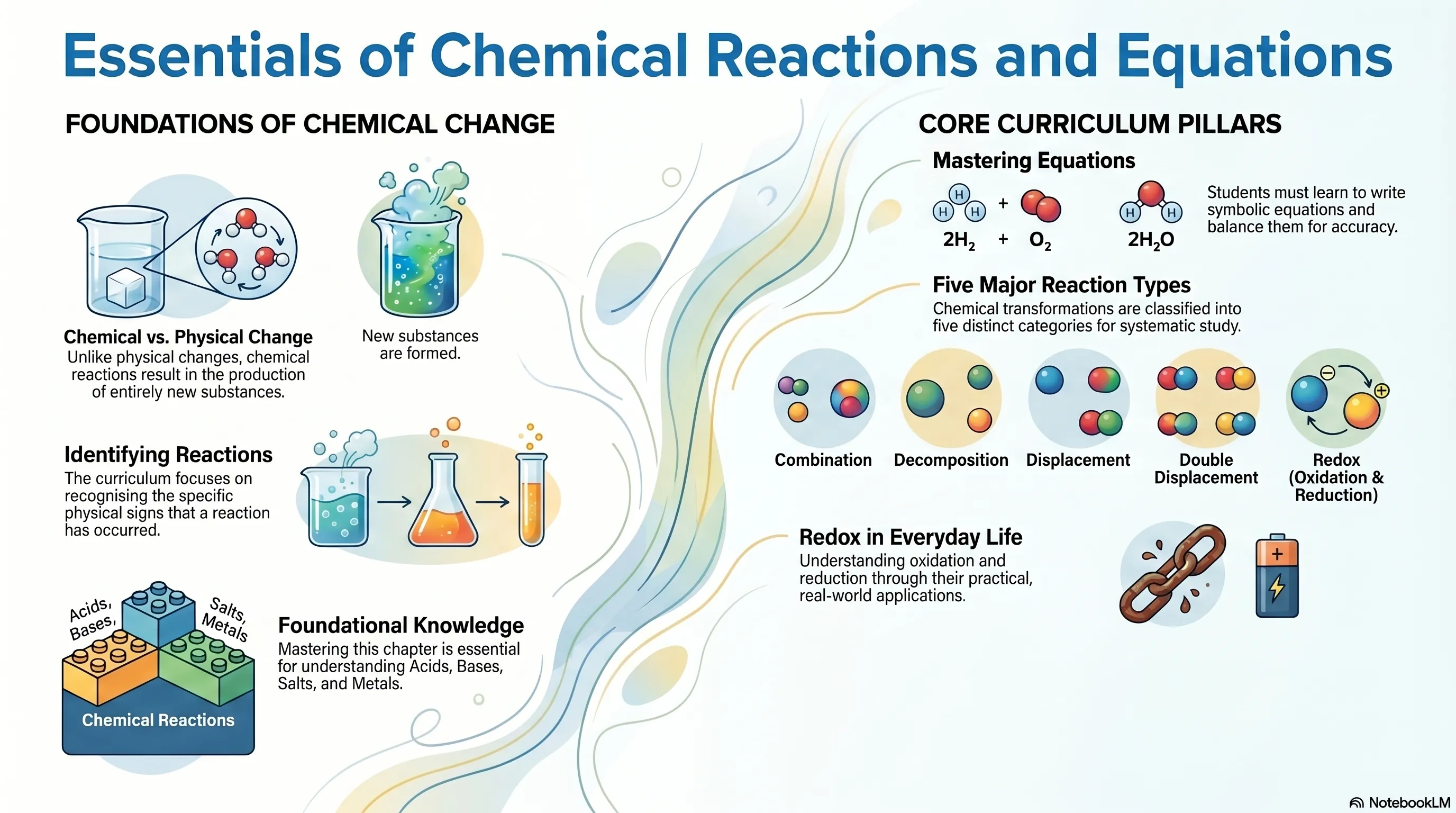
Table of Contents

eSaral ›Foundation courses ›NCERT Solutions for class 10 Science Chapter 1

What Is Class 10 Science Chapter 1 About?
Chapter 1 of Class 10 Science (Chemistry) introduces students to the world of chemical changes. Unlike physical changes, chemical reactions produce entirely new substances. The chapter is foundational — understanding it well makes chapters on Acids, Bases & Salts, and Metals & Non-metals significantly easier.
The CBSE curriculum for this chapter, based on the NCERT textbook, covers:
- Recognising signs of a chemical reaction
- Writing symbolic chemical equations
- Balancing chemical equations
- Classifying reactions into five major types
- Understanding oxidation, reduction, and their real-life applications
Join our Telegram channel for class 9th and 10th to get Free Study Material, Free Notes & many more.
Join our Telegram channel for class 9th and 10th to get Free Study Material, Free Notes & many more.
Join our Telegram channel for class 9th and 10th to get Free Study Material, Free Notes & many more.
Important topics of class 10 Science Chapter 1
- Chemical Reactions and Equations
- Types of Chemical Reactions
- Chemical Equations
- The Effects Of Oxidation Reactions In Everyday Life?
So, that’s all from this article. I hope you enjoyed this post. If you found this article helpful then please share it with other students.
Join our Telegram channel for class 9th and 10th to get Free Study Material, Free Notes & many more.
Also Read,
India's Best Exam Preparation for Class 10th - Download Now
Class 10 Chemistry Revision Notes .
Class 10 Chemistry Book Free PDF
Class 10 Chemistry Exemplar PDF
If you have any Confusion related to NCERT Solutions for Class 10 Science chapter 1 then feel free to ask in the comments section down below.
Join our Telegram channel for class 9th and 10th to get Free Study Material, Free Notes & many more.
India's Best Exam Preparation for Class 10th - Download Now
To watch Free Learning Videos on Class 10 by Kota’s top Faculties, install the eSaral App
Frequently Asked Questions
Find answers to common questions.
What topics are covered in NCERT Solutions for Class 10 Science Chapter 1?
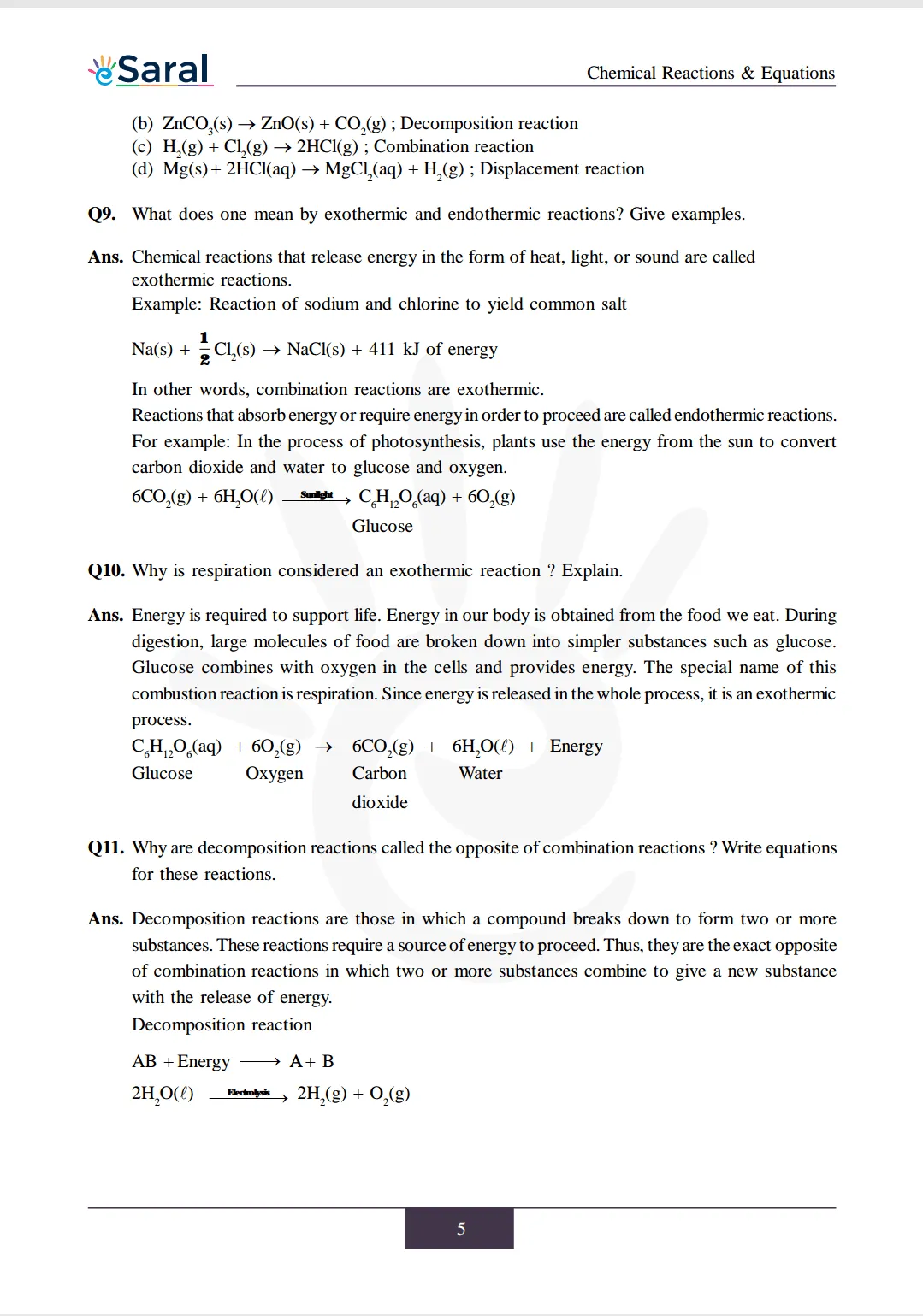
Chapter 1 covers five core topics: writing and balancing chemical equations, and five types of reactions — combination, decomposition, displacement, double displacement, and redox (oxidation-reduction). It also covers real-life applications like corrosion and rancidity. All NCERT in-text and exercise questions on these topics are solved in the eSaral PDF.
How do I balance a chemical equation step by step?
Start by writing the unbalanced equation with correct formulas. Count atoms of each element on both sides. Adjust coefficients (not subscripts) to make atom counts equal on both sides. Begin with the most complex molecule and balance hydrogen and oxygen last. Always verify by recounting atoms after balancing. The law of conservation of mass must hold for every balanced equation.
What are the five types of chemical reactions in Class 10 Science?
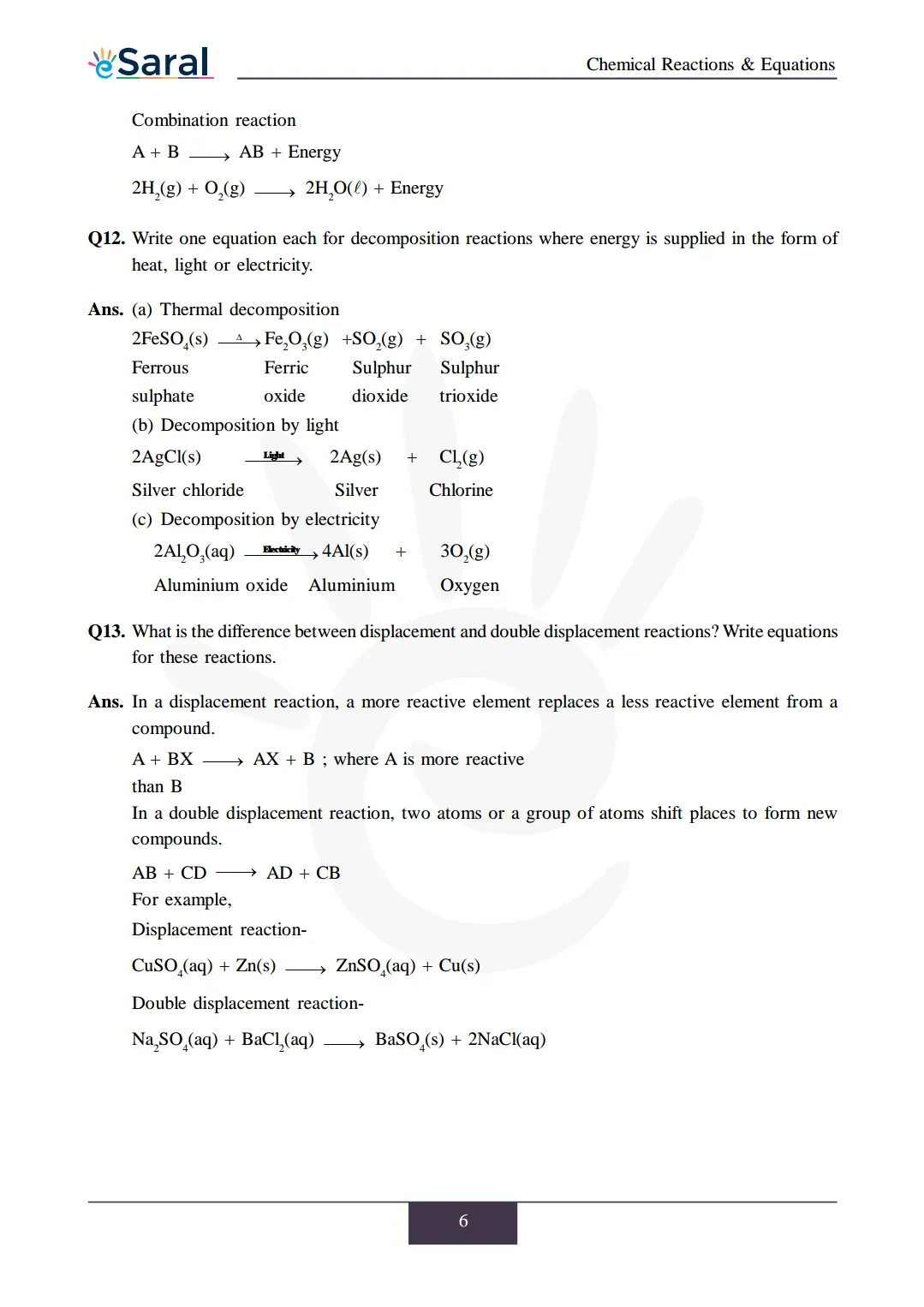
The five types are: (1) Combination — two substances form one product; (2) Decomposition — one substance splits into two or more; (3) Displacement — a reactive metal replaces a less reactive metal from its salt; (4) Double Displacement — ions of two compounds swap to form new compounds; (5) Redox — simultaneous oxidation and reduction occur. Each type has a distinct pattern students can use to identify reactions quickly.
What is the difference between corrosion and rancidity?
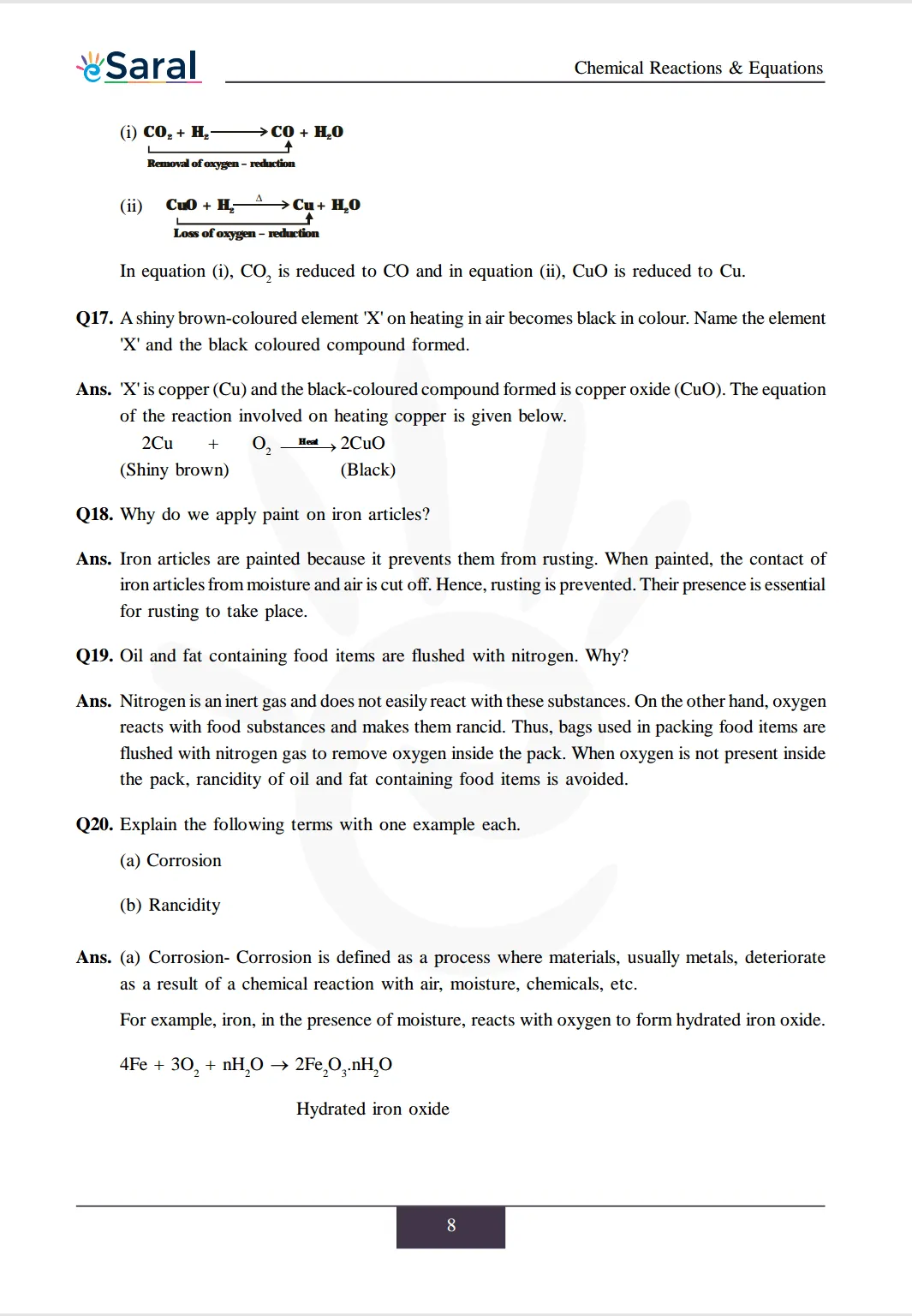
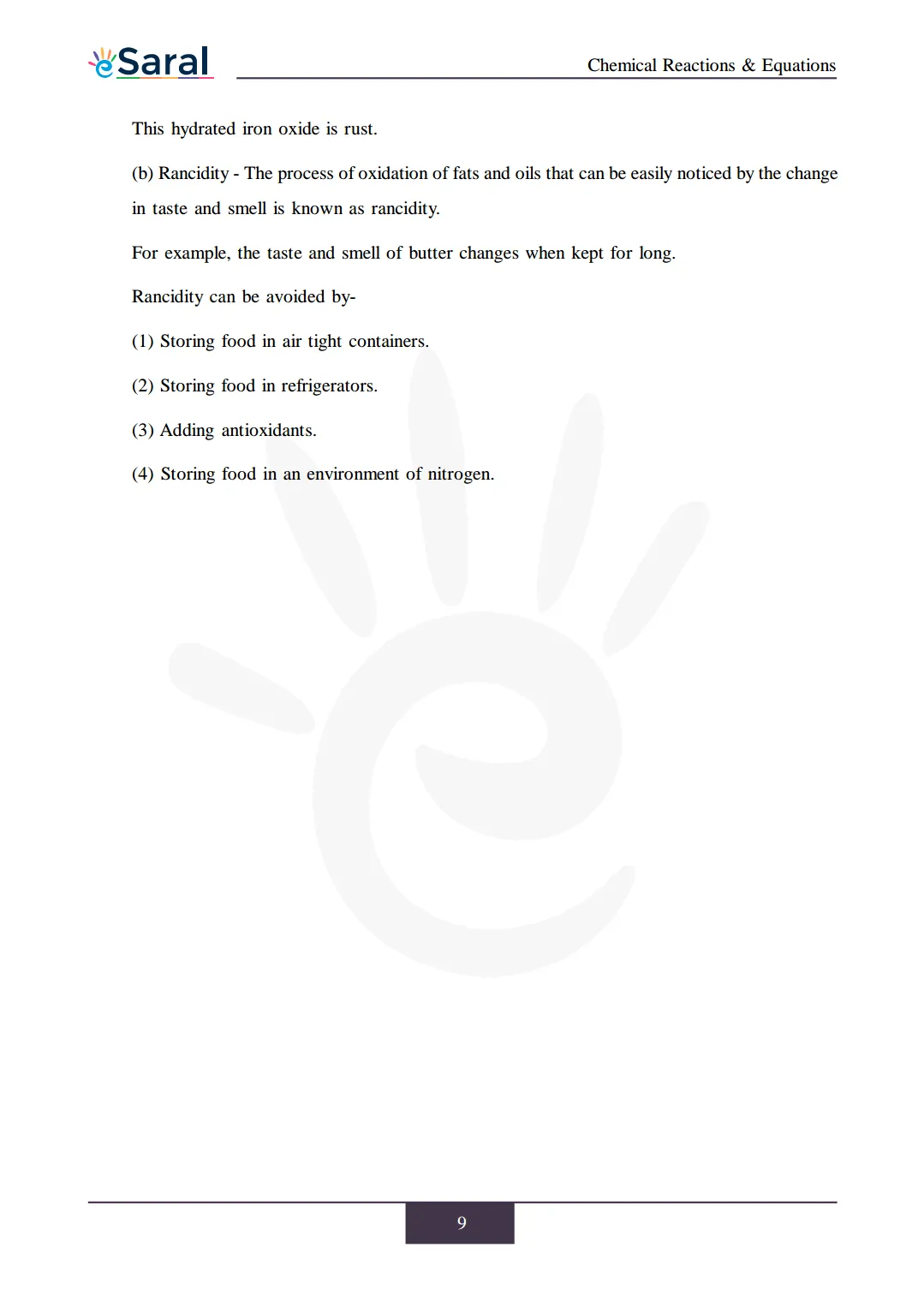
Corrosion affects metals — it is the gradual degradation of metals like iron (rusting) due to reaction with oxygen and moisture. Rancidity affects food — it occurs when fats and oils are oxidised, causing unpleasant smell and taste. Both are harmful oxidation reactions. Corrosion is prevented by painting or galvanising; rancidity is prevented by antioxidants, airtight storage, or nitrogen-flushed packaging.
Where can I find NCERT Solutions for other Class 10 and Class 12 subjects?
eSaral provides free NCERT Solutions for all major subjects. For Class 12 Chemistry, visit the NCERT Solutions for Class 12 Chemistry page. For Class 12 Physics and Maths, eSaral also has complete solution sets prepared by IIT Bombay faculty. You can browse the complete NCERT Solutions hub for all classes and subjects in one place.