NEET Previous Year Questions with Complete Solutions - Biomolecule, Polymer, Chemistry in Everyday Life
This page covers NEET previous year questions on Biomolecules, Polymers, and Chemistry in Everyday Life, emphasizing their high-scoring nature, significant weightage in NEET Chemistry, and the importance of focused revision to maximize marks through factual and concept-based learning.
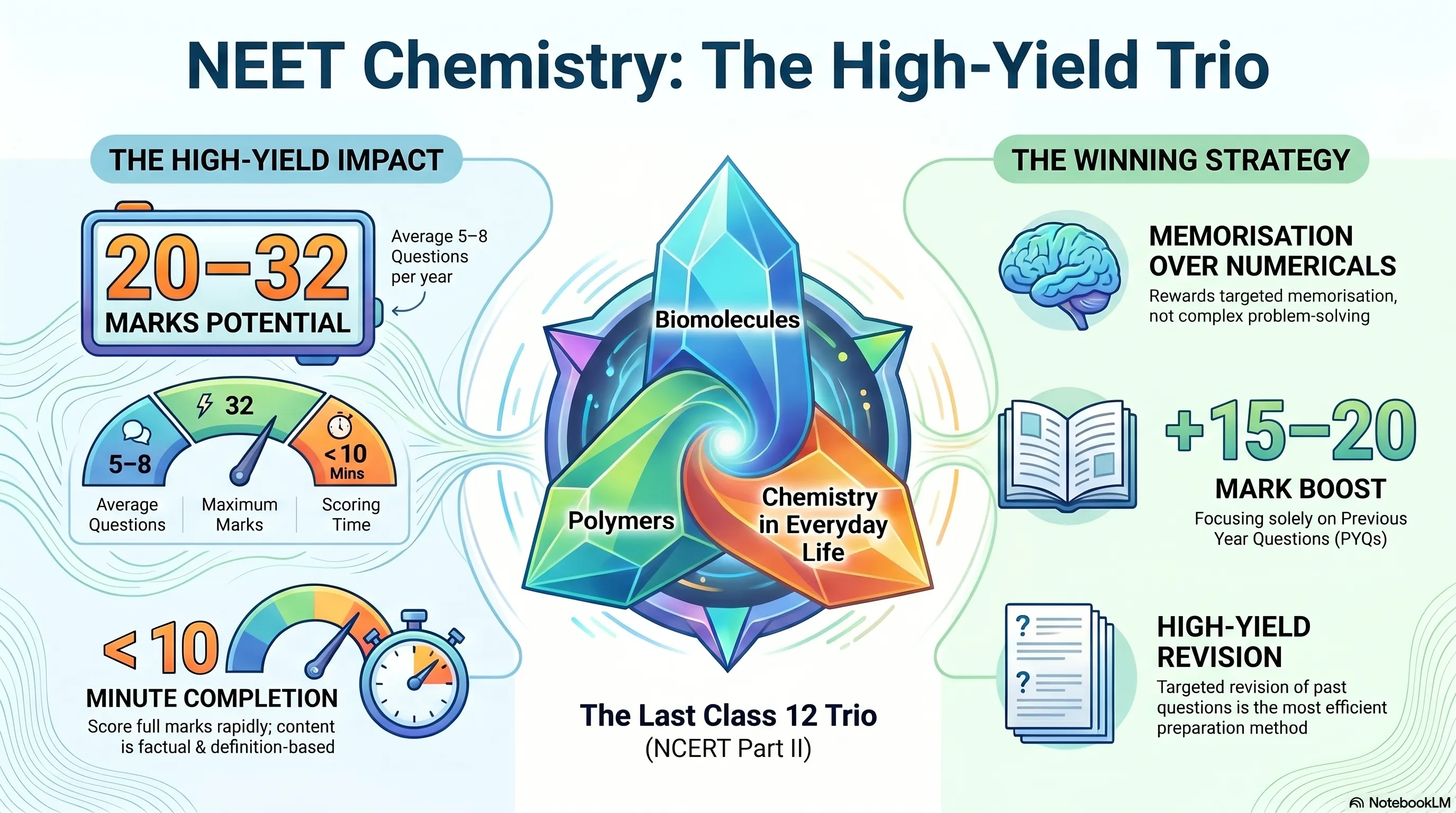
Table of Contents

esaral>NEET>NEET Previous Year Questions with Complete Solutions - Biomolecule, Polymer, Chemistry in Everyday Life

Why These Three Chapters Matter in NEET Chemistry
Biomolecules, Polymers, and Chemistry in Everyday Life are the last three chapters of Class 12 NCERT Chemistry (Part II). Many aspirants skip or under-prepare these chapters because they appear late in the syllabus — and that is a costly mistake.
According to NTA's official NEET syllabus, these chapters fall under Organic Chemistry and have contributed at least 5–8 questions (20–32 marks) in most NEET papers over the last eight years. Because the concepts are largely factual and definition-based, a well-prepared student can score full marks from these chapters in under 10 minutes.
The key advantage: unlike Physical Chemistry numericals or Organic reaction mechanisms, these chapters reward targeted memorisation more than deep problem-solving. That means a focused revision of previous year questions alone can add 15–20 marks to your NEET score.
For a quick fact-check on the molecule central to this topic, the Formula of Glucose page has it in one place.
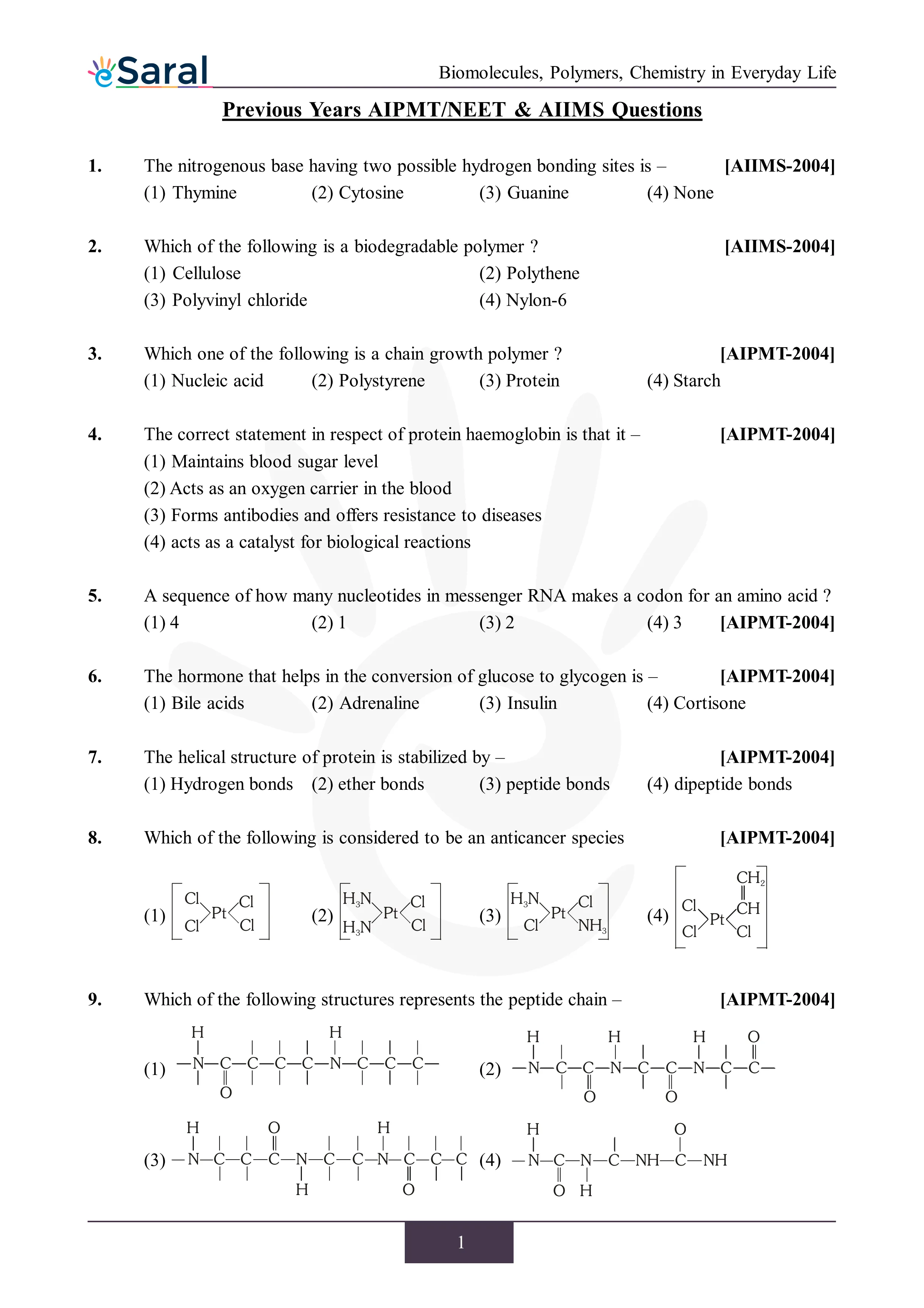
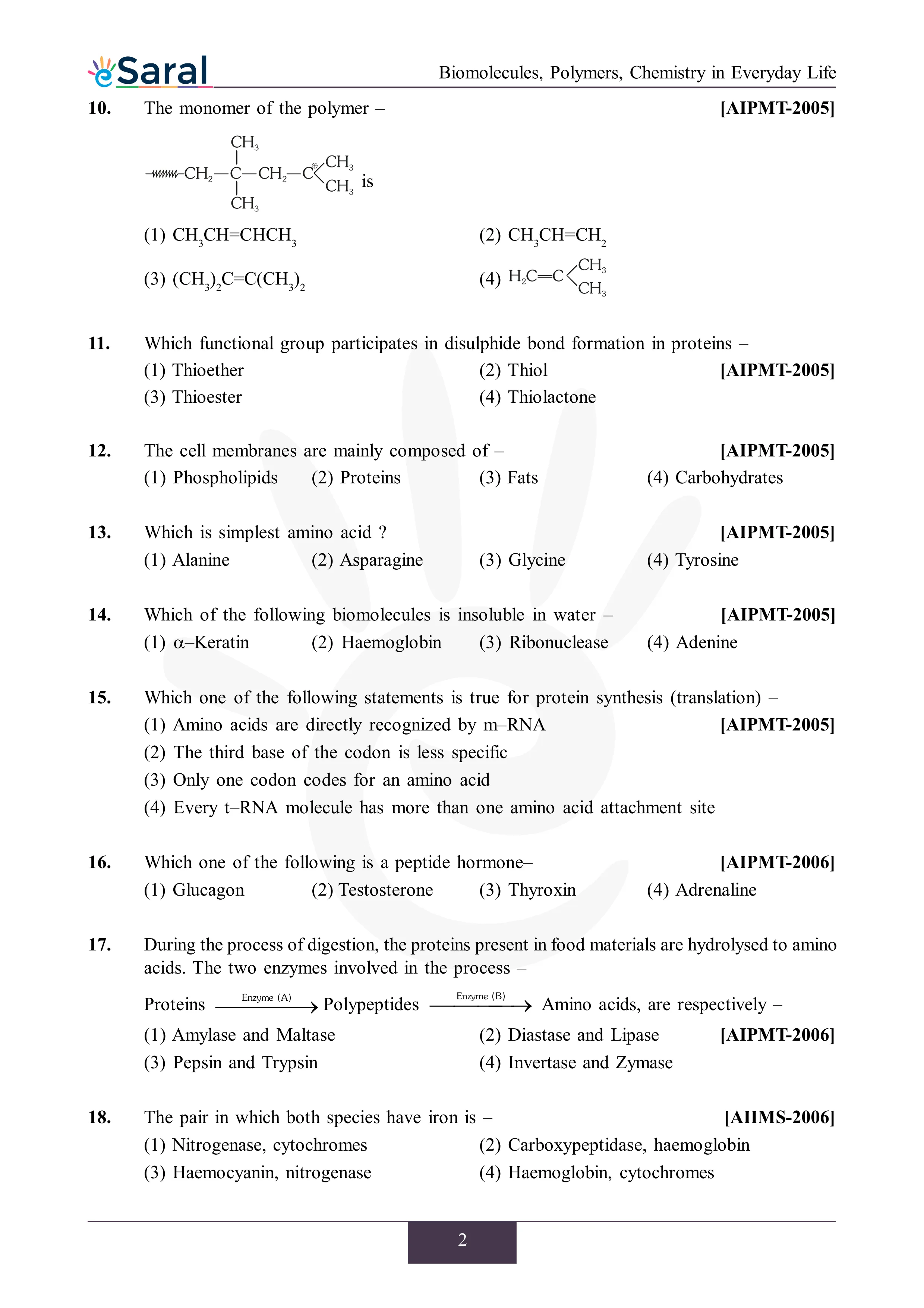
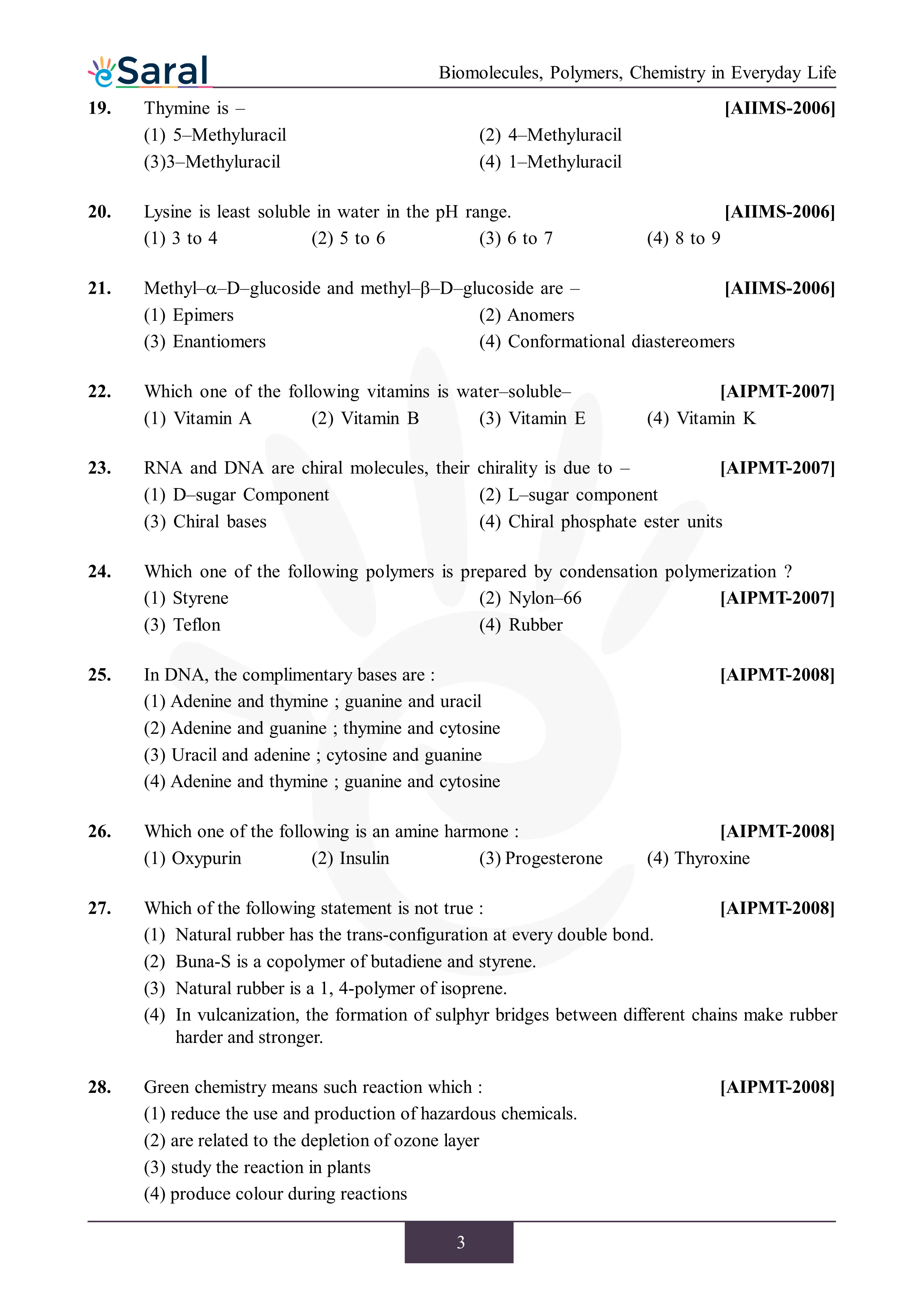
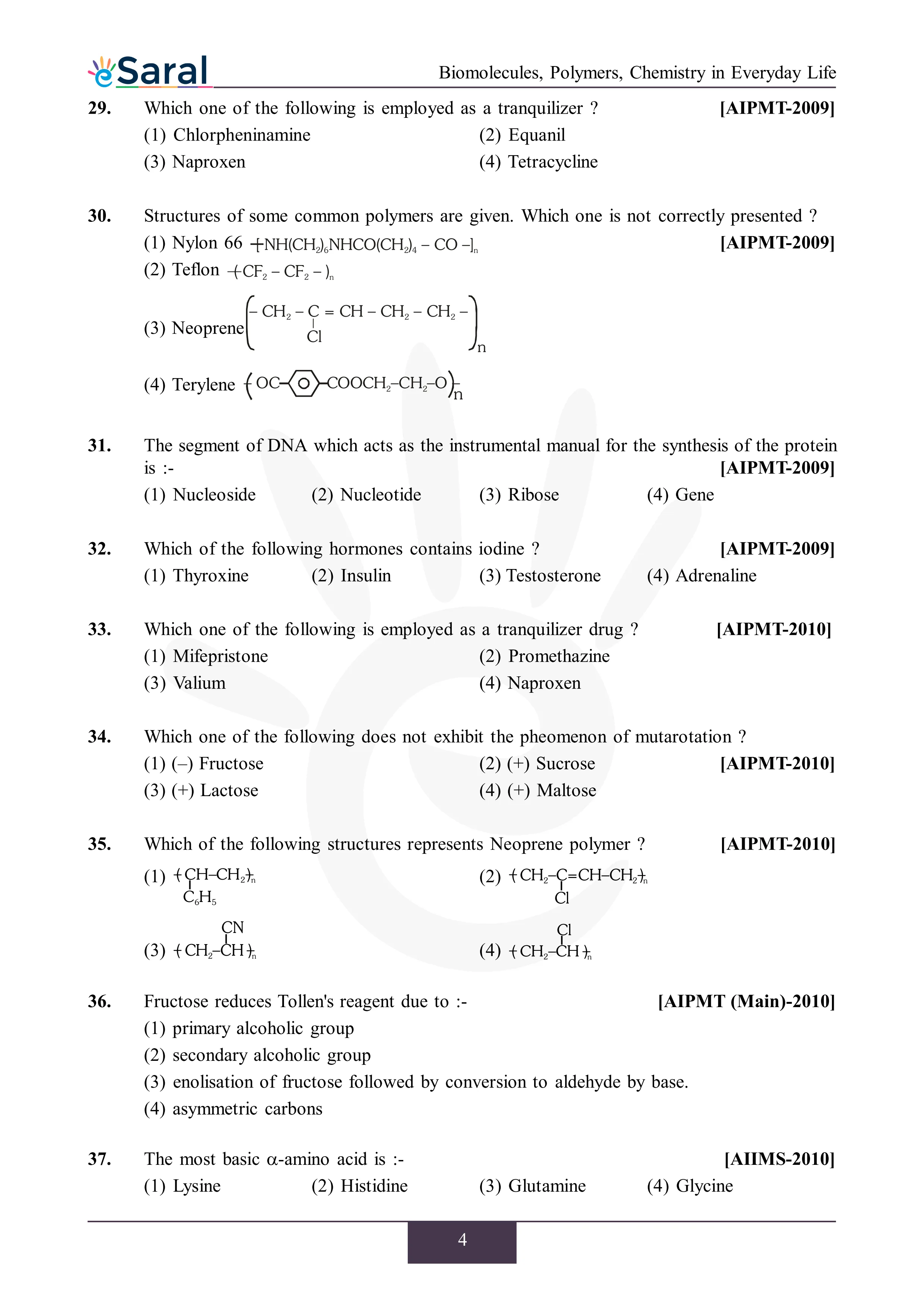
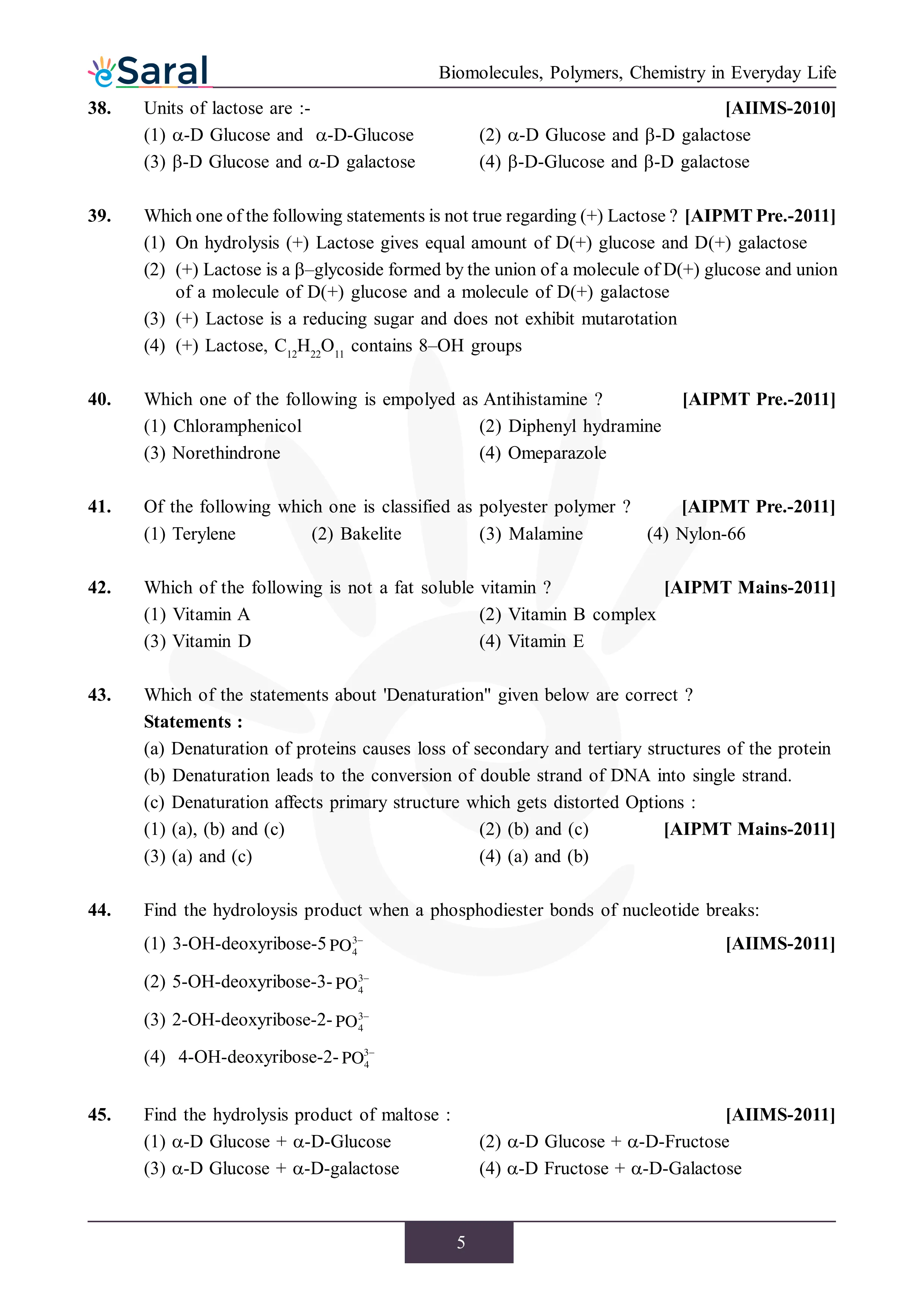
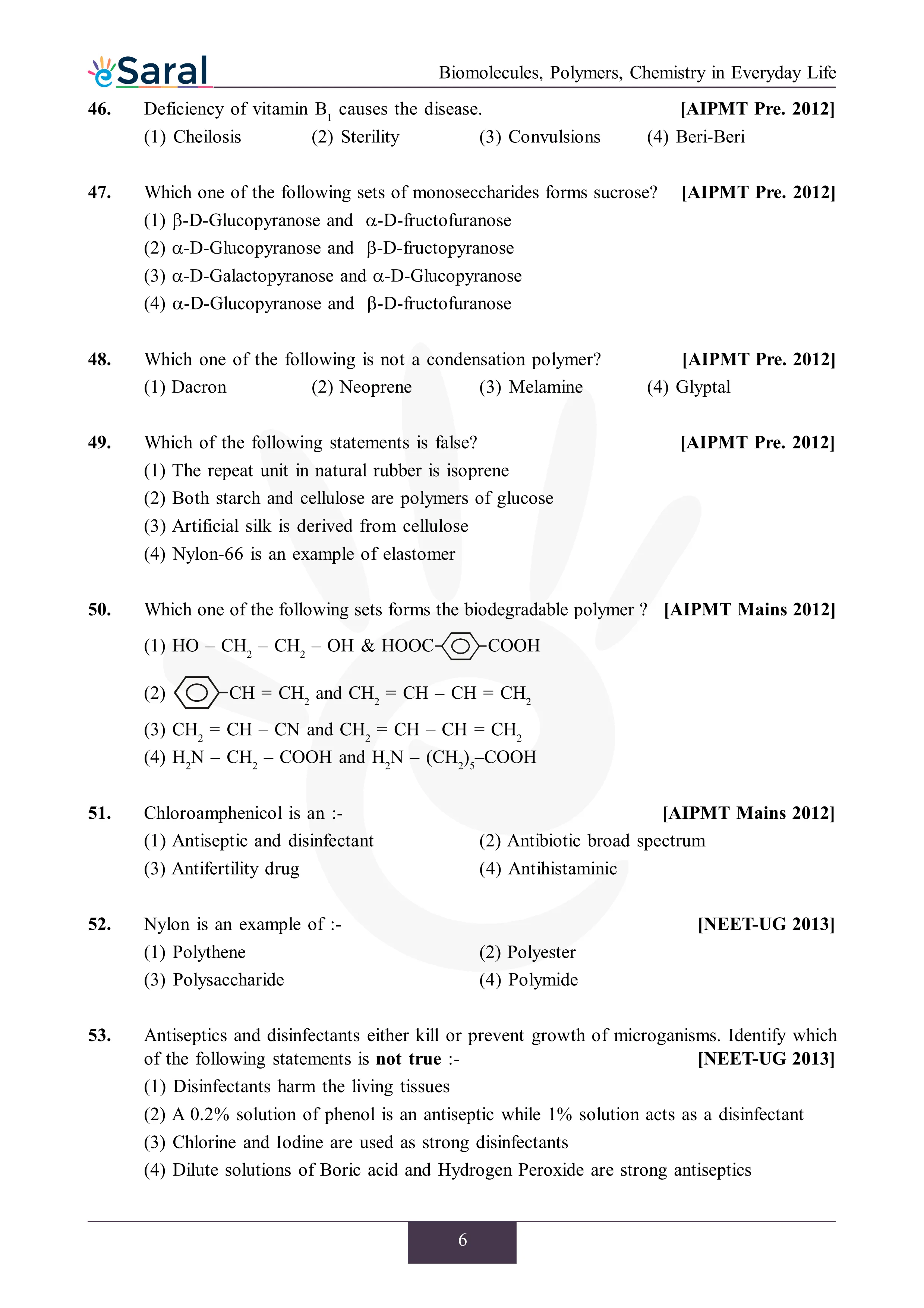
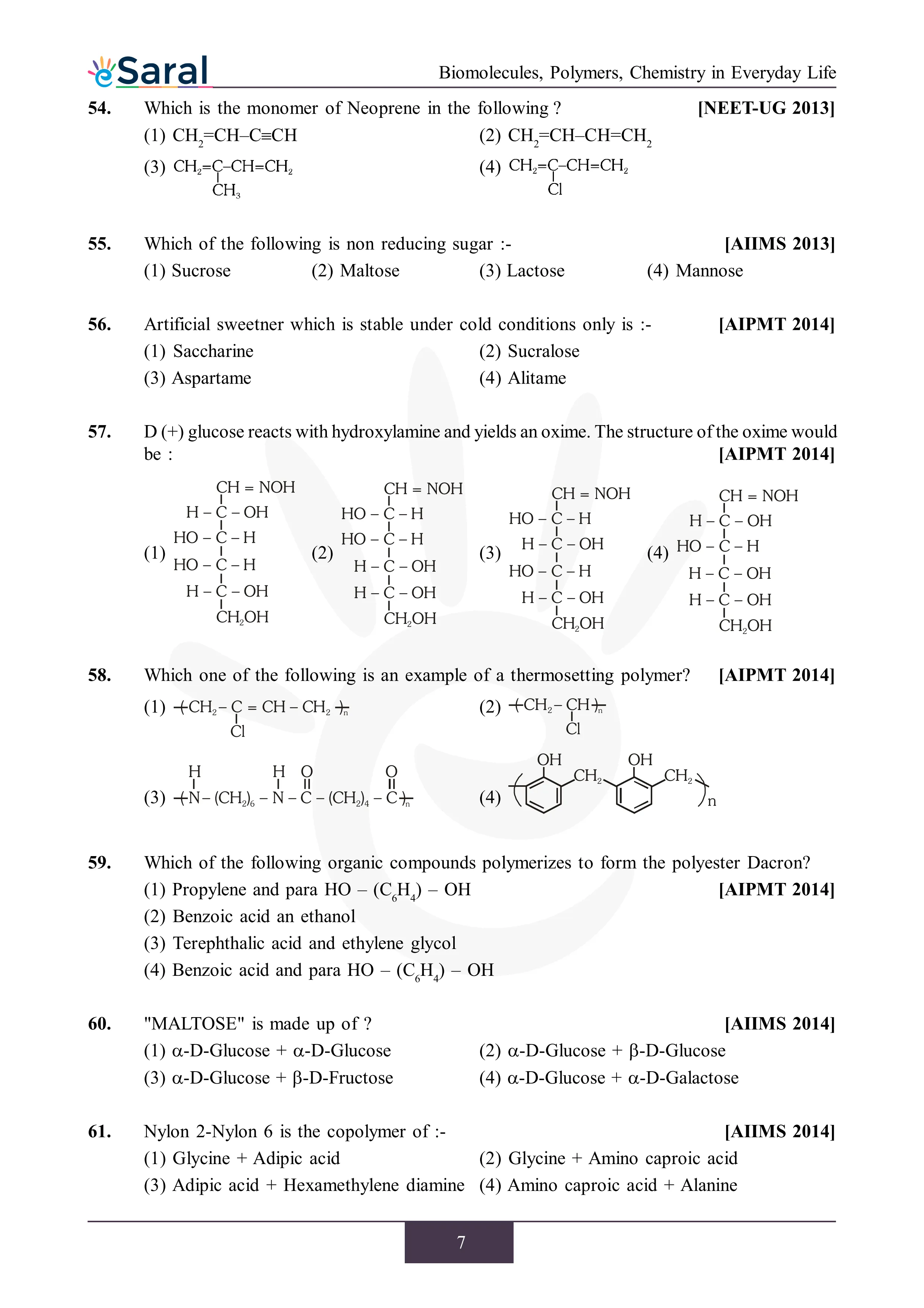
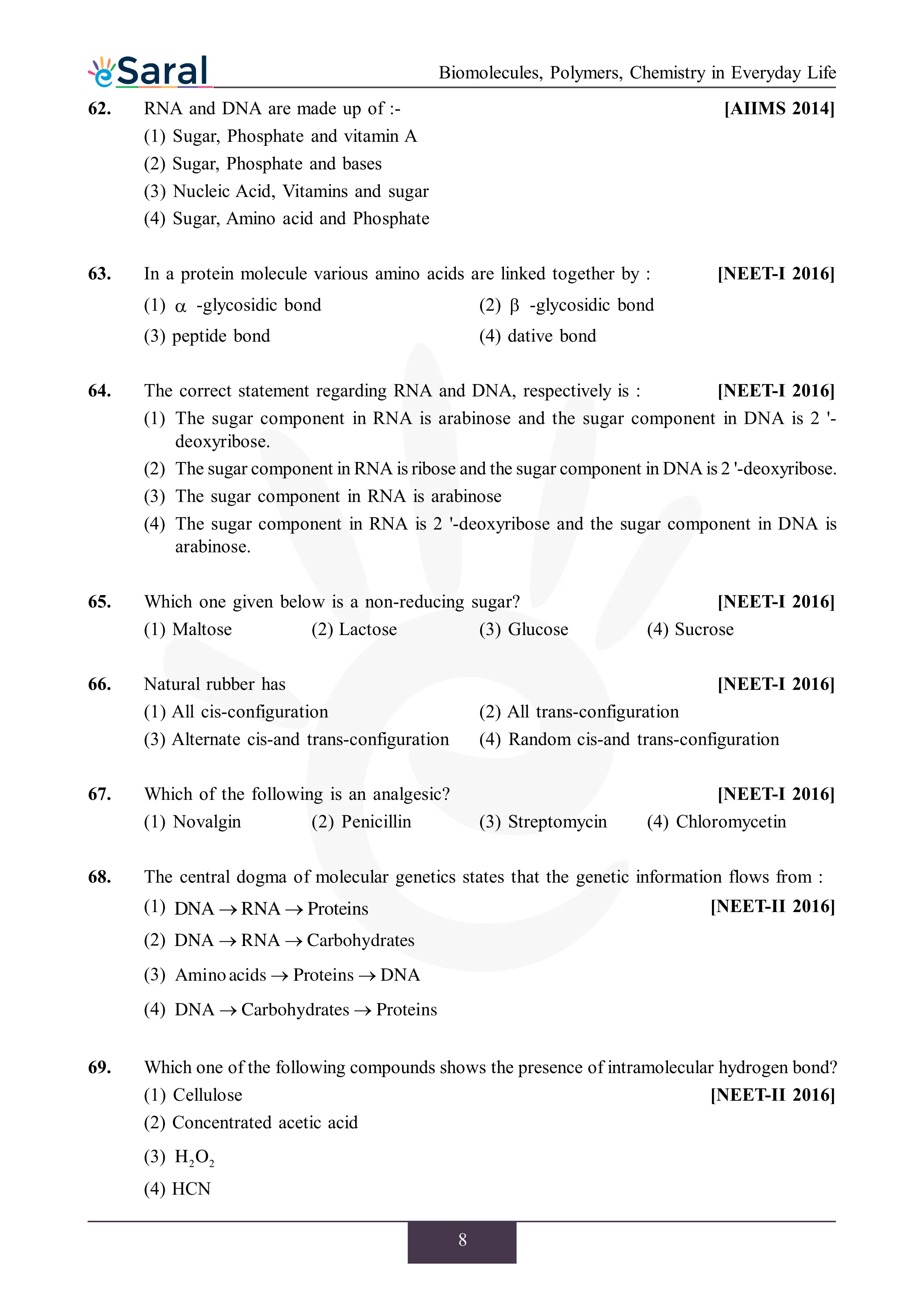
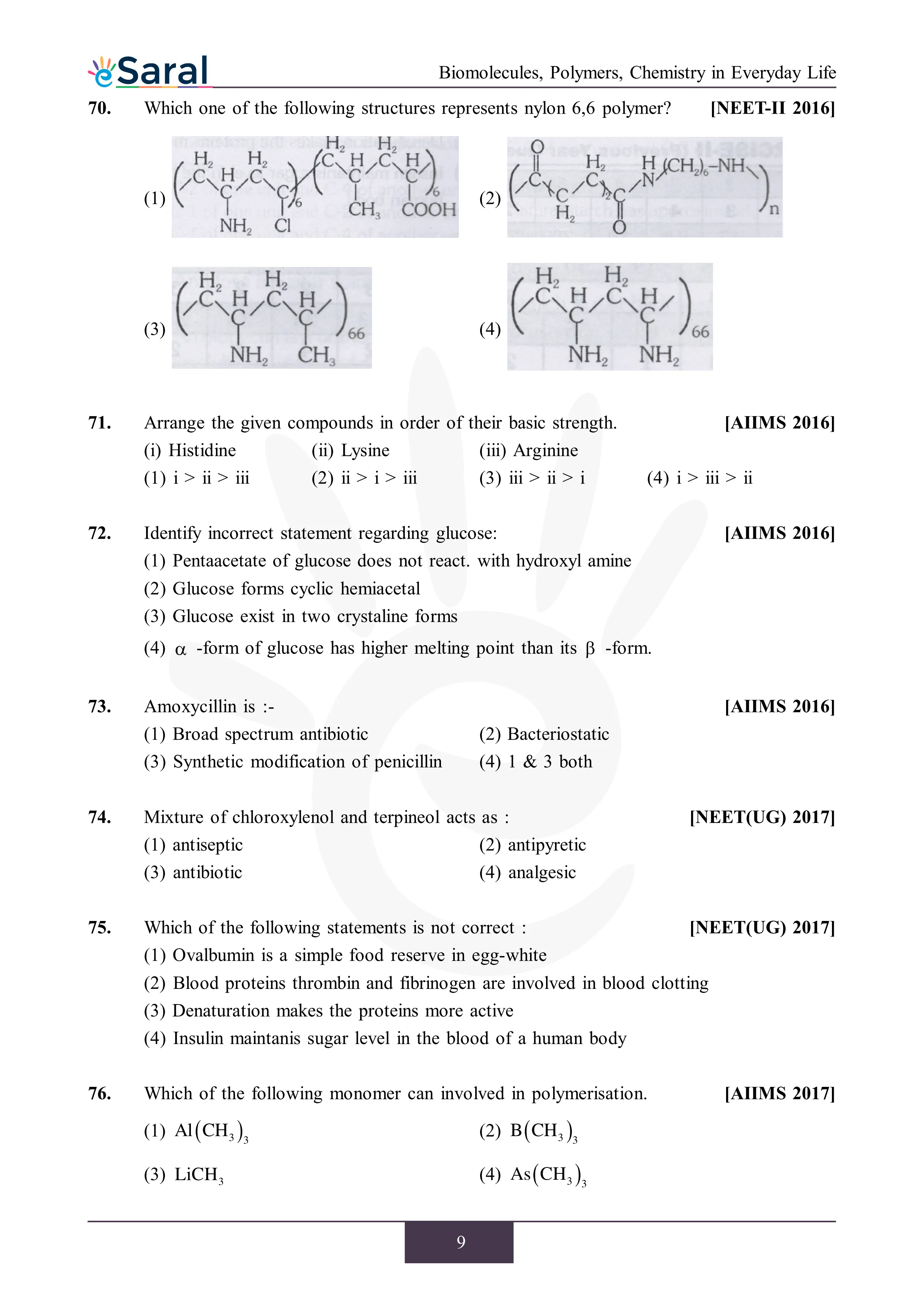
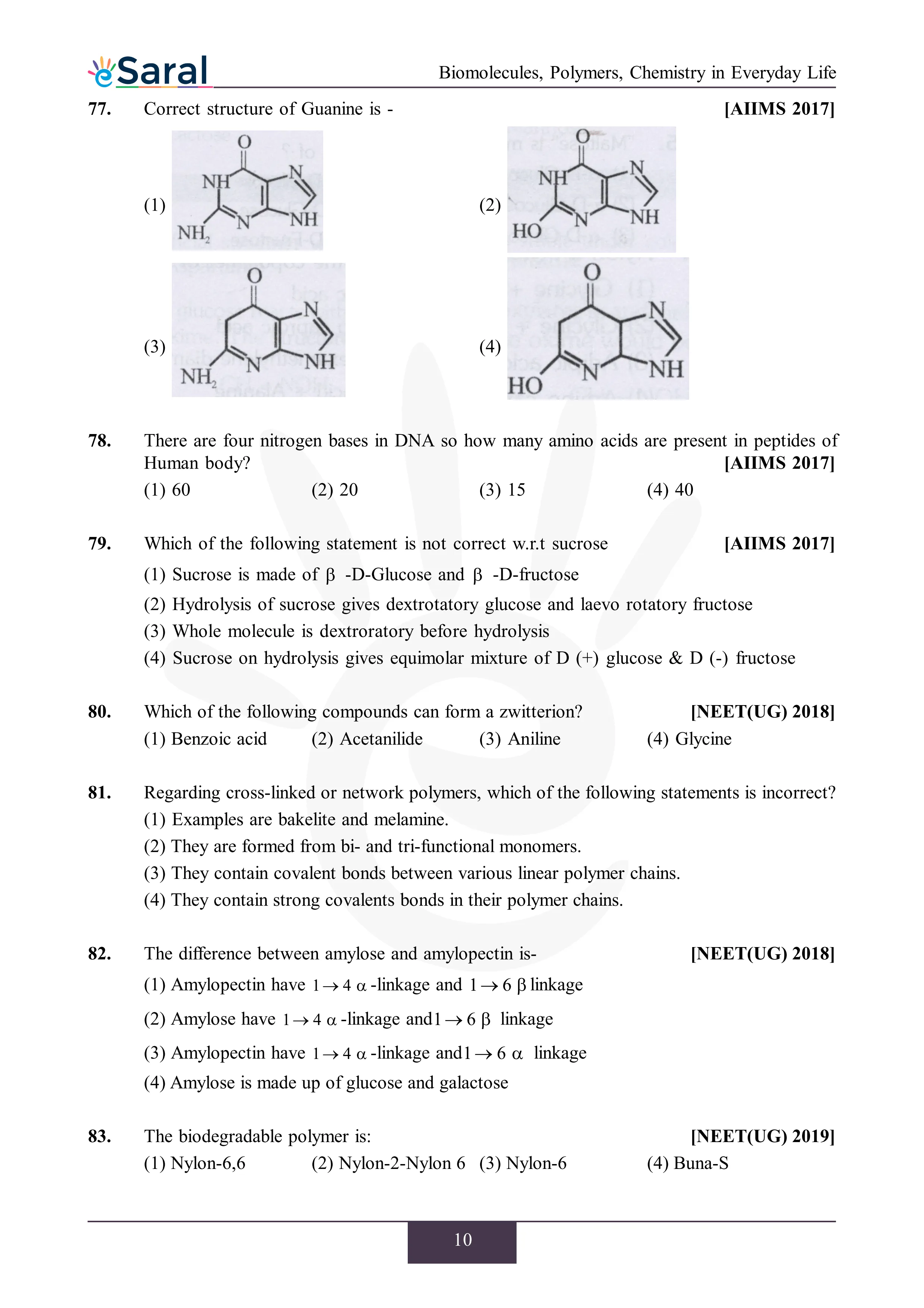
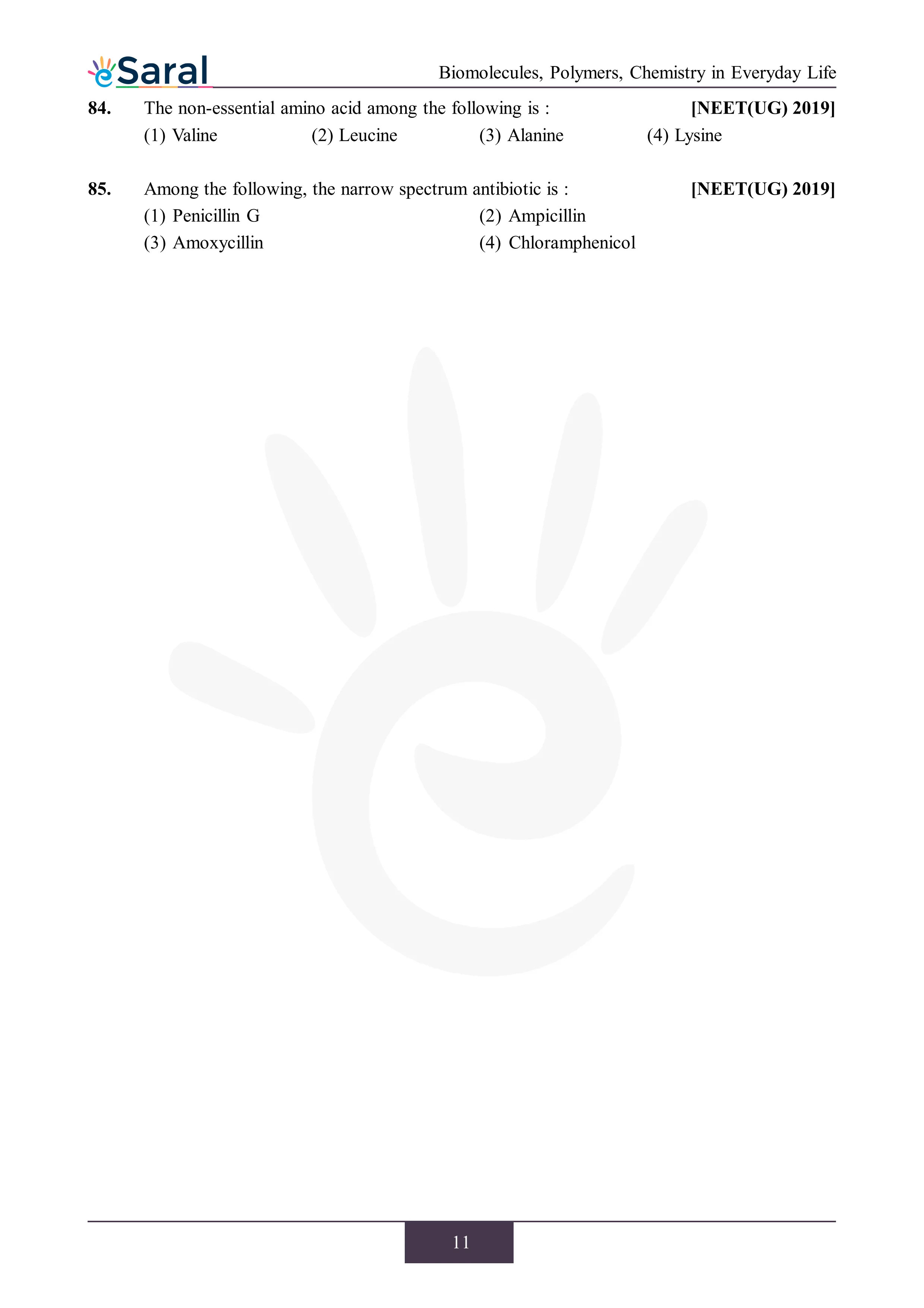
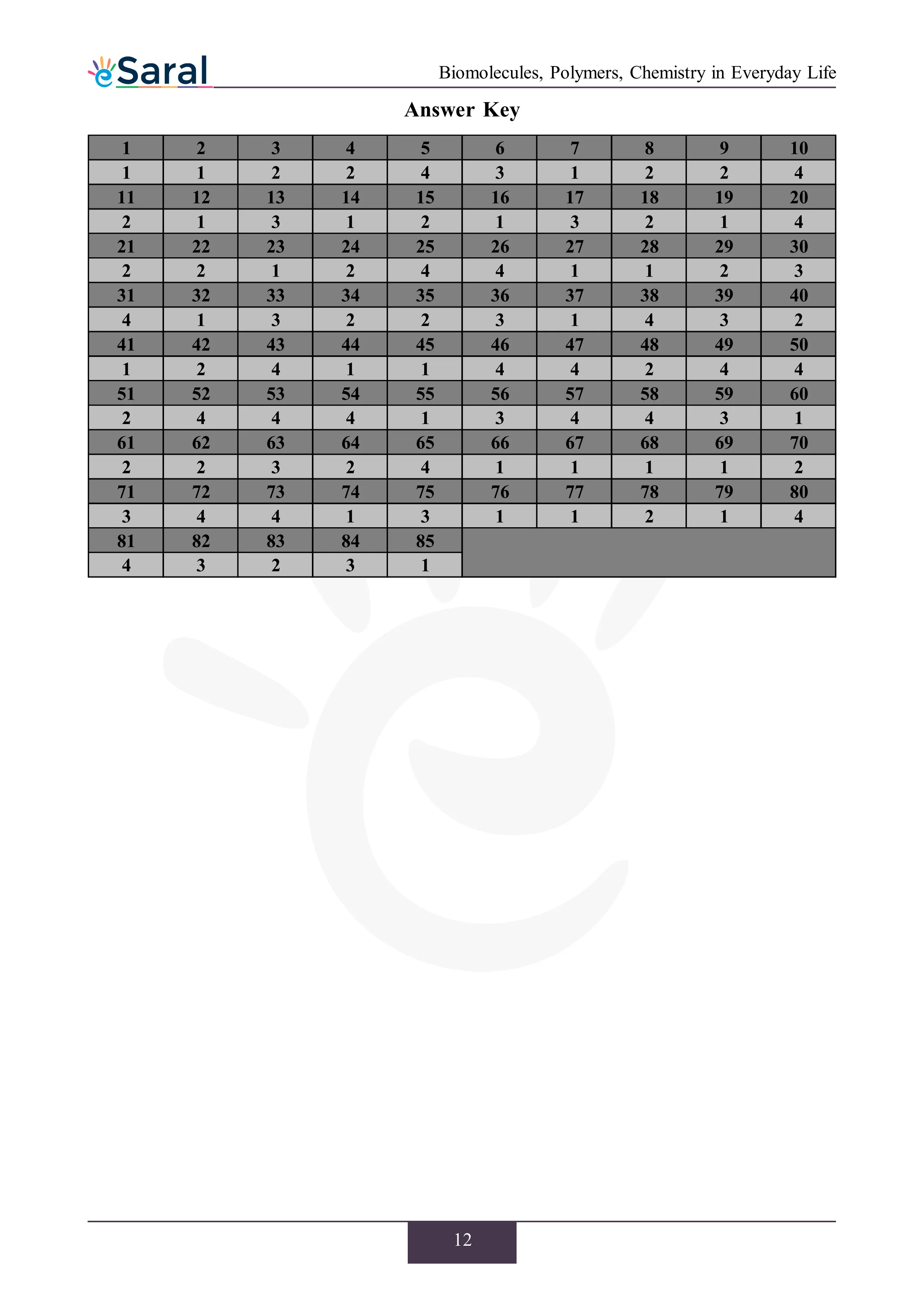
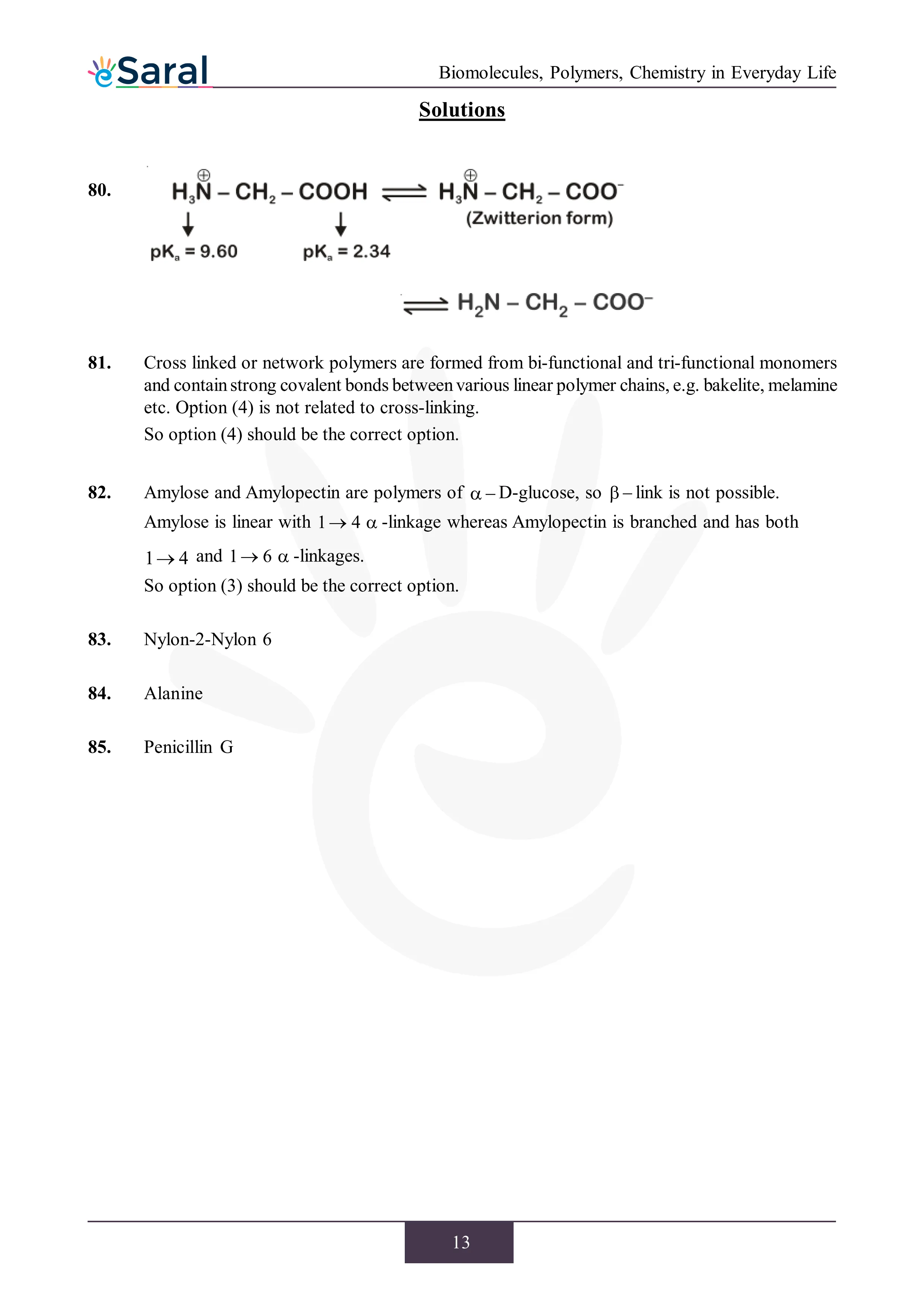
NEET Previous Year Questions
Frequently Asked Questions
Find answers to common questions.
How many questions come from Biomolecules, Polymers, and Chemistry in Everyday Life in NEET?
Together, these three chapters contribute 4 to 7 questions (roughly 16–28 marks) in a typical NEET paper. The exact count varies by year, but NTA's trend over 2016–2024 shows at least 2–3 questions from Biomolecules alone. Because these chapters are largely factual, they are among the easiest marks available in NEET Chemistry.
Is NCERT sufficient for Biomolecules and Polymers NEET questions?
Yes. For these three chapters, NCERT is more than sufficient. Over 90% of NEET questions from Biomolecules, Polymers, and Chemistry in Everyday Life are directly lifted from NCERT Class 12 Chemistry Part II. Read each line carefully, memorise named reactions and examples, and solve all NCERT exercises using the NCERT Solutions for Class 12 Chemistry.
What is the best way to remember polymer names for NEET?
Create a table with four columns: Polymer name, Monomer(s), Type (addition/condensation), and one key use or property. For example, Nylon-6,6 is made from hexamethylenediamine and adipic acid — that single fact has appeared in NEET at least three times in different forms. Reviewing this table daily for one week is enough for most students to retain all polymer names permanently.
Are questions from Chemistry in Everyday Life difficult in NEET?
No. Chemistry in Everyday Life is considered one of the easiest chapters in NEET Chemistry. Questions test drug classifications, names of antiseptics vs. disinfectants, artificial sweeteners, and soap/detergent chemistry — all directly from NCERT. A focused 2-day revision is enough to score full marks from this chapter.
How many years of NEET PYQs should I solve for these chapters?
Solve at least the last 10 years of NEET PYQs (2014–2024). This covers virtually every concept NTA repeats in these chapters. After 10 years, you will notice that roughly 60–70% of question concepts repeat with slight wording changes. Solving 15 years gives diminishing returns for these specific chapters compared to spending time on Physics or Physical Chemistry.