p-block Elements | Nitrogen Family Elements, IIT JEE & NEET
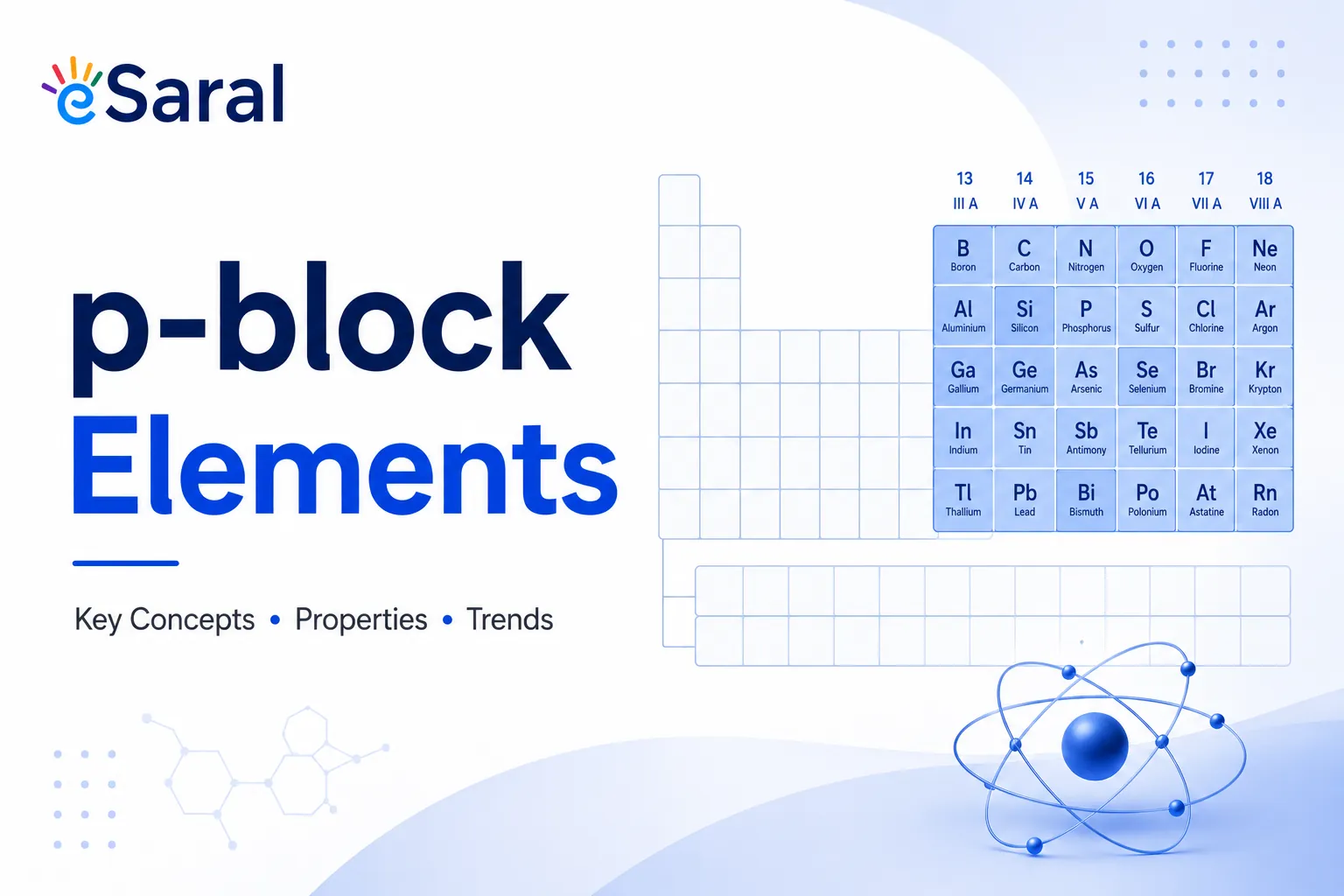

Home > Chemistry Notes > Nitrogen Family Elements – p-Block Class 12

Get detailed Class 12th Chemistry Notes to prepare for Boards as well as competitive exams like IIT JEE, NEET etc. eSaral offers complete notes of p-block Elements: Nitrogen Family Elements Notes for Class 12th. eSaral helps the students in clearing and understanding each topic in a better way. eSaral is providing complete chapter notes of Class 11th and 12th both of Physics Chemistry & Mathematics. Besides this, eSaral also offers NCERT Solutions, Previous year questions for JEE Main and Advance, Practice questions, Test Series for JEE Main, JEE Advanced and NEET, Important questions of Physics, Chemistry, Math, and Biology and many more. Download eSaral app for free study material and video tutorials.
p-block Elements | Nitrogen Family Elements
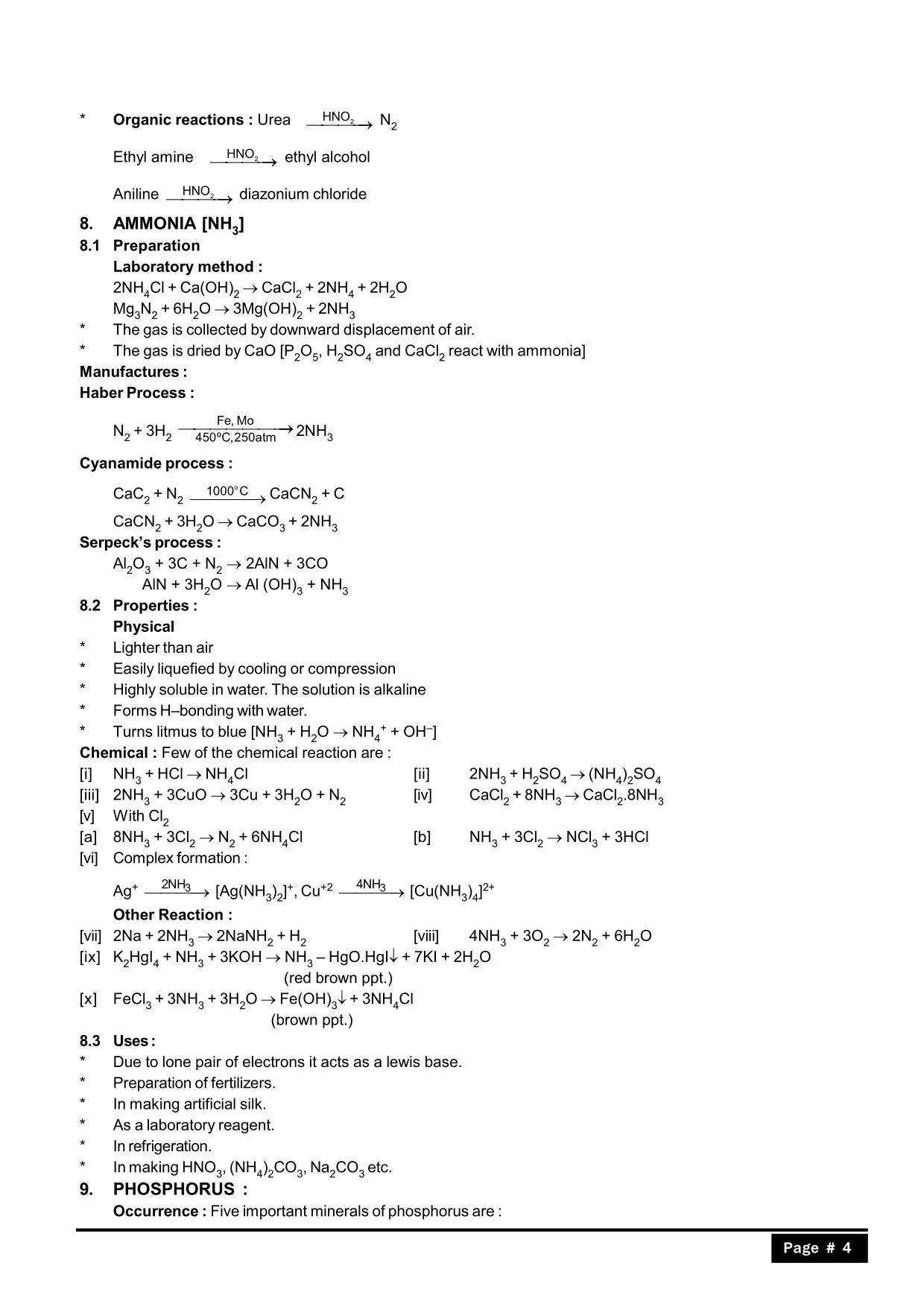
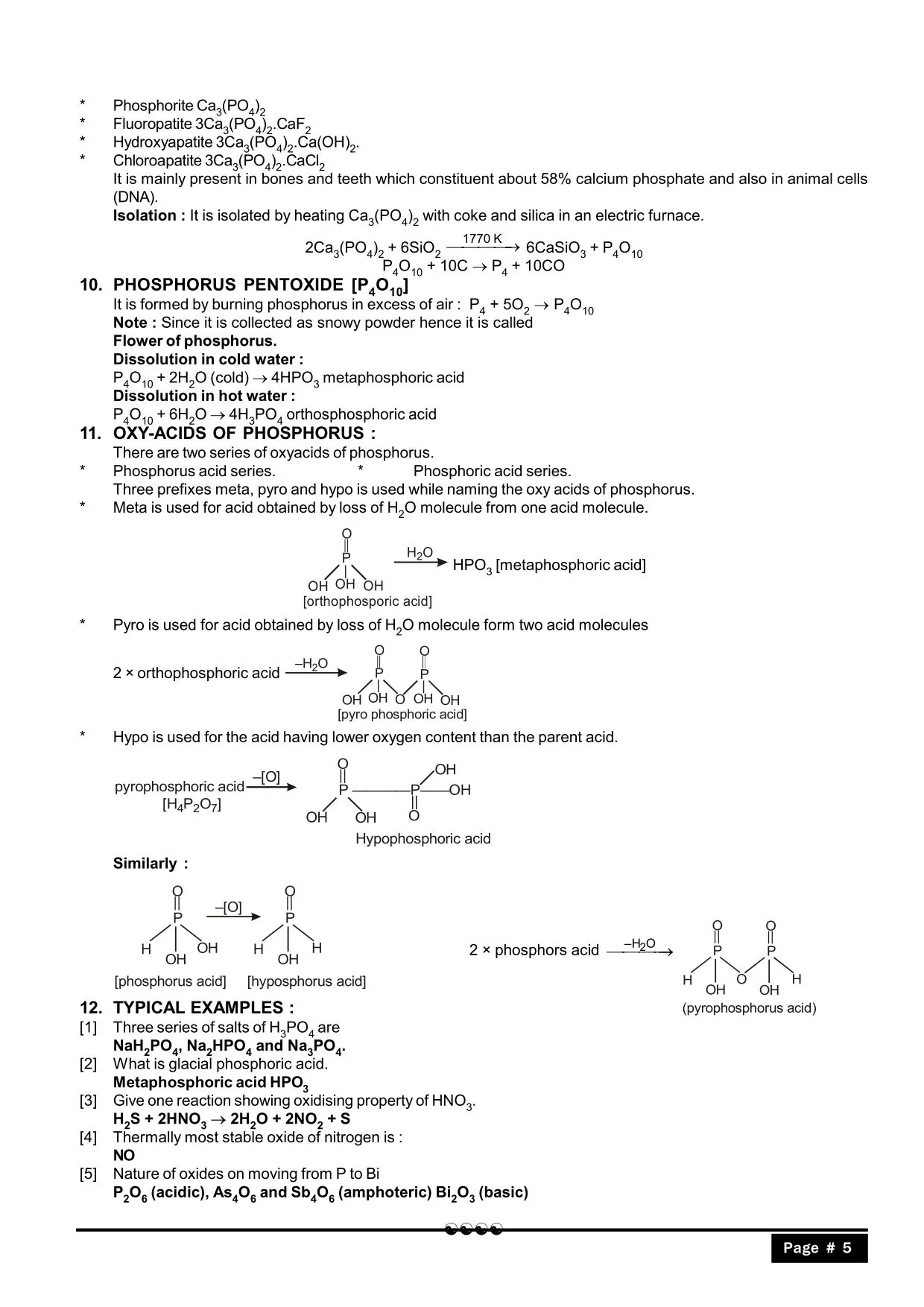
eSaral helps the students by providing you an easy way to understand concepts and attractive study material for IIT JEE which includes the chemistry video lectures by top expert IITian Faculties of KOTA. We are also providing Quick revision for Chemistry to help the students in revising the chapter quickly. eSaral brings complete notes for Class 12 Chemistry.
eSaral provides a series of detailed chapter wise notes for all the Subjects of class 11th and 12th. These notes will also help you in your IIT JEE & NEET preparations. We hope these Chemistry Notes for Class 12 will be helpful for you understand the important topics and help in remembering the key points for the exam point of view. Get Complete Class 12 Chemistry Notes for easy learning and understanding.
For free video lectures and complete study material, Download eSaral APP. About eSaral At eSaral we are offering a complete platform for IIT-JEE & NEET preparation. The main mission behind eSaral is to provide education to each and every student in India by eliminating the Geographic and Economic factors, as a nation’s progress and development depends on the availability of quality education to each and every one. With the blend of education & technology, eSaral team made the learning personalized & adaptive for everyone.
Frequently Asked Questions
Find answers to common questions.
What is the order of basic character of Group 15 hydrides?
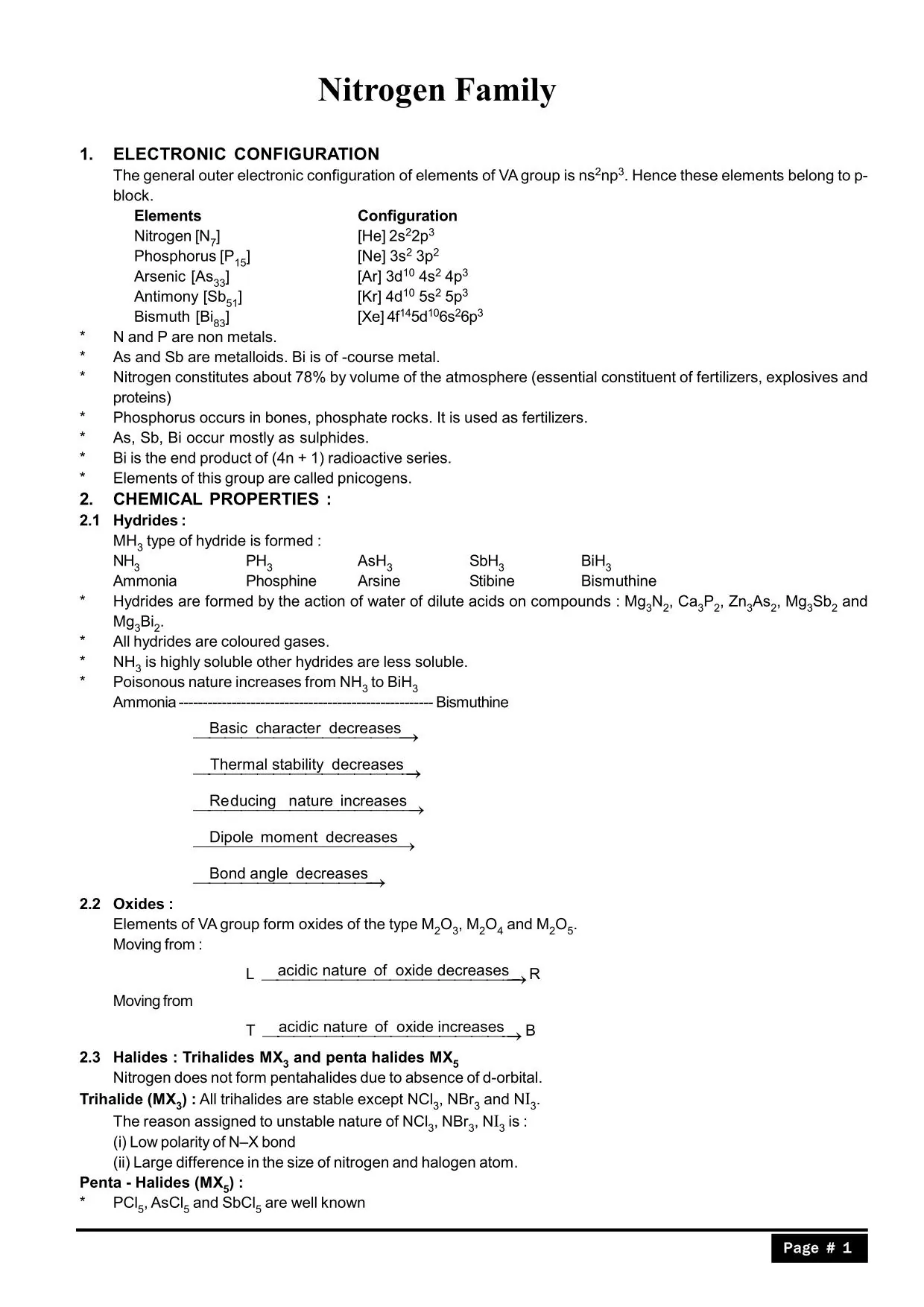
The order of basic character is NH₃ > PH₃ > AsH₃ > SbH₃ > BiH₃. Basic character depends on the availability of the lone pair on the central atom. As atomic size increases down the group, the electron density on the central atom decreases (lone pair is more diffuse), making it less effective at donating to a proton or Lewis acid.
Why does nitrogen not form pentahalides like PCl₅?
Nitrogen cannot form pentahalides because it lacks d-orbitals in its valence shell (second period, n=2). Expanding the octet beyond 4 bonds requires empty d-orbitals for hybridisation (sp³d). Phosphorus, belonging to the third period, has available 3d orbitals and can form PCl₅. This is one of the most frequently tested concepts in JEE Main inorganic chemistry.
What is the general electronic configuration of Group 15 elements?
Group 15 (Nitrogen Family) elements have the general valence shell electronic configuration ns²np³. The three half-filled p-orbitals give these elements extra stability. This configuration is shared by N, P, As, Sb, and Bi. The half-filled stability explains why nitrogen has a higher ionisation enthalpy than oxygen, despite oxygen being more electronegative overall
How is nitrogen prepared in the laboratory?
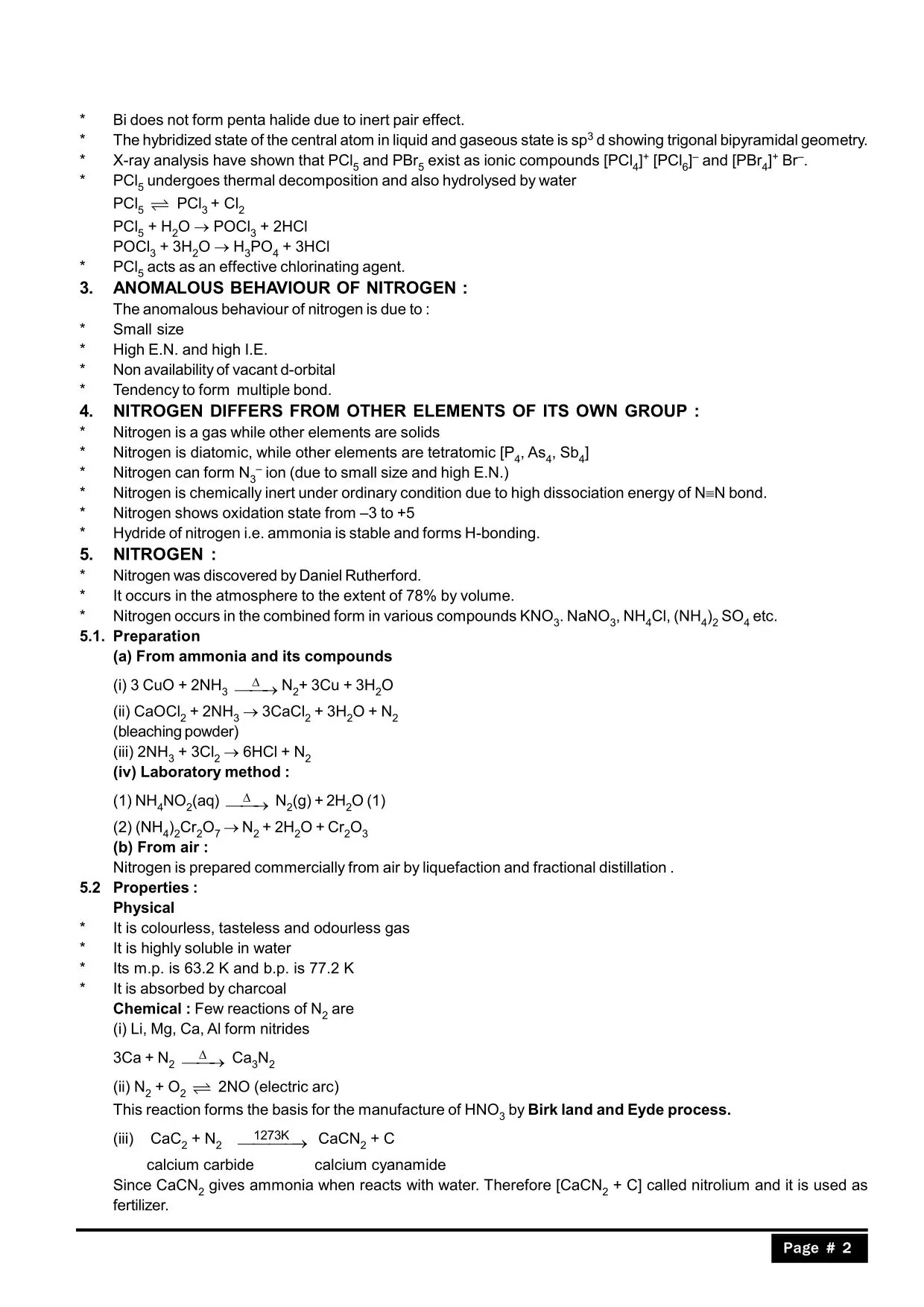
Nitrogen gas is prepared in the laboratory by the thermal decomposition of ammonium dichromate or by heating an aqueous solution of ammonium nitrite (NH₄NO₂):NH₄NO₂ → N₂ + 2H₂O (on gentle heating)Industrially, nitrogen is obtained by the fractional distillation of liquid air. The N₂ produced is very pure and used in the Haber Process for ammonia synthesis.
What are the allotropes of phosphorus and how do they differ?
Phosphorus has three main allotropes: white phosphorus (P₄, tetrahedral, highly reactive, toxic, stored under water), red phosphorus (polymeric chain structure, less reactive, non-toxic), and black phosphorus (layered structure, most stable, least reactive). White phosphorus is used in matches and incendiary devices. NEET frequently tests the differences in reactivity and structure between white and red phosphorus
Why is the boiling point of NH₃ much higher than that of PH₃?
NH₃ has a significantly higher boiling point (−33°C) than PH₃ (−88°C) despite PH₃ having a higher molecular mass. This is because NH₃ molecules form intermolecular hydrogen bonds due to the high electronegativity and small size of nitrogen. Phosphorus is not electronegative enough to form hydrogen bonds, so PH₃ is held together only by weak van der Waals forces.