Periodic Table
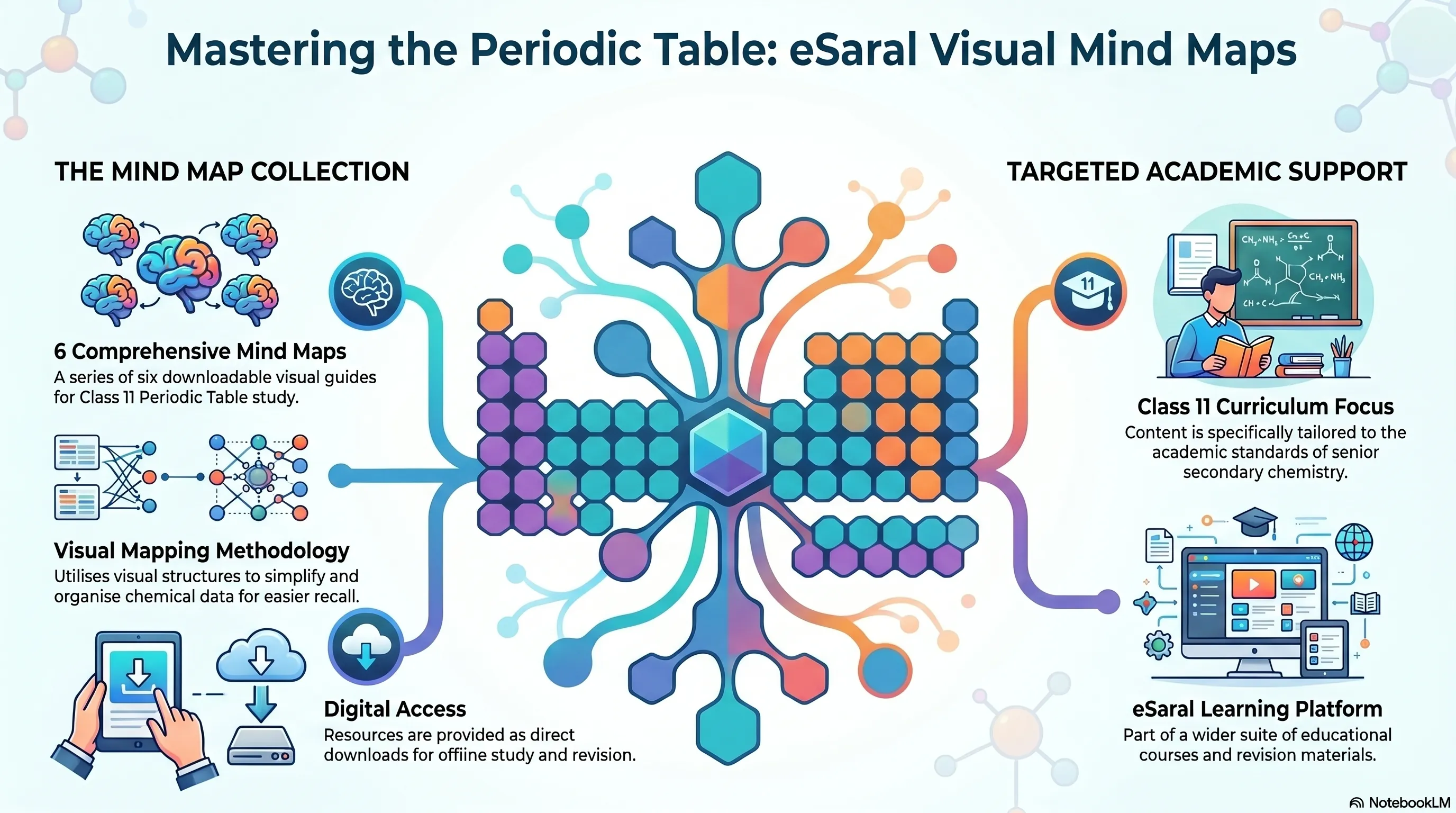
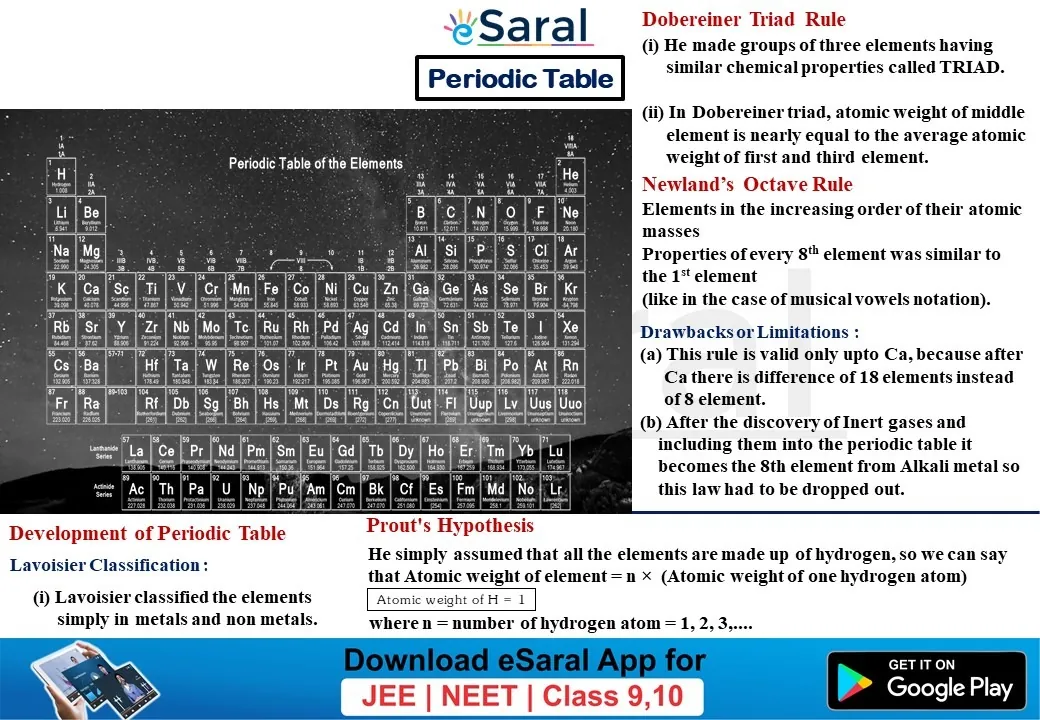
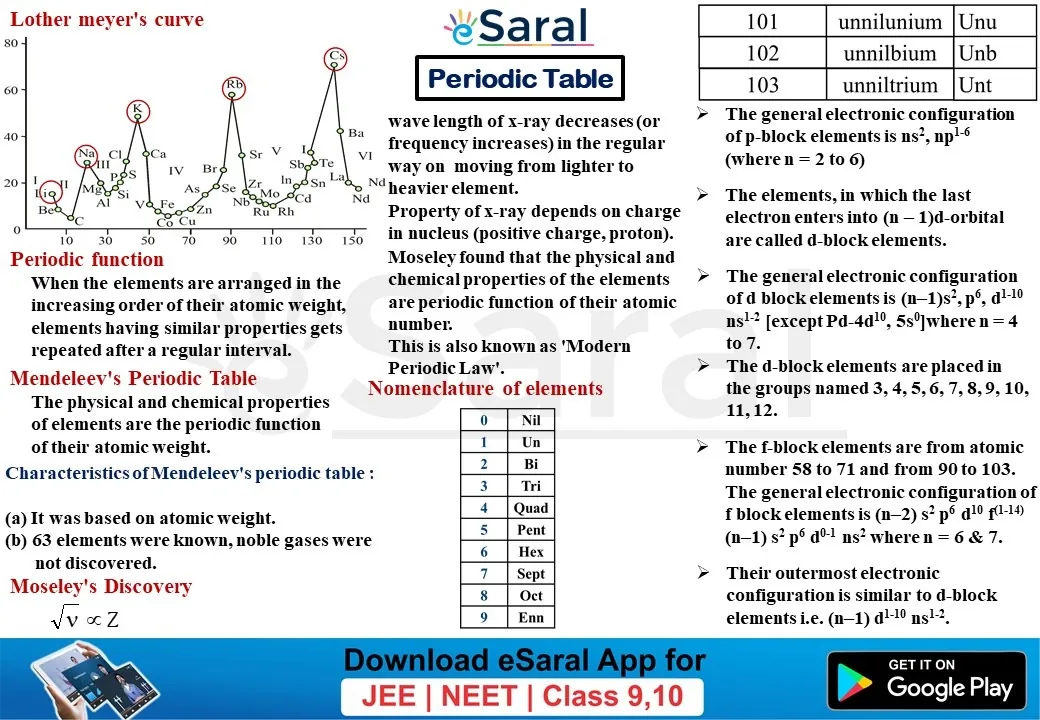
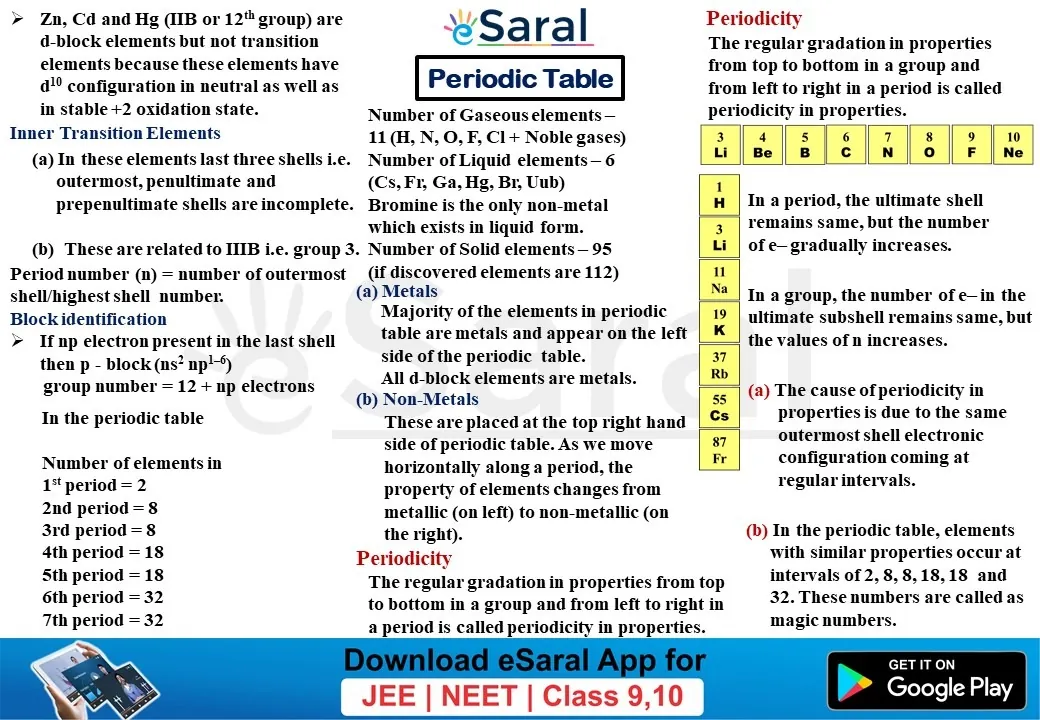
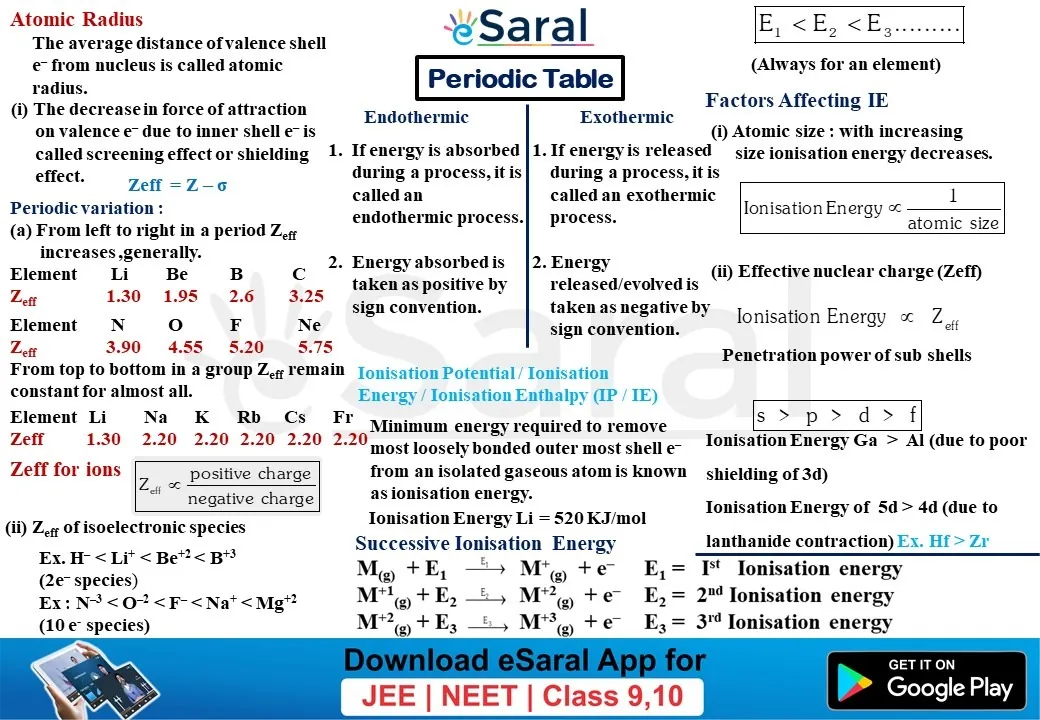
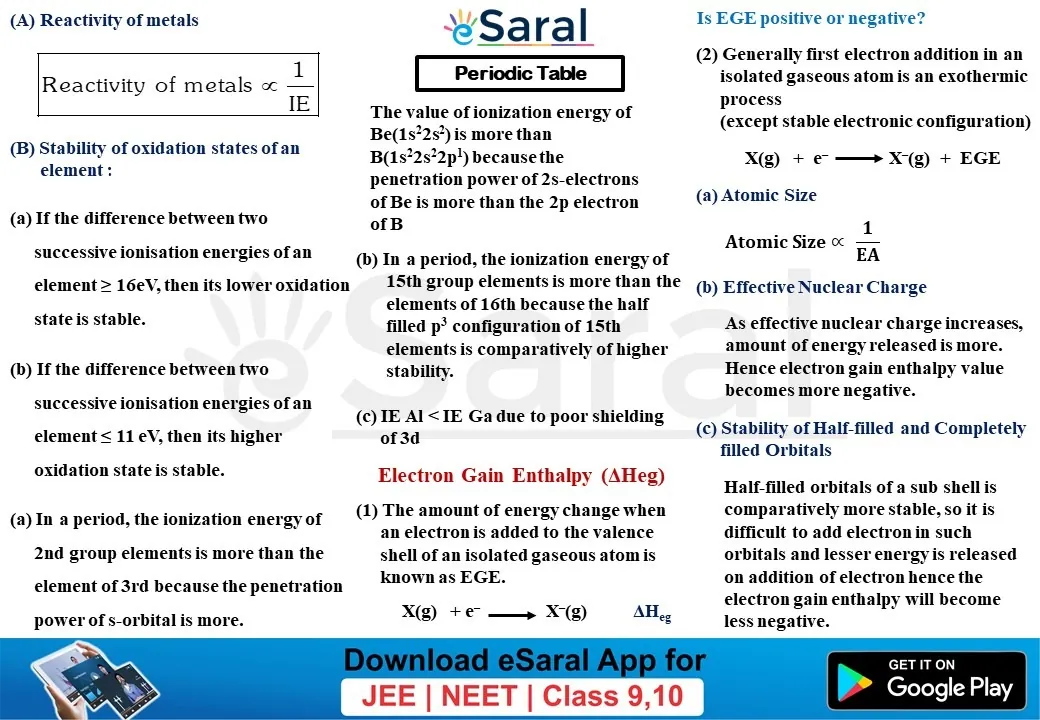
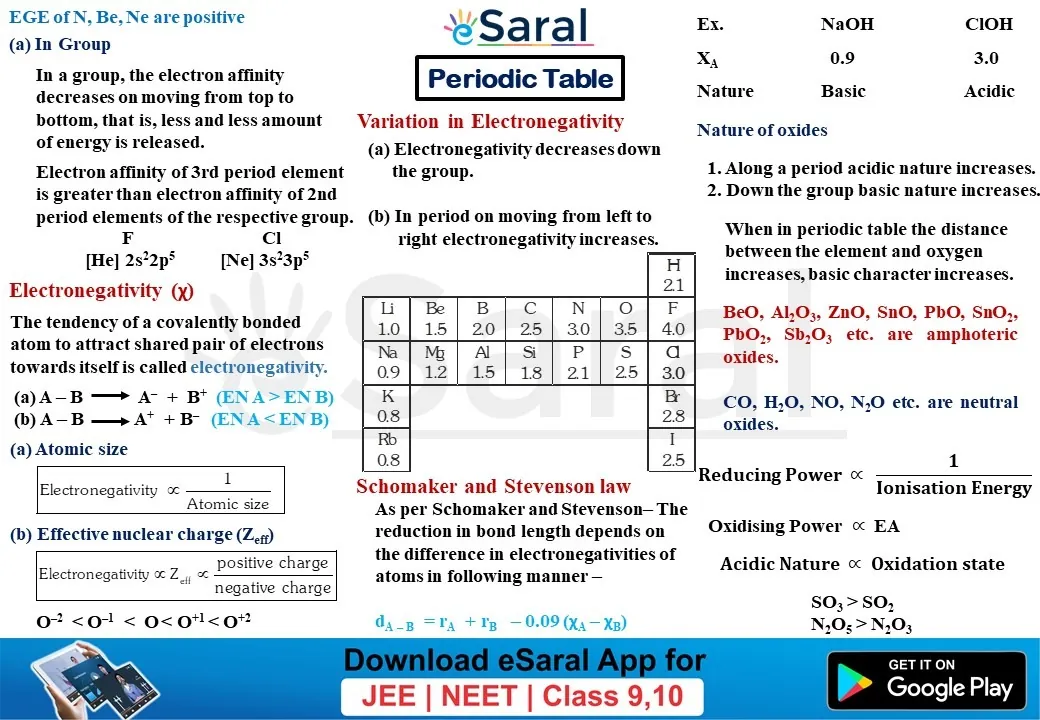
Periodic Table Mind Maps provide a concise visual revision of classification, periodic trends, electronic configuration, and key properties of elements, helping Class 11 students prepare effectively for school exams, JEE, and NEET.


Frequently Asked Questions
Find answers to common questions.
How many elements are in the modern periodic table?
The modern periodic table contains 118 confirmed elements, from Hydrogen (atomic number 1) to Oganesson (atomic number 118). IUPAC officially recognised element 118 in 2016. Elements with atomic numbers 113, 115, 117, and 118 were confirmed and named in that year — Nihonium, Moscovium, Tennessine, and Oganesson respectively.
What is the Modern Periodic Law?
The Modern Periodic Law, formulated by Henry Moseley, states that the physical and chemical properties of elements are periodic functions of their atomic numbers. This corrected Mendeleev's original law (based on atomic masses) and resolved placement anomalies for elements like Argon and Potassium.
How do I memorise the periodic table for JEE and NEET?
You do not need to memorise all 118 elements. Focus on Groups 1, 2, 13–18 and the first four periods. Learn electronic configurations, not just positions. Use the downloadable mind maps above for visual revision. eSaral's IIT Bombay faculty recommend memorising exceptions (IE anomalies, electron gain enthalpy of F vs Cl) over rote element lists.
What are the s, p, d, and f blocks of the periodic table?
The four blocks are defined by the subshell that receives the last electron. s-block: Groups 1–2 (alkali and alkaline earth metals). p-block: Groups 13–18 (includes non-metals and metalloids). d-block: Groups 3–12 (transition metals). f-block: Lanthanides and Actinides (inner transition metals), placed separately below the main table.
Which periodic trend has the most exceptions in JEE Main?
Ionisation enthalpy has the most tested exceptions. The key ones are: IE of Beryllium > Boron (Be has a stable filled 2s² subshell), and IE of Nitrogen > Oxygen (N has a stable half-filled 2p³ configuration). These two exceptions appear repeatedly in JEE Main papers from 2019–2026.