Structural Isomerism - JEE Main Previous Year Questions with Solutions


eSaral › JEE Main › Chemistry › Structural Isomerism Previous Year Questions with Solutions

JEE Main Previous Year Papers Questions of Chemistry With Solutions are available at eSaral. Simulator Previous Years AIEEE/JEE Mains Questions 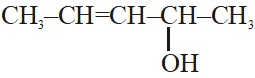 exhibits both geometrical as well as optical isomerism. Cis – R Trans – R Cis – S Trans – S
 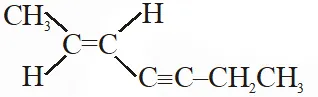 (1) (Z) – 5 – hepten – 3 – yne (2) (Z) – 2 – hepten – 4 – yne (3) (E) – 5 – hepten – 3 – yne (4) (E) – 2 – hepten – 4 – yne [JEE-Main-2012]
 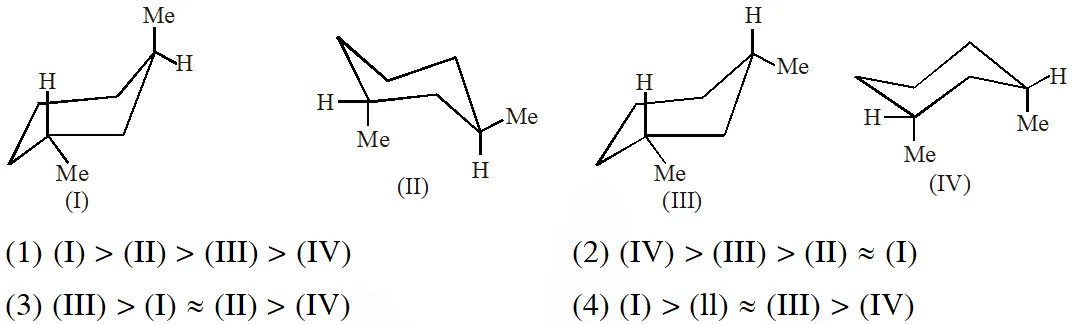 [JEE-Main 2013]
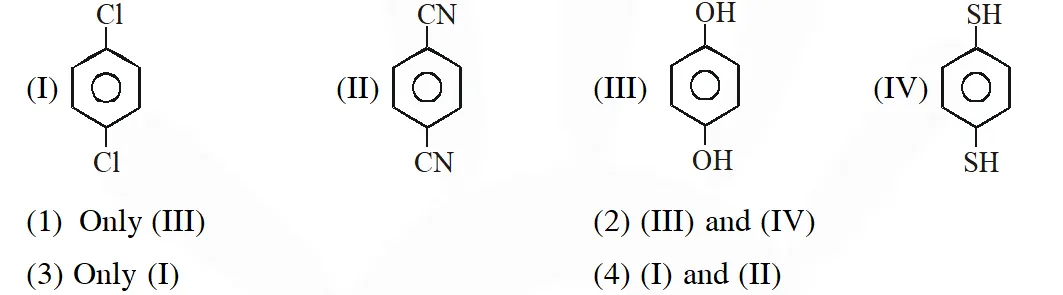 [JEE-Main 2014]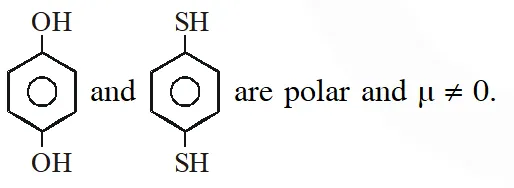
After completing Structural Isomerism, continue your Chemistry revision through the JEE Mains PYQ chapter wise collection.
Curious how often Structural Isomerism gets tested? Browse our JEE Main previous year question paper archive and count the questions yourself, session by session.
Frequently Asked Questions
Find answers to common questions.
Which alkene shows geometrical isomerism?
An alkene shows geometrical isomerism only when each carbon of the C=C double bond carries two different substituents. 2-Butene (CH₃–CH=CH–CH₃) qualifies because each sp² carbon has –H and –CH₃. 2-Methylpropene does not qualify because one sp² carbon has two identical –CH₃ groups.
How many types of isomerism are asked in JEE Main?
JEE Main questions cover structural isomerism (chain, position, functional group, metamerism) and stereoisomerism (geometric/E-Z and optical). Conformational isomerism (chair conformations of cyclohexane) also appears occasionally. Based on PYQs from 2009–2023, geometrical and optical isomerism together account for roughly 60% of isomerism questions.
What is structural isomerism in JEE Main chemistry?
Structural isomerism (also called constitutional isomerism) is when two or more compounds share the same molecular formula but differ in the order or manner in which atoms are connected. JEE Main tests four sub-types: chain, position, functional group, and metamerism. Questions typically ask you to identify or count isomers for a given formula.
Why does 1,2-dichlorobenzene have a dipole moment but 1,4-dichlorobenzene does not?
In 1,4-dichlorobenzene (para), the two C–Cl bond dipoles point in exactly opposite directions and cancel completely, giving μ = 0. In 1,2-dichlorobenzene (ortho), the bond dipoles are at approximately 60° to each other and do not cancel, resulting in a net dipole moment μ ≠ 0. This is a direct application of vector addition of bond dipoles.
How do you count stereoisomers for a JEE Main question?
First, count chiral centres (n) in the molecule — these give 2ⁿ optical isomers. Then check if the molecule also has a C=C with restricted rotation — this adds a factor of 2 (cis and trans). Multiply both. For CH₃–CH=CH–CH(OH)–CH₃: 1 chiral centre × 1 double bond = 2 × 2 = 4 stereoisomers
What is the difference between maleic acid and fumaric acid?
Maleic acid and fumaric acid are both butenedioic acids (molecular formula C₄H₄O₄). Maleic acid is the cis isomer (both –COOH groups on the same side of the double bond) and fumaric acid is the trans isomer. They are geometrical isomers of each other, not tautomers or functional isomers.