Thermodynamics - NEET Previous Year Questions with Complete Solutions


eSaral › NEET Chemistry › Thermodynamics Previous Year Questions with Complete Solutions

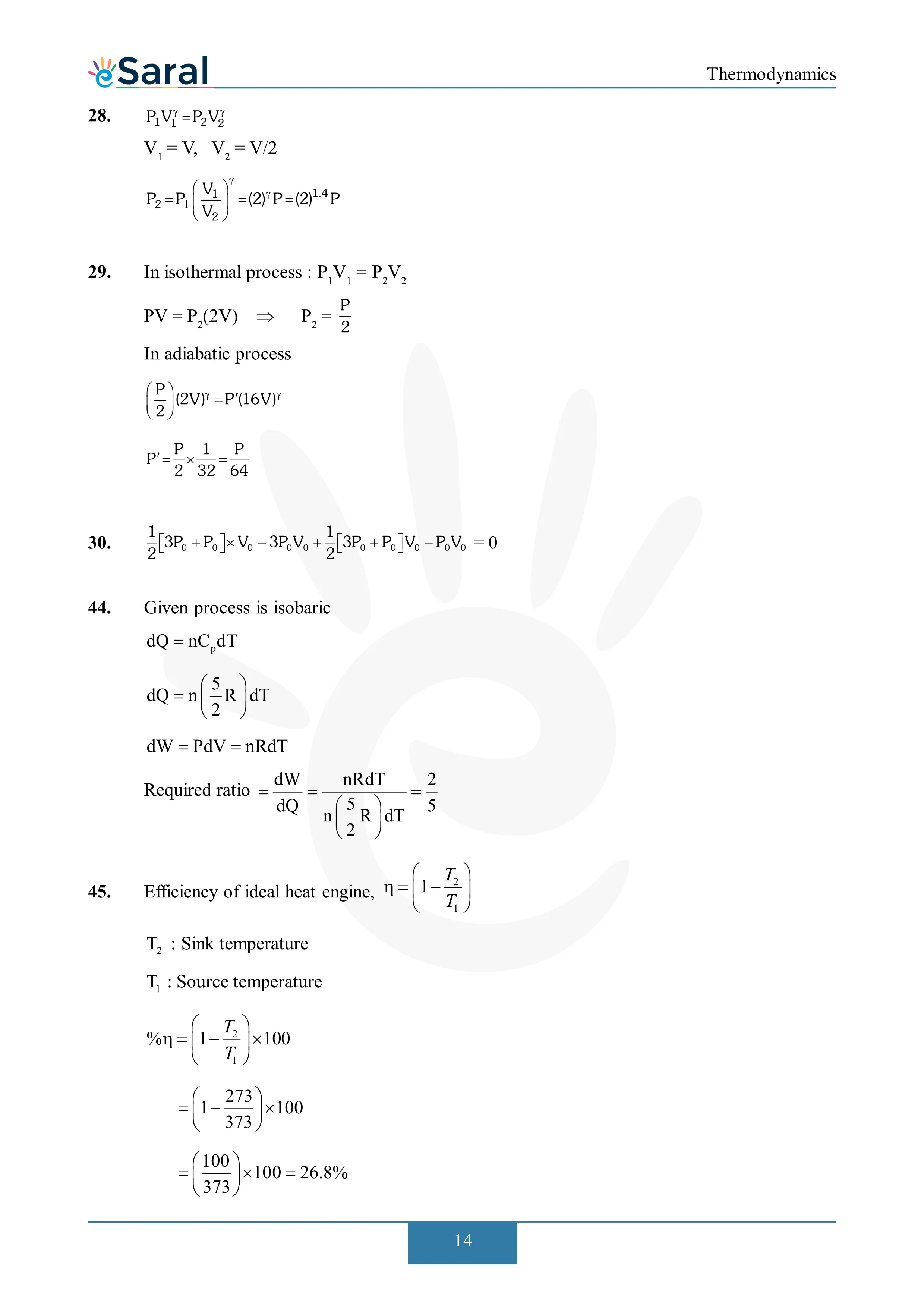
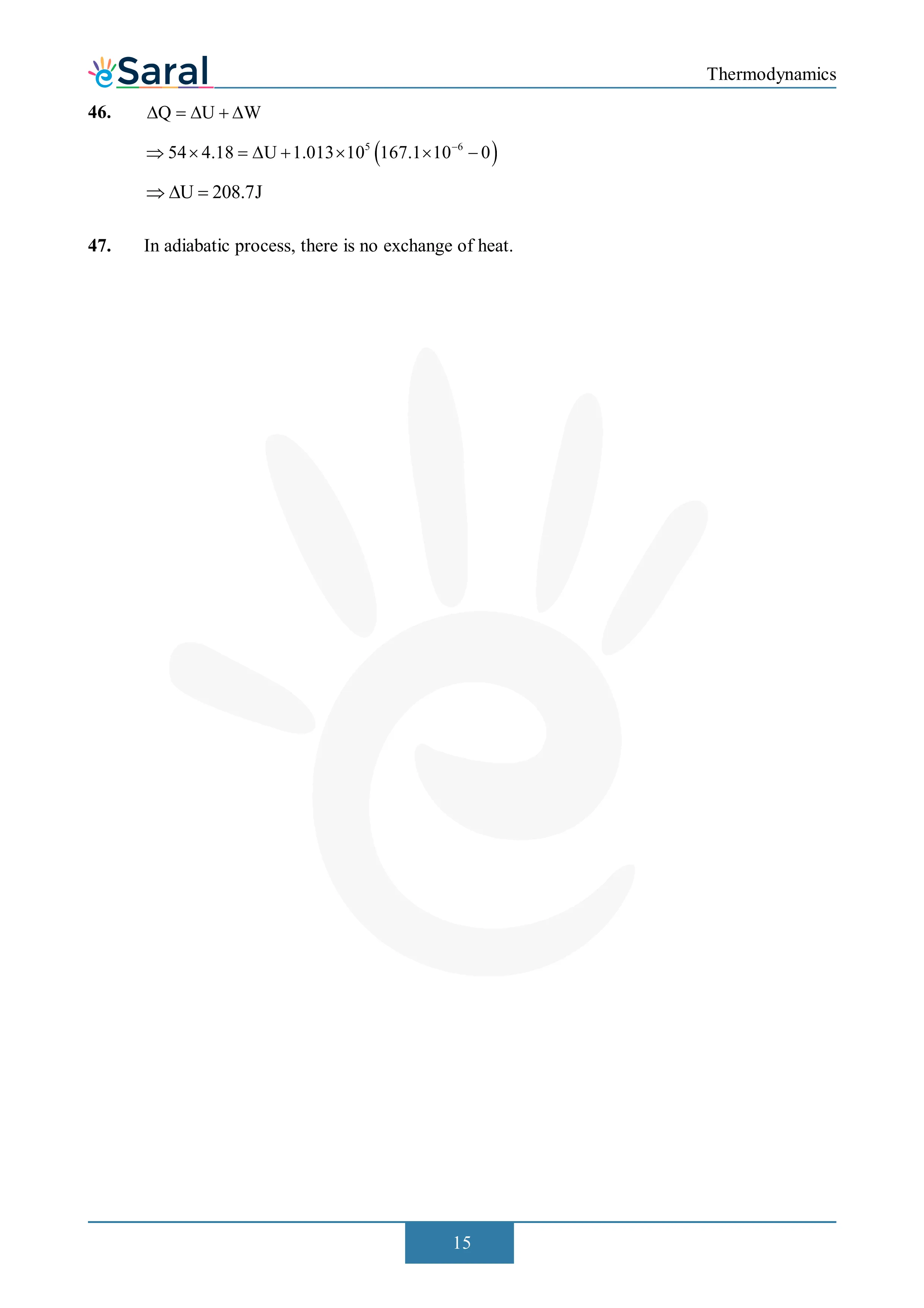
Here you will find Complete Thermodynamics NEET Previous Year Questions with detailed solutions. Get complete NEET previous year questions for Physics, Chemistry, and Biology. You will find all the solutions at the end of this page:
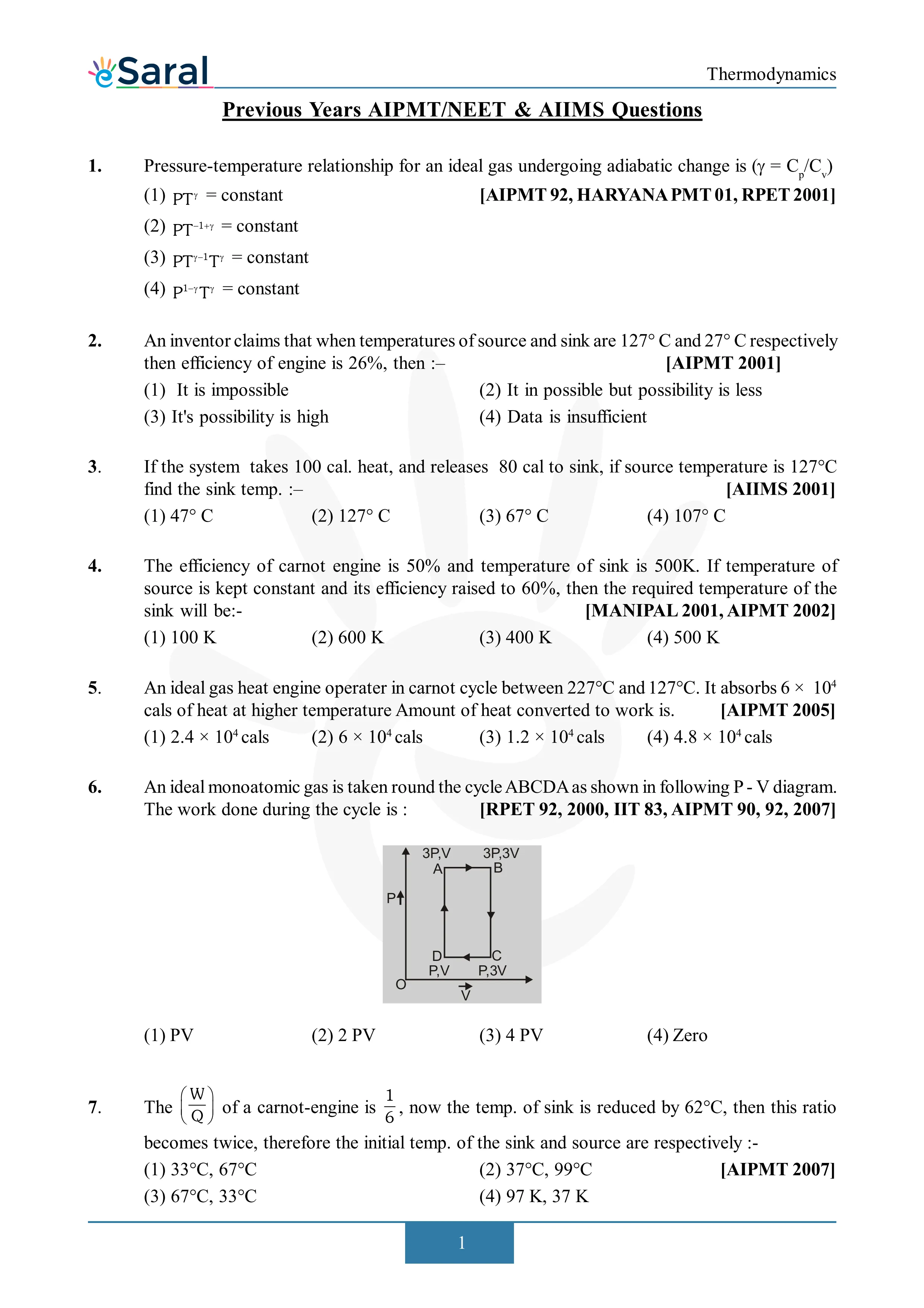
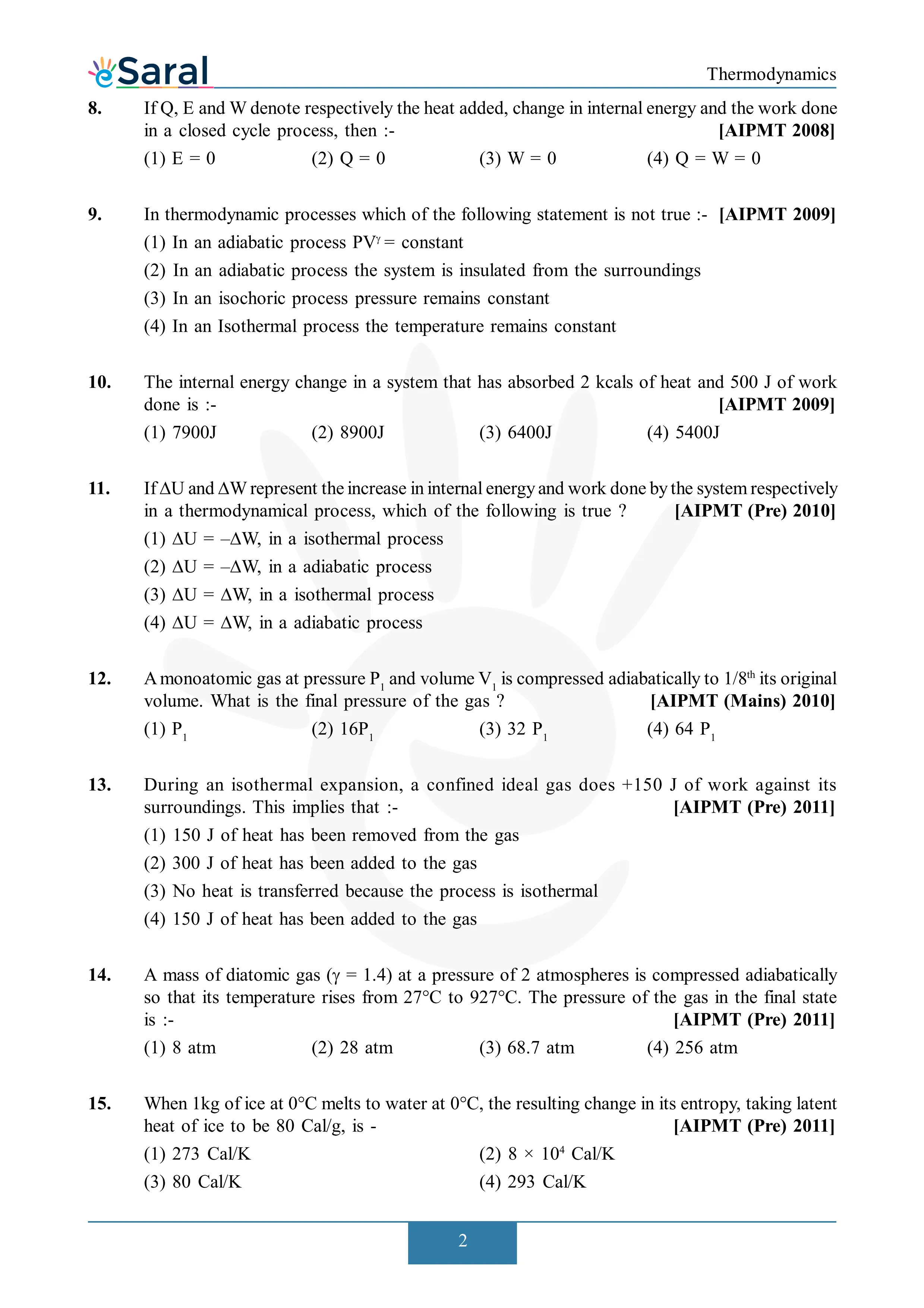
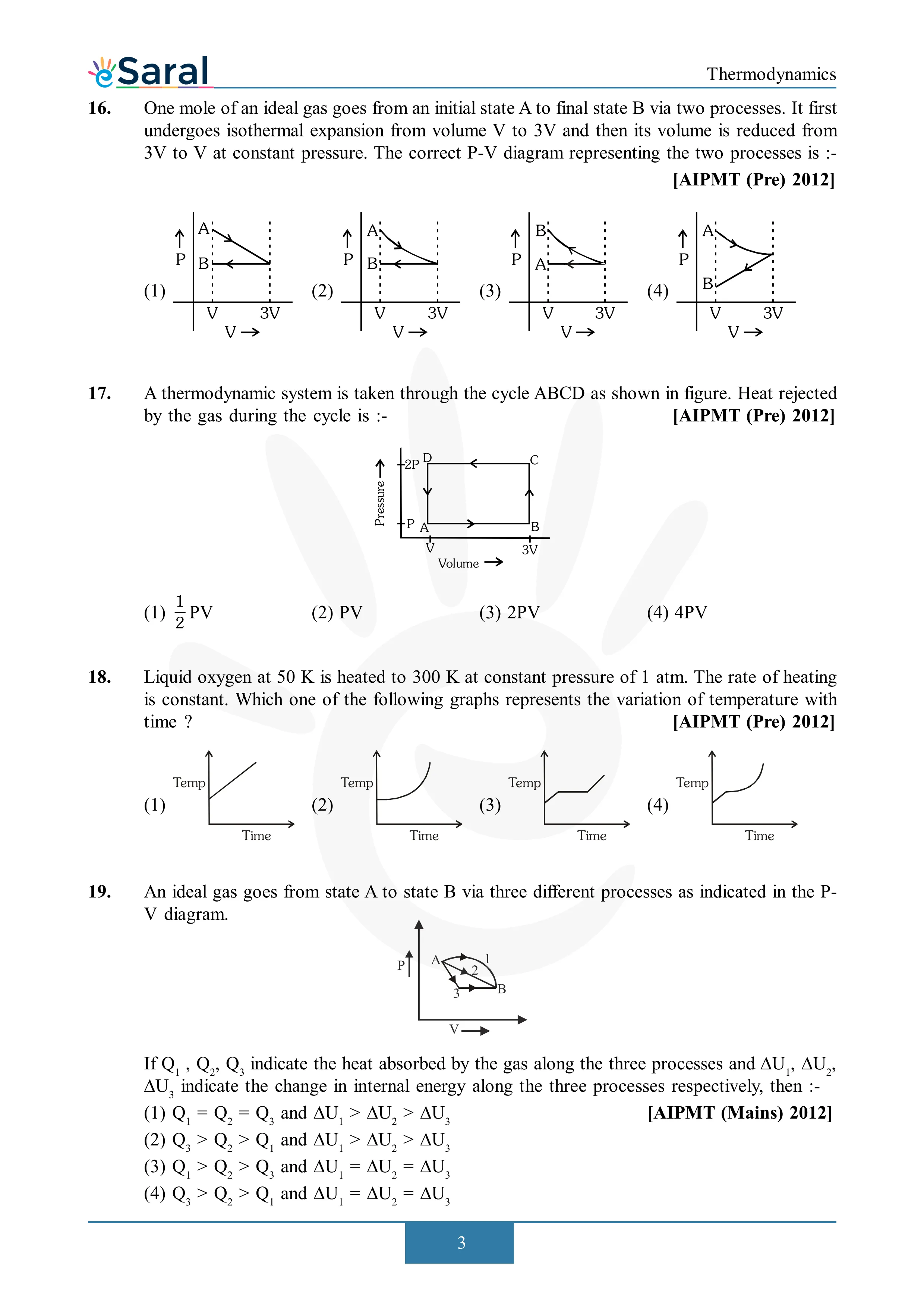
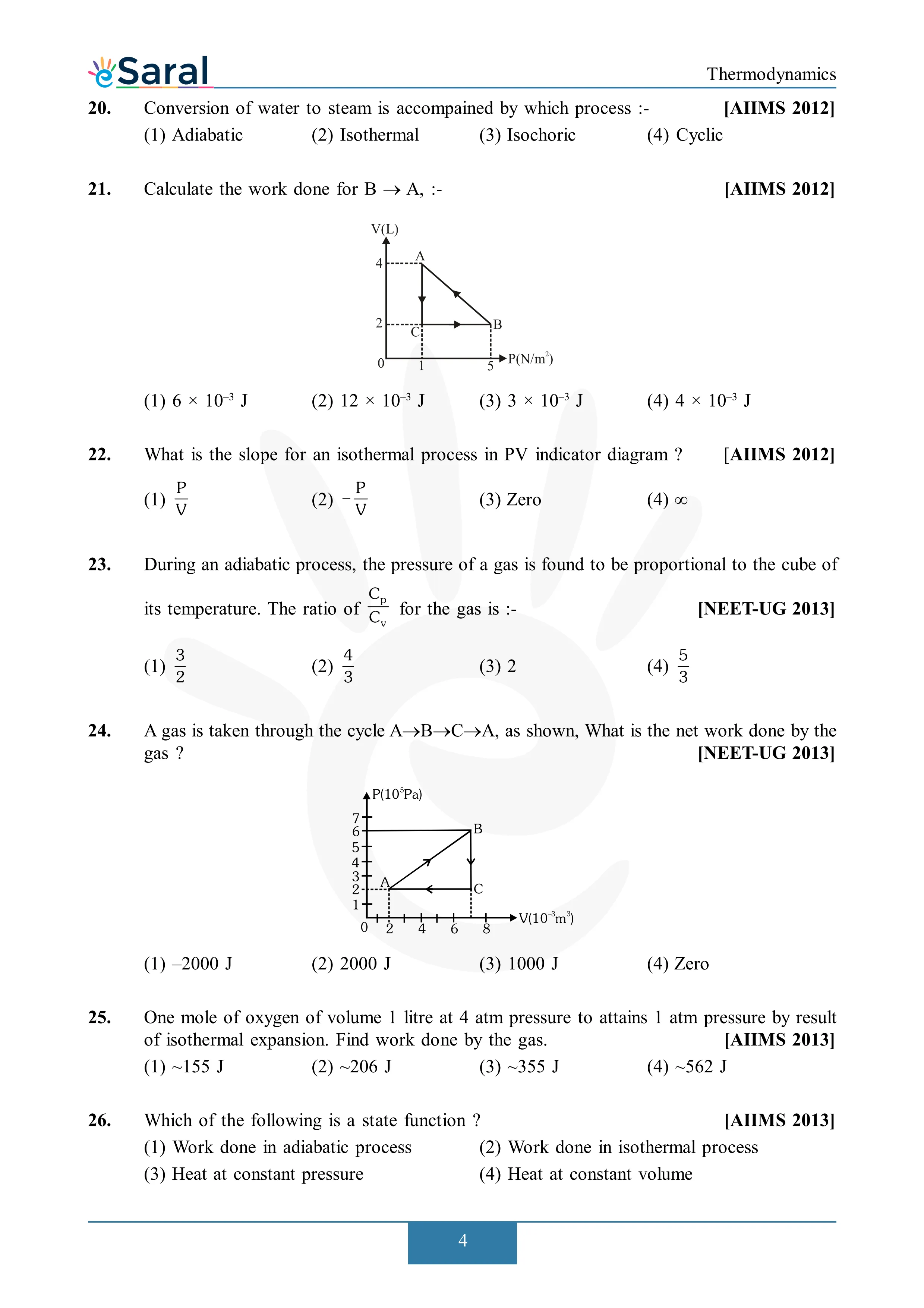

Frequently Asked Questions
Find answers to common questions.
Is the Carnot engine formula enough for NEET thermodynamics?
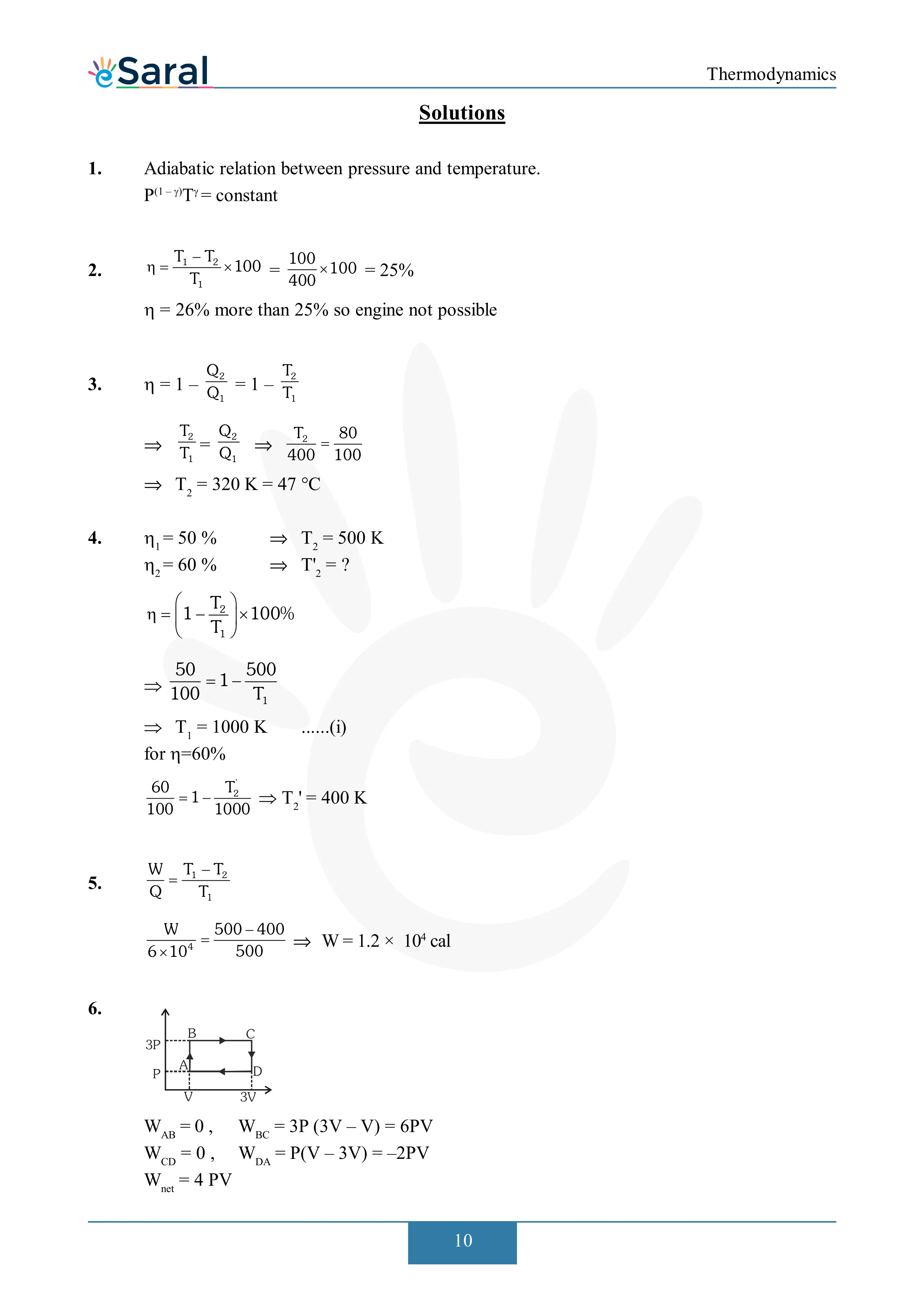
The Carnot efficiency formula η = 1 − (T₂/T₁) is essential but not sufficient on its own. NEET also tests work output of a Carnot engine (W = η × Q₁) and the heat rejected to the cold reservoir (Q₂ = Q₁ − W). Practising at least 5–8 Carnot PYQs covers all question variations NTA has used historically.
Which thermodynamic process is most important for NEET?
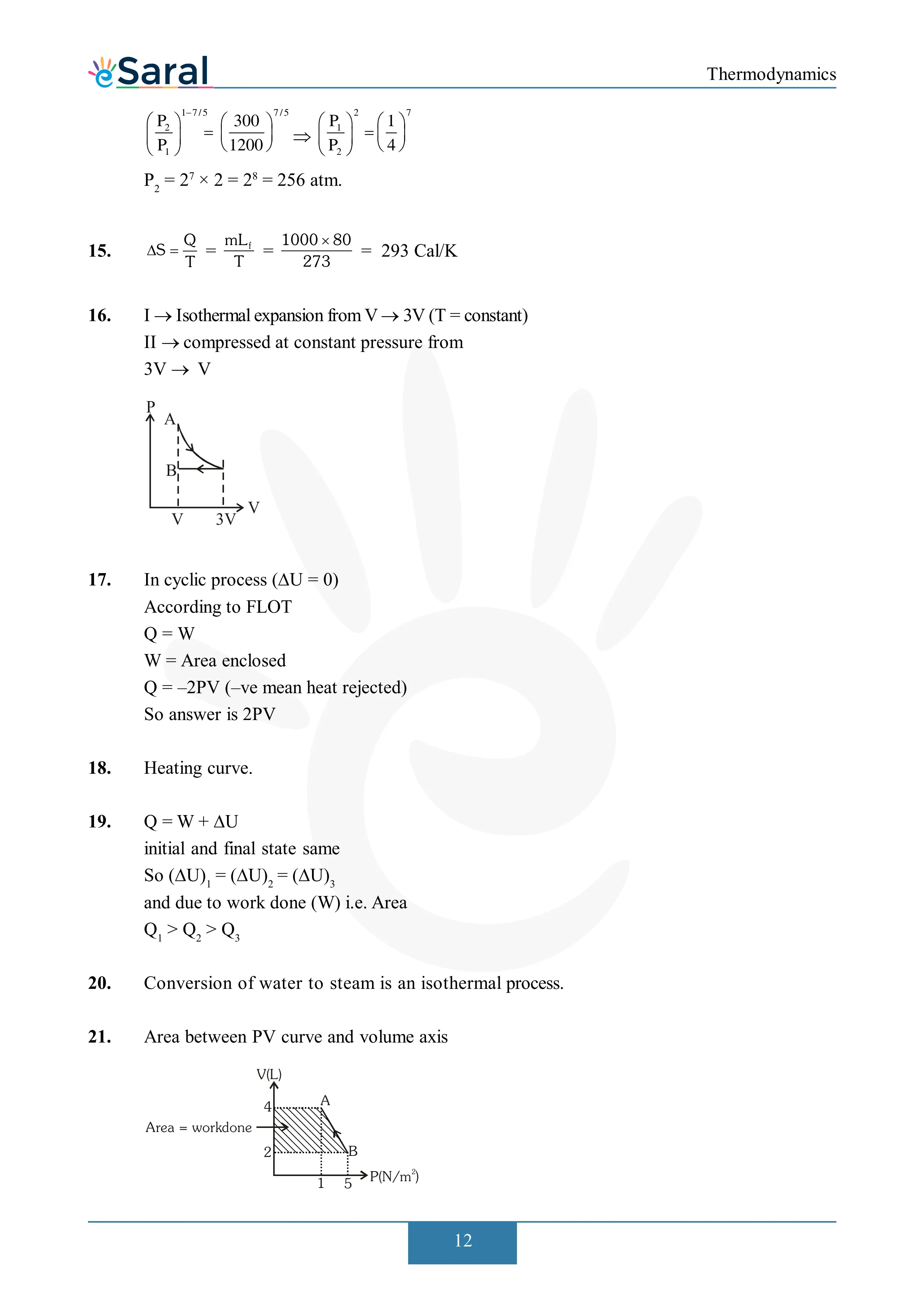
The isothermal and adiabatic processes together account for the largest share of NEET thermodynamics PYQs. Carnot engine problems (which combine both processes) appear almost every alternate year. After these, isochoric process questions are the simplest to solve because work done is always zero — making them reliable scoring opportunities.
How many questions come from Thermodynamics in NEET every year?
NEET consistently features 2–3 questions from Thermodynamics in Physics, carrying 8–12 marks. Over the last 10 years (2015–2024), the chapter has never been absent from any NEET paper. Carnot engine efficiency and the first law of thermodynamics are the two most repeated sub-topics, appearing in roughly 70% of all NEET papers.
How should I revise Thermodynamics one week before NEET?
Focus on three things: (1) Memorise the process comparison table — constant quantity, W, ΔU, and Q for all four processes. (2) Solve all Carnot engine PYQs from 2015–2024 in one sitting. (3) Revise the first law with sign conventions using at least 10 numerical examples. Avoid starting new topics — revision of known patterns is more effective than new learning in the final week.
Do NEET thermodynamics questions require derivations?
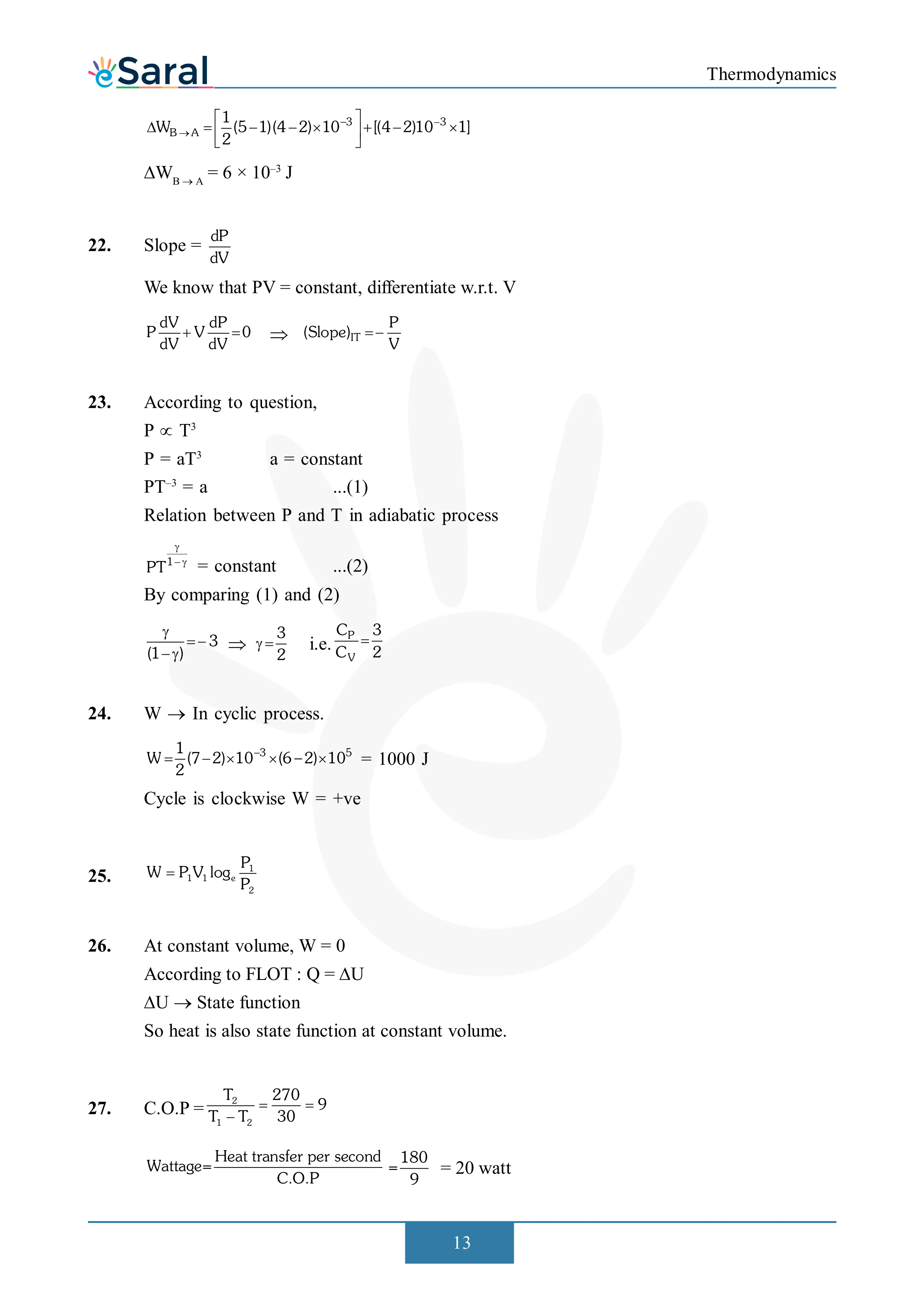
No. NEET is an MCQ exam and never asks for written derivations. However, understanding where formulas come from — for example, why W = nRT ln(V₂/V₁) for an isothermal process — helps you avoid sign errors and process-mix-ups under pressure. Kota-quality video explanations in the eSaral app (taught by IIT Bombay faculty) cover every derivation in under 15 minutes per topic.
What is the first law of thermodynamics in simple terms for NEET?
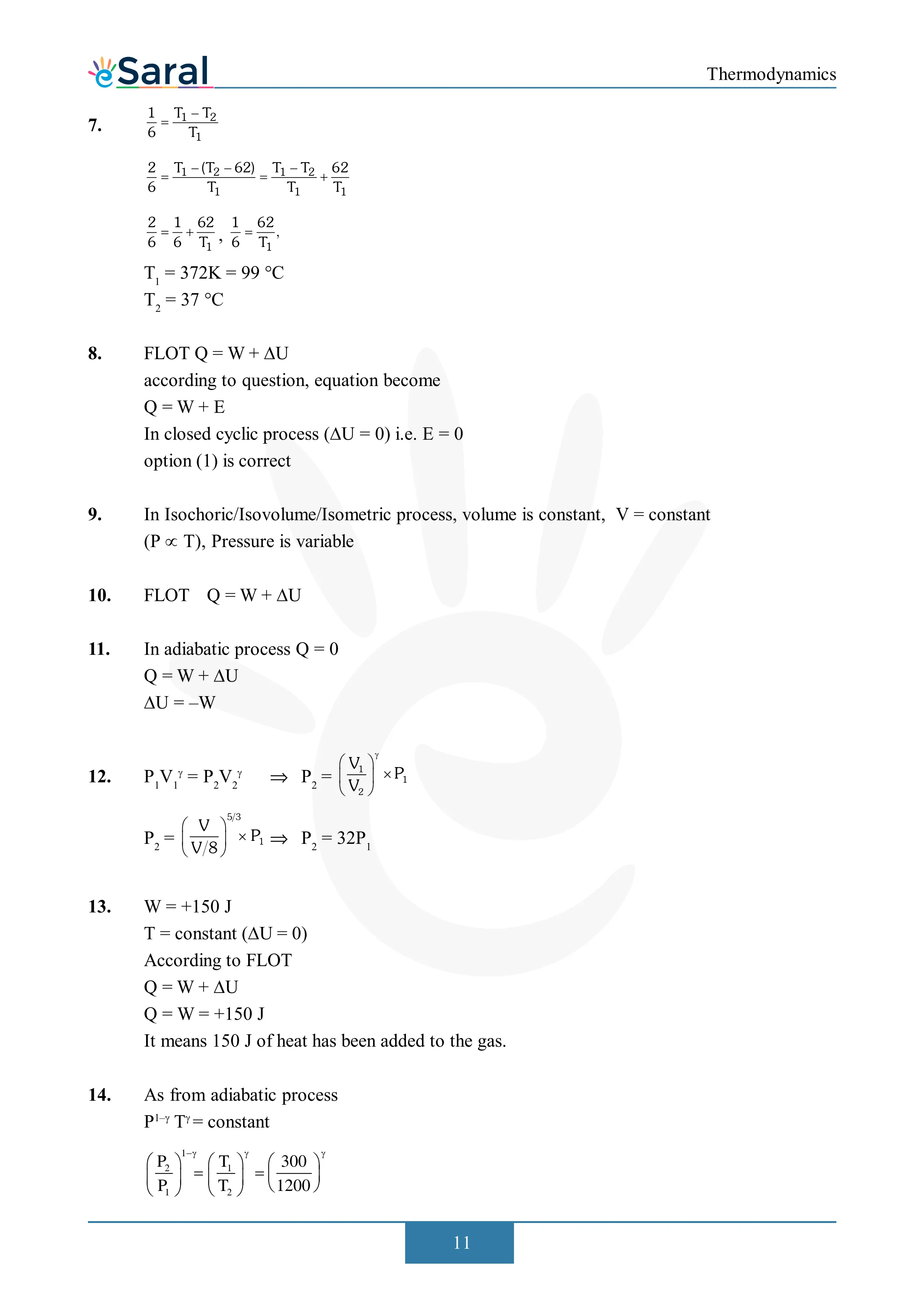
The first law states that energy cannot be created or destroyed — only converted. For NEET, the working equation is ΔU = Q − W, where ΔU is the change in internal energy, Q is heat absorbed by the system, and W is work done by the system. When a gas is compressed, W is negative, so ΔU increases even if no heat is added.