Waves Physics Class 11 Notes for IIT JEE and NEET
Table of Contents

eSaral › Class 11 Physics › Waves Notes for IIT JEE and NEET

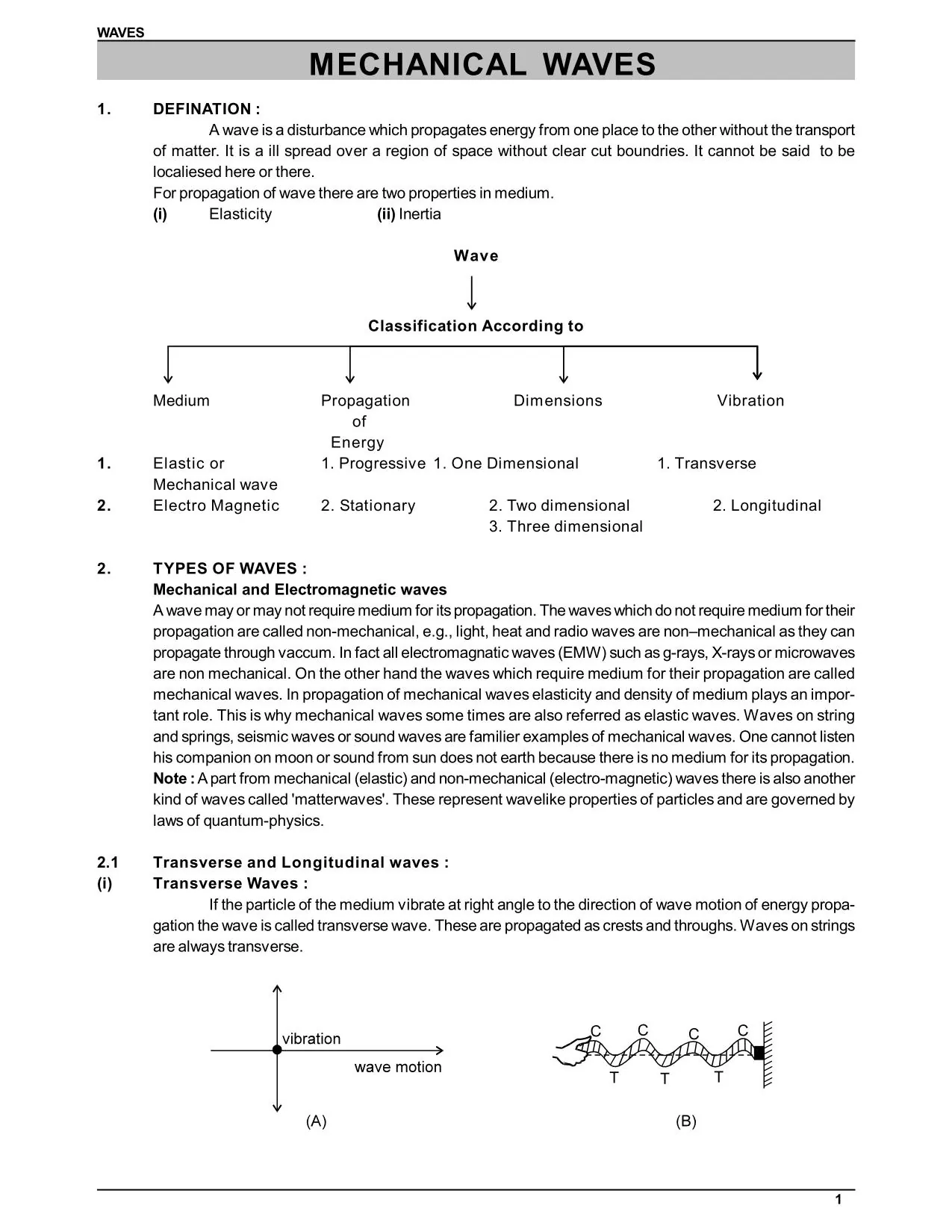
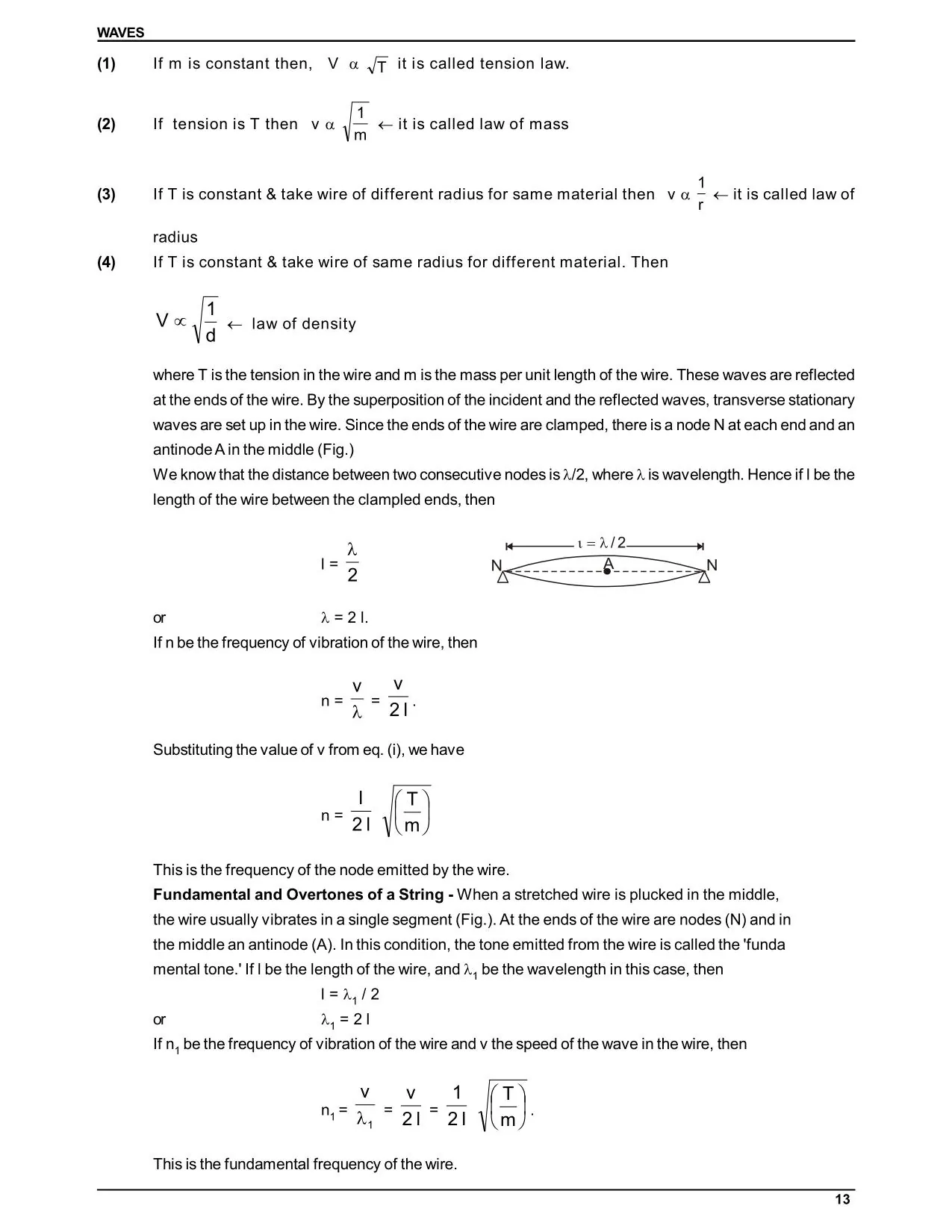
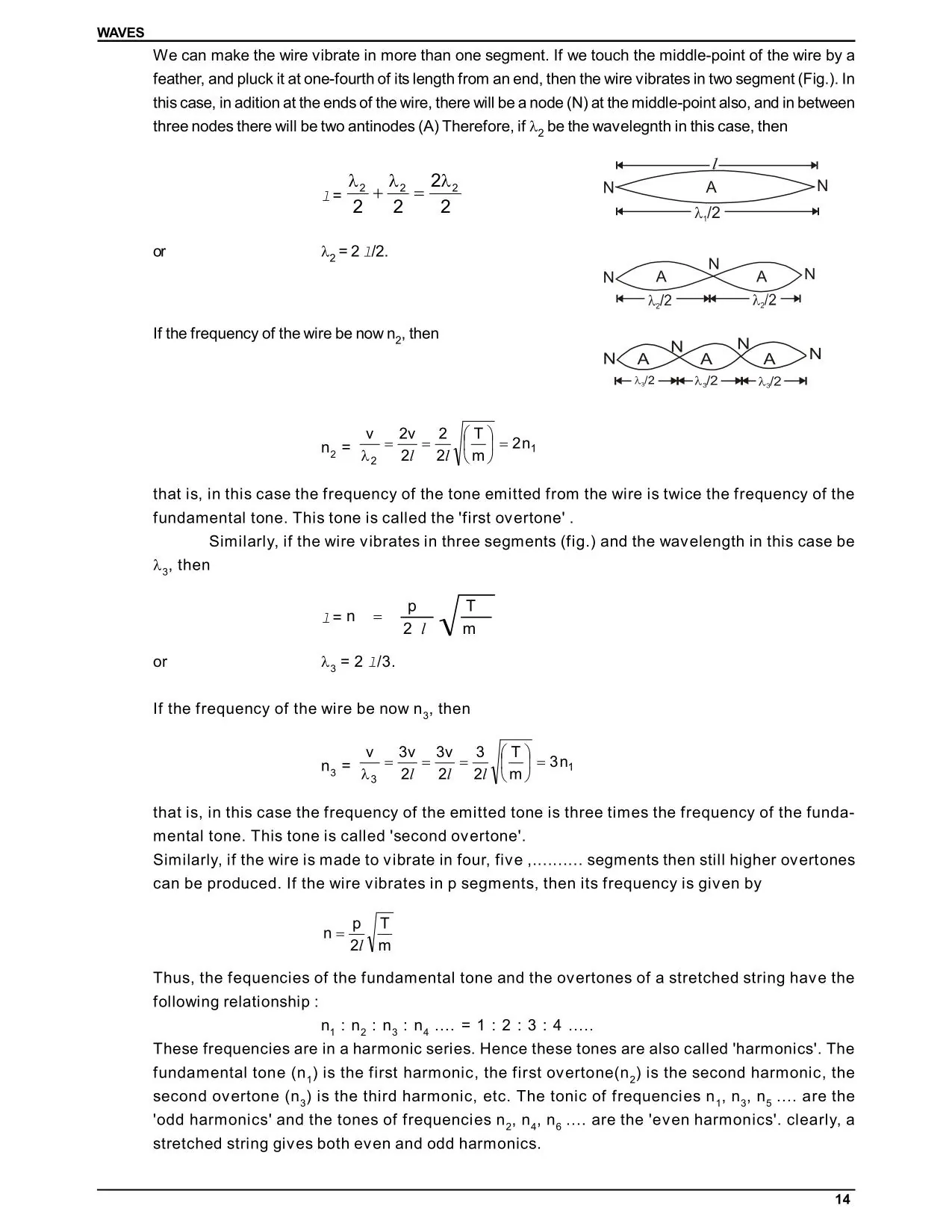
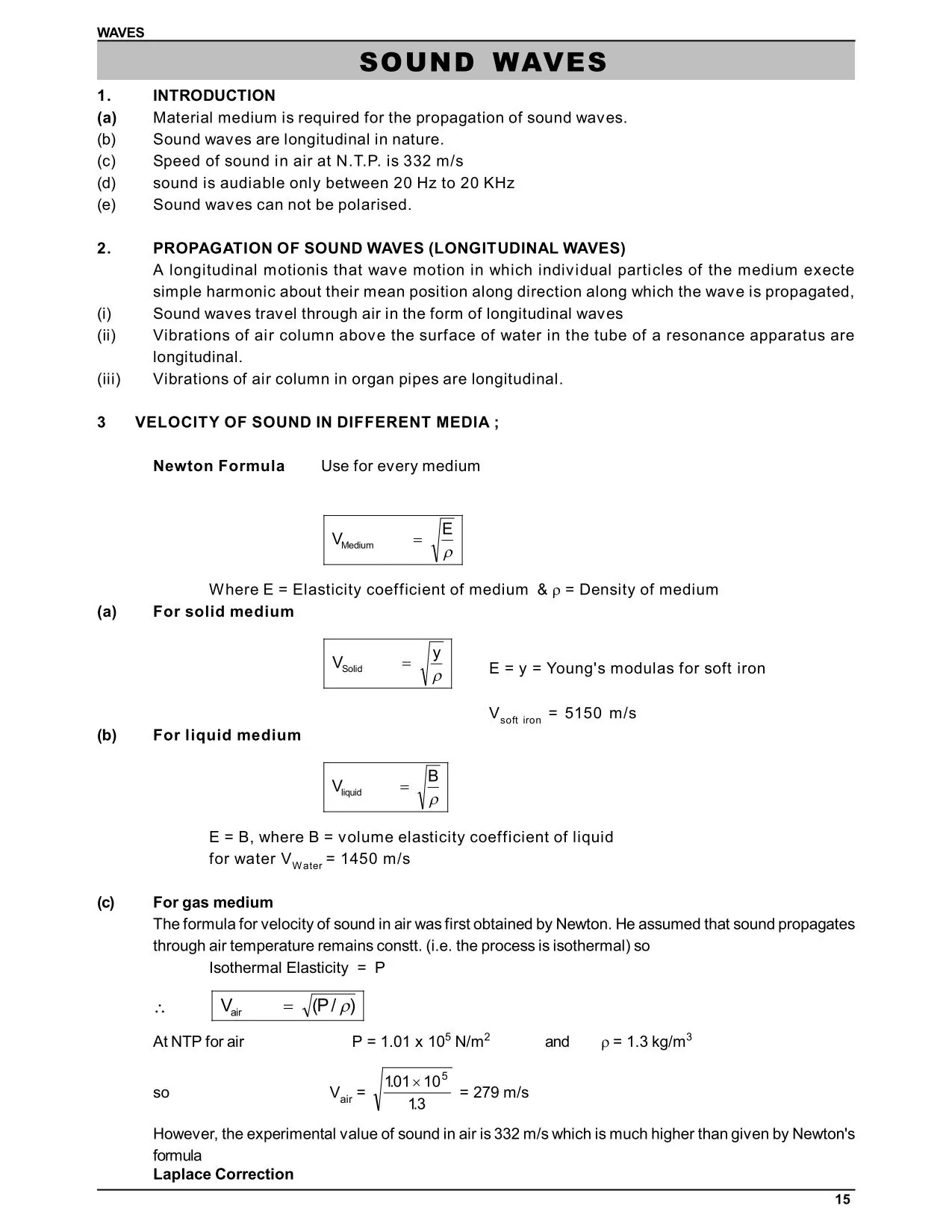
eSaral Provides free detailed notes on Wave Theory: Types of Mechanical Waves that will help you in exams like IIT JEE, NEET and Board Preparation. Waves Physics Class 11 Notes comprises Mechanical waves and its types, refraction and transmission of waves, sound waves & its propagation, standing waves, Resonance in Tubes, Doppler Effect and many more to learn in this chapter.
India's Best Exam Preparation for Class 11th - Download Now
India's Best Exam Preparation for Class 11th - Download Now 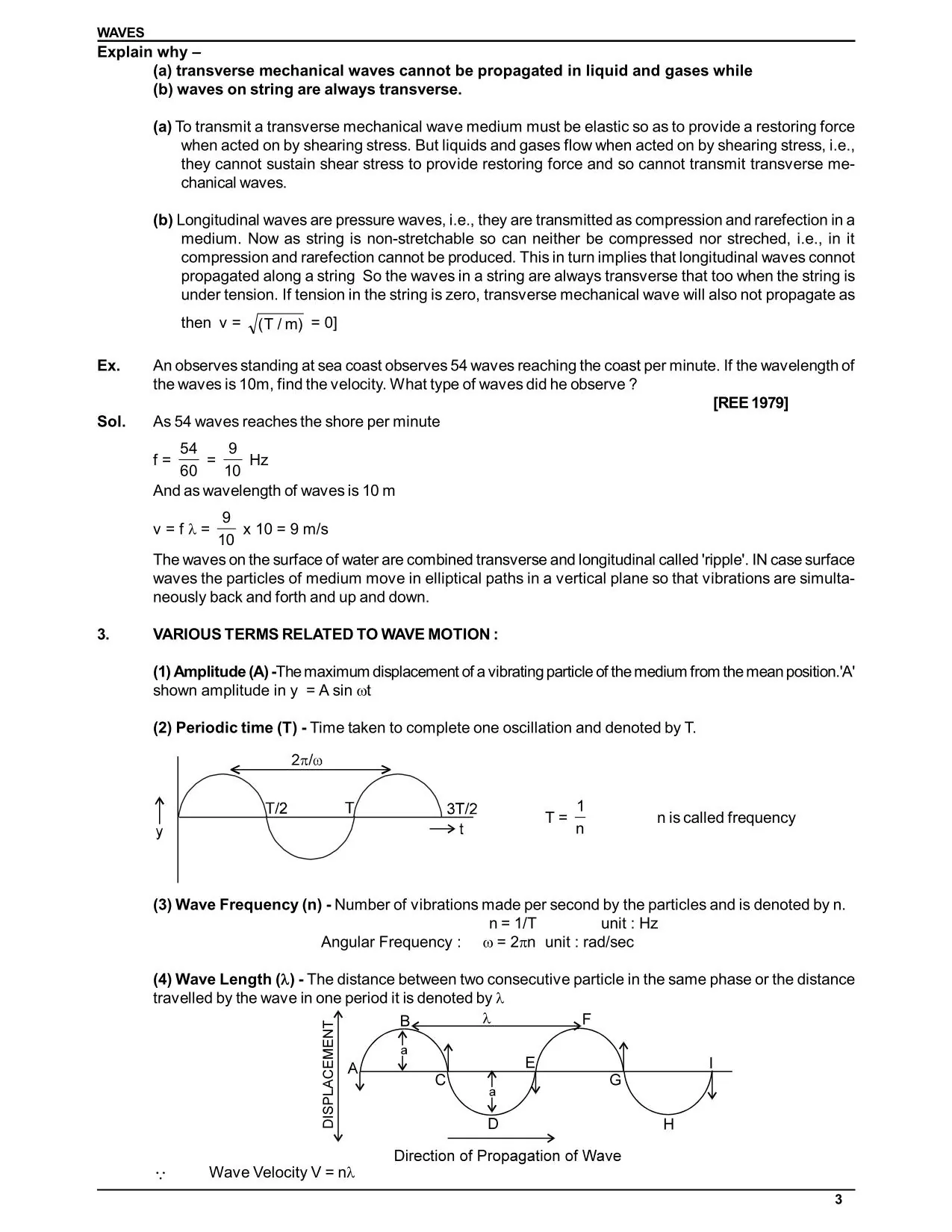
India's Best Exam Preparation for Class 11th - Download Now 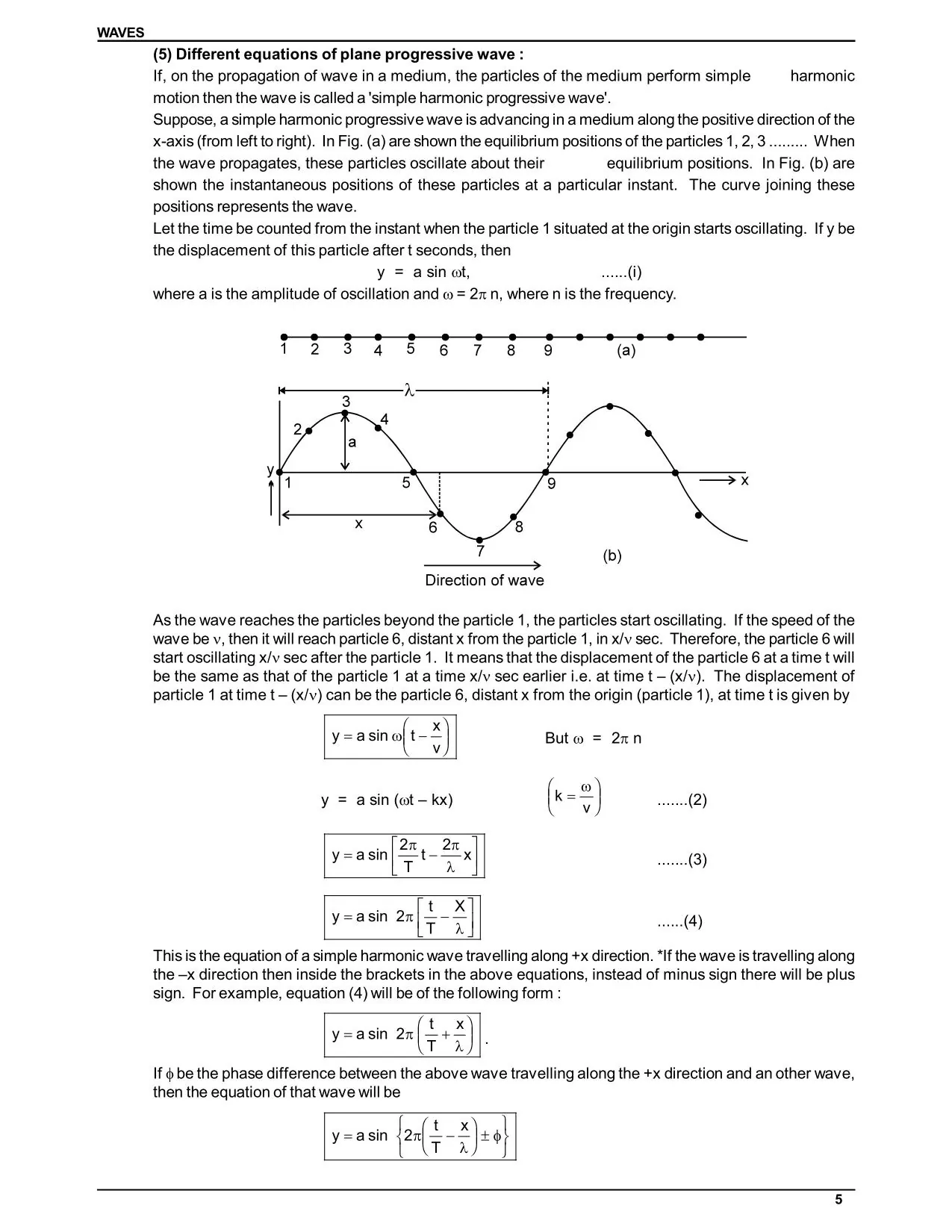
India's Best Exam Preparation for Class 11th - Download Now 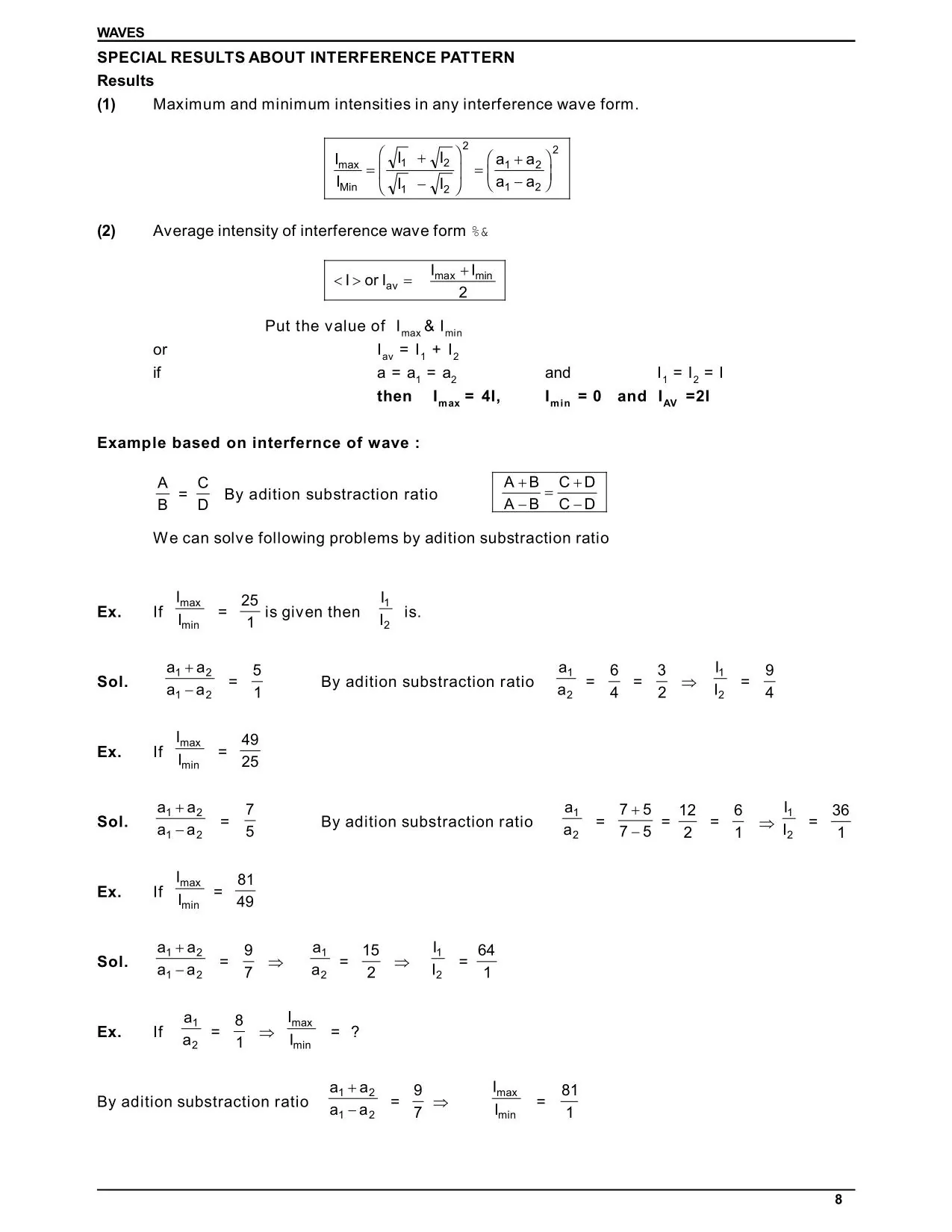
India's Best Exam Preparation for Class 11th - Download Now 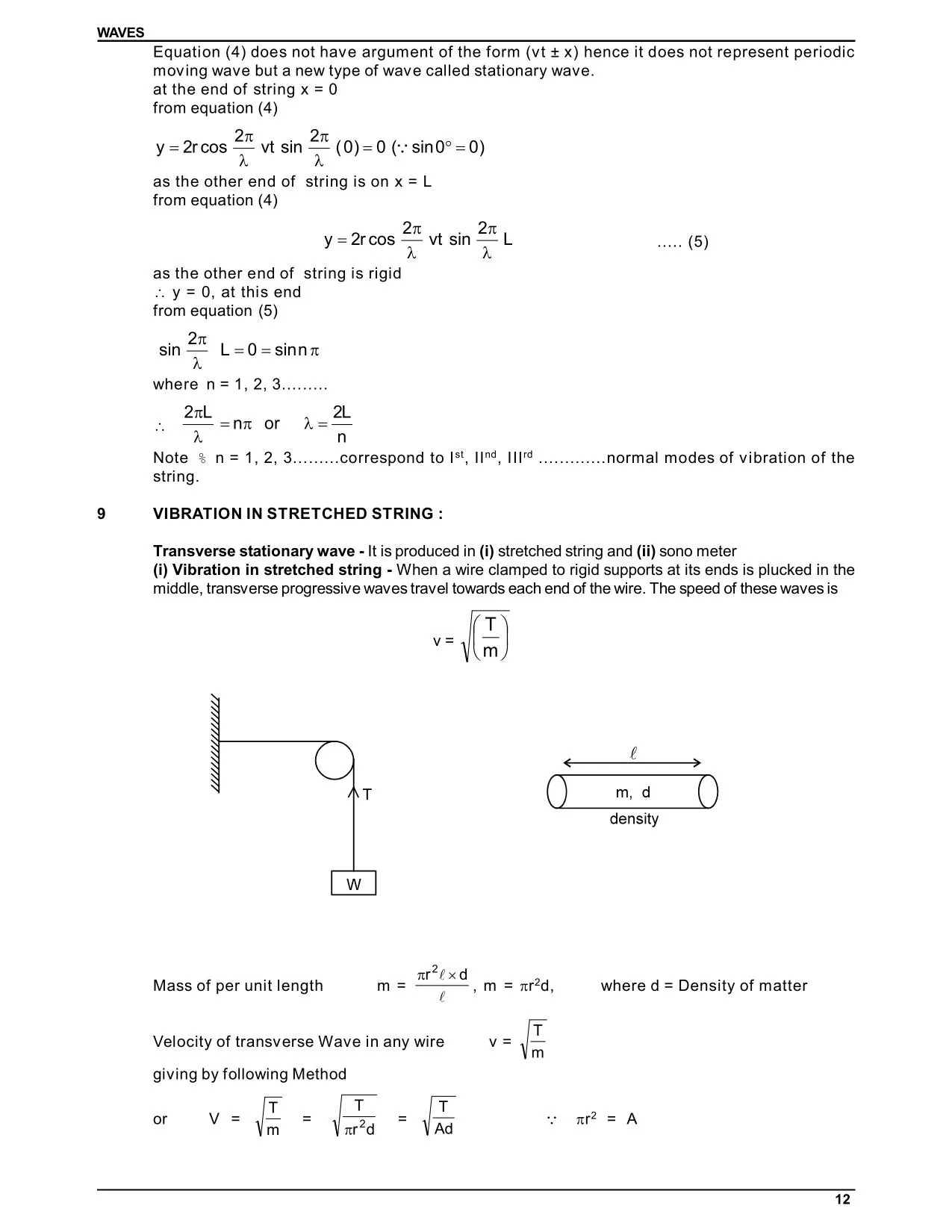
India's Best Exam Preparation for Class 11th - Download Now 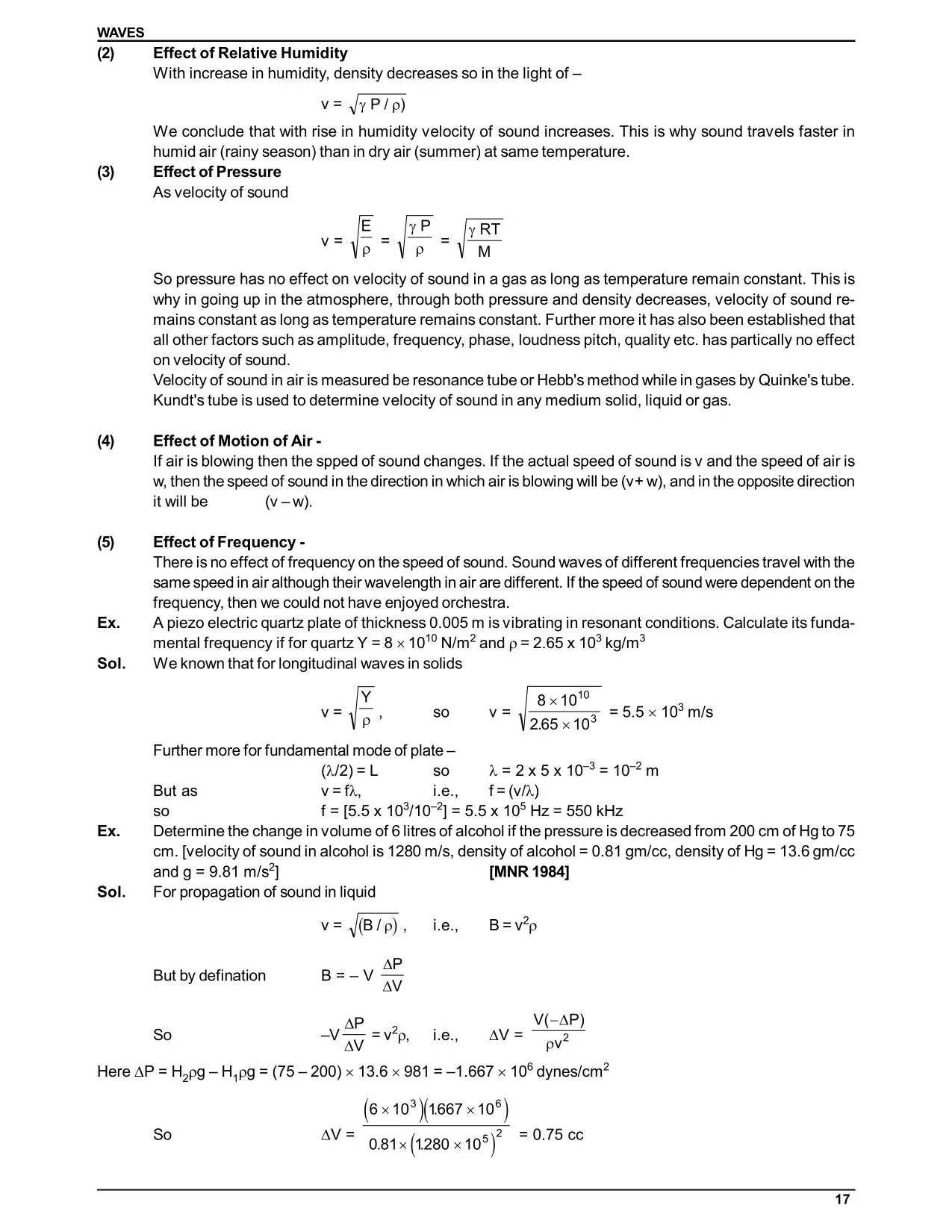
India's Best Exam Preparation for Class 11th - Download Now 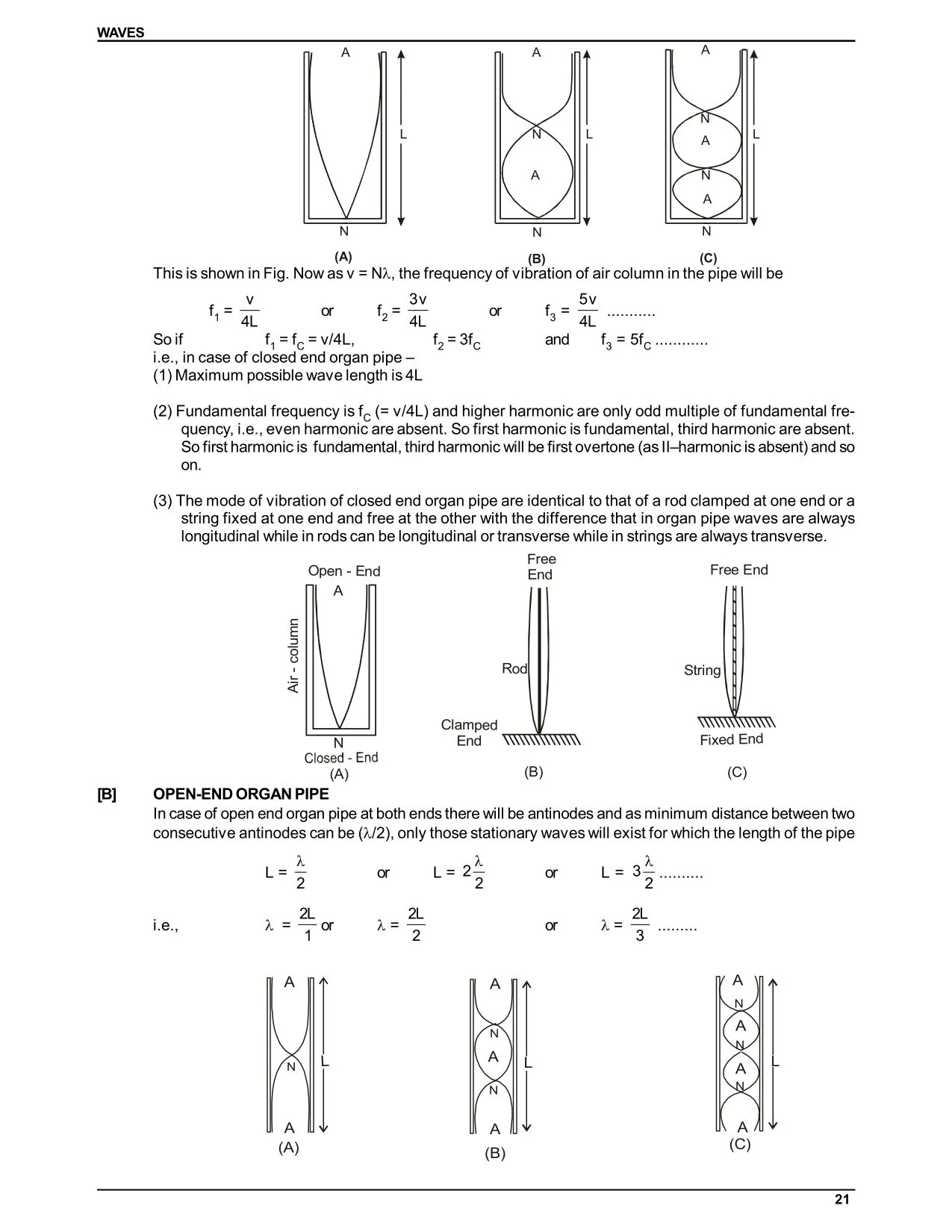
India's Best Exam Preparation for Class 11th - Download Now 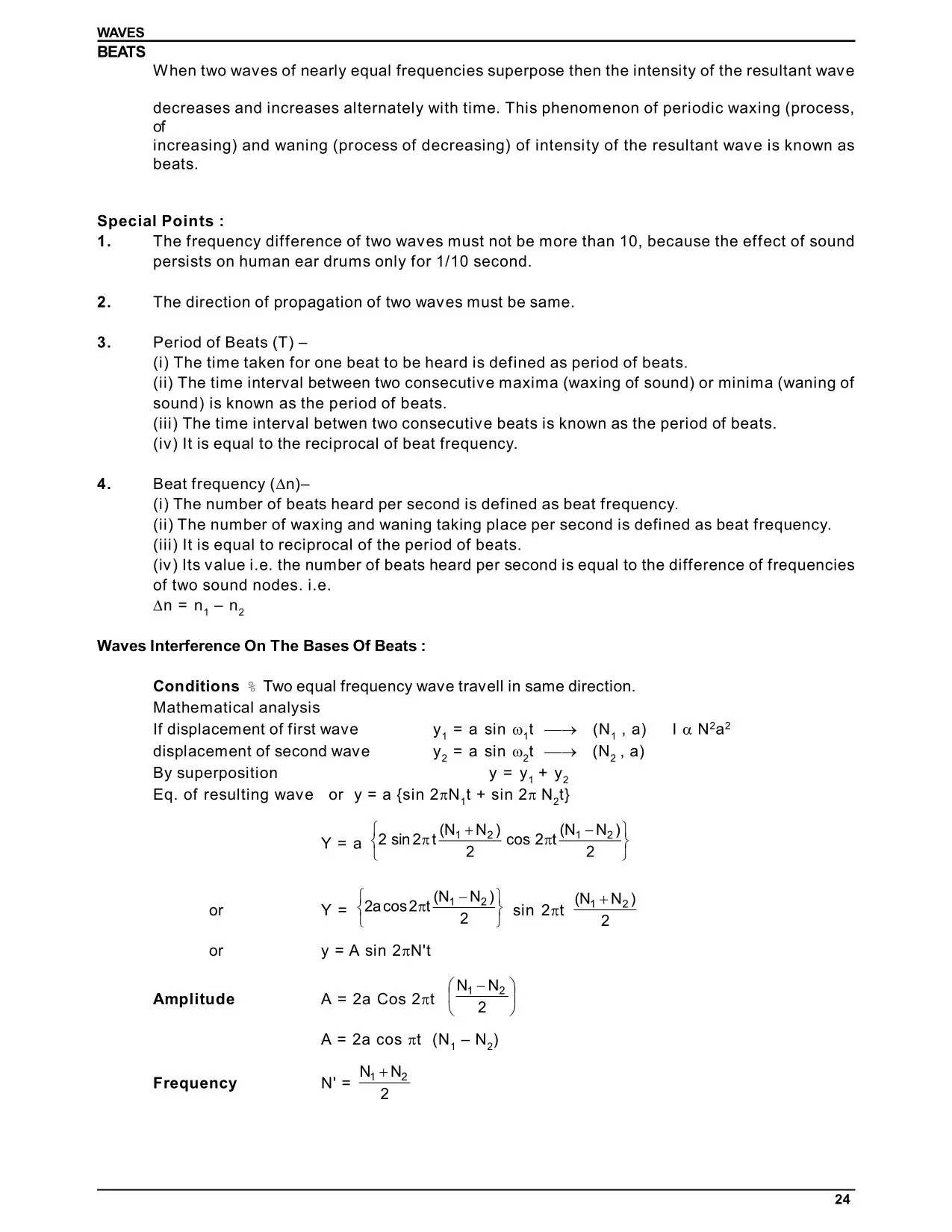
 India's Best Exam Preparation for Class 11th - Download Now
eSaral have already come up with an amazing revision series of Physics where you can easily revise your chapter within minutes with all the important formulae and key points. This revision series is free for all. Click Here for Complete Physics Revision Series by Saransh Gupta Sir (AIR-41) About Saransh Gupta Sir Computer Science Graduate from IIT Bombay. Cracked IIT-JEE with AIR-41 and AIEEE (JM) with AIR-71 in 2006. He is an author of JEE Mentorship Book “StrateJEE”. He taught Physics for 5 years at Allen and was loved immensely by all the students. Many of his students bagged success with flying colours in JEE & NEET Exams. eSaral brings you detailed Class 11th Physics study material. eSaral provides a series of detailed chapter wise notes for all the Subjects of class 11th and 12th. These notes will also help you in your IIT JEE & NEET preparations. We hope these Physics Notes for Class 11 will help you understand the important topics and remember the key points for the exam point of view. Get Complete Physics Notes for Physics Class 11 for easy learning and understanding. For free video lectures and complete study material, Download eSaral APP. About eSaral At eSaral we are offering a complete platform for IIT-JEE & NEET preparation. The main mission behind eSaral is to provide education to each and every student in India by eliminating the Geographic and Economic factors, as a nation’s progress and development depends on the availability of quality education to each and every one. With the blend of education & technology, eSaral team made the learning personalized & adaptive for everyone.
India's Best Exam Preparation for Class 11th - Download Now
Conclusion
Three key takeaways from Waves Physics Class 11
1. Master the wave equation first. Everything else — standing waves, beats, organ pipes — flows from understanding y = A sin(ωt ± kx) and what each parameter means physically.
2. Organ pipes and the Doppler Effect are the highest-return topics. Together, they account for roughly 2–3 questions across JEE Main and NEET annually. Practise sign-convention problems until they are instinctive.
3. Connect Class 11 waves to Class 12 content. Speed of light, electromagnetic wave properties, and even YDSE (Young's Double Slit Experiment) all build on the wave concepts in this chapter.
Bookmark this page and return before your next mock test for a quick refresher on the formulas.
Frequently Asked Questions
Find answers to common questions.
What is the difference between a closed and an open organ pipe?
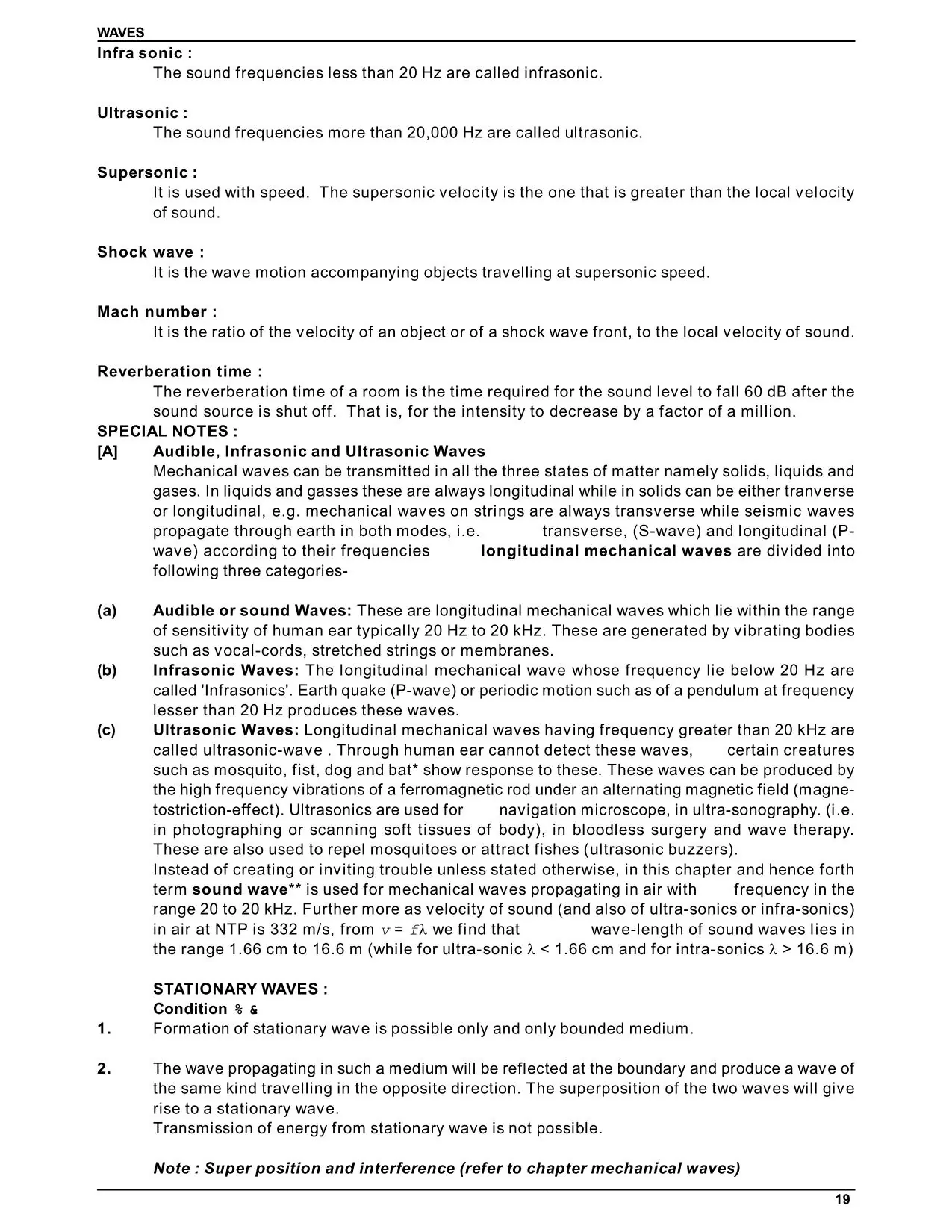
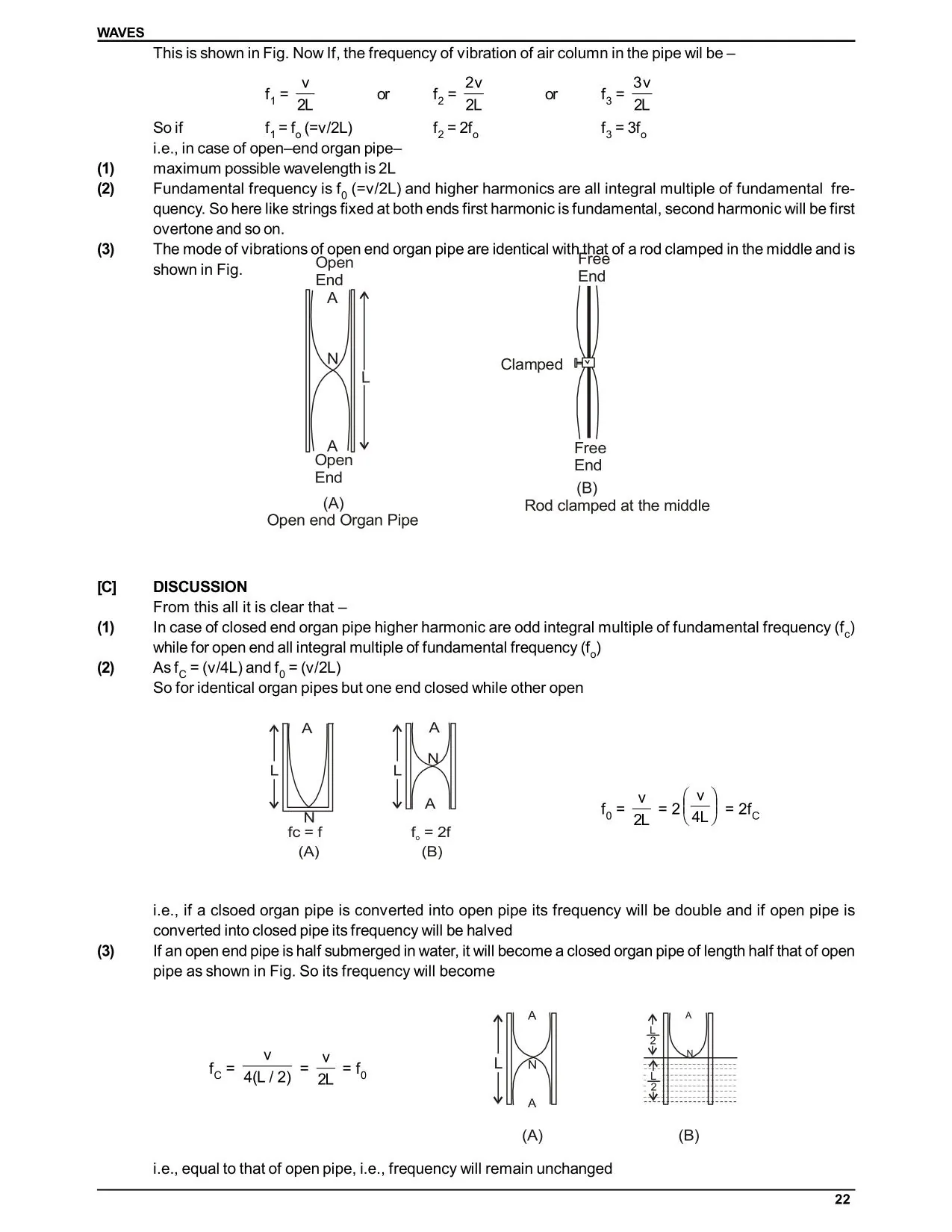
A closed organ pipe (one end closed) supports only odd harmonics and has fundamental frequency v/4L. An open organ pipe (both ends open) supports all harmonics and has fundamental frequency v/2L. For the same pipe length, the open pipe produces a higher pitch. NEET frequently asks you to compare harmonic series between the two.
What is the Doppler Effect and how is it tested in JEE Main?
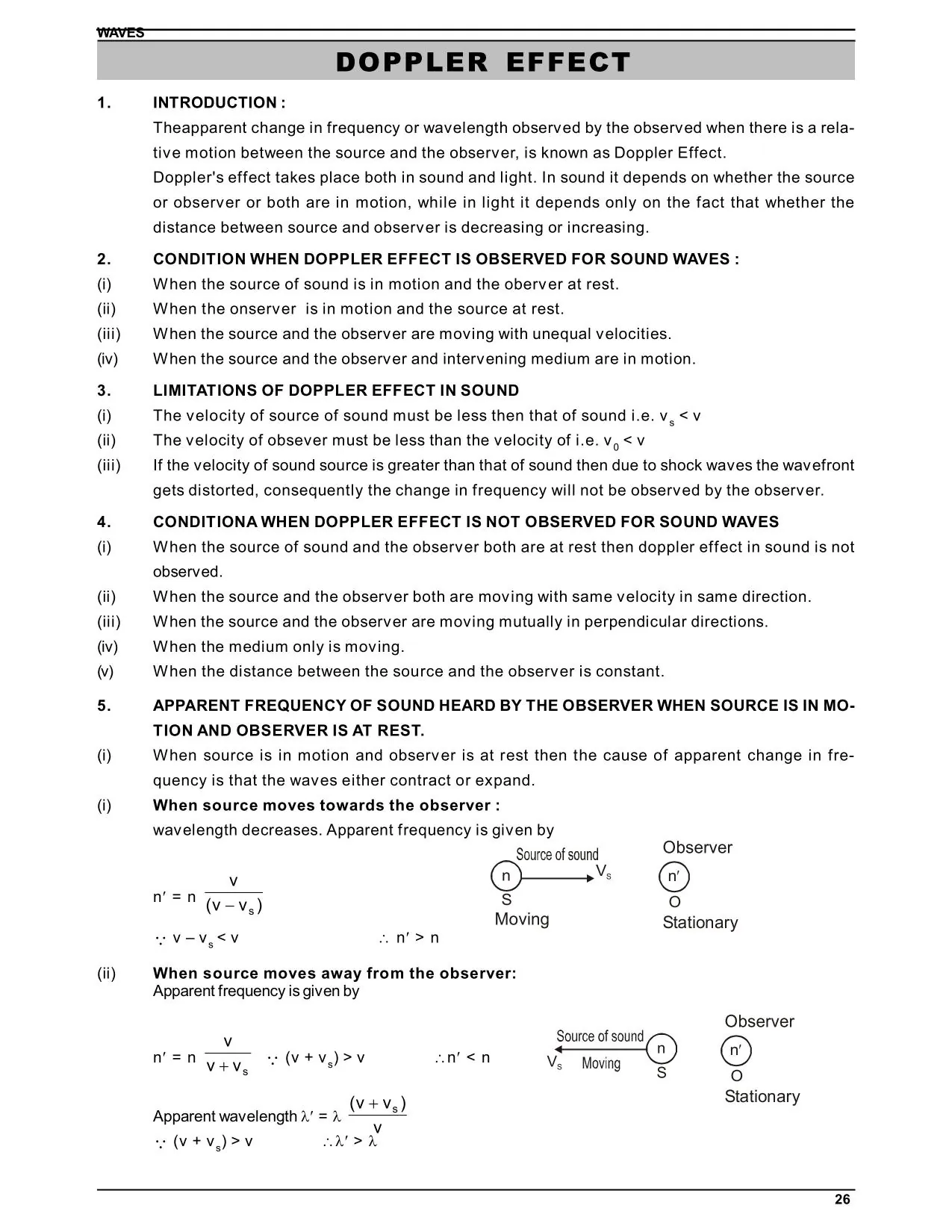
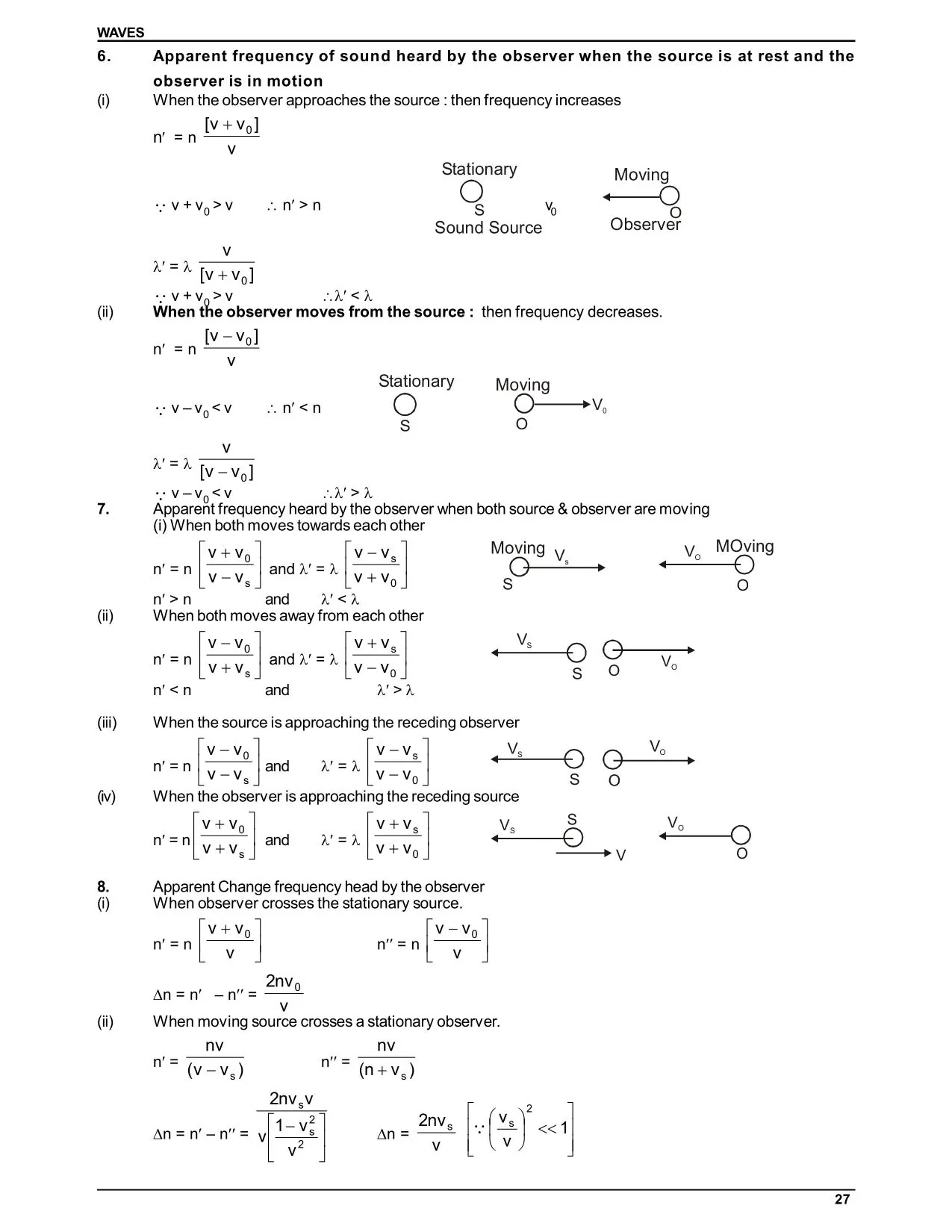
The Doppler Effect is the apparent change in frequency of sound due to relative motion between source and observer. JEE Main tests it through numerical problems requiring careful application of sign conventions. A common trap is reversing the sign of v₀ or v_s. Always identify whether each velocity increases or decreases the apparent frequency before substituting.
What are the main topics in the Waves chapter for JEE and NEET?
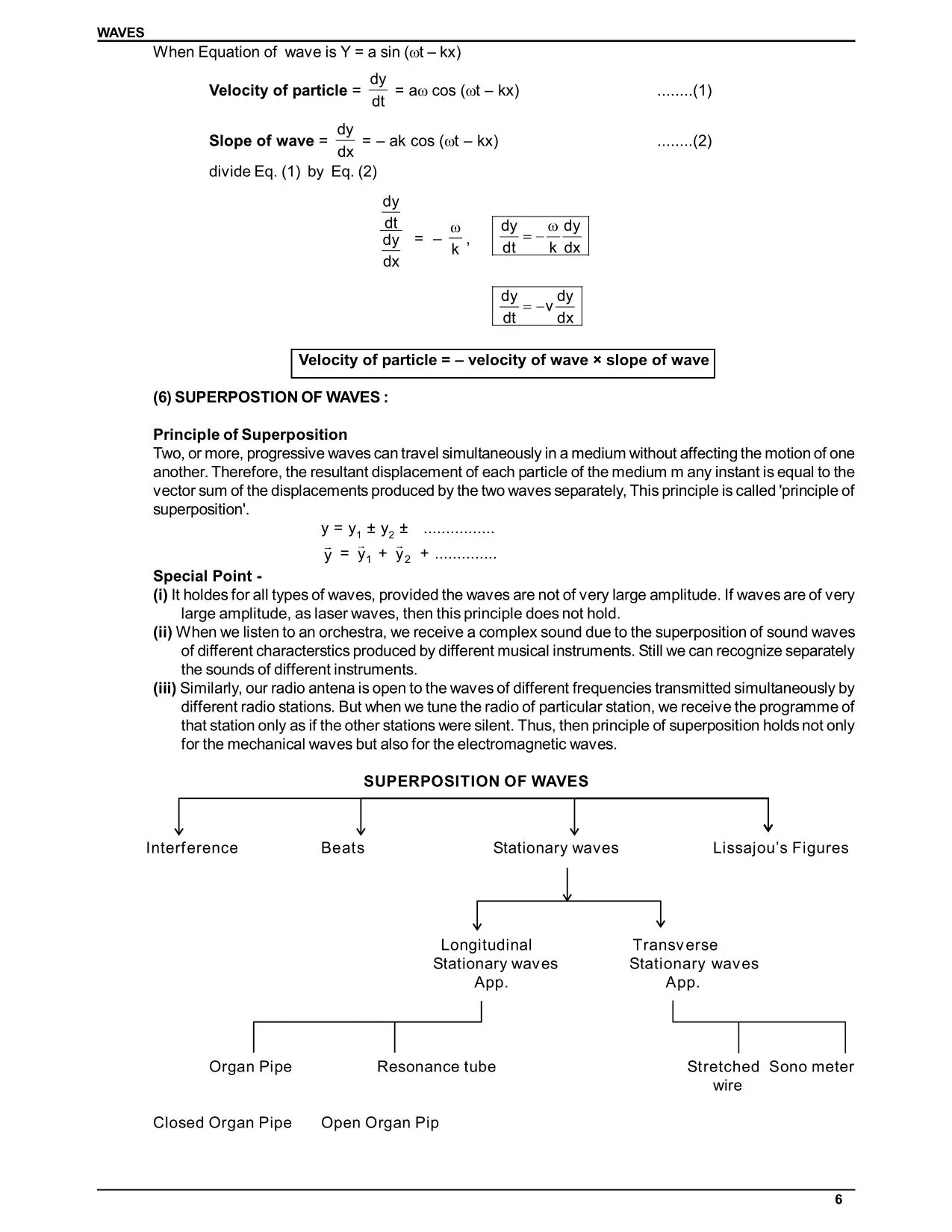
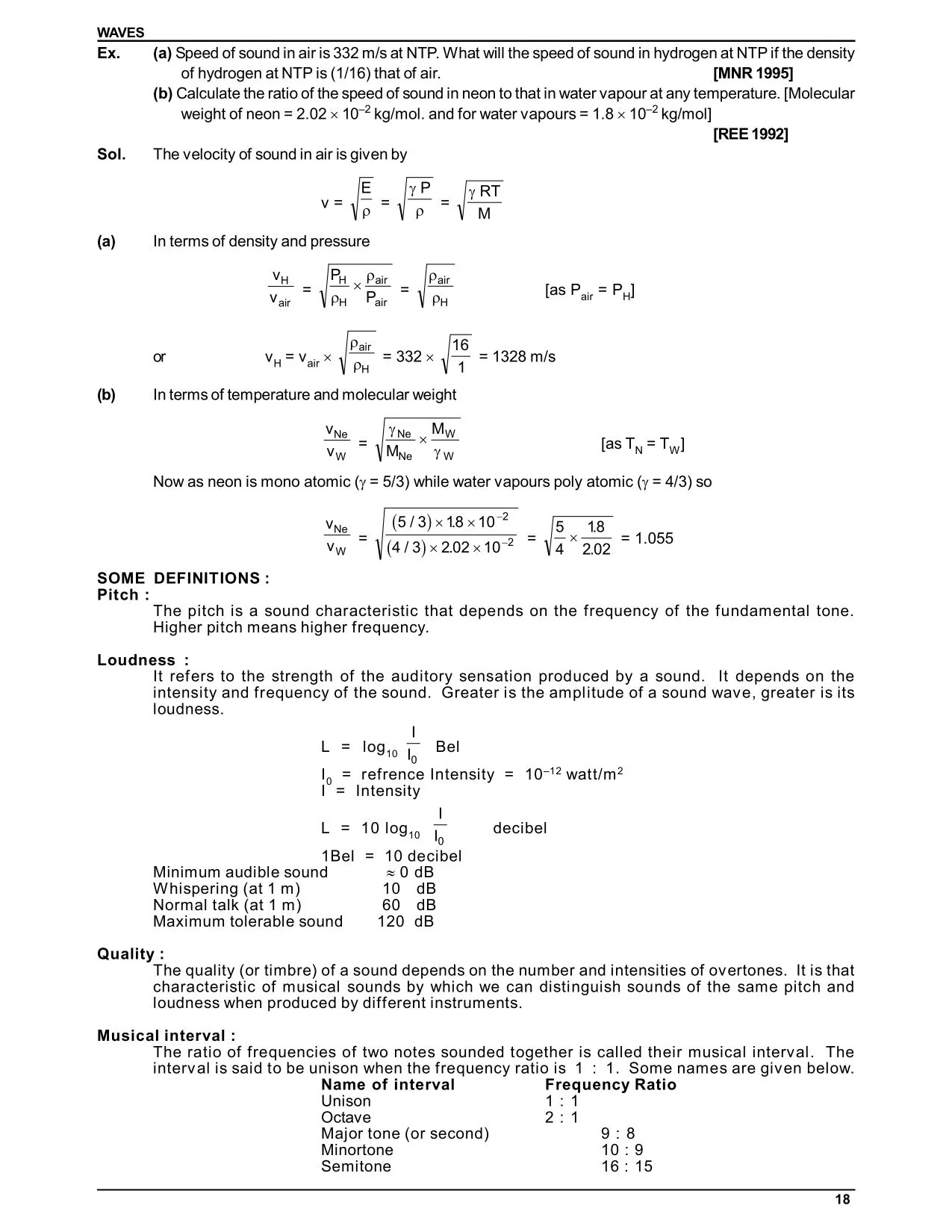
The Waves chapter covers transverse and longitudinal mechanical waves, the wave equation, speed of sound (Newton's and Laplace's formula), principle of superposition, beats, standing waves on strings, resonance in open and closed organ pipes, and the Doppler Effect. For JEE Main, Doppler Effect and organ pipes together contribute roughly 1–2 questions per session.
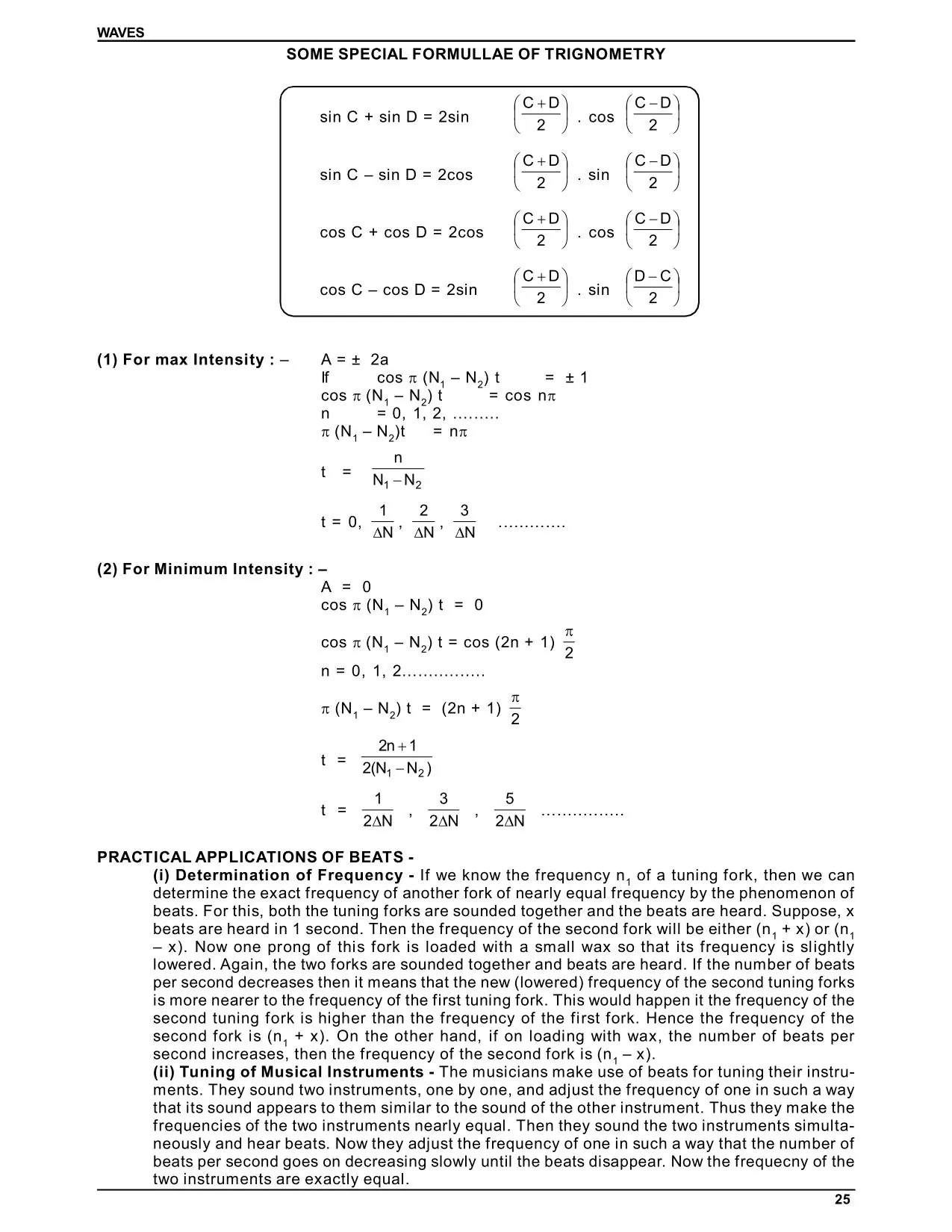
What is beat frequency and how is it calculated?
Beat frequency equals the absolute difference between the frequencies of two superposing waves: f_beat = |f₁ − f₂|. Beats are heard as periodic variations in loudness. If a tuning fork of 256 Hz and another of 260 Hz are sounded together, you hear 4 beats per second. Human ears can detect up to about 7 beats per second before the effect blends into a continuous tone.
Why does sound travel faster in summer than in winter?
Speed of sound in a gas is proportional to √T, where T is the absolute temperature in Kelvin. Higher temperatures increase molecular kinetic energy, reducing the time between compressions. At 0°C (273 K), v ≈ 332 m/s. At 27°C (300 K), v ≈ 347 m/s. This temperature dependence is a common one-mark question in NEET.
How do standing waves form, and what are nodes and antinodes?
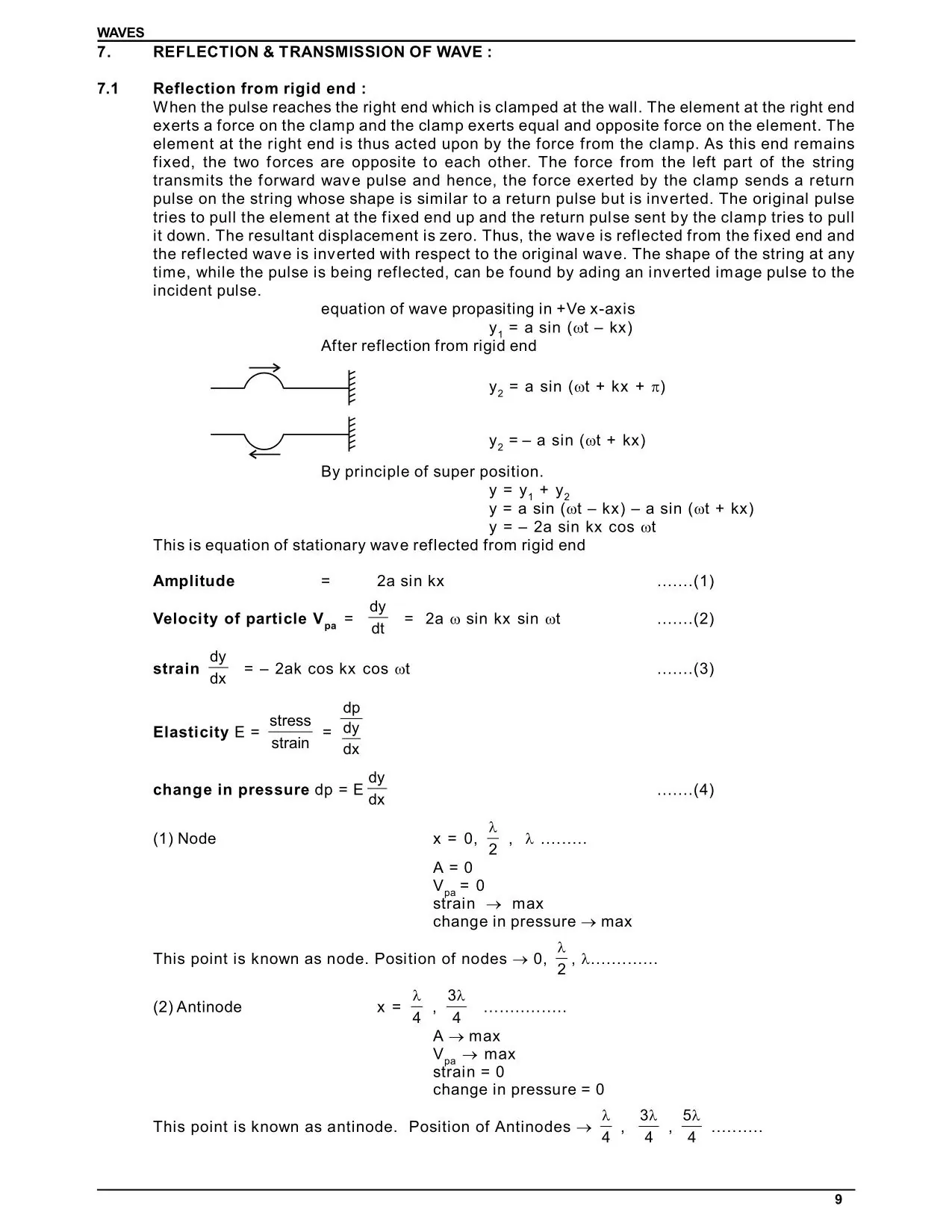
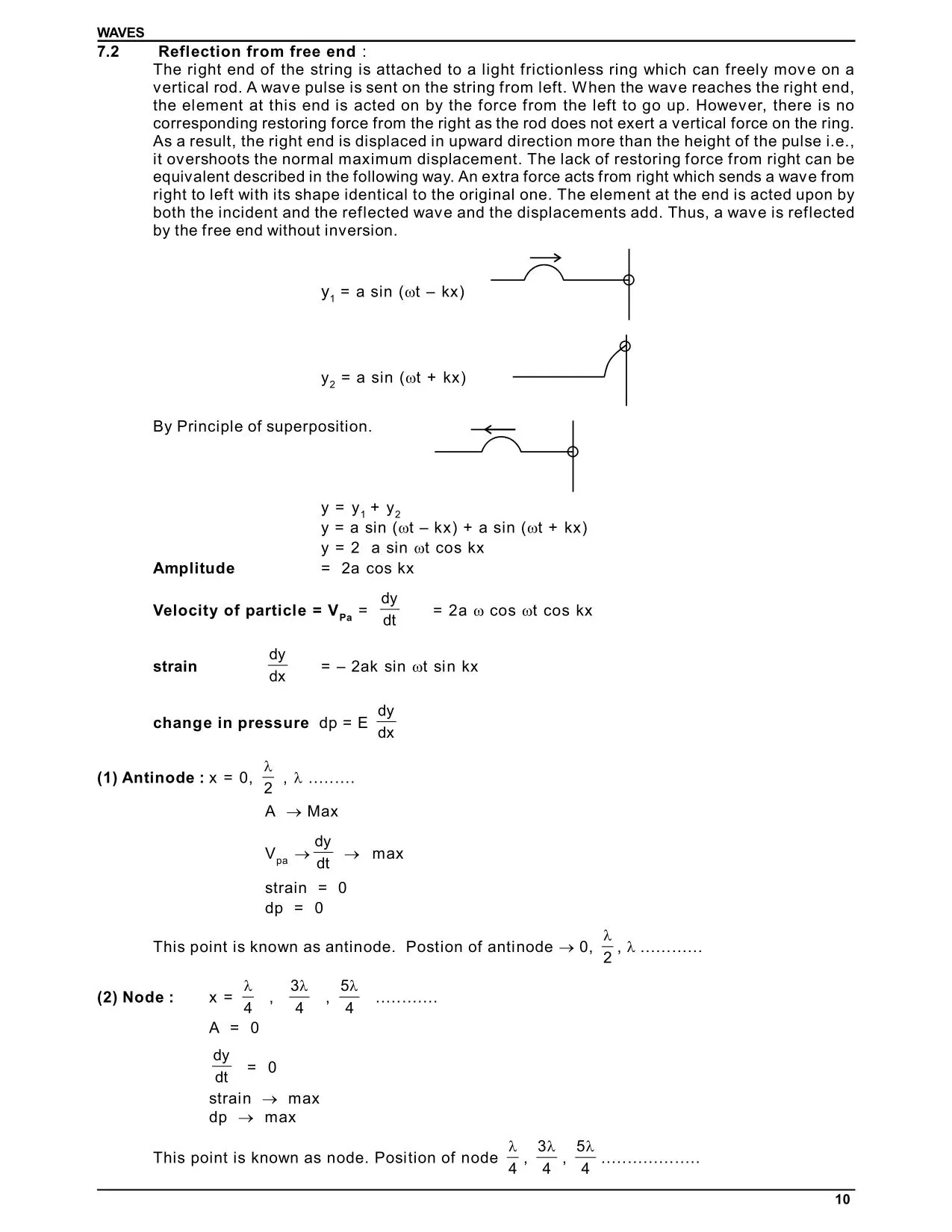
Standing waves form when two identical waves travel in opposite directions in the same medium. At nodes, displacement is always zero. At antinodes, displacement oscillates with maximum amplitude. Consecutive nodes (or antinodes) are separated by λ/2. This geometry directly determines allowed frequencies in strings and pipes.