Important Questions of Units and Measurement Class 11 Physics

eSaral › Class 11 › Physics › Important Questions of Units and Measurement

Get important questions of Units and Measurement Class 11 Physics exams. View 11th Physics other chapters' important questions from an exam point of view. These important questions will play a significant role in clearing concepts of the subject. This question bank is designed by top IITian Faculties keeping NCERT in mind, and the questions are updated with respect to upcoming Board exams.
India's Best Exam Preparation for Class 11th - Download Now
You will get here all the important questions with answers for the class 11 Physics Chapter Units and Measurement. Click Here for Detailed Notes of Units and Measurements along with any chapter. Subscribe to the eSaral YouTube channel for awesome videos of each concept. Find answers to common questions. Accuracy refers to how close a measured value is to the true or accepted value. Precision refers to how consistent repeated measurements are with each other, regardless of whether they match the true value. A measurement can be precise but inaccurate (systematic error), or accurate but imprecise (random error). Yes, Units and Measurement is directly tested in JEE Main every year. Questions typically involve dimensional analysis to verify or derive formulae, unit conversion between CGS and SI systems, and error analysis in measurements. According to NTA's official JEE Main question paper trends, at least 1–2 questions appear from this chapter annually. For CBSE boards, focus on: definitions of SI units and supplementary units, significant figures, types of errors (systematic, random, gross), error propagation in addition/multiplication, and the NCERT numericals on the Moon, Sun and quasars. These topics together account for the majority of questions that appear in board papers. Write the dimensional formula for every physical quantity in the equation. Substitute these into the equation and simplify both sides. If the dimensions on the left-hand side equal those on the right-hand side, the equation is dimensionally consistent. For example, for v = u + at: [LT⁻¹] = [LT⁻¹] + [LT⁻²][T] = [LT⁻¹]. Both sides match, so the formula is dimensionally correct. Fundamental (or base) units measure quantities that are independent of each other — there are 7 in the SI system (metre, kilogram, second, ampere, kelvin, mole, candela). Derived units are combinations of fundamental units used to measure dependent physical quantities. For example, the newton (N = kg·m·s⁻²) is derived from the fundamental units of mass, length, and time. All non-zero digits are significant. Zeros between non-zero digits are significant. Leading zeros (before the first non-zero digit) are not significant. Trailing zeros after a decimal point are significant. For example: 0.00450 has 3 significant figures; 4500 has 2 significant figures (unless a decimal point is shown). Systematic error is consistent and repeatable — it occurs in the same direction every time due to faulty instruments, incorrect calibration, or a flawed measurement technique. Random error is unpredictable and varies in direction from one measurement to another, caused by small fluctuations in the environment. Systematic errors can be corrected; random errors can be reduced by taking multiple measurements and averaging.





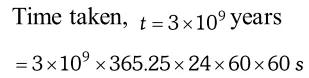
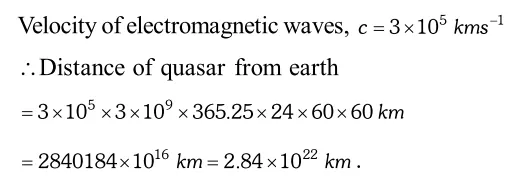
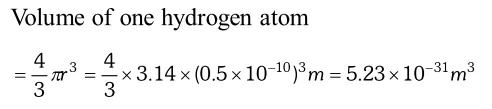
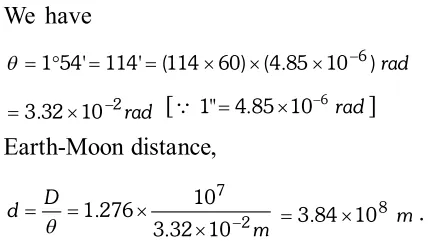









Download the eSaral app to get an expert's guidance for the Boards, JEE and NEET exams.
Frequently Asked Questions
Comments