Wave Optics - NEET Previous Year Questions with Complete Solutions
Wave Optics is a high-weightage NEET Physics chapter where mastering previous year questions on concepts like interference, diffraction, fringe width, and Brewster’s angle can significantly improve exam scores.
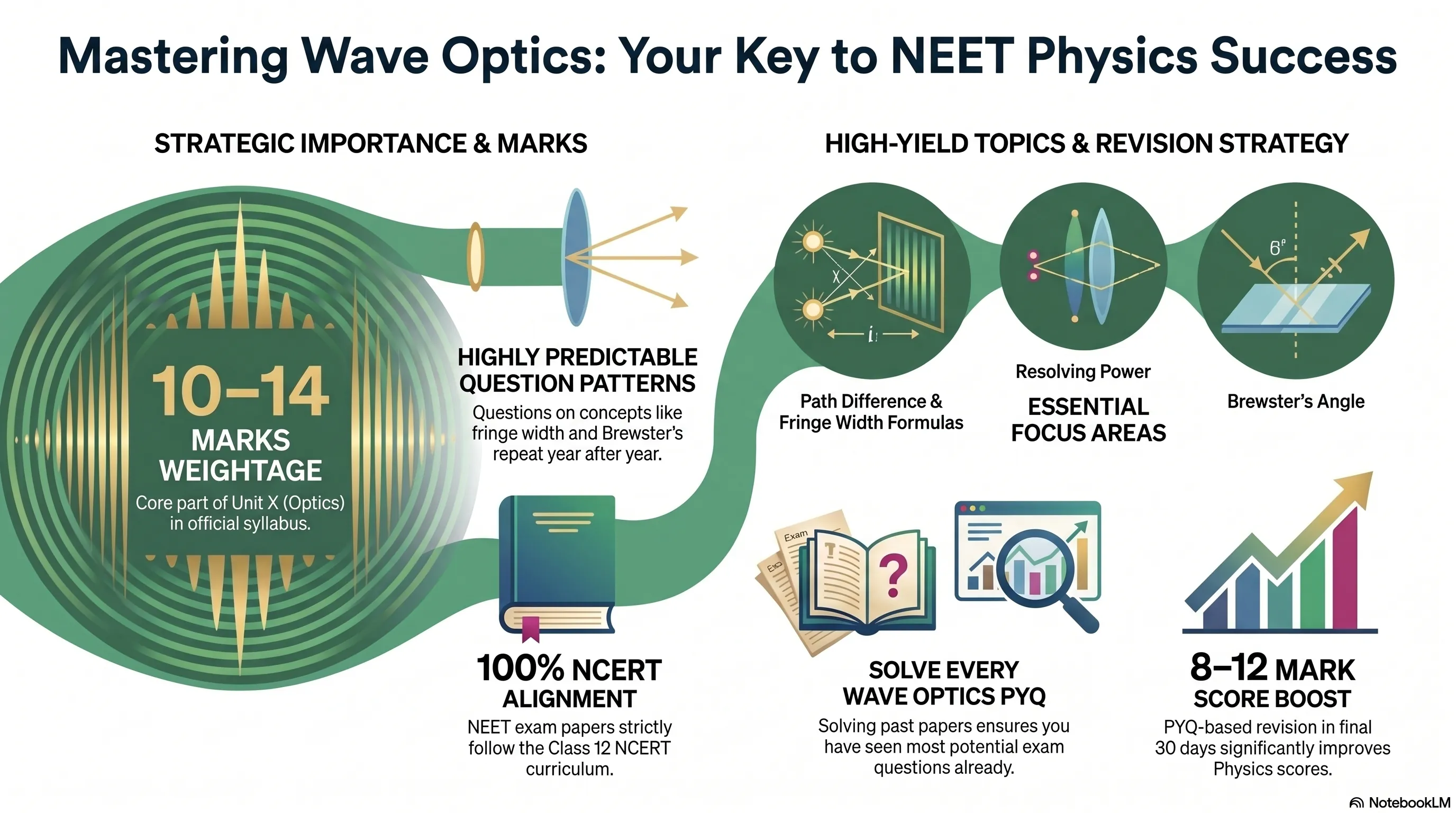
Table of Contents

eSaral › NEET ›Wave Optics - NEET Previous Year Questions with Complete Solutions

Why Wave Optics Matters for NEET
Wave Optics is one of the most reliably tested chapters in NEET Physics. According to NTA's official NEET syllabus (based on the NCERT Class 12 Physics curriculum), this chapter forms part of Unit X — Optics — which historically contributes 10–14 marks to the Physics section.
Unlike many chapters where questions are unpredictable, Wave Optics questions follow clear, repeating patterns. The same concepts — path difference, fringe width formula, resolving power, Brewster's angle — appear year after year, sometimes in nearly identical form. That means a student who has carefully solved every Wave Optics NEET PYQ has already seen most of what the exam can throw at them.
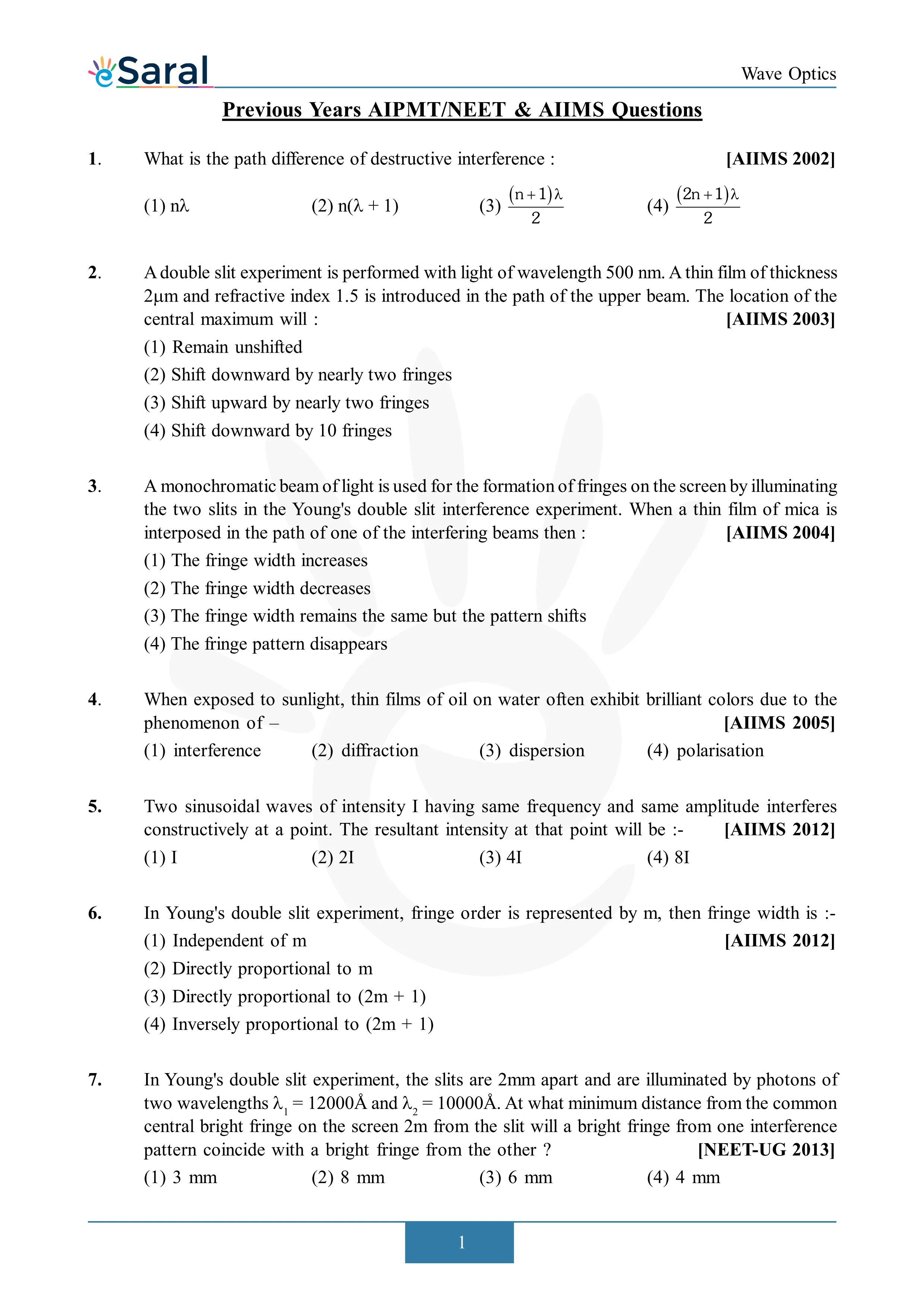
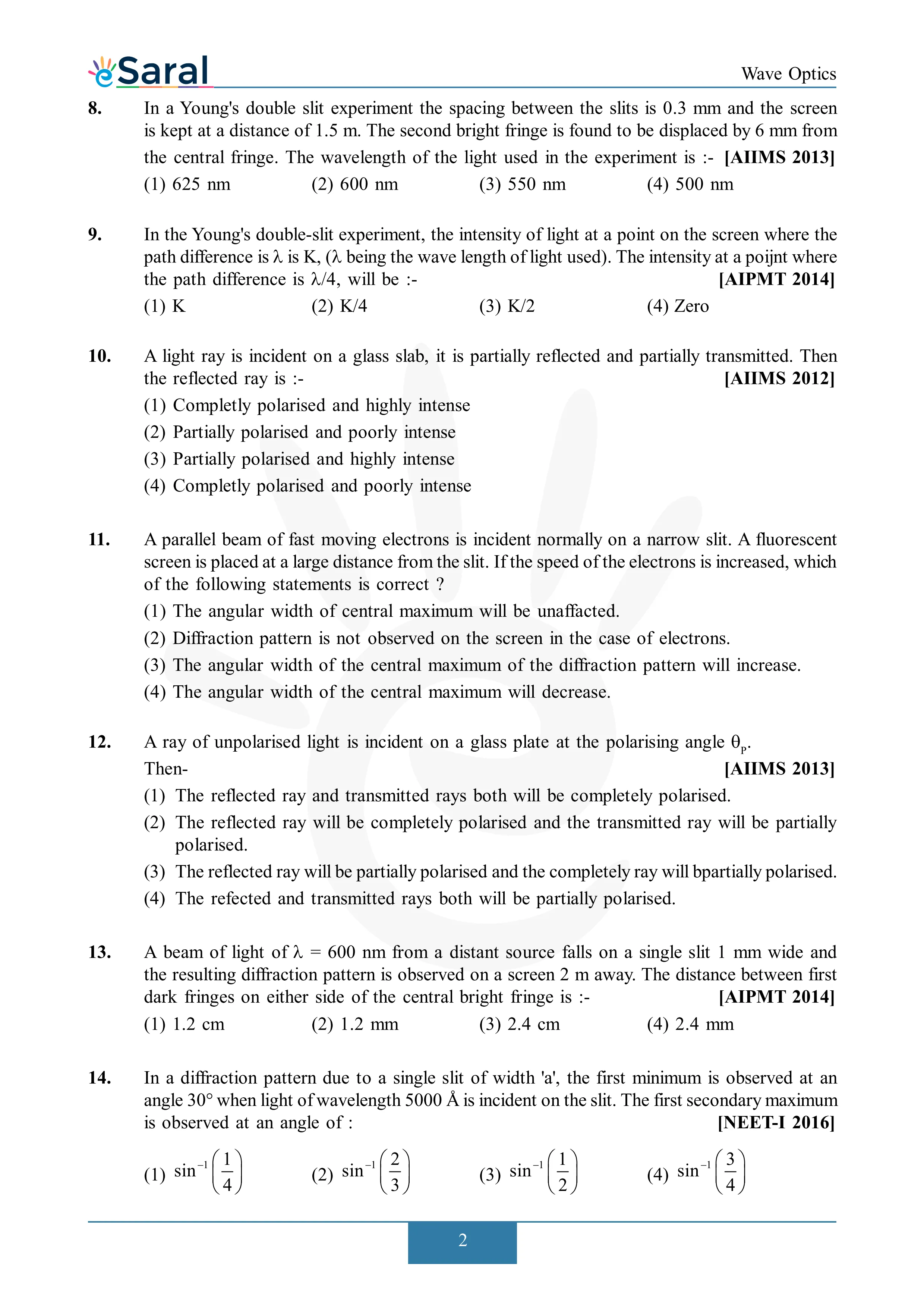
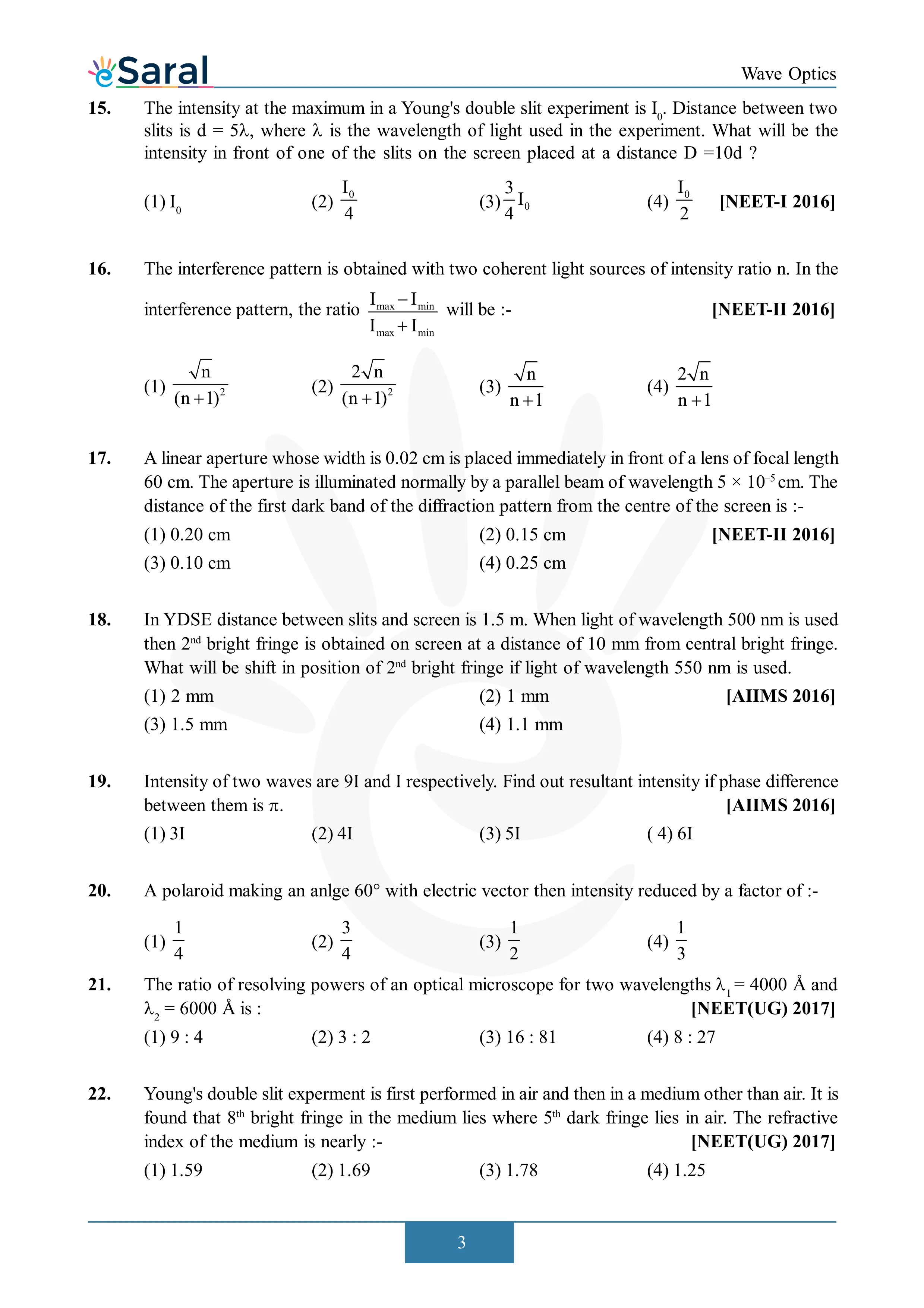
Students preparing with eSaral's faculty — including IIT Bombay toppers like AIR-41 Saransh Gupta — consistently report that PYQ-based revision in the final 30 days adds 8–12 marks to their Physics score. This page gives you every Wave Optics NEET question from past papers, solved with full working so you understand the why, not just the answer.
For a strong foundation alongside these PYQs, also work through the NCERT Solutions for Class 12 Physics — the NEET paper is almost entirely NCERT-aligned for this chapter.
Wave Optics - NEET Previous Year Questions with Complete Solutions
Frequently Asked Questions
Find answers to common questions.
How many questions come from Wave Optics in NEET every year?
Wave Optics typically contributes 2–3 questions (8–12 marks) in NEET Physics every year. Young's double slit experiment is the most frequently tested concept, appearing at least once in almost every paper. Polarisation and diffraction each appear roughly once every two years. Consistent preparation on this chapter gives a reliable return on study time.
Is Wave Optics difficult for NEET?
Wave Optics is moderately difficult for NEET. The theory portions — Huygens' principle, types of wavefronts, polarisation basics — are straightforward and direct. Numerical questions on YDSE and intensity calculations require formula fluency. Students who practise 20–25 PYQs with solutions typically find the chapter very manageable within 10–12 hours of focused preparation.
What is the most important formula in Wave Optics for NEET?
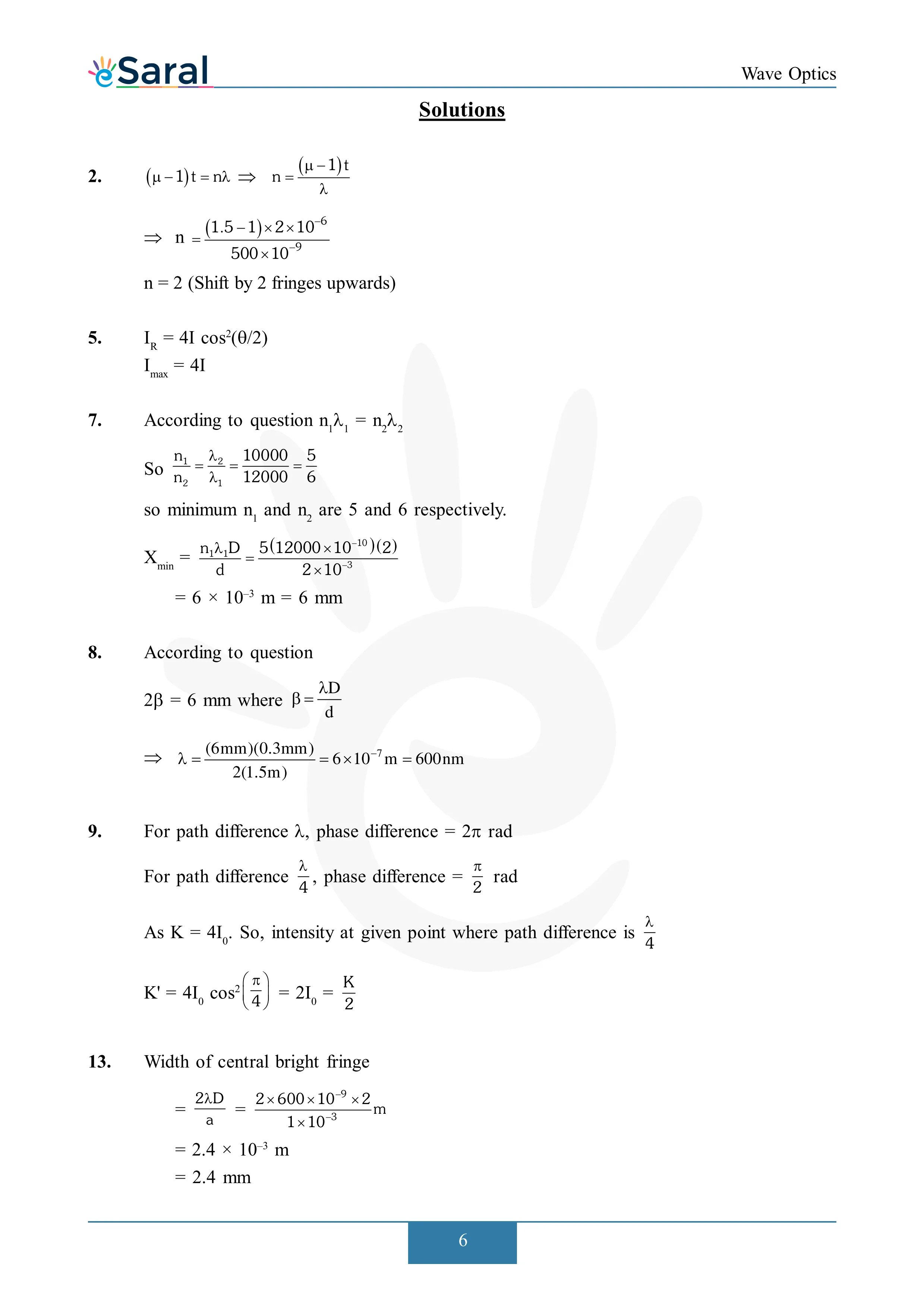
The most important formula is the resultant intensity in YDSE: I = 4I₀cos²(φ/2). It connects path difference, phase difference, and intensity in one expression. Alongside it, fringe width β = λD/d and Malus' Law I = I₀cos²θ are tested almost every year. Memorising and practising these three covers the majority of numerical questions.
What is Brewster's angle and why does NEET test it?
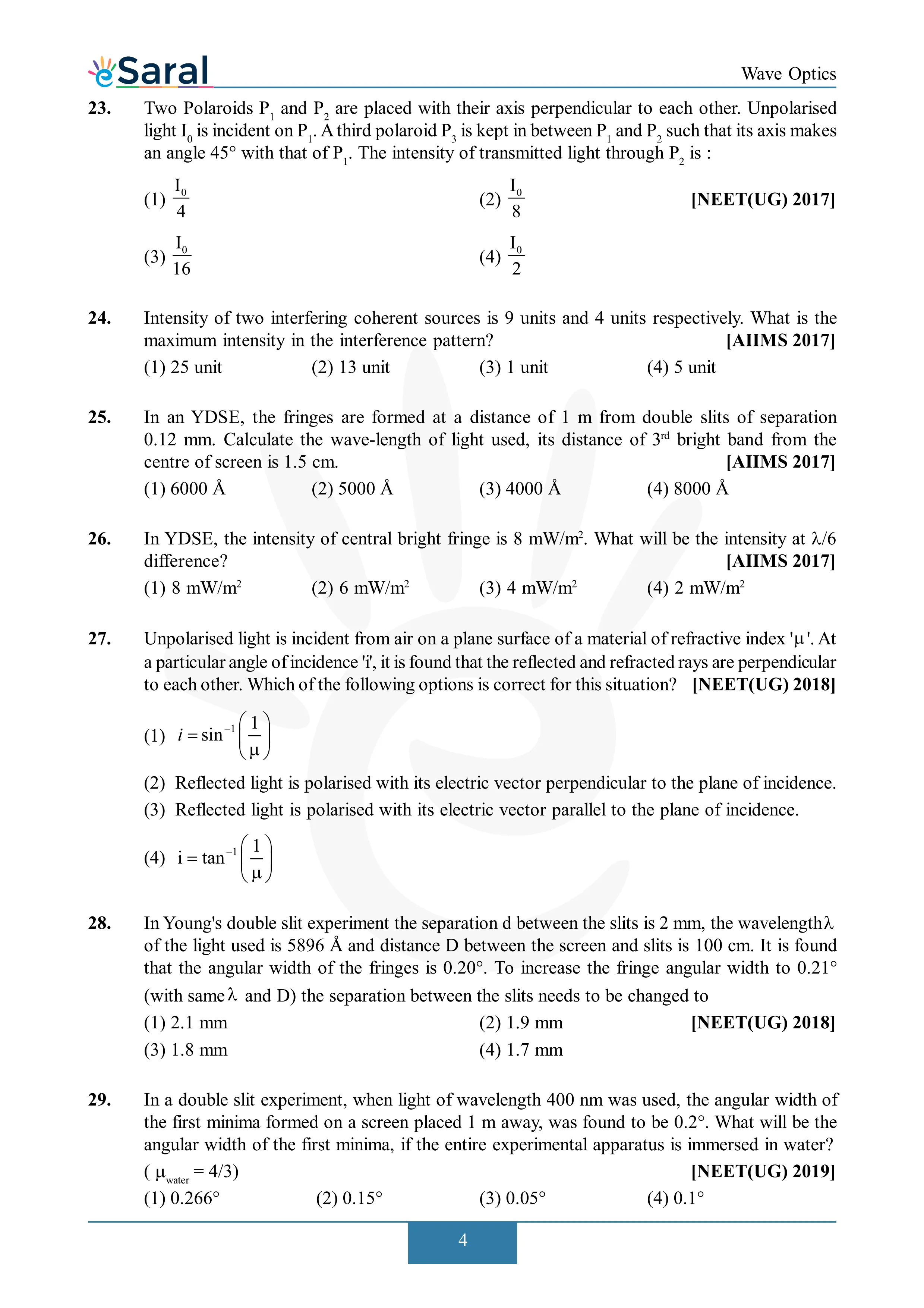
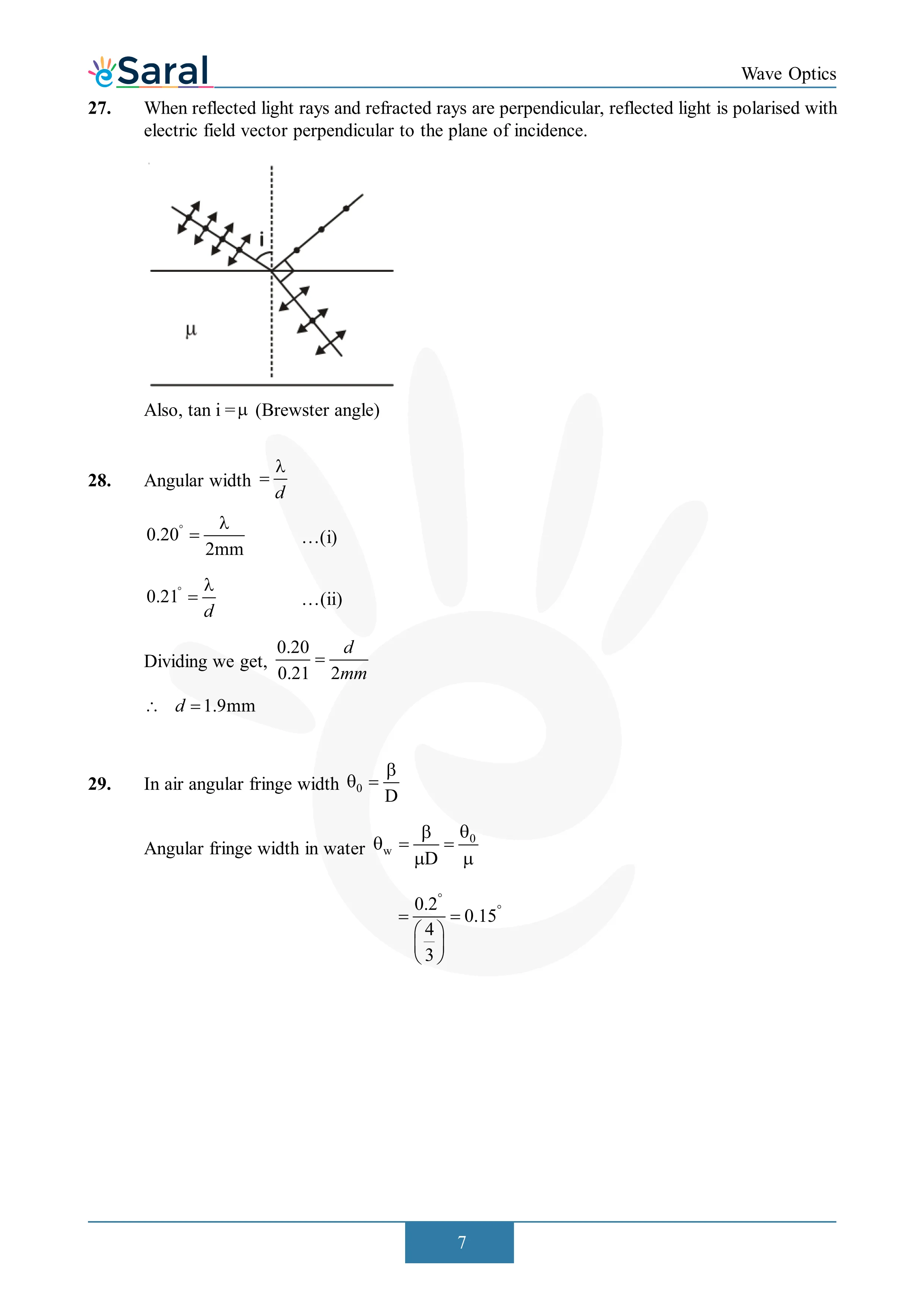
Brewster's angle (polarising angle) is the angle of incidence at which reflected light is completely plane polarised. It satisfies tan(i_B) = μ (refractive index of the medium). NEET tests this concept because it links polarisation theory to a real calculation. At Brewster's angle, the reflected and refracted rays are perpendicular to each other — a fact directly asked in MCQs.
Can I skip Wave Optics for NEET if I am short on time?
Skipping Wave Optics is not advisable. It is a focused chapter with consistent 2–3 question weightage and a limited, predictable formula set. In contrast, chapters like Mechanics have far more topics for similar marks. Even 8–10 hours spent on Wave Optics PYQs can reliably secure 8–12 marks, making it one of the highest return-per-hour investments in NEET Physics.