Structure of Atom Class 11 Notes for NEET & IIT JEE


eSaral › Class 11 Chemistry › Structure of Atom Notes for NEET

Get detailed study material for Class 11 Chemistry to prepare for Boards as well as competitive exams like IIT JEE, NEET etc. eSaral offers you Structure of Atom Class 11 Notes for NEET & IIT JEE Exam Preparation. eSaral helps the students in clearing and understanding each topic in a better way. eSaral is providing complete chapter notes of Class 11th and 12th of Physics, Chemistry & Mathematics. Besides this, eSaral also offers NCERT Solutions, Previous year questions for JEE Main and Advance, Practice questions, Test Series for JEE Main, JEE Advanced and NEET, Important questions of Physics, Chemistry, Math, and Biology and many more. Key Notes for Chemistry Subject for Class 12 Students are given here. Important topics of 11th Chemistry are covered. These notes will provide you overview of all the chapters and important points to remember. Download the eSaral App for free study material and video tutorials.
India's Best Exam Preparation for Class 11th - Download Now
India's Best Exam Preparation for Class 11th - Download Now
Also read, Class 11 Chemistry Chapter 2 Notes
India's Best Exam Preparation for Class 11th - Download Now
India's Best Exam Preparation for Class 11th - Download Now
India's Best Exam Preparation for Class 11th - Download Now
India's Best Exam Preparation for Class 11th - Download Now
eSaral brings complete notes for Class 11 Chemistry. eSaral provides a series of detailed chapter wise notes for all the Subjects of class 11th and 12th. These notes will also help you in your IIT JEE & NEET preparations. We hope these Chemistry Notes for Class 11 will help you understand the important topics and help in remembering the key points for the exam point of view. Get Complete Class 11 Chemistry Notes for easy learning and understanding. For free video lectures and complete study material, Download eSaral APP. About eSaral At eSaral we are offering a complete platform for IIT-JEE & NEET preparation. The main mission behind eSaral is to provide education to each and every student in India by eliminating the Geographic and Economic factors, as a nation’s progress and development depends on the availability of quality education to each and every one. With the blend of education & technology, eSaral team made the learning personalized & adaptive for everyone.
India's Best Exam Preparation for Class 11th - Download Now
Subscribe eSaral on YouTube Channel for latest updates & FREE Revision Series for JEE & NEET.
Frequently Asked Questions
Find answers to common questions.
How many quantum numbers are there and what does each one describe?
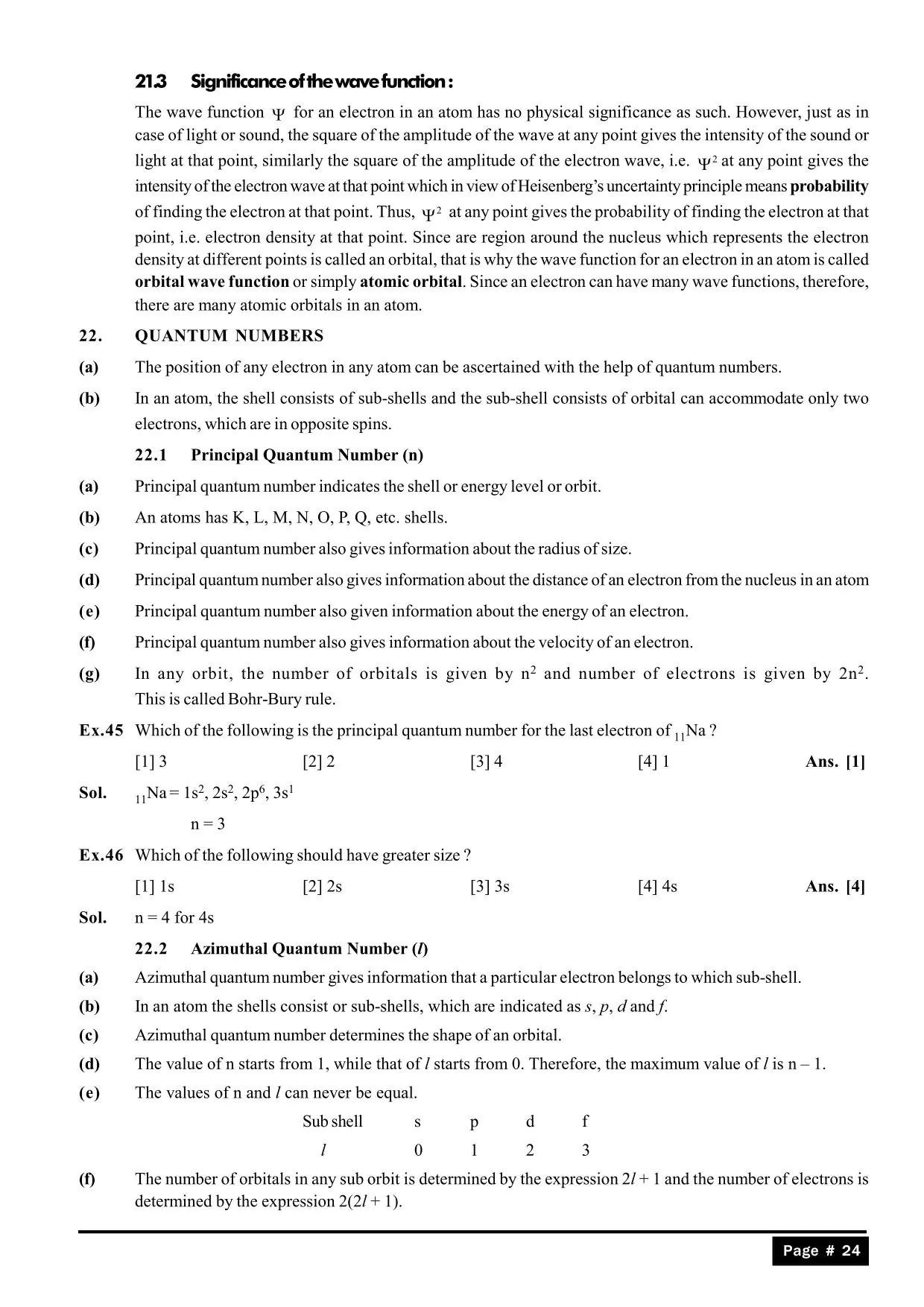
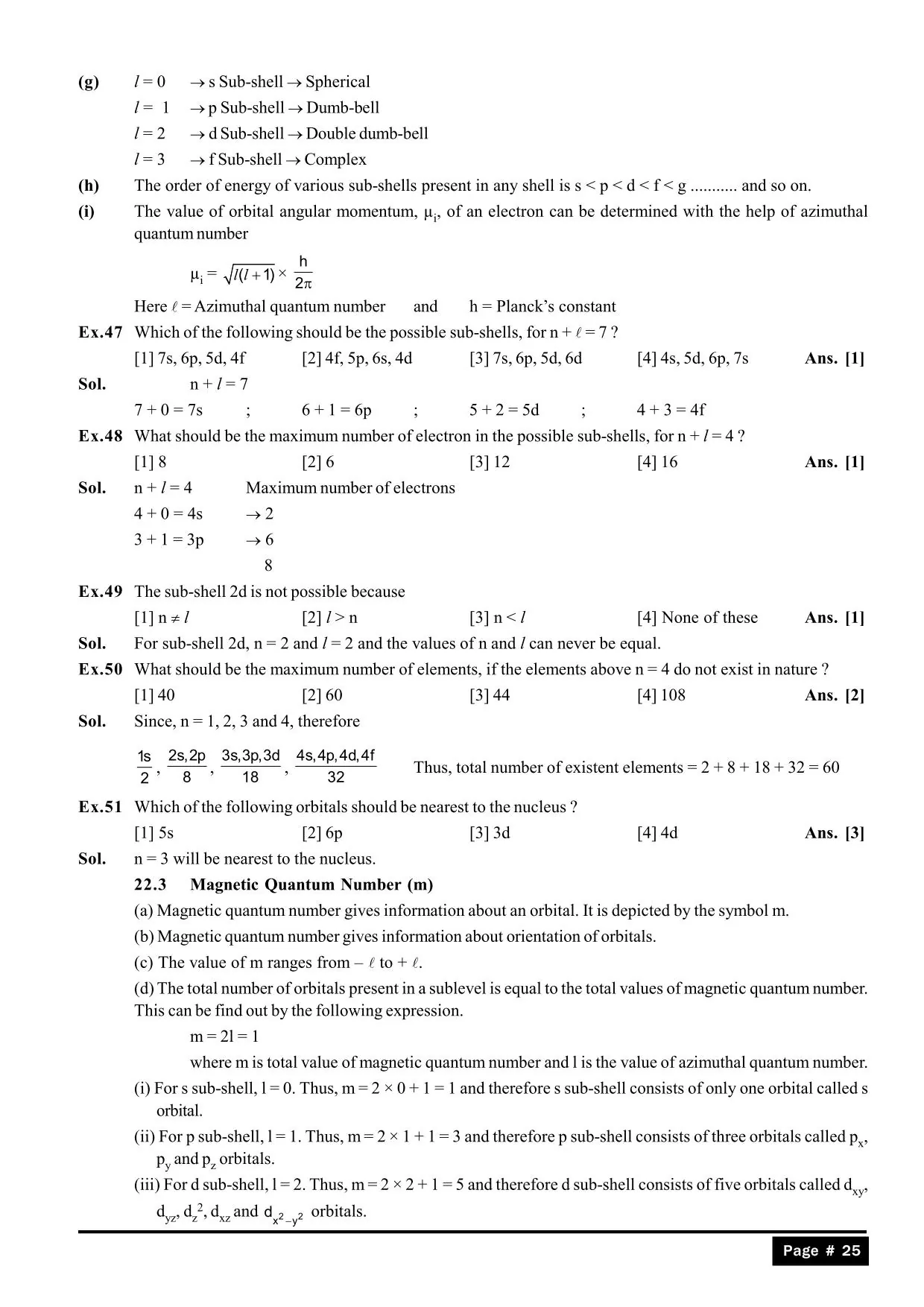
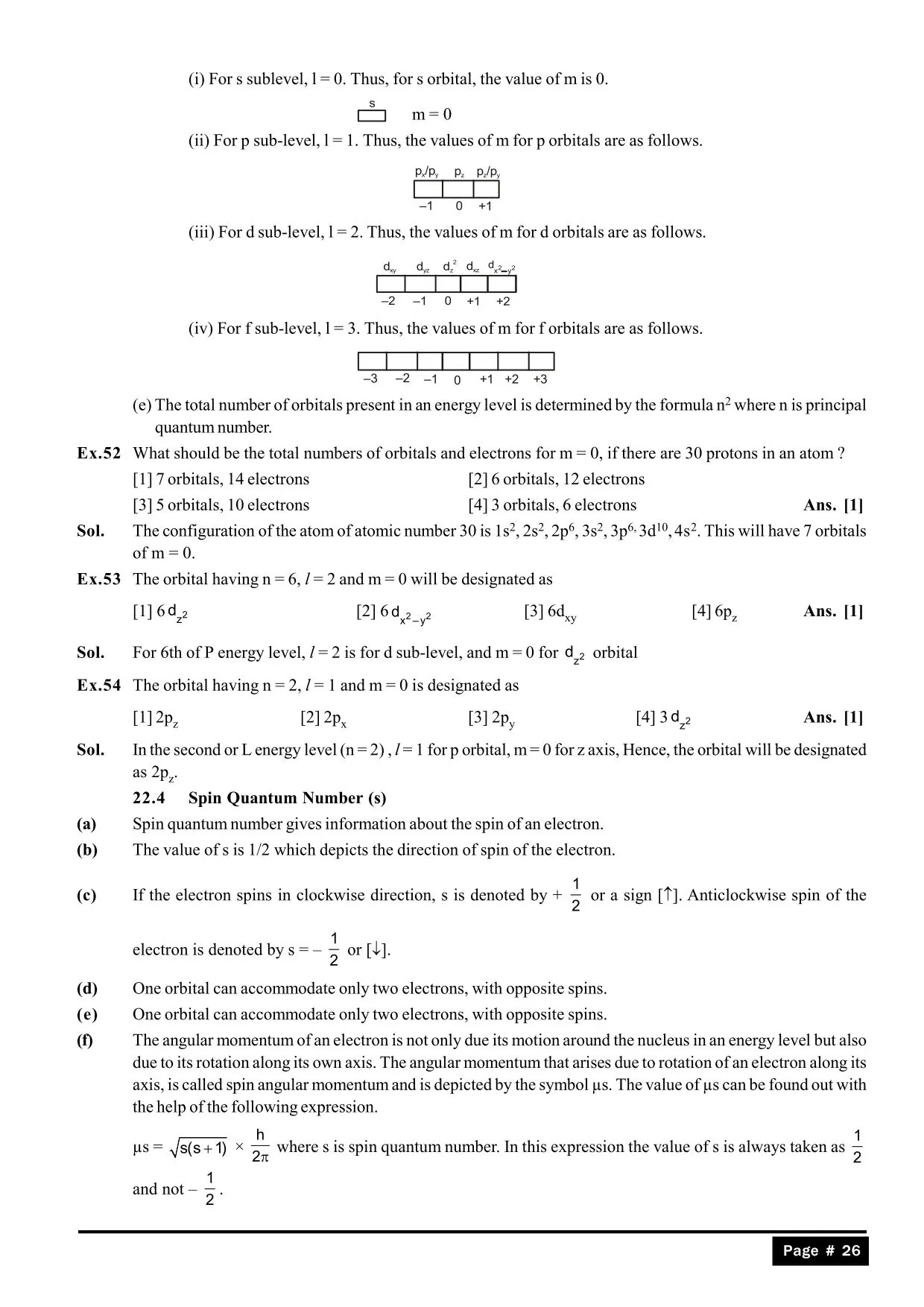
There are four quantum numbers. The principal quantum number (n) describes the shell and energy level. The azimuthal quantum number (l) describes the subshell shape. The magnetic quantum number (mₗ) describes the orientation of the orbital in space. The spin quantum number (mₛ) describes the spin of the electron (+½ or −½). Together they uniquely identify every electron in an atom.
What is the de Broglie equation and when is it used?
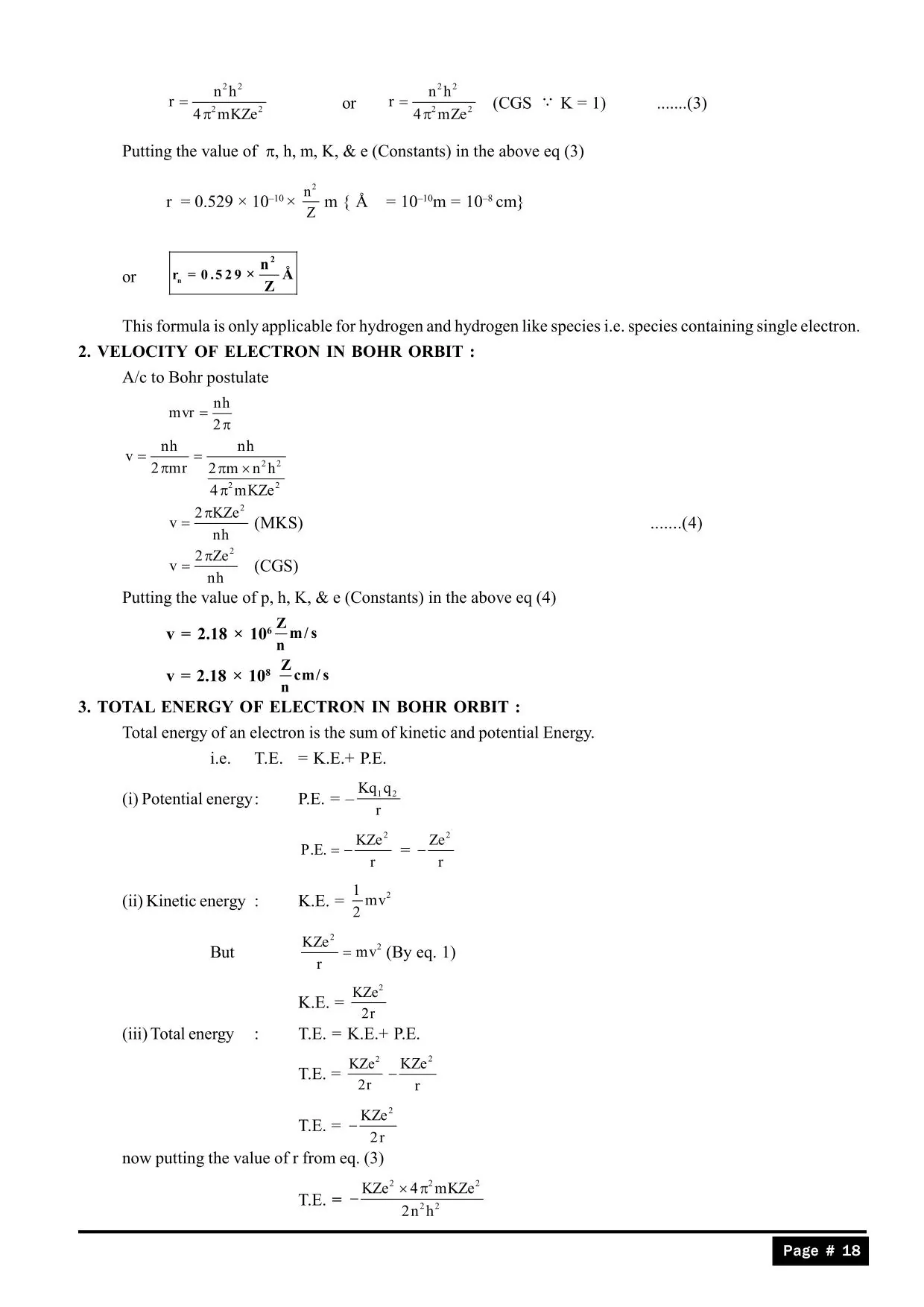
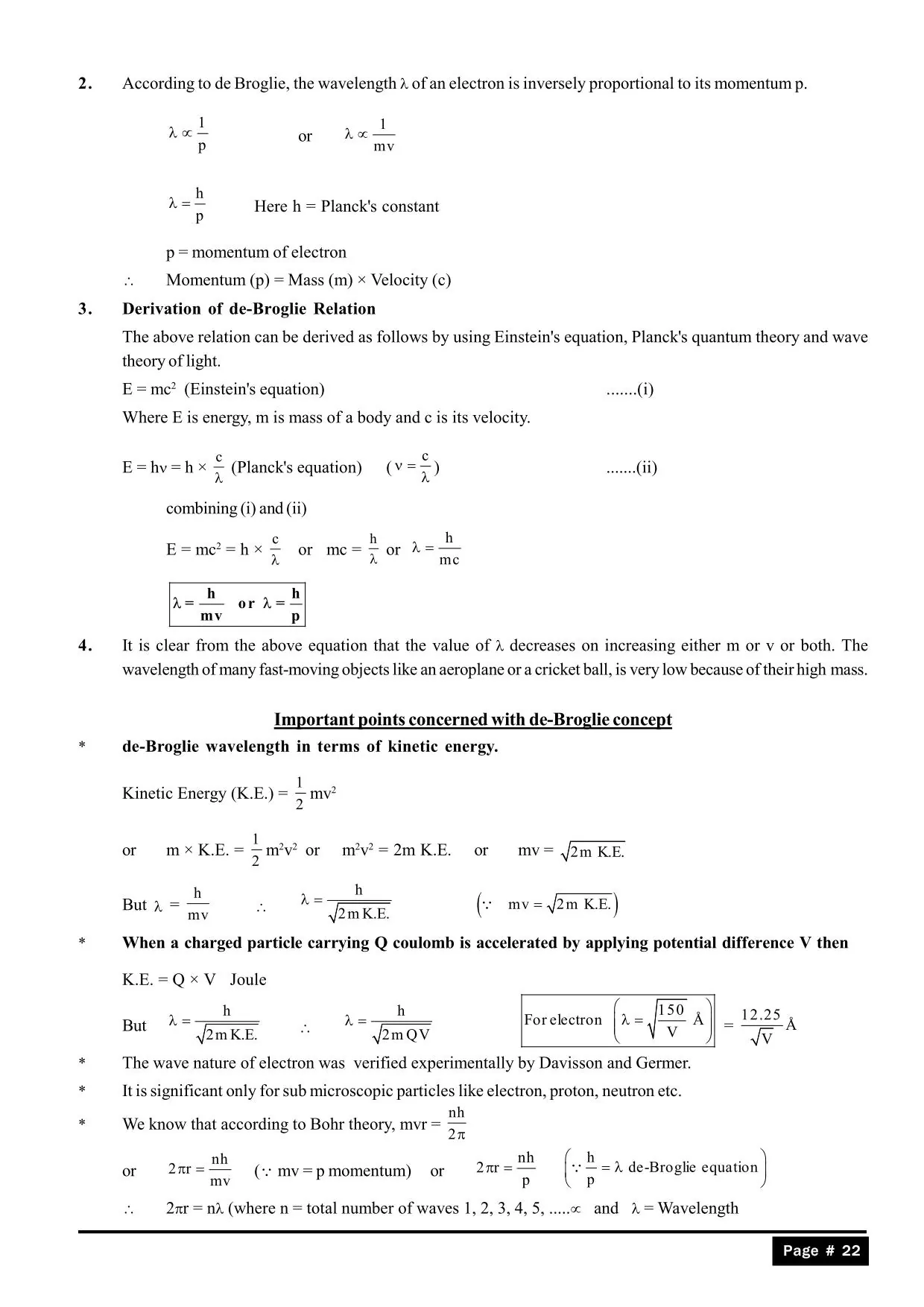
The de Broglie equation is λ = h/mv, where λ is the wavelength associated with a moving particle, h is Planck's constant, m is mass, and v is velocity. It is used when questions involve the wave nature of electrons or other particles in motion. JEE Main frequently combines this with Bohr's orbit radius to ask for the wavelength of an electron in the nth orbit.
What topics from Structure of Atom are most important for NEET?
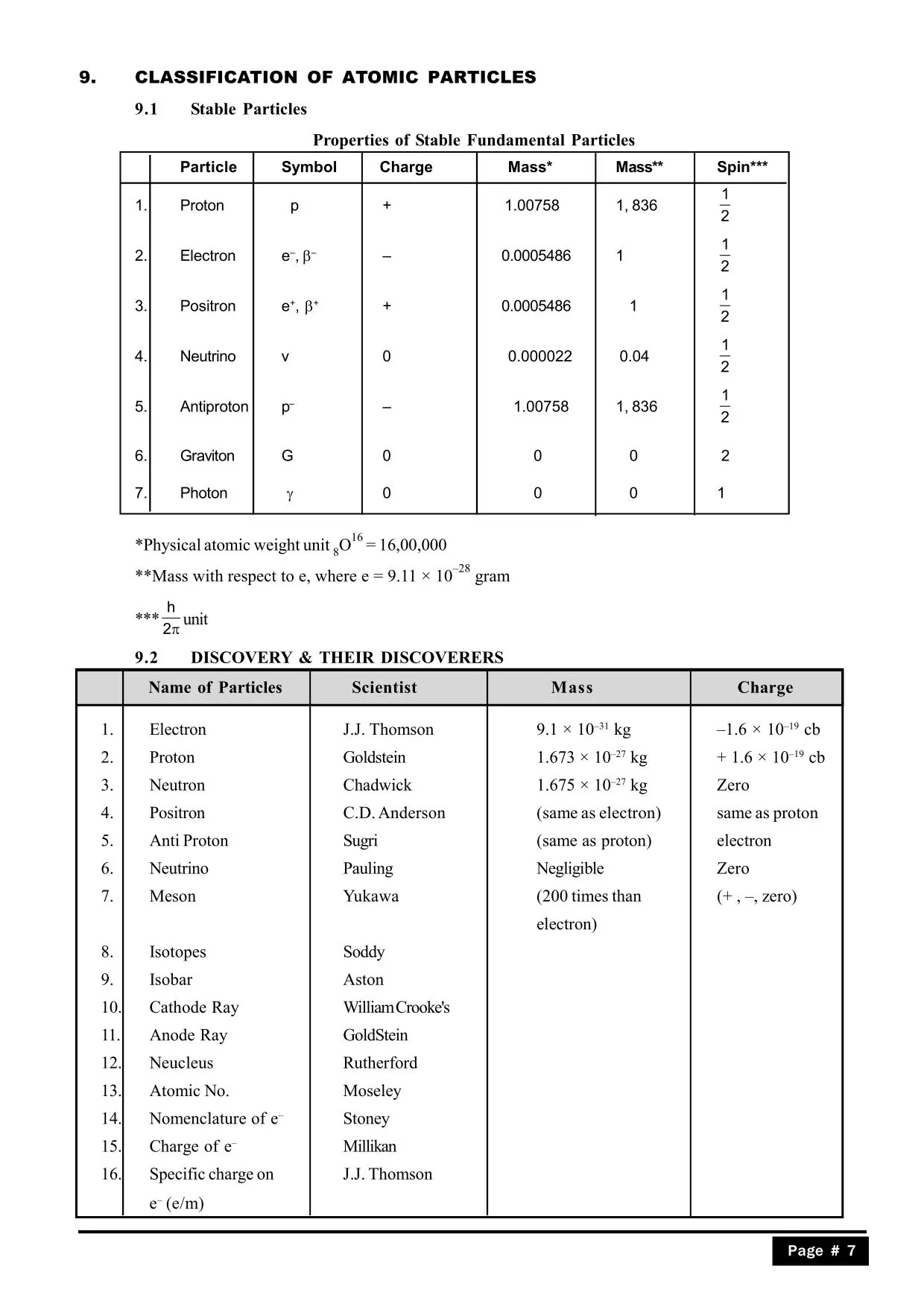
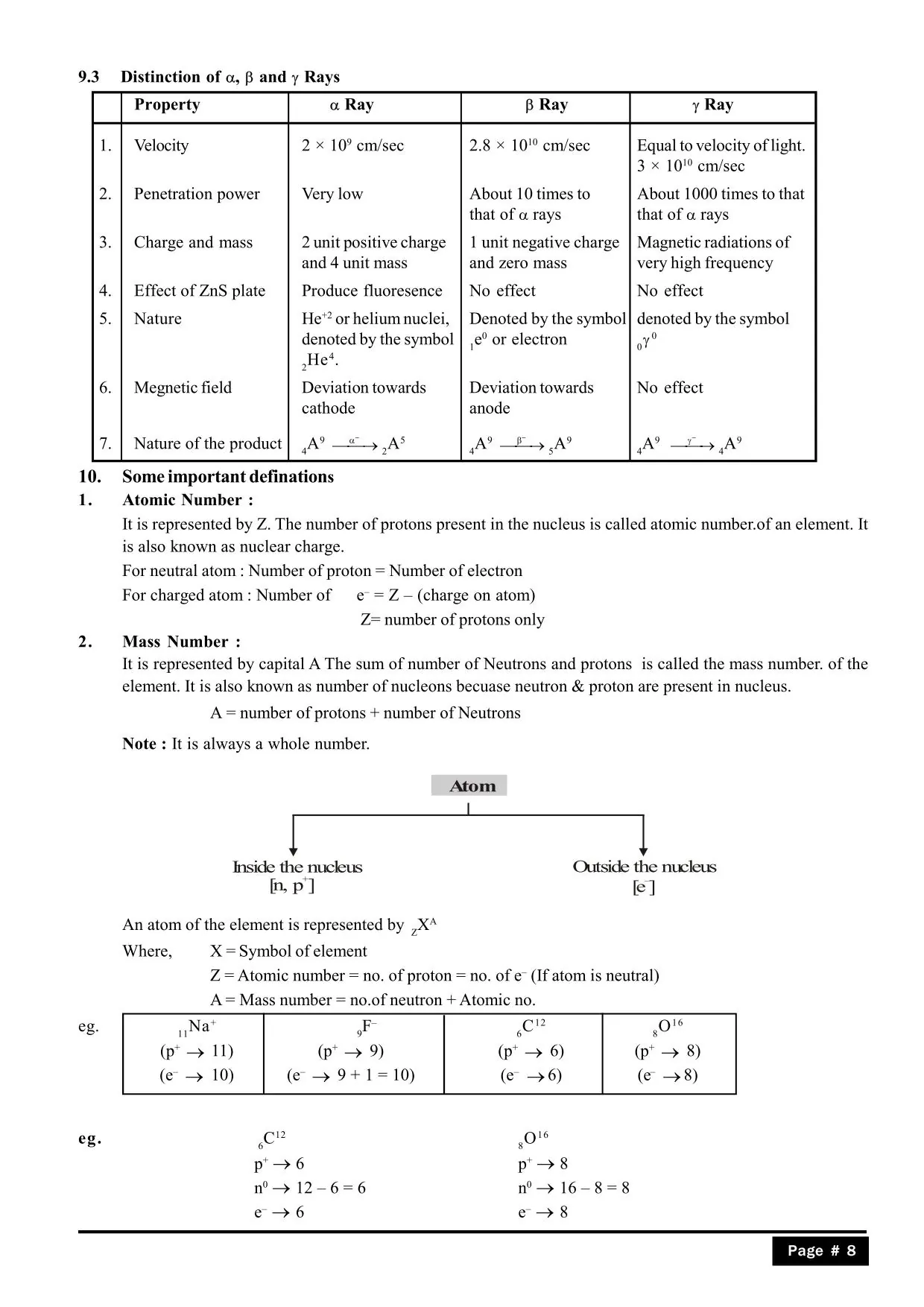
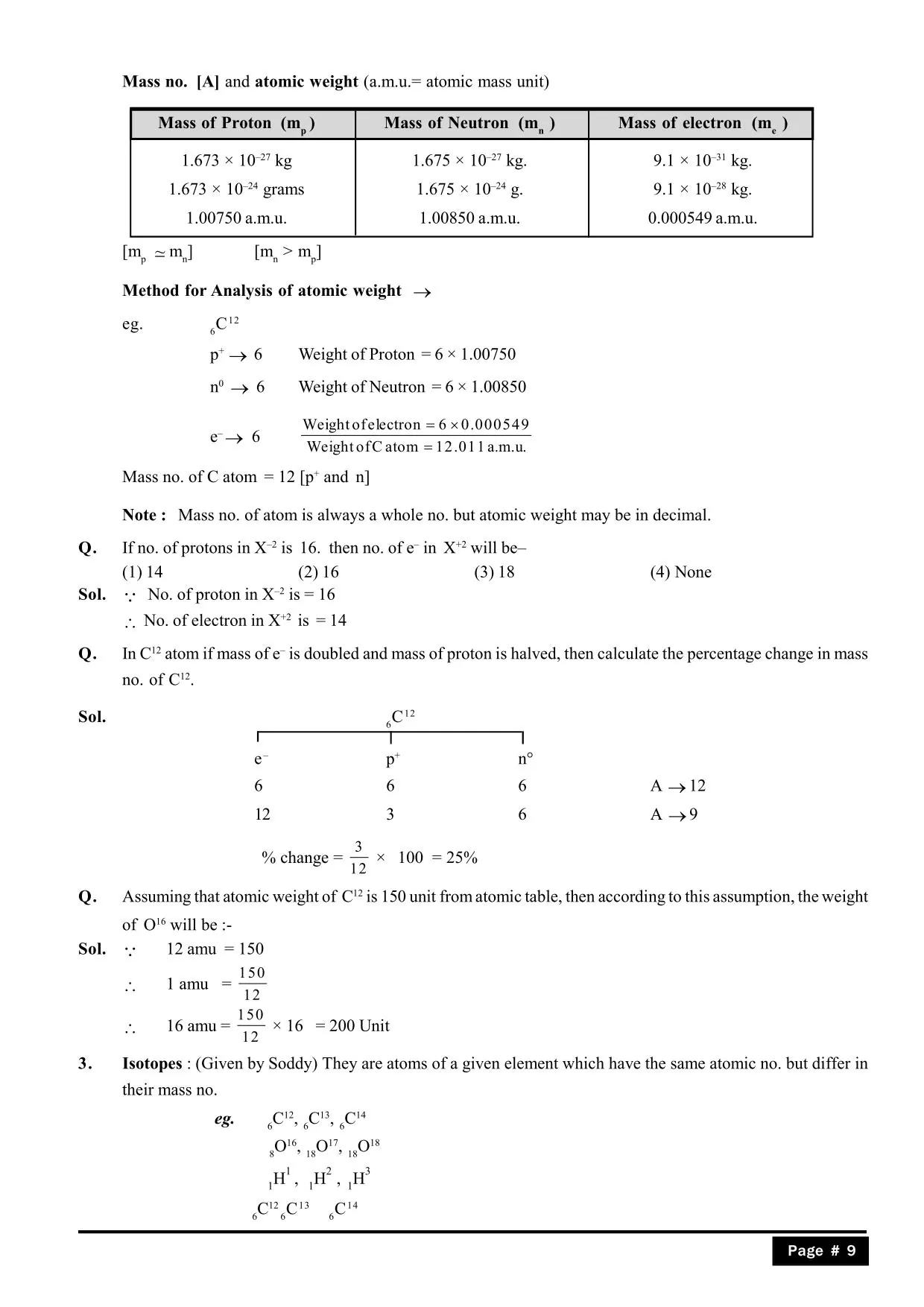
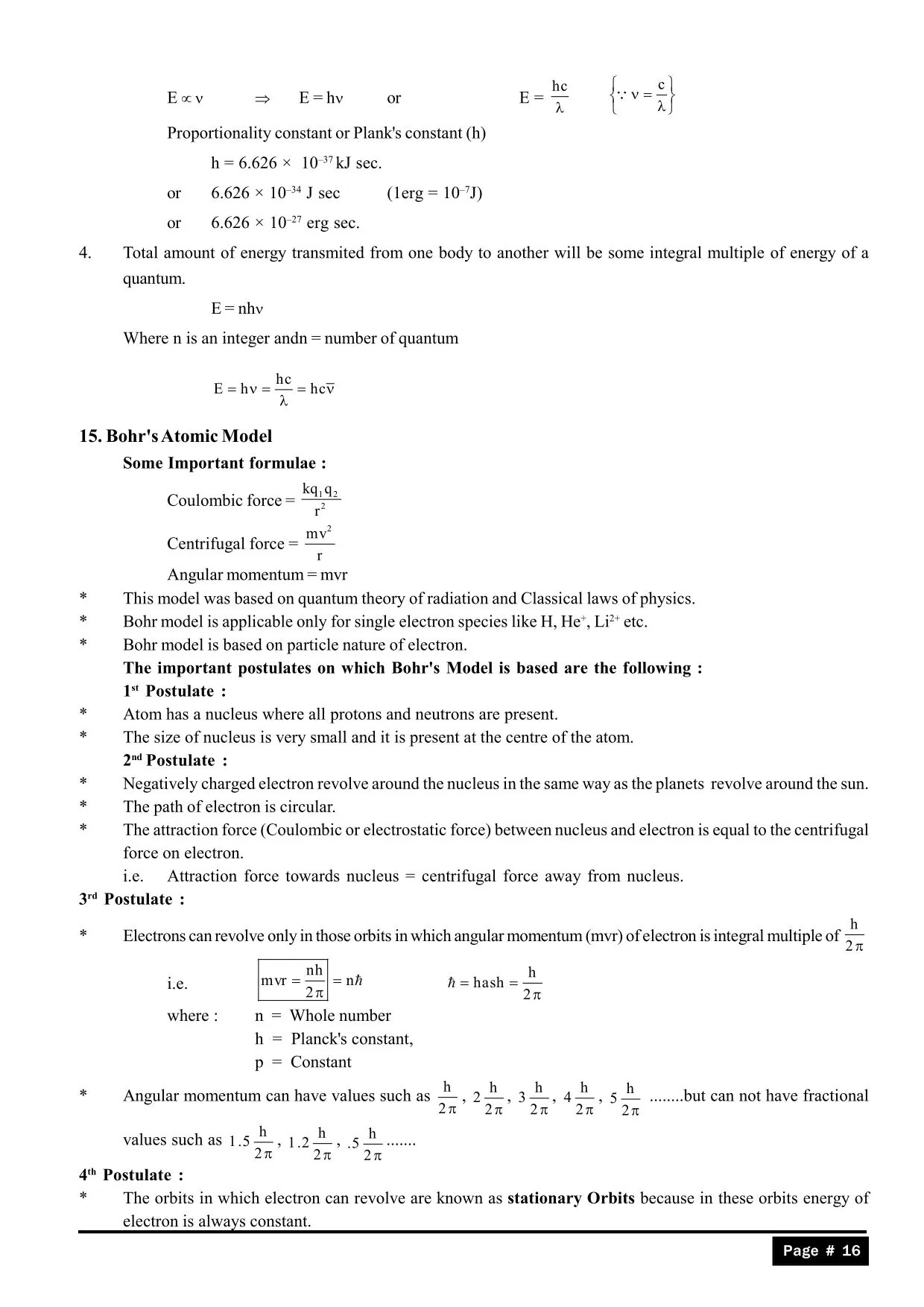
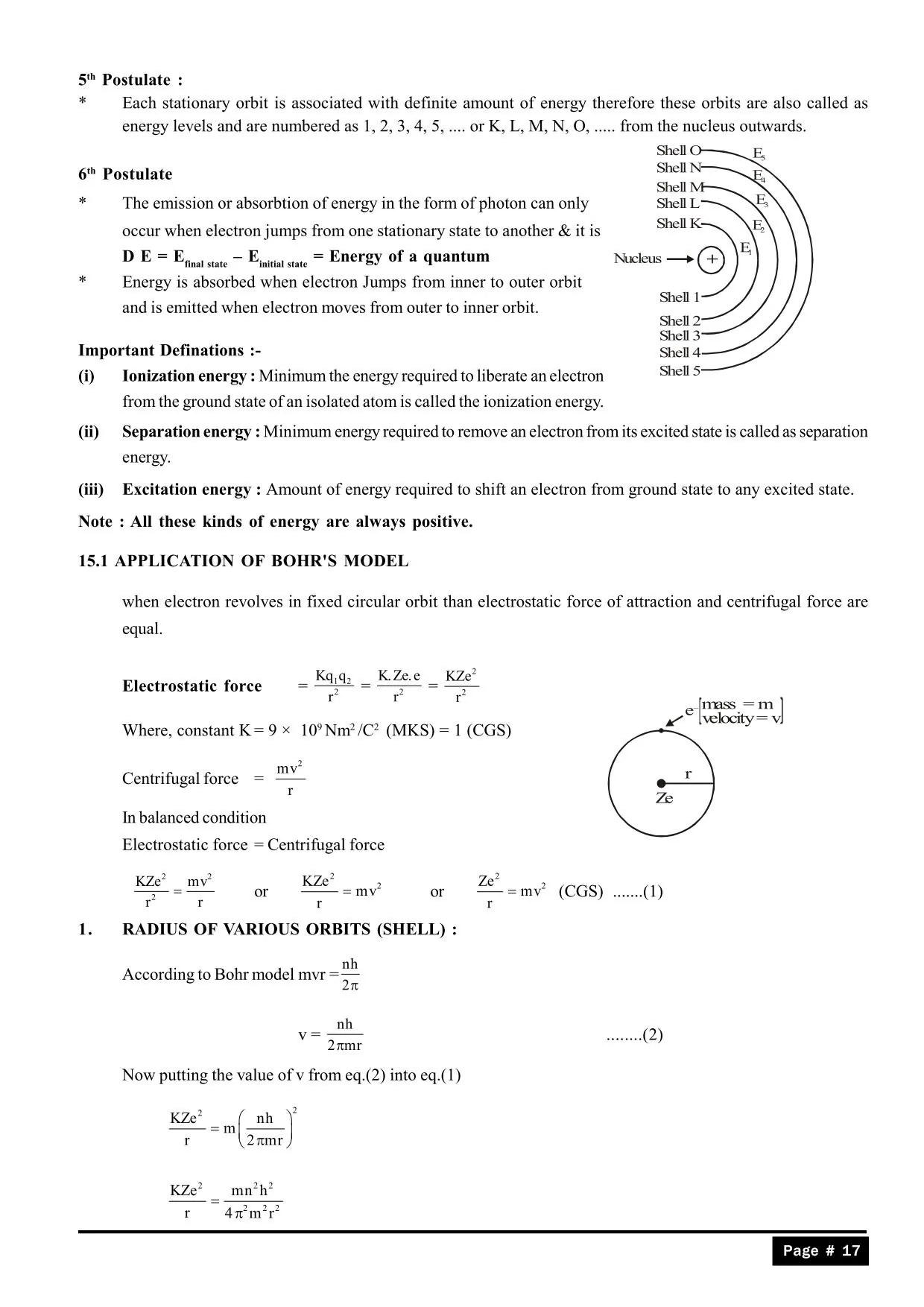
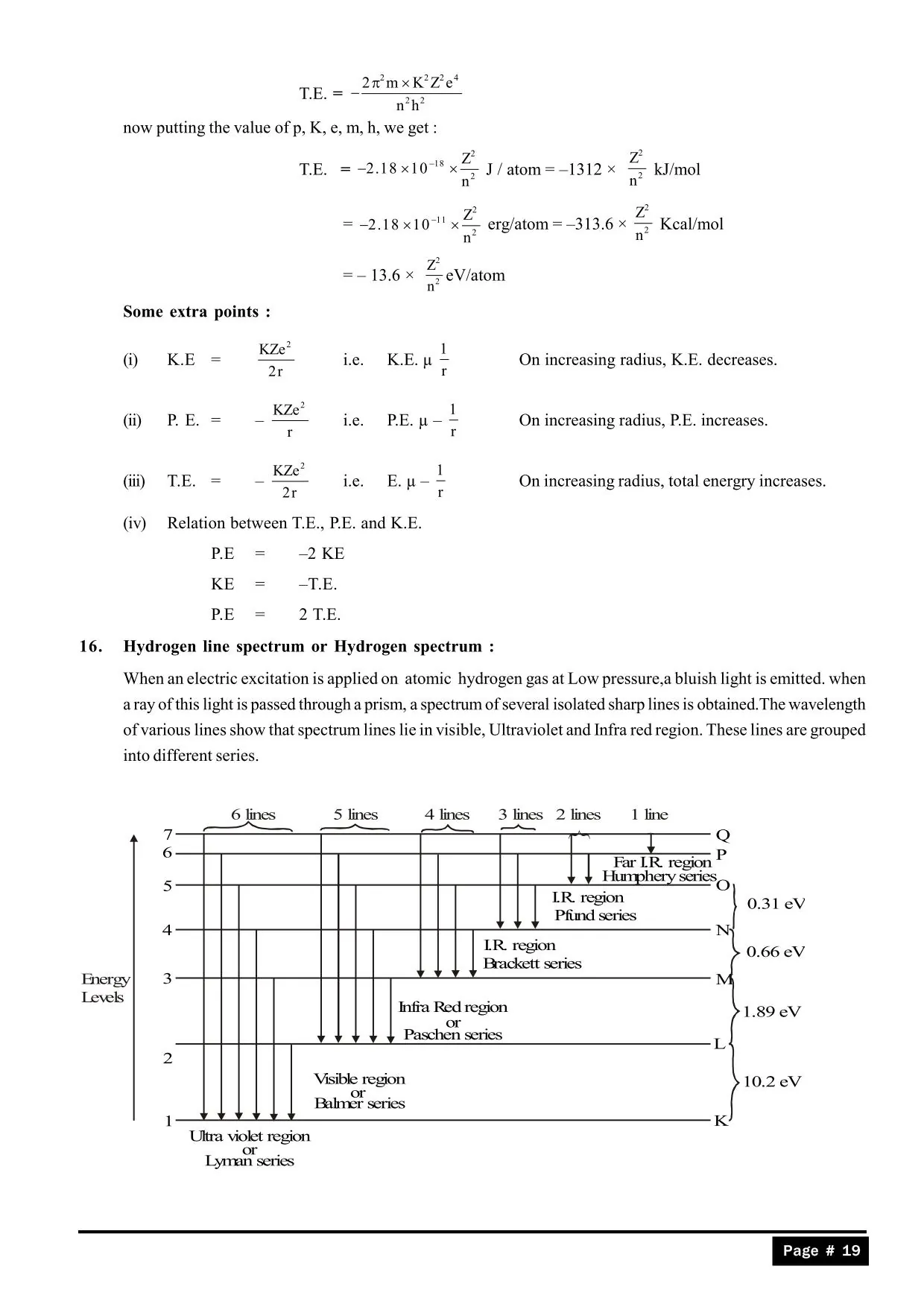
For NEET, the highest-priority topics are Bohr's model energy and radius formulas, spectral series of hydrogen (especially Lyman and Balmer), electronic configurations of elements including exceptions (Cr, Cu), and identification of sub-atomic particles. NEET typically asks 2–3 direct questions from this chapter, and all of them can be solved if these four areas are practised thoroughly.
How do you calculate the number of nodes in an atomic orbital?
Use three formulas: Radial nodes = n − l − 1; Angular nodes = l; Total nodes = n − 1. For example, a 3p orbital has n=3, l=1, so radial nodes = 3−1−1 = 1, angular nodes = 1, total nodes = 2. Node-counting questions appear in JEE Main roughly once every two years and take under 30 seconds if you know these formulas.
What is the difference between an orbit and an orbital?
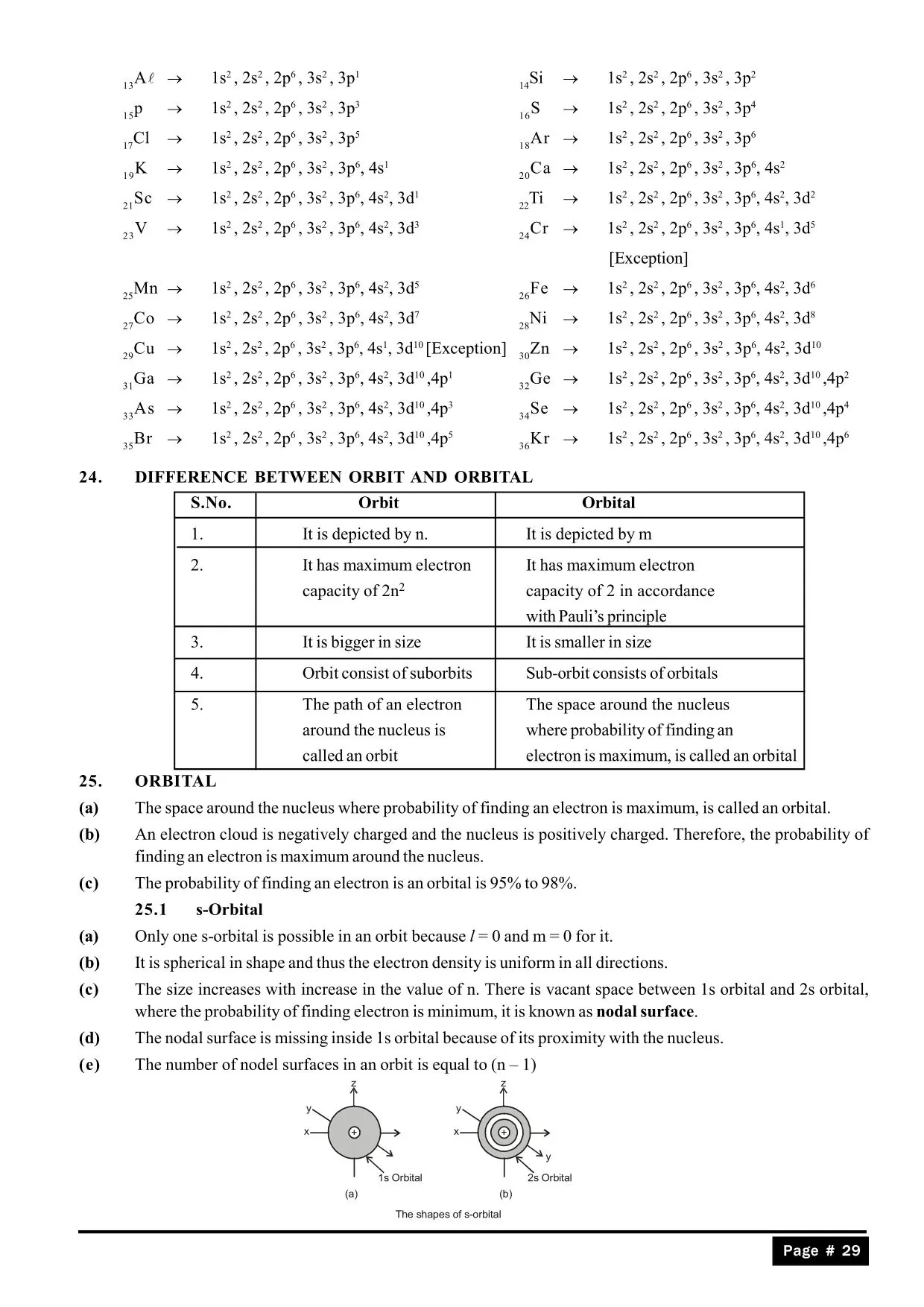
An orbit (Bohr's model) is a fixed, well-defined circular path around the nucleus — this concept is now considered incorrect. An orbital (quantum mechanical model) is a three-dimensional region of space where there is a 90% or higher probability of finding an electron. Orbitals have specific shapes: spherical (s), dumbbell (p), double dumbbell (d).
Why do Chromium and Copper have exceptional electronic configurations?
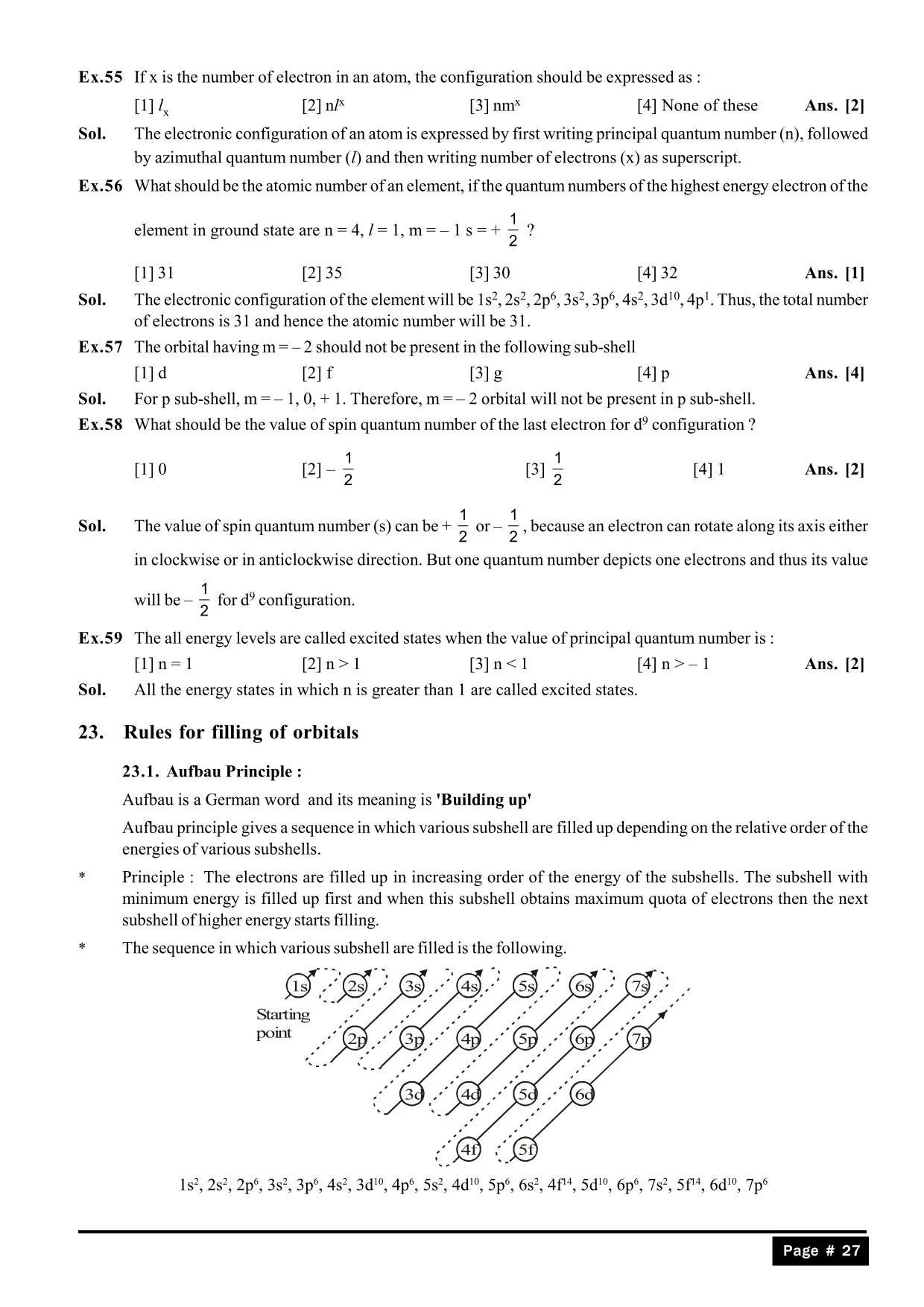
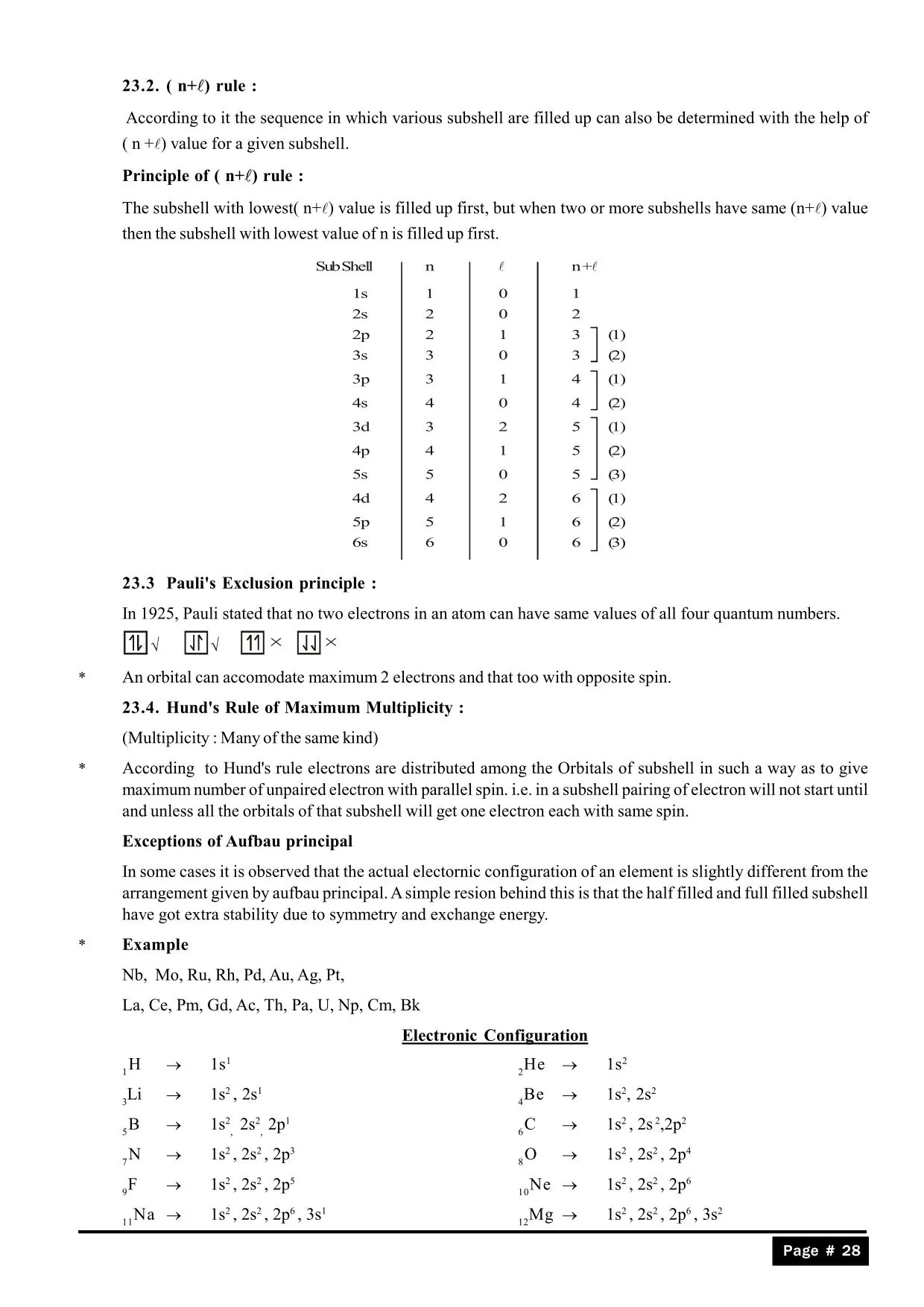
Chromium (Z=24) has [Ar] 3d⁵ 4s¹ instead of [Ar] 3d⁴ 4s² because a half-filled d subshell (3d⁵) provides extra stability due to symmetrical electron distribution and exchange energy. Copper (Z=29) has [Ar] 3d¹⁰ 4s¹ because a completely filled 3d subshell is more stable than a partially filled one. These are among the most commonly tested facts in both NEET and JEE Main.