Complex Numbers Class 11 Notes for IIT JEE
Complex Numbers introduces the imaginary unit, algebra of complex numbers, modulus, argument, conjugate, polar representation, and geometric interpretation, forming a foundation for advanced algebra, coordinate geometry, and polynomial concepts in JEE and CBSE mathematics.

Table of Contents

eSaral › Class 11› Complex Numbers Class 11 Notes

🚀 Checkout eSaral Courses
Introduction
Complex numbers appear deceptively simple in Class 11 — yet they are the foundation for entire chapters in IIT JEE Advanced, including rotational geometry, locus problems, and polynomial roots. Students who build a tight conceptual grip here consistently outperform peers in the JEE Mathematics section.
These notes are designed around the exact CBSE Class 11 syllabus and align with the NTA-prescribed JEE Main pattern. Every formula listed here has appeared in at least one JEE paper in the last decade. The notes are structured so you can use them for first-time learning, quick revision the night before a mock test, or topic-by-topic formula lookup.
Complex Numbers Class 11 Notes
India's Best Exam Preparation for Class 11th - Download Now
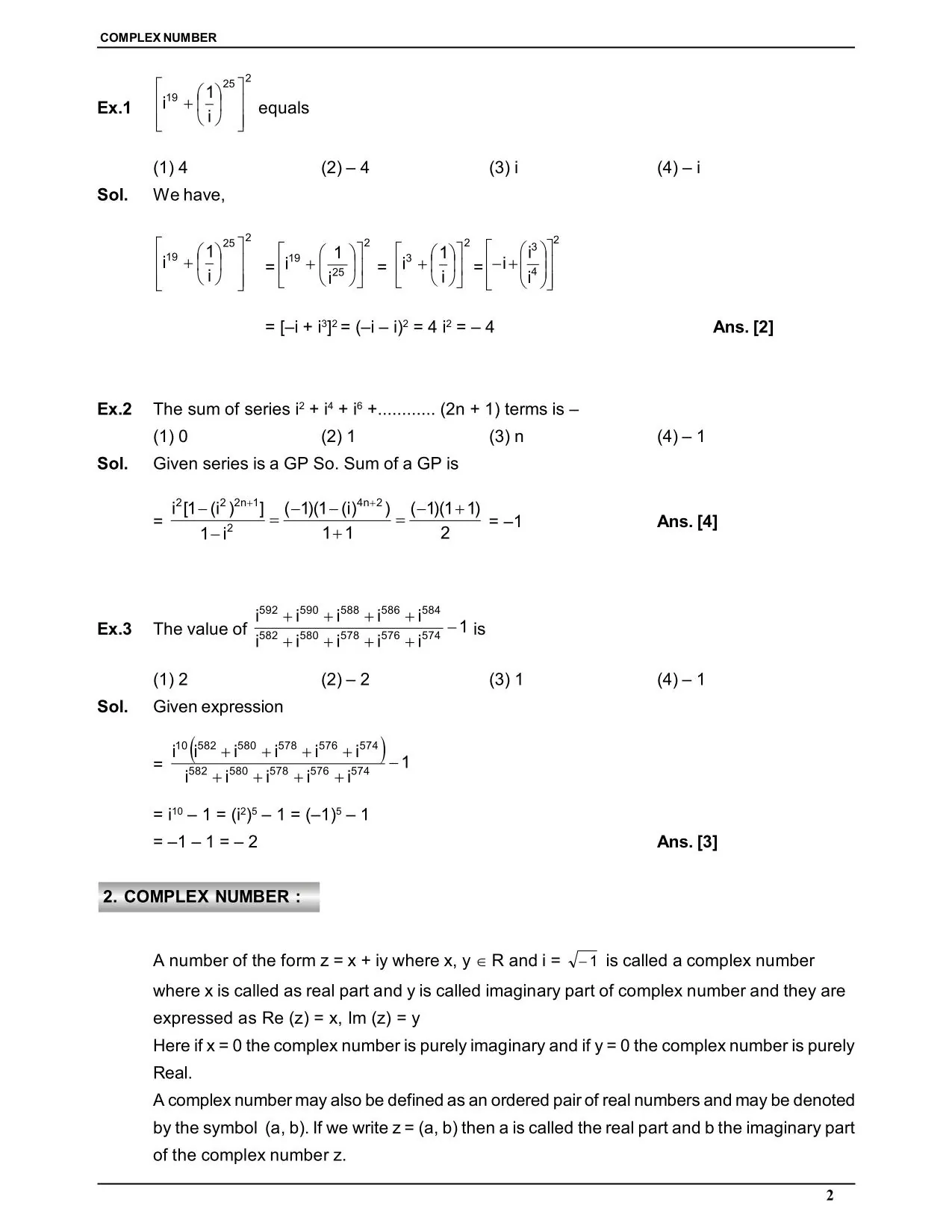
India's Best Exam Preparation for Class 11th - Download Now
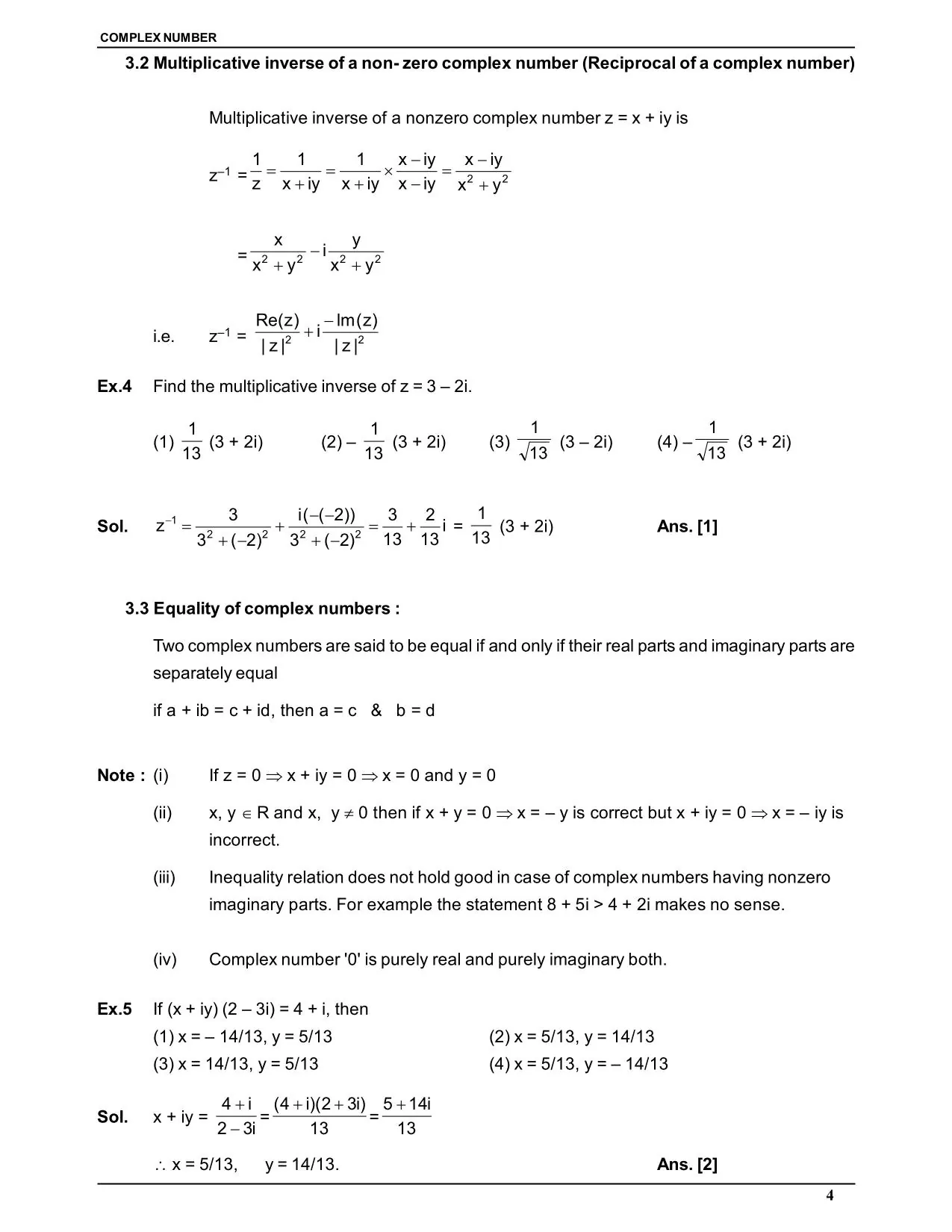
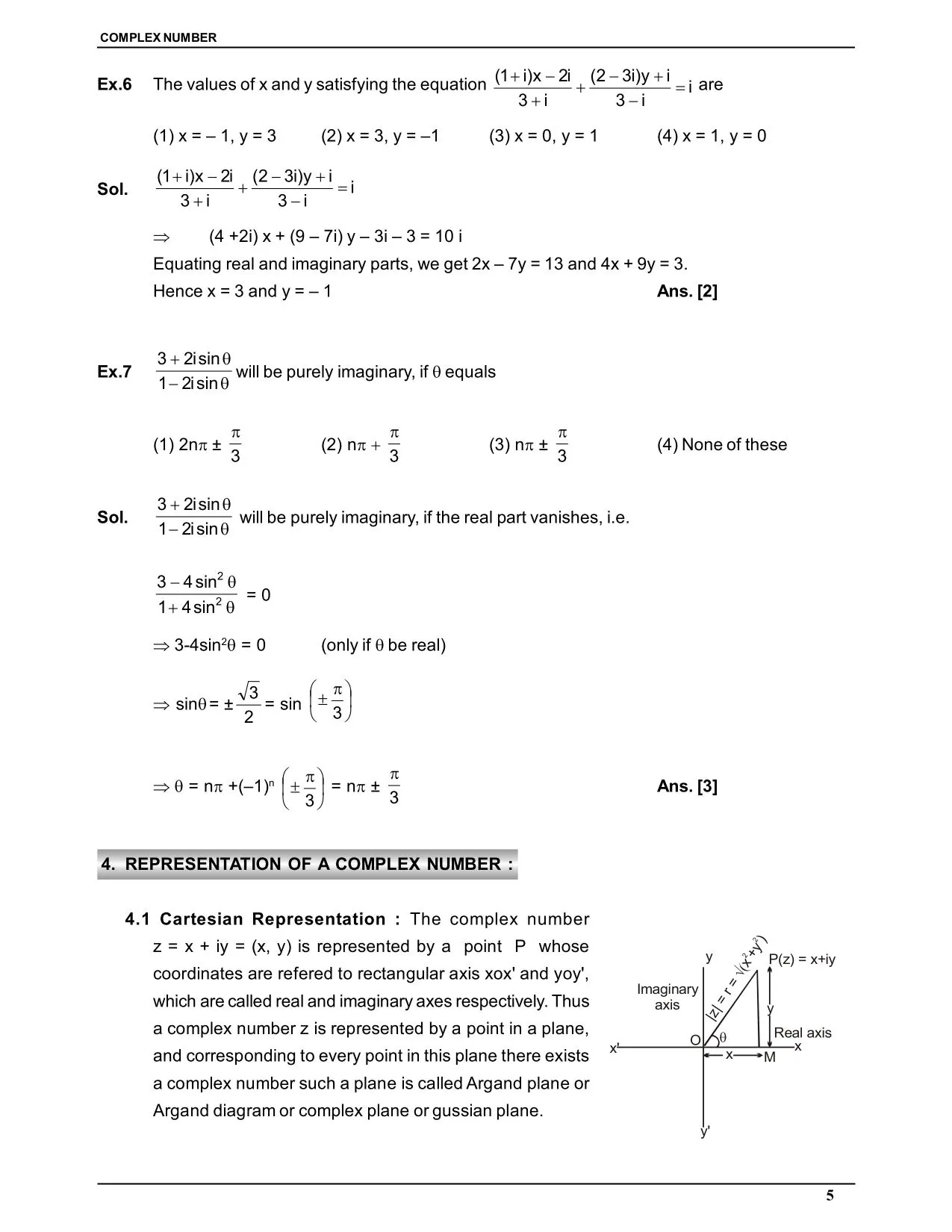
India's Best Exam Preparation for Class 11th - Download Now
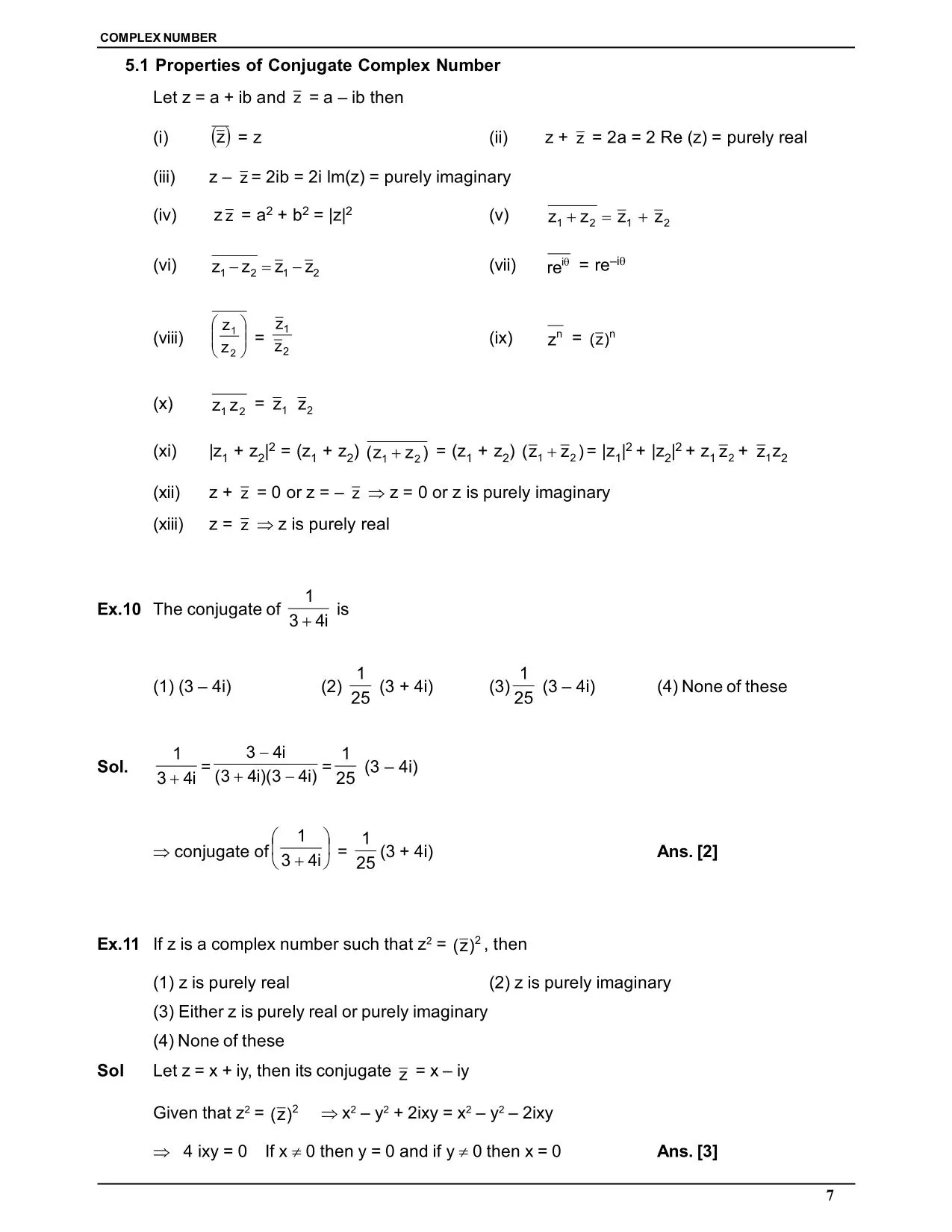
India's Best Exam Preparation for Class 11th - Download Now
India's Best Exam Preparation for Class 11th - Download Now
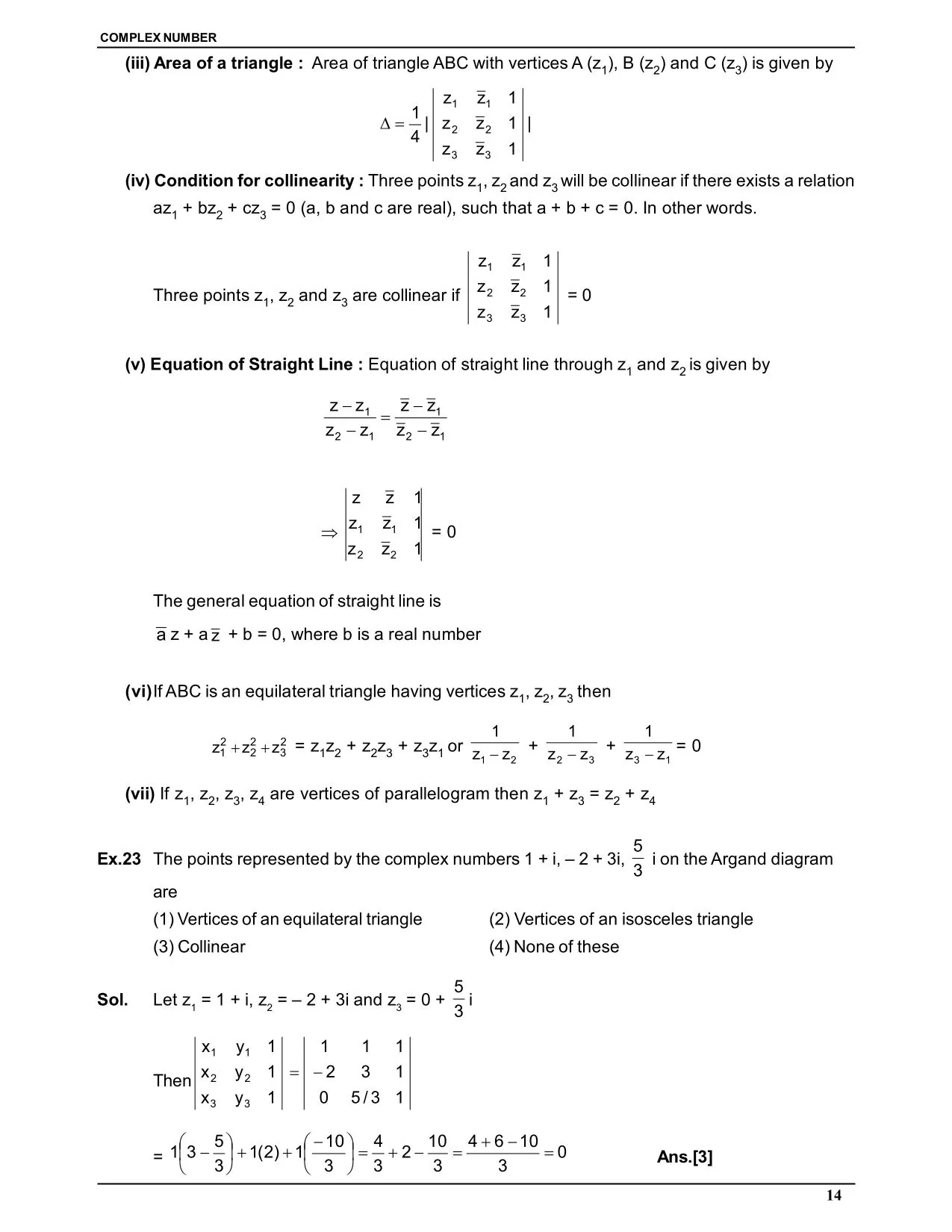
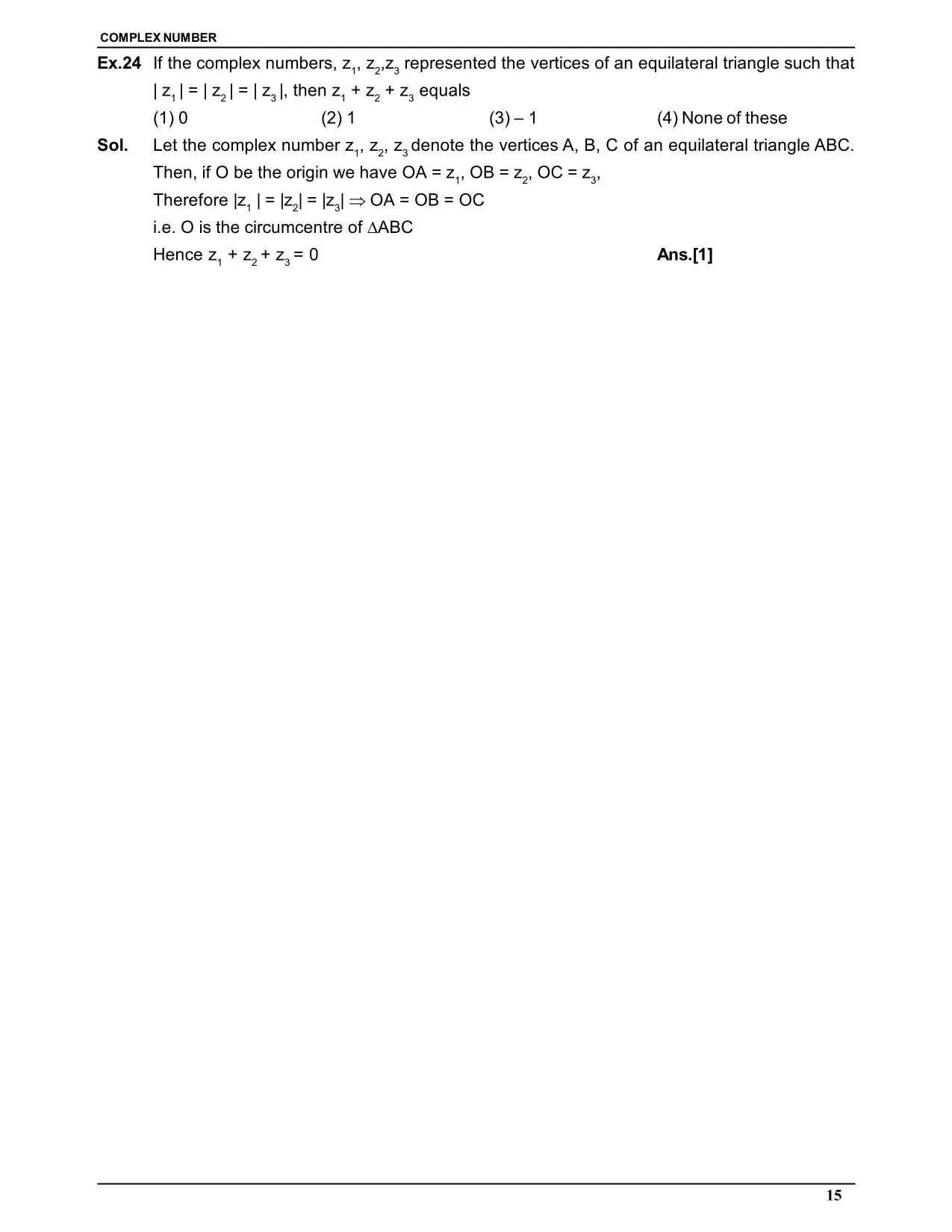
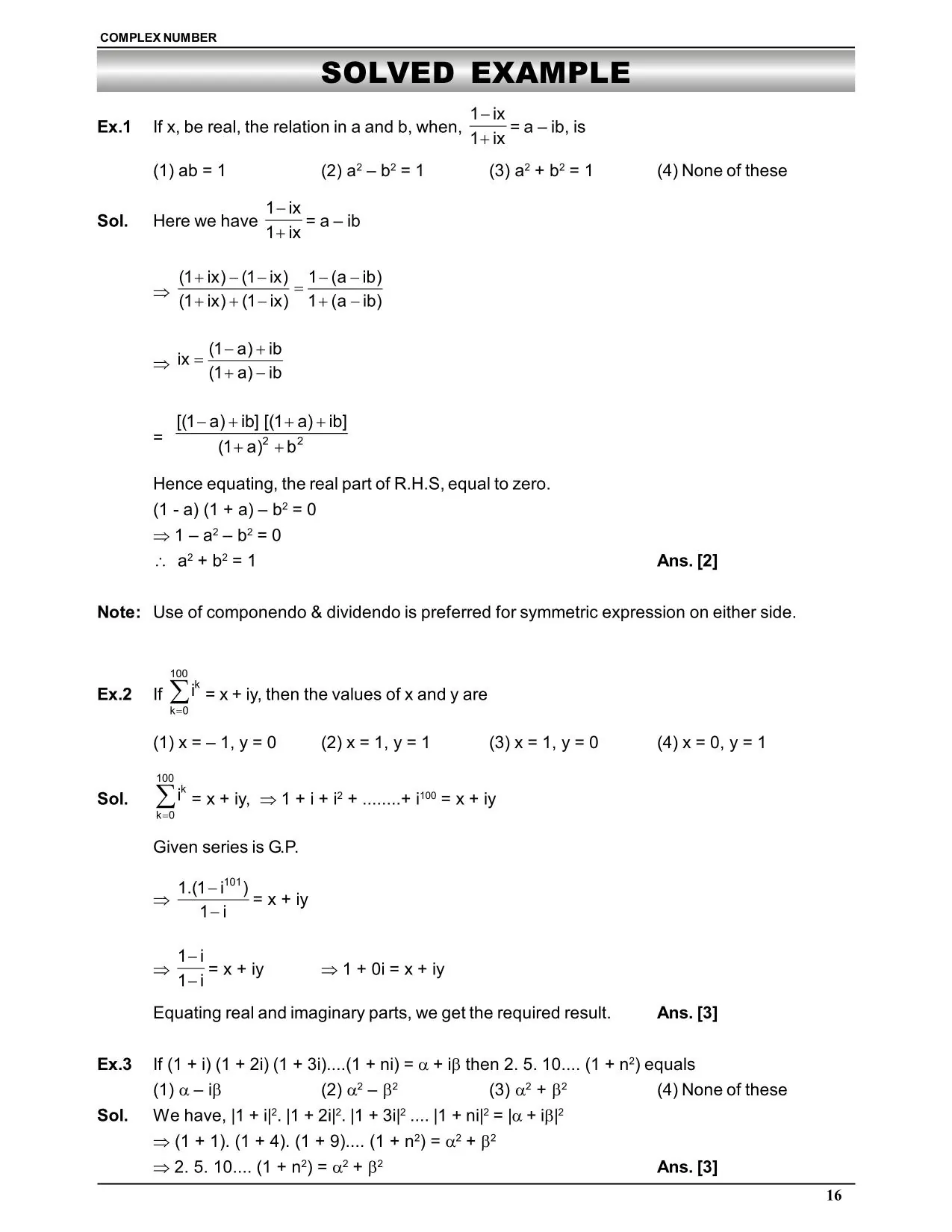
India's Best Exam Preparation for Class 11th - Download Now
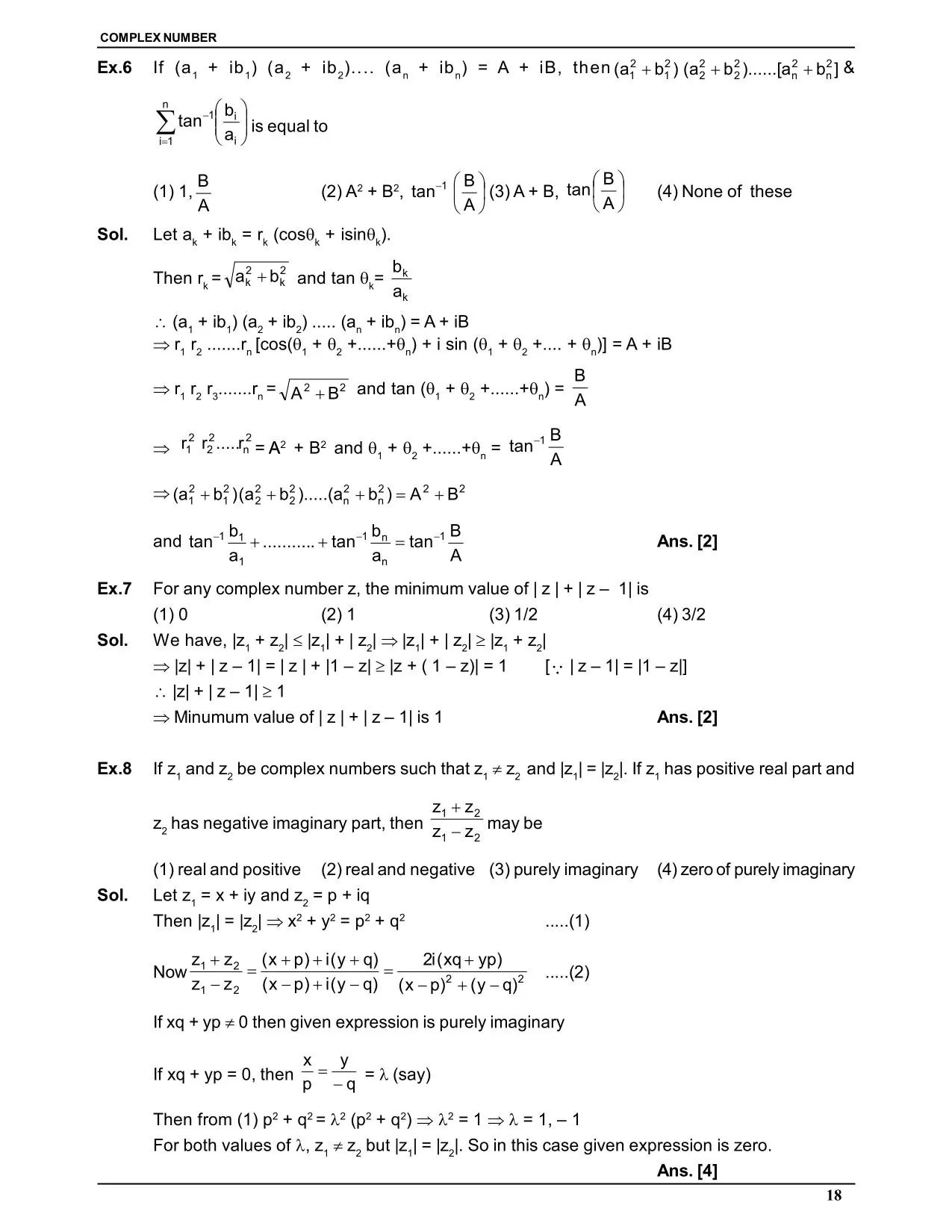
India's Best Exam Preparation for Class 11th - Download Now
India's Best Exam Preparation for Class 11th - Download Now
Complex numbers and trigonometry overlap later (De Moivre's theorem) — the trigonometric formulas class 11 page is a useful bookmark alongside these notes.
Frequently Asked Questions
Find answers to common questions.
What is a complex number in Class 11?
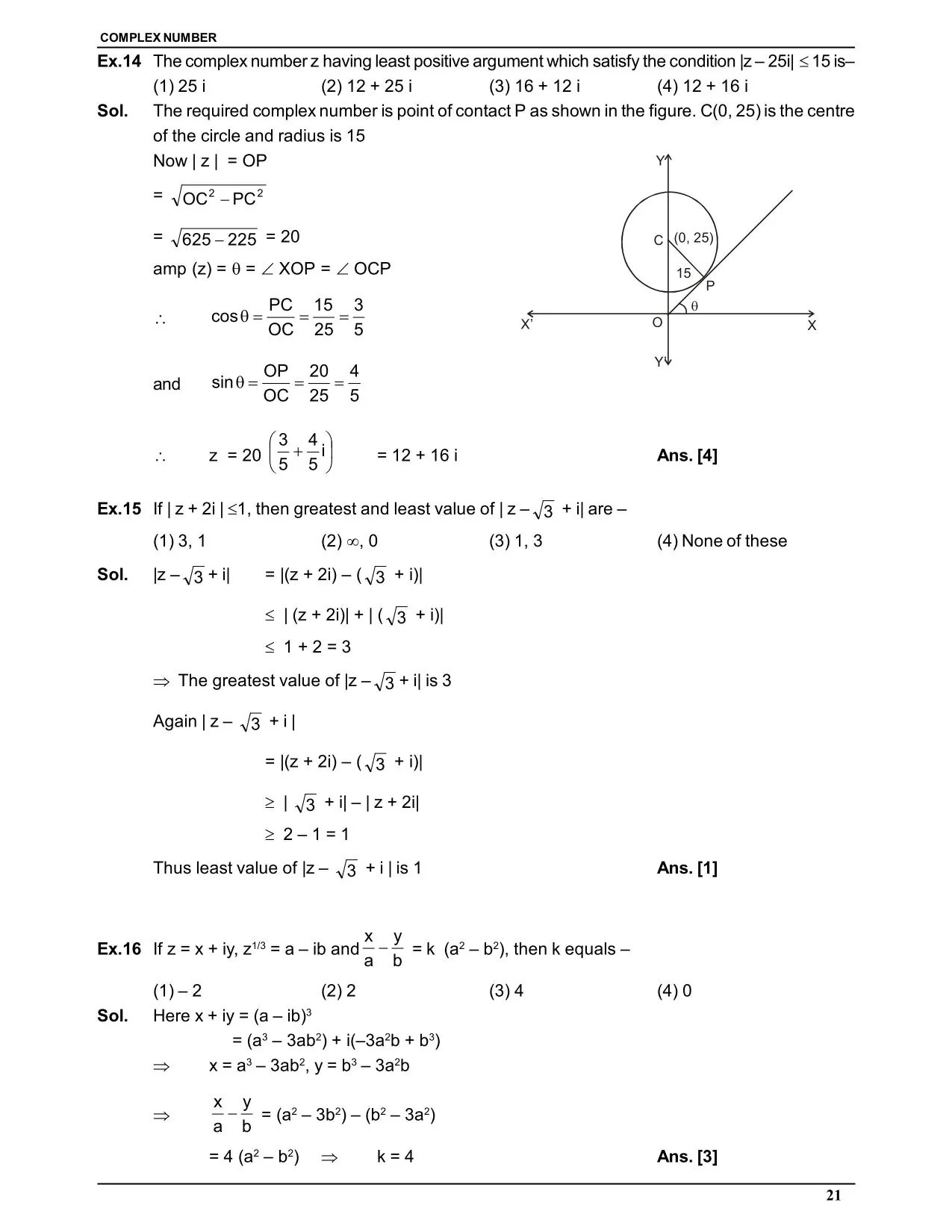
A complex number is a number of the form z = a + ib, where a is the real part, b is the imaginary part, and i = √(−1). Complex numbers extend the real number system to include solutions of equations like x² + 1 = 0. They form the basis for many advanced topics in IIT JEE Mathematics, including geometry in the Argand plane and polynomial theory.
What are the most important formulas in Complex Numbers for JEE Main?
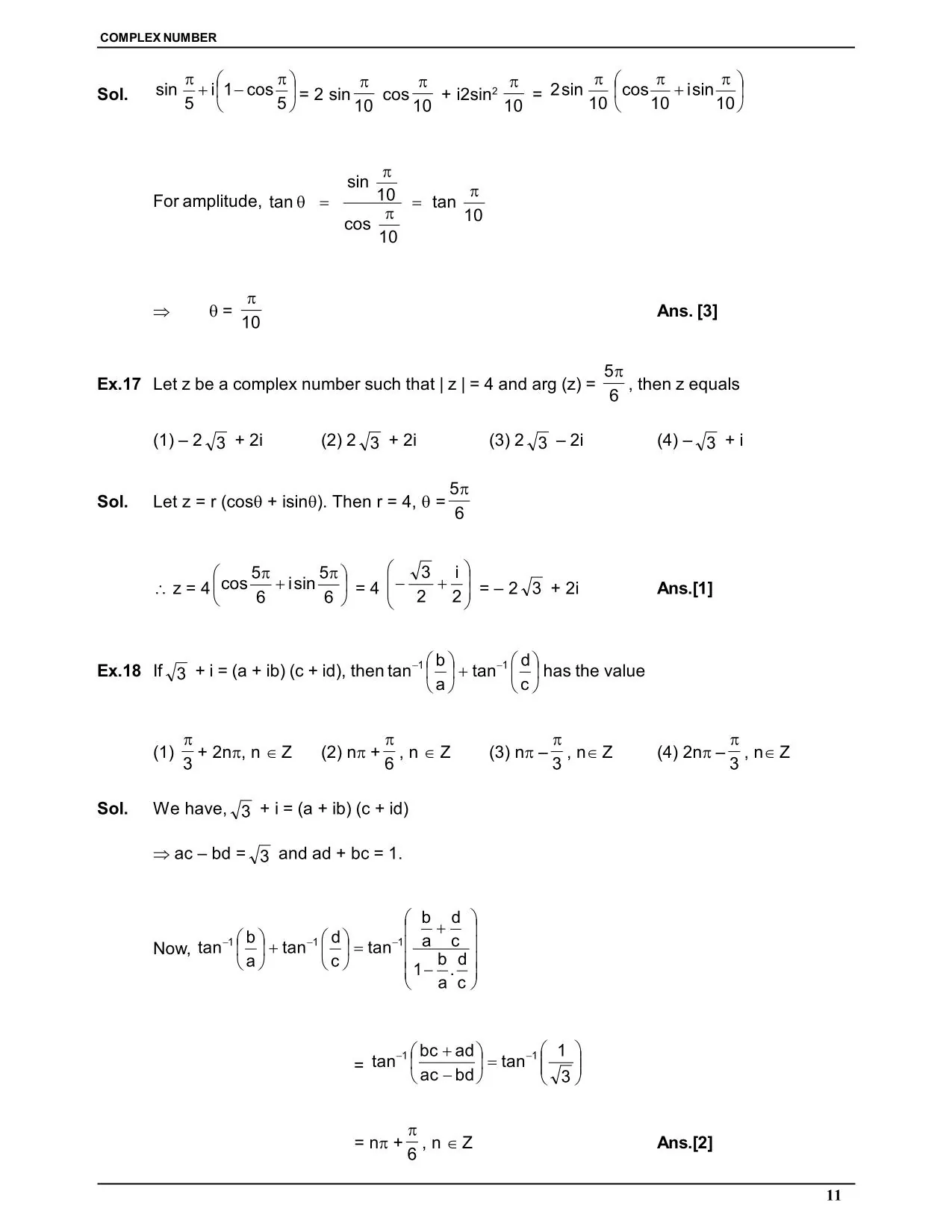
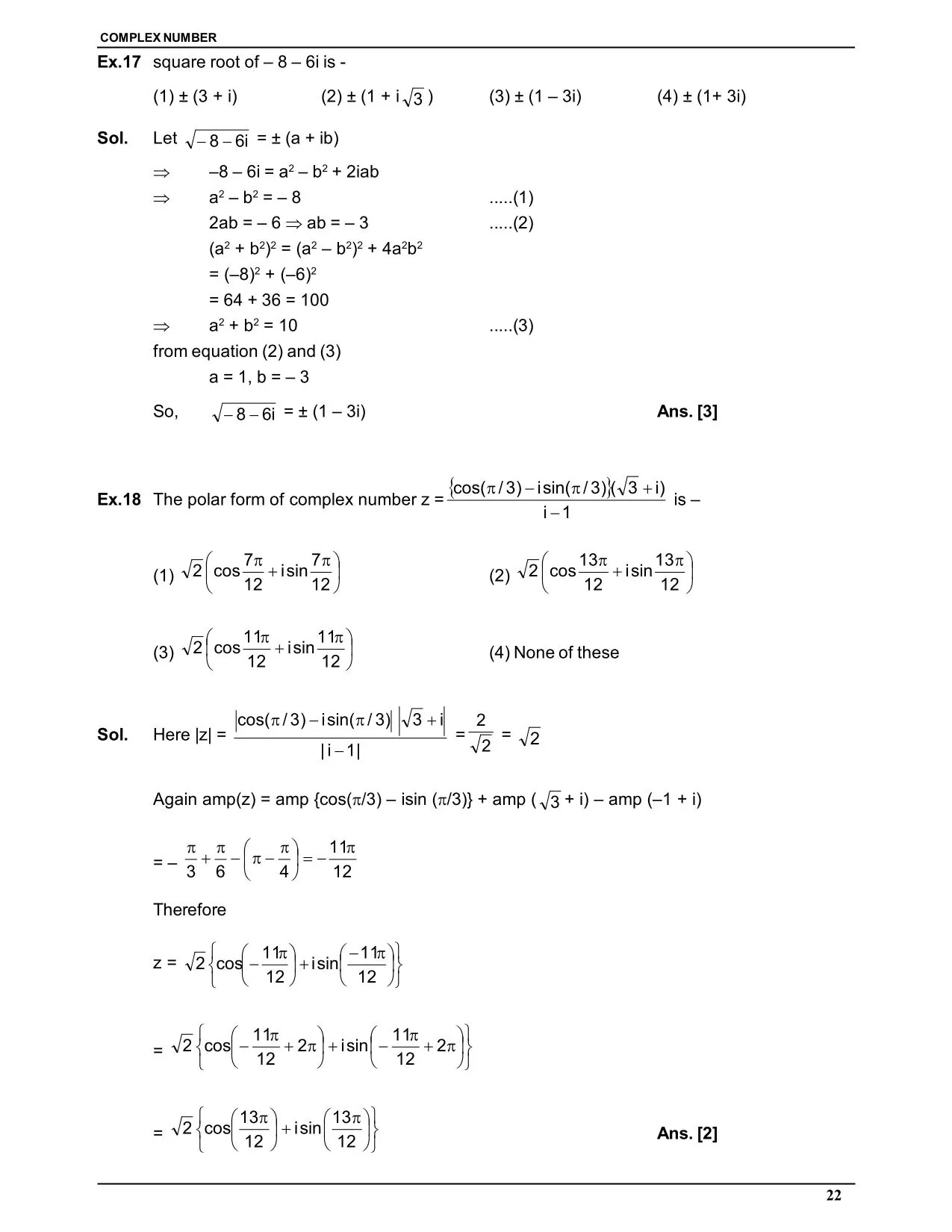
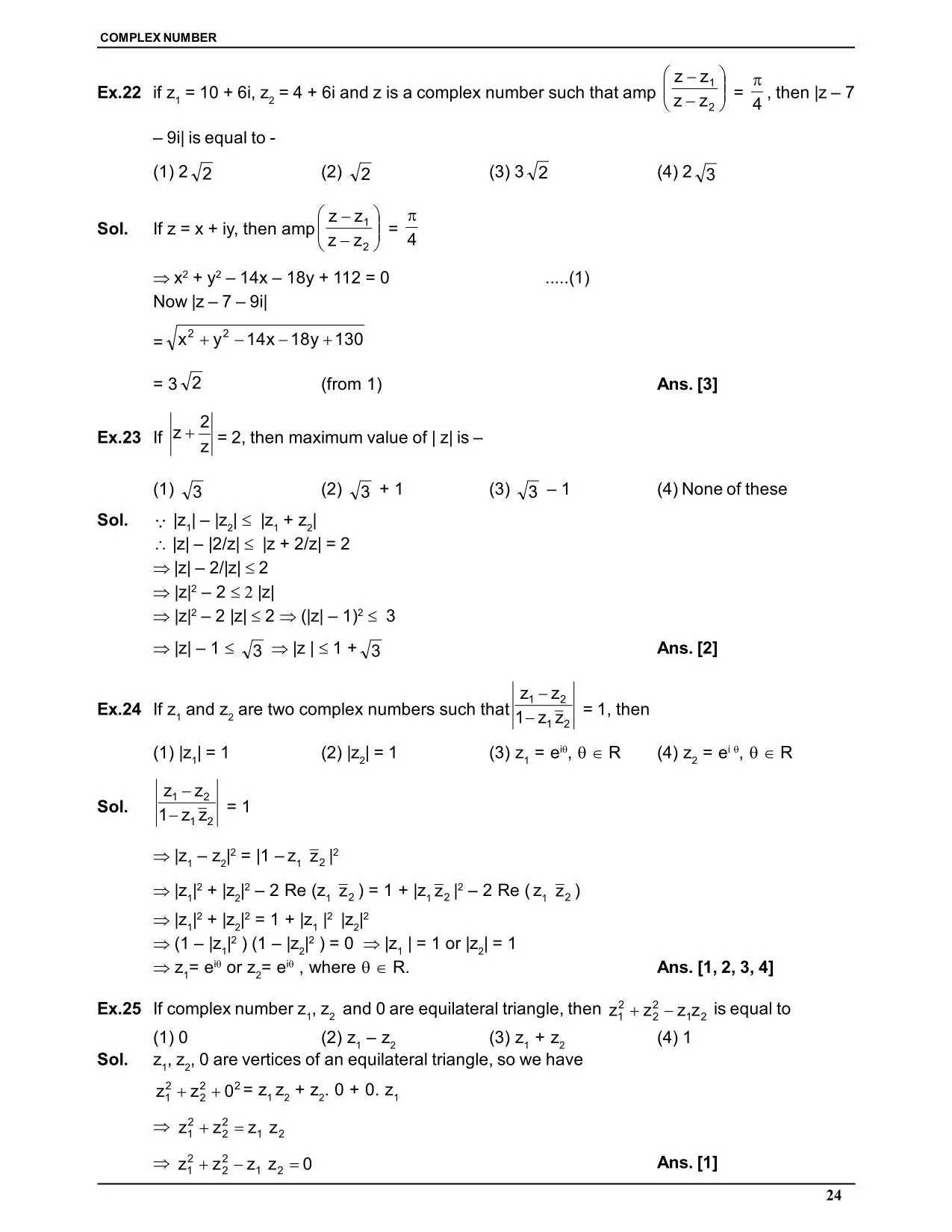
The most important formulas are: modulus |z| = √(a² + b²), argument tan θ = b/a, conjugate z̄ = a − ib, polar form z = r(cosθ + i sinθ), De Moivre's theorem (cosθ + i sinθ)ⁿ = cos(nθ) + i sin(nθ), and the cube root properties 1 + ω + ω² = 0 and ω³ = 1. These appear in 2–3 JEE Main questions annually.
What is the difference between modulus and argument of a complex number?
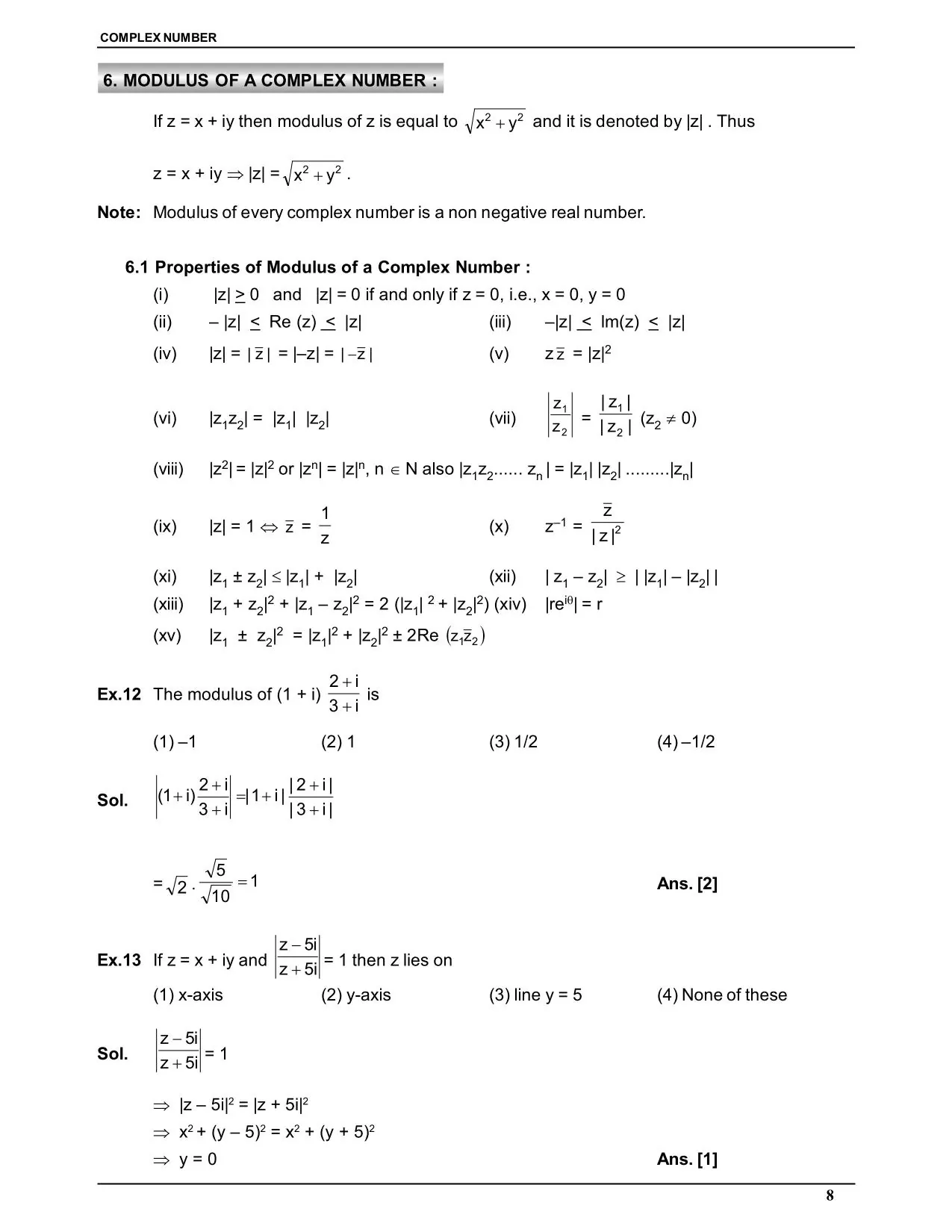
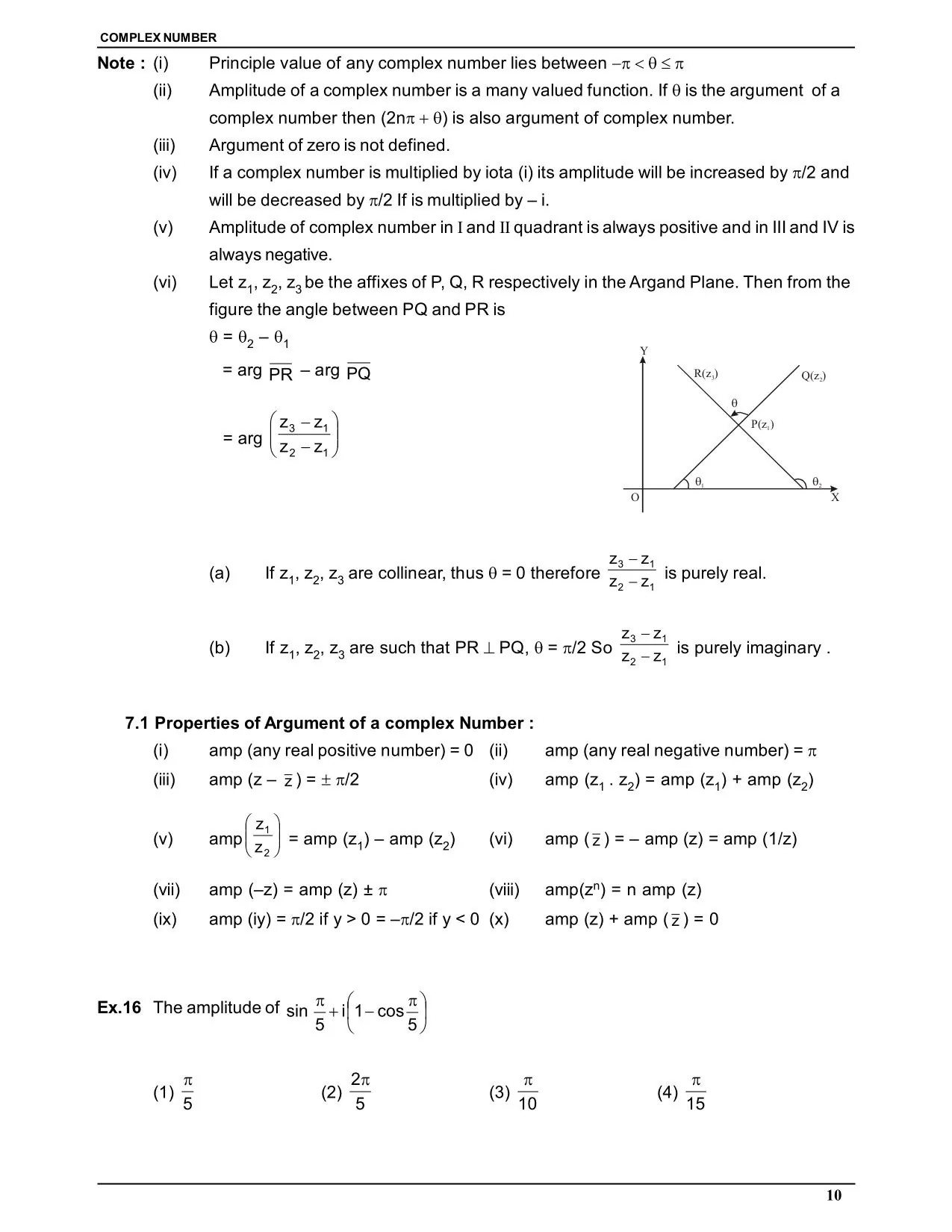
The modulus |z| is the distance of z from the origin on the Argand plane, calculated as √(a² + b²). The argument θ is the angle that the line from origin to z makes with the positive real axis, found using tan θ = b/a. Modulus is always a non-negative real number; argument is an angle, typically expressed in radians in the range (−π, π].
Is De Moivre's theorem in the CBSE Class 11 syllabus?
De Moivre's theorem is not explicitly part of the standard CBSE Class 11 board exam syllabus, but it is an important topic for IIT JEE preparation. It is covered under the JEE Advanced syllabus and is essential for questions involving nth roots of complex numbers and proving trigonometric identities. Students targeting JEE Advanced should study it thoroughly alongside the Class 11 notes.
How do you find the cube roots of unity?
The three cube roots of unity are 1, ω, and ω², where ω = −½ + i(√3/2). They satisfy the equation x³ = 1. Their two key properties are: the sum 1 + ω + ω² = 0, and the product ω³ = 1. These properties are used to simplify expressions in JEE algebra questions, particularly those involving factorisation of sums of cubes.