Electrostatics - NEET Previous Year Questions with Complete Solutions
Electrostatics NEET PYQs: Master Coulomb’s law, electric field, Gauss’s law, potential, and capacitance with solved NEET previous year questions, shortcut techniques, expert tips, and common mistake analysis to boost Physics accuracy and speed.
.webp)
Table of Contents

eSaral › NEET › Neet test-series› Electrostatics - NEET Previous Year Questions with Complete Solutions

Why electrostatics is critical for NEET Physics
Electrostatics is the foundation of all electricity and magnetism in the NEET syllabus. Every concept here — charge, field, potential, capacitance — reappears in Current Electricity, Magnetism, and Electromagnetic Induction.
Students who master electrostatics effectively study three chapters at once. That compounding return makes it the smartest chapter to prioritise early in your NEET preparation.
"Electrostatics is where 90% of students lose marks they never expected to lose. Solve at least 10 PYQs per sub-topic before moving on — not for speed, but for pattern recognition."
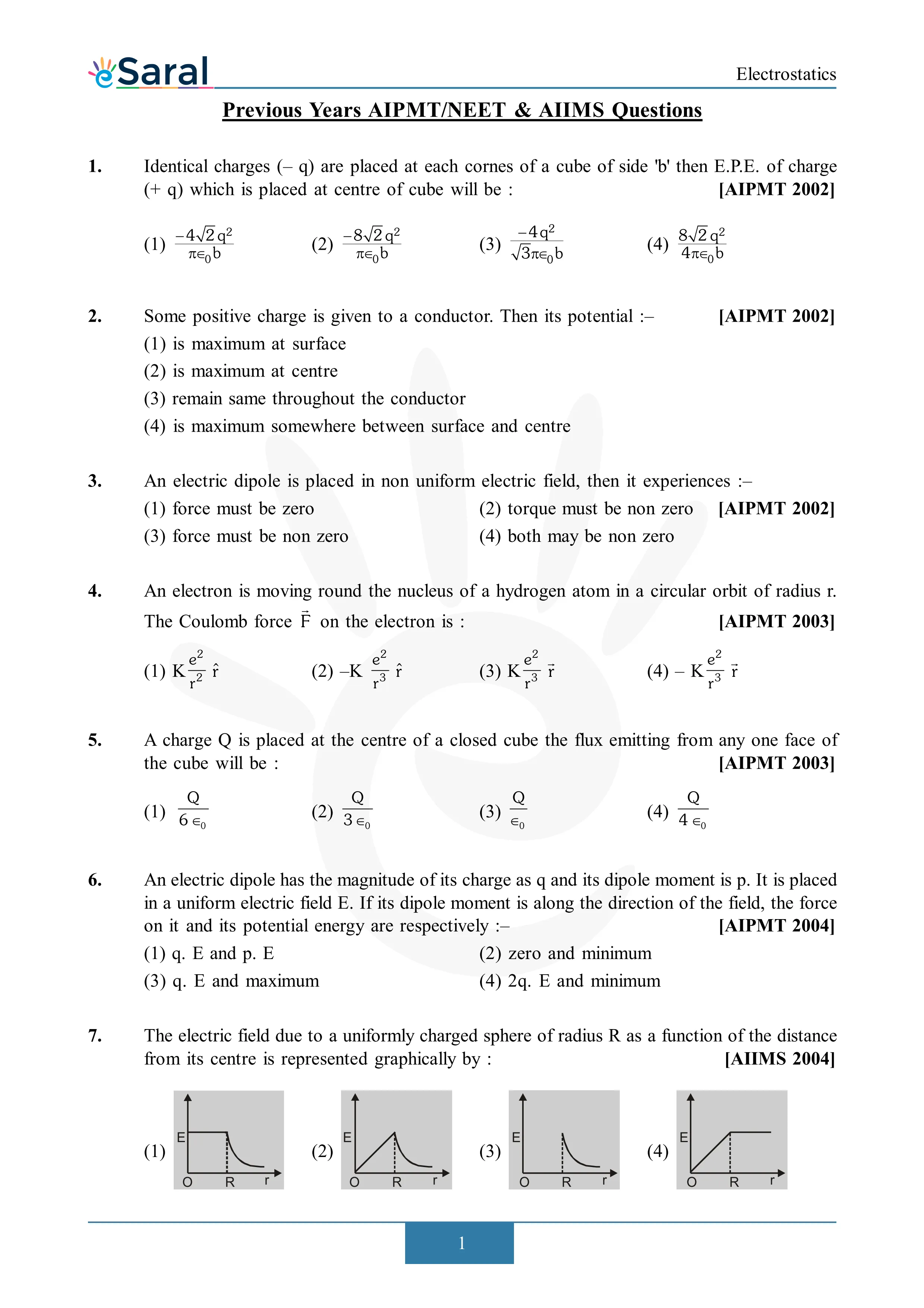
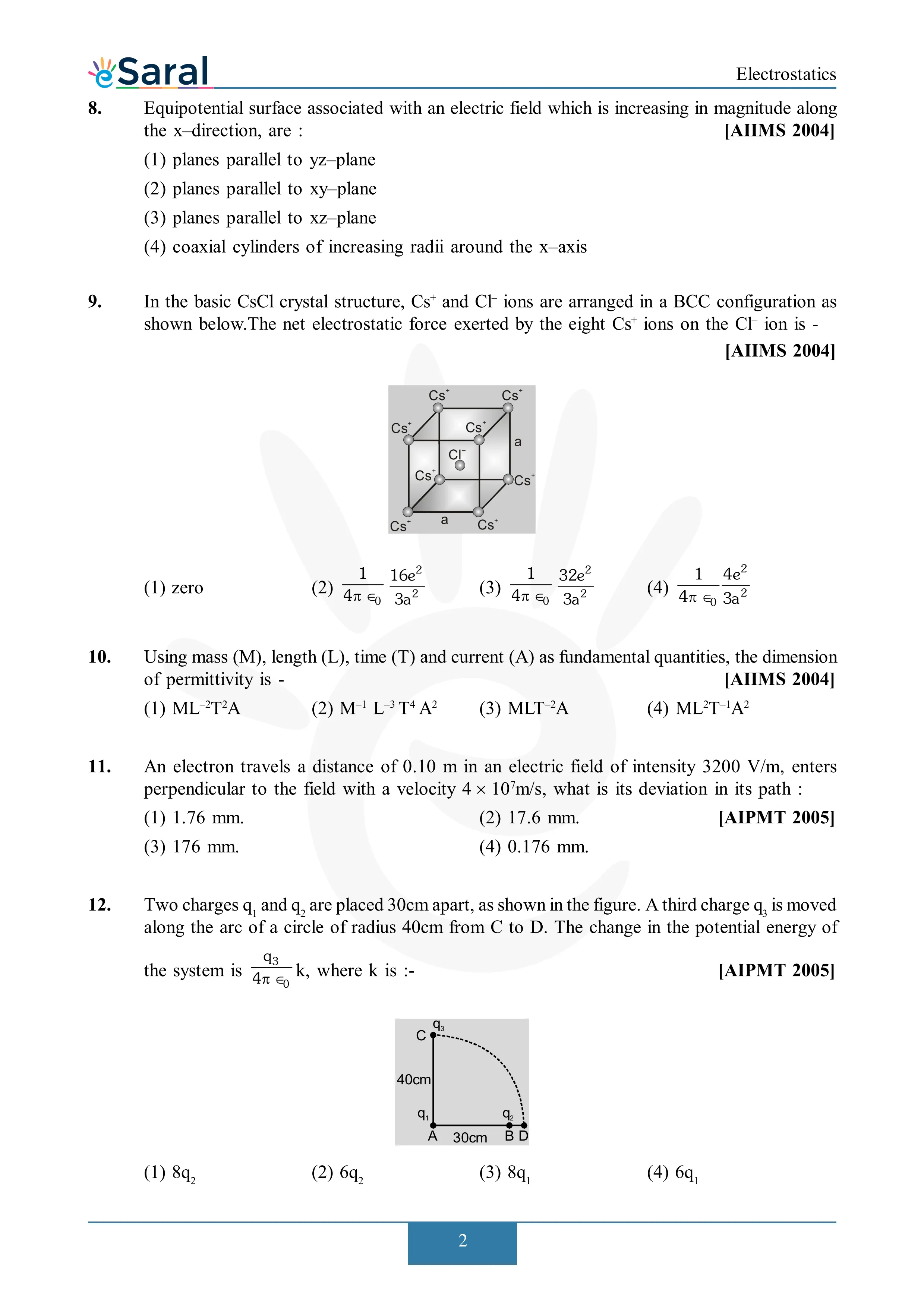
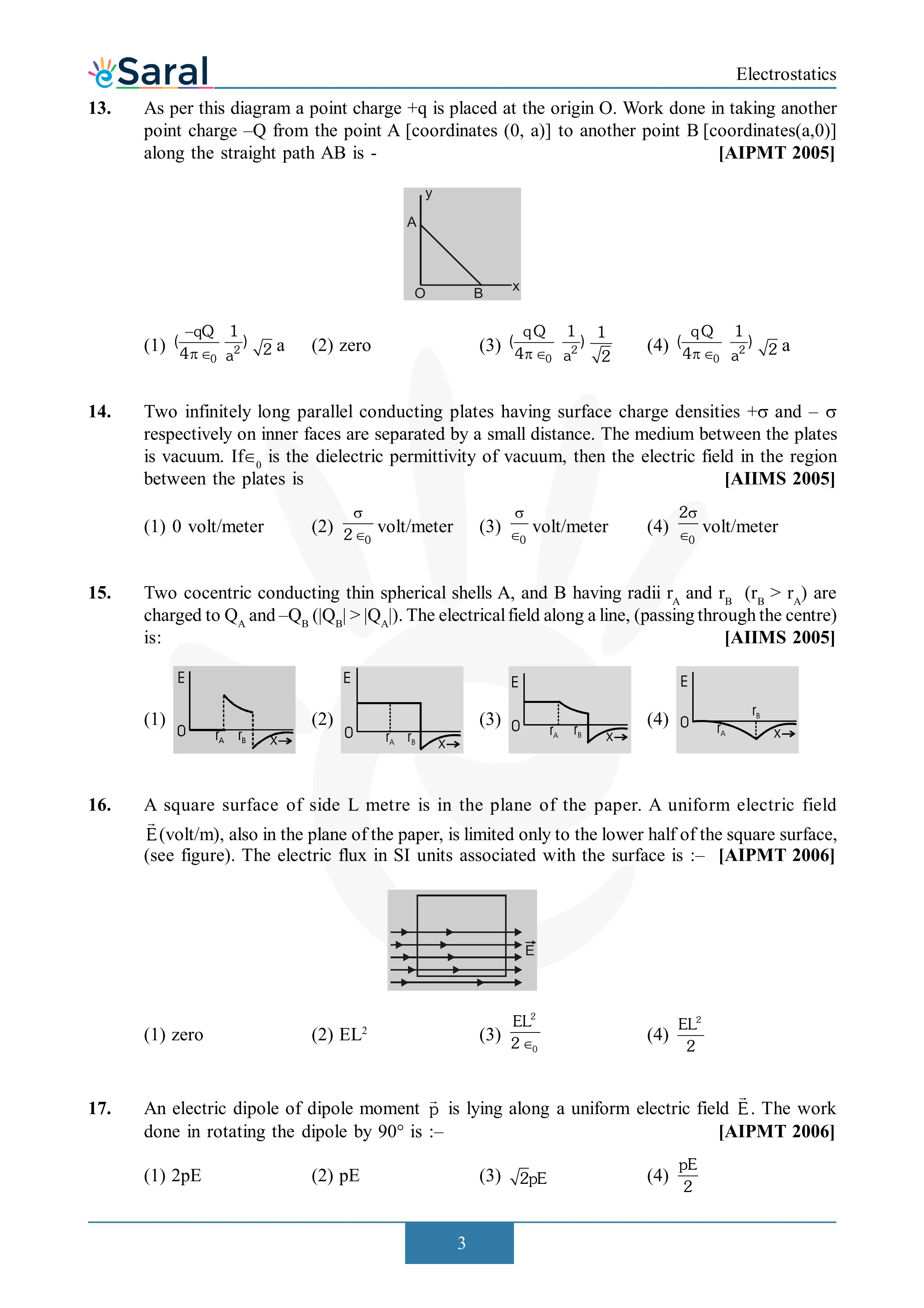
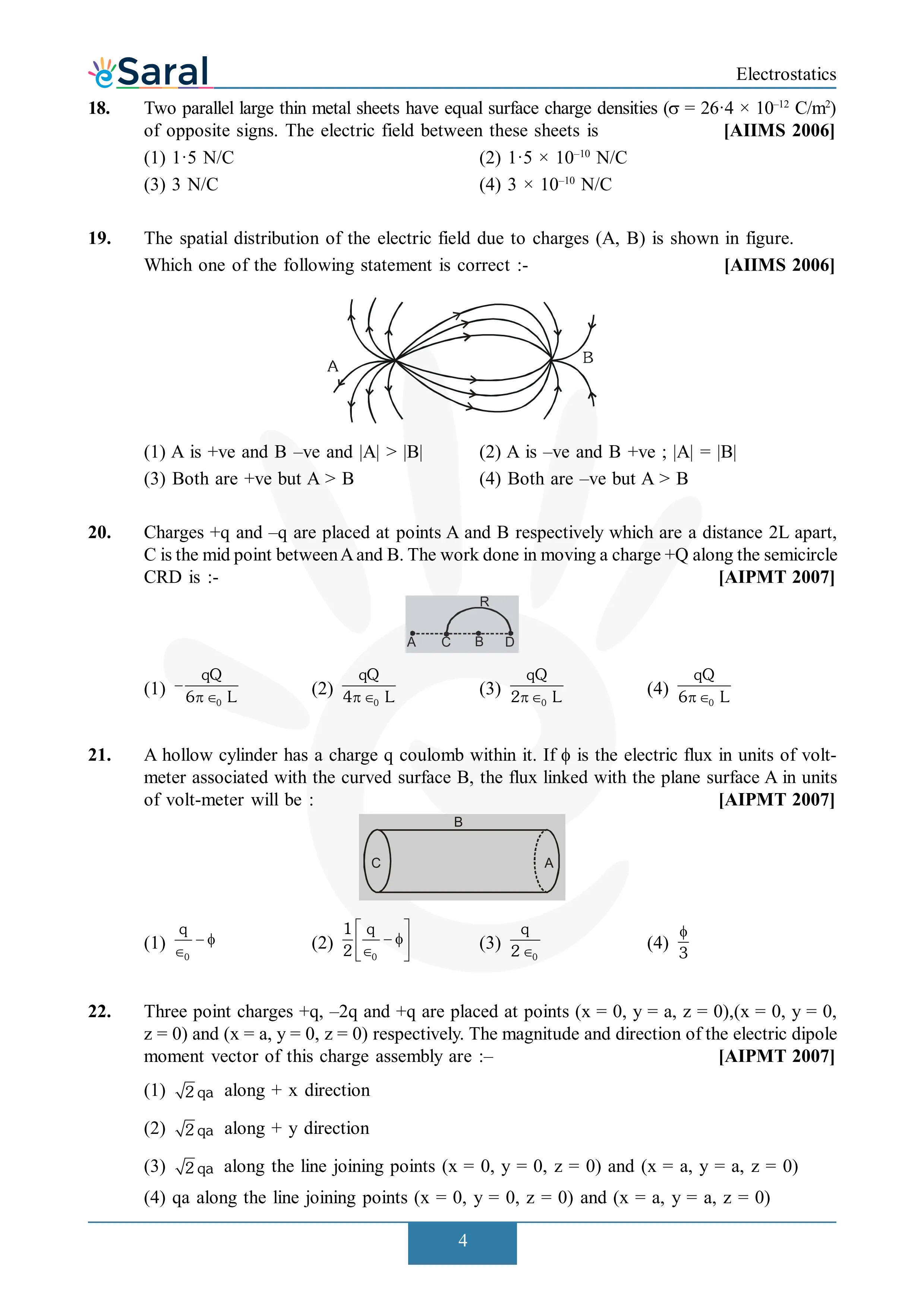
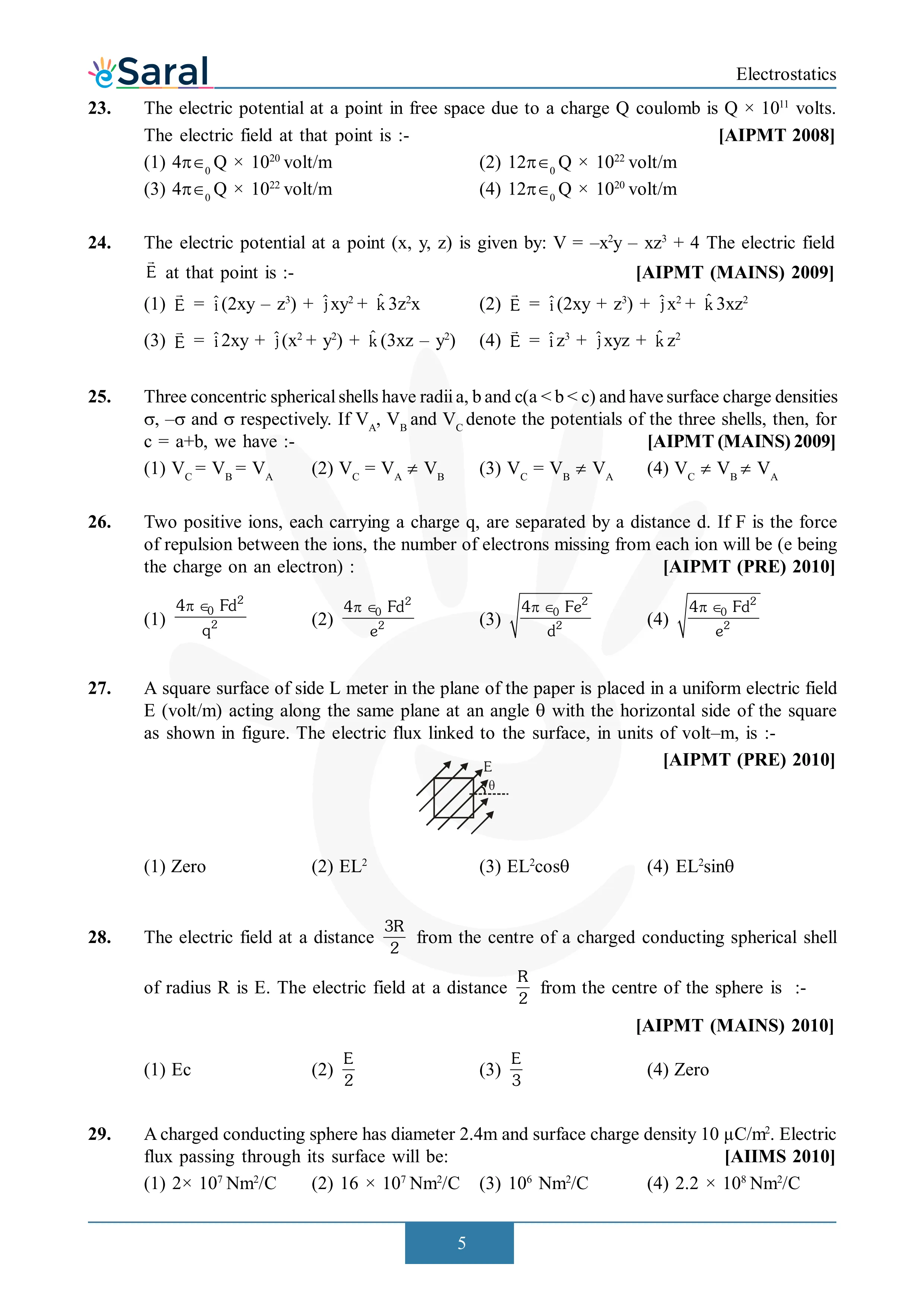
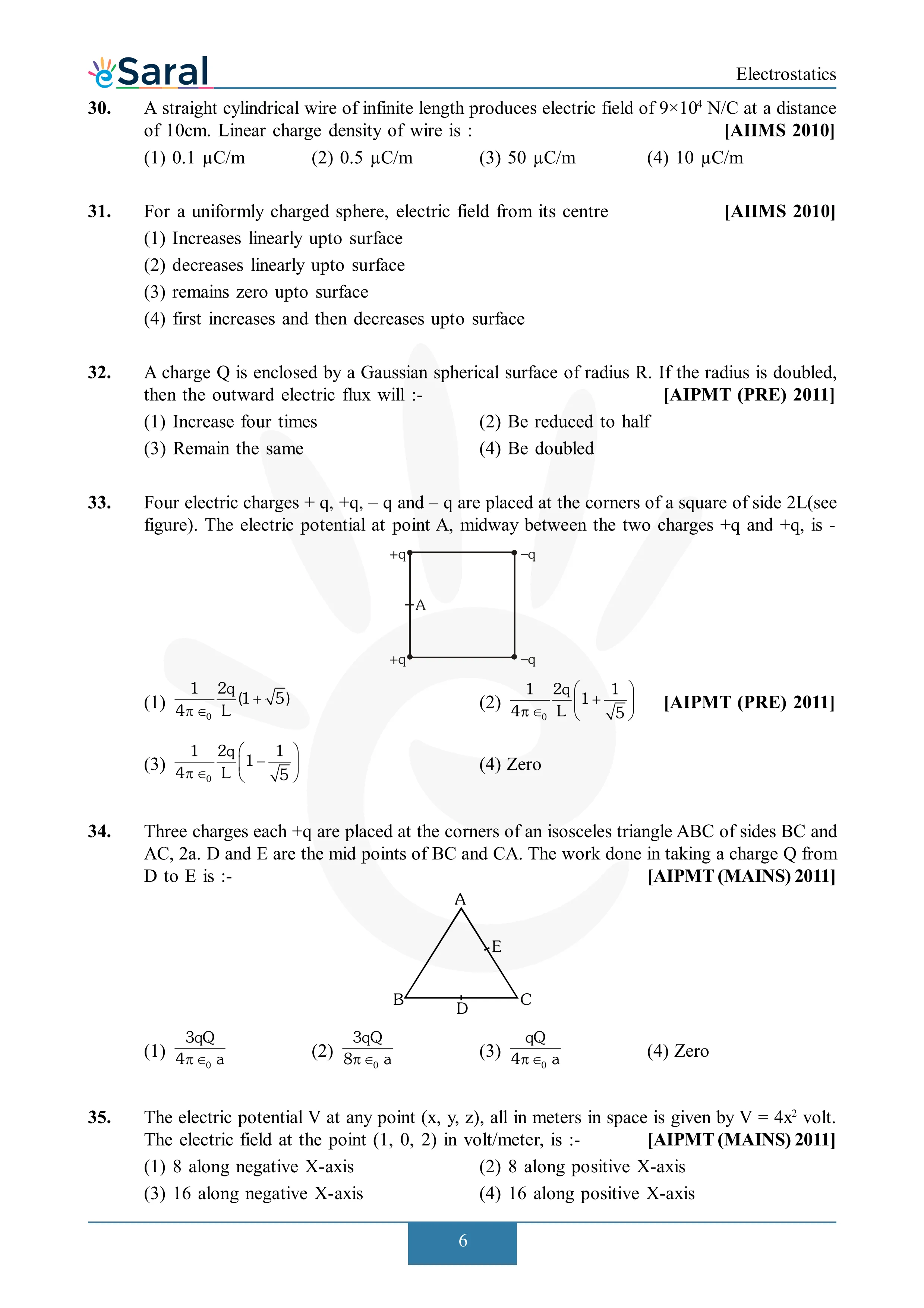
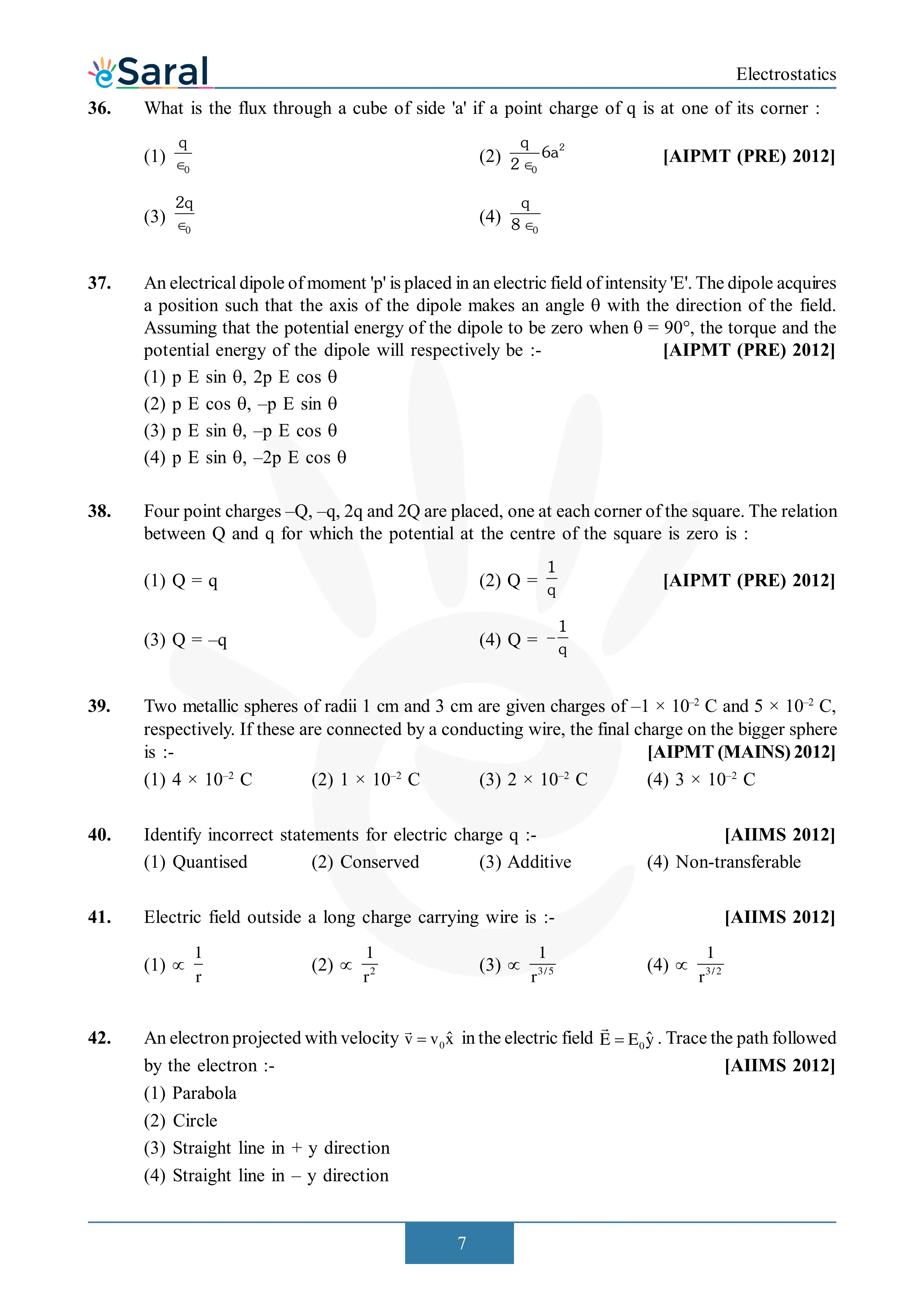
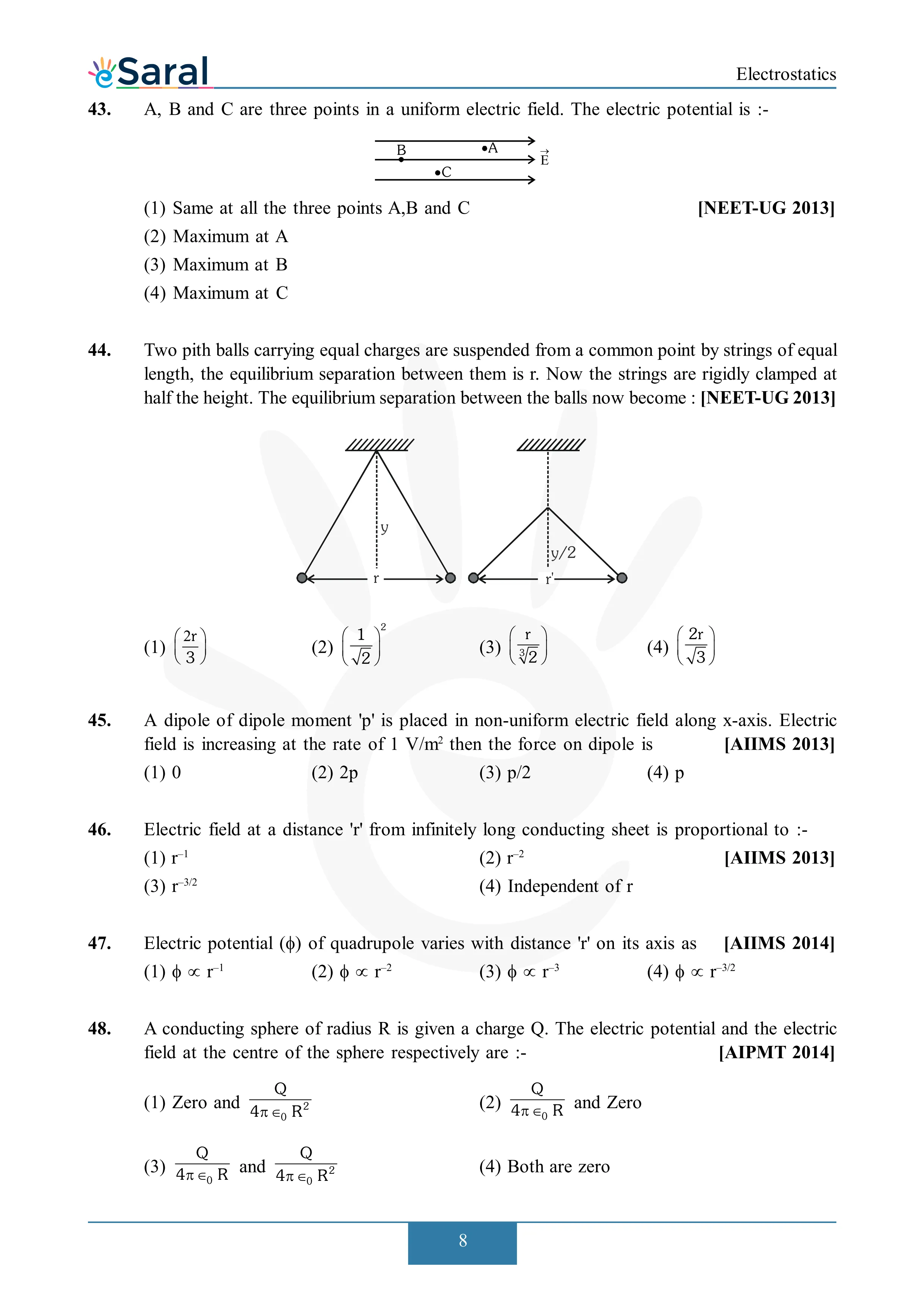
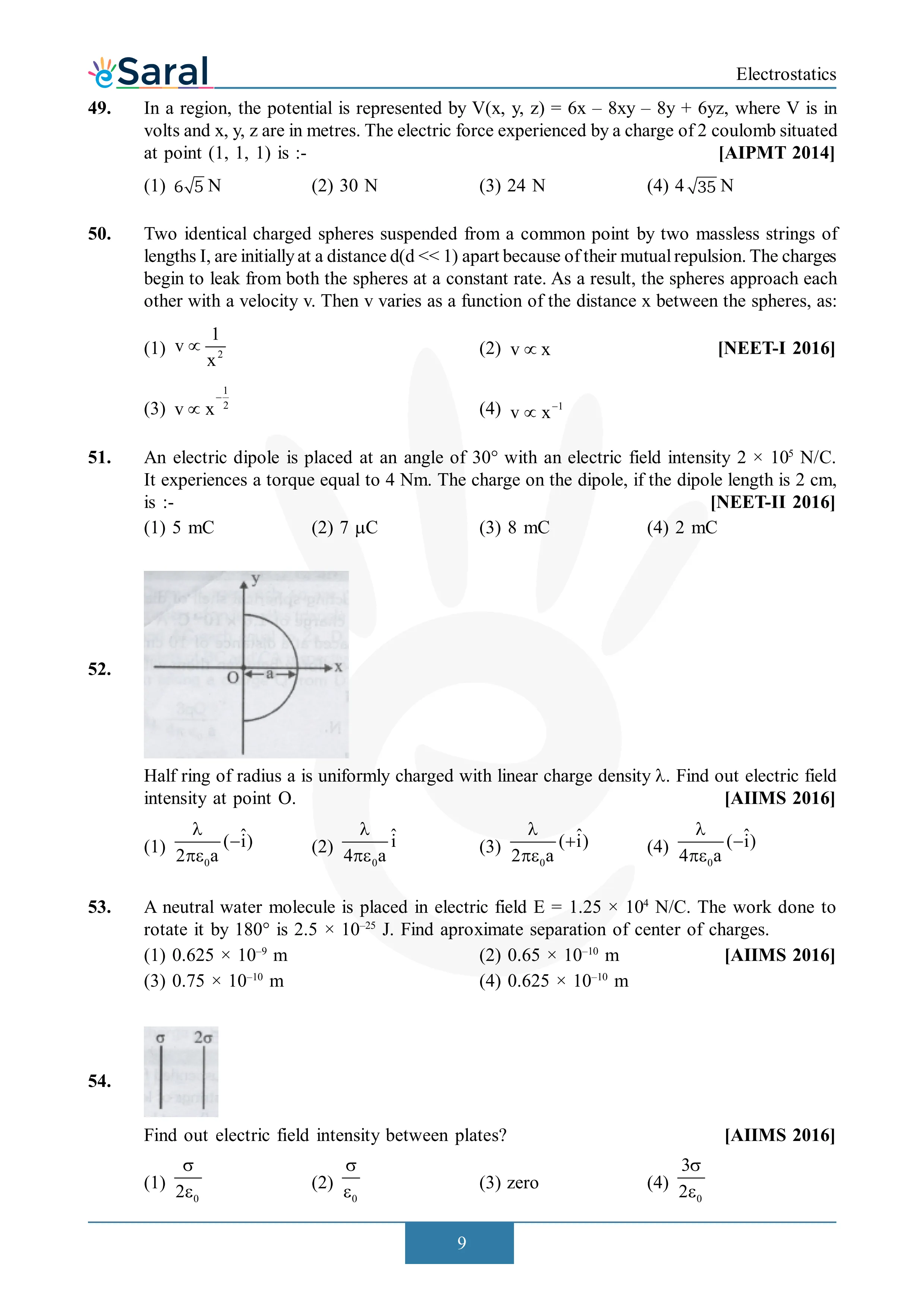
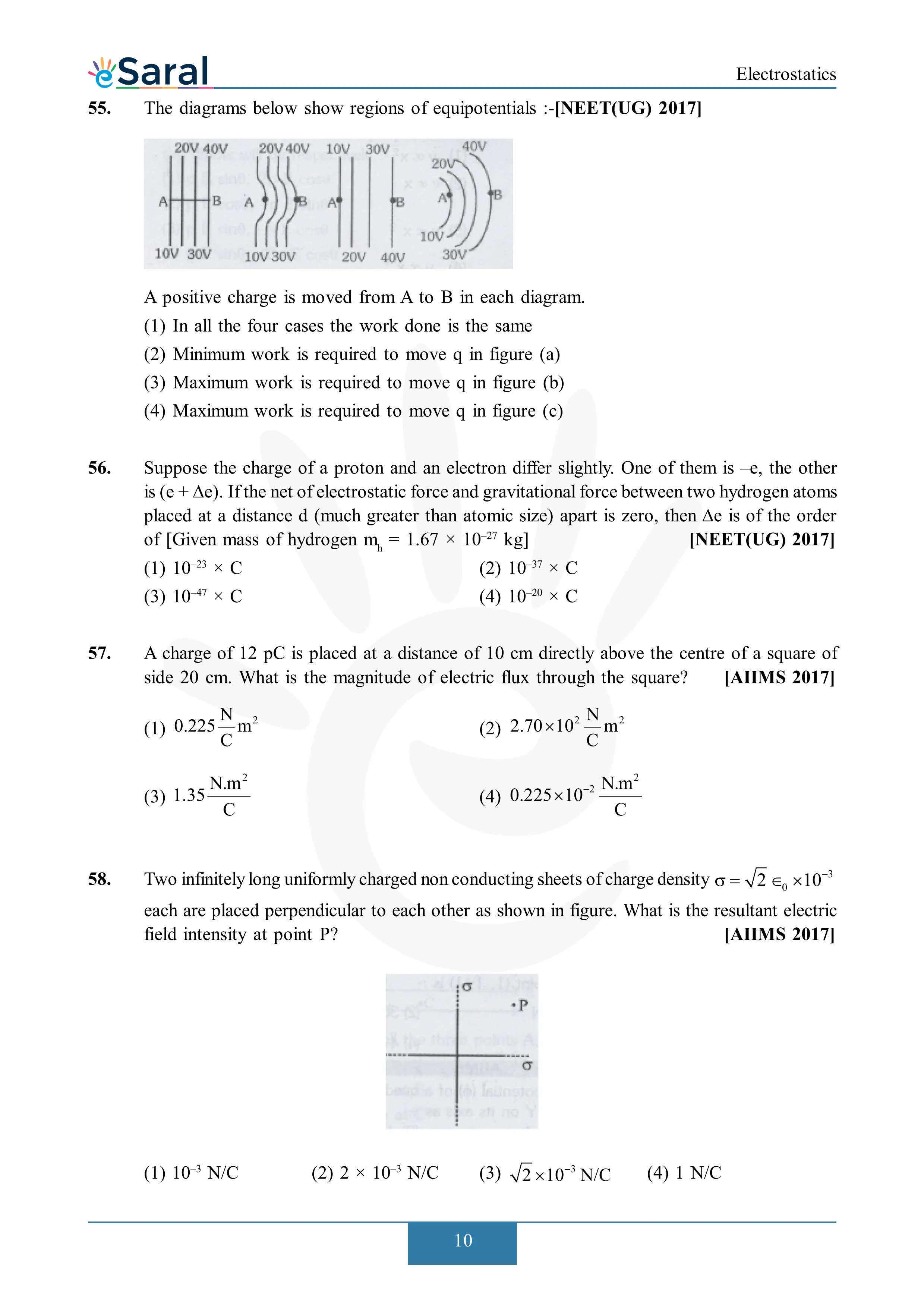
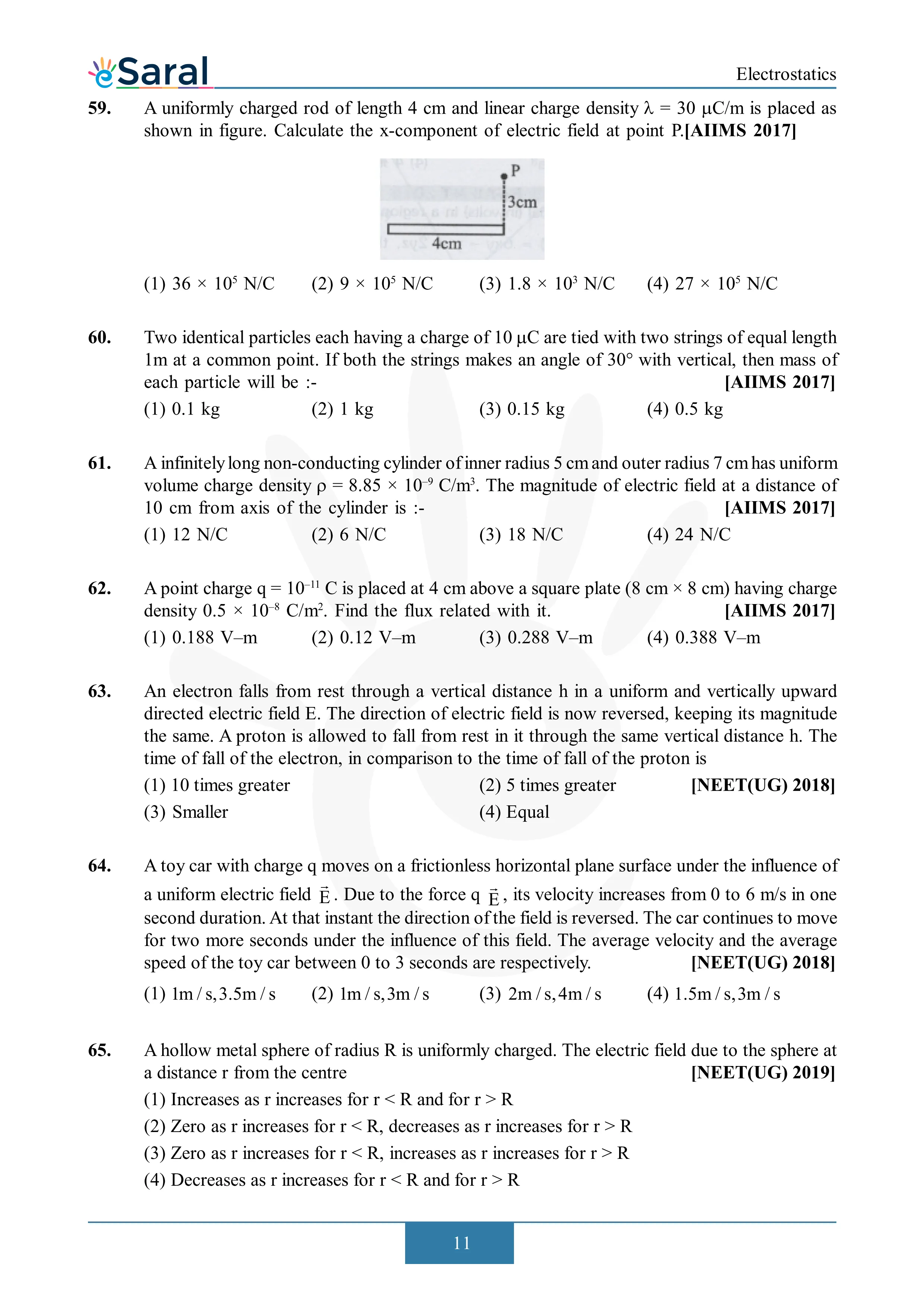
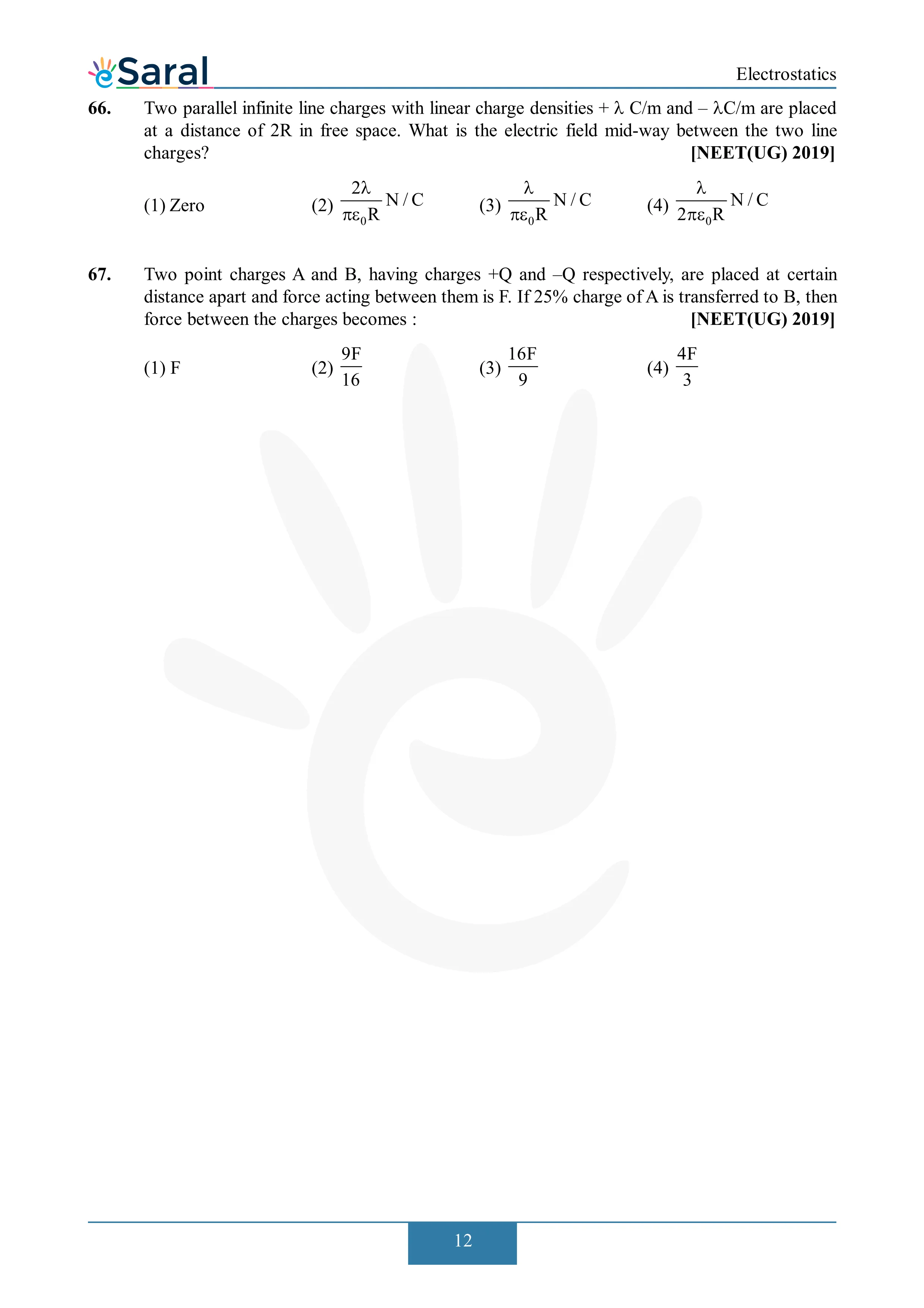
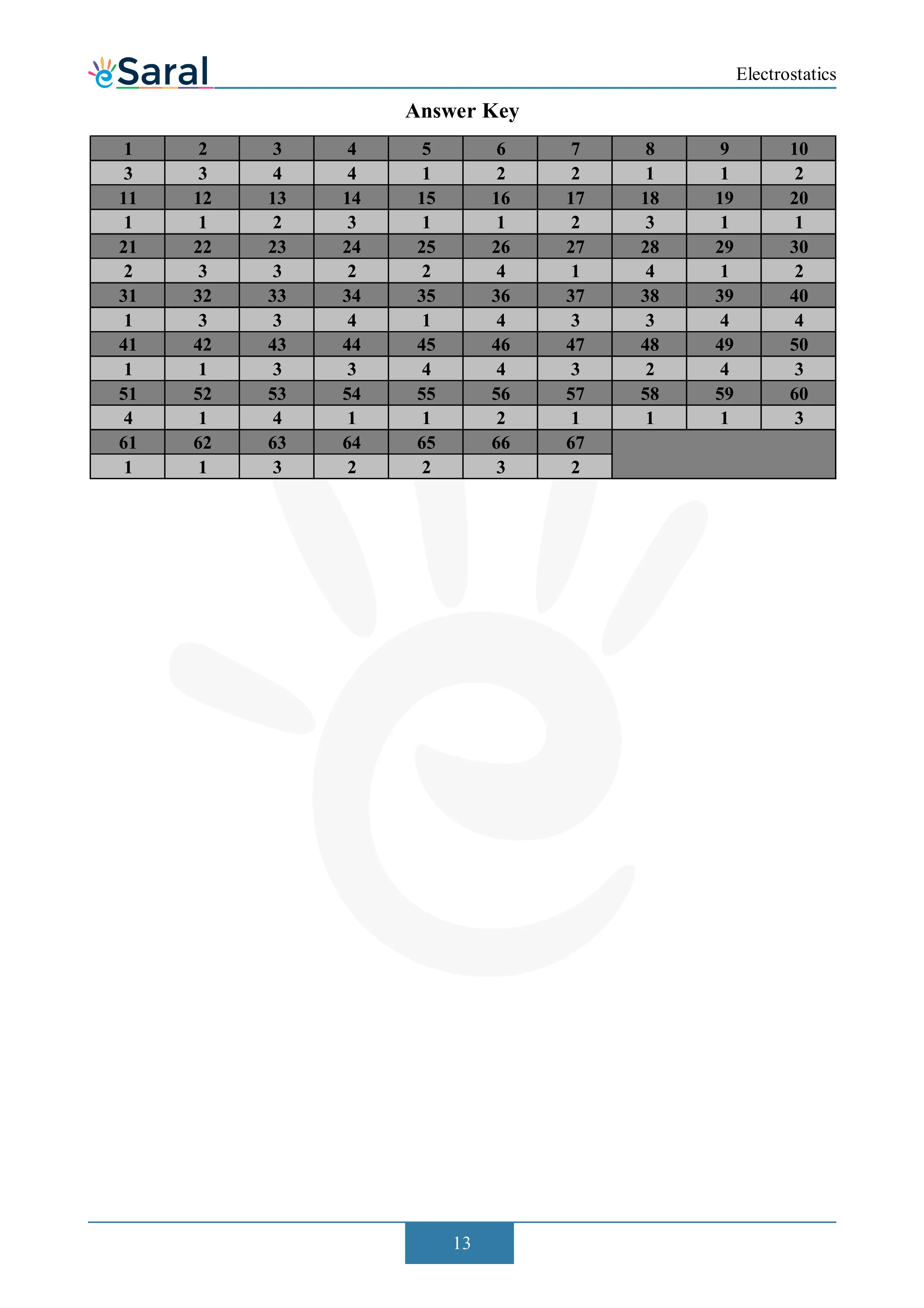
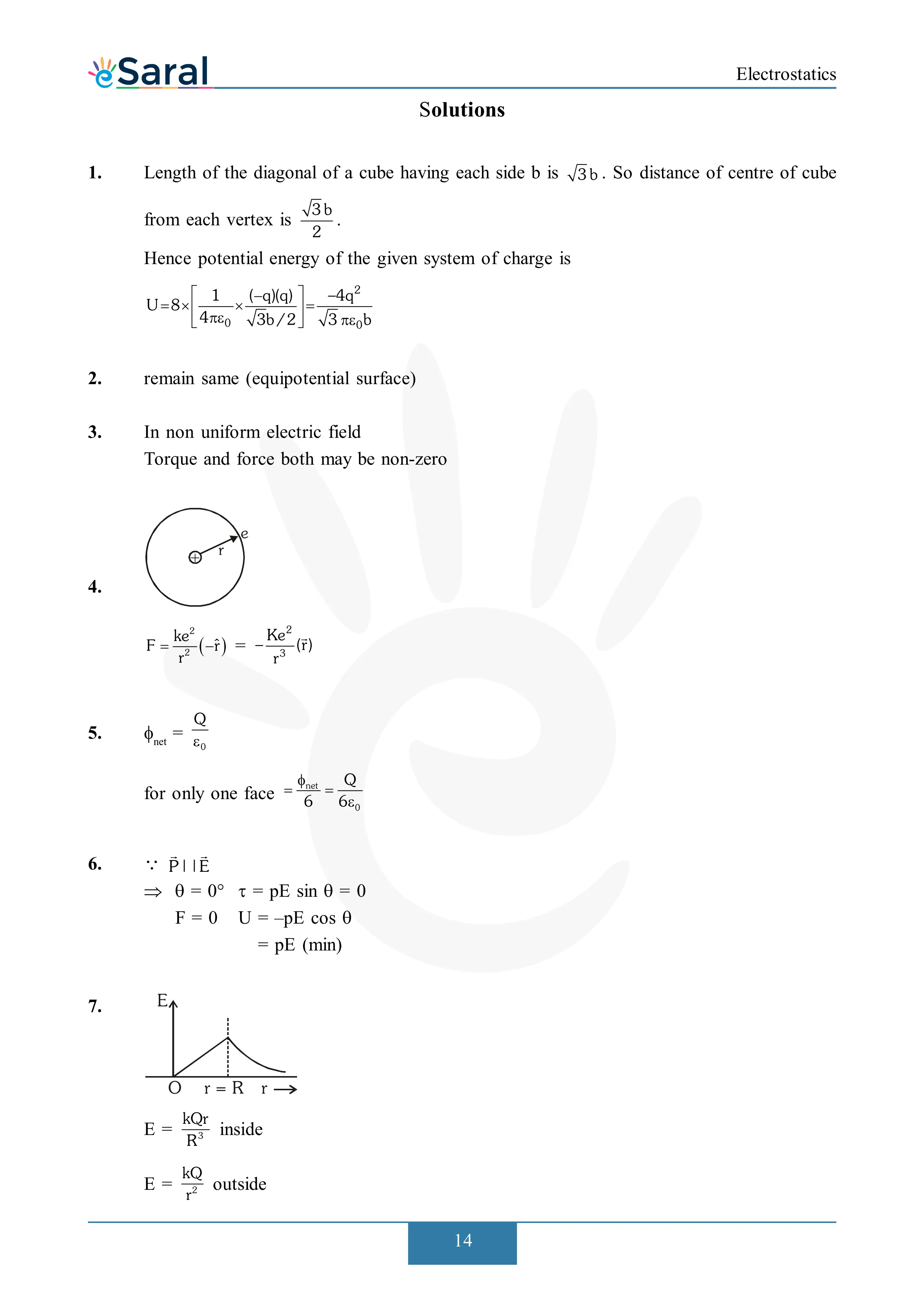
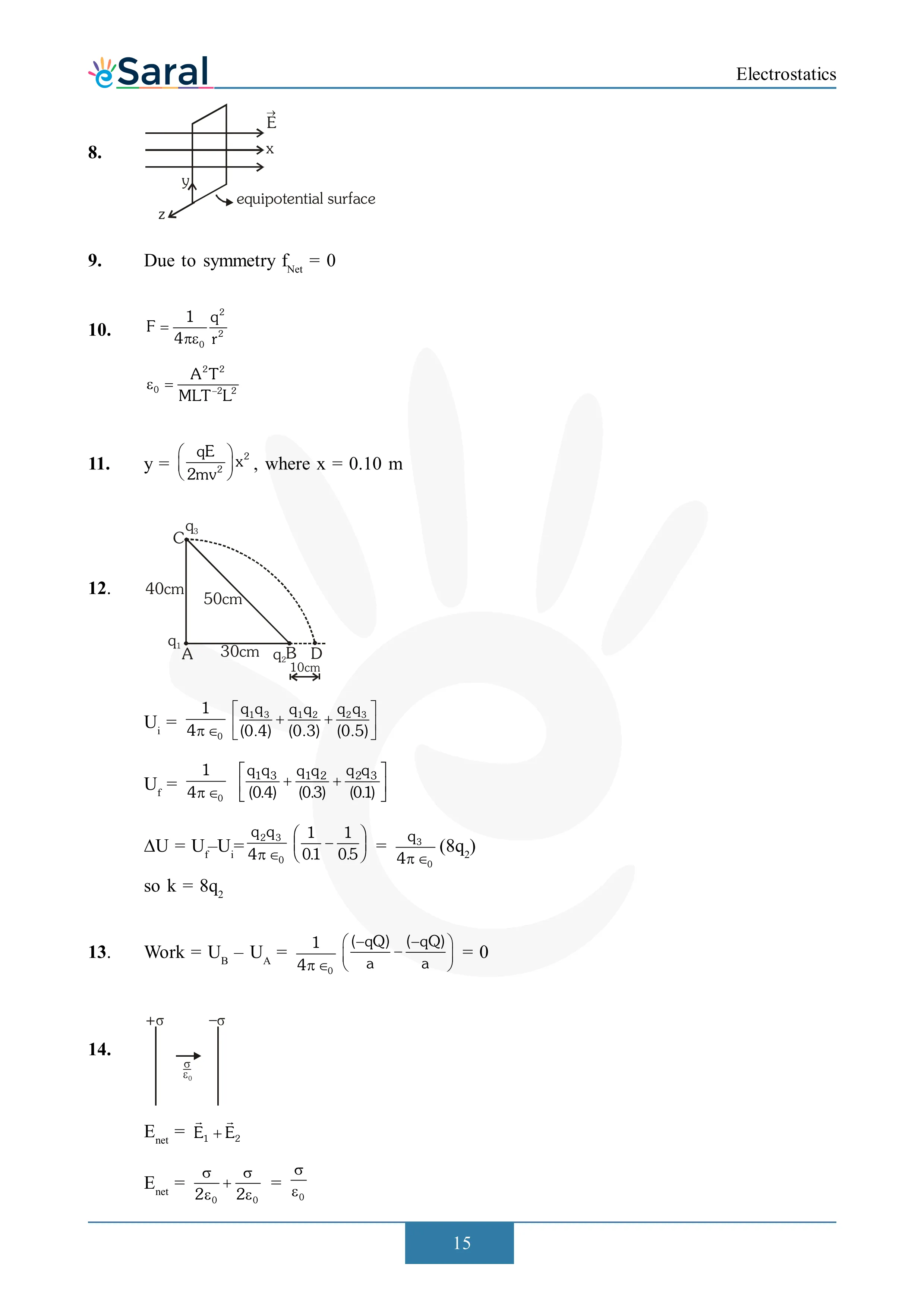
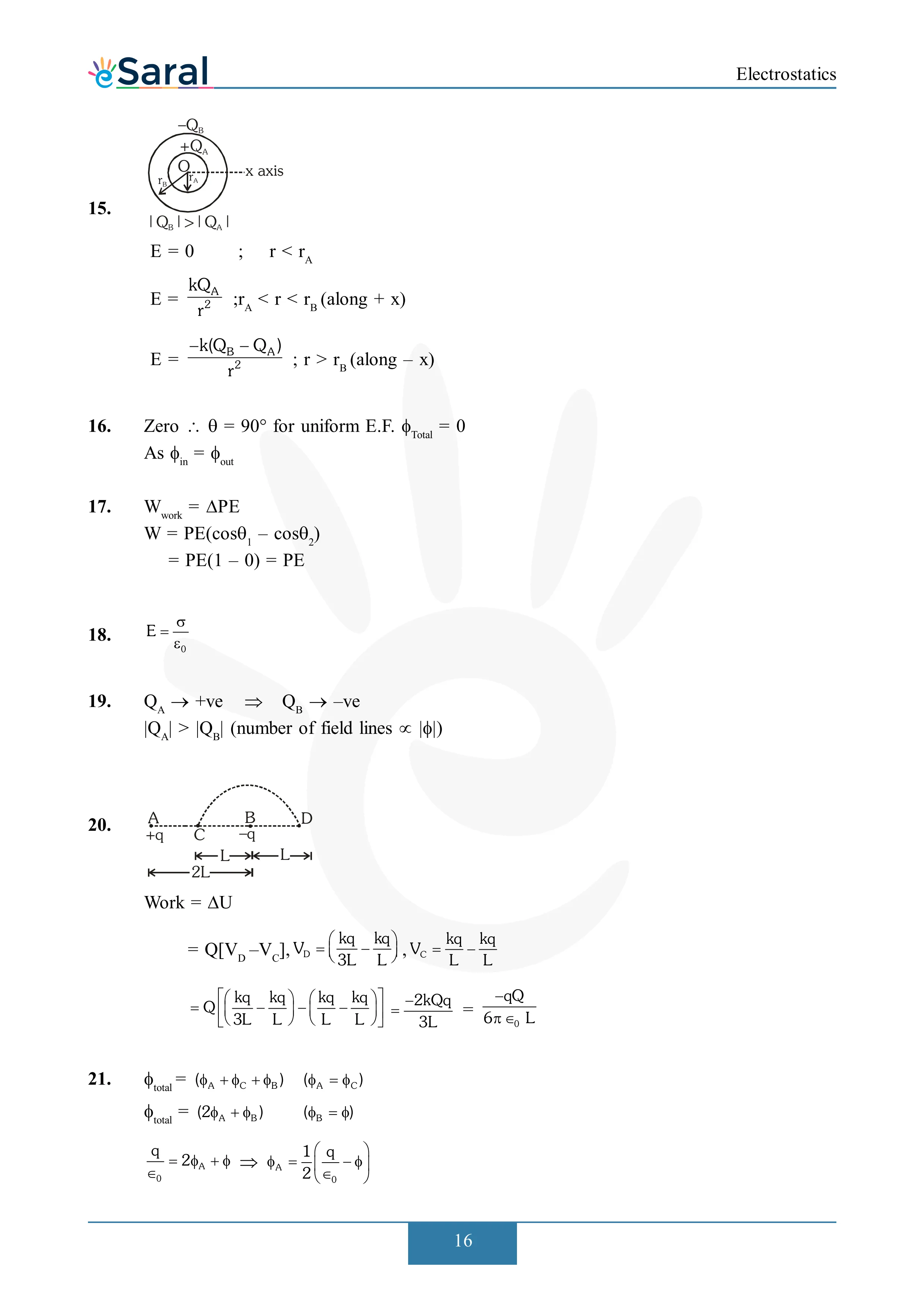
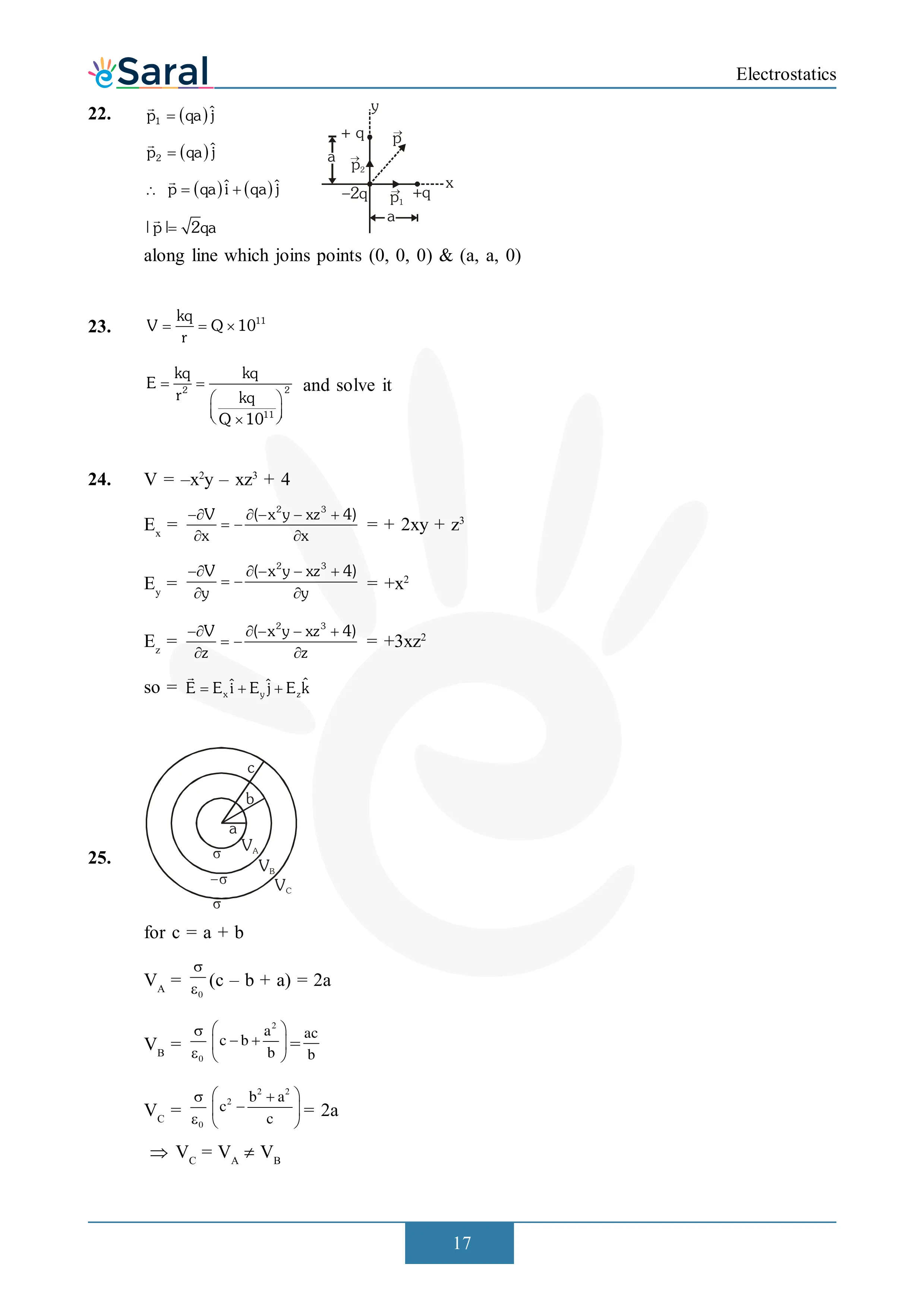
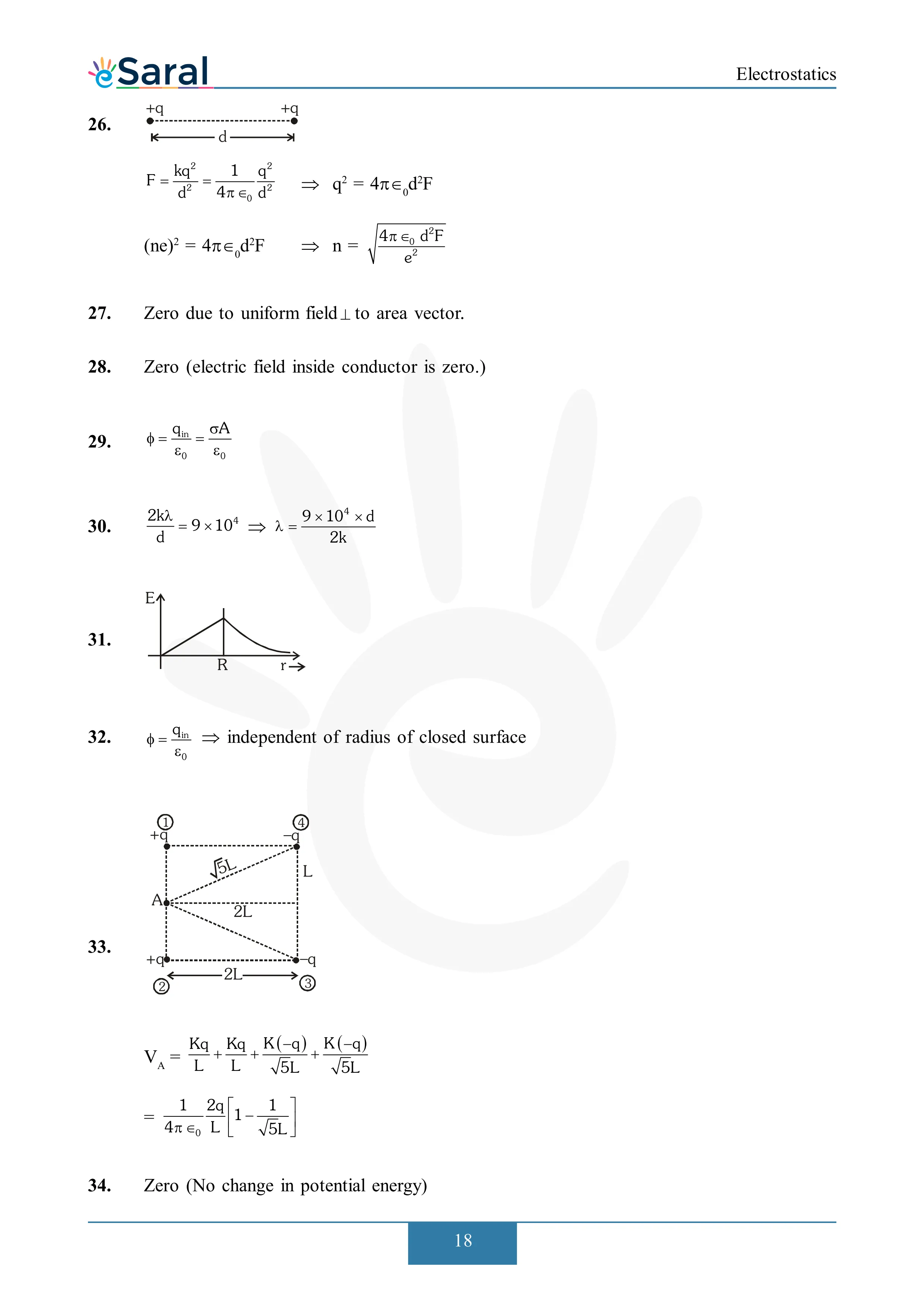
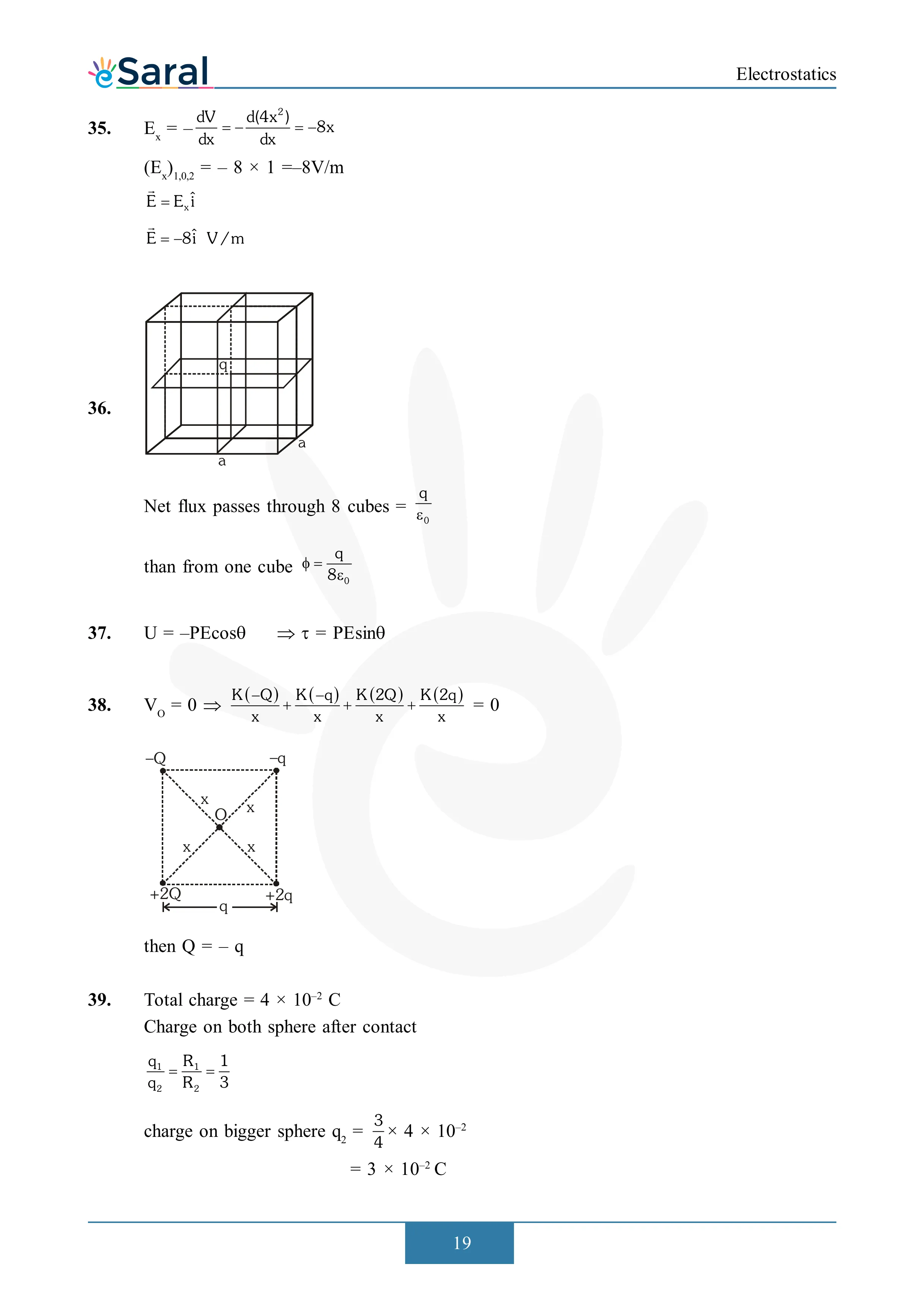
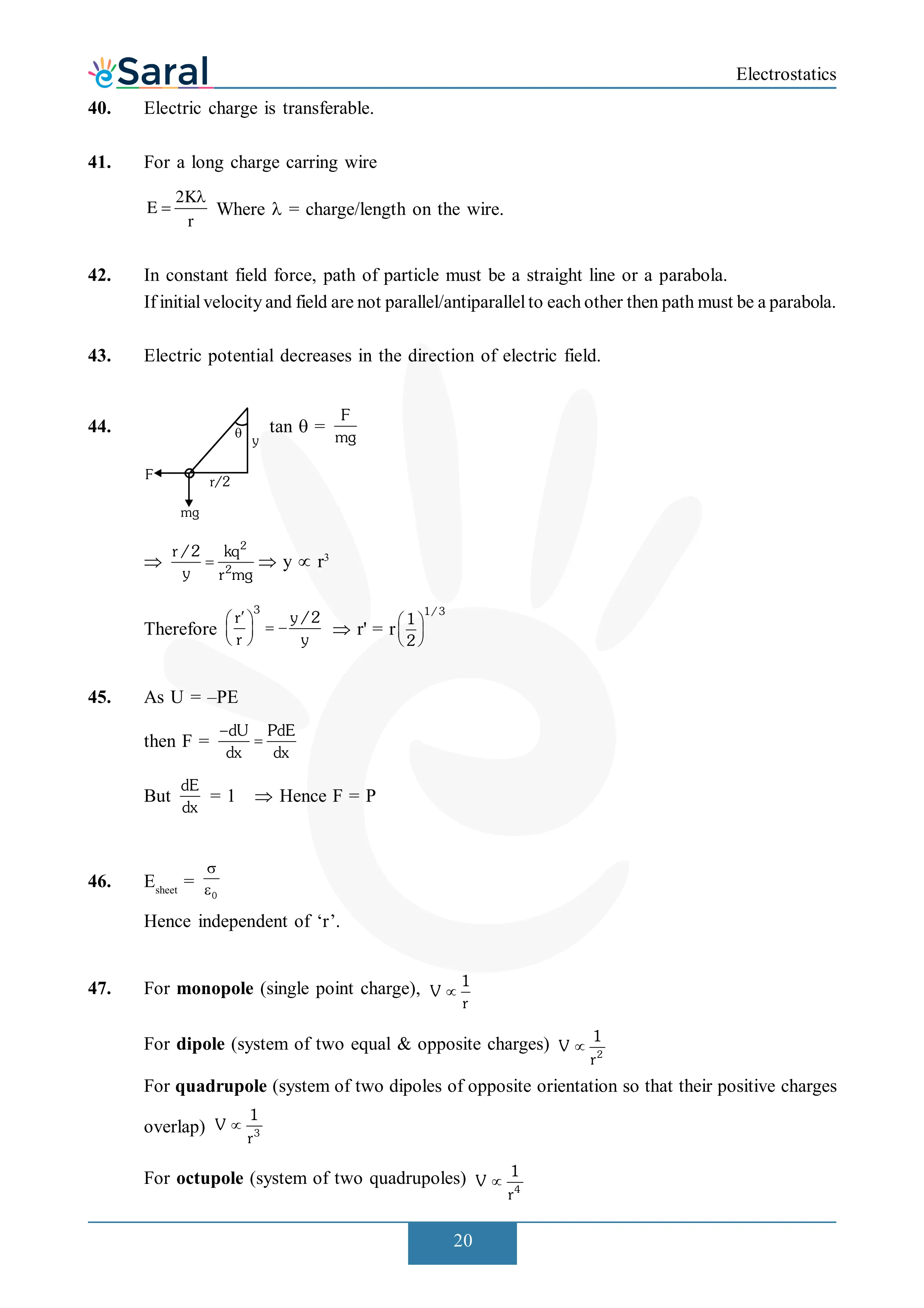
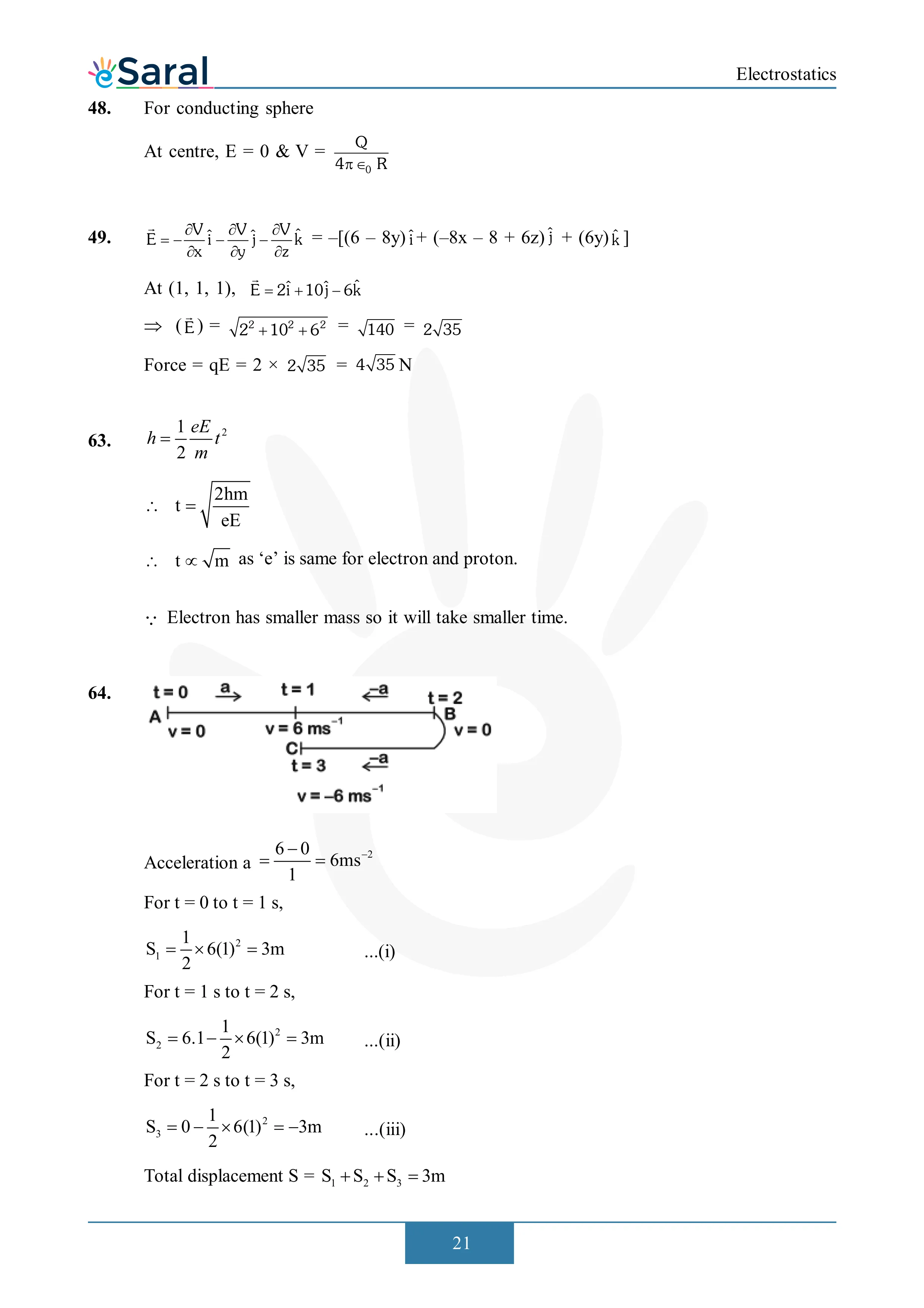
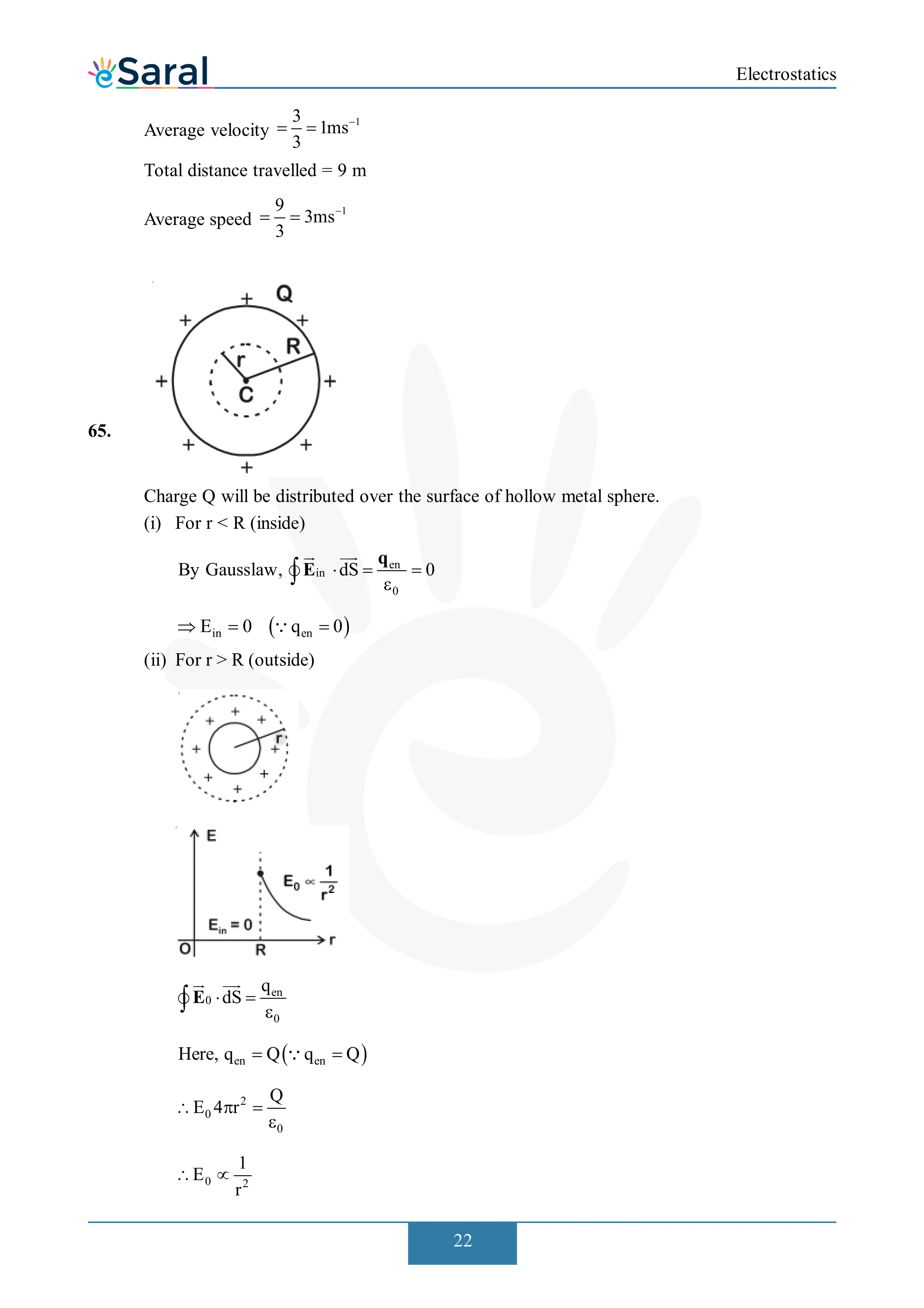
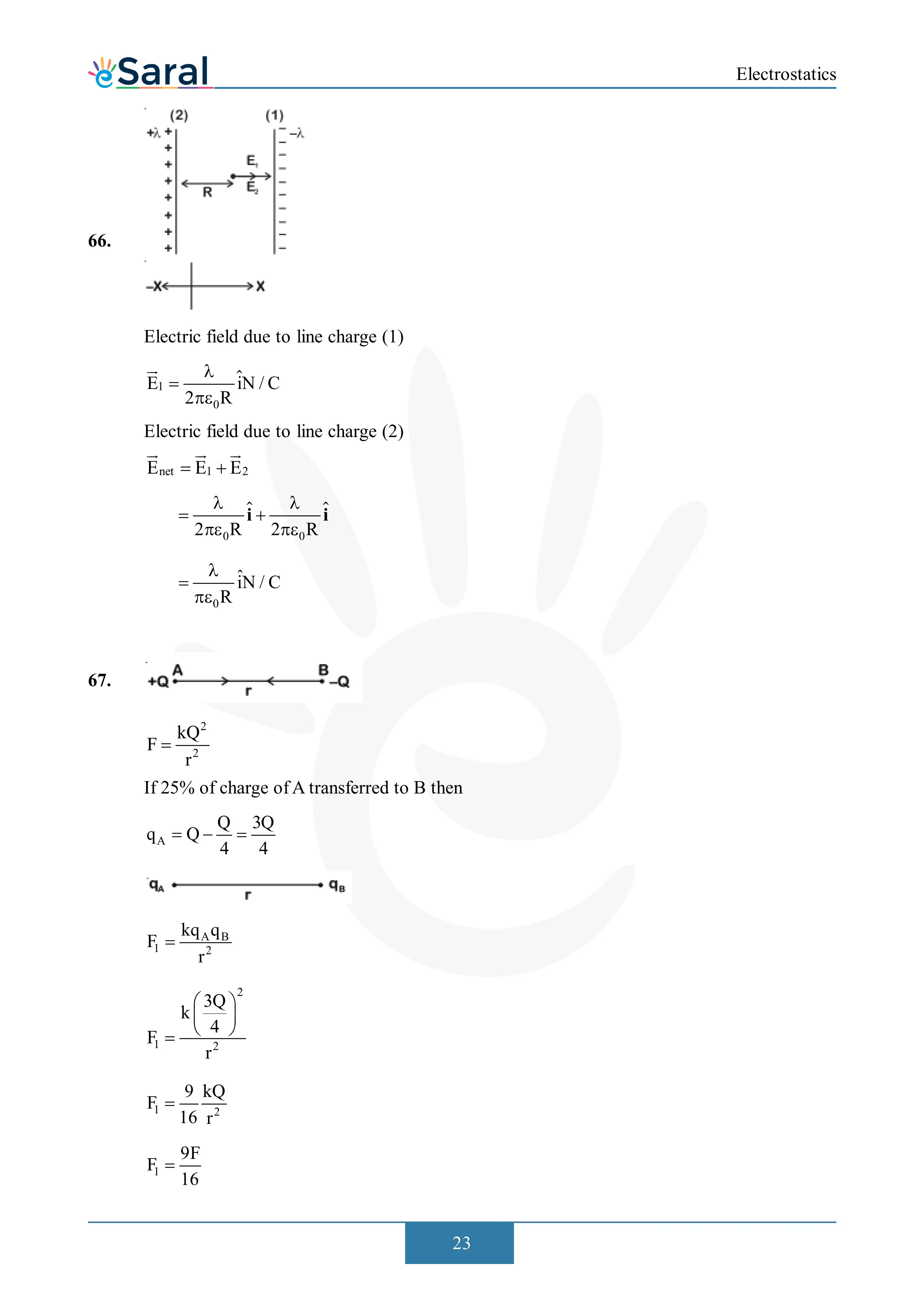
NEET PYQs with step-by-step solutions
"In NEET, capacitor problems almost always involve series-parallel combinations, energy stored, or the effect of a dielectric. Master these three question types and you will answer every capacitor question confidently."
How to solve electrostatics questions quickly in NEET?
NEET gives you roughly 80 seconds per Physics question. Here is the 3-step method used by eSaral's top-scoring students:
- 1
Identify the formula class (10 sec) — Is this Coulomb's law? Gauss's law? Capacitor energy? The first line of the question almost always gives this away.
- 2
Write known values with units (20 sec) — List q₁, q₂, r, ε₀ etc. explicitly. Unit errors are the #1 cause of wrong answers in numerical electrostatics questions.
- 3
Substitute and simplify (40 sec) — Use powers of 10 arithmetic. Most NEET answers are clean numbers — if you're getting a messy decimal, recheck units first.
Common mistakes to avoid in electrostatics
-
Treating potential as a vector: Electric potential is scalar. Add potentials algebraically, not as vectors.
-
Confusing E = 0 inside conductor with V = 0: E is zero but V equals the surface potential — it is non-zero.
-
Wrong sign in work done: W = q(V₁ − V₂). Flipping this gives the wrong sign on every subsequent step.
-
Series-parallel capacitor mix-up: In series, charge is equal. In parallel, voltage is equal.
-
Ignoring permittivity of medium: In a medium with dielectric constant K, force becomes F/K and field becomes E/K.
Frequently Asked Questions
Find answers to common questions.
How many questions from electrostatics come in NEET every year?
NEET asks 3 to 5 questions from Electrostatics every year. Over the last 10 years (2015–2024), the chapter has contributed an average of 4–5 questions per paper. In NEET 2022 and 2023, 5 questions appeared, accounting for 20 marks.
Which electrostatics topics are most important for NEET?
Electric field due to charge distributions, capacitors with dielectrics, work done in an electric field, Gauss's law shell theorem, and electric potential due to a dipole. These five areas cover nearly 65% of all NEET electrostatics marks over the past decade.
How to solve electrostatics questions quickly in NEET?
Identify the formula class in 10 seconds, write all known values with units, then substitute using powers of 10 arithmetic. Most NEET electrostatics answers are clean numbers — a messy decimal usually means a unit error, not a conceptual mistake.
Does NEET ask numerical or conceptual questions from electrostatics?
NEET asks both. Roughly 60% of recent electrostatics questions are numerical (Coulomb's law, Gauss's law, capacitor formulas), while 40% are conceptual — correct statements about E inside a conductor, or the effect of inserting a dielectric.
What is the easiest sub-topic in electrostatics for NEET?
Coulomb's law and basic series-parallel capacitor combinations are the most formula-direct sub-topics. Students who memorise core formulas and practise 10–15 PYQs can reliably score 2–3 marks from these areas with minimal preparation time.