How I Taught My Grandmother to Read: Summary, Explanation & Question Answers (CBSE Class 8)
"How I Taught My Grandmother to Read" by Sudha Murthy is an autobiographical story about a 12-year-old girl who teaches her illiterate 62-year-old grandmother to read Kannada. Set in rural North Karnataka, the story shows how the grandmother's desire to independently read the serialised novel Kashi Yatre drives her to learn the alphabet and achieve literacy before the Dussehra deadline she set herself. The story highlights the power of education, dignity, and lifelong learning.
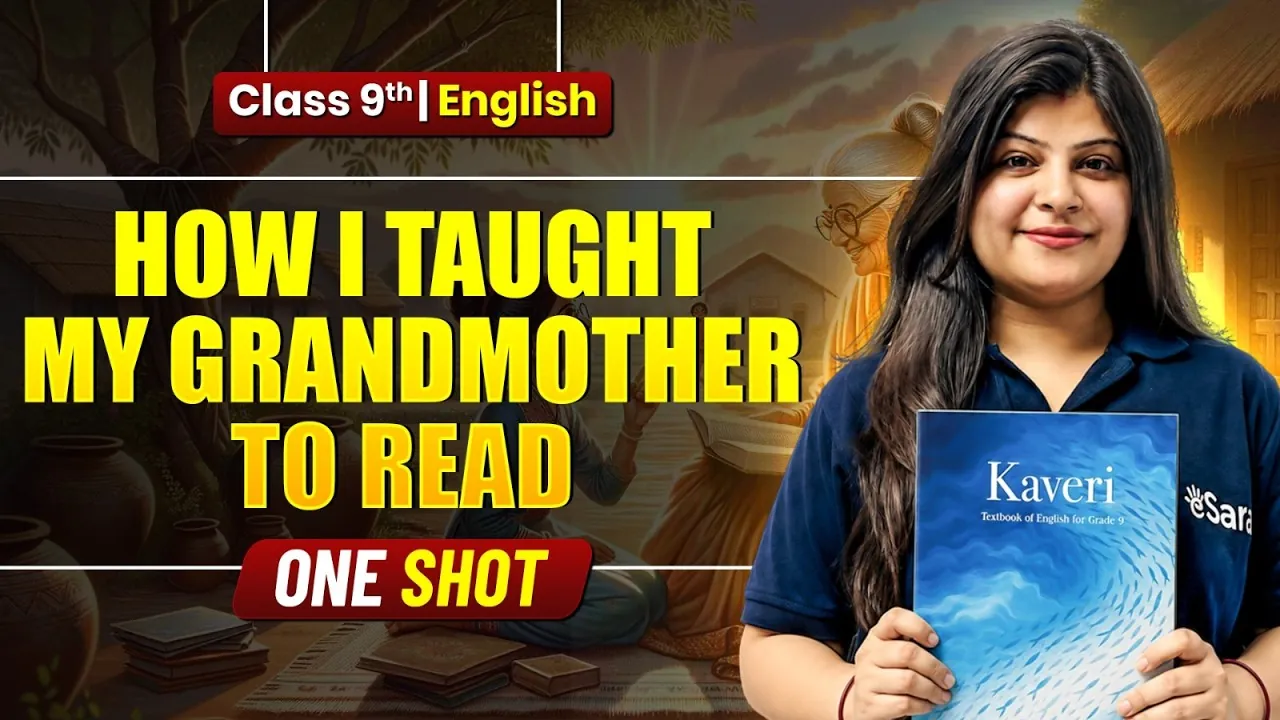
Table of Contents

eSaral ›Foundation courses ›How I Taught My Grandmother to Read: Summary & Explanation

About the Author — Sudha Murthy
Sudha Murthy is one of India's most celebrated authors and philanthropists. She is the Chairperson of the Infosys Foundation and has written novels, short stories, and non-fiction works in both English and Kannada. She is also the grandmother of two children and remains deeply committed to education and social welfare across India.
This particular story is autobiographical — meaning Sudha Murthy writes about her own real-life experience as a young girl living with her grandparents in a village in North Karnataka.
💡 Expert Tip by eSaral Academic Team: In CBSE exams, you will often be asked whether a text is autobiographical, biographical, or fictional. Always remember — "How I Taught My Grandmother to Read" is autobiographical because Sudha Murthy is writing about her own lived experience in the first person ("I").
Chapter Summary: Part 1
Setting the Scene: A Village in North Karnataka
When Sudha Murthy was about 12 years old, she lived in a village in North Karnataka with her grandparents. Transport was poor at the time, so morning newspapers arrived only in the afternoon and weekly magazines came a day late.
Every week, the entire household eagerly waited for the bus that brought newspapers, the weekly magazine, and the post.
Who Was Triveni?
At that time, Triveni was a very popular writer in the Kannada language. Her writing style was simple, easy to read, and convincing. Her stories dealt with complex psychological problems in the lives of ordinary people — which is why readers connected so deeply with her work. Unfortunately, Triveni died young, but even 40 years later her novels are still read and appreciated across Karnataka.
The Novel Kashi Yatre
One of Triveni's novels, Kashi Yatre ("Journey to Kashi"), was being serialised in the popular Kannada weekly magazine Karmaveera. The story follows an old lady who desperately wants to travel to Kashi (Varanasi) to worship Lord Vishweshwara — a deeply held belief among many Hindus that such a pilgrimage earns great spiritual merit.
In the novel, there is also a young orphan girl who falls in love but has no money for her wedding. In the end, the old lady gives away all her savings to the orphan girl instead of going to Kashi, declaring that the girl's happiness is more important than worshipping at Kashi.
Sudha's Grandmother — Krishtakka
Sudha Murthy's grandmother, Krishtakka, had never gone to school and could not read. Yet every week when Karmaveera arrived, Sudha would read the latest episode of Kashi Yatre aloud to her. During these readings, her grandmother would forget all her work and listen with complete concentration — later repeating the entire text almost word for word from memory.
The grandmother identified deeply with the story's protagonist because, like that old lady, she had also never been to Kashi.
Chapter Summary: Part 2
The Grandmother's Tears
Once, Sudha went to a neighbouring village for a wedding and ended up staying for a week instead of two days. When she returned, she found her grandmother in tears — something she had never seen before, not even in the most difficult situations.
That night, sleeping on the open terrace under a full moon, the grandmother spoke to Sudha. She explained her life story: how she lost her mother young, how her father remarried and was always busy, how in those days girls were not considered deserving of education. She had married very young, had children, then grandchildren — and had always felt joy in cooking and caring for everyone. But sometimes, she deeply regretted never going to school.
The Moment of Helplessness
The grandmother told Sudha that when Karmaveera arrived that week while Sudha was away, she had opened the magazine and stared at the pictures. She had rubbed her hands over the pages, wishing she could understand what was written. She had thought of going to the neighbouring village to ask Sudha to read it, or asking someone else in her own village — but she felt too embarrassed and helpless to do so.
"We are well-off," she said. "But what is the use of money when I cannot be independent?"
The Resolve to Learn
The grandmother announced her decision: she would learn the Kannada alphabet starting the very next day, and her deadline was Dussehra — the day of Saraswati Puja, the festival of knowledge. By that day, she would be able to read a novel on her own.
Sudha laughed at first, pointing out that the grandmother was 62, had white hair, wrinkled hands, wore spectacles, and spent all day in the kitchen. But the grandmother simply smiled and said:
"For a good cause, if you are determined, you can overcome any obstacle. For learning, there is no age bar."
The Teaching Begins
The very next day, Sudha started teaching her grandmother. The grandmother proved to be a wonderful student. She would read, repeat, write, and recite. The amount of homework she completed was genuinely remarkable.
Sudha reflects that little did she know then that one day she would become a teacher of Computer Science — and that this grandmother was her very first student.
Dussehra: The Day of Achievement
When Dussehra arrived, Sudha had secretly bought a published copy of Kashi Yatre — the novel — as a gift. Her grandmother called her to the puja room, sat her on a stool, and did something extraordinary: she touched Sudha's feet.
Sudha was shocked. Elders never touch the feet of younger people. But her grandmother explained: "I am not touching the feet of my granddaughter. I am touching the feet of my teacher."
She said that a teacher must be respected regardless of their gender or age — and that because of this little teacher, she was now independent. She could read anything on her own.
To prove it, she opened the gifted novel and immediately read aloud: "Kashi Yatre by Triveni" — along with the publisher's name.
Sudha knew then that her student had passed with flying colours.
💡 Expert Tip by eSaral Academic Team: CBSE examiners often ask: "Why did the grandmother touch Sudha's feet?" The answer is that she was respecting Sudha as a teacher, not as a granddaughter. This moment carries the moral of the entire story — education deserves reverence, regardless of age.
.webp)
Who Is Triveni and Why Does Kashi Yatre Matter?
Why Does Sudha's Grandmother Love Kashi Yatre So Much?
The grandmother connects personally with the story's protagonist — an old woman who has never made the pilgrimage to Kashi. Just like the character, the grandmother has also never been to Kashi. This emotional connection makes her desperate to read the next episode every week.
The story of Kashi Yatre itself carries a beautiful lesson: the old lady in the novel ultimately gives her savings to a helpless orphan instead of going on her pilgrimage. The novel suggests that helping another human being is itself a form of worship — a theme that resonates with the grandmother's own generous character.
The Parallel Between Two Stories
The chapter works on two levels:
- The outer story is about Sudha teaching her grandmother to read.
- The inner story (Kashi Yatre) mirrors the grandmother's values — sacrifice, generosity, and the meaning of true devotion.
This is a favourite point for CBSE value-based questions.
Important Question Answers
Why Did Sudha's Grandmother Never Go to School?
Sudha's grandmother grew up in a time when educating girls was not considered important. She lost her mother at a young age, her father was busy and remarried, and there was no one to guide her toward education. She got married very young and spent her life taking care of her children and grandchildren. This was the social reality for women of that generation in rural India.
How Did the Grandmother's Helplessness Show When Sudha Was Away?
When Karmaveera arrived during Sudha's absence, the grandmother opened the magazine and stared at the pictures. She rubbed her hands over the pages wishing she could understand the text. She considered asking someone to read it for her but felt too ashamed to show her inability to read. She felt deeply dependent and helpless — and this emotional state moved her to make a firm decision to learn to read.
What Was the Grandmother's Deadline and Why Did She Choose It?
The grandmother chose Dussehra (Saraswati Puja) as her deadline — the festival that celebrates the goddess of learning. Setting this date showed both her determination and her respect for education as something sacred. By choosing the day of knowledge, she made her goal spiritually meaningful to her.
What Did Sudha Gift Her Grandmother on Dussehra?
Sudha secretly purchased a published copy of the novel Kashi Yatre by Triveni as a gift for her grandmother. This was the same story the grandmother had been so passionate about all along. When the grandmother opened it and read the title aloud confidently, it proved she had successfully learned to read.
| Event | Significance |
|---|---|
| Grandmother asks Sudha to read Karmaveera weekly | Shows dependence on others due to illiteracy |
| Grandmother found crying on Sudha's return | Marks the turning point — shame triggers resolve |
| Grandmother sets Dussehra as deadline | Shows determination and respect for education |
| Sudha starts teaching the next day | Shows love and responsibility |
| Grandmother touches Sudha's feet | Symbolises that a teacher deserves respect regardless of age |
| Grandmother reads Kashi Yatre title independently | Marks her achievement and independence |
What Are the Key Themes and Lessons of This Story?
Theme 1: Education Gives Freedom and Dignity
The grandmother's inability to read made her feel dependent and embarrassed — not because she lacked money or status, but because she lacked literacy. The story shows that education is not just about marks or career — it gives a person the freedom to be independent.
Theme 2: Lifelong Learning Has No Age Limit
The grandmother was 62 years old when she decided to learn the Kannada alphabet. She succeeded. This is the story's most powerful message: learning has no age bar. Curiosity and determination matter far more than age.
Theme 3: A Teacher Deserves Respect Regardless of Age
By touching Sudha's feet, the grandmother demonstrated that she respected the role of teacher — not the person's age or position. This reflects the traditional Indian value of Guru Brahma, Guru Vishnu — the idea that a teacher occupies the same position as god.
Theme 4: The Value of Stories and Literature
The novel Kashi Yatre served as the catalyst for the grandmother's transformation. It shows how literature touches real lives — and how the desire to engage with a story can inspire profound personal change.
Frequently Asked Questions
Find answers to common questions.
What is the summary of "How I Taught My Grandmother to Read"?
"How I Taught My Grandmother to Read" is an autobiographical story by Sudha Murthy. When she was 12, she lived with her grandparents in North Karnataka. Her grandmother, who never went to school, loved hearing the serialised Kannada novel Kashi Yatre read aloud. When Sudha went away for a week, the grandmother felt helpless and embarrassed about her illiteracy. This motivated her to learn to read, with Sudha as her teacher, by the Dussehra deadline she set herself.
Who is the author of "How I Taught My Grandmother to Read"?
The author is Sudha Murthy, a celebrated Indian writer, philanthropist, and Chairperson of the Infosys Foundation. This is an autobiographical story based on her real childhood experience of teaching her grandmother to read Kannada.
Why did Sudha's grandmother want to learn to read?
Sudha's grandmother wanted to read independently because she felt deeply helpless and embarrassed when she could not read Karmaveera magazine on her own while Sudha was away. She felt that having money was worthless without independence. This emotional experience gave her the determination to learn at age 62.
What is the significance of Kashi Yatre in the story?
Kashi Yatre (Journey to Kashi) is a Kannada novel by Triveni, serialised in the magazine Karmaveera. The grandmother identifies with its protagonist — an old woman who also never visited Kashi. The novel is the reason the grandmother desperately wants to read, making it the driving force behind her decision to become literate. Sudha later gifts it to her as a symbol of her achievement.
Why did the grandmother touch Sudha's feet?
The grandmother touched Sudha's feet to show respect for her as a teacher, not as a granddaughter. She explained that in Indian tradition, teachers are respected regardless of age or gender. Because Sudha had given her the gift of literacy and independence, she deserved this mark of respect.