Mind Maps For Probability - Class 12, JEE (Main + Advanced)
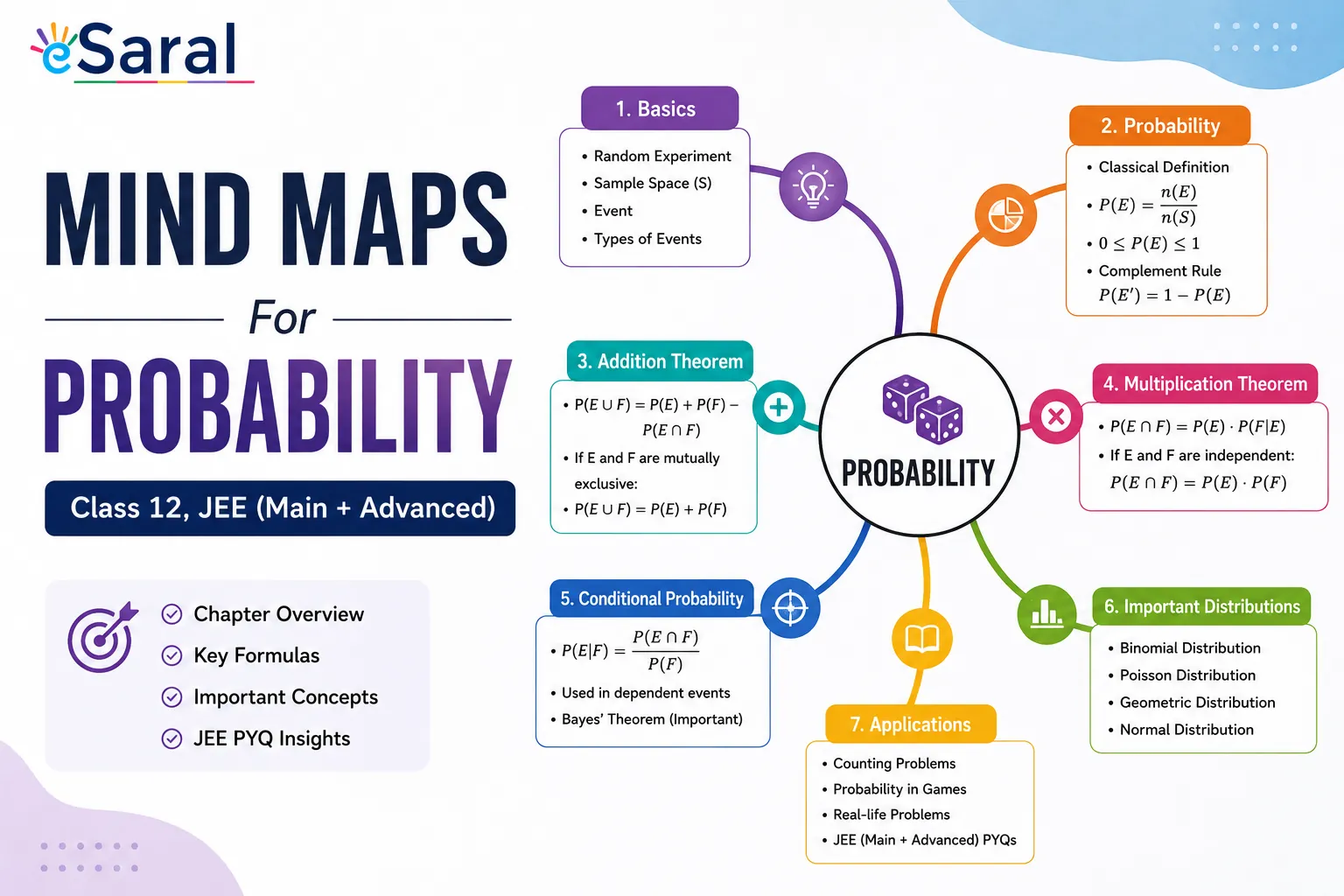
Table of Contents

Home > Mind Maps > Probability Mind Maps Class 12 – JEE Main & Advanced

Why Probability Is a Non-Negotiable Topic for JEE
Probability is one of the most consistently tested chapters in both JEE Main and JEE Advanced. According to the official NTA syllabus, the chapter falls under the Mathematics paper and carries questions almost every year, often 2–3 in JEE Main alone. Unlike chapters that test only formula recall, Probability demands a clear conceptual understanding of how events relate to one another.
Students who struggle with Probability typically make one common mistake: they memorise formulas in isolation without understanding how classical probability connects to conditional probability and eventually to Bayes' Theorem. A well-structured mind map helps eliminate this confusion by showing the logical flow between concepts.
These 9 mind maps, created by IIT Bombay faculty, provide a connected view of the entire chapter. Instead of treating formulas as isolated facts, they organise them into a coherent framework that is easier to revise and remember. Students from eSaral's JEE batches who used visual revision tools like these during the final month before the exam reported stronger retention and better performance in mock tests.
For NCERT-aligned concept building before using these mind maps, refer to the NCERT Solutions for Class 12 Maths, which explain every Probability exercise step by step.
Is Probability Asked in JEE Advanced?
Yes. Probability is regularly tested in JEE Advanced, often through multi-step problems involving conditional probability, independent events, Bayes' Theorem, and Binomial Distribution. Most JEE Advanced questions combine two or more concepts in a single problem, making conceptual clarity far more important than memorising formulas.
What These Mind Maps Cover
The 9 mind maps in this set are designed specifically around the Class 12 NCERT syllabus and the extended scope required for JEE Advanced preparation. Each map focuses on a distinct group of concepts and builds upon the previous one.
Topics Covered Across the 9 Mind Maps
| Mind Map | Core Topic Covered |
|---|---|
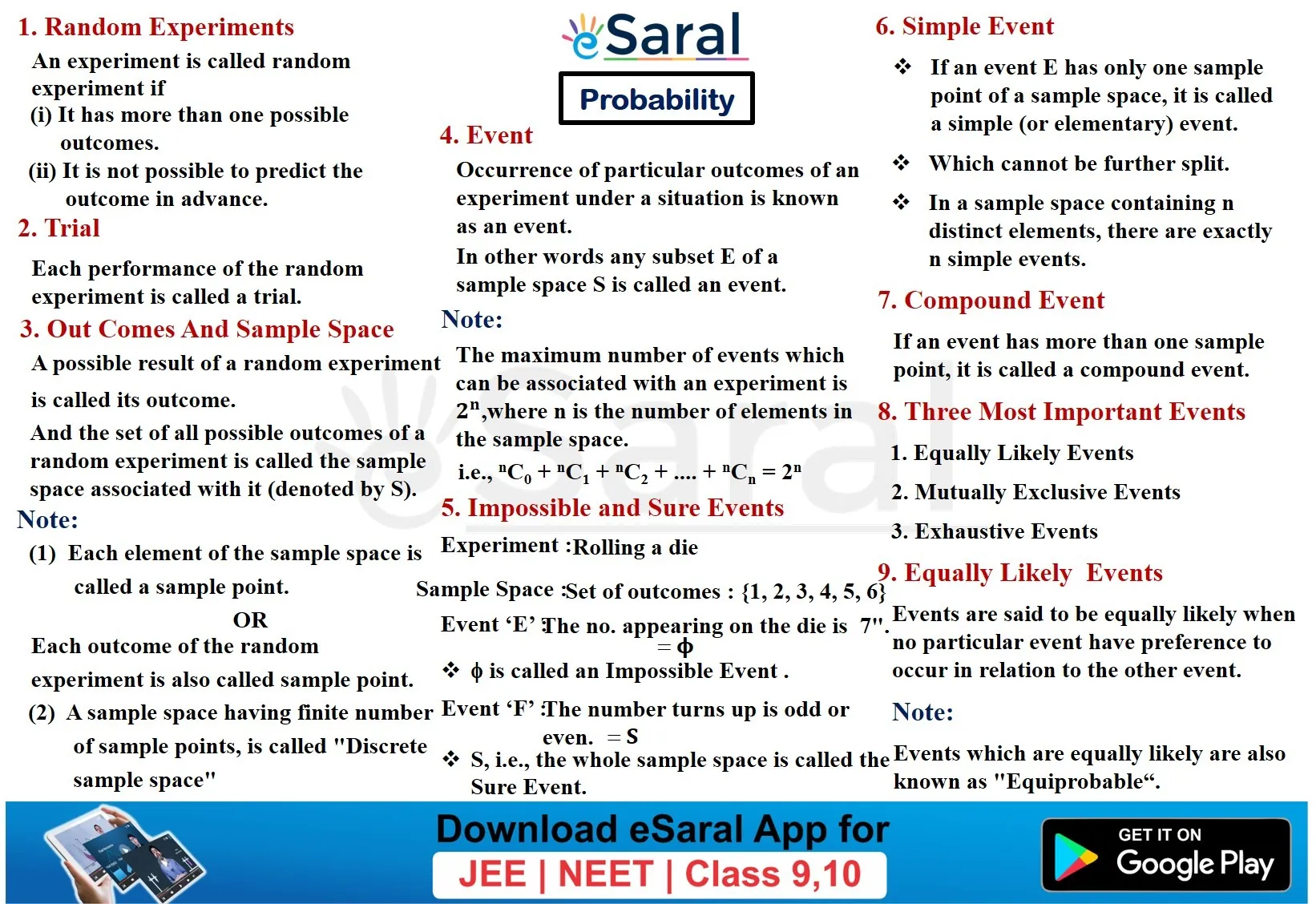
| Mind Map 1 | Basic Definitions — Sample Space, Events, Types of Events |
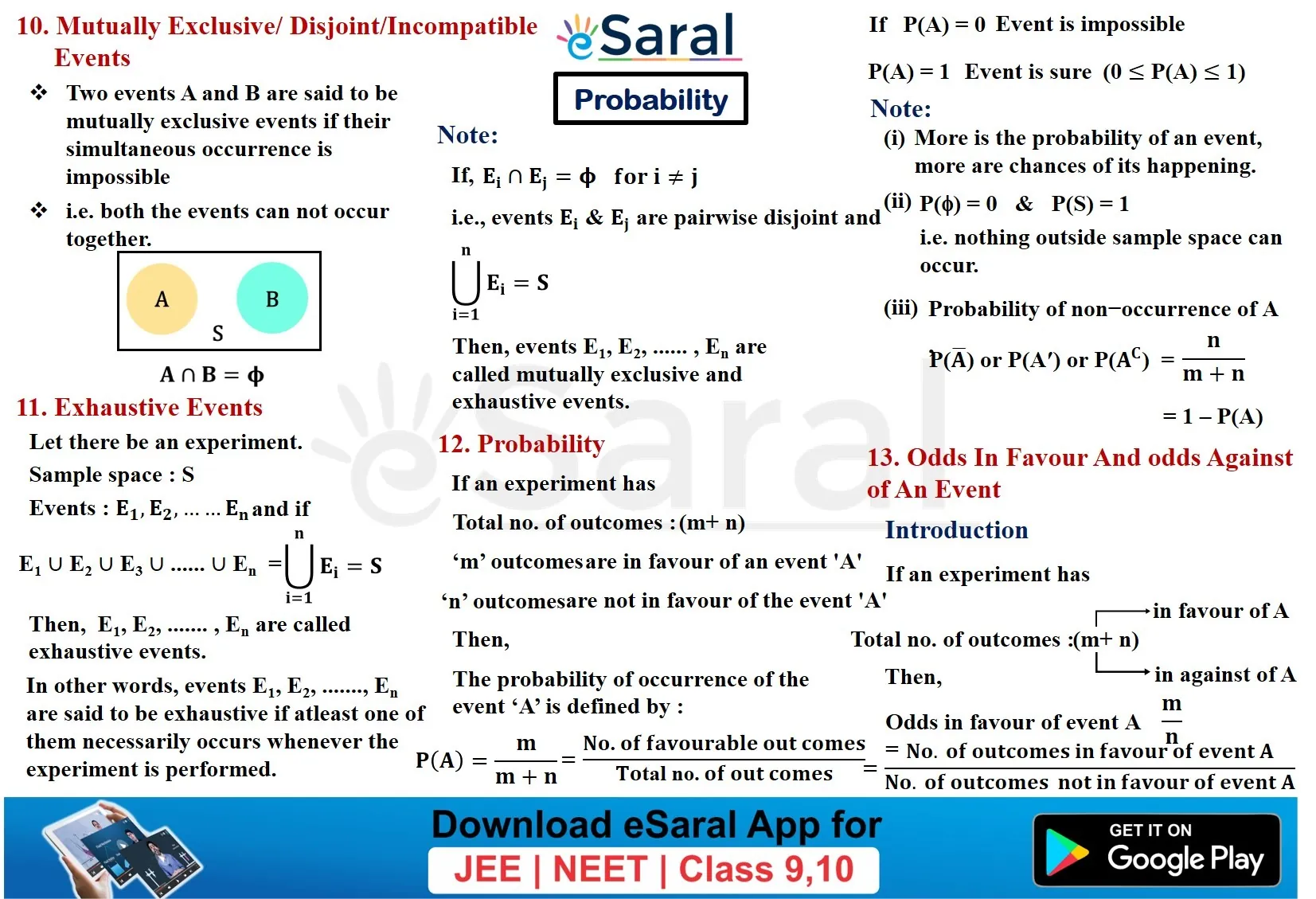
| Mind Map 2 | Classical (Theoretical) Probability and Equally Likely Outcomes |
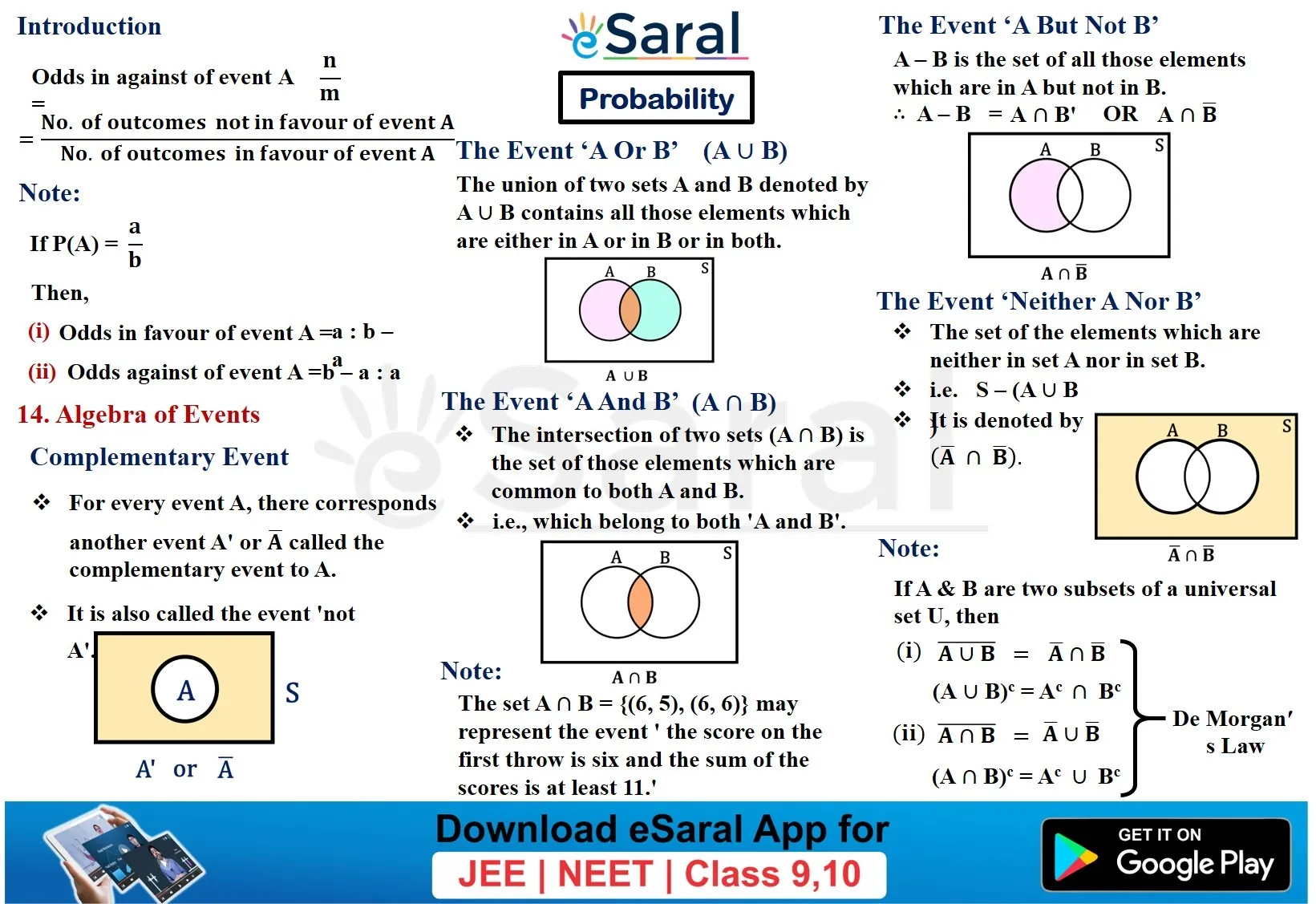
| Mind Map 3 | Addition Theorem — Mutually Exclusive and Non-Exclusive Events |
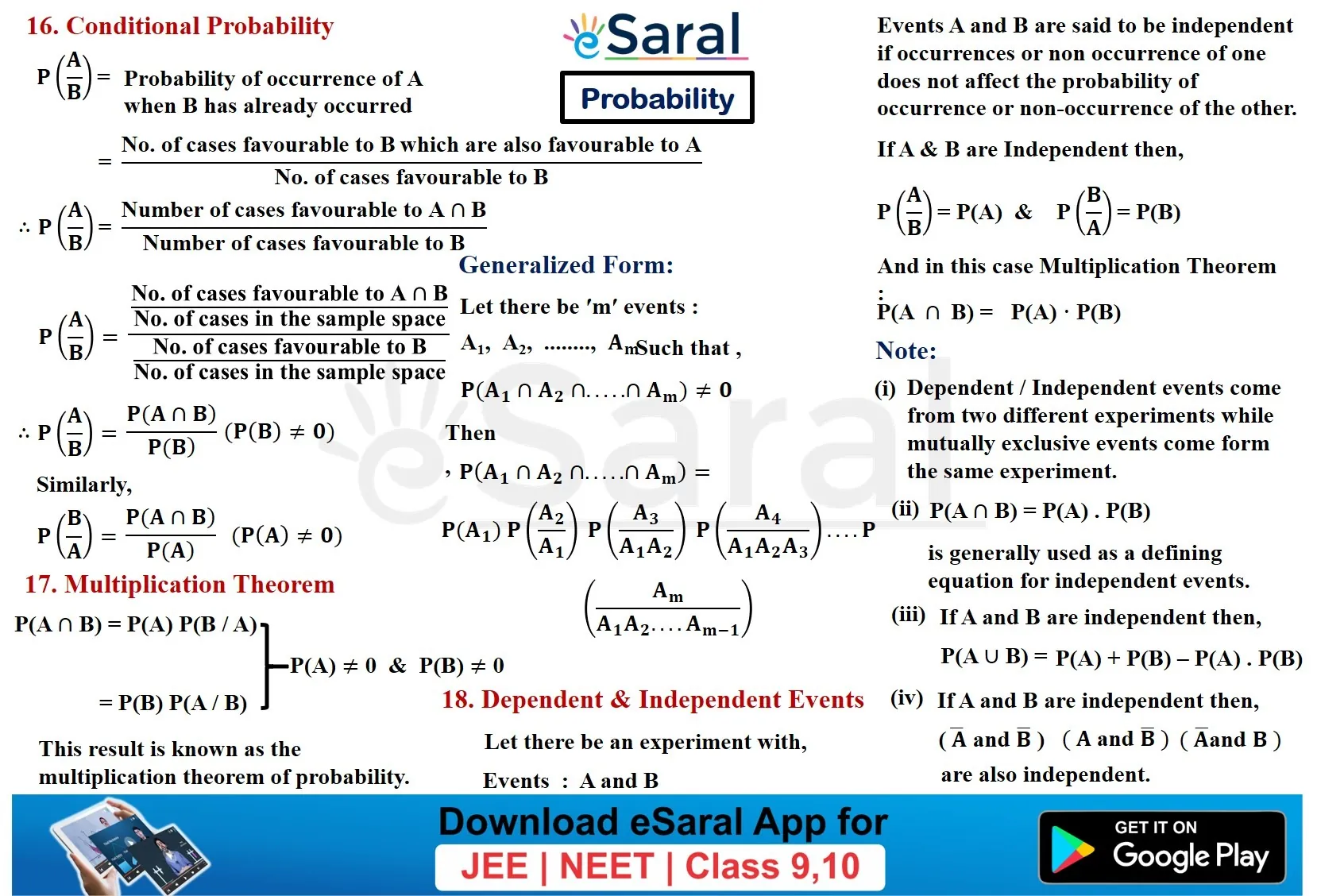
| Mind Map 4 | Conditional Probability — Definition, Properties and Formula |
| Mind Map 5 | Multiplication Theorem — Independent and Dependent Events |
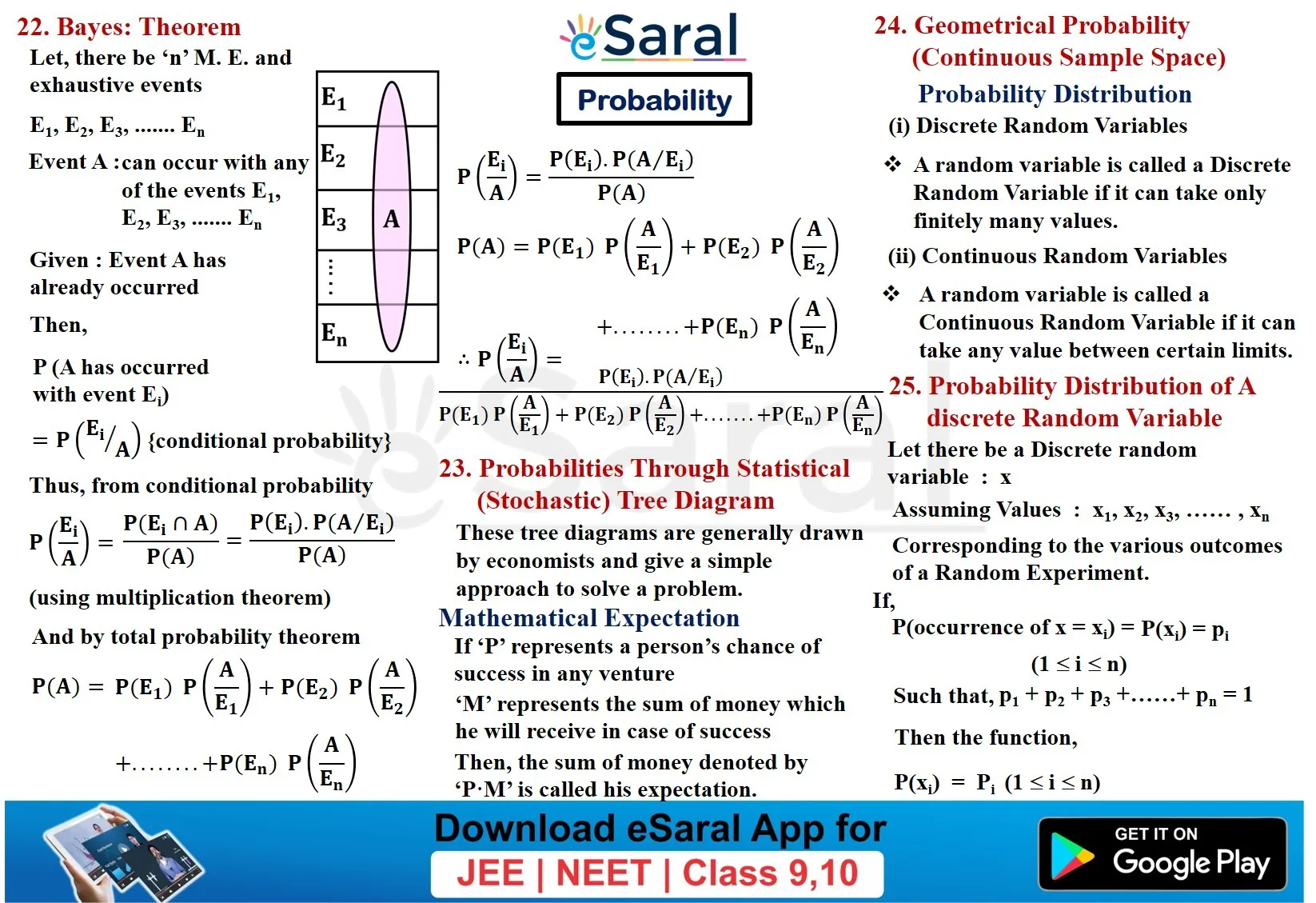
| Mind Map 6 | Bayes' Theorem — Law of Total Probability and Derivation |
| Mind Map 7 | Random Variables — Discrete and Continuous, PDF and CDF |
| Mind Map 8 | Binomial Distribution — Mean, Variance, and Standard Deviation |
| Mind Map 9 | Important Results, Shortcuts, and Common JEE Traps |
How the Progression Helps
The sequence of these mind maps is intentional. Students begin with foundational definitions in Mind Map 1 and gradually move towards advanced topics such as Random Variables and Binomial Distribution. The final mind map is dedicated to shortcuts, commonly confused concepts, and examination traps that frequently lead to mistakes under time pressure.
This structured progression ensures that every Probability concept is learned in context, revising faster and improving problem-solving accuracy in both JEE Main and JEE Advanced.
Mind Map - 1
Mind Map - 2
Mind Map - 3
Mind Map - 4
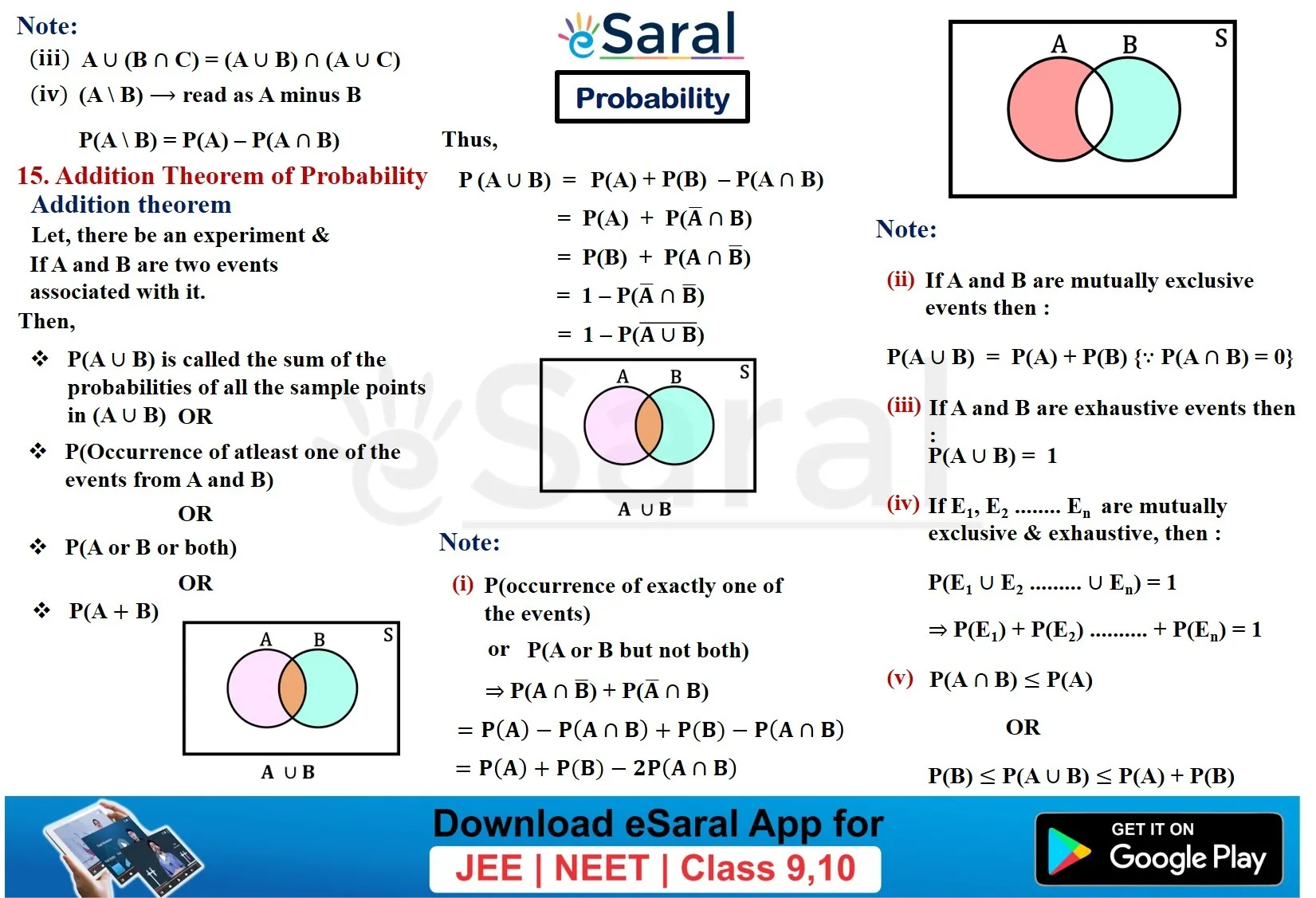
Mind Map - 5
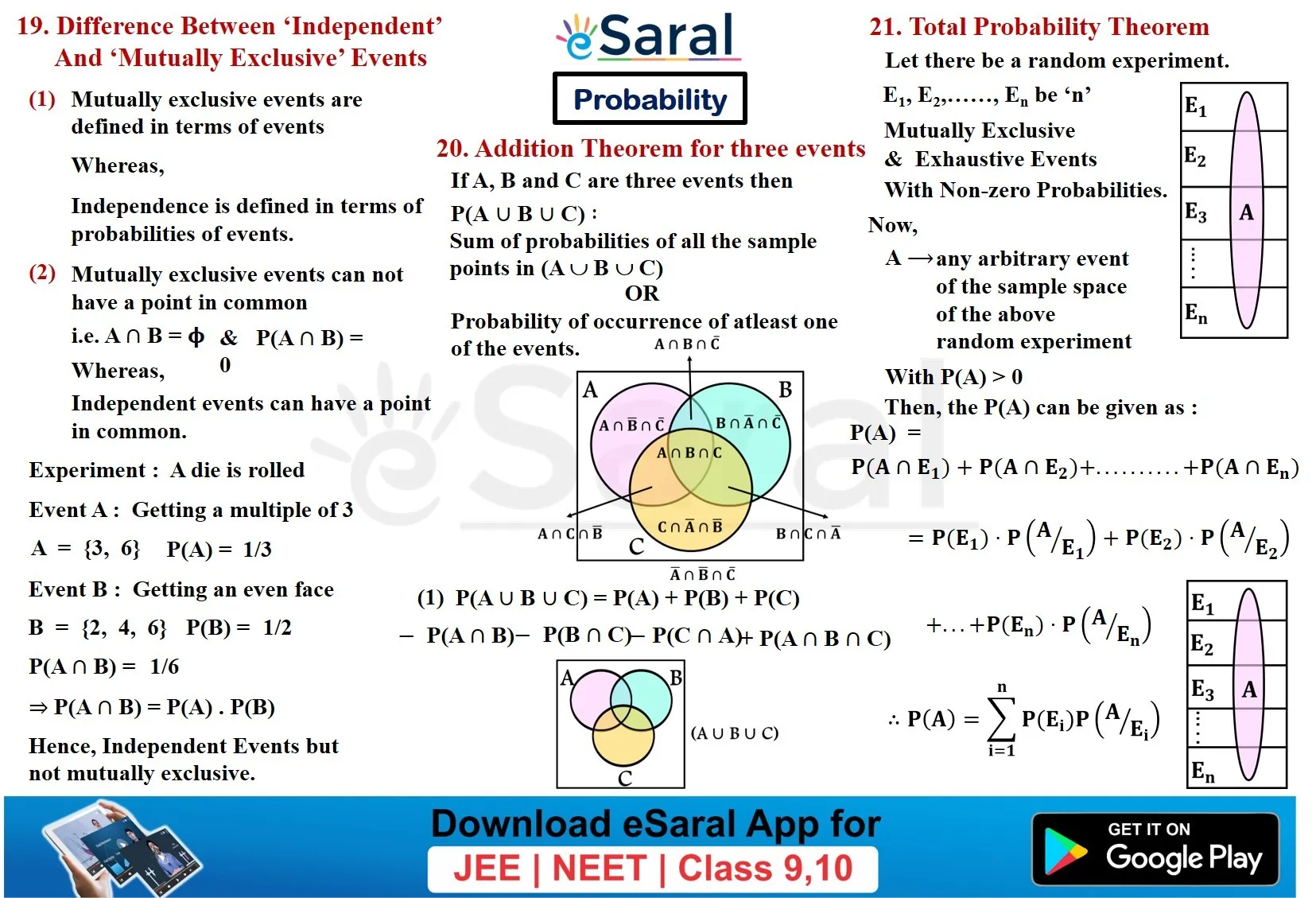
Mind Map - 6
Mind Map - 7
Mind Map - 8
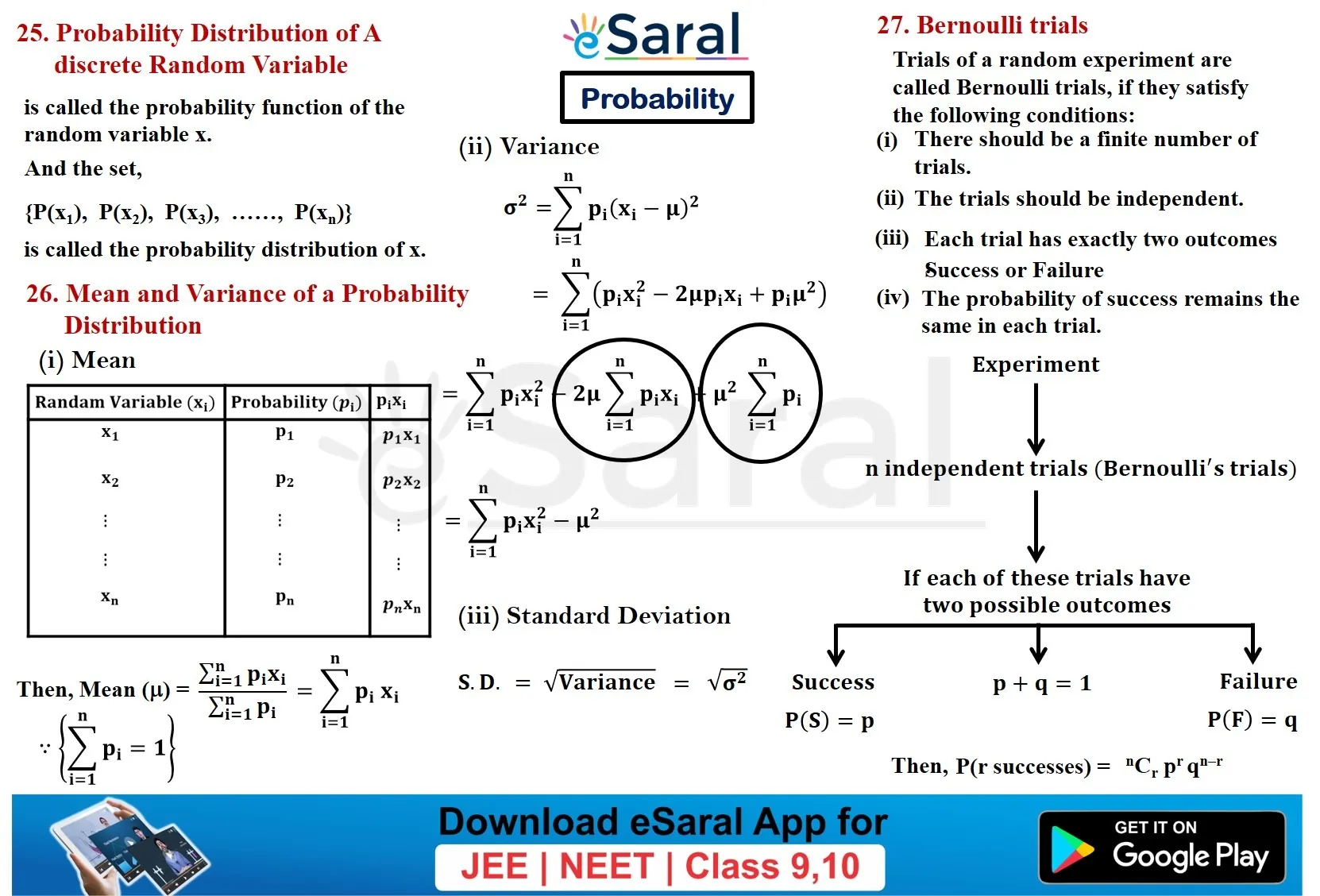
Mind Map - 9
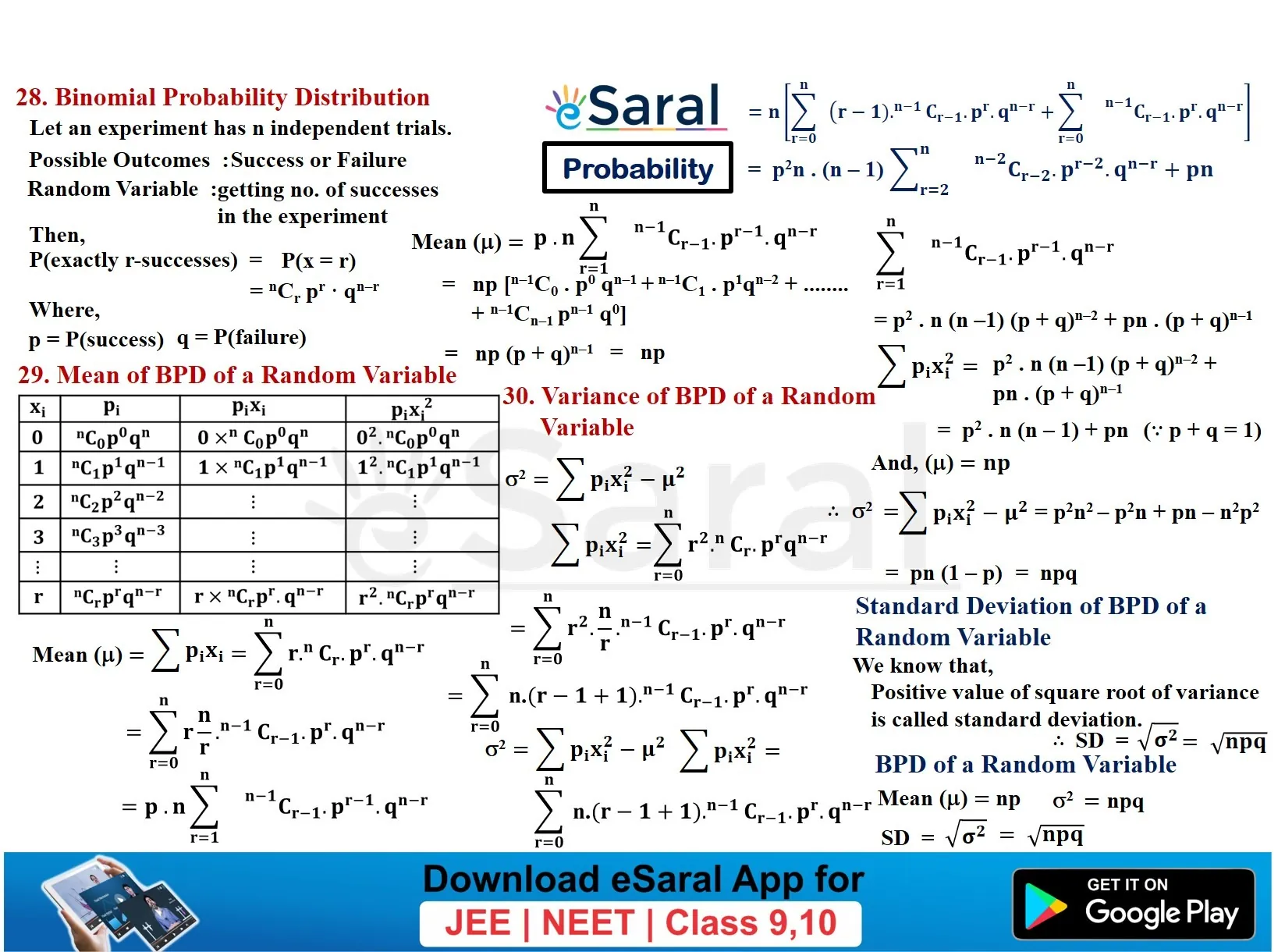
How to Use These Mind Maps in Your Revision Plan
A mind map is only as useful as the revision system built around it. The following three-phase approach is commonly used in structured JEE Advanced preparation to maximise retention and improve recall during exams.
Phase 1 — First Encounter (When You Study the Chapter)
Download Mind Maps 1–5 after completing the Probability chapter from NCERT or your primary study material. These mind maps are designed to consolidate concepts and should be used only after you have understood the underlying theory and derivations.
Using them too early can encourage memorisation without understanding. First learn the concepts, then use the maps to organise them.
Phase 2 — Revision Cycle (2–4 Weeks Before Mock Tests)
Print all nine mind maps and keep them together in a dedicated notebook or on a single A3 sheet. Revise them sequentially in one sitting to reinforce the logical flow of concepts across the chapter.
Recommended Revision Method
- Review all 9 mind maps in sequence.
- Complete the revision in approximately 25–30 minutes.
- Repeat this process once every week.
- Focus on understanding connections between concepts rather than memorising isolated formulas.
This approach helps strengthen long-term retention and improve problem-solving speed during mock tests.
Phase 3 — Day-Before Revision (Before JEE Main or Major Mock Tests)
On the final day before the examination, avoid studying new concepts. Instead, focus on high-yield revision using only the most important mind maps.
Priority Mind Maps for Last-Minute Revision
- Mind Map 6 — Bayes' Theorem
- Mind Map 8 — Binomial Distribution
- Mind Map 9 — Important Results, Shortcuts, and Common JEE Traps
These three maps cover some of the most frequently tested Probability concepts in JEE Main and JEE Advanced. A focused 10-minute review is usually sufficient to refresh key ideas and formulas before the exam.
Why This Strategy Works
High-performing students generally avoid learning new material immediately before an examination. Instead, they focus on consolidating concepts they have already mastered. Mind maps are particularly effective for this purpose because they provide visual cues that trigger rapid recall of related concepts, formulas, and problem-solving approaches.
Additional Preparation Resource
If you want to strengthen the prerequisite concepts required for Probability, study Permutations and Combinations thoroughly. The NCERT Solutions for Class 11 Maths provide detailed explanations and practice problems that build the foundation for advanced Probability questions.
Frequently Asked Questions
Find answers to common questions.
Which is the most important concept in Probability for JEE?
Conditional probability is the most important concept because it underpins Bayes' theorem, the Multiplication theorem, and independence of events — all of which are frequently tested. Students who understand conditional probability thoroughly can solve nearly every JEE Probability problem by reasoning from first principles, even without memorising every formula.
How many questions from Probability appear in JEE Main each year?
JEE Main typically has 2 to 3 questions from Probability in each session, carrying 8 to 12 marks. Based on historical NTA data, Bayes' theorem and Binomial distribution are the most frequently tested sub-topics. Conditional probability appears almost every year in at least one question
Are these Probability mind maps enough for JEE Advanced preparation?
These mind maps cover the entire Class 12 Probability syllabus as specified by NTA, including topics tested in JEE Advanced. For JEE Advanced, use the maps alongside practice with past-year papers (2010–2024), since Advanced questions combine multiple concepts in ways that no single mind map can fully prepare you for on its own.
Is Probability part of the JEE Advanced syllabus for 2025–26?
Yes. Probability is explicitly listed in the JEE Advanced mathematics syllabus as a mandatory topic. The scope includes classical probability, axiomatic probability, conditional probability, Bayes' theorem, discrete random variables, and Binomial distribution. Always verify the latest syllabus on the official JEE Advanced website (jeeadv.ac.in) since minor updates do occur.
What is the difference between mutually exclusive events and independent events?
Mutually exclusive events cannot occur at the same time — if A occurs, B cannot (P(A ∩ B) = 0). Independent events have no influence on each other's probability — P(A ∩ B) = P(A) × P(B). These are completely different ideas and JEE frequently tests whether students can distinguish between them. Many students confuse the two, which is why Mind Map 5 addresses this specifically.
Can I use these mind maps without completing the NCERT chapter first?
It is not recommended. Mind maps are revision tools, not first-study resources. Complete the NCERT Class 12 Probability chapter, solve the exercises (solutions are available at NCERT Solutions for Class 12 Maths), and then use these maps to consolidate. Using a map before understanding the concepts will not produce meaningful retention.