Photosynthesis in Higher Plants - NEET Previous Year Questions with Complete Solutions


eSaral › NEET › Biology › Photosynthesis in Higher Plants Previous Year Questions with Complete Solutions
 Here you will get Complete Photosynthesis in Higher Plants NEET Previous Year Questions with complete and detailed solutions.
Get complete NEET previous year questions for Physics, Chemistry, and Biology.
You will find all the solutions at the end of this page:
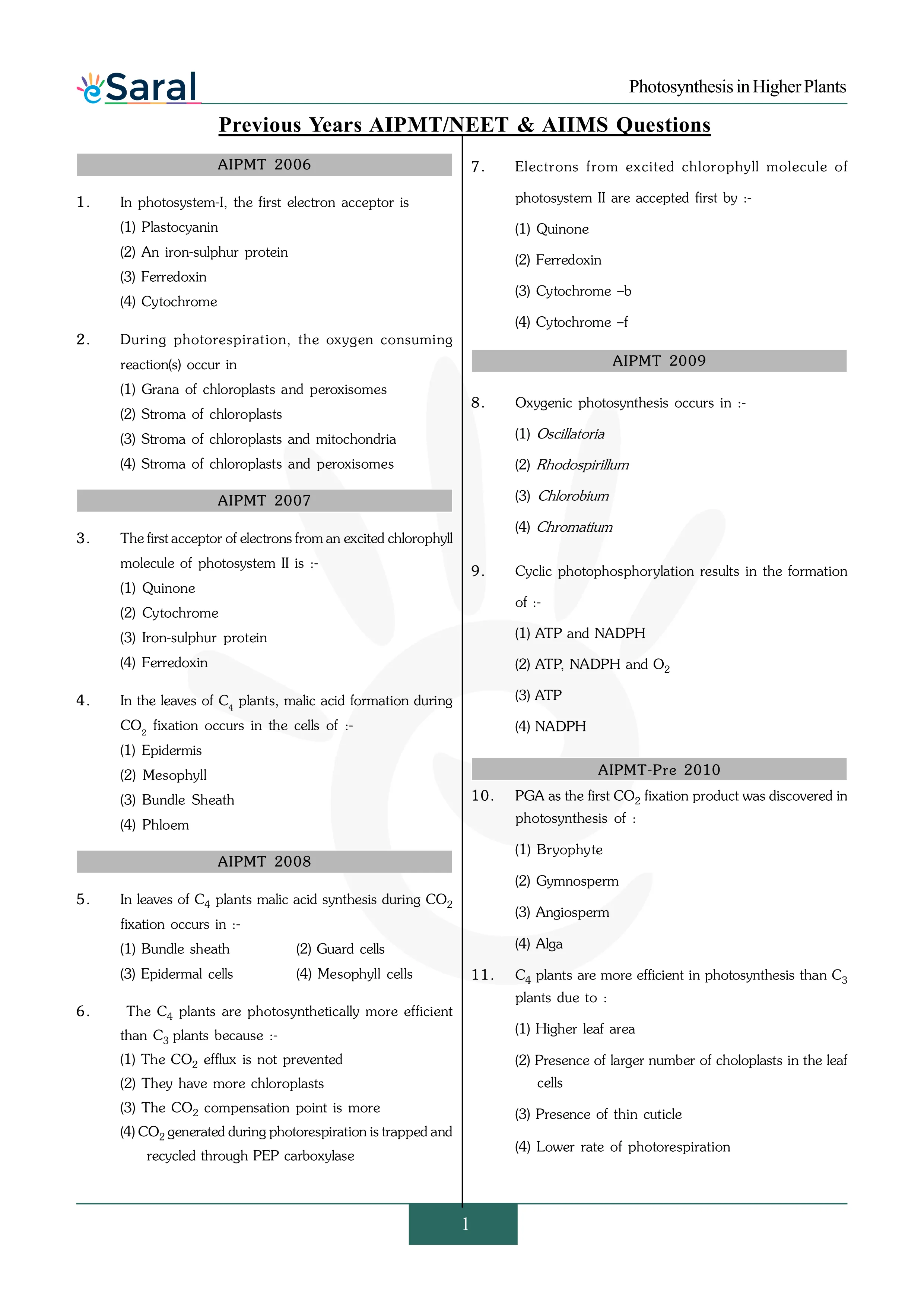
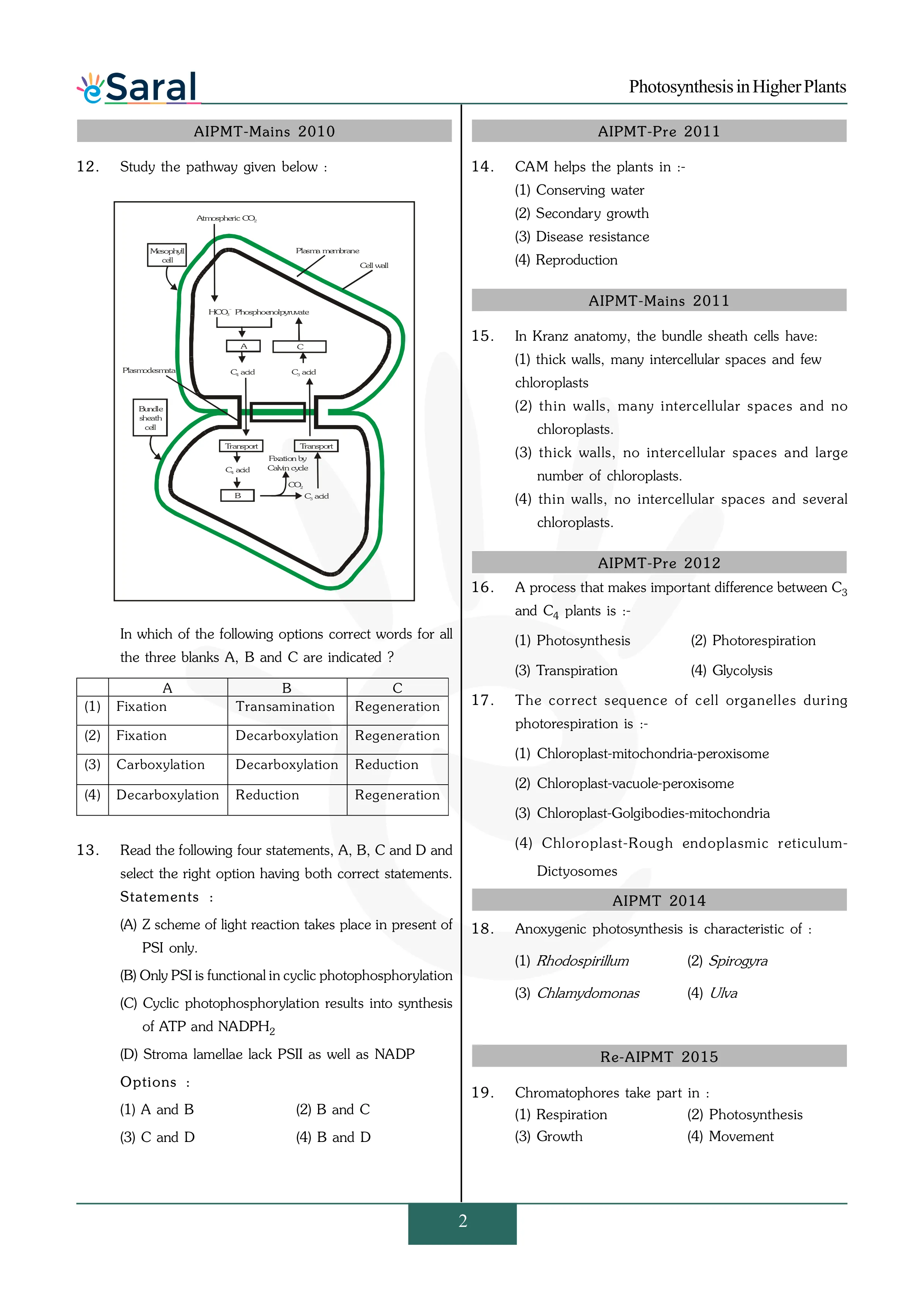
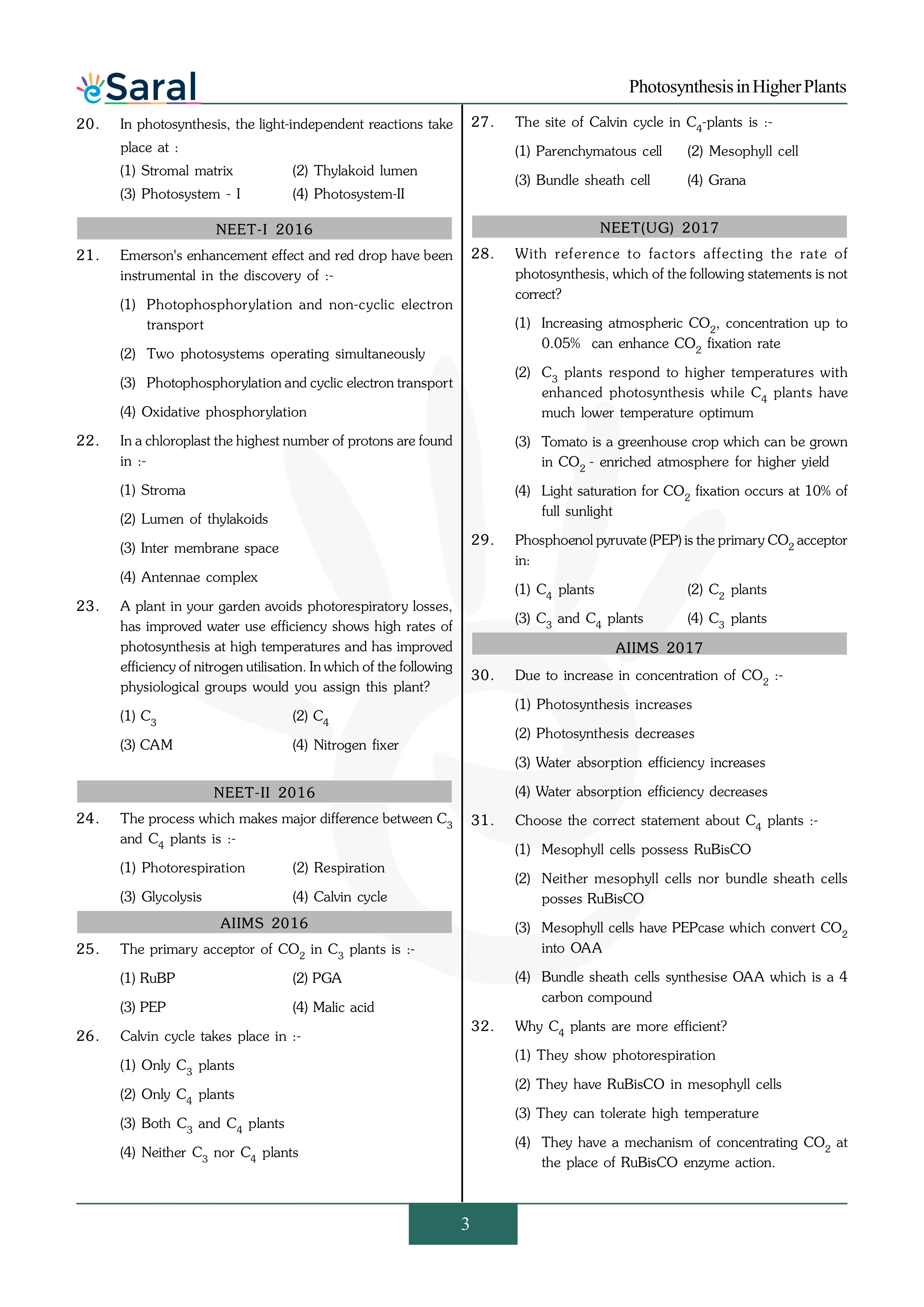
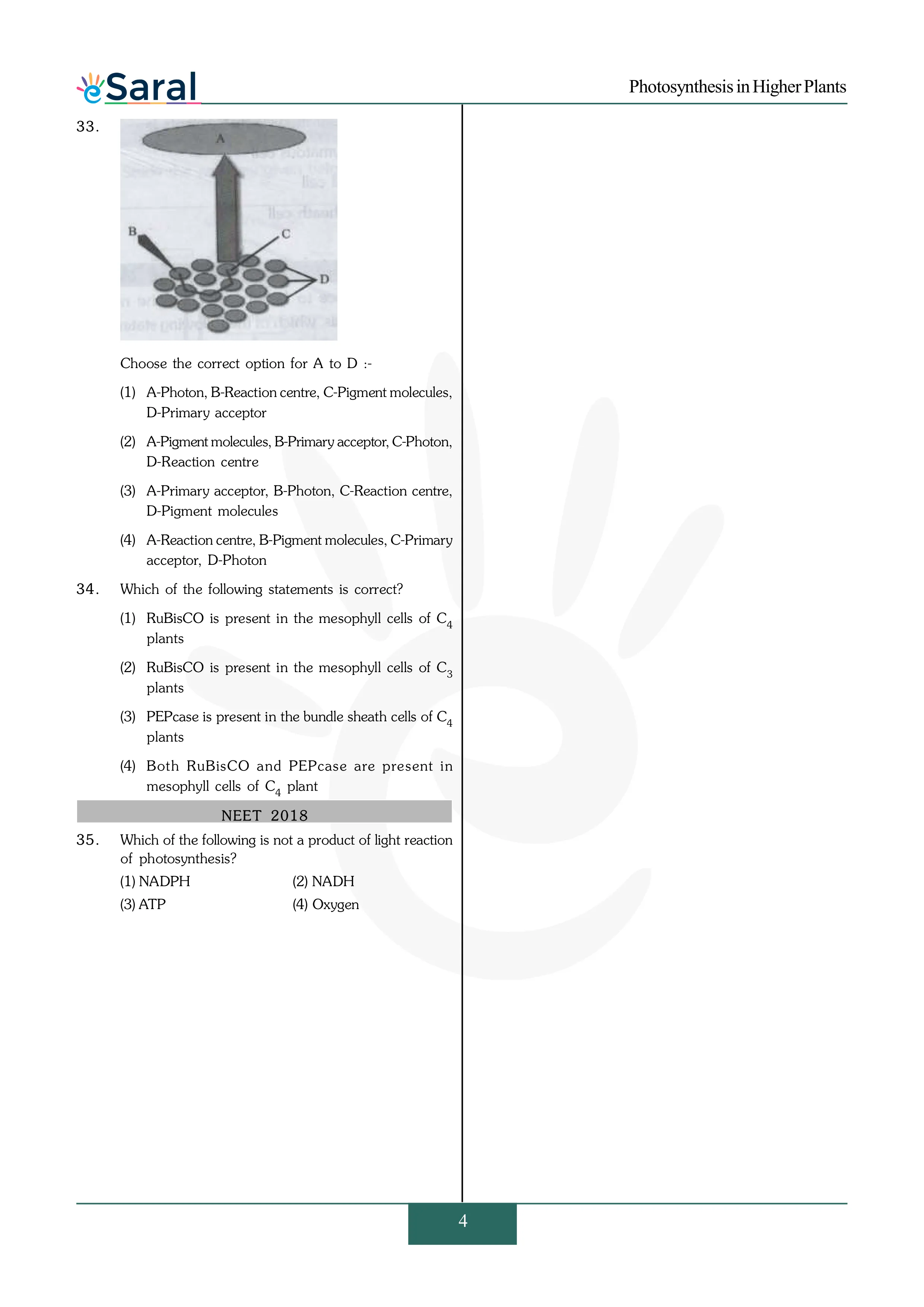


Frequently Asked Questions
Find answers to common questions.
What is the difference between cyclic and non-cyclic photophosphorylation?
Non-cyclic photophosphorylation involves both PSI and PSII, produces ATP, NADPH, and O₂, and is the standard pathway. Cyclic photophosphorylation involves only PSI, produces only ATP (no NADPH, no O₂), and electrons cycle back to the same chlorophyll molecule. NEET frequently tests which products are generated by each pathway, so memorise this distinction clearly.
What is the first stable product of carbon fixation in C3 plants?
The first stable product of CO₂ fixation in C3 plants is 3-Phosphoglycerate (3-PGA), a 3-carbon compound. CO₂ combines with RuBP (a 5-carbon molecule) via the enzyme RuBisCO to form an unstable 6-carbon intermediate that immediately splits into two molecules of 3-PGA. This reaction is the defining step of the Calvin cycle.
How many questions come from Photosynthesis in Higher Plants in NEET?
NEET typically includes 3 to 5 questions from Photosynthesis in Higher Plants every year. This is based on NTA's official question papers from 2013 to 2024. The chapter falls under the Plant Physiology unit, which as a whole accounts for roughly 12–15% of total Biology marks. Consistent practice of PYQs from this chapter directly improves your NEET Biology score
What is the role of PEP Carboxylase in photosynthesis?
PEP Carboxylase (PEPCase) is the primary carboxylation enzyme in C4 plants. It fixes CO₂ in mesophyll cells by combining it with PEP (Phosphoenolpyruvate) to form Oxaloacetate (OAA), a 4-carbon compound. PEPCase has a much higher affinity for CO₂ than RuBisCO and does not react with O₂, which is why C4 plants have negligible photorespiration and higher photosynthetic efficiency at high temperatures.
What is Kranz anatomy and why does it matter for NEET?
Kranz anatomy refers to the wreath-like arrangement of bundle sheath cells around vascular bundles, found exclusively in C4 plants like maize and sugarcane. These cells contain large chloroplasts and high concentrations of RuBisCO. CO₂ is first fixed in mesophyll cells (as OAA) and then pumped into bundle sheath cells, preventing photorespiration. Any NEET question mentioning Kranz anatomy points to a C4 plant answer.
Which organelles are involved in photorespiration?
Photorespiration occurs across three organelles: chloroplasts, peroxisomes, and mitochondria. It begins when RuBisCO binds O₂ instead of CO₂, forming phosphoglycolate. This wasteful process consumes O₂ and releases CO₂ without generating ATP or sugar. It occurs predominantly in C3 plants and is essentially absent in C4 plants due to their CO₂ concentrating mechanism.