Probability Notes for Class 11 & IIT JEE
Probability Notes for Class 11 & IIT JEE provide a clear understanding of probability concepts, formulas, and problem-solving techniques, helping students analyze random events and prepare effectively for school and competitive exams.
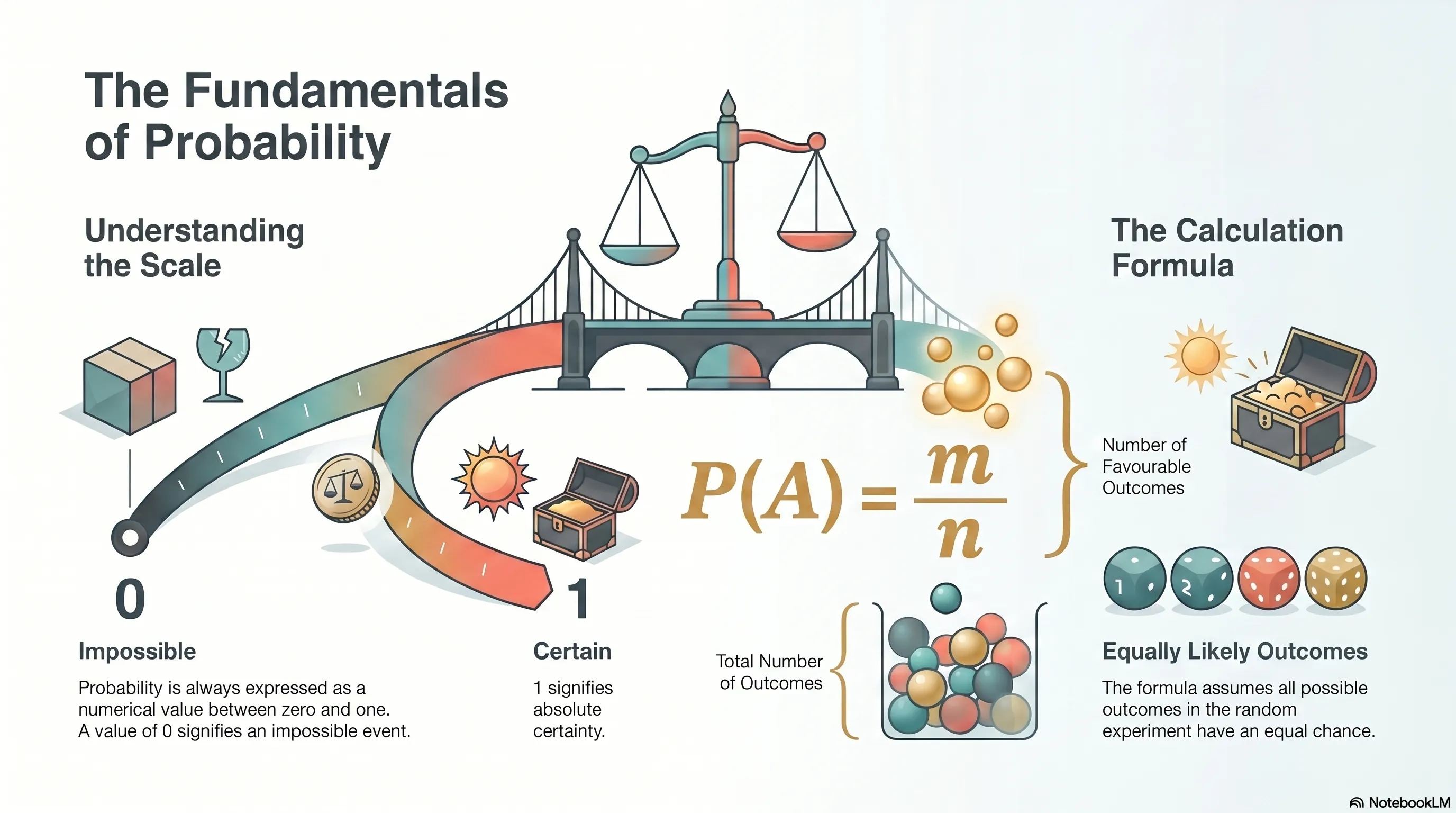
Table of Contents

eSaral › Class 11› Probability Notes for Class 11 & IIT JEE

🚀 Checkout eSaral Courses
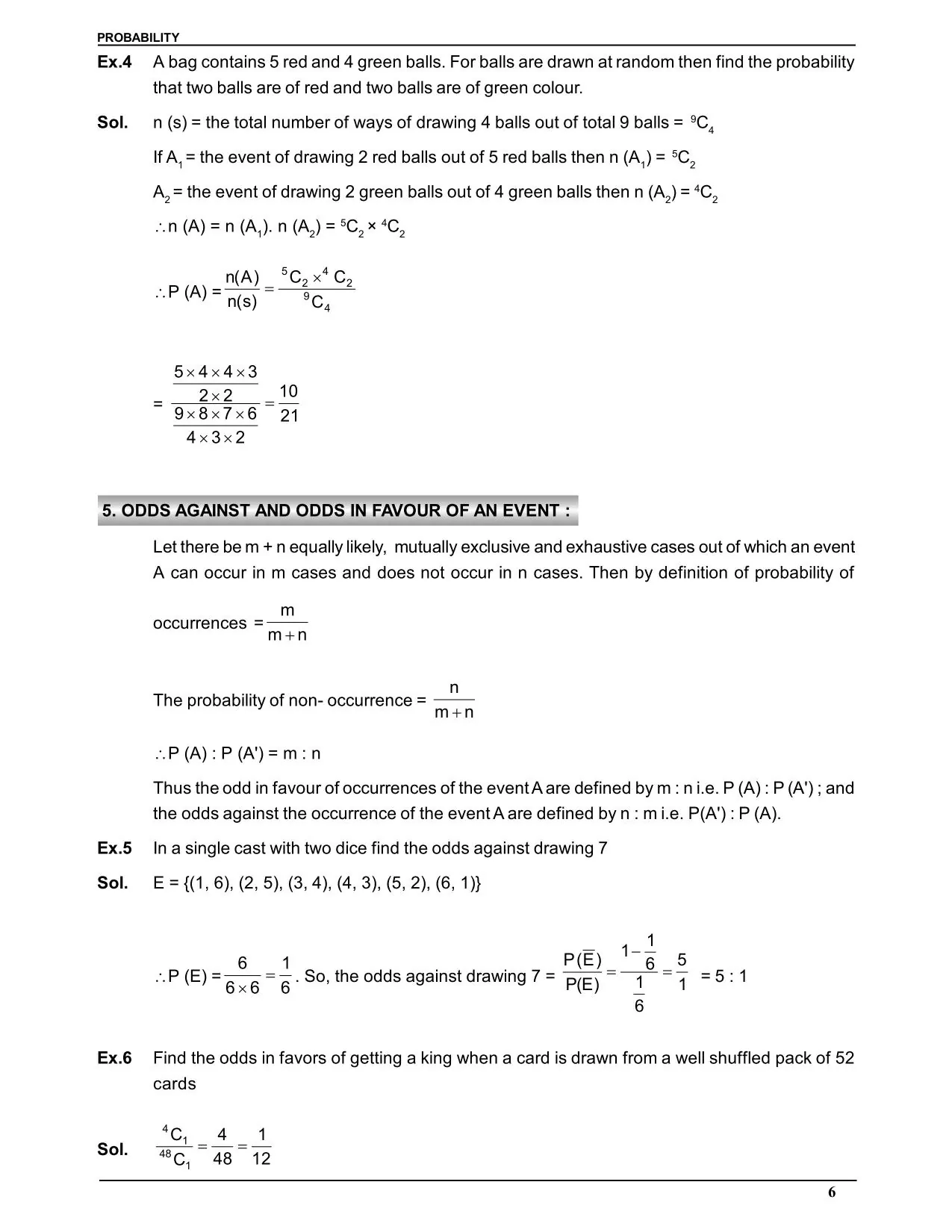
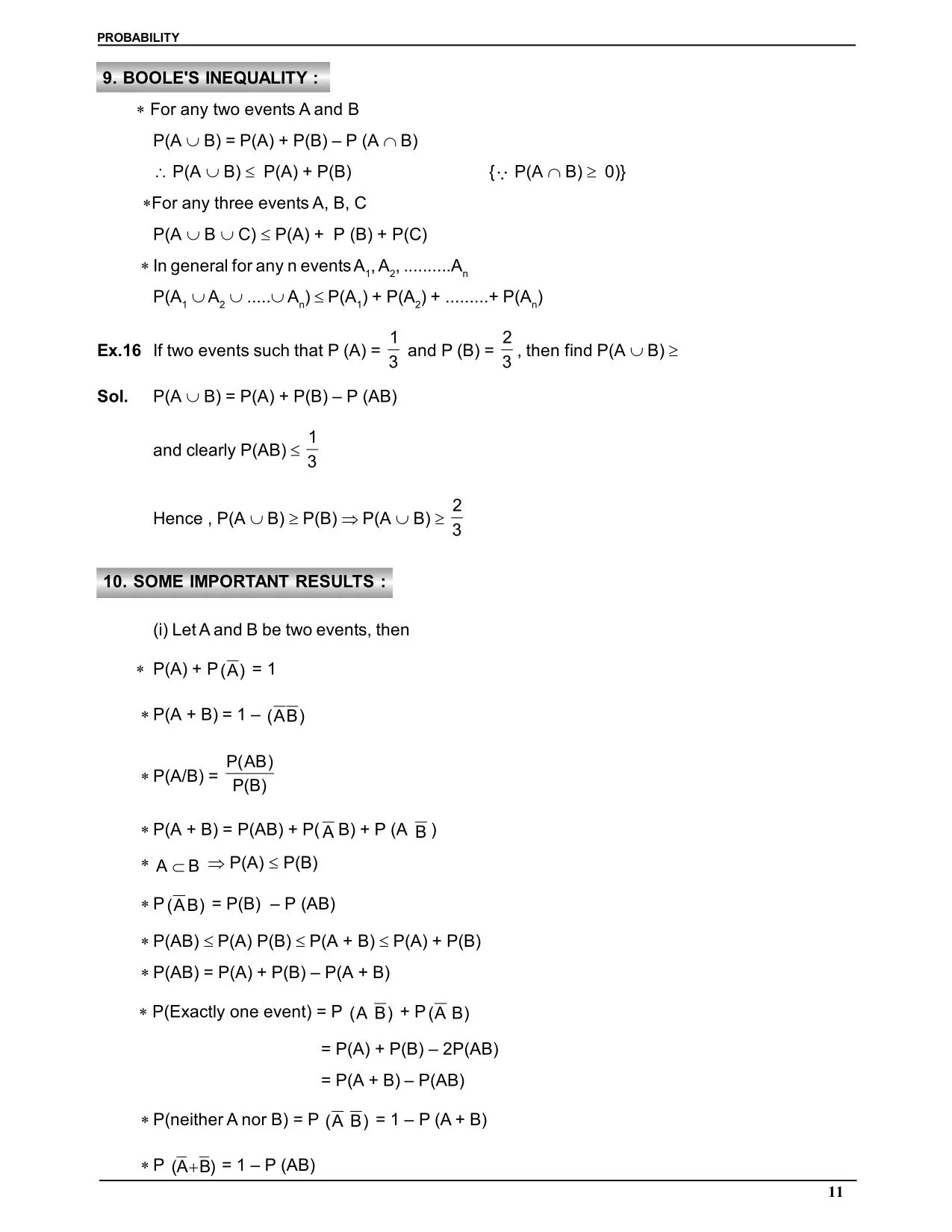
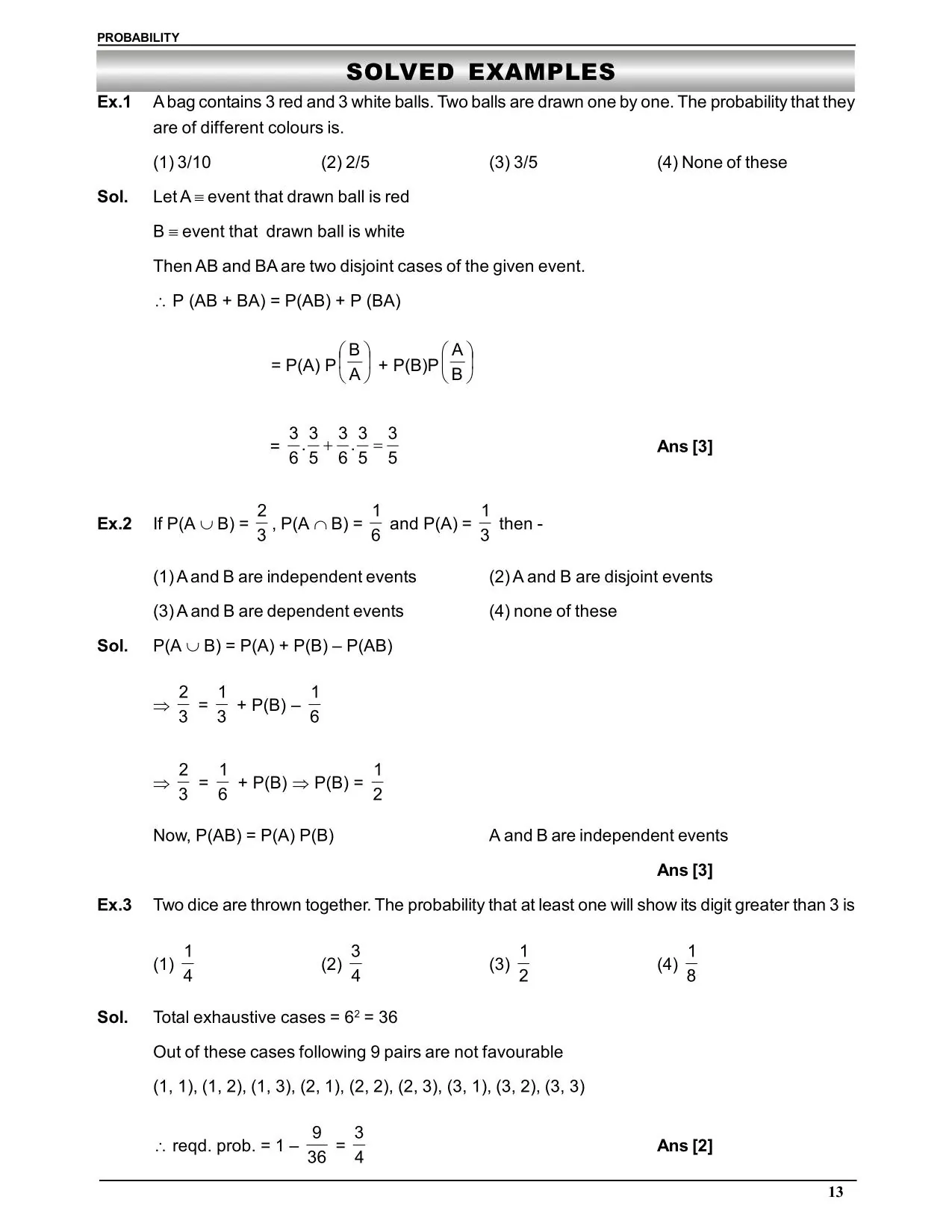
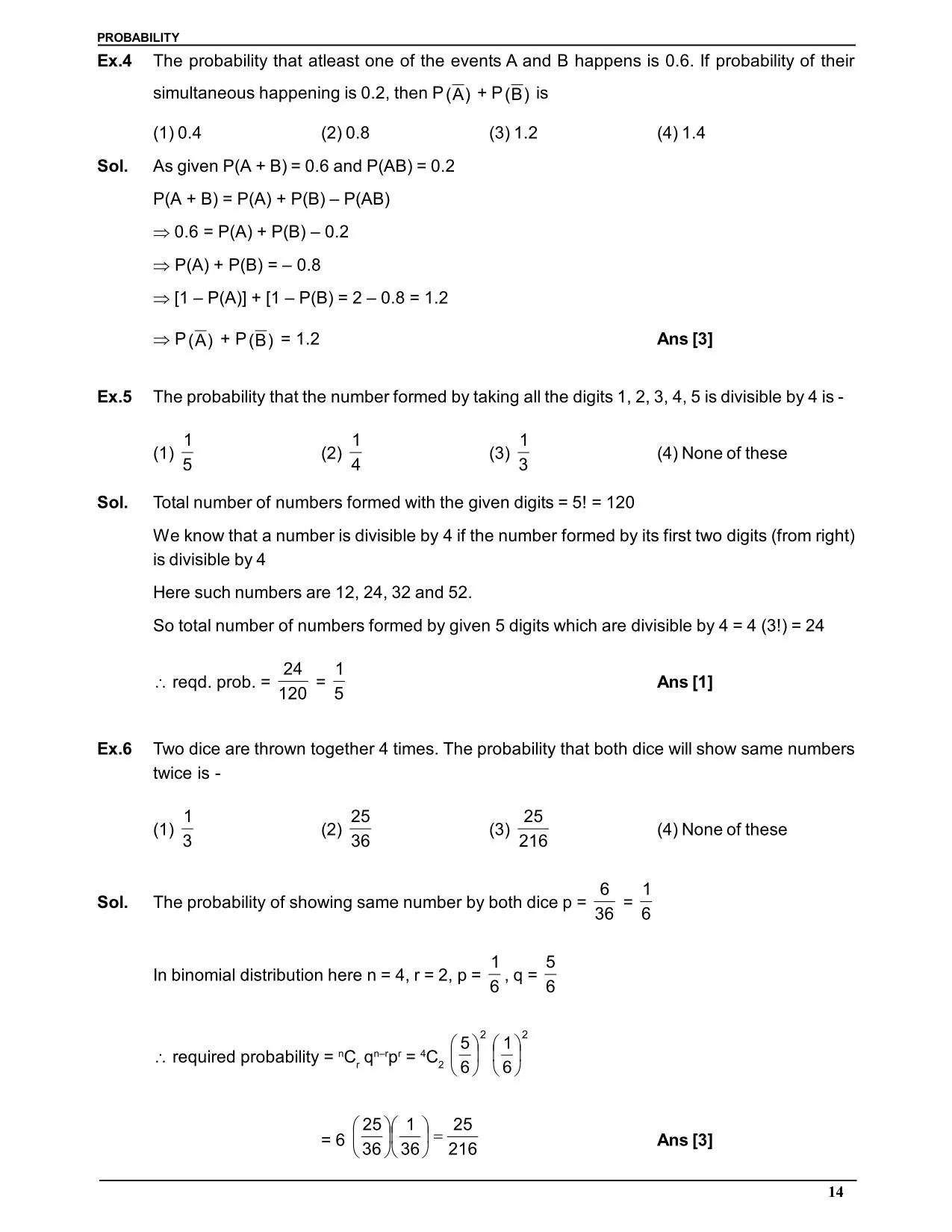
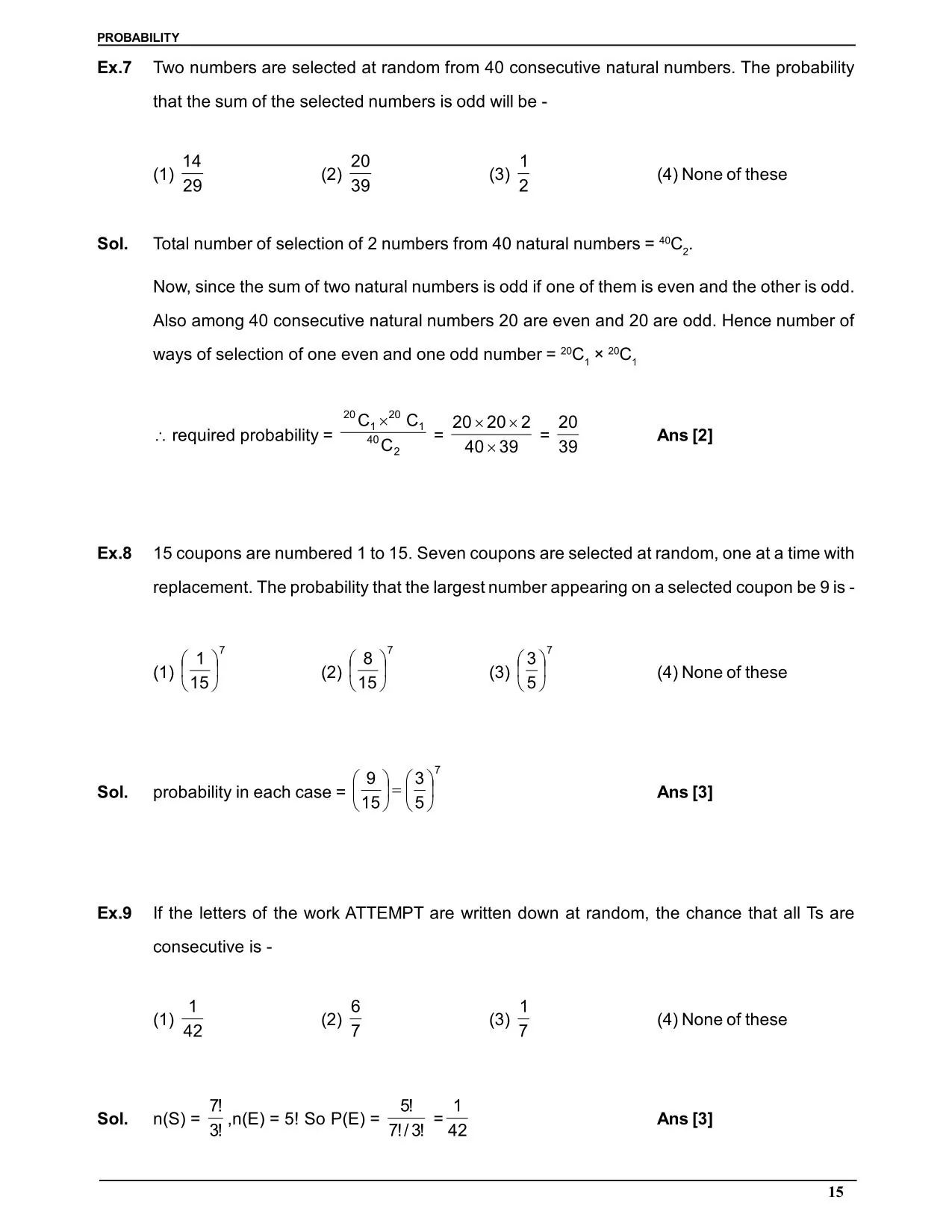
What Is Probability? – Core Definition and Scope
Probability is the mathematical measure of how likely an event is to occur, expressed as a number between 0 and 1, where 0 means the event is impossible and 1 means it is certain.
Formal definition:
If a random experiment has n equally likely outcomes and an event A consists of m of those outcomes, then:
$$P(A) = \frac{m}{n} = \frac{\text{Number of favourable outcomes}}{\text{Total number of outcomes}}$$
Probability Notes for Class 11
India's Best Exam Preparation for Class 11th - Download Now
India's Best Exam Preparation for Class 11th - Download Now
India's Best Exam Preparation for Class 11th - Download Now
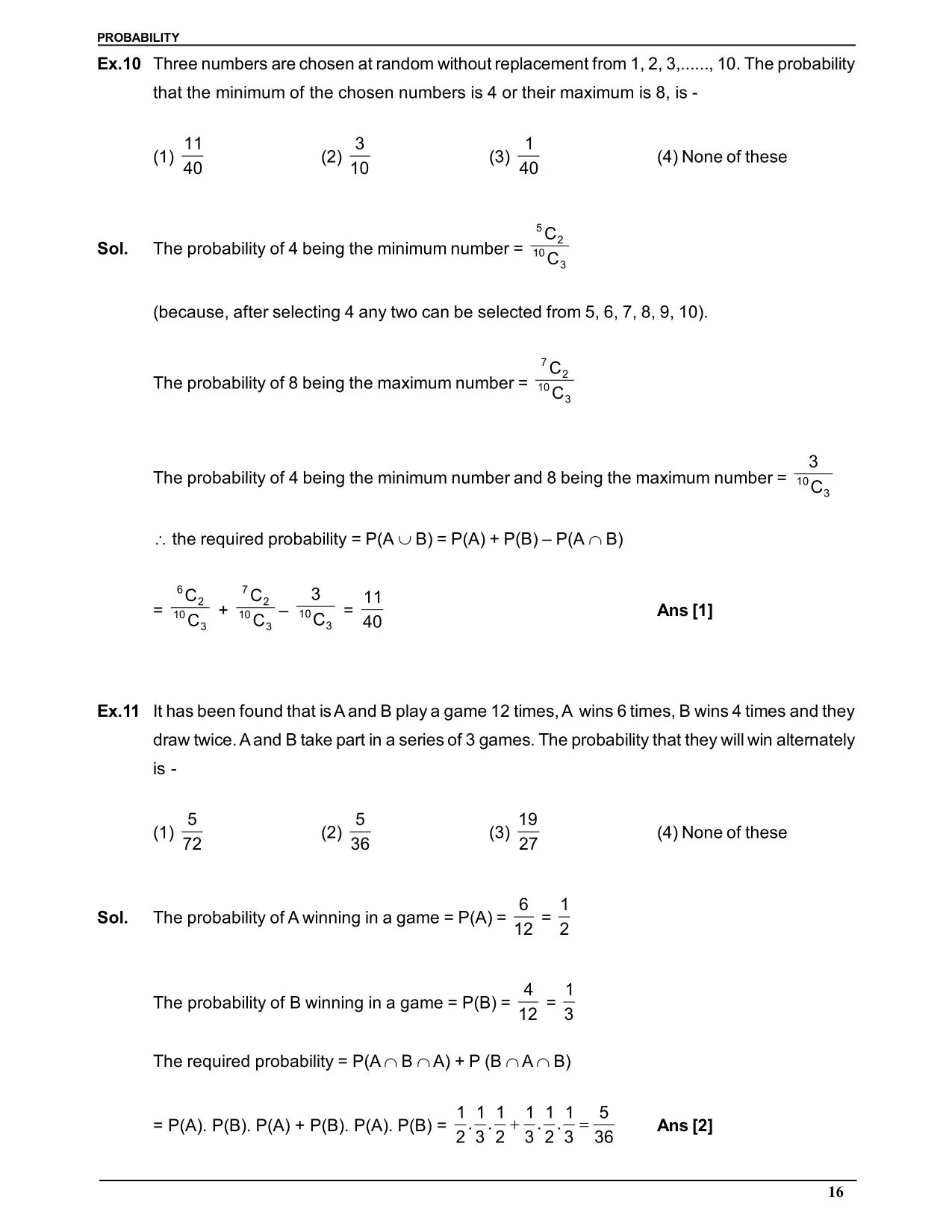
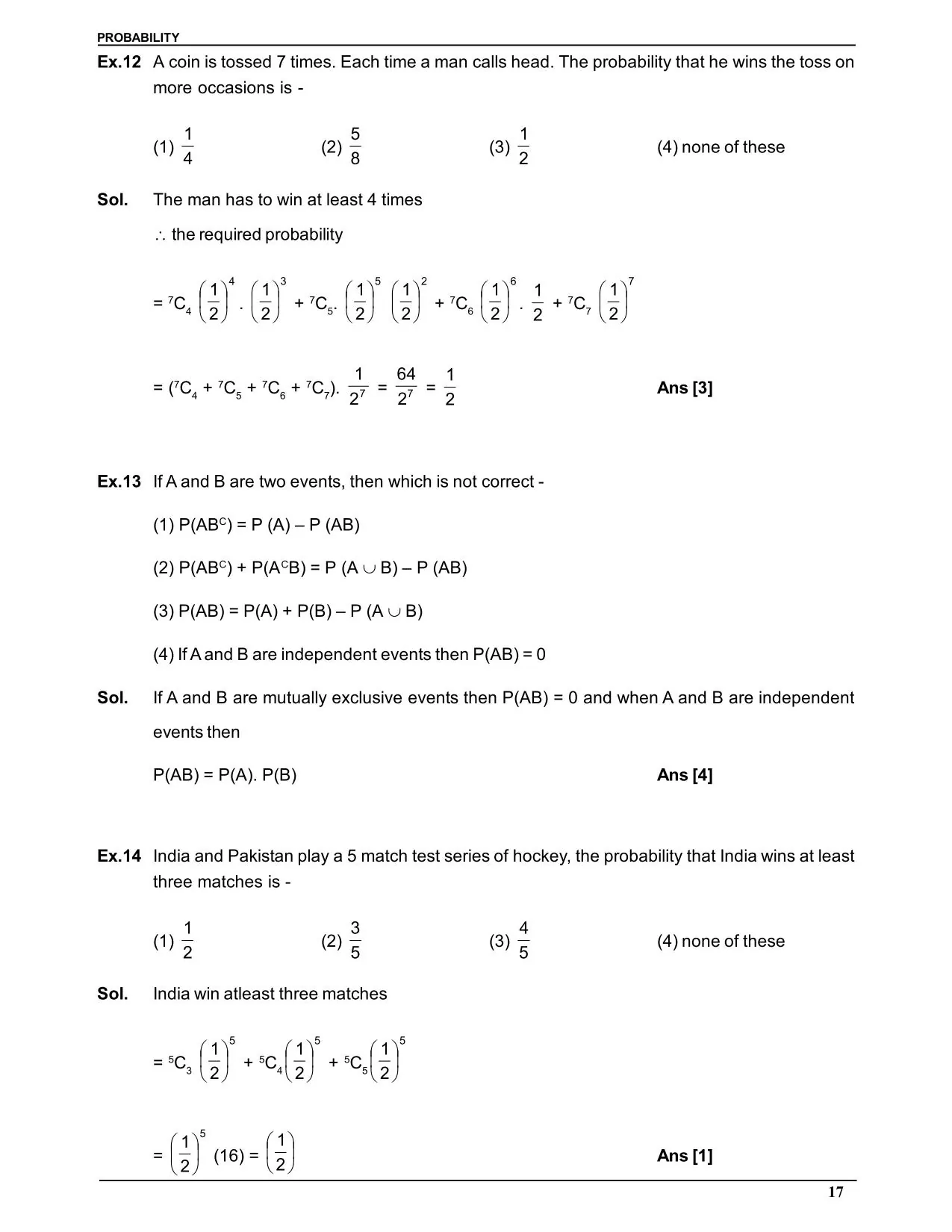
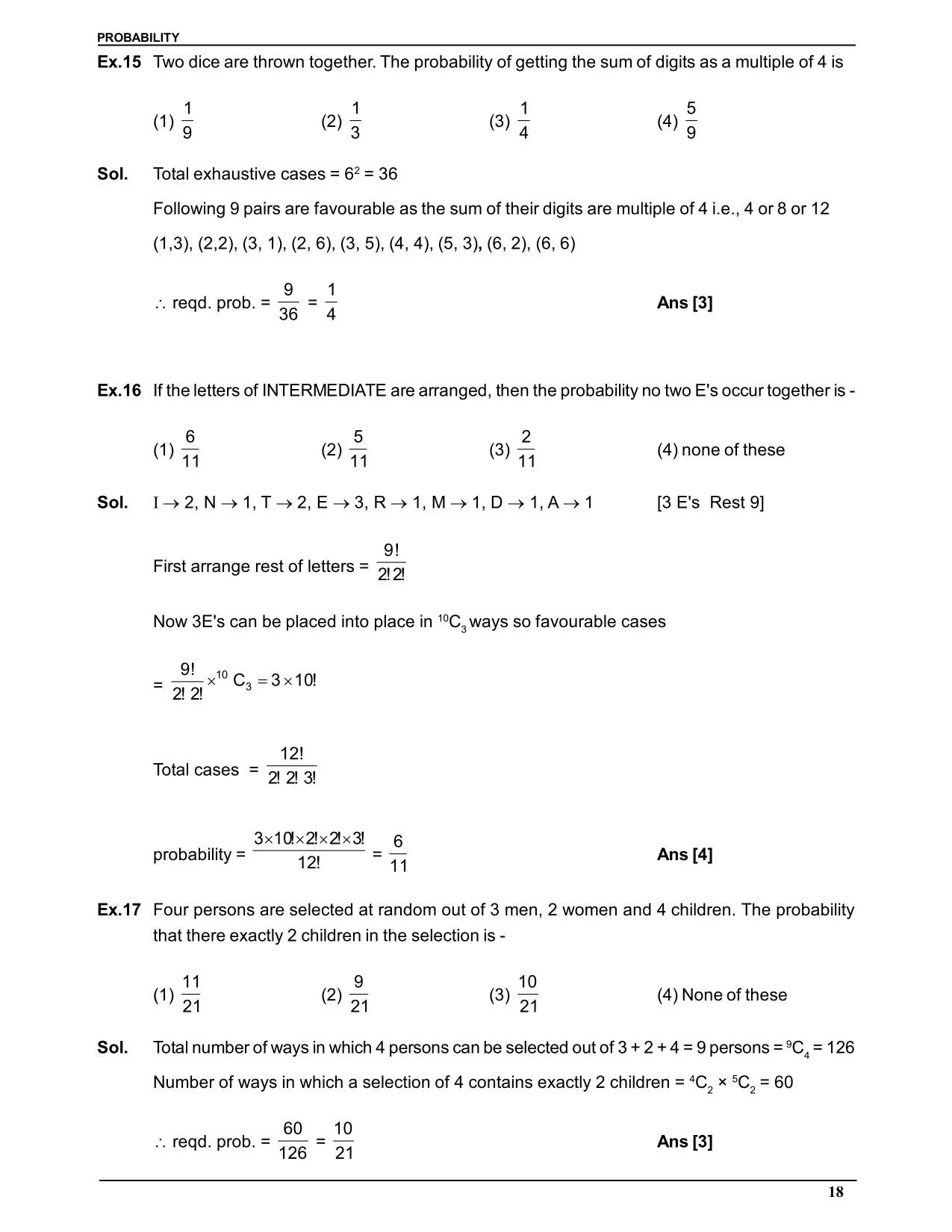
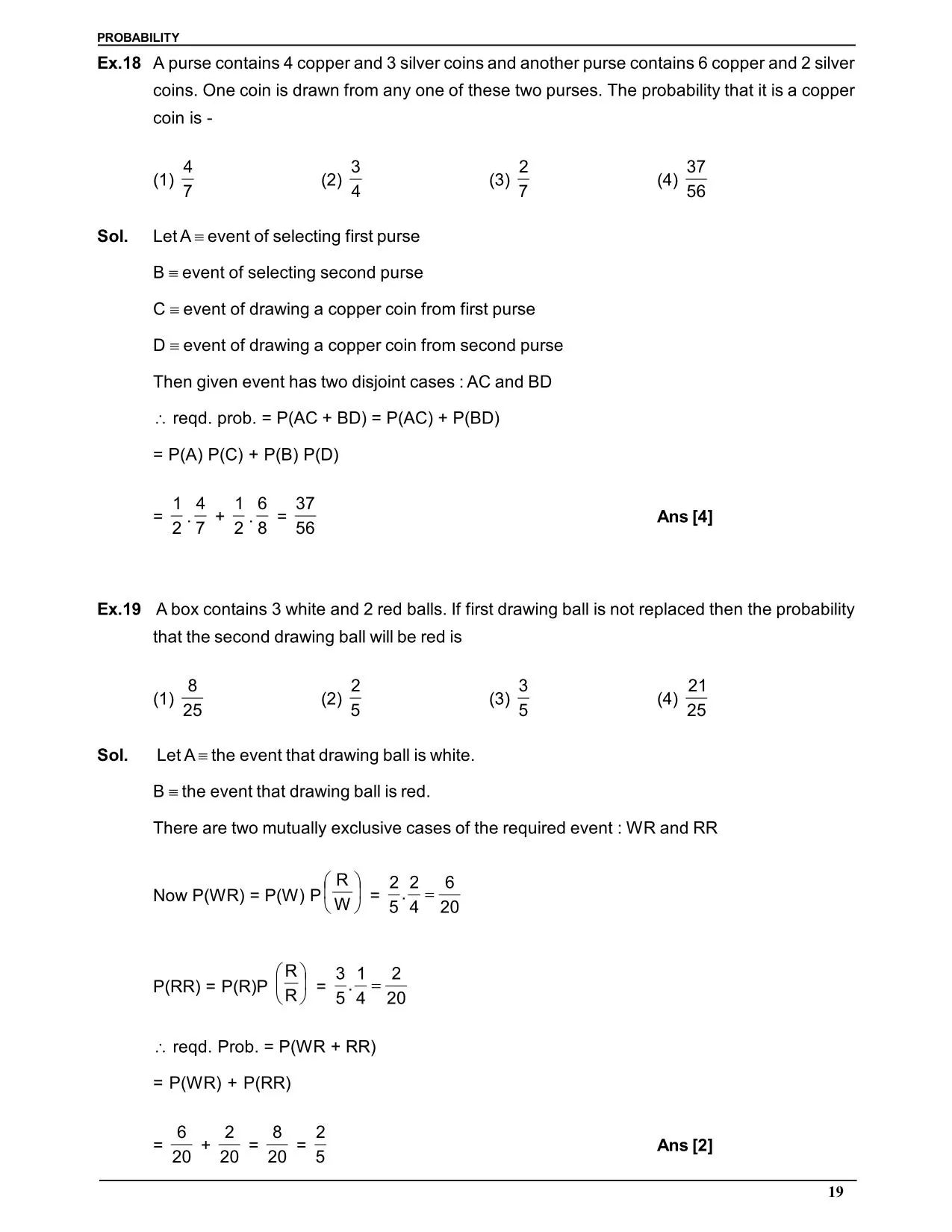
India's Best Exam Preparation for Class 11th - Download Now
Frequently Asked Questions
Find answers to common questions.
What are the most important topics in Probability for Class 11 JEE?
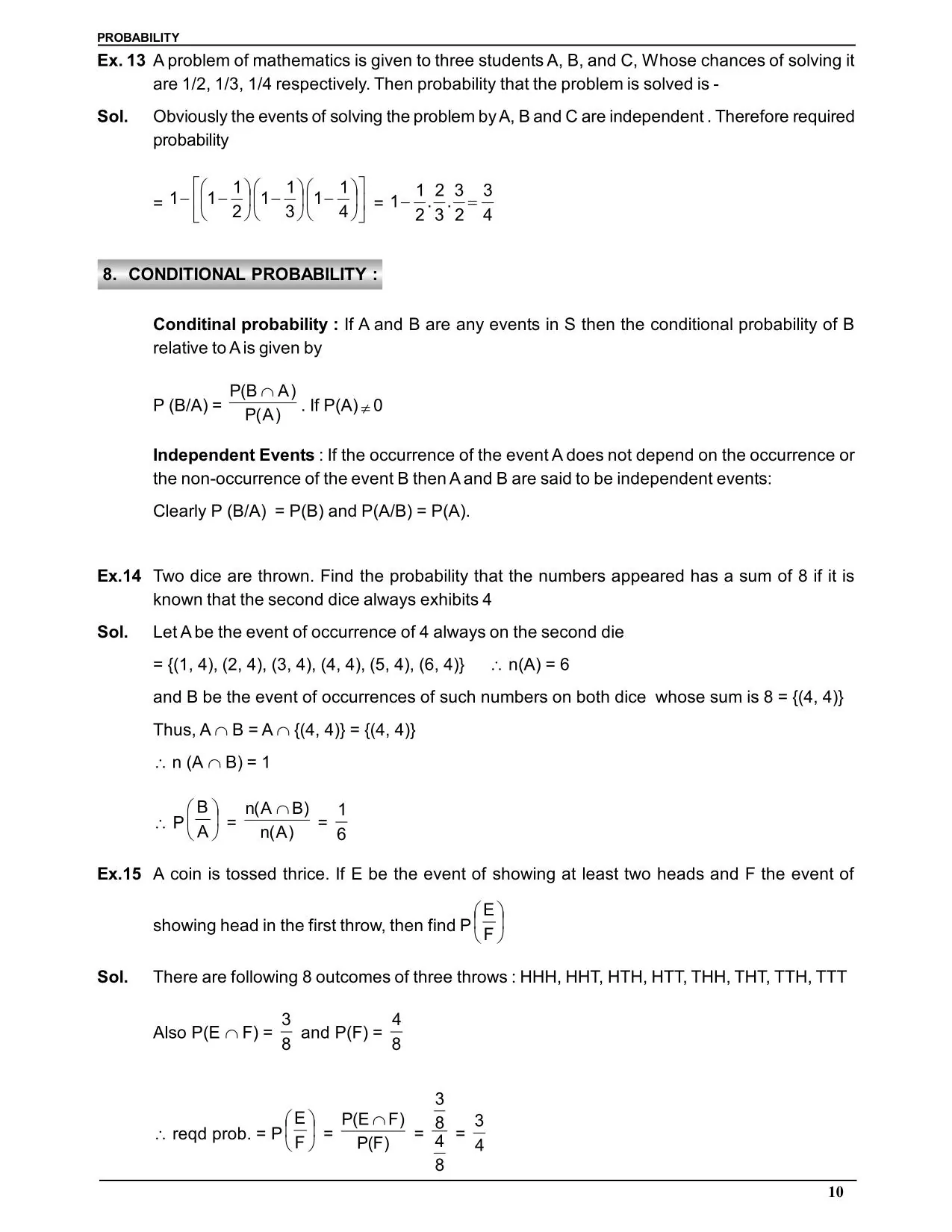
The most important topics are conditional probability, independent events, the addition rule, the multiplication rule, and Bayes' theorem. In JEE Main, conditional probability and complement-based problems appear most frequently. Focus on Bayes' theorem for JEE Advanced. Mastering these five areas covers approximately 85% of probability questions across both exams.
What is the difference between mutually exclusive and independent events?
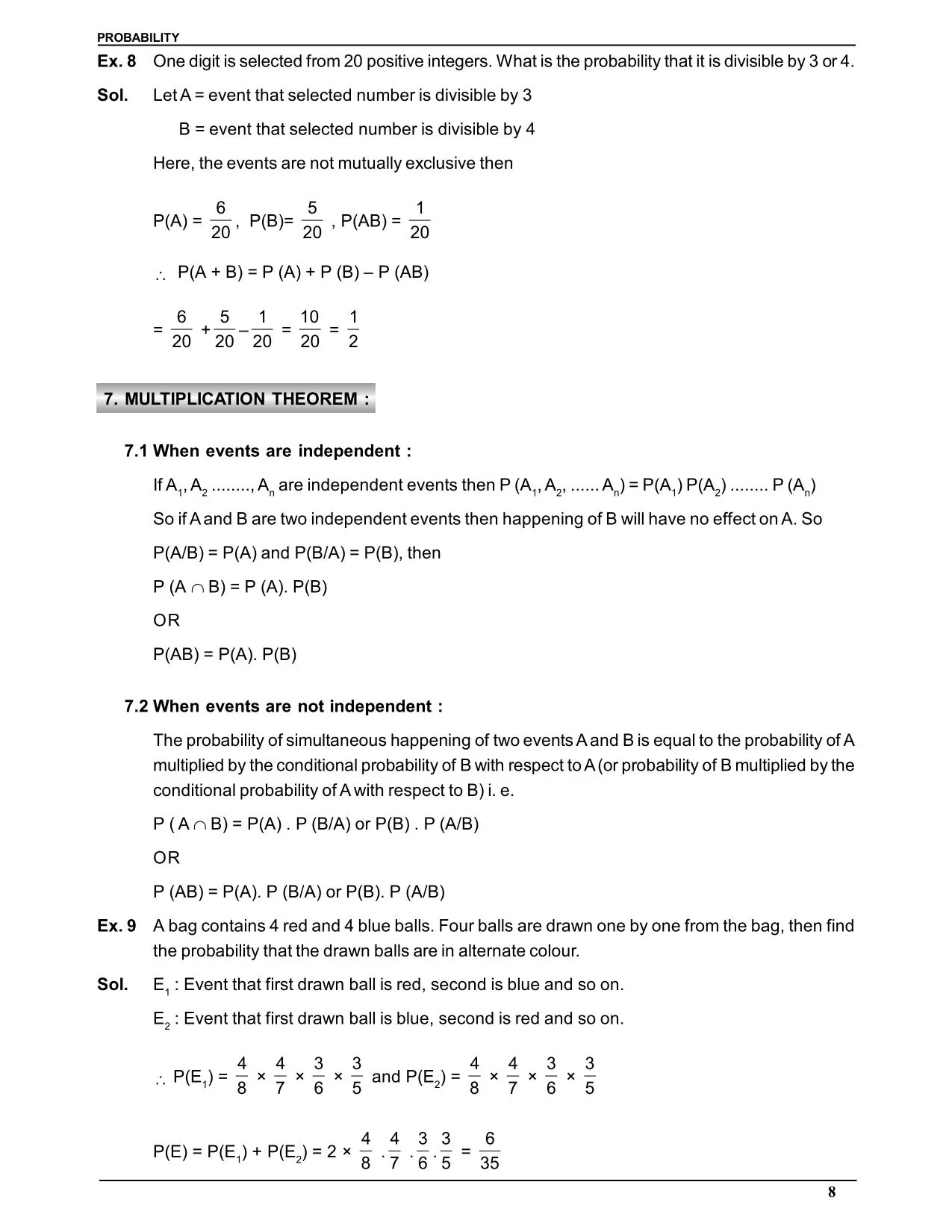
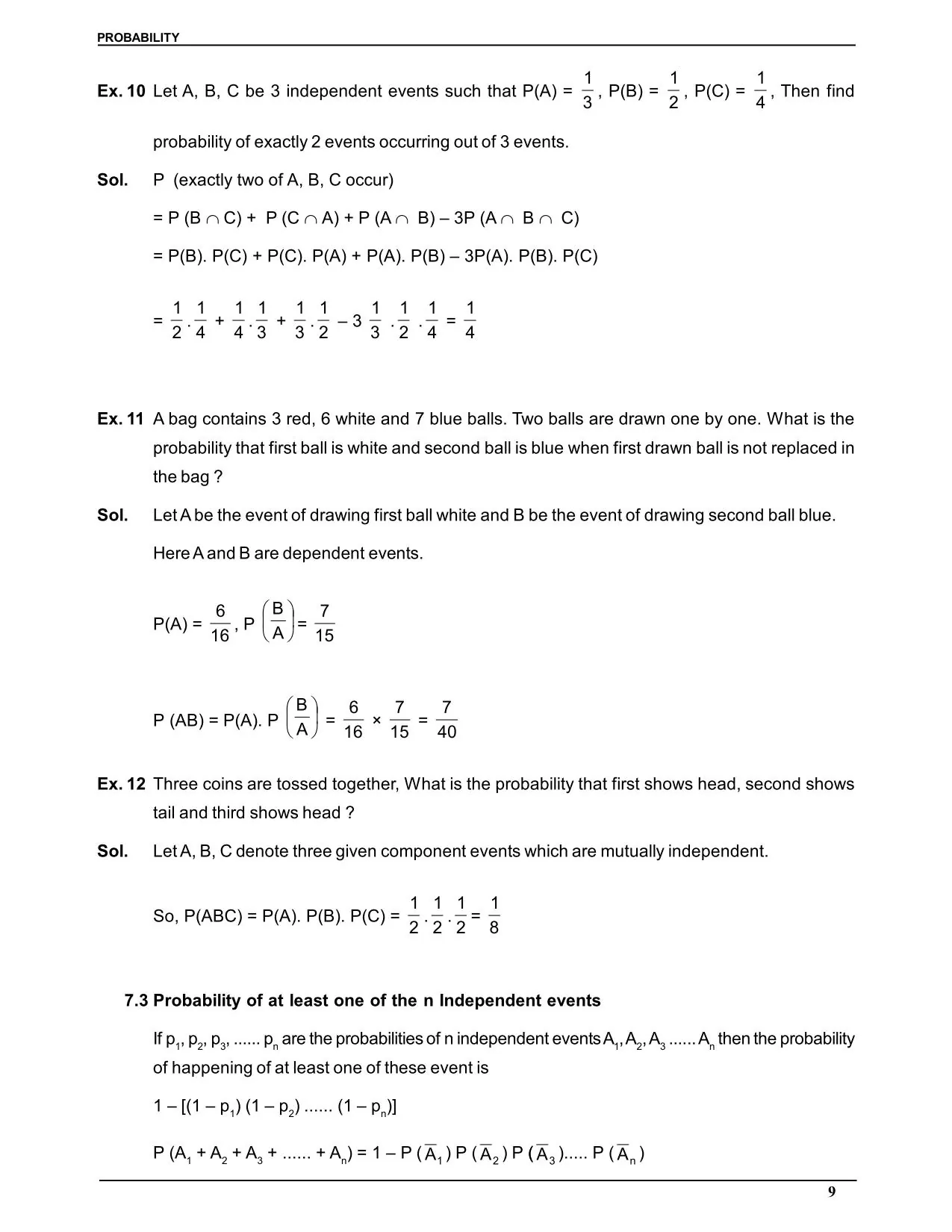
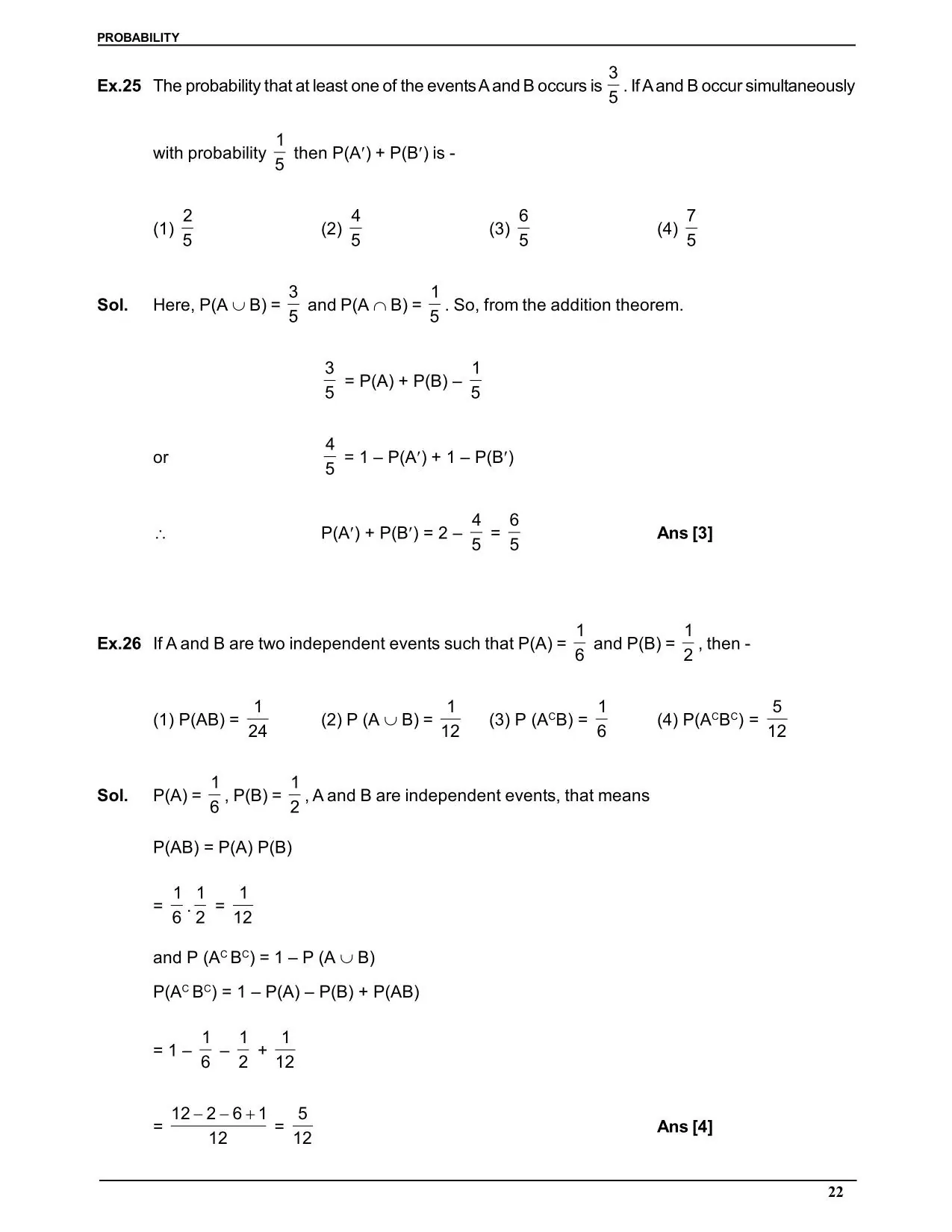
Mutually exclusive events cannot occur at the same time — their intersection is empty (A ∩ B = ∅), making P(A ∩ B) = 0. Independent events can both occur, but the occurrence of one does not affect the other: P(A ∩ B) = P(A)·P(B). Two mutually exclusive events with non-zero probabilities are never independent.
How do you apply the complement rule in probability?
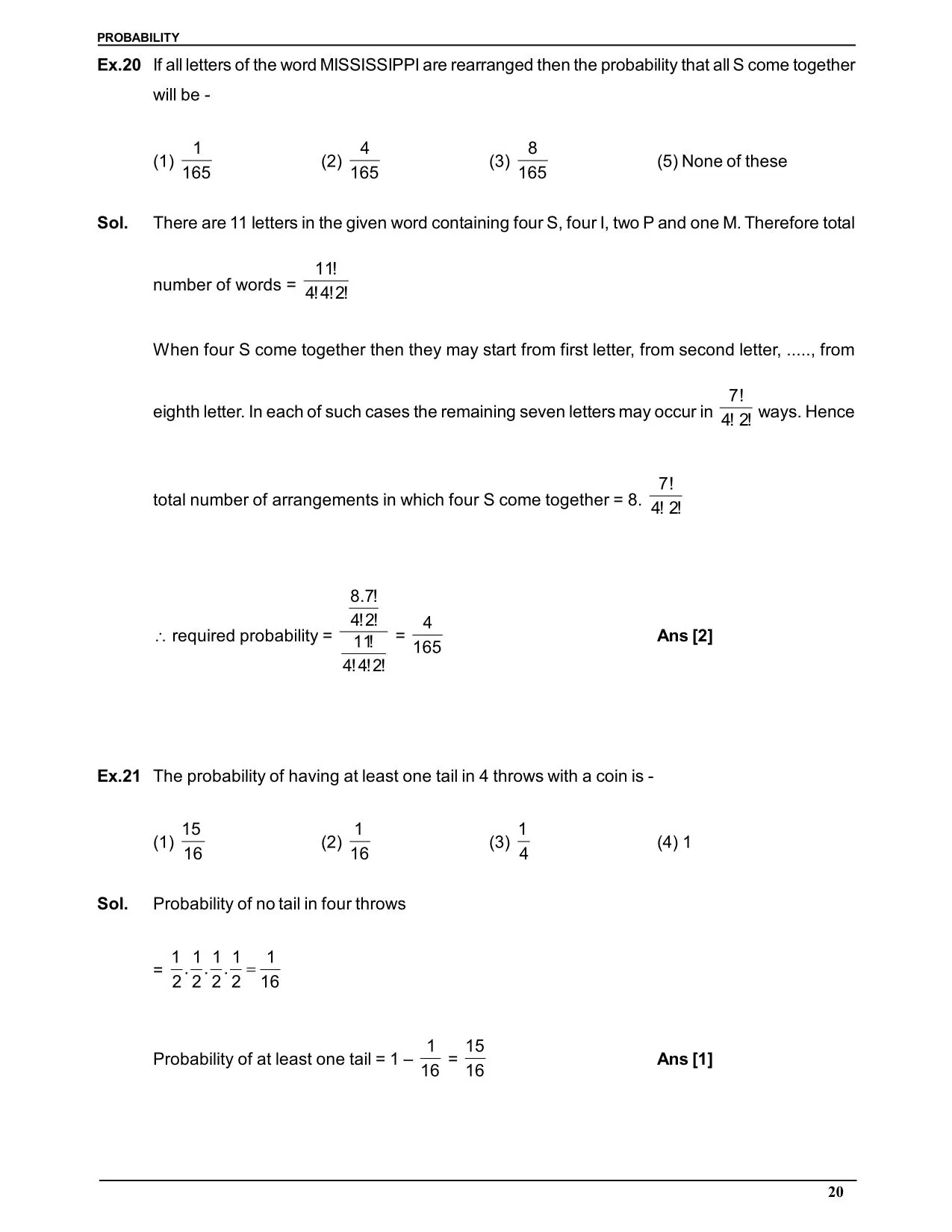
The complement rule states P(A') = 1 – P(A). Use it whenever the problem says "at least one," "at least two," or "one or more." Calculate the probability of the opposite event (none, zero occurrences) first, then subtract from 1. This is almost always faster than listing all favourable outcomes directly.
What is Bayes' theorem and when should I use it?
Bayes' theorem calculates the probability of a cause given that an effect has occurred. Use it when you know prior probabilities of multiple causes (partitions) and the conditional probability of an event given each cause. Classic setups include factory defect problems, medical testing scenarios, and bag-and-ball problems where you draw a ball and need to identify which bag it came from.
Is probability in Class 11 the same as in Class 12?
No. Class 11 (NCERT Chapter 16) covers classical probability, axiomatic probability, and an introduction to conditional probability. Class 12 (NCERT Chapter 13) builds on this to cover random variables, probability distributions, the binomial distribution, and mean and variance. JEE Main tests both chapters; start with Class 11 concepts before moving to Class 12.