Animal Tissue - NEET Previous Year Questions with Complete Solutions


eSaral > NEET Biology > Animal Tissue Previous Year Questions with Complete Solutions

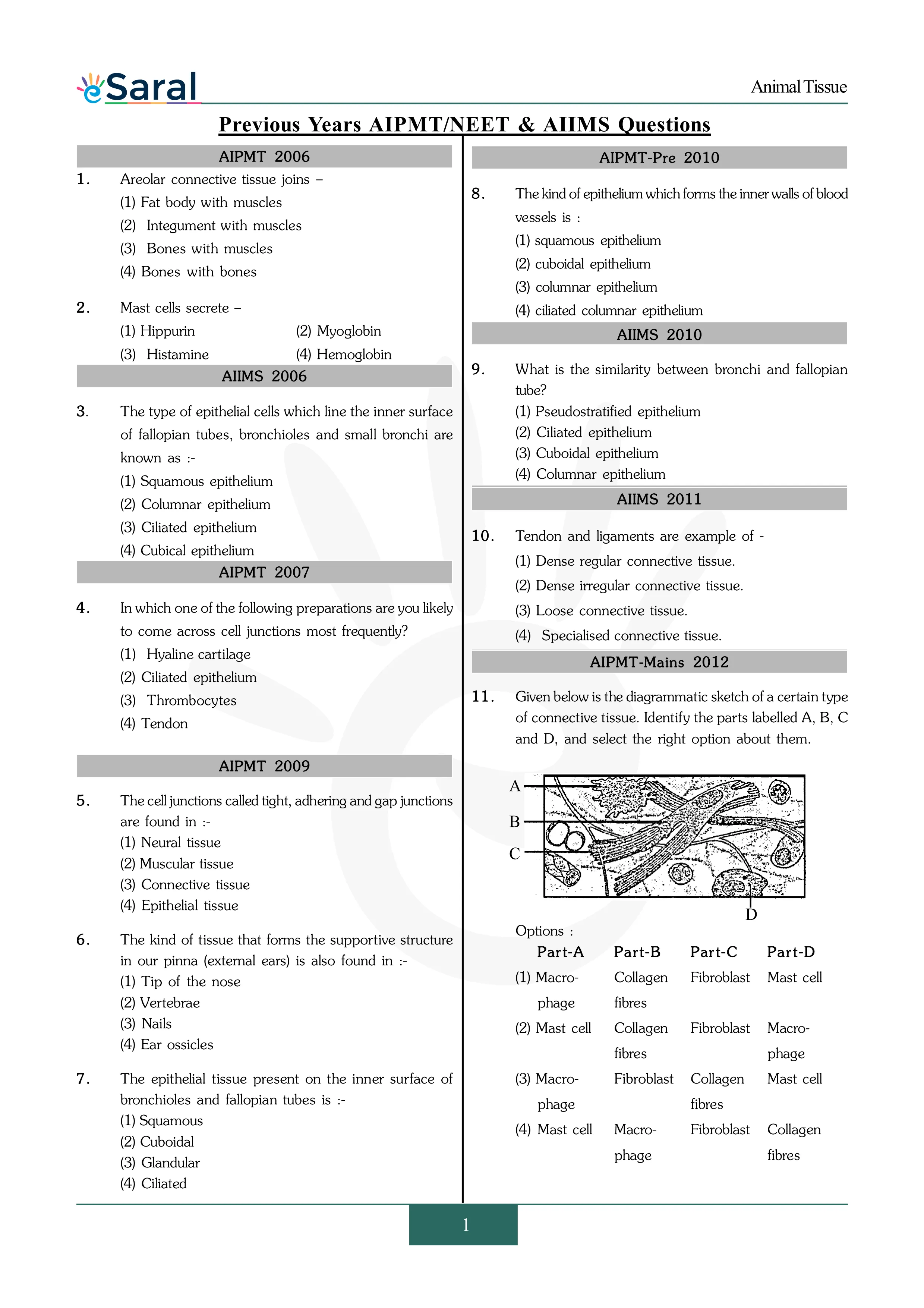
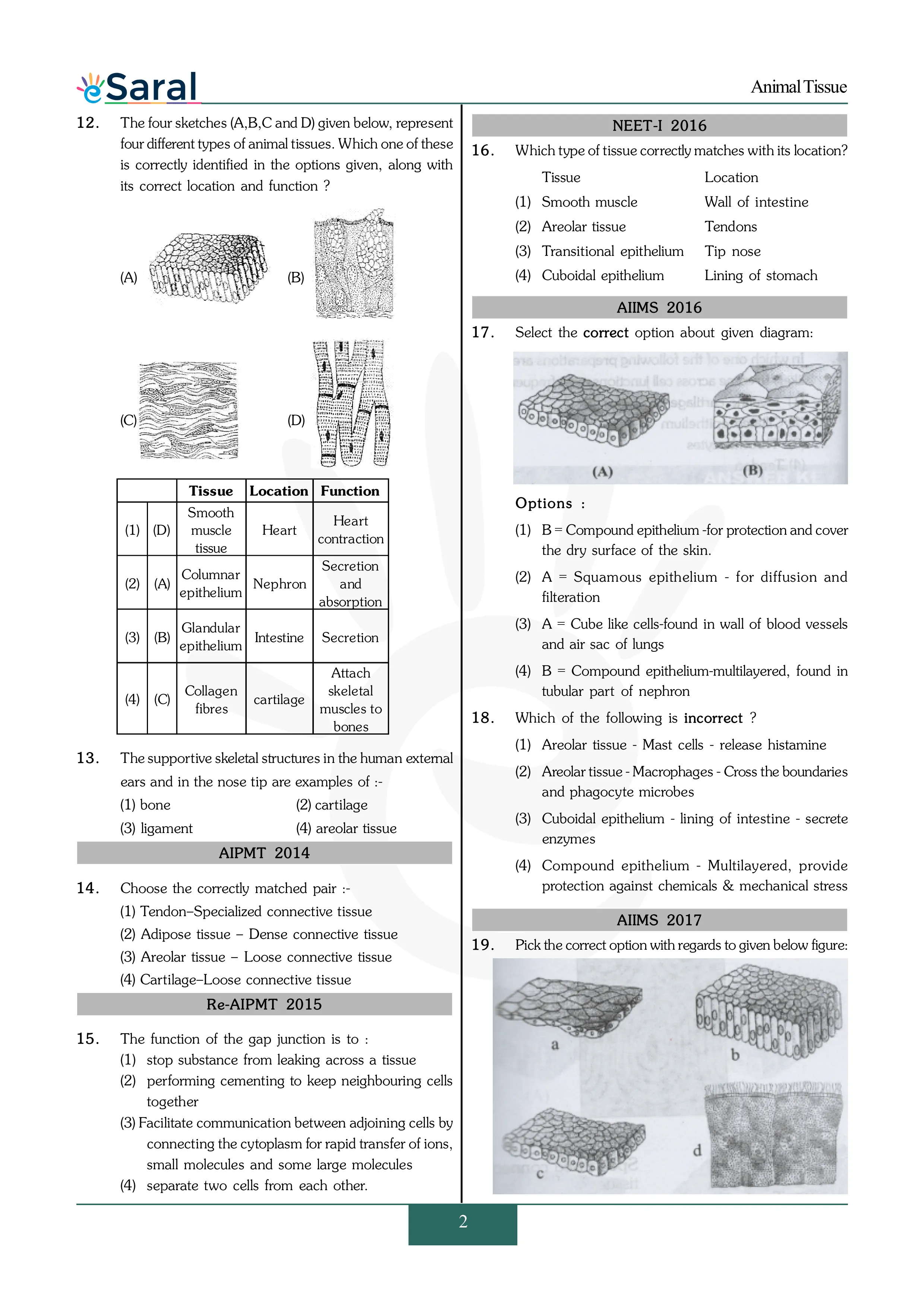
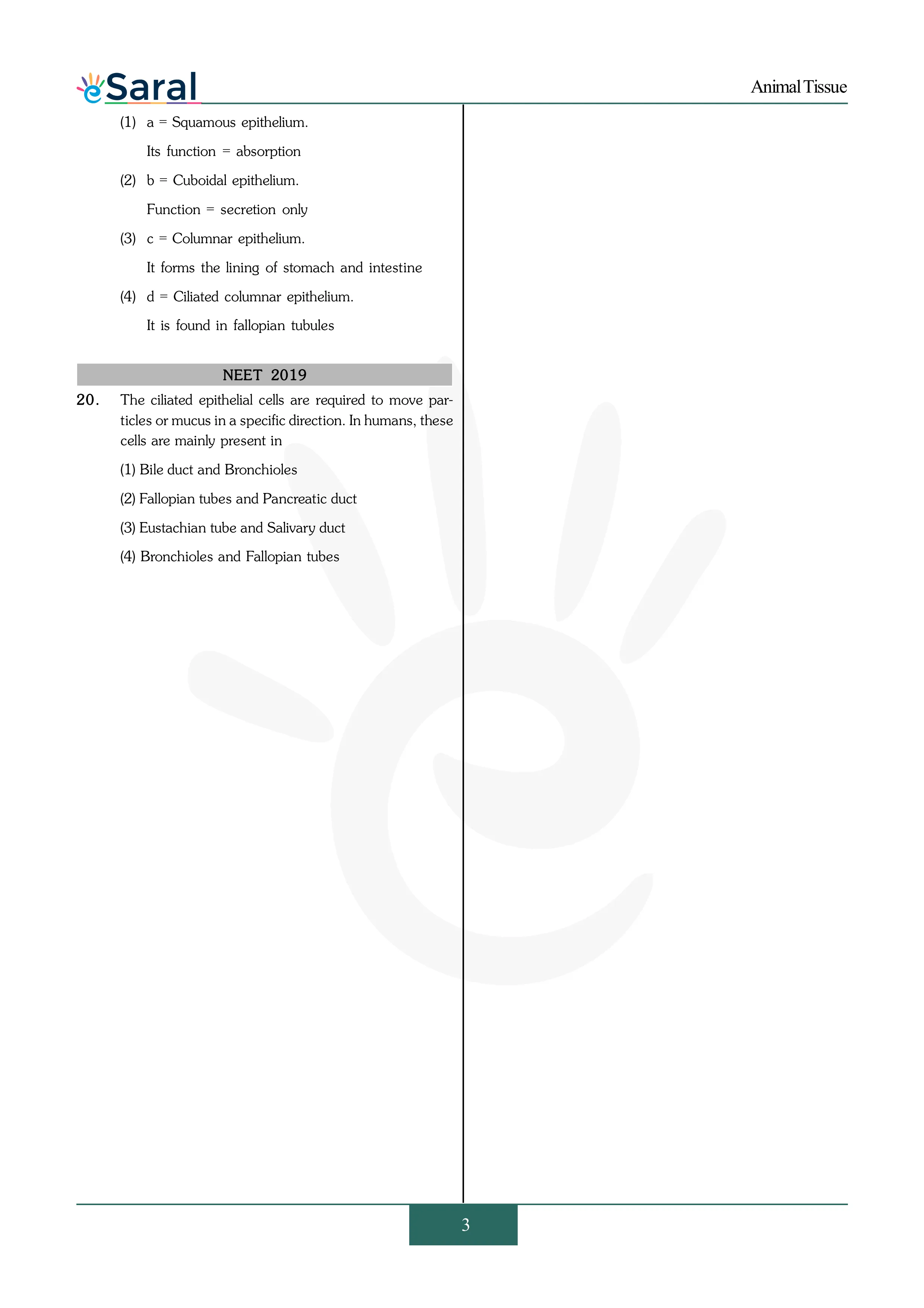
Here you will get Complete Animal Tissue NEET Previous Year Questions with complete and detailed solutions.
Get complete NEET previous year questions for Physics, Chemistry, and Biology.
You will find all the solutions at the end of this page:


Frequently Asked Questions
Find answers to common questions.
Is Animal Tissue part of the NEET 2025 syllabus?
Yes. Animal Tissue is part of Class 11 Biology Chapter 7 — Structural Organisation in Animals, which NTA includes in the NEET Biology syllabus under Unit 3. Always verify the latest syllabus on the NTA official website before your exam year.
Which tissue type is asked most often in NEET — epithelial or connective?
Connective tissue gets the highest number of questions among the four types, largely because it includes diverse sub-types (blood, bone, cartilage, areolar, adipose). Epithelial tissue follows closely, especially questions on types, locations, and cell junctions. Both must be prepared with equal care.
How many questions come from Animal Tissue in NEET every year?
NTA typically asks 2–4 questions from Animal Tissue in every NEET paper. Based on 2015–2024 data, the chapter has never been absent from NEET Biology. Each question carries 4 marks, so this chapter alone can contribute up to 16 marks in a good year.
Are Animal Tissue questions in NEET factual or application-based?
The majority are factual/recall-based — directly testing NCERT language on tissue types, locations, and cell names. A smaller proportion are application-based, asking students to identify which tissue is described in an unfamiliar context. Both types are covered in the previous year question set on this page.
Why is blood called a connective tissue?
Blood is classified as a fluid connective tissue because it contains cells (RBCs, WBCs, platelets) suspended in an extracellular matrix called plasma. The defining feature of all connective tissues is the presence of an extracellular matrix — blood satisfies this criterion even though its matrix is liquid rather than solid or semi-solid.
What is the best way to remember the different types of epithelial tissue?
Link each type to its location and function using a table. For example: squamous = flat = diffusion = alveoli/blood vessels; cuboidal = cube = secretion = kidney tubules. Drawing simple diagrams alongside the table reinforces visual memory. eSaral's Biology faculty recommend practising at least 5 MCQs per sub-type after making these notes.